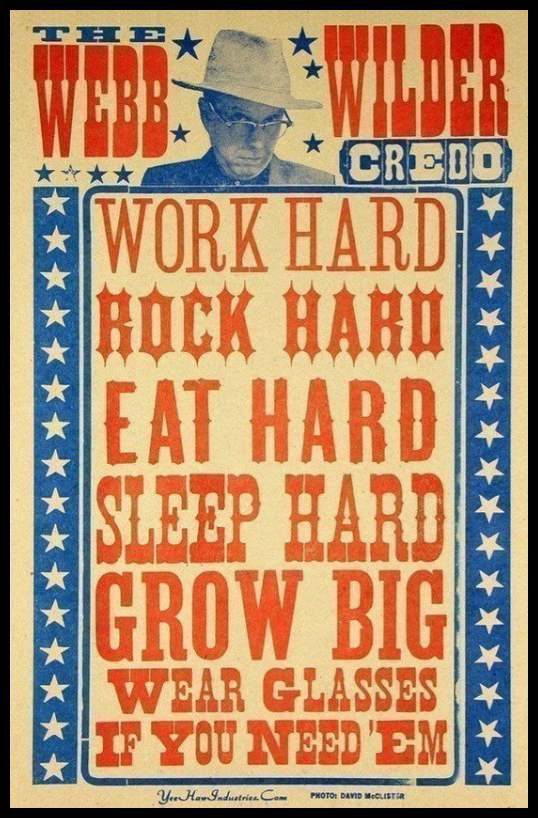
Webb Wilder

In the late eighties, a song came on the radio that I liked…It was called Poolside by Webb Wilder. It was a quirky song by a quirky singer. He looks like he dropped out of a 50’s black and white detective show. By 1991 I was walking through a street fair in Nashville and there he was playing with his band. He had just put out an album called Doodad that got some local and national airplay. His music is a mixture of rock/country/rockabilly/punk and anything else he can throw in.

I’ve seen him a couple of times and he delivers. He did get some MTV and VHI play nationally in 1991-92. He had a top 20 hit with “Tough It Out” in 1992.  His other known songs are “Meet Your New Landlord,” Poolside,  and “Human Cannonball”. He has a great band called the Beatnecks.

Webb’s quote when asked what kind of music he plays.

 “I came to Nashville as kind of a hunch, an educated guess that it would be a good place for me. Rock ‘n’ roll and country have more in common than not. We don’t have the typical Nashville country sound, but we thought we could use that to our advantage. It’s sorta like we’re a roots band for rock ‘n’ roll fans and a rock band for roots fans” he also adds these phrases…“Swampadelic”, “Service-station attendant music”, “Uneasy listening”, “Psychobilly”

Meet Your New Landlord by Webb.


Tough It Out

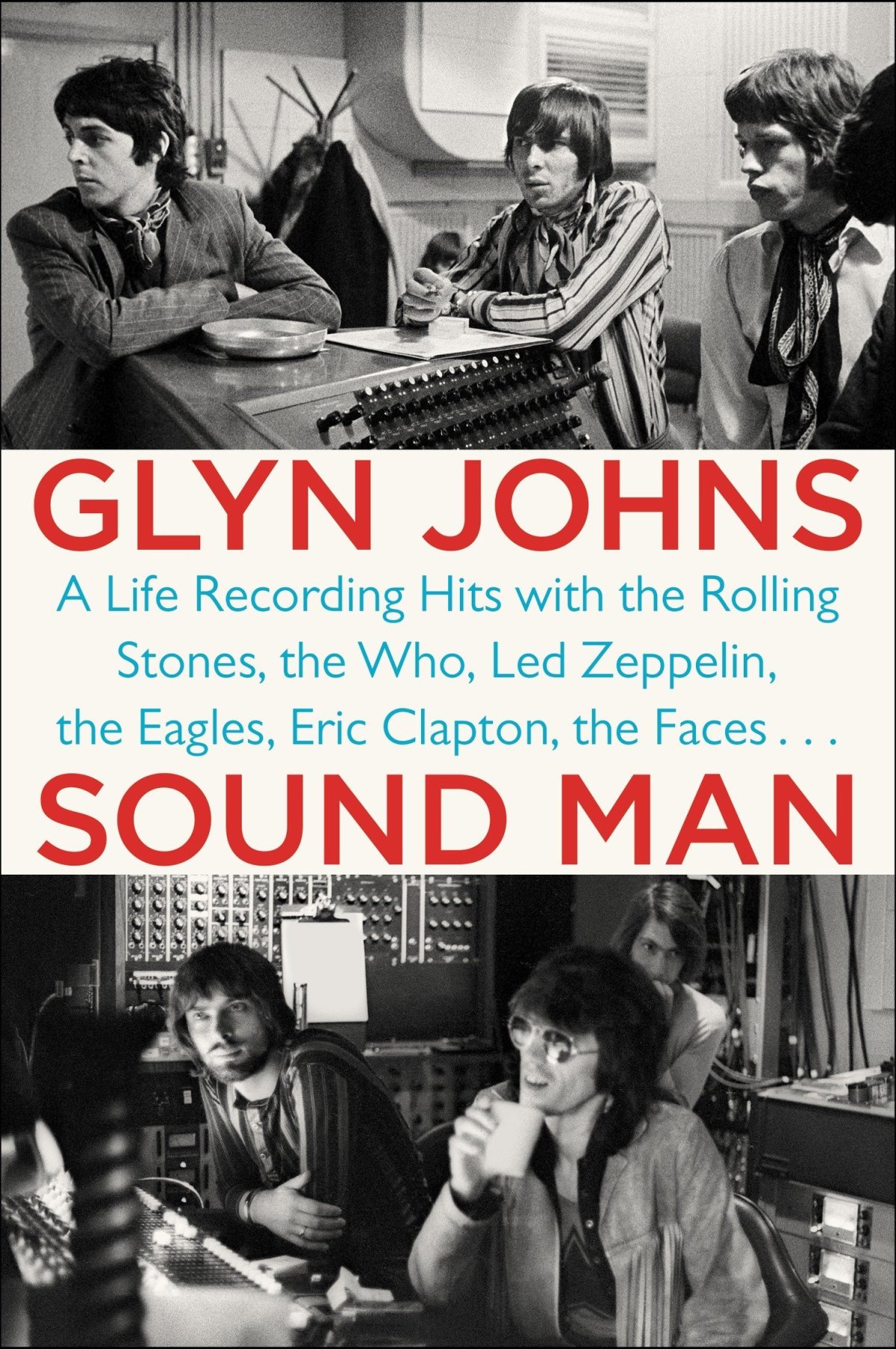
Glyn Johns: Sound Man

I read this book not knowing what to expect but I did know of Glyn Johns… so many of my albums had his name on it…A name that is known throughout the music industry as a great recording engineer, producer, and mixer. Glyn has worked with huge rock groups such as The Rolling Stones, Beatles, Who, Small Faces, Led Zeppelin, The Band and more.

Glyn is a no-nonsense guy and unlike most of the autobiographies of musicians in that era, he never did drugs and always did his job well. Glyn wanted to be a singer and did make a few records, he covered Rolling Stones Lady Jane,  but he stuck with engineering and gradually became a producer.

Back when Glyn started in the early sixties engineers did not graduate to producing. It was very much a British class system in the music industry. He became the first freelance engineer in the industry because of the clients he attracted. He was one of the first to record the Stones and he began a relationship with them that lasted for years. He knew the Stones because he was really good friends with Ian Stewart and even shared a flat with him.

The Beatles called him to engineer Let It Be and he also helped engineer some of Abbey Road. He worked on Led Zeppelin’s first album. He produced Steve Miller’s first albums and also the first couple of Eagles albums.

This book will be very interesting to classic rock fans. Many anecdotes about the Stones, Beatles, Who and others. Glyn minces no words and has a reputation for saying what is on his mind. He isn’t too technical about recording in the book, he keeps it at a fast enjoyable pace.

He worked on some of the most classic albums ever. The Stones 60’s albums and the classic stretch of albums the Stones released until Black and Blue. He worked on Who’s Next, Quadrophenia, Led Zeppelin, A Nod Is As Good As a Wink… to a Blind Horse, Who Are You, Slowhand, just to name a few.

One interesting thing that happened in 1969. Glyn met Bob Dylan and Dylan told Johns that he would like to make an album with the Beatles and Stones. Glyn went back to England very excited and told Keith Richards and George Harrison and they were all for it. Ringo, Charlie, and Bill said they would do it. John didn’t say no but Mick and Paul said absolutely not…leaves you to wonder what it would have sounded like…

At the bottom of the page, I copied his discography from Wikipedia…it is incredible.

Excerpt from Sound Man about the Stones.

While Keith, Charlie, and Bill drove the band rhythmically, Mick’s energy and intellect drove everything else. I was constantly amazed by his skill as a songwriter and by the extraordinary energy he managed to summon for his vocal performances in the studio.
Both Mick and Keith would take an active part in the mixing process and drove me nuts making me mix a track for hours when I felt I had got it in the first couple of passes. We certainly did not always agree. I guess it would have been even more boring if we had. There were a couple of occasions when finally putting the album together I would play back earlier mixes that I had done on my own, to compare with the one they had chosen after hours of farting around, and in the cold light of day they would agree that mine were better. Equally, there were many occasions when they insisted on me changing a mix quite drastically from the way I heard it, with great effect.
Working with the Stones for all those years certainly had some amazing moments and I am proud to have been associated with them during a period of time when their music was so influential. However, Charlie summed it up perfectly when asked in a recent interview his experience of being in the band for fifty years. He replied, “Ten years of working and forty years of hanging around.”

Excerpt about The Beatles Let It Be

I had been retained originally as an engineer and was quite happy with that, even when I realized that George Martin was not producing. He did come to Twickenham a couple of times to check us out. He had arranged for the gear to be loaned for the recording at Savile Row and turned up on the day we did the filming on the roof, but had nothing to do with the production of the music. At the outset I was quite embarrassed when I realized he was not going to be involved. A couple of days into the project I asked Paul where George Martin was, only to be told that they had decided not to use him. By the time we moved to Savile Row, George, realizing I was in an awkward position, was kind enough to take me to lunch in order to put my mind at rest, saying I was doing a great job, everything was fine, and I was not stepping on his toes in any way. What a gentleman he is.
Having delivered the mixed master of my version of Let It Be, I approached each member of the band separately, asking if I could have a production credit on the album when it was released. I made it quite clear that I was only asking for that and not a royalty. Paul, George, and Ringo had no objection to my request but John was suspicious and could not understand why I was not asking for a royalty. I explained that I felt, because of their stature, the sales of the album would not be affected by my involvement one way or another, so a credit would be a fair settlement for what I had done, as by association it could only be positive for my career in the future. I never got an answer from John.
As it turned out, none of this mattered, as in the end, after the group broke up, John gave the tapes to Phil Spector, who puked all over them, turning the album into the most syrupy load of bullshit I have ever heard. My master tape, perhaps quite rightly, ended up on a shelf in the tape store at EMI. At least my version of the single of “Get Back”/“Don’t Let Me Down” had been released in April 1969.

Below is Glyn’s discography…what a body of work.

Artist Year Album Producer Engineer Mixing
Georgie Fame 1964 Rhythm and Blues at the Flamingo Yes Yes
The Rolling Stones 1965 December’s Children co-eng.Yes co-mix.Yes
The Pretty Things 1965 Get the Picture? co-prod.Yes Yes Yes
The Rolling Stones 1965 Out of Our Heads co-eng.Yes co-mix.Yes
The Rolling Stones 1966 Aftermath co-eng.Yes co-mix.Yes
The Rolling Stones 1966 Got Live if You Want It! Yes Yes
Chris Farlowe 1966 The Art of Chris Farlowe Yes Yes
The Small Faces 1966 Small Faces (Decca) Yes Yes
Chris Farlowe 1966 14 Things to Think About Yes Yes
Twice as Much 1966 Own Up Yes Yes
The Small Faces 1967 From the Beginning Yes Yes
Rolling Stones 1967 Between the Buttons Yes Yes
The Small Faces 1967 Small Faces (Immediate) Yes Yes
The Rolling Stones 1967 Flowers co-eng.Yes co-mix.Yes
The Rolling Stones 1967 Their Satanic Majesties Request Yes Yes
Johnny Hallyday 1967 San Francisco (EP) Yes Yes
The Rolling Stones 1968 Beggars Banquet Yes Yes
The Steve Miller Band 1968 Children of the Future Yes Yes Yes
Twice as Much 1968 That’s All Yes
The Pentangle 1968 The Pentangle Yes Yes
The Move 1968 Something Else from the Move Yes Yes
Spooky Tooth 1968 It’s All About Yes Yes
The Small Faces 1968 Ogdens’ Nut Gone Flake Yes Yes
The Steve Miller Band 1968 Sailor Yes Yes Yes
Gerry Temple 1968 Burn Up! Yes
Procol Harum 1968 Shine on Brightly Yes Yes
The Move 1968 The Move Yes Yes
Easybeats 1968 Vigil Yes Yes
Traffic 1968 Traffic Yes Yes
Billy Nichols 1968 Would You Believe Yes Yes
The Steve Miller Band 1969 Brave New World Yes Yes Yes
Family 1969 Family Entertainment Yes Yes Yes
The End 1969 Introspection Yes Yes
The Beatles 1969 Abbey Road Yes
Joe Cocker 1969 Joe Cocker! Yes Yes
Johnny Hallyday 1969 Johnny Hallyday Yes Yes Yes
Led Zeppelin 1969 Led Zeppelin Yes
The Rolling Stones 1969 Let it Bleed Yes Yes
The Steve Miller Band 1969 Your Saving Grace Yes Yes Yes
Lambert and Nuttycombe 1970 At Home Yes Yes
Bob Dylan 1970 Self Portrait co-eng.Yes
The Rolling Stones 1970 Get Yer Ya-Ya’s Out! Yes Yes Yes
Humble Pie 1970 Humble Pie Yes Yes Yes
Philamore Lincoln 1970 The North Wind Blew South Yes
Billy Preston 1970 That’s the Way God Planned It Yes Yes
Leon Russell 1970 Leon Russell Yes Yes
The Beatles 1970 Let it Be Yes
Joe Cocker 1970 Mad Dogs & Englishmen Yes Yes
Delaney & Bonnie & Friends 1970 On Tour with Eric Clapton Yes
The Move 1970 Shazam Yes Yes
The Band 1970 Stage Fright co-eng.Yes
Spooky Tooth 1970 The Last Puff Yes Yes
McGuinness Flint 1970 McGuinness Flint Yes Yes Yes
The Faces 1971 A Nod Is As Good As a Wink… to a Blind Horse Yes Yes Yes
Boz Scaggs 1971 Boz Scaggs & Band Yes Yes Yes
Ben Sidran 1971 Feel Your Groove Yes Yes
McGuinness Flint 1971 Happy Birthday, Ruthie Baby Yes Yes Yes
Jesse Ed Davis 1971 ¡Jesse Davis! Yes Yes Yes
Leon Russell 1971 Leon Russell and the Shelter People Yes Yes
Boz Scaggs 1971 Moments Yes Yes Yes
Rita Coolidge 1971 Nice Feelin’ Yes
Howlin’ Wolf 1971 The London Howlin’ Wolf Sessions Yes
Humble Pie 1971 Rock On Yes Yes Yes
Graham Nash 1971 Songs for Beginners Yes
The Rolling Stones 1971 Sticky Fingers co-eng.Yes co-mix.Yes
Spooky Tooth 1971 Tobacco Road Yes Yes
The Who 1971 Who’s Next co-prod.Yes Yes Yes
Eagles 1972 Eagles Yes Yes Yes
The Rolling Stones 1972 Exile on Main St. co-eng.Yes co-mix.Yes
Rita Coolidge 1972 The Lady’s Not for Sale Yes Yes Yes
Neil Young 1972 Harvest co-eng.Yes
Nicky Hopkins, Ry Cooder, Mick Jagger, Bill Wyman, and Charlie Watts 1972 Jamming with Edward Yes Yes Yes
Chris Jagger 1973 Chris Jagger Yes
Eagles 1973 Desperado Yes Yes Yes
Eric Clapton 1973 Eric Clapton’s Rainbow Concert Yes
The Faces 1973 Ooh La La Yes Yes Yes
The Who 1973 Quadrophenia co-prod.Yes co-eng.Yes
Ric Grech 1973 The Last Five Years Yes Yes Yes
Paul McCartney and Wings 1973 Red Rose Speedway co-eng.Yes
Gallagher & Lyle 1973 Seeds Yes Yes Yes
The Ozark Mountain Daredevils 1973 The Ozark Mountain Daredevils co-prod.Yes Yes Yes
Gallagher & Lyle 1973 Willie and the Lapdog Yes Yes Yes
The Ozark Mountain Daredevils 1974 It’ll Shine When It Shines co-prod.Yes Yes Yes
The Rolling Stones 1974 It’s Only Rock ‘n’ Roll Yes
Eagles 1974 On the Border co-prod.Yes co-eng.Yes
Gallagher & Lyle 1974 The Last Cowboy Yes Yes Yes
Georgie Fame 1974 Georgie Fame Yes Yes Yes
Fairport Convention 1975 Rising for the Moon Yes Yes Yes
The Who 1975 The Who by Numbers Yes Yes Yes
Andy Fairweather Low 1976 Be Bop ‘n’ Holla Yes Yes Yes
Fools Gold 1976 Fools Gold Yes Yes Yes
Joan Armatrading 1976 Joan Armatrading Yes Yes Yes
Ron Wood & Ronnie Lane 1976 Mahoney’s Last Stand Yes Yes Yes
The Rolling Stones 1976 Black and Blue co-eng.Yes
Buckacre 1976 Moring Comes Yes Yes Yes
The Bernie Leadon—Michael Georgiades Band 1977 Natural Progressions Yes Yes Yes
Pete Townshend & Ronnie Lane 1977 Rough Mix Yes Yes Yes
Joan Armatrading 1977 Show Some Emotion Yes Yes Yes
Eric Clapton 1977 Slowhand Yes Yes Yes
Eric Clapton 1977 Backless Yes Yes Yes
Craig Nuttycombe 1977 It’s Just a Lifetime Yes Yes Yes
Joan Armatrading 1978 To the Limit Yes Yes Yes
Paul Kennerly and various Artists 1978 White Mansions Yes Yes Yes
The Who 1978 Who Are You co-prodYes co-eng.Yes Yes
Mark Benno 1979 Lost in Austin Yes Yes Yes
Joan Armatrading 1979 Steppin’ Out Yes Yes Yes
Live Wire (band) 1979 Pick it UP Yes
Lazy Racer 1980 Formula II Yes Yes Yes
Tim Renwick 1980 Tim Renwick Yes Yes Yes
Paul Kennerly 1980 Legend of Jessie James Yes Yes Yes
Danny Joe Brown 1981 Danny Joe Brown and the Danny Joe Brown Band Yes Yes Yes
Jools Holland 1981 Jools Holland and His Millionaires Yes Yes Yes
Midnight Oil 1981 Place Without a Postcard Yes Yes Yes
Nine Below Zero 1981 Don’t Point Your Finger Yes Yes Yes
Chris de Burgh 1981 Best Moves Yes Yes Yes
The Clash 1982 Combat Rock Yes
The Who 1982 It’s Hard Yes Yes Yes
Local Boys 1983 Moments of Madness Yes Yes Yes
Various artists 1984 ARMS Concert Yes Yes Yes
Jimmy Page, John Paul Jones, Albert Lee, 1984 No Introduction Necessary Yes
Téléphone 1984 Un Autre Monde Yes Yes Yes
Bob Dylan 1984 Real Live Yes Yes Yes
Immaculate Fools 1985 Hearts of Fortune Yes
Téléphone 1986 Le Live Yes Yes Yes
Roaring Boys 1986 Roaring Boys Yes Yes Yes
The Big Dish 1986 Swimmer Yes Yes Yes
New Model Army 1986 The Ghost of Cain Yes Yes Yes
Joolz 1987 Hex Yes
Spooky Tooth 1987 Spooky Tooth Yes Yes
Helen Watson 1987 Blue Slipper Yes Yes
Labi Siffre 1987 (Something Inside) So Strong Yes Yes Yes
John Hiatt 1988 Slow Turning Yes Yes
Nancy Griffith 1989 Storms Yes Yes
Green on Red 1989 This Time Around (Green on Red album) Yes Yes
John Hiatt 1990 Stolen Moments Yes Yes
Summerhill 1990 West of Here Yes
Del Shannon 1991 The Liberty Years Yes
Energy Orchard 1992 Stop the Machine Yes Yes
Ethan Johns 1992 Independent Years Yes Yes
David Crosby 1993 Thousand Roads Yes Yes Yes
Crosby, Stills, & Nash 1994 After the Storm Yes Yes Yes
The Subdudes 1994 Annunciation Yes Yes Yes
Jackopierce 1995 Bringing on the Weather Yes
Bruce Cockburn 1994 Dart to the Heart Yes
Joe Satriani 1995 Joe Satriani Yes Yes
The Beatles 1996 Anthology 3 co-eng.Yes
Eric Clapton 1996 Crossroads 2: Live in the Seventies Yes Yes
The Rolling Stones and various artists 1996 The Rolling Stones Rock and Roll Circus Yes Yes
Warm Jets 1997 Future Signs Yes Yes
Bill Wyman’s Rhythm Kings 1998 Struttin’ Our Stuff Yes
Linda Ronstadt 1998 We Ran Yes Yes
Bill Wyman’s Rhythm Kings 1999 Anyway the Wind Blows Yes
Emmylou Harris & Linda Ronstadt 1999 Western Wall: The Tucson Sessions Yes Yes Yes
Various artists 1999 Return of the Grievous Angel: A Tribute to Gram Parsons Yes Yes Yes
John Hiatt and various artists 20o2 Disney’s The Country Bears musical dir.
Bruce Cockburn 2005 Speechless Yes
Andy Fairweather Low 2006 Sweet Soulful Music Yes Yes Yes
The Clash 2008 Live at Shea Stadium Yes
Ian McLagan & the Bump Band 2008 Never Say Never Yes+ mastering
Ryan Adams 2011 Ashes & Fire Yes Yes Yes
Ben Waters 2011 Boogie 4 Stu: A Tribute to Ian Stewart Yes
The Rolling Stones 2012 Charlie is My Darling: Ireland 1965 Yes
The Staves 2012 Dead & Born & Grown Up & Live co-prod.Yes Yes Yes
The Rolling Stones 2012 GRRR! Yes
Band of Horses 2012 Mirage Rock Yes Yes Yes
Ethan Johns 2012 If Not Now Then When? Yes
Aaron Neville 2013 My True Story Yes
Patty Griffin 2013 Silver Bell Yes
Stephen Stills 2013 Carry On co-prod.Yes co-eng.Yes co-mixYes
Bob Dylan 2013 Another Self Portrait (1969-1971: The Bootleg Series, Vol. 10) co-eng.Yes
Benmont Tench 2014 You Should Be So Lucky Yes Yes Yes
Ian McLagan & the Bump Band 2014 United States Yes
Joe Satriani 2014 The Complete Studio Recordings Yes Yes
Bruce Cockburn 2014 Rumours of Glory (True North) Yes
David Bowie 2014 Nothing Has Changed co-eng.Yes
The Small Faces 2014 Here Come the Nice: The Immediate Years 1967-1969 Yes
The Small Faces 20.. Greatest Hits: The Immediate Years 1967-1969 Yes
The Faces 2015 You Can Make Me Dance, Sing or Anything: 1970-1975 Yes Yes
Various artists 2015 Truckers, Kickers, Cowboys Angels: The Blissed-Out Birth of Country-Rock , Vol. 7: 1974 Yes Yes Yes
Various artists 2015 Songs: The Very Best of Acoustic – The Collection co-prod.Yes
The Rolling Stones 2015 From the Vault: The Marquee Club Live in 1971 Yes
Paul McCartney 2016 Pure McCartney Yes
Eric Clapton 2016 I Still Do Yes Yes
Eagles 2017 Their Greatest Hits, Vols. 1 & 2 Yes Yes
Jesse Ed Davis 2017 Red Dirt Boogie: The Atco Recordings 1970-1972 Yes

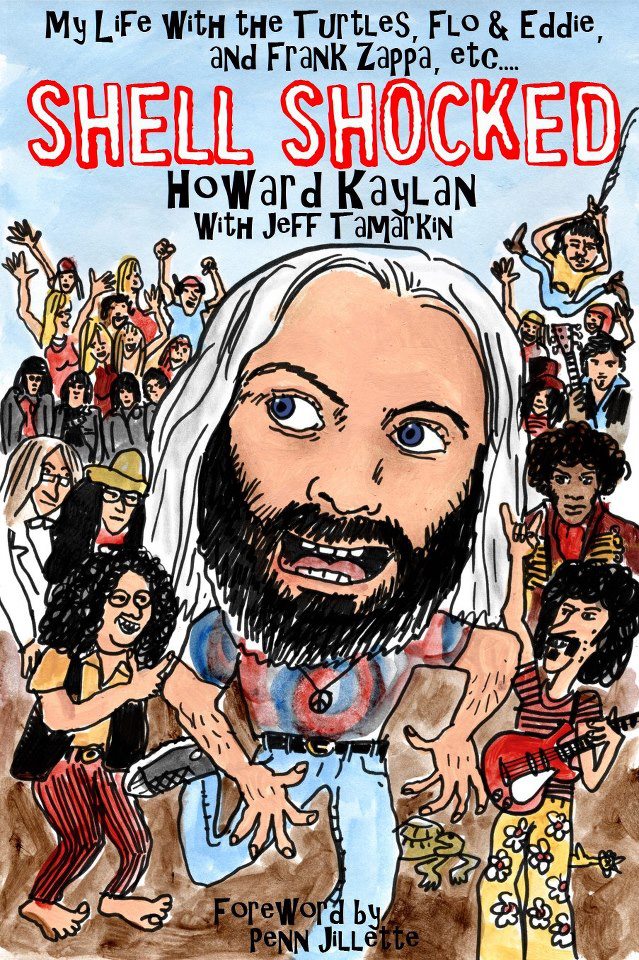
Shell Shocked: My Life with the Turtles

One of the most self-deprecating books I’ve ever read. Howard Kaylan goes through his career with the Turtles who never really took themselves too seriously. They wanted to be the American Beatles…just like every other band at the time but did it with a sense of humor. They were a singles band that had quite a number of top 40 hits. According to Howard, they lucked into most of it. They only wrote a couple of their hits.

Their hits included “Happy Together” #1, “It Aint Me Babe” # 8, “She’d Rather Be With Me” #3, Eleanor #6, “You Showed Me” #6 and many more.

After the Turtles broke up, he and Mark Volman went by the name “Flo and Eddie,” for legal reasons and made a career of unusual rock-comedy albums and developed a following. They immediately began playing with Frank Zappa and the Mothers of Invention and was there when Frank was pushed off the stage at the Rainbow. They were also in the Zappa movie 200 Motels.

After Zappa, they worked as a duo and released a lot of albums for many different labels.  They were more known for their live performances and they were a good opening act. Howard and Mark were columnists, radio hosts, session backup singers, talk show hosts, actors, composers, and anything else to make ends meet. They did the background vocals on Hungry Heart by Bruce Springsteen.

Howard and Mark wrote the Strawberry Shortcake theme and they wrote music for the Care Bears.

Another rock autobiography…big surprise! But unlike some of the others…Howard wasn’t rich and could not live off of royalties or constant touring like many of the other rock stars that have spilled it all recently.  After the breakup, The Turtles could not even tour as the Turtles until later on because of their label. They were broke many times but opportunities would pop up like being radio hosts and would help them make it to the next big thing.

Now they tour on the Happy Together tour with other artists and have been doing it since the eighties off and on.

They ended up owning their name and the master recordings from the 1960s because the label went broke and they were smart enough to get the rights… Howard and Mark were the first to sue rap artists for sampling their material without paying for it. They won and now everyone has to pay to sample anything from another artist. The Turtles were the first big artists with a catalog to sign with Rhino Record and helped the label to take off.

It may be the funniest of all the recent biographies. He ran into a lot of famous people and even made a movie out of meeting the Beatles and Jimi Hendrix in 1967 at the Speakeasy in London called “My Dinner With Jimi.”

It is a funny book with a lot of laughs but you have to scratch your head while reading about Howard making the same mistakes over and over. For Howard, it was drugs, women, marriage, drugs, a girlfriend, divorce, marriage and more drugs…maybe it’s not that much different from the richer stars after all.

I was never a big Turtle fan. I have an account with Audible and this was recommended. Overall I did enjoy it.

Below is an excerpt from the book about meeting The Beatles in 1967 and John Lennon being vicious toward Turtle rhythm guitar player Jim Tucker… Today Jim Tucker denies this ever happened. He said that John didn’t even say a word to any of them so who knows?

Paul said, “I really enjoyed your record.” And then, to me, “Great voice, man. Nice set of pipes.” I was bursting.
Then Lennon. “Yeah, that’s a lovely bit of Flower Power in the middle there with those ba-ba-bas.” And then all three of them sang the ba-ba-bas. And we were all beside ourselves with swollen pride.
“So, where did you learn to sing?” Paul asked me.
“High school choir, I guess. Then we formed the band and started playing local clubs, you know, a little bit of R&B stuff—”
“What kind of R&B stuff.”
“Oh, you know, ‘Money,’ ‘What’d I Say,’ ‘Justine’…”
“‘Justine’ by Don and Dewey? I love that song.”
And then Paul began to sing the Crossfires’ trademark soul song. I joined in on the answers and the chorus. Ringo played spoons on the tabletop while the customers watched and Lennon looked on as if bored to death. When we were done, there was a smattering of applause and Paul said, “That was great. I’d love to do that with my band some day. You sing great.”
“Oh my God, thank you,” I gushed.
“Still, it is a bit sappy on your record there when you sing ‘invest a dime’ with that cry in your voice. A bit light in the loafers, if you ask me.”

“What?” Yeah, I became defensive all right. “We’re just trying to be the American version of you!”
“Touché” said McCartney.
“Well, that’s not bloody likely, is it?” Lennon piped in. His eyes skipped from Turtle to Turtle, checking us out for the first time. “And what do you call that guy over there?” John pointed at Tucko, who was cowering in his wrinkled brown suit, thrilled just to be noticed.
“That’s Jim Tucker, our rhythm guitar player “
“Bad suit, son. And an even worse haircut. Did you tell your barber to give you a Beatle cut? It’s awful, man. You give rhythm players a bad name.”
Tucko, oblivious, stumbled for words. “You’re like a god to me, man. You guys changed my life.”
Much to his credit, Pons tried, in vain, to turn the conversation around. “We just heard Sergeant Pepper and I’ve got to thank you on behalf of the entire world for the greatest album of all time!”
Paul graciously nodded thanks and toasted us with his beverage. But John was not to be denied.
“Tucko, is it? I could have a lot of fun with that name. Let’s see… Tucko Tucko, bo bucko, banana fanna fo fucko…”
Tucker winced and Lennon saw the weakness and went in for the kill.
“There was a boy named Tucko, a very stupid fellow—”
Finally, Jim realized that he was the butt of Lennon’s abuse and could hold back no longer.
“What is your problem, man? You’re supposed to be the Beatles! I fuckin’ loved you guys and you turn out to be assholes.”
Lennon feigned shock and recoiled at the words.
“Tsk, tsk … such language. What would your mum say?”
“She’d say you were a dick, that’s what! Man, was I wrong. You’re a total shit! I’m sorry I ever met you!”
Lennon shook his head slowly, savoring every syllable. “You never did, son. You never did.”
And with that, Jim Tucker walked away from the table, up the stairs, and into a cab. And, following the few British shows we had lined up, Jim flew home and never played music again. The Turtles would continue on as a five-piece band from that time forward. The other guys followed Jim upstairs, and our goodbyes were a lot sadder than our hellos had been.




Roger McGuinn

Those glasses and Rickenbacker equals the sixties rock band. One of my favorite guitar players ever. I loved the jangling 12 string Rickenbacker that McGuinn is famous for… Roger heard George Harrison use one and then McGuinn took it to a new level in songs like Eight Miles High.

I was lucky to see him solo in 1987. He will not rip into a Hendrix solo but the sound he gets out of his 12 string Rickenbacker is great. On the songs, he did only on his 12-string acoustic he makes them sound full without a band.

His sound is the sound of the mid-sixties. He was a founder of the Byrds and was with them through all of their incarnations. The jangly pop, country rock, and the more rock music jamming faze in the early seventies.

The Byrds started in 1964 and lasted until 1973. McGuinn was the only member to remain with the band the entire run. Personally, I like all of the phases of the band. The last phase is probably the least well known but with Clarence White playing guitar with his B-Bender was fantastic. Songs like “Lover of the Bayou,”” Ballad of Easy Rider,” and “Chestnut Mare” are memorable.

McGuinn also collaborated with Bob Dylan on the soundtrack “Pat Garrett and Billy the Kid” and joined Bob in the mid-seventies on his Rolling Thunder Revue tour.

The Byrds influenced many artists like Elvis Costello, The La’s, Wilco, REM, and The Jayhawks but the one I think of the most is Tom Petty. Tom helped revive the jangly sound in the seventies with American Girl which sounded very close to McGuinn. This is Roger talking in 2014:

“When I heard ‘American Girl’ for the first time I said, ‘when did I record that?’ I was kidding but the vocal style sounded just like me and then there was the Rickenbacker guitar, which I used. The vocal inflections were just like mine. I was told that a guy from Florida named Tom Petty wrote and sings the song, and I said that I had to meet him.

Roger invited Tom to open up for him in 1976 and they were friends after that. Roger released an album in 1991 titled “Back To Rio” with help from Tom Petty, Elvis Costello, and others.

His solo career was never too successful until 1989 with a country hit “You Aint Going Nowhere” that made it to number 6 in the Country Charts. That was ironic after being told by Nashville disc Jockey Ralph Emery in 1968 that the song wasn’t country when the Byrds covered it. In 1991 he had his most commercial album “Back To Rio” that made it to #44 on the Billboard Charts and two singles “King of the Hill”#2 and “Someone To Love”#12.

Roger, Chris Hillman, Marty Stuart are currently doing a small tour for the 50th anniversary of Sweetheart of the Rodeo…I see the Ryman on there and I see me there.

The Byrds’ Co-Founders Roger McGuinn & Chris Hillman Announce ‘Sweetheart Of The Rodeo’ 50th Anniversary Tour


Loyal Roadies

Roadies have always been an important part of a band. Occasionally some will be rise above and become well known and some will end up as an executive in the band’s organization. Some will burn out like their bosses and below are a few famous roadies.

Neil Aspinall – Beatles

The first roadie the Beatles employed. He started to help the Beatles out by driving their van from gig to gig. He was soon their road manager and personal assistant. He ended up being the Chief Executive of The Beatles company Apple Corps until 2007. He passed away in 2008.

He was a trained accountant and knew George and Paul when they were kids. He was well trusted by all members. He stayed neutral in all of the arguments while he continued to run a prosperous Apple Corps to the end.

Mal Evans – Beatles

He was hired to help out Neil Aspinall as a roadie. Mal became their personal assistant after they stopped touring. After the Beatles broke up he did some producing…he produced the Badfinger’s single “No Matter What”. He also produced Keith Moon’s first album “Two Sides of the Moon” but was replaced midway through.

In the seventies, he still did work for some of the Beatles accompanying them on trips and odds and ends. He then separated from his wife Lil and after that, he started to have bad depression. While depressed and reportedly using downers, he was shot by LAPD while holding an air rifle and refusing to put it down. He was thought highly of by all the Beatles…See George’s quote below.

George Harrison on Mal Evans

, “Mal loved his job, he was brilliant, and I often regret that he got killed. Right to this day, I keep thinking, ‘Mal, where are you?’ If only he was out there now. He was such good fun, but he was also very helpful: he could do everything…He was one of those people who loved what he was doing and didn’t have any problem about service. Everybody serves somebody in one way or another, but some people don’t like the idea. Mal had no problem with it. He was very humble, but not without dignity; it was not belittling for him to do what we wanted, so he was perfect for us because that was what we needed.” 

Red Dog – Allman Brothers

Duane Allman befriended Joe Campbell (Red Dog) a Vietnam vet and Red Dog stayed with the Allman Brothers for three decades. He gave the band his disability checks to help them stay afloat at the beginning. He soon became a trusted member of the team. His picture with all the roadies is on the back cover of the At Fillmore East album.

Here is a quote from Cameron Crowe on Red Dog when he published his book.

“I’ll admit it right now. I am a big fan of Red Dog, and have been even before he allowed me to interview him back in 1973 for a story in Rolling Stone. Hell, he was already legendary back then. But now I just have to say that I am extremely jealous of the Great Dog, because I’ve just finished reading A Book of Tails. True rock, the kind that lasts forever, is about honesty and humor and love and chasing the elusive buzz of greatness.

Ramrod – Grateful Dead

Lawrence Shurtliff (Ramrod) joined on the Grateful Dead in 1967 and in the seventies became the President of the Grateful Dead board of directors until Garcia’s death in 1995.

Bob Weir on Ramrod

“When he did join up, it was like he had always been there. I won’t say he was the missing piece, because I don’t think he was missing. He just wasn’t there. But then he was there. And he always will be. He was a huge part of what the Grateful Dead was about.”


Everclear

In the late-1990s I started to listen to this band. They were formed in the early 90s by lead singer, guitarist, and songwriter Art Alexakis. Art’s dad left his mom and family and they had to survive in rough neighborhoods in LA. Some of the songs he wrote like “Father of Mine” relates that.

I must admit I know more of their radio songs but I have listened to their older albums and they are mostly solid. The album that caught my attention was “So Much For The Afterglow” with songs “I Will Buy You A New Life,””Everything to Everyone,” and “Father of Mine.” When I heard “I Will Buy You a New Life” on the radio I was hooked and got the album.

My favorite song by them is “Wonderful” that was released in 2000 on the album “Songs from an American Movie Vol. One: Learning How to Smile.” It’s about a divorce through a child’s eyes. I can relate to that so the song hit home in a lot of ways.

They also perform a good cover of Van Morrison’s “Brown Eyed Girl.”

One song off the album is a tribute to the 1970s called “AM Radio.” That one of course I love. Art grew up in the 70s and has said he was influenced by The Beatles, Led Zeppelin, Merle Haggard, Motown, Otis Redding, and Punk Rock in general. He knows how to write good hooks that will stay with you.

The AM radio video is hilarious.

Here is “Wonderful”

I want the things that I had before
Like a Star Wars poster on my bedroom door
I wish I could count to ten
Make everything be wonderful again


AM Radio


You can hear the music on the AM radio

The VCR and the DVD
There wasn’t none of that crap back in 1970
We didn’t know about a World Wide Web
It was a whole different game being played back when I was a kid

Wanna get down in a cool way
Picture yourself on a beautiful day
Big bell bottoms and groovy long hair
Just walkin’ in style with a portable CD player
No, you would listen to the music on the AM radio
Yeah, you could hear the music on a AM radio

Flashback, ’72
Another summer in the neighborhood
Hangin’ out with nothing to do
Sometimes we’d go drivin’ around
In my sister’s Pinto 
Cruisin’ with the windows rolled down
We’d listen to the radio station
We were too damn cool to buy the eight-track tapes
There wasn’t any good time to want to be inside
My mama wanna watch that TV all goddamn night

I’d be in bed with the radio on
I would listen to it all night long
Just to hear my favorite song
You’d have to wait but you could hear it on the AM radio
Yeah, you could hear the music on a AM radio
I can still hear Mama say ?°Boy turn that radio down!?±

?°Aw, Mom. Not that show again! I don’t wanna watch that show! 
Can’t we watch Good Times or Chico and the Man or something cool? 
Turn it off!”

Things changed back in ’75
We were all growing up on the in and the outside
We got in trouble with the policeman
We got busted gettin’ high in the back of my friend’s van

I remember 1977
I started going to concerts and I saw the Led Zeppelin
I got a guitar on Christmas day
I dreamed that Jimmy Page would come from Santa Monica 
and teach me to play
Teach me to play…

There isn’t any place that I need to go
There isn’t anything that I need to know
I did not learn from the radio

Yeah when things get stupid and I just don’t know
Where to find my happy
I listen to my music on the AM radio
You can hear the music on a AM radio

I like pop, I like soul, I like rock, but I never liked disco
We like pop, we like soul, we like rock, but we never liked disco…

No I never liked disco…


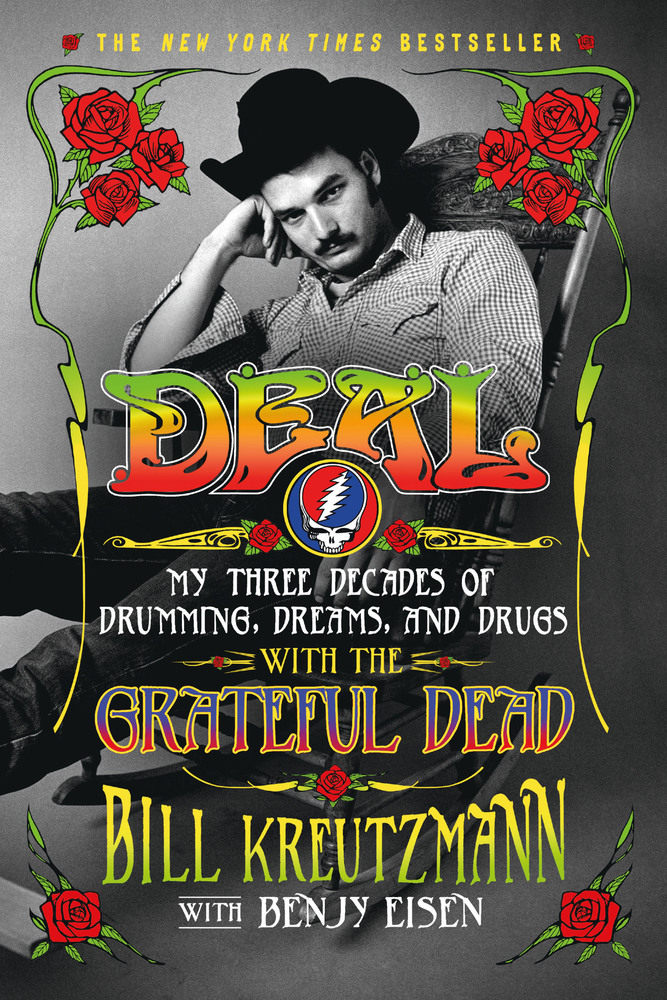
Deal by Bill Kreutzmann

The book is called Deal: My Three Decades of Drumming, Dreams, and Drugs with the Grateful Dead.

This book is what you would imagine from the drummer (one of them) of the Grateful Dead. Music, drugs, women, drugs, travels, guns, drugs, death, drink and more drugs. Actually, I really enjoyed the book. He is very open and very honest about his actions good and bad.

He is not a shy guy whatsoever. He shares his feelings about any subject that comes up. He does go into the music and how he feels about his bandmates. Most are positive but he does not hold back.

He covers the complete career of the band. He openly said he was very happy being the only drummer of the band when Mickey Hart quit and didn’t like it one bit when Mickey rejoined the band…at first anyway.

He goes into his relationship with Jerry Garcia. He also admits the guilt the band share in not trying to help Garcia more…but Jerry was his own man. He writes about the so-called keyboard player curse the band had in their career.

He tells us about the 72 European tour, shows they played near the pyramids and the Festival Express. I will say this…this band had fun. They were like a family and treated their employees well for the most part.

The only thing that I wish he would have shared more about was Pigpen. The band was apparently in the dark about how bad Pigpen was doing before he died. Maybe he didn’t share it with them.

I learned a lot about the Dead that I didn’t know about.

The book keeps going at a good pace. With the Dead’s long career he never lacks for stories. A lot of rock autobiographies are coming out and again this one takes the template that Keith Richards made with his book “Life” and fills it in.

Bill Kreutzmann from Deal about Garcia and heroin:

I’m pretty sure Jerry wasn’t into heroin during the making of Garcia; as far I know, he hadn’t even discovered it yet. But when he did, during subsequent Grateful Dead albums, it could become difficult just to get him to show up, unfortunately. That got to be really old, really fast, for all of us. We wanted to play music with him so badly that we’d put up with it, which—in hindsight—was crazy. Nobody else in the band would’ve been able to get away with it; at least, not to the extent that he did. But Jerry Garcia was the exception.
It also opens up a moral question that we can talk about now, but we can never truly answer, since he’s not with us. There was a certain feeling, toward the end, that Jerry was using the Grateful Dead to finance his drug habit. That’s a sad thought. I don’t think he ever intended it to be that way or for it to get to that point or to hurt anyone. He was as pure of a musician as they come. But heroin addiction will change a person in ways that are tragic and discouraging.


Wild Tales: A Rock and Roll Life

This is Graham Nash’s autobiography.

Graham narrates the audible version and does a good job weaving through his personal history. He starts with his blue-collar family and how Alan Clarke and he knew each other since school and formed The Hollies. The most interesting part to me was the mid-sixties era living in swinging London.

He wrote about his friendship with the Beatles and him getting an advance tape of Sgt Pepper from Brian Epstein. He had a great hi-fi system at his flat and he would show it off to anyone that came over. When the Turtles came over from America they were blown away by Sgt Peppers at top volume. He went on about how Sgt Peppers changed everything and it would eventually lead him to leave the Hollies.

Graham describes being a pop star in the mid-sixties in London. Shouldn’t we all live that life? Paul McCartney calls him up and invites him over to the All You Need Is Love session for the “Our World” program to be broadcast to millions.

He talks about how his friendship with Mama Cass led to meeting David Crosby and eventually CSN being born. Graham covers the CSNY period and his romantic relationships including  Joni Mitchell. He does cover the drama associated with CSNY and the troubled David Crosby. What kind of Rockstar bio would it be without drugs… Graham did his share and Crosby did our share. Graham handled them better than some.

Graham would write simple songs compared to Crosby, Stills, and Young but many times his songs would be the hits that drove some of the later albums…songs like “Just a Song Before I Go” and “Wasted on the Way.”

One thing I can say is he didn’t hold back or pull punches…but he still comes off as a really nice guy but it is his book.

This book helped sever his relationship with Crosby…for now anyway but Nash stressed through the book how much he cared for Crosby.

I would recommend this book to not only Hollies and CSNY fans but fans of 60’s and 70’s music and culture. After reading this I listened to more Hollies songs and I really began to appreciate their psychedelic period with songs like King Midas in Reverse.


Waging Heavy Peace

An Autobiography by Neil Young. Neil is one of my favorite artists. He tells some history about Buffalo Springfield and CSNY and also the Mynah Birds with Rick James. Neil Young and Rick James in a band together…its just hard for me to imagine that.

He gets into how he started his music career with his first band and how he loves Crazy Horse.

Now all of these stories are great but… this is during the period he came up with PONO music… a high-end music player that plays music with much more quality than CDs or mp3s. This venture eventually failed years later but he is very excited about it in the book. That is great but sometimes it seems forced. I honestly don’t think he was plugging PONO…I think he was just that excited about it. His enthusiasm is unquestionable.

Cars…the man loves cars. I admire that in him but again he talks A LOT about electric cars and hybrids. Then he combines the two…PONO music systems being installed into…fuel efficient cars. I will admit it is interesting and you get to see what makes the man tick.

Some of it reads like a diary because that is the way he wrote a lot of it. He will say he is going to Hawaii and then a page or two later…he will tell you he made it there. It’s like being in conversation with someone who will just switch subjects on a whim. Neil tends to ramble.

He is part owner in Lionel Trains and you can feel his love of trains coming through the pages. He also talks about his quadriplegic son and the Lionel Train control he designed for his son to operate the trains. That I found really heart touching. He really tries to connect with his son and that is what the album Trans is all about.

He goes through his drug and drinking problems, medical problems, marriage problems, and every single car or bus he has had in his life…which again he just loves any kind of vehicle.

The disappointment for me was Neil didn’t talk enough about the music. Yes, you will learn more about Neil Young. I did learn many things about him that I didn’t know. The problem is he spreads the music sections out and just when he gets on a roll, you are thinking… cool he is writing about playing with Buffalo Springfield and also where they hung out…here comes the PONO Music bit or more car information.

I guess the best way to sum it up is yes you will get a lot of the musical info you are looking for but you have to wade through a lot of rambling.

Overall if you can find this book 2nd hand, get it. If you are looking for a definitive Neil Young bio this is not the one… He does have great things to say about the members of CSNY, Buffalo Springfield, and Crazy Horse. Maybe I wanted another Testimony or My Cross to Bear…this wasn’t it…but what did I expect? It’s Neil Young and he is going to do what he wants to do… that is the reason we love him.

I will admit this…after he mentions all the vintage cars and busses he has owned his enthusiasm rubs off…I started to look these models up and reading about them… but it wasn’t what I had in mind going into the book.

Free As A Bird

In the 1990s I kept reading about the Beatles Anthology coming out and the three surviving Beatles getting back together to release old never heard before music as well as new. They were going to take a John Lennon demo and add something to it. This was beyond exciting for me. I was too young to remember a new Beatles song coming out.

It had an older feel but sounded modern at the same time. George Harrison’s distorted slide guitar playing brought an edge to it. It even had the strange ending like some of their other songs.

I got an early release of the Anthology CD from a friend of mine that worked in a record store and he said…don’t tell anyone. I sat glued to Free As a Bird because for once I was listening to a new Beatles song… I was one-year-old in1968 so I missed them when they were originally out. I liked the song and still do. I have talked to Beatles fans who don’t really like it that much but the song has stuck with me. Real Love…the second release didn’t do as much for me because it was basically a solo John Lennon song.

Was Free As a Bird the best song in the Beatles catalog? No not even close but just to hear something new was fantastic. The Anthology videos and CDs jump-started their popularity all over again…and it hasn’t stopped since then. I had cousins who were teenagers at the time who never had an interest in them until Anthology came out. All I could say to them was…I’ve told you for years.

The video of Free As a Bird is fantastic and still one of my favorite music videos. It told their history through the different eras of their career. Every time I watch it I always notice something I didn’t notice before.

Little did he know that day in1977 when John made a demo of a song idea on a cheap cassette recorder… it would be a future Beatle song. Not to even mention that the tape itself would be part of the song.

It did win a Grammy Award for Best Pop Performance by a Duo or Group with Vocal…

After reading the mixed reactions one thing dawned on me. The Beatles did the right thing by not reuniting when John was alive. There is no way they could have made anything that would have lived up to the expectations of everyone…You cannot compete against a memory because you lose every time… But yea… I still would have loved to hear it.


My Cross To Bear

I was never a huge Allman Brothers Band fan. I always respected them and I liked their radio songs and heard enough of Duane Allman to know he was a great slide guitar player. I also knew Gregg could make any song his song because of his vocals. I never really wanted to know more about them.

A friend of mine recommended Gregg Allman’s autobiography My Cross To Bear. I have a 72-mile round trip car ride to work every day so I downloaded the audio version. I took a  chance on this one a couple of years ago and I really enjoyed it.  I also downloaded the E-book after I finished it.

The Allman Brothers have always been known as the Godfathers of Southern Rock. I never considered them Southern Rock…like Gregg himself said… they were a blues band with some jazz thrown in and they were from the south.

The audiobook is narrated by Will Patton who does a great job of channeling Gregg.

It is like having Gregg over on your back porch telling you these great stories. He is very down to earth and does not try to make his mistakes sound like someone else’s fault. If you want to know about Duane Allman get this book. He is honest about his brother…warts and all. He doesn’t try to whitewash himself either.

He starts at the Rock and Roll Hall of Fame induction where he was sick, miserable, and bloated because of his drinking problem…from there he starts going back through his personal history and the many ups and downs of the Allman Brothers. He covers the bands that Duane and he formed…The Escorts, The Allman Joys (which I would have kept that name) and Hourglass.

Hourglass made a couple of albums of original material and covers but the record company made them “pop” everything up. They would not let them play with an edge. The Escorts and Allman Joys were cover bands… very good cover bands.

After reading the book I have started to listen to the Allman Brothers more. He gives you some funny stories and you see how close that band was in the early days before Duane and Berry Oakley died. He mentions his struggles with Dickey Betts, alcohol, drugs and wives. You also read about a “foot shooting” party…

He also talks about being on stage noticing Eric Clapton among the audience. That led to the Layla sessions. Eric was a big fan of Duane’s slide playing.

You learn some history about a cover band’s travels, trials, and tribulations in the mid-1960s…youtube has a few crude recordings of the Allman Joys live in the mid-60s. Below is The Allman Joys version of Help. I would have never thought it was Gregg Allman singing.

If you are a music fan you will probably enjoy this book.

Help by the Allman Joys in 1966 is the opening song.

Neil Young and John Fogerty Lawsuits

In the eighties, two lawsuits popped up pertaining to these two artists.

Neil Young was basically sued for NOT sounding like himself by David Geffen and John Fogerty was sued for sounding too MUCH like himself by Saul Zaentz and Fantasy Records.

In the early eighties, David Geffen signed Neil Young to a huge contract to Geffen Records. Neil who will do his own thing no matter what or when…released an album called “Trans” his foray into electronic music. Geffen wanted another “Harvest” with another Heart of Gold or Old Man…instead he got “Computer Age” and “We R in Control” with Neil singing through a Vocoder. After that Neil was asked to do more rock and roll by a Geffen record company executive…the record company was thinking more of the lines of the harder rock Rust Never Sleeps…so Neil gave them rock and roll all right… “Everybody’s Rockin” an album full of early fifties Doo-wop and rockabilly sounding songs. The record company was not amused…he then released an album full of country music… In his contract, Neil had full artistic freedom.

Geffen had claimed the new albums were  “unrepresentative” of Neil’s music.

Geffen sued him for 3.3 million dollars but the case was settled and Geffen had to apologize to Neil.

In 1985 John Fogerty finally broke his silence with the album Centerfield. He had not released anything since 1975. He was involved with legal hassles and could not make music. Centerfield was a good album that signaled to the world John was back. He then was sued by Fantasy Records owner Saul Zaentz who signed the great Creedence Clearwater Revival to a terrible contract with Fantasy Records that kept John…the main songwriter and singer under contract forever. On top of that John gave up his copyrights to his CCR songs to Saul and Fantasy just to get out of that contract. The first single off of the Centerfield album “Old Man Down the Road” shot up the charts. Saul sued claiming it sounded too much like an old Creedence song that John wrote and sang called “Run Through the Jungle”. So he was being sued for plagiarizing himself. John would take his guitar to court to demonstrate how he wrote the two songs.

John won the case in 1988 and a lot of other musicians breathed a sigh of relief because other artists could have been sued for sounding like their younger selves if John would have lost. John countersued Fantasy Records for legal fees and it went to the Supreme Court in 1994…. they ruled in favor of Fogerty.


IT 1990 and IT 2017

The new trailer for IT Chapter 2 is out now.

https://www.youtube.com/watch?v=M4_NFYeXVCU&ab_channel=HauntedBlood

I’ve never seen IT as a horror story…I’ve seen it as a coming of age story with scary twists. I really like the novel and I wanted to see something as close as possible to the book. The book is much better than either the movie or miniseries but that is usually how it is.

I went to see IT (2017) with very high hopes. I realized before I traveled to the theater that they could never meet my expectations. My hope (and far-fetched dream) was that they would have made an HBO series of the novel. It would have been fifteen to twenty hour-long episodes. I wanted so much for the novel to come to life on screen. That wasn’t going to happen in one movie but I will say that yes I enjoyed it.

I’m not one of those who dismiss the 1990 mini-series. They were working with a low budget and the constraints of television. I thought the children were perfectly cast. The first episode was superior to the second episode but the second had it’s moments…not counting the terrible spider or the ponytail on Richard Thomas. The one thing IT 1990 had over 2017 is overall creepiness. Maybe it was Tim Curry and the late 80s sound effects.

IT 2017 was much better looking and I liked Bill Skarsgård’s version of Pennywise. The way he toyed with Georgie was classic. They revealed way too much in the many trailers and sneak peeks. Most of the movie you knew what was coming next. My biggest problem is the kids really didn’t have time to bond. Also, the time change from the 1950’s to the 1980s…did Andrés Muschietti just think the audience today could not comprehend the 50’s? The reason I liked the 50’s backdrop is that kids were more innocent then and Pennywise in that era would be more of a shock.

It’s not really fair to judge the new IT until Chapter 2 comes out in September but Chapter 1 was enjoyable. I’m happy the story has been revived again.