Recently I’ve been listening to some early Pink Floyd. This was quite a bit different from their more famous 70s-80s output. I like what I’ve heard so far from the Syd Barret days.
Syd Barrett wrote this…he was one of the band’s original members and the group’s leader. He became very unpredictable, sometimes refusing to play at shows.
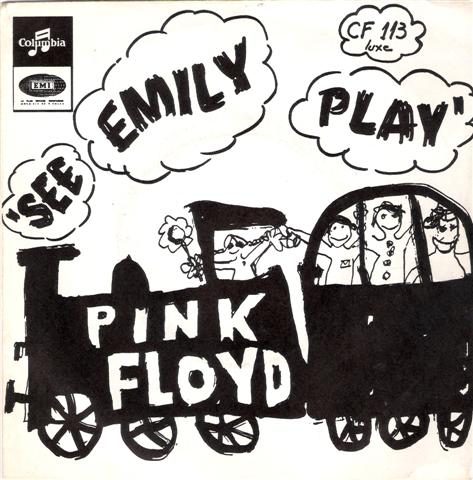
Barrett claimed “Emily” was a girl he saw when he woke up one night after sleeping in the woods after a gig. It is unclear if she was a real person or a drug-induced hallucination.
David Gilmour was asked by the members of Pink Floyd to join the band to supplement the guitar work of the increasingly erratic Syd Barrett. For a brief time, Syd and David were both members of Pink Floyd at the same time. When Barrett’s mental breakdown made it impossible for him to continue with the group, Gilmour became a permanent, contributing member in time for their second album, 1968’s A Saucerful of Secrets. Syd Barrett contributed one track to that album, his last with Pink Floyd. Syd departed the band soon after that.
The song peaked at #6 in the UK, #134 in Billboard, and #25 in Germany in 1967.
From Songfacts
This was Pink Floyd’s second single. Their first was “Arnold Layne.”
Barrett did the slide guitar work on this song with a Zippo lighter (he used it as a slide, not to set the guitar on fire).
The original title was “Games For May.” They performed it live a few times before changing it.
This is an example of the psychedelic sound Pink Floyd was known for. Over the next few years, they tried to lose the psychedelic image because they wanted people to know there was much more to their music.
This was included on the 2001 Pink Floyd retrospective album, Echoes. The tracks flow seamlessly together.
The song was inspired in part by 15-year-old schoolgirl Emily Young, who was the daughter of Wayland Young, 2nd Baron Kennet. She recalled to Mojo:
“On Friday night at the Saints Hall, the regular band was the Pink Floyd Sound. I was more into R&B, so their dreamy hippie thing wasn’t exactly my cup of tea, but it was interesting. And the light show was wonderful, and I liked to get stoned and dance. After playing, we’d sit around on grey sofas and pass around joints. I was quite pretty and word got out that I was a lord’s daughter, and apparently the guys in the band called me the ‘psychedelic schoolgirl.'”
“See Emily Play” began life as a Syd Barrett song written for Pink Floyd’s concert-cum-happening Games For May at the Queen Elizabeth Hall on May 12, 1967. Emily missed the event but someone told her all about it. She recalled: “I thought, gosh, that’s nice, a song with my name, but I didn’t think it was about me. And I don’t think it was now because Syd and me didn’t have a love affair and he didn’t really know me. It could have been some other girl who played a part in his dream. It could have been Jenny, but Emily scanned better.”
See Emily Play
Emily tries but misunderstands, ah ooh She’s often inclined to borrow somebody’s dreams till tomorrow There is no other day Let’s try it another way
You’ll lose your mind and play Free games for May See Emily play
Soon after dark Emily cries, ah ooh Gazing through trees in sorrow hardly a sound till tomorrow There is no other day Let’s try it another way You’ll lose your mind and play
Free games for May See Emily play
Put on a gown that touches the ground, ah ooh Float on a river forever and ever, Emily (Emily)
There is no other day Let’s try it another way You’ll lose your mind and play Free games for May See Emily play
You say you’ll change the constitution Well, you know We all want to change your head
This song was the B side to Hey Jude…a heck of a B side. John Lennon wanted it to be the first A-side released on Apple Records, the label The Beatles started, but Paul McCartney’s “Hey Jude” got the honor.
This was the first overtly political Beatles song. It was John Lennon’s response to the Vietnam War.
The “Hey Jude” and “Revolution” videos were shot in a studio setting and meant to look like the band was performing it live. They both aired September 8 on Frost On Sunday, a popular UK show hosted by David Frost, who was at the Twickenham shoot to introduce the clip for the segment on his show, making it appear that the band was really there.
*** A little fun here… I always wondered about the Revolution video. Between 10-13 seconds on the video below you see George say something to Paul. It’s either “John’s mic is sh*t” or something else …what do you think? Any lip readers?
The dirty guitar sound was created by plugging the guitars directly into the audio board and overloading it. The guitar sounded so scratchy that many who bought the 45 RPM single tried to return it, thinking it was defective.
There are two very different versions of this song… a slow version that appears on The White Album, and a fast, loud version was released as a single. In the slow version, Lennon says “count me in” as well as “count me out” when referring to violence. This gives the song a dual meaning.
The song peaked at #12 in the Billboard 100 and #1 in Canada
John Lennon: “I wanted to put out what I felt about revolution,” “I thought it was about time we spoke about it, the same as I thought it was about time we stopped not answering about the Vietnamese war when we were on tour with Brian Epstein and had to tell him, ‘We’re going to talk about the war this time and we’re not going to just waffle’…That’s why I did it: I wanted to talk. I wanted to say my piece about revolutions. I wanted to tell you, or whoever listens, to communicate, to say, ‘What do you say? This is what I say.'”
Paul McCartney: “It was a great song, basically John’s…it was an overtly political song about revolution and a great one. I think John later ascribed more political intent to it than he actually felt when he wrote it.”
Continuing, Paul writes: “They were very political times, obviously, with the Vietnam war going on, Chairman Mao and the Little Red Book, and all the demonstrations with people going through the streets shouting ‘Ho, Ho Ho Chi Minh!’ I think he wanted to say you can count me in for a revolution, but if you go carrying pictures of Chairman Mao ‘you ain’t gonna make it with anyone anyhow.’ By saying that I think he meant we all want to change the world Maharishi-style, because ‘Across The Universe’ also had the change-the-world theme.”
From Songfacts
John Lennon wrote this in India while The Beatles were at a transcendental meditation camp with The Maharishi. Lennon told Rolling Stone: “I had been thinking about it up in the hills in India. I still had this ‘God will save us’ feeling about it, that it’s going to be all right (even now I’m saying ‘Hold on, John, it’s going to be all right,’ otherwise, I won’t hold on) but that’s why I did it, I wanted to talk, I wanted to say my piece about revolution. I wanted to tell you, or whoever listens, to communicate, to say ‘What do you say? This is what I say.'”
Revolutionaries take different approaches to reach their goals. In a 1998 interview with Uncut, Yoko One gave her thoughts on Lennon’s approach and how he expressed it in this song: “John’s idea of revolution was that he did not want to create the situation where when you destroy statues, you become a statue. And also what he means is that there’s too much repercussion in the usual form of revolution. He preferred evolution. So you have to take a peaceful method to get peace rather than you don’t care what method you take to get peace, and he was very, very adamant about that.”
The fast version was released as the B-side of “Hey Jude” in August 1968, three months before the slow version appeared on The White Album.
\
There are so many versions of this song because Paul McCartney didn’t like it. Lennon really wanted this song to be the “A” side of the single instead of “Hey Jude,” and kept changing it around to come up with something that would make Paul see it his way. He basically wrote the song because he felt like he was being pulled in so many directions by different people, all of whom wanted his backing, politically. It was also him questioning his own belief in the revolution that was going on… whether he was “out” or “in.” In truth, he was writing about a revolution of the mind rather than a physical “in the streets” revolution. He truly believed that revolution comes from inner change rather than social violence. (This is discussed in the DVD Composing the Beatles Songbook)
Nike used this for commercials in 1987. Capitol Records, who owned the performance rights, meaning The Beatles version of the song, was paid $250,000. Michael Jackson, who owned the publishing rights, meaning use of the words and music, also had to agree and was paid for the song (Jackson acquired the rights to 251 Beatles songs in 1985 when he outbid Paul McCartney for them, fracturing their friendship in the process).
The commercials caused a huge backlash from Beatles fans who felt that Nike was disrespecting the legacy of John Lennon, who likely would have objected to its use, but the ad campaign, called “Revolution in Motion,” was successful, helping Nike expand their market by featuring ordinary joggers, gym rats and cyclists. “We’re trying to promote the concept of revolutionary changes in the fitness movement and show how Nike parallels those changes with product development,” the company stated. “Because of this ‘revolution,’ we were able to draw a strong correlation with the music and the lyrics in the Beatles song.”
It wasn’t just fans who had beef with the ads: the surviving Beatles, along with Yoko Ono (representing Lennon’s estate), sued Nike, bringing even more publicity to the campaign. The ads ran for about a year, and eventually a settlement was reached in the lawsuit. As years went by, it became more acceptable to use songs in commercials, but Beatles songs remained off-limits, as any use would result in a lawsuit and hostile reaction by fans. What was “revolutionary” about the Nike commercials were that they were the first to do it.
In 2002, “When I’m 64” was used in a commercial for Allstate insurance. Many Beatles fans were not pleased, but it didn’t get nearly the reaction of the Nike commercials, partly because it was not a political song, but also because it was sung by Julian Lennon, which implied endorsement by his father.
On September 4, 1968, The Beatles made a promotional film for this song and “Hey Jude” at Twickenham Studios in London. These were directed by Michael Lindsay-Hogg, who did the previous Beatles videos: “Paperback Writer” and “Rain.”
Unlike those clips, which were shot outdoors, the “Hey Jude” and “Revolution” videos were shot in a studio setting and meant to look like the band was performing it live. They both aired September 8 on Frost On Sunday, a popular UK show hosted by David Frost, who was at the Twickenham shoot to introduce the clip for the segment on his show, making it appear that the band was really there.
Another edit of the footage was later broadcast on Top Of The Pops, and yet another was shown in America on The Smothers Brothers Comedy Hour. When the Beatles compilation 1+ was released in 2015, a restored version of the video was included in the set.
Before this song was used to shill for Nike, Yoko Ono was fine with using John Lennon’s music in commercials; she authorized “Imagine” for a Japanese ad and said it was “making John’s music accessible to a new generation.” Nike bypassed the living Beatles, but went to her for approval, since the lead vocalist (the “principal performer”) of a song needs to grant permission under certain statutes. Also, as the keeper of Lennon’s legacy, it helped to have her consent for publicity purposes. Nike claimed the song was used “with the active support of Yoko Ono Lennon.”
This is one of the Beatles songs (“Help!” and “In My Life” are other examples) where John Lennon’s falsetto makes an appearance. He takes it up high for the word “be” in the line, “You know it’s gonna be all right.”
Nicky Hopkins played the piano. When The Beatles needed keyboards, they usually used Hopkins, Billy Preston, or their producer, George Martin.
The word “Revolution” is mentioned just once, in the first line.
John Lennon wanted his vocals to have an unusual sound, so he recorded most of them lying on his back in the studio. The famous scream at the beginning is a double-tracked recording of Lennon. >>
The version on the Hey Jude compilation, released in February 1970 in the US, was the B-side of the “Hey Jude” single. The Hey Jude compilation album peaked at #2 in the US and consists of a collection of singles and B-sides that had not previously appeared on US non-soundtrack album releases. The album cover was taken at the final Beatles photo session, at Lennon’s (later Starr’s) country estate in Ascot, England. >>
Thompson Twins performed this song at the Philadelphia stage of Live Aid on July 13, 1985. The concert, which raised money for famine relief in Africa, had a global audience of at least 1.5 billion. Thompson Twins were joined on stage for the performance by Madonna (who contributed backing vocals and tambourine), Steve Stevens (best known as Billy Idol’s guitarist) and Nile Rodgers, who was also on guitar.
Thompson Twins included the song on their album Here’s to Future Days, which was released a few months later and produced by Rodgers.
The Stone Temple Pilots performed this at Madison Square Garden as part of the 2001 special, Come Together: A Night For John Lennon’s Words And Music. Their version was released as a single, with proceeds going to charity.
Revolution
You say you want a revolution Well, you know We all want to change the world You tell me that it’s evolution Well, you know We all want to change the world
But when you talk about destruction Don’t you know that you can count me out Don’t you know it’s gonna be All right, all right, all right
You say you got a real solution Well, you know We’d all love to see the plan You ask me for a contribution Well, you know We’re doing what we can
But if you want money for people with minds that hate All I can tell is brother you have to wait Don’t you know it’s gonna be All right, all right, all right
You say you’ll change the constitution Well, you know We all want to change your head You tell me it’s the institution Well, you know You better free you mind instead
But if you go carrying pictures of chairman Mao You ain’t going to make it with anyone anyhow Don’t you know it’s gonna be All right, all right, all right All right, all right, all right All right, all right, all right All right, all right
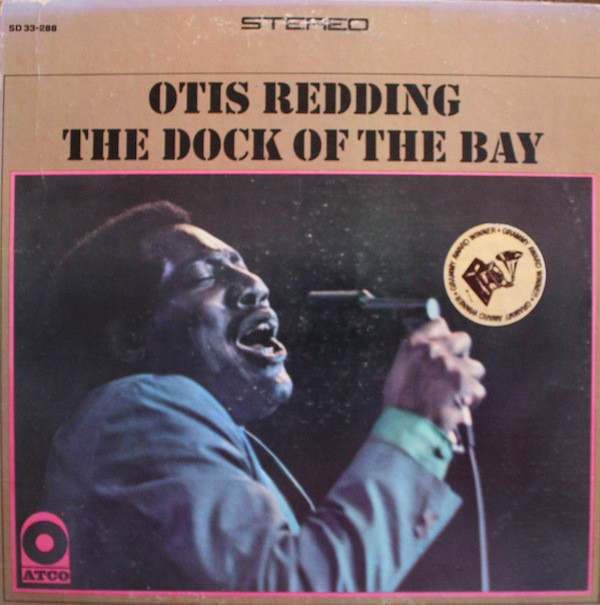
The song is a true classic. Stax guitarist Steve Cropper wrote this with Redding. Cropper produced the album when Redding died, including this track with various songs Redding had recorded the last few years.
Redding died in a plane crash on December 10, 1967, a month before this song was released (January 8, 1968) and three days after he recorded it. It was by far his biggest hit and was also the first-ever posthumous #1 single in the US.
Stax Records chief Jim Stewart did not want the song released because it was unlike his other music. Redding and Cropper both insisted that it would be his first #1 single. Stewart relented when he heard the finished master recording put together by Cropper after Redding’s death.
The music licensing company BMI named this as the sixth-most performed song of the 20th century, with around 6 million performances.
The song peaked at #1 in the Billboard 100, #7 in Canada, #3 in the UK, and #3 in New Zealand in 1968.
Steve Cropper:“Otis was one of those kind of guys who had 100 ideas. Anytime he came in to record he always had 10 or 15 different intros or titles, or whatever. He had been at San Francisco playing The Fillmore, and he was staying at a boathouse (in Sausalito, across the bay from San Francisco), which is where he got the idea of the ship coming in. That’s about all he had: ‘I watch the ships come in and I watch them roll away again.’ I took that and finished the lyrics.
If you listen to the songs I wrote with Otis, most of the lyrics are about him. He didn’t usually write about himself, but I did. ‘Mr. Pitiful,’ ‘Sad Song Fa-Fa,’ they were about Otis’ life. ‘Dock Of The Bay’ was exactly that: ‘I left my home in Georgia, headed for the Frisco Bay’ was all about him going out to San Francisco to perform.”
From Songfacts
Redding ended up sitting on a dock on the San Francisco Bay thanks to Bill Graham, who ran the Fillmore West Auditorium. Redding played three shows there, December 20-22, 1966. Graham gave Redding a choice: he could stay at a hotel, or at a boathouse in nearby Sausalito. Redding liked the outdoors, so he chose the boathouse.
Redding was the star recording artist for Stax Records, a Memphis label that made classic soul music. The death of Redding was a big blow to the label, and while it certainly had an impact on their demise in the ’70s, there were other factors as well, including financial mismanagement and a change in musical tastes. In 2001, construction started on a soul music museum where the studios once stood, and it opened in 2003. To learn more about the museum and the Stax legacy, check out Stax Today.
The end of this song contains perhaps the most famous whistling in music history. It wasn’t planned, but when Steve Cropper and Stax engineer Ronnie Capone heard it, they knew it had to stay. Cropper explained on his website: “If you’re an Otis Redding fan you’d know that he’s probably the world’s greatest at ad-libbing at the end of a song. Sometimes you could go another minute or two with Otis Redding’s ad-libs – they were so spontaneous and felt so great. And this particular song I think baffled Otis a little bit because of the tempo and the mood, so when we got down to the end of it he really didn’t have anything to ad-lib with, and he just started whistling. That just sparked Ronnie Capone and myself off, and almost immediately we said, ‘Hey man, that’s great, leave that in there.’ It sure is a cool melody to go out with.”
Beach sound effects (waves, seagulls, etc.), were dubbed in after the recording. Steve Cropper explained why: “I played acoustic guitar on the session and there are some outtakes on the record where you can hear Otis clowning around with seagulls – he was always kind of a funny jokester in the studio and he was going ‘caw, caw, caw.’ That was where I got the idea of getting the seagull sounds. I went over to the soundtrack library at Pepper Records – a jingle company – and I got one of their sound effect records. I got the seagulls and the waves and I made a little tape loop on a two-track machine. I ran that as I mixed the record – I would bring them up and down in the holds. And I overdubbed the guitar. We were cutting on 4-track in those days – we had moved up from mono and stereo and up to big ol’ 4-tracks, so we had a lot of tracks to work with. So we had 6-tracks because I had the 2-track going on one side with seagulls and one side with waves. I got that record mixed and got it off to Atlantic and it came out.”
He added: “The licks that I overdubbed on ‘Dock Of The Bay,’ I don’t know if there was anything really special about them except that that was probably as high a position as I’ve ever played those licks when I did it. I was trying to get something that felt like seagulls – that real high thing. So, I was playing some high licks that were not necessarily imitating seagulls but the thought of seagulls being really high. I was trying to get something a little moody like that.”
Redding recorded this with Booker T. & the MG’s, the house band for Stax Records. They played with all the Stax artists, including Wilson Pickett, Sam & Dave, and Albert King, and had a hit on their own with “Green Onions” in 1962.
Redding died five months before Martin Luther King, Jr. was shot in Memphis, where this was recorded. Amid the angry racial tensions, “Dock of the Bay” stood out as an integrated collaboration in a segregated city; Redding’s co-writer/producer Steve Cropper was white, as was Donald “Duck” Dunn, who played bass on the track.
The plan was to use background singers on this track, possibly the Staple Singers, but when Redding died there was no time for that.
Booker T. & the MG’s were on tour when they found out about Redding’s death. They were in an Indiana airport with their flight delayed because of snow when one of their members called the Stax office and got the horrific news. When they returned to Memphis, Steve Cropper mixed the song for release. He said it was “maybe the toughest thing I’ve ever done.” Redding’s body had not even been recovered when Cropper finished the song.
Redding started to compose this song while he was recovering from surgery removing polyps from his vocal cords. The doctors told him not to sing or talk for six weeks after the operation.
Under pressure from the record company, Steve Cropper rushed to get this song finished as soon as word got out that Redding had died. “That’s just the way record companies operate,” he said. “They actually had me go in and try to finish the song up – they had not even found Otis’ body yet, which was a very difficult time for me, but somehow I got through it.”
The hit potential was obvious when this song was being recorded. Cropper explained: “Really being different from most Otis Redding songs, it was a little more middle-of-the-road tempo-wise. It wasn’t a ballad and it wasn’t an uptempo, hard rock, dancing kind of thing that he was known for. It was more laid back, and we had been looking for a crossover song – a song that leaves the R&B charts and crosses over to the pop charts – and in this song we knew we had it. It was just something we had a feeling about. We listened to it and went, ‘This is it!’ We just knew beyond a doubt that this was the song. This was a hit.”
During the Vietnam War, this was very popular with American troops fighting there, as the song portrayed quite the opposite of their reality. Accordingly, it was used in two 1987 films that take place during the war: Platoon and Hamburger Hill.
This won 1968 Grammy Awards for Best Rhythm & Blues Performance, plus Best Rhythm & Blues Song for writers Otis Redding and Steve Cropper.
If you equate the beach and bird noises to putting stickers on a Picasso, there are two very good outtakes of the song available on the Otis Redding collection Remember Me
that are free of the overdubs. Stax Records had recently purchased a 4-track recorder, which made it easy to add the extra sounds.
Dock of the Bay
Sittin’ in the mornin’ sun I’ll be sittin’ when the evenin’ comes Watching the ships roll in Then I watch ’em roll away again, yeah I’m sittin’ on the dock of the bay Watchin’ the tide roll away, ooh I’m just sittin’ on the dock of the bay Wastin’ time
I left my home in Georgia Headed for the Frisco Bay ‘Cause I’ve had nothin’ to live for It look like nothin’s gonna come my way So I’m just gon’ sitt on the dock of the bay Watchin’ the tide roll away, ooh I’m sittin’ on the dock of the bay Wastin’ time
Look like nothing’s gonna change Everything, still remains the same I can’t do what ten people tell me to do So I guess I’ll remain the same, yes
Sittin’ here restin’ my bones And this loneliness won’t leave me alone, listen Two thousand miles, I roam Just to make this dock my home Now I’m just gon’ sit, at the dock of the bay Watchin’ the tide roll away, ooh yeah Sittin’ on the dock of the bay Wastin’ time
This song is iconic and known all over the world. I automatically think of motorcycles and bar bands. We played in a few bars that bikers were visitors…this song was a requirement if you wanted to continue breathing.
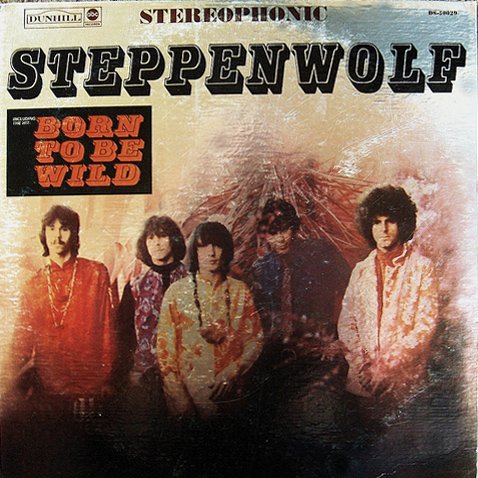
Born To Be Wild has been used in countless amounts of shows and movies…One request to use the song however was turned down in 2004. Paris Hilton wanted to use it as part of her reality show The Simple Life 2. Kay denied it, telling the Toronto Star, “There are certain things even a rock ‘n’ roller will not stoop to.”
After reading that…my respect for John Kay just took a giant leap!
The song was used in the 1969 movie Easy Rider, the counterculture classic. Another Steppenwolf song, “The Pusher,” was also used in the film.
When the movie was in production, this was simply a placeholder. Peter Fonda wanted Crosby, Stills, and Nash to do the soundtrack. It became clear that the song belonged in the movie, and it stayed. Being included in this movie cemented the song’s association with motorcycles… “Teach Your Children” just doesn’t have the same ring, does it?
This was written by Mars Bonfire, which is the stage name of Dennis Edmonton. He wasn’t a member of Steppenwolf, but his brother Jerry was the band’s drummer. Bonfire wrote a few other songs for Steppenwolf as well, including “Ride With Me” and “Tenderness.”
With the line “heavy metal thunder,” this became the first popular song to use the phrase “heavy metal,” which became a term for hard rock. William Burroughs is credited with coining the phrase, as he used it in his 1961 novel The Soft Machine, describing his character Uranian Willy as “the Heavy Metal Kid.”
The song peaked at #2 in the Billboard 100, #1 in Canada, #30 in the UK, and #32 in New Zealand in 1968.
Mars Bonfire (Writer): “I was walking down Hollywood Boulevard one day and saw a poster in a window saying ‘Born to Ride’ with a picture of a motorcycle erupting out of the earth like a volcano with all this fire around it. Around this time I had just purchased my first car, a little secondhand Ford Falcon. So all this came together lyrically: the idea of the motorcycle coming out along with the freedom and joy I felt in having my first car and being able to drive myself around whenever I wanted. ‘Born To Be Wild’ didn’t stand out initially. Even the publishers at Leeds Music didn’t take it as the first or second song I gave them. They got it only because I signed as a staff writer. Luckily, it stood out for Steppenwolf. It’s like a fluke rather than an achievement, though.”
Born To Be Wild
Get your motor runnin’ Head out on the highway Lookin’ for adventure And whatever comes our way Yeah Darlin’ go make it happen Take the world in a love embrace Fire all of your guns at once and Explode into space
I like smoke and lightning Heavy metal thunder Racin’ with the wind And the feelin’ that I’m under Yeah Darlin’ go make it happen Take the world in a love embrace Fire all of your guns at once and Explode into space
Like a true nature’s child We were born, born to be wild We can climb so high I never wanna die
Born to be wild Born to be wild
Get your motor runnin’ Head out on the highway Lookin’ for adventure And whatever comes our way Yeah Darlin’ go make it happen Take the world in a love embrace Fire all of your guns at once and Explode into space
Like a true nature’s child We were born, born to be wild We can climb so high I never wanna die
When I hear jangly Rickenbacker guitars I’m automatically happy … The Byrds influence everyone from Tom Petty to Cheap Trick to Big Star to new bands now. If I could go back to any era… it would be the mid-sixties. Much of the music we hear today has elements of this period.
Bob Dylan wrote “Mr. Tambourine Man,” which was originally released on his fifth album Bringing It All Back Home in early 1965. His version wasn’t released as a single, but when The Byrds released their cover later in 1965, it was a massive hit.
It peaked at #1 in the Billboard 100, #1 in the UK, and #2 in Canada in 1965. topping the charts in both the US and UK. It’s the only song Dylan ever wrote that went to #1 in America.
Roger Mcguinn said he was trying for a vocal between John Lennon and Bob Dylan.
David Crosby:“He came to hear us in the studio when we were building The Byrds. After the word got out that we gonna do ‘Mr. Tambourine Man’ and we were probably gonna be good, he came there and he heard us playing his song electric, and you could see the gears grinding in his head. It was plain as day. It was like watching a slow-motion lightning bolt.”
From Songfacts
Dylan wrote this on a road trip he took with some friends from New York to San Francisco. They smoked lots of marijuana along the way, replenishing their stash at post offices where they had mailed pot along the way.
The Byrds version is based on Bob Dylan’s demo of the song that he recorded during sessions for his 1964 album Another Side of Bob Dylan (Dylan’s version was not yet released when The Byrds recorded it). It was The Byrds manager Jim Dickson who brought in the demo and asked them to record it – the group refused at first because they thought it didn’t have any hit potential. When The Byrds did record it, they took some lyrics out and added a 12-string guitar lead.
Only three of the five members of the Byrds performed on this song: Roger McGuinn sang lead and played lead guitar; Gene Clark and David Crosby did the vocal harmonies.
Session musicians were brought in to play the other instruments, since the band was just starting out and wasn’t deemed good enough yet by their management. The session musicians who played on this song were the Los Angeles members of what came to be known as “The Wrecking Crew” when drummer Hal Blaine used that term in his 1990 book. This group of about 50 players ended up on many hit songs of the era.
The Byrds who didn’t play on this one were bass player Chris Hillman and drummer Michael Clarke.
This was the Byrds’ first single. In a 1975 interview with Let It Rock, Roger McGuinn explained how the unrefined sound of this song came about. Said McGuinn: “To get that sound, that hit sound, that ‘Mr. Tambourine Man’ sound, we just ran it through the electronics which were available to us at that time, which were mainly compression devices and tape delay, tape-sustain. That’s how we got it, by equalizing it properly and aiming at a specific frequency.
For stereo-buffs out there who noticed that ‘Mr. Tambourine Man’ in stereo isn’t really stereo, by the way, that’s because when Terry Melcher, the producer, first started mixing records he didn’t know how to mix stereo, and so he made all the singles up to ‘Turn Turn Turn’ mono. The label is misrepresentative. See, when Columbia Records signed us, they didn’t know what they had. So they gave production to someone low on the totem-pole-which was Terry Melcher who was Doris Day’s son who was getting a token-job-in-the-mailroom sort of thing. They gave him the Byrds and the Byrds were supposed to flunk the test.”
This was inspired by a folk guitarist named Bruce Langhorne. As Dylan explained: “Bruce was playing with me on a bunch of early records. On one session, [producer] Tom Wilson had asked him to play tambourine. And he had this gigantic tambourine. It was, like, really big. It was as big as a wagon wheel. He was playing and this vision of him playing just stuck in my mind.”
Dylan never told Langhorne about it (Bruce had to read about it in the Biograph album liner notes, like the rest of us). He wrote the song and recorded a version with Rambling Jack Elliot that got to the Byrds (known as the Jet Set at the time) before it was ever put on a record.
Dylan claims that despite popular belief, this was not about drugs: “Drugs never played a part in that song… ‘disappearing through the smoke rings in my mind,’ that’s not drugs; drugs were never that big a thing with me. I could take ’em or leave ’em, never hung me up.” >>
This was the first of many Bob Dylan songs recorded by the Byrds. Others include: “You Ain’t Goin’ Nowhere,” “The Times They Are a-Changin’,” “It’s All Over Now Baby Blue,” and “Chimes of Freedom.”
The production style was based on The Beach Boys song “Don’t Worry Baby,” which was the suggestion of producer Terry Melcher. Bill Pitman, Leon Russell and Hal Blaine had all played on that Beach Boys song, so it wasn’t hard for them to re-create the sound on this track.
This was the first influential folk-rock song. All of the characteristics of that genre are present, including chorus harmonies, a rock rhythm section and lots of thought-provoking lyrics.
This was discussed in the 1995 movie, Dangerous Minds. In the movie, they talked about the underlying drug references this song might entail… Example: “Mr. Tambourine Man”=Drug Dealer; “Play a song for me”=give me a joint. The basis for this theory was that music was heavily censored at that time, so musicians would share their feelings about drugs and unallowed subject material through coded songs. >>
Although the Byrds didn’t write this or play most of the instruments, they would later write the song “Rock N’ Roll Star,” which made fun of The Monkees for not writing their own songs and not playing their own instruments.
In the movie Austin Powers: International Man of Mystery, Austin Powers (Mike Myers) attempts to play the CD of this album on a record player.
While many interpreted the song as a thinly veiled drugs record, McGuinn had other ideas. Having joined the Eastern cult religion Subud just 10 days prior to entering the studio, he saw the song as “a prayer of submission.” McGuinn told The Byrds’ biographer, Johnny Rogan, in 1997: “Underneath the lyrics to ‘Mr. Tambourine Man,’ regardless of what Dylan meant, I was turning it into a prayer. I was singing to God and I was saying that God was the Tambourine Man and I was saying to him, ‘Hey God, take me for a trip and I’ll follow you.'”
Chris Hillman admitted to Mojo that he’s never been a fan of The Byrds’ version. “Even though it opened the floodgates, I never liked that track,” he said. “I loved the song, but I never liked the track – it was too slick. I always wonder what would have happened if we cut it ourselves. But in a business sense Columbia were hedging their bets, because we were a pretty crude sounding band then.”
Bob Dylan didn’t make it to Woodstock, but four of his songs did, including “Mr. Tambourine Man,” which Melanie included in her set on the first day. Joan Baez and The Band both did “I Shall Be Released,” and Joe Cocker sang two Dylan songs: “Just Like A Woman” and “Dear Landlord.”
Roger McGuinn admitted to Uncut magazine he was petrified going into the studio to record “Mr. Tambourine Man.” “I was playing with the big boys, the Wrecking Crew. I was so nervous that Hal Blaine kept saying to me, ‘Settle down kid. Why don’t you go out and have a couple of beers?'”
Mr. Tamourine Man
Hey, Mr. Tambourine man, play a song for me I’m not sleepy and there ain’t no place I’m going to Hey, Mr. Tambourine man, play a song for me In the jingle jangle morning, I’ll come followin’ you
Take me for a trip upon your magic swirling ship All my senses have been stripped And my hands can’t feel to grip and my toes too numb to step Wait only for my boot heels to be wandering
I’m ready to go anywhere, I’m ready for to fade Into my own parade Cast your dancing spell my way I promise to go under it
Hey, Mr. Tambourine man, play a song for me I’m not sleepy and there ain’t no place I’m going to Hey, Mr. Tambourine man, play a song for me In the jingle jangle morning, I’ll come followin’ you
This is one of the best songs from the White Album. George stated that the song was written at his mother’s home in Warrington in the north of England.
Harrison was reading I Ching, the Chinese book of changes, and decided to write a song about the first words he saw, which were “Gently Weeps.”
George wanted a sound he wasn’t getting so he called his friend Eric Clapton to play on the song. It also served another purpose. Much like bringing in Billy Preston on Let It Be…John and Paul behaved much better when a visitor came into the picture. Eric declined at first because he said that no one plays on Beatle records and the others wouldn’t like it. George told him it was his song and he wanted him on it. According to George, the atmosphere changed and the song took off from there.
After hearing the playback Eric said that there was a problem…his guitar wasn’t Beatley enough.’ So it was put through the ADT (Artificial Double Tracking) to wobble it up a bit.
George Harrsion:‘Eric’s going to play on this one,’ and it was good because that then made everyone act better…It’s interesting to see how nicely people behave when you bring a guest in, because they don’t really want everybody to know that they’re so bitchy…Paul got on the piano and played a nice intro and they all took it more seriously…Also it left me free to just play the rhythm and do the vocal…It was a similar situation when Billy Preston came later to play on ‘Let It Be’ and everybody was arguing. Just bringing a stranger in amongst us made everybody cool out.”
Mick Jagger:“It’s lovely, plaintive. Only a guitar player could write that. I love that song.”
George Harrison:“‘While My Guitar Gently Weeps’ was just a simple study based on the theory that everything has some purpose for being there at that given moment…So I open this book and I saw ‘gently weeps.’ I shut the book and then I started the tune.”
From Songfacts
Harrison often had to fight to get his songs on the albums. John Lennon and Paul McCartney were not interested in this song at first, but came around when Harrison brought Clapton to the studio.
This was the first song Ringo played on after leaving the band in frustration a few weeks earlier. He returned to find flowers on his drums to welcome him back.
Clapton used a Les Paul guitar on this track. Later in his career, he switched to a Fender Stratocaster.
Even though this was not a hit, it is one of the most enduring Beatles songs. It remains popular on classic rock radio.
When George Harrison arranged a trip to India for The Beatles to study Transcendental Meditation, they were joined by their good friend Donovan, a singer-songwriter who had hits with “Sunshine Superman” and “Mellow Yellow.” They shared a lot of ideas on this trip, many of which influenced The White Album. In our interview with Donovan, he said that John Lennon wanted to learn the clawhammer guitar style, while Harrison was interested in Donovan’s chord structures. The A minor descents Donovan showed him ended up in “While My Guitar Gently Weeps.”
After working on this song, Eric Clapton became good friends with John Lennon, and played with him on some of his solo work. When George Harrison threatened to leave The Beatles in 1969, Lennon was ready to replace him with Clapton.
This was originally recorded as an acoustic ballad with just Harrison on acoustic guitar and Paul McCartney on organ. This version can be found on some bootlegs and on The Beatles Anthology 3.
The Demo Version
The Studio Version
While My Guitar Gently Weeps
I look at you all, see the love there that’s sleeping While my guitar gently weeps I look at the floor and I see it needs sweeping Still my guitar gently weeps
I don’t know why nobody told you How to unfold your love I don’t know how someone controlled you They bought and sold you
I look at the world and I notice it’s turning While my guitar gently weeps With every mistake we must surely be learning Still my guitar gently weeps
I don’t know how you were diverted You were perverted too I don’t know how you were inverted No one alerted you
I look at you all, see the love there that’s sleeping While my guitar gently weeps Look at you all Still my guitar gently weeps
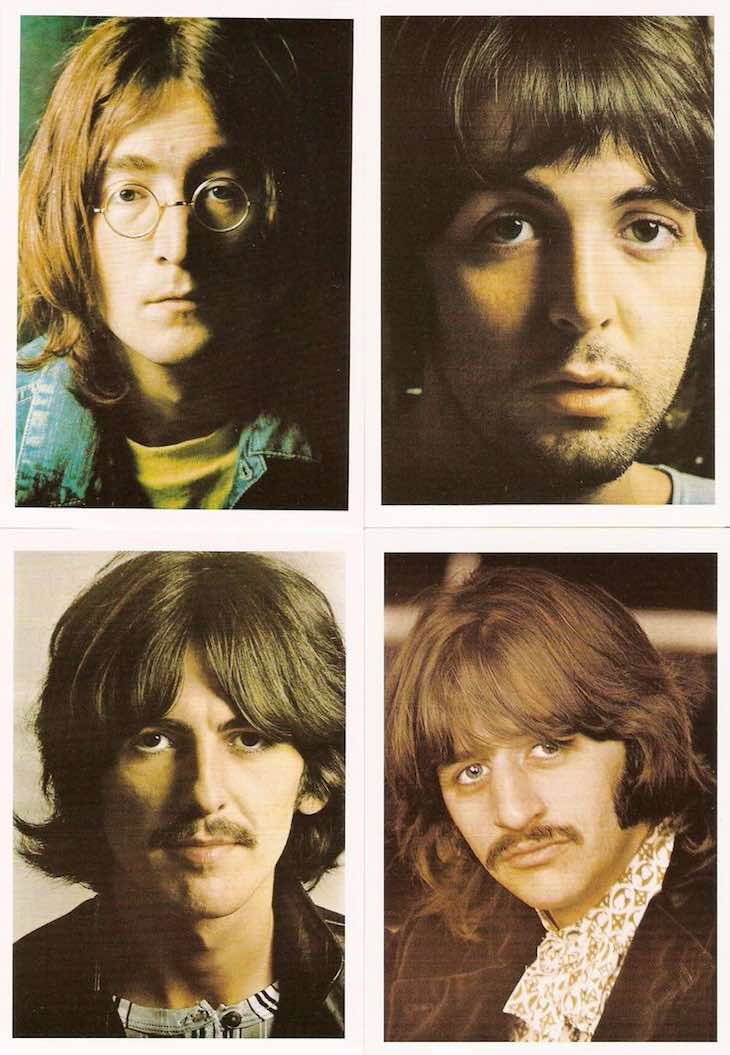
The White Album was released in 1968 and peaked at #1 in the Billboard Album Chart, #1 in Canada, #1 in the UK, and #1 about everywhere else…and it would be #1 as well on “Max’s Desert Island.”
Is this considered the Beatle’s best album? Probably not but if I had to take just one with me to that proverbial desert island…this would be the one. They have albums that are considered better like Revolver and Sgt Pepper but I relate to the rawer songs on this album. The album’s actual name is “The Beatles” but for obvious reasons, it will forever be known as the White Album.
When John Lennon was killed in 1980 there were three albums I bought that long winter. Double Fantasy, The White Album, and Abbey Road. I’m back there again in that 1980-81 winter and spring when I hear this album.
The White Album is as diverse as you can get… Pop, Rock, Country, Folk, Reggae, Avant-Gard, Blues, Hard Rock, and some 20’s British Music Hall thrown in the mix. It has plenty of songs that you have heard of and many that the masses have not heard as much. John Lennon wrote one of his best songs for this album… Dear Prudence.
The Beatles more than many bands could bend to a style of music and play that style well.
Some critics said they should have taken the best of the two albums and slimmed it down to one…but as a Beatles fan…Nahhhhh. It’s the friggin Beatles White Album!
My favorite songs: Sexy Sadie, Dear Prudence, While My Guitar Gently Weeps, Cry Baby Cry, Helter Skelter, I Will, I’m So Tired, Revolution 1, Yer Blues, Everybody’s Got Something to Hide Except For Me and My Monkey, Back In The USSR, Rocky Raccoon, Happiness Is A Warm Gun and Glass Onion.
Are all of the 30 songs up to the Beatle’s high standards? No, but more than enough are to make this a great double album.
Although the songs differ in style they all have that Beatles touch to them whether it be the hard Helter Skelter, country Rocky Raccoon, or even the fairytale-like Cry Baby Cry.
The sessions were not the happiest time for the band but they came up with the most eclectic batch of songs they ever produced.
Back In The USSR
Dear Prudence
Glass Onion
Ob-La-Di, Ob-La-Da
Wild Honey Pie
The Continuing Story Of Bungalow Bill
While My Guitar Gently Weeps
Happiness Is A Warm Gun
Martha My Dear
I’m So Tired
Blackbird
Piggies
Rocky Raccoon
Don’t Pass Me By
Why Don’t We Do It In The Road?
I Will
Julia
Birthday
Yer Blues
Mother Nature’s Son
Everybody’s Got Something To Hide Except Me And My Monkey
Riders on the Storm sounds like a song some cool jazz midnight DJ (WKRP fans…think Venus Flytrap) would spin in the old days when they actually could pick what they played. It’s a song to chill out to and I’ve always liked it.
The song is off The Door’s last album with Jim Morrison…LA Woman. The song peaked at #14 in 1971 in the Billboard 100, #5 in Canada, and #22 in the UK.
This song evolved out of a jam session when the band was messing around with “Ghost Riders In the Sky.” It was Jim Morrison’s idea to alter the title to “Riders On The Storm.”
This would be the last song Jim Morrison recorded. He went to France and died a few weeks later.
Ray Manzarek: “There’s a whisper voice on ‘Riders on the Storm,’ if you listen closely, a whispered overdub that Jim adds beneath his vocal. That’s the last thing he ever did. An ephemeral, whispered overdub.”
From Songfacts
The song can be seen as an autobiographical account of Morrison’s life: he considered himself a “Rider on the storm.” The “killer on the road” is a reference to a screenplay he wrote called The Hitchhiker (An American Pastoral), where Morrison was going to play the part of a hitchhiker who goes on a murder spree. The lyrics, “Girl you gotta love your man” can be seen as a desperate plea to his long time girlfriend Pamela.
As it says in Jim Morrison: Life, Death, Legend by Stephen Davis, in 1962, while Jim was attending Florida State University in Tallahassee, he was seeing a girl named Mary Werbelow who lived in Clearwater, 280 miles away. Jim would oftentimes hitchhike to see her. “Those solitary journeys on hot and dusty Florida two-lane blacktop roads, with his thumb out and his imagination on fire with lust and poetry and Nietzsche and God knows what else – taking chances on redneck truckers, fugitive homos, and predatory cruisers – left an indelible psychic scar on Jimmy, whose notebooks began to obsessively feature scrawls and drawings of a lone hitchhiker, an existential traveler, faceless and dangerous, a drifting stranger with violent fantasies, a mystery tramp: the killer on the road.”
The Doors brought in bass players Marc Benno and Jerry Scheff to play on the album. Scheff came up with the distinctive bass line after Manzarek played him what he had in mind on his keyboard. It took a while to figure out, since it was much harder to play on a bass than a keyboard.
Ray Manzarek used a Fender Rhodes electric piano to create the effect of rain.
This was the last song on the last Doors album with Morrison. Fittingly, it ends with the storm fading slowly to silence. The remaining Doors released two more albums without Morrison before breaking up in 1972. In 2002, Kreiger and Manzarek reunited as “The Doors Of The 21st Century.” Densmore, who says he wasn’t invited to join them, went to court and eventually got a ruling preventing the group from using The Doors in its name, so they changed their name to “Riders On The Storm” after this song.
The single was shortened for radio play. Some of the piano solo was cut out.
In 2000, the surviving members of The Doors taped a VH1 Storytellers episode with guest vocalists filling in for Morrison. Scott Stapp from Creed sang on this track.
Creed contributed a version of this to the 2000 Doors tribute album Stoned Immaculate. Creed also performed it with Doors guitarist Robby Krieger at Woodstock ’99. Krieger sat in on Creed’s “What’s This Life For” during the set.
Doors drummer John Densmore wrote a book called Riders On The Storm about his life with Jim Morrison and The Doors.
Eric Red, the screenwriter of the 1986 film The Hitcher, has said that his screenplay was inspired by this song. He said in an interview with DVD Active: “I thought the elements of the song – a killer on the road in a storm plus the cinematic feel of the music – would make an terrific opening for a film. I started with that scene and went from there.”
When the 71-year-old Ray Manzarak was asked by the Somerville Journal in March 2010 if he turns up or turns off Doors music when he hears it on the radio. Manzarek said, “Oh, God, turn it up! Are you kidding? Living up in northern California, it rains a lot, so they play the heck out of ‘Riders on the Storm.’ And when that comes on, I crank that sucker, man.”
When he recorded this song, Jim Morrison had already decided that he was going to leave the band and go to Paris, where he would die. Some of the lyrics in this song (“girl, you gotta love your man…”) relate to his love for his girlfriend Pam Courson, who went with him to France.
At the end of this song, there are sound effects of thunder, and the faint voice of Jim Morrison whispering, “riders on the storm.” This was envisioned as his spirit whispering from the beyond.
Riders on the Storm
Riders on the storm Riders on the storm Into this house we’re born Into this world we’re thrown Like a dog without a bone An actor out on loan Riders on the storm.
There’s a killer on the road His brain is squirming like a toad Take a long holiday Let your children play If you give this man a ride Sweet family will die Killer on the road, yeah.
Girl you gotta love your man Girl you gotta love your man Take him by the hand Make him understand The world on you depends Our life will never end Gotta love your man, yeah.
Riders on the storm Riders on the storm Into this house we’re born Into this world we’re thrown Like a dog without a bone An actor out on loan Riders on the storm.
To those that it applies…Happy Independence Day! I’ll have a couple of songs coming up related to Independence Day.
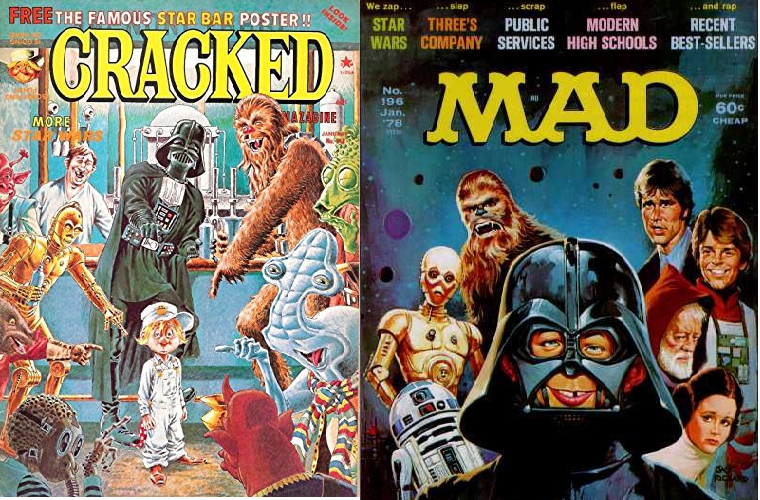
I never got into comic books like Marvel or DC…I would save up my allowance for Cracked and Mad magazine…and records of course. Mad Magazine was by far the most popular out of all of the satire comic magazines. William Gaines was the publisher of Mad magazine and was brilliant.
1952 – Present…now you an only get Mad from Comic Book Shops or order it. The new editions consist of mostly material from their archive.
Cracked was known as the poor man’s Mad but I still liked it and the magazines shared some writers and artists through the years. I bought my first Cracked Magazine when Mad was sold out but I never missed an issue after that.
1958-2007 Now the name is alive on a website but no longer a comic.
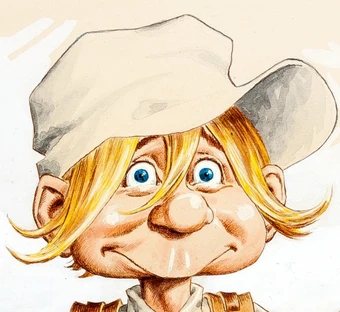
Alfred E Newman and Sylvester P. Smythe
Don Martin was my favorite artist. He was one of Mad’s most famous artists. He was there from 1956 to 1988. He was known as “Mads Maddest Artist” and then moved to Cracked and was jokingly known as “Cracked’s Crackedest Artist.”
Fellow Cracked artist Dan Clowes: “As far as I could tell, he was happy, don’t think he ever seemed to notice that Mad was respected, whereas Cracked was loathed.”
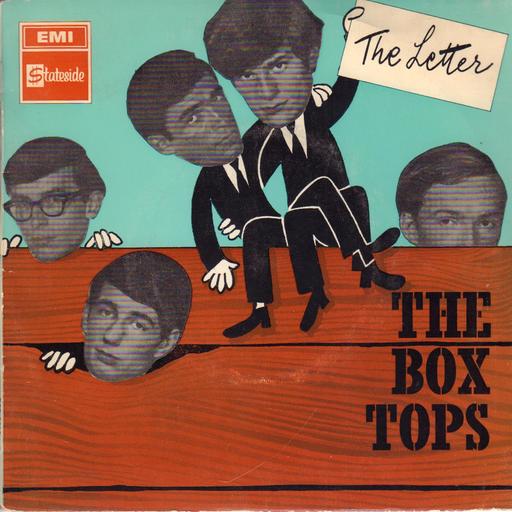
Alex Chilton was sixteen when he recorded this song for the Box Tops. The Box Tops formed in Memphis Tennessee in 1967. They would go to have seven top 40 hits. This one was their most successful single. It peaked at #1 in the Billboard 100, #1 in Canada, and #5 in the UK in 1967.
After the Box Tops, Alex Chilton would help form one of the best ever power pop bands of all time that no one ever heard of… Big Star. One of my all-time favorite bands.
Nashville songwriter Wayne Carson Thompson wrote the song after his father gave him the line, “Give me a ticket for an aeroplane.”
When the group recorded this they still did not have a name. One band member suggested…”Let’s have a contest and everybody can send in 50 cents and a box top.” Producer Dan Penn then dubbed them The Box Tops.
Rolling Stone magazine included the Box Tops original at number 372 on its list of the “500 Greatest Songs of All Time”
The band was known for this song, Cry Like A Baby, and my favorite Soul Deep.
From Songfacts
This song is about a guy who gets a letter from his former love telling him that she wants him back, and the guy wants to fly out and see her immediately.
Thompson gave the song to The Box Tops on the recommendation of his friend, Chips Moman, who ran ARS Studios and liked the sound of an unnamed band headed by then-16-year-old Alex Chilton, who auditioned for him in 1967.
Thompson played guitar on the recording. He didn’t like the singing, believing the lead vocal was too husky, and wasn’t fond of the production either. The addition of the jet sound “didn’t make sense” to him. When producer Dan Penn added the airplane sound to the recording, Wayne Carson Thompson clearly thought that Penn had lost his mind. He hadn’t – several weeks later it became one of the biggest records of the ’60s, and The Box Tops went on to score with a few other Thompson compositions, including their follow-up release, “Neon Rainbow” (#24, 1967), “Soul Deep” (a #18 hit in 1969) and “You Keep Tightening Up On Me” (their last chart hit, which peaked at #74 in 1970). A few years later, Thompson won a Grammy for cowriting the hit “Always On My Mind.”
At 1:58, the Box Tops’ version of this was the last #1 hit to be shorter than two minutes in length.
Cover versions were US hits for two other artists, The Arbors (#20 in 1969 – arrangement by Joe Scott) and Joe Cocker (#7 in 1970). Cocker’s version is a live recording featuring Leon Russell; a studio version appears on his album Mad Dogs & Englishmen.
The title is never sung in this song: his baby writes him “a letter.”
The Letter
[Chorus] Gimme a ticket for an aeroplane Ain’t got time to take a fast train Lonely days are gone, I’m a-goin’ home My baby, just-a wrote me a letter
I don’t care how much money I gotta spend Got to get back to baby again Lonely days are gone, I’m a-goin’ home My baby, just-a wrote me a letter
Well, she wrote me a letter Said she couldn’t live without me no more Listen mister, can’t you see I got to get back To my baby once-a more Anyway, yeah!
[Chorus]
Well, she wrote me a letter Said she couldn’t live without me no more Listen mister, can’t you see I got to get back To my baby once-a more Anyway, yeah!
Take one listen and suddenly you are walking along Carnaby Street in Swinging London in 1967.
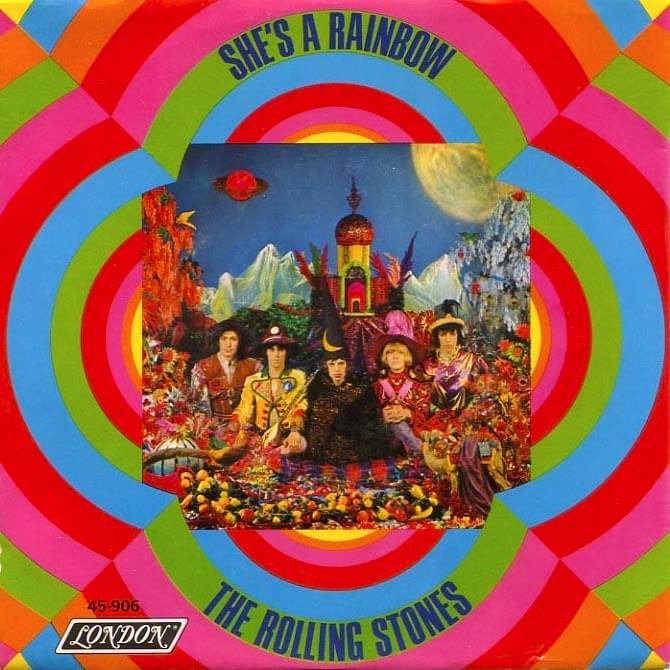
While under the influence of what was going on at the time…The Stones dipped their toe in the wild and colorful Psychedelic water. This was right after Sgt Peppers and experimentation was in the air.
The result was Their Satanic Majesties Request. I know some Stones fans that won’t mention this album but I’ve always liked it.
It didn’t suit them as well as their earlier pop and later rock and blues style but the album did have some high points.
The string section was arranged by John Paul Jones, who was doing session work two years before he joined Led Zeppelin. Nicky Hopkins also played piano on this song.
This song was written by Jagger and Richards.
She’s A Rainbow peaked at #25 in the Billboard 100 and #9 in Canada.
The song returned to Billboard’s Hot Rock Songs chart in 2018 as a result of its appearance in a commercial for the all-new Acura RDX.
Mick Jagger:There’s a lot of rubbish on Satanic Majesties. Just too much time on our hands, too many drugs, no producer to tell us, “Enough already, thank you very much, now can we just get on with this song?” Anyone let loose in the studio will produce stuff like that. There was simply too much hanging around. It’s like believing everything you do is great and not having any editing.
She’s A Rainbow
She comes in colors ev’rywhere She combs her hair She’s like a rainbow Coming, colors in the air Oh, everywhere She comes in colors
She comes in colors ev’rywhere She combs her hair She’s like a rainbow Coming, colors in the air Oh, everywhere She comes in colors
Have you seen her dressed in blue? See the sky in front of you And her face is like a sail Speck of white so fair and pale Have you seen a lady fairer?
She comes in colors ev’rywhere She combs her hair She’s like a rainbow Coming, colors in the air Oh, everywhere She comes in colors
Have you seen her all in gold? Like a queen in days of old She shoots colors all around Like a sunset going down Have you seen a lady fairer?
She comes in colors ev’rywhere She combs her hair She’s like a rainbow Coming, colors in the air Oh, everywhere She comes in colors
She’s like a rainbow Coming, colors in the air Oh, everywhere She comes in colors
Well, this rock and roll has got to stop Junior’s head is hard as rock Now junior, behave yourself
This song was written and originally recorded by Larry Williams, a black rock singer admired by John Lennon. The song is about a rebellious kid who loves rock and roll. The Beatles chose cover songs that fit them very well.
I really like Larry’s version of this also. His version is rooted in the fifties with rhythm and blues… With Lennon’s voice, the Beatles version makes it sound like an early garage rock/punk record.
This Larry Williams song didn’t get much traction in the charts when it was released in 1959 but the British bands were listening and covering this song. The Beatles covered three of his songs on albums… Slow Down, Bad Boy, and Dizzy Miss Lizzy.
One of the very good covers The Beatles did early on. Nice guitar and Lennon’s voice comes right at you. The song was included on the American Beatles album The Beatles VI. In the UK it wasn’t on an album until the release of A Collection of Beatles Oldies in 1966. It was released in December just as the Beatles were starting on Sgt Peppers. Having an Oldies album released only 4 years after you start recording is odd but it was perfect timing because they would never sound the same again.
Bad Boy
A bad little kid moved into my neighborhood
He won’t do nothing right just sitting down and look so good
He don’t want to go to school and learn to read and write
Just sits around the house and plays the rock and roll music all night
Well, he put some tacks on teachers chair
Puts chewing gum in little girl’s hair
Man, junior, behave yourself
Buy every rock and roll book on the magazine stand
Every dime that he get is lost to the jukebox man
Well, he worries his teacher till at night she’s ready to poop
From rocking and a-rolling spinning in a hula hoop
Well, this rock and roll has got to stop
Junior’s head is hard as rock
Now junior, behave yourself
Going tell your mama you better do what she said
Get to the barber shop and get that hair cut off your head
He took your canary and he fed it to the neighbors cat
He gave the cocker spaniel a bath in mother’s laundromat
Well, mama’s head has got to stop
Junior’s head is hard as rock
Now junior, behave yourself
This was part of the famous Abbey Road medley that featured parts of songs by the Beatles.
John Lennon usually wrote about what he knew best…himself and and his personal views. Paul would many times write about fantasy…he would write about his significant other at any given time also but this is one of the few songs that he was living through. Unlike John he usually would mask things more.
Allen Klein’s time as manager built-up tensions within the band. Paul wanted Lee Eastman his in-law at the helm but John, George, and Ringo wanted the notrious Allen Klein. Klein managed the Stones for years and at the end Mick and company found out that they inadvertently signed away their songs up until 1969 to him. Paul was right in this case…they should have never gone with Klein but Paul should have picked someone else but his in-laws as a choice. No way were the others going to go with that decision.
The song was about Klein and his attitude. Always telling them how much they were worth but never handing over cash…just money figures on “funny paper.”
This song was the first song in the medley. It is actually 3 short songs into one. “You Never Give Me Your Money, ” “Out of College section,” and the “One Sweet Dream section”
I’ve been asked, what’s so special about the Beatles? The medley on side 2 of Abbey Road is just one of many things.
Paul McCartney: “This was me directly lambasting Allen Klein’s attitude to us,” “no money, just funny paper, all promises and it never works out. It’s basically a song about no faith in the person, that found its way into the medley on ‘Abbey Road.’ John saw the humor in it.”
George Harrison: “We get bits of paper, saying how much is earned and what this and that is, but we never actually get it in pounds, shillings and pence. We’ve all got a big house and a car and an office, but to actually get the money we’ve earned seems impossible.”
From Songfacts
This song is about The Beatles’ business problems. When their manager Brian Epstein died in 1967, they were burdened with handling their own finances, which became a source of tension in the band.
This is the first of a medley of songs on Abbey Road, which goes another 15 minutes to “The End.”
By 1969, members of The Beatles had a lot of unfinished song ideas, which they sometimes combined. This contains fragments of four songs put into one.
Regarding the lines, “You never give me your money, you only give me your funny paper,” “Funny Paper” is how The Beatles felt they were paid. They got frustrated when their accountants would tell them how much they were worth “on paper,” without actually telling them how much money they had.
Paul McCartney played this combined with “Carry That Weight” on his 2002 “Back In The US” tour.
You Never Give Me Your Money
You never give me your money You only give me your funny paper And in the middle of negotiations You break down
I never give you my number I only give you my situation And in the middle of investigation I break down
Out of college, money spent See no future, pay no rent All the money’s gone, nowhere to go Any jobber got the sack Monday morning, turning back Yellow lorry slow, nowhere to go But oh, that magic feeling, nowhere to go Oh, that magic feeling Nowhere to go, nowhere to go
One sweet dream Pick up the bags and get in the limousine Soon we’ll be away from here Step on the gas and wipe that tear away One sweet dream came true today Came true today Came true today (yes, it did)
One, two, three, four, five, six, seven All good children go to Heaven
One, two, three, four, five, six, seven All good children go to Heaven
One, two, three, four, five, six, seven All good children go to Heaven
One, two, three, four, five, six, seven All good children go to Heaven
One, two, three, four, five, six, seven All good children go to Heaven
One, two, three, four, five, six, seven All good children go to Heaven
One, two, three, four, five, six, seven All good children go to Heaven
Great hard bluesy song on one of my favorite Beatle albums…The White Album. This is one reason I like the White Album so much. The variety it gives you is off the charts…but there is no mistaking who the band is in every song. The Beatles kept their style through the lush soft songs to the hard ones.
What I like about it is the rawness. This song and Helter Skelter have enough to spare.
The room they recorded this in was called Room 2A, which was next to the control room of EMI Studio Two and was a mere 8 ft. by 15.5 ft. The room had been used for storing four-track machines before it was emptied. It was very tight quarters for The Beatles once they set everything up. That added to the sound. They jammed together from 7pm to 5am and after 14 takes produced this song.
John Lennon wrote this in India while The Beatles were on a retreat learning meditation with the Maharishi.
Lennon was self-conscious about singing the blues.
John Lennon: “There was a self-consciousness about suddenly singing blues,” John continues. “Like everybody else, we were all listening to Sleepy John Estes and all that in art school (in the late ’50’s). But to sing it, was something else. I was self-conscious about doing it.”
Ringo Starr: “We were just in an 8 foot room, with no separation, just doing what we do best: playing.”
A 9 minute version with Lennon, Eric Clapton, Keith Richards and Mitch Mitchell was performed on the Rolling Stones’ Rock ‘n’ Roll Circus. They called themselves the Dirty Mac.
Yer Blues
Yes, I’m lonely Want to die Yes, I’m lonely Want to die If I ain’t dead already Oh, girl, you know the reason why
In the morning Want to die In the evening Want to die If I ain’t dead already Oh, girl, you know the reason why
My mother was of the sky My father was of the earth But I am of the universe And you know what it’s worth
I’m lonely Want to die If I ain’t dead already Oh, girl, you know the reason why
The eagle picks my eye The worm he licks my bone I feel so suicidal Just like Dylan’s Mr. Jones
Lonely Want to die If I ain’t dead already Oh, girl, you know the reason why
Black cloud crossed my mind Blue mist round my soul Feel so suicidal Even hate my rock and roll
Want to die Yeah, want to die If I ain’t dead already Oh, girl, you know the reason why
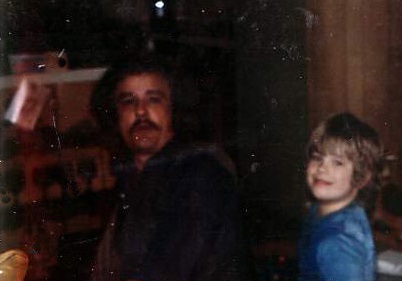
Happy Father’s Day! I hope everyone has a great day.
I do miss my dad…this is Christmas 1975…yea I’m the dork beside him.
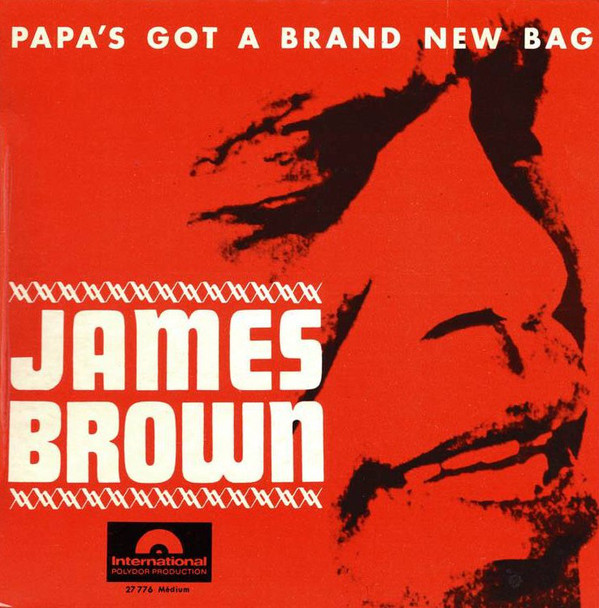
James Brown = The MAN
James Brown recorded this song in one take…the released version was supposed to be a run-through, but sounded so good it was kept anyway.
Brown, who still hadn’t memorized the song’s lyrics, read from a sheet in front of him at the beginning of the original take, he can be heard saying “There’s a lot of words here, man.” He also can be heard exclaiming “This is a hit!” just before the band kicks in.
The song peaked at #8 in the Billboard 100 and #1 in the R&B Charts in 1965.
This song was followed by “I Got You (I Feel Good),” which quickly became Brown’s biggest hit (until “Living in America” was released in 1985) as it went to #3 on the Hot 100.
This won a Grammy for Best R&B Recording of 1965. It was also inducted into the Grammy Hall Of Fame in 1999.
From Songfacts
A “bag” is slang for a way of doing something or a kind of lifestyle. It was a popular saying in the ’60s, especially among musicians, who wouldn’t describe songs as being “in an R&B bag” or “in a doo-wop bag.”
In this song, James Brown sings about coming up with a new “bag,” meaning a completely different way of approaching music. Inspired by what he heard in church, he punctuated the music on the downbeat, creating his “brand new bag.”
In March 1965, after a legal battle with King Records, Brown agreed to a new contract with a higher royalty rate than their previous agreement, plus Brown’s own publishing company and complete artistic control. Brown promptly went into a Charlotte, North Carolina, studio and cut “Papa’s Got a Brand New Bag.”
King Records executive Syd Nathan gave a copy of this to New York DJ Frankie Cocker, who hated the new James Brown style but was impressed with the response when he put it on the air anyway. When King Records released the track as a single, Smash Records, the label Brown had leased some of his songs to that prompted the lawsuit, released an instrumental version of the song. As part of the ruling, Smash Records could release only instrumental versions of Brown’s songs.
Brown had recorded the very similar sounding “Out Of Sight” for Smash earlier that year, violating his King contract. James retooled the song, using a riff his band had been playing live, as a peace offering to King.
The original song was about seven minutes long, moved at a slower pace, and featured a more elaborate intro. After the song was cut, Brown sliced off most of the intro, sped the song up to get it played on pop radio, and broke it up into three parts (the second of which can be heard on the flipside of the original single).
The vocal version reached #8 in the US. It was the first Top 10 hit for the Godfather of Soul, and marked a departure from his early music toward the definition of his signature sound. Horns are used for percussive effect, and Brown’s vocals are tightly attached to the overall instrumental mix.
Dancing was a big part of James Brown’s stage show, and he often referred to dances in the lyrics to his songs. The dance crazes mentioned in this one are: The Jerk, The Fly, The Monkey, The Mashed Potatoes, The Alligator, The Twist, and the Boomerang.
Artists to record this song include Pat Boone, Freddy Cannon, Georgie Fame, Quincy Jones, L.A. Guns, Willie Mitchell, Pigbag, Otis Redding, Roger, Jimmy Smith, The Ventures, Charles Wright & the Watts 103rd Street Rhythm Band.
Brown’s longtime sax player Maceo Parker played baritone sax on this track, and Maceo’s older brother Melvin was the drummer. The guitar, which is most prominent when it answers Brown’s chorus line, came courtesy of Jimmy Nolen.
This was performed in Beat the Devil, one of a series of BMW films (see it at YouTube). Faced with the problem of viewers skipping past commercials or simply ignoring them, BMW decided to make short films starring their products that people would choose to watch. James Brown stars in this one.
This was used in the 1993 Robin Williams film Mrs. Doubtfire.
Papa’s Got A Brand New Bag
Come here sister, Papa’s in the swing He ain’t too hip, about that new breed babe He ain’t no drag Papa’s got a brand new bag
Come here mama, and dig this crazy scene He’s not too fancy, but his line is pretty clean He ain’t no drag Papa’s got a brand new bag
He’s doing the Jerk He’s doing the Fly Don’t play him cheap ’cause you know he ain’t shy He’s doing the Monkey, the Mashed Potatoes Jump back Jack, See you later alligator
Come here sister Papa’s in the swing He ain’t too hip now But I can dig that new breed babe He ain’t no drag He’s got a brand new bag
Oh papa! He’s doing the Jerk Papa, he’s doing the Jerk He’s doing the twist, just like this He’s doing the Fly every day and every night The thing’s, like the Boomerang Hey, come on Hey! Hey, come on Hey! Hey, he’s put tight, out of sight Come on. Hey! Hey!













 PowerPop... An Eclectic Collection of Pop Culture