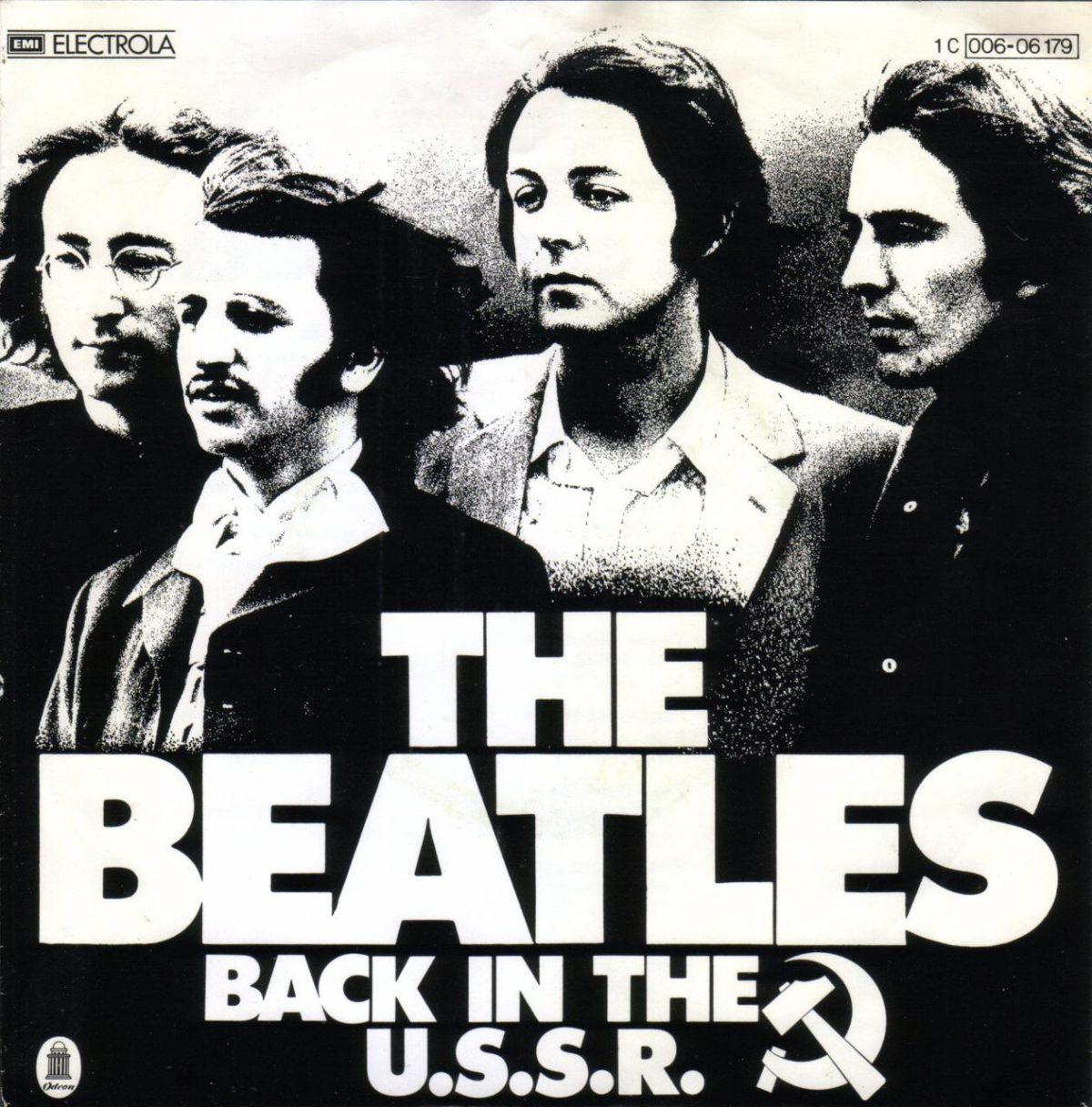
I always liked this rocking song by the Beatles. They threw a little Beach Boy feel in it also.
The song was written during the band’s visit to Rishikesh, India is early 1968, the intention being to study and practice Transcendental Meditation with the Maharishi.
In early 1968, the British government launched the “I’m Backing Britain” campaign to rally enthusiasm and boost their economy. McCartney was inspired by this and Chuck Berry’s Back In The U.S.A. The working title was I’m Backing the UK.
This song was on the double White Album released in 1968. The album peaked at #1 in the Billboard Album Chart, Canada, and the UK. There was tension between the members on this album.
Following an argument with McCartney over the drum part for this song, Ringo walked out on The Beatles. He flew to Sardinia for a holiday to consider his future. While there he received a telegram from his bandmates saying, ‘You’re the best rock ‘n’ roll drummer in the world. Come on home, we love you.’ On his return, he found his drum kit covered with flowers. A banner above read, ‘Welcome Back.’
Paul did end up playing drums on the track. It is credited to Lennon/McCartney but it is a McCartney written song.
This song caused some controversy with conservative America, because it came out during Vietnam and the Cold War and it appeared to be celebrating the enemy. The John Birch Society accused The Beatles with promoting communism.
Paul McCartney:“Chuck Berry once did a song called ‘Back In The U.S.A,’ which is very American, very Chuck Berry, you know. He was ‘serving in the army and, when I get back home, I’m gonna kiss the ground,’ you know, ‘can’t wait to get back to the States.’ It’s very much an American thing, I always thought. So, this one, ‘Back In The U.S.S.R.’ was about, in my mind, a spy who has been in America for a long, long time. Some fellow who’s been in America for a long time and he’s picked up and he’s very American, but he gets back to the U.S.S.R., and he’s, sort of, saying ‘Leave it till tomorrow, honey to disconnect the phone,’ and ‘come here, honey,’ with Russian women, and all that.”
From Songfacts
The story of this song begins in Hrishikesh, India, where The Beatles were on a retreat learning Transcendental Meditation from their guru, Maharishi Mahesh Yogi. Also on the retreat was Mike Love of The Beach Boys, who told us: “Paul (McCartney) came down to the breakfast table one morning saying, ‘Hey, Mike, listen to this.’ And he starts strumming and singing, ‘Back in the U.S.S.R.,’ the verses. And I said, ‘Well, Paul, what you ought to do is talk about the girls around Russia, Ukraine girls and then Georgia on my mind, and that kind of thing.’ Which he did.
So I think it was the fact I was there, which caused Paul to think in terms of Beach Boys, and then my suggestion for what to do on the bridge, he took that suggestion and crafted, like only Sir Paul can, a really great song.”
McCartney was impressed with the idea and used some Beach Boys’ elements in this song: Instead of “California Girls” it was “Moscow Girls.” Plus, the definitive Beach Boy “Oooeeeeoooo” in the background harmonies.
The title was inspired by Chuck Berry’s “Back In The U.S.A.” The Beach Boys had been influenced by that song and also “Sweet Little Sixteen” to come up with “California Girls” and “Surfin’ U.S.A.”
Things were tense when they were working on this album, and Ringo walked out during recording, briefly quitting the band. Paul McCartney played drums in his place.
The line “Georgia’s always on my mind” in a play on the Ray Charles song “Georgia On My Mind.” It has a double meaning, since Georgia was part of the U.S.S.R.
Elton John performed this song when he toured Russia in 1979, and he got a huge response. This was the year before Moscow hosted the Summer Olympics, which the United States boycotted. Elton told Q magazine: “The first night as an encore I did ‘Back In The U.S.S.R.’ And they went apes–t. It was like playing ‘Philadelphia Freedom’ in Philadelphia. You just noticed that the people there were as ordinary and as good as the people you’d notice anywhere else.”
Billy Joel got a similar reaction when he played the song in Moscow in 1987.
This opens with the sound of an airplane flying from left to right across the speakers. Stereo was relatively new, so this was very innovative for the time.
Paul McCartney told Mojo magazine October 2008 that the song’s middle-eight was a spoof of the Beach Boys leading up to Pet Sounds. He added: “The rest is (sings first bars of the melody line of the opening verse) more Jerry Lee (Lewis). And the title is Chuck Berry, Back In The U.S.A., and the song itself is more a take on Chuck. You’d get these soldiers back from Korea or Vietnam, wherever the hell, and Chuck was picking up on that. I thought it was a funny idea to spoof that with the most unlikely thing of way back in Siberia.”
There was a rumor in the Soviet Union that The Beatles had secretly visited the U.S.S.R. and given a private concert for the children of top Communist party members. They believed the song was written because of the concert. Actually, some fans still believe so.
The wafer-thin actress and model Twiggy claimed that this song was written for her to sing on a tour of Russia that didn’t materialize. She and McCartney had met to discuss a film project, but it’s unlikely this song was written for her.
Paul McCartney used this as the title to an album he released only in Russia in 1989. In 2002, McCartney called his US tour the “Back In The US” tour.
In Stephen King’s 1979 novel The Dead Zone, a serial killer hums this tune as he contemplates his first murder.
Back In The U.S.S.R
Flew in from Miami Beach BOAC Didn’t get to bed last night On the way the paper bag was on my knee Man, I had a dreadful flight I’m back in the USSR You don’t know how lucky you are, boy Back in the USSR, yeah
Been away so long I early knew the place Gee, it’s good to be back home Leave it till tomorrow to unpack my case Honey disconnect the phone I’m back in the USSR You don’t know how lucky you are, boy Back in the US Back in the US Back in the USSR
Well the Ukraine girls really knock me out They leave the west behind And Moscow girls make me sing and shout That Georgia’s always on my my my my my my my my my mind Oh, come on Hu hey hu, hey, ah, yeah Yeah, yeah, yeah I’m back in the USSR You don’t know how lucky you are, boys Back in the USSR
Well the Ukraine girls really knock me out They leave the west behind And Moscow girls make me sing and shout That Georgia’s always on my my my my my my my my my mind
Oh, show me round your snow peaked Mountain way down south Take me to your daddy’s farm Let me hear your balalaika’s ringing out Come and keep your comrade warm I’m back in the USSR Hey, you don’t know how lucky you are, boy Back in the USSR Oh, let me tell you, honey
Blind Faith was a Supergroup made up of Eric Clapton, Steve Winwood, Ginger Baker, and Ric Grech. They released just one album… The album peaked at #1 in the Billboard Album Chart, Canada, and the UK in 1969.
It was written by Steve Winwood with acoustic guitar playing by Eric Clapton and percussion by Ginger Baker. Many artists have covered this song but I’ve never heard anyone that can match the original.
Winwood wrote this and sang lead. Many critics thought that Blind Faith sounded a lot more like Traffic than Clapton’s Cream, which is what Clapton was going for.
This song was on the “Blind Faith” album in 1969. Blind Faith was only together for this album, a debut concert in Hyde Park, a Scandinavia and USA tour and then broke up shortly afterwards.
In concert they performed Cream and Traffic songs, which delighted the crowd and annoyed Eric Clapton greatly. These audiences preferred their older material instead of the newer Blind Faith songs.
Clapton began spending more time with opener Delaney Bramlett and less time with his own band, which prompted a 21-year-old Steve Winwood to take a more driving role in the band. Eventually, Clapton left the group following their final show in Hawaii.
This song never gets old to me.
From Songfacts
Clapton played acoustic guitar on this track, which is something he rarely did. In his previous group, Cream, he played long, intense solos, something he wanted to get away from with Blind Faith.
The album was released in the UK with a cover photo of an 11-year-old girl named Mariora Goschen. The cover photo because as famous as the album itself, since it showed Goschen naked and holding a model spaceship (a different cover with a band photo was used in the US and for stores that wanted an alternative in the UK).
Bob Seidemann came up with the concept and took the photo, which represents humankind’s relationship with technology (this was when the mission to put a man on the moon was big news). The band wasn’t yet named, and when Seidemann took the photo, he called it “Blind Faith.” Clapton decided that should be the name of the band.
Clapton sometimes plays this at his concerts, with a member of his band singing. His bass player Nathan East would often sing it.
A common misconception is that Eric Clapton and Steve Winwood reunited at the Crossroads Guitar Festival, July 28, 2007, however, the first true live reunion occurred two months earlier at an event called Countryside Rocks at Highclere Castle, Hampshire, UK on May 19, 2007. Steve Winwood performed his set and Eric came on later as a guest. Together they played this song as well as “Watch Your Step,” “Presence of the Lord,” “Crossroads,” “Little Queen Of Spades,” “Had to Cry Today” and “Gimme Some Lovin’.”
The band House of Lords covered this on their 1990 album Sahara. Other artists to record it include Joe Cocker, Yvonne Elliman, Gilberto Gil and Widespread Panic.
Can’t Find My Way Home
Come down off your throne and leave your body alone Somebody must change You are the reason I’ve been waiting all these years Somebody holds the key
Well, I’m near the end and I just ain’t got the time And I’m wasted and I can’t find my way home
I can’t find my way home But I can’t find my way home But I can’t find my way home But I can’t find my way home Still I can’t find my way home
And I’ve done nothing wrong But I can’t find my way home
Whenever I hear this song I think of a story that Dick Cavett told. He said he met Janis in a restaurant and a Janis song was playing on a jukebox while they sat down. Cavett asked Janis what the name of it was…and she said “Down On Me.” Dick said “Wow, I guess that is one you cannot sing on television”…Janis smiled and said “Dick, it’s a gospel song.”
It was a traditional gospel song from the 20s that Janis reworked. The song was on the debut album of Big Brother & the Holding Company featuring Janis and the album had the same name. The song peaked at #43 in the Billboard 100 in 1967. The album was sloppy…Big Brother and the Holding Company were really raw with no polish. On their second album “Cheap Thrills” they would improve but Janis left after the that album to work with better musicians.
This is not the best Joplin song but I do like it.
Down On Me
Down on me, down on me, Looks like everybody in this whole round world They’re down on me.
Love in this world is so hard to find When you’ve got yours and I got mine. That’s why it looks like everybody in this whole round world They’re down on me.
Saying they’re down on me, down on me. Looks like everybody in this whole round world Down on me.
When you see a hand that’s held out toward you, Give it some love, some day it may be you. That’s why it looks like everybody in this whole round world They’re down on me, yeah.
Lord, they’re down on me, down on me, oh! Looks like everybody in this whole round world Is down on me.
Believe in your brother, have faith in man, Help each other, honey, if you can Because it looks like everybody in this whole round world Is down on me.
I’m saying down on me, oh, down on me, oh! It looks like everybody in this whole round world Down on me!
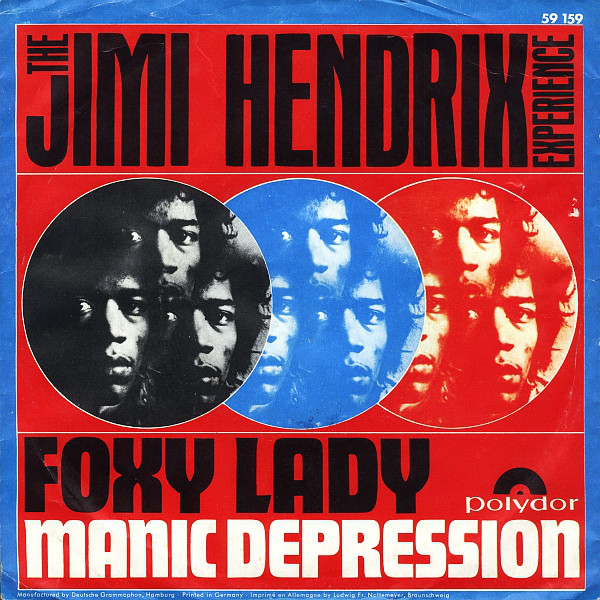
This is one of the most remembered songs from Jimi. According to Hendrix biographer Harry Shapiro, the song was probably inspired by Heather Taylor, who eventually married Roger Daltrey, the lead singer for The Who.
Kathy Etchingham, Jimi’s girlfriend at the time, also claimed to be one of many inspirations for “Foxy Lady.” I’m sure there are/were a lot of claims.
Hendrix recorded this on December 13, 1966. That same day, he made his first TV appearance on the British show Ready Steady Go. The Jimi Hendrix Experience had been together only 2 months at that point, but things moved very quickly. Three days later, their first single, “Hey Joe” was released.
Rolling Stone magazine placed the song at number 153 on its list of the “500 Greatest Songs of All Time.”
The song was on the Are You Experienced album released in 1967. It peaked at #5 in the Billboard Album Charts, #15 in Canada and #2 in the UK
Foxy Lady peaked at #67 in the Billboard 100.
From Songfacts
Hendrix opened for The Monkees on their 1967 tour. When he played this, the young girls who came for The Monkees and had no interest in Hendrix shouted “Davy!” when Hendrix sang “Lady,” resulting in “Foxy Davy,” and turning it into a tribute to their idol, Monkees lead singer Davy Jones.
This was featured in the movie Wayne’s World. It is used in a scene where Garth (Dana Carvey), sings it while thinking about his dream woman, played by Donna Dixon.
In the booklet for the Experience Hendrix CD, Hendrix was quoted as saying this was the only happy song he had ever written. He said that he usually just doesn’t feel happy when writing songs.
The title of this song has two alternate spellings: “Foxey Lady” (for release in America) and “Foxy Lady” (for release in the UK).
Foxy Lady
Foxey, foxey You know you’re a cute little heart breaker, ha Foxey, yeah And you know you’re a sweet little love maker, ha Foxey
I want to take you home, haha yeah I won’t do you no harm no, ha You got to be all mine, all mine Ooh foxey lady, yeah Foxey, foxey
Now-a I see you come down on the scene Oh foxey You make me want to get up and a scream Foxey, oh baby listen now I’ve made up my mind Yeah, I’m tired of wasting all my precious time You got to be all mine, all mine Foxey lady Here I come Foxey
Yeah I’m gonna take you home I won’t do you no harm no You got to be all mine, all mine Foxey lady Here I come baby, I’m commin’ to get ya
Ooh foxey lady yeah yeah You look so good foxey Oh yeah foxey Yeah give us some foxey Foxey foxey lady Foxey lady
I was a kid when I first heard a Bob Dylan song and it was Knocking On Heaven’s Door. I liked the song but didn’t think much else about it. Later I heard about him while reading about the Beatles. This man was armed with words that caught everyone’s attention. The books would describe his voice as crude but effective with other adjectives thrown in the mix. I then bought his greatest hits. I received that great Dylan poster with the album that had “ELVIS” formed in his hair…I thought what a cool guy.
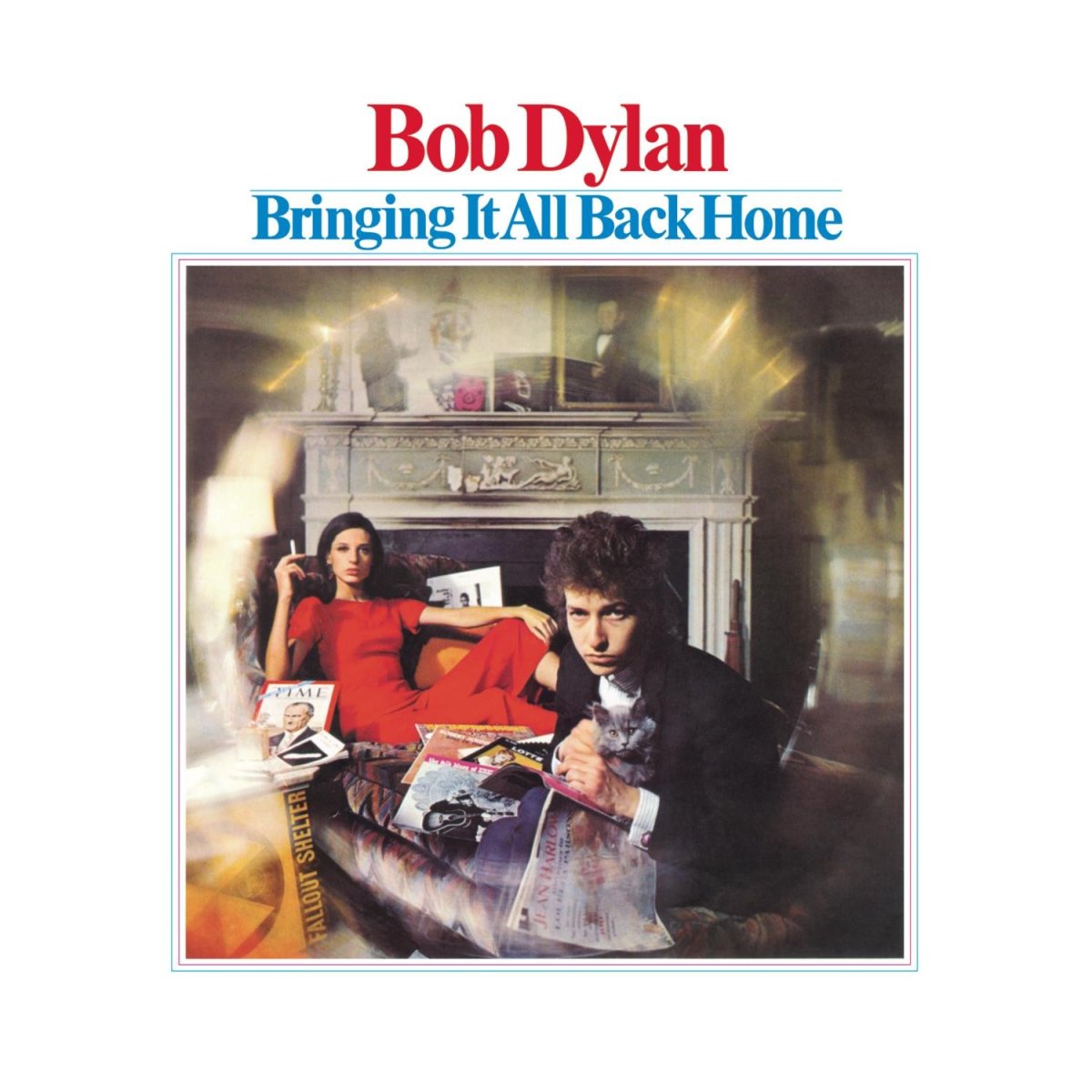
I then purchased Bringing It All Back Home and I was a bigger fan. I loved his voice right away. He didn’t sing like McCartney, Lennon, Elvis, or anyone like that but it worked…his voice had soul and passion. I found out why a generation before me followed him like the Pied Piper…it all became clear. Whether you understood or agreed.. his voice and words meant something. Bob wasn’t a product.
It was Dylan who inspired the Beatles and it was The Beatles who inspired Dylan…they played off of each other and took popular music to new exciting places.
This album angered a lot of his fans. After being a folk singer armed with his acoustic and his bag of words…he blew people away. Then this album came out with electric instruments. That did not go down well with the folk fans. One side of the album was acoustic and the other side full of raw electric songs. Some of his fans would boo him at concerts as soon as the band backed him up on the rock section. That didn’t slow Bob down at all…he knew what he was doing was right and he would not yield to the boos or naysayers.
On top of all of this…the album was recorded in three days…three days (January 13,14, and 15 1965). That’s not enough time for most artists to get a decent outtake.
These songs…where do I start? Lets start with the opener Subterranean Homesick Blues and the line “You don’t need a weather man to know which way the wind blows.” How many hippies have quoted that line? I learned this song by heart much like I did Tangled Up In Blue later on.
It’s Alright, Ma (I’m Only Bleeding) is a song that verse after verse amazes me. His voice in this song is perfect… almost like a preacher behind a pulpit. Bob sings about commercialism, hypocrisy, politics, and warmongering for starters. It’s wrong to pick out a lyric in this song without posting all of them but I will…”Made everything from toy guns that spark, To flesh-colored Christs that glow in the dark, It’s easy to see without looking too far, That not much is really sacred” I mean…holy hell…who comes up with that? It fits just right with today’s commercialism.
Love Minus Zero/No Limit is a over looked song by Bob that very well could be my favorite off of the album. This contains one of my favorite Dylan lyrics. “She knows there’s no success like failure, and that failure’s no success at all.” Lyricists would kill for lines like that…Dylan would make a habit of it. He helped raised the standards for songwriters. No longer would serious artists get away with simple rhyming lyrics.
She Belongs To Me took a while for me to get this one. For the longest time I skipped it on the album but then…one day it clicked. “She’s got everything she needs, She’s an artist, she don’t look back, She can take the dark out of nighttime And paint the daytime black.” it has since become one of my favorites.
I’m not going to add more videos to the already full post but it was a coin toss on which ones to go over. It’s All Over Now, Baby Blue, Mr. Tambourine Man, Outlaw Blues, Gates of Eden, Maggie’s Farm…and all of them are worthy. Bob released three albums between March 22, 1965 and June 20, 1966. Those albums were Bringing It All Back Home, Highway 61 Revisted, and Blonde on Blonde. Those alone would be a hall of fame career for any other artist but Bob was just getting warmed up.
This is my first non-band album on my island and I couldn’t have picked a better artist or album. Listening to Dylan never gets old because you continually find something new you didn’t hear before.
1. Subterranean Homesick Blues
2. She Belongs To Me
3. Maggie’s Farm
4. Love Minus Zero/No Limit
5. Outlaw Blues
6. On The Road Again
7. Bob Dylan’s 115th Dream
8. Mr Tambourine Man
9. Gates Of Eden
10. It’s Alright, Ma (I’m Only Bleeding)
11. It’s All Over Now, Baby Blue
H.R. Pufnstuf Who’s your friend when things get rough? H.R. Pufnstuf Can’t do a little ’cause he can’t do enough
I wasn’t old enough to catch the first run of this but I caught the show reruns in the mid-seventies. It was so colorful and intriguing. I always loved this show. Jack Wild did a great job as Jimmy who sails his ship to this God forsaken island. Talking trees, flute, mushrooms, and Witchiepoo always trying to nab Jimmy’s gold talking flute. The mayor of the island was H.R. Pufnstuf…a dragon type creature I think.
The character HR Pufnstuf was created for the 1968 World’s Fairin San Antonio, Texas. The show lasted one season…1969-1970. They made 17 episodes and replayed them over and over. The show was an immediate hit, so NBC renewed it for a second season, but it had become such an overwhelming money pit for the producers that they declined and the network was forced to air reruns.
It’s long been rumored that the Krofft brothers were deeply influenced by marijuana and LSD when they were making H.R. Pufnstuf…uh…”Hand Rolled Puffin’ Stuff.” Despite these obvious parallels, the brothers deny using drugs – at least during work hours.
Marty Krofft: “We screwed with every kid’s mind,”such as H.R. Pufnstuf, Lidsville and Land of the Lost — that he created with brother Sid in the early 1970s. “There’s an edge. Disney doesn’t have an edge.”
Marty Krofft: “No drugs involved. You can’t do drugs when you’re making shows. Maybe after, but not during. We’re bizarre, that’s all.”
On a side note… The Kroffts sued McDonalds for copyright infringement because Mayor McCheese and Big Mac bore a strong resemblance to H. R. Pufnstuf. They also noted similarities between the living trees and apple pie trees…McDonalds clearly did borrow from H.R. Pufnstuff.
H.R. Pufnstuf
H.R. Pufnstuf Who’s your friend when things get rough? H.R. Pufnstuf Can’t do a little ’cause he can’t do enough
Once upon a summertime Just a dream from yesterday A boy and his magic golden flute Heard a boat from off the bay “Come and play with me, Jimmy Come and play with me And I will take you on a trip Far across the sea”
But the boat belonged to a kooky old witch Who had in mind the flute to snitch From her broom-broom in the sky She watched her plans materialize She waved her wand The beautiful boat was gone The skies grew dark, the sea grew rough And the boat sailed on and on and on and on and on and on
H.R. Pufnstuf Who’s your friend when things get rough? H.R. Pufnstuf Can’t do a little ’cause he can’t do enough
But Pufnstuf was watching, too And knew exactly what to do He saw the witch’s boat attack And as the boy was fighting back He called his rescue racer crew As often they’d rehearsed And off to save the boy they flew But who would get there first?
H.R. Pufnstuf Who’s your friend when things get rough? H.R. Pufnstuf Can’t do a little ’cause he can’t do enough
But now the boy had washed ashore Puf arrived to save the day Which made the witch so mad and sore She shook her fist and screamed away
H.R. Pufnstuf Who’s your friend when things get rough? H.R. Pufnstuf Can’t do a little ’cause he can’t do enough
One of the great guitar riffs in rock…very melodic and sounds great on a guitar.
John Lennon said he borrowed from the song “Watch Your Step” by the American blues musician Bobby Parker. I Feel Fine was released in late 1964. It was the A side of the single with She’s A Woman on the B side.
The first note of this song marked the first time feedback was used on a major release. It was created when John Lennon leaned his electric guitar against an amplifier and Paul McCartney played a note on his bass, creating a strangely appealing feedback loop.
The band thought it sounded great, but in this pre-Hendrix era, feedback was considered a technical malfunction and not an artistic enhancement.Producer George Martin was always open to new ideas and agreed to insert it at the beginning of the song. Paul would say that he let them experiment.
The song peaked at #1 in the Billboard 100, Canada, UK, and New Zealand in 1965.
From Songfacts
An early Beatles track, “I Feel Fine” lyrically is a simple love song about a guy who is crazy about his girl. It’s not Shakespeare, but it’s effective:
She’s so glad, she’s telling all the world
That her baby buys her things, you know
He buys her diamond rings, you know
The refrain is typical of Lennon’s songwriting, with the three long notes: “I’m so glad.” The sudden explosive refrain in harmonies is similar to Giovanni Gabrieli’s grand concerto “In ecclesiis,” an early baroque-music-piece.
There is a very faint sound at the end of the song that was rumored to be barking dogs. It’s actually just McCartney goofing around.
The Beatles included this in their setlist when they toured the US in August 1965. Prior to their famous Shea Stadium appearance on August 15, they taped a performance of this song and five others for an Ed Sullivan Show episode that aired September 12.
The group made two music videos for this song as part of a one-day shoot where they banged out takes for four others as well. These were not high-concept films: just the band having some fun while lip-synching the tracks. The first “I Feel Fine” video got pretty goofy, with Ringo riding a stationary bike. For the second, the band simply sits down and eats lunch. This later version wasn’t released until 2015 when it was included on the 1+ collection.
The Ventures incorporated the riff into their surf rock instrumental version of “Rudolph The Red-Nosed Reindeer” on their 1965 Christmas album.
In America, this knocked “Come See About Me” by The Supremes from the top spot. “I Feel Fine” stayed for three weeks, at which point “Come See About Me” returned to bump it off.
I Feel Fine
Baby’s good to me, you know She’s happy as can be, you know She said so I’m in love with her and I feel fine
Baby says she’s mine, you know She tells me all the time, you know She said so I’m in love with her and I feel fine
I’m so glad that she’s my little girl She’s so glad, she’s telling all the world That her baby buys her things, you know He buys her diamond rings, you know She said so She’s in love with me and I feel fine
Baby says she’s mine, you know She tells me all the time, you know She said so I’m in love with her and I feel fine
I’m so glad that she’s my little girl She’s so glad, she’s telling all the world That her baby buys her things, you know He buys her diamond rings, you know She said so She’s in love with me and I feel fine She’s in love with me and I feel fine, mmm
Procol Harum wrote and performed one of my favorite songs of all time…A Whiter Shade of Pale. The band formed in 1967 partly out of a band called The Paramounts.
Conquistador was on their self titled debut album. It was released as a single in 1967 but the studio version was not a hit.
This became a hit when Procol Harum recorded it live with the Edmonton Symphony Orchestra on November 18, 1971. It was released in 1972 on the aptly titled album Procol Harum Live with the Edmonton Symphony Orchestra.
The song peaked at#16 in the Billboard 100 and #7 in Canada in 1972.
Conquistador – a conqueror, especially one of the Spanish conquerors of Mexico and Peru in the 16th century.
Gary Brooker: “I would say something off of the Edmonton Symphony Live album. I don’t mind which one, really. But it always gives one a great deal of pleasure if you know that when you sing live, that you sing as well or better than you did in the studio. And, of course, when you get excited, when you’re playing on stage, a bit more adrenaline, it always fits well in with the feeling. When we played in Edmonton with the Edmonton Symphony Orchestra that first time, it was a very inspiring evening, and there was a lot of good music going on from everybody, and the vocals had to get over it all.”
From Songfacts
Procol Harum’s lyricist Keith Reid told us the story behind this song: “Gary Brooker and I, before we formed Procol Harum, when we were just working together as songwriters and getting into it, we had this regular deal where he lived about 40 miles from London near the ocean, and I’d jump on a train once a week and go visit him. He’d have a bunch of my lyrics and he’d play me whatever he had been working on. This particular time, though, I’d got down there and he’d been working on a tune. He said, ‘What does this sound like to you?’ And I said, ‘Oh, conquistador.’ It had a little bit of a Spanish flavor to it. I went into another room and started writing the words there and then. 99 out of 100 of those Procol Harum songs were written the words first, and then were set to music. But that particular one, the words hadn’t existed before he had the musical idea.”
Conquistadors were Spanish soldiers who set out to conquer the Americas after their discovery by Christopher Columbus in 1492.
Conquistador
Conquistador your stallion stands in need of company And like some angel’s haloed brow You reek of purity
I see your armor plated breast Has long since lost its sheen And in your death masked face There are no signs which can be seen
And though I hoped for something to find I could see no maze to unwind
Conquistador a vulture sits, upon your silver sheath And in your rusty scabbard now, the sand has taken seed And though your jewel-encrusted blade Has not been plundered still The sea has washed across your face And taken of its fill
And though I hoped for something to find I could see no maze to unwind And though I hoped for something to find I could see no maze to unwind
Conquistador there is no time, I must pay my respect And though I came to jeer at you I leave now with regret And as the gloom begins to fall I see there is no, only all And though you came with sword held high You did not conquer, only die
And though I hoped for something to find I could see no maze to unwind And though I hoped for something to find I could see no maze to unwind
And though I hoped for something to find I could see no maze to unwind
Here are a few short Keith Moon stories. If you want an entertaining book…get Full Moon by Keith Moon’s assistant. Peter “Dougal” Butler.
I didn’t get all the Keith Moon posts out yesterday so I wanted to post this today…I made sure all of these were short so it would not take too much time.
Helen Mirren’s Keith Moon Story
Alice Cooper “If you could live with him…he was the best drummer of all time”
The song was credited to Keith Moon, Towser and Jason; the latter two “composers” being Pete Townshend and John Entwistle’s actual pet dogs.
I know this instrumental mostly for the drumming..and for vocals by…you guessed it… Towser and Jason…Pete and John’s dogs. This was the B side to Pinball Wizard in some countries. When they flipped the single about the deaf, dumb, and blind kid…they would hear this odd instrumental.
I found an a few Neil Peart questions answers and I thought I would post it along with this song.
Neil Peart: I told you what a big Who fan I was. When that song first started, I didn’t recognize it. It’s been probably 20 years since I’ve heard it. I thought, “Who’s around that can play like that?” I was really knocked out. Then the answer became clear. Of course. It was Keith Moon.
Question: He wrote the song.
Neil Peart: Yeah, well…. (laughs). It’s one of the craziest songs known to man. So that doesn’t surprise me.
Question: If he was just hitting the scene today, do you think he could get away with playing like that? Would there be a venue for his style of playing?
Neil Peart: Yeah. He proved it later on with the Who’s Next album, for instance, where he had to play with sequencers. He was playing to true metronomic time, but he was able to average himself over it. In the same terms that we were just discussing, he could play all around that metronomic time and still be bound by it.
Chad Smith (Red Hot Chili Peppers):I got the partying from Keith Moon. As you can see, there are ghosts. Keith Moon was the first guy I ever heard who incorporated such wild abandon. He had such personality, and it came out more in his playing than almost any other musician. No one else played like that. He was the first one I heard incorporate crashes in the middle of his fills. Live At Leeds and Quadrophenia are my favorite Who records. I don’t play anything like Moon, but what really moved me was that he always sounded like he was having so much fun playing the drums.
Roger Taylor (Queen Drummer): Keith Moon was great. In the early days, he was absolutely brilliant. He had a totally unique style; he didn’t owe anyone anything. The first time I saw him perform was with the Who in ’64 or ’65. It was just great. The Who was an outrageous band—real energy, real art. I loved them
Neil Peart:I think (Gene Krupa’s) rock ‘n’ roll heir was probably Keith Moon. In fact, I see a lot of direct similarities between their playing styles, even though Keith Moon showed even more abandon and was more sloppy. But he was a drummer who really captured my imagination because he was so free and so exciting because of his freedom. It opened me up.
At the same yard sale that I purchased LA Woman by the Doors for 10 cents I got a Chuck Berry’s Greatest Hits album for the same price. That is when I became a huge Chuck Berry fan. This song in particular (no pun intended) caught my attention.
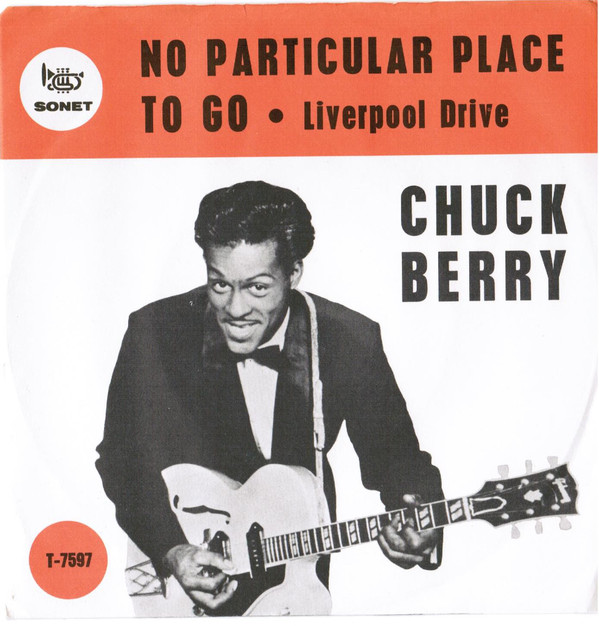
“No Particular Place To Go” was written at a time when Chuck Berry had literally no place to go… He was in prison…he also wrote Nadine in there. He was convicted in late 1961 of violating the Mann Act. Berry served one and one-half years in prison, from February 1962 to October 1963.
When he returned he was now facing the British invasion with the Beatles and the other bands out of England.
This song was released on his album St. Louis to Liverpool album in 1964. Music critic Dave Marsh named it “one of the greatest rock & roll records ever made.” The album peaked at #124 in the Billboard Album Charts. The album included You Never Can Tell and Promised Land.
No Particular Place to Go peaked at #10 in the Billboard 100, #6 in Canada, #3 in the UK, and #2 in New Zealand in 1964.
From Songfacts
Chuck first saw the inside of a slammer back in the 1940s due to a youthful folly, but it is fair to say that since then his encounters with the law have been more low key and if anything somewhat contrived.
Although this song didn’t enrage Mrs. Whitehouse like his later, number one hit, in which he offered to show us his ding-a-ling, it is fairly laden with innuendo, although of the tragic kind, because herein, our hero is unable to unfasten his safety belt.
“No Particular Place To Go” was released in May 1964 backed by the instrumental “Liverpool Drive”, and is instantly recognizable as a Berry composition with his distinctive, clean cut guitar style.
No Particular Place To Go
Riding along in my automobile My baby beside me at the wheel I stole a kiss at the turn of a mile My curiosity running wild Crusin’ and playin’ the radio With no particular place to go
Riding along in my automobile I’s anxious to tell her the way I feel So I told her softly and sincere And she leaned and whispered in my ear Cuddlin’ more and drivin’ slow With no particular place to go
No particular place to go So we parked way out on ko-ko-mo The night was young and the moon was gold So we both decided to take a stroll Can you image the way I felt I couldn’t unfasten her safety belt
Riding along in my calaboose Still trying to get her belt a-loose All the way home I held a grudge For the safety belt that wouldn’t budge Crusin’ and playing the radio With no particular place go
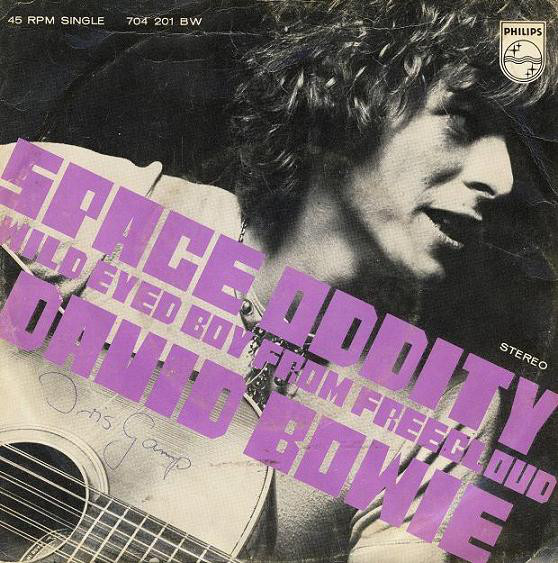
David Bowie wrote this after seeing the 1968 Stanley Kubrick movie 2001: A Space Odyssey. Space Oddity is a play on the phrase “Space Odyssey.”
Space Oddity was released in 1969. It peaked at #5 in the UK but only #124 in the Billboard Charts. The song was released as a single but also on the UK David Bowie album.
In 1972, the album was re-titled Space Oddity and re-issued in the US after Bowie achieved modest success in America with the singles “Changes” (#66) and “The Jean Genie” (#71). The newly released “Space Oddity” single made #15, becoming Bowie’s first US Top 40.
In 1980, Bowie released a follow-up to this called “Ashes To Ashes,” where Major Tom once again makes contact with Earth. He says he is happy in space, but Ground Control comes to the conclusion that he is a junkie.
As it says in the Bowie quote below…British TV picked up on the song during the moon landing. There was a fear that if the missions in space didn’t go well, this song would suddenly become inappropriate.
David Bowie:“In England, it was always presumed that it was written about the space landing, because it kind of came to prominence around the same time. But it actually wasn’t. It was written because of going to see the film 2001, which I found amazing. I was out of my gourd anyway, I was very stoned when I went to see it, several times, and it was really a revelation to me. It got the song flowing. It was picked up by the British television, and used as the background music for the landing itself. I’m sure they really weren’t listening to the lyric at all (laughs). It wasn’t a pleasant thing to juxtapose against a moon landing. Of course, I was overjoyed that they did. Obviously, some BBC official said, ‘Oh, right then, that space song, Major Tom, blah blah blah, that’ll be great.’ ‘Um, but he gets stranded in space, sir.’ Nobody had the heart to tell the producer that.”
From Songfacts
This was originally released in 1969 on Bowie’s self-titled album and timed to coincide with the moon landing. Released as a single, the song made #5 in the UK, becoming his first chart hit in that territory. In America, the single found a very small audience and bubbled under at #124 in August 1969.
In 1975, back in the UK, the song was once again released, this time on a single which also contained the songs “Changes” and “Velvet Goldmine.” Promoted as “3 Tracks for the Price of 2,” the single leapt to the top of the charts, earning Bowie his first #1 in the UK.
In 1983, the German electro musician Peter Schilling released a sequel to “Space Oddity” called “Major Tom (I’m Coming Home).” Set to a techno beat, it tells the story of Major Tom in space. That song reached #14 in the US, outcharting Bowie’s original.
In 2003, K.I.A. released another sequel called “Mrs. Major Tom,” which is told from the point of view of Major Tom’s wife.
In the line, “And the papers want to know whose shirt you wear,” ‘whose shirt you wear’ is English slang for ‘what football team are you a fan of?’. The thinking here being that if you can make it into space then your opinions on football matter. (Note to Americans- in this case, by “football” we mean “soccer.”)
An early version of this song is performed by David Bowie in Love You Till Tuesday, a promotional film made in 1969 which was designed to showcase the talents of Bowie. You can watch it here.
Three different videos were made of this song by three different directors. The first, directed by Malcolm J. Thomson, shows Bowie as an astronaut and appears in his 1969 promotional film Love You Till Tuesday.
The next one came in 1972 when Mick Rock directed Bowie singing the song with an acoustic guitar surrounded by mission control imagery. Rock, who was primarily a still photographer, was doing a lot of Bowie’s videos around this time; he also shot “Life On Mars?” and “The Jean Genie.”
The third version Bowie filmed with David Mallet in 1979 for air on the New Year’s Eve show The Will Kenny Everett Ever Make It To 1980?, which Mallet directed. Bowie recorded a new version of the song for this version with Hans Zimmer on piano.
Nita Benn’s handclaps can be heard on this recording. She is the daughter-in-law of the British socialist politician Tony Benn and the mother of Emily Benn, who at the age of 17 became the youngest ever person chosen to fight an election when she was selected in 2007 as the Labour candidate for East Worthing and Shoreham.
This was originally written by Bowie as a guitar song. It was the producer Gus Dudgeon who turned it into an epic.
Session musician Herbie Flowers (“Walk On The Wild Side,” “Diamond Dogs”) played bass on this track. He recalled his experience working on this to Uncut magazine June 2008: “The first time I played with Bowie was on the session for ‘Space Oddity.’ Dear Gus (Dudgeon) was quaking in his boots. It might have been the first thing he ever produced. ‘Space Oddity’ was this strange hybrid song. (Keyboardist) Rick Wakeman went out to buy a little Stylophone for seven shillings from a small shop on the corner where Trident Studios was. With that and all the string arrangements, it’s like a semi-orchestral piece.”
Jimmy Page told Uncut magazine June 2008: “I played on his records, did you know that? His very early records when he was Davy Jones & The Lower Third. The Shel Talmy records. I can think of two individual sessions that I did with him. He said in some interview that on one of those sessions I showed him these chords, which he used in ‘Space Oddity’ – but he said, ‘Don’t tell Jim, he might sue me.’ Ha ha!”
In 2009, a sound-a-like version was used in commercials for Lincoln automobiles. This version was by the American singer-songwriter Cat Power, the stage name of Charlyn “Chan” Marshall.
The session players on the song were Rick Wakeman (mellotron), Mick Wayne (guitar), Herbie Flowers (bass) and Terry Cox (drums), plus string musicians. They were paid just over £9 each.
Bowie’s birth name was David Jones. He changed his name before the movie came out, but the name he picked is similar to the main character in the film: Dave Bowman. There was speculation that he got the name from the book The Sentinel, which the movie is based on, but Bowie has claimed that his moniker came from the Bowie knife.
In 1969, this song was awarded the coveted Ivor Novello Award alongside Peter Sarstedt’s “Where Do You Go To (My Lovely)?”
The Canadian astronaut Chris Hadfield recorded this song during his stay at the International Space Station in 2013, using a guitar that stays on the station. The female singer/songwriter Emm Gryner, who was part of Bowie’s live band in 1999-2000, put the song together, adding additional tracks and incorporating space station sounds that Hadfield had posted to his Soundclound account. A video was compiled using footage of Hadfield performing the song in space, complete with shots of planet Earth, his floating acoustic guitar, and a weightless Hadfield. The sublime compilation was posted on May 12, 2013; it quickly racked up millions of views on YouTube and got the attention of Bowie, who posted about it on his social media accounts, calling it “quite possibly the most poignant version of the song ever created.”
Hadfield changed a few of the lyrics – he left out the part where Major Tom loses contact and drifts away.
Releasing a cover song recorded in space poses myriad legal challenges, since jurisdiction is unclear. The original agreement was for one year, so the video was removed on May 13, 2014. By this time, Hadfield was back on Earth and worked to negotiate a new deal with the song’s publishers. In November 2014, an agreement was reached and the video went back up.
When Bowie was recording the song, he decided that he wanted real strings and Mellotron together. However, the musicians struggled to play the electronic keyboard instrument. It was Tony Visconti who suggested Rick Wakeman as somebody who could keep the Mellotron in tune. Wakeman recalled to Uncut:
“David said, ‘Get him.’ I was rehearsing with a 17-piece band in Reading, so I drove up. It was a doddle to do, to be honest. I loved the song, and I’m also credit has to go to David and Tony as I don’t think anyone else at that particular time would have heard Mellotron on that piece, where it came in. There would have been other things more obvious to do. It was clever.”
Space Oddity
Ground Control to Major Tom Ground Control to Major Tom Take your protein pills and put your helmet on
Ground Control to Major Tom (ten, nine, eight, seven, six) Commencing countdown, engines on (five, four, three, two) Check ignition and may God’s love be with you (one, liftoff)
This is Ground Control to Major Tom You’ve really made the grade And the papers want to know whose shirts you wear Now it’s time to leave the capsule if you dare
“This is Major Tom to Ground Control I’m stepping through the door And I’m floating in a most peculiar way And the stars look very different today
For here Am I sitting in a tin can Far above the world Planet Earth is blue And there’s nothing I can do
Though I’m past one hundred thousand miles I’m feeling very still And I think my spaceship knows which way to go Tell my wife I love her very much, she knows”
Ground Control to Major Tom Your circuit’s dead, there’s something wrong Can you hear me, Major Tom? Can you hear me, Major Tom? Can you hear me, Major Tom? Can you hear
Here am I floating ’round a tin can Far above the Moon Planet Earth is blue And there’s nothing I can do
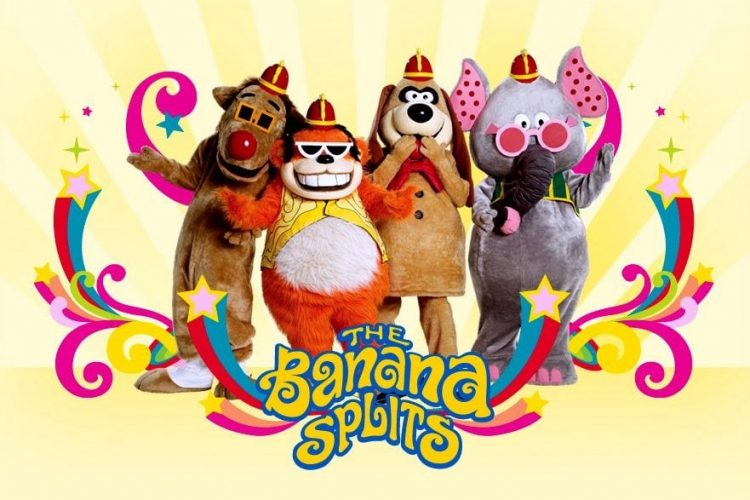
I remember in the mid 70s staying at my grandmothers house and I would watch the Banana Splits reruns. I saw this the other day and had to pass this delightful theme on to other ears…warning it will be there ALL day.
This was a Hanna-Barbera show that ran from 1968-1970. They set out to do something really different to stand out from the pack, choosing to make characters similar to their in-house style except, instead of being animated, they’d be live-action costumed characters with real people in the suits. The costumes and sets were designed by Sid and Marty Krofft.
They consisted of guitarist Feegle the Beagle (voiced by Paul Winchell), drummer Bingo the Ape (Daws Butler), Drooper the Lion (Allan Melvin) on bass, and Snorky the Elephant (who only spoke in honks) on keyboards.
Sid and Marty Krofft would later make this type of show popular with their own shows H.R. Pufnstuf, Lidsville, and The Bugaloos with an added psychedelic edge to it.
The theme song “The Tra La La Song (One Banana, Two Banana)” was written by Kellogg’s jingle writer N.B. Winkless Jr., who also wrote the “Snap, Crackle, Pop” jingle for Rice Krispies cereal.
The song peaked at #96 in the Billboard 100. A punk band named The Dickies covered the song and took it to #7 in the UK in 1979.
The Banana Splits Theme
Tra la la tra la la la Tra la la tra la la la Tra la la tra la la la Tra la la tra la la la
One banana two banana three banana four All bananas make a split so do many more Over hill and highway the banana buggies go Come along to bring you the banana splits show
Four banana three banana two banana one All bananas playing in the bright warm sun Flipping like a pancake popping like a cork Fleagle bingo drooper and snork
Making up a mess of fun Making up a mess of fun Making up a mess of fun Lots of fun for everyone
Four banana three banana two banana one All bananas playing in the bright warm sun Flipping like a pancake popping like a cork Fleagle bingo drooper and snork
This is one of McCartney’s best written songs. Like a lot of other great songs it builds… from McCartney’s lone voice and piano to a giant sing a long at the end. Hey Jude is one of the most famous songs in rock history.
This was their debut single for their new record company Apple. The A side was Hey Jude and the B side was Revolution. That is a great way to start. This was one of the best double A side singles ever.
The song was not on an album at the time. Hey Jude peaked at #1 in the Billboard 100, UK, Canada, and New Zealand in 1968.
Paul McCartney wrote this as “Hey Jules,” a song meant to comfort John Lennon’s 5-year-old son Julian as John and Cynthia were getting a divorce. The change to “Jude” was inspired by the character “Jud” in the musical Oklahoma! Paul went to visit Cynthia and Julian when the divorce was happening and he composed most of it then.
John wanted Revolution released as a single right away but when he heard this song he agreed to have Revolution as the B side.
It was the Beatles longest single, running 7:11. George Martin was afraid radio stations would not play it but John said ‘They will if it’s us.” When this became a hit, stations learned that listeners would stick around if they liked the song, which paved the way for long songs like “American Pie” and “Layla.”Disc jockeys loved it…they got a break.
The Beatles filmed a promotional video for this song, which was directed by Michael Lindsay-Hogg who directed Let It Be. He had the Beatles sing the song (the music was on a backing track) in front of an audience of about 100 people, who sang it with them. This was the closest the Beatles had come to a live performance since they had stopped touring two years earlier.
The clip first aired on the UK program The David Frost Show in 1968, and was quickly picked up by other shows, giving the song a big promotional push.
Paul McCartney:“I thought, as a friend of the family, I would motor out to Weybridge (John’s former home with Cynthia) and tell them that everything was all right: to try and cheer them up, basically, and see how they were. I had about an hour’s drive. I would always turn the radio off and try and make up songs, just in case…I starting singing: ‘Hey Jules – don’t make it bad, take a sad song, and make it better…’ It was optimistic, a hopeful message for Julian: ‘Come on, man, your parents got divorced. I know you’re not happy, but you’ll be OK.’ I eventually changed ‘Jules’ to ‘Jude.’ One of the characters in ‘Oklahoma’ is called Jude, and I like the name.”
Cynthia Lennon: “During the divorce proceedings, I was truly surprised when, one afternoon, Paul arrived on his own. I was touched by his obvious concern for our welfare and even more moved when he presented me with a single red rose accompanied by a jokey remark about our future. ‘How about it, Cyn? How about you and me getting married?’ We both laughed at the thought of the world’s reaction to an announcement like that being let loose. On his journey down to visit Julian and I, Paul composed the beautiful song ‘Hey Jude.’ He said it was for Julian. I will never forget Paul’s gesture of care and concern in coming to see us. It made me feel important and loved, as opposed to feeling discarded and obsolete.”
Paul McCartney:“I finished it all up in Cavendish (Paul’s home) and I was in the music room upstairs when John and Yoko came to visit and they were right behind me over my right shoulder, standing up, listening to it as I played it to them, and when I got to the line ‘The movement you need is on your shoulder,’ I looked over my shoulder and I said, ‘I’ll change that, it’s a bit crummy. I was just blocking it out,’ and John said, ‘You won’t, you know. That’s the best line in it!’ That’s collaboration. When someone’s that firm about a line that you’re going to junk, and he says, ‘No, keep it in.’
John Lennon:“He said it was written about Julian…but I always heard it as a song to me. If you think about it, Yoko’s just come into the picture. He’s saying: ‘Hey, Jude – hey, John.’ I know I’m sounding like one of those fans who reads things into it, but you can hear it as a song to me. The words ‘go out and get her’ – subconsciously he was saying, ‘Go ahead, leave me.’ But on a conscious level, he didn’t want me to go ahead. The angel inside him was saying, ‘Bless you.’ The devil in him didn’t like it at all, because he didn’t want to lose his partner.”
John Lennon:“Well, when Paul first played ‘Hey Jude’ to me…I took it very personally. ‘Ah, it’s me,’ I said, ‘it’s me.” He said, ‘No, it’s me!’ I said, ‘Check, we’re going through the same bit.’ So we all are. Whoever is going through a bit with us is going through it. That’s the groove.”
From Songfacts
This was named as the song most often referred to in literature in a list compiled by culture interpretation website Small Demons. Amongst the 55 books the site says it’s mentioned in are Stephen King’s Wolves of the Calla (“Why do people over here sing Hey Jude? I don’t know”) and Toni Morrison’s Paradise (“Soane had been horrified – and he drove off accompanying Hey Jude on his radio”).
Elvis Presley’s “Heartbreak Hotel” was runner-up on the list and Led Zeppelin’s “Stairway To Heaven” came in third place
In 1987 Julian ran into Paul in New York City when they were staying at the same hotel and he finally heard Paul tell him the story of the song firsthand. He admitted to Paul that growing up, he’d always felt closer to him than to his own father. In Steve Turner’s book The Stories Behind Every Beatles Song, Julian said: “Paul told me he’d been thinking about my circumstances, about what I was going through and what I’d have to go through. Paul and I used to hang out quite a bit – more than Dad and I did… There seem to be far more pictures of me and Paul playing at that age than me and Dad. I’ve never really wanted to know the truth of how Dad was and how he was with me. There was some very negative stuff – like when he said that I’d come out of a whisky bottle on a Saturday night. That’s tough to deal with. You think, where’s the love in that? It surprises me whenever I hear the song. It’s strange to think someone has written a song about you. It still touches me.”
The Beatles inner circle was shifting when Paul McCartney wrote this song. John Lennon had recently taken up with Yoko and cast off his first wife, Cynthia; McCartney had broken off his engagement with his longtime girlfriend Jane Asher. He was the only Beatle to reach out to Cynthia and Julian at this time.
The drive to the Lennon home in Surrey was one of reflection for McCartney, who thought about Julian and how difficult life could be as a child of divorce. He wrote the line, “Don’t make it bad, take a sad song and make it better” thinking about how he could encourage the boy.
Paul was conditioned to think up songs on this trip, as he used to drive to the home for songwriting sessions with John – there were instruments and recording equipment in the attic.
In a 2018 interview with GQ, Paul McCartney talked about how he came up with the idea for this song: “John and his wife Cynthia had divorced, and I felt a bit sorry for their son, who was now a child of a divorce. I was driving out to see the son and Cynthia one day and I was thinking about the boy whose name was Julian – Julian Lennon, and I started this idea, ‘Hey Jules, don’t make it bad, it’s gonna be OK.’ It was like a reassurance song.
So that was the idea that I got driving out to see them. I saw them and then I came back and worked on the song some more. But I like that name, Jude.”
This was the first song released on Apple Records, the record label owned by The Beatles. It was recorded at Trident Studios, London, on July 31 and August 1, 1968 with a 36 piece orchestra. Orchestra members clapped and sang on the fadeout – they earned double their normal rate for their efforts.
Paul McCartney on his songwriting partnership with John Lennon in Observer Music Monthly October 2007: “I have fond flashbacks of John writing – he’d scribble it down real quick, desperate to get back to the guitar. But I knew at that moment that this was going to be a good collaboration. Like when I did ‘Hey Jude.’ I was going through it for him and Yoko when I was living in London. I had a music room at the top of the house and I was playing ‘Hey Jude’ when I got to the line ‘The movement you need is on your shoulder’ and I turned round to John and said: ‘I’ll fix that if you want.’ And he said: ‘You won’t, you know, that’s a great line, that’s the best line in it.’ Now that’s the other side of a great collaborator – don’t touch it, man, that’s OK.”
This song hit #1 in at least 12 countries and by the end of 1968 had sold more than 5 million copies. It eventually sold over 10 million copies in the United States, becoming the fourth-biggest selling Beatles single there. Factoring in the price of records in 1968 vs. 1964, when the top-seller “I Want To Hold Your Hand” was released, “Hey Jude” might be the biggest earner.
When McCartney played this song for John Lennon and Yoko Ono, John interpreted it as being about him; he heard the line “You were made to go out and get her” as Paul imploring him to leave his first wife and go after Yoko (“I always heard it as a song to me,” said Lennon). This was one of Lennon’s more narcissistic moments, as he failed to grasp that the song was written for his son.
This was going to be the B-side to “Revolution,” but it ended up the other way around. It is a testament to this song that it pushed “Revolution” to the other side of the record.
George Harrison wanted to play a guitar riff after the vocal phrases, but Paul wouldn’t let him. Things got tense between them around this time as McCartney got very particular about how Harrison played on songs he wrote.
Julian Lennon didn’t find out that this song was written for him until he was a teenager. It was around this time that he reconnected with his dad, whom he would visit in New York from time to time until his death.
In terms of songcraft, this is one of the most studied Beatles songs. It starts with a vocal – Paul’s voice singing “Hey” – then the piano comes in (an F chord). The song gradually builds, with McCartney alone playing on the first verse, then the sounds of George Harrison’s guitar, Ringo’s tambourine, and harmony vocals by George and John. The drums enter about 50 seconds in, and the song builds from there, reaching a peak of intensity with McCartney delivering the “better… better… better” line punctuated by a Little Richard-style scream, then the famous singalong resolution.
The “na na na” fadeout takes four minutes. The chorus is repeated 19 times.
“Jude” is the German word for “Jew,” but nobody in the Beatles camp knew that. In 1967 and 1968, the group owned a retail store on Baker Street in London called the Apple Boutique, which they closed around the time this song was released. On the shuttered building, an employee scrawled the words “Revolution” and “Hey Jude” to promote the new Beatles single. Without proper context, this proved offensive to Jewish residents, who read it as hateful graffiti.
Wilson Pickett recorded this shortly after The Beatles did. His version hit #16 UK and #23 US and provided the name for his album. Duane Allman played on it and got a huge career boost when the song became a hit. He spent the next year as a session guitarist for many famous singers and then formed The Allman Brothers, who are considered the greatest Southern Rock band of all time.
Thanks to the communal nature of this song, it is sometimes used to pay tribute to those who have passed. When Paul McCartney and Ringo Starr appeared on the 2014 CBS special The Night That Changed America: A Grammy Salute to the Beatles, Paul dedicated the song John Lennon and George Harrison. Musicians who performed earlier in the show joined on stage for the ending, which closed the telecast.
In America, an album called Hey Jude (originally titled “The Beatles Again”) was released in 1970 containing this and several other Beatles songs that were released as singles or B-sides. The album has not appeared as a CD because Apple Records made the decision to copy only the British LP releases onto CD. In the ’60s the American record company managed to get extra LPs off the British releases by cutting down the number of tracks, then putting them out with singles and B-sides as additional albums.
As discussed in the DVD Composing the Beatles Songbook, while Paul wrote this song for Julian, in a lot of ways McCartney wrote this song about his brand-new relationship with Linda Eastman.
After the “Oh” in the crescendo, McCartney sings “YEAH!” in a non-falsetto voice. The note he hits is F Natural above male High C, a very difficult note for a male to hit in a non-falsetto voice.
The original 1968 version was recorded in mono, and many listeners find it far superior to the stereo remake from 1970, which is much more heavily produced.
On The Beatles Anthology 3, there is a version of this song with an introduction spoken by John and Paul: “From the heart of the black country: When I was a robber in Boston place You gathered round me with your fine embrace.”
“Boston place” (mentioned by Paul) is a small London street where The Beatles’ company Apple had just installed an electronics laboratory. In a more familiar scene, Boston Street was that street in which The Beatles ran for the title sequence of their film A Hard Day’s Night. John spoke of the “Black Country,” which was the name of the old smokestack industrial region in the middle of England.
Richie Havens played this at Woodstock when he opened the festival in 1969.
If you listen at about 2:55, you hear a sound from John Lennon while Paul keeps singing. It sounds like “Ohh!” at first, but it is really him saying “…chord!” You can barely hear it, but if you listen really closely, you can hear him say “Got the wrong CHORD.” He says “chord” much louder than the other words. And about two or three counts later, you can hear McCartney say “F**king hell.”
The song debuted at #10 in the Hot 100, and in doing so it made history by becoming the first ever single to reach the top 10 in its first week on the chart.
When the Beatles music was made available for download for the first time – on iTunes November 16, 2010 – “Hey Jude” was the most downloaded Beatles song that day.
McCartney played this at the 2005 Live8 concert in London. He started with “The Long and Winding Road” and flowed it into the end of “Hey Jude,” which closed out the Live8 concert.
Paul McCartney played this at the 2005 Super Bowl halftime show. He performed the year after Janet Jackson’s breast was exposed on stage, causing an uproar. McCartney was deemed a safe and reliable choice for a nudity-free performance.
Sesame Street did a parody of this (and tribute to healthy eating) called “Hey Food.”
With hundreds of crowd favorites to choose from in his catalog, Paul McCartney mixes up his setlists when he plays live, but this one always seems to stick. “I’ll switch up the songs, but I’ve got to do ‘Hey Jude’ because it is such fun and it’s great handing that over to the audience,” he told GQ. The greatest thing is, you feel this sense of community, and in these times when it’s a little dark and people are separated by politics and stuff, it’s so fantastic to see them all come together singing the end of ‘Hey Jude.’ I’m very happy about that, so I keep it in the show.”
This appears frequently throughout Stephen King’s The Dark Tower series, including the first installment, The Gunslinger (1982). The fantasy western is set in a parallel universe where a lone gunslinger is on a quest for revenge. King explained the significance of the song in a 1988 interview with The Guardian: “I see the gunslinger’s world as sort of a post-radiation world where everybody’s history has gotten clobbered and about the only thing anybody remembers anymore is the chorus to ‘Hey, Jude.'”
Hey Jude
Hey Jude, don’t make it bad Take a sad song and make it better Remember to let her into your heart Then you can start to make it better
Hey Jude, don’t be afraid You were made to go out and get her The minute you let her under your skin Then you begin to make it better
And anytime you feel the pain Hey Jude, refrain Don’t carry the world upon your shoulders For well you know that it’s a fool Who plays it cool By making his world a little colder Na-na-na, na, na Na-na-na, na
Hey Jude, don’t let me down You have found her, now go and get her (let it out and let it in) Remember to let her into your heart (hey Jude) Then you can start to make it better
So let it out and let it in Hey Jude, begin You’re waiting for someone to perform with And don’t you know that it’s just you Hey Jude, you’ll do The movement you need is on your shoulder Na-na-na, na, na Na-na-na, na, yeah
Hey Jude, don’t make it bad Take a sad song and make it better Remember to let her under your skin Then you’ll begin to make it better Better better better better better, ah!
Na, na, na, na-na-na na (yeah! Yeah, yeah, yeah, yeah, yeah, yeah) Na-na-na na, hey Jude Na, na, na, na-na-na na Na-na-na na, hey Jude Na, na, na, na-na-na na Na-na-na na, hey Jude Na, na, na, na-na-na na Na-na-na na, hey Jude (Jude Jude, Judy Judy Judy Judy, ow wow!) Na, na, na, na-na-na na (my, my, my) Na-na-na na, hey Jude (Jude, Jude, Jude, Jude, Jude) Na, na, na, na-na-na na (yeah, yeah, yeah) Na-na-na na, hey Jude (yeah, you know you can make it, Jude, Jude, you’re not gonna break it) Na, na, na, na-na-na na (don’t make it bad, Jude, take a sad song and make it better) Na-na-na na, hey Jude (oh Jude, Jude, hey Jude, wa!) Na, na, na, na-na-na na (oh Jude) Na-na-na na, hey Jude (hey, hey, hey, hey) Na, na, na, na-na-na na (hey, hey) Na-na-na na, hey Jude (now, Jude, Jude, Jude, Jude, Jude) Na, na, na, na-na-na na (Jude, yeah, yeah, yeah, yeah) Na-na-na na, hey Jude Na, na, na, na-na-na na Na-na-na na, hey Jude (na-na-na-na-na-na-na-na-na) Na, na, na, na-na-na na Na-na-na na, hey Jude Na, na, na, na-na-na na Na-na-na na, hey Jude Na, na, na, na-na-na na (yeah, make it, Jude) Na-na-na na, hey Jude (yeah yeah yeah yeah yeah! Yeah! Yeah! Yeah! Yeah!) Na, na, na, na-na-na na (yeah, yeah yeah, yeah! Yeah! Yeah!) Na-na-na na, hey Jude Na, na, na, na-na-na na Na-na-na na, hey Jude Na, na, na, na-na-na na Na-na-na na, hey Jude Na, na, na, na-na-na na Na-na-na na, hey Jude
I’ve been listening to the Syd Barrett era of Pink Floyd and ran across this one. You can hear the later Pink Floyd in this.
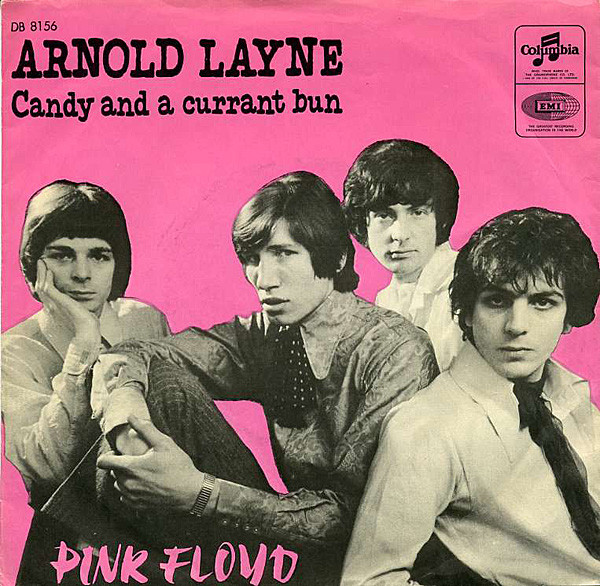
This was Pink Floyd’s debut single in 1967.
Syd Barrett wrote this about a true story….a cross-dresser who he called “Arnold Layne” who used to steal bras and panties from clotheslines in Cambridge, England. Barrett lived near Roger Waters growing up. Their mothers both lost underwear to Arnold Layne.
Of course Radio London banned this song, since it was about a man who steals women’s undergarments. Surprisingly BBC played it,saying they either didn’t have a problem with this particular subject matter or didn’t understand it…probably the latter.
The song peaked at #20 in the UK in 1967.
In the promotional materials to accompany the single, the band’s record company, EMI, wrote: “Pink Floyd does not know what people mean by psychedelic pop and are not trying to cause hallucinatory effects on their audience.”
The promotional black-and-white music video displayed the band with Syd Barrett. It shows Pink Floyd goofing around with a mannequin on the beach in East Wittering, West Sussex, England in late February 1967 ahead of the song’s release the following month.
Roger Waters: ‘Both my mother and Syd’s mother had students as lodgers because there was a girl’s college up the road so there was constantly great lines of bras and knickers on our washing lines.’ In one curious incident, the bras and knickers that hung on the washing lines in the Barrett’s garden proved irresistible to a local underwear fetishist. This character, whom Barrett would later immortalize in song as Arnold Layne, made off with many of poor nursing students’ undergarments, presumably to indulge his fantasies. ‘Arnold or whoever he was, had bits and pieces off our washing lines. They never caught him. He stopped doing it after a bit, when things got too hot for him.’ ‘I was in Cambridge at the time I started to write the song,’ Syd Barrett told *Melody Maker*. ‘I pinched the line about “moonshine washing line” from Roger because he had an enormous washing line in the back garden of his house. Then I thought “Arnold must have a hobby” and it went on from there. Arnold Layne just happened to dig dressing up in women’s clothing.’
From Songfacts
The group was set to make their Top Of The Pops debut with a performance of this song in April 1967, but were dropped when it fell three places on the UK chart that week. They first appeared on the show July 6, performing “See Emily Play.”
Barrett was the group leader and an excellent songwriter, but he did a lot of drugs and lost his mind over the next year, becoming England’s first high-profile acid casualty. He was kicked out of the band the next year, replaced by David Gilmour.
Before the band came out at their shows in the late ’80s, this played while video of Pink Floyd in 1967 was shown on the giant screens.
This had a blues sound the band was known for. Pink Floyd’s name originated from Syd Barrett. His two favorite blues artists, Pink Anderson and Floyd Council, appeared to him in what he referred to as a “vision,” giving Syd the idea for the name.
The song made an unexpected appearance in the live sets of Pink Floyd guitarist David Gilmour during his 2006 tour promoting his solo album, On an Island. Later in the year, two live recordings of the song, from Gilmour’s On an Island shows at the Royal Albert Hall were released as a live single, which peaked at #19 on the UK singles chart. One version had guest vocals by David Bowie, the other by Floyd’s Richard Wright.
Arnold Layne
Arnold Layne Had a strange hobby Collecting clothes Moonshine washing line They suit him fine
On the wall Hung a tall mirror Distorted view See through baby blue He done it, oh, Arnold Layne It’s not the same, It takes two to know Two to know Two to know Two to know Why can’t you see?
Arnold Layne Arnold Layne Arnold Layne, Arnold Layne
Now he’s caught A nasty sort of person They gave him time Doors bang, chain gang He hates it Oh, Arnold Layne It’s not the same It takes two to know Two to know Two to know Two to know Why can’t you see?









 PowerPop... An Eclectic Collection of Pop Culture