I listened to Pearl today and was remembering Janis who died 50 years ago on this date at the Landmark Motor Hotel (now Highland Gardens Hotel) while working on her album Pearl.
Janis Joplin is my favorite rock/blues female singer. I like a gravelly voice and Janis had that covered. She put her soul in every song and left everything on stage. Like her or not she was genuine. She had a rough life growing up in Port Arthur Texas being bullied in High School and College and finally making it in 1967 with Big Brother and the Holding Company when she moved to San Francisco.
Move Over was the first track on the Pearl album, which sold four million copies and hit #1 on the charts, all after Joplin passed away. She wrote this one herself and recorded it the same day as Trust Me and Me And Bobby McGee.
The album was released January 11, 1971, three months after her death. It peaked at #1 in the Billboard Album Charts, #1 in Canada, and #20 in the UK.
Janis went on the Dick Cavett Show on September 25, 1970, to perform “Move Over.” On the show, she stated that the song was about men…specifically the guy who tells you your relationship is over but won’t move on, thus equating the way some guys hold on love to the way one would dangle a carrot in front of a mule.
Move Over
You say that it’s over baby, Lord You say that it’s over now But still you hang around me, come on Won’t you move over
You know that I need a man, honey Lord You know that I need a man But when I ask you to you just tell me That maybe you can
Please don’t you do it to me babe, no! Please don’t you do it to me baby Either take this love I offer Or just let me be
I ain’t quite a ready for walking, no no no no I ain’t quite a ready for walking And what you gonna do with your life Life all just dangling?
Oh yeah Make up your mind, honey You’re playing with me, hey hey hey Make up your mind, darling You’re playing with me, come on now Now either be my loving man I said-a, let me honey, let me be, yeah
You say that it’s over, baby, no You say that it’s over now But still you hang around me, come on Won’t you move over
You know that I need a man, honey, I told you so You know that I need a man But when I ask you to you just tell me That maybe you can
Hey! Please don’t you do it to me, babe, no Please don’t you do it to me baby Either take this love I offer Honey let me be
I said won’t you, won’t you let me be Honey, you’re teasing me Yeah, you’re playing with my heart, dear I believe you’re toying with my affections, honey
I can’t take it no more baby And furthermore, I don’t intend to I’m just tired of hanging from the end of a string, honey You expect me to fight like a goddamned mule Wah, wah, wah, wah, honey
And now the young monsieur and madame have rung the chapel bell “C’est la vie”, say the old folks, it goes to show you never can tell
Now when I hear this song I think of Pulp Fiction because it was feature in the 1994 classic.
The song peaked at #14 in the Billboard 100, #11 in Canada, and #23 in the UK in 1964.
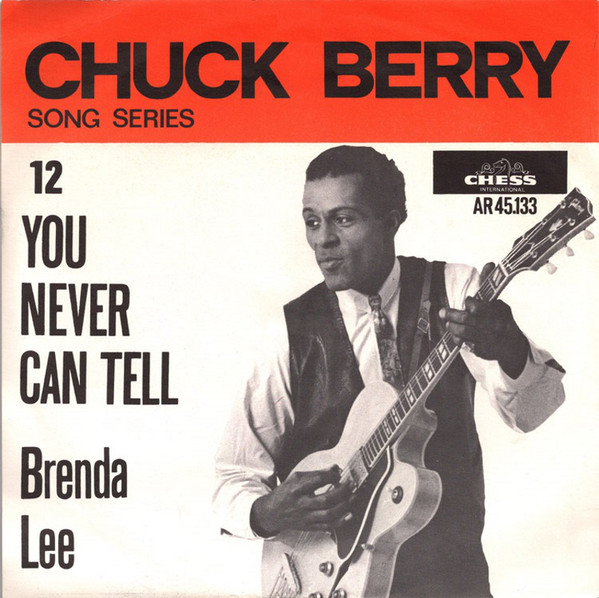
You Never Can Tell was written at a time when Chuck Berry was in prison…he also wrote Nadine in there. He was convicted in late 1961 of violating the Mann Act. Berry served one and one-half years in prison, from February 1962 to October 1963.
When he returned he was now facing the British invasion with the Beatles and the other bands out of England.
This song was released on his album St. Louis to Liverpool album in 1964. The album peaked at #124 in the Billboard Album Charts. The album included No Particular Place To Go and Promised Land.
In 1977, Emmylou Harris had a Top 10 Country hit with her version, which she renamed “(You Never Can Tell) C’est La Vie.”
From Songfacts
This song tells the story of a teenage couple getting married and staying together. Many of Berry’s songs are written from the perspective of young people, but this one even takes a dig at the older generation: “‘C’est la vie,’ say the old folks,” Berry sings. (“C’est la vie'” is French for “That’s life”).
Most songs that describe a young couple in love on their way to adulthood don’t end well, as disaffection or tragedy strikes. This song is unusual in that the couple does just fine, settling in with a nice record collection and some Roebuck furniture. As they settle into married life, their love stays strong. It’s not the storyline you’d expect, but you never can tell.
This was one of the new batch of hits Berry produced after being released from prison in 1963 after serving 20 months for “transporting an underage female across state lines for immoral purposes.” Berry had met a 14-year-old girl in Mexico who he brought back to St. Louis to work in his nightclub.
There is very little guitar on this track, which is driven by piano and saxophone.
When Berry sings, “The Coolerator was crammed with TV dinners and ginger ale,” he’s referring to a brand of refrigerator called a Coolerator that was popular in the 1950s.
This was featured in the 1994 film Pulp Fiction. It was used in the scene where Uma Thurman and John Travolta dance to it in the twist contest at Jack Rabbit Slim’s.
This is quoted in Stephen King’s 1995 novel, Rose Madder, when Norman – a policeman with a violent temper – contemplates his new promotion: “It made him think of a Chuck Berry song, one that went ‘C’est la vie, it goes to show you never can tell.'”
King referenced the tune again in The Institute (2019) to describe a successful teenage marriage like the one in the song.
You Never Can Tell
It was a teenage wedding, and the old folks wished them well You could see that Pierre did truly love the mademoiselle And now the young monsieur and madame have rung the chapel bell “C’est la vie”, say the old folks, it goes to show you never can tell
They furnished off an apartment with a two room Roebuck sale The coolerator was crammed with TV dinners and ginger ale But when Pierre found work, the little money comin’ worked out well “C’est la vie”, say the old folks, it goes to show you never can tell
They had a hi-fi phono, boy, did they let it blast Seven hundred little records, all rock, rhythm and jazz But when the sun went down, the rapid tempo of the music fell “C’est la vie”, say the old folks, it goes to show you never can tell
They bought a souped-up jitney, ’twas a cherry red ’53 They drove it down to Orleans to celebrate the anniversary It was there that Pierre was married to the lovely mademoiselle “C’est la vie”, say the old folks, it goes to show you never can tell
I forgot to post this yesterday with Heartbreaker so I thought I would get it in today.
I’ve always liked this song tacked on the end of Heartbreaker. This is a song about a groupie who bothered the band in their earlier days. She was a much older woman claiming and acting like she was really young. Radio stations would usually play both of these together. This was released as the B-side of “Whole Lotta Love.”
Zeppelin never played this song live because Jimmy Page hated it. Robert Plant played it on his solo tour in 1990.
The album Led Zeppelin II peaked at #1 in the Billboard 100, the UK, and Canada in 1969.
It was rare when Jimmy Page did backup vocals…he did on this song.
And both together
Livin’ Lovin’ Maid (She’s Just A Woman)
With a purple umbrella and a fifty cent hat, Livin’, lovin’, she’s just a woman. Missus cool rides out in her aged Cadillac. Livin’, lovin’, she’s just a woman.
*Come on, babe on the round about, ride on the merry-go-round, We all know what your name is, so you better lay your money down.
Alimony, alimony payin’ your bills, Livin’, lovin’, she’s just a woman. When your conscience hits, you knock it back with pills. Livin’, lovin’, she’s just a woman.
* Chorus
Tellin’ tall tales of how it used to be. Livin’, lovin’, she’s just a woman. With the butler and the maid and the servants three. Livin’, lovin’, she’s just a woman.
Nobody hears a single word you say. Livin’, lovin’, she’s just a woman. But you keep on talkin’ till your dyin’ day. Livin’, lovin’, she’s just a woman.
I talk about this a lot but this guitar riff is great and makes the song for me. I like how they ease into Livin’ Lovin’ Maid (She’s Just a Woman).
Heartbreaker was ranked number 328 in 2004 by Rolling Stone magazine, in their 500 Greatest Songs of All Time. The song was credited to all four members of the band, “Heartbreaker” was produced by Jimmy Page and engineered by Eddie Kramer.
The solo is something different in this song. Jimmy Page does not play it with the band. He plays it by himself in a break in the song. Page didn’t find out until years later that the solo was in a different pitch than the rest of the song…but it sounded great.
The album peaked at #1 in the Billboard 100, the UK, and Canada in 1969.
Eddie Van Halen:I think I got the idea of tapping watching Jimmy Page do his “Heartbreaker” solo back in 1971. He was doing a pull-off to an open string, and I thought wait a minute, open string… pull off. I can do that, but what if I use my finger as the nut and move it around? I just kind of took it and ran with it.
Jimmy Page:“The interesting thing about the solo is that it was recorded after we had already finished ‘Heartbreaker’ – it was an afterthought. That whole section was recorded in a different studio and it was sort of slotted in the middle.”
Eddie Krammer: “I met Page for the first time in Pye studios when I was working on sessions of The Kinks. Page had earned a certain reputation as a studio guitarist. I also worked with John Paul Jones on a few sessions, and we became friends. Jones was a brilliant musician. He wrote arrangements for chord orchestras and he could play many instruments extremely well. Before I left England to work with Jimi Hendrix at Record Plant studio in New York, in April 1968, Jonesy had invited me at his place to have me listen to a few demos of his new group, Led Zeppelin. I remember it sounded very heavy, and I was surprised that Jimmy Page played guitar because I didn’t know they were friends. Jonesy was very proud of John Bonham, an ex-mason from the north of England who could hit it hard on the drums, as well as of Robert Plant, their wild singer. While I wasn’t convinced by the name they had chosen, I wished them good luck. Then in ’69, I was working at Electric Lady studios when I received a call from Steve Weiss, Jimi’s right-hand man, saying that Led Zeppelin was in town. Page called later to tell he wanted I help him release what they had recorded and to make a few more tracks. Led Zeppelin had been a major success for Atlantic and they were urging Jimmy to finish the second album. Their schedule however wasn’t very arranging. So we ended up listening, doubling, recording and mixing in many different studios around New York, including Groove Sound, a nice R&B 8-track studio.
From Songfacts
This opens Side 2 of Led Zeppelin II and goes right into “Livin’ Lovin’ Maid (she’s just a woman)” on the album. Radio stations usually play them together, but “Maid” was never performed live by Led Zeppelin.
A crowd favorite, Led Zeppelin sometimes opened live shows with it.
At concerts, Jimmy Page would stretch out the guitar solo and incorporate bits of other songs, like “Greensleeves,” “The 59th Street Bridge Song (Feelin’ Groovy),” and Bach’s “Bouree in C minor.”
Robert Plant, Jimmy Page, and John Paul Jones performed this at the Atlantic Records 40th anniversary concert in 1988 with Jason Bonham sitting in on drums for his late father.
Led Zeppelin opened many of their live shows in 1971 and 1972 with “Immigrant Song,” followed by a segue right into this.
Eddie Kramer, sound engineer on Led Zeppelin II, told Guitare & Claviers in 1994 how he ended up working on the album:
Heartbreaker
Hey fellas have you heard the news? You know that Annie’s back in town? It won’t take long just watch and see How the fellas lay their money down
Her style is new but the face is the same As it was so long ago But from her eyes a different smile Like that of one who knows
Well it’s been ten years and maybe more Since I first set eyes on you The best years of my life gone by Here I am alone and blue
Some people cry and some people die By the wicked ways of love But I’ll just keep on rollin’ along With the grace of the Lord above
People talkin’ all around ’bout the way you left me flat I don’t care what the people say, I know where their jive is at One thing I do have on my mind, if you can clarify please do It’s the way you call me by another guy’s name when I try to make love to you, yeah
I try to make love but it ain’t no use Give it to me, give it
Work so hard I couldn’t unwind Get some money saved Abuse my love a thousand times However hard I tried
Heartbreaker, your time has come Can’t take your evil way Go away heartbreaker Heartbreaker Heartbreaker Heartbreaker
Transcontinental Pop Festival… better known as the Festival Express. Great idea on paper… rounding up musicians in 1970 and placing them on a train going across Canada and stopping along the way to play festivals. What could go wrong? Actually, I would have loved to have been on that train.
The lineup:
The Band
The Grateful Dead
Janis Joplin
Buddy Guy Blues Band
The Fly Burrito Brothers
Sha Na Na
Delaney & Bonnie & Friends
There were artists that were not in the film like Traffic, Ten Years After, Tom Rush, Ian & Sylvia, Mountain and more.
A DVD was released of this in 2004. All these musicians on a train full of liquor and an assortment of drugs… liquor was the popular choice among the musicians on this ride. The tour was to have events in Montreal, Toronto, Winnipeg, Calgary, and Vancouver. The Montreal event was canceled as was Vancouver. In Toronto, protesters were saying the festival promoters were price gouging so The Grateful Dead played a free concert in a park nearby to ease tensions with the protesters.
There are some very good performances on the film. My favorite is Buddy Guy and Janis Joplin’s performance. I also like the Dead’s “Don’t Ease Me In” with Pigpen on blues harp. The festival lost money and the film was thought lost for over 30 years. Janis would be gone a few months after this but her performance of Cry Baby is electrifying.
The train was where the fun was at. They actually stopped at a liquor store and bought out the complete store…including the giant display bottles. The Dead’s crew even dosed some of the liquor…and cake with LSD as you will see below… on board. When watching the film you can see the performers are having a ball jamming with each other because they didn’t get a lot of chances to do that on the road.
Bill Kreutzmann (drummer for the Dead) from his book “Deal”
We celebrated Janis Joplin’s birthday at the last stop the traditional way: with birthday cake. In keeping with our own kind of tradition, somebody—within our ranks, I would imagine—had secretly infused the cake with a decent amount of LSD. So it quickly became an electric birthday celebration. Allegedly, some generous pieces of that birthday cake made it to the hands and mouths of the local police who were working the show. “Let them eat cake!” (To be fair, I didn’t have anything to do with that … I was just another cake-eating birthday reveler, that night.) And that was it for the Festival Express. It was a wonderful time and I think what really made it great was the level of interaction and camaraderie among the musicians, day and night, as we were all trapped on this train careening across the great north. It probably helped that we were all trashed the entire time. Whiskey was in the conductor’s seat on that ride.
I would recommend getting the DVD of this event. It’s a great time capsule of that time in music and culture.
Lets mellow out this morning and try a little tenderness by Otis Redding. I first heard this song by Three Dog Night who I like a lot but I have to go with Otis.
This song is a standard recorded by many artists, including crooners Frank Sinatra, Mel Torme and Bing Crosby. It was written by Jimmy Campbell, Reg Connelly and Harry Woods, and first published in 1933.
Otis recorded this song for Stax Records in Memphis. The house band was Booker T. & the M.G.’s and they backed him up on this recording…
Redding did not want to record this song, but Stax Records executives and his friends wore him down with a constant barrage of requests.
When he finally recorded it, he did it with a pleading vocal that he was sure would not be released. The ploy didn’t work. Redding’s version of “Try a Little Tenderness” became his biggest selling record released before his death.
The song peaked at #25 in the Billboard 100 and #46 in the UK in 1966.
From Songfacts
Campbell and Connelly were a British songwriting team who often collaborated with a third composer, which in this case was the American Harry Woods.
In 1962, Aretha Franklin recorded the song, charting at #100 in the US at a time when most of her singles failed to get much higher. Her arrangement was similar to that of the previous crooner versions and her vocal relatively restrained; it was Otis Redding who did the definitive soulful version of the song, complete with horns, organ, and an uninhibited vocal that builds in intensity as the song progresses.
Sam Cooke’s version of this was a big influence on Redding. It was never released as a single but was one of high points of his live “Sam Cooke at the Copa” LP (1964) as part of a medley that started with “Tenderness” (followed by “Sentimental Reasons” and “You Send Me”). Redding idolized the man, particularly after Cooke’s death, but he did not want to record “Tenderness.” He caved in after tremendous pressure from his friends and (according to one source) a family member – but he didn’t want to record it like Cooke (in fact, he considered his version a “joke” to quiet the people who wanted him to record it). The rest is history.
Three Dog Night recorded this as a tribute to the late Otis Redding. Their version became their first Top 40 hit in 1968. Their first Top 10 hit, “One,” written and originally recorded by Harry Nilsson, soon followed.
For Three Dog Night, it was a staple of their live shows throughout the 1980s. They would often stretch the song to the 15-20 minute mark.
In the movie Bull Durham, erratic young pitcher Nuke LaLoosh, played by Tim Robbins, sings this on the team bus but butchers the lyrics, much to the dismay of Crash Davis, the veteran catcher played by Kevin Costner. Instead of “Young girls they do get wearied” he sang “Young girls they do get wooly.”
This was one of two songs Aretha Franklin performed when she made her TV debut on American Bandstand August 2, 1962. A cover by her peaked at #100 on the Hot 100 the same year.
Jon Cryer’s character Duckie lip-synchs this to Molly Ringwald’s character Andie in the 1986 movie Pretty In Pink. The film’s director Howard Deutch chose the song because he wanted something that would express the heartbreak Duckie feels as he tries to make inroads with Andie.
In 2015, Cryer re-created the scene on The Late Late Show with James Corden.
This was covered by Florence and the Machine for their 2012, MTV Unplugged – A Live Album. Speaking with Nicole Alvarez of LA radio station 106.7 KROQ, Florence Welch said it was hard choosing an acoustic cover for the show. “I almost didn’t do ‘Try A Little Tenderness’ because it’s my favorite song and I thought, ‘I can’t do this,'” she admitted. “I didn’t know how to do it the same, but I just thought, ‘I’ve got to slow it down.'”
The Otis Redding version was used in 2015 commercials for McDonald’s Chicken Select Tenders. Because, you know, “tender” is in the song title.
Try A Little Tenderness
Ooh, she may be weary And young girls, they do get wearied Wearing that same old shaggy dress, yeah But when she gets weary Try a little tenderness, yeah, yeah
You know she’s waiting Just anticipating The thing that she’ll never, never, never, never possess, yeah, yeah But while she’s there waiting, and without them Try a little tenderness That’s all you gotta do
It’s not just sentimental, no, no, no She has her grief and care, yeah yeah yeah But the soft words, they are spoke so gentle, yeah
It makes it easier Easier to bear, yeah
You won’t regret it, no no Young girls, they don’t forget it Love is their whole happiness, yeah
But it’s all so easy All you got to do is try, try a little, tenderness yeah All you’ve gotta do is, man Hold her where you want her Squeeze her, don’t tease her Never leave her, get to her Just try, try a little tenderness, y-y-yeah You got to love and kiss her, man Got to, got to, got to, don’t lose her, no, no You got to love her, tease her, don’t you leave her Got to try, now, now, now Try, tru a little tenderness Yeah, watch the groove now, you gotta know what to do, man…
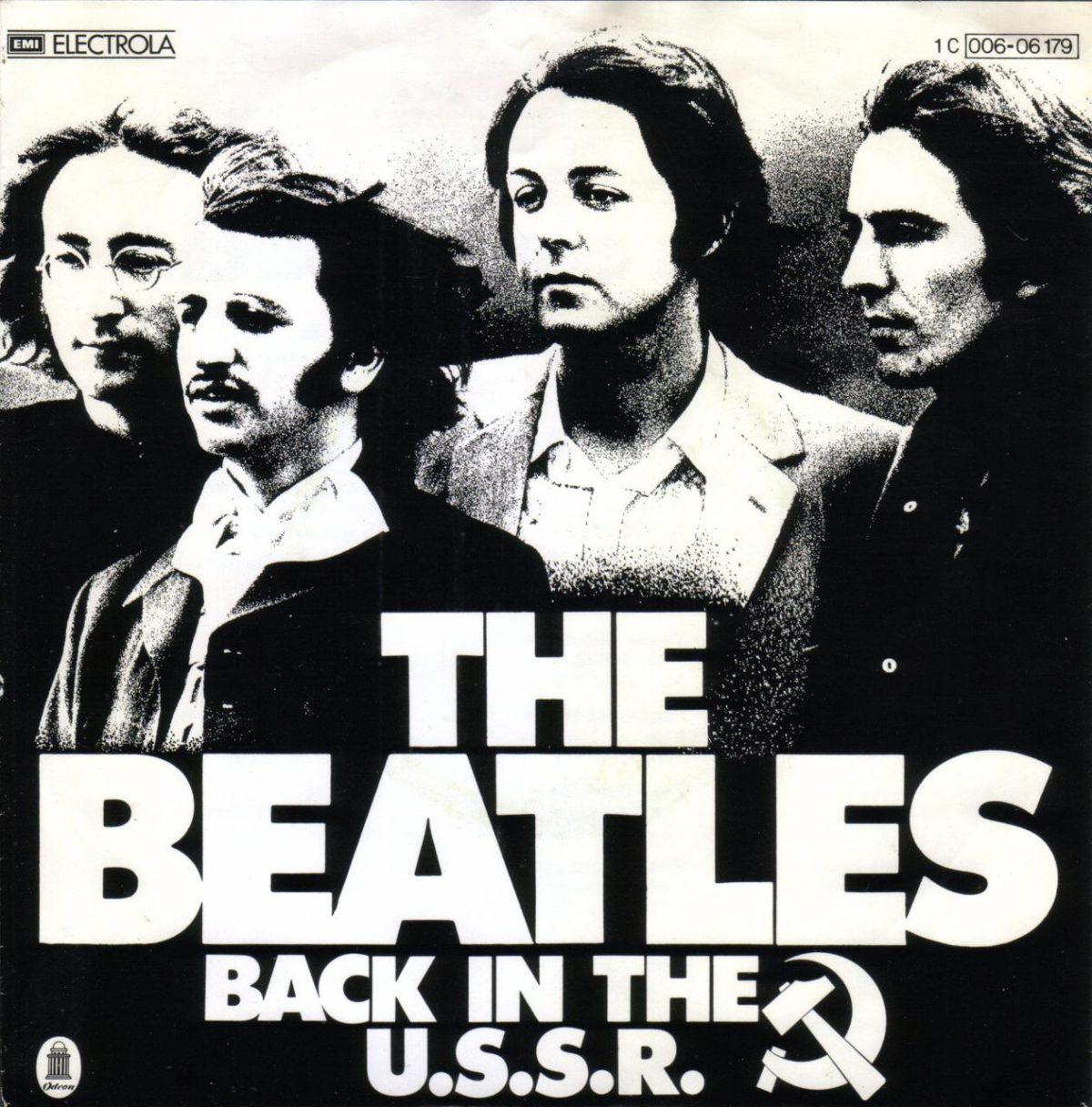
I always liked this rocking song by the Beatles. They threw a little Beach Boy feel in it also.
The song was written during the band’s visit to Rishikesh, India is early 1968, the intention being to study and practice Transcendental Meditation with the Maharishi.
In early 1968, the British government launched the “I’m Backing Britain” campaign to rally enthusiasm and boost their economy. McCartney was inspired by this and Chuck Berry’s Back In The U.S.A. The working title was I’m Backing the UK.
This song was on the double White Album released in 1968. The album peaked at #1 in the Billboard Album Chart, Canada, and the UK. There was tension between the members on this album.
Following an argument with McCartney over the drum part for this song, Ringo walked out on The Beatles. He flew to Sardinia for a holiday to consider his future. While there he received a telegram from his bandmates saying, ‘You’re the best rock ‘n’ roll drummer in the world. Come on home, we love you.’ On his return, he found his drum kit covered with flowers. A banner above read, ‘Welcome Back.’
Paul did end up playing drums on the track. It is credited to Lennon/McCartney but it is a McCartney written song.
This song caused some controversy with conservative America, because it came out during Vietnam and the Cold War and it appeared to be celebrating the enemy. The John Birch Society accused The Beatles with promoting communism.
Paul McCartney:“Chuck Berry once did a song called ‘Back In The U.S.A,’ which is very American, very Chuck Berry, you know. He was ‘serving in the army and, when I get back home, I’m gonna kiss the ground,’ you know, ‘can’t wait to get back to the States.’ It’s very much an American thing, I always thought. So, this one, ‘Back In The U.S.S.R.’ was about, in my mind, a spy who has been in America for a long, long time. Some fellow who’s been in America for a long time and he’s picked up and he’s very American, but he gets back to the U.S.S.R., and he’s, sort of, saying ‘Leave it till tomorrow, honey to disconnect the phone,’ and ‘come here, honey,’ with Russian women, and all that.”
From Songfacts
The story of this song begins in Hrishikesh, India, where The Beatles were on a retreat learning Transcendental Meditation from their guru, Maharishi Mahesh Yogi. Also on the retreat was Mike Love of The Beach Boys, who told us: “Paul (McCartney) came down to the breakfast table one morning saying, ‘Hey, Mike, listen to this.’ And he starts strumming and singing, ‘Back in the U.S.S.R.,’ the verses. And I said, ‘Well, Paul, what you ought to do is talk about the girls around Russia, Ukraine girls and then Georgia on my mind, and that kind of thing.’ Which he did.
So I think it was the fact I was there, which caused Paul to think in terms of Beach Boys, and then my suggestion for what to do on the bridge, he took that suggestion and crafted, like only Sir Paul can, a really great song.”
McCartney was impressed with the idea and used some Beach Boys’ elements in this song: Instead of “California Girls” it was “Moscow Girls.” Plus, the definitive Beach Boy “Oooeeeeoooo” in the background harmonies.
The title was inspired by Chuck Berry’s “Back In The U.S.A.” The Beach Boys had been influenced by that song and also “Sweet Little Sixteen” to come up with “California Girls” and “Surfin’ U.S.A.”
Things were tense when they were working on this album, and Ringo walked out during recording, briefly quitting the band. Paul McCartney played drums in his place.
The line “Georgia’s always on my mind” in a play on the Ray Charles song “Georgia On My Mind.” It has a double meaning, since Georgia was part of the U.S.S.R.
Elton John performed this song when he toured Russia in 1979, and he got a huge response. This was the year before Moscow hosted the Summer Olympics, which the United States boycotted. Elton told Q magazine: “The first night as an encore I did ‘Back In The U.S.S.R.’ And they went apes–t. It was like playing ‘Philadelphia Freedom’ in Philadelphia. You just noticed that the people there were as ordinary and as good as the people you’d notice anywhere else.”
Billy Joel got a similar reaction when he played the song in Moscow in 1987.
This opens with the sound of an airplane flying from left to right across the speakers. Stereo was relatively new, so this was very innovative for the time.
Paul McCartney told Mojo magazine October 2008 that the song’s middle-eight was a spoof of the Beach Boys leading up to Pet Sounds. He added: “The rest is (sings first bars of the melody line of the opening verse) more Jerry Lee (Lewis). And the title is Chuck Berry, Back In The U.S.A., and the song itself is more a take on Chuck. You’d get these soldiers back from Korea or Vietnam, wherever the hell, and Chuck was picking up on that. I thought it was a funny idea to spoof that with the most unlikely thing of way back in Siberia.”
There was a rumor in the Soviet Union that The Beatles had secretly visited the U.S.S.R. and given a private concert for the children of top Communist party members. They believed the song was written because of the concert. Actually, some fans still believe so.
The wafer-thin actress and model Twiggy claimed that this song was written for her to sing on a tour of Russia that didn’t materialize. She and McCartney had met to discuss a film project, but it’s unlikely this song was written for her.
Paul McCartney used this as the title to an album he released only in Russia in 1989. In 2002, McCartney called his US tour the “Back In The US” tour.
In Stephen King’s 1979 novel The Dead Zone, a serial killer hums this tune as he contemplates his first murder.
Back In The U.S.S.R
Flew in from Miami Beach BOAC Didn’t get to bed last night On the way the paper bag was on my knee Man, I had a dreadful flight I’m back in the USSR You don’t know how lucky you are, boy Back in the USSR, yeah
Been away so long I early knew the place Gee, it’s good to be back home Leave it till tomorrow to unpack my case Honey disconnect the phone I’m back in the USSR You don’t know how lucky you are, boy Back in the US Back in the US Back in the USSR
Well the Ukraine girls really knock me out They leave the west behind And Moscow girls make me sing and shout That Georgia’s always on my my my my my my my my my mind Oh, come on Hu hey hu, hey, ah, yeah Yeah, yeah, yeah I’m back in the USSR You don’t know how lucky you are, boys Back in the USSR
Well the Ukraine girls really knock me out They leave the west behind And Moscow girls make me sing and shout That Georgia’s always on my my my my my my my my my mind
Oh, show me round your snow peaked Mountain way down south Take me to your daddy’s farm Let me hear your balalaika’s ringing out Come and keep your comrade warm I’m back in the USSR Hey, you don’t know how lucky you are, boy Back in the USSR Oh, let me tell you, honey
Blind Faith was a Supergroup made up of Eric Clapton, Steve Winwood, Ginger Baker, and Ric Grech. They released just one album… The album peaked at #1 in the Billboard Album Chart, Canada, and the UK in 1969.
It was written by Steve Winwood with acoustic guitar playing by Eric Clapton and percussion by Ginger Baker. Many artists have covered this song but I’ve never heard anyone that can match the original.
Winwood wrote this and sang lead. Many critics thought that Blind Faith sounded a lot more like Traffic than Clapton’s Cream, which is what Clapton was going for.
This song was on the “Blind Faith” album in 1969. Blind Faith was only together for this album, a debut concert in Hyde Park, a Scandinavia and USA tour and then broke up shortly afterwards.
In concert they performed Cream and Traffic songs, which delighted the crowd and annoyed Eric Clapton greatly. These audiences preferred their older material instead of the newer Blind Faith songs.
Clapton began spending more time with opener Delaney Bramlett and less time with his own band, which prompted a 21-year-old Steve Winwood to take a more driving role in the band. Eventually, Clapton left the group following their final show in Hawaii.
This song never gets old to me.
From Songfacts
Clapton played acoustic guitar on this track, which is something he rarely did. In his previous group, Cream, he played long, intense solos, something he wanted to get away from with Blind Faith.
The album was released in the UK with a cover photo of an 11-year-old girl named Mariora Goschen. The cover photo because as famous as the album itself, since it showed Goschen naked and holding a model spaceship (a different cover with a band photo was used in the US and for stores that wanted an alternative in the UK).
Bob Seidemann came up with the concept and took the photo, which represents humankind’s relationship with technology (this was when the mission to put a man on the moon was big news). The band wasn’t yet named, and when Seidemann took the photo, he called it “Blind Faith.” Clapton decided that should be the name of the band.
Clapton sometimes plays this at his concerts, with a member of his band singing. His bass player Nathan East would often sing it.
A common misconception is that Eric Clapton and Steve Winwood reunited at the Crossroads Guitar Festival, July 28, 2007, however, the first true live reunion occurred two months earlier at an event called Countryside Rocks at Highclere Castle, Hampshire, UK on May 19, 2007. Steve Winwood performed his set and Eric came on later as a guest. Together they played this song as well as “Watch Your Step,” “Presence of the Lord,” “Crossroads,” “Little Queen Of Spades,” “Had to Cry Today” and “Gimme Some Lovin’.”
The band House of Lords covered this on their 1990 album Sahara. Other artists to record it include Joe Cocker, Yvonne Elliman, Gilberto Gil and Widespread Panic.
Can’t Find My Way Home
Come down off your throne and leave your body alone Somebody must change You are the reason I’ve been waiting all these years Somebody holds the key
Well, I’m near the end and I just ain’t got the time And I’m wasted and I can’t find my way home
I can’t find my way home But I can’t find my way home But I can’t find my way home But I can’t find my way home Still I can’t find my way home
And I’ve done nothing wrong But I can’t find my way home
Whenever I hear this song I think of a story that Dick Cavett told. He said he met Janis in a restaurant and a Janis song was playing on a jukebox while they sat down. Cavett asked Janis what the name of it was…and she said “Down On Me.” Dick said “Wow, I guess that is one you cannot sing on television”…Janis smiled and said “Dick, it’s a gospel song.”
It was a traditional gospel song from the 20s that Janis reworked. The song was on the debut album of Big Brother & the Holding Company featuring Janis and the album had the same name. The song peaked at #43 in the Billboard 100 in 1967. The album was sloppy…Big Brother and the Holding Company were really raw with no polish. On their second album “Cheap Thrills” they would improve but Janis left after the that album to work with better musicians.
This is not the best Joplin song but I do like it.
Down On Me
Down on me, down on me, Looks like everybody in this whole round world They’re down on me.
Love in this world is so hard to find When you’ve got yours and I got mine. That’s why it looks like everybody in this whole round world They’re down on me.
Saying they’re down on me, down on me. Looks like everybody in this whole round world Down on me.
When you see a hand that’s held out toward you, Give it some love, some day it may be you. That’s why it looks like everybody in this whole round world They’re down on me, yeah.
Lord, they’re down on me, down on me, oh! Looks like everybody in this whole round world Is down on me.
Believe in your brother, have faith in man, Help each other, honey, if you can Because it looks like everybody in this whole round world Is down on me.
I’m saying down on me, oh, down on me, oh! It looks like everybody in this whole round world Down on me!
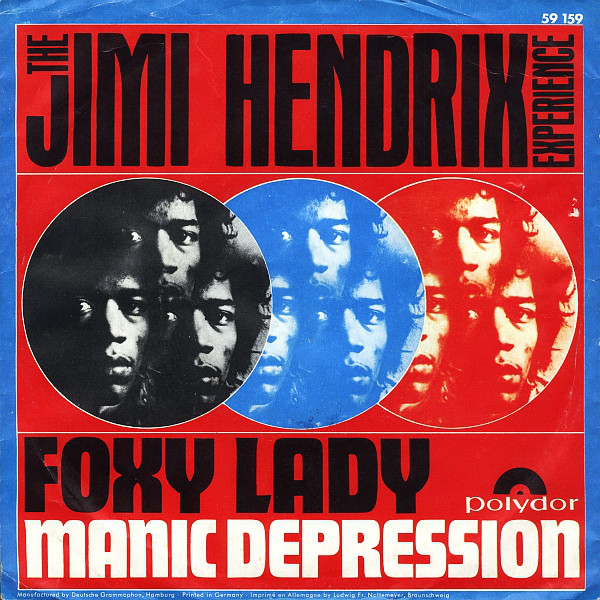
This is one of the most remembered songs from Jimi. According to Hendrix biographer Harry Shapiro, the song was probably inspired by Heather Taylor, who eventually married Roger Daltrey, the lead singer for The Who.
Kathy Etchingham, Jimi’s girlfriend at the time, also claimed to be one of many inspirations for “Foxy Lady.” I’m sure there are/were a lot of claims.
Hendrix recorded this on December 13, 1966. That same day, he made his first TV appearance on the British show Ready Steady Go. The Jimi Hendrix Experience had been together only 2 months at that point, but things moved very quickly. Three days later, their first single, “Hey Joe” was released.
Rolling Stone magazine placed the song at number 153 on its list of the “500 Greatest Songs of All Time.”
The song was on the Are You Experienced album released in 1967. It peaked at #5 in the Billboard Album Charts, #15 in Canada and #2 in the UK
Foxy Lady peaked at #67 in the Billboard 100.
From Songfacts
Hendrix opened for The Monkees on their 1967 tour. When he played this, the young girls who came for The Monkees and had no interest in Hendrix shouted “Davy!” when Hendrix sang “Lady,” resulting in “Foxy Davy,” and turning it into a tribute to their idol, Monkees lead singer Davy Jones.
This was featured in the movie Wayne’s World. It is used in a scene where Garth (Dana Carvey), sings it while thinking about his dream woman, played by Donna Dixon.
In the booklet for the Experience Hendrix CD, Hendrix was quoted as saying this was the only happy song he had ever written. He said that he usually just doesn’t feel happy when writing songs.
The title of this song has two alternate spellings: “Foxey Lady” (for release in America) and “Foxy Lady” (for release in the UK).
Foxy Lady
Foxey, foxey You know you’re a cute little heart breaker, ha Foxey, yeah And you know you’re a sweet little love maker, ha Foxey
I want to take you home, haha yeah I won’t do you no harm no, ha You got to be all mine, all mine Ooh foxey lady, yeah Foxey, foxey
Now-a I see you come down on the scene Oh foxey You make me want to get up and a scream Foxey, oh baby listen now I’ve made up my mind Yeah, I’m tired of wasting all my precious time You got to be all mine, all mine Foxey lady Here I come Foxey
Yeah I’m gonna take you home I won’t do you no harm no You got to be all mine, all mine Foxey lady Here I come baby, I’m commin’ to get ya
Ooh foxey lady yeah yeah You look so good foxey Oh yeah foxey Yeah give us some foxey Foxey foxey lady Foxey lady
I was a kid when I first heard a Bob Dylan song and it was Knocking On Heaven’s Door. I liked the song but didn’t think much else about it. Later I heard about him while reading about the Beatles. This man was armed with words that caught everyone’s attention. The books would describe his voice as crude but effective with other adjectives thrown in the mix. I then bought his greatest hits. I received that great Dylan poster with the album that had “ELVIS” formed in his hair…I thought what a cool guy.
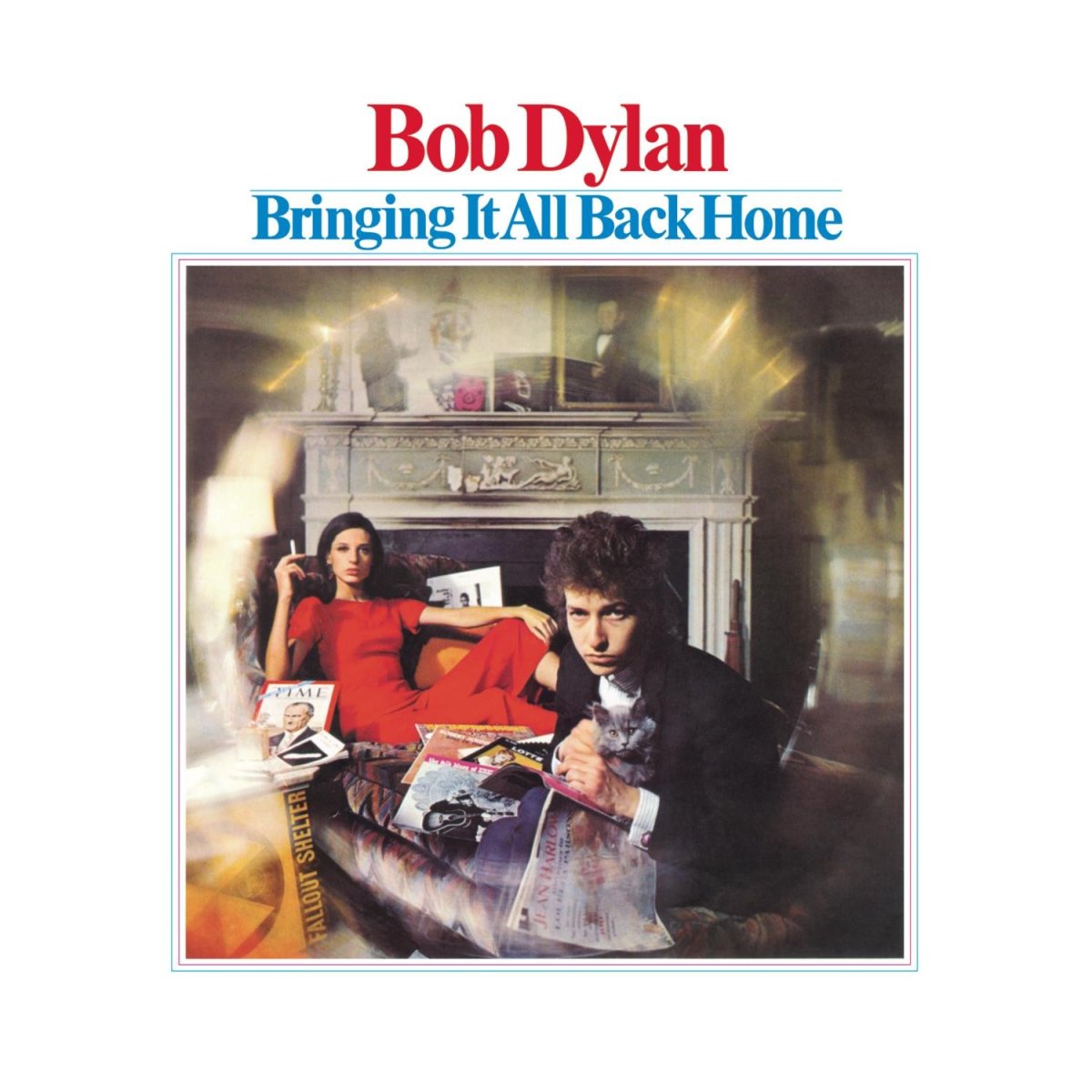
I then purchased Bringing It All Back Home and I was a bigger fan. I loved his voice right away. He didn’t sing like McCartney, Lennon, Elvis, or anyone like that but it worked…his voice had soul and passion. I found out why a generation before me followed him like the Pied Piper…it all became clear. Whether you understood or agreed.. his voice and words meant something. Bob wasn’t a product.
It was Dylan who inspired the Beatles and it was The Beatles who inspired Dylan…they played off of each other and took popular music to new exciting places.
This album angered a lot of his fans. After being a folk singer armed with his acoustic and his bag of words…he blew people away. Then this album came out with electric instruments. That did not go down well with the folk fans. One side of the album was acoustic and the other side full of raw electric songs. Some of his fans would boo him at concerts as soon as the band backed him up on the rock section. That didn’t slow Bob down at all…he knew what he was doing was right and he would not yield to the boos or naysayers.
On top of all of this…the album was recorded in three days…three days (January 13,14, and 15 1965). That’s not enough time for most artists to get a decent outtake.
These songs…where do I start? Lets start with the opener Subterranean Homesick Blues and the line “You don’t need a weather man to know which way the wind blows.” How many hippies have quoted that line? I learned this song by heart much like I did Tangled Up In Blue later on.
It’s Alright, Ma (I’m Only Bleeding) is a song that verse after verse amazes me. His voice in this song is perfect… almost like a preacher behind a pulpit. Bob sings about commercialism, hypocrisy, politics, and warmongering for starters. It’s wrong to pick out a lyric in this song without posting all of them but I will…”Made everything from toy guns that spark, To flesh-colored Christs that glow in the dark, It’s easy to see without looking too far, That not much is really sacred” I mean…holy hell…who comes up with that? It fits just right with today’s commercialism.
Love Minus Zero/No Limit is a over looked song by Bob that very well could be my favorite off of the album. This contains one of my favorite Dylan lyrics. “She knows there’s no success like failure, and that failure’s no success at all.” Lyricists would kill for lines like that…Dylan would make a habit of it. He helped raised the standards for songwriters. No longer would serious artists get away with simple rhyming lyrics.
She Belongs To Me took a while for me to get this one. For the longest time I skipped it on the album but then…one day it clicked. “She’s got everything she needs, She’s an artist, she don’t look back, She can take the dark out of nighttime And paint the daytime black.” it has since become one of my favorites.
I’m not going to add more videos to the already full post but it was a coin toss on which ones to go over. It’s All Over Now, Baby Blue, Mr. Tambourine Man, Outlaw Blues, Gates of Eden, Maggie’s Farm…and all of them are worthy. Bob released three albums between March 22, 1965 and June 20, 1966. Those albums were Bringing It All Back Home, Highway 61 Revisted, and Blonde on Blonde. Those alone would be a hall of fame career for any other artist but Bob was just getting warmed up.
This is my first non-band album on my island and I couldn’t have picked a better artist or album. Listening to Dylan never gets old because you continually find something new you didn’t hear before.
1. Subterranean Homesick Blues
2. She Belongs To Me
3. Maggie’s Farm
4. Love Minus Zero/No Limit
5. Outlaw Blues
6. On The Road Again
7. Bob Dylan’s 115th Dream
8. Mr Tambourine Man
9. Gates Of Eden
10. It’s Alright, Ma (I’m Only Bleeding)
11. It’s All Over Now, Baby Blue
H.R. Pufnstuf Who’s your friend when things get rough? H.R. Pufnstuf Can’t do a little ’cause he can’t do enough
I wasn’t old enough to catch the first run of this but I caught the show reruns in the mid-seventies. It was so colorful and intriguing. I always loved this show. Jack Wild did a great job as Jimmy who sails his ship to this God forsaken island. Talking trees, flute, mushrooms, and Witchiepoo always trying to nab Jimmy’s gold talking flute. The mayor of the island was H.R. Pufnstuf…a dragon type creature I think.
The character HR Pufnstuf was created for the 1968 World’s Fairin San Antonio, Texas. The show lasted one season…1969-1970. They made 17 episodes and replayed them over and over. The show was an immediate hit, so NBC renewed it for a second season, but it had become such an overwhelming money pit for the producers that they declined and the network was forced to air reruns.
It’s long been rumored that the Krofft brothers were deeply influenced by marijuana and LSD when they were making H.R. Pufnstuf…uh…”Hand Rolled Puffin’ Stuff.” Despite these obvious parallels, the brothers deny using drugs – at least during work hours.
Marty Krofft: “We screwed with every kid’s mind,”such as H.R. Pufnstuf, Lidsville and Land of the Lost — that he created with brother Sid in the early 1970s. “There’s an edge. Disney doesn’t have an edge.”
Marty Krofft: “No drugs involved. You can’t do drugs when you’re making shows. Maybe after, but not during. We’re bizarre, that’s all.”
On a side note… The Kroffts sued McDonalds for copyright infringement because Mayor McCheese and Big Mac bore a strong resemblance to H. R. Pufnstuf. They also noted similarities between the living trees and apple pie trees…McDonalds clearly did borrow from H.R. Pufnstuff.
H.R. Pufnstuf
H.R. Pufnstuf Who’s your friend when things get rough? H.R. Pufnstuf Can’t do a little ’cause he can’t do enough
Once upon a summertime Just a dream from yesterday A boy and his magic golden flute Heard a boat from off the bay “Come and play with me, Jimmy Come and play with me And I will take you on a trip Far across the sea”
But the boat belonged to a kooky old witch Who had in mind the flute to snitch From her broom-broom in the sky She watched her plans materialize She waved her wand The beautiful boat was gone The skies grew dark, the sea grew rough And the boat sailed on and on and on and on and on and on
H.R. Pufnstuf Who’s your friend when things get rough? H.R. Pufnstuf Can’t do a little ’cause he can’t do enough
But Pufnstuf was watching, too And knew exactly what to do He saw the witch’s boat attack And as the boy was fighting back He called his rescue racer crew As often they’d rehearsed And off to save the boy they flew But who would get there first?
H.R. Pufnstuf Who’s your friend when things get rough? H.R. Pufnstuf Can’t do a little ’cause he can’t do enough
But now the boy had washed ashore Puf arrived to save the day Which made the witch so mad and sore She shook her fist and screamed away
H.R. Pufnstuf Who’s your friend when things get rough? H.R. Pufnstuf Can’t do a little ’cause he can’t do enough
One of the great guitar riffs in rock…very melodic and sounds great on a guitar.
John Lennon said he borrowed from the song “Watch Your Step” by the American blues musician Bobby Parker. I Feel Fine was released in late 1964. It was the A side of the single with She’s A Woman on the B side.
The first note of this song marked the first time feedback was used on a major release. It was created when John Lennon leaned his electric guitar against an amplifier and Paul McCartney played a note on his bass, creating a strangely appealing feedback loop.
The band thought it sounded great, but in this pre-Hendrix era, feedback was considered a technical malfunction and not an artistic enhancement.Producer George Martin was always open to new ideas and agreed to insert it at the beginning of the song. Paul would say that he let them experiment.
The song peaked at #1 in the Billboard 100, Canada, UK, and New Zealand in 1965.
From Songfacts
An early Beatles track, “I Feel Fine” lyrically is a simple love song about a guy who is crazy about his girl. It’s not Shakespeare, but it’s effective:
She’s so glad, she’s telling all the world
That her baby buys her things, you know
He buys her diamond rings, you know
The refrain is typical of Lennon’s songwriting, with the three long notes: “I’m so glad.” The sudden explosive refrain in harmonies is similar to Giovanni Gabrieli’s grand concerto “In ecclesiis,” an early baroque-music-piece.
There is a very faint sound at the end of the song that was rumored to be barking dogs. It’s actually just McCartney goofing around.
The Beatles included this in their setlist when they toured the US in August 1965. Prior to their famous Shea Stadium appearance on August 15, they taped a performance of this song and five others for an Ed Sullivan Show episode that aired September 12.
The group made two music videos for this song as part of a one-day shoot where they banged out takes for four others as well. These were not high-concept films: just the band having some fun while lip-synching the tracks. The first “I Feel Fine” video got pretty goofy, with Ringo riding a stationary bike. For the second, the band simply sits down and eats lunch. This later version wasn’t released until 2015 when it was included on the 1+ collection.
The Ventures incorporated the riff into their surf rock instrumental version of “Rudolph The Red-Nosed Reindeer” on their 1965 Christmas album.
In America, this knocked “Come See About Me” by The Supremes from the top spot. “I Feel Fine” stayed for three weeks, at which point “Come See About Me” returned to bump it off.
I Feel Fine
Baby’s good to me, you know She’s happy as can be, you know She said so I’m in love with her and I feel fine
Baby says she’s mine, you know She tells me all the time, you know She said so I’m in love with her and I feel fine
I’m so glad that she’s my little girl She’s so glad, she’s telling all the world That her baby buys her things, you know He buys her diamond rings, you know She said so She’s in love with me and I feel fine
Baby says she’s mine, you know She tells me all the time, you know She said so I’m in love with her and I feel fine
I’m so glad that she’s my little girl She’s so glad, she’s telling all the world That her baby buys her things, you know He buys her diamond rings, you know She said so She’s in love with me and I feel fine She’s in love with me and I feel fine, mmm
Procol Harum wrote and performed one of my favorite songs of all time…A Whiter Shade of Pale. The band formed in 1967 partly out of a band called The Paramounts.
Conquistador was on their self titled debut album. It was released as a single in 1967 but the studio version was not a hit.
This became a hit when Procol Harum recorded it live with the Edmonton Symphony Orchestra on November 18, 1971. It was released in 1972 on the aptly titled album Procol Harum Live with the Edmonton Symphony Orchestra.
The song peaked at#16 in the Billboard 100 and #7 in Canada in 1972.
Conquistador – a conqueror, especially one of the Spanish conquerors of Mexico and Peru in the 16th century.
Gary Brooker: “I would say something off of the Edmonton Symphony Live album. I don’t mind which one, really. But it always gives one a great deal of pleasure if you know that when you sing live, that you sing as well or better than you did in the studio. And, of course, when you get excited, when you’re playing on stage, a bit more adrenaline, it always fits well in with the feeling. When we played in Edmonton with the Edmonton Symphony Orchestra that first time, it was a very inspiring evening, and there was a lot of good music going on from everybody, and the vocals had to get over it all.”
From Songfacts
Procol Harum’s lyricist Keith Reid told us the story behind this song: “Gary Brooker and I, before we formed Procol Harum, when we were just working together as songwriters and getting into it, we had this regular deal where he lived about 40 miles from London near the ocean, and I’d jump on a train once a week and go visit him. He’d have a bunch of my lyrics and he’d play me whatever he had been working on. This particular time, though, I’d got down there and he’d been working on a tune. He said, ‘What does this sound like to you?’ And I said, ‘Oh, conquistador.’ It had a little bit of a Spanish flavor to it. I went into another room and started writing the words there and then. 99 out of 100 of those Procol Harum songs were written the words first, and then were set to music. But that particular one, the words hadn’t existed before he had the musical idea.”
Conquistadors were Spanish soldiers who set out to conquer the Americas after their discovery by Christopher Columbus in 1492.
Conquistador
Conquistador your stallion stands in need of company And like some angel’s haloed brow You reek of purity
I see your armor plated breast Has long since lost its sheen And in your death masked face There are no signs which can be seen
And though I hoped for something to find I could see no maze to unwind
Conquistador a vulture sits, upon your silver sheath And in your rusty scabbard now, the sand has taken seed And though your jewel-encrusted blade Has not been plundered still The sea has washed across your face And taken of its fill
And though I hoped for something to find I could see no maze to unwind And though I hoped for something to find I could see no maze to unwind
Conquistador there is no time, I must pay my respect And though I came to jeer at you I leave now with regret And as the gloom begins to fall I see there is no, only all And though you came with sword held high You did not conquer, only die
And though I hoped for something to find I could see no maze to unwind And though I hoped for something to find I could see no maze to unwind
And though I hoped for something to find I could see no maze to unwind
Here are a few short Keith Moon stories. If you want an entertaining book…get Full Moon by Keith Moon’s assistant. Peter “Dougal” Butler.
I didn’t get all the Keith Moon posts out yesterday so I wanted to post this today…I made sure all of these were short so it would not take too much time.
Helen Mirren’s Keith Moon Story
Alice Cooper “If you could live with him…he was the best drummer of all time”










 PowerPop... An Eclectic Collection of Pop Culture