I first heard this song after a band practice. We were in the guitarists garage when I was around 19-20. The guys in that band smoked pot…I didn’t…not because I was an angel…I just cannot smoke anything. That was my second contact high I ever got (my first was at a concert) and this one was much stronger. Someone played this song and the world was a lovely place. I saw right then why they did what they did.
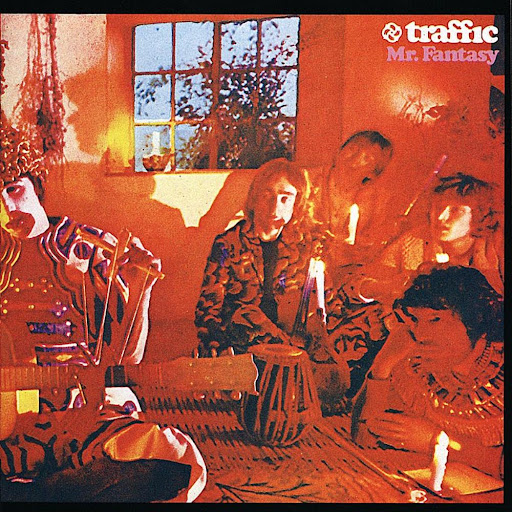
This one would rank in my top twenty favorite songs. I could listen to this song on a tape loop forever and ever. It came out in 1967 on the Traffic album “Mr. Fantasy.” It was written by Jim Capaldi, Steve Winwood and Chris Wood.
The song is made for long solos. Normally I like a solo and then move on but certain songs lend themselves to longer solos and this would be one.
The song also transports me to a time that I wasn’t a part of and I wish I would have been. This one and Can’t Find My Way Back Home does the same thing to me. It’s nothing like jazz but it affects me like jazz…I just sit back and let the song take me away to the incents and patchouli oil.
I’ll let Jim Capaldi tell you about the creation of the song:
“It was the summer of 1967, and we were all living in this cottage in Berkshire. We were one of the first English bands to live together like that. We thought we’d try it and see if anything came of it. I remember the day very clearly: A bunch of friends came over early in the day and we had quite a party. It was sunny and the corn was coming up nicely around the cottage, and we were quite enjoying ourselves if you know what I mean. As things finally wound down in the evening, I was sitting around just doodling, as I would often do, drawing this character. It was this little fellow with a spiked sun hat. He was holding some puppeteer’s strings, and the puppet hands on the end of the strings were playing a guitar. Under that, I just scribbled some words: ‘Dear Mr. Fantasy,’ play us a tune, something to make us all happy’ and on a bit. It was nice, but I didn’t think much of it; certainly, it wasn’t intended to be a song.
“I crashed out eventually, but I remember hearing Steve and Chris playing around after. The next day, I woke up and found that they’d written a song around the words and drawing I’d done. I was completely knocked out by it. Chris wrote that great bass line. We added some more words later and worked out a bigger arrangement, too. Those were very happy days for Traffic.”
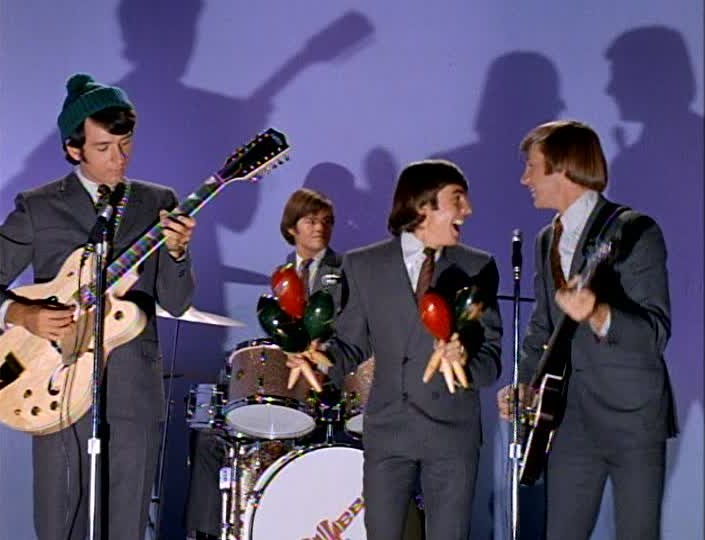
Papa Gene’s Blues was written by Mike Nesmith with The Monkees in 1966 and was on their debut album. Nesmith also produced and sang the lead vocals on the track. The great James Burton and Glen Campbell are playing guitar on this track. The song reminds me of Ricky Nelson.
Nesmith was allowed two songs on the album. This one and Sweet Young Thing…which to me were two of the highlights of the album. Nesmith didn’t write pop songs…he wrote more country rock. Halfway into the guitar solo, Nesmith calls out “Aw, Pick It, Luther!”. Which is a shout out to Johnny Cash and his guitar player, Luther Perkin
I have to add this every time I do a Monkees post. They should be in the Hall of Fame, if only with their influence on three generations of listeners. The show debuted in the 60s, it was in reruns in the 70s (that was when I found them), and a complete revival in the 80s plus a tour. MTV promoted them heavily and they a hot item again. I saw them in 1986 and they were great.
Michael Nesmith:“I liked the Monkees songs quite a bit, I wasn’t much of a pop writer. I tended, and still do, toward country blues, and lyrics with little moments in them – all pretty far off the pop songs of the ’60s. No resentment at all.”
Papa Gene’s Blues
No heartaches felt no longer lonely Nights of waiting finally won me Happiness that’s all rolled up in you
And now with you as inspiration I look toward a destination Sunny bright that once before was blue
I have no more than I did before But now I’ve got all that I need For I love you and I know you love me
So take my hand I’ll start my journey Free from all the helpless worry That besets a man when he’s alone
For strength is mine when we’re together And with you I know I’ll never Have to pass the high road for the low
I have no more than I did before But now I’ve got all that I need For I love you and I know you love me
In the previous episode we met a young monster named Anthony. In this episode we meet a realistic monster named Gunther Lutze…in the past… known as SS Captain Gunther Lutze who wants to relive his glory days. This is a powerful episode made less than twenty years after WWII. Oscar Beregi Jr plays the Captain in all of his infamous glory. Joseph Schildkraut plays Afred Becker, a figure from Luntz’s past, a figure he knows all too well.
We last saw Oscar Beregi Jr in the The Rip Van Winkle Caper but in this one he takes it up a level. He is so convincing as Lutze that you hate this character and everything he represents. The set is very impressive and realistic. CBS had made a pilot for a western, and they had built a four-sided frontier fort. This set cost around $200,000 and it was standing out on Lot 3 at MGM. The crew downgraded it for this episode and it works well.
This episode is chilling for what it represents. Serling did an excellent job with this story. It was satisfying to see the tables turned, and the sadist finds himself on trial with Alfred Becker in charge.
From IMDB
The title refers to the “Totenkopf” or Death’s Head symbol used by the SS during World War II depicting a skull and crossbones. It is distinguished from similar traditions of the skull and crossbones and the Jolly Roger by the positioning of the bones directly behind the skull.
Beregi and Schildkraut both hailed from distinguished Yiddish stage families, and had lost most of their European relatives in the Holocaust.
This show was written by Rod Serling
Rod Serling’s Opening Narration:
Mr. Schmidt, recently arrived in a small Bavarian village which lies eight miles northwest of Munich… a picturesque, delightful little spot one-time known for its scenery, but more recently related to other events having to do with some of the less positive pursuits of man: human slaughter, torture, misery and anguish. Mr. Schmidt, as we will soon perceive, has a vested interest in the ruins of a concentration camp—for once, some seventeen years ago, his name was Gunther Lutze. He held the rank of a captain in the SS. He was a black-uniformed strutting animal whose function in life was to give pain, and like his colleagues of the time, he shared the one affliction most common amongst that breed known as Nazis… he walked the Earth without a heart. And now former SS Captain Lutze will revisit his old haunts, satisfied perhaps that all that is awaiting him in the ruins on the hill is an element of nostalgia. What he does not know, of course, is that a place like Dachau cannot exist only in Bavaria. By its nature, by its very nature, it must be one of the populated areas… of the Twilight Zone.
Summary
Gunther Lutze, a former captain in Hitler’s SS, decides to return to the area that contains the remnants of Dachau concentration camp. As he revels in the memories of the days when he had tortured prisoners, prisoner Alfred Becker appears before his eyes. What he does not realize is Becker is an ghostly apparition, and plans to put Lutze on “trial” for crimes against humanity for the torture and killing of the prisoners that were held in the camp. It is one trial Lutze may regret.
Rod Serling’s Closing Narration:
There is an answer to the doctor’s question. All the Dachaus must remain standing. The Dachaus, the Belsens, the Buchenwalds, the Auschwitzes – all of them. They must remain standing because they are a monument to a moment in time when some men decided to turn the Earth into a graveyard. Into it they shoveled all of their reason, their logic, their knowledge, but worst of all, their conscience. And the moment we forget this, the moment we cease to be haunted by its remembrance, then we become the gravediggers. Something to dwell on and to remember, not only in the Twilight Zone but wherever men walk God’s Earth.
CAST
Rod Serling…Narrator
Joseph Schildkraut…Alfred Becker
Oscar Beregi Jr…SS Capt. Gunther Lutze (as Oscar Beregi)
Kaaren Verne… Innkeeper (as Karen Verne)
Robert Boon… Taxi Driver
Ben Wright… Doctor
Gene Coogan… Victim (uncredited)
Chuck Fox… Victim (uncredited)
Jimmie Horan… Victim (uncredited)
David O. McCall…Victim (uncredited)
Arthur Tovey…Victim (uncredited)
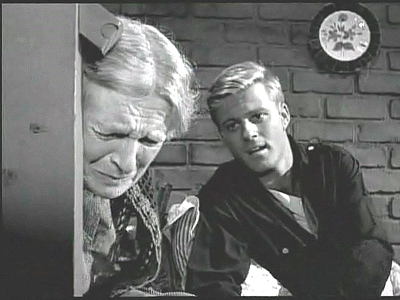
Meet the monster…it won’t look like a real monster but yes it is real…just ask relatives, friends, and neighbors stuck in the cornfield. This is one of the best known episodes of The Twilight Zone and a 5 star classic. It also is the start of a 5 star classic 3 episode run. The brightest part of the 3rd season.
Keep happy thoughts and whatever you do…be nice to Anthony.
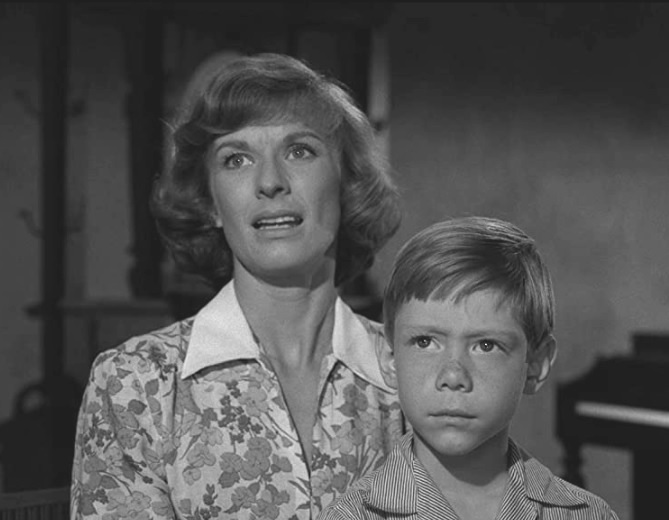
Lets look at the cast. Cloris Leachman plays Agnes Freemont and would appear in many movies and play the role of Phyllis on The Mary Tyler Moore Show. Bill Mumy would portray Anthony and would later be best known for the role of Will Robinson in Lost In Space. Most of the others are faces that you have have seen in movies and tv shows as character actors during that time.
This episode was remade in the 80s as part of The Twilight Zone movie but it doesn’t match this. Bill Mumy does make a brief appearance in the movie.
The episode caught on with the stagehands and the crew. Around the set, when somebody would goof, people would say, Well, that’s a good thing you did, which they would always say to Billy Mumy when he killed a cow or what not That’s a good thing you did.
The first Serling script to be produced this season was an adaptation of Jerome Bixbys classic short story, Its a Good Life, which originally appeared in 1953 and was reprinted in Science Fiction Hall of Fame (Doubleday, 1971). Telling the story of a monstrous, conscienceless child with enormous powers and no restraints, it is truly a horrifying story.
I remember I showed this to my dad…he downright hated Anthony…”I would sneak up behind the little ****** and crack his head.”
Bill Mumy:I’ve always liked Anthony, and I’ve kept Anthony with me. Ill send people to the cornfield when I’m really pissed at them. I mean, Ill do it. Not that it works, but its a release for me.
This show was written by Rod Serling and Jerome Bixby
Rod Serling’s Opening Narration:
Tonight’s story on The Twilight Zone is somewhat unique and calls for a different kind of introduction. This, as you may recognize, is a map of the United States, and there’s a little town there called Peaksville. On a given morning not too long ago, the rest of the world disappeared and Peaksville was left all alone. Its inhabitants were never sure whether the world was destroyed and only Peaksville left untouched or whether the village had somehow been taken away. They were, on the other hand, sure of one thing: the cause. A monster had arrived in the village. Just by using his mind, he took away the automobiles, the electricity, the machines—because they displeased him—and he moved an entire community back into the dark ages—just by using his mind. Now I’d like to introduce you to some of the people in Peaksville, Ohio. This is Mr. Fremont. It’s in his farmhouse that the monster resides. This is Mrs. Fremont. And this is Aunt Amy, who probably had more control over the monster in the beginning than almost anyone. But one day she forgot. She began to sing aloud. Now, the monster doesn’t like singing, so his mind snapped at her, turned her into the smiling, vacant thing you’re looking at now. She sings no more. And you’ll note that the people in Peaksville, Ohio have to smile. They have to think happy thoughts and say happy things because, once displeased, the monster can wish them into a cornfield or change them into a grotesque, walking horror. This particular monster can read minds, you see. He knows every thought, he can feel every emotion. Oh yes, I did forget something, didn’t I? I forgot to introduce you to the monster. This is the monster. His name is Anthony Fremont. He’s six years old, with a cute little-boy face and blue, guileless eyes. But when those eyes look at you, you’d better start thinking happy thoughts, because the mind behind them is absolutely in charge. This is the Twilight Zone.
Summary
In a small farming community in Ohio, a young boy by the name of Anthony Fremont terrorizes those around him. Anthony has the ability to command anything he wants simply by thought. The community is cut off from the outside world and the boy insists that those around him think only pleasant thoughts, and if they don’t, he eliminates them. Everyone walks in fear of the lad who ably demonstrates what he’s prepared to do at a small party in his home.
This is the best I could find…someone tried to colorize the Twilight Zone…NO NO NO…it doesn’t work as well in color.
Rod Serling’s Closing Narration:
No comment here, no comment at all. We only wanted to introduce you to one of our very special citizens, little Anthony Fremont, age six, who lives in a village called Peaksville, in a place that used to be Ohio. And, if by some strange chance, you should run across him, you had best think only good thoughts. Anything less than that is handled at your own risk, because if you do meet Anthony, you can be sure of one thing: you have entered The Twilight Zone.
CAST
Rod Serling…Narrator
Bill Mumy…Anthony Freemont
Cloris Leachman…Agnes Freemont
Liliana Mumy…Audrey Freemont
Chilton Crane…Lorna
Robert Moloney…Joe
Kerry Sandomirsky…Cynthia
Samuel Patrick…Timmy
Paul McGillion…Chu George
Kirsten Kilburn…Timmy’s mother
I have a confession…every time I look at this song my mind wants to read “Morman” not Merman. It’s an interesting song by Hendrix. Anything he did I will listen to…even songs still coming out to this day. The guy must have lived permanently hooked up to a recording console.
This song is basically a scifi story. A merman is a male version of a mermaid. In this song, Hendrix sings about how he wants to escape the war-torn world and all the horrible things going on.
This song was recorded in 1968 for the Electric Ladyland album and it featured Chris Wood of the band Traffic.
Sometimes Hendrix would play bass himself and he had many guests such as drummer Buddy Miles of The Electric Flag, Traffic’s Dave Mason, Steve Winwood, Al Kooper and Jefferson Airplane bassist Jack Casady amongst others into the mix.
The went into the studio in February 1968 and the album was released on October 16th of that year. The final complete studio album ever recorded by the Jimi Hendrix Experience, and their only one to top the charts on both sides of the Atlantic. Electric Ladyland is Hendrix’s most experimental album and most musically varied.
Jimi Hendrix on going into the studio for Electric Ladyland:“We’ve been doing new tracks that are really fantastic and we’ve just been getting into them…“You have these songs in your mind. You want to hurry up and get back to the things you were doing in the studio, because that’s the way you gear your mind….We wanted to play [the Fillmore], quite naturally, but you’re thinking about all these tracks, which is completely different from what you’re doing now.”
Jimi Hendrix – 1983… (A Merman I Should Turn to Be)
Hurrah i awake from yesterday alive but the war is here to stay so my love catherina and me decide to take our last walk through the noise to the sea not to die but to be re-born away from a life so battered and torn…. forever… oh say can you see its really such a mess every inch of earth is a fighting nest giant pencil and lip-stick tube shaped things continue to rain and cause screaming pain and the arctic stains from silver blue to bloody red as our feet find the sand and the sea is strait ahead.. strait ahead….. well its too bad that our friends cant be with us today well thats too bad “the machine that we built would never save us” thats what they say (thats why they aint coming with us today) and they also said “its impossible for man to live and breath underwater.. forever” was their main complaint (yeah) and they also threw this in my face: they said anyway you know good well it would be beyond the will of God and the grace of the King (grace of the King yeah yeah)
so my darling and I make love in the sand to salute the last moment ever on dry land our machine has done its work played its part well without a scratch on our bodies and we bid it farewell
starfish and giant foams greet us with a smile before our heads go under we take a last look at the killing noise of the out of style… the out of style, out of style
This one is chock full of good actors. Lee Marvin, Lee Van Cleef, and my personal favorite Strother (what we have here is failure to communicate) Martin. It also features recognizable actor James Best and with the risk of sounding like a broken record…great casting! It’s set in the old West in a dried up dusty little town with bored towns people.
Lee Marvin…as always, is great as the tough guy. He plays Conny Miller who was paid to hunt down a man named Pinto Sykes. The towns people ambushed Sykes and killed him. Sykes with his last breath…claimed that Miller was a coward and avoided him. Miller comes into town and the action starts there. This is a creepy Twilight Zone and I’ve always enjoyed it…an incredible cast.
Lee Marvin, Strother Martin and Lee Van Cleef all appeared in The Man Who Shot Liberty Valance, which was released six months after this episode was broadcast.
This show was written by Montgomery Pittman and Rod Serling
Rod Serling’s Opening Narration:
Normally, the old man would be correct: this would be the end of the story. We’ve had the traditional shoot-out on the street and the badman will soon be dead. But some men of legend and folk tale have been known to continue having their way even after death. The outlaw and killer Pinto Sykes was such a person, and shortly we’ll see how he introduces the town, and a man named Conny Miller in particular, to the Twilight Zone.
Summary
Lawman Conny Miller rides into a small dusty town not long after the townsfolk have gunned down the man he’s been tracking for four months. He feels like he’s wasted that four months and someone bets him $20 he hasn’t the nerve to visit the dead man’s grave. He takes that bet and has little difficulty going to the grave. Leaving it however proves to be another matter.
Rod Serling’s Closing Narration:
Final comment: you take this with a grain of salt or a shovelful of earth, as shadow or substance, we leave it up to you. And for any further research, check under ‘G’ for ‘ghost’ in the Twilight Zone.
CAST
Rod Serling…Narrator
Lee Marvin…Conny Miller
James Best…Johnny Rob
Lee Van Cleef…Steinhart
Strother Martin…Mothershed
Stafford Repp…Ira Broadly
Elen Willard…Ione Sykes
Dick Geary…Pinto Sykes
William Challee…Jason
Larry Johns…Townsman
Peter Falk, later of Columbo, is in this episode of the Twilight Zone. He plays a caricature of Fidel Castro. The episode plays heavily on paranoia…especially in the situation of one Ramos Clemente (Peter Falk)…where he questions who to trust. He overtakes a small Latin nation and the former General De Cruz (Will Kuluva) tells him of a certain mirror that will show Clemente his future assassins.
One of the highlights to me was the dialog between De Cruz and Clemente. De Cruz has seen this all before. He knows what’s going to happen and what is going through Clemente’s mind because he has been there. Once Clemente gets power he starts turning into what he was fighting against. All of his loyal comrades are seeing it and try warn him.
The Bay of Pigs happened around 6 months before this episode aired.
This show was written by Rod Serling
Rod Serling’s Opening Narration:
“This is the face of Ramos Clemente, a year ago a beardless, nameless worker of the dirt, who plodded behind a mule furrowing someone else’s land. And he looked up at a hot Central American sun, and he pledged the impossible. He made a vow that he would lead an avenging army against the tyranny that put the ache in his back and the anguish in his eyes. And now one year later, the dream of the impossible has become a fact. In just a moment, we will look deep into this mirror and see the aftermath of a rebellion – in The Twilight Zone.”
Summary
When the peasant Ramos Clemente leads a successful revolution in his undefined country, the former dictator General De Cruz advises that his mirror is magic and can anticipate who will murder him. Clement becomes paranoid and kills each one of his revolutionary comrades believing that they want to murder him.
Sorry I could find no video preview of this episode.
Rod Serling’s Closing Narration:
“Ramos Clemente, a would-be god in dungarees, strangled by an illusion, that will-o’-the-wisp mirage that dangles from the sky in front of the eyes of all ambitious men, all tyrants – and any resemblance to tyrants living or dead is hardly coincidental, whether it be here or in the Twilight Zone.”
CAST
Rod Serling…Narrator
Peter Falk…Ramos Clemente
Will Kuluva…De Cruz
Richard Karlan…D’Alessandro
Vladimir Sokoloff…Father Tomas
Antony Carbone…Cristo
Rodolfo Hoyos Jr….Garcia
Arthur Batanides…Tabal
A classic episode. A Game of Pool has the great comedian Jonathon Winters and character actor Jack Klugman. This was Winters first dramatic role. The director Buzz Kulik thought his inexperience at a serious role would bring a freshness to his role…and it did. This was Klugman’s second Twilight Zone (his favorite) and he would end up in four of them.
The two characters share one thing. They both are great at pool… but Klugman’s character is obsessed with the game but doesn’t stop to enjoy life. Fats Brown lived life fully and pool was just part of it. Being the best carries a weight of where you are always looking over your shoulder to see who is gaining.
Jackie Gleason was approached about playing Fats Brown but turned it down.
SPOILERS
George Clayton Johnson’s script originally featured an alternate ending in which Jesse loses the game. Seeing that Jesse is bedazzled that he has lost a life-or-death game and is still alive, Fats explains that he will die “as all second-raters die: you’ll be buried and forgotten without me touching you. If you’d beaten me you’d have lived forever.” This ending was eventually filmed for The Twilight Zone: A Game of Pool in the 1989 reboot version.
This show was written by George Clayton Johnson and Rod Serling
Rod Serling’s Opening Narration:
Jesse Cardiff, pool shark, the best on Randolph Street, who will soon learn that trying to be the best at anything carries its own special risks. In or out of the Twilight Zone.
Summary
Jesse Cardiff is a frustrated pool player. He’s very good at his game but his frustration comes from the fact that no matter how well he plays or how often he wins, onlookers always conclude that he’s not as good as the late, great James Howard “Fats” Brown. He says he would give anything to have had the chance to play Fats and his wish comes true when the man himself suddenly appears. They agree to a game but Fats warns his eager opponent that winning has its consequences as well
Rod Serling’s Closing Narration:
Mr. Jesse Cardiff, who became a legend by beating one, but who has found out after his funeral that being the best of anything carries with it a special obligation to keep on proving it. Mr. Fats Brown, on the other hand, having relinquished the champion’s mantle, has gone fishing. These are the ground rules in the Twilight Zone.
CAST
Rod Serling…Narrator
Jack Klugman…Jesse Cardiff
Jonathan Winters…Fats Brown
I’ve always liked this episode. It takes place at the end of the Civil War. James Gregory plays the Sergeant and he would later appear on Barney Miller. Joanne Linville played Lavinia Godwin later appeared as a Romulan commander on Star Trek. Godwin is a lonely widowed southern woman watching the soldiers come home.
The Sergeant comes wandering by and just wants some water from Godwin. He spends some time with her and he finds out something that he didn’t expect. Again the acting is very good in this and there is not only a twist but a cameo at the very end.
From IMDB: Another Twilight Zone featuring multiple actors from Star Trek: The Original Series (1966). James Gregory portrayed Dr. Tristan Adams in Season One’s Star Trek: The Original Series: Dagger of the Mind (1966). Joanne Linville was the Romulan Commander in Star Trek: The Original Series: The Enterprise Incident (1968) and Rex Holman played Morgan Earp in Star Trek: The Original Series: Spectre of the Gun (1968), both from Season Three. In addition, Rex Holman later appeared in Star Trek V: The Final Frontier (1989) as J’onn.
This show was written by Rod Serling
Rod Serling’s Opening Narration:
As the episode starts, a group of Civil War soldiers are walking down a road as Rod Serling narrates:
This road is the afterwards of the Civil War. It began at Fort Sumter, South Carolina, and ended at a place called Appomattox. It’s littered with the residue of broken battles and shattered dreams.
After a brief opening dialogue between the Sergeant and Lavinia Godwin, Rod Serling resumes:
In just a moment, you will enter a strange province that knows neither North nor South, a place we call—The Twilight Zone.
Summary
In April 1865, at the end of the American Civil War, a Confederate Sergeant with other wounded Union and Confederate soldiers, stops to ask the Lavinia Godwin for some water. He asks to rest for a while and they talk about the damages of war as she now lives in her destroyed mansion.
Rod Serling’s Closing Narration:
Incident on a dirt road during the month of April, the year 1865. As we’ve already pointed out, it’s a road that won’t be found on a map, but it’s one of many that lead in and out of the Twilight Zone.
CAST
Rod Serling…Narrator / Self – Host (uncredited)
James Gregory…The Sergeant
Joanne Linville…Lavinia Godwin
Warren Kemmerling…Jud Godwin
Rex Holman…Charlie Constable
David Garcia…Union Lieutenant
Austin Green…Abraham Lincoln
Jamie Farr…oldier (uncredited)
This is human nature driven story with no supernatural things happening. This is a great episode. It is similar to “The Monsters Are Due on Maple Street” and looks like it could have been on the same street. Unlike that more well known episode though… this one has no alien pulling the strings…man pulls his own strings in this harsh look at human nature.
Larry Gates portrays Dr. Bill Stockton, a man who built a bomb shelter for him and his family. In 1961 a bomb shelter was not an uncommon addition to a house. A manufacturing industry grew up around the fact that the world could be destroyed by a push of a couple of buttons.
The actor that is the most noticeable among all of these great character actors is Jack Albertson of Willy Wonka and the Chocolate Factory, Chico and the Man and many other shows. He plays Jerry Harlowe who becomes very interested in the Doctor’s bomb shelter along with the neighborhood. It is a powerful story.
Rod Serling described the inspiration for the episode as stemming from his own family’s interest in building a fallout shelter. Serling stated that the episode received 1,300 letters and cards over a two day period after the initial broadcast.
Sandy Kenyon’s character mentions going over to Bennett Avenue to get a pipe for a battering ram. Bennett Avenue is where creator Rod Serling grew up as a child in New York.
This show was written by Rod Serling
Rod Serling’s Opening Narration:
What you are about to watch is a nightmare. It is not meant to be prophetic, it need not happen, it’s the fervent and urgent prayer of all men of good will that it never shall happen. But in this place, in this moment, it does happen. This is the Twilight Zone.
Summary
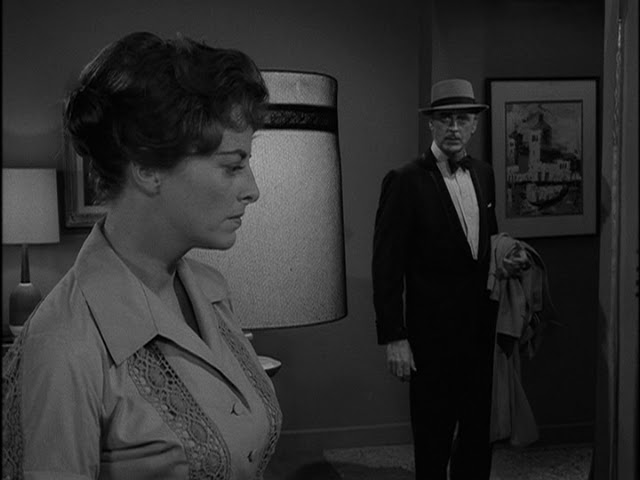
Dr. Bill Stockton has prepared well for any eventuality. He’s built a bomb shelter for himself, his wife and his child. His neighbors on the other hand have done nothing to prepare. During a dinner party, there is an emergency announcement on the radio that unidentified objects have been sighted en route to the US and they may be under attack. As the Stockton’s prepare to use their shelter their neighbors panic asking to be let into the shelter with them. Stockton refuses leading to an angry confrontation.
No moral, no message, no prophetic tract, just a simple statement of fact: for civilization to survive, the human race has to remain civilized. Tonight’s very small exercise in logic from the Twilight Zone.
CAST
Rod Serling…Narrator / Self – Host (uncredited)
Larry Gates…Dr. Bill Stockton
Jack Albertson…Jerry Harlowe
Sandy Kenyon…Frank Henderson
Peggy Stewart…Grace Stockton
Michael Burns…Paul Stockton
Joseph Bernard…Marty Weiss
Jo Helton…Martha Harlowe
Moria Turner…Mrs. Weiss
Mary Gregory…Mrs. Henderson
John McLiam…Man
This is a good episode. It’s not a 5 star episode but it’s a good mystery. The plot is a perfect setup for a Twilight Zone. A plane arrives and there is only one thing missing from it…the passengers! Harold J. Stone portrays Grant Sheckly who is determine to unravel this mystery.
Flight 107 out of Buffalo lands and taxis to a perfect stop, with no luggage, no passengers, no crew and no pilot. Sheckly, an FAA investigator with a record of no unsolved incidents in twenty-two years is on the case. One case comes back to haunt him in this episode…as the names of the would be passengers seem familiar to him.
A similar incident actually happened several years earlier in Missouri in 1957. A US Air Force DC-3 – the same type as used in the show – ran out of fuel while carrying people, who all bailed out to safety. The plane glided itself, landing on an empty cornfield, intact.
The exterior shots and hangar scenes were filmed at Santa Monica Airport in California. All other scenes were filmed on an MGM sound stage.
This show was written by Rod Serling
Rod Serling’s Opening Narration:
This object, should any of you have lived underground for the better parts of your lives and never had occasion to look toward the sky, is an airplane, its official designation a DC-3. We offer this rather obvious comment because this particular airplane, the one you’re looking at, is a freak. Now, most airplanes take off and land as per scheduled. On rare occasions they crash. But all airplanes can be counted on doing one or the other. Now, yesterday morning this particular airplane ceased to be just a commercial carrier. As of its arrival it became an enigma, a seven-ton puzzle made out of aluminum, steel, wire and a few thousand other component parts, none of which add up to the right thing. In just a moment, we’re going to show you the tail end of its history. We’re going to give you ninety percent of the jigsaw pieces and you and Mr. Sheckly here of the Federal Aviation Agency will assume the problem of putting them together along with finding the missing pieces. This we offer as an evening’s hobby, a little extracurricular diversion which is really the national pastime in the Twilight Zone.
Summary
A commercial airliner makes a normal landing at an airport and taxis to its normal stop. The only problem is that when the doors are opened, there are no passengers and no pilots. An experienced FAA investigator, Grant Sheckly. is assigned to the case. Sheckly has a good reputation and good track record at solving crashes but this case is a difficult one explain. It all begins to get clearer when he realizes that not everyone is seeing exactly the same thing. For some the seats are blue, others see brown and others see red. They all see different registration numbers on the aircraft. Sheckly can only come to one conclusion: what they are seeing is an illusion
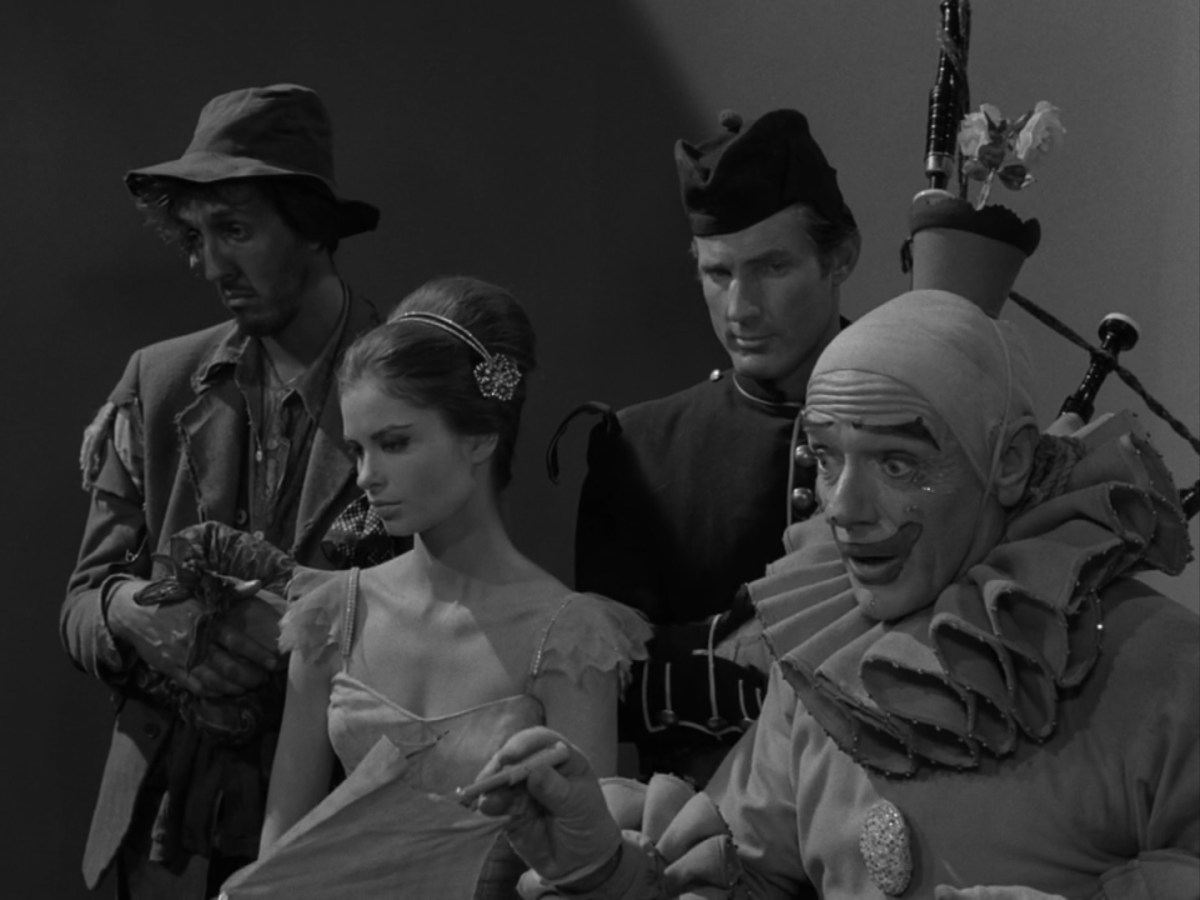
Picture of a man with an Achilles’ heel, a mystery that landed in his life and then turned into a heavy weight, dragged across the years to ultimately take the form of an illusion. Now, that’s the clinical answer that they put on the tag as they take him away. But if you choose to think that the explanation has to do with an airborne Flying Dutchman, a ghost ship on a fog-enshrouded night on a flight that never ends, then you’re doing your business in an old stand in the Twilight Zone.
CAST
Rod Serling…Narrator / Self – Host (uncredited)
Harold J. Stone …Grant Sheckly
Fredd Wayne…Paul Malloy
Noah Keen…Airline Executive Bengston (as Noah Keene)
Robert Karnes…Robbins
Bing Russell…George Cousins
Jim Boles…Dispatcher
Robert Brubaker…Tower Operator (uncredited)
Blind Faith…a supergroup with Eric Clapton, Steve Winwood, Ric Grech, and Ginger Baker.
I was listening to Blind Faith’s self titled debut album last week while deep in work and this song was one caught my attention. I’ve heard this song before but this time it really hit me. I repeated it a few times for good measure. What a talented band they were and we are lucky to get that album.
Their one and only album, the self titled Blind Faith album, peaked at #1 in the Billboard Album Charts, Canada, and the UK in 1969. They toured one time for the album and then soon broke up.
After Cream broke up in late 1968…Blind Faith evolved out of informal jamming at Eric Clapton’s home with Steve Winwood. Winwood suggested adding Ginger Baker to the lineup. Rick Grech joined on bass. The band spent February to June 1969 in the studio jamming and recording.
Clapton didn’t want Baker in the band…he wanted to leave Cream behind but Winwood didn’t know the history until later on.
Steve Winwood:“I had begun to realize what a problem Ginger was, and I saw why Eric had been against having him in the group.” “Ginger did a drum solo and they thought it was Cream, so we chucked in an old Cream song,” Winwood said. “Then I put in a Traffic song, and the identity of the band was killed stone dead. If you have 20,000 people out there, and you know you only have to play one song for them to be on their feet, you do it. We were only human.”
Eric Clapton:Steve and I were at the cottage smoking joints and jamming when we were surprised by a knock at the door,” “It was Ginger. Somehow he had gotten wind of what we were doing and had tracked us down. Ginger’s appearance frightened me because I felt that all of a sudden we were a band, and with that would come the whole [manager Robert] Stigwood machine and the hype that had surrounded Cream.”
Steve Winwood wrote this song and took the lead.
Sea Of Joy
Following the shadows of the skies Or are they only figments of my eyes? And I’m feeling close to when the race is run Waiting in our boats to set sail Sea of joy
Once the door swings open into space And I’m already waiting in disguise Is it just a thorn between my eyes? Waiting in our boats to set sail Sea of joy
Having trouble coming through Through this concrete blocks my view And it’s all because of you
Oh, is it just a thorn between my eyes? Waiting in our boats to set sail Sea of joy
On this one I do give spoilers away…this one is hard not to…
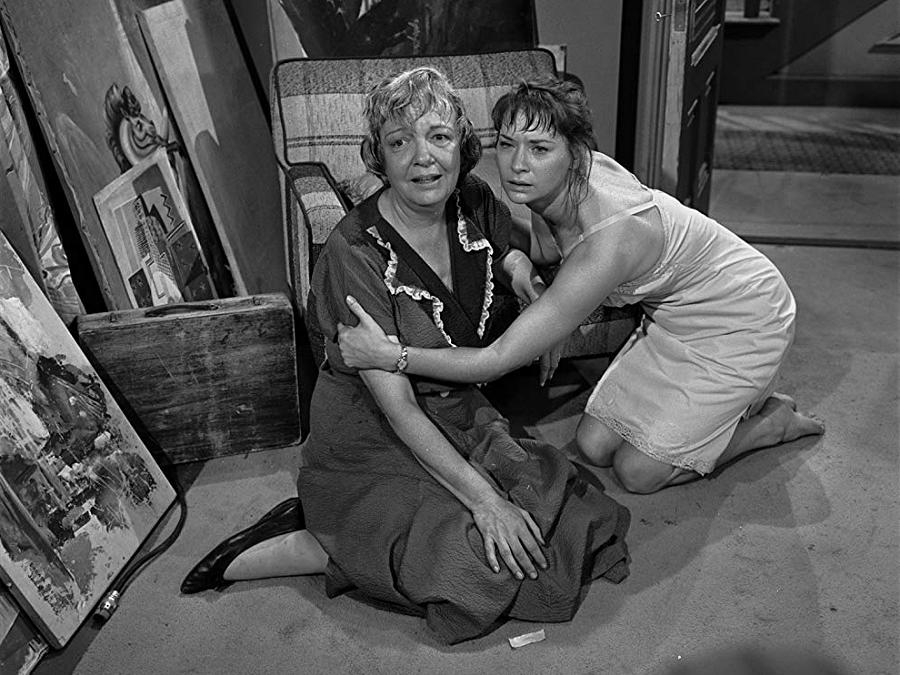
Like the closing narration says…it is a love story of two on different sides of a war…in the Twilight Zone. The cast was small but brilliant. Elizabeth Montgomery and Charles Bronson. They were known, but not stars…Bewitched and Death Wish was still in the future for both at this time.
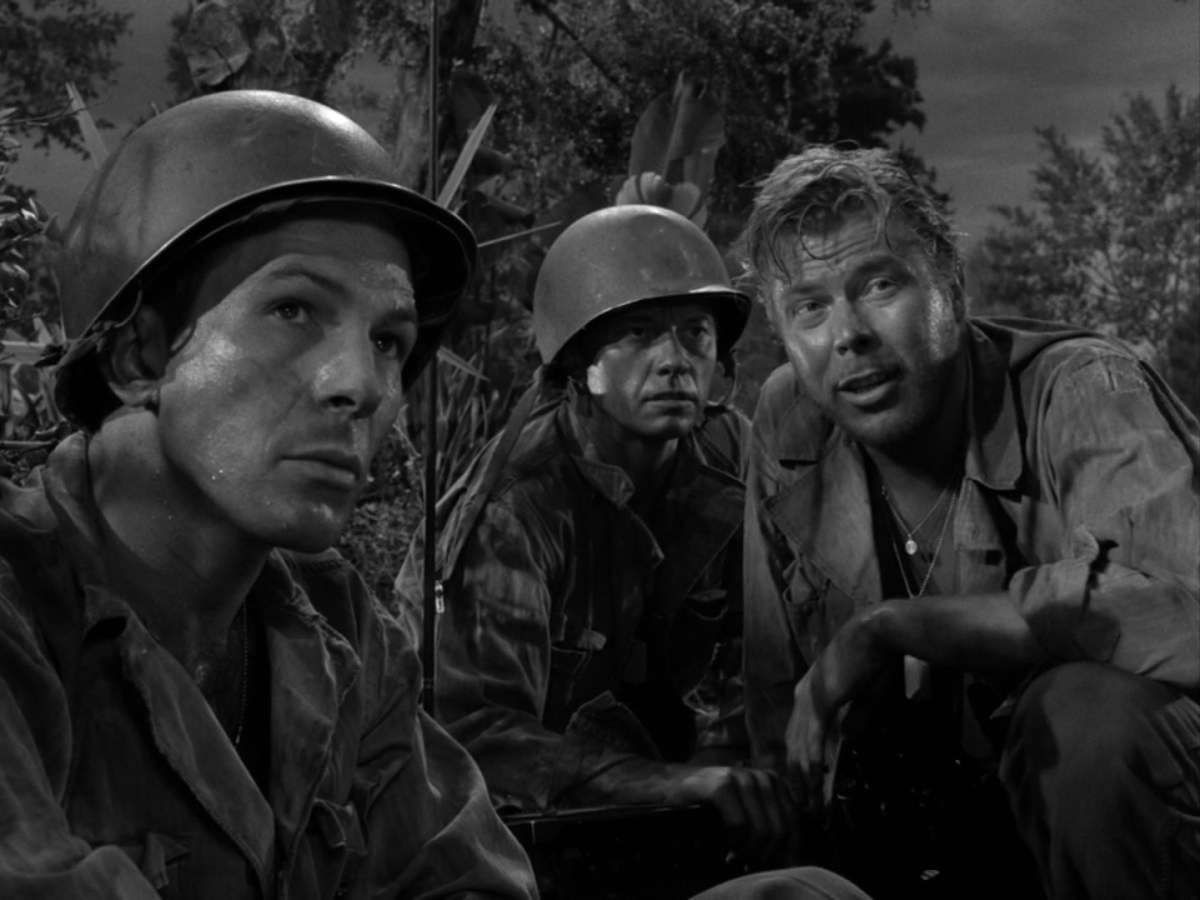
This episode is an optimistic story set in an extremely bleak world. The time is presumably after World War III, the setting a devastated town inhabited only by the dead, with the exception of two enemy soldiers. Bronson seems to represent an American soldier and Montgomery a Russian.
Her single line (Prekrasny) is Russian for pretty. This is a gritty and realistic story, told without much dialogue with the emphasis always on characters. In this Bronson is more of a pacifist and Montgomery is suspicious and quick to violence.
Before season 3 was starting…Rod Serling had this to say. I’ve never felt quite so drained of ideas as I do at this moment. Stories used to bubble out of me so fast I couldn’t set them down on paper quick enough but in the last two years I’ve written forty-seven of the sixty-eight Twilight Zone scripts, and I’ve done thirteen of the first twenty-six for next season. I’ve written so much I’m woozy.
This show was written by Montgomery Pittman and Rod Serling
Rod Serling’s Opening Narration:
This is a jungle, a monument built by nature honoring disuse, commemorating a few years of nature being left to its own devices. But it’s another kind of jungle, the kind that comes in the aftermath of man’s battles against himself. Hardly an important battle, not a Gettysburg, or a Marne, or an Iwo Jima; more like one insignificant corner patch in the crazy quilt of combat. But it was enough to end the existence of this little city. It’s been five years since a human being walked these streets. This is the first day of the sixth year, as man used to measure time. The time: perhaps 100 years from now, or sooner—or perhaps it already happened 2 million years ago. The place: the signposts are in English so that we may read them more easily, but the place is the Twilight Zone.
Summary
In a futuristic world a man and a woman, from opposing sides in a devastating war, meet in a deserted city. They don’t share a common language and she is quite wary of her opponent, though he doesn’t appear aggressive in any way. When she attempts to kill him, he goes off on his own. It’s obvious that society and civilization has been destroyed and she begins to reconsider.
I can’t believe we are ready to start Season 3 already! Today I’ll just have this review and we will start on season 3 on Wednesday. Thank you all again for following me on this long journey. The second season was very strong with many great episodes. In the third season Serling started to burn out. He had writing credits on almost every show and was the Twilight Zones showrunner.
Of 156 episodes of The Twilight Zone, Serling wrote roughly 70 percent of them. He would write a script in less than 40 hours and then on to the next one. Serling also spent a great deal of time defending scripts against narrowminded network executives alarmed that some of the content would upset sponsors. And, with the hundreds of functions as a television producer, the workload caught up to him. By the time the series was canceled in 1964, Serling was physically and mentally exhausted.
While running the show he also fought battles with the CBS executives who complained about the darkness of the scripts among many other things. Serling wanted integrity and would even fight against some of the commercials. “However moving and however probing and incisive the drama, it cannot retain any thread of legitimacy when after 12 or 13 minutes, out comes 12 dancing rabbits singing about toilet paper.“
James Aubrey, who became CBS president after the show launched, hated the show, believing programs with regular stars were more likely to grab audiences.
Aubrey canceled Twilight Zone twice, once after its third season, but it was revived when a replacement program tanked in the ratings. Later, he reduced the show’s budget to compromise its quality and axed the series in 1964. Ironically, Aubrey was fired a year later…not soon enough…and that was a good thing.
Do any of you have any different thoughts on the rankings below? What was your favorite and least favorite episode of season two?
I would like to link to two other bloggers doing tv shows. They are going through a TV series show by show like I’m doing here. I’ll continue to have the Twilight Zone every Saturday, Sunday, and Wednesday.
What a great band! I could almost leave it at that and post the song. They were technically the Young Rascals when this song came out of AM radios in the sixties. They were never really an album band but more of a super singles band. The dropped the “young” in 1968 and continued having hits.
The Rascals rose to prominence playing rhythm and blues and soul music. Their 1966 cover of the Rudy Clark and Artie Resnick song…Good Lovin went to the top of the Billboard Pop Singles chart. They had the majority of their hits between 1966-1968.
They had nine top 20 hits and thirteen top 40 hits…they also had three number 1 hits and a total of 18 songs in the Billboard 100 before they disbanded in 1972. This song was written by Felix Cavaliere and Eddie Brigati.
This song was known as I’ve Been Lonely Too Long and Lonely Too Long…it peaked at #16 in the Billboard 100 and #7 in Canada. It was released on January 16, 1967.
They went on to have more hits with “Groovin,” “People Got to Be Free,” “How Can I Be Sure?” and “A Beautiful Morning” before disbanding in 1972.
I’ve Been Lonely Too Long
I’ve been lonely too long, I’ve been lonely too long In the past it’s come and gone, I feel like I can’t go on without love I’ve been lonely too long (he’s been lonely too long) I’ve been lonely too long (he’s been lonely)
As I look back I can see me lost and searching Now I find that I can choose, I’m free, oh yeah So funny I just have to laugh All my troubles been torn in half I been lonely too long (he’s been lonely too long) Lonely too long (he’s been lonely)
In the past it’s come and gone I feel like I can’t go on without love (Lonely) lonely too long I’ve been lonely too long (he’s been lonely)
Just see me now Makes it worth the time I’ve waited She was all I need to make me see, oh yeah I keep hopin’ with all my mind Everything gonna turn out right I’ve been lonely too long (he’s been lonely too long) I’ve been lonely too long (he’s been lonely)
Now look at me Gliding through this world of beauty Everything I do brings ecstasy, oh yeah No wonder I could die I feel like I’m ’bout ten miles high I’ve been lonely too long (he’s been lonely too long) Lonely too long (he’s been lonely)
Found myself somebody (he’s been lonely) Don’t have to be alone no more (he’s been lonely, he’s been lonely) Don’t have to alone no more, no more (he’s been lonely, he’s been lonely)