Power Pop fan, Baseball, Beatles, Alternative music, old movies, and tv show fan. Also anything to do with pop culture in the 60s and 70s... I'm also a songwriter, bass and guitar player. Not the slightest bit interested in politics at all.
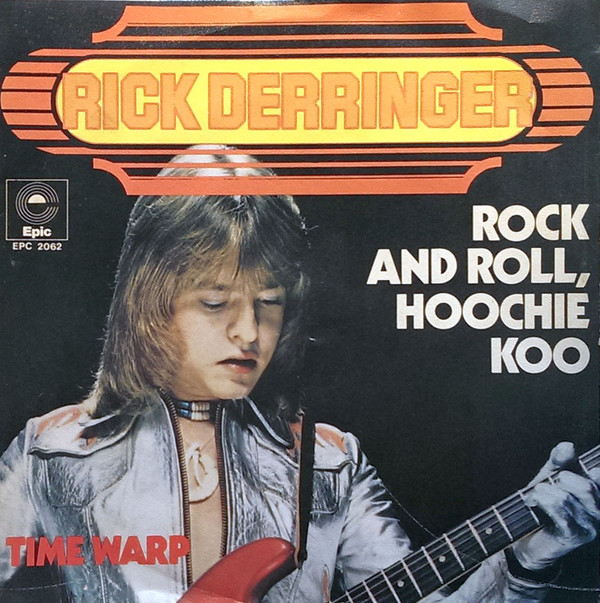
A hard rock hit back in 1974. The song has a cool guitar riff and solo by Rick Derringer. The song was written by Derringer in 1970 and Johnny Winter had a go at it earlier.
This was Derringer’s only top 40 hit. The song peaked at #23 on the Billboard 100 in 1973. I like both versions. Johnny Winter’s version is a little more laid back and Derringer’s is a little more edgy and uptempo. Hoochie Koo is short for Hoochie Koochie, which is sexual slang that was made popular by Muddy Waters in his song “Hoochie Coochie Man.”
Rick Derringer was in a band called The McCoys who had a pop/rock/ bubblegum hit called Hang On Sloopy back in 1965. The McCoys combined forces with Johnny Winter on the album Johnny Winter And in 1970. It was going to be Johnny Winter and The McCoys, but that band had a bubblegum reputation they wanted to shake but Johnny felt it better to leave The McCoys name out of it entirely. Rick wrote the song for Johnny to bring in more of a rock and roll song to him rather than blues.
Later in 1973, Rick released his solo album All American Boy and released the single. Music critic Cub Koda (also singer/songwriter in Brownsville Station) wrote of the album “this is simply Rick Derringer’s most focused and cohesive album, a marvelous blend of rockers, ballads, and atmospheric instrumentals”, adding it was “one of the great albums of the ’70s that fell between the cracks.”
In 1972 Johnny joined Rick and Edgar to sing it on Edgar’s live album, Roadwork.
Rick Derringer: “The first thing I wanted to do was bring more of a rock ‘n roll way of thinking to Johnny, but Johnny didn’t want to change and become in any way bubblegum. So I wanted to write a song specifically for Johnny that he would be able to speak the lyrics in his vernacular and feel comfortable about saying the words he was saying, but I also wanted to bring a little more of a pop kind of sensibility to the whole thing. So I wrote ‘Rock ‘n Roll Hoochie Koo’ trying to follow those guidelines and it came out like it is.”
Rock ‘n’ Roll, Hoochie Koo
Couldn’t stop moving when it first took hold It was a warm spring night at the old town hall There was a group called, “The Jokers” they were layin’ it down Don’t ya know I’m never gonna lose that funky sound?
Rock and Roll Hoochie Koo (Rock and Roll Hoochie Koo) Lord and mama, light my fuse (light my fuse) Rock and Roll Hoochie Koo (Rock and Roll Hoochie Koo) Drop on out and spread the news
Skeeters start a buzzin’ ’bout this time a year I’m goin’ ’round back, said she’d meet me there We were rollin’ in the grass that grows behind the barn When my ears started ringing like a fire alarm
Rock and Roll Hoochie Koo (Rock and Roll Hoochie Koo) Lord and mama, light my fuse (light my fuse) Rock and Roll Hoochie Koo (Rock and Roll Hoochie Koo) Drop on out and spread the news
Yeah, did somebody say keep on rockin’?
Hope you all know what I’m talkin’ about The way they wiggle that thing really knocks me out Gettin’ high all the time, hope you all are too C’mon little closer gonna do it to you
Rock and Roll Hoochie Koo (Rock and Roll Hoochie Koo) Lord and mama, light my fuse (light my fuse) Rock and Roll Hoochie Koo (Rock and Roll Hoochie Koo) Drop on out and spread the news
Rock and Roll Hoochie Koo (Rock and Roll Hoochie Koo) Lord and mama, light my fuse (Rock and Roll Hoochie Koo) Rock and Roll Hoochie Koo (Rock and Roll Hoochie Koo) Jump on out and spread the news, yeah That I’m tired of payin’ dues (Rock and Roll Hoochie Koo) Done said goodbye to all my blues (Rock and Roll Hoochie Koo) Lord and mama, light my fuse
On July 12, 1979, Skylab fell back to the earth. Today is the anniversary.
In 1979 I was twelve and heard the news that a space workstation named Skylab was falling to earth. It was exciting for me…I was hoping that a piece of it would fall near so I could touch something that had been flying through space.
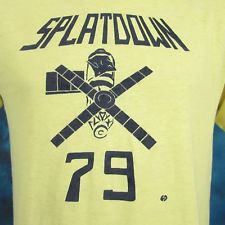
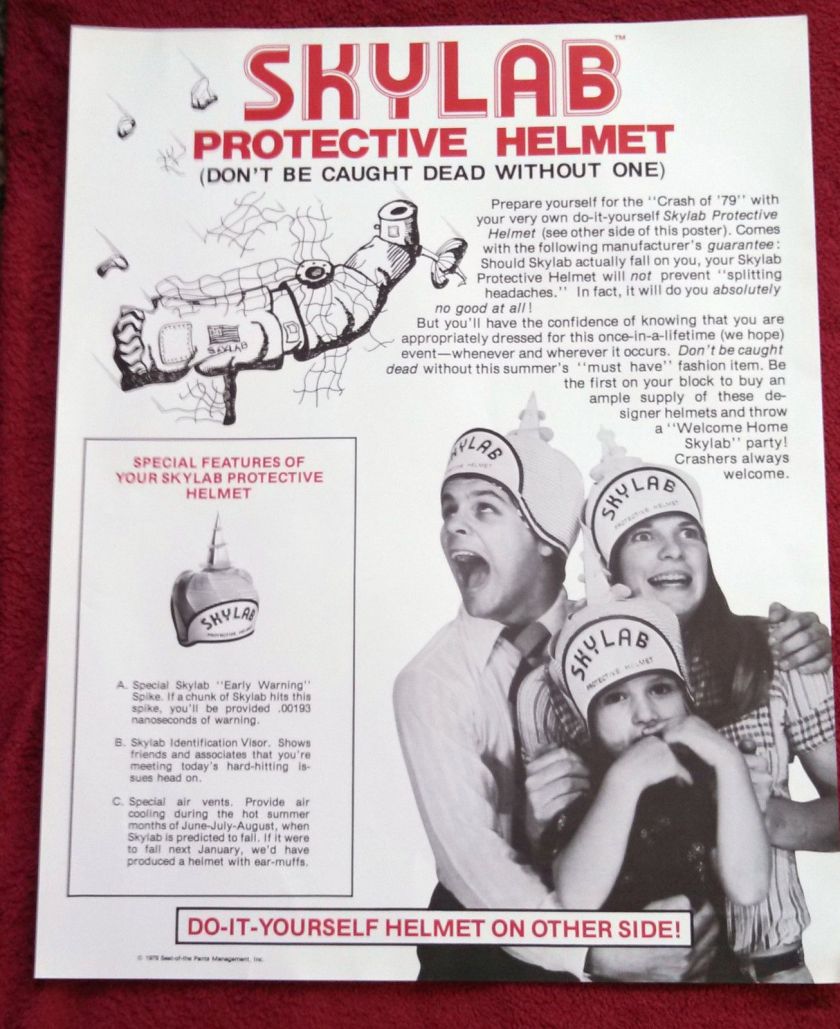
That didn’t happen because unless I was Australian I wasn’t going to see any debris. In school, our science teacher went over the event and I do remember people wearing Skylab t-shirts, hats, and buttons. Everyone was looking up hoping to see something…anything. Some kids were scared they were going to get crushed…that is when I learned…what goes up must go down.
Watching the news…there were some people panicking and…some partying. This is from Newsweek in 1979
In various parts of the country, wags painted X’s on their neighbors’ roofs or sported T-shirts with targets on the back. Entrepreneurs sold plastic helmets and Skylab survival kits compete with bags for collecting stray parts of the spacecraft and letters suing NASA for damages. “I don’t know how much we’re making, but we’re having fun,” said Steven Danzig, 25, of Bloomington, Ind., who sold more than 20,000 such kits. In Washington, a bar called Mr. Smith’s sold a concoction dubbed the Chicken Little Special.
Around the U.S., there were Skylab parties to coincide with the crash, and betting pools on precisely when or where the debris would come streaking back to earth.
Skylab was designed to go up but not come back down. It was launched in 1973 and was occupied for almost 24 weeks. There was a lot of time and money spent on how to get it up there but not much time on how to get it down. It only had a 9-year life span, to begin with. In 1979 it was clear that Skylab was rapidly descending orbit.
On July 12, 1979, Skylab came back to earth in the Indian Ocean and in Western Australia. No one was injured by the falling debris.
The San Francisco Examiner offered a $10,000 reward for anyone bringing a part of Skylab to their office. They knew it wasn’t going to hit America so it was a safe bet they would not have to pay…but Stan Thornton…an Australian truck driver heard about the reward, grabbed a piece of debris, and jumped on a plane to San Francisco and got the reward.
An awesome blues song that shows what Boz Scaggs was all about before the hits came. He had been playing with Steve Miller and in 1969 he made this self-titled album Boz Scaggs. He spent some time down south getting this together. He also made a self-titled album (Boz) in 1967 and released it in Europe for the record.
Jann Wenner, the founder of Rolling Stone magazine, was producing Boz’s first U.S. solo album, and he took him to Jerry Wexler at Atlantic Records, who suggested recording in the South. They had a choice of studios…Stax in Memphis, Phil Walden’s studio in Macon, or Muscle Shoals Sound, a new studio founded by the rhythm section from FAME Studios. Boz and Jann listened to everything that was coming out of those studios and they soon knew they wanted the Muscle Shoals Rhythm Section, and they wanted Duane Allman.
Boz didn’t know a lot about Duane, but he got a good sense of his stature by spending that week with him at Muscle Shoals Sound. Duane’s work with Wilson Pickett and Aretha Franklin had preceded him, but Boz was most struck by who Duane was to the players at the studio. They lit up when Duane walked in the room…their respect for him was clear.
Boz Scaggs: “Duane had a profound effect on that album. One of the real revelations to me was Duane’s character, seeing him in the South hanging out with those guys. In his appearance, he looked like he was from New York or L.A., with long hair. It was a brave statement in itself in redneck America. You could get in trouble just driving around in his car. It was an occasion and a homecoming. They held him in very high esteem. He was the dude. He was the natural leader, and he made everyone laugh. It was a side I didn’t see in Macon, where he was much more serious and focused.”
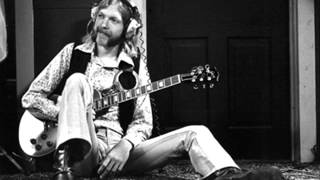
Duane set up his amp in the bathroom at the studio on this recording. He liked to do that so his guitar wouldn’t bleed through on the other instruments. This song has some of Allman’s best playing.
Scaggs and his girlfriend Carmella settled into Macon Georgia and were part of the Allman Brothers Band extended family for a time, enjoying the musical energy and experience in Macon. By this time Macon was host to a lot of different musicians. Boz went fishing and played poker with the Allmans late into the night, drinking beer, and telling stories.
This song is usually listed in the top 5 of Boz Scaggs’s songs. It is not as well known but a great blues track. The track was written by Fenton Robinson.
Boz Scaggs: “The first time we did it, it lasted twenty-five minutes and everyone thought it was such a gas, they trouped back in and did it again and we ended up with about forty minutes of ‘Loan Me a Dime’ and we wanted to use at least twenty minutes of it, but we had to use the shorter version, but that music is in the can somewhere in Muscle Shoals, and Duane was really rockin’ out.”
Loan Me A Dime
Somebody loan me a dime I need to call my old time used to be Somebody loan me a dime mmm I need to call my old time that used to be
Little girl’s been gone so long You know it’s worrying me Hey it’s worrying worrying me
I know she’s a good girl But at that time I just didn’t understand I know she’s a good girl But at that time I just didn’t understand Oh no I didn’t
Somebody loan me a dime You know I need.. I need a helping hand
Oh… she’s a good girl But at that time I just didn’t understand Ooooh I know she’s a good girl But at that time I just could not understand Oh no
Somebody better loan me that dime To ease my worried worried mind.. oh Now I cry.. I just cry Just like a baby all night long.. oooh You know I cry I just cry Just like a baby all night long.. oooh Somebody better loan me that dime I need my baby I need my baby here at home.. oooh YES
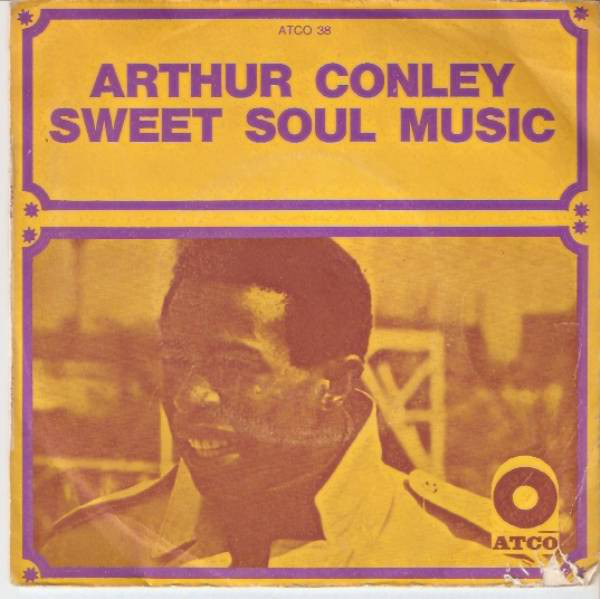
When I heard Conley shout out “Do you like good music” I knew this song was for me. Sweet Soul Music makes me mourn where digital recording has gone now. Such an in-your-face narrow tight song with a perfect sound.
Redding discovered Arthur Conley, a singer who sounded remarkably like himself. Redding became Conley’s mentor… the second release on Jotis Records was Conley’s “I’m a Lonely Stranger,” which Redding produced. It was not too successful and soon the record company folded.
Redding believed in Conley’s talent. In January 1967 Redding and his managers, Phil Walden (future ABB manager) and his brother Alan Walden (future Lynyrd Skynyrd manager) brought Conley to producer Rick Hall’s FAME Studios in Muscle Shoals, Alabama. Conley recorded two singles at FAME Studios but they were not successful and Hall did not want to work with Conley anymore.
By this time Otis was fed up and took Conley himself to FAME and used his own band. With Jimmy Johnson engineering they recorded Sweet Soul Music. It was a million-selling single. It peaked at #2 on the Billboard 100, #2 in the R&B Charts, and #7 in the UK in 1967.
It was written by Conley and Otis Redding. It was based on “Yeah Man” by Sam Cooke and was a tribute to soul singers. The songs mentioned in this song are “Going To A Go-Go,” “Love’s a Hurtin’ Thing,” “Hold On I’m Coming,” “Mustang Sally” and “Fa-Fa-Fa-Fa-Fa (Sad Song).” The artists mentioned are Otis, Wilson Pickett, Sam and Dave, James Brown, and Lou Rawls.
The opening horn intro sounds very similar to Elmer Bernstein’s score for The Magnificent Seven, popularly known as the Marlboro cigarette ad theme.
Conley could not duplicate the success he had with this record. He settled in the Netherlands and in 1980 legally changed his name to Lee Roberts — his middle name and his mother’s maiden name. Conley promoted new bands through his Art-Con Productions company and continued to record and perform, fronting Lee Roberts and the Sweaters.
Sweet Soul Music
Do you like good music That sweet soul music Just as long as it’s swingin’ Oh yeah oh yeah
Out here on the floor now We’re going to a go go Ah dancin’ to the music Oh yeah oh yeah
Spotlight on Lou Rawls y’all Ah don’t he look tall y’all Singin’ loves a hurtin’ thing now Oh yeah oh yeah
Spotlight on Sam and Dave now Ah don’t they look boss y’all Singin’ hold on I’m comin’ Oh yeah oh yeah
Spot light on Wilson Pickett That wicked picked Pickett Singing Mustang Sally Oh yeah oh yeah
Spotlight on Otis Redding now Singing fa fa fa fa fa fa fa fa Fa fa fa fa fa fa fa fa Oh yeah oh yeah
Spotlight on James Brown now He’s the king of them all yeah He’s the king of them all y’all Oh yeah oh yeah
Skipping School…I was known to do this dastardly deed a few times in my high school life. I have a scar to remind me of one time hiding in some barn where I shouldn’t have been and sliding down and cutting my hand on something trying to get out. That is not the one I want to talk about this time though.
My friend Kenny had a black 1969 Chevelle Super Sport and it was fast. We decided one morning, that we were not going to attend school that day. Kenny had just put new wheels on his car and we were going to Nashville. I’m not sure what we were planning to do that particular day but it did not include listening to teachers.
We were on the interstate and Kenny was flooring it like he always did and suddenly we heard a loud POP. We didn’t think anything about it and kept rolling…again another POP. We looked at each other but were having too much fun and then POP POP…after that fourth POP…he started to slow from 90 and the car didn’t feel right…he finally pulled to the side of the road. 4 of the 5 wheel studs that held the wheel on was gone…hence the four POPs we heard.
One lug nut was the only thing between us and losing our wheel and ending in a crumpled mess. We ended up calling Kenny’s dad who owned a car shop in Nashville. We got the car fixed and were on our way again…but I think back on how that could have ended differently.
The next day Kenny was called to the principal’s office. He was punished for skipping school and spent a week or so in the “rubber room.” That is what we called detention. It was a room beside the cafeteria where you would sit and do homework or read in silence. When you went to lunch… all of the delinquents in the room would get up and walk together to eat lunch…but not talk.
As for your humble writer…I heard nothing at all about the escape from school until…two weeks later. That is when yours truly was called to the office. “Max do you want a paddling or rubber room?” To this day I don’t know how they found out or had the goods on me. I know Kenny didn’t tell…he didn’t want me to get caught. I have my suspicions but I enjoyed myself anyway.
I took the rubber room choice because I liked it. I could catch up with my homework or read a good book…I would claim it was for a book report and I enjoyed peace and quiet for a week.
This should have taught me a valuable lesson…but alas it didn’t quite do the trick. My mom was a single mom and she kept up with me the best she could…but I did make good grades so I took advantage of the situation. There would be more skipping days to come. Any interesting stories out there?
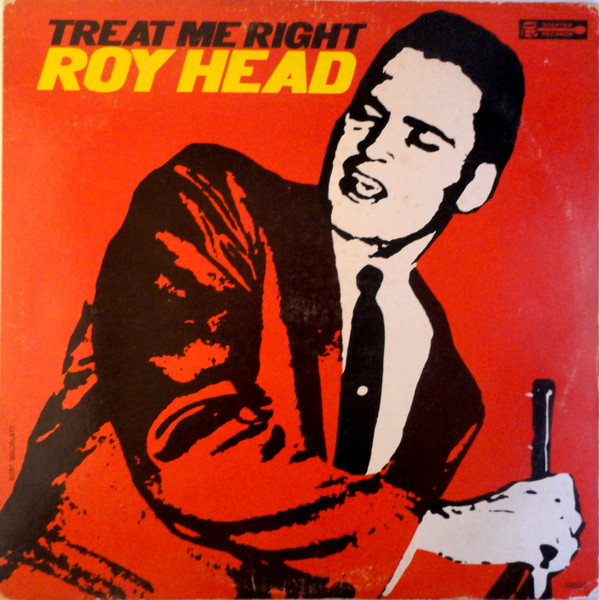
During my recent travels, my son had this song on his playlist. I had forgotten about it for the longest. Treat Her Right has had a resurgence in popularity because of the movie Once Upon A Time in Hollywood. There is a groove to this that is irresistible. Tarantino, much like Scorsese, knows how to pick the right songs for the right scenes.
This song has that sixties cool that others didn’t have. It’s that R&B groove that separated it from others. I’m not a guy that dances but if I was…this would be high on my list.
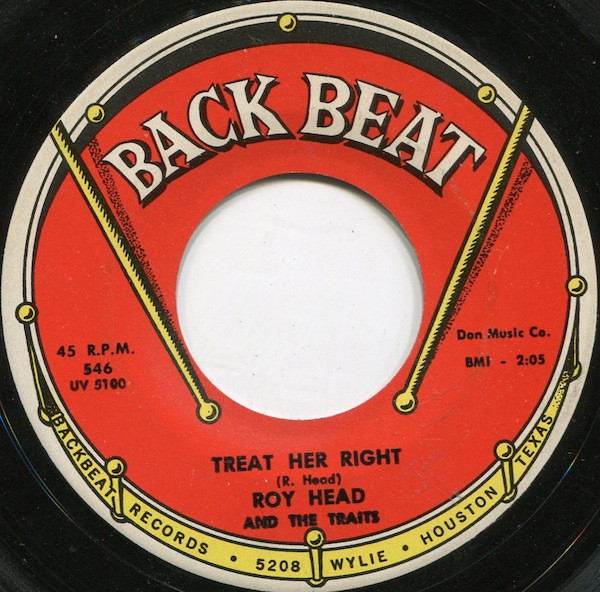
The song was released in 1965 and it peaked at #2 on the Billboard 100, #8 in Canada, and #2 on the Billboard R&B Charts. Roy would have 3 more top 40 songs but none that reached the top 20 on the Billboard 100. The song was written by Roy Head and Gene Kurtz
Roy Head recorded for the small Back Beat record label. This was one of the few big hits it had. Back Beat records started in 1957 and ended in 1973 when ABC bought its parent label and discontinued Back Beat. Carl Carlington was about to release the hit Everlasting Love on the label but ABC decided just to issue it on their own label.
In 1974 Roy started to record country songs and released over 24 singles that charted in the top 100 but were not any major hits in the US. He did have two top 10 Canadian Country hits.
It’s been covered by Jimmy Page, Bruce Springsteen, Jerry Lee Lewis, Bon Jovi, Chris Farlowe (under the title “Treat Her Good”), and both Mae West and Barbara Mandrell under the title of “Treat Him Right”. Even Bob Dylan, Sammy Davis Jr., and Tom Jones had covered it live.
Head died of a heart attack on September 21, 2020, at the age of 79. His son Sundance Head has had some success in Country Music with 2 top twenty hits in 2016.
Bruce Springsteen:The song has magic in it…magic in it I tell you
Treat Her Right
I wanna tell you a story
Every man oughta know
If you want a little loving
You gotta start real slow
She’s gonna love you tonight now
If you just treat her right
Oh, squeeze her real gentle
Gotta make her feel good
Gotta tell her that you love her
Like you know you should
And if you don’t treat her right
She won’t love you tonight
Now if you practice my method
Oh, hard as you can
You’re gonna get a reputation
As a lovin’ man
And you’ll be glad every night
Now that you treated her right
If you practice my method
I said as hard as you can
You’re gonna get a reputation
As a lovin’ man
And you’ll be glad every night
That you treated her right, hit me back
Damn…this is such a great song. Duane Allman came into the Derek and the Dominos sessions and made a suggestion to record a Jimi Hendrix song, Little Wing. This is what he did in the Wilson Pickett sessions with the song Hey Jude.
After the Layla sessions were completed, Clapton returned to England with a rare left-handed Fender Stratocaster, a gift for Jimi Hendrix. He wanted him to hear the Dominos’ recording of Hendrix’s Little Wing, a tribute he and Duane had recorded for him. They both greatly admired Hendrix and Duane planned to meet him when Jimi came back from Europe. On the morning of September 18, 1970, Jimi Hendrix was found unconscious in a Notting Hill apartment in London. He died that afternoon at the hospital, having apparently suffocated while under the heavy sedation of sleeping pills.
The album peaked at #16 in 1970 on the Billboard 100. Although Derek and the Dominos were poised to record a follow-up album in 1971… tensions and drug abuse among the band members, along with the tragic death of Duane Allman ended that idea.
Jimi wrote this song and it was inspired by the 1967 Monterey Pop Festival, a concert held for 3 days in 1967. It was attended by around 200,000 music fans, it happened 2 years before Woodstock. Jimi wrote about the atmosphere at the festival as if it was a girl. He described the feeling as “Everybody really flying and in a nice mood.” He named it “Little Wing” because he thought it could just fly away.
The song was on Axis: Bold as Love released in 1967. The album peaked at #3 on the Billboard 100 in 1968.
Bobby Whitlock keyboard player: We had two leaders then. We had Eric and Duane. Eric backed up and gave Duane a lot of latitude, a lot of room, so he could contribute up to his full potentiality, and Duane was full of fire and ideas. He’d just go, “Hey, how about we try ‘Little Wing’?”—that was completely his idea and he came up with the intro by himself. He just started playing it.
Duane was very, very good in the studio. Working with the finest musicians and engineers on the planet really paid off for him. When he had the opportunity to be thrust into that environment, he absorbed what was right and righteous and then used it to killer advantage.
Little Wing
Well, she’s walking through the clouds
With a circus mind that’s running around
Butterflies and zebras and fairy tales
That’s all she ever thinks about
And when I’m sad, she comes to me
A thousand smiles she gives to me free
Said it’s all right, take anything you want from me
(Anything you want, babe) (Anything)
Well, she’s walking through the clouds
With a circus mind that’s running around
Butterflies and zebras and fairy tales
That’s all she ever thinks about
And when I’m sad, she comes to me
With a thousand smiles she gives to me free
Said it’s all right, take anything you want from me, baby
(Anything you want) (Anything)
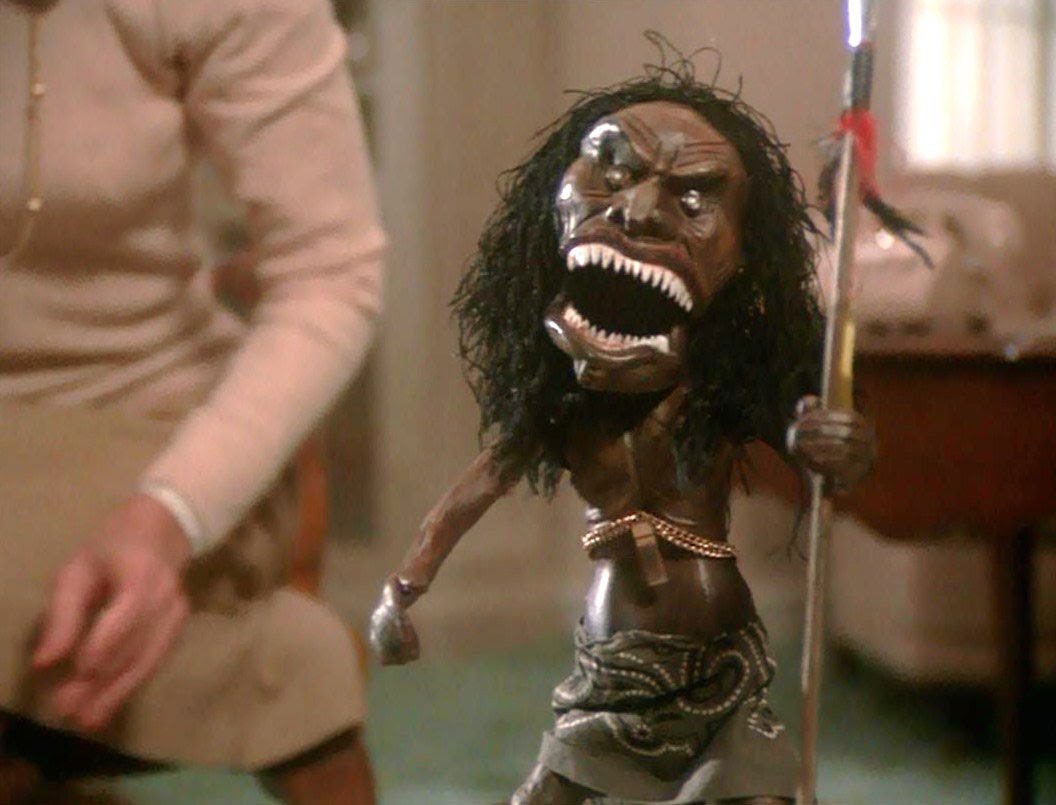
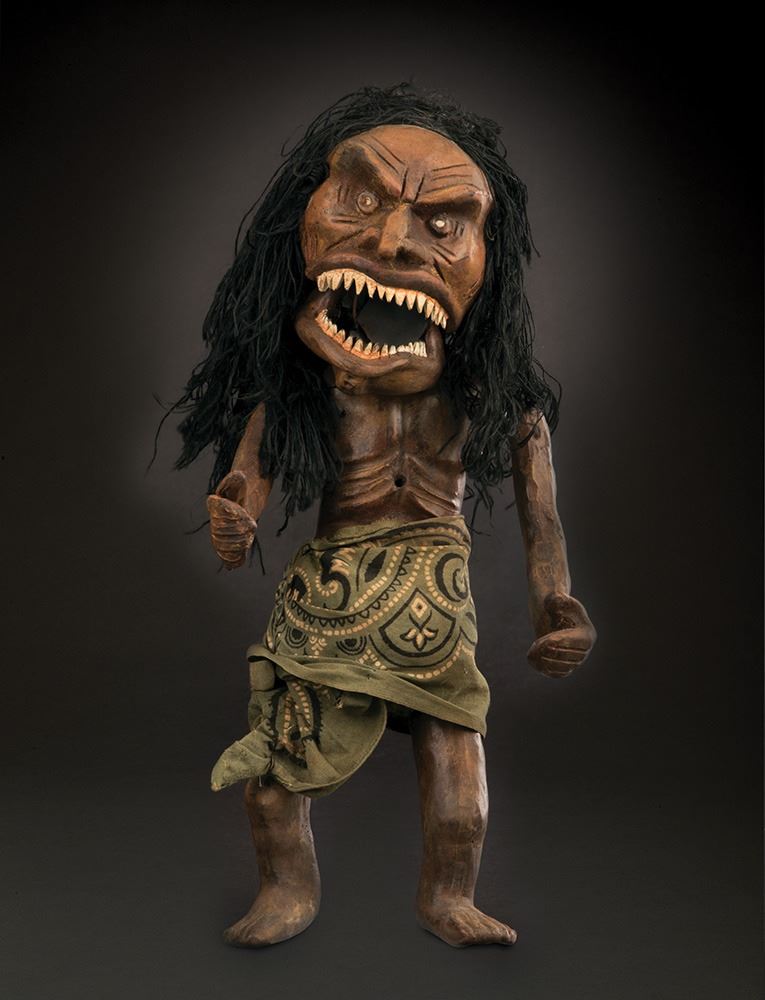
I did a few “Where is” posts a year or so ago and they were fun. I thought I would add this to the list. Most 1970s kids know this doll from the 1975 TV horror Trilogy of Terror. Karen Black starred and played 4 different charters in this horror anthology. Three stories are interwoven together. The first is about a college student infatuated with his teacher. The second is a paranoid tale of two sisters – one good, the other evil, and the third one is about a tribal doll that comes to life and terrorizes a woman in her apartment when it’s golden chain comes off.
It’s the third one that most people remember although the first one is really good also. This doll terrorizes Karen Black’s character Amelia in her apartment and they did a good job on the special effects. They showed the doll just enough and not too much to make it look real. The story was based on Prey Prey written by the great Richard Matheson. In this presentation…this story is called Ameilia.
I watched this again for the 6th or 7th time and I wondered…did one of the dolls they used to film this survive? Yes, one survived and it was sold at auction. According to different sites… In 2019 when the Zuni doll went up for auction at “Profiles in History” a few years ago, it was expected to go for a price in the $12,000 to $15,000 range. Instead, it sold for more than $200,000! Including the buyer’s premium, the doll was purchased for a total of $217,600.
If you want one of these dolls (a copy of course) a little more affordable…you can get one on ebay. It would be a good conversation piece…just don’t turn your back on it.
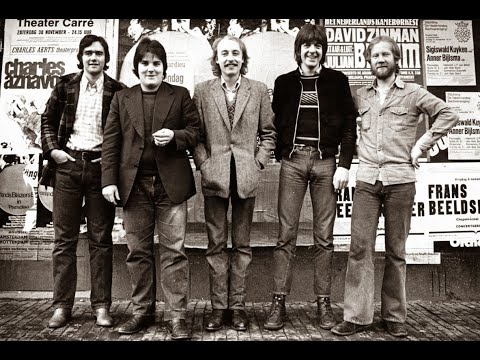
I think it’s fair to say most will know this song by Elvis Costello but the band Brinsley Schwarz did the 1974 original version which I like a lot…in fact, I favor this version. I’m a huge Nick Lowe fan so that helps. The song was written by Nick Lowe and originally recorded by his band Brinsley Schwarz in 1974. The band was named after their guitar player.
The song has a little of The Who mixed with Beach Boys-flavored harmonies. A wonderful mix of power pop. Many artists have covered this like Bruce Springsteen, Susannah Hoffs and Matthew Sweet, Chris Cornell, Midnight Oil, and many more.
Brinsley Schwarz never had a big hit but they did influence artists like Elvis Costello and The Clash. They were known as a pub rock band and were active between 1969 through 1975. The band released 6 albums in that time. Their members included Nick Lowe, Bob Andrews, Brinsley Schwarz, and Billy Rankin…they were later augmented by Ian Gomm on guitar and vocals.
One thing that did not help their cause was an incident in the US. They had an ambitious management company named Famepushers who hit on the idea of booking the band to play a high-profile gig in New York in April 1970. They were going to be the opening band for Van Morrison at the Fillmore East. The band had planned to arrive in the US a few days before the gig to rehearse for the show. Visa delays prevented this and they entered the US via Canada, arriving a few hours before their performance and having to perform with borrowed equipment they were not familiar with. The journalists were loaded onto a plane but were also delayed. They had used the downtime to take full advantage of the free bar laid on for them and, therefore, arrived drunk or hung over.
Famepushers also sent 22 limos to the Fillmore to make Brinsley Schwarz look important…they thought people would see this and ask…who is this? The limos didn’t get there until after dark so they were never seen by many.
The bad press kept rolling following the disastrous concert. The band received a flood of negative reviews for their first album, Brinsley Schwarz, which was released shortly after their return to the United Kingdom. The incident became known as the Brinsley Schwarz Hype
Dave Robinson was one of the founders of Famepushers. Robinson was the man who would go on to form Stiff Records with Jake Riviera, who would, in time, become Nick Lowe’s manager.
It’s a crying shame they weren’t heard more…they had some really good music.
Nick Lowe:“I wrote the song in 1973, and the hippie thing was going out, and everyone was starting to take harder drugs and rediscover drink. Alcohol was coming back, and everyone sort of slipped out of the hippie dream and into a more cynical and more unpleasant frame of mind. And this song was supposed to be an old hippie, laughed at by the new thinking, saying to these new smarty-pants types, ‘Look, you think you got it all going on. You can laugh at me, but all I’m saying is, ‘What’s so funny about peace, love, and understanding?’ And that was the idea of the song. But I think as I started writing it, something told me it was too good idea to make it into a joke. It was originally supposed to be a joke song, but something told me there was a little grain of wisdom in this thing, and not to mess it up.”
(What’s So Funny ‘Bout) Peace, Love, and Understanding
As I walk
This wicked world
Searchin’ for light in the darkness of insanity
Oh yeah
I ask myself:
Is all hope lost?
Is there only pain, hatred and misery?
Oh yeah
And each time I feel like this inside
There’s one thing I wanna know:
Oh, what’s so funny ’bout peace, love and understanding?
Oh, what’s so funny ’bout peace, love and understanding?
And as I walk on
Through troubled times
My spirit gets so downhearted
Sometimes, sometimes
So where are the strong?
Who are the trusted?
And where is the harmony?
Sweet harmony
‘Cause each time I feel it slippin’ away
It just makes me wanna cry
So, what’s so funny ’bout peace, love and understanding?
Oh, what’s so funny ’bout peace and love?
Yeah yeah yeah yeah
“We must have peace
More peace and love
It’s just for the children
Of a new generation”
So where are the strong?
And who are the trusted?
And where is the harmony?
Sweet harmony
‘Cause each time I feel it slippin’ away
It just makes me wanna cry
So, what’s so funny ’bout peace, love and understanding?
Oh, what’s so funny ’bout peace, love and understanding?
Oh, what’s so funny ’bout a little peace and love?
Yeah yeah yeah yeah
I love the horns in this song. It wasn’t George Harrison’s best on the album…that would be While My Guitar Gently Weeps but this one is fun.
George was good friends with Eric Clapton and was watching his friend with toothaches and getting dental work. Clapton’s weakness was candy and he would eat all of it until it was gone.
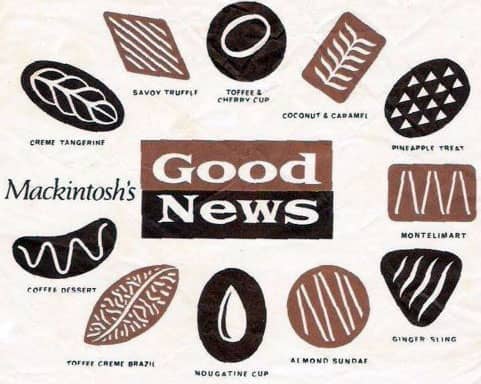
Harrison got the lyrics for this from the inside lid of a box of chocolates. Montelimar, Ginger Sling, Cream Tangerine, and Coffee Dessert were names of candies in the Mackintosh “Good News” assortment. The names “Cherry Creme” and “Coconut Fudge” were invented by George, however, to round out the verses.
Press agent Derek Taylor came up with the line ‘You know that what you eat you are‘.
Derek Taylor: “George said, ‘We need a bit here, da da, da da da da, da da,’ and I thought again of my good friend, Alan Pariser. He had done a film called ‘You Are What You Eat,’ which was a very pippy thing; ‘Don’t eat meat, man, or you’ll be filled with the adrenaline of frightened animals.’ So I said to George, ‘You know that what you eat you are.’
The MacIntosh’s Good News box where George got some of the lyrics.
Harrison wrote the line “We all know Obla-Di-Bla-Da” as an in-joke with the band. McCartney had pushed Obla-Di-Bla-Da so much that the band played endless versions of it and were not happy about it.
The White Album was released in 1968 and peaked at #1 in the Billboard Album Chart, #1 in Canada, #1 in the UK, and #1 about everywhere else…and it would be #1 as well on my list.
The White Album is as diverse as you can get… Pop, Rock, Country, Folk, Reggae, Avant-Garde, Blues, Hard Rock, and some 20’s British Music Hall thrown in the mix. It has plenty of songs that you have heard of and many that the masses have not heard. The Beatles more than many bands could bend to a style of music and play that style well.
Some critics said they should have taken the best of the two albums and slimmed it down to one. I understand that argument but as a Beatle fan…Nahhhhh. It’s the Beatles White Album!
George Harrison: “At that time he had a lot of cavities in his teeth and needed dental work. He always had a toothache but he ate a lot of chocolates – he couldn’t resist them, and once he saw a box he had to eat them all. He was over at my house, and I had a box of ‘Good News’ chocolates on the table and wrote the song from the names inside the lid: ‘Creme Tangerine, Montelimart’…”
“He’d got this real sweet tooth and he had just had his mouth worked on. His dentist said he was through with candy. So, as a tribute, I wrote ‘You’ll have to have them all pulled out, after the Savoy Truffle.’ The truffle was some kind of sweet, just like all the rest, ‘crème tangerine,’ ‘ginger sling,’ just candy, to tease Eric.”
Savoy Truffle
Creme tangerine and montelimar A ginger sling with a pineapple heart A coffee dessert, yes you know it’s good news But you’ll have to have them all pulled out After the Savoy truffle
Cool cherry cream, a nice apple tart I feel your taste all the time we’re apart Coconut fudge, really blows down those blues But you’ll have to have them all pulled out After the Savoy truffle
You might not feel it now But when the pain cuts through You’re going to know, and how The sweat is going to fill your head When it becomes too much You shout aloud
You’ll have to have them all pulled out After the Savoy truffle
You know that what you eat you are, But what is sweet now, turns so sour We all know Obla-Di-Bla-Da But can you show me, where you are?
Creme tangerine and montelimar A ginger sling with a pineapple heart A coffee dessert, yes you know it’s good news But you’ll have to have them all pulled out After the Savoy truffle Yes you’ll have to have them all pulled out After the Savoy truffle
You won’t find this song on one of their original studio albums. They recorded it for Some Girls but could not include this on that 1978 album because of legal issues. It’s a cool country-sounding song covering a grim subject. The song’s official release date was November 21, 2011. It appears as track number 1 on the 2011 deluxe edition of the Stone’s Some Girls album.
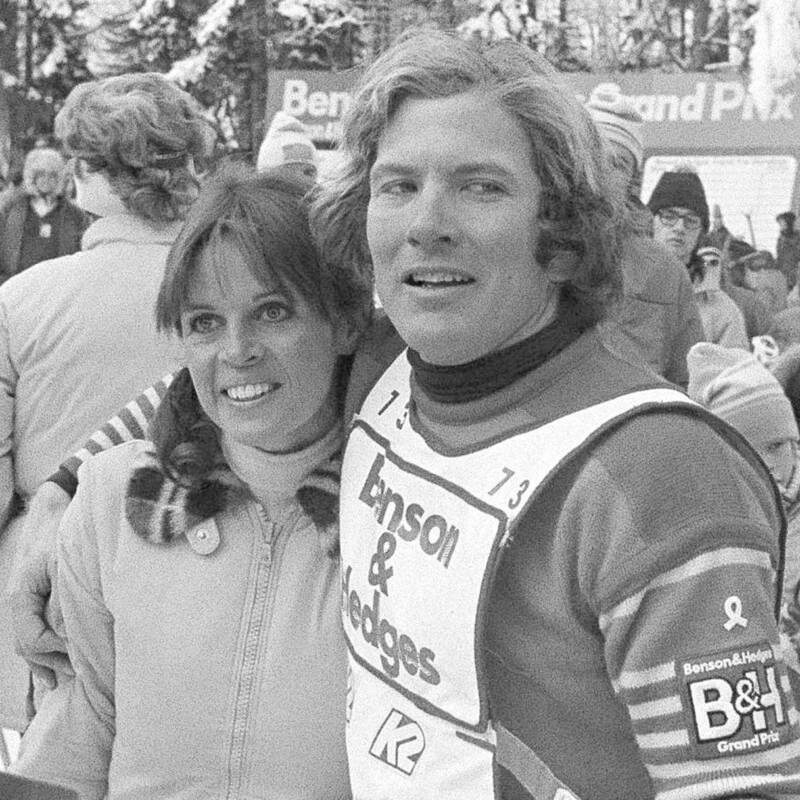
Claudine Longet and Spider Sabich
Claudine Longet was charged with fatally shooting her boyfriend, Olympic skier Vladimir “Spider” Sabich on March 21, 1976. At the trial, Longet claimed the gun discharged accidentally as Sabich was showing her how it worked. Throughout the whole court case, her former husband, the singer Andy Williams was by her side as she told her story.
Sabich was one of the most well know American ski racers in the late 60s and early 70s. Claudine claimed that she was showing the gun to him when it went off. She informed detectives that their relationship was under no duress. Friends of the couple said he was about to leave her at the time. Claudine Longet and Spider Sabich met in 1972. Claudine was a well-known French actress and singer…likely most famous for her marriage and subsequent divorce to Andy Williams. They were the Aspen celebrity couple.
Longet was only charged with a felony of reckless manslaughter which resulted in spending just a few weeks in jail, at her convenience. This was because she had children from her previous marriage and the judge didn’t want her to be away from her children for too long. With that, Longet spent most of her jail time over weekends. She took years to serve her sentence of 30 days.
Cocaine was alleged to have been found in her system, and details in her diary allegedly contradicted what she had told the police about her and Spider’s relationship. However, in a blow to the prosecution, the blood and diary were deemed inadmissible to the case because they were apprehended without a warrant.
At the time Saturday Night Live also got on board with this story with a skit called The Claudine Longet Invitational
You had the SNL announcers describing someone skiing down a hill and then…
Uh-oh! He seems to have been accidentally shot by Claudine Longet! Yes.. and I’m afraid Helmut Kindle is out of this race!
Longet’s lawyer wasn’t laughing, and he sent SNL a cease-and-desist letter. In the following week’s episode, the announcer Don Pardo read a statement on air…the show’s first public apology: “It is desirable to correct any misunderstanding that a suggestion was made that, in fact, a crime had been committed. The satire was fictitious and its intent only humorous. This is a statement of apology if the material was misinterpreted.”
Claudine is 80 years old now and stays out of the news.
Keith Richards: I wished, and I think all of us did at the time, that that should have been on the original album, but there was some legal difficulties and stuff. But otherwise, she was a perfect ‘Some Girl.’
Claudine Longet: He was my best friend
Claudine
Claudine’s back in jail again
Claudine’s back in jail again
Claudine’s back in jail again, Claudine
Claudine’s back in jail again
Claudine’s back in jail again
She only does it at weekends
Claudine
Now only Spider knows for sure
But he ain’t talkin’ about it anymore
Isn’t it, Claudine?
There’s blood in the chalet
And blood in the snow
She washed her hands of the whole damn show
Claudine
She shot him once right through the head
She shot him twice right through the chest
The judge says ruled it was an accident Claudine
Accidents will happen
And Claudine’s back in jail again
Claudine’s back in jail again
Claudine’s back in jail again, Claudine
Claudine’s back in jail again
Claudine’s back in jail again
Claudine’s back in jail again, Claudine
Hey go baby
Go baby
Claudine’s back in jail again
Claudine’s back in jail again
Claudine’s back in jail again, Claudine
Oh Claudine
Oh Claudine
Oh Claudine
Now I threaten my wife with a gun
But I always leave the safety on
I recommend it, Claudine
Yea she pistol-whipped me once or twice
But she never tried to take my life
What do you think about that
Claudine
Claudine’s back in jail again
Claudine’s back in jail again
She only does it at weekends Claudine
Oh Claudine
Oh Claudine
Oh Claudine
What about the children, Claudine?
Poor, poor children
You’re prettiest girl I ever seen
Only see you on the movie screen
Hope you don’t try to make a sacrifice of me Claudine
Don’t get
Don’t get too trigger happy with me Claudine
Itchy fingers
Yeah Claudine’s back in jail again
Claudine’s back in jail again
Claudine’s back in jail again Claudine
Yeah Claudine’s back in jail again
Claudine’s back in jail again Claudine
Uh uh Claudine
Poor, poor, poor Claudine
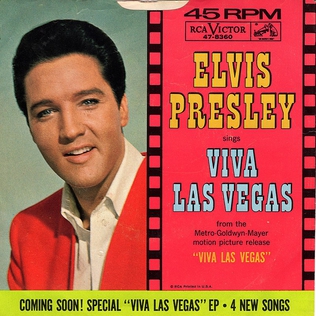
ELVIS….otherwise known as The Big E, King Of Rock ’n‘ Roll, The Memphis Flash, The Jumpsuited One, The Vibrating Valentino, Ol ’Snake Hips, The Tennessee Troubadour, Mr. Sideburns, The Hillbilly Cat, The Cool Cat, or just EP. I think The Vibrating Valentino wins in the nickname department.
Viva Las Vegas was written by Doc Pomus and Mort Shuman as the title song for the film of the same name starring Elvis Presley…. better-known AS…no I won’t go through that again. Pomus and Shuman wrote several other songs for Presley as well. Among them: “Little Sister,” “Suspicion,” and “Surrender.”
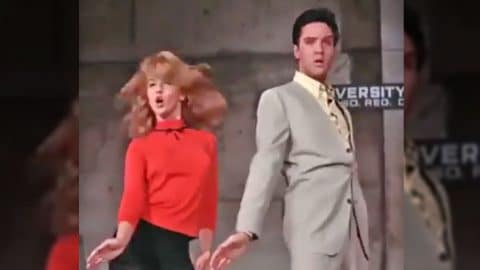
In the movie, Elvis plays a race car driver who has to wait tables at a hotel in order to pay off a debt (no doubt to Colonel Tom Parker!). He performs this song at the hotel’s talent competition accompanied by various Vegas showgirls. Viva Las Vegas was the most successful of the 31 films Elvis starred in, returning more than $5 million to MGM Studios on an investment of less than $1 million.
I do remember this movie on TV. Why do I remember this Elvis movie more than others? No other than the co-star Ann-Margret.
The song peaked at #29 in the Billboard 100, #14 in Canada, #4 in New Zealand, and #17 in the UK in 1964. It did re-chart at #15 in the UK in 2007.
Billy Strange played guitar on this track. According to Strange’s son Jerry, musician’s royalties for the song came in for years thanks to slot machines that play the song.
The song was revived by ZZ Top, who took it to #10 in the UK, #16 in the Billboard Rock Charts, #34 in Canada, and #17 in New Zealand in 1992.
Everything that is famous about Las Vegas comes up in the song…such as roulette, neon, hot dice, pretty women, blackjack, one-armed bandits, and bright lights. The song has served as an advertisement for the city although having a small consolation for losing everything…If I wind up broke up well
I’ll always remember that I had a swingin’ time… Oh OK! A swinging time is worth it!
The Dead Kennedys also did a cover of the song…in their own unique way.
Viva Las Vegas
Bright light city gonna set my soul
Gonna set my soul on fire
Got a whole lot of money that’s ready to burn,
So get those stakes up higher
There’s a thousand pretty women waitin’ out there
And they’re all livin’ the devil may care
And I’m just the devil with love to spare, so
Viva Las Vegas, Viva Las Vegas
How I wish that there were more
Than the twenty-four hours in the day
Even if there were forty more
I wouldn’t sleep a minute away
Oh, there’s black jack and poker and the roulette wheel
A fortune won and lost on ev’ry deal
All you need’s a strong heart and a nerve of steel
Viva Las Vegas, Viva Las Vegas
Viva Las Vegas with you neon flashin’
And your one arm bandits crashin’
All those hopes down the drain
Viva Las Vegas turnin’ day into nighttime
Turnin’ night into daytime
If you see it once
You’ll never be the same again
I’m gonna keep on the run
I’m gonna have me some fun
If it costs me my very last dime
If I wind up broke up well
I’ll always remember that I had a swingin’ time
I’m gonna give it ev’rything I’ve got
Lady luck please let the dice stay hot
Let me shoot a seven with ev’ry shot, ah
Viva Las Vegas, Viva Las Vegas,
Viva Las Vegas, viva, viva Las Vegas
What better way to celebrate July 4th than to play a Chuck Berry song. It’s nice to be back to music. I’m traveling today so I may not be able to comment until later on.
Chuck’s guitar playing got most of the publicity but his storytelling of his time is what I like best. Was it poetry? I’m not qualified to answer that but his words flowed like water and he puts you in the lunch room, classroom, dance hall, and riding in a coffee color Cadillac.
Music critic and opera composer Gregory Sandow calls him “a poet of the practical life.” John Lennon reports that Berry’s lyrics influenced his own and calls him “the greatest rock and roll poet.” Keith Richards invokes the tradition of troubadour to emphasize the poetic qualities of Berry’s lyrics. In the end, I don’t guess it matters but what we get are self-contained stories that live on today.
This was a double A-sided single…the B side was Memphis Tennessee. The song peaked at #37 on the Billboard 100 and #16 in the Billboard R&B Charts.
This song has the same sound as Roll Over Beethoven but I can’t blame Chuck for sounding like Chuck. If he could have sued everyone that ripped off his riffs…he would have lived in a courtroom.
When Berry wrote this… he was returning to the United States following a trip to Australia and witness the living standards of Australian Aborigines. This song inspired Paul McCartney to put a twist on it and he wrote Back In The U.S.S.R. on the White Album.
Linda Ronstadt covered this in 1978. Her version went peaked at #16 on the Billboard 100, #8 in Canada, #24 in New Zealand.
Chuck and Linda played the song in the highly entertaining Hail! Hail! Rock and Roll and Linda’s voice is just incredible.
Back In The USA
Oh well, oh well, I feel so good today We touched ground on an international runway Jet propelled back home, from over the seas to the U.S.A.
New York, Los Angeles, oh, how I yearned for you Detroit, Chicago, Chattanooga, Baton Rouge Let alone just to be at my home back in ol’ St. Lou
Did I miss the skyscrapers, did I miss the long freeway? From the coast of California to the shores of Delaware Bay You can bet your life I did, till I got back to the U.S.A.
Looking hard for a drive in, searching for a corner cafe Where hamburgers sizzle on an open grill night and day Yeah, and a jukebox jumping with records like in the U.S.A.
Well, I’m so glad I’m livin’ in the U.S.A. Yes, I’m so glad I’m livin’ in the U.S.A. Anything you want, we got right here in the U.S.A.
Welcome to the Hanspostcard TV Draft. I hope you will enjoy it! Today’s post was written by Dave at https://soundday.wordpress.com/
First, I’d like to thank Hans for coming up with the idea for this event, way back when, and especially Max for inviting me in and keeping it going when circumstances prevented it from continuing on the original website.
So many shows, so little time… the fellow participants have described quite a few shows that are new to me but sound interesting and I hope to watch some of them in time. I had lots of options for my final pick. I thought of Frasier, but I believe someone else might still give it a look before the end. Likewise, I was tempted to do another ’90s fixture…one which keeps going more reliably than the Energizer Bunny, The Simpsons. It gave me many, many laughs through the years and while it’s been awhile since I’ve seen a new episode (if keeping track, there are now 728 to choose from) in its prime, the first nine or ten seasons, it was one of the most consistently intelligent, witty and influential shows of its time. But there’s so much there, it seemed an overwhelming topic to dig into! And I had planned to review the British series Cracker, a psychological drama about a deeply-troubled, drinking, gambling, womanizing psychiatrist (played by the great Robbie Coltrane, pre-Harry Potter fame) who gets called on by Scotland Yard to help the police to come up with psychological profiles of notorious criminals to help them “crack” tough cases. It was gritty, realistic (for one thing, sometimes the “bad guy” somehow won ) and suspenseful. But it’s been so long since I watched it, I’ve forgotten a lot about it. So instead I’ll opt for a guilty pleasure, and dip my toe into the “reality TV” sector, look at the radar and go for Storm Chasers.
Ordinarily, I have no time for the concept of “realityTV”, especially since I tend to think of most of it as the most un-real TV out there. I have zero interest in keeping up with any Kardashians, don’t feel like being a peeping tom on ten bitchy, beautful young things thrown into a big house together and am not sure if I could survive one episode of Survivor, let alone 30 seasons of it. But Storm Chasers happened to have some redeeming features and played on one of my personal fascinations – severe storms and especially tornadoes.
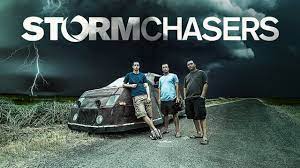
In a nutshell, Storm Chasers followed around real-life teams of, you guessed it, storm chasers, in a sort of reality version of the movie Twister. It ran on Discovery Channel for five years from 2007 through 2012, for a total of a mere 36 episodes. That movie, coupled with rapidly advancing technology both in radar (current dopplar radar can show not only type and intensity of precipitation falling but things like wind direction and any debris that may be flying around in the air) and portable electronics led to a boom in “chasing” as a hobby in the ’90s and early-2000s. You’ve probably noticed that every time there’s a severe weather outbreak, TV and internet news quickly have film footage of tornadoes touching down and with luck, ripping up only open countryside. While occasionally this comes from ordinary folks who look out their back door and say “holy crap! Tornado…”, the majority of the videos come from a relatively small number of professional chasers who spend their spring and summers traveling around the country, looking for severe storms to document. Reed Timmer has become one of the most unlikely celebrities around merely by doing that for years and putting out books and videos on the storms. And he was one of the stars of Storm Chasers.
Although the lineups changed a little from year to year, most seasons had three “teams” of chasers, if you will, each with slightly different goals. Timmer set forth to capture great videos and still photos of storms for TV news and publishing his own books and calendars. Somewhat similar, the cranky Sean Casey was commissioned to make an Imax film on tornadoes and was singularly focused on that, trying to meet deadlines and not go over-budget doing so. Then there was Tim Samaras and his team, something of a different breed. Serious meteorologists, Tim wanted to help science know more about severe storms and routinely tried to get just one step ahead of tornadoes, deploy portable probes full of instruments then scoot off, hoping the tornado would go right over top of the probe and document things like wind speed and air pressure inside one. This is especially useful as if we want to build storm-proof structures, it’s helpful to know what kind of conditions they really need to withstand. One relatively new finding for instance, is that though pressure is low inside a tornado, it’s not low enough to “explode” buildings from inside-out. Opening doors and windows in fact will add to your home’s damage in a storm, not prevent it.
As you can imagine, the three teams knew each other and often crossed paths… they all had the same information and typically were able to interpret the weather much the same as one another. They’d study the weather maps and radars the night before, and set out early aiming to where they figured the best chance of severe storms were going to be on a given day. Mostly they filmed in the traditional “tornado alley” of the Great Plains states (Texas and Kansas more than any others) but at times they’d venture out east of the Mississippi as far afield as Alabama… something they don’t like doing so much, as they point out, because the hilly, forested terrain makes it more difficult to see storms a ways away compared to the open Plains. Much of the time, they were trying to get to the same storm as the others, a few minutes ahead, to get the ultimate photos.
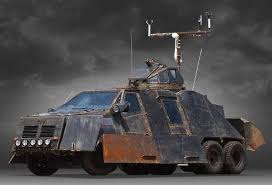
Among the show’s stars were the vehicles. Both Casey and Timmer drove heavily-modified trucks full of instruments, radars, screens and more and turned into virtual tanks outside to withstand storm damage. Casey’s “TIV” – Tornado Intercept Vehicle – was a heavily modified Ford F-series diesel truck , fortified with steel plates upto 1/4” thick, bullet-proof, inch-plus thick plexiglass windows and four hydraulic legs which could come out and anchor the vehicle. It had sirens and a loudspeaker, to help alert people to oncoming storms, often before police were aware of the building storm. It weighed 14 000 pounds, and a replacement one he had built successfully withstood 175 MPH winds in one Kansas storm. Timmer had something similar, but for all that, he still got bloodied one time when hail smashed his windshield. Bullet-proof doesn’t always equal Kansas hailstone-proof it seemed! Surprisingly, Samaras the scientist and his team drove more ordinary pickups with their probes in the back and relied on getting out of the twisters’ way just in time.
I loved the action of the show, because I love storms. They’ve excited me since I was little. And each episode showcased some incredible storms. Even the ones in which they didn’t get to see a tornado were often spectacular, lightning shows with hail, pounding rain, howling winds. And I learned a bit about the actual science of the thunderstorms. Educational “reality TV”…go figure.
The chasers showed several things. Storm-chasing is largely a young mans field. Although Timmer’s girlfriend tagged along with him from time to time, they were mostly young guys, fueled by energy drinks and junk food who one imagines might have been skateboarding or jumping off cliffs if not following thunderstorms. And it showed it was a dangerous pursuit. Even forgetting about the tornadoes themselves, they came perilously close to being hit by lightning more than a few times while standing out in a field filming. Hail smashed through the thickest of windows and could make roads impassably slippery. In one episode two of their vehicles got stuck in the same country road, made into a muddy quagmire by the downpour. And even with good eyes and the best radars, a tornado can touch down unexpectedly or do a sudden 180-turn and take them by surprise.
Casey eventually got his film made. The show was canceled after season 5, and Samaras was said to have been pleased as while he liked the show’s potential, he felt it spent far too much time on the inter-personal drama between the crews and not enough on the actual science, something I concur with. He successfully planted a few probes in the path of tornadoes and added to the knowledge of the field, but sadly demonstrated that the hobby is anything but play. He, his grown son and another team member died in a massive Oklahoma tornado a year after the show ended. It seemed their un-reinforced car made a wrong turn and got overtaken by an unexpectedly huge and violent funnel. It put any ideas for a future series aside…but amazingly, seems to have done nothing to quell interest in storm-chasing among amateur meteorologists and videographers across the nation.
Welcome to the Hanspostcard TV Draft. I hope you will enjoy it! Today’s post was written by Lisa at https://tao-talk.com/
TV Series Draft, Lisa’s Pick for Round 10 on Saturday, July 2, 2022: Yellowstone
(2018-2022) 4 seasons, 40 episodes, originally on Paramount channel
The Dutton Family l.-r.: Lee, Kayce, John, Beth, and Jamie
Here we are, at the tenth and final round of sharing our favorite TV shows, across times and genres. We have compiled a fantastic go-to list when we are on the lookout for excellent TV viewing. Thank you, Max, and every blogger who has participated in it, for carrying on where Hans (and Kirk) left off.
And now I present to you my final choice for the draft, Yellowstone. Did I save the best for last? Perhaps. I loved watching Westerns as a kid, but it has been a struggle to find modern day TV shows that measure up to the old gold. Yellowstone not only measures up, but it takes the viewer far beyond the simplistic plots of the old shows. It looks at the past, present, and future of grazing cattle along vast swaths of land that used to be free and traveled by countless indigenous tribes who relied on the American bison for just about everything. It shows how an almost certainly more menacing threat than ranchers and their cattle is challenging the land: developers who want to build casinos, high end housing, and strip malls across the terrain and who know how to play just as dirty as the ranchers did when they took it from the tribes.
I’ve lived in Michigan all of my life and have traveled out west only a couple of times and then only by plane. I have no idea how accurate all of the positions being portrayed from all of the angles are in the series, but I do know that Taylor Sheridan, whose brainchild Yellowstone is, has a reputation for doing his research and also has lived experiences that lend authenticity to them.
Taylor Sheridan
Director: 8 different directors, with Taylor Sheridan and Stephen Kay directing the most, with 11 each. Writing credits go mostly to Taylor Sheridan and John Linson who are credited on all 39 episodes; four others have credits on a few of the episodes. Genres: Western, drama Synopsis: The plot of Yellowstone (the name of the fictional ranch of the show) revolves around three major forces that are in varying states of conflict with each other. The central focus is upon the John Dutton Family who have a working cattle ranch with thousands (forgot exactly how many) of acres they own. They have a bunkhouse where the ranch hands live year-round as well as a separate cabin for the head ranch boss. John Dutton is the patriarch and has 4 children as the series opens. His wife died when the kids were young. Each of his children are employed in the business of keeping the ranch operating. The second major force is the Indigenous tribe that is working hard to find a way to get some of the Dutton property back in the hands of the tribe, or at minimum put a casino up. The third major force are various developers from here and there that see the area as a goldmine for developing houses for the wealthy, rich strip malls, and yes, casinos and an airport to bring the customers in and out.
Within each of these arenas are a cast of characters that come and go (especially with the developers.) How these groups strategize and work at various times for, against, and with each other is what keeps the plot ever-fresh and exciting. Also explored are the ways the groups strategize within themselves, particularly with the Dutton family.
The Dutton Family
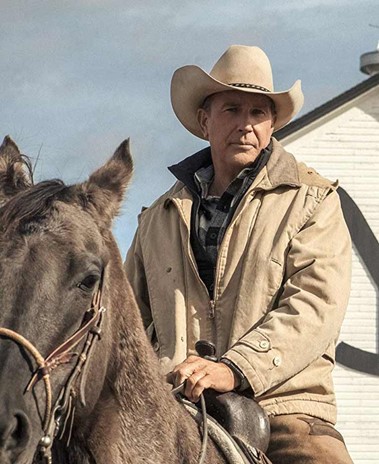
John Dutton
John Dutton (Kevin Costner) is the patriarch of the family and the owner of the Yellowstone Ranch. His wife died when the kids were younger and he’s never remarried. A closer statement might be to say he’s always been married to the ranch and always will be. John is a strong silent type but he speaks when he needs to. He is an expert at delegating power, but he always has the last say. He loves all of his children; some might say how well each serves the ranch determines how much he loves each.
Lee Dutton
Lee Dutton (Dave Annable) is the oldest Dutton son and is in line to take over for his dad when the time comes. He’s John’s right-hand man and the most like his father in his passion for Yellowstone and getting his hands calloused out on the range.
Jamie Dutton
Jamie Dutton (Wes Bentley) is the family attorney and has political aspirations. Jamie wears nice suits and seems different than the rest of the family. He’s hard-working and an excellent protector of the family’s legal interests. His sister hates him and his dad seems to be perpetually disappointed in him, no matter what he does.
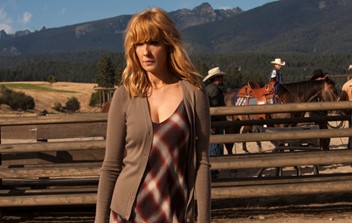
Beth Dutton
Beth Dutton (Kelly Reilly) lives far away in a big city when the story opens. Her profession is corporate takeovers and acquisitions and she is very well-paid for it. She’s as close as a human piranha as it is possible to be without having scales. She does her homework and is a consummate strategist; when a company is in her sights, it’s a done deal. Beth also raises the bar for verbal viciousness; not anybody you’d want to get on the wrong side of in a conversation or a business deal. Beth eats men like most people eat popcorn. Beth has an abiding hatred for her brother, Jamie, and she has a soft spot for Ranch Boss, Rip.
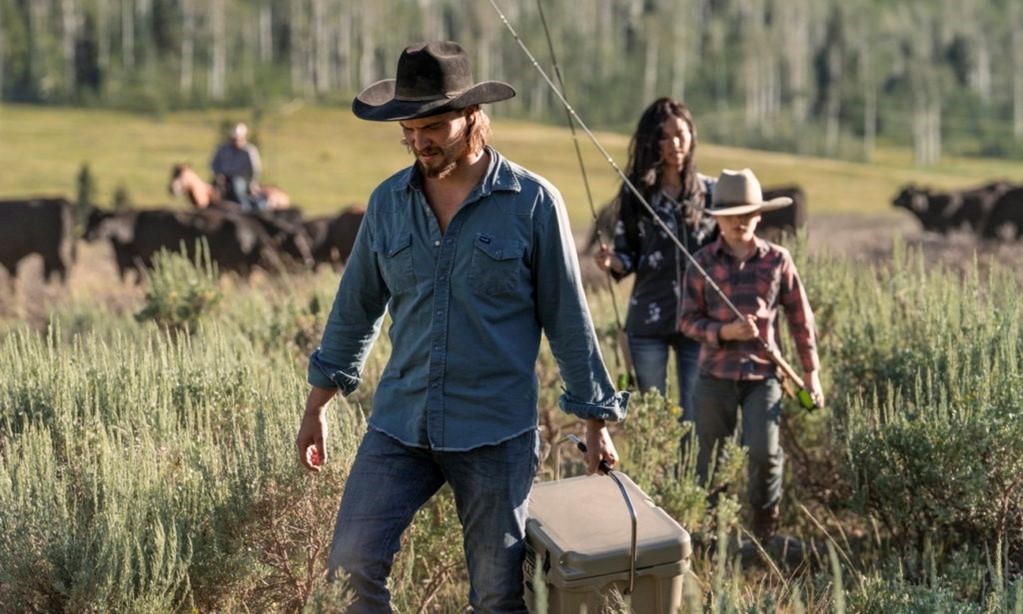
Kayce, Monica, and Tate
Kayce Dutton (Luke Grimes) is the baby of the family. Kayce saw active duty in Iraq and came back a changed man. Kayce fell in love with and married Monica (Kelsey Asbille) and they had a baby, Tate (Brecken Merrill,) who is about 8-10 years old when the story opens. Kayce wants nothing to do with his family, the ranch, and all of the trappings of success that brings. As the series begins, Kayce lives on the reservation with Monica and Tate with Monica’s grandfather (sorry, forgot his name.)
Yellowstone Ranch Cowboys
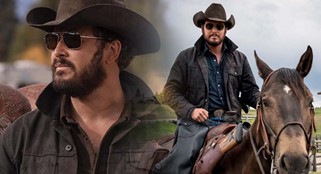
Rip
Rip Wheeler (Cole Hauser) has worked at Yellowstone since he wandered in as an angry delinquent teenager. Yellowstone is his life. Rip is the boss of all of the cowboys (regardless of gender!) who live in the bunkhouse. He gets to live in his own plush cabin as a perk for the position. Rip has John’s unwavering trust. Rip also has the respect of his underlings as he never asks them to do anything he isn’t ready, willing, and able to do. Rip does not suffer fools lightly. Rip has a (mutual) soft spot for Beth.
Lloyd (Forrie J. Smith) is the top cowboy in the bunkhouse. Lloyd’s grizzled, seasoned, and often gets the responsibility of breaking the new guys in. Lloyd’s been all over the place as a cowboy but he’s been at Yellowstone for quite awhile.
Jimmy Hurdstrom (Jefferson White) comes to the ranch as a favor to Jimmy’s grandpa and has been living a rough and criminal lifestyle up until that point. Jimmy knows nothing about being a cowboy and doesn’t seem real interested in learning about how to become one, at least at first.
Colby (Denim Richards) and Ryan (Ian Bohen,) are two of the cowboys that are stable, good at what they do, and who keep the ranch rolling along. Others come and go and are more problematic in one way or another, such as Walker (Ryan Bingham) and Teeter (Jen Landon.)
Indigenous Tribe
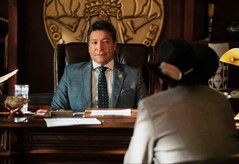
Chief Thomas Rainwater
Thomas Rainwater (Gil Birmingham) is the Chief of the Tribe. He’s a wonderful leader who genuinely has the good of the Tribal Members at heart. He is up against formidable forces, including the Dutton Clan who has deeds that aren’t easily gotten around to the land that was stolen from Tribal use back in John’s father’s time. Chief Rainwater also has to contend with the rolling cavalcade of slimy developers that sleaze in and try to wheedle deals with him that will only benefit the developers when all is said and done.
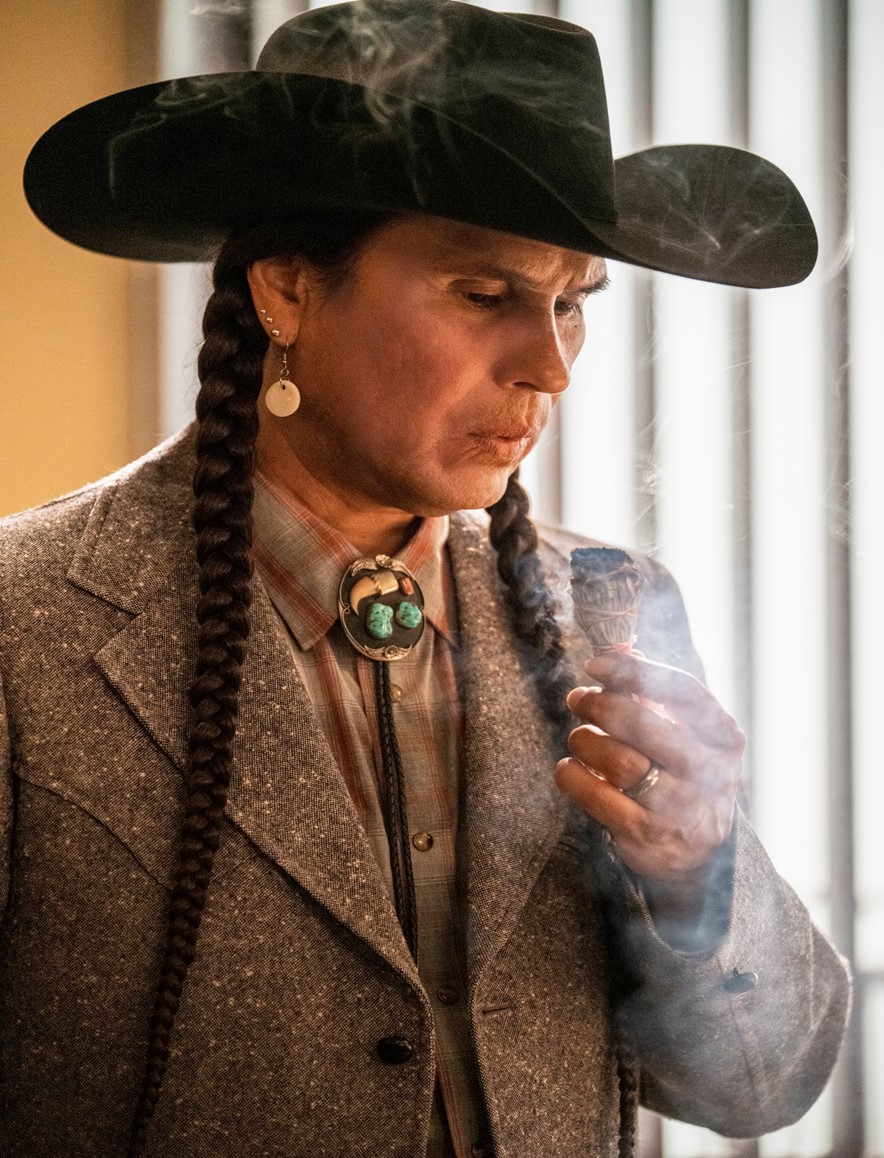
Mo Brings Plenty
Mo Brings Plenty (Mo Brings Plenty) is Chief Rainwater’s right-hand man. Mo is both trained security but also one the Chief depends on to get things done that call for finesse.
Ben Waters (Atticus Todd) is the tribal law enforcement deputy that investigates crimes that happen on the reservation. We learn that many crimes are brought out to the “res” when they don’t want people looking too closely. Ben and his force are spread thin and there is a feeling it is intentional by unnamed institutions off of the reservation.
Felix Long (Rudy Ramos) was Chief before Thomas Rainwater became Chief. He’s still in the picture with the tribal decisions but his ways are different than the new Chief.
Developers
As I said before the developers come and go and they are always interesting; yet they all want the same thing: to take the land and exploit it for human use and to line their pockets.
Dan Jenkins (Danny Huston)
Roarke (Josh Holloway)
A.G. Steward (Timothy Carhart)
Bob Schwartz (Michael Nouri)
Malcolm Beck (Neal McDonough)
Teal Beck (Terry Serpico)
Torry (Wole Parks)
Caroline Warner (Jacki Weaver)
Willa Hayes (Karen Pittman)
Assorted Other Players – pawns on the chess board
Governor Perry (Wendy Moniz)
Sheriff Donnie Haskell (Hugh Dillon)
Travis (Taylor Sheridan)
Summer Higgins (Piper Perabo)
Impressions: I love the way this series is put together. It’s a show where a lot of different perspectives and philosophies about land use are presented, with arguments both for and against for pretty much all of them. The show leaves it to each individual viewer to decide for themselves how they feel about any of the topics. I am left with a feeling that I’ve been better educated about the situations regardless if my position has moved or not. The setting in such a vast wide open space with an endless sky above is probably the main character in this series. I love seeing it even if it’s only on a TV screen. It makes me want to protect its beauty. I like watch ranching up close. The cattle, the horses, and the camaraderie of the bunkhouse when the work day is done.
The characters in Yellowstone are larger than life and how they interact with each other draws me in. By the end of the 4th season, I have to admit I care about each one of them. I’m not sure if there will be a 5th season, but I do know if they build it, I will watch. Taylor Sheridan has my respect for bringing his vision to reality and so do each of the actors that make it jump off the screen.
Warnings: there are quite a few episodes where guns are used. There are scenes of cattle being branded and horses being broken that might upset some people. There are scenes of men and women fighting (fist fights not battering) and some pummeling by men on men for punishment. There are situations of implied violence. There are scenes of sexual interaction between men and women and brief nudity.
Grade: 10 Etc.: filmed in Montana and Utah. The Chief Joseph Ranch (https://www.chiefjosephranch.net/) serves as the John Dutton home. Awards: 5 wins and 17 nominations
The first video is a tender-hearted highlights reel:
The next video has more action:
The last one is one of my favorite scenes:
Sources:
top image
Taylor Sheridan image
John Dutton image
Lee Dutton image
Jamie Dutton image
Beth Dutton image
Kayce, Monica, and Tate image
Chief Thomas Rainwater image
Mo Brings Plenty image















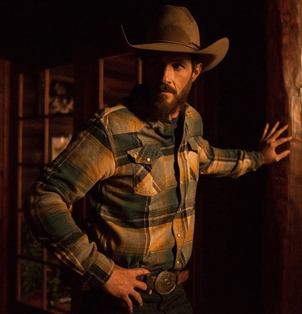 Lee Dutton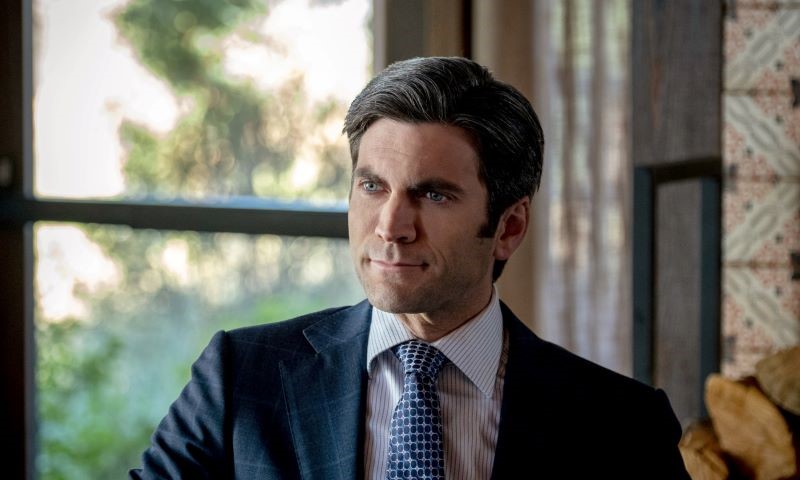
 PowerPop... An Eclectic Collection of Pop Culture