This song was on their Straight Up album but it’s when they were live it came alive. They have a terrific groove going on and Pete wails on the solo. This was Badfinger live as they ventured out of power pop into a jam band. The live version of the band is much different than the studio version.
This song was going to be the B side to Name of the Game issued as a single but Apple never released it. The song has a power pop base but with hard electric on top and it changes the dynmaic of it.
Making the Straight Up album was no easy task. They started off with Geoff Emerick (he produced their last album and engineered several Beatle albums) producing them. The songs were rejected by the Apple’s head of US operations Allan Steckler. George Harrison thought a lot of Badfinger, especially Pete Ham and wanted Name of the Game to be released as a single before the album. George then started to produce the band himself. He worked with them and they started to make progress. He played slide with Pete on the hit Day After Day and Leon Russell played piano.
They were making great progress but then the Bangladesh concert came up and George was distracted. He handed off the producing to Todd Rundgren. The band and Rundgren didn’t mix well but he finished producing it in two weeks. The members were much happier with George who actually listened to their ideas.
It was a great album but one of the complaints from the band was it lost a lot of rawness and energy after Rundgren mixed it.
Going through three producers…it’s a wonder it’s as good as it is.
The Studio version is the second video but I would reccomend the live version…and I don’t do that a lot.
Suitcase
Suitcase, suitcase, follow me ’round Bootlace, bootlace, tie me down Money for fun, yeah, golden crown It’s all inside a game we’ve been playing for so long
Driver, driver, go too fast Miser, miser, make it last Pusher, pusher, on the run It’s all inside a game we’ve been playing for so long
And I’m sorry to be leavin’ Yeah, that’s all I get to say ‘Cause I’m sorry to be leavin’ today
[guitar solo (Pete Ham)]
Well I’m sorry to be leavin’ But that’s all I get to say ‘Cause I’m sorry to be leaving today
(Driver drive)
Driver, driver, go too fast Miser, miser, make it last Pusher, pusher, on the run It’s all inside a game we’ve been playing so long
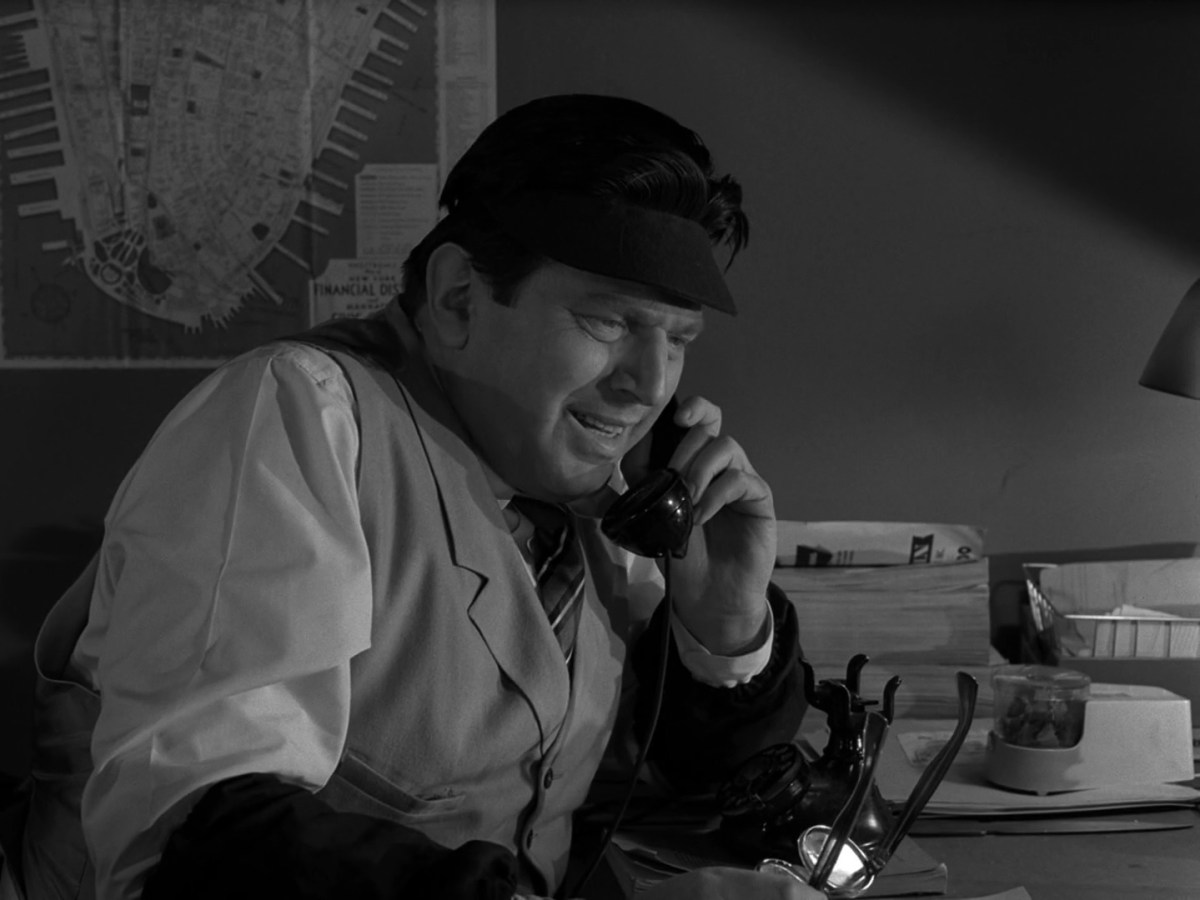
First of all…it’s not a great episode but that doesn’t include Theodore Bikel’s acting job in this one…it’s good…maybe a little over the top. The character is an ordinary man with a god complex that borderlines on cartoonish. He conveys very well that this character is insane. I think Bikel does a good job out of what he had…which wasn’t much. Linden Chiles who plays Mr. Hall does a good job as the FBI agent that shows a great contrast to Bikel’s Mr Crangle.
It’s in my top five of least favorite episodes. It’s the story that is weak to me. The origin of this story would be the McCarthy witch hunt of the 50s. Anyone that was different would be labeled a communist, subversive, and or thieves.
I love that Serling highlighted that awful period that but the script doesn’t live up to the outrage. I wish he would have hit the mark of McCarthy with a litte more. This is the lowest I have labeled an episode so far…but this is episode 94 so that is not bad since Serling was involved in writing every episode so far. It’s not the worse episode but it’s not up to Twiight Zone standards… which are very high. The ending…I won’t get into what happens but unlike many Twilight Zones…this one is too predictable.
Theodore Bikel, in real life, was a human and civil rights activist who ardently opposed blacklisting and McCarthyism during the 1950s.
This show was written by Rod Serling and Price Day
Rod Serling’s Opening Narration:
That’s Oliver Crangle, a dealer in petulance and poison. He’s rather arbitrarily chosen four o’clock as his personal Götterdämmerung, and we are about to watch the metamorphosis of a twisted fanatic, poisoned by the gangrene of prejudice, to the status of an avenging angel, upright and omniscient, dedicated and fearsome. Whatever your clocks say, it’s four o’clock, and wherever you are it happens to be the Twilight Zone.
Summary
Oliver Crangle seems to like making other people miserable. He phones a young man’s employer to say that the man is a communist. He phone a school board to tell them a teacher is acting inappropriately with his students. He has a long list of people that he wants to tell on. He even arranges a meeting with an FBI agent and tells him that at 4 p.m. all of the nasty people in the world will undergo a transformation. The agent suggests he seek psychiatric treatment but it turns out he’s right.
Sorry there is not a small clip on youtube of this. Paramount has them locked down.
Rod Serling’s Closing Narration:
At four o’clock, an evil man made his bed and lay in it, a pot called a kettle black, a stone-thrower broke the windows of his glass house. You look for this one under ‘F’ for fanatic and ‘J’ for justice in the Twilight Zone.
CAST
Rod Serling … Narrator / Self – Host (uncredited)
Theodore Bikel … Oliver Crangle
Phyllis Love … Mrs. Lucas
Linden Chiles … Mr. Hall
Moyna MacGill … Mrs. Williams
The song was written by Pete Ham, produced by Chris Thomas and Badfinger, and released on Apple Records in 1973.
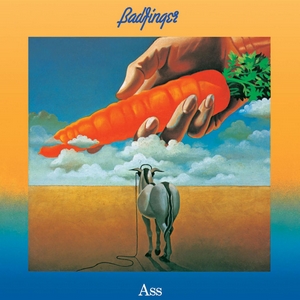
The song is about Pete Ham having regrets leaving Apple Records where the Beatles signed them but Stan Polley (the manager) was pursuing a larger contract by moving to Warner Bros. Records. This is where Badfinger started their slide into hell. The album cover was about being led away from Apple.
Warner Bros offered them a huge contract. As it turned out they would never see the Warner Bros money as Polley took it out of escrow without telling the band. In the next few posts and little more info on this will be given.
The reason Polley wanted the band to leave Apple Records is because he could control everything with a new contract with Warners. He started to take all of the Apple royalities as well until the members stopped Apple from giving it to him. After that no one got the money (Apple held the money waiting for the courts to decide) and the band members were broke. It was held up in litigation until 1985 when some of the money was distributed.
The song peaked at #102 in the Hot 100 in 1973. Apple didn’t do a good job pushing this album because they knew Badfinger was leaving. This song ended up being the last non-ex-Beatles release on Apple Records.
In 1985 the band and family members finally got their money that had been tied up from Apple because of the lawsuits with Warners…all caused by a ruthless manager who really never got punished for his deeds and lived to be 87.
A movie was going to be made of their story…and still might be one day.
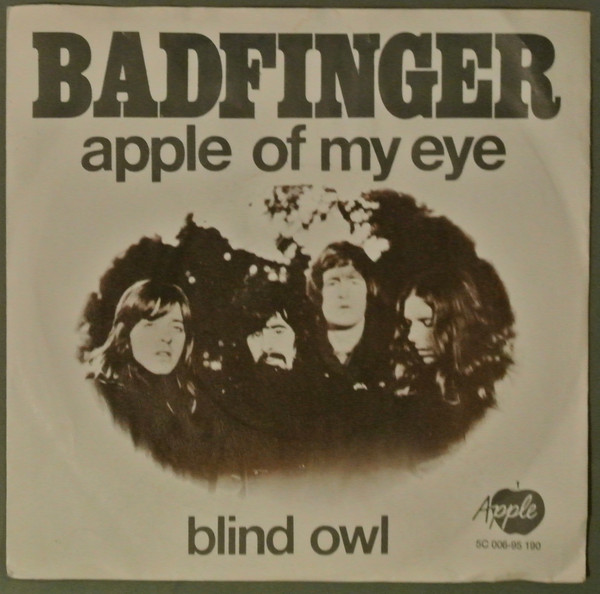
Apple Of My Eye
Oh, I’m sorry, but it’s time to move away Though inside my heart, I really want to stay Believe the love we have is so sincere You know, the gift you have will always be
You’re the apple of my eye You’re the apple of my heart But now, the time has come to part
Oh, I’m sorry, but it’s time to make a stand Though we never meant to bite the lovin’ hand And now, the time has come to walk alone We were the children, now we’ve overgrown
You’re the apple of my eye You’re the apple of my heart But now, the time has come to part
Oh, I’m sorry, but it’s time to move away Though inside my heart, I really want to stay Believe the love we have is so sincere You know, the gift you have will always be
Now, the time has come to part Now, the time has come to part.
Ever since I wrote about Baby Blue by Badfinger for Hanspostcard’s draft…I have been listening to them again and I wrote up a few posts so I thought I would make a weekend of it…so lets start the weekend a little early!
Most everyone knows this song by Harry Nilsson and some by Mariah Carey. Harry to me has the definitive version but Pete Ham and Tom Evans of Badfinger wrote it as a simple blues song. They never dreamed it would be turned around into an epic song.
The song was originally on the No Dice album released in 1970. The album peaked at #28 in the Billboard 100. The album spawned the hit No Matter What that peaked at #8 in 1970.
Without you was not released as a single and it wasn’t meant to be. Pete and Tom put together two songs they were writing… Pete’s in the verses and Tom’s chorus. They always thought of it as a little blues song that was an album cut.
Badfinger were in the studio one night and Nilsson called them over to listen to what he had recorded. They had no clue he was recording their song…when they heard Harry’s version it blew them away. Over 180 artists have recorded the song since then. The band didn’t start getting royalities from this song or much of anything else until `1985 when the court case was settled. Their former manager tried to get his hands on it then but wasn’t successful. The two families of Ham and Evans…received some of the money for the late songwriters.
You can’t really compare the versions. Badfinger never meant it to be commercial sounding and who could sing like Harry Nilsson?
In a way…this song sums up Badfinger perfectly.
Without You
Well, I can’t forget this evening And your face when you were leaving But I guess that’s just the way the story goes You always smile, but in your eyes your sorrow shows Yes, it shows
Well, I can’t forget tomorrow When I think of all my sorrow I had you there, but then I let you go And now it’s only fair that I should let you know What you should know
I can’t live, if living is without you I can’t live, I can’t give any more I can’t live, if living is without you I can’t live, I can’t give anymore
Well, I can’t forget this evening And your face when you were leaving But I guess that’s just the way the story goes You always smile, but in your eyes your sorrow shows Yes, it shows
Oh
I can’t live, if living is without you I can’t live, I can’t give any more I can’t live, if living is without you I can’t live, I can’t give anymore
I can’t live, if living is without you I can’t live, I can’t give any more I can’t live, if living is without you I can’t live, I can’t give anymore
I can’t live, if living is without you I can’t live, I can’t give any more I can’t live, if living is without you I can’t live, I can’t give anymore
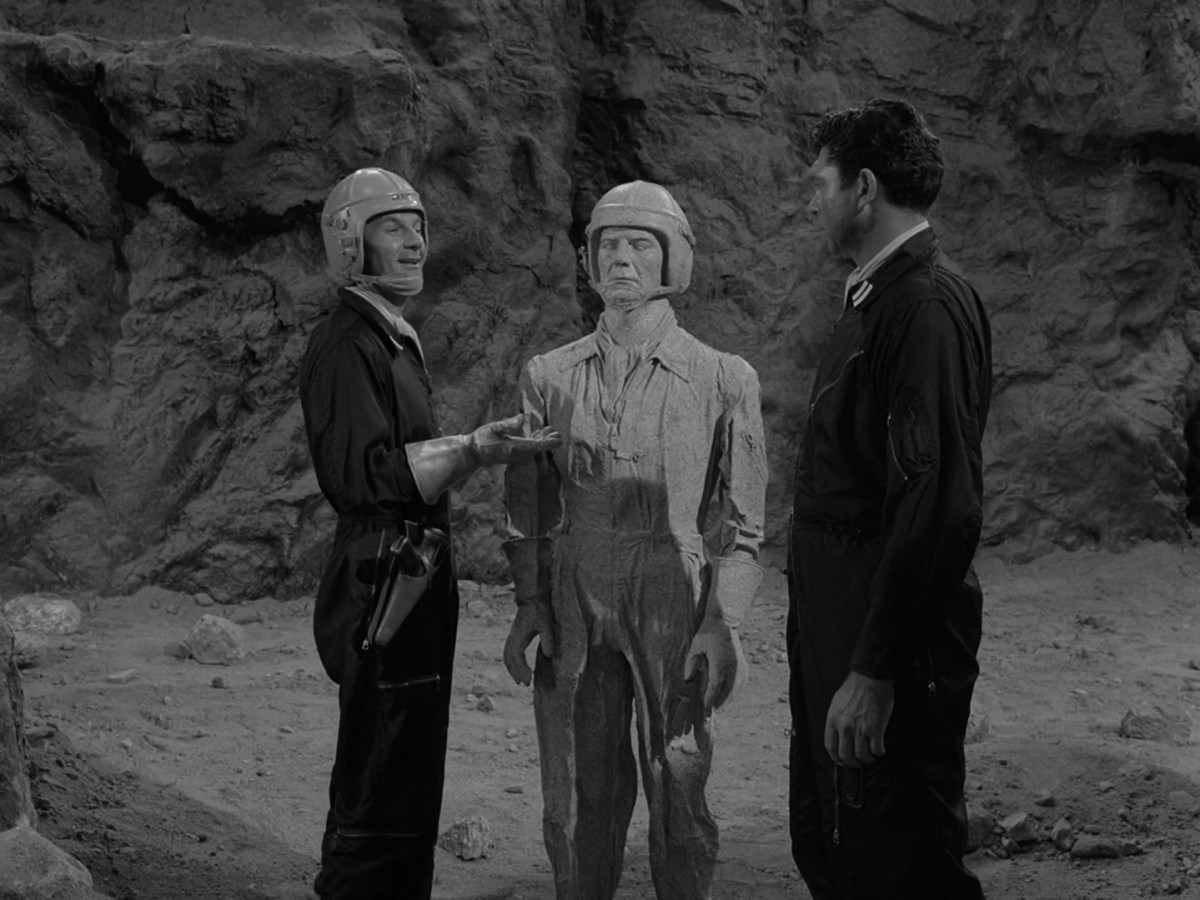
The Twiight Zone lesson in this episode is… absolute power can and will almost always corrupt. The best Twilight Zone episodes are the ones that are as thought-provoking and timely today as they were then. This one fits that bill. Claude Akins does a great job as he appears as Commander William Fletcher. He would appear in two Twilight Zones.
Joe Maross plays Navigator Peter Craig who starts off as a simple jerk and then climbs all the way to a megalomaniac. Without giving the ending away…there is justice at the end of the epidsode. The more I watch this episode the more I’ve liked it through the years.
From IMDB The rocket launch depicted was in reality a test flight of a Mercury-Atlas booster. This was quite timely; this episode aired about a month after NASA’s John Glenn became the first astronaut to attain Earth orbit upon such a rocket.
This show was written by Rod Serling
Rod Serling’s Opening Narration:
The time is the space age, the place is a barren landscape of a rock-walled canyon that lies millions of miles from the planet Earth. The cast of characters? You’ve met them: William Fletcher, commander of the spaceship; his copilot, Peter Craig. The other characters who inhabit this place you may never see, but they’re there, as these two gentlemen will soon find out. Because they’re about to partake in a little exploration into that gray, shaded area in space and time that’s known as the Twilight Zone.
Summary
When a spacecraft makes an emergency landing on an unknown planet the commander, William Fletcher, is anxious to get underway again as soon as possible. Not so for his navigator, Peter Craig, who is insubordinate and is fed up taking orders all of the time. While Fletcher makes repairs to the ship Craig explores the area around them and is astonished to find that there are living beings there only a fraction of the size of humans. Soon, he is being recognized by them as a god and refuses to leave when the ship ready. He is to realize that one’s place in the universe is a relative thing.
Sorry there is not a small clip on youtube of this. Paramount has them locked down.
Rod Serling’s Closing Narration:
The case of navigator Peter Craig, a victim of a delusion. In this case, the dream dies a little harder than the man. A small exercise in space psychology that you can try on for size in the Twilight Zone.
CAST
Rod Serling … Narrator / Self – Host (uncredited)
Joe Maross … Navigator Peter Craig
Claude Akins … Cmdr. William Fletcher
Michael Ford … Spaceman
Robert Eaton … Spaceman
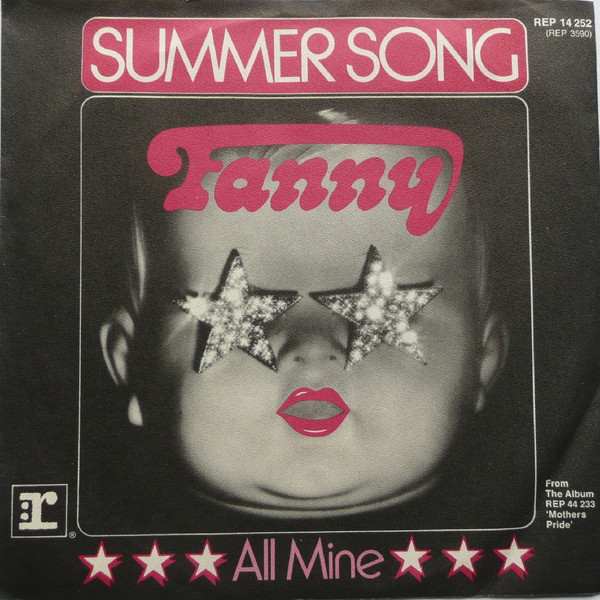
This song has a pop sound that is really catchy. Al Mine would have fit the top 40 at the time perfectly. The more I’ve listened to this band the more I’ve become a fan. This song was the B side to the single with Summer Song as the A side.
Fanny played hard rock, soul, some Motown-ish music (like this one), and just rock and roll. I did get a comment from someone who saw them live in the 1970s. The comment was LOUD and very good as they opened for bands such Procol Harum, Humble Pie, Deep Purple, and David Bowie.
When you are an all female band opening up for these bands…you are not a novelty…you are the real deal. They were more successful in the UK and Europe, where audiences appreciated their music and respected their work.
Did the public ignore them because they were all female? If so, the public missed out.
They fit in with different genres and they deserved more attention. This song was written by the sisters June and Jean Millington. It was on their Mother’s Pride album.
Fanny released a studio album in 2018 called Fanny Walked the Earth. Their last album before that one was Rock and Roll Survivors released in 1974.
June Millington:“We knew we had to prove we could play and deliver live. Otherwise, no one would believe it.”
All Mine
Oh, when you’re looking for someone to love It isn’t easy to live without love And when you’re lonely, it’s harder to laugh You made it easy, that’s all in the past
Oh baby, I love when you give to me; you’re all mine, all mine
It’s hard live when you’re by yourself We need to give to somebody else You need a lover to rock you to sleep And lend a shoulder when you’re dead on your feet
Oh baby, I love when you give to me; you’re all mine, all mine Oh baby, I love when you give to me; you’re all mine, all mine
It’s hard live when you’re by yourself (by yourself) We need to give to somebody else (somebody else) You need a lover to rock you to sleep (rock you to sleep) And lend a shoulder when you’re dead on your feet
Oh baby, I love when you give to me; you’re all mine, all mine All mine (mine, all mine) I’m in love with you, say you love me, too etc
There is guitar feedback at the beginning and end. The followed The Beatles as the Beatles had used it for I Feel Fine before this one. This was also the first Stones song that used a horn section, which was arranged by Mike Leander. He also did the horns on The Stones As Tears Go By and wrote the score for the Beatles She’s Leaving Home when McCartney didn’t want to wait for George Martin.
The Stones performed this on The Ed Sullivan Show in 1966. Lead guitarist Brian Jones wore a cast on his hand. It was rumored that he got the injury when he punched a wall in a dressing room.
This was the first Stones song released in the US and England at the same time. The Beatles and Stones sometimes would work together on album and single releases. They didn’t want to release something each at the same time so they would make sure to stagger the releases.
This song peaked at #9 in the Billboard 100, #5 in the UK, and #8 in Canada in 1966. The song was credited to Jagger/Richards.
Keith Richards: “I liked the track, I hated the mix. Mainly because there was a fantastic mix of the thing, which was just right. But because they were in a rush and they needed to edit it down for the Ed Sullivan Show, the mix was rushed and the essential qualities of it, for me, disappeared. Just because of the lack of time. It needed another couple weeks. The rhythm section is almost lost completely.”
From Songfacts
This song is shadowy indeed. “Mother” could be code for “girlfriend,” or something else entirely. Keith Richards asks that we don’t read too much into it. “You must listen to it and place your own interpretation on the lyric,” he said. “There is no attempt to present a controversial ‘Mother’ theme.”
The American single has a picture of The Stones in women’s clothes on the sleeve. According to legend, after the photo session, they kept their costumes on and went to a bar in New York.
Footage of the band dressed as women for the single photo shoot was compiled into a promotional film for the song that was distributed to various broadcast outlets. This was an early example of a music video, although they were still using film back then. The Beatles made them for some of their songs as well.
The B-side of the single was Who’s “Driving Your Plane?” Both sides of the single are questions.
Glyn Johns, who engineered the “As Tears Go By” session in 1965, engineered this song as well. This led to more work with The Stones, recording the live album Got Live If You Want It! in the fall of 1966 and then engineering the London Between The Buttons sessions in November of that year. He was used as chief engineer for the producer-less Their Satanic Majesties Request in 1967, after which he suggested to the Rolling Stones that they use Jimmy Miller as their next producer.
Have You Seen Your Mother Baby, Standing In The Shadow?
Have you seen your mother, baby, standing in the shadow? Have you had another, baby, standing in the shadow? I’m glad I opened your eyes The have-nots would have tried to freeze you in ice
Have you seen your brother, baby, standing in the shadow? Have you had another baby, standing in the shadow? Well I was just passing the time I’m all alone, won’t you give all your sympathy to mine?
Tell me a story about how you adore me Live through the shadow, see through the shadow, Live through the shadow, tear at the shadow Hate in the shadow, love in the shadow life
Have you seen your lover, baby, standing in the shadow? Have they had another baby, standing in the shadow? Where have you been all your life? Talking about all the people who would try anything twice
Have you seen your mother, baby, standing in the shadow? Has she had another baby, standing in the shadow? You take your choice at this time The brave old world or the slide to the depths of decline
David Gurney, played wonderfully by Richard Long, wakes up to find that no one, not his wife Wilma, his fellow workers, his best friend, or even his own mother knows him. The Twilight Zone has touched on this before in “And When the Sky Was Opened” but not this in depth.
This was a well thought out script. I like that Gurney slowly is trying to tie himself to the world he knows. He goes over every detail of his life that could have been missed by this gag or whatever it is… that someone could have missed. He does think of something that no one knows about but him…will it help or not? When he is losing hope…another twist is thrown at Mr. Gurney.
From IMDB: One of the first instances on television to show a couple sharing a single bed, sleeping next to each other. Around this time, TV shows could only portray couples sleeping in separate beds due to television’s strict standards & practices. In season five’s The Twilight Zone: Stopover in a Quiet Town, a very similar situation occurs. In both cases, the man is sleeping on top of the covers, is still fully dressed (even wearing his shoes), and they are hung over from a bout of heavy drinking.
This show was written by Charles Beaumont and Rod Serling
Rod Serling’s Opening Narration:
Cameo of a man who has just lost his most valuable possession. He doesn’t know about the loss yet. In fact, he doesn’t even know about the possession. Because, like most people, David Gurney has never really thought about the matter of his identity. But he’s going to be thinking a great deal about it from now on, because that is what he’s lost. And his search for it is going to take him into the darkest corners of the Twilight Zone.
Summary
David Gurney awakens on his bed fully clothed and realizes he’s late for work. He and his wife Wilma had a few drinks the night before and she is sound asleep. When he can’t find his razor he wakes her but she says he doesn’t know who he is and demands he leave her house. His clothes are nowhere to be found and so heads off to work. He knows everyone there but like his wife, none of his co-workers have any idea who he is. He’s desperate to find one piece of his identity to prove who he is. When all finally seems resolved, he faces another shock.
Sorry there is no preview on youtube
Rod Serling’s Closing Narration:
A case of mistaken identity or a nightmare turned inside out? A simple loss of memory or the end of the world? David Gurney may never find the answer, but you can be sure he’s looking for it in the Twilight Zone.
CAST
Rod Serling … Narrator / Self – Host (uncredited)
Richard Long … David Andrew Gurney
Frank Silvera … Dr. Koslenko
Shirley Ballard … Wilma #1
Julie Van Zandt … Wilma #2
Betty Harford … Clerk
Edmund Glover … Sam Baker (as Ed Glover)
Michael Keep … Policeman
Joe Higgins … Bank Guard
John Newton … Cooper
John Brahm … Winston Churchill (uncredited)
Robert McCord … Man on Steps Eating Apple (uncredited)
This song wasn’t released during the lifetime of the original band. It was -released on the album Skynyrd’s First and…Last in 1978 a year after the plane crash.
The album was recorded at Muscle Shoals Sound Studio in Alabama in 1971-1972. It was originally intended to be their debut album but it was shelved, making (Pronounced ‘Lĕh-‘nérd ‘Skin-‘nérd) their actual debut.
There are some really good songs on this posthumous album . Personally I wished this song would have made the debut album. The song is about being out on the road touring and finally making it back home. It was written by Ronnie Van Zant and Allen Collins. The song doesn’t have the crisp production of the debut album Prounounced but it’s a good song.
Ronnie Van Zant was a great and sometimes under rated songwriter. The band members have said that he never wrote lyrics down on paper. The band would be practicing and he would hear a riff or a chord progression he liked and would tell them to keep going through it over and over. After thinking about it he would start singing what he came up with.
A year or so before the crash Ronnie thought venturing into country music. One of his musical influences was Merle Haggard.
Comin’ Home
It’s been so long since I’ve been gone Another day might be too long for me Traveling around I’ve had my fill Of broken dreams and dirty deals A concrete jungle surrounding me Many nights I’ve slept out in the streets I paid my dues and I changed my style Seen hard times, all over now
I want to come home. It’s been so long since I’ve been away And please, don’t blame me ’cause I’ve tried I’ll be coming home soon to your love, to stay
I miss old friends that I once had Times ain’t changed and I’ll be glad when I go home I don’t know why the thought came to me But why I’m here I really can’t see, and now
I want to come home. It’s been so long since I’ve been away And please, don’t blame me ’cause I’ve tried I’ll be coming home soon to your love, to stay Coming home to stay Coming home to your love, mama I’ve seen better days
I miss old friends that I once had Times ain’t changed and I’ll be glad when I go home I don’t know why the thought came to me But why I’m here I really can’t see, and now
I want to come home. it’s been so long since I’ve been away And please, don’t blame me ’cause I’ve tried I’ll be coming home soon to your love, to stay Coming home to stay Coming home to your love, mama I’ve seen better days
This episode had to inspire the 1982 movie Poltergiest. Out of all the episodes I’ve posted…I have had more people ask about this one. It is a scary episode and the special effects were great. I can see how this would freak kids out when it was shown. Fall off of your bed and you might end up in another dimension.
This was a good story and a very good script. Charles Aidman as the physicist Bill turned in a believable performance.
I like how they portrayed the other dimension. They were very clever the way they shot it. They didn’t give much away but show you enough to know this place is not your normal place.
Richard Matheson based this story on a real-life occurrence involving his own daughter. Matheson:“she cried out one night and I went to where she was and couldn’t find her anywhere. I couldn’t find her on the bed, I couldn’t find her on the ground. She had fallen off and rolled all the way under the bed against the wall. At first, even when I felt under the bed, I couldn’t reach her. It was bizarre, and that’s where I got the idea.”
This show was written by Richard Matheson and Rod Serling
Rod Serling’s Opening Narration:
Missing: one frightened little girl. Name: Bettina Miller. Description: six years of age, average height and build, light brown hair, quite pretty. Last seen being tucked in bed by her mother a few hours ago. Last heard: ‘ay, there’s the rub,’ as Hamlet put it. For Bettina Miller can be heard quite clearly, despite the rather curious fact that she can’t be seen at all. Present location? Let’s say for the moment… in the Twilight Zone.
Summary
When he hears his young daughter Tina calling out in the night, Chris Miller go to her room but finds she isn’t there. At first he thinks she fallen off the bed or slid herself under it but despite hearing her call out she’s nowhere to be seen. He gets help from a friend, Bill, who concludes that Tina has slid through a portal into another dimension. They find the portal opening but Tina is lost inside and Chris goes in after her.
Rod Serling’s Closing Narration:
The other half where? The fourth dimension? The fifth? Perhaps. They never found the answer. Despite a battery of research physicists equipped with every device known to man, electronic and otherwise, no result was ever achieved, except perhaps a little more respect for and uncertainty about the mechanisms of the Twilight Zone.
CAST
Rod Serling … Narrator / Self – Host (uncredited)
Sarah Marshall … Ruth Miller
Robert Sampson … Chris Miller
Charles Aidman … Bill
Rod Serling … Narrator / Self – Host (uncredited)
Tracy Stratfor … Tina Miller (uncredited)
Rhoda Williams … Tina Miller (voice) (uncredited)
This song is referring to Saul Zaentz, Fogerty’s former boss at Fantasy Records. Both took turns suing each other as Zaentz sued Fogerty for plagiarizing himself on The Old Man Down the Road and also for defamation for the song Vanz Kant Danz, which was originally titled Zanz Kant Danz, but was altered as part of the settlement. Fogerty counter-sued for reimbursement of attorneys’ fees and in a decision by the U.S. Supreme Court, he won…sometimes there IS justice in the world.
Saul Zaentz took CCR’s money and built an empire with it. He owned the worldwide film, stage, and merchandise rights to J. R. R. Tolkien’s The Hobbit and The Lord of the Rings. He financed the Lord of the Rings animation in 1978 and many other films.
The contract CCR signed with Zaentz was one sided. Zaentz promised the band he would renegotiate when the band had a hit…he refused of course when that day happened. Fogerty has said that he brought in the ultimate crooked band manager Allen Klein to break the contract. Klein who could famously manipulate contracts told Fogerty that the contract was iron clad.
The video for this was the first ever filmed entirely in “Claymation.” It was produced at Will Vinton Studio, named for the inventor of the clay animation technique. The video didn’t garner a lot of attention at the time because the song wasn’t a hit…it did get some airplay on MTV at the time.
From Songfacts
The song is about an unnamed street dancer and his sidekick, a pig trained to pick people’s pockets as they watch the dancer do his stuff. The pig, originally named Zanz as a dig at Saul Zaentz, “Can’t dance, but he’ll steal your money – watch him or he’ll rob you blind.” When Zaentz threatened Fogerty with yet another lawsuit, Fogerty changed the pig’s name to Vanz.
Another song from the Centerfield album, “Mr. Greed,” is also thought to be a musical salvo by Fogerty in his long-running feud with Zaentz, which lasted until 2004 when Fantasy Records was bought out by Concord Records, who restored Fogerty’s rights to his CCR material.
Vanz Kant Danz
Vanz can’t dance, but he’ll steal your money Watch him or he’ll rob you blind Vanz can’t dance, but he’ll steal your money Watch him or he’ll rob you blind Vanz can’t dance, but he’ll steal your money Watch him or he’ll rob you blind Vanz can’t dance, but he’ll steal your money Watch him or he’ll rob you blind
Out in the street the crowd is gatherin’ Pushed down by the heat of the building, they’re wantin’ to dance Makin’ their way up the street, a boy with a pig and a radio Little Billy can work on the crowd, put ’em into a trance For the little pig Vanz
Vanz can’t dance, but he’ll steal your money Watch him or he’ll rob you blind Vanz can’t dance, but he’ll steal your money Watch him or he’ll rob you blind Vanz can’t dance, but he’ll steal your money Watch him or he’ll rob you blind Vanz can’t dance, but he’ll steal your money Watch him or he’ll rob you blind
You’re watchin’ ’em dance, not a care in the world So Billy and Vanz get busy, they’re makin’ their move The little pig knows what to do He’s silent and quick, just like Oliver Twist Before it’s over, your pocket is clean A four-legged thief paid a visit on you
Vanz can’t dance, but he’ll steal your money Watch him or he’ll rob you blind Vanz can’t dance, but he’ll steal your money Watch him or he’ll rob you blind Vanz can’t dance, but he’ll steal your money Watch him or he’ll rob you blind Vanz can’t dance, but he’ll steal your money Watch him or he’ll rob you blind
Vanz can’t dance, but he’ll steal your money Watch him or he’ll rob you blind Vanz can’t dance, but he’ll steal your money Watch him or he’ll rob you blind Vanz can’t dance, but he’ll steal your money Watch him or he’ll rob you blind Vanz can’t dance, but he’ll steal your money Watch him or he’ll rob you blind
Vanz can’t dance, but he’ll steal your money Watch him or he’ll rob you blind Vanz can’t dance, but he’ll steal your money Watch him or he’ll rob you blind Vanz can’t dance, but he’ll steal your money Watch him or he’ll rob you blind
The holy trinity of power pop for me are…Badfinger, Big Star, and The Raspberries…those were the 70s pioneers. Badfinger was the most successful out of the three…hit wise anyway. You can hear later bands like Cheap Trick, The Posies, Teenage Fanclub, Matthew Sweet, and even KISS get something from each three.
My love for this song is so over the top. Baby Blue, to these ears, is the perfect power pop song. It has the right combination of the hard British crunch and pop with an irresistible guitar riff. Lets talk about that guitar riff. I know there are other good rock riffs but the perfection in this one is sensational. He plays a variant of it through the song always changing plus a walk down or two. Nothing is purely defined and that is just pure brilliance. The solo is simple but fits perfectly. No nuance in this song is wasted…it was in there for the good of the song…not meant to be flashy.
It’s a hook here, a hook there, and a hook everywhere…and…I’ve been hooked since I first heard it. Everything blends. Even the ending is perfect. On top of that it was produced by a power pop guy Todd Rundgren.
You can hear a young Rick Nielsen of Cheap Trick listening and learning from this.
I had gone through Han’s entire album draft without mentioning my name sake…Badfinger…I’m here to rectify that now. I learned about Badfinger as a wee young kid who thought “Come and Get It” was a long lost Beatle song. I found out more about them and bought the album Straight Up. I liked many of their album cuts more than their hits.
As they went along they started to move away from the power pop genre because of the too close Beatle connection. During live performances they sorta became a jam band. Later on they made some excellent albums that no one heard because of a manager who would make Allen Klein (Satan, snake, etc) look good. Arguably the most tragic story in rock and roll…but that is for another day. We are looking now at Badfinger in 1972 before the rug got pulled out from underneath them.
A year ago or so I posted a ranking of my favorite power pop songs. This one was at the top of my list before I wrote it, during the process of writing it, and is still at the top. The others have changed places depending on my mood but not this one.
The song peaked at #14 in the Billboard 100 in 1972. The “Dixie” in the song was Pete Ham’s ex-girlfriend, Dixie Armstrong whom he’d met during the band’s US tour of 1971. Dixie was from Wichita Kansas (thanks run-sew-read).
The song was revitalized again in the great show Breaking Bad. I’m happy that Breaking Bad showcased this song so that another generation knows the song and hopefully that will lead more people to learn about Badfinger. After the show’s finale with this song…the song entered the charts again.
*** Here is the clip from Breaking Bad…but warning…it has a major spoiler for those who haven’t watched it.
Or you can watch them below that with an awkwardly cool Kenny Rogers introducing them. The music is not live but the vocals are…they are playing to a backing track…but listen to those live voices….although they are mic’d up so they are probably playing low along with the backing track.
Baby Blue
Guess I got what I deserved Kept you waiting there too long, my love All that time without a word Didn’t know you’d think that I’d forget or I’d regret The special love I had for you, my baby blue
All the days became so long Did you really think, I’d do you wrong? Dixie, when I let you go Thought you’d realize that I would know I would show the special love I have for you, my baby blue
What can I do, what can I say Except I want you by my side How can I show you, show me the way Don’t you know the times I’ve tried?
guitar solo
Guess that’s all I have to say Except the feeling just grows stronger every day Just one thing before I go Take good care, baby, let me know, let it grow The special love you have for me, my Dixie, dear.
This music is about Summer, fun, fun…and did I mention fun? Musically I loved the surf drummers and musicians. They were good and very fast.
I first found out about Jan and Dean when I was a kid. There was a TV movie in 1978 about them.
Jan and Dean were William Jan Berry, and Dean Ormsby Torrence, who formed in Los Angeles and 1958. They helped to shape the California Sound and vocal surf music. Jan and Dean had over 20 charting songs and going strong until Jan Berry was in a horrendous car crash that left him brain damaged and severely handicapped for the rest of his life in 1966.
After numerous brain operations, Jan spent six weeks in coma and awoke severely brain damaged, unable to speak, and completely paralyzed on his right side. He fought back and was able…although tremendously handicapped to return to the recording studio the next year to work on material for an unreleased Jan & Dean project that was not to be released until 2010 called Carnival of Sound. He still could not sing well enough to perform.
Dean would go on to be a graphic artist and make album covers for Harry Nilsson, Steve Martin, the Nitty Gritty Dirt Band, Dennis Wilson, Bruce Johnston, the Beach Boys, Diana Ross and the Supremes, Linda Ronstadt, Canned Heat and more.
Jan and Dean performed again in 1976…10 years after the accident. Jan and Dean continued to tour through the 80’s to the 2000’s. Jan died in 2004.
This song was released in 1964 and it peaked at #4 in the Billboard 100.
For those who have time…below is the 1978 movie in its entirety.
It’s the little old lady from Pasadena
It’s the little old lady from Pasadena…
The little old lady from Pasadena (Go granny, go granny, go granny, go) Has a pretty little flowerbed of white gardenias (Go granny, go granny, go granny, go) But parked in a rickety old garage Is a brand-new, shiny red, super-stock Dodge
And everybody’s sayin’ that there’s nobody meaner Than the little old lady from Pasadena She drives real fast and she drives real hard She’s the terror of Colorado Boulevard
It’s the little old lady from Pasadena…
If you see her on the street, don’t try to choose her (Go granny, go granny, go granny, go) You might drive a goer, but you’ll never lose her (Go granny, go granny, go granny, go!) Well, she’s gonna get a ticket now, sooner or later ‘Cause she can’t keep her foot off the accelerator
And everybody’s sayin’ that there’s nobody meaner Than the little old lady from Pasadena She drives real fast and she drives real hard She’s the terror of Colorado Boulevard
It’s the little old lady from Pasadena…
Go granny, go granny, go granny, go Go granny, go granny, go granny, go
The guys come to race her from miles around But she’ll give ’em a length, then she’ll shut ’em down
And everybody’s sayin’ that there’s nobody meaner Than the little old lady from Pasadena She drives real fast and she drives real hard She’s the terror of Colorado Boulevard
It’s the little old lady from Pasadena… Go granny, go granny, go granny, go (repeat until end and fade)
The Walrus was Paul! I never knew that John. This song was written by John and Paul but mostly a John song. The song was about people trying to analyze the lyrics to Beatle songs.
Lennon mentioned other Beatles songs in the lyrics: “Strawberry Fields,” “I am the Walrus,” “Lady Madonna,” “The Fool on the Hill,” and “Fixing a Hole.” One phrase in the song is “cast iron shore,” which is actually a nickname for a coastal area of south Liverpool also known by the locals as “The Cazzy.”
John had started the song during their spring 1968 visit to Rishikesh, India to study Transcendental Meditation with the Maharishi. Most of the songs written in India ended up on the terrific White Album. The most eclectic album The Beatles ever did.
A new name was needed for a newly signed Apple band called The Iveys. John suggested Glass Onion…this was rejected, along with another Lennon suggestion “Prix.” The band went with the working title for the Beatles song With A Little Help From My Friends… Bandfinger Boogie. They shortened it and became the great power pop band Badfinger.
John Lennon: “I was having a laugh because there had been so much gobbledegook about ‘Pepper,’ play it backwards and you stand on your head and all that.”
Paul McCartney:“He and Yoko came round to Cavendish Avenue and John and I went out into the garden for half an hour, because there were a couple of things he needed me to finish up, but it was his song, his idea…It was a nice song of John’s. We had a fun moment when we were working on the bit, ‘I’ve got news for you all, the walrus was Paul.’ Because, although we’d never planned it, people read into our songs and little legends grew up about every item of so-called significance, so on this occasion we decided to plant one. What John meant was that in ‘Magical Mystery Tour,’ when we came to do the costumes on ‘I Am The Walrus,’ it happened to be me in the walrus costume. It was not significant at all, but it was a nice little twist to the legend that we threw in. But it was John’s song. I’d guess I had minor input or something as we finished it up together…We still worked together, even on a song like ‘Glass Onion’ where many people think there wouldn’t be any collaboration.”
From Songfacts
John Lennon used meaningless lyrics to confuse people who were reading too much into his songs. He got a kick out of people trying to analyze his lyrics.
A glass onion is a coffin with a see-through lid. Because of this, it became a big part of the “Paul is Dead” hoax. Another clue for those who believed the hoax: Lennon sang, “The Walrus is Paul.” In many European countries, a walrus represents death.
Lennon wanted to name one of the bands they signed to Apple Records “Glass Onion.” They chose “Badfinger” instead.
One theory is that “Glass Onion” refers to Lennon’s opinion of the yogic concept of the lotus with its layered petals (layers of consciousness to be stripped away, much like an onion, through meditation) as a bunch of transparent bull used by the Maharishi to manipulate and seduce. He’s also saying the Maharishi’s whole shtick stinks and is a crying shame.
When Lennon sings about the “Cast Iron Shore,” he’s referring to what was an area of beach at Liverpool, that is now partly built over. This area of Liverpool is called Otterspool.
According to Mojo magazine, the Beatles recorded 34 takes of the song’s basic rhythm track on Wednesday September 11, 1968, then returned the next day to overdub Lennon’s vocal and again on Friday and the following Monday for further overdubs. On October 10th George Martin, after returning from holiday, added the string section.
Lennon explained to Rolling Stone in a 1971 interview why he said “The Walrus is Paul.” Said Lennon: “‘I Am The Walrus’ was originally the B side of ‘Hello Goodbye.’ I was still in my love cloud with Yoko and I thought, well, I’ll just say something nice to Paul: ‘It’s all right, you did a good job over these few years, holding us together.’ He was trying to organize the group, and organize the music, and be an individual and all that, so I wanted to thank him. I said ‘the Walrus is Paul’ for that reason. I felt, ‘Well, he can have it. I’ve got Yoko, and thank you, you can have the credit.'”
Glass Onion
I told you about strawberry fields You know the place where nothing is real Well here’s another place you can go Where everything flows.
Looking through the bent-backed tulips To see how the other half live Looking through a glass onion.
I told you about the walrus and me, man You know we’re as close as can be, man Well here’s another clue for you all The walrus was Paul.
Standing on the cast iron shore, yeah Lady Madonna trying to make ends meet, yeah Looking through the glass onion
Oh yeah, oh yeah, oh yeah Looking through the glass onion.
I told you about the fool on the hill I tell you man he’s living there still Well here’s another place you can be Listen to me.
Fixing a hole in the ocean Trying to make a dove-tail joint, yeah Looking through a glass onion.
This is a feel good episode with J. Pat O’Malley as Old Ben. Ben is a good friend to the neighborhood kids but with a twist… he is from another planet. He does tricks for the kids like hit a baseball out of site and turn into a martian. Two men are looking for Ben…turns out they are from his home planet and want to take him back.
He is close to Jenny, a girl with braces on her legs, who lives with her aunt. Aunt Agnes (Nancy Kulp) is Jenny’s bitter guardian. Unlike some of the other Twilight Zone “bad” characters…Aunt Agnes shows she does indeed care about Jenny when she was sick.
It’s not a classic episode but is entertaining.
In Jenny’s room you will see a portrait of right-handed White Sox pitcher Monty Stratton. Stratton accidentally shot himself while hunting and lost his leg as a result. He battled back after his injury to pitch in the minor leagues despite having an artificial leg. Monty Stratton would have been an obvious inspiration for Jenny, who had also lost the use of one of her legs. A biopic about him starring Jimmy Stewart was released in 1949 and was titled The Stratton Story.
This show was written by Charles Beaumont, Rod Serling, and Richard P. McDonagh
Rod Serling’s Opening Narration:
It’s been said that science fiction and fantasy are two different things: science fiction, the improbable made possible; fantasy, the impossible made probable. What would you have if you put these two different things together? Well, you’d have an old man named Ben who knows a lot of tricks most people don’t know and a little girl named Jenny who loves him — and a journey into the heart of the Twilight Zone.
Summary
Little Jenny wears a brace on her leg. Her best friend, an old man named Old Ben, brightens her life by performing magic, including turning into anything he wants. One day, two men show up looking for Old Ben and Jenny asks if they are policemen. Not exactly. Old Ben evades them and confesses to Jenny that he’s from another planet – a fugitive but not a criminal
Rod Serling’s Closing Narration:
Mrs. Gann will be in for a big surprise when she finds this under Jenny’s pillow, because Mrs. Gann has more temper than imagination. She’ll never dream that this is a picture of Old Ben, as he really looks, and it will never occur to her that eventually her niece will grow up to be an honest-to-goodness queen — somewhere in The Twilight Zone.
CAST
Rod Serling … Narrator / Self – Host (uncredited)
Susan Gordon … Jenny
J. Pat O’Malley … Old Ben
Nancy Kulp … Agnes Gann
Wesley Lau … Man #1
Paul Tripp … Man #2
Russ Bender … Doctor
Stephen Talbot … Howie Gutliff
Johnny Eimen … Pitcher (as Johnny Eiman)



:format(jpeg):mode_rgb():quality(40)/discogs-images/R-2831501-1303027447.jpeg.jpg)
:format(jpeg):mode_rgb():quality(40)/discogs-images/R-15256396-1588772864-9773.jpeg.jpg)




 PowerPop... An Eclectic Collection of Pop Culture