Beatles – Revolution

You say you’ll change the constitution
Well, you know
We all want to change your head

This song was the B side to Hey Jude…a heck of a B side. John Lennon wanted it to be the first A-side released on Apple Records, the label The Beatles started, but Paul McCartney’s “Hey Jude” got the honor.

This was the first overtly political Beatles song. It was John Lennon’s response to the Vietnam War.

The “Hey Jude” and “Revolution” videos were shot in a studio setting and meant to look like the band was performing it live. They both aired September 8 on Frost On Sunday, a popular UK show hosted by David Frost, who was at the Twickenham shoot to introduce the clip for the segment on his show, making it appear that the band was really there.

*** A little fun here… I always wondered about the Revolution video. Between 10-13 seconds on the video below you see George say something to Paul. It’s either “John’s mic is sh*t” or something else …what do you think? Any lip readers?

The dirty guitar sound was created by plugging the guitars directly into the audio board and overloading it. The guitar sounded so scratchy that many who bought the 45 RPM single tried to return it, thinking it was defective.

There are two very different versions of this song… a slow version that appears on The White Album, and a fast, loud version was released as a single. In the slow version, Lennon says “count me in” as well as “count me out” when referring to violence. This gives the song a dual meaning.

The song peaked at #12 in the Billboard 100 and #1 in Canada

John Lennon: “I wanted to put out what I felt about revolution,”  “I thought it was about time we spoke about it, the same as I thought it was about time we stopped not answering about the Vietnamese war when we were on tour with Brian Epstein and had to tell him, ‘We’re going to talk about the war this time and we’re not going to just waffle’…That’s why I did it: I wanted to talk. I wanted to say my piece about revolutions. I wanted to tell you, or whoever listens, to communicate, to say, ‘What do you say? This is what I say.'”

Paul McCartney:  “It was a great song, basically John’s…it was an overtly political song about revolution and a great one. I think John later ascribed more political intent to it than he actually felt when he wrote it.”

Continuing, Paul writes: “They were very political times, obviously, with the Vietnam war going on, Chairman Mao and the Little Red Book, and all the demonstrations with people going through the streets shouting ‘Ho, Ho Ho Chi Minh!’ I think he wanted to say you can count me in for a revolution, but if you go carrying pictures of Chairman Mao ‘you ain’t gonna make it with anyone anyhow.’ By saying that I think he meant we all want to change the world Maharishi-style, because ‘Across The Universe’ also had the change-the-world theme.”


From Songfacts

John Lennon wrote this in India while The Beatles were at a transcendental meditation camp with The Maharishi. Lennon told Rolling Stone: “I had been thinking about it up in the hills in India. I still had this ‘God will save us’ feeling about it, that it’s going to be all right (even now I’m saying ‘Hold on, John, it’s going to be all right,’ otherwise, I won’t hold on) but that’s why I did it, I wanted to talk, I wanted to say my piece about revolution. I wanted to tell you, or whoever listens, to communicate, to say ‘What do you say? This is what I say.'”

Revolutionaries take different approaches to reach their goals. In a 1998 interview with Uncut, Yoko One gave her thoughts on Lennon’s approach and how he expressed it in this song: “John’s idea of revolution was that he did not want to create the situation where when you destroy statues, you become a statue. And also what he means is that there’s too much repercussion in the usual form of revolution. He preferred evolution. So you have to take a peaceful method to get peace rather than you don’t care what method you take to get peace, and he was very, very adamant about that.”

The fast version was released as the B-side of “Hey Jude” in August 1968, three months before the slow version appeared on The White Album.

There are so many versions of this song because Paul McCartney didn’t like it. Lennon really wanted this song to be the “A” side of the single instead of “Hey Jude,” and kept changing it around to come up with something that would make Paul see it his way. He basically wrote the song because he felt like he was being pulled in so many directions by different people, all of whom wanted his backing, politically. It was also him questioning his own belief in the revolution that was going on… whether he was “out” or “in.” In truth, he was writing about a revolution of the mind rather than a physical “in the streets” revolution. He truly believed that revolution comes from inner change rather than social violence. (This is discussed in the DVD Composing the Beatles Songbook)

Nike used this for commercials in 1987. Capitol Records, who owned the performance rights, meaning The Beatles version of the song, was paid $250,000. Michael Jackson, who owned the publishing rights, meaning use of the words and music, also had to agree and was paid for the song (Jackson acquired the rights to 251 Beatles songs in 1985 when he outbid Paul McCartney for them, fracturing their friendship in the process).

The commercials caused a huge backlash from Beatles fans who felt that Nike was disrespecting the legacy of John Lennon, who likely would have objected to its use, but the ad campaign, called “Revolution in Motion,” was successful, helping Nike expand their market by featuring ordinary joggers, gym rats and cyclists. “We’re trying to promote the concept of revolutionary changes in the fitness movement and show how Nike parallels those changes with product development,” the company stated. “Because of this ‘revolution,’ we were able to draw a strong correlation with the music and the lyrics in the Beatles song.”

It wasn’t just fans who had beef with the ads: the surviving Beatles, along with Yoko Ono (representing Lennon’s estate), sued Nike, bringing even more publicity to the campaign. The ads ran for about a year, and eventually a settlement was reached in the lawsuit. As years went by, it became more acceptable to use songs in commercials, but Beatles songs remained off-limits, as any use would result in a lawsuit and hostile reaction by fans. What was “revolutionary” about the Nike commercials were that they were the first to do it.

In 2002, “When I’m 64” was used in a commercial for Allstate insurance. Many Beatles fans were not pleased, but it didn’t get nearly the reaction of the Nike commercials, partly because it was not a political song, but also because it was sung by Julian Lennon, which implied endorsement by his father.

On September 4, 1968, The Beatles made a promotional film for this song and “Hey Jude” at Twickenham Studios in London. These were directed by Michael Lindsay-Hogg, who did the previous Beatles videos: “Paperback Writer” and “Rain.”

Unlike those clips, which were shot outdoors, the “Hey Jude” and “Revolution” videos were shot in a studio setting and meant to look like the band was performing it live. They both aired September 8 on Frost On Sunday, a popular UK show hosted by David Frost, who was at the Twickenham shoot to introduce the clip for the segment on his show, making it appear that the band was really there.

Another edit of the footage was later broadcast on Top Of The Pops, and yet another was shown in America on The Smothers Brothers Comedy Hour. When the Beatles compilation 1+ was released in 2015, a restored version of the video was included in the set.

Before this song was used to shill for Nike, Yoko Ono was fine with using John Lennon’s music in commercials; she authorized “Imagine” for a Japanese ad and said it was “making John’s music accessible to a new generation.” Nike bypassed the living Beatles, but went to her for approval, since the lead vocalist (the “principal performer”) of a song needs to grant permission under certain statutes. Also, as the keeper of Lennon’s legacy, it helped to have her consent for publicity purposes. Nike claimed the song was used “with the active support of Yoko Ono Lennon.”

This is one of the Beatles songs (“Help!” and “In My Life” are other examples) where John Lennon’s falsetto makes an appearance. He takes it up high for the word “be” in the line, “You know it’s gonna be all right.”

Nicky Hopkins played the piano. When The Beatles needed keyboards, they usually used Hopkins, Billy Preston, or their producer, George Martin.

 The word “Revolution” is mentioned just once, in the first line.

John Lennon wanted his vocals to have an unusual sound, so he recorded most of them lying on his back in the studio. The famous scream at the beginning is a double-tracked recording of Lennon. >>

The version on the Hey Jude compilation, released in February 1970 in the US, was the B-side of the “Hey Jude” single. The Hey Jude compilation album peaked at #2 in the US and consists of a collection of singles and B-sides that had not previously appeared on US non-soundtrack album releases. The album cover was taken at the final Beatles photo session, at Lennon’s (later Starr’s) country estate in Ascot, England. >>

Thompson Twins performed this song at the Philadelphia stage of Live Aid on July 13, 1985. The concert, which raised money for famine relief in Africa, had a global audience of at least 1.5 billion. Thompson Twins were joined on stage for the performance by Madonna (who contributed backing vocals and tambourine), Steve Stevens (best known as Billy Idol’s guitarist) and Nile Rodgers, who was also on guitar.

Thompson Twins included the song on their album Here’s to Future Days, which was released a few months later and produced by Rodgers.

The Stone Temple Pilots performed this at Madison Square Garden as part of the 2001 special, Come Together: A Night For John Lennon’s Words And Music. Their version was released as a single, with proceeds going to charity.

Revolution

You say you want a revolution
Well, you know
We all want to change the world
You tell me that it’s evolution
Well, you know
We all want to change the world

But when you talk about destruction
Don’t you know that you can count me out
Don’t you know it’s gonna be
All right, all right, all right

You say you got a real solution
Well, you know
We’d all love to see the plan
You ask me for a contribution
Well, you know
We’re doing what we can

But if you want money for people with minds that hate
All I can tell is brother you have to wait
Don’t you know it’s gonna be
All right, all right, all right

You say you’ll change the constitution
Well, you know
We all want to change your head
You tell me it’s the institution
Well, you know
You better free you mind instead

But if you go carrying pictures of chairman Mao
You ain’t going to make it with anyone anyhow
Don’t you know it’s gonna be
All right, all right, all right
All right, all right
John Lennon – Whatever Gets You Thru The Night

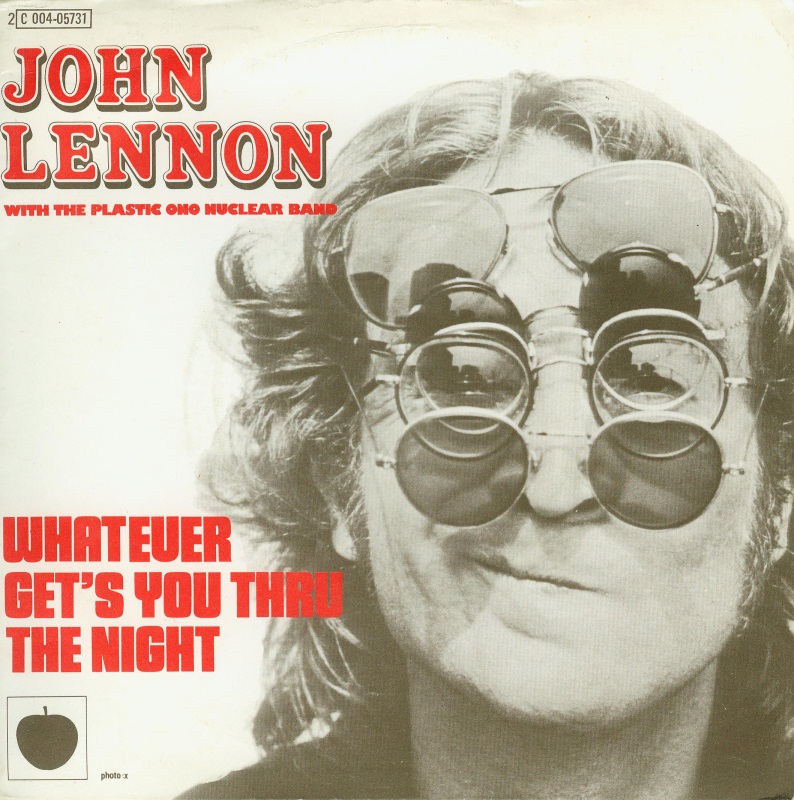
Heard this before I knew who John Lennon was and it is a good song…just not one of his best songs to me. It was his first solo number-one single. Many times the charts are about timing and it was the right time for this one to hit. In the video, you can see John walking around New York interacting with different people

Elton John sang backing vocals and also played piano on this track. He had a bet with Lennon that “Whatever Gets You Thru The Night” song would become a #1 hit. If it did Lennon would have to appear in concert with Elton. Lennon never thought it would be a #1 hit.

When it did reach number 1, Lennon made good on the wager by making a guest appearance at an Elton John concert on Thanksgiving night 1974 at Madison Square Garden in New York City. It turned out to be Lennon’s last live concert performance.

This very upbeat John Lennon song has a simple message…do whatever works for you. It was his first US #1 hit as a solo artist… he had another with “(Just Like) Starting Over,” which topped the chart in 1980 after his death.

John got the phrase by watching late-night TV. He was watching Reverend Ike, a famous black evangelist, who was saying, “Let me tell you guys, it doesn’t matter, it’s whatever gets you through the night.” Lennon loved it, wrote it down, and wrote a song about it.

This song peaked at #1 in the Billboard 100, #2 in Canada, and #36 in the UK. in 1974


From Songfacts

In December 2005, John and Yoko’s personal assistant May Pang told Radio Times: “At night he (John Lennon) loved to channel-surf, and he would pick up phrases from all the shows. One time, he was watching John loved it and said, “I’ve got to write it down or I’ll forget it.” He always kept a pad and pen by the bed. That was the beginning of Whatever Gets You Thru The Night.”

With this song, Lennon became the last of the Beatles to hit #1 US in their respective post-Beatles careers. By this time Paul McCartney had hit #1 three times, and George Harrison and Ringo Starr twice each.

Structurally, this is a rather unusual song: it’s really all chorus, separated by blasts of saxophone. Lennon alters the lines a bit in the various sections though:

Whatever gets you through the night
Whatever gets you through your life
Whatever gets you to the light

Don’t need a sword to cut through flowers
Don’t need a watch to waste your time
Don’t need a gun to blow you mind

These little lyrical alterations keep the song from sounding repetitive, even without verses.

In 1975 Lennon helped out on Elton’s John’s #1 cover of “Lucy In The Sky With Diamonds.” Lennon played guitar on that track and was credited as “Dr. Winston O’Boogie.”

In 1975 Lennon helped out on Elton’s John’s #1 cover of “Lucy In The Sky With Diamonds.” Lennon played guitar on that track and was credited as “Dr. Winston O’Boogie.”

What was it like recording the Walls And Bridges album? When we asked David Thoener, who was an engineer at the sessions, he told us: “It was amazing. Despite all of the personal pain John Lennon was in, (it was during his lost weekend) he was a consummate professional in the studio. Almost as if working kept him sane, through those difficult times. Working with him was quite an experience and something I am very glad to have been part of.”

This hit the top of the US charts, but it fell fast. It spent just three weeks in the Top 10 before dropping from 2-16 in November 1974. In 2004 Fantasia broke this record when after two weeks in the Top 10, “I Believe” dropped from #6-18.

Bobby Keys, who appears on many Rolling Stones recordings, played the tenor saxophone on this track. Ken Ascher played the Clavinet.

Whatever Gets You Thru The Night

Whatever gets you through the night
It’s all right, it’s all right
It’s your money or your life
It’s all right, it’s all right
Don’t need a sword to cut through’ flowers
Oh no, oh no

Whatever gets you through your life
It’s all right, it’s all right
Do it wrong, or do it right
It’s all right, it’s all right

Don’t need a watch to waste your time
Oh no, oh no

Hold me, darlin’, come on, listen to me
I won’t do you no harm
Trust me, darlin’, come on, listen to me
Come on, listen to me; come on, listen, listen

Whatever gets you to the light
It’s all right, it’s all right
Out of the blue, or out of sight
It’s all right, it’s all right
Don’t need a gun to blow you mind
Oh no, oh no

Hold me, darlin’, come on, listen to me
I won’t do you no harm
Trust me, darlin’, come on, listen to me
Come on, listen to me, come on, listen, listen

Beatles – While My Guitar Gently Weeps

This is one of the best songs from the White Album. George stated that the song was written at his mother’s home in Warrington in the north of England.

Harrison was reading I Ching, the Chinese book of changes, and decided to write a song about the first words he saw, which were “Gently Weeps.”

George wanted a sound he wasn’t getting so he called his friend Eric Clapton to play on the song. It also served another purpose. Much like bringing in Billy Preston on Let It Be…John and Paul behaved much better when a visitor came into the picture. Eric declined at first because he said that no one plays on Beatle records and the others wouldn’t like it. George told him it was his song and he wanted him on it. According to George, the atmosphere changed and the song took off from there.

After hearing the playback Eric said that there was a problem…his guitar wasn’t Beatley enough.’ So it was put through the ADT (Artificial Double Tracking) to wobble it up a bit.

George Harrsion:  ‘Eric’s going to play on this one,’ and it was good because that then made everyone act better…It’s interesting to see how nicely people behave when you bring a guest in, because they don’t really want everybody to know that they’re so bitchy…Paul got on the piano and played a nice intro and they all took it more seriously…Also it left me free to just play the rhythm and do the vocal…It was a similar situation when Billy Preston came later to play on ‘Let It Be’ and everybody was arguing. Just bringing a stranger in amongst us made everybody cool out.”

Mick Jagger: “It’s lovely, plaintive. Only a guitar player could write that. I love that song.”

George Harrison: “‘While My Guitar Gently Weeps’ was just a simple study based on the theory that everything has some purpose for being there at that given moment…So I open this book and I saw ‘gently weeps.’ I shut the book and then I started the tune.”


From Songfacts

Harrison often had to fight to get his songs on the albums. John Lennon and Paul McCartney were not interested in this song at first, but came around when Harrison brought Clapton to the studio.

This was the first song Ringo played on after leaving the band in frustration a few weeks earlier. He returned to find flowers on his drums to welcome him back.

Clapton used a Les Paul guitar on this track. Later in his career, he switched to a Fender Stratocaster.

Even though this was not a hit, it is one of the most enduring Beatles songs. It remains popular on classic rock radio.

When George Harrison arranged a trip to India for The Beatles to study Transcendental Meditation, they were joined by their good friend Donovan, a singer-songwriter who had hits with “Sunshine Superman” and “Mellow Yellow.” They shared a lot of ideas on this trip, many of which influenced The White Album. In our interview with Donovan, he said that John Lennon wanted to learn the clawhammer guitar style, while Harrison was interested in Donovan’s chord structures. The A minor descents Donovan showed him ended up in “While My Guitar Gently Weeps.”

After working on this song, Eric Clapton became good friends with John Lennon, and played with him on some of his solo work. When George Harrison threatened to leave The Beatles in 1969, Lennon was ready to replace him with Clapton.

This was originally recorded as an acoustic ballad with just Harrison on acoustic guitar and Paul McCartney on organ. This version can be found on some bootlegs and on The Beatles Anthology 3

The Demo Version

The Studio Version

While My Guitar Gently Weeps

I look at you all, see the love there that’s sleeping
While my guitar gently weeps
I look at the floor and I see it needs sweeping
Still my guitar gently weeps

I don’t know why nobody told you
How to unfold your love
I don’t know how someone controlled you
They bought and sold you

I look at the world and I notice it’s turning
While my guitar gently weeps
With every mistake we must surely be learning
Still my guitar gently weeps

I don’t know how you were diverted
You were perverted too
I don’t know how you were inverted
No one alerted you

I look at you all, see the love there that’s sleeping
While my guitar gently weeps
Look at you all
Still my guitar gently weeps

Beatles – Yer Blues

Great hard bluesy song on one of my favorite Beatle albums…The White Album. This is one reason I like the White Album so much. The variety it gives you is off the charts…but there is no mistaking who the band is in every song. The Beatles kept their style through the lush soft songs to the hard ones.

What I like about it is the rawness. This song and Helter Skelter have enough to spare.

The room they recorded this in was called Room 2A, which was next to the control room of EMI Studio Two and was a mere 8 ft. by 15.5 ft. The room had been used for storing four-track machines before it was emptied. It was very tight quarters for The Beatles once they set everything up. That added to the sound. They jammed together from 7pm to 5am and after 14 takes produced this song.

John Lennon wrote this in India while The Beatles were on a retreat learning meditation with the Maharishi.

Lennon was self-conscious about singing the blues.

John Lennon: “There was a self-consciousness about suddenly singing blues,” John continues. “Like everybody else, we were all listening to Sleepy John Estes and all that in art school (in the late ’50’s).  But to sing it, was something else. I was self-conscious about doing it.”

Ringo Starr: “We were just in an 8 foot room, with no separation, just doing what we do best: playing.”

A 9 minute version with Lennon, Eric Clapton, Keith Richards and Mitch Mitchell was performed on the Rolling Stones’ Rock ‘n’ Roll Circus. They called themselves the Dirty Mac.

Yer Blues

Yes, I’m lonely
Want to die
Yes, I’m lonely
Want to die
If I ain’t dead already
Oh, girl, you know the reason why

In the morning
Want to die
In the evening
Want to die
If I ain’t dead already
Oh, girl, you know the reason why

My mother was of the sky
My father was of the earth
But I am of the universe
And you know what it’s worth

I’m lonely
Want to die
If I ain’t dead already
Oh, girl, you know the reason why

The eagle picks my eye
The worm he licks my bone
I feel so suicidal
Just like Dylan’s Mr. Jones

Lonely
Want to die
If I ain’t dead already
Oh, girl, you know the reason why

Black cloud crossed my mind
Blue mist round my soul
Feel so suicidal
Even hate my rock and roll

Want to die
Yeah, want to die
If I ain’t dead already
Oh, girl, you know the reason why


John Lennon – Slippin’ and Slidin’ 1975

Sorry if you have seen this twice but it only posted for a second and then vanished.

I usually feature originals but I found this video of John covering Slippin and a Slidin’ that I never have seen before and I had to include it. My son listened to John Lennon’s Rock and Roll album (made up of entirely covers of mostly 50s Rock and Roll) and he flipped over it. Afterward, he played it so much I relistened to it and John’s love of that music really came through.

The song was on the Rock and Roll album released in 1975. I could listen to John sing the phone book.

The album made it to #6 in the Billboard 200, #6 in the UK, and #5 in Canada. Stand By Me made it to #20 in the Billboard 100. John Lennon did not make another album until Double Fantasy in 1980.


Slippin’ and Slidin’

Slippin’ and a slidin’, peepin’ and a hidin’, been told long time ago,
I been told, baby, you been bold, I won’t be your fool no more.

Oh, big conniver, nothing but a jiver, done got hip to your jive,
Slippin’ and a slidin’, peepin’ and a hidin’, won’t be your fool no more.

Oh Malinda, she’s a solid sender, you know you better surrender,
Slippin’ and a slidin’, peepin’ and a hidin’, won’t be your fool no more.

John Lennon – Love

A simplistic beautiful song by John Lennon. Love was on the John Lennon album Plastic Ono Band. Phil Spector produced this as well as playing the piano on it.

The Lettermen recorded the song in 1971. This single became a top 20 hit on the Japanese Oricon singles chart and hit number 42 on the US Billboard Hot 100 chart, becoming the only charting version of the song in the US and the last charting single of the group’s career.

Other covers included The Dream Academy, Barbara Streisand, and many others.

John’s version charted when he was killed in the UK at #41  in 1981. It also charted at #58 in Japan in 1998.

The Plastic Ono Band album peaked at #6 in the Billboard Album Charts, #8 in the UK, and #1 in Canada in 1971.


Love

Love is real, real is love
Love is feeling, feeling love
Love is wanting to be loved

Love is touch, touch is love
Love is reaching, reaching love
Love is asking to be loved

Love is you
You and me
Love is knowing
We can be

Love is free, free is love
Love is living, living love
Love is needing to be loved

Beatles – Day Tripper

One of the greatest rock guitar riffs…this was credited to Lennon – McCartney and they both worked on it.

This was released as a double-A-sided single with “We Can Work It Out.” It peaked at #1 in the UK and #5 in the Billboard 100.

“We Can Work It Out” got more airplay in the US. In America, the single was released on the same day as the Rubber Soul album, although neither song was on that album. The Beatles were popular enough to support the output…they thought of releasing singles and albums as two different things. What other bands would not place both of these songs on their new album?

A great rock song that still sounds good today.

Paul McCartney: “That was a co-written effort; we were both there making it all up but I would give John the main credit. Probably the idea came from John because he sang the lead, but it was a close thing. We both put a lot of work in on it.”

John Lennon: “Day Trippers are people who go on a day trip, right? Usually on a ferryboat or something. But the song was kind of – you’re just a weekend hippie. Get it?”


From Songfacts

John Lennon’s lyrics were his first overt reference to LSD in a Beatles song. The song can be seen as Lennon teasing Paul McCartney about not taking acid.

In 2004, Paul McCartney did an interview with the Daily Mirror newspaper where he explained that drugs influenced many of The Beatles’ songs. He singled this one out as being about acid (LSD), but also said that people often overestimate the influence of drugs on their music.

The Beatles had some fun with the line, “She’s a big teaser,” which they jokingly worked up as “she’s a prick teaser.” In context with the next line, “She took me half the way there,” it’s pretty clear what’s going on. The group managed to slip in subtle sexual innuendo in a few of their songs, including “I’m Down” and “Please Please Me.”

A short promotional film of The Beatles lip-synching to this song was made for the TV special The Music Of Lennon and McCartney, which first aired December 17, 1965 in the UK. It was one of the first music videos. 

Jimi Hendrix sometimes covered this at his concerts.

James Taylor did a cover version on his album Flag

With a packed schedule and feverish demand for TV appearances, The Beatles made music videos for five on their songs, including this one, at a one-day shoot at Twickenham Film Studios in London on November 23, 1965. They did three different versions of “Day Tripper,” lip-synching the song while having fun with the set pieces.

Day Tripper

Got a good reason
For taking the easy way out
Got a good reason
For taking the easy way out now
She was a day tripper
One way ticket, yeah
It took me so long to find out
And I found out

She’s a big teaser
She took me half the way there
She’s a big teaser
She took me half the way there, now
She was a day tripper
One way ticket, yeah
It took me so long to find out
And I found out
Ah, ah, ah, ah, ah, ah

Tried to please her
She only played one night stand
Tried to please her
She only played one night stand, now
She was a day tripper
Sunday driver, yeah
It took me so long to find out
And I found out

Day tripper, day tripper, yeah

A Matter of…Pee

Those crazy 70’s rock stars…a note left in red ink by no other than John Lennon.

This is a note from an upset John Lennon to Phil Spector. It seems that Keith Moon and Harry Nilsson supposedly…relieved themselves in the recording console in an unnamed studio. John was quite certain of that fact. The studio was threatening to evict them but John wasn’t having it. John didn’t date the note but it was from John Lennon’s “lost weekend” period between 73-75… the note sold for over $88,000.

This is what the note said.

“Phil –

See you around 12:30

Should you not yet know it was Harry and Keith who pissed on the console. Jerry now wants to evict us or that’s what Capitol tells us. Anyway tell him to bill Capitol for the damage if any. I can’t be expected to mind adult rock stars nor can May (Pang, Lennon’s personal assistant) besides she works for me not A+M. I’m about to p..s off to Record Plant (another recording studio) because of this crap.”

John Lennon Letter to Phil Spector Going Up For Auction

There are a million articles on this subject…here is one of the more complete ones.

https://faroutmagazine.co.uk/john-lennon-keith-moon-phil-spector-a-matter-of-pee-letter/

John Lennon – Slippin’ and a Sliding’

I usually feature originals but I found this video of John covering Slippin and a Slidin’ that I never have seen before and I had to include it. My son listened to John Lennon’s Rock and Roll album (made up of entirely covers of mostly 50s Rock and Roll) and he flipped over it. Afterward, he played it so much I relistened to it and John’s love of that music really came through.

The song was on the Rock and Roll album released in 1975. I could listen to John sing the phone book.

The album made it to #6 in the Billboard 200, #6 in the UK, and #5 in Canada. Stand By Me made it to #20 in the Billboard 100. John Lennon did not make another album until Double Fantasy in 1980.


Slippin’ and Slidin’

Slippin’ and a slidin’, peepin’ and a hidin’, been told long time ago,
I been told, baby, you been bold, I won’t be your fool no more.

Oh, big conniver, nothing but a jiver, done got hip to your jive,
Slippin’ and a slidin’, peepin’ and a hidin’, won’t be your fool no more.

Oh Malinda, she’s a solid sender, you know you better surrender,
Slippin’ and a slidin’, peepin’ and a hidin’, won’t be your fool no more.

John Lennon – Cold Turkey

Not the most pleasant song available from John but it does get your attention. I do like the guitar sound that John and Eric Clapton get in this song.

This song is about drug withdrawal. Quitting “Cold Turkey” means abruptly stopping drug use and the effect it has on your body and mind. John Lennon quit cold turkey because he wanted to get off drugs and start a family with Yoko.

John wanted to record this with the Beatles but they rejected it so he went off and recorded it on his own.

Eric Clapton and John played guitar on this, Ringo drummed, and Klaus Voormann played the bass, It was released as a single in 1969 as The Plastic Ono Band. The song peaked at #30 in the Billboard 100, #14 in the UK, and #30 in Canada.

This was Lennon’s second single away from The Beatles. “Give Peace A Chance” was released a few months earlier. This was also the first song John took complete credit for as he dropped the McCartney from Lennon and McCartney.

Its first public performance on September 13, 1969, was recorded and released on the Live Peace in Toronto 1969 album by the Plastic Ono Band.

John Lennon: “Cold Turkey was banned. They thought it was a pro-drugs song. But I’ve always expressed what I’ve been feeling or thinking at the time. So I was just writing the experience I’d had of withdrawing from heroin. To some it was a rock ‘n’ roll version of The Man With The Golden Arm because it showed Frank Sinatra suffering from drug withdrawal.”

From Songfacts

Lennon performed this on September 13, 1969 at The Toronto Rock and Revival Show, where he introduced his Plastic Ono Band (at least the configuration of it for this show). Eric Clapton was on guitar, Klaus Voorman on bass, and Alan White on drums. Yoko Ono was also part of the act, and she made an impact during “Cold Turkey.” As the song played, she emerged from a bag on stage, stepped up to a microphone, and made turkey-sounding noises (not out of character). The set was released as a live album called Live Peace In Toronto 1969.

Eric Clapton played some of the guitar on this. Lennon asked Clapton to join The Plastic Ono Band, but Eric declined.

Lennon wrote and recorded this song before attending Arthur Janov’s Primal Scream therapy workshop, which played a part in his song “Mother.” The screams he used in “Cold Turkey,” he was actually emulating Yoko singing.

When John Lennon decided to return his MBE (Member of the British Empire) award on November 25, 1969, he sent it to Queen Elizabeth II with a note explaining, “I am returning this MBE in protest against Britain’s involvement in the Nigeria-Biafra thing, against our support of America in Vietnam and against ‘Cold Turkey’ slipping down the charts.”

Cold Turkey

Temperature’s rising
Fever is high
Can’t see no future
Can’t see no sky

My feet are so heavy
So is my head
I wish I was a baby
I wish I was dead

Cold turkey has got me on the run
My body is aching
Goose-pimple bone
Can’t see no body
Leave me alone

My eyes are wide open
Can’t get to sleep
One thing I’m sure of
I’m at the deep freeze

Cold turkey has got me on the run

Thirty-six hours
Rolling in pain
Praying to someone
Free me again

Oh I’ll be a good boy
Please make me well
I promise you anything
Get me out of this hell

Cold turkey has got me on the run

Beatles – Tomorrow Never Knows

Turn off your mind relax and float down stream… 

Like “A Hard Day’s Night,” the title came from an expression Ringo Starr used. Ringo’s turn of the phrase took the edge off the heavy philosophical lyrics. Working titles for the song before Ringo gave them inspiration were “Mark I” and “The Void.”

It was on what perhaps is the greatest Beatle album…Revolver.

The inspiration for the song came from a book entitled “The Psychedelic Experience: A Manual Based On The Tibetan Book Of The Dead.” This book was published in August of 1964 by Timothy Leary, Ralph Metzner, and Richard Alpert

The Beatles made “tape loops”…short tapes of grandfather clocks, sitars, seagulls, laughter, and other things. They brought them to the studio and put them together at different speeds, played forward, and backward. That is what you hear at the beginning.

John wanted his voice to…sound like the Dalai Lama chanting from a mountaintop, miles away or like a group of Tibetan monks chanting on a mountain top. Well, that was impractical so John suggested they suspend him from a rope in the middle of the studio ceiling, put a mike in the middle of the floor, give him a push and he’d sing as he went around and around. They didn’t do that either but they ended up putting Lennon’s voice through a Leslie Speaker Cabinet (a rotating speaker cabinet) and that made John happy.

Tomorrow Never Knows was a great innovation. It opened the door to Sgt Pepper and was one of the great psychedelic rock songs.

John Lennon on LSD: “Leary was the one going round saying, ‘take it, take it, take it,’” Lennon remembered in 1980, “and we followed his instructions in his ‘how to take a trip’ book. I did it just like he said in the book, and then I wrote ‘Tomorrow Never Knows,’ which was almost the first acid song: ‘Lay down all thought, surrender to the void,’ and all that sh*t which Leary had pinched from ‘The Book Of The Dead.’”

From Songfacts

John Lennon wrote this, and described it as “my first psychedelic song.”

The book is a reinterpretation of the Tibetan Book of the Dead and a guide to understanding it through psychedelic drugs. Lennon would read it while tripping on LSD, and according to his biographer Albert Goldman, he recorded himself reading from the book, played it back while tripping on LSD, and wrote the song.

The most overt reference to the book is the line:

Turn off your mind
Relax and float downstream
It is not dying

The book states: “Whenever in doubt, turn off your mind, relax, float downstream.”

To accompany the psychedelic imagery in Lennon’s lyric, each Beatle created strange sounds which were mixed in throughout the recording, often backward and in different speeds. Their producer, George Martin, was older and more experienced, but he allowed the group to experiment in the studio as much as they pleased.

The night before they recorded this song, Paul McCartney created 16 tape loops of guitar sounds and odd vocals that he brought in to the studio to create some of the effects. Several people remember standing around the room holding pencils for the tape to loop around and back into the recording machine as the various sound effects and instrumentation were faded in and out.

John Lennon used only one chord in this whole song, which creates a hypnotic feeling. For his vocals, he asked producer George Martin to make him sound like the Dali Lama.

Drugs influenced the creation of this song, but the Beatles recorded sober. “We would have the experiences and then bring that into the music later,” Ringo Starr explained.

George Harrison played a droning Indian instrument called a tambura on this track, which added an ethereal feel to the soundscape.

The musical break that comes in about a minute into this song consists mostly of guitars that were heavily processed. This wild passage makes use of just about every studio trick at their disposal, including passing from one channel to the other. Those listening in mono (often in cars) didn’t get the full experience.

This was the first track recorded for the Revolver album, but the last one on the tracklist.

On May 6, 2012, this song was featured in an episode of the popular American TV series Mad Men. The episode was set in 1966, and part of the plot was the ad agency in the show helping a client capitalize on Beatlemania. This was a big deal, since Beatles songs are very rarely licensed for TV shows – at least in their original versions. Cover versions and performances (think American Idol) show up from time to time, since those just have to be approved by Sony/ATV, which owns the publishing rights. Getting permission to use an actual Beatles recording requires permission from Apple Corp, which is controlled by The Beatles and their heirs.

The Wall Street Journal reported the payment for the song at $250,000, and that Mad Men creator Matthew Weiner had to reveal to Apple exactly how the song would be used, which was a big deal since he is very secretive about scripts. In the episode, the main character Don Draper has trouble adapting to changing musical times. He plays this song to see what all the fuss is about, and after a character-developing montage while the song is playing, he switches it off. The song then comes back to play over the closing credits.

Phil Collins covered this on his debut solo album, Face Value, in 1981, using synthesizers to create many of the unusual sounds. Like The Beatles did on Revolver, Collins used it to close the album. 

Our Lady Peace remade this song for the soundtrack to the movie The Craft. It’s played during the opening credits. 

Oasis pays tribute to this song in “Morning Glory” with the line:

Walking to the sound of my favorite tune
Tomorrow never knows what it doesn’t know too soon

The Beatles were a huge influence on Oasis.

This song is featured on the 2006 Beatles album Love (a soundtrack to the Cirque du Soleil show based on their music) remixed with “Within You Without You.” 

Tomorrow Never Knows

Turn off your mind relax and float down stream
It is not dying, it is not dying

Lay down all thoughts, surrender to the void
It is shining, it is shining

Yet you may see the meaning of within
It is being, it is being

Love is all and love is everyone
It is knowing, it is knowing

And ignorance and hate mourn the dead
It is believing, it is believing

But listen to the colour of your dreams
It is not leaving, it is not leaving

So play the game “Existence” to the end
Of the beginning, of the beginning

Toronto Rock and Roll Revival 1969

Since I posted Paul McCartney’s Concert for Kampuchea yesterday I thought I would concentrate on the festival John Lennon popped up at in 1969… The Toronto Rock and Roll Revival. Unlike Kampuchea which was spread out on multiple days and nights, this festival was held on one day September 13, 1969.

John Lennon and the Plastic Ono Band just played fifties songs plus John’s new song that Beatles rejected…Cold Turkey. The reason for the fifties’ songs was because the band had limited time to rehearse and they wanted to do songs they all knew.

It was a great festival lineup but it’s remembered mostly by John Lennon’s participation. The Doors were the headliners and John only agreed to do it

The concert was conceived by promoters John Brower and Ken Walker with financial backing from Eaton’s department store but stymied by poor ticket sales, the venture began to lose support. The festival was almost canceled but Brower called Apple Records in the UK to ask John Lennon to emcee the concert. Lennon agreed to appear on the condition he would be allowed to perform.

The Lennons flew in from England with a makeshift band that included Eric Clapton, Klaus Voormann, Alan White, and Yoko. They arrived at the backstage area at about 10 p.m, while Cat Mother and the All Night Newsboys were singing Good Old Rock ‘n’ Roll to an audience of about 20,000.

Lennon was quoted as saying “I threw up for hours until I went on” because it had been three years since he played live in a concert setting. The band went on and did a good job…ragged but it was a hastily assembled band with only a rehearsal on the plane ride and backstage.

John Lennon:  “The ridiculous thing was that I didn’t know any of the lyrics. When we did Money and Dizzy, I just made up the words as I went along. The band was bashing it out like hell behind me. Yoko came on stage with us, but she wasn’t going to do her bit until we’d done our five songs….Then after Money there was a stop, and I turned to Eric and said, ‘What’s next?’ He didn’t know either, so I just screamed out ‘C’mon!’ and started into something else.”

Little Richard: “I remember the show that people were throwing bottles at Yoko Ono. They were throwing everything at her. Finally, she had to run off the stage. Oh, boy, it was very bad.”

John Lennon: And we tried to put it out on Capitol, and Capitol didn’t want to put it out. They said, ‘This is garbage; we’re not going to put it out with her screaming on one side and you doing this sort of live stuff. And they just refused to put it out. But we finally persuaded them that, you know, people might buy this. Of course it went gold the next day.”

John Lennon and Yoko’s setlist

  • Blue Suede Shoes.
  • Money (That’s What I Want)
  • Dizzy Miss Lizzy.
  • Yer Blues.
  • Cold Turkey.
  • Give Peace a Chance.
  • Don’t Worry Kyoko (Mummy’s Only Looking for Her Hand in the Snow)
  • John John (Let’s Hope for Peace)

Performers 

John Lennon and the Plastic Ono Band

Whiskey Howl

Bo Diddley

Chicago

Junior Walker and the All Stars

Tony Joe White

Alice Cooper

Chuck Berry

Cat Mother and the All Night News Boys

Jerry Lee Lewis

Gene Vincent

Little Richard

Doug Kershaw

The Doors

Kim Fowley The Master of Ceremonies

Screaming Lord Sutch

Edward Sharpe & The Magnetic Zeros – Janglin’

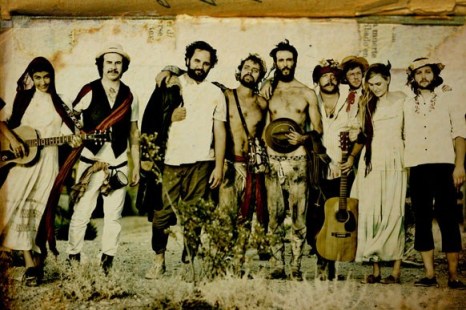
Alex Ebert and Jade Castrinos starting this hippie type band in 2007. The consisted of 10-12 members at once. They tried to have a so-called campfire feel. If a musician messed up that was alright. Musicians would drop and reappear on a tour. They had one song that got a ton of airplay called Home in 2010.

This song resembles Instant Karma by John Lennon.

Janglin’ was used in commercials and it spiked its popularity in 2010.

In 2014, the band parted ways with Jade Castrinos, changing the dynamic of the band considerably…she and Ebert had broken up.

The band is named after a character from a novel Ebert was writing – Edward Sharpe is an otherworldly figure who comes to Earth to offer enlightenment to the masses, but finds himself getting distracted by the beautiful women.

Most listeners who weren’t buying this hippie vibe agreed that it was convincing, and even after they found an audience with this song, Ebert stayed steady to his creed, often blurring the lines between Edward Sharpe and his true self.


Janglin’

Well our mama’s they left us
And our daddy’s took a ride
And we walked out of the castle
And we held our head up high
Well we once were the Jesters
In your Kingdom by the sea
And now we’re out to be the masters
For to set our spirits free – set free

[Chorus]
We Want to feel ya!
We don’t mean to kill ya!
We come back to Heal ya – Janglin soul
Edward and the Magnetic Zeros

Well your wartime is Funny
Your guns don’t bother me
I said we’re out to prove the truth of
The man from Galilei
Well your laws are for Dummies, yes
Your institutions dead
I say we’re out to blow the trumpet
To wake you all from bed – from bed

[Chorus]

We carry the mail
We carry it home
We carry the Mail now
We carry it home
Scare up your Letters
Give us your Tails
Blowing like Whale now to
Magnetic Ears
WOW!

U2 – Sunday Bloody Sunday

Of all the U2 songs this one is probably on the top of my list. The drum pattern sounds like they are marching off to battle. It’s raw and you can hear the conviction in what Bono is singing. The Edge’s guitar is crunchy and perfect.

The drum-beat was composed by Larry Mullen Jr., which was recorded in a staircase of their Dublin recording studio because producer Steve Lillywhite was trying to get a full sound with natural reverb.

“Bloody Sunday” was a term given to an incident, which took place on 30th January 1972 in Derry, Northern Ireland where British Soldiers shot 28 unarmed civilians who were peacefully protesting against Operation Demetrius. Thirteen were killed outright, while another man lost his life four months later due to injuries. It was reported that many of the victims who were fleeing the scene were shot at point-blank range.

The first person to have addressed these events musically was John Lennon who composed “Sunday Bloody Sunday” and released it on his third Solo album “Sometime In New York City”. His version of the song directly expresses his anger towards the massacre

The song peaked at #7 in the US Billboard Top Tracks Chart.


From Songfacts

There are two Bloody Sundays in Irish history. The first was in 1920 when British troops fired into the crowd at a football match in Dublin in retaliation for the killing of British undercover agents. The second was on January 30, 1972, when British paratroopers killed 13 Irish citizens at a civil rights protest in Derry, Northern Ireland. The song is more about the second Bloody Sunday. 

The lyrics are a nonpartisan condemnation of the historic bloodshed in Ireland – politics is not something you want to discuss in Ireland. Bono’s lyrics in the song are more about interpersonal struggles than about the actual Bloody Sunday events.

Bono used to introduce this at concerts by saying: “This is not a rebel song.”

U2 has played several times at Croke Park, the site of the 1920 Bloody Sunday in Dublin. They first performed there in 1985 on the Unforgettable Fire tour.

Bono started writing this with political lyrics condemning the Irish Republican Army (the IRA), a militant group dedicated to getting British troops out of Northern Ireland. He changed them to point out the atrocities of war without taking sides.

While performing this, Bono would wave a white flag as a call for peace.

Bono was trying to contrast the 1972 Bloody Sunday massacre with Easter Sunday, a peaceful day Protestants and Catholics both celebrate.

The music video for this song was taken from a live performance that’s part of their Live at Red Rocks: Under a Blood Red Sky concert film. The concert took place June 5, 1983 at Red Rocks Amphitheatre in Colorado. Directed by Gavin Taylor, it captures the live energy of the band as they fight through the wind and rain to deliver a high-energy performance. At this time, U2 liked their videos shot outdoors in a natural setting.

Larry Mullen’s drums were recorded in a staircase of their Dublin recording studio. Producer Steve Lillywhite was trying to get a full sound with a natural echo.

Steve Wickham, who went on to join The Waterboys, played the electric fiddle on this track.

This took on new meaning as the conflict in Northern Ireland continued through the ’90s.

U2 recorded this in Denver for their Rattle And Hum movie on November 8, 1987. It was the same day as the Enniskillen massacre, where 13 people in Northern Ireland were killed by a bomb detonated by the Irish Republican Army (the IRA). Angered by these events, U2 gave a very emotional performance.

The version on U2’s live album Under A Blood Red Sky was recorded at a show in Sankt Goarshausen, Germany on August 20, 1983.

In 2003, The Edge inducted The Clash into the Rock and Roll Hall of Fame. In his speech, he said, “There is no doubt in my mind that “Sunday Bloody Sunday” wouldn’t – and couldn’t – have been written if not for The Clash.”

A live version of this song plays during the end credits of the 2002 movie Bloody Sunday, which is a documentary-style drama recreating the events of January 30,1972 in Derry, Ireland. It stars James Nesbitt (you may remember him as “Pig Finn” from Waking Ned Devine) as a local Member of Parliament who is involved with the Civil Rights Movement.

Sunday Bloody Sunday

Yeah
Hmm hmm

I can’t believe the news today
Oh, I can’t close my eyes
And make it go away
How long
How long must we sing this song?
How long? How long

’cause tonight we can be as one
Tonight

Broken bottles under children’s feet
Bodies strewn across the dead end street
But I won’t heed the battle call
It puts my back up
Puts my back up against the wall

Sunday, bloody Sunday

(Oh, let’s go)

And the battle’s just begun
There’s many lost, but tell me who has won?
The trench is dug within our hearts
And mothers, children, brothers, sisters torn apart

Sunday, bloody Sunday

How long
How long must we sing this song?
How long? How long

’cause tonight we can be as one
Tonight tonight

Sunday, bloody Sunday

(Yeah, let’s go)

Wipe the tears from your eyes
Wipe your tears away
Oh, wipe your tears away
I wipe your tears away
(Sunday, bloody Sunday)
I wipe your blood shot eyes
(Sunday, bloody Sunday)

Sunday, bloody Sunday (Sunday, bloody Sunday)

(Yeah, let’s go)

And it’s true we are immune
When fact is fiction and TV reality
And today the millions cry
We eat and drink while tomorrow they die

(Sunday, bloody Sunday)

The real battle just begun
To claim the victory Jesus won
On

Sunday, bloody Sunday

View at Medium.com

View at Medium.com

View at Medium.com

Beatles – Don’t Let Me Down

This song was the B side to Get Back. This song was credited to John and Paul but it’s a clear John song that he wrote directly to Yoko. Don’t Let Me Down should have been on the Let It Be album in my opinion. It would have made it a stronger album but Phil Spector decided to took it out.

This one is one of my favorite late Lennon Beatle songs. I liked the time signature change in this song. All measures are in 4/4 time except for the eighth measure, which is in 5/4, the extra beat needed in order to fit in John’s first verse lyric “Nobody ever loved my like she…

The song peaked at #35 in the Billboard 100 in 1969. It’s a powerful and sincere love song by John.

Billy Preston, who The Beatles met when he was on tour with Little Richard in 1962, played keyboards on this track. Preston was one of the few outside musicians (excluding members of orchestras) to play on any Beatles song.

George Harrison brought Preston in to play on the sessions. It was a smart move by George. Not only did Preston bring his talents in the mix but his presence helped smooth the tensions the band had at the time. He did the same thing on the White Album sessions by bringing Eric Clapton in to play on While My Guitar Gently Weeps.

From Songfacts

John Lennon dedicated this song to Yoko Ono. It was the first song he wrote for Yoko, whom he married on March 20, 1969.

This was one of the songs The Beatles played at their impromptu rooftop concert in 1969. The concept of the album was The Beatles performing new songs for a live audience, with film footage of their rehearsals used to make a documentary TV special. George Harrison didn’t like the idea, and when things got tense during recording, he left the sessions and returned only after they agreed to cancel the live performance. The Beatles were still under contract to make another movie, so they decided to use the rehearsal footage as their last movie, Let It Be. In order to end the movie, they needed a big scene, so they went to the roof of Apple Records and started playing. John Lennon forgot some of the words to this song while the Beatles were playing their rooftop concert. 

When Apple Records remixed the album Let It Be and released it in 2003 as Let It Be… Naked, this was included. An alternate take was used. It was the only song on the new album that did not appear on the original.

Lennon asked Ringo to crash his cymbals loudly to “give me the courage to come in screaming.”

Billy Corgan’s band Zwan covered this. They rearranged the entire song so only the melody was the same. They added a guitar solo at the end. Others artists to cover the song include Randy Crawford, Crown of Thorns, Dylan & Clark, Garbage, Gene, Marcia Griffiths, Taylor Hicks, Julian Lennon, Annie Lennox, Maroon 5, Matchbox Twenty, The Persuasions, Phoebe Snow, Stereophonics and Paul Weller. >>

Garbage lead singer Shirley Manson is from Edinburgh, and in 1999 they played this song at the opening of the newly-elected Scottish Parliament, which was celebrating autonomy after 300 years of British rule.

Don’t Let Me Down

Don’t let me down, don’t let me down

Nobody ever loved me like she does
Oh, she does, yeah, she does
And if somebody loved me like she do me
Oh, she do me, yes, she does

Don’t let me down, don’t let me down

I’m in love for the first time
Don’t you know it’s gonna last
It’s a love that lasts forever
It’s a love that had no past

Don’t let me down, don’t let me down

And from the first time that she really done me
Oh, she done me, she done me good
I guess nobody ever really done me
Oh, she done me, she done me good

Don’t let me down, don’t let me down
Don’t let me down