This song was the B side to Get Back. This song was credited to John and Paul but it’s a clear John song that he wrote directly to Yoko. Don’t Let Me Down should have been on the Let It Be album in my opinion. It would have made it a stronger album but Phil Spector decided to took it out.
This one is one of my favorite late Lennon Beatle songs. I liked the time signature change in this song. All measures are in 4/4 time except for the eighth measure, which is in 5/4, the extra beat needed in order to fit in John’s first verse lyric “Nobody ever loved my like she…”
The song peaked at #35 in the Billboard 100 in 1969. It’s a powerful and sincere love song by John.
Billy Preston, who The Beatles met when he was on tour with Little Richard in 1962, played keyboards on this track. Preston was one of the few outside musicians (excluding members of orchestras) to play on any Beatles song.
George Harrison brought Preston in to play on the sessions. It was a smart move by George. Not only did Preston bring his talents in the mix but his presence helped smooth the tensions the band had at the time. He did the same thing on the White Album sessions by bringing Eric Clapton in to play on While My Guitar Gently Weeps.
From Songfacts
John Lennon dedicated this song to Yoko Ono. It was the first song he wrote for Yoko, whom he married on March 20, 1969.
This was one of the songs The Beatles played at their impromptu rooftop concert in 1969. The concept of the album was The Beatles performing new songs for a live audience, with film footage of their rehearsals used to make a documentary TV special. George Harrison didn’t like the idea, and when things got tense during recording, he left the sessions and returned only after they agreed to cancel the live performance. The Beatles were still under contract to make another movie, so they decided to use the rehearsal footage as their last movie, Let It Be. In order to end the movie, they needed a big scene, so they went to the roof of Apple Records and started playing. John Lennon forgot some of the words to this song while the Beatles were playing their rooftop concert.
When Apple Records remixed the album Let It Be and released it in 2003 as Let It Be… Naked, this was included. An alternate take was used. It was the only song on the new album that did not appear on the original.
Lennon asked Ringo to crash his cymbals loudly to “give me the courage to come in screaming.”
Billy Corgan’s band Zwan covered this. They rearranged the entire song so only the melody was the same. They added a guitar solo at the end. Others artists to cover the song include Randy Crawford, Crown of Thorns, Dylan & Clark, Garbage, Gene, Marcia Griffiths, Taylor Hicks, Julian Lennon, Annie Lennox, Maroon 5, Matchbox Twenty, The Persuasions, Phoebe Snow, Stereophonics and Paul Weller. >>
Garbage lead singer Shirley Manson is from Edinburgh, and in 1999 they played this song at the opening of the newly-elected Scottish Parliament, which was celebrating autonomy after 300 years of British rule.
Don’t Let Me Down
Don’t let me down, don’t let me down Don’t let me down, don’t let me down
Nobody ever loved me like she does Oh, she does, yeah, she does And if somebody loved me like she do me Oh, she do me, yes, she does
Don’t let me down, don’t let me down Don’t let me down, don’t let me down
I’m in love for the first time Don’t you know it’s gonna last It’s a love that lasts forever It’s a love that had no past
Don’t let me down, don’t let me down Don’t let me down, don’t let me down
And from the first time that she really done me Oh, she done me, she done me good I guess nobody ever really done me Oh, she done me, she done me good
Don’t let me down, don’t let me down Don’t let me down
This is the version I like best…and I love Ben E. King’s version. I think it’s the reverb and John’s voice that makes this one the one I listen to the most.
“Stand By Me” was the name of a gospel hymn written by the Philadelphia minister Charles Albert Tindley in 1905. His hymn became popular in churches throughout the American South and was recorded by various gospel acts in the 1950s. The most popular adaptation was by The Staple Singers, who recorded it in 1955. It was this version that Ben E. King heard; he pushed The Drifters to record it, but the group’s manager rejected it.
Ben E. King, Jerry Leiber, and Mike Stoller wrote the song based off the old hymn.
This was on John Lennon’s Rock and Roll album (made up of entirely covers of mostly 50s Rock and Roll). This version peaked at #20 in the Billboard 100 in 1975 for John…and at #4 in 1961 for Ben E. King.
Ben E King: “David Ruffin from the Temptations did a great version of it. And, of course, the one that held up in my head the most was John Lennon’s version. He took it and made it as if it should have been his song as opposed to mine.
From Songfacts
Ben E. King recorded this shortly after leaving The Drifters in 1960. It gave him a solid reputation as a solo artist.
After leaving The Drifters, King auditioned for the wildly successful songwriting/production team of Jerry Leiber and Mike Stoller, singing a few popular songs before doing what he had of “Stand By Me,” which was just a few lines of lyrics with some humming to fill in the words. He agreed to collaborate on the song with Leiber and Stoller, who gave it a more contemporary sound and polished it into a hit. The bassline at the beginning was Stoller’s idea.
The song was credited as being written by Leiber, Stoller and King. Charles Albert Tindley, who composed the original hymn, was left off the composer credits as his work had been sufficiently transformed. This wasn’t the first time Tindley was omitted from the credits of a song he originated: he also wrote “I’ll Overcome Someday,” which eventually became “We Shall Overcome.”
In an interview with the TV station WGBH, Jerry Leiber explained: “Ben E. is not a songwriter, he’s a singer, he might have written two songs in his whole career. I would guess that this comes out of church. The whole ‘stand by me’ and the way the release takes out, it sounds like a gospel-type song.”
This was used in the 1986 movie of the same name starring River Phoenix. The film was based on a short novel by Stephen King called The Body, but that title was a little to gruesome for a movie hoping to appeal to a wide audience.
Rob Reiner, who directed the film, met the song’s co-writter Mike Stoller at a party, and convinced him to play some of his classic songs on a piano while Reiner sang along. Months later, Reiner got the idea to use “Stand By Me” as the title and incorporate it into the movie when he heard the song at his house. This played up the friendship of the young boys in the film and downplayed the role of the dead body they find, which was a good move at the box office. The movie was a hit and propelled the song back to the charts, introducing the track to a new generation.
When this was first released in 1960, it charted US #4 and UK #27. When it was re-released to coincide with the movie, it hit US #9 and UK #1. Now a hit with two generations, the song started showing up at weddings and other special occasions, becoming a timeless classic.
The movie Stand By Me is set in 1959 – a little before this song was released, but pretty close. When Rob Reiner asked to use the song, its composers Leiber and Stoller thought he would want to re-record it with a contemporary artist like Tina Turner, but Reiner wanted the original so it fit the era. It was surprising then when the song vaulted up the charts, since it was the exact same song released in 1961.
According to BMI, this was the fourth most-played track of the 20th Century on American radio and TV.
This song has made an astounding nine appearances on the US Hot 100, plus two more that “bubbled under.” Here’s the breakdown:
1961, #4 – Ben E. King 1964, #102 – Cassius Clay 1965, #75 – Earl Grant 1967, #12 – Spyder Turner 1970, #61 – David & Jimmy Ruffin 1975, #20 – John Lennon 1980, #22 – Mickey Gilley 1985, #50 – Maurice White 1986, #9 – Ben E. King (re-release) 1998, #82 – 4 The Cause 2010, #109 – Prince Royce
Sean Kingston sampled this on his 2007 hit “Beautiful Girls.” Other songs that have used pieces of “Stand By Me” include “A Little Bit of Soap” by De La Soul (1989), “My Darlin'” by Miley Cyrus feat. Future (2013), and “Marvin Gaye” by Charlie Puth (2015).
Dionne Warwick sang backup on this song as part of a trio known as The Gospelaires. Soon after, songwriter Burt Bacharach helped Warwick launch a successful solo career.
This was not released on an album until it had been out as a single for two years.
Cassius Clay (who would later change his name to Muhammad Ali) recorded this in 1963 on an album called I Am The Greatest!. In 1964, when he beat Sonny Liston to become the heavyweight boxing champ, Clay’s version of “Stand By Me” was released as a single, with his spoken-boast song called “I Am The Greatest” as the flip side. The single made the Billboard charts, bubbling under at #102 on the Hot 100.
During an interview with Spinner UK, Now there’s a [Dominican] singer named Prince [Royce] – he has a version out there that I think is brilliant. And then there’s Sean Kingston, with ‘Beautiful Girls’ [chuckles] – that’s another one that did well. So many of them have done well. As a songwriter, it pleases me a lot – you don’t always have a chance to write a song that people can relate to.”
The Bachata singer Prince Royce released a cover of this song (with mostly Spanish lyrics) in 2010 as his first single. Royce had been selling cell phones in New York City when he started shopping his demo CD around. When he got little reaction to the songs he wrote, he decided to record one that was familiar, and he chose “Stand By Me” because it was one of his favorite songs. The ploy worked, as it garnered attention and jumpstarted his career.
Florence + The Machine covered the song for Final Fantasy XV. Her version features in the video game’s trailer. “I’ve always seen Final Fantasy as mythical, beautiful and epic,” Florence Welch said. “‘Stand By Me’ is one of the greatest songs probably of all time and you can’t really improve on it, you just have to make it your own. For me it was just about bringing the song into the world of Florence + The Machine and the world of Final Fantasy.”
In England, this was used in commercials for Levi’s jeans in 1987 before the movie was released there. The exposure helped lift the song to #1 UK. “When A Man Loves A Woman” by Percy Sledge, used in the same group of Levi’s ads, went to #2 at the same time.
Budweiser used a version of this song by Skylar Grey in a commercial that aired during the 2018 Super Bowl between the Philadelphia Eagles and New England Patriots. The spot shows the beermaker’s plant in Cartersville, Georgia transforming to process water as part of disaster relief efforts in the wake of hurricanes and wildfires.
This has been played at countless weddings, but none more prominent than the royal wedding between Prince Harry and Meghan Markle on May 19, 2018. Before exchanging their vows in Windsor Castle, Karen Gibson and The Kingdom Choir performed a stirring gospel rendition of the song, which was chosen by the couple.
An ambient version by the artist Bootstraps (Jordan Beckett) got the attention of music supervisors and landed a number of placements, including the Power Rangers movie (2017) and episodes of MacGyver, Lethal Weapon and Hawaii Five-0.
Bootstraps included the song on his 2016 album Homage at the last minute. In a Songfacts interview, he explained why it works so well in visual media. “A lot of my songs that have done really well in the sync world are pretty linear – they don’t have these big, huge chorus hits,” he said. “‘Stand By Me,’ which has hands down been the biggest sync song I’ve done, has no kick drum. It has a lot of atmospherics, and the chorus is kind of slowly growing into a swell. So it’s really good for an editor, and that’s just the pragmatics of TV and film.”
Stand By Me
When the night has come
And the land is dark
And the moon is the only light we see
No I won’t be afraid
No I won’t be afraid
Just as long as you stand, stand by me
And darling, darling stand by me
Oh, now, now, stand by me
Stand by me, stand by me
If the sky that we look upon
Should tumble and fall
And the mountain should crumble to the sea
I won’t cry, I won’t cry
No I won’t shed a tear
Just as long as you stand, stand by me
And darling, darling stand by me
Oh, stand by me
Stand by me, stand by me, stand by me
Whenever you’re in trouble won’t you stand by me
Oh, now, now, stand by me
Oh, stand by me, stand by me, stand by me
Darling, darling stand by me
Stand by me
Oh stand by me, stand by me, stand by me
My favorite Christmas song hands down. Yea I’m biased because I am a Beatles fan but this one is great. John’s voice goes so well with this song. The song peaked at #2 in the UK charts in 1971….the song did peak at #42 in the Billboard 100 in 2019.
John Lennon and Yoko Ono wrote this in their New York City hotel room and recorded it during the evening of October 28 and into the morning of the 29th, 1971 at the Record Plant in New York. It was released in the US for Christmas but didn’t chart. The next year, it was released in the UK, where it did much better, charting at #2. Eventually, the song became a Christmas classic in America, but it took a while.
I think of High School when I hear this song. Our school had a Christmas poster contest and a buddy and I made a poster as a joke and wrote “So this is Christmas and what have you done another year over, and a new one just begun” and won first prize…with an assist from John.
From Songfacts.
John and Yoko spent a lot of time in the late ’60s and early ’70s working to promote peace. In 1969, they put up billboards in major cities around the world that said, “War is over! (If you want it).” Two years later this slogan became the basis for this song when Lennon decided to make a Christmas record with an anti-war message. John also claimed another inspiration for writing the song: he said he was “sick of ‘White Christmas.'”
The children’s voices are the Harlem Community Choir, who were brought in to sing on this track. They are credited on the single along with Yoko and The Plastic Ono Band.
Lennon and Ono produced this with the help of Phil Spector. Spector had worked on some of the later Beatles songs and also produced Lennon’s “Instant Karma.” It was not Spector’s first foray into Christmas music: he and his famous session stars (including a 17-year-old Cher) spent six weeks in the summer of 1963 putting together A Christmas Gift for You from Phil Spector, featuring artists like The Ronettes and Darlene Love. Unfortunately, the album was released on November 22, 1963, which was the same day US president John F. Kennedy was assassinated. The album sold poorly as America was focused on news of the killing.
This was originally released on clear green vinyl with Yoko Ono’s “Listen, The Snow Is Falling” as the B-side.
At the beginning of the song, two whispers can be heard. Yoko whispers: “Happy Christmas, Kyoko” (Kyoko Chan Cox is Yoko’s daughter with Anthony Cox) and John whispers: “Happy Christmas, Julian” (John’s son with Cynthia). >>
This being a Phil Spector production, four guitarists were brought in to play acoustic guitars: Hugh McCracken (who had recently played on the Paul McCartney album Ram), Chris Osbourne, Stu Scharf and Teddy Irwin. According to Richard Williams, who was reporting on the session for Uncut, when Lennon taught them the song, he asked them to “pretend it’s Christmas.” When one of the guitarists said he was Jewish, John told him, “Well, pretend it’s your birthday then.”
As for the other personnel, Jim Keltner played drums and sleigh bells, Nicky Hopkins played chimes and glockenspiel. Keltner and Hopkins were part of Lennon’s Plastic Ono Band, and a third member, Klaus Voorman, was supposed to play bass on this track, but got stuck on a flight from Germany. One of the guitarists brought in for the session covered the bass – which one nobody seems to remember.
John Lennon was shot and killed less than three weeks before Christmas in 1980. The song was re-released in the UK on December 20 of that year, reaching #2 (held off the top spot by “There’s No One Quite Like Grandma” by St. Winifred’s School Choir). It made the UK Top 40 again in 1981 (#28), 2003 (#32) and 2007 (#40). Also in 2003, a version sung by the finalists of the singing competition Pop Idol reached #5.
The Fray were the first to chart with this song in America, reaching #50 in 2006; Sarah McLachlan’s version went to #107 that same year. Other artists to cover it include The Alarm, The Cranes, The December People, and Melissa Etheridge (in a medley with “Give Peace a Chance”).
The Australian artist Delta Goodrem also covered it in 2003, taking it to #1 in her native country as a double-A-side single with “Predictable.”
Though now a Christmas standard, Lennon originally penned this as a protest song about the Vietnam War, and the idea “that we’re just as responsible as the man who pushes the button. As long as people imagine that somebody’s doing it to them and that they have no control, then they have no control.”
This didn’t appear on an album until 1975, when it was included on Lennon’s Shaved Fish singles compilation. Most Christmas songs are compiled with other songs of the season, but Shaved Fish listeners got to hear it year round.
Happy Xmas (War is Over)
(Happy Christmas Kyoko) (Happy Christmas Julian)
So this is Christmas And what have you done Another year over And a new one just begun And so this is Christmas I hope you have fun The near and the dear one The old and the young
A very Merry Christmas And a happy new year Let’s hope it’s a good one Without any fear
And so this is Christmas For weak and for strong For rich and the poor ones The world is so wrong And so happy Christmas For black and for white For yellow and red ones Let’s stop all the fight
A very Merry Christmas And a happy new year Let’s hope it’s a good one Without any fear
And so this is Christmas And what have we done Another year over A new one just begun And so happy Christmas We hope you have fun The near and the dear one The old and the young
A very Merry Christmas And a happy new year Let’s hope it’s a good one Without any fear War is over, if you want it War is over now
My favorite song off of John and Yoko’s album Double Fantasy released in 1980. Three singles off of the album made it to the top ten. (Just Like) Starting Over, Woman, and Watching The Wheels which peaked at #10 on the Billboard 100.
This song was John describing his absence from the music scene since 1975. As always he was straightforward and honest. People could not believe he gave up a career to stay at home with his family. Nowadays no one would blink an eye with waiting 5 years for an album. His last album Rock ‘n’ Roll (old rock and roll covers) was released in 1975.
I found this on The Beatles Bible…Engineer Tony Davilio… “Jack” is Jack Douglas the producer
Jack heard this guy named Matthew Cunningham playing dulcimer on the street and he was good. This guy was a real hippie with stringy long hair. He was a typical street musician. They brought him in to play dulcimer on Watching The Wheels. He came in looking pretty spaced out. When you play the dulcimer you sit in that Indian position on the floor. Jack told me, ‘Tony, go out there and make sure he’s in tune.’ So I went over to the piano and plucked out some notes and he kept shaking his head and said, ‘That sounds sour, that’s not in tune,’ but it was. So he’s sitting there playing along with the track and the tape stops. John was standing up in the control room and said something to him over the talkback. Matt squinted his eyes, looking at him, and said, ‘What’s your name?’ And John gets back on the talkback and says ‘My name’s John.’ This guy’s just staring at him and goes, ‘Hi, John.’ And then John says, ‘Hi, Matt’ and then I see them all laughing in there because this guy didn’t know who he was. Apparently, he was the only person in the country who wouldn’t know John Lennon.
From Songfacts
John Lennon wrote this ode to inactivity to explain what he had been up to in the last six years. Until Double Fantasy, his last album was Walls And Bridges, which was released in 1974. He was no longer interested in fame, and dedicated himself to family: his wife Yoko and young son Sean (John became the world’s most famous househusband, baking bread and feeding Sean).
The song makes a statement that taking it easy and spending time with loved ones is anything but crazy. Working way too hard in an attempt to be a productive as possible, on the other hand, can be quite unfulfilling in the end.
The mindset Lennon describes in this song is a stark contrast to his 1973-’74 self, when he embarked on his “lost weekend,” leaving Yoko and engaging in self-destructive behavior. He returned to Yoko in 1975, sinking into domestic life.
Explaining the message of this song after Lennon’s death, Yoko said: “Let’s have that inner space to dream, the dream power.”
Watching The Wheels
People say I’m crazy Doing what I’m doing Well, they give me all kinds of warnings To save me from ruin When I say that I’m okay, well they look at me kinda strange “Surely, you’re not happy now, you no longer play the game”
People say I’m lazy Dreaming my life away Well they give me all kinds of advice Designed to enlighten me When I tell them that I’m doing fine watching shadows on the wall “Don’t you miss the big time boy, you’re no longer on the ball?”
I’m just sitting here watching the wheels go round and round I really love to watch them roll No longer riding on the merry-go-round I just had to let it go
Ah, people ask me questions Lost in confusion Well, I tell them there’s no problem Only solutions Well, they shake their heads and they look at me, as if I’ve lost my mind I tell them there’s no hurry, I’m just sitting here doing time
I’m just sitting here watching the wheels go round and round I really love to watch them roll No longer riding on the merry-go-round
I just had to let it go I just had to let it go I just had to let it go
This song is on the B side of Abbey Road in the medley right after Mean Mr. Mustard.The song was brought up and recorded on a demo for the White Album. John then brought it up for inclusion on Let It Be. After that he made the statement that he would give it to a “Liverpool Folk Singer.”
John contributed Sun King, Mean Mr. Mustard, and Polythene Pam to the medley.
The song was about two people… Pat Hodgett, who was a regular attendee at the Cavern Club when The Beatles played in the early 60’s. It was readily known that Pat was in the habit of eating polythene… The Beatles affectionately referred to her as “Polythene Pat”
John remembering the second girl: So this poet took me to his place, and I had a girl and he had one he wanted me to meet. He said she dressed up in polythene, which she did. In polythene bags. She didn’t wear jackboots and kilts – I just sort of elaborated – and no, she didn’t really look like a man. There was nothing much to it. It was kind of perverted sex in a polythene bag. But it provided something to write a song about.”
The poet’s name was Royston Ellis… The girl in the polythene bag could have been Royston’s girlfriend at the time…remembered as Stephanie.
Paul McCartney: “John, being Royston’s friend, went out to dinner with him and got pissed (drunk) and stuff and they ended up back at his apartment with a girl who dressed herself in polythene for John’s amusement, so it was a little kinky scene…She was a real character.”
From Songfacts
Polythene is a British term for polyethylene, a plastic polymer used in containers, insulation, and packaging. Written by John Lennon, this song has a rather strange background, and fortunately, our Beatles expert Pattie Noah has sorted it out.
Lennon sang this in a thick Liverpool accent. Like the other Beatles, his regular singing voice sounded very American because he grew up listening to US artists.
In the line, “She’s the kind of a girl that makes the News Of The World,” The News Of The World is a tabloid newspaper that specializes in risqué news reporting. Pam must have been a wild girl.
The Beatles recorded this as one song with “She Came In Through the Bathroom Window.”
Originally intended for The White Album, this was used in a suite of songs at the end of Abbey Road.
Polythene Pam
Well, you should see Polythene Pam She’s so good-looking but she looks like a man Well, you should see her in drag dressed in her polythene bag Yes, you should see Polythene Pam Yeah, yeah, yeah
Get a dose of her in jackboots and kilt She’s killer-diller when she’s dressed to the hilt She’s the kind of a girl that makes the “News of the World” Yes, you could say she was attractively built Yeah, yeah, yeah
This short song was on the B Side of Abbey Road in the Medley. I really like Paul McCartney’s fuzz bass on this track. The song is right before “his sister Pam’s” song Polythene Pam which continues the medley.
John Lennon: In Mean Mr Mustard I said ‘his sister Pam’ – originally it was ‘his sister Shirley’ in the lyric. I changed it to Pam to make it sound like it had something to do with Polythene Pam. They are only finished bits of crap that I wrote in India.
John Lennon got the idea for this song from a newspaper article he read about a miser. “Mr. Mustard” was John Mustard, who was described in the story as “an exceptionally mean man.” His wife was divorcing him because, among other things, she couldn’t stand being in the dark all the time – he insisted on keeping the lights off most of the time to save money. The article appeared in the Daily Mirror on June 7, 1967, with the headline, “Scotsman’s Meanness ‘Was Cruel.'”
The article read:
SCOTSMAN’S MEANNESS ‘WAS CRUEL’
“Scotsman John Mustard – an “exceptionally mean man” – gave his wife only £1 in the year before they parted, a Divorce Court judge said yesterday.
Mr. Mustard, a civil servant, was also so mean with lighting and heating that he went far beyond what any wife could be expected to bear, said Mr. Justice Rees.
LIVED IN THE DARK
To save electricity, he would turn off the light while they were listening to the radio, “because it was not necessary to see in order to listen.”
And he would also shave and go to bed in the dark.
The judge said:- “He was at pains to explain that he came from North of the Border, where carefulness was part of the upbringing.”
He added that:- “His conduct affected her health and made life unendurable.”
The judge granted 55-year-old Mrs. Freda Mustard, a deputy head mistress, a decree nisi because of cruelty by Mr. Mustard, who lives at Old Park-View, Enfield.
HE DENIED IT
Mr. Mustard, 65, denied cruelty and alleged that his wife deserted him. The judge rejected that allegation.
The judge said he did not believe that Mr. Mustard was being vicious or unpleasant toward his wife.
But there was “a menacing quality about him to which he wife was particularly sensitive.”
From Songfacts
John Lennon wrote most of this when he was in India at the Maharishi’s meditation camp with the other Beatles in 1967. He didn’t think much of the song, calling it and “Polythene Pam” “finished bits of crap that I wrote in India.”
It wasn’t the first time John Lennon was inspired by a newspaper story: some of the lyrics in “A Day In The Life” came from articles he read in the Daily Mail.
The Beatles recorded this as one song with “Sun King.” It’s part of a suite of songs at the end of Abbey Road.
The Beatles considered using this on The White Album, but decided not to.
Mean Mr. Mustard
Mean Mister Mustard sleeps in the park Shaves in the dark trying to save paper Sleeps in a hole in the road Saving up to buy some clothes Keeps a ten-bob note up his nose Such a mean old man Such a mean old man
His sister Pam works in a shop She never stops, she’s a go-getter Takes him out to look at the queen Only place that he’s ever been Always shouts out something obscene Such a dirty old man Dirty old man
Yesterday I posted a Wings song so today I’ll even it up with John.
Great song but every time I hear it…it’s December 1980 again and I’m watching news stories about Lennon’s death. Double Fantasy was a strong comeback album for John…a little more Yoko than I would have liked but a good album all the same.
When it was released Ringo had said John Lennon sounds like Elvis at the beginning of this song…then he said no…he doesn’t sound like Elvis…he is Elvis. John Lennon himself said: “All through the taping of ‘Starting Over,’ I was calling what I was doing ‘Elvis Orbison.’ It’s like Dylan doing Nashville Skyline, except I don’t have any Nashville, being from Liverpool. So I go back to the records I know – Elvis and Roy Orbison and Gene Vincent and Jerry Lee Lewis.”
The song peaked at #1 in the Billboard 100, #1 in the UK, #1 in Canada and #2 in New Zealand.
From Songfacts
This song embodied the sense of renewal in Lennon and Yoko’s professional and personal lives during the writing and recording of Double Fantasy. “It was kinda obvious what ‘Starting Over’ was about,” said journalist David Sheff, who did the last major interview with Lennon, to Mojo. “He’d been untrusting of Yoko, she’d been untrusting of him, all that kind of stuff. But in that one song was this incredible optimism and joy.”
This was released in the United States October 27, 1980, which was the same day Mark David Chapman bought the gun he would use to kill Lennon on December 8. “Starting Over,” which came out in the UK on October 24, was Lennon’s first release since 1975. The Double Fantasy album was issued on November 17.
Lennon wrote this while vacationing in Bermuda earlier in the year.
Despite being the first single in five years from one of the most famous musicians on the planet, this song took a while to catch on. In America, it entered the Hot 100 on November 1, 1980 at #38 and made a slow but steady climb up the chart. Here’s the progression:
When Lennon was killed, fans quickly scooped up the single along with lots of other Lennon material, but it took a few weeks for the chart to reflect these sales. When it hit #1, it stayed there for five weeks.
This was recorded at The Power Station in New York City. Musicians included Tony Levin on bass, Earl Slick on guitar, and Andy Newmark on drums.
Double Fantasy was released on David Geffen’s record label, DGC. Many labels were competing for the album, but Geffen impressed Lennon when he wrote directly to Yoko and agreed to release it without hearing it first. All of Lennon’s previous albums were released on The Beatles’ label, Apple.
John and Yoko were considering doing a tour when this was climbing the charts.
This was one of the last songs recorded for the album. Lennon was not sure he should record it, but his producer and session musicians convinced him it would be a hit. It became the first single from Double Fantasy.
The day this was released, Yoko Ono hired a skywriter to write “Happy Birthday” above New York.
The copy of Double Fantasy that Mark Chapman asked Lennon to autograph might be the most valuable record in the world. The record, which figured in the court case, not only has Lennon’s autograph but also boasts Chapman’s fingerprints on the cover. In 2003, the record was sold for £525,000 but its value has since rocketed.
(Just Like) Starting Over
Our life together Is so precious together We have grown, we have grown Although our love is still special Let’s take a chance and fly away Somewhere alone
It’s been too long since we took the time No-one’s to blame, I know time flies so quickly But when I see you darling It’s like we both are falling in love again It’ll be just like starting over Starting over
Everyday we used to make it love Why can’t we be making love nice and easy It’s time to spread our wings and fly Don’t let another day go by my love It’ll be just like starting over Starting over
Why don’t we take off alone Take a trip somewhere far, far away We’ll be together all alone again Like we used to in the early days Well, well, well darling
It’s been too long since we took the time No-one’s to blame, I know time flies so quickly But when I see you darling It’s like we both are falling in love again It’ll be just like starting over Starting over
Our life together Is so precious together We have grown, we have grown Although our love still is special Let’s take a chance and fly away somewhere
My son walked into his first college Music Appreciation class in August. The Professor was waiting for everyone and played this piece by The Beatles. He turned around and asked the class…Is this considered music or not?
Bailey wasn’t the only one who knew this strange piece and in the end…the Professor said yes it was music…like art, music can come in different forms.
I went to youtube to see some of the comments…I’m going to list a few.
“This is what it feels like to have anxiety.” “I use this song to test my sanity” “Terrifying for sure, but it’s kind of beautiful in an abstract way” “I listened to She Loves You right before this. I can’t believe it’s the same band” “Still better than Justin Bieber”
And last but not least: “Listened to this blind drunk and by the end, I swear I saw John wearing Ringo’s skin as an overcoat”
I remember listening to this at 2 in the morning alone in the dark in around 1981…scared me to death. The memory has stayed with me to this day. I have grown to appreciate this sound collage. They were trying something new…and it is interesting.
John Lennon wrote this with contributions from Yoko and George Harrison. It’s a highly experimental piece, which Lennon once called “The music of the future.” It is the most controversial and bizarre track on the album.
John Lennon: “an unconscious picture of what I actually think will happen when it happens; that was just like a drawing of revolution.” “All the thing was made with loops, I had about thirty loops going, fed them onto one basic track. I was getting classical tapes, going upstairs and chopping them up, making it backward and things like that, to get the sound effects. One thing was an engineer’s testing tape and it would come on with a voice saying ‘This is EMI Test Series #9.’ I just cut up whatever he said and I’d number nine it. Nine turned out to be my birthday and my lucky number and everything. I didn’t realize it; it was just so funny the voice saying ‘Number nine’; it was like a joke, bringing number nine into it all the time, that’s all it was.”
From Songfacts
This was made by layering tape loops over the basic rhythm of “Revolution.” Lennon was trying to create an atmosphere of a revolution in progress. The tape loops came from EMI archives, and the “Number 9” voice heard over and over is an engineer testing equipment.
Paul McCartney and Beatles producer George Martin hated this and tried to keep it off the album.
This is the longest Beatles song – it runs 8:15. It also took longer to complete than any other track on album.
This helped fuel the “Paul is dead” rumors. If played backwards, you were supposed to hear the car crash where Paul died, and a voice saying “Turn me on, dead man.” Also, playing the line, “I’m not in the mood for wearing clothing” in reverse eventually becomes a rather odd but clear reversal, “There were two, there are none now.”
This is referencing the rumor that Paul McCartney died in a car with “Lovely Rita” and that the two were burned away after the wreck.
The rumor took off in October 1969 when a listener called the radio station WKNR in Detroit and told the DJ Russ Gibb about the backward message. When Gibb played it backwards on his show, listeners went wild and spent the next week calling in and offering their own rumors. The story quickly spread, and McCartney helped it along by laying low and letting it play out.
Lennon felt the number 9 was quite significant. He was happy that, after he changed his name to John Ono Lennon, his and Yoko’s names collectively contained 9 O’s. >>
According to the book The Beatles, Lennon And Me, by John Lennon’s childhood friend Pete Shotton, One evening, Lennon was with Shotton in the attic of his Kenwood home, tripping on LSD and smoking a few joints. They messed about with John’s Brunnel recorders, fiddling with feedback, running recordings backwards and creating tape loops. Opening the windows for some fresh air, John and Pete began to shout whatever was on their minds at the trees outside, the recorder running. This night’s lark was to later captured on “Revolution 9.” >>
Marilyn Manson released their own version of this on the B-side of the single for “Get Your Gunn.” It was called “Revelation 9” and ran 12:57. >>
This was parodied on an episode of The Simpsons. When the guys for a group called The B-Sharps, Barney meets a girl during recording. He exclaims at the studio that he’s making the music of all time. The song is Barney’s girl friend (with striking resemblance to Yoko Ono) saying “Number 8” and Barney burping. >>
Charles Manson thought that when they screamed the words “Right!” it was actually “Rise!” meaning the black community rising over the white people. Charles Manson was of course crazy, and thought The Beatles were warning about a race war.
Revolution 9
lyrics?… Oh, yea…Number 9, Number 9…then the madness starts.
This song’s harmonies are great and so is the incredibly treble solo in the middle. John wrote this song. John wrote this song after he spent all night trying to write a song. He eventually gave up and laid down and then the song came to him. The song peaked at #3 in the Billboard 100 in 1966.
John: “I’d spent five hours that morning trying to write a song that was meaningful and good, and I finally gave up and lay down. Then ‘Nowhere Man’ came, words and music, the whole damn thing, as I lay down…So letting it go is what the whole game is. You put your finger on it, it slips away, right? You know you turn the lights on and the cockroaches run away. You can never grasp them.”
The guitar solo was performed by both John and George in unison on their identical Sonic Blue Fender Stratocasters. George: “I decided I’d get a Strat, and John decided he’d get one too. So we sent out our roadie, Mal Evans, said go and get us two Strats. And he came back with two of them, pale blue ones. Straight away we used them on the album we were making at the time, which was ‘Rubber Soul.’ I played it a lot on that album, (most noticeably) the solo on ‘Nowhere Man’ which John and I both played in unison.”
The Beatles pushed the engineers to add treble to the solo that John and George were playing. Run it through and put the treble on it again and again. The Engineers said, “We can’t do that”…Paul told them that it was ok…if it is terrible we simply won’t use it…they kept on pushing and it worked perfectly. The engineers were also afraid of getting fined by EMI for doing things against regulations…with the Beatles though it soon became commonplace.
This shows how the Beatles were changing the rules as they were going along. Not only in writing superb songs but pushing the limits of the studio as well as doing things that pop stars just didn’t do before them…
From Songfacts
John Lennon came up with this after struggling to write a song for the album. Said Lennon: “I thought of myself sitting there, doing nothing and getting nowhere.”
This was used in the animated Beatles movie Yellow Submarine. They sing it to Jeremy Hillary Boob, Ph.D., who describes himself as an “eminent physicist, polyglot classicist, prize-winning botanist, hard-biting satirist, talented pianist, good dentist too.” The Beatles decide to take him Somewhere, and he eventually helps them to defeat the Blue Meanies. >>
This starts with a three-part harmony sung by Lennon, Harrison, and McCartney.
This is probably the first Beatles song that has nothing to do with love.
Typical of many John Lennon compositions are the “falling” melodies, which can be heard in “Nowhere Man.” Folk music often has falling melodies, indicating melancholy. In Baroque music, a falling melody means sadness.
There is a very audible feedback 38 seconds into the song after the word “missin’.”
Natalie Merchant performed this at the 2001 special, Come Together: A Night For John Lennon’s Words And Music. She did a mellow version, as the show was also a tribute to victims of the terrorist attacks on America.
In a 1971 interview with Rolling Stone, Lennon recalled the background to this song: “I remember I was just going through this paranoia trying to write something and nothing would come out so I just lay down and tried to not write and then this came out, the whole thing came out in one gulp.”
In 2003, John Lennon’s original handwritten lyrics to this song were auctioned at Christie’s of New York for $455,500.
One of the many songwriters influenced by The Beatles is Graham Gouldman of 10cc, who toured with Ringo’s All-Starr Band in 2018. According to Gouldman, this song is an example of how they would create a two-part harmony, but leave out third part, which is implied. “That’s screaming out for the third harmony, but they never did it,” he told Songfacts. “And in your head, you sing along, if you’re musical, the third harmony.”
Nowhere Man
He’s a real nowhere man Sitting in his nowhere land Making all his nowhere plans for nobody
Doesn’t have a point of view Knows not where he’s going to Isn’t he a bit like you and me? Nowhere man please listen You don’t know what you’re missing Nowhere man, The world is at your command
He’s as blind as he can be Just sees what he wants to see Nowhere man, can you see me at all Nowhere man don’t worry Take your time, don’t hurry Leave it all till somebody else Lends you a hand Ah, la, la, la, la
Doesn’t have a point of view Knows not where he’s going to Isn’t he a bit like you and me? Nowhere man please listen You don’t know what you’re missing Nowhere man, The world is at your command Ah, la, la, la, la
He’s a real nowhere man Sitting in his nowhere land Making all his nowhere plans for nobody Making all his nowhere plans for nobody Making all his nowhere plans for nobody
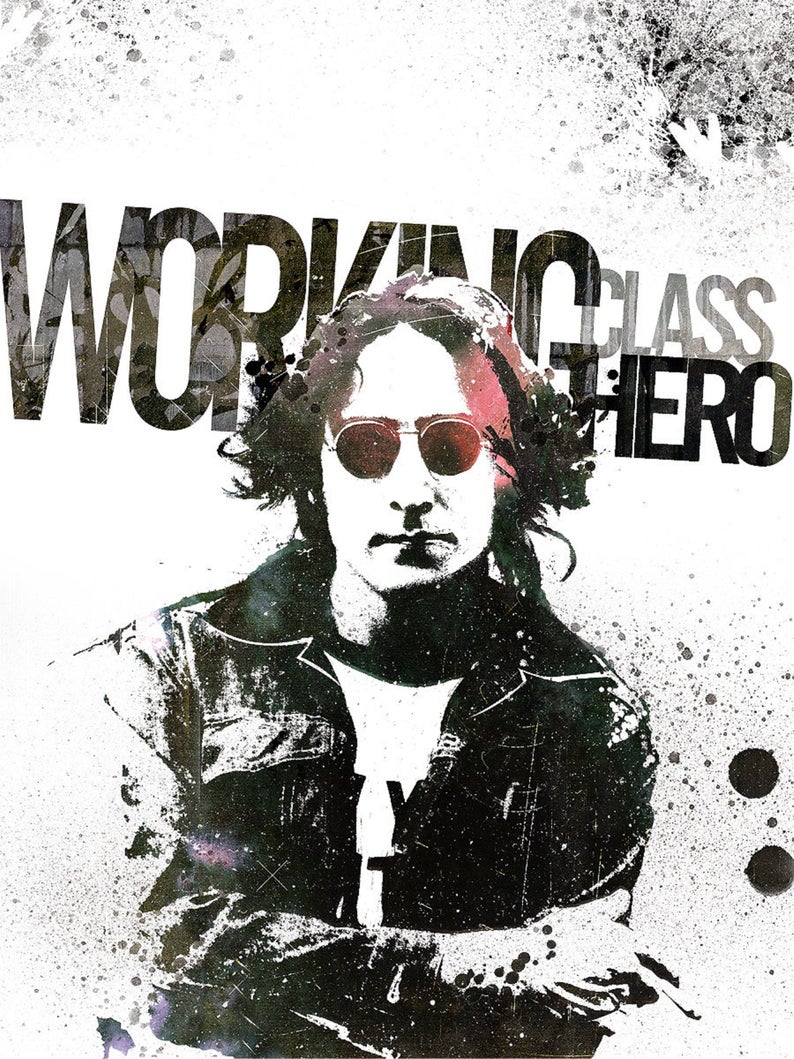
This song was a favorite of mine of John Lennon when I was younger. He took some flak about this one and Imagine when it came to being a Working Class Hero and having all of his possessions. His answer was
“What would you suggest I do? Give everything away and walk the streets? The Buddhist says, “Get rid of the possessions of the mind.” Walking away from all the money would not accomplish that. It’s like the Beatles. I couldn’t walk away from the Beatles. That’s one possession that’s still tagging along, right?”
When I was 18 this song was a powerful one to listen to…It still is…For me, the song was about the differences between the social classes. How some could be exploited and how people use ideologies to justify manipulating people. The song was on John’s debut album John Lennon/Plastic Ono Band.
Boston’s WBCN banned the song for its use of the word “f_ _king”.In Australia, the album was released with the expletive removed from the song and the lyrics censored on the inner sleeve.
From Songfacts
This song caused a fair amount of controversy for John Lennon, as his detractors pointed out that he was raised in an upper-middle-class home by his aunt and had no right to call himself a working-class hero. In an interview with Rolling Stone just three days before his death, Lennon explained: “The thing about the ‘Working Class Hero’ song that nobody ever got right was that it was supposed to be sardonic – it had nothing to do with socialism, it had to do with ‘If you want to go through that trip, you’ll get up to where I am, and this is what you’ll be.’ Because I’ve been successful as an artist, and have been happy and unhappy, and I’ve been unknown in Liverpool or Hamburg and been happy and unhappy.”
The final take as it appears on the album is actually a composite of two different performances done at two different studios. If you listen carefully (it might require headphones) you can clearly hear the sound of the guitar and vocals change where the edit was made about halfway through the song.
The word f–king appears twice in the lyrics. On the printed lyrics that came with the album, the word was obscured.
Why did Lennon curse in the song? Yoko Ono explained in a 1998 interview with Uncut: “He told me, ‘That’s part of being working class. It won’t be working class if what you say is all very clean and very proper.”
The line, “If you want to be like the folks on the hill” is a reference to the Beatles song “The Fool On The Hill.”
Green Day recorded this for the benefit album Instant Karma: The Amnesty International Campaign to Save Darfur, and they also performed the song on the 2007 season finale of American Idol. In their version, the last two lines are from the original John Lennon song – John sings them.
Lennon told the January 1971 edition of Rolling Stone about this song: “I think its concept is revolutionary, and I hope it’s for workers and not for tarts and fags. I hope it’s what “Give Peace A Chance” was about, but I don’t know. On the other hand, it might just be ignored. I think it’s for the people like me who are working class – whatever, upper or lower – who are supposed to be processed into the middle classes, through the machinery, that’s all. It’s my experience, and I hope it’s just a warning to people. I’m saying it’s a revolutionary song; not the song itself but that it’s a song for the revolution.”
This song seemed to resist all Lennon’s efforts to record a satisfactory vocal. Tape op Andy Stephens recalled to Uncut magazine August 2010 that he watched the former Beatle obsess about it day after day, singing “an endless number of takes… well over 100.. Probably 120, 130.”
Stephens added that Lennon became more frustrated as each take passed. “If the mix in his headphones wasn’t exactly what he wanted, he would take them off and slam them into the wall,” he recalled. “he wouldn’t say, ‘Can I have a bit more guitar?’ He would literally rip the cans off his head and smash them into the wall, then walk out of the studio.”
Working Class Hero
As soon as you’re born they make you feel small By giving you no time instead of it all Till the pain is so big you feel nothing at all A working class hero is something to be A working class hero is something to be
They hurt you at home and they hit you at school They hate you if you’re clever and they despise a fool Till you’re so f_ _king crazy you can’t follow their rules A working class hero is something to be A working class hero is something to be
When they’ve tortured and scared you for twenty-odd years Then they expect you to pick a career When you can’t really function you’re so full of fear A working class hero is something to be A working class hero is something to be
Keep you doped with religion and sex and TV And you think you’re so clever and classless and free But you’re still f_ _king peasants as far as I can see A working class hero is something to be A working class hero is something to be
There’s room at the top they’re telling you still But first you must learn how to smile as you kill If you want to be like the folks on the hill
A working class hero is something to be A working class hero is something to be If you want to be a hero well just follow me If you want to be a hero well just follow me
Do you remember, your President Nixon? Do you remember, the bills you have to pay For even yesterday?
This song and album had to be a shock at the time. Bowie went from Glam Rock to more of a soul sound within a year. Young Americans peaked at #28 in the Billboard 100, #33 in Canada, #18 in the UK, and #7 in New Zealand. The album peaked at #5 in the Billboard Album Chart in 1975.
Young Americans was the first Bowie album that guitarist Carlos Alomar played on. Bowie first saw Alomar playing in the house band at the Apollo Theatre in Harlem, and convinced him to play on this album and join the tour. Alomar became a major contributor, playing on several of Bowie’s albums and coming up with guitar riffs for songs like “Fame” and “Golden Years.”
John Lennon appeared on the album on songs Across The Universe and Fame.
From Songfacts
Bowie never was a young American – he was born and raised in England. Bowie said that this was the result of cramming his “whole American experience” into one song.
This was recorded between tour dates at Philadelphia’s Sigma Sound Studios, which was the capital of black music in the area. The soul influence had a very obvious effect on Bowie’s style. He even completely redesigned the stage for the rest of his Diamond Dogs tour.
Over the course of about eight very creative days, Bowie recorded most of the songs for Young Americans at Sigma Studios. He usually recorded his vocals after midnight because he heard that’s when Frank Sinatra recorded most of his vocals, and because there weren’t so many people around.
Sigma had a staff of very talented producers and musicians (known as MFSB – the same folks who had a #1 hit with “TSOP (The Sound of Philadelphia)”), but Bowie used his own people – Tony Visconti produced this track.
The line near the end, “I heard the news today, oh boy,” is a reference to the Beatles song “A Day In The Life.” John Lennon worked with Bowie on “Fame” and also Bowie’s cover of “Across The Universe.” Both songs are on this album.
The lead instrument in this song the saxophone, which was played by the American jazz player David Sanborn. He was just starting to get noticed when Bowie brought him in to play on this.
Bowie hired Luther Vandross, who had yet to establish himself as a solo artist, to sing backup and create the vocal arrangements on the Young Americans album.
Near the end of the song, Bowie sings, “Black’s got respect and white’s got his soul train.” Soul Train is an American TV show targeted to a black audience that started in 1970. The show featured lots of very expressive dancing as well as a musical guest, and in November 1975, Bowie became one of the first white singers to perform on the show, something he was very proud of. The “Young Americans” single was released in February 1975, so Bowie performed “Fame” and “Golden Years,” which was his current single.
The album was going to be called “Dancin'” before Bowie decided to name it after this track.
At a performance at Giants Stadium, Bowie stopped after singing the line, “Ain’t there one damn song that can make me…”, and dropped to the stage, where he stayed for 10 minutes. The crowd went nuts, but got concerned after a while. Bowie did it to see what kind of reaction he would get.
The Cure did a version of this in appreciation of Bowie, their longtime friend. The lyrics “Do you remember President Nixon?” were changed to “…President Clinton?” The Cure’s version was originally released on a British radio demo CD only, but can now be found on various bootlegs.
Young Americans
They pulled in just behind the bridge He lays her down, he frowns Gee my life’s a funny thing, am I still too young? He kissed her then and there She took his ring, took his babies It took him minutes, took her nowhere Heaven knows, she’d have taken anything, but
All night She wants the young American Young American, young American, she wants the young American All right She wants the young American
Scanning life through the picture window She finds the slinky vagabond He coughs as he passes her Ford Mustang, but Heaven forbid, she’ll take anything But the freak, and his type, all for nothing Misses a step and cuts his hand, but Showing nothing, he swoops like a song She cries where have all Papa’s heroes gone?
All night She wants a young American Young American, young American, she wants the young American All right She wants the young American
All the way from Washington Her bread-winner begs off the bathroom floor “We live for just these twenty years Do we have to die for the fifty more?”
All night He wants the young American Young American, young American, he wants the young American All right He wants the young American
Do you remember, your President Nixon? Do you remember, the bills you have to pay For even yesterday?
Have you have been an un-American? Just you and your idol singing falsetto ’bout Leather, leather everywhere, and Not a myth left from the ghetto Well, well, well, would you carry a razor In case, just in case of depression? Sit on your hands on a bus of survivors Blushing at all the afro-Sheilas Ain’t that close to love? Well, ain’t that poster love? Well, it ain’t that Barbie doll Her heart’s been broken just like you have
All night All night was a young American Young American, young American, you want the young American All right All right you want the young American
You ain’t a pimp and you ain’t a hustler A pimp’s got a Cadi and a lady got a Chrysler Black’s got respect, and white’s got his Soul Train Mama’s got cramps, and look at your hands ache (I heard the news today, oh boy) I got a suite and you got defeat Ain’t there a man you can say no more? And, ain’t there a woman I can sock on the jaw? And, ain’t there a child I can hold without judging? Ain’t there a pen that will write before they die? Ain’t you proud that you’ve still got faces? Ain’t there one damn song that can make me Break down and cry?
All night I want the young American Young American, young American, I want the young American All right I want the young American, young American whoa whoa
Young American, young American I want what you want I want what you want You want more I want you You want I I want you I want what you want But you want what you want You want I I want you And all I want is a young American Young American
Since I blog about the seventies a bunch I thought this reference in songs would fit the loose format I have here…songs that reference Mr. Richard Milhous Nixon. This should be fun. We will start with this John Lennon song “Gimme Some Truth.” In this case “tricky dicky” will work as a reference.
No short-haired, yellow-bellied, Son of tricky dicky’s, Gonna mother hubbard soft soap me, With just a pocket full of hopes, Money for dope, money for rope
Don’t hold back John…tell us how you really feel. John was working on this song during the Let It Be sessions. He would record it two years later and it would be on the Imagine album. Lennon’s contempt for politicians came through rather well on this song.
George Harrison played guitar on this song. Their old friend from Germany Klaus Voormann (Bass player and Graphic Artist) played bass and the great Nicky Hopkins, who was on practically everyone’s records played the piano. Alan White who later joined Yes played drums. It was recorded at Ascot Sound Studios, Lennon’s recording studio at his Tittenhurst Park home, in May 1971.
John Lennon 1968
“I think our society is run by insane people for insane objectives, and I think that’s what I sussed when I was 16 and 12, way down the line. But, I expressed it differently all through my life. It’s the same thing I’m expressing all the time, but now I can put it into that sentence that I think we’re being run by maniacs for maniacal ends. If anybody can put on paper what our government, and the American government and the Russian, Chinese, what they are actually trying to do and what they think they’re doing… I’d be very pleased to know what they think they’re doing, I think they’re all insane!”
From Songfacts
There is a book written by Jon Wiener of the same title revealing a compilation of FBI files on Lennon, who was investigated as a drug user and radical. The FBI feared Lennon would disrupt the Republican National Convention in 1972.
Lennon referred to President Richard Nixon in this song as “trick-dicky,” a nickname that became popular during the Watergate hearings. There are many lyrical references to politicians as deceiving, slick, and cowardly characters.
Cover-ups such as the My Lai massacre in Vietnam frustrated Lennon into writing this song, demanding simple truth.
Mother Hubbard in the lyrics refer to the poem, which is itself, a cover-up: “Old Mother Hubbard Went to the cupboard To get her poor doggie a bone, When she got there The cupboard was bare So the poor little doggie had none” The Old Mother Hubbard referred to in this rhyme’s words allude to the famous Cardinal Wolsey. Cardinal Thomas Wolsey was the most important statesman and churchman of the Tudor history period in 16th century England. Cardinal Wolsey proved to be a faithful servant but displeased the King, Henry VIII, by failing to facilitate the King’s divorce from Queen Katherine of Aragon who had been his queen of many years. The reason for seeking the divorce and hence the creation of the Old Mother Hubbard poem was to enable him to marry Anne Boleyn with whom he was passionately in love. In the Old Mother Hubbard song King Henry was the “doggie” and the “bone” refers to the divorce (and not money as many believe) The cupboard relates to the Catholic Church although the subsequent divorce arranged by Thomas Cramner resulted in the break with Rome and the formation of the English Protestant church and the demise of Old Mother Hubbard – Cardinal Wolsey. Another rhyme reputedly relates to Cardinal Wolsey.
“Softsoap” is slang – It alludes to liquid soap, likening its slippery quality to insincere flattery. Its figurative use was first recorded in 1830. “Yellow-bellied” is slang for cowardly.
George Harrison played guitar on this.
Gimme Some Truth
I’m sick and tired of hearing things from Uptight short sided narrow minded hypocritics All I want is the truth, just give me some truth I’ve had enough of reading things By neurotic psychotic pigheaded politicians All I want is the truth, just give me some truth
No short-haired, yellow-bellied Son of tricky dicky’s Gonna mother hubbard soft soap me With just a pocket full of hopes Money for dope, money for rope
No short-haired, yellow-bellied, Son of tricky dicky’s Gonna mother hubbard soft soap me With just a pocket full of hopes Money for dope, money for rope
I’m sick to death of seeing things from Tight-lipped condescending mama’s little chauvinists All I want is the truth, just give me some truth I’ve had enough of watching scenes from Schizophrenic egocentric paranoiac primadonnas All I want is the truth just give me some truth
No short-haired, yellow-bellied, Son of tricky dicky’s Gonna mother hubbard soft soap me With just a pocket full of hopes It’s money for dope, money for rope
I’m sick to death of hearing things from Uptight short sided narrow minded hypocritics All I want is the truth, just give me some truth I’ve had enough of reading things By neurotic psychotic pigheaded politicians All I want is the truth, just give me some truth All I want is the truth, just give me some truth All I want is the truth, just give me some truth
This song was one of my favorite Lennon tribute songs.
This song is a tribute to John Lennon, who was murdered in 1980. Elton John’s songwriting partner Bernie Taupin wrote the lyrics, but Elton certainly felt a connection to the song, as he was good friends with Lennon and is the Godfather of Lennon’s second son, Sean. Elton appeared onstage with John at his final concert in 1974.
Empty Garden peaked at #13 in the Billboard 100, #8 in Canada, #14 in New Zealand, and #51 in the UK in1982
Some of the other songs that are tributes to John are Queen – Life Is Real, George Harrison – All Those Years Ago, Paul McCartney – Here Today, Bob Dylan – Roll On John, and Paul Simon – The Late Great Johnny Ace.
From Songfacts
In the John/Taupin songwriting partnership, Bernie writes the lyrics first and Elton then puts them to music. When writing for the Jump Up album, Elton had some melodies handy and asked Taupin to write words to those, which he did. Taupin has described those songs as “awful” and said, “it’s a very messy album.” “Empty Garden (Hey Hey Johnny),” however, was written their traditional way with the lyrics first, and Taupin has said that it’s the only good song on the album.
When he performed this at a sold-out Madison Square Garden show in August 1982, Elton was joined onstage by Lennon’s wife Yoko Ono and Sean Lennon.
Empty Garden
What happened here As the New York sunset disappeared I found an empty garden among the flagstones there Who lived here He must have been a gardener that cared a lot Who weeded out the tears and grew a good crop And now it all looks strange It’s funny how one insect can damage so much grain
And what’s it for This little empty garden by the brownstone door And in the cracks along the sidewalk nothing grows no more Who lived here He must have been a gardener that cared a lot Who weeded out the tears and grew a good crop And we are so amazed, we’re crippled and we’re dazed A gardener like that one no one can replace
And I’ve been knocking but no one answers And I’ve been knocking most of the day Oh and I’ve been calling, oh hey hey Johnny Can’t you come out to play
And through their tears Some say he farmed his best in younger years But he’d have said that roots grow stronger, if only he could hear Who lived there He must have been a gardener that cared a lot Who weeded out the tears and grew a good crop Now we pray for rain, and with every drop that falls We hear, we hear your name
And I’ve been knocking but no one answers And I’ve been knocking most of the day Oh and I’ve been calling, oh hey hey Johnny Can’t you come out to play
And I’ve been knocking but no one answers And I’ve been knocking most all the day Oh and I’ve been calling, oh hey hey Johnny Can’t you come out, can you come out to play, Johnny Can’t you come out to play in your empty garden, Johnny Can’t you come out to play in your empty garden, Johnny Can’t you come out to play in your empty garden, Johnny Can’t you come out to play in your empty garden, Johnny Can’t you come out to play in your empty garden, Johnny Can’t you come out to play in your empty garden, Johnny
Lennon wrote this when he was in The Beatles. They recorded it as a demo called “Child of Nature,” which he’d written about their trip to India to study with Maharishi Mahesh Yogi. It didn’t make it onto any Beatles albums, so Lennon used it on his Imagine album with the lyrics changed to reflect his jealous nature. It was not released as a single in 1971.
The single reached #80 in the Billboard Hot 100 in1988, in conjunction with the release of the film Imagine John Lennon.
Joey Molland and Tom Evans of Badfinger both played acoustic guitar on this track. Badfinger was signed to the Beatles-run Apple label and George Harrison recommended to Lennon, “if you need some guitar players on Imagine, use the Badfinger guys.”
John Lennon said this about the song: My song, melody written in India. The lyrics explain themselves clearly: I was a very jealous, possessive guy. Toward everything. A very insecure male. A guy who wants to put his woman in a little box, lock her up, and just bring her out when he feels like playing with her. She’s not allowed to communicate with the outside world – outside of me – because it makes me feel insecure.
From Songfacts
John Lennon confronts the green-eyed monster in this song, where he sings about the fits of jealousy that controlled him. At the time, he was married to Yoko Ono, who believes the jealousy Lennon describes is not sexual, but more an unfounded feeling of inadequacy. “He was jealous about the fact that I had another language in my head, you know, Japanese, that he can’t share with me,” she told Uncut in 1998. “It was almost on a very conceptual, spiritual level. It wasn’t on a level of physical or anything ’cause I just would never give him a reason for that.”
Paul McCartney stated in the February 1985 issue of Playgirl: “He (John) used to say, ‘Everyone is on the McCartney bandwagon.’ He wrote ‘I’m Just a Jealous Guy,’ and he said that the song was about me. So I think it was just some kind of jealousy.”
Speaking with Rolling Stone months after Lennon’s death, she said that he made her write out a list of all the men she slept with before they met. “He wrote a song, ‘Jealous Guy,’ that should have told people how jealous he was,” she said. “After we started living together, it was John who wanted me there all the time. He made me go into the men’s room with him. He was scared that if I stayed out in the studio with a lot of other men, I might run off with one of them.”
Klaus Voormann played bass on this track. He was an old friend of the Beatles and designed the cover of Revolver. Other musicians were Jim Keltner on drums, Alan White on vibes and John Barham on harmonium.
In 1981 Roxy Music recorded this as a tribute to Lennon, who was murdered on December 8, 1980. Their version went to #1 in the UK. Many other groups have covered it as well, including The Faces and The Black Crowes.
Joey Molland recalled working with Lennon in an interview with Gibson.com, “It was great! He was just a plain-talking, regular guy. No b.s. at all. Now, of course, he was John Lennon, so he had that energy about him; he kind of lit up the room, you know? But he welcomed us, said he was thrilled to have us, and then he said, ‘The first song we’re going to do is something called ‘Jealous Guy.” It was pretty amazing, sitting there with your headphones on, hearing John Lennon singing this fantastic song. Totally remarkable.”
Yoko Ono contributed to the track’s lyrics. However, because of the public’s negative attitude towards her at the time, her role was downplayed. She told NME: “Well, if it was just John, [he] would have given me the right credit, but it was a difficult time. No famous songwriter would have thought of splitting the credit with his wife.”
Yoko added regarding her influence on the track: “I think it’s a good song from a women’s point of view as well. John was trying to create a fun song about going on a trip to Rishikesh. That might have been great too, but it ended up not being that.”
Jealous Guy
I was dreaming of the past And my heart was beating fast I began to lose control I began to lose control I didn’t mean to hurt you I’m sorry that I made you cry Oh my I didn’t want to hurt you I’m just a jealous guy
I was feeling insecure You might not love me anymore I was shivering inside I was shivering inside Oh I didn’t mean to hurt you I’m sorry that I made you cry Oh my I didn’t want to hurt you I’m just a jealous guy
I didn’t mean to hurt you I’m sorry that I made you cry Oh my I didn’t want to hurt you I’m just a jealous guy
I was trying to catch your eyes Thought that you was trying to hide I was swallowing my pain I was swallowing my pain I didn’t mean to hurt you I’m sorry that I made you cry Oh no I didn’t want to hurt you I’m just a jealous guy Watch out baby I’m just a jealous guy Look out baby I’m just a jealous guy
Another gem from the White Album. John Lennon loved to sleep…he referenced it in another song on Revolver named “I’m Only Sleeping.” Paul would have a songwriting session planned with Lennon and would arrive at John’s house only to have to wake him up. I’ve always liked this song and fit perfectly with the diverse song styles of the album.
John wrote this at a transcendental meditation camp in India when he couldn’t sleep. He was meditating day and night, and after three weeks of meditation and lectures by the Maharishi, he thought of his future wife Yoko Ono while his current wife Cynthia was there with him. and came up with the song. He even thought of inviting Yoko with him along with Cynthia… that would have added some spice to the trip. Bringing a date on a trip with your wife…probably a bad idea.
John mumbles something at the end of the song.
Mark Lewisohn’s book “The Beatles Recording Sessions” explains this final bit of Lennon mumbling as “Monsieur, monsieur, how about another one?“, insinuating that he was requesting another attempt at the backing vocals. This final mumbling was the only one that made it onto the finished mix.
In 1969 when the “Paul is dead” rumor went around the world people insisted when the mumbling at the end of this song was played backward, John was saying “Paul is dead, miss him, miss him, miss him!” This made for yet another clue for the poor departed Paul …but of course was not true and Paul was and is very much alive… but it did ruin a lot of record player needles in the process of trying to find out.
John said this about the song: “One of my favorite tracks. I just like the sound of it, and I sing it well“.
From Songfacts
The voice at the end sounds like, “Paul is dead man, miss him,” when played backward. This helped fuel rumors that McCartney was dead and replaced by an actor that looked like him.
The line “When I hold you in my arms, and feel my finger on your trigger” from “Happiness Is A Warm Gun” appears in bootlegged, unreleased versions of this song as “When I hold you in your arms, when you show each one of your charms, I wonder should I get up and go to the funny farm.”
The word “get” as used in this song is a well-known term as a quite mild insult that is still commonly used on Merseyside. Lennon is cursing Sir Walter Raleigh (who is credited with introducing tobacco to Britain from America in the 16th century) for indirectly getting him hooked on cigarettes.
At the bottom below the lyrics, I found a version of Paul singing the song and having a good time. It possibly is from the Let It Be sessions…I’m not sure.
I’m So Tired
I’m so tired, I haven’t slept a wink I’m so tired, my mind is on the blink I wonder should I get up and fix myself a drink No, no, no.
I’m so tired, I don’t know what to do I’m so tired, my mind is set on you I wonder should I call you but I know what you would do
You’d say I’m putting you on But it’s no joke, it’s doing me harm You know I can’t sleep, I can’t stop my brain You know it’s three weeks, I’m going insane You know I’d give you everything I’ve got For a little peace of mind.
I’m so tired, I’m feeling so upset Although I’m so tired, I’ll have another cigarette And curse Sir Walter Raleigh He was such a stupid get.
You’d say I’m putting you on But it’s no joke, it’s doing me harm You know I can’t sleep, I can’t stop my brain You know it’s three weeks, I’m going insane You know I’d give you everything I’ve got For a little peace of mind.
Give you everything I’ve got For a little peace of mind.
I’d give you everything I’ve got For a little peace of mind.