I’ve been watching Get Back on Disney Plus and this is one of the songs they have went over. I always thought Two Of Us should have been a single… It’s not slick or full of production…just John and Paul singing together like they did in the early years. It feels like they had come full circle.
Paul McCartney wrote this about enjoying his travels with his wife Linda. The song was on the album Let It Be recorded in January of 1969 but wasn’t released until 1970. It was the last studio album released of the Beatles career but not the last recorded.
After this album The Beatles embarked on recording the classic album Abbey Road in the summer of 1969. As the film Get Back shows…yes they would argue but it was not as bad as we have been led to believe or they would not have recorded Abbey Road. There was also talk of another possible album after Abbey Road but they decided to call it a day.
I always thought The Beatles ended at the right time. They never made a bad album like some other bands. I do think they had a couple of albums left in them but to end a career recording Abbey Road…its hard to top that.
It’s interesting to speculate if they would have got back together if John Lennon would not have been murdered. I don’t think they would have recorded again but I do think Lennon and McCartney would have written together again.
Linda McCartney:As a kid I loved getting lost. I would say to my father – let’s get lost. But you could never seem to be able to get really lost. All signs would eventually lead back to New York or wherever we were staying! Then, when I moved to England to be with Paul, we would put Martha in the back of the car and drive out of London. As soon as we were on the open road I’d say, ‘Let’s get lost’ and we’d keep driving without looking at any signs. Hence the line in the song, ‘Two of us going nowhere’.
Paul wrote ‘Two Of Us’ on one of those days out. It’s about us. We just pulled off in a wood somewhere and parked the car. I went off walking while Paul sat in the car and started writing. He also mentions the postcards because we used to send a lot of postcards to each other.
From Songfacts
Lennon and McCartney sang together on this song, which is something they did a lot in the early years of The Beatles, but not so much later on, when they started writing separately and restricting the lead vocal to whoever wrote the song.
This song is mostly acoustic, with Lennon and McCartney each playing acoustic guitar. George Harrison’s electric guitar is there, but low in the mix. There is no bass on the track.
This appears twice in the Beatles documentary movie Let It Be, first as a duet by John and Paul and then with the whole band.
John Lennon did the whistling on the fade-out.
Two Of Us
Two of us riding nowhere Spending someone’s hard-earned pay You and me Sunday driving Not arriving On our way back home We’re on our way home We’re on our way home We’re going home
Two of us sending postcards Writing letters on my wall You and me burning matches Lifting latches On our way back home We’re on our way home We’re on our way home We’re going home
You and I have memories That stretches out ahead
Two of us wearing raincoats Standing solo You and me chasing paper Getting nowhere On our way back home We’re on our way home We’re on our way home We’re going home
You and I have memories That stretches out ahead
Two of us wearing raincoats You and me chasing paper Getting nowhere On our way back home We’re on our way home We’re on our way home We’re going home
“That beginning – ‘we-e-e-e-e-l-l-l-l-l!’ – always made my hair stand on end.” John Lennon
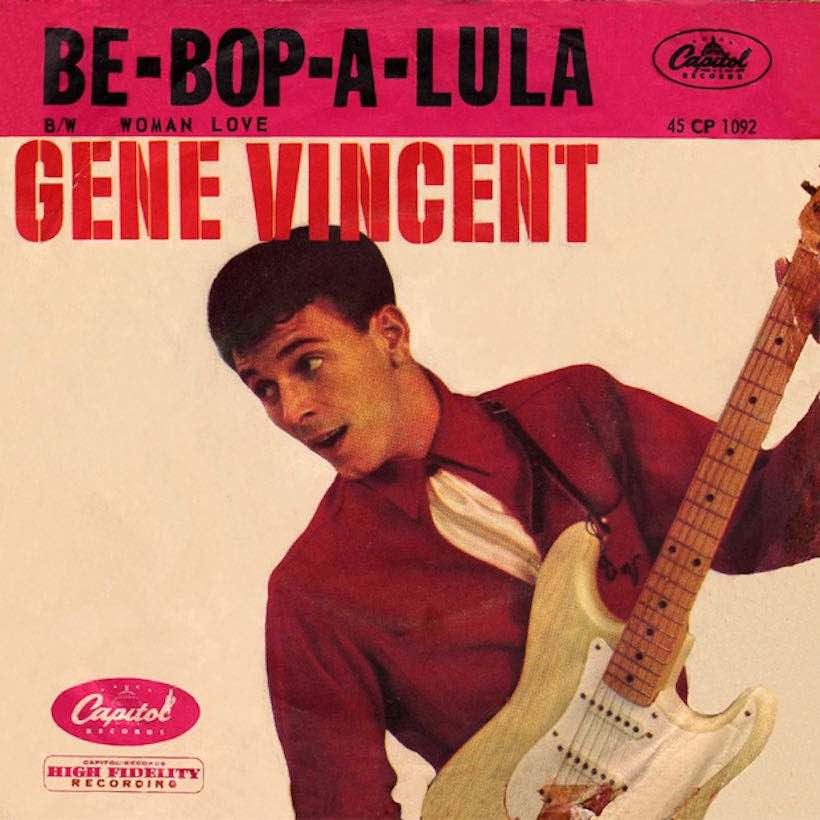
Can this rock and roll possibly be improved on? I don’t think so. When Gene Vincent starts this song with “well” along with that echo all around…it’s magical. Since Friday, I’ve covered songs that helped shape the young Beatles. It wasn’t just the Beatles but all of the bands that came out in the sixties had music like this as their backbone.
The Beatles played at least 14 of Gene Vincent’s songs in their sets before they made it. A song like Somewhere Over The Rainbow that the Beatles would never think of covering until Gene Vincent covered it and gave the song his ok.
They also got to know Vincent in Germany while playing in Hamburg.
This song was recorded by Gene Vincent and the Blue Caps in 1956. The song was successful on three American singles charts as it peaked at #7 on the US Billboard pop music chart, #8 on the R&B chart, and also made the top ten on the C&W Charts, and #16 in the UK in 1956. In April 1957, the record company announced that over 2 million copies had been sold to date.
As far as the origin of the song…I reblogged a fellow blogger (Freefallin’) a couple of years ago with this song. Here is the story: Donald Graves—a buddy Gene Vincent made in a Portsmouth, Virginia, Veteran’s Hospital. Vincent—born Vincent Eugene Craddock in 1935—had just reenlisted in the U.S. Navy in the spring of 1955 when he suffered a devastating leg injury in a motorcycle accident. That injury would land him in hospital for more than a year, where a fellow patient remembers Vincent and Graves tooling around the facility working out the song that would eventually become a classic. By the time Gene Vincent’s demo tape reached Capitol Records the following spring, however, Graves had been bought out of his share in “Be-Bop-A-Lula” by Sheriff Tex (Vincent’s business manager), reportedly for just $25.
John Lennon covered it on his 1975 Rock and Roll album. As much as I’m a fan of Lennon…nothing touches the original but he does a great job.
Be Bop A Lula
Well be-bop-a-Lula she’s my baby Be-bop-a-Lula I don’t mean maybe Be-bop-a-Lula she’s my baby Be-bop-a-Lula I don’t mean maybe Be-bop-a-Lula she’s my baby doll My baby doll, my baby doll
Well she’s the girl in the red blue jeans She’s the queen of all the teens She’s the one that I know She’s the woman that loves me so
Say be-bop-a-Lula she’s my baby Be-bop-a-Lula I don’t mean maybe Be-bop-a-Lula she’s my baby doll My baby doll, my baby doll Let’s rock!
Well now she’s the one that’s got that beat She’s the woman with the flyin’ feet She’s the one that walks around the store She’s the one that gets more more more
Be-bop-a-Lula she’s my baby Be-bop-a-Lula I don’t mean maybe Be-bop-a-Lula she’s my baby doll My baby doll, my baby doll Let’s rock again, now!
Well be-bop-a-Lula she’s my baby Be-bop-a-Lula I don’t mean maybe Be-bop-a-Lula she’s my baby Be-bop-a-Lula I don’t mean maybe Be-bop-a-Lula she’s my baby doll My baby doll, my baby doll
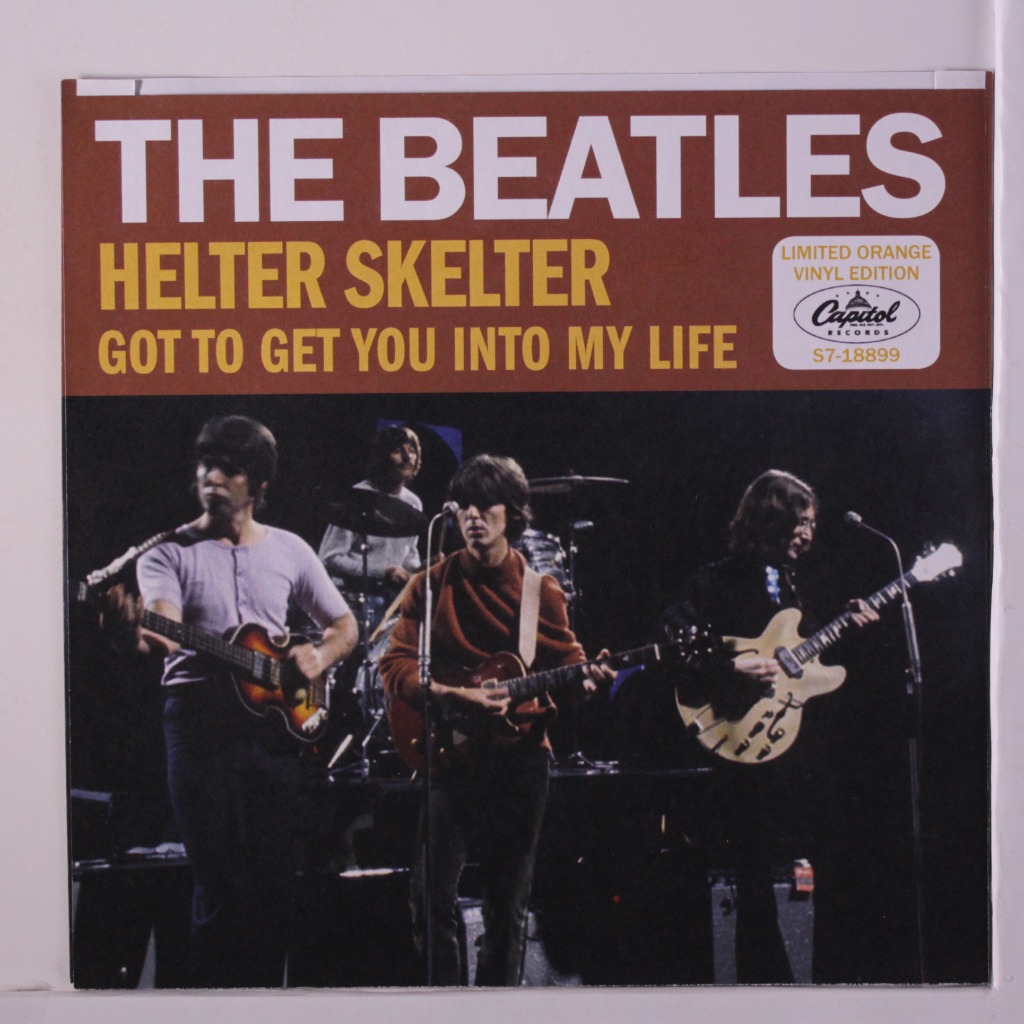
I want to thank Hans for hosting this draft and having me as one of the participants. Thanks everyone for the great songs. A Beatles song had to be in play in the draft for me. I didn’t pick my favorite Beatles song, but one that scared the hell out of me as a kid. This song gave me the creeps because it was so loud. That was before I saw the Manson TV movie.
Now, the sheer energy of it gets me every time. In 1964 they gave us I Want To Hold Your Hand and four years later we hear Helter Skelter…that is growing and versatility. This song was by the band I most admire and it was influenced by another band I admire…The Who…sort of.
The origin of the song…I’ll turn it over to Paul: “I was in Scotland and I read in Melody Maker that Pete Townshend had said: ‘We’ve just made the raunchiest, loudest, most ridiculous rock’n’roll record you’ve ever heard.’ I never actually found out what track it was that The Who had made, but that got me going, just hearing him talk about it. So I said to the guys, ‘I think we should do a song like that; something really wild.’ And I wrote ‘Helter Skelter.’”
The track that Townshend was talking is thought to be I Can See For Miles. Paul took the description and ran with it. Paul and George played the guitars while John played a six string bass…Mr blisters on his fingers played drums.
I’ve played this song at the different places I’ve worked (on cassette and computer) and I get inquiries…who is that? When I tell them who…they don’t believe me at first. A reply that I have got is… no that is NOT The Beatles…that is just not them. This is why I love the Beatles. They covered genres well.
The song has picked up evil vibes along the way because of Manson grabbing the title for his awful deeds. Some have said it was the first Heavy Metal song, but I don’t hear that. I do think it was a cog in the machine and influenced the harder bands though.
I’ve heard so many bands try to cover this song…even down to heavier bands and none match the intensity and energy of this recording. The secret is the punk rawness with it’s jagged edges showing. The only cover I like is U2’s live version on Rattle and Hum because it helped the song regain it’s reputation back and take it from Manson’s grasp to a then modern audience.
I’ve played this song with a band a few times and that little riff is so powerful and so much fun to play. I told the rest of the band…no distortion boxes…no processing…just pure loud overdrive (turn it up to 11 and beyond)…and it works.
The White Album…another reason I love it…you have Blackbird, Rocky Racoon, Dear Prudence, and Helter Skelter on the same album. The album is the very definition of eclectic.
Thank you all again for the songs.
Helter Skelter
When I get to the bottom I go back to the top of the slide Where I stop and I turn and I go for a ride Till I get to the bottom and I see you again
Do, don’t you want me to love you I’m coming down fast but I’m miles above you Tell me, tell me, tell me, come on tell me the answer Well, you may be a lover but you ain’t no dancer
Helter skelter, helter skelter Helter skelter
Will you, won’t you want me to make you I’m coming down fast but don’t let me break you Tell me, tell me, tell me the answer You may be a lover but you ain’t no dancer
Look out Helter skelter, helter skelter Helter skelter Look out, ’cause here she comes
When I get to the bottom I go back to the top of the slide And I stop and I turn and I go for a ride And I get to the bottom and I see you again, yeah, yeah
Well do you, don’t you want me to make you I’m coming down fast but don’t let me break you Tell me, tell me, tell me your answer You may be a lover but you ain’t no dancer
Look out Helter skelter, helter skelter Helter skelter
Look out, helter skelter She’s coming down fast Yes, she is Yes, she is Coming down fast
The Walrus was Paul! I never knew that John. This song was written by John and Paul but mostly a John song. The song was about people trying to analyze the lyrics to Beatle songs.
Lennon mentioned other Beatles songs in the lyrics: “Strawberry Fields,” “I am the Walrus,” “Lady Madonna,” “The Fool on the Hill,” and “Fixing a Hole.” One phrase in the song is “cast iron shore,” which is actually a nickname for a coastal area of south Liverpool also known by the locals as “The Cazzy.”
John had started the song during their spring 1968 visit to Rishikesh, India to study Transcendental Meditation with the Maharishi. Most of the songs written in India ended up on the terrific White Album. The most eclectic album The Beatles ever did.
A new name was needed for a newly signed Apple band called The Iveys. John suggested Glass Onion…this was rejected, along with another Lennon suggestion “Prix.” The band went with the working title for the Beatles song With A Little Help From My Friends… Bandfinger Boogie. They shortened it and became the great power pop band Badfinger.
John Lennon: “I was having a laugh because there had been so much gobbledegook about ‘Pepper,’ play it backwards and you stand on your head and all that.”
Paul McCartney:“He and Yoko came round to Cavendish Avenue and John and I went out into the garden for half an hour, because there were a couple of things he needed me to finish up, but it was his song, his idea…It was a nice song of John’s. We had a fun moment when we were working on the bit, ‘I’ve got news for you all, the walrus was Paul.’ Because, although we’d never planned it, people read into our songs and little legends grew up about every item of so-called significance, so on this occasion we decided to plant one. What John meant was that in ‘Magical Mystery Tour,’ when we came to do the costumes on ‘I Am The Walrus,’ it happened to be me in the walrus costume. It was not significant at all, but it was a nice little twist to the legend that we threw in. But it was John’s song. I’d guess I had minor input or something as we finished it up together…We still worked together, even on a song like ‘Glass Onion’ where many people think there wouldn’t be any collaboration.”
From Songfacts
John Lennon used meaningless lyrics to confuse people who were reading too much into his songs. He got a kick out of people trying to analyze his lyrics.
A glass onion is a coffin with a see-through lid. Because of this, it became a big part of the “Paul is Dead” hoax. Another clue for those who believed the hoax: Lennon sang, “The Walrus is Paul.” In many European countries, a walrus represents death.
Lennon wanted to name one of the bands they signed to Apple Records “Glass Onion.” They chose “Badfinger” instead.
One theory is that “Glass Onion” refers to Lennon’s opinion of the yogic concept of the lotus with its layered petals (layers of consciousness to be stripped away, much like an onion, through meditation) as a bunch of transparent bull used by the Maharishi to manipulate and seduce. He’s also saying the Maharishi’s whole shtick stinks and is a crying shame.
When Lennon sings about the “Cast Iron Shore,” he’s referring to what was an area of beach at Liverpool, that is now partly built over. This area of Liverpool is called Otterspool.
According to Mojo magazine, the Beatles recorded 34 takes of the song’s basic rhythm track on Wednesday September 11, 1968, then returned the next day to overdub Lennon’s vocal and again on Friday and the following Monday for further overdubs. On October 10th George Martin, after returning from holiday, added the string section.
Lennon explained to Rolling Stone in a 1971 interview why he said “The Walrus is Paul.” Said Lennon: “‘I Am The Walrus’ was originally the B side of ‘Hello Goodbye.’ I was still in my love cloud with Yoko and I thought, well, I’ll just say something nice to Paul: ‘It’s all right, you did a good job over these few years, holding us together.’ He was trying to organize the group, and organize the music, and be an individual and all that, so I wanted to thank him. I said ‘the Walrus is Paul’ for that reason. I felt, ‘Well, he can have it. I’ve got Yoko, and thank you, you can have the credit.'”
Glass Onion
I told you about strawberry fields You know the place where nothing is real Well here’s another place you can go Where everything flows.
Looking through the bent-backed tulips To see how the other half live Looking through a glass onion.
I told you about the walrus and me, man You know we’re as close as can be, man Well here’s another clue for you all The walrus was Paul.
Standing on the cast iron shore, yeah Lady Madonna trying to make ends meet, yeah Looking through the glass onion
Oh yeah, oh yeah, oh yeah Looking through the glass onion.
I told you about the fool on the hill I tell you man he’s living there still Well here’s another place you can be Listen to me.
Fixing a hole in the ocean Trying to make a dove-tail joint, yeah Looking through a glass onion.
This song is absurd and hilarious. Paul wrote this song and got right to the point. Do what in the road Paul? We might never know. Well actually at the bottom of the post he does explain it…but a warning…you cannot un-see what you read.
I’ve always liked it because it is fun. Some people try to take it seriously but it’s not meant to be…a song with two lines to the complete song…that is being a minimalist or little lazy. The first rumor I read about this song was that Paul was desperate for the Beatles to tour again and this was his message to the band…Why don’t we do it in the road? It turned out to be not true…it was inspired by two monkeys…not Monkees…see the Paul quote on down.
It’s a fun song that sounds more like a John song than a Paul. It will never win a best Beatle song award but it’s fun and fits like a glove on the eclectic White Album. That is what I love about the White Album. Listening to the album you never know what is coming next. It still has a sound that threads all the songs together though.
Paul and Ringo were the only two playing on this song. John Lennon liked the track but later he said he felt hurt when Paul would leave him out on a track and just do something himself. Paul’s voice is outstanding on this one…very aggressive. This is not the “Yesterday” Paul.
This is interesting…The Beatles were not touring when this was released and Paul McCartney didn’t play it live until October 8, 2016 when he performed it at the Desert Trip festival with Neil Young.
Paul McCartney:“The idea behind ‘Why Don’t We Do It In The Road’ came from something I’d seen in Rishikesh, I was up on the flat roof meditating and I’d seen a troupe of monkeys walking along in the jungle and a male just hopped on to the back of this female and gave her one, as they say in the vernacular. Within two or three seconds he hopped off again, and looked around as if to say, ‘It wasn’t me,’ and she looked around as if there had been some mild disturbance but thought, ‘Huh, I must have imagined it,’ and she wandered off.”
“And I thought, ‘Bloody hell, that puts it all into a cocked hat.’ That’s how simple the act of procreation is, this bloody monkey just hopping on and hopping off. There is an urge, they do it, and it’s done with. And it’s that simple. We have horrendous problems with it, and yet animals don’t. So that was basically it. ‘Why Don’t We Do It In The Road’ could have applied to either f*cking or sh*tting, to put it roughly. Why don’t we do either of them in the road? Well, the answer is we’re civilized and we don’t. But the song was just to pose that question. ‘Why Don’t We Do It In The Road’ was a primitive statement to do with sex or to do with freedom really. I like it, it’s just so outrageous that I like it.
Paul McCartney and Neil Young…doing it in the road. A very rare live performance.
Why Don’t We Do It In The Road
Why don’t we do it in the road? Why don’t we do it in the road? Why don’t we do it in the road? Why don’t we do it in the road?
No one will be watching us Why don’t we do it in the road?
Why don’t we do it in the road? Why don’t we do it in the road? Why don’t we do it in the road? Why don’t we do it in the road?
No one will be watching us Why don’t we do it in the road?
Why don’t we do it in the road? Why don’t we do it in the road? Why don’t we do it, do it in the road? Why don’t we do it in the road?
No one will be watching us Why don’t we do it in the road?
Just saw this a few minutes ago. Lately I’ve been living in a bubble because of work but this is the new Get Back trailer. This is not the sneak peak Peter Jackson released before. On November 25,26, and 27th… 6 hours of the Let It Be/Get Back music, comedy, and drama will all unfold on the Disney plus.
As a very young Beatle fan I read about these sessions and only saw still photographs. Later on I saw them do Get Back on MTV while on the rooftop and it was like photos coming to life…I read where they had 56 hours of video footage sitting in a vault from this album. Now we will see 6 hours out of that anyway…you what what? I would happily sit through 56 hours… Peter Jackson has done such a great job on the look of the film…it looks like it could have been filmed yesterday. Peter, need an assistant for free?
With the previews I’ve seen…it looks like it was a lot of fun and the bad drama was not prevalent through the filming. Ringo has said that people have focused on the negative but it was much more positive than that. What is great about Get Back is the good time they had and it wasn’t all doom and gloom. I can’t imagine the pressure they were under to deliver and be as good as their last album. In this case, when they filmed this, it was just a few months after they released The White Album…The Let It Be album didn’t get released until after their last studio album Abbey Road.
We all know Revolution by the Beatles but this is the acoustic version of the song. They fell into a nice groove doing this. It took a while for this to grow on me but now I like it just as well as the single fast hard rocking version.
The fast version was released as the B-side of “Hey Jude” in August 1968, three months before the slow version appeared on The White Album. John Lennon wanted it to be the first A-side released on Apple Records, the label The Beatles started, but Paul McCartney’s Hey Jude got the honor.
Brian Epstein, the Beatles manager was always careful with them by asking them to not talk about controversial subjects like the war, politics, and anything that could cause controversy…I don’t think John Lennon got that memo many times. After Brian died they started to be more open and they talked a little more freely.
John Lennon said : “I wanted to put out what I felt about revolution,” “I thought it was about time we spoke about it, the same as I thought it was about time we stopped not answering about the Vietnamese war when we were on tour with Brian Epstein and had to tell him, ‘We’re going to talk about the war this time and we’re not going to just waffle’…That’s why I did it: I wanted to talk, I wanted to say my piece about revolutions. I wanted to tell you, or whoever listens, to communicate, to say, ‘What do you say?’ ‘This is what I say.’”
“I think our society is run by insane people for insame objectives. If anybody can put on paper what our government, and the American government, and the Russian, Chinese…what they are actually trying to do, and what they think they’re doing, I’d be very pleased to know.” John wanted to see a plan as the song goes. John said he believed that revolution comes from inner change rather than social violence.
On the two versions. On one John said “count me in” and the other he said “count me out” as he explains below.
John Lennon:“There were two versions of that song, but the underground left only picked up on the one that said ‘count me out.’ The original version, which ends up on the LP, said ‘count me in’ too; I put in both because I wasn’t sure. I didn’t want to get killed. I didn’t really know much about the Maoists, but I just knew that they seemed to be so few and yet they painted themselves green and stood in front of the police waiting to get picked off. I just thought it was unsubtle. I thought the original Communist revolutionaries coordinated themselves a bit better and didn’t go around shouting about it.”
Engineer Alan Brown:“I was in the control room of studio three and there on the other side of the glass was a figure in semi-darkness going over and over some lines of a song. I knew the voice and sure enough I knew the face. John Lennon was about 30 feet away! He was working on ‘Revolution,’ the slow one, and I remember him going through the song again and again in rehearsal, changing a word or two every time. Each time it would alter very slightly, it would develop and evolve. ‘When you talk about destruction…you can count me out.’ ‘When you talk about destruction…you can count me in.’” John either hadn’t decided which way he felt or which way would be more palatable to his audience.
John eventually decided to opt for both, singing “count me out…in” on this vocal performance, which was sung in a “light voice” in imitation of Martha Reeves and Diana Ross, as his handwritten lyric sheet reminded him.
White Album Version
Revolution 1
Ah, take 2 OK!
You say you want a revolution Well you know We all want to change the world You tell me that it’s evolution Well you know We all want to change the world
But when you talk about destruction Don’t you know that you can count me out in
Don’t you know it’s gonna be alright Don’t you know it’s gonna be alright Don’t you know it’s gonna be alright
You say you got a real solution Well you know We’d all love to see the plan You ask me for a contribution Well you know We’re doing what we can
But if you want money for people with minds that hate All I can tell you is brother you have to wait
Don’t you know it’s gonna be alright Don’t you know it’s gonna be alright Don’t you know it’s gonna be alright
You say you’ll change the constitution Well you know We’d all love to change your head You tell me it’s the institution Well you know You better free your mind instead
But if you go carrying pictures of Chairman Mao You ain’t going to make it with anyone anyhow
Don’t you know it’s gonna be alright Don’t you know it’s gonna be alright Don’t you know it’s gonna be alright
I posted a different song from this band a while ago. I’ve been listening to them recently and they were a special (see David Bowie quote below) band. The musicianship of Fanny was outstanding.
Their name was Wild Honey but…according to Wiki… The band was then renamed Fanny, not with a sexual connotation but to denote a female spirit
These women rocked…not pop rock but blues rock. They were pioneers before the Runaways, Bangles and the Go Go’s…and those bands all cited Fanny as an influence. Fanny was different than those bands… They had a blues edge about them.
Fanny was formed in the late sixties in Sacramento by two Filipina sisters, Jean and June Millington. June Millington was the lead guitar player and her sister Jean was the bass player. June could play circles around many rock guitarists. Fanny would be the first all-female band to release an album on a major label (their self-titled debut, on Reprise, 1970) and land four singles in the Billboard Hot 100 and two in the top 40. The band played blues, rock, and some pop.
Fanny toured worldwide, opening for Slade, Jethro Tull, Deep Purple, and Humble Pie. They were praised by David Bowie, John Lennon, George Harrison, Lowell George, Sly Stone, and Bonnie Raitt but yet vanished without much fan fair. They were touring and releasing records between 1970 – 1975.
This song was on their Charity Ball album. The album peaked at #140 in the Billboard Album Charts. The title song charted at #40.
The worked with producers such as Vini Poncia, Geoff Emerick, and Richard Perry. They also worked with
June was described by Guitar Player as the hottest female guitar player in the music industry in the 70s. She made a career as a producer for artists including Holly Near, Cris Williamson and Bitch and Animal. June also operates a music camp for young girls. Jean has done studio work for many artists, including Keith Moon, David Bowie, and Roderick Taylor. Jean also married Bowie’s guitarist Earl Slick and is presently an herbalist. The Millingtons continued to record together after Fanny as well, most recently on the 2011 album Play Like a Girl on June’s label Fabulous Records.
They also worked with Barbra Streisand. Jean commented that they heard horror stories about her from other musicians but she treated the band with nothing but respect.
These ladies need to be heard and remembered.
David Bowie:
“They were one of the finest fucking rock bands of their time,” “They were extraordinary: They wrote everything, they played like motherfuckers, they were just colossal and wonderful, and nobody’s ever mentioned them. They’re as important as anybody else who’s ever been, ever; it just wasn’t their time.”
This is a trailer for documentary about Fanny…it’s short and interesting.
Special Care
You there in the corner Staring at me Do you think I’m blowing my cool Playing the fool?
You there in the window Staring at me Do you think I’m trouble? Would you like to shoot me down? (Shoot me down, down, down, down)
Now, now, now, special care (Special care) Has been taken To make you aware (Special Care) You’re forsaken If you don’t care (Special Care)
They’re gonna come burn your house down (Burn it down, down, down, down)
Woaaaaa. Wooooaaaaaa (Guitar Magic) Ooaaaa (Special Care) Oo-hoo-hoo (has been taken to make you aware) Oo-hooooo (You’re forsaken. If you don’t care)
Ohh-huh, they’re gonna come and burn it down Down, oh, yeah, oh yeah, oh, do it, do it, do it
When I hear this song, it reminds me of just how great the Beatles were at songwriting and harmonizing. My all time favorite rock singers includes John Lennon…this song demonstrates why. His voice could cut through anything and is always sharp…and has been widely imitated but it wasn’t liked by John himself who notoriously wanted it covered up on recordings.
The song was on Meet The Beatles…the first Beatle album I ever listened to. The vocals were a three part harmony sung by Harrison, Lennon and McCartney. The song was written by Lennon and McCartney.
This was the first Beatles composition that was commented on by a music critic. William Mann wrote in The London Times December 27, 1963, that the song had “pandiatonic clusters.” Musicians and parents who knew something about music knew there was something more than just hair with this band. The songs they were hearing were more sophisticated than the regular pop songs at the time.
Capitol of Canada released a couple of unique singles of their own creation in early 1964 to capitalize on the success of Beatlemania in that country. The second of which was “All My Loving” paired with “This Boy” as its flip side.
The song peaked at #1 in Canada and #53 in the Billboard 100.
John Lennon:“Just my attempt at writing one of those three-part harmony Smokey Robinson songs,”
From Songfacts
John Lennon wrote this song. One of his early compositions, it is seemingly simple, but very clever. The song contains only a few notes, but the space between the notes is filled by the arrangements. It’s the same technique you hear in Liszt’s “Liebestraum,” the piano piece in Schumann’s Davidsbündlertänze and in Beethoven’s “Moonlight Sonata.”
George Harrison: “It was John (Lennon) trying to do Smokey (Robinson).”
The Beatles performed this on their second Ed Sullivan Show appearance – Feb 16, 1964. They played six songs on the show that night, and this provided a slow change of pace from the uptempo songs like “She Loves You” and “I Want To Hold Your Hand.” The Beatles were just beginning their breakthrough in America and got a huge audience from the show.
This was used in Ringo’s big scene in The Beatles movie A Hard Day’s Night. The version used in the film is an instrumental renamed “Ringo’s Theme (This Boy),” and without any harmony singing.
This was one of the first songs on which The Beatles used a 4-track recorder.
Artists to cover this song include Tom Baxter, David Bowie, Sean Lennon, George Martin, Delbert McClinton and The Nylons
George taking a stroll down memory lane:
This Boy
That boy Took my love away Though he’ll regret it someday But this boy wants you back again
That boy Isn’t good for you Though he may want you, too This boy wants you back again
Oh, and this boy would be happy Just to love you, but oh my That boy won’t be happy ‘Til he’s seen you cry
This boy Wouldn’t mind the pain Would always feel the same If this boy gets you back again
This is a great opening track to this famous album. What a way to introduce probably the most famous album ever.
The slicing guitar stands out and the drum sound that Ringo got. Paul McCartney wrote this and sang lead. After recording it, he had the idea of doing the whole album as if Sgt. Pepper was a real band. It became the title track of what was considered a “concept” album, with the songs running seamlessly together on the record.
The title is a parody of American bands who were choosing long names for their bands.
Three days after the album came out, Jimi Hendrix opened a concert with this. McCartney and Harrison were both there, and were very impressed that Hendrix learned it so quickly.
The reprise of the song is right before A Day In The Life.
This song was produced in a rush when The Beatles decided to bring back the theme song to introduce the last track on the album, “A Day In The Life.” The idea to reprise the song came from Neil Aspinall, The Beatles’ friend and road manager.
George Harrison, Paul McCartney, and Ringo Starr played this on May 19, 1979 at Eric Clapton’s wedding. Clapton married Harrison’s ex-wife, Pattie. Pattie didn’t think John Lennon would fly over from America so she never sent an invititation. John Lennon said later he would have come.
From Songfacts
The album was heavily produced and took 129 days and about 700 hours to complete. The Beatles first album, Please Please Me, was recorded in less than 10 hours.
The crowd noise was dubbed in. The Beatles had stopped touring by then.
There really is an apostrophe in this song’s title, although on the album cover, it is rendered without. Since the Lonely Hearts Club Band belongs to Sgt. Pepper, it is possessive, thus “Sgt. Pepper’s.”
This is reprised at the end of the album before the final track, “A Day In The Life.”
This was recorded as one song with “With A Little Help From My Friends.” They flow seamlessly on the album, creating a problem for radio stations that want to play just one of the songs.
Artist Peter Blake designed the album cover as if Sgt. Pepper’s band had just performed a concert. He asked The Beatles who they wanted at the concert, and put them in the cover design.
All living people depicted on the cover were asked permission. Mae West refused at first – she didn’t want to be part of a “Lonely Hearts Club Band” – but The Beatles wrote her a letter and she agreed. Other characters depicted on the album cover include comedic duos Laurel & Hardy and Abbott & Costello, Marilyn Monroe, Shirley Temple and W.C. Field.
Lennon wanted Jesus, Gandhi, and Hitler on the cover. He had recently taken a lot of heat for saying The Beatles were “Bigger than Jesus,” so they decided not to.
It was rumored that the hand that is sticking out above Paul is that of Adolph Hitler. A Hitler cut out was on the set, but if you look at some side shots of the photo session, you can clearly see that the hand belongs to comic Issy Bonn, whose face is seen in between Paul McCartney and George Harrison.
On the cover of this album McCartney is taller than the other Beatles. This added to rumors of his death, since there is also a hand above Paul’s head which is an omen of death. Also, if you take a mirror and put the edge on the center of the Lonely Hearts Club Band drum an arrow will point directly to McCartney.
Sgt. Pepper was the first pop album to come with printed lyrics on the cover.
Twelve years after “Sgt. Pepper’s Lonely Hearts Club Band” and “With a Little Help from My Friends” appeared on the Sgt. Pepper album, they were released together as a two-song medley and reached US #71 and UK #63.
In 2005, Bob Geldof helped organize Live 8, a set of concerts held in eight countries with the goal of promoting activism. The concerts coincided with the G-8 summit, and Geldof was hoping to send a message to world leaders that they should increase aid to Africa and institute fair trade practices. On the London stage, U2 played this with McCartney to kick off the concert. The opening line, “It was 20 years ago today,” was a reference to Live Aid, which Geldof organized for famine relief in 1985.
Sgt. Pepper’s Lonely Hearts Club Band was the first rock album to win a Grammy for Album of the Year.
On the album cover, Paul McCartney is wearing an Ontario Provincial Police (OPP) badge on his right sleeve. You can see this better on the inside artwork.
The hand-painted drum skin used on the cover of the Sgt Pepper album was sold at Christie’s House in London on 10th July 2008 for £541,250 ($1,071,000) – setting a record for non-lyrics Beatles memorabilia.
In 2007, the Beatles Story museum in Liverpool went on a search for real Sgt. Peppers and found seven police or army officers in the UK that were sergeants with the last name Pepper. “Being Sgt. Pepper is awesome but sometimes people think I am bogus when I call them on the phone or introduce myself,” Sgt. Sean Pepper of Highfields said.
Sgt Pepper’s Lonely Hearts Club Band
It was twenty years ago today Sergeant Pepper taught the band to play, They’ve been going in and out of style, But they’re guaranteed to raise the smile, So may I introduce to you, The act you’ve known for all these years, Sergeant Pepper’s Lonely Hearts Club Band.
We’re Sergeant Pepper’s Lonely Hearts Club Band We hope you will enjoy the show Sergeant Pepper’s Lonely Hearts Club Band Sit back and let the evening go Sergeant Pepper’s Lonely Sergeant Pepper’s Lonely Sergeant Pepper’s Lonely Hearts Club Band
It’s wonderful to be here, It’s certainly a thrill You’re such a lovely audience, We’d like to take you home with us, we’d love to take you home
I don’t really want to stop the show, But I thought you might like to know, That the singer’s going to sing a song And he wants you all to sing along, So let me introduce to you The one and only Billy Shears And Sergeant Pepper’s Lonely Hearts Club Band
Oh ha ha Yeah, dress down I feel it, I feel it, I feel it Oh baby now, I feel it, I feel it, I feel it Baby, free now Gotta be free now, gotta be free now, gotta be free Don’t like that I think it’ll probably be another day singing it Yeah so just edit that then, it’s nice Yeah, and what you can do with the bits where you can’t get it ’cause you haven’t got enough breath Just take over, yeah
Besides having one of the most unique names in the history of rock songs…this one is a really cool song off of Abbey Road. It’s always one of my favorite songs of the medley.
It’s in the medley on side 2 for those of you who have the vinyl album. I always wondered who that was coming through the bathroom window. Paul wrote the song about a fan, thought to be Diane Ashley. She said that there was a ladder in Paul’s garden and bunch of girls put it against the wall and Diane climbed up and went through the bathroom window when Paul was at the studio. I seriously doubt if she was the only one…more probable…They All Came Through Paul’s Bathroom Window. The girls that hung out waiting for the Beatles were called “Apple Scruffs” by the Beatles.
Now married with four children, Diane keeps a framed photo of herself with Paul on her kitchen shelf and looks back on her days as an Apple Scruff with affection: “I don’t regret any of it. I had a great time, a really great time.” It shows you how different of a time that was compared to now.
Margo Bird was on of the girls who Paul negotiated with to get some of his property back…he didn’t care if they got small souvenirs but when pictures went missing, Margo helped him track them down.
This was credited to Lennon/McCartney but seems to be all McCartney. The Beatles ran through it a few times earlier in the year in the Let It Be sessions. They were going to feature it in their rooftop concert but didn’t feel confident in it.
The song fit nicely between Polythene Pam and Golden Slumbers in the medley. Joe Cocker covered this song also.
Apple Scruff Margo Bird: “They rummaged around and took some clothes. People didn’t usually take anything of real value but I think this time a lot of photographs and negatives were taken. There were really two groups of ‘Apple Scruffs’ – those who would break in and those who would just wait outside with cameras and autograph books. I used to take Paul’s dog for a walk and got to know him quite well. I was eventually offered a job at Apple. I started by making the tea and ended up in the promotions department working with Tony King.”
From Songfacts
Paul McCartney wrote this about a fan who broke into his house. Diane Ashley claims it was her. “We found a ladder in his garden and stuck it up the bathroom window which he’d left slightly open,” she said. “I was the one who climbed up and got in.”
Landis Kearnon (known at the time as Susie Landis) gave us the following account:
Here, all this time I thought this song was written about me and my friend Judy. What a surprise to learn there was someone named Diane Ashley who put a ladder up to Paul’s house and climbed in through the bathroom window. This and the bit about “quit the police department” being inspired by an ex-cop taxi driver in NYC tells me something I already know about songwriting, which is that many songs are composites. This one obviously was because Diane wasn’t the only person having a profound effect on Paul McCartney by crawling in a bathroom window in 1967 (maybe ’68 in her case). Judy and I were paid $1500 by Greene & Stone, a couple of sleazy artist managers driving around the Sunset Strip in a Chinchilla-lined caddy limo, to “borrow” the quarter-inch master of “A Day In The Life” off of David Crosby’s reel-to-reel, drive it to Sunset Sound studios in Hollywood where Greene & Stone duped it, then put it back where we found it at Crosby’s Beverly Glen Canyon pad. Crosby was playing with the Byrds that day in Venice so we knew his house was empty. This was the day after a major rainstorm so the back of his house was one big mudslide. We climbed up it, leaving 8-inch deep footprints and, you guessed it, gained access via the bathroom window, leaving behind footprints and a veritable goldmine of forensic matter. We were really nervous and did not make clear mental notes of how the master reel was on the player, but did have the sense to leave Crosby’s front door unlocked while we drove across town and back. After the tape was back on the machine (badly) we changed out of our muddy shoes, drove to the Cheetah in Venice, and hung out with the Byrds into the evening, thinking we were awfully clever and cute. We did not know why Greene & Stone would pay so much money for a copy of a Beatles song, other than the fact that is was a groundbreaking and mind-blowing piece, but found out the next day when we heard “A Day In The Life” on KHJ, I think it was. Greene & Stone had used it as payola to get one of their groups, The Cake, singing “Yes We Have No Bananas,” on the air. Which they did, and it sucked, but oh well. By the following day “A Day In The Life” was no longer on the air. And just a day or two after that there was a front page blurb in the LA Times about “A Day In The Life” getting aired one month prior to the release date of the single and the Sgt. Pepper LP, which apparently cost the Beatles plenty and they were suing Capitol or Columbia, whichever the label was, for $2 million… and McCartney was flying in from London to deal with the mess. Oops. Judy and I nearly sank through the floor. Though we were active “dancers” in the various nightclubs on the Sunset Strip, we lay low for a while, not knowing what to expect. In fact, other than a song being written and a GREAT cover by Joe Cocker, nothing happened. We got our money, spent it on groovy clothes, of course (what else was there?) and never heard a word about it.
“I knew what I could not say” and “protected by a silver spoon” seemed to explain why there were no repercussions. My dad was a TV director who had already threatened to bust and ruin David Crosby for smoking pot with and deflowering his daughter; he had clout and David was afraid of him. Judy was from money and influence too. I feel that David knew exactly who had broken in and borrowed the tape but couldn’t press charges. He probably wasn’t supposed to be playing the master for all his friends and hangers-on, so there must have been hell to pay for him. I always felt bad for the cred it must have cost him with his friend Paul McCartney.
Oh, the bit about “Sunday’s on the phone to Monday, Tuesday’s on the phone to me” – that was somebody named Sunday, maybe a detective, I can’t remember now, calling the producer Billy Monday about the break-in and song leak. Billy Monday, knowing she was a friend of McCartney’s, called Tuesday Weld, and it was she who called Paul in London and told him the news. Well, I guess I didn’t make this very short after all. But you can’t tell me that this incident didn’t feed into the overall inspiration for the song. I’m just glad it turned out so cool and hope it made a heap for them in compensation for the publicity costs at the outset.
It was interesting and exciting then, that’s for sure. Even though I came of age into that scene and had nothing to compare it to, I still had a sense at the time of being at the epicenter of something big. Some of that was attributable to the hubris of youth, but some of it turned out to be real, as it happened. Now, present time, it makes my day to come across someone who still finds it interesting or even knows what or whom I’m talking about. By the way, I never did get to meet the Beatles, though I was invited to party where they were staying once, when I was 17. My mother wouldn’t let me go! I never forgave her.
I lived in LA until 1987 where I was a model, actress, (groupie, but that wasn’t professional), marching band manager, religious (Buddhist) leader, newspaper columnist, secretary, copywriter, copy editor, account executive, screenwriter, songwriter, band leader, session singer, textile designer, artist. Since then, in the Santa Fe area and now, since 1992, in Tucson, I continued my artistic and musical endeavors, ran a fabric-painting factory, was a jazz singer for several years (which has mutated to something more individual and artistic of late), have worked numerous odd jobs from pizza delivery to bookstore management, and am now close to completing my first novel, which is set in a Buddhist cult in the early ’70s.
In the ’70s I traveled halfway around the world on a square-rigged cargo ship, lived and sang in Europe for three years, and, as of 1991, am a mother of one though I never married.
Subsequent to the bathroom window event, my friend and partner in crime, as it were, Judy, went off with a Dick Clark Productions road show (can’t remember the name of it but it was something timely) as “Irma the Dancing Girl.” Her job, nightly, in each new town, was to put on a bikini, dance, and paint wild, acid abstract canvases with her extremely long blond hair. I, on the other hand, joined a Buddhist cult, which was like living on another planet entirely, and completely disappeared from view, as far as the “scene” was concerned. Judy and I didn’t hang out much after we realized the impact of our little romp. We didn’t talk about it, but we may have decided at some level that we pushed our combined wildness a bit too far on that one and moved on to “safer” friends. I saw her once in the early ’70s. She had been married and divorced, was the mother of one, and that was the last contact we had.
The Beatles recorded this as one song with “Polythene Pam.”
The Beatles gave this to Joe Cocker, who released it in 1969. The Beatles released their version first. Cocker’s version was used on the soundtrack to the movie All This and World War II, released in 1976. A strange mix of World War II documentary footage set to the music of the Beatles, the movie bombed and has barely been heard of since. Others who covered The Beatles on the soundtrack include Peter Gabriel, Elton John, Tina Turner, Leo Sayer, Frankie Laine and the Bee Gees.
This is part of a suite of songs at the end of Abbey Road. They used bits from many songs they never finished to put the suite together.
McCartney played lead guitar and Harrison played bass. It was usually the other way around.
McCartney said in a documentary shown February 6, 2002 in England that part of the lyric was inspired by sitting in the back of a New York cab. The drivers name was on display (Quitts) saying “Ex Police Department,” which inspired the line: “And so I quit the Police Department and got myself a steady job…”
She Came In Through The Bathroom Window
She came in through the bathroom window Protected by a silver spoon But now she sucks her thumb and wanders By the banks of her own lagoon
Didn’t anybody tell her? Didn’t anybody see? Sunday’s on the phone to Monday Tuesday’s on the phone to me
She said she’d always been a dancer She worked at fifteen clubs a day And though she thought I knew the answer Well, I knew what I could not say
And so I quit the police department And got myself a steady job And though she tried her best to help me She could steal but she could not rob
Didn’t anybody tell her? Didn’t anybody see? Sunday’s on the phone to Monday, Tuesday’s on the phone to me Oh yeah
I’m asked quite a bit…Max what is your favorite Beatle song? It’s hard to tell you because it changes from day to day. I would have to say A Day In The Life if I had to give one answer… but on certain days…this one would be it. Lennon to me was one of the best all time rock singers. He could do rock and pop/rock with ease. He never liked his voice and always wanted the producer George Martin to cover it up with echo or some effect.
The story behind this one is known to Beatle fans. They were in India with the Maharishi and were asked to meditate all day. Mia Farrow and her sister Prudence was there. Prudence was taking this very seriously and would not come out of her quarters and John wrote this song to cheer her up.
American flautist Paul Horn, who was also with them in Rishikesh said that Prudence was a highly sensitive person, and by jumping straight into deep meditation, against the Maharishi’s advice, she had allowed herself to fall into a catatonic state.
Horn stated, “She was ashen-white and didn’t recognize anybody. She didn’t even recognize her own brother who was on the course with her. The only person she showed any slight recognition towards was Maharishi. We were all concerned about her and Maharishi assigned her a full-time nurse.”
The song was on their massive double album album “The Beatles” or better known as the White Album released in 1968. On this album you get a little bit of everything. 20’s style music, pop, folk, Avant Garde, rock, to hard rock.
Donovan was also there and taught John and Paul and guitar picking style called “clawhammer.” The clawhammer style, is played with the strumming hand formed into a claw, using the backs of the fingernails to strum down on the strings.
The song was not released as a single but remains a favorite album track.
Donovan: “He was so fascinated by fingerstyle guitar that he immediately started to write in a different color and was very inspired” “That’s what happens when you learn a new style.”
Prudence Farrow:“They were trying to be cheerful, but I wished they’d go away. I don’t think they realized what the training was all about.”
From Songfacts
While Mia Farrow inspired such men as Andre Previn, Frank Sinatra and Woody Allen, her sister Prudence left her mark on John Lennon. According to Nancy de Herrera’s book, All You Need Is Love, Prudence met The Beatles on a spiritual retreat with their guru, Maharishi Mahesh Yogi, in India, which she attended with Mia. When Prudence, suffering depression, confined herself to her room, Lennon wrote this song hoping to cheer her up. It did.
Prudence Farrow wanted to “Teach God quicker than anyone else,” according to John Lennon. She would lock herself in her room trying to meditate for hours and hours. From A Hard Day’s Write, by Steve Turner: “At the end of the demo version of Dear Prudence John continues playing guitar and says: ‘No one was to know that sooner or later she was to go completely berserk, under the care of Maharishi Mahesh Yogi. All the people around were very worried about the girl because she was going insane. So, we sang to her.'”
Ringo had left the group as the White Album sessions got very tense, so Paul McCartney played drums. When Ringo came back a short time later, there were flowers on his drum kit welcoming him back.
According to the singer-songwriter Donovan, who was on the retreat in India with The Beatles, he taught John Lennon a “clawhammer” guitar technique that he used on this track.
John Lennon’s handwritten lyrics were auctioned off for $19,500 in 1987.
Lennon considered this one of his favorites.
Siouxsie And The Banshees covered this in 1983. Their version went to #3 in the UK and became their biggest hit.
“Dear Prudence” was the second Beatles song that the Banshees had covered from their White Album. Previously, they’d recorded a version of “Helter Skelter” for their 1978 LP The Scream.
“Helter Skelter was very much part of our live show before we recorded it,” mused Siouxsie Sioux to TeamRock. “The great thing was that the two Beatles songs we chose – ‘Helter Skelter’ and ‘Dear Prudence’ – were not originally singles by The Beatles, so it wasn’t necessarily a surefire: ‘Oh, they’re doing a Beatles song.’ And it was also a bit irreverent as well, I suppose. A good test of doing a cover version is when people think that you’ve written it. Quite a lot of people thought Dear Prudence was an original.”
This song was in the movie Across the Universe, which was based on The Beatles music. In the movie, Prudence (played by T.V. Carpio) locked herself in a closet after discovering that Sadie and JoJo were together when she thought she loved Sadie. Lucy (Evan Rachel Wood), Jude (Jim Sturges), Sadie (Dana Fuges) and Max (Joe Anderson) sing this to make her feel better. It gets her out of the closet and they end the song at a anti-Vietnam War rally.
Siouxsie and the Banshees’ take on the song added to The Beatles’ simple original arrangement. “It was kind of an undeveloped song on the White Album,” Siouxsie said. “and so there was a lot of scope to put in your own stuff, really. What did I want to bring? Oh, some psychedelic transformation there [laughing].”
“No, I think that actual track’s fairly restrained, simple and understated on the White Album,” she added. “I was listening to singles like Itchycoo Park by the Small Faces, so I think it was wanting to capture the 60s, and all that kind of phasing. Also, it was where we were at the time.”
Dear Prudence
Dear Prudence, won’t you come out to play? Dear Prudence, greet the brand new day The sun is up, the sky is blue It’s beautiful and so are you Dear Prudence, won’t you come out to play?
Dear Prudence, open up your eyes Dear Prudence, see the sunny skies The wind is low, the birds will sing That you are part of everything Dear Prudence, won’t you open up your eyes?
Dear Prudence, let me see you smile Dear Prudence, like a little child The clouds will be a daisy chain So let me see you smile again Dear Prudence, won’t you let me see you smile?
Dear Prudence, won’t you come out to play Dear Prudence, greet the brand new day The sun is up, the sky is blue It’s beautiful and so are you Dear Prudence, won’t you come out to play?
This would be one of my favorite John Lennon album cuts. It’s on the album Mind Games and it gets overlooked. It reminds me of the intro to the Beatles song “I’ve Got A Feeling.”
Some people say it was written as a coded message to Paul (there is more below a bout that) and it does have some references in there. John said later it was about Yoko…it could be both or neither…At the time when this came out him and Yoko were separated and Joh. Personally I’m not sure but I just enjoy the result. John later called it a piece of nothing but John could be dismissive about his best songs at times.
It’s a wonderful pop song nonetheless. Whenever I pull Mind Games out I go to this song first.
The song was not released as a single but the album did well. It peaked at #9 in the Billboard 100, #28 in Canada, and #13 in the UK in 1973.
Although in his extensive 1980 interview for Playboy he dismissed the song as “just a piece of nothing”, the lyrics of I Know (I Know) are open to interpretation as a commentary on Lennon’s relationship with Yoko Ono, which by 1973 was faltering. Lennon realised matters had turned sour, and the song can be seen as a confessional in which he claimed to finally be able to see clearly, just as he had before on the Imagine song ‘How?’ and ‘Jealous Guy’.
The curious repetition of the title in parentheses could have been simply one of Lennon’s whims, but it is possible that he was presenting a coded message – not for the first time – to his former bandmate Paul McCartney. Wings’ 1971 album Wild Life had featured the song Some People Never Know, in which McCartney lamented that some people fail to understand what it means to love. In this light, Lennon’s response saw the pair in agreement, in a marked contrast to their earlier song-based conflicts.
Lennon recorded a home demo of I Know (I Know) in the early summer of 1973, prior to entering the studio. During this time he worked on a number of songs destined for Mind Games.
Demo
I Know (I Know)
The years have passed so quickly One thing I’ve understood I am only learning To tell the trees from wood
I know what’s coming down And I know where it’s coming from And I know and I’m sorry (yes I am) But I never could speak my mind
And I know just how you feel And I know now what I have done And I know and I’m guilty But I never could speak my mind
I know what I was missing But now my eyes can see I put myself in your place As you did for me
Today I love you more than yesterday Right now I love you more right now
Now I know what’s coming down I can feel where it’s coming from And I know it’s getting better all the time As we share in each other’s minds
Today, I love you more than yesterday Right now, I love you more right now
Ooo, no more crying Ooo, no more crying Ooo, no more crying Ooo, no more crying
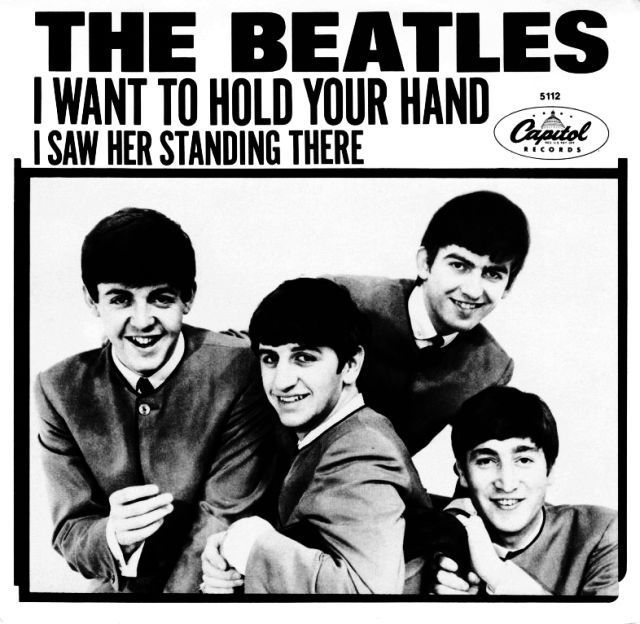
This helped start the modern rock era. No British rock act had dominated in America before the Beatles. Cliff Richard had tried and failed but with this song and an appearance on the Ed Sullivan Show…The Beatles kicked down the door and started the British Invasion and the Stones, Kinks, and Who would soon follow.
Rock and Roll can be divided up into two eras… pre Beatles and post Beatles. Everything would change after this. I bought an amp from a long time country studio musician and he told me that the day after he heard this on Ed Sullivan the world changed. Not just music but everything…music, thoughts, aspirations, and hair of course. Within weeks of this song hitting number 1 there were bands forming in every neighborhood in America. Guitars were bought, hair lengths were being tested, and a huge urge to learn everything British.
I always hold this song up to why vinyl is the way to listen to some records at times. All the CD versions I’ve heard of this song sound rather flat…when I hear the 45 vinyl single the song jumps out at you. It changes the whole dynamic of the song. After hearing the single the way it was meant to be heard… you can see why this song changed a lot of things. It was maybe the most important single they ever released…it may have had the biggest impact at least in America.
It is said that John and Paul wrote this with an America’s sound in mind. They must have guessed right. This song preceded the Beatles trip here at number 1. Lennon liked the melody so much that he talked about doing something with it again til his death.
This was played on the Washington, DC radio station WWDC before it was released in America by a DJ named Carroll Baker, who got the record from a stewardess. It was a huge hit with his listeners and prompted Capitol Records to release the song ahead of schedule – they planned to issue it on January 13, 1964.
The Beatles were in Paris and celebrated madly when they found out they were #1 in America. They came to America for the first time on February 7, 1964, greeted at the airport by screaming fans. “I Want To Hold Your Hand” was the #1 song in the country at that time, and it stayed on top for seven weeks, until their next single, the re-released “She Loves You,” replaced it.
Bob Dylan thought the line “I can’t hide” was “I get high,” and a reference to marijuana. He was surprised to learn they had never tried pot, and became part of Beatles lore when he introduced them to it.
At times John Lennon realized the crowds The Beatles played to were so loud they really couldn’t hear them sing, so sometimes instead of singing the line, “I want to hold your hand,” he would say, “I want to hold your gland” as a reference to women’s breasts…and people wonder why Lennon is my favorite Beatle!
The song peaked at #1 in the Billboard 100, Canada, UK, New Zealand, and probably on Mars also in 1964.
From Songfacts
This was the first Beatles song to catch on in America. In 1963, the Beatles became stars in England, but couldn’t break through in the US. They couldn’t get a major label to distribute their singles in America, so their first three singles there, “Please Please Me,” “From Me to You” and “She Loves You,” were issued on small labels and flopped, even though they were hits in England.
Late in 1963, American news outlets started reporting on this British sensation, and interest in the group started to rise. Capitol Records took notice and released “I Want To Hold Your Hand” Stateside on December 26. The song rose up the chart, and on February 1, 1964, hit #1. It sold better in the first 10 days of release in the US than any other British single, and remains the best-selling Beatles single in the United States, moving over 12 million copies.
Conquering the US was, and still is, a big deal for British bands. Many groups that are huge in the UK (Oasis, Blur) never really catch on in America. • John Lennon and Paul McCartney wrote this in Jane Asher’s basement. Asher was an actress who became Paul’s first high-profile girlfriend. After appearing in several movies, TV shows and stage productions, Asher became an authority on baking, and has her own business selling party cakes and supplying baking and decorating equipment. She and Paul broke up in 1968.
Jane had a brother named Pete Asher who teamed up with Gordon Waller to form the duo Peter & Gordon; McCartney wrote their hit single “A World Without Love.” Pete recalled in a 2010 interview with Gibson.com the two Beatles penning this song at his home: “My mother had a practice room that she used to give private oboe lessons when she wasn’t teaching at The Royal Academy, where she was a professor. There was just a piano, and an upright chair and a sofa. Paul used that room to write in, from time to time. One afternoon John came over, while I was upstairs in my room. The two of them were in the basement for an hour or so, and Paul called me down to listen to a song they had just finished. I went downstairs and sat on the sofa, and they sat side by side, on the piano bench. That’s where they played ‘I Want to Hold Your Hand’ for the first anywhere. They asked me what I thought. I said, ‘I think it’s very good.'” [laughs] •
The Beatles performed this on their first two Ed Sullivan Show appearances, which took place February 9 and 16, 1964. There was already a media frenzy around The Beatles, which was amplified when millions saw them on Sullivan’s show. The Beatles were booked for the show before they had a hit in the US, so they actually got paid less than many other guests for their appearance. •
• This was one of John Lennon’s favorite Beatles songs. It starts with a falling melody, which is typical of Lennon’s songwriting, and ends with a cadence with a quarter-interval: “I’ll think you’ll understand.” That quarter-interval cadence you can even hear in Lennon’s first bit of “From Me to You” and in “Tomorrow Never Knows.” McCartney most often uses second-intervals. Also typically Lennon is the sudden octave-run, “Haaaaand…” The same octave-run you can hear in the end of the middle part in Lennon’s “Please Please Me”: “To reason with youuuuuu…” Also note that the beginning of the melody in the middle part is almost the same melody as the beginning of the middle part in “Don’t Let Me Down.”
Two parody groups made answer songs to this in 1964: “I’ll Let You Hold My Hand” by The Bootles and “Yes, You Can Hold My Hand” by The Beatlettes.
This was the first Beatles song recorded on 4-track equipment. Some of their first songs were in mono.
The Beatles also cut a German version called “Komm Gib Mir Deine Hand.” They picked up some German while playing The Star Club in Hamburg in 1962.
In the 1960s it wasn’t uncommon for British stars to record new versions of their hits in other languages. The idea was to increase airplay on continental stations and to get a hit before an indigenous artist recorded a version in the local tongue. On January 29, 1964, The Beatles went into the Pathé & Marconi Studios in Paris and recorded “I Want To Hold Your Hand” and “She Loves You” (“Sie Liebt Dich”) in German. The lyrics had been hurriedly translated by a Luxembourger named Camillo Felgen, who was then a program director at Radio Luxembourg. As well, apart from their recording of “My Bonnie” in the early ’60s, this was the only time The Beatles recorded in another language. In addition it was the sole occasion on which they recorded outside London.
When this hit #1 in the US, it was the first time a British group topped the chart there since 1962, when “Telstar” by The Tornados did it. Until The Beatles came along, most British groups that had hits in America came and went pretty quickly. The Beatles kicked off the British Invasion, leading to a lengthy occupation on the charts for acts like The Rolling Stones, The Kinks and The Who as well as The Beatles.
It was the youth who discovered The Beatles, and while young people can be easily manipulated through hype and image, in the case of The Beatles it was the music that drew them in. An American girl Sanda Stewart, 15 years old in spring 1964 (according to Hunter Davies in his book Beatles) said: “I was one day in a shop with my mother when I suddenly heard ‘I Want to Hold Your Hand’ on the car radio. Such a special sound! I could never stop thinking about it. No song has effected me on that way. Several other girls in school had reacted in the same way. We saw the Beatles on photos and thought they were ugly. But their music was fantastic.”
This song was used in the movie Across the Universe at a much slower tempo.
A fairly straightforward and simple Beatles song, this one still has some musical complexity that foreshadowed what was to come. “The middle eight of that does something,” Tony Banks of Genesis explained. “The way the key changes at that point is something I hadn’t heard before.”
I Want To Hold Your Hand
Oh yeah, I’ll tell you somethin’ I think you’ll understand When I say that somethin’ I want to hold your hand I want to hold your hand I want to hold your hand
Oh please, say to me You’ll let me be your man And please, say to me You’ll let me hold your hand Now, let me hold your hand I want to hold your hand
And when I touch you I feel happy inside It’s such a feelin’ that my love I can’t hide I can’t hide I can’t hide
Yeah, you got that somethin’ I think you’ll understand When I say that somethin’ I want to hold your hand I want to hold your hand I want to hold your hand
And when I touch you I feel happy inside It’s such a feelin’ that my love I can’t hide I can’t hide I can’t hide
Yeah, you got that somethin’ I think you’ll understand When I feel that somethin’ I want to hold your hand I want to hold your hand I want to hold your hand I want to hold your hand
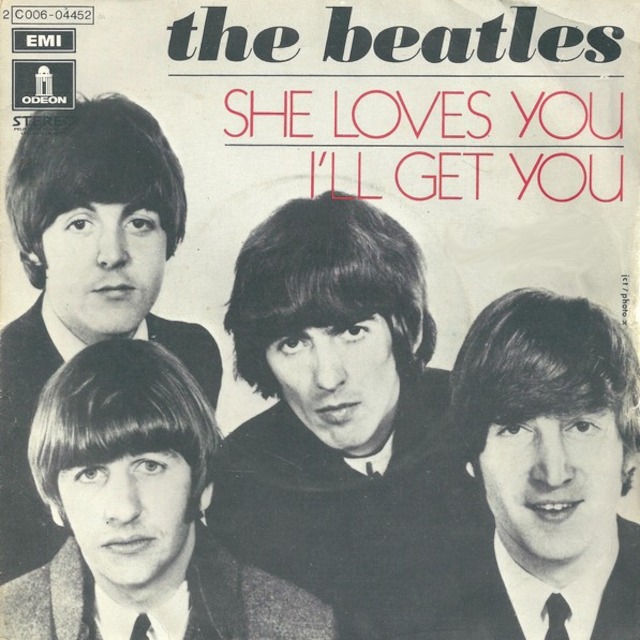
This song help kick off the sixties. The melody, music, the great harmonies and just the excitement of the song. She Loves You help define them and broke huge. Ozzy Osbourne made a statement about the song… “Imagine you go to bed today and the world is black and white and then you wake up, and everything’s in color.”
These great melodies that John, Paul, and later George would come up with lasted through their career. Even when their music got a little more sophisticated the melodies remained…they were underneath the early, middle, and late era Beatle music.
It’s best known for the yeah, yeah, yeah… Yeah, the Everly Brothers did it first, using a hook of “yeah, yeah, yeah, yeah” on their 1961 cover of the song “Temptation,” which was a #1 hit in the UK.
Paul McCartney’s dad wanted the Beatles to sing yes, yes, yes instead because he thought it sounded more dignified.…doesn’t have the same ring does it?
She Loves You peaked at #1 in the Billboard 100, Canada, the UK, and New Zealand in 1964.
In the UK, this is the biggest selling Beatles single. It held the record for top-selling UK single of all time until 1977, when Wings topped it with Mull Of Kintyre.
George Martin didn’t like the ending chord. He thought it sounded too much like the The Andrew Sisters but the Beatles liked it and over rode the producer on this one…and it works great.
in April 1964 The Beatles had the Top 5 Songs on the Billboard Top 100 Singles of the week. The closest any other artist ever got was 3 songs in the Top 10. But there they were- Can’t Buy Me Love, Twist and Shout, She Loves You, I Want To Hold Your Hand, Please Please Me, sitting at the top, along with 7 other Beatles songs in the Top 100 the same week.
Cynthia Lennon: “He was also romantic, a side of him I saw more often as our relationship deepened. He wrote love poems on scraps of paper and passed them to me at college. For our first Christmas he drew a card with a picture of me in my new shaggy coat, standing opposite him, our heads together, his hand on my arm. It was covered with kisses and hearts and he wrote, ‘Our first Christmas, I love you, yes, yes, yes.’ A few years later he used the same idea in one of the Beatles’ first hits, ‘She loves you, yeah, yeah, yeah.'”
John Lennon:“I remember it was Paul’s idea,” Lennon recalled, “Instead of singing ‘I love you’ again, we’d have a third party.”
Paul McCartney:“We were in a van up in Newcastle somewhere,” “and we’d just gone over to our hotel. I originally got an idea of doing one of those answering songs, where a couple of us sing about ‘she loves you’ and the other one sort of says the ‘yes, yes’ bit. You know, ‘yeah, yeah’ answering whoever who is saying it. But we decided that was a crummy idea anyway. But we had the idea of writing a song called ‘She Loves You’ then. And we just sat up in the hotel bedroom for a few hours and wrote it.”
From Songfacts
The Beatles tell quite a tale in this tidy pop song. Some poor guy thinks he has lost his girl for good, but he’s redeemed when he finds out from a friend that she still loves him. There’s even a moral at the end of the story: “Pride can hurt you too.” Good advice when arguing with a loved one.
This was an instant hit in the UK, but not in America, where it was released on Swan records, the only US label that would take it. Swan put it out in September 1963, but while The Beatles were huge in their homeland, they were still no big deal in America until February 1964. That’s when Beatlemania took hold and “She Loves You” became a US hit.
This was one of four Beatles songs that was never released in stereo. The others are “Love Me Do,” “I’ll Get You” and “You Know My Name (Look Up The Number).”
The Beatles released a German version translated as “Sie Liebt Dich” in the US in 1964. They learned some German when they became the house band at the Star-Club in Hamburg in 1962, but needed a German speaker to help them with the lyrics. They recorded the German version in Paris – it was the only time they recorded outside of England.
Apart from “My Bonnie,” which was recorded with Tony Sheridan in their early days in Hamburg, the only other song the Beatles recorded in another language, again German, was “I Want To Hold Your Hand.” “Komm Gib Mir Deine Hand” was recorded the same time as “Sie Liebt Dich.”
“Sie Liebt Dich” peaked at #97, the lowest position of the Beatles’ 71 Hot 100 charted songs.
Jack Paar played a video clip of The Beatles performing the song on his show January 3, 1964. The Beatles had appeared on news clips as part of stories about their success in England, but this was the first time they appeared on a US TV talk show. They also played it on both of their live Ed Sullivan Show appearances. When The Beatles agreed to do the show, they were not a big deal in America and took less money than most acts received for their fee. When The Beatles played The Ed Sullivan Show for the first time, it got the largest audience ever for a TV show. Sullivan began having regular musical guests from the world of popular music, and it became a showcase for groups like The Rolling Stones, The Supremes, Santana and Creedence Clearwater Revival.
Paul McCartney and John Lennon were inspired to write this after a concert at the Majestic Ballroom in Newcastle when they were part of a tour with Roy Orbison and Gerry & the Pacemakers. Says McCartney, “There was a Bobby Rydell song out at the time ‘Forget Him’ and, as often happens, you think of one song when you write another. We were in a van up in Newcastle-Upon-Tyne. I’d planned an answering song where a couple of us would sing ‘She loves you’ and the other ones would answer ‘Yeah Yeah.’ We decided that was a crummy idea but at least we then had the idea of a song called She Loves You. So we sat in the hotel bedroom for a few hours and wrote it; John and I, sitting on twin beds with guitars.”
In the UK, this hit #1 twice in 1963, first on September 4 and again on November 20.
Regarding the falsetto exaltation that occurs at the song’s manic peak, McCartney once explained: “The ‘wooooo’ was taken from the Isley Brothers’ ‘Twist and Shout.’ We stuck it in everything.”
These wordless vocalizations of joy were a Beatles hallmark; they most obvious example is the extended fadeout in “Hey Jude.”
The Beatles played part of this at the end of “All You Need Is Love,” which they recorded four years later.
This song was played at the conclusion of the concert sequence at the end of the film A Hard Day’s Night, although it wasn’t included on the soundtrack album.
Norman Smith, who was The Beatles engineer, told the story in his autobiography John Called me Normal about feeling his heart sink when he spotted the lyrics on the music stand. As he later relayed to Mark Lewinsohn: “She loves you, yeah yeah yeah, She loves you, yeah yeah yeah, she loves you yeah yeah yeah yeah… I thought, My God, what a lyric! This is going to be the one I do not like.”
Smith had a hit in 1972 with “Oh Babe What Would You Say” as Hurricane Smith. He also produced the first three Pink Floyd albums.
There is a very clear edit in this song between the lines “I think it’s only fair/Pride can hurt you too.” It appears that two version had been edited together.
In August 2009 the Official Chart Company compiled a list of the Beatles biggest selling hits in the UK, including re-issues. They revealed that this song was the Fab Four’s best seller in their native country, followed by “I Want To Hold Your Hand” and “Can’t Buy Me Love.”
The Melissa Manchester hit You Should Hear How She Talks About You was written as a contemporary take on this song, with the singer telling a friend that a guy is really into her.
She Loves You
She loves you, yeah, yeah, yeah She loves you, yeah, yeah, yeah She loves you, yeah, yeah, yeah, yeah
You think you’ve lost your love Well, I saw her yesterday-ay It’s you she’s thinking of And she told me what to say-ay
She says she loves you And you know that can’t be bad Yes, she loves you And you know you should be glad
She said you hurt her so She almost lost her mind But now she says she knows You’re not the hurtin’ kind
She says she loves you And you know that can’t be bad Yes, she loves you And you know you should be glad, ooh
She loves you, yeah, yeah, yeah She loves you, yeah, yeah, yeah With a love like that You know you should be glad
You know it’s up to you I think it’s only fair Pride can hurt you, too Apologize to her
Because she loves you And you know that can’t be bad Yes, she loves you And you know you should be glad, ooh
She loves you, yeah, yeah, yeah She loves you, yeah, yeah, yeah With a love like that You know you should be glad With a love like that You know you should be glad With a love like that You know you should be glad Yeah, yeah, yeah Yeah, yeah, yeah, yeah





 John eventually decided to opt for both, singing “count me out…in” on this vocal performance, which was sung in a “light voice” in imitation of Martha Reeves and Diana Ross, as his handwritten lyric sheet reminded him.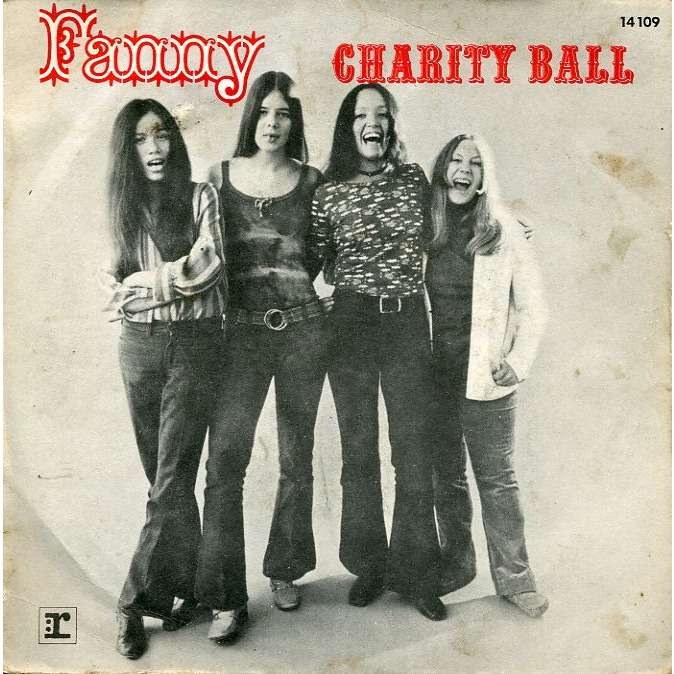




 PowerPop... An Eclectic Collection of Pop Culture