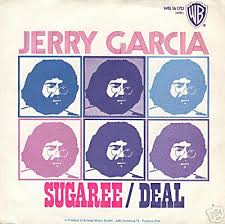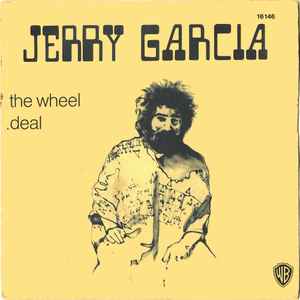
Jerry Garcia – Deal

I haven’t heard this song as much as Sugaree but I like it almost just as well.

It is so well crafted and it swings with the best of them. This was off of his debut Garcia album and his voice is in perfect form. When I think of Jerry Garcia I never think…hmm great vocalist… but this changes my mind. His voice is so clear…it shows what a good vocalist Garcia could be. Robert Hunter’s words flow through you while Garcia’s guitar dances all around. He tops it off with a versatile solo.

The album is a mix of folk, country, blues, jazz, experimental,  and rock. I love the roots music because it’s so clean and genuine. He made the album in 1971 with mostly himself. Bill Kreutzmann (Dead Drummer) was the only other musician credited on Garcia, which was recorded at Wally Heider’s Studio D in San Francisco in July 1971 and released in January 1972.

Garcia also did the album for a cash infusion to buy a house for himself and Carolyn Adams (Mountain Girl) and two children. This was recorded a year after Working Man’s Dead and American Beauty…considered two of the best Grateful Dead albums. Many of the songs on this album became staples for the Grateful Dead in concert.

Bill Kreutzmann was credited as co-writer on 5 of the tracks and Garcia and Hunter on 5 tracks. Robert Hunter also collaborated with Bob Dylan on songs Duquesne Whistle, Ugliest Girl In The World, and the minor hit Silvio. He also co-wrote all but one track on the  Bob Dylan album Together Through Life released in 2009.

Jerry Garcia on making the album:  I’m doing it to be completely self-indulgent—musically. I’m just going on a trip. I have a curiosity to see what I can do and I’ve a desire to get into 16-track and go on trips which are too weird for me to want to put anybody else I know through. And also to pay for this house! 

Jerry Garcia: I’ll probably end up doing it with a lot of people. So far I’m only working with Bill Kreutzmann because I can’t play drums. But everything else I’m going to try to play myself. Just for my own edification. What I’m going to do is what I would do if I had a 16-track at home, I’m just going to goof around with it. And I don’t want anyone to think that it’s me being serious or anything like that—it’s really me goofing around. I’m not trying to have my own career or anything like that. There’s a lot of stuff that I feel like doing and the Grateful Dead, just by fact that it’s now a production for us to go out and play, we can’t get as loose as we had been able to, so I’m not able to stay as busy as I was. It’s just a way to keep my hand in so to speak, without having to turn on a whole big scene. In the world that I live in there’s the Grateful Dead which is one unit which I’m a part of and then there’s just me. And the me that’s just me, I have to keep my end up in order to be able to take care of my part of the Grateful Dead. So rather than sit home and practice—scales and stuff—which I do when I’m together enough to do it—I go out and play because playing music is more enjoyable to me than sitting home and playing scales.

Deal

Since it costs a lot to win, and even more to lose,
You and me bound to spend some time wond’rin’ what to choose.
Goes to show, you don’t ever know,
Watch each card you play and play it slow,
Wait until that deal come round,
Don’t you let that deal go down, no, no.

I been gamblin’ hereabouts for ten good solid years,
If I told you all that went down it would burn off both of your ears.
Goes to show you don’t ever know
Watch each card you play and play it slow,
Wait until that deal come round,
Don’t you let that deal go down, no, no.

Since you poured the wine for me and tightened up my shoes,
I hate to leave you sittin’ there, composin’ lonesome blues.
Goes to show you don’t ever know
Watch each card you play and play it slow,
Wait until that deal come round, don’t you let that deal go down.

Wait until that deal come round, don’t you let that deal go down,
Don’t you let that deal go down, don’t you let that deal go down.
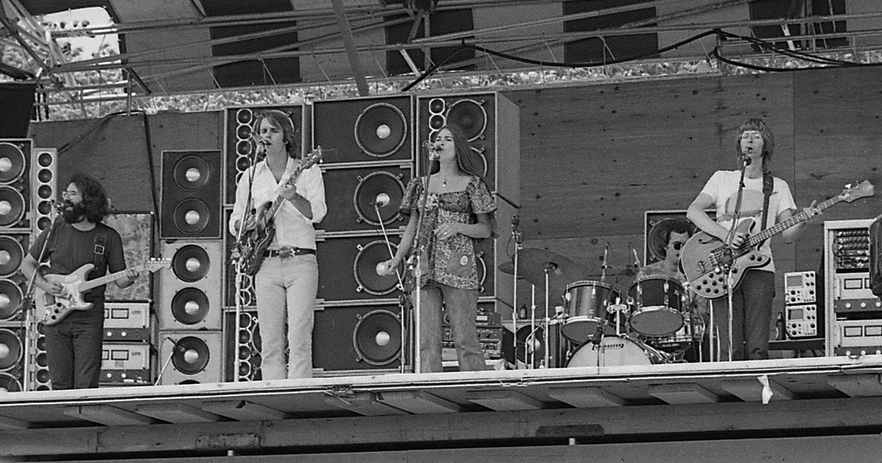
Grateful Dead – Mississippi Half-Step Uptown Toodleloo

I can imagine listening to this song floating down the river on a warm southern day. How could anyone not like that title? I first heard this song in the 80s from a friend’s brother who was a complete Dead Head.

Hello baby, I’m gone, goodbye
Half a cup of rock and rye

While Robert Hunter and Jerry Garcia were writing the song, Garcia had a problem with one particular word in this line: Cueball’s made of styrofoam
and no one’s got the time.

Robert Hunter said that Garcia argued:  “This is so uncharacteristic of your work, to put something as time-dated” or whatever that word would be “as Styrofoam into it.” I’ve never sung that song without regretting I put that line in. Jerry also didn’t like songs that had political themes to them, and in retrospect, I think this was wise because a lot of the stuff with political themes from those days sounds pretty callow these days.”

The song was a popular one in concert…It was performed over 230 times live by The Grateful Dead over the years.

The song was on the Wake of the Flood album released in 1973… but not without its problems. It came three long years after the Dead’s previous studio album, American Beauty. Now, this would be normal but back in the seventies that was a lifetime.

The Dead had just left Warner Bros and were without a record deal. Then manager  Ron Rakow talked to Garcia about starting the label and soon it was agreed. They made a decision to start their own record label like The Beatles and Stones did…except for one thing. They had no one to distribute them. Phil Lesh said: “We already owned our own sound system. Booking and travel were in-house. It seemed as if being our own record company would be worth a try. No one could see a downside.”

Rakow talked for a while about distributing records by ice cream trucks. Yes…fans would place their order through the local ice cream truck vendor and you would pick up your album with… a snowcone I guess. The voice of reason soon prevailed and they eventually got United Artists to distribute their records.

Wake of the Flood was their first studio album released on their new Grateful Dead Records. They did release two singles before that. They had problems after the release. They took a call from one distributor… the copies he’d received of Wake of the Flood sounded so bad, he said, that kids were bringing them back to the stores. The Dead office thought it was a hustle…retailers wanting records sent to them for free until he asked yet another grousing store owner to send him a copy of the supposedly flawed record. What arrived in the mail at the Dead office was a truly fake Wake of the Flood… a cover that amounted to a mimeographed photo of the artwork and an LP with music that sounded as if it had been copied from a cassette, complete with hissing noises. They’d been bootlegged.

One source says the label was told in advance by shadowy figures in Brooklyn that any release on Grateful Dead Records would be bootlegged and that they would have no choice but to go along with it. Soon after that batch, the bootlegs stopped and it was over as quick as it started. The band lost up to 90,000 because of the bootlegs.

Soon after the album’s release, Warner Bros released a greatest hits album called Skeletons in the Closet. Wake of the Flood peaked at #18 in the Billboard Album Charts and #30 in Canada in 1973.

Garcia talked about the line: I lost my boots in transit babe
A pile of smoking leather

“I was in an automobile accident in 1960 with four other guys… 90-plus miles an hour on a back road. We hit these dividers and went flying, I guess. All I know is that I was sitting in the car and there was this… disturbance… and the next thing, I was in a field, far enough away from the car that I couldn’t see it.

“The car was crumpled like a cigarette pack… and inside it were my shoes. I’d been thrown completely out of my shoes and through the windshield. One guy did die in the group. It was like losing the golden boy, the one who had the most to offer. For me it was crushing, but I had the feeling that my life had been spared to do something, to either go whole hog or not at all…That was when my life began. Before that I had been living at less than capacity. That event was the slingshot for the rest of my life. It was my second chance, and I got serious.”

Mississippi Half-Step Uptown Toodeloo

On the day that I was born
Daddy sat down and cried
I had the mark just as plain as day
which could not be denied
They say that Cain caught Abel
rolling loaded dice,
ace of spades behind his ear
and him not thinking twice

Half-step
Mississippi Uptown Toodleloo
Hello baby, I’m gone, goodbye
Half a cup of rock and rye
Farewell to you old southern sky
I’m on my way – on my way

If all you got to live for
is what you left behind
get yourself a powder charge
and seal that silver mine
I lost my boots in transit babe
A pile of smoking leather
Nailed a retread to my feet
and prayed for better weather

Half-step
Mississippi Uptown Toodleloo
Hello, baby, I’m gone, good-bye
Half a cup of rock and rye
Farewell to you old southern sky
I’m on my way – on my way

They say that when your ship comes in
the first man takes the sails
The second takes the afterdeck
The third the planks and rails
What’s the point to callin shots?
This cue ain’t straight in line
Cueball’s made of styrofoam
and no one’s got the time

Half-step
Mississippi Uptown Toodleloo
Hello baby, I’m gone, goodbye
Half a cup of rock and rye
Farewell to you old southern sky
I’m on my way – on my way

Across the Rio Grand-eo
Across the lazy river
Across the Rio Grand-eo
Across the lazy river

So Many Roads: The Life and Times of the Grateful Dead …. by David Browne

I’ve read a few books about the Dead but this one is probably the best I’ve read. I just finished re-reading it after finishing it three years ago. It is their complete history from beginning to end. The book I enjoyed the most was Deal: by Bill Kreutzmann The Deads drummer. He has some great stories and Steve Parish’s book is good also…but as far as the history…this has been the best.

This is not like reading a book about the Beatles, Stones, Dylan, or even the Allman Brothers. The Grateful Dead were totally different in the way they came about and what path they took. They were such a hippy band but along the way they turned into a corporate organization…a different kind of organization but one all the same. Their crew was known to be loud and sometimes violent along with the Hells Angels by the mid-seventies and the craziness wore off on everyone around them.

I always thought of them as this loose ensemble that just loved playing. Yes, they loved playing but they weren’t above pointing fingers when something went wrong on stage. At one point Weir and Pigpen were “fired” although accounts differ on if they really were let go. In other words, they were human… like anyone else. They did however think differently and for a bunch of hippies…they were very ambitious.

Speaking of Pigpen (Ron McKernan)… that was a wonderful thing about this book…his importance is highlighted and you see how important he was to the Grateful Dead. Jerry wasn’t the key focus when they started…it was Pigpen. Although he looked like a biker…he was described as an incredibly nice and sensitive man. He was the showman of the band and Jerry commented that he was the best musician in the band in the beginning.

The book covers their entire career and along with the way, there are many twists and turns. They cover Garcia’s slide down until his diabetic coma in 1986 when he had to re-learn how to play guitar again. Less than a year later they were back on the road and then recorded the In The Dark album.

The band never had a big hit single and now…over 20 years of being together and touring they were suddenly huge with the song Touch Of Grey. They even agreed to play the game with the record company and they made a video. They were signed to Arista Records and the record company and band were at a meeting. Garcia suddenly asked, “I don’t have to do Dick Clark, do I?” With that, the executives laughed at the thought of the Grateful Dead appearing on American Bandstand.

There were points where it looked like Garcia would beat his addictions but the threat of him going back to heroin was always there. They also cover all the members rather well…Garcia wasn’t the only one with drug problems but his problem probably affected the band the most.

If you want to learn about their history…this is a really good read.

Grateful Dead – Don’t Ease Me In

I first noticed this song on the concert film The Festival Express a few years ago. I’ve heard the two studio versions but that live version is the one I like best. It’s something about it I really connect to. Garcia and Weir sound great singing together along with Pigpen playing the harmonica. It’s just a simple blues-type song but it works well for me anyway.

As soon as I heard it I took one of my acoustic guitars off the wall and kept running back the video file back and playing with them…I didn’t think they would mind.

This song was first released by the Dead in 1966 as their first single with Stealin on the flip side. That version is good and it reminds me of the band Them…not the voice but the music. They also released it again on their Go To Heaven album in 1980 but that version to me is a little too slick. The version on Festival Express shows all the ragged edges in the best way. It is pure Americana. They would do it live many times later on but I still go back to the Festival version.

They also covered it before they were the Grateful Dead. They started off as a jug band called Mother McCrees Uptown Jug Champions and most likely covered it when they were called the Warlocks.

They might have heard the version of the song by Henry Thomas…an old blues artist that lived from 1874 to around 1930. If you want to learn more in detail about Thomas and this song go here to Jim’s site. It also sounds close to a song by Jelly Roll Morton called Don’t You Leave Me Here. On the Go To Heaven album, it’s credited to “traditional arranged by The Grateful Dead.” The single that was released in 1966 was credited to Garcia but I’ve read where he didn’t authorize that and didn’t ask for a credit.

Speaking of the Festival Express…it was The Transcontinental Pop Festival… better known as the Festival Express. Great idea on paper… rounding up musicians in 1970 and placing them on a train going across Canada and stopping along the way to play festivals. What could go wrong? Actually, I would have loved to have been on that train. The lineup: The Band, The Grateful Dead, Janis Joplin, Buddy Guy Blues Band, The Fly Burrito Brothers, Sha Na Na, and Delaney & Bonnie & Friends.

There were artists that were not in the film like Traffic, Ten Years After, Tom Rush, Ian & Sylvia, Mountain, and more.

A DVD was released of this in 2004. All these musicians were on a train full of liquor and an assortment of drugs… liquor was the popular choice among the musicians on this ride. The tour was to have events in Montreal, Toronto, Winnipeg, Calgary, and Vancouver. The Montreal event was canceled as was Vancouver. In Toronto, protesters were saying the festival promoters were price gouging so The Grateful Dead played a free concert in a park nearby to ease tensions with the protesters.

When watching the film you can see the performers are having a ball jamming with each other because they didn’t get a lot of chances to do that on the road.

Here is the link to the full movie free on youtube…if you have time…it’s worth it!

Bill Kreutzmann (drummer for the Dead): We celebrated Janis Joplin’s birthday at the last stop the traditional way: with birthday cake. In keeping with our own kind of tradition, somebody—within our ranks, I would imagine—had secretly infused the cake with a decent amount of LSD. So it quickly became an electric birthday celebration. Allegedly, some generous pieces of that birthday cake made it to the hands and mouths of the local police who were working the show. “Let them eat cake!” (To be fair, I didn’t have anything to do with that … I was just another cake-eating birthday reveler, that night.)
And that was it for the Festival Express. It was a wonderful time and I think what really made it great was the level of interaction and camaraderie among the musicians, day and night, as we were all trapped on this train careening across the great north. It probably helped that we were all trashed the entire time. Whiskey was in the conductor’s seat on that ride.

I would recommend getting the DVD of this event. It’s a great time capsule of that time in music and culture.

Don’t Ease Me In

Don’t ease, don’t ease, don’t ease me in
I’ve been all night long coming home, don’t ease me in

I was standing on the corner, talking to Miss Brown
When I turned around, sweet mama, she was way across town
So I’m walking down the street, with a dollar in my hand
I’ve been looking for a woman, sweet mama, ain’t got no manDon’t ease, don’t ease, don’t ease me in
I’ve been all night long coming home, don’t ease me inThe girl I love, she’s sweet and true
You know the dress she wears, sweet mama, it’s pink and blue
She brings me coffee, you know she brings me tea
She brings about every damn thing, but the jailhouse keyDon’t ease, don’t ease, don’t ease me in
I’ve been all night long coming home, don’t ease me inDon’t ease, don’t ease, don’t ease me in
I’ve been all night long coming home, don’t ease me in

Talking to Miss Brown
Well I turned around, sweet moma
She was way cross town

So I’m walking down the street
With a dollar in my hand
I’ve been looking for a woman, sweet moma
Ain’t got no man

The girl I love
She’s sweet and true
You know the dress she wears, sweet moma
It’s pink and blue

She brings me coffee
You know she brings me tea
She brings ’bout every damn thing
But the jailhouse key

Jerry Garcia – Sugaree

I remember this song on the radio in the seventies. Of all places, it was played a lot at our local skating rink. It’s high on the list of my favorite songs. It wasn’t the best song written by Garcia and Hunter but I can listen to it at any time. Probably the first Dead…or close to a Dead song I ever heard. The song has stuck with me my entire life.

Jerry Garcia played most of the instruments on this album except drums and Dead drummer Bill Kreutzmann handled those. Sugaree was on the Garcia album released in 1972. He had teamed up with other players in the past but this was his first solo album. The song peaked at #94 on the Billboard 100 in 1972. I always liked the vague lyrics to this song. I first thought it was about death… you can take it a lot of ways.

The Grateful Dead did this live many times…Jerry Garcia and Robert Hunter wrote this song. The Dead made their reputation live. They got very little radio play and didn’t sell many albums, but they are one of the top-grossing concert acts of all time.

Like the Allman Brothers, they formed a family atmosphere with their crew and it extended to their audience. From the early Kool-Aid acid tests to later on allowing the audience to tape their shows drew their audience closer. They would later give them their own section to record in…while other bands like Led Zeppelin would send people to bust their tape recorder or head. Garcia commented: Well, my feelings are, the music is for the people…I mean after it leaves our instruments it’s of no value to us, ya know what I mean? it’s like, ya know…what good is it? So it might as well be taped, my feeling is that..and if people enjoy taping it and enjoy having the tapes to listen to, that’s real great. “

They never played the same show twice. They would take songs in different directions and Garcia has said that he couldn’t play something twice the same. He just wasn’t built like that. That made every show unique…not that every show was great. The Dead has admitted they had their share of bad ones.

On Deadheads following them around the country: “Well, it’s obviously very important to them. And more than that, it’s giving them an adventure. They have stories to tell. Like, “Remember that time we had to go all the way to Colorado and we had to hitchhike the last 400 miles because the VW broke down in Kansas.” Or something like that. Y’know what I mean? That’s giving them a whole common group of experiences which they can talk about. For a lot of people, going to Grateful Dead concerts is like bumping into a bunch of old friends.”

Bill Kreutzmann…if you get a chance read his book Deal: My Three Decades of Drumming, Dreams, and Drugs with the Grateful Dead. I covered it here a while back. It’s an education in the rock world…or the Dead world of the 60s through the 90s. If you are offended by drugs, sex, and great music…pass it by.

Robert Hunter: “Sugaree was written soon after I moved from the Garcia household to China Camp. People assume the idea was cadged from Elizabeth Cotten’s ‘Sugaree,’ but, in fact, the song was originally titled ‘Stingaree,’ which is a poisonous South Sea manta. The phrase ‘just don’t tell them that you know me’ was prompted by something said by an associate in my pre-Dead days when my destitute circumstances found me fraternizing with a gang of minor criminals. What he said, when departing, was: ‘Hold your mud and don’t mention my name.’

“Why change the title to ‘Sugaree’? Just thought it sounded better that way, made the addressee seem more hard-bitten to bear a sugar-coated name. The song, as I imagined it, is addressed to a pimp. And yes, I knew Libba’s song, and did indeed borrow the new name from her, suggested by the ‘Shake it’ refrain.”

Bill Kreutzmann Drummer for the Dead: The album, Garcia, was cut at Wally Heider Studios in July 1971 and released by Warner Brothers the following January. There are a lot of songs on there that became Grateful Dead mainstays, in addition to “Deal”—we’re talking about straight-up classics like “Sugaree,” “Loser,” and “The Wheel.” Also, “Bird Song” is on there, which, to this day, is one of my all-time favorite Dead songs and one of my absolute favorite songs to play live (along with “Dark Star” and “The Other One”).

When I want musicians I’m playing with to learn any of those songs, I give them the Garcia versions. They’re just so good. I had a really great time making that album. Dealing exclusively with Jerry was the most effortless thing in the world. I didn’t have to do anything other than be myself. And play.

Cocaine was our special guest throughout those recording sessions, but you’d never be able to tell because everything was very laid back. I have no idea how we were able to do that, because cocaine isn’t exactly known for its relaxing properties. Maybe it was just the dynamic between us that made it all so … easy.

Sugaree

When they come to take you down
When they bring that wagon round
When they come to call on you
and drag your poor body down

Just one thing I ask of you
Just one thing for me
Please forget you knew my name
My darlin Sugaree

Shake it, shake it Sugaree
Just don’t tell them that you know me

You thought you was the cool fool
Never could do no wrong
Had everything sewed up tight
How come you lay awake all night long?

Just one thing I ask of you
Just one thing for me
Please forget you knew my name
My darlin Sugaree

Shake it, shake it Sugaree
Just don’t tell them that you know me

You know in spite of all you gained
you still have to stand out in the pouring rain
One last voice is calling you
and I guess it’s time you go

Just one thing I ask of you
Just one thing for me
Please forget you knew my name
My darlin Sugaree

Shake it, shake it Sugaree
Just don’t tell them that you know me

Shake it up now, Sugaree
I’ll meet you at the Jubilee
If that Jubilee don’t come
Maybe I’ll meet you on the run

One thing I ask of you
Just one thing for me
Please forget you knew my name
my darling Sugaree

Shake it, shake it Sugaree
but don’t tell them that you know me
Shake it, shake it Sugaree
Just don’t tell ’em that you know me

Grateful Dead – US Blues

Shake the hand that shook the hand of P.T. Barnum and Charlie Chan

I love that line. This song has a cool simple guitar riff that starts it off into the Grateful Dead’s familiar shuffle beat. It’s a song that is commercial sounding and I don’t understand why it didn’t dent the charts. It’s a straight ahead rocker that has a great hook.

The song was released as a single with “Loose Lucy” as the B-side in 1974. It was on the album From The Mars Hotel. The album did peak at #16 in the Billboard Album Charts.

“U.S. Blues” grew out of a 1972 Grateful Dead song “One More Saturday Night.” Robert Hunter, the Dead’s lyricist wrote the words and Jerry Garcia wrote the music. They had a great writing partnership.

The song changed a lot through Hunter’s many rewrites. At some points it was a forceful anti-military  song, but the final result isn’t so serious. It’s a fun song that the Dead frequently played live.

P.T. Barnum and Charlie Chan are mentioned in the lyric.

P.T. Barnum – (1810-1891), showman, author. Born in Connecticut, Barnum began his career as showman in 1835 when he bought and exhibited slave who claimed to be 161 years old and the nurse of George Washington. Seven years later he opened his American Museum, in New York City, exhibiting the Fiji Mermaid (half monkey, half fish), General Tom Thumb (a midget less than three feet tall), and the original Siamese Twins, Chang and Eng. He also arranged the American tour of Jenny Lind, known as the Swedish Nightingale. After serving as mayor of Bridgeport and as a member of the Connecticut legislature, he organized “The Greatest Show on Earth,” a circus that opened in Brooklyn, New York, in 1871. A merger in 1881 created Barnum and Bailey’s.”

Charlie Chan – He is a fictional character…a pudgy, wise, smiling Chinese detective living in Hawaii who appears in a number of stores by Earl Derr Diggers. Chan has a large and constantly growing family–a son in the latter tales begins to learn the sleuthing business from his father–and Charlie is given to philosophical reflections, many of them supposedly culled from Chinese sages. … Chan first appeared in The House Without a Key (1925), later in other novels, in the movies, and in many radio sketches.”

From Songfacts

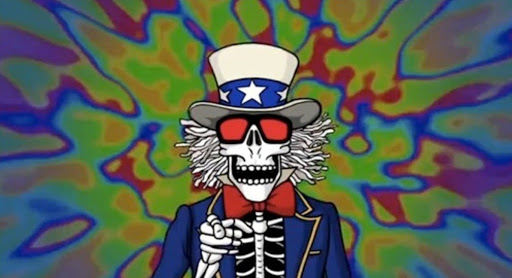
Dead co-founder Bob Weir told Dupree’s Diamond News in their 18th issue (May 1991) that the song wasn’t meant to be favorable of Uncle Sam and American culture. “We have our pantheon, and one of the figures in the pantheon is Uncle Sam. He’s sort of like the godfather figure of American culture. So we actually have a fair bit of respect for him. And he comes around in different guises, you know – in our little region, he comes around as a skeleton, but he’s still wearing the same hat.”

“Uncle Sam,” who appears in the line, “I’m Uncle Sam, how do you do?” refers to a mythological character representing the United States government. The character first arose during the war of 1812. Uncle Sam appears in many contexts of varying seriousness, but one of the most consistent is as a military recruiter. During World War II it was common to see posters with Uncle Sam’s visage and the words “I Want You for U.S. Army.”

The lyric “blue suede shoes” in the first line refers to the song of the same name.

US Blues

Red and white, blue suede shoes, I’m Uncle Sam, how do you do?
Gimme five, I’m still alive, ain’t no luck, I learned to duck.
Check my pulse, it don’t change. Stay seventy-two come shine or rain.
Wave the flag, pop the bag, rock the boat, skin the goat.
Wave that flag, wave it wide and high.

Summertime done, come and gone, my, oh, my.
I’m Uncle Sam, that’s who I am; Been hidin’ out in a rock and roll band.
Shake the hand that shook the hand of P.T. Barnum and Charlie Chan.
Shine your shoes, light your fuse. Can you use them ol’ U.S. Blues?
I’ll drink your health, share your wealth, run your life, steal your wife.
Wave that flag, wave it wide and high.

Summertime done, come and gone, my, oh, my.
Back to back chicken shack. Son of a gun, better change your act.
We’re all confused, what’s to lose?
You can call this all the United States Blues.
Wave that flag, wave it wide and high.
Summertime done, come and gone, my, oh, my.

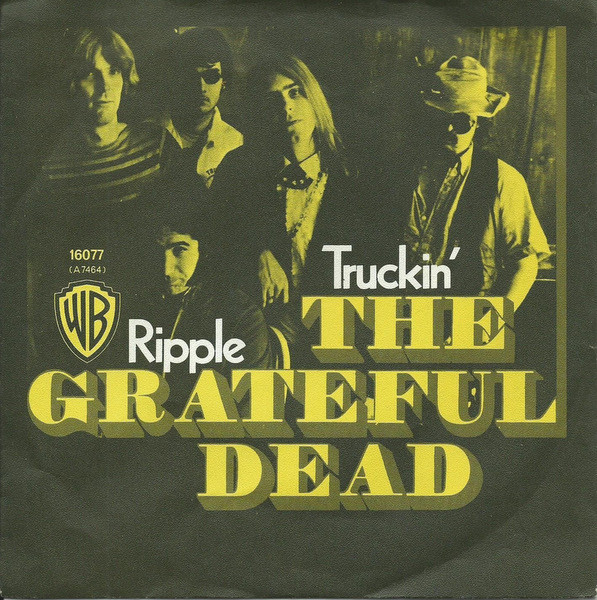
Grateful Dead – Truckin’…Drug Reference Week

What in the world ever became of sweet jane?
She lost her sparkle, you know she isn’t the same
Livin’ on reds, vitamin see, and cocaine,
All a friend can say is “ain’t it a shame?”

This wraps up Drug Reference Week. Thanks to all for reading and commenting…I hope you have enjoyed it.

This is the first Grateful Dead song I remember hearing. I heard it before I knew who the Grateful Dead were… the line Busted, down on bourbon street, set up, like a bowlin’ pin stuck with me. The line happened in real life for the band.

Every member of the Dead except Pigpen and Tom Constanten (who left the band immediately after the New Orleans incident) was included in the bust, along with several members of their entourage and some local associates.

Along with the others… Owsley Stanley, then a tech for the band as well as a well-known LSD producer…was arrested.


Grateful Dead

All of the 19 people caught in the raid were booked for possession of some combination of marijuana, LSD, barbiturates, amphetamines, or other dangerous non-narcotic drugs. It carried a penalty of 5 to 15 years in prison.

New Orleans police seem to fear that their good town will become the next Haight-Ashbury.

After posting bail money, the Dead were almost out of funds. They added an extra show in New Orleans and persuaded Fleetwood Mac to stay for the additional performance as well.

At the gig, a hat was passed around the audience to collect some additional cash for legal expenses. Most of the charges from the New Orleans bust were eventually dropped…but the Dead got a great sound out of the ordeal!

The song was written by Jerry Garcia, Robert Hunter, Phi Lesh, and Bob Weir.

Truckin’ peaked at #64 in the Billboard 100 in 1971.

Jerry Garcia: “They had great fun with us, the southern cops. They had just what they wanted: hippies. Oh, boy.”


From Songfacts

The ’60s was a time for traveling and discovering your place in the world. Sometimes what you found was an empty existence that just keeps repeating itself day to day. Having to deal with everyday life when you were always waiting for some kind of revelation to expand your consciousness was often depressing. The Grateful Dead sang of acceptance of banality and the drive to continue their search for epiphany.

One verse in particular: “What in the world ever became of sweet Jane, she lost her sparkle. Well you know she isn’t the same. Living on reds, vitamin C and cocaine? All a friend can say is ain’t it a shame.” seems to refer to the endless desperation that overtakes some people. They turn to drugs to provide meaning in their lives. This of course fails and spirals their lives into deeper depression. Drugs are for enhancing a good time spent with good friends. They cannot provide answers to the meaning of life. The previous verse speaks to commonplace usage and the consequences of accepting illegal activities as a normal part of your life. You often get “busted” by the police. 

Grateful Dead members Jerry Garcia, Phil Lesh and Bob Weir are the credited writers on this track along with their lyricist Robert Hunter.

The line, “Busted, down on Bourbon Street” refers to an incident on January 31, 1970 when members of the band were arrested in a drug bust that netted 19 people in New Orleans. The group was in town to play two shows at a club called the Warehouse, and the raid happened the morning after their first show at the French Quarter hotel where they were staying. Lesh, Weir and drummer Bill Kreutzmann were all arrested along with crew members and fans of the band who had joined them at the hotel.

The story made the front page of the New Orleans Times-Picayune the next day, and drew national attention, with Rolling Stone running an article on the incident. Owsley Stanley, a Dead associate known for his pioneering work with LSD, was also arrested and labeled the “King of Acid” in the Times-Picayune piece. According to the Rolling Stone article, the band paid for bail and legal fees for all 19 arrested.

Truckin’

Truckin’ got my chips cashed in. keep truckin’, like the do-dah man
Together, more or less in line, just keep truckin’ on.

Arrows of neon and flashing marquees out on main street.
Chicago, new york, detroit and it’s all on the same street.
Your typical city involved in a typical daydream
Hang it up and see what tomorrow brings.

Dallas, got a soft machine; houston, too close to new orleans;
New york’s got the ways and means; but just won’t let you be, oh no.

Most of the cast that you meet on the streets speak of true love,
Most of the time they’re sittin’ and cryin’ at home.
One of these days they know they better get goin’
Out of the door and down on the streets all alone.

Truckin’, like the do-dah man. once told me “you’ve got to play your hand”
Sometimes your cards ain’t worth a dime, if you don’t lay’em down,

Sometimes the light’s all shinin’ on me;
Other times i can barely see.
Lately it occurs to me what a long, strange trip it’s been.

What in the world ever became of sweet jane?
She lost her sparkle, you know she isn’t the same
Livin’ on reds, vitamin see, and cocaine,
All a friend can say is “ain’t it a shame?”

Truckin’, up to buffalo. been thinkin’, you got to mellow slow
Takes time, you pick a place to go, and just keep truckin’ on.

Sittin’ and starin’ out of the hotel window.
Got a tip they’re gonna kick the door in again
I’d like to get some sleep before i travel,
But if you got a warrant, i guess you’re gonna come in.

Busted, down on bourbon street, set up, like a bowlin’ pin.
Knocked down, it get’s to wearin’ thin. they just won’t let you be, oh no.

You’re sick of hangin’ around and you’d like to travel;
Get tired of travelin’ and you want to settle down.
I guess they can’t revoke your soul for tryin’,
Get out of the door and light out and look all around.

Sometimes the light’s all shinin’ on me;
Other times i can barely see.
Lately it occurs to me what a long, strange trip it’s been.

Truckin’, i’m a goin’ home. whoa whoa baby, back where i belong,
Back home, sit down and patch my bones, and get back truckin’ on.
Hey now get back truckin’ home.

Grateful Dead – Casey Jones

Driving that train, high on cocaine
Casey Jones is ready, watch your speed

As a teenager, this song blasted from the car stereo with the windows down. The rebellion had kicked in and just to sing along with “cocaine” made us all giddy…although none us would have known cocaine if it was in front of us. Great song by the Dead.

The song was on the album Workingman’s Dead released in 1970. With it’s Americana sound…it became with the American Beauty one of their most popular albums. The song was written by Jerry Garcia and Robert Hunter.

“Casey Jones” is very loosely based on the real-life happenings of the heroic engineer Casey Jones, who was the subject of the famous 1902 song “The Ballad Of Casey Jones.” It was doubtful that Jones was high on cocaine when he took over the train, and although his life was ended when he was hit by a train traveling the wrong way, he sacrificed his life so those on board could be saved.

Casey Jones was not released as a single and did not chart. It remains one of their most popular songs known by non-Dead Heads.


The Real  CASEY JONES  1864-1900

American folk hero Casey Jones was born John Luther Jones on March 14, 1864, in a rural part of southeastern Missouri. He would work as an engineer on the railroad later in life.

On April 30, 1900, Jones volunteered to work a double shift to cover for a fellow engineer who was ill.  He had just completed a run from Canton, Mississippi, to Memphis, Tennessee, and was now faced with the task of returning on board Engine No. 1 headed southbound.

When he pulled out of the Memphis station in the early hours of April 30, the train was running late so he hurried to make up for lost time. As the train rounded a curve near Vaughan, Mississippi, it collided with another train on the tracks, but not before Jones told his fireman to jump to safety. Jones remained on board, supposedly to try to slow the train and save his passengers, and Jones the only person to die in the accident.

Following Jones’s death, Wallace Saunders, an African-American railroad worker in Mississippi, developed a ballad about the fallen engineer that became popular with other men in the railroad yards.

https://www.biography.com/personality/casey-jones

From Songfacts

Ask if the song grates his nerves when he hears it…Jerry Garcia: “Sometimes, but that’s what it’s supposed to do. It’s got a split-second little delay, which sounds very mechanical, like a typewriter almost, on the vocal, which is like a little bit jangly, and the whole thing is, I always thought it’s a pretty good musical picture of what cocaine is like. A little bit evil. And hard-edged. And also that sing-songy thing, because that’s what it is, a sing-songy thing, a little melody that gets in your head.”

Grateful Dead lyricist Robert Hunter came up with the line “Drivin’ that train, high on cocaine, Casey Jones you’d better watch your speed,” which he wrote down and put in his pocket. He didn’t think of it as part of a song until he looked at it later and decided to complete the lyrics.

When they put the song together, Hunter looked for ways to omit the word “cocaine,” which at the time was a controversial word for song lyrics (they had taken some heat for using “Goddamn” in “Uncle John’s Band”). Hunter tried some other phrases – “whipping that chain,” “lugging propane” – but couldn’t find an acceptable substitute, so Casey Jones ended up high on cocaine as originally written.

https://www.youtube.com/watch?v=hx54bfrJAQs

Casey Jones

Driving that train, high on cocaine
Casey Jones is ready, watch your speed
Trouble ahead, trouble behind
And you know that notion just crossed my mind

This old engine makes it on time
Leaves central station ’bout a quarter to nine
Hits river junction at seventeen to
At a quarter to ten you know it’s travelin’ again

Driving that train, high on cocaine
Casey Jones is ready, watch your speed
Trouble ahead, trouble behind
And you know that notion just crossed my mind

Trouble ahead, lady in red
Take my advice you’d be better off dead
Switchman’s sleeping, train hundred and two is
On the wrong track and headed for you

Driving that train, high on cocaine
Casey Jones is ready, watch your speed
Trouble ahead, trouble behind
And you know that notion just crossed my mind

Trouble with you is the trouble with me
Got two good eyes but you still don’t see
Come round the bend, you know it’s the end
The fireman screams and the engine just gleams…

Grateful Dead – Uncle John’s Band

There are songs like Itchycoo Park, Can’t Find My Way Back Home, and this one that transports me back to a time that I’m too young to remember… but these songs make me feel like I was there.

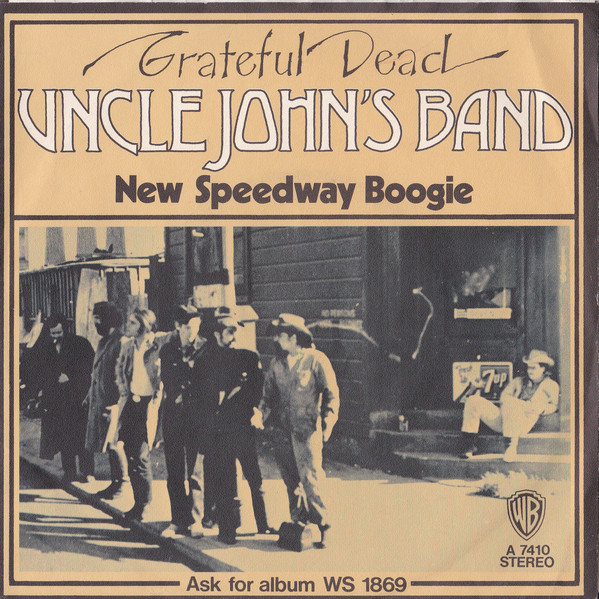
Jerry Garcia and Robert Hunter collaborated on “Uncle John’s Band,” which was originally part of their stage set before they recorded it as a single track from their Workingman’s Dead album. It would go on to become one of their better-known songs

It’s possible that this song is about a string band called the New Lost City Ramblers (NLCR), whose John Cohen was nicknamed “Uncle John.”

For two albums the Dead tried a more roots Americana type of music that may have been inspired by the then-new Crosby, Stills, and Nash. Workingman’s Dead and American Beauty. Personally, they are my favorite albums by them though I do like some others like From The Mars Hotel. 

The song peaked at #69 in the Billboard 100. If you want to read more info on the Dead…go to https://jimadamsauthordotcom.wordpress.com/2020/04/08/g-is-for-grateful-dead/ 

Jim has over 30 Dead concerts in his past.

From Songfacts
The style is a laid-back bluegrass-folk arrangement on acoustic guitar. Vocals are in close harmony in a conscious effort to echo Cosby Stills & Nash – it worked, because CS&N covered it on their 2009 concert circuit.

Lots of Americana to touch on here – this was the first time the epithet “God Damn” had been heard in a Hot 100 hit. A “buckdancer” is “one who dances the buck-and-wing” according to The Dictionary of American Regional English. The phrase “buckdancer’s choice” is both a popular fiddle tune of Appalachia, and the title of a poetry collection by the American poet James Dickey; you’ll recognize him more when we tell you that one of his other works was turned into a little 1972 film called Deliverance.

More Americana: the line “fire and ice” references American poet Robert Frost’s poem of the same name, and the line “Don’t tread on me” is a famous phrase that first came out during the American Revolution from Britain – scope out an image of a yellow flag with a coiled, hissing snake sometime, that’s the “Gadsden flag,” later popular with the American Tea Party political movement. The line “the same story the crow told me” references Johnny Horton’s “The Same Old Tale the Crow Told Me,” which was the B-side to the better-known “Sink the Bismarck.” While that’s a British song, Horton was very much an American rockabilly artist (and he has no relation to the Horton who hears a who).

OK, who is Uncle John? That could be anybody and everybody – fan speculations run wild from the Biblical John the Baptist to Mississippi John Hurt. But maybe, like the Beatles’ Sergeant Pepper, it was just an alias made up for fun.

This was one of the Dead’s first attempts to reach beyond their little cult and take a shot at the mainstream. The single release was cut by 25 seconds from the album version. Although this plan didn’t work out with the single scoring a lukewarm #69, the album itself went on to sell well at one million copies – a first for them – and “Uncle John’s Band” became one of their more well-known songs.

Uncle John’s Band

Well the first days are the hardest days, don’t you worry any more
‘Cause when life looks like easy street, there is danger at your door
Think this through with me, let me know your mind
Wo, oh, what I want to know, is are you kind

It’s a buck dancer’s choice my friend; better take my advice
You know all the rules by now and the fire from the ice
Will you come with me? won’t you come with me
Wo, oh, what I want to know, will you come with me

Goddamn, well I declare, have you seen the like
Their wall are built of cannonballs, their motto is don’t tread on me
Come hear uncle John’s band playing to the tide
Come with me, or go alone, he’s come to take his children home

It’s the same story the crow told me; it’s the only one he knows
Like the morning sun you come and like the wind you go
Ain’t no time to hate, barely time to wait
Wo, oh, what I want to know, where does the time go

I live in a silver mine and I call it beggar’s tomb
I got me a violin and I beg you call the tune
Anybody’s choice, I can hear your voice
Wo, oh, what I want to know, how does the song go

Come hear uncle John’s band by the riverside
Got some things to talk about, here beside the rising tide

Come hear uncle John’s band playing to the tide
Come on along, or go alone, he’s come to take his children home
Wo, oh, what I want to know, how does the song go

Grateful Dead – Touch of Grey

I knew of the Grateful Dead from some older brothers of friends I had and particularly one. I had heard of them as a kid in the seventies before I actually heard them. I always pictured this heavy tough metal band with a name like that. Whenever they toured they would draw a good amount of fans despite having no top ten hits…until this song. After this song, they drew huge amount of attention and fans.

When this came out in the 80s, it was like Deadmania. With MTV  suddenly everyone was talking about them. While big success is great it did cause some trouble at some of their concerts. Chilled-out Deadheads followed them around the country for decades. Some financed their travels by hawking food, T-shirts, and handicrafts…not to mention pot and LSD usually peacefully. In the years more would add to the fold…some described it as a community more than a concert. In 1987 they suddenly had an influx of new young fans (Touchheads) and some didn’t know what the band was about. Along with them came some gate crashers and riots.

With the backing of the band, older Deadheads handed out flyers on how to act, trying to mellow out the crowd.

Robert Hunter started writing the lyrics to this song in 1980, and the Grateful Dead first performed it in 1982. They played it sporadically over the next few years and finally recorded it for their 1987 album In The Dark.

In the Dark peaked at #6 in the Billboard Album Chart. It was their first album since the 1980 Go To Heaven. Touch of Grey peaked at #9 in the Billboard 100.


From Songfacts

Robert Hunter wrote the lyrics, as he did with many Dead songs, although Jerry Garcia wrote the line, “Light a candle, curse the glare.” This is according to the book Box Of Rain, which was written by Hunter and is a collection of his published songs. In the book, it is “A Touch of Grey” and has an asterisk next to the line Jerry wrote. >>

According to David Dodd in The Annotated Grateful Dead Lyrics, the line “Light a Candle, curse the glare” is a play on Adlai Stevenson’s 1962 reference to Eleanor Roosevelt’s death. He said, “She would rather light a candle than curse the darkness.” The line, “The Ables and the Bakers and the Cs” refers to the first two words in an older version of the military communication alphabet, “Able” and “Baker.” The modern version starts with “Alpha” and “Bravo.”

The song is about the band aging gracefully. The phrase “Touch Of Grey” is a reference to getting older, as for most people, their hair starts getting grey as they age.

Aging gracefully is a challenge, especially in the music industry. According to Dead drummer Mickey Hart, Robert Hunter wrote the lyric as a pick-me-up. “When he wrote ‘Touch Of Grey,’ we were struggling,” Hart said. “But it became an anthem to us. It perked us up.”

This was The Grateful Dead’s first and only hit song. They never set out to be on the radio, enthralling fans with their mind-bending musical landscapes and confounding critics with their interminable jamming. Their large and loyal following ensured that their albums sold well and their concerts were full. For many of the Dead faithful, it was strange hearing the group on pop radio and seeing them on MTV, but the song fit well with their canon and was clearly not an attempt to chase the ’80s trends.

The song did change the dynamic of Dead discovery. Most fans were turned on to the band by listening to their classic albums or going to a concert with a seasoned follower, but now there was a new poseur class who came on board for “Touch Of Grey.”

The line, “I will get by, I will survive,” became a mantra of resilience in the Dead community. When Jerry Garcia fell into a diabetic coma in July 1986, it looked like the group could be finished; when he returned to action in December, the group opened with “Touch Of Grey,” reassuring fans that they would indeed get by.

Following Garcia’s death in 1995, various incarnations of the band and associated acts like Ratdog and Phil Lesh & Friends have played the song. A notable performance came on the final night of their Fare Thee Well tour on July 5, 2015 in Chicago when Trey Anastasio and Bruce Hornsby each sang a verse. When the band returned that year as Dead & Company with John Mayer in the fold, the song went back into rotation.

The band made a video for this song, which was the first one they made for MTV. Directed by Justin Kreutzmann, they shot it after a concert at Laguna Seca Raceway in California on May 9, 1987, which let them use a real audience. The crowd was re-admitted after the shoot was set up; they saw the band run through the song in human form, and also as skeleton likenesses. This footage was combined to create the clip.

The video was included on Dead Ringers: The Making of Touch of Grey, which was sold as a home video.

The Dead were known for varying their setlists so that every show was different, and they didn’t change this tradition even when this song was on the charts. Instead of catering to newcomers by playing their hit single at every concert, they only played it when they felt like it.

The Mighty Diamonds covered this in 1996 on Fire On The Mountain, an album of reggae versions of Grateful Dead songs.

In addition to its #9 showing on the Hot 100, this song went to #1 on the Mainstream Rock chart and #15 on the Adult Contemporary tally.

Touch of Grey

Must be getting early clocks are running late
Faint light of the morning sky looks so phony
Dawn is breaking everywhere
Light a candle curse the glare
Draw the curtains I don’t care ’cause it’s alright

I will get by I will get by
I will get by I will survive

I see you’ve got your fist out say your piece and get out
Yes I get the gist of it but it’s alright
Sorry that you feel that way the only there is to say
Every silver lining’s got a touch of grey

I will get by I will get by I will get by I will survive

It’s a lesson to me the eagles and the beggars and the seas
The ABC’s we all must face try to keep a little grace

It’s a lesson to me the deltas and the east and the freeze
The ABC’s we all think of and try to win a little love

I know the rent is in arrears the dog has not been fed in years
It’s even worse than it appears but it’s alright
Cow’s giving kerosene, kid can’t read at seventeen
The words he knows are all obscene but it’s alright

I will get by I will get by I will get by I will survive

The shoe is on the hand that fits, there’s really nothing much to it
Whistle through your teeth and spit ’cause it’s alright
Oh well a touch of grey kinda suits you anyway
And that was all I had to say and it’s alright

I will get by I will get by I will get by I will survive

We will get by we will get by we will get by we will survive


Favorite Lines from Songs Part 2

I did Part 1 over a year ago and it was a fun post. I’ve been meaning to do this again. I remembered some of the lyrics suggested by my friends hanspostcard and allthingsthriller on the last post…I have added those to list. Thanks to both of you.

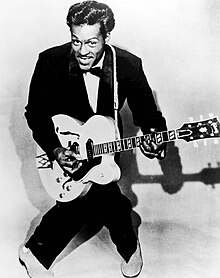
I saw her from the corner when she turned and doubled back, And started walkin toward a coffee colored Cadillac… Chuck Berry

Image result for chuck berry

Freedom’s just another word for nothin’ left to lose, And nothin’ ain’t worth nothin’ but it’s free Janis Joplin/Kris Kristofferson

Related image

And I need you more than want you, And I want you for all time Jimmy Webb

Image result for jimmy webb

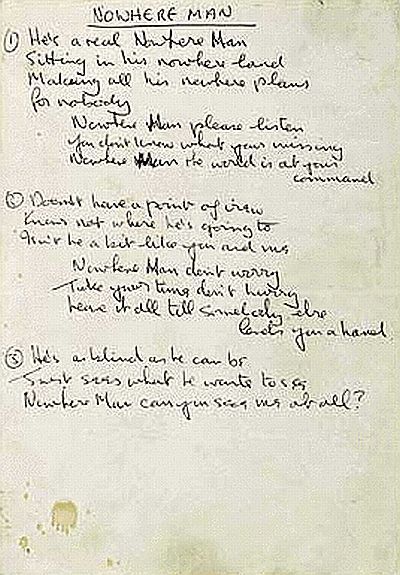
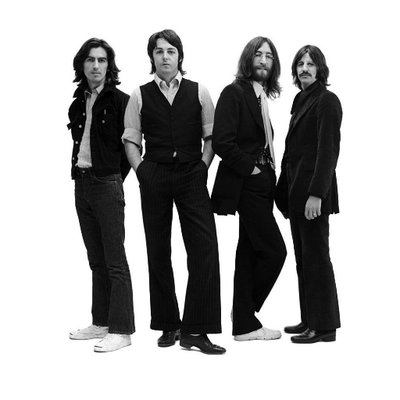
Doesn’t have a point of view / Knows not where he’s going to / Isn’t he a bit like you and me…The Beatles

Related image

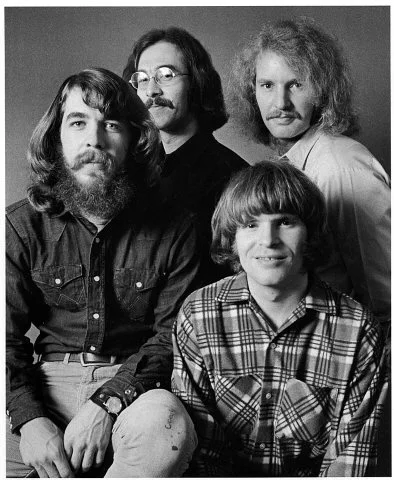
Met myself a coming county welfare line, I was feeling strung out, Hung out on the line…Creedence Clearwater Revival

Image result for creedence clearwater revival

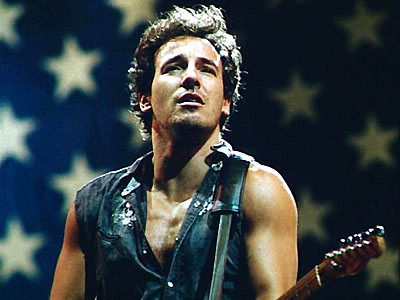
And you’ve got to learn to live with what you can’t rise above…Bruce Springsteen

Related image

He’d end up blowing all his wages for the week / All for a cuddle and a peck on the cheek…Kinks

Image result for kinks

Well it’s too late, tonight, To drag the past out into the light, We’re one, but we’re not the same, We get to carry each other, Carry each other…U2

Related image

You can blow out a candle but you can’t blow out a firePeter Gabriel

Image result for peter gabriel

Living is easy with eyes closed, misunderstanding all you see…The Beatles

Related image

Where you drink champagne and it tastes just like cherry cola, C-O-L-A Cola…Kinks

Image result for kinks

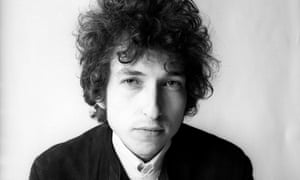
It was gravity which pulled us down and destiny which broke us apart…Bob Dylan
Related image

A drunkard’s dream if I ever did see oneThe Band

Related image

And the sign said, The words of the prophets, are written on the subway walls, and tenement halls… Simon and Garfunkel

Related image

I lit up from Reno, I was trailed by twenty hounds, Didn’t get to sleep that night
Till the morning came around…Grateful Dead

Related image

When I said that I was lying, I might have been lyingElvis Costello
Related image
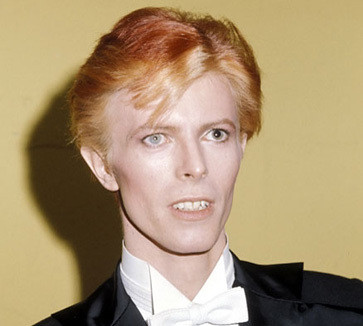
Though nothing will keep us together/We can be heroes/Just for one day…David Bowie
Related image

Lose your dreams and you. Will lose your mind…Rolling Stones

Image result for rolling stones 1974

It’s a town full of losers, I’m pulling out of here to win…Bruce Springsteen

Related image

The motor cooled down, the heat went down, and that’s when I heard that highway sound…Chuck Berry

Image result for chuck berry

We were the first band to vomit at the bar, and find the distance to the stage too far…The Who

Related image


Watkins Glen 1973

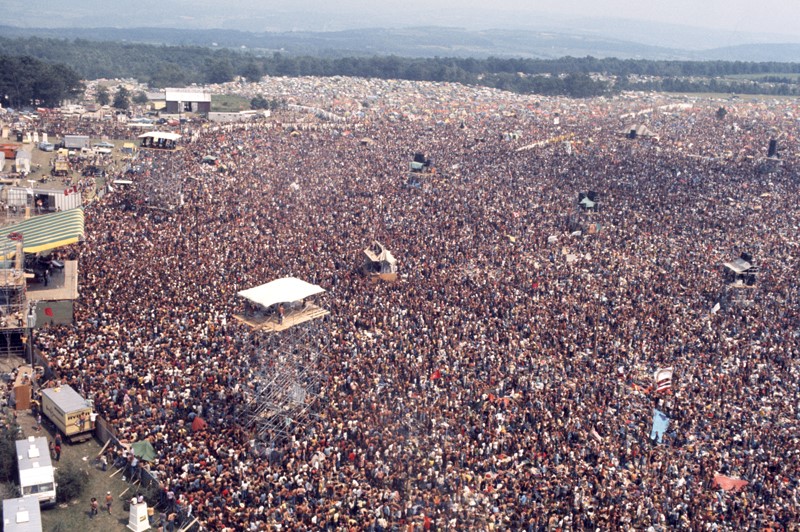
I first read about this concert-festival in a Grateful Dead biography… There is not much video footage from the concert. I never could understand why this concert didn’t hold up in history like some others like The Atlanta Pop festival and others. I’m not saying it should have been remembered like Woodstock because it’s cultural impact was like no others…but this drew more than any other festival including Woodstock.

An estimated 600,000 people came to this concert on July 28, 1973, in Watkins Glen N.Y. 45 years ago. Maybe the reason it is not as remembered is that only three bands performed…but the three bands were giant bands in their prime. The Grateful Dead, The Allman Brothers, and The Band.

From the bands themselves, almost all agree the sound check on Friday was better than the concerts.

Perspective about the concert by a member from each band.

Robbie Robertson from his book Testimony

Then we got a request from Bill Graham, who was putting together a show “just up the highway from us” at the Watkins Glen Raceway. We’d be performing with the Allman Brothers and the Grateful Dead. Playing some gigs could help us get “back on the stick,” as they say.
We went up to Watkins Glen the day before the show for the sound check. Bill Graham said that the Dead would go on first and play for three or four hours—that was part of their thing, giving the audience their money’s worth. “Until the drugs wear off,” said Bill, laughing. We’d go on in the late afternoon, and the Allmans would take over at sundown. As we were leaving the sound check, it looked like cars were heading toward the racetrack from every direction. Bill said he expected maybe a hundred thousand or more.
When we came back the next day, we couldn’t believe our eyes. Hundreds of thousands of people had showed up, and more just kept coming and coming. The crowds mowed down the high chain-link fences around the racetrack and filled the area as far as the eye could see. Bill was running around trying to make people pay admission, but the mobs were out of control.
When it came time for the Band to take the stage, it started pouring. As we waited, hoping it was going to let up, Bill came over. “They’ve determined there are 650,000 people here. It’s the biggest concert in history.” The news was somewhere between an incredible accomplishment and a huge disaster.
The rain started letting up, and Garth played some churchy, rainy-day keyboard sounds out over the crowd. When it was safe to go on, we decided to start our set with Chuck Berry’s “Back to Memphis.” And wouldn’t you know, as Levon sang that baby, the sun came out.

Gregg Allman from My Cross to Bear

Right before Brothers and Sisters came out, we played the festival at Watkins Glen with the Band and the Grateful Dead, in front of six hundred thousand people—the biggest show in history to that point. People always talk about Woodstock. Watkins Glen was like three Woodstocks. I think actually it might’ve been a little too big. They should have had people all the way around the raceway, and maybe had the stage in the center revolving real slowly, do a revolution in a minute. That’s not that complicated.
A show like Watkins Glen was uncomfortable, because you know that you’re getting the show across to this many people, but you still got two times that many behind them. You could finish a song, take your guitar off, put it in the case, and latch it up before the last guy heard the last note. Sound ain’t all that fast, not compared to light.

When you’re playing in that situation, you’re kind of thinking about the end. Not that you’re wishing it to be over, but you can’t even hear yourself—that was back before we had the in-ear monitors. Everything was so loud. You just walk out there and start to wince before you even start playing. It’s hard to get any kind of coziness, any kind of feel with the audience.
I guess there’s something about that many people seeing you all at once that’s real nice, but it’s just too much. You’re just like a little squeak in the middle of a bomb going off. But it was interesting, and it was a pretty fun day. People were OD’ing all over the place. And of course, Uncle Bill was there, which cured everything. It was exciting to be there and see it—and to be able to make ’em stand up, now that was something else.

Bill Kreutzmann from Deal

We made some questionable business decisions and we couldn’t sell records, but we sure could sell tickets. We sold around 150,000 tickets for a single show at a racetrack in Watkins Glen, New York, on July, 28, 1973. Yes, and more than 600,000 people ended up coming out for it. The lineup was just us, the Allman Brothers, and the Band. That show, called the Summer Jam at Watkins Glen, made it into the Guinness Book of World Records for what, at the time, was the largest audience ever assembled at a rock concert. In fact, that record may still hold today, at least in the U.S., and some have even proposed that it was the largest gathering in American history. Originally, the bill was supposed to just be the Dead and the Allmans, but our respective camps fought with the promoter over which band would get headliner status. The solution was that both bands would co-headline and they’d add a third, “support” act.
The friendly (“-ish”) competition between us and the Allman Brothers carried through to the event itself. And yet, the memory that I’m most fond of and hold most dear from that whole weekend was jamming backstage with Jaimoe, one of the Allman’s drummers. We were just sitting in the dressing room, banging out rhythms, and that was a lot of fun for me. Jaimoe backed Otis Redding and Sam & Dave before becoming a founding member of the Allman Brothers, where he remains to this day. He’s a soulful drummer and just an incredible guy who is impossible not to like.
As for the show itself, it is a well-known fact that the Grateful Dead always blew the big ones. Watkins Glen was no exception. However, we still got a great night of music out of it—the night before. The show took place on a Saturday, but by Friday afternoon there were already about 90,000 people in front of the stage. I’ve heard others place that number closer to 200,000. Either way, the audience was already many times the size of any of our regular shows, and the show was still a full day away. The only duty we had on Friday was to do a soundcheck, and even that was somewhat optional. The Band soundchecked a couple of songs. The Allman Brothers soundchecked for a bit. Then, perhaps spurred on by our friendly rivalry, we decided to one-up both bands by turning our soundcheck into a full-on, two-set show. Naturally, without any of the pressure of the “official show” the next day, we really let loose and played a good one. There was an eighteen-minute free-form jam that eventually made it onto So Many Roads, one of our archival box sets. It’s good music, all right, and it still holds its own.
On the day of the actual show, we had to fly into the venue via helicopter because the roads were all backed up, like what happened at Woodstock. People left their cars on the side of the road and walked for miles to the gig. I remember looking down from the helicopter and seeing the most incredible impressionist painting, a Monet of heads, shoulders, tie-dyes, baseball caps, and backpacks, packed front to back. You couldn’t see the ground for the crowd. To this day, I’ve never seen anything else like that.
Nowadays at large music events and festivals, they have golf carts for artists and crews to get around, but back then they used little motor scooters. Early, during the day of our supposed “soundcheck,” I commandeered one of these scooters and, because the venue was an actual racetrack, I decided to do a lap. This was before the gates were opened. The scooter went maybe fifteen or eighteen miles an hour, something stupid like that, and it took forever just to do one lap. But I did it. And that’s when I first started to get a feel for the scale of the event and just how large it was.
During the Summer Jam itself, I watched the other bands play and I honestly thought the Allman Brothers played better on the big day than we did. As for the Band, well, they always sounded great.

If you have read this long…below is some crowd video and a little of the music.

Loyal Roadies

Roadies have always been an important part of a band. Occasionally some will be rise above and become well known and some will end up as an executive in the band’s organization. Some will burn out like their bosses and below are a few famous roadies.

Neil Aspinall – Beatles

The first roadie the Beatles employed. He started to help the Beatles out by driving their van from gig to gig. He was soon their road manager and personal assistant. He ended up being the Chief Executive of The Beatles company Apple Corps until 2007. He passed away in 2008.

He was a trained accountant and knew George and Paul when they were kids. He was well trusted by all members. He stayed neutral in all of the arguments while he continued to run a prosperous Apple Corps to the end.

Mal Evans – Beatles

He was hired to help out Neil Aspinall as a roadie. Mal became their personal assistant after they stopped touring. After the Beatles broke up he did some producing…he produced the Badfinger’s single “No Matter What”. He also produced Keith Moon’s first album “Two Sides of the Moon” but was replaced midway through.

In the seventies, he still did work for some of the Beatles accompanying them on trips and odds and ends. He then separated from his wife Lil and after that, he started to have bad depression. While depressed and reportedly using downers, he was shot by LAPD while holding an air rifle and refusing to put it down. He was thought highly of by all the Beatles…See George’s quote below.

George Harrison on Mal Evans

, “Mal loved his job, he was brilliant, and I often regret that he got killed. Right to this day, I keep thinking, ‘Mal, where are you?’ If only he was out there now. He was such good fun, but he was also very helpful: he could do everything…He was one of those people who loved what he was doing and didn’t have any problem about service. Everybody serves somebody in one way or another, but some people don’t like the idea. Mal had no problem with it. He was very humble, but not without dignity; it was not belittling for him to do what we wanted, so he was perfect for us because that was what we needed.” 

Red Dog – Allman Brothers

Duane Allman befriended Joe Campbell (Red Dog) a Vietnam vet and Red Dog stayed with the Allman Brothers for three decades. He gave the band his disability checks to help them stay afloat at the beginning. He soon became a trusted member of the team. His picture with all the roadies is on the back cover of the At Fillmore East album.

Here is a quote from Cameron Crowe on Red Dog when he published his book.

“I’ll admit it right now. I am a big fan of Red Dog, and have been even before he allowed me to interview him back in 1973 for a story in Rolling Stone. Hell, he was already legendary back then. But now I just have to say that I am extremely jealous of the Great Dog, because I’ve just finished reading A Book of Tails. True rock, the kind that lasts forever, is about honesty and humor and love and chasing the elusive buzz of greatness.

Ramrod – Grateful Dead

Lawrence Shurtliff (Ramrod) joined on the Grateful Dead in 1967 and in the seventies became the President of the Grateful Dead board of directors until Garcia’s death in 1995.

Bob Weir on Ramrod

“When he did join up, it was like he had always been there. I won’t say he was the missing piece, because I don’t think he was missing. He just wasn’t there. But then he was there. And he always will be. He was a huge part of what the Grateful Dead was about.”


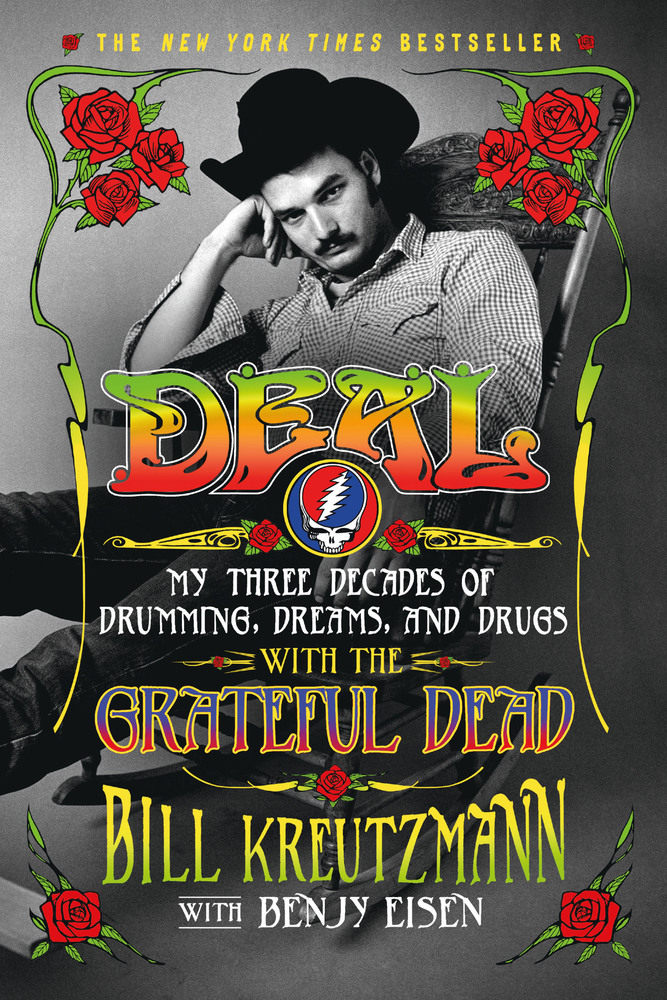
Deal by Bill Kreutzmann

The book is called Deal: My Three Decades of Drumming, Dreams, and Drugs with the Grateful Dead.

This book is what you would imagine from the drummer (one of them) of the Grateful Dead. Music, drugs, women, drugs, travels, guns, drugs, death, drink and more drugs. Actually, I really enjoyed the book. He is very open and very honest about his actions good and bad.

He is not a shy guy whatsoever. He shares his feelings about any subject that comes up. He does go into the music and how he feels about his bandmates. Most are positive but he does not hold back.

He covers the complete career of the band. He openly said he was very happy being the only drummer of the band when Mickey Hart quit and didn’t like it one bit when Mickey rejoined the band…at first anyway.

He goes into his relationship with Jerry Garcia. He also admits the guilt the band share in not trying to help Garcia more…but Jerry was his own man. He writes about the so-called keyboard player curse the band had in their career.

He tells us about the 72 European tour, shows they played near the pyramids and the Festival Express. I will say this…this band had fun. They were like a family and treated their employees well for the most part.

The only thing that I wish he would have shared more about was Pigpen. The band was apparently in the dark about how bad Pigpen was doing before he died. Maybe he didn’t share it with them.

I learned a lot about the Dead that I didn’t know about.

The book keeps going at a good pace. With the Dead’s long career he never lacks for stories. A lot of rock autobiographies are coming out and again this one takes the template that Keith Richards made with his book “Life” and fills it in.

Bill Kreutzmann from Deal about Garcia and heroin:

I’m pretty sure Jerry wasn’t into heroin during the making of Garcia; as far I know, he hadn’t even discovered it yet. But when he did, during subsequent Grateful Dead albums, it could become difficult just to get him to show up, unfortunately. That got to be really old, really fast, for all of us. We wanted to play music with him so badly that we’d put up with it, which—in hindsight—was crazy. Nobody else in the band would’ve been able to get away with it; at least, not to the extent that he did. But Jerry Garcia was the exception.
It also opens up a moral question that we can talk about now, but we can never truly answer, since he’s not with us. There was a certain feeling, toward the end, that Jerry was using the Grateful Dead to finance his drug habit. That’s a sad thought. I don’t think he ever intended it to be that way or for it to get to that point or to hurt anyone. He was as pure of a musician as they come. But heroin addiction will change a person in ways that are tragic and discouraging.


The Grateful Dead

I’ve never been a Deadhead but I am envious of them. Unlike any other band…their music and fans belong in a special class. The fans are joined to an elusive club and a lot of them are really close. The band at one time was so accessible… more than any other band I’ve heard of… They have so much music to pick from…years and years of touring and recording. The band not only didn’t mind fans recording their concerts but set up a special place to record for a time. Led Zeppelin’s manager would have his goons smash fan’s recording equipment for doing that…other bands also.

They did not compromise…they did what they wanted to do and forget the rest. Top ten records? Nah…didn’t need them…didn’t have one until the 80s and still outdrew almost everyone. I’m happy they did have the one in the 80s…Touch of Grey…they really didn’t need it but it made the general public take notice. It was great in the 80s to see a cool anti-rock star Jerry Garcia with the Grateful Dead chugging away on MTV sounding better than the spandex idiots on the other videos at the time.

For me, I like their early seventies period a lot. Workingman’s Dead, American Beauty (which are two classic albums) From The Mars Hotel and a little later the adventurous Terrapin Station. I mostly like songs that are condensed down…hence why I was never really big on the long jams but I really respect the musicianship that went into them live. They could be playing folk, bluegrass, jazz and then switch on a dime to rock…and make it fit. To me, it was like a huge bus rolling down the road about to go off the cliff at any moment and then suddenly being jerked back on the road before the crash….sometimes it wasn’t but for the most part, it was pulled back just in time.

When Jerry died in 1995 I was sad. I didn’t know a whole a lot about him or the band…though I had their greatest hits in the early 80s…I knew enough to know someone and something special had gone too soon…I also regretted not being on that bus for a small ride anyway.

Songs I like:

Ripple, A Friend of the Devil, Mr. Charlie, Truckin, Uncle Johns Band (which I could listen on a tape loop for eons and eons), U.S. Blues, New Speedway Boogie, Casey Jones, Attics of My Life, Brokedown Palace, Box of Rain, Sugar Magnolia, Touch of Grey, Hell in a Bucket and a Garcia solo Sugaree…

There are many more I’m not remembering…