This will be it for this Wilbury Weekend…one more tomorrow.
Congratulations for breaking my heart, Congratulations for tearing it all apart Congratulations, you finally did succeed, Congratulations for leaving me in need
This appeared on their first Album Vol 1. This was the B side of the single End of the Line. Dylan sings this song of despair.
There is not a song on either of their two original album that I don’t know by heart. This one was played a lot in my car…which I seemed to livein… going in between a girlfriend and friends.
Congratulations
Congratulations for breaking my heart Congratulations for tearing it all apart Congratulations, you finally did succeed Congratulations for leaving me in need
This morning I looked out my window and found A bluebird singing but there was no one around At night I lay alone in my bed With an image of you goin’ around in my head
Congratulations for bringing me down Congratulations, now I’m sorrow bound Congratulations, you got a good deal Congratulations, how good you must feel
I guess I must have loved you more than I ever knew My world is empty now ’cause it don’t have you And if I had just one more chance to win your heart again I would do things differently, but what’s the use to pretend?
Congratulations for making me wait Congratulations, now it’s too late Congratulations, you came out on top Congratulations, you never did know when to stop
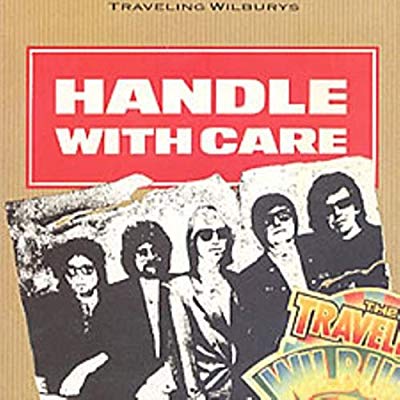
This was the hit that kicked the Wilburys project off the ground. George Harrsison and Jeff Lynne started the ball rolling… Initially an informal grouping with Roy Orbison and Tom Petty, they got together at Bob Dylan’s Santa Monica, California studio to quickly record an additional track as a B-side for the single release of Harrison’s song This Is Love. This was the song they came up with, which the record company immediately realized was too good to be released as a single B side. They also recorded “You Got It” at the session, which helped convince them to record an album together.
The song made it to #2 on the Billboard Mainstream Rock Songs Chart in 1988.
The title Handle With Care came when George Harrison saw the phrase on the side of a cardboard box in the studio.
Tom Petty on Bob Dylan: “There’s nobody I’ve ever met who knows more about the craft of how to put a song together than he does. I learned so much from just watching him work. He has an artist’s mind and can find in a line the keyword and think how to embellish it to bring the line out. I had never written more words than I needed, but he tended to write lots and lots of verses, then he’ll say, this verse is better than that, or this line. Slowly this great picture emerges. He was very good in The Traveling Wilbury’s: when somebody had a line, he could make it a lot better in big ways.”
Handle With Care
Been beat up and battered ’round Been sent up, and I’ve been shot down You’re the best thing that I’ve ever found Handle me with care
Reputations changeable Situations tolerable Baby, you’re adorable Handle me with care
I’m so tired of being lonely I still have some love to give Won’t you show me that you really care?
Everybody’s got somebody to lean on Put your body next to mine, and dream on
I’ve been fobbed off, and I’ve been fooled I’ve been robbed and ridiculed In daycare centers and night schools Handle me with care
Been stuck in airports, terrorized Sent to meetings, hypnotized Overexposed, commercialized Handle me with care
I’m so tired of being lonely I still have some love to give Won’t you show me that you really care?
Everybody’s got somebody to lean on Put your body next to mine, and dream on
I’ve been uptight and made a mess But I’ll clean it up myself, I guess Oh, the sweet smell of success Handle me with care
A great song by The Byrds that was written by Bob Dylan. The Byrds released this song in 1968 and it was on their classic album Sweetheart of the Rodeo. Their version was released 3 years before Dylan commercially released a version of the song on his Greatest Hits Vol 2 album in 1971.
You Ain’t Going Nowhere peaked at #74 on the Billboard 100 in 1968. This country-rock song has been covered many times by different artists.
Dylan’s original Basement Tapes demo of this song contained the lyric “Pick up your money, pack up your tent”, which was mistakenly altered by McGuinn in the Byrds’ version to “Pack up your money, pick up your tent.” Dylan took note of this lyric change in his 1971 recording of the song, singing “Pack up your money, put up your tent McGuinn. You ain’t goin’ nowhere.” McGuinn said: “It was an honor to be in a Bob Dylan song! I got the words wrong and he changed all the words for his version of it. He and I have always been kind of like that. He likes to poke fun at me.”
From Songfacts
The likely influence on this song was Dylan’s 1967 motorcycle accident, which severely limited his mobility. The song was recorded in the basement of a house where members of The Band lived, and played with Dylan while he experimented with new sounds. The Basement Tapes album was not officially released until 1975, but the songs were circulated and this one drew the attention of The Byrds, who released it on their 1968 album Sweetheart of the Rodeo.
The Byrds released “You Ain’t Going Nowhere” as the first single off the album peaking at #45 in the US and #74 in the UK. Guitarist and singer Roger McGuinn recalled to Uncut that their record label, Columbia Records (which was also Dylan’s record label), sent their producer Gary Usher some demos from Dylan’s Woodstock sessions. Among them were “You Ain’t Goin’ Nowhere” and “Nothing Was Delivered” (which the Byrds also recorded),
Roger McGuinn said “I thought they sounded really good,” he said. “You didn’t know what Bob was up to; and far as I knew, he was just laid up from a motorcycle accident. But I think it was probably a reaction to the psychedelic thing. It just got to be too much and everybody wanted to back off.”
You Ain’t Going Nowhere
Clouds so swift Rain won’t lift Gate won’t close Railings froze Get your mind off wintertime You ain’t goin nowhere Whoo-ee ride me high Tomorrow’s the day My bride’s gonna come Oh, Oh are we gonna fly Down in the easy chairI don’t care How many letters they send Morning came and morning went Pack up your money Pick up your tent You ain’t goin nowhere Whoo-ee ride me high Tomorrow’s the day My bride’s gonna come Oh, Oh are we gonna fly Down in the easy chairBuy me a flute And a gun that shoots Tailgates and substitutes Strap yourself To a tree with roots You ain’t goin nowhere Whoo-ee ride me high Tomorrow’s the day My bride’s gonna come Oh, Oh are we gonna fly Down in the easy chair
Now Genghis Kahn He could not keep All his kings Supplied with sleep We’ll climb that hill no matter how steep When we get up to it Whoo-ee ride me high Tomorrow’s the day My bride’s gonna come Oh, Oh are we gonna fly Down in the easy chair
I did Part 1 over a year ago and it was a fun post. I’ve been meaning to do this again. I remembered some of the lyrics suggested by my friends hanspostcard and allthingsthriller on the last post…I have added those to list. Thanks to both of you.
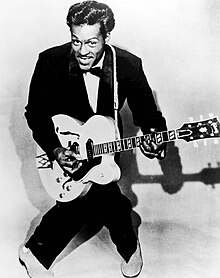
I saw her from the corner when she turned and doubled back, And started walkin toward a coffee colored Cadillac… Chuck Berry
Freedom’s just another word for nothin’ left to lose, And nothin’ ain’t worth nothin’ but it’s free… Janis Joplin/Kris Kristofferson
And I need you more than want you, And I want you for all time… Jimmy Webb
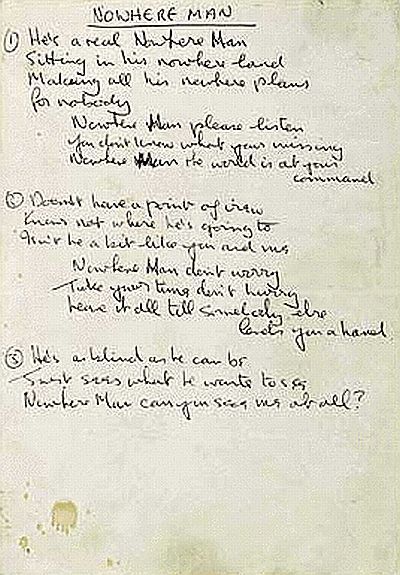
Doesn’t have a point of view / Knows not where he’s going to / Isn’t he a bit like you and me…The Beatles
Met myself a coming county welfare line,I was feeling strung out, Hung out on the line…Creedence Clearwater Revival
And you’ve got to learn to live with what you can’t rise above…Bruce Springsteen
He’d end up blowing all his wages for the week / All for a cuddle and a peck on the cheek…Kinks
Well it’s too late, tonight, To drag the past out into the light, We’re one, but we’re not the same, We get to carry each other, Carry each other…U2
You can blow out a candle but you can’t blow out a fire…Peter Gabriel
Living is easy with eyes closed,misunderstanding all you see…The Beatles
Where you drink champagne and it tastes just like cherry cola, C-O-L-A Cola…Kinks
It was gravity which pulled us down and destiny which broke us apart…Bob Dylan
A drunkard’s dream if I ever did see one… The Band
And the sign said, The words of the prophets, are written on the subway walls, and tenement halls… Simon and Garfunkel
I lit up from Reno, I was trailed by twenty hounds, Didn’t get to sleep that night Till the morning came around…Grateful Dead
When I said that I was lying, I might have been lying…Elvis Costello
Though nothing will keep us together/We can be heroes/Just for one day…David Bowie
Lose your dreams and you. Will lose your mind…Rolling Stones
It’s a town full of losers, I’m pulling out of here to win…Bruce Springsteen
The motor cooled down, the heat went down, and that’s when I heard that highway sound…Chuck Berry
We were the first band to vomit at the bar, and find the distance to the stage too far…The Who
And you know something’s happening but you don’t know what it is Do you, Mr. Jones?
There is a lot of power in just that one line and the song. Not only the lyrics but the intensity that Bob sings it. When it was released everyone wanted to know who Mr. Jones was and people still wonder. Bob Dylan set it straight like only Dylan does with this statement…“I could tell you who Mr. Jones is in my life, but, like, everybody has got their Mr. Jones.”
“Ballad Of A Thin Man” was recorded on August 2, 1965, at the same session as “Just Like Tom Thumb’s Blues,” “Queen Jane Approximately” and “Highway 61 Revisited,” when you get those songs out of a session…you are doing alright.
The song was on the great album Highway 61 Revisited. The album peaked at #3 in the Billboard 100 and #4 in the UK in 1965.
From Songfacts
While speculations remain rampant as to who “Mr. Jones” is and what exactly this song is supposed to mean, there is no definitive answer at this time. The closest thing we’ve seen to an answer from Dylan himself appears in an interview given in Keys to the Rain: The Definitive Bob Dylan Encyclopedia, where Dylan asserts that the “Mr. Jones” in question is a real person not known by this name, who is a pinboy, wears suspenders, and “puts his eyes in his pocket” which might mean that he wears glasses.
Before launching into this song in Japan, 1986, Dylan said, “This is a song I wrote in response to people who ask questions all the time. You just get tired of that every once in a while.”
Of the many references to “Ballad of a Thin Man” found throughout media, are the lines “feel so suicidal, just like Dylan’s Mr. Jones” from the Beatles’ “Yer Blues,” “Mr. Jones is a man who doesn’t know who Mr. Jones is” from Momus’ “Who Is Mr. Jones?,” “I wanna be Bob Dylan, Mr. Jones wishes he was someone just a little more funky.” from Counting Crows’ “Mr. Jones,” and “Mr. Jones won’t lend me a hand” from Country Joe and the Fish’ “Flying High.” While we cannot speculate on the true identity of Mr. Jones, it can be said that the name “Mr. Jones” has come to symbolize for the music world the kind of old-guard “square” who “doesn’t get it,” similar to our modern usage of the mythical “Joe Sixpack.”
This is the song which Bob Dylan and his band played at the Forest Hills concert of 1965 in an attempt to soothe the unruly crowd. As Al Kooper recounts in Backstage Passes and Backstabbing Bastards, “It had a quiet intro, and the kids persisted in yelling and booing all the way through it. Dylan shouted to us to ‘keep playing the intro over and over again until they shut up!’ We played it for a good five minutes – doo do da da, do da de da – over and over until they did, in fact, chill. A great piece of theater. When they were finally quiet, Dylan sang the lyrics to them.”
A 1966 cover of this song (titled “Mr. Jones (Ballad of a Thin Man)”) was the first single for The Grass Roots. At the time, the group was led by P.F. Sloan and Steve Barri. Sloan credits Bob Dylan for sticking by him when many other musicians and industry insiders dissociated themselves from him. Sloan was an up-and-coming songwriter/producer when he wrote the incendiary hit “Eve Of Destruction,” which went to #1 in 1965, but caused a great deal of controversy and made it very difficult for him to find work.
According to Al Kooper, Bob Dylan took from Ray Charles’s “I Believe to My Soul” for “Ballad of a Thin Man.”
In a September 22, 1966 interview in Austin, Texas, a reporter asked Dylan if “Ballad of a Thin Man” was about “a newspaper reporter or something.” Dylan, who spent the entire interview mocking and evading the questions, responded with a single line: “No, it’s just about a fella that came into a truck stop once.”
The opening line, “You walk into the room with your pencil in your hand,” was at one point, “You walk into the room with a hatchet in your hand.” This was revealed in a lyric sheet that is part of Dylan’s archives in Tulsa.
Before and after their speeches, Black Panther founder Huey P. Newton and Bobby Seale regularly played this song over the PA system. Insiders reported they listened to it almost obsessively. The two men felt it was speaking about the black struggle in America.
Ballad of a Thin Man
You walk into the room with your pencil in your hand You see somebody naked and you say, “Who is that man?” You try so hard but you don’t understand Just what you will say when you get home Because something is happening here but you don’t know what it is Do you, Mr. Jones?
You raise up your head and you ask, “Is this where it is?” And somebody points to you and says, “It’s his” And you say, “What’s mine?” and somebody else says, “Well, what is?” And you say, “Oh my God, am I here all alone?” But something is happening and you don’t know what it is Do you, Mr. Jones?
You hand in your ticket and you go watch the geek Who immediately walks up to you when he hears you speak And says, “How does it feel to be such a freak?” And you say, “Impossible!” as he hands you a bone And something is happening here but you don’t know what it is Do you, Mr. Jones?
You have many contacts among the lumberjacks To get you facts when someone attacks your imagination But nobody has any respect, anyway they already expect you to all give a check To tax-deductible charity organizations
Ah, you’ve been with the professors and they’ve all liked your looks With great lawyers you have discussed lepers and crooks You’ve been through all of F. Scott Fitzgerald’s books You’re very well-read, it’s well-known But something is happening here and you don’t know what it is Do you, Mr. Jones?
Well, the sword swallower, he comes up to you and then he kneels He crosses himself and then he clicks his high heels And without further notice, he asks you how it feels And he says, “Here is your throat back, thanks for the loan” And you know something is happening but you don’t know what it is Do you, Mr. Jones?
Now, you see this one-eyed midget shouting the word “Now” And you say, “For what reason?” and he says, “How” And you say, “What does this mean?” and he screams back, “You’re a cow” “Give me some milk or else go home” And you know something’s happening but you don’t know what it is Do you, Mr. Jones?
Well, you walk into the room like a camel, and then you frown You put your eyes in your pocket and your nose on the ground There ought to be a law against you comin’ around You should be made to wear earphones ‘Cause something is happening and you don’t know what it is Do you, Mr. Jones?
This song was off the 2012 album Temptest. Bob wrote this song with Robert Hunter, the Grateful Dead lyricist. The album peaked at #3 in the Billboard Album Charts. My son is who called my attention to this one. Unlike some other older performers, Bob somehow stays relevant to the times.
The memorable video is directed by Nash Edgerton. Bob looks just really cool in this video as he leads some kind of gang.
The song refers to the Duquesne train service that used to run between New York Penn and Pittsburgh Penn Stations, which was named after the 18th century Fort Duquesne in the latter city. That route is now served by the daily Amtrack Pennsylvanian service.
From Songfacts
The bluesy song The lyrics show Dylan’s distaste at times a changing’. “Listen to that Duquesne whistle blowing,” he demands. “Blowing like it’s gonna sweep my world away.”
The Nash Edgerton-directed music video is set on the streets of downtown Los Angeles. Dylan appears briefly throughout the clip.
The line, “I’m gonna stop at Carbondale and keep on going” refers to Carbondale, Pennsylvania, in the northeast corner of the state. Like all of the region, it’s now a small rust belt town, but at the time when the Duquesne train line was running, Carbondale was fat off the anthracite coal industry.
Duquesne Whistle
Listen to that Duquesne whistle blowing Blowing like it’s gonna sweep my world away I’m gonna stop at Carbondale and keep on going That Duquesne train gon’ rock me night and day
You say I’m a gambler, you say I’m a pimp But I ain’t neither one
Listen to that Duquesne whistle blowing Sound like it’s on a final run
Listen to that Duquesne whistle blowing Blowing like she never blowed before Little light blinking, red light glowing Blowing like she’s at my chamber door
You smiling through the fence at me Just like you’ve always smiled before
Listen to that Duquesne whistle blowing Blowing like she ain’t gon’ blow no more
Can’t you hear that Duquesne whistle blowing? Blowing like the sky’s gonna blow apart You’re the only thing alive that keeps me going You’re like a time bomb in my heart
I can hear a sweet voice steadily calling Must be the mother of our Lord
Listen to that Duquesne whistle blowing Blowing like my woman’s on board
Listen to that Duquesne whistle blowing Blowing like it’s gon’ blow my blues away You’re a rascal, I know exactly where you’re going I’ll lead you there myself at the break of day
I wake up every morning with that woman in my bed Everybody telling me she’s gone to my head
Listen to that Duquesne whistle blowing Blowing like it’s gon’ kill me dead
Can’t you hear that Duquesne whistle blowing? Blowing through another no good town
The lights on my native land are glowing I wonder if they’ll know me next time ’round I wonder if that old oak tree’s still standing That old oak tree, the one we used to climb
Listen to that Duquesne whistle blowing Blowing like she’s blowing right on time
I usually post single releases but this song is one of my favorites of Bob Dylan. I can just read the lyrics of this song and enjoy it. Bob Dylan is the king of song imagery. It was written about his future wife Sara Lownds. It was released in 1965 on the “Bringing It All Back Home” album.
The lyric that hooked me was She knows there’s no success like failure, And that failure’s no success at all. That line is hard to beat.
The song was included on the album Bringing It All Back Home released in 1965. The song was not released as a single but the album peaked at #6 in the Billboard Album Charts.
The title of the song is one of a kind. It’s fun to read people’s interpretations of Dylan’s songs. His songs mean so many different things to people and he is never too open about revealing what they are about.
I found this of someone attempting to mathematically break down the song.
It’s a strange way to title a song, with a slash in the middle. Until you realize that this is not a normal title per se. It’s an equation, like 4/2=2. In mathematics, the forward slash represents “divided by. Four divided by two equals two.
So what’s Love minus zero divided by no limit? Well, no limit equals infinity. It is infinite. Ten divided by infinity would be an infinitely small number. In fact, any finite number divided by infinity would be an infinitely small number.
However, if one’s love is infinite, and you subtract zero from that, the equation now reads “Infinity divided by infinity.” Which equals One. If each human heart is an infinity, it is through love that the two become one.
Love Minus Zero/No Limit
My love she speaks like silence Without ideals or violence She doesn’t have to say she’s faithful Yet she’s true, like ice, like fire People carry roses Make promises by the hours My love she laughs like the flowers Valentines can’t buy her
In the dime stores and bus stations People talk of situations Read books, repeat quotations Draw conclusions on the wall Some speak of the future My love she speaks softly She knows there’s no success like failure And that failure’s no success at all
The cloak and dagger dangles Madams light the candles In ceremonies of the horsemen Even the pawn must hold a grudge Statues made of matchsticks Crumble into one another My love winks, she does not bother She knows too much to argue or to judge
The bridge at midnight trembles The country doctor rambles Bankers’ nieces seek perfection Expecting all the gifts that wise men bring The wind howls like a hammer The night blows cold and rainy My love she’s like some raven At my window with a broken wing
A great song that sounds like a giant statement. It still rings true today and it’s just an incredible piece of work. Dylan sings this song as if every word has a purpose to it and it does. I’ve seen Bob eight times and he has played this song twice and it was one of the highlights when he did perform it.
The song was included on the album Bringing It All Back Home released in 1965. The song was not released as a single but the album peaked at #6 in the Billboard Album Charts. The song on the album to make it into the top 40 was “Subterranean Homesick Blues” which peaked at #39.
I haven’t posted many Bob Dylan songs because the original songs on youtube were almost impossible to find but observationblogger posted Tuesday that Dylan has released his songs on youtube. You can find almost everything now.
From Songfacts
Dylan vents about subjects such as commercialism, hypocrisy and warmongering in this song. In the book, Bob Dylan, Performing Artist, author Paul Williams states this song sees Dylan acknowledge “the possibility that the most important (and least articulated) political issue of our times is that we are all being fed a false picture of reality, and it’s coming at us from every direction.”
Williams adds that Dylan portrays an “alienated individual identifying the characteristics of the world around him and thus declaring his freedom from its ‘rules’.”
This song is one of Dylan’s personal favorites. In 1980, he stated: “I don’t think I could sit down now and write ‘It’s Alright, Ma’ again. I wouldn’t even know where to begin, but I can still sing it.”
The opening line, “Darkness at the break of noon,” is referring to a nuclear explosion. After a nuclear explosion, the sky turns black and the sun disappears. >>
The line, “He who is not busy being born in busy dying” is popular with politicians. Jimmy Carter used the line in his acceptance speech at the 1976 Democratic National convention, and while campaigning for President in 2000, Al Gore told talk show host, Oprah Winfrey, that it was his favorite quote. Ironically, the song also contains the line, “But even the President of the United States sometimes must have to stand naked,” which is Dylan alluding to the fact even the most powerful people will be ultimately judged.
The album cover shows a woman lounging by a fireplace with Dylan in the foreground holding a cat. She is Sally Grossman, the wife of Dylan’s manager Albert Grossman. The photo was taken in Grossman’s house, and the cat belonged to Sally.
Bob Dylan – It’s Alright Ma I’m Only Bleeding
Darkness at the break of noon Shadows even the silver spoon The handmade blade, the child’s balloon Eclipses both the sun and moon To understand you know too soon There is no sense in trying
Pointed threats, they bluff with scorn Suicide remarks are torn From the fool’s gold mouthpiece The hollow horn plays wasted words Proves to warn that he’s not busy being born Is busy dying
Temptation’s page flies out the door You follow, find yourself at war Watch waterfalls of pity roar You feel to moan but unlike before You discover that you’d just be One more person crying
So don’t fear if you hear A foreign sound to your ear It’s alright ma, I’m only sighing
As some warn victory, some downfall Private reasons great or small Can be seen in the eyes of those that call To make all that should be killed to crawl While others say don’t hate nothing at all Except hatred
Disillusioned words like bullets bark As human gods aim for their mark Made everything from toy guns that spark To flesh-colored Christs that glow in the dark It’s easy to see without looking too far That not much is really sacred
While preachers preach of evil fates Teachers teach that knowledge waits Can lead to hundred-dollar plates Goodness hides behind its gates But even the president of the United States Sometimes must have to stand naked
An’ though the rules of the road have been lodged It’s only people’s games that you got to dodge And it’s alright ma, I can make it
Advertising signs that con you Into thinking you’re the one That can do what’s never been done That can win what’s never been won Meantime life outside goes on All around you
You lose yourself, you reappear You suddenly find you got nothing to fear Alone you stand with nobody near When a trembling distant voice, unclear Startles your sleeping ears to hear That somebody thinks they really found you
A question in your nerves is lit Yet you know there is no answer fit to satisfy Insure you not to quit To keep it in your mind and not forget That it is not he or she or them or it That you belong to
Although the masters make the rules For the wise men and the fools I got nothing ma, to live up to
For them that must obey authority That they do not respect in any degree Who despise their jobs, their destinies Speak jealously of them that are free Do what they do just to be nothing more than something they invest in
While some on principles baptized To strict party platform ties Social clubs in drag disguise Outsiders they can freely criticize Tell nothing except who to idolize And then say “God bless him”
While one who sings with his tongue on fire Gargles in the rat race choir Bent out of shape from society’s pliers Cares not to come up any higher But rather get you down in the hole that he’s in
But I mean no harm nor put fault On anyone that lives in a vault But it’s alright ma, if I can’t please him
Old lady judges watch people in pairs Limited in sex, they dare To push fake morals, insult and stare While money doesn’t talk, it swears Obscenity, who really cares Propaganda, all is phony
While them that defend what they cannot see With a killer’s pride, security It blows the minds most bitterly For them that think death’s honesty Won’t fall upon them naturally Life sometimes must get lonely
My eyes collide head-on with stuffed graveyards False gods, I scuff At pettiness which plays so rough Walk upside-down inside handcuffs Kick my legs to crash it off Say okay, I have had enough What else can you show me?
And if my thought-dreams could be seen They’d probably put my head in a guillotine But it’s alright ma, it’s life, and life only
Bob Dylan wrote this song and it was on his John Wesley Harding album. It was the longest time that I finally started to like Jimi’s version. The song peaked at #20 in the Billboard 100 in 1968. This was Jimi’s only top 40 hit in the Billboard 100.
I do like the simplicity of Bob’s original version also.
Bob said this about Jimi Hendrix in a 2015 speech: “We can’t forget Jimi Hendrix. I actually saw Jimi perform when he was with a band called Jimmy James and the Blue Flames. Something like that. And Jimi didn’t even sing. He was just the guitar player,” Dylan said. “He took some small songs of mine that nobody paid any attention to and brought them up into the outer limits of the stratosphere, turned them all into classics. I have to thank Jimi, too. I wish he was here.”
From Songfacts
This was written and originally recorded by Bob Dylan in 1967, but it was the Jimi Hendrix cover that made the song famous. Many other artists have covered it, including Eric Clapton, Neil Young, U2, Dave Matthews Band and The Grateful Dead. Dylan was so impressed with Jimi’s version that Dylan for years played it the way that Jimi had recorded it.
This was Hendrix’ only Top 40 hit in the US, where his influence far outpaced his popularity. He charted a few times in the UK, where he rose to fame before making a name for himself in America.
This was recorded while Hendrix played with the Jimi Hendrix Experience: Hendrix on guitar, Noel Redding on bass, and Mitch Mitchell on drums. For this song, however, Redding was not on bass; Hendrix did it. Redding was also the guitar player for his band Fat Mattress, which Hendrix referred to as Thin Pillow. Hendrix often felt that Redding did not put his heart into the bass and was concerned that Redding concentrated more on Fat Mattress than he did on the Experience. Things like these led to him being replaced by Billy Cox. >>
The original version of this song is very slow. Jimi Hendrix’ version had a large impact on Dylan which made him make his own version “heavier.”
Hendrix: “All those people who don’t like Bob Dylan’s songs should read his lyrics. They are filled with the joys and sadness of life. I am as Dylan, none of us can sing normally. Sometimes, I play Dylan’s songs and they are so much like me that it seems to me that I wrote them. I have the feeling that Watchtower is a song I could have come up with, but I’m sure I would never have finished it. Thinking about Dylan, I often consider that I’d never be able to write the words he manages to come up with, but I’d like him to help me, because I have loads of songs I can’t finish. I just lay a few words on the paper, and I just can’t go forward. But now things are getting better, I’m a bit more self-confident.” >>
Hendrix had been working on and off with the members of the band Traffic as he recorded Electric Ladyland. Traffic guitarist Dave Mason caught Hendrix at a party and the two discussed Bob Dylan’s newest album, John Wesley Harding, containing “All Along The Watchtower.” Hendrix, long fascinated with Dylan, decided to cover the song on the album. On the resulting track, Mason plays rhythm on a 12-string acoustic guitar.
In our interview with Mason, he explained: “Hendrix just happened to be sitting in one of those semi-private clubs in London. He was there one night just sitting alone, and it was like, “F–k, I’m just going to go over and say hi and talk to him.”
Mason recorded the song himself in the Hendrix arrangement for his 1974 self-titled album. He also made the song a mainstay of his concerts. Mason says it’s a deceptively simple song: “It’s just the same three chords, and they never change.”
This was used in an episode of The Simpsons when Homer’s mother was telling him a story that took place in the ’60s about why she had to leave him.
In a 2008 poll conducted by a panel of experts in the Total Guitar magazine, this was voted the best cover song of all time. The Beatles’ rendition of “Twist and Shout,” first recorded by the Top Notes, came second, followed by the Guns N’ Roses version of the Wings song “Live and Let Die” in third place.
This was used in the 1994 movie Forrest Gump shortly after the title character arrives in Vietnam.
Yes this is Bob’s version…the only one I could find.
All Along The Watchtower
There must be some kind of way outta here Said the joker to the thief There’s too much confusion I can’t get no relief
Business men, they drink my wine Plowman dig my earth None were level on the mind Nobody up at his word Hey, hey
No reason to get excited The thief he kindly spoke There are many here among us Who feel that life is but a joke But, uh, but you and I, we’ve been through that And this is not our fate So let us stop talkin’ falsely now The hour’s getting late, hey
All along the watchtower Princes kept the view While all the women came and went Barefoot servants, too Outside in the cold distance A wildcat did growl Two riders were approaching And the wind began to howl
This was on the great album Blood on the Tracks. In my opinion Bob’s best album of the seventies. When I first got this album I couldn’t quit listening to it and I really wore this song out. I could sing this song in my sleep…I know every word because it’s ingrained in my head.
This would make my top 10-15 Bob Dylan songs. I’ve seen Bob 8 times and the first 6 times I saw him I kept waiting for this song because with Bob you don’t know what you will get live. He finally played it on the 7th time and I was surprised the next time because it was the only older song he played.
The song peaked at #31 in the Billboard 100 in 1975.
Talking to Ron Rosenbaum, Bob Dylan once told him that he’d written “Tangled up in Blue”, after spending a weekend immersed in Joni Mitchell’s 1971 album Blue.
Dylan wrote this in the summer of 1974 at a farm he had just bought in Minnesota. He had been touring with The Band earlier that year.
Blood On The Tracks was Dylan’s first album under his new contract with Columbia Records. He left the label a year earlier to record for David Geffen’s label, Asylum Records.
This was influenced by the art classes Dylan was taking with Norman Raeben, a popular teacher in New York. Dylan credits Raeben for making him look at things from a nonlinear perspective, which was reflected in his songs.
This is a very personal song for Dylan. It deals with the changes he was going through, including his marriage falling apart.
Dylan sometimes introduced this on stage by saying it took “Ten years to live and two years to write.”
Tangled Up In Blue
Early one mornin’ the sun was shinin’
I was layin’ in bed
Wondrin’ if she’d changed at all
If her hair was still red
Her folks they said our lives together
Sure was gonna be rough
They never did like
Mama’s homemade dress
Papa’s bank book wasn’t big enough
And I was standin’ on the side of the road
Rain fallin’ on my shoes
Heading out for the east coast
Lord knows I’ve paid some dues
Gettin’ through
Tangled up in blue
She was married when we first met
Soon to be divorced
I helped her out of a jam I guess
But I used a little too much force
We drove that car as far as we could
Abandoned it out west
Split up on a dark sad night
Both agreeing it was best
She turned around to look at me
As I was walkin’ away
I heard her say over my shoulder
We’ll meet again some day
On the avenue
Tangled up in blue
I had a job in the great north woods
Working as a cook for a spell
But I never did like it all that much
And one day the axe just fell
So I drifted down to New Orleans
Where I happened to be employed
Workin’ for a while on a fishin’ boat
Right outside of Delacroix
But all the while I was alone
The past was close behind
I seen a lot of women
But she never escaped my mind
And I just grew
Tangled up in blue
She was workin’ in a topless place
And I stopped in for a beer
I just kept lookin’ at the side of her face
In the spotlight so clear
And later on as the crowd thinned out
I’s just about to do the same
She was standing there in back of my chair
Said to me “Don’t I know your name?”
I muttered somethin’ under my breath
She studied the lines on my face
I must admit I felt a little uneasy
When she bent down to tie the laces
Of my shoe
Tangled up in blue
She lit a burner on the stove
And offered me a pipe
I thought you’d never say hello, she said
You look like the silent type
Then she opened up a book of poems
And handed it to me
Written by an Italian poet
From the thirteenth century
And everyone of them words rang true
And glowed like burnin’ coal
Pourin’ off of every page
Like it was written in my soul
From me to you
Tangled up in blue
I lived with them on Montague Street
In a basement down the stairs
There was music in the cafes at night
And revolution in the air
Then he started into dealing with slaves
And something inside of him died
She had to sell everything she owned
And froze up inside
And when finally the bottom fell out
I became withdrawn
The only thing I knew how to do
Was to keep on keepin’ on
Like a bird that flew
Tangled up in blue
So now I’m goin’ back again
I got to get to her somehow
All the people we used to know
They’re an illusion to me now
Some are mathematicians
Some are carpenters’ wives
Don’t know how it all got started
I don’t know what they’re doin’ with their lives
But me, I’m still on the road
Headin’ for another joint
We always did feel the same
We just saw it from a different point
Of view
Tangled up in blue
This one was the most fun to do. These are the songwriters that I have listened to and admired the most.
1… Bob Dylan – There was no one else I could remotely place as number 1.
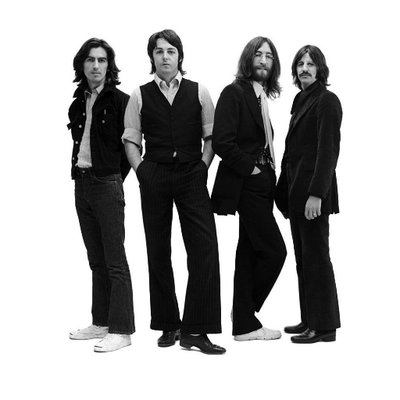
2… Lennon – McCartney – As a team…it was quantity and quality. Their music will live long after we are gone.
3…Chuck Berry – He wrote the blueprint for future rockers.
4…Jagger – Richards – For blues rock it doesn’t get much better than these two.
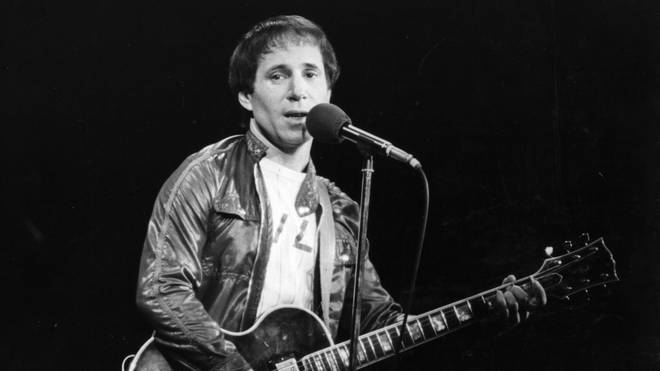
5…Paul Simon – One of the best craftsman of pop songs there is…
6…Bruce Springsteen – One of the best writers of his generation.
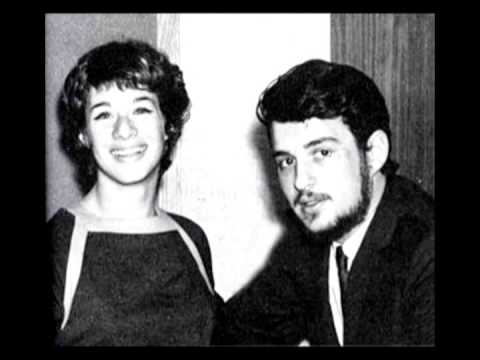
7…Goffin and King – Wrote some of the best known and successful songs of the sixties.
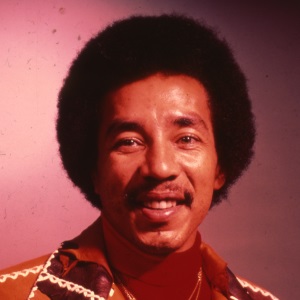
8…Smokey Robinson – Bob Dylan said of Robinson…”America’s greatest living poet”
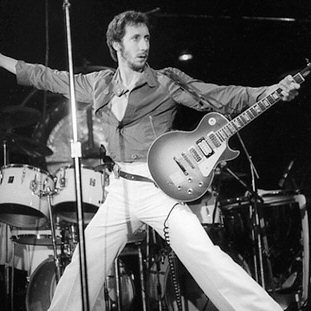
9…Pete Townshend – Took the “Rock Opera” to new levels.
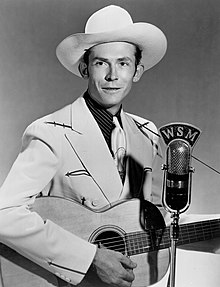
10…Hank Williams – The country poet.
Honorable Mention
Paul McCartney, John Lennon, Ray Davis, Neil Young, Townes Van Zandt, Leiber and Stoller, Elvis Costello, Randy Newman, Woody Guthrie, Merle Haggard, Robbie Robertson, Elton John and Bernie Taupin, Tom Petty, Curtis Mayfield, John Prine, George Harrison, Steve Wonder, Warren Zevon, Brian Wilson
There are so many singers that I cannot possibly list them all. I could make a top 30 and not get them all. This is my personal favorite top 10 plus some extra.
For the most part, I like singers with soul and meaning to their singing…not vocal gymnastics.
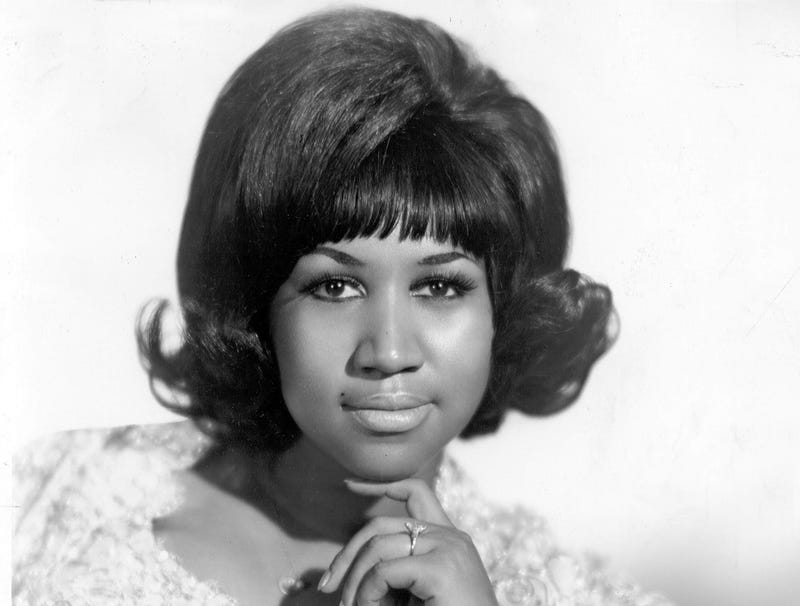
1…Aretha Franklin – Aretha could make any song better by singing it.
2…Van Morrison, Them and Solo – Probably my favorite male singer.
3…John Lennon, Beatles – John hated his voice and always wanted an effect on it…It didn’t need it…one of his best performances was “A Day In The Life”
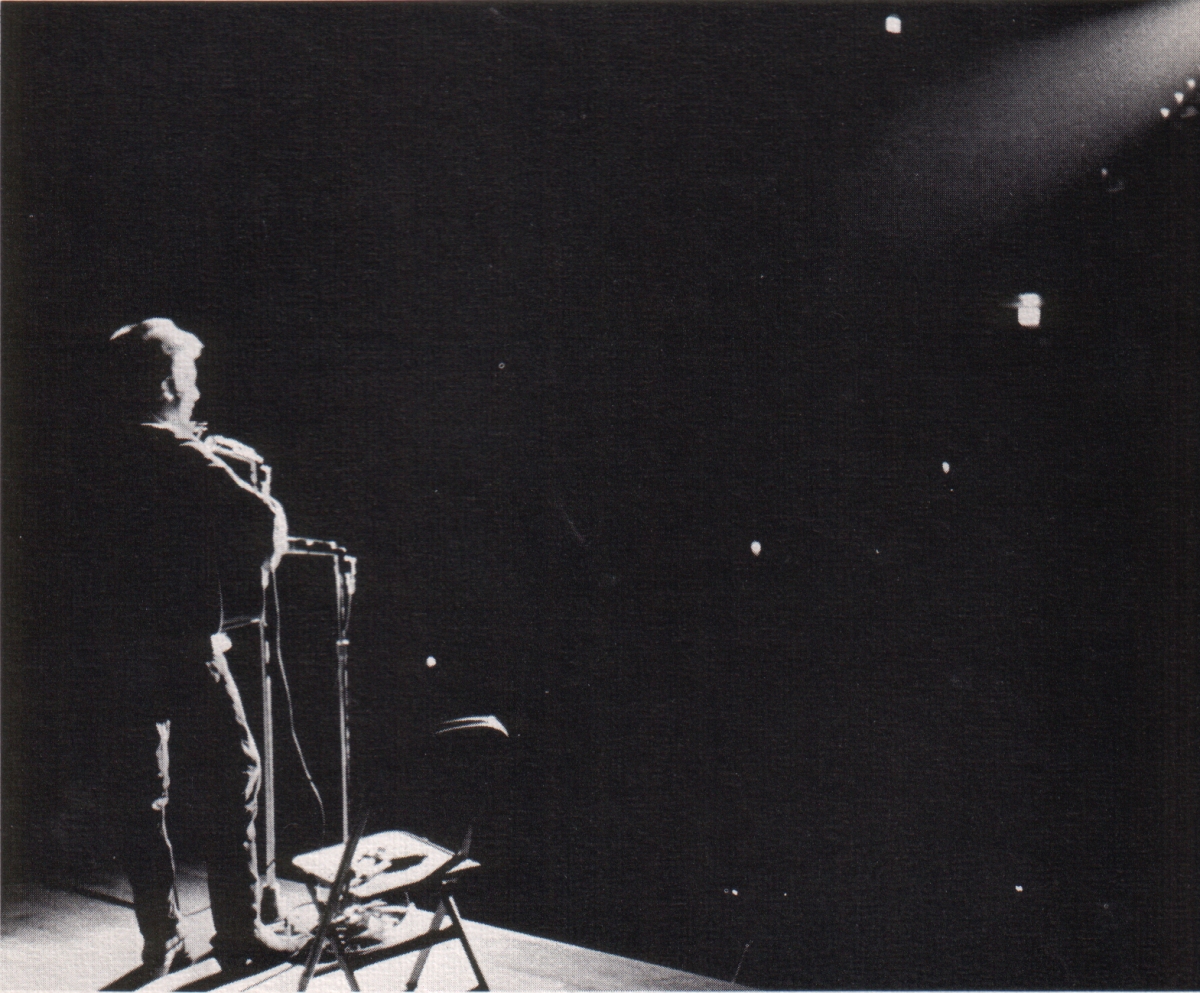
4…Bob Dylan – Bob changed popular singing. I would rather hear Bob sing than many of the great traditional singers.
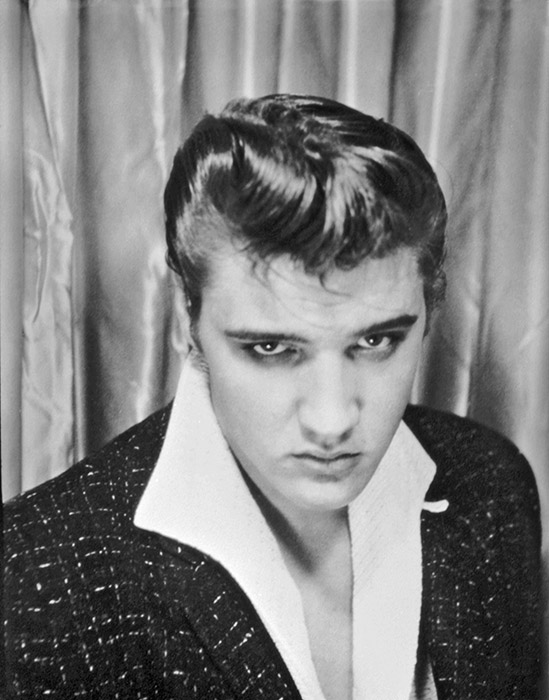
5…Elvis Presley – Hey he’s Elvis…
6…Otis Redding – Just a fantastic singer and performer and just taking off before he was killed in a plane crash.
7…Mick Jagger, Rolling Stones – Mick makes the most out of his voice.
8…John Fogerty…CCR – If I could have the voice of anyone…it would be Fogerty. The power that John has is incredible…his voice is its own instrument.
9…Janis Joplin – She put everything she had in each song. Her last producer Paul A. Rothchild was teaching Janis how to hold back and sing more traditional to save her voice for old age…which never came.
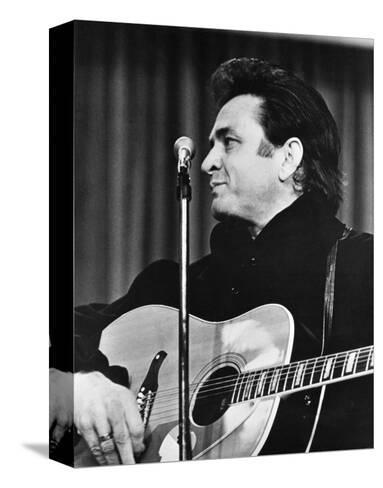
10…Johnny Cash – Last but far from least. Only one man can sound like Cash…and that is Cash
Honorable Mention…any of these could have easily been on the list.
Steve Marriott, Paul McCartney, Levon Helm, Bessie Smith, Little Richard, Roger Daltrey, Pete Townshend, Elton John, Neil Young, Roy Orbison, Smokey Robinson, Sam Cooke, Joe Cocker, Billie Holiday, Freddie Mercury, Kate Bush, Ella Fitzgerald, Paul Rodgers, David Bowie.
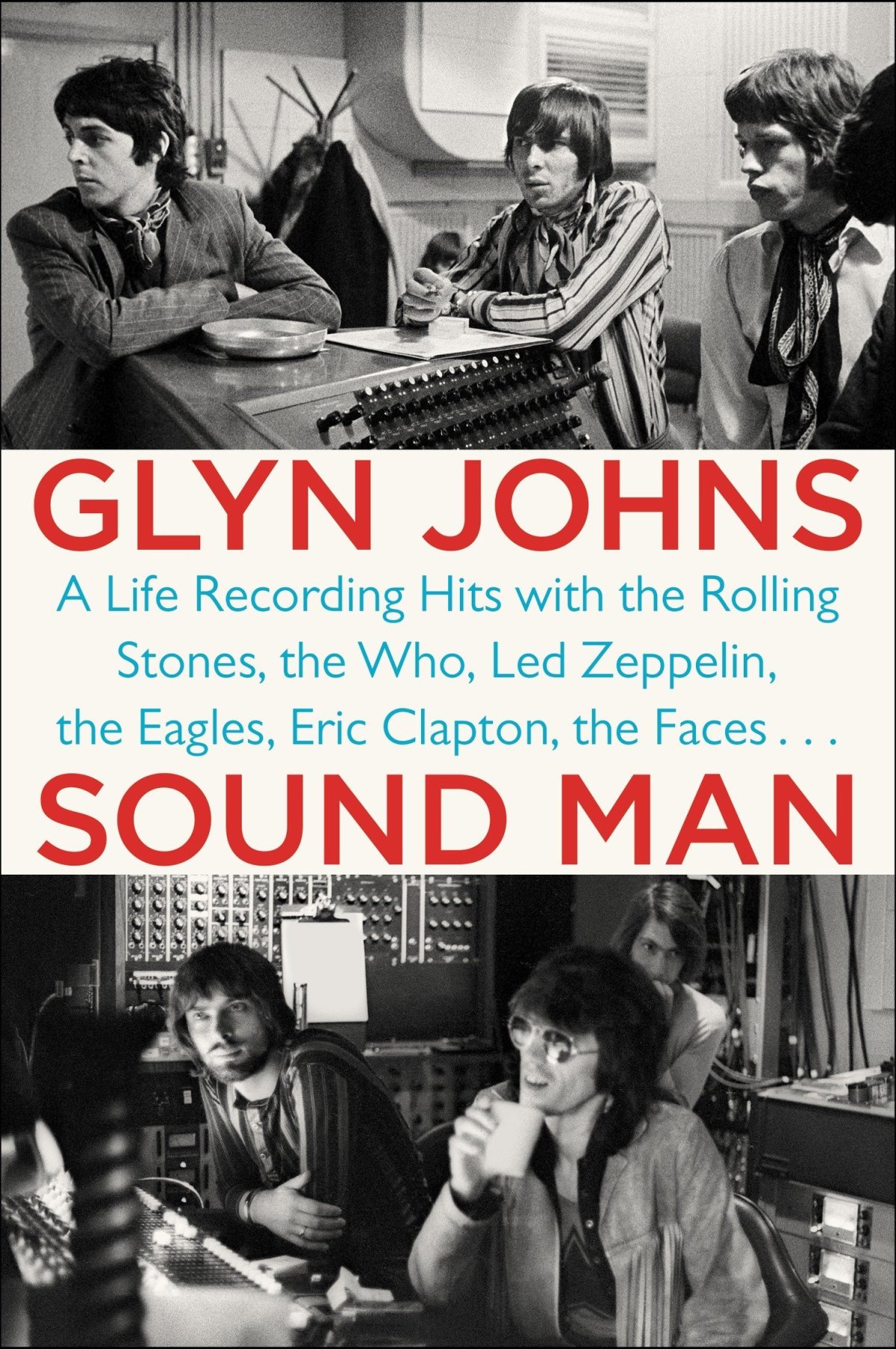
I read this book not knowing what to expect but I did know of Glyn Johns… so many of my albums had his name on it…A name that is known throughout the music industry as a great recording engineer, producer, and mixer. Glyn has worked with huge rock groups such as The Rolling Stones, Beatles, Who, Small Faces, Led Zeppelin, The Band and more.
Glyn is a no-nonsense guy and unlike most of the autobiographies of musicians in that era, he never did drugs and always did his job well. Glyn wanted to be a singer and did make a few records, he covered Rolling Stones Lady Jane, but he stuck with engineering and gradually became a producer.
Back when Glyn started in the early sixties engineers did not graduate to producing. It was very much a British class system in the music industry. He became the first freelance engineer in the industry because of the clients he attracted. He was one of the first to record the Stones and he began a relationship with them that lasted for years. He knew the Stones because he was really good friends with Ian Stewart and even shared a flat with him.
The Beatles called him to engineer Let It Be and he also helped engineer some of Abbey Road. He worked on Led Zeppelin’s first album. He produced Steve Miller’s first albums and also the first couple of Eagles albums.
This book will be very interesting to classic rock fans. Many anecdotes about the Stones, Beatles, Who and others. Glyn minces no words and has a reputation for saying what is on his mind. He isn’t too technical about recording in the book, he keeps it at a fast enjoyable pace.
He worked on some of the most classic albums ever. The Stones 60’s albums and the classic stretch of albums the Stones released until Black and Blue. He worked on Who’s Next, Quadrophenia, Led Zeppelin, A Nod Is As Good As a Wink… to a Blind Horse, Who Are You, Slowhand, just to name a few.
One interesting thing that happened in 1969. Glyn met Bob Dylan and Dylan told Johns that he would like to make an album with the Beatles and Stones. Glyn went back to England very excited and told Keith Richards and George Harrison and they were all for it. Ringo, Charlie, and Bill said they would do it. John didn’t say no but Mick and Paul said absolutely not…leaves you to wonder what it would have sounded like…
At the bottom of the page, I copied his discography from Wikipedia…it is incredible.
Excerpt from Sound Man about the Stones.
While Keith, Charlie, and Bill drove the band rhythmically, Mick’s energy and intellect drove everything else. I was constantly amazed by his skill as a songwriter and by the extraordinary energy he managed to summon for his vocal performances in the studio. Both Mick and Keith would take an active part in the mixing process and drove me nuts making me mix a track for hours when I felt I had got it in the first couple of passes. We certainly did not always agree. I guess it would have been even more boring if we had. There were a couple of occasions when finally putting the album together I would play back earlier mixes that I had done on my own, to compare with the one they had chosen after hours of farting around, and in the cold light of day they would agree that mine were better. Equally, there were many occasions when they insisted on me changing a mix quite drastically from the way I heard it, with great effect. Working with the Stones for all those years certainly had some amazing moments and I am proud to have been associated with them during a period of time when their music was so influential. However, Charlie summed it up perfectly when asked in a recent interview his experience of being in the band for fifty years. He replied, “Ten years of working and forty years of hanging around.”
Excerpt about The Beatles Let It Be
I had been retained originally as an engineer and was quite happy with that, even when I realized that George Martin was not producing. He did come to Twickenham a couple of times to check us out. He had arranged for the gear to be loaned for the recording at Savile Row and turned up on the day we did the filming on the roof, but had nothing to do with the production of the music. At the outset I was quite embarrassed when I realized he was not going to be involved. A couple of days into the project I asked Paul where George Martin was, only to be told that they had decided not to use him. By the time we moved to Savile Row, George, realizing I was in an awkward position, was kind enough to take me to lunch in order to put my mind at rest, saying I was doing a great job, everything was fine, and I was not stepping on his toes in any way. What a gentleman he is. Having delivered the mixed master of my version of Let It Be, I approached each member of the band separately, asking if I could have a production credit on the album when it was released. I made it quite clear that I was only asking for that and not a royalty. Paul, George, and Ringo had no objection to my request but John was suspicious and could not understand why I was not asking for a royalty. I explained that I felt, because of their stature, the sales of the album would not be affected by my involvement one way or another, so a credit would be a fair settlement for what I had done, as by association it could only be positive for my career in the future. I never got an answer from John. As it turned out, none of this mattered, as in the end, after the group broke up, John gave the tapes to Phil Spector, who puked all over them, turning the album into the most syrupy load of bullshit I have ever heard. My master tape, perhaps quite rightly, ended up on a shelf in the tape store at EMI. At least my version of the single of “Get Back”/“Don’t Let Me Down” had been released in April 1969.
Below is Glyn’s discography…what a body of work.
Artist
Year
Album
Producer
Engineer
Mixing
Georgie Fame
1964
Rhythm and Blues at the Flamingo
The Rolling Stones
1965
December’s Children
co-eng.
co-mix.
The Pretty Things
1965
Get the Picture?
co-prod.
The Rolling Stones
1965
Out of Our Heads
co-eng.
co-mix.
The Rolling Stones
1966
Aftermath
co-eng.
co-mix.
The Rolling Stones
1966
Got Live if You Want It!
Chris Farlowe
1966
The Art of Chris Farlowe
The Small Faces
1966
Small Faces (Decca)
Chris Farlowe
1966
14 Things to Think About
Twice as Much
1966
Own Up
The Small Faces
1967
From the Beginning
Rolling Stones
1967
Between the Buttons
The Small Faces
1967
Small Faces (Immediate)
The Rolling Stones
1967
Flowers
co-eng.
co-mix.
The Rolling Stones
1967
Their Satanic Majesties Request
Johnny Hallyday
1967
San Francisco (EP)
The Rolling Stones
1968
Beggars Banquet
The Steve Miller Band
1968
Children of the Future
Twice as Much
1968
That’s All
The Pentangle
1968
The Pentangle
The Move
1968
Something Else from the Move
Spooky Tooth
1968
It’s All About
The Small Faces
1968
Ogdens’ Nut Gone Flake
The Steve Miller Band
1968
Sailor
Gerry Temple
1968
Burn Up!
Procol Harum
1968
Shine on Brightly
The Move
1968
The Move
Easybeats
1968
Vigil
Traffic
1968
Traffic
Billy Nichols
1968
Would You Believe
The Steve Miller Band
1969
Brave New World
Family
1969
Family Entertainment
The End
1969
Introspection
The Beatles
1969
Abbey Road
Joe Cocker
1969
Joe Cocker!
Johnny Hallyday
1969
Johnny Hallyday
Led Zeppelin
1969
Led Zeppelin
The Rolling Stones
1969
Let it Bleed
The Steve Miller Band
1969
Your Saving Grace
Lambert and Nuttycombe
1970
At Home
Bob Dylan
1970
Self Portrait
co-eng.
The Rolling Stones
1970
Get Yer Ya-Ya’s Out!
Humble Pie
1970
Humble Pie
Philamore Lincoln
1970
The North Wind Blew South
Billy Preston
1970
That’s the Way God Planned It
Leon Russell
1970
Leon Russell
The Beatles
1970
Let it Be
Joe Cocker
1970
Mad Dogs & Englishmen
Delaney & Bonnie & Friends
1970
On Tour with Eric Clapton
The Move
1970
Shazam
The Band
1970
Stage Fright
co-eng.
Spooky Tooth
1970
The Last Puff
McGuinness Flint
1970
McGuinness Flint
The Faces
1971
A Nod Is As Good As a Wink… to a Blind Horse
Boz Scaggs
1971
Boz Scaggs & Band
Ben Sidran
1971
Feel Your Groove
McGuinness Flint
1971
Happy Birthday, Ruthie Baby
Jesse Ed Davis
1971
¡Jesse Davis!
Leon Russell
1971
Leon Russell and the Shelter People
Boz Scaggs
1971
Moments
Rita Coolidge
1971
Nice Feelin’
Howlin’ Wolf
1971
The London Howlin’ Wolf Sessions
Humble Pie
1971
Rock On
Graham Nash
1971
Songs for Beginners
The Rolling Stones
1971
Sticky Fingers
co-eng.
co-mix.
Spooky Tooth
1971
Tobacco Road
The Who
1971
Who’s Next
co-prod.
Eagles
1972
Eagles
The Rolling Stones
1972
Exile on Main St.
co-eng.
co-mix.
Rita Coolidge
1972
The Lady’s Not for Sale
Neil Young
1972
Harvest
co-eng.
Nicky Hopkins, Ry Cooder, Mick Jagger, Bill Wyman, and Charlie Watts
1972
Jamming with Edward
Chris Jagger
1973
Chris Jagger
Eagles
1973
Desperado
Eric Clapton
1973
Eric Clapton’s Rainbow Concert
The Faces
1973
Ooh La La
The Who
1973
Quadrophenia
co-prod.
co-eng.
Ric Grech
1973
The Last Five Years
Paul McCartney and Wings
1973
Red Rose Speedway
co-eng.
Gallagher & Lyle
1973
Seeds
The Ozark Mountain Daredevils
1973
The Ozark Mountain Daredevils
co-prod.
Gallagher & Lyle
1973
Willie and the Lapdog
The Ozark Mountain Daredevils
1974
It’ll Shine When It Shines
co-prod.
The Rolling Stones
1974
It’s Only Rock ‘n’ Roll
Eagles
1974
On the Border
co-prod.
co-eng.
Gallagher & Lyle
1974
The Last Cowboy
Georgie Fame
1974
Georgie Fame
Fairport Convention
1975
Rising for the Moon
The Who
1975
The Who by Numbers
Andy Fairweather Low
1976
Be Bop ‘n’ Holla
Fools Gold
1976
Fools Gold
Joan Armatrading
1976
Joan Armatrading
Ron Wood & Ronnie Lane
1976
Mahoney’s Last Stand
The Rolling Stones
1976
Black and Blue
co-eng.
Buckacre
1976
Moring Comes
The Bernie Leadon—Michael Georgiades Band
1977
Natural Progressions
Pete Townshend & Ronnie Lane
1977
Rough Mix
Joan Armatrading
1977
Show Some Emotion
Eric Clapton
1977
Slowhand
Eric Clapton
1977
Backless
Craig Nuttycombe
1977
It’s Just a Lifetime
Joan Armatrading
1978
To the Limit
Paul Kennerly and various Artists
1978
White Mansions
The Who
1978
Who Are You
co-prod
co-eng.
Mark Benno
1979
Lost in Austin
Joan Armatrading
1979
Steppin’ Out
Live Wire (band)
1979
Pick it UP
Lazy Racer
1980
Formula II
Tim Renwick
1980
Tim Renwick
Paul Kennerly
1980
Legend of Jessie James
Danny Joe Brown
1981
Danny Joe Brown and the Danny Joe Brown Band
Jools Holland
1981
Jools Holland and His Millionaires
Midnight Oil
1981
Place Without a Postcard
Nine Below Zero
1981
Don’t Point Your Finger
Chris de Burgh
1981
Best Moves
The Clash
1982
Combat Rock
The Who
1982
It’s Hard
Local Boys
1983
Moments of Madness
Various artists
1984
ARMS Concert
Jimmy Page, John Paul Jones, Albert Lee,
1984
No Introduction Necessary
Téléphone
1984
Un Autre Monde
Bob Dylan
1984
Real Live
Immaculate Fools
1985
Hearts of Fortune
Téléphone
1986
Le Live
Roaring Boys
1986
Roaring Boys
The Big Dish
1986
Swimmer
New Model Army
1986
The Ghost of Cain
Joolz
1987
Hex
Spooky Tooth
1987
Spooky Tooth
Helen Watson
1987
Blue Slipper
Labi Siffre
1987
(Something Inside) So Strong
John Hiatt
1988
Slow Turning
Nancy Griffith
1989
Storms
Green on Red
1989
This Time Around (Green on Red album)
John Hiatt
1990
Stolen Moments
Summerhill
1990
West of Here
Del Shannon
1991
The Liberty Years
Energy Orchard
1992
Stop the Machine
Ethan Johns
1992
Independent Years
David Crosby
1993
Thousand Roads
Crosby, Stills, & Nash
1994
After the Storm
The Subdudes
1994
Annunciation
Jackopierce
1995
Bringing on the Weather
Bruce Cockburn
1994
Dart to the Heart
Joe Satriani
1995
Joe Satriani
The Beatles
1996
Anthology 3
co-eng.
Eric Clapton
1996
Crossroads 2: Live in the Seventies
The Rolling Stones and various artists
1996
The Rolling Stones Rock and Roll Circus
Warm Jets
1997
Future Signs
Bill Wyman’s Rhythm Kings
1998
Struttin’ Our Stuff
Linda Ronstadt
1998
We Ran
Bill Wyman’s Rhythm Kings
1999
Anyway the Wind Blows
Emmylou Harris & Linda Ronstadt
1999
Western Wall: The Tucson Sessions
Various artists
1999
Return of the Grievous Angel: A Tribute to Gram Parsons
John Hiatt and various artists
20o2
Disney’s The Country Bears
musical dir.
Bruce Cockburn
2005
Speechless
Andy Fairweather Low
2006
Sweet Soulful Music
The Clash
2008
Live at Shea Stadium
Ian McLagan & the Bump Band
2008
Never Say Never
+ mastering
Ryan Adams
2011
Ashes & Fire
Ben Waters
2011
Boogie 4 Stu: A Tribute to Ian Stewart
The Rolling Stones
2012
Charlie is My Darling: Ireland 1965
The Staves
2012
Dead & Born & Grown Up & Live
co-prod.
The Rolling Stones
2012
GRRR!
Band of Horses
2012
Mirage Rock
Ethan Johns
2012
If Not Now Then When?
Aaron Neville
2013
My True Story
Patty Griffin
2013
Silver Bell
Stephen Stills
2013
Carry On
co-prod.
co-eng.
co-mix
Bob Dylan
2013
Another Self Portrait (1969-1971: The Bootleg Series, Vol. 10)
co-eng.
Benmont Tench
2014
You Should Be So Lucky
Ian McLagan & the Bump Band
2014
United States
Joe Satriani
2014
The Complete Studio Recordings
Bruce Cockburn
2014
Rumours of Glory (True North)
David Bowie
2014
Nothing Has Changed
co-eng.
The Small Faces
2014
Here Come the Nice: The Immediate Years 1967-1969
The Small Faces
20..
Greatest Hits: The Immediate Years 1967-1969
The Faces
2015
You Can Make Me Dance, Sing or Anything: 1970-1975
Various artists
2015
Truckers, Kickers, Cowboys Angels: The Blissed-Out Birth of Country-Rock , Vol. 7: 1974
The autobiography of Robbie Robertson. I read this right after My Cross To Bear by Gregg Allman. The only surprising part is it stops at 1976 and doesn’t cover Robbie’s solo career.
Robbie is 33 when the book ends. It ends at a recording session where only Robbie shows up after The Last Waltz.
If you have read Levon Helm’s This Wheels on Fire you know that Levon was pretty hard on Robbie. He rips him for songwriting credits and The Last Waltz. Robbie takes the high road in his book. He talks about the brotherhood they all shared. He mentions that Levon was his best friend he ever had in his life.
Robbie was in the middle of musical history throughout the book. He talks about joining Ronnie Hawkins and the Hawks and befriending Levon…they eventually picked up Richard Manuel, Rick Danko, and Garth Hudson. After they split with Ronnie they get busted and gigged at various bars while meeting music legends Sonny Boy Williamson II, Paul Butterfield, Mike Bloomfield and then Bob Dylan. After meeting Dylan they start backing him on his first electric tour.
They are in the middle of the chaos of Dylan’s electric tour…Levon quits a few shows into it because of the booing and the people that surround Dylan. The rest of the Band (still called the Hawks) continue to back Dylan around the world. Along the way, they make friends with Brian Jones, The Beatles, Johnny Cash and eventually Jimi Hendrix (Jimmy James at the time).
He also mentions about living at the Chelsea Hotel, Big Pink, Levon coming back, living in Woodstock, playing Woodstock, and being friends with Dylan. This is one book that gives you a side of Dylan you never read much about. Robbie humanizes him while keeping respect. The Band much like the Allman Brothers valued brotherhood. They stuck together and got along really well until heroin started to enter the picture.
He goes into his songwriting and where he got the ideas. A lot of his ideas came from hanging out with Levon at Levon’s home in Arkansas. Robbie enjoyed the area and the southern culture that surrounded him.
Robbie is big foreign film buff who read many screenplays and would have people to pick them up when going through New York. After reading those he said it helped him to express what he felt in lyrics.
You get such a mix of personalities in the book… Edie Sedgwick, Carly Simon, Eric Clapton, George Harrison, to smoking pot with John Lennon in the sixties with John’s special made “cigarettes.”
All of the Band had street smarts and mixed with killers, thieves and mafia members before they made it. They were without money at one point and Robbie and Levon were actually going to wear masks and hold up a high stakes poker game. It’s a wonder one of them wasn’t killed before the band met Dylan.
I’ve read both Levon’s and Robbie’s books. I liked them both. Robbie is more consistent in his telling. There is a reason Robbie wanted to get off the road. Richard Manuel was not in good shape…even on The Last Waltz and Robbie was no angel himself. The road brought temptations that were hard for them to resist.
If you are a Band fan and/or Dylan fan…get it. I would place this book up there with Keith Richard’s book Life. That is about the highest praise I can give…
Any band that calls themselves The Band…better be great…this band most certainly was… Four Canadians with one American who wrote and sang Americana music better than anyone.
They started out backing up Ronnie Hawkins in the early sixties… From there they backed up Bob Dylan on his famous conversion to “electric” music. They toured all over the world with Dylan getting booed because of the folk purists hate of Bob’s new electric direction. Levon left at the beginning of that tour but came back when they started to work on their own music.
They were a band in the best sense of the word. the members were Robbie Robertson who played guitar and was the main songwriter. Levon Helm who was the drummer and one of the three singers. Richard Manual played piano and was probably the best singer of the Band. Rick Danko the bass player and also singer and great at harmonies. Garth Hudson the keyboard player extraordinaire. They all could play other instruments…
They would switch up instruments and record at times just to get a different texture to their music.
They rented a house in West Saugerties New York…a big pink house and started to set up in the basement. Bob Dylan would come over and they would record demos.
Bob Dylan was a big influence on The Band. The Band also influenced Bob Dylan in the basement. He had never recorded outside of a studio before and it freed him up a bit. Those recordings were meant to be demos for other performers to sing but were heavily bootlegged so they were officially released in 1975 as “The Basement Tapes” with songs by Dylan and The Band. The songs had pure raw energy and showed a sense of humor also.
They influenced everyone from Eric Clapton..who hid a secret desire to join them…to George Harrison and many more. Their first two albums (Music From Big Pink and The Band) were groundbreaking. They changed the musical landscape…the move from psychedelic to an older sounding looser type of music.
In 1974 Bob Dylan and the Band toured together again. The Band backed Dylan again but also played their own set. They released a live album of that tour called Before The Flood.
Some bands have great voices and tight harmonies. The Beatles, Beach Boys, Eagles to name a few but The Band’s harmonies were loose but at the same time just as tight in their own way. Their music sounded spontaneous but it was well crafted. They always left enough raw edge to keep it interesting.
Robbie Robertson’s words and melodies were Americana flowing through a Canadian who had part Jewish and Native-Canadian roots. He would read one movie screenplay after another. It helped him with his songwriting to express the images he had in his head. Robbie also took stories Levon told him of the south and shaped them into songs.
The Band was no frills…you were not going to see lasers or a Mick Jagger clone running about… they just played their music and did it well. They did not follow trends but they were not afraid to experiment especially Garth Hudson the keyboard player who was always playing with different sounds.
Songs like The Weight, Cripple Creek, The Shape I’m In, The Night They Drove Old Dixie Down, Rag Mama Rag, This Wheels On Fire, Stage Fright and the list goes on. The songs still sound fresh and fit perfectly on their respective albums.
You can’t go wrong with a Band album but the ones I would recommend would be Music From Big Pink (1968) and The Band (1969).
The Greatest Hits album has the radio songs you know but you miss some great songs by not getting the original albums. The ultimate would be the 2005 release of the box set called A Musical History. It has everything the original band recorded.
They broke up in 1976 and played their last concert with all of the original members in a film called The Last Waltz…
Their music was always uniquely their own. This band earned their name…





















 PowerPop... An Eclectic Collection of Pop Culture