Twilight Zone – The Encounter

★★★★1/2 May 1, 1964 Season 5 Episode 30

If you want to see where we are…HERE is a list of the episodes.

This episode is a serious and powerful episode. Taro (George Takei) lives with the guilt and dishonor that his father brought on the family by turning traitor during World War II, even while employed as a shipbuilder in Hawaii. Fenton (Neville Brand) endures the repressed guilt of having murdered a Japanese soldier after the man had already surrendered.

At first, the two are cordial but you can feel the tension build as the episode proceeds. It deals with themes of guilt and atonement. The dialog sounds authentic and dramatic. George Takei who plays Arthur Takamori would later go on to star in Star Trek. Both actors are superb in this story. 

IMDB Trivia: This episode sparked some intense controversy for CBS after it was first aired in 1964. Due to strong critical blow-back for it’s ostensible racist overtones and revisionist history, CBS pulled this episode out of syndication and it was not rebroadcast again on any network in the U.S. until 2016; although it did air in other countries and was also not removed from streaming services or home video/DVD sets. The Encounter triggered audience and reviewer criticism of the episode as antithetical to the series’ normally positive treatment of otherwise sensitive social, religious, and racial subject matter.

During the dialogue, the Pearl Harbor attack was extensively discussed. Six years later, Neville Brand would have a small role in the epic Pearl Harbor film Tora! Tora! Tora!

This episode was finally rerun in the United States, on the Syfy channel, during a complete Twilight Zone marathon on January 3rd, 2016.

This show was written by Rod Serling and Martin Goldsmith

Rod Serling’s Opening Narration: 

Two men alone in an attic, a young Japanese-American and a seasoned veteran of yesterday’s war. It’s twenty odd years since Pearl Harbor, but two ancient opponents are moving into position for a battle in an attic crammed with skeletons, souvenirs, mementos, old uniforms, and rusted medals. Ghosts from the dim reaches of the past, that will lead us into the Twilight Zone.

Summary

A man, Fenton, is cleaning out his attic when a Japanese gardener, Arthur Takamori, stops by asking if he would like his grass cut. Fenton invites him up for a beer but, having served in the Pacific during World War II, isn’t quite sure what to make of his visitor. He has his prejudices but wavers as Arthur says he was born in the USA and is no different than any other American. As they discuss their pasts, it’s revealed that both men have lied and are haunted by what happened to them

Rod Serling’s Closing Narration:

Two men in an attic, locked in mortal embrace. Their common bond, and their common enemy: guilt. A disease all too prevalent amongst men both in and out of The Twilight Zone.

CAST

Rod Serling … Host / Narrator – Himself
Neville Brand … Fenton
George Takei … Arthur Takamori/Taro

 

TV Draft Round 3 – Pick 2 – Seinfeld

Welcome to the Hanspostcard TV Draft. The remaining 8 rounds will be posted here. We will have 64 different TV Shows by 8 different writers. I hope you will enjoy it! Today’s post was written by Mike from https://musiccitymike.net

Seinfeld

I must begin by saying that I’m puzzled as to why it took me so long to decide what my next pick in the TV series draft would be. The number of Seinfeld YouTube clips I’ve watched should alone justify making the “show about nothing” my #3 overall pick.

My history with Seinfeld however is odd in that I did not watch a single episode in real time until I viewed the underwhelming series finale at a private corporate event on their then-expensive big screen. By then though I had at least seen some reruns but had yet to become passionate about the show. But not too long after the series ceased, I got hooked by watching many more reruns and running through my Dad’s DVD collection when I visited my folks. Watching Seinfeld soon became highly addictive for several reasons upon which I will elaborate.

Seinfeld ‘s obvious attractions are of course that it is very funny, all the characters are incredible, and like my prior two series picks, it is set mostly in New York City. And to that last point, the show’s brilliant production never once makes you think that it’s all done in a Hollywood studio. It really feels like it’s all happening in the Big Apple.

Remarkably, I have always been fascinated by how timeless Seinfeld is. Despite the lack of cellphones and the presence of Jerry’s dated haircut and his old Macintosh computer visible in the background, the storylines just seem so relevant to whatever decade you are watching them in. Relationship issues, comical character failures and the unabashed selfishness exhibited by the four main characters are things we can all forever relate to and laugh about.

Seinfeld’s impact on popular culture is also unprecedented. For a show that is now more that 20 years expired, there are so many expressions that are now accepted vernacular. Aside from the obvious “Yada Yada” and “No soup for you!”, quite often, personal situations have made me recall and reference old episodes. One recent example dealt with someone who was perpetuating an obvious lie until when like George Costanza, “He finally reached the end of the Hamptons!” Amazing how many people I said this to remembered that car ride ending in a walk when George didn’t admit to his fiancé’s parents that he didn’t have a house in the Hamptons until they all reached the Atlantic Ocean.

Each Seinfeld episode typically had three or four concurrent storylines and we often forget the classics that intersected with one another.  One was when the injured squirrel, for whom George paid for surgery to impress a girlfriend, got snatched away by a hawk during Kramer’s mock Merv Griffin Show. (After he found the old TV show set props in the trash bin.) On the same “show,” Jerry also was outed for drugging his girlfriend so that he could play with her rare vintage toy collection.

Being a baseball fan, having George work for the Yankees and seeing some real-life Yankees and Mets playing themselves on the show was something special. In fact, if I had to pick my favorite episode, it would be the one in which George suggested the Yankees wear cotton uniforms since cotton fabric breathes. Then came the problem when the non-polyester uniforms shrank making play difficult. This was also another great multiple story line show in which the gang watches the hapless Yanks from an Atlantic City hotel room where Jerry also accidently drowns the trained doves from Miss Rhode Island’s talent act. (Kramer was coaching Jerry’s girlfriend for the pageant.)

Writing about this show makes me want to watch it right now. It also makes me ponder where did Kramer get the money to live on and how many girlfriends did Jerry have? It’s hard to imagine what life would be like without the ability to go back and visit Jerry, George, Elaine, and Kramer on a regular basis.

Finally, while there never was an official Seinfeld reunion show, there was a short segment on Seinfeld co-creator Larry David’s Curb Your Enthusiasm where we did see the show’s main four characters in the future. Here’s a look at those snippets all combined in a clever update that makes you long for some more new Seinfeld. Maybe someday.

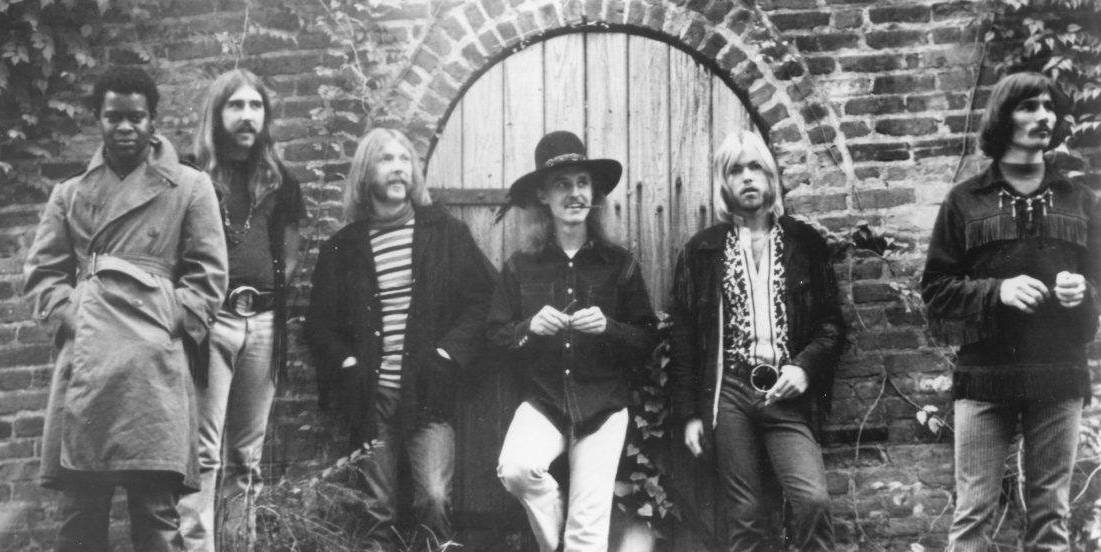
Allman Brothers – Revival

The Allman Brothers have such a unique style that you can recognize their music right off with the dual lead of Duane Allman and Dickey Betts. This band broke through by touring constantly and playing free shows in parks from Georgia to New York. They played a mixture of rock, blues, country, and jazz and were one of the best.

This was the first Allman Brothers song to chart, this peaked at #92 in the Billboard 100. This was the first original song the band recorded that was not written by Gregg Allman. Guitarist Dickey Betts wrote it.

It was the lead single from their second studio album, Idlewild South released in 1970. Named for a remote farmhouse/cabin the band rented for rehearsals, and where much of it was written and conceived, Idlewild South includes two of the band’s best-loved songs, In Memory of Elizabeth Reed and Midnight Rider.

This was the first Allman Brothers album produced by the legendary producer and engineer, Tom Dowd. During its recording, the band was constantly touring and their sound was road-tested, so much so that instead of doing it as a conventional multi-track recording, the band and Dowd opted to record most of the album live in the studio with minimum if any overdubs.  The band was just that good.

In 1970 they moved into what they called The Big House in Macon Georgia. They didn’t have a lot of money, but their wives and girlfriends found this house to rent. Older big houses like this weren’t too expensive back in 1970 to rent.

It’s now the Allman Brothers museum…it’s on my list to visit.

Visit Us - The Big House Museum

Revival

People can you feel it?
Love is everywhere
People can you hear it?
The song is in the air
We’re in a revolution
Don’t you know we’re right
Everyone is singing, yeah
There’ll be no one to fight
People can you feel it?
Love is everywhere
People can you feel it?
Love is everywhere
People can you feel it?
Love is everywhere
People can you feel it?
Love is everywhere
People can you feel it?
Love is everywhere
People can you feel it?
Love is everywhere
Love is everywhere
Love is everywhere
Love is everywhere
Love is everywhere
Love is everywhere
Love is everywhere
Love is everywhere
People can you feel it?
Love is everywhere
People can you feel it?
Love is everywhere
People can you feel it?
Love is everywhere
People can you feel it?
Love is everywhere
People can you feel it?
Love is everywhere
People can you feel it?
Love is everywhere
People can you feel it?
Love is everywhere
People can you feel it?
Love is everywhere

TV Draft Round 3 – Pick 1 – Hogan’s Heroes

Welcome to the Hanspostcard TV Draft. The remaining 8 rounds will be posted here. We will have 64 different TV Shows by 8 different writers. I hope you will enjoy it! Today’s post was written by John from https://thesoundofonehandtyping.com

  • SHOW: Hogan’s Heroes
  • NETWORK: CBS
  • RUN: 1965-1971

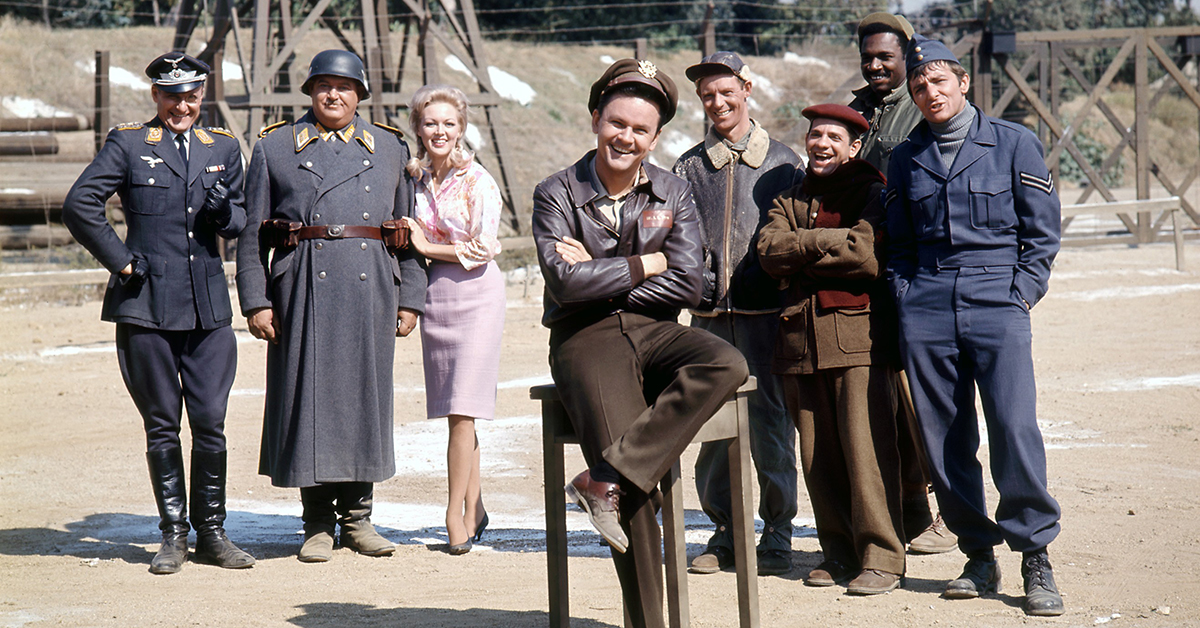
This was as unlikely a hit show as you could find: A sitcom set in a Luftwaffe prison camp in Nazi Germany during World War II. They actually used the tagline “If You Liked World War II, You’ll Love Hogan’s Heroes.” Yet, it found an audience and lasted on CBS for six years until Norman Lear convinced the network that their viewers would rather see a sitcom about a bigot from Queens than Hogan’s Heroes, or any show that had anything to do with rural people.

Hogan’s Heroes was inspired by the movie The Great Escape, where Allied prisoners of war escaped by digging tunnels past the fences and guards and into the woods surrounding the camp. The main difference is that, while Hogan and his crew had tunnels leading from under the barracks to the woods beyond the camp fences, they were used both to get out of and back into camp, often accompanied by outsiders such as members of the German Underground, flyers who were shot down near the camp, German officers defecting from the Third Reich, prisoners from other camps, scientists looking to leave Germany, taking their secrets with them, etc. When not doing that, the crew is kept busy with sabotage and espionage activities as directed by Allied Command in London, with whom they stay in contact by means of a shortwave radio hidden in the tunnel.

(The tunnel is somewhat of a miracle: At the beginning of the pilot episode, we’e told that we’re in “Germany, 1942.” The US had only been in the war since late 1941, which makes you wonder how they managed to build such a complex set of tunnels in such a short time. Of course, it’s always winter at Stalag 13, so maybe it’s the end of 1942 rather than the beginning. Could they have dug that complex of tunnels in just ten months? Perhaps they were left over from World War I, as was suggested in one episode.)

The head of the Heroes is Colonel Robert Hogan (played by Bob Crane) of the US Army Air Forces, who for some reason is kept in a Luftstalag with enlisted men, something the Germans never did. He receives the orders from Headquarters, devises a plan for carrying out the orders, then assigns tasks to his crew. The Heroes are two Americans, Staff Sergeant James Kinchloe (played by Ivan Dixon), who worked for the phone company in Detroit before the war and who handles the radio and other wiring jobs, and Technical Sergeant Andrew Carter (played by Larry Hovis), who worked at a drug store in Muncie, Indiana before the war and who is a demolitions expert, a competent chemist, and who looks enough like Adolf Hitler himself that he will sometimes dress and act like Der Führer when the occasion calls for it. (Dixon left the show after the fifth season and was replaced by Kenneth Washington as Sergeant Richard Baker for the final year.) They are joined by Corporal Peter Newkirk of the Royal Air Force (played by Richard Dawson), an expert pickpocket and petty thief as well as tailor, and Corporal Louis LeBeau of the Free French Force (played by Robert Clary), a gourmet chef who’s small enough to fit anywhere, including in the kommandant’s safe and all sorts of packing crates.

Hogan is successful largely because the staff at Stalag 13 is so inept. The kommandant is Colonel Wilhelm Klink (played by Werner Klemperer), an incompetent administrator who’s always buried up to his neck in paperwork. All the members of his class in the military academy have been promoted to either General or Field Marshall and have gone on to important jobs in the Third Reich, while Klink is running a prison camp. Vain, supercilious, and narcissistic, Klink fancies himself a violinist on a par with Heifetz and a ladies’ man rivalling Don Juan, when in fact he’s an abysmal violinist and often has his dates taken from him by either Hogan or by General Burkhalter (played by Leon Askin), Klink’s boss in Berlin who visits Stalag 13 frequently. Burkhalter would just as soon see Klink shipped to the Eastern Front and replace him with a captain or major, except that Klink has an apparently immaculate record, as there has never been a successful escape from Stalag 13, which Klink never fails to tell anyone who will listen. The reason he has a perfect no-escape record is because Hogan won’t allow it: the success of his operation depends on Klink’s incompetence.

The sergeant of the guard is Sergeant Hans Schultz (played by John Banner), a fat, lazy, slovenly man in his late 40’s who was very happy making toys as the owner of the Schatzi Toy Company until the Nazis commandeered his factory and inducted Schultz, a decorated veteran of World War I, back into the Luftwaffe. Schultz can be easily persuaded to look the other way when he catches Hogan and his men outside the camp by Hogan reminding him that his job was to make sure that didn’t happen, and that he might find himself on a troop train to Stalingrad if word gets back to Klink. Schultz is also easily bribed with candy bars from the prisoners’ Red Cross packages and with strudel or some other dish prepared by LeBeau.

No show about Germany during WWII is complete without a Gestapo officer or two, and this is generally Major Wolfgang Hochstetter (played by Howard Caine), an ill-tempered and irritable man who often arrests everybody in the room before he realizes he has no case against anyone, whereupon he departs shouting “BAH!” He spends much of his time at Stalag 13 because he’s convinced that Hogan is the most dangerous man in Germany, which, of course, is true.

Hogan has an affectionate relationship with Klink’s secretary, Helga (played by Cynthia Lynn in the first season) or Hilda (played by Sigrid Valdis, Crane’s eventual wife, in the remaining seasons), who let him in on what’s going on in Klink’s office and occasionally will do something to help Hogan carry out his mission. He rewards them with nylon stockings, perfume, cosmetics, and extensive make-out sessions in her office. Both Helga and Hilda are also the targets of Klink’s amorous advances, which both are able to rebuff without much effort.

Three characters turn up from time to time, usually giving Hogan fits. Colonel (actually Group Captain) Rodney Crittendon of the RAF (played by Bernard Fox), whose arrival demotes Hogan from senior POW officer because Crittendon has twelve more years in grade than he. Crittendon’s first visit to Stalag 13 started with him informing the POW’s that, were he to learn that they were engaged in sabotage or espionage, he would be required to report it to Klink. Subsequent encounters with Crittendon show that he is a gung-ho supporter of Hogan’s mission, and usually manages to screw it up somehow. Gertrude Linkmayer (played by Kathleen Freeman and once or twice by Alice Ghostley) is General Burkhalter’s widowed sister. Burkhalter is constantly trying to marry her off to Klink, which results in Klink begging for Hogan’s help to get rid of her. Finally, there’s Marya (played by Nita Talbot), a glamorous Russian spy. She turns up on occasion hanging on the arm of a German officer, to whom she might or might not have told the secrets of Hogan’s operation, extorting Hogan’s assistance in one of her schemes. Hogan and LeBeau met her in Paris, and she has LeBeau wrapped around her finger. Any time she arrives at Stalag 13, he believes she has come for him, and whenever Hogan gets suspicious of her, LeBeau jumps to her defense.

One interesting aspect of the show is that the actors playing Klink, Schultz, Burkhalter, and Hochstetter are Jews, three of whom left either Germany or Austria when the Nazis came to power. All served in the US Armed Forces during World War II. In addition, a number of other actors who played Germans were Jewish. Werner Klemperer agreed to do the part of Klink only when it was written into his contract that the Germans would never defeat the Heroes.

Two episodes of Hogan’s Heroes are currently shown on MeTV at 10 and 10:30 PM Eastern time on weekdays.

Buzzcocks – What Do I Get

These guys blended punk and pop about as well as anyone. Once again I had a friend with their import records in the eighties. That was the only way I could hear them.

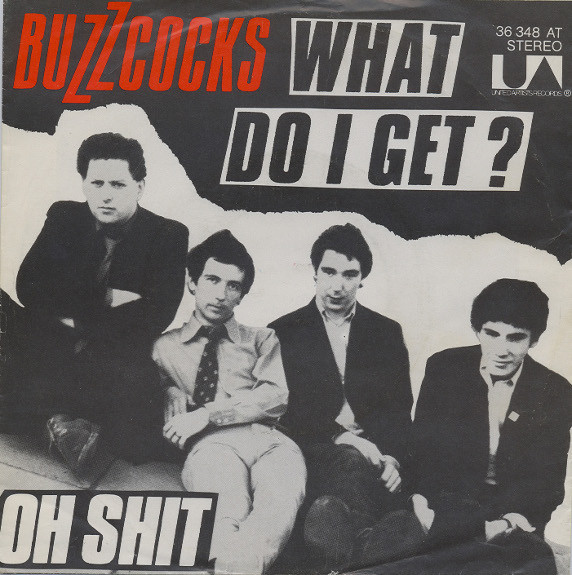
This was their first top 40 hit in the UK and it peaked at #37 way back in 1977. The B-side was a song called “Oh Shit.” I wish they would have hit in America but their name probably didn’t help them over here.

They chose the name Buzzcocks after reading the headline, “It’s the Buzz, Cock!”, in a review of the TV series Rock Follies in Time Out magazine. The “buzz” is the excitement of playing on stage; “cock” is northern English slang meaning friend. They were formed in 1976 by Pete Shelley and Howard Devoto after seeing the Sex Pistols. They were able to blend punk’s spirit and sound with pop.

They were invited by Nirvana to open select dates on the grunge outfit’s last ever European tour, in early 1994. Steve Diggle told about a  memory he has of Kurt Cobain: “Doing two grams of coke is one of my famous stories with him.” They also opened up for Pearl Jam in 2003.

They released 3 albums and broke up in 1981 after a dispute with their record company. They reunited in 1989 and released 6 more albums. Pete Shelley continued to play with the band until his death from a heart attack in 2018. The band still continues to tour.

Steve Diggle: “Of course we partied and did drugs and had good times with the girls. Who wouldn’t? Certain things about being in a band and traveling about, people invite you to parties and clubs. Initially, it wasn’t supposed to be like that. But I realized you can’t break America, America breaks you.”

 Jane Wiedlin: Our favorite band, the band that we always tried to emulate was the Buzzcocks, who had that great pop song done in a punky style.”

Billy Joe Armstrong: “Buzzcocks pretty much invented a style that would influence multiple generations of lonesome hearts and weirdos”

What Do I Get

I just want a lover like any other, what do I get?
I only want a friend who will stay to the end, what do I get?

What do I get, oh-oh, what do I get?

I’m in distress, I need a caress, what do I get?
I’m not on the make, I just need a break, what do I get?

What do I get, oh-oh, what do I get?

I only get sleepless nights
Alone here in my half-empty bed
For you things, seem to turn out right
I wish they’d only happen to me instead

What do I get, oh-oh, what do I get?

Ah

I only get sleepless nights
Alone here in my half-empty bed
For you, things seem to turn out right
I wish they’d only happen to me instead

What do I get, oh-oh, what do I get?

I just want a lover like any other, what do I get?
I only want a friend who will love to the end, what do I get?

What do I get, oh-oh, what do I get?

Well, let me tell you now
(What do I get?)
(What do I get?) No love
(What do I get?) No sleep at nights
(What do I get?) Nothing that’s nice
(What do I get?) Nothing at all, at all, at all, at all
At all, at all, at all ’cause I don’t get you

Edward Sharpe and The Magnetic Zeros – Home

I posted this song when I first started when I had only a couple of readers (Hanspostcard and Run-Sew-Read) so I thought I would give it another go. When I heard this on Lightning 100 in Nashville (an alternative station) I thought it was an old song. I liked it off the bat. Alex Ebert had left his band Ima Robot and formed this odd hippie-type band with Jade Castrinos in Los Angeles, California in 2007.

Never did I think I would like a song that started off…

Alabama, Arkansas
I do love my ma and pa
Not that way that I do love you

Holy moley, me oh my
You’re the apple of my eye
Girl, I’ve never loved one like you

But I did…and I couldn’t get enough of it. Their music has an old sound and is vibrant. I’m not comparing this in any way but it brought to mind Johnny and June Cash. Johnny and June didn’t sound like this but the type of song fits.

They were a band that had members that would come and go and were like a commune-type group. The song didn’t make it into the Billboard 100 although it was everywhere. “Home” was released in 2010 and it charted at #25 on the Billboard Alternative Songs in 2010 and #50 in the UK Charts in 2013. It did get a lot of play on commercials and  TV shows.

The interplay between Ebert and his then-girlfriend and bandmate Jade Castrinos is infectious. The song is a true story. Alex Ebert and Jade Castrinos were enjoying a day through Elysian Park in Los Angeles when she lost her shoes and he carried her on his back. After that, she fell out of his 2nd story window and had to go to the hospital.

The band is named after a character from a novel Ebert was writing…Edward Sharpe is an otherworldly figure who comes to Earth to offer enlightenment to the masses but finds himself getting distracted by the beautiful women.

Unfortunately Jade is not in the band now after a falling out in 2014. Their last album PersonA was released in 2016.

Home

Alabama, Arkansas
I do love my ma and pa
Not that way that I do love you

Holy moley, me oh my
You’re the apple of my eye
Girl, I’ve never loved one like you

Man, oh man, you’re my best friend
I scream it to the nothingness
There ain’t nothing that I need

Well, hot and heavy, pumpkin pie
Chocolate candy, Jesus Christ
Ain’t nothing please me more than you

Ah, home, let me go home
Home is wherever I’m with you
Ah, home, let me go home
Home is wherever I’m with you

La, la, la, la, take me home
Mommy, I’m coming home

I’ll follow you into the park
Through the jungle, through the dark
Girl, I never loved one like you

Moats and boats and waterfalls
Alleyways and pay phone calls
I’ve been everywhere with you

That’s true, laugh until we think we’ll die
Barefoot on a summer night
Never could be sweeter than with you

And in the streets you run a-free
Like it’s only you and me
Geez, you’re something to see

Ah, home, let me go home
Home is wherever I’m with you
Ah, home, let me go home
Home is wherever I’m with you

La, la, la, la, take me home
Daddy, I’m coming home

Jade Alexander, do you remember that day you fell out of my window?
I sure do, you came jumping out after me
Well, you fell on the concrete, nearly broke your ass,
You were bleeding all over the place and I rushed you out to the hospital, you remember that?
Yes, I do, well, there’s something I never told you about that night
What didn’t you tell me?
While you were sitting in the backseat smoking a cigarette you thought was going to be your last,
I was falling deep, deeply in love with you, and I never told you until just now

Ah, home, let me go home
Home is wherever I’m with you
Ah, home, let me go home
Home is where I’m alone with you

Home, let me come home
Home is wherever I’m with you

Ah, home, yes I am home
Home is when I’m alone with you

Alabama, Arkansas
I do love my ma and pa
Moats and boats and waterfalls
Alleyways and pay phone calls

Ah, home, let me go home
Home is wherever I’m with you
Ah, home, let me go home
Home is where I’m alone with you

Twilight Zone – Stopover in a Quiet Town

★★★★★ April 24, 1964 Season 5 Episode 30

If you want to see where we are…HERE is a list of the episodes.

This is a classic episode of the Twilight Zone. The characters are both a little hungover. They can be short-tempered, quarrelsome, and blame each other for their predicament. The wife tends toward hysteria and the man is totally insensitive, but we feel for them. They wake up in a strange house and town after drinking at a party the night before. In this quiet town, the horror is real, and we can sense the panic that the characters are going through. You start caring for the characters and are invested at this point as they think they find the way out time after time.

Serling has used this idea before with the pilot Where Is Everybody? but he explores it more with this episode. Rod Serling achieves a heightened sense of claustrophobia of feeling trapped in this episode. Serling’s closing narration turns it in a warning against drunk driving. “The moral of what you’ve just seen is clear. If you drink, don’t drive. And if your wife has had a couple, she shouldn’t drive either. You might both just wake up with a whale of a headache in a deserted village in the Twilight Zone.”

Earl Hamner Jr: I got that idea walking around the backlot at MGM once, Hamner recalls. Everything was made of papier-mache and was a false front. It suddenly came to me, what if someone woke in this surrounding and there was nothing but false labels on everything, and if you dropped a lighted match on the grass it would catch fire, and if you got on a train it would come all the way around to where you started from?

IMDB Trivia: The abandoned town in which the Frazers find themselves is the same location used for The Twilight Zone: The Monsters Are Due on Maple Street (1960). As the actors move through the ‘town’, they traverse several of the old themed ‘street’ sets which were then standing on the old MGM backlot, including the New England street, the “St Louis” street, and the western town.

The bulletin board in front of the church says that the sermon will be given by Rev. Kogh Gleason. F. Keogh Gleason was a set decorator at M-G-M for many years, and worked on The Twilight Zone (1959).

This is the second episode that shows two people sharing the same bed together on television, something unusual at the time. The first was The Twilight Zone: Person or Persons Unknown (1962). Due to censorship regulations from the networks, TV shows at the time would portray married couples sleeping on separate beds. In both of these cases, the couples were still fully dressed and had gone to sleep while drunk, thus making it clear to the viewer they hadn’t “slept” together.

This show was written by Rod Serling and Earl Hamner Jr.

Rod Serling’s Opening Narration: 

Bob and Millie Frazier, average young New Yorkers who attended a party in the country last night and on the way home took a detour. Most of us on waking in the morning know exactly where we are; the rooster or the alarm clock brings us out of sleep into the familiar sights, sounds, aromas of home and the comfort of a routine day ahead. Not so with our young friends. This will be a day like none they’ve ever spent – and they’ll spend it in the Twilight Zone.

Summary

After drinking too much at a party, Bob and Millie Frazier awaken in a strange bed, in a strange house in a strange town. They’re still dressed in the clothes they wore to the party but their memories are fuzzy. Bob was too drunk to drive so Millie was behind the wheel and she vaguely remembers a shadow falling over them. They soon realize that everything in the town is fake: the telephone in the house isn’t wired; the drawers and cupboards in the kitchen are only a façade; even the trees are fake. The town is deserted and Millie begins to wonder if they’re dead. They keep hearing a child laughing and begin a search. They’re not prepared for what they encounter.

Rod Serling’s Closing Narration:

The moral of what you’ve just seen is clear. If you drink, don’t drive. And if your wife has had a couple, she shouldn’t drive either. You might both just wake up with a whale of a headache in a deserted village in the Twilight Zone.

CAST

Rod Serling … Host / Narrator – Himself
Barry Nelson … Bob Frazier
Nancy Malone … Millie Frazier
Denise Lynn … Little Alien Girl
Karen Norris … Alien Mother


TV Draft Recap Rounds 1 & 2

Welcome to the Hanspostcard TV Draft. The remaining 8 rounds will be posted here. We will have 64 different TV Shows by 8 different writers. I hope you will enjoy it! 

This is a recap of rounds one and two that were held earlier. Hope you will join us on April 11, 2022… Monday at 9am CST to kick it off. 

Round 1TV ShowWho PostedHome Site
1.Doctor WhoVichttps://cosmic-observation.com/blog-posts/
2.The Sopranos Mikehttps://musiccitymike.net
3.Bozo’s Circus Johnhttps://thesoundofonehandtyping.com 
4.Barney MillerMaxhttps://powerpop.blog
5.The WireKirkhttps://slicethelife.com/
6.Police SquadKeithhttps://nostalgicitalian.com/
7.Only Murders in the Building (OMITB)Paulahttp://paulalight.com
Round 2
1.The Odd CoupleMikehttps://musiccitymike.net
2.Cartoon TownJohnhttps://thesoundofonehandtyping.com 
3.Fawlty TowersMaxhttps://powerpop.blog
4.Rockford FilesKirkhttps://slicethelife.com/
5.Mission ImpossibleKeithhttps://nostalgicitalian.com/
6.FireflyVichttps://cosmic-observation.com/blog-posts/

Tanya Tucker – Delta Dawn

I’ve always liked this song and Tanya’s scratchy voice. Helen Reddy did a fine version of this also but I’ll take this treatment. It is the version I grew up with…I’ve always been a fan of Tanya Tucker.

When I was a senior in high school I had a job at a place called Tuckahoe Farms. It was Tanya’s farm but she had sold it by the time I worked there. They raised thoroughbred racing horses and it was huge. I was always hoping she would come back to visit but she never did.

It was written by former rockabilly star Larry Collins and country and western songwriter Alex Harvey. It was first recorded by Harvey in 1972. Tracy Nelson and Bette Midler put the song in their live repertoire before it became a country hit for 13-year-old Tanya. The melody and chorus are virtually identical to the Amazing Grace

Harvey says the tune is really about his mother, a heavy drinker who died in an apparent suicide by crashing into a tree when the songwriter was a teen. Harvey had just returned from a TV gig with his band…he had asked his mother not to go, worried she would embarrass him by drinking too much and making a spectacle. The guilt over his mother’s death stuck with him for years. A decade later, he was hanging out at Larry Collins’ house with a group of country musicians. Everyone fell asleep except for Harvey, who stayed up strumming his guitar. That’s when he saw his mother.

Alex Harvey: “I looked up and I felt as if my mother was in the room. I saw her very clearly. She was in a rocking chair and she was laughing,” he recalled. “My mother had come from the Mississippi Delta and she always lived her life as if she had a suitcase in her hand but nowhere to put it down. She was a hairdresser in Brownsville. She was very free-spirited, and folks in a small town don’t always understand people like that. She never really grew up.”

“I really believe that my mother didn’t come into the room that night to scare me, but to tell me, ‘It’s okay,’ and that she had made her choices in life and it had nothing to do with me. I always felt like that song was a gift to my mother and an apology to her. It was also a way to say ‘thank you’ to my mother for all she did.

The song peaked at #6 on the Country Charts, #3 in Canada, and #72 on the Billboard 100 in 1972.

Helen Reddy would take the song to #1 on the Billboard 100 in 1973.

Barbra Streisand passed on the song after the backing track had been recorded by her producer without her prior knowledge.

Delta Dawn

Delta Dawn, what’s that flower you have on?
Could it be a faded rose from days gone by?
And did I hear you say he was a-meeting you here today
To take you to his mansion in the sky?

She’s forty-one and her daddy still calls her “baby”
All the folks around Brownsville say she’s crazy
‘Cause she walks dowtown with a suitcase in her hand
Looking for a mysterious dark-haired man

In her younger days they called her Delta Dawn
Prettiest woman you ever laid eyes on
Then a man of low degree stood by her side
And promised her he’d take her for his bride

Delta Dawn, what’s that flower you have on?
Could it be a faded rose from days gone by?
And did I hear you say he was a-meeting you here today
To take you to his mansion in the sky?

Delta Dawn, what’s that flower you have on?
Could it be a faded rose from days gone by?
And did I hear you say he was a-meeting you here today
To take you to his mansion in the sky?

Delta Dawn, what’s that flower you have on?
Could it be a faded rose from days gone by?
And did I hear you say he was a-meeting you here today
To take you to his mansion in the sky?

Delta Dawn, what’s that flower you have on?
Could it be a faded rose from days gone by?
And did I hear you say he was a-meeting you here today
To take you to his mansion in the sky?

Twilight Zone – The Jeopardy Room

★★★★1/2 April 17, 1964 Season 5 Episode 29

If you want to see where we are…HERE is a list of the episodes.

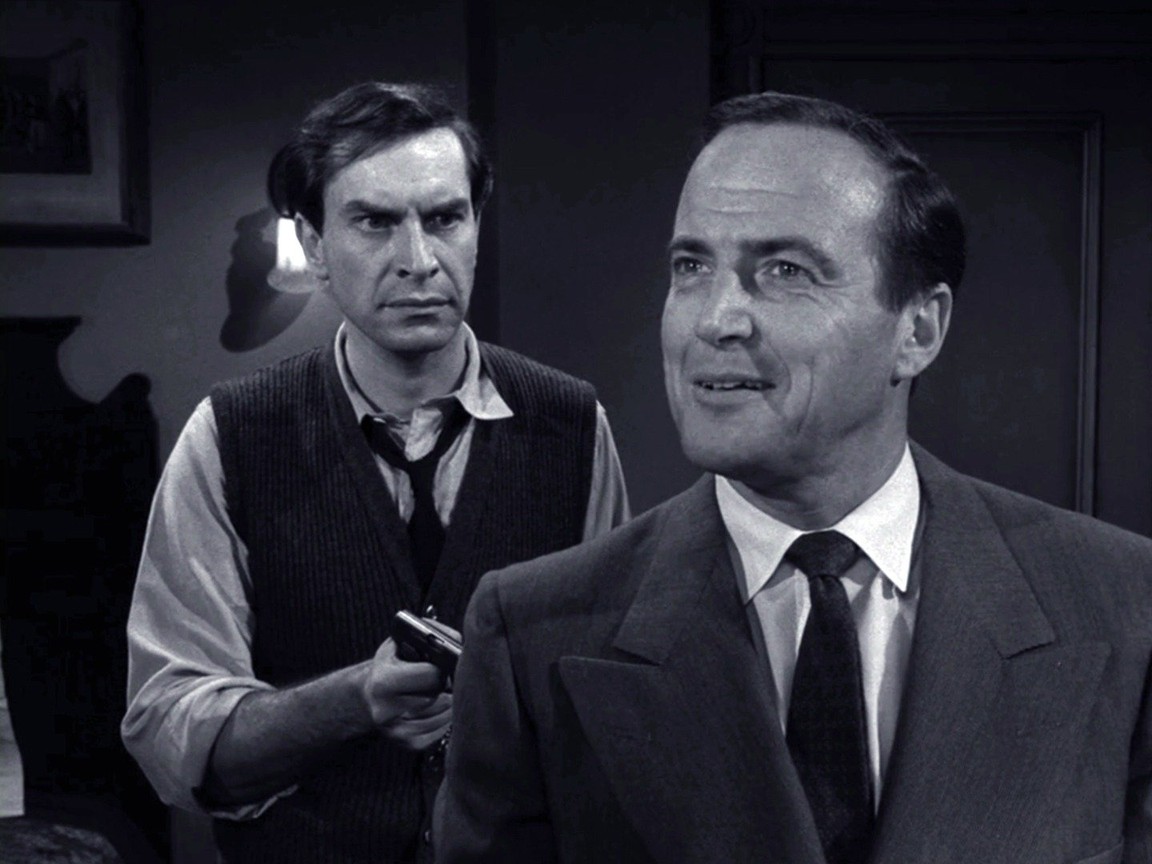
This is another episode in which I’m in the minority. I rated this one a 4 1/2 -star episode though not many have rated it that high. This one is great. It’s not exactly Twilight Zone-ish. You won’t see science fiction in this one. It could be a separate spy show or something out of a James Bond film. Martin Landau plays Major Ivan Kuchenko and he escaped from the Soviet Union to find freedom. He plays a cat and mouse battle between him and his KGB opponent John van Dreelen who plays  Commissar Vassiloff.

You could call this one from a different era… a Cold War film but wait…the era may not be so far gone anymore. Thrilling and suspenseful and worth a watch. It’s one of the highlights of the 5 season. The battle of wills between Kuchenko and Vassiloff is very entertaining. 

IMDB Trivia: One of a handful of TZ episodes that, notably, contains no science fiction or fantasy elements. Others include The Twilight Zone: Dust (1961), The Twilight Zone: The Shelter (1961), and The Twilight Zone: The Silence (1961).

Martin Landau (Major Ivan Kuchenko) later played William Cooper-Janes in The Twilight Zone: The Beacon/One Life, Furnished in Early Poverty (1985).

This show was written by Rod Serling 

Rod Serling’s Opening Narration: 

The cast of characters—a cat and a mouse, this is the latter. The intended victim who may or may not know that he is to die, be it by butchery or ballet. His name is Major Ivan Kuchenko. He has, if events go according to certain plans, perhaps three or four more hours of living. But an ignorance shared by both himself and his executioner, is of the fact that both of them have taken the first step into the Twilight Zone.

Summary

After spending twelve years in a Soviet prison, Major Ivan Kuchenko has fled his homeland and is now in transit in a third country hoping to soon leave and seek asylum in the USA. He is not alone however as Commissar Vassiloff, his torturer during his imprisonment, has caught up with him. Vassilof could easily kill him – he has an assassin with him, Boris – but he decides to give him a chance to walk away. He’s placed a bomb in Kuchenko’s room and he gives the Major 3 hours to find and disarm it. Kuchenko proves himself to be a worthy adversary.

Rod Serling’s Closing Narration:

Major Ivan Kuchenko, on his way West. On his way to freedom: a freedom bought and paid for by a most stunning ingenuity. And exit one Commissar Vassiloff, who forgot that there are two sides to an argument – and two parties on the line. This has been the Twilight Zone.

CAST

Rod Serling … Host / Narrator – Himself
Martin Landau … Major Ivan Kuchenko
John van Dreelen … Commissar Vassiloff
Robert Kelljan … Boris- Vassiloff’s assistant


Rolling Stones – Stray Cat Blues

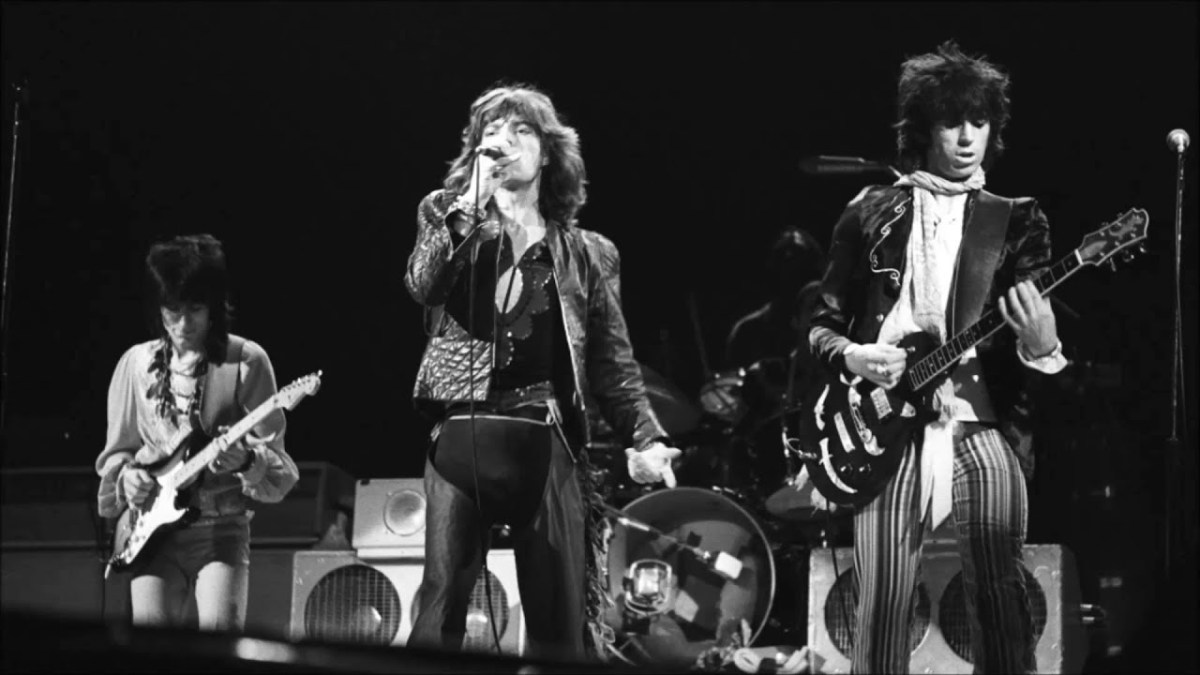
Mick sounds sinister and ominous in this track and the guitar is absolutely filthy. I feel the need for a shower after I listen to it.  It’s raunchy and sleazy…but a great album cut.

I once had a girlfriend and being around me she started to appreciate the Beatles. I thought that was cool because I never pushed them on her…then I played her some Stones. After around a week of listening to Beggars Banquet, she told me…Max, The Beatles seemed to progress so much as they went on…The Stones…they are low rent.

She was paying attention. She didn’t mean that in a bad way but yea…that is the essence of the Stones…showing the seedier side in their songs…and believe me…this song does. As humans…The Beatles could be as nasty but they didn’t usually reflect that in a lot of music…The Stones went out of their way to do so.

Stray Cat Blues is off of my favorite album by the Rolling Stones…Beggars Banquet. Would this song fly today? NO…oh pardon me… let me reword that…HELL NO… It’s hard to believe it flew back in 1968. I could be wrong but I doubt you would hear this on very many classic radio stations today.

Keith Richards is on top of his game in this one. Mick seemed to be testing or provoking audiences with this one.

This was the first album to start the stretch of 5 albums (Beggars Banquet, Let It Bleed, Sticky Fingers, Exile on Main Street, and Goats Head Soup) that helped make the Stones what they are today. In 1967 after failing to live up to Sgt Pepper with Their Satanic Majesties Request (although I do like that album) they came back retooled with a new producer Jimmy Miller

The Stones got back doing what they do best…playing country rock blues…although with a different sound than Little Red Rooster. A weary Brian Jones was still in the band at this time and contributed to all but two songs…but it’s mostly Keith on guitar. Brian, because of the state he was in, was used more as a touch-up artist…filling in some holes with sitar, tambura, guitar,  blues harp, and mellotron. It would also be the last studio album Brian would work on.

I’ve always related Beggars Banquet to the White Album. They were both released in 1968 and both were raw and honest. No studio trickery with either…a big departure from the psychedelic era of 1967.

The album peaked at #5 in the Billboard Album Charts, #3 in the UK, and #3 in Canada in 1969.

The lyrics were bad enough with I can see that you’re fifteen years old/
No I don’t want your I.D…. when playing it live on the 69 tour it became I can see that you’re thirteen years old/ No I don’t want your I.D. Mick seemed to be jabbing and provoking seeing how much he could get by with.

When you listen to it I would suggest the studio version. Many of the nuances are lost in this live version. I always try to pick a live version around the time they made the song but this one is not the best I heard.

Cat Scratch Blues

I hear the click-clack of your feet on the stairs
I know you’re no scare-eyed honey
There’ll be a feast if you just come upstairs
But it’s no hanging matter
It’s no capital crime

I can see that you’re fifteen years old
No I don’t want your I.D.
And I’ve seen that you’re so far from home
But it’s no hanging matter
It’s no capital crime

Oh yeah, you’re a strange stray cat
Oh yeah, don’tcha scratch like that
Oh yeah, you’re a strange stray cat
Bet your mama don’t know you scream like that
I bet your mother don’t know you can spit like that.

You look so weird and you’re so far from home
But you don’t really miss your mother
Don’t look so scared I’m no mad-brained bear
But it’s no hanging matter
It’s no capital crime
Oh, yeah
Woo!

I bet your mama don’t know that you scratch like that
I bet she don’t know you can bite like that

You say you got a friend, that she’s wilder than you
Why don’t you bring her upstairs
If she’s so wild then she can join in too
It’s no hanging matter
It’s no capital crime

Oh yeah, you’re a strange stray cat
Oh yeah, don’tcha scratch like that
Oh yeah, you’re a strange stray cat
I bet you mama don’t know you can bite like that
I’ll bet she never saw you scratch my back

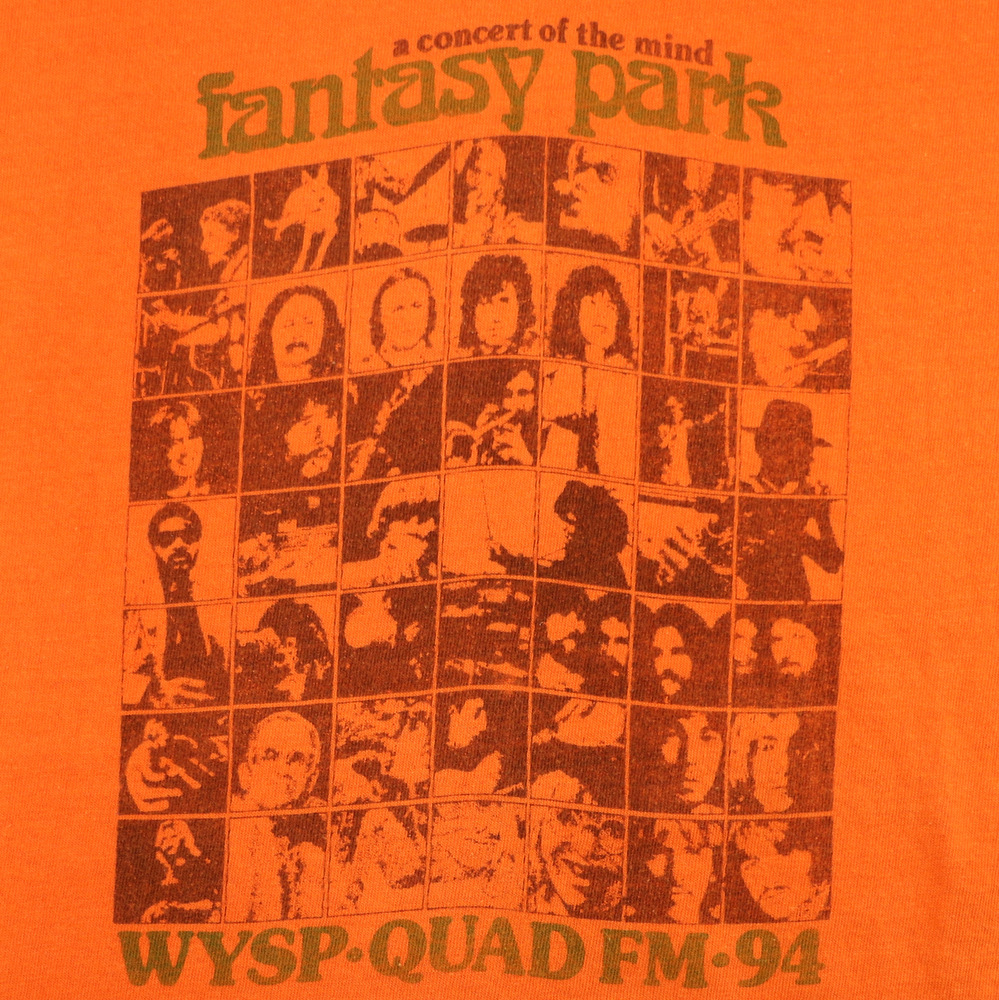
A Concert of The Mind…Fantasy Park


Fantasy Park: 1975 – Twin Cities Music Highlights

Imagine a concert in 1975 with The Beatles, Bob Dylan, the Allman Brothers, Linda Ronstadt, The Rolling Stones, The Who, and more. Well, it happened! Sorta. Rod Serling did all of the radio promos. It would be one of his last projects…he would pass away before it aired.

It was a 48-hour-long rock concert (Fantasy Park) that was aired by nearly 200 radio stations over Labor Day weekend in 1975. The program, produced by KNUS in Dallas, featured performances by dozens of rock stars of the day and even reunited The Beatles. It was also completely imaginary, a theatre-of-the-mind for the 70s.

The “concert” consisted of live and studio recordings by the artists with live effects added to make it sound legit.

The show had college students hitchhiking all over America hoping to get to Fantasy Park. In New Orleans when the concert aired, the IRS came knocking on the doors of WNOE trying to attach the gate receipts to make sure the Feds got their cut! Callers were asking where they could get tickets to this amazing show.

The show was so popular in Minnesota that they played it again in its entirety the next year…now that people knew it wasn’t real and weren’t looking for tickets. The greatest concert that never was.  Fantasy Park had their own emcee and special reporters covering the weekend event giving you the play-by-play details along with some behind-the-scenes updates.

The concert would always be halted due to rain on a Sunday morning to allow the locals to get in their regular (usually religious) programming. The whole event ended promptly at 6 pm on Sunday.

Now people look for the full 48-hour tapes of the show. They are a hot collector’s item. Rod Serling passed away on June 28, 1975.

Bands at Fantasy Park

Chicago
Elton John
Led Zeppelin
Joe Walsh
Cream
Shawn Phillips
Pink Floyd
Carly Simon
James Taylor (& Carol King)
Poco
Alvin Lee
Eagles
Linda Rondstadt
Dave Mason
Steve Miller
John Denver
Beach Boys
War
Grand Funk
Yes
Deep Purple
Rolling Stones
Cat Stevens
The Who
Rolling Stones
Moody Blues
Marshall Tucker Band
Allman Brothers Band
Seals & Crofts
America
Joni Mitchell
Doobie Brothers
Loggins and Messina
Crosby/Stills/Nash/Young
Bob Dylan
Beatles

Here is 10 minutes of it here.

Twilight Zone – Caesar and Me

★★★1/2 April 10, 1964 Season 5 Episode 28

If you want to see where we are…HERE is a list of the episodes.

This is the second Twilight Zone with a ventriloquist’s dummy that is smarter than his ventriloquist. The episode though doesn’t build the same mystery about the dummy as The Dummy does. Jackie Cooper plays Jonathan West a down-on-his-luck ventriloquist who has no friend but Caesar…the dummy. You do feel some sympathy with this character, but he is far too naive. The trouble starts when Caesar manipulates Jonathan into performing several robberies instead of finding honest work while they are waiting for their big break.

The vicious character in this story is the little girl named Susan played by Suzanne Cupito. She would later play  Katherine Wentworth in Dallas. She started out as an insufferable little  know it all but ended up as evil as the Caesar. This is the only episode of the series written by a woman. Adele T. Strassfield was the secretary of William Froug, the producer of the second half of the final season of The Twilight Zone.

It was a good episode and an improvement over the previous episode Sounds and Silences

IMDB Trivia: The ventriloquist’s dummy is a reuse of the one created for The Twilight Zone: The Dummy (1962). It was modeled on George Murdock, one of that episode’s guest stars.

Jackie Cooper’s name previously appeared on a poster for the film O’Shaughnessy’s Boy (1935), in which he starred, in The Twilight Zone: The Incredible World of Horace Ford (1963).

This show was written by Rod Serling and Adele T. Strassfield

Rod Serling’s Opening Narration: 

Jonathan West, ventriloquist, a master of voice manipulation. A man, late of Ireland, with a talent for putting words into other peoples’ mouths. In this case, the other person is a dummy, aptly named Caesar, a small splinter with large ideas, a wooden tyrant with a mind and a voice of his own, who is about to talk Jonathan West – into the Twilight Zone.

Summary

Ventriloquist Jonathan West isn’t having much luck finding a job. He’s gone to several auditions but no one has taken him on. He’s falling behind in his rent and is now getting to the point where he’s running out of things to pawn. He has to put up with the taunts of young Susan, the landlady’s niece. He’s also talking to his dummy, Caesar, who has advice for him on how to get ahead. It’s not very good advice however.

Rod Serling’s Closing Narration:

A little girl and a wooden doll. A lethal dummy in the shape of a man. But everybody knows dummies can’t talk – unless, of course, they learn their vocabulary in the Twilight Zone.

CAST

Rod Serling … Host / Narrator – Himself
Jackie Cooper … Jonathan West / voice of Caesar
Suzanne Cupito (Morgan Brittany) … Susan
Sarah Selby … Mrs. Cudahy
Stafford Repp … Pawnbroker
Don Gazzaniga … Detective
Kenneth Konopka … Mr. Miller
Sidney Marion … Watchman
Robert McCord … Man Watching Audition
Olan Soule … Mr. Smiles

Dave Clark Five – Glad All Over

I first found out about the Dave Clark Five in the early eighties. One of my friend’s dads grew up during the sixties and I found this band and Buffalo Springfield in his record collection.

The drums in this song are sharp and loud. Those two beats after “Glad All Over” hooks me every time. They had such a huge sound.

They were the first British Invasion band that had a hit in America after The Beatles. The song has a huge loud sound to it. The single charted at #6 in the Billboard 100, #2 in Canada, and #1 in the UK in 1964. Dave Clark and Mike Smith wrote this song. Smith came across a song called “Glad All Over” by Carl Perkins and wrote a new song with the same title.

The song also knocked I Want To Hold Your Hand out of the number one position in the UK charts.

After the Beatles were on Ed Sullivan… Ed wanted the Dave Clark Five. Sullivan thought a lot of the band and had them back on the show 11 more times. Getting them on the show the first time proved a challenge. The show wasn’t broadcast in England, so Clark had never heard of it and turned down the offer. When Sullivan’s producer called back offering a substantial payment, he convinced his bandmates to make the trip.

Bruce Springsteen has mentioned that the Dave Clark Five was a big influence. The group was huge…they ended up with 24 songs in the top 100, 7 songs in the top 10, and one #1 record with “Over and Over.”

After the group broke up in 1970 Dave Clark became a media mogul and also wrote, produced, and directed.

Lead vocalist Mike Smith wrote this song. He was looking through the Carl Perkins catalog and found a song named Glad All Over…he took the title.

Mike Smith: “We had lost out on ‘Do You Love Me’ to Brian Poole and so Dave (Clark) thought we should do an original. He asked me to come up with something and I looked through my record collection for a suitable title.”

Dave Clark: “I knew that we needed a song with the thumps in. we had been playing dance halls and we were getting a great audience response to the stomping things we were doing.”

“I went to Alexander Palace once, and saw a big band called The Eric Delaney Band. On the front of the stage, he had these timpanis. He came off the drums at the back and played these timpanis, and it was quite amazing. It was showmanship. That’s always stuck in my mind. It wasn’t very clever l, what he was doing, but it was dynamite, the crowd loved it. That was a big influence.”

Glad All Over

You say that you love me (say you love me)
All of the time (all of the time)
You say that you need me (say you need me)
You’ll always be mine (always be mine)

I’m feelin’ glad all over
Yes I’m-a glad all over
Baby I’m glad all over
So glad you’re mine

I’ll make you happy (make you happy)
You’ll never be blue (never be blue)
You’ll have no sorrow (have no sorrow)
Cause I’ll always be true (always be true)

And I’m feelin’ glad all over
Yes I’m-a glad all over
Baby I’m-a glad all over
So glad you’re mine

Other girls may try to take me away (take me away)
But you know, it’s by your side I will stay
I’ll stay

Our love will last now (our love will last)
Till the end of time (end of time)
Because this love now (because this love)
Is gonna be yours and mine (yours and mine)

And I’m feelin’ glad all over
Yes I’m-a glad all over
Baby I’m glad all over
So glad you’re mine

Other girls may try to take me away (take me away)
But you know, it’s by your side I will stay
I’ll stay

All of our lives now (all of our lives)
Till the end of time (end of time)
Because this love now (because this love)
Is only yours and mine (yours and mine)

And I’m feelin’ glad all over
Yes I’m-a glad all over
Baby I’m-a glad all over
So glad you’re mine

I’m so glad you’re mine now
I’m so, I’m so glad you’re mine
I’m-a so glad you’re mine now
Whoa-whoa-whoa-whoa-whoa-whoa