Next, to other Dylan songs, this one is lighter but maybe that is the reason I like it…Bob seems loose on this song and it’s nice to hear him sound so relaxed.
I still know every word to this song. I had the Wilburys Vol 3 cassette and I wore it out in my car. Was it as good as the first album? No, but I still liked it a bunch. This song is pure Dylan but Dylan sounding vulnerable. Of all the members of this supergroup…Bob seemed to enjoy being part of a band and not being the focus for a change. He sounds like he is having fun.
Roy was gone by this album and he is sorely missed. He was like having the equivalent of a vocal ace up your sleeve that no one could match. This song was on the Traveling Wilburys Vol 3 and the album peaked at #11 in 1990.
If You Belonged To Me
Waltzing around the room tonight In someone else’s clothes You’re always coming out of things Smelling like a rose
You hang your head and your heart is filled With so much misery You’d be happy as you could be If you belonged to me
You say, “Let’s go to the rodeo And see some cowboy fall” Sometimes it seems to me you’ve Got no sympathy at all
You keep on going on and on About how you’re so free You’d be happy as you could be If you belonged to me
It ain’t easy to get to you But there must be some kind of a way If only two could look to you For only one moment of each day
You’re saying that you’re all washed up Got nothing else to give Seems like you never figured out How long you have to live
You could feel like a baby again Sitting on your daddy’s knee Oh, how happy you would be If you belonged to me
The guy you’re with is a ruthless pimp Everybody knows Every cent he takes from you Goes straight up his nose
You look so sad, you’re going so mad Any fool can see You’d be happy as you could be If you belong to me You’d be happy as you could be If you belong to me
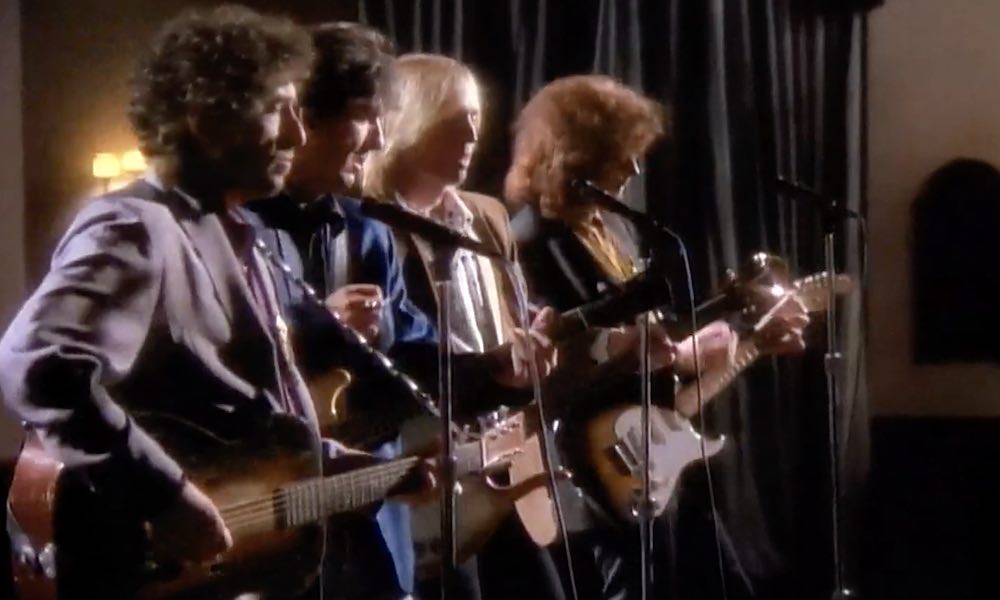
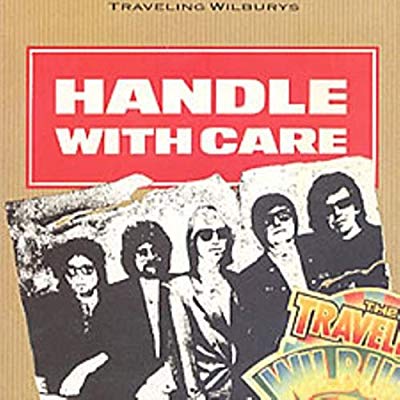
This was the hit that kicked the Wilburys project off the ground. George Harrsison and Jeff Lynne started the ball rolling… Initially an informal grouping with Roy Orbison and Tom Petty, they got together at Bob Dylan’s Santa Monica, California studio to quickly record an additional track as a B-side for the single release of Harrison’s song This Is Love. This was the song they came up with, which the record company immediately realized was too good to be released as a single B side. They also recorded “You Got It” at the session, which helped convince them to record an album together.
The song made it to #2 on the Billboard Mainstream Rock Songs Chart in 1988.
The title Handle With Care came when George Harrison saw the phrase on the side of a cardboard box in the studio.
Tom Petty on Bob Dylan: “There’s nobody I’ve ever met who knows more about the craft of how to put a song together than he does. I learned so much from just watching him work. He has an artist’s mind and can find in a line the keyword and think how to embellish it to bring the line out. I had never written more words than I needed, but he tended to write lots and lots of verses, then he’ll say, this verse is better than that, or this line. Slowly this great picture emerges. He was very good in The Traveling Wilbury’s: when somebody had a line, he could make it a lot better in big ways.”
Handle With Care
Been beat up and battered ’round Been sent up, and I’ve been shot down You’re the best thing that I’ve ever found Handle me with care
Reputations changeable Situations tolerable Baby, you’re adorable Handle me with care
I’m so tired of being lonely I still have some love to give Won’t you show me that you really care?
Everybody’s got somebody to lean on Put your body next to mine, and dream on
I’ve been fobbed off, and I’ve been fooled I’ve been robbed and ridiculed In daycare centers and night schools Handle me with care
Been stuck in airports, terrorized Sent to meetings, hypnotized Overexposed, commercialized Handle me with care
I’m so tired of being lonely I still have some love to give Won’t you show me that you really care?
Everybody’s got somebody to lean on Put your body next to mine, and dream on
I’ve been uptight and made a mess But I’ll clean it up myself, I guess Oh, the sweet smell of success Handle me with care
This song was not on an official Wilburys album. It was on a benefit album Nobody’s Child: Romanian Angel Appeal (a charity album released in 1990 to benefit Romanian orphans) released in 1990. It was written by Cy Coben and Mel Foree. Hank Snow did this song in the 50s and it didn’t chart for him. In the UK Lonnie Donegan covered this song also.
George was very familiar with the song. This was a song that the Beatles backed Tony Sheridan with as the Beat Brothers before they became known. The song is a sad song and what caught my attention in the Wilburys version is Jeff Lynne’s high vocal through the second chorus…beautiful song.
All the Wilburys vocals are wonderful in this song.
Nobody’s Child
As I was slowly passing, an orphans home today I stopped for just a little while to watch the children play A lone boy standin’, and when I asked him why He turned with eyes that could not see, and he began to cry
I’m nobody’s child, I’m nobody’s child Just like a flower I’m growin’ wild No mama’s arms to hold me no daddy’s smile Nobody wants me, I’m nobody’s child
In every town and village There are places just like this With rows and rows of children And babies in their cribs
They’ve long since stopped their cryin’ As no-one ever hears And no-one there to notice them or take away their fears
Nobody’s child, they’re nobody’s child Just like a flower they’re growin wild No mama’s arms to hold them, no daddy’s smile Nobody wants them they’re nobody’s child
Nobody’s child, they’re nobody’s child Just like a flower they’re growin wild No mama’s arms to hold them, no daddy’s smile Nobody wants them they’re nobody’s child Nobody wants them they’re nobody’s child
It’s time for a Wilburys weekend…so without further ado… here we go!
Here’s to:
“Nelson Wilbury” – George Harrison, “Otis Wilbury” – Jeff Lynne, “Lefty Wilbury” – Roy Orbison, “Charlie T. Wilbury, Jr.” – Tom Petty and “Lucky Wilbury” – Bob Dylan
When I hear Bob Dylan sing “You don’t need no wax job, you’re smooth enough for me, If you need you oil changed I’ll do it for you free, Oh baby, the pleasure would be all mine If you let me drive your pickup truck and park it where the sun don’t shine.”
It grabs my attention really quick. This is Bob Dylan who once sang Masters of War, Tangled Up In Blue, Times Are A Changing… and he is sounding like he is having a great time.
This song next to Tweeter and the Monkey Man was my favorite on the first Wilbury album Traveling Wilburys Vol. 1 which peaked at #3 on the Billboard 200 in 1989. Rolling Stone named this album in the top 100 albums of the 1980s.
Dirty World
He loves your sexy body, he loves your dirty mind He loves when you hold him, grab him from behind Oh baby, you’re such a pretty thing I can’t wait to introduce you to the other members of my gang
You don’t need no wax job, you’re smooth enough for me If you need you oil changed I’ll do it for you free Oh baby, the pleasure would be all mine If you let me drive your pickup truck and park it where the sun don’t shine
Every time he touches you his hair stands up on end His legs begin to quiver and his mind begins to bend Oh baby, you’re such a tasty treat But I’m under doctor’s orders, I’m afraid to overeat
He loves your sense of humor, your disposition too There’s absolutely nothing that he don’t love about you Oh baby, I’m on my hands and knees Life would be so simple if I only had you to please
Oh baby, turn around and say goodbye You go to the airport now and I’m going home to cry He loves your…
Electric dumplings Red bell peppers Fuel injection Service charge Five-speed gearbox Long endurance Quest for junk food Big refrigerator Trembling Wilbury Marble earrings Porky curtains Power steering Bottled water Parts and service
Dirty world, a dirty world, it’s a …ing dirty world
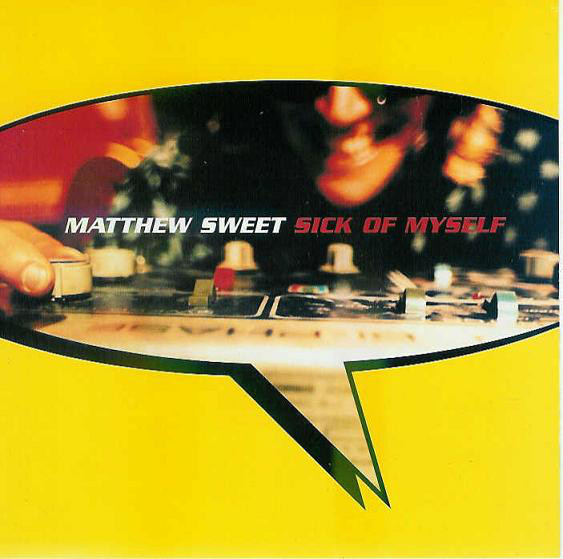
Sick of Myself peaked at #52 on the Billboard 100 in 1995. I first heard of Matthew Sweet with his 1992 song Girlfriend. Sweet specializes in catchy melodic hooks and this song is no exception.
Sick of Myself was on his album 100% Fun that peaked on the Billboard album charts at #65 in 1995.
From Songfacts
In this nihilistic song, Matthew Sweet is so out-of-sorts over a girl, he’s made himself sick. The world may be ugly and a lie, but she’s beautiful and true, and it’s driving him mad.
Sweet has admitted that many of his songs are personal, but they’re not necessarily a plea for help.
This was Matthew Sweet’s biggest hit, earning airplay on rock radio alongside the likes of Soundgarden and Collective Soul. He was 31 and well into his career when the song reached its chart peak in 1995. After making a name for himself in the Athens, Georgia music scene, he got a deal with Columbia Records and release his first album in 1986. His follow-up came in 1989, but neither charted and the label dropped him. Zoo Records issued his breakthrough, Girlfriend, in 1991 after a tumultuous time when he went through a divorce and lost his record collection to flood damage.
Richard Lloyd, founder of the exalted New York City band Television, played guitar on this track. Sweet and Lloyd crossed paths in the ’80s when they played together in a band called the Golden Palominos. Lloyd played on three songs from Sweet’s 1989 album Earth, and contributed to his subsequent albums up to and including 100% Fun.
In a Songfacts interview with Richard Lloyd, he said: “Matthew used to fly me in and he would send me demos like a week before. I’d listen to them through and then I would get there and they would have new songs or different songs. Some songs he would just throw at me, and depending upon the emotion in the song itself, that would lend itself to a certain kind of playing, and ‘Sick Of Myself’ had that kind of angst in it, so I tried to portray that.”
The video was directed by Roman Coppola, son Francis Ford Coppola of Godfather fame.
We don’t know this for sure, but this is likely the second-highest-charting song on the Hot 100 by a solo artist who was born and raised in Nebraska [Sweet is from Lincoln, Nebraska]. The only one we found to top it is “Never Been In Love” by Randy Meisner, which went to #28 in 1982. Nebraskan Buddy Miles charted a few times, but never higher than #62 with “Them Changes” in 1971.
The album title comes from a line in Kurt Cobain’s suicide note: “The worst crime I can think of would be to rip people off by faking it and pretending as if I’m having 100% fun.”
Sick Of Myself
You don’t know how you move me deconstruct me and consume me. I’m all used up, I’m out of luck I am star struck By something in your eyes that is keeping my hope alive.
But I’m sick of myself when I look at you something is beautiful and true. World that’s ugly and a lie it’s hard to even want to try. I’m beginning to think maybe you don’t know.
I’ll take a leave, the room to breathe The choice to leave it I’ll throw away a chance at greatness just to make this dream come into play I don’t know if I’ll find a way
‘Cause I’m sick of myself when I look at you something is beautiful and true. World that’s ugly and a lie it’s hard to even want to try. I’m beginning to think maybe you don’t know.
I’m beginning to think maybe you don’t know.
Something in your eyes that is keeping my hope alive.
But I’m sick of myself when I look at you something is beautiful and true. World that’s ugly and a lie it’s hard to even want to try. I’m beginning to think maybe you don’t know.
A Million Miles Away peaked at #82 on the Billboard 100 in 1983. This was their only top 40 hit. The song was written by Peter Case, Joey Alkes and Chris Fradkin. A friend of mine had their first two albums and they were full of very good power pop songs. The song was also featured in the 80s teen movie Valley Girl.
A review I found of the band… “The band’s best songs didn’t just sound like potential hit singles; they sounded like anthems in soaring tunes such as “A Million Miles Away.”
From AllMusic by Denise Sullivan
Formed in Los Angeles in 1978, the Plimsouls merged roots, retro and guitar rock with a ramshackle punk aesthetic. At a time when rock music was shifting gears, the Plimsouls’ brand of soul-punk — a modern take on ’60s soul, British Invasion and garage rock sounds — fit right in with the ’80s post-punk American guitar band movement. Known for their kinetic live performances, the Plimsouls had an exceptional frontman in singer/songwriter Peter Case whose decision to pursue a solo career effectively ended their ’80s run, but whose songs have kept the group’s slight catalog and legacy in the public eye.
A Million Miles Away
Friday night I’d just got back
I had my eyes shut
Was dreaming about the past
I thought about you while the radio played
I should have got moving
For some reason I stayed
I started drifting to a different place
I realized I was falling off the face of your world
And there was nothing left to bring me back
I’m a million miles away
A million miles away
A million miles away
And there’s nothing left to bring me back today
I took a ride, I went downtown
Streets were empty
There was no one around
All the faces that we used to know
Gone from the places that we used to go
I’m at the wrong end of the looking glass
Trying to hold on to the hands of the past and you
And there’s nothing left to bring me back
I’m a million miles away
A million miles away
A million miles away
And there’s nothing left to bring me back today
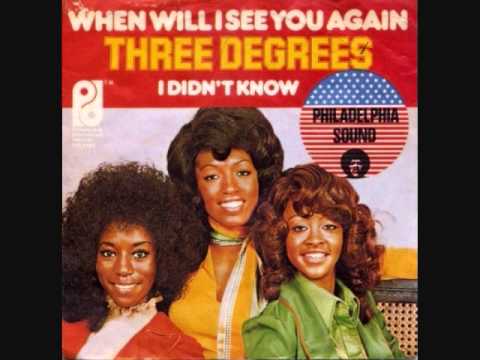
Some songs can transport me back…this is one of them. This was written by the Philadelphia songwriting and production team of Kenny Gamble and Leon Huff. It was released on their Philadelphia International Records and became the only #1 in the UK for the label.
This song peaked at #2 in the Billboard 100 in 1974.
Three Degree Sheila Ferguson: The song was played to me by Kenny Gamble at the piano in 1973 and I threw a tantrum. I screamed and yelled and said I would never sing it. I thought it was ridiculously insulting to be given such a simple song and that it took no talent to sing it. We did do it and several million copies later, I realized that he knew more than me.”
From Songfacts
A few months earlier in their first recording for Philadelphia International Records, The Three Degrees supplied the vocals for the US #1 hit “TSOP (The Sound of Philadelphia),” which was the theme song for the TV show Soul Train.
When Will I See You Again
When will I see you again?
When will we share precious moments?
Will I have to wait forever?
Or will I have to suffer and cry the whole night through?
When will I see you again?
When will our hearts beat together?
Are we in love or just friends?
Is this my beginning or is this the end?
When will I see you again?
(When will I see you again?)
When will I see you again?
Are we in love or just friends?
Is this my beginning or is this the end?
When will I see you again?
(When will I see you again?)
When will I see you again?
(When will I see you again?)
When will I see you again?
(When will I see you again?)
When will I see you again?
One of my favorite intros to any song. Billy Preston did a funky clavinet intro that sounds dark and huge. Mick Taylor’s solo on this song is perfect…without Mick Taylor they would have made those stretch of albums in the late sixties and early seventies but they would have sounded different. When Mick Taylor quit…they lost their sound from this period.
The song peaked at #15 in the Billboard 100 in 1974. It was on the great album Goats Head Soup which peaked at #1 in 1973.
From Songfacts
This tells two stories, a young man shot by police in a case of mistaken identity, and a 10-year girl who dies in an alley of a drug overdose. Neither is based on a true story, but is a commentary on urban America.
The horns were arranged by trumpet player Jim Price, who along with Bobby Keys on sax, provided the brass on records and tours for The Stones in the early ’70s. This was the last time Price recorded with The Stones. He went on to produce other artists, including Joe Cocker.
Keith Richards played bass and shared lead guitar duties with Mick Taylor.
Billy Preston played the piano.
The Stones played this on their 1973 European tour, even though it describes events in America.
Chuck Findley played trumpet on this. Other artists he worked for include George Harrison, Quincy Jones, Diana Ross, the Carpenters, Julio Iglesias, Rod Stewart, Robert Palmer and Madonna.
Doo Doo Doo Doo Doo Heartbreaker
The police in New York City They chased a boy right through the park And in a case of mistaken identity The put a bullet through his heart
Heart breakers with your forty four I want to tear your world apart You heart breaker with your forty four I want to tear your world a part
A ten year old girl on a street corner Sticking needles in her arm She died in the dirt of an alleyway Her mother said she had no chance, no chance!
Heart breaker, heart breaker She stuck the pins right in her heart Heart breaker, pain maker Stole the love right out of you heart
Oh yeah, oh yeah Want to tear your world apart Oh yeah, oh yeah Want to tear your world apart
Heart breaker, heart breaker You stole the love right out of my heart Heart breaker, heart breaker I want to tear that world I want to tear that world I want to tear that world apart
Heart breaker, heart breaker Stone love, stone love Oh yeah, oh yeah
Heartbreaker, heartbreaker Want to tear that world apart
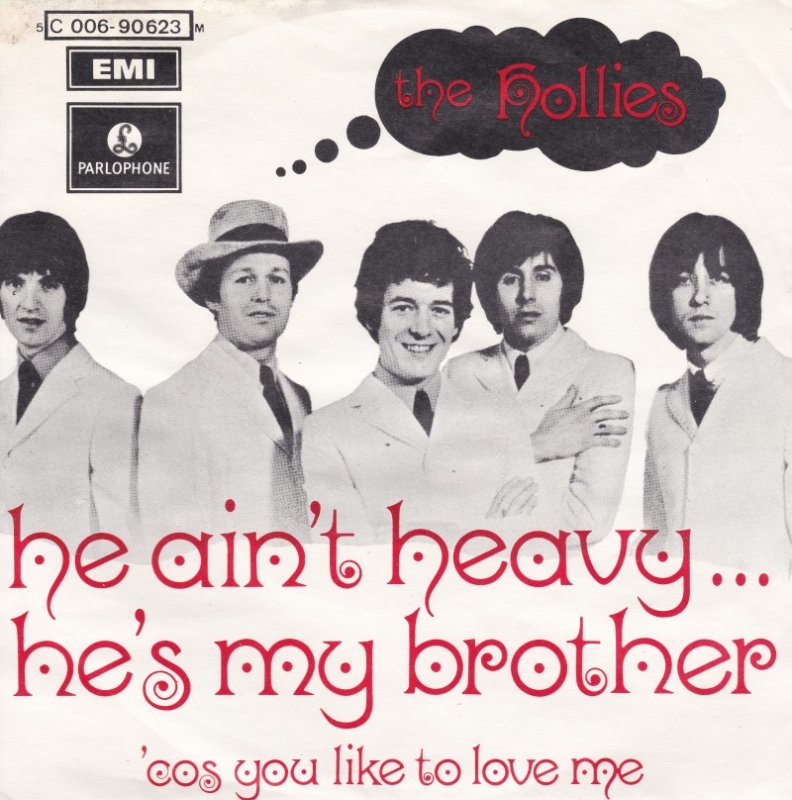
I always liked this song as it was in the second phase of the Hollies recording career. A young Elton John – who was still called Reg – played piano on it and got paid 12 pounds. The song peaked at #7 in the Billboard 100 in 1970… #3 in the UK in 1969…also #1 in the UK in 1988 after it was in a beer commercial.
The song was written by Bobby Scott and Bob Russell, their only collaboration as songwriters. Russell was dying of cancer at the time and his lyrics for this song would be the last he ever wrote. The origin of the phrase is unknown, but it did appear as the title of an article in Kiwanismagazine in 1924 and then later became the motto for Father Flanagan’s Boy’s Town in the 1940s.
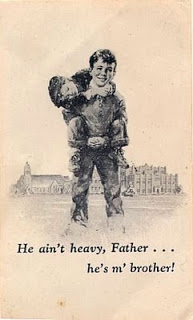
In 1941, Father Flanagan was looking at a magazine called The Messenger when he came across a drawing of a boy carrying a younger boy on his back, with the caption, “He ain’t heavy Mr., he’s my brother.” Father Flanagan thought the image and phrase captured the spirit of Boys Town, so he got permission and commissioned a statue of the drawing with the inscription, “He ain’t heavy Father, he’s my brother.” The statue and phrase became the logo for Boys Town. In 1979, girls were allowed and the name was eventually changed to Girls And Boys Town. The logo was updated with a drawing of a girl carrying a younger girl added.
Tony Hicks (The Hollies Guitarist): “In the 1960s when we were short of songs I used to root around publishers in Denmark Street. One afternoon, I’d been there ages and wanted to get going but this bloke said: ‘Well there’s one more song. It’s probably not for you.’ He played me the demo by the writers [Bobby Scott and Bob Russell]. It sounded like a 45rpm record played at 33rpm, the singer was slurring, like he was drunk. But it had something about it. There were frowns when I took it to the band but we speeded it up and added an orchestra. The only things left recognizable were the lyrics. There’d been this old film called Boys Town about a children’s home in America, and the statue outside showed a child being carried aloft and the motto He Ain’t Heavy, He’s My Brother. Bob Russell had been dying of cancer while writing. We never got, or asked for, royalties.
From Songfacts
The Two Brothers concept precedes the magazine illustration that Father Flanagan saw. In 1921, there was a resident at Boys Town who had difficulty walking. He wore leg braces and the other boys would often take turns giving him a ride on their backs. There is a famous photograph of this boy and one of the other youth giving him a ride. Now there are several statues of the Two Brothers on the Home Campus in Omaha; one is the sandstone of the two brothers from the illustration, another is a bronze version by an Italian artist that was commissioned in 1977. There is also a version done directly from the 1921 photograph in the Hall of History.
In 1938, Spencer Tracey portrayed Father Flanagan in the movie Boys Town, which also starred Mickey Rooney. In 1941, they made a sequel called Men Of Boys Town, where they used the phrase “He ain’t heavy, Father, he’s my brother” for the first time in a movie.
This was originally released by Kelly Gordon, a producer who has worked with Glen Campbell, Aretha Franklin, and David Lee Roth.
This was the only songwriting collaboration between veteran songwriters Bobby Scott (“A Taste of Honey”) and Bob Russell (“Ballerina”). Russell, who wrote the lyrics, made his mark writing for films and contributing words to songs by Duke Ellington and Carl Sigman. Scott was a piano player, singer, and producer. He did a lot of work with Mercury Records on sessions for artists like Aretha Franklin, Marvin Gaye and Bobby Darin. In 1990, he died of cancer.
Joe Cocker was offered this song before The Hollies after it had been played first to his producer Denny Cordell. The General Professional Manager for Cyril Shane Music Ltd & Pedro Music Ltd in England at the time explains: “Tony Hicks was in our office looking for songs for the Hollies (our office was not on Denmark Street, it was in Baker Street). Denny called from New York to say ‘Joe didn’t see the song.’ As Tony said in The Guardian, he liked the song and asked for an exclusive the following day. The version he heard was Kelly Gordon, who apart from being a successful producer, also wrote a little song entitled ‘That’s Life.’ His version was slow and soulful which is why I had thought of Joe Cocker to record it. Bobby Russell wrote this song while dying of cancer in Los Angeles.
We picked up the British rights to ‘He Ain’t Heavy’ from an American publisher Larry Shayne. The song was on a Kelly Gordon album called Defunked. The version was slow and soulful and had Joe Cocker written all over it. Joe turned it down, to his producer’s surprise. We had a hit with The Hollies previously called ‘I’m Alive,’ so we had a relationship with them. Also, we had a great working relationship with the Air London production team, of which their producer Ron Richards was a partner. We never considered playing the song for The Hollies when Tony Hicks was in the office. We were playing songs like ‘Sorry Suzanne.’ It was only at the end of the meeting I suggested playing Tony this wonderful song, not because it was for them, but just to share the song. We were surprised when he said ‘That’s the one.'”
This was the second single The Hollies released after Graham Nash left the group to form Crosby, Stills, and Nash; the first was “Sorry Suzanne.” Nash was replaced by Terry Sylvester. >>
In 1988, this was re-released in the UK after it was used in a Miller Beer commercial. This time, it hit #1.
This has been covered by many artists. It was a hit for Neil Diamond later in 1970, and also for Olivia Newton-John in 1976. Newton-John’s version was the B-side to the Linda Hargrove cover “Let It Shine” and went to #1 on the Adult Contemporary chart.
A version by Bill Medley (one of The Righteous Brothers) was used in the 1988 Sylvester Stallone movie Rambo 3.
The Osmonds recorded this and used it as the B-side of their first hit, “One Bad Apple.”
This was used in an anti-drug commercial in Canada during ’90s. The basis was two old friends meeting again in the hospital. There are some old home movie type flash backs, then they hug and the one in hospital garb cries. >>
A various artists charity version recorded under the name of The Justice Collective topped the UK singles charts during Christmas 2012.
Casey Affleck made reference to this song when he accepted the Oscar for Best Actor in 2017 for his role in “Manchester by the Sea.” Thanking his brother, Ben Affleck, he said, “you ain’t heavy.”
He Ain’t Heavy, He’s My Brother
The road is long With many a winding turn That leads us to who knows where Who knows where But I’m strong Strong enough to carry him He ain’t heavy, he’s my brother
So on we go His welfare is of my concern No burden is he to bear We’ll get there
For I know He would not encumber me He ain’t heavy, he’s my brother
If I’m laden at all I’m laden with sadness That everyone’s heart Isn’t filled with a gladness Of love for one another
It’s a long, long road From which there is no return While we’re on the way to there Why not share
And the load Doesn’t weigh me down at all He ain’t heavy, he’s my brother
Blue Ash formed in the summer of 1969 in Ohio by bassist Frank Secich & vocalist Jim Kendzor. Guitarist Bill “Cupid” Bartolin and drummer David Evans were recruited later that summer.
During the years 1970-3 the band recorded numerous songs along with hitting the road playing western NY, PA, and West Virginia along with NE Ohio, performing 250+ shows a year.
Their first album No More, No Less was released in May 1973 and received rave reviews in the rock press. It is considered a power pop classic and is regarded as highly collectible among fans of that genre. Blue Ash toured and opened for such acts as The Stooges, Bob Seger, Aerosmith, Ted Nugent and more but for lack of sales they were dropped by Mercury Records in May 1974.
Abracadabra (Have You Seen Her?) was on the album No More, No Less.
Abracadabra (Have You Seen Her?)
Have you seen her?
Have you seen her?
There must be magic in the air
First she’s here and then she’s there
Now you see her, now you don’t
First she’ll do you then she won’t
Have you seen her?
Have you seen her?
I was young and I was green
She was old and she was mean
A fortune telling queen
Like nothing I’d never seen
Have you seen her?
Have you seen her?
Such a magical lady
I let her cry on my shoulder
Slightly tragical maybe
Now she’s getting older
She keeps getting older
Have you seen her?
Have you seen her?
I’ll pull a rabbit out my hat
And offer it to you
But I don’t know where you’re at
Or who to send it to
Have you seen her?
Have you seen her?
She resorts to using tricks
People say that she’s quite slick
Well I know and just the same
I think Houdini is to blame
Have you seen her?
Have you seen her?
Such a magical lady
I let her cry on my shoulder
Slightly tragical maybe
Now she’s getting older
She keeps getting older
This song is very likable right off the bat. The lyrics will not be confused with Shakespeare but hey…it’s Power Pop. Their beginning story is a little different than others. Brothers John and Jeff Murphy and Gary Klebe formed the band and used different drummers. They formed in Zion, Illinois, in 1974.
The Murphy brothers and Klebe were high school friends and decided to form a band following graduation. At the time none of the members knew how to play an instrument so each member picked an instrument to learn and promised to reunite within one year. Within the first year, the three got back together to rehearse and eventually record their first album. Now that is dedication. They bought a 4-track and recorded their own album.
They signed to Elektra Records in April 1979 and released their first major-label album, Present Tense, that September. The album peaked at #50 on the Billboard Album Chart and yielded the minor hit single “Too Late” which peaked at #75 on the Billboard Hot 100.
This song was on their debut album Black Vinyl Shoes in 1977.
They were one of the first bands shown on MTV. They released old and new recordings through the 80s, 90s, and 2000s…and a new album in 2012.
Boys Don’t Lie
I get cold
I get shivers up my spine
Baby, lead me where it’s warmer
Ride you in my car
Make you feel some older
Boys can’t show their love if they keep it down
Boys don’t lie to you when you play around
I get hot
And the sweat runs down my back
Gimme a chance to breathe some
Another midnight snack
Another one to call
Boys can’t hide the truth when you’re so close at hand
Boys don’t lie to you when you look so tan
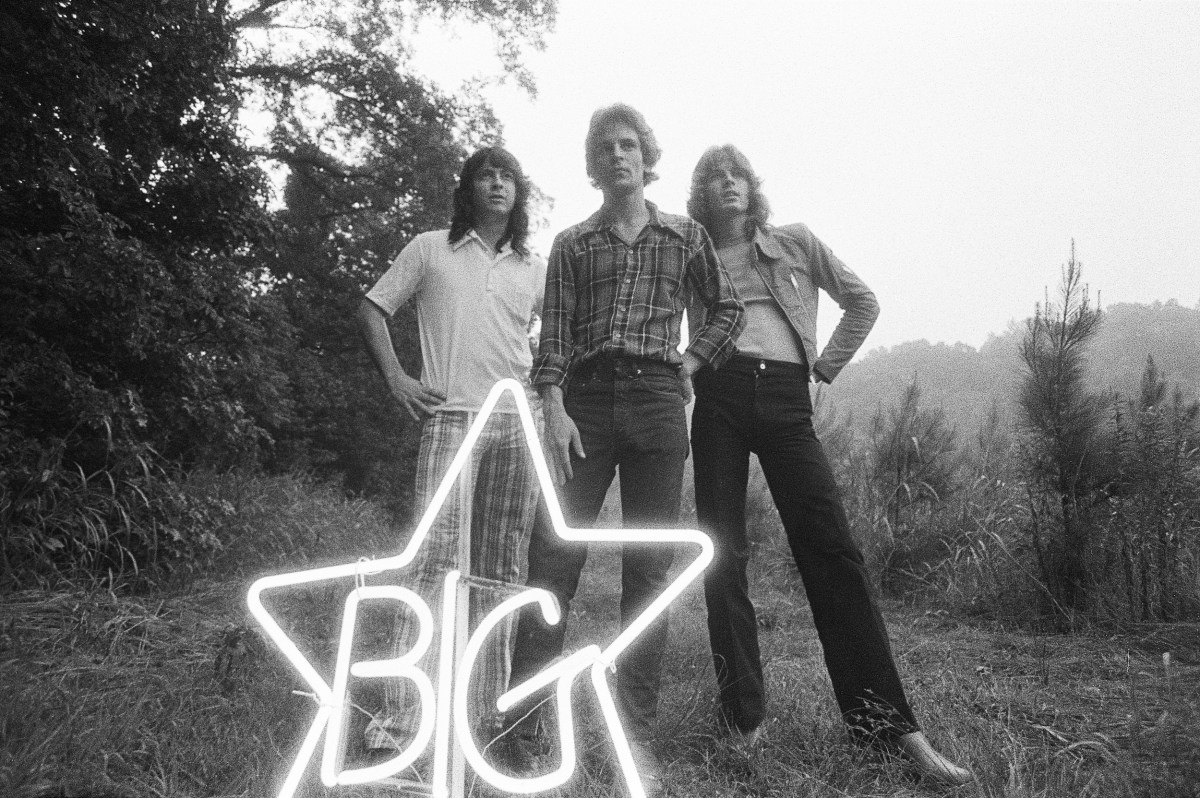
A great Big Star song and one of their most popular. It was one of the best pop songs that didn’t chart. September Gurls was rated #180 by Rolling Stone in the magazine’s top 500 songs of all time.
Released as a single, it did not chart despite receiving excellent reviews, due mainly to poor marketing and distribution. It was on their second studio album Radio City. The song was later covered by The Bangles on their album Different Light.
From Songfacts
This paean to “September Gurls” was penned by vocalist Alex Chilton for Big Star’s second album Radio City.
Alex Chilton once said of his songwriting: “I really loved the mid-’60s British pop music, all two and a half minutes long, really appealing songs. So I’ve always aspired to that same format, that’s what I like.”
The Bangles covered this on their 1988 album, Different Light.
Alex Chilton died of a heart attack on March 17, 2010, aged 59. He had experienced shortness of breath and chills while cutting the lawn but did not seek medical attention, in part because he had no health insurance.
September Girls
September girls do so much I was your Butch and you were touched I loved you, well, never mind I’ve been crying all the time December boy’s got it bad December boy’s got it bad
September girls, I don’t know why How can I deny what’s inside Even though I’ll keep away They we’ll love all our days December boy’s got it bad December boy’s got it bad
When I get to bed, late at night That’s the time she makes things right Ooh when she makes love to me
September girls do so much I was your Butch and you were touched I loved you, well, never mind I’ve been crying all the time December boy’s got it bad December boy’s got it bad December boy’s got it bad, woo ooo
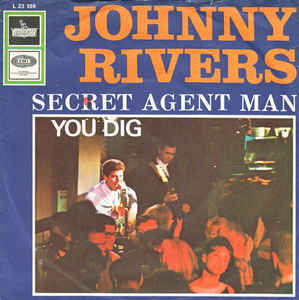
The opening guitar riff is worth the price of admission for the song. It’s one of those riffs you are required to learn by law if you want to be a guitar player. It was written by P. F. Sloan and Steve Barri. I always liked the song but it really made an impression on me when a band named the White Animals played this song when they opened up for the Kinks in the early 80s.
The opening lick was written for a CBS TV Show called Danger Man. After the short theme caught on, they wrote a complete song around it. Sloan said ” When the title of the show was changed to Secret Agent, he says it was a breakthrough. “That changed everything,” “The lyric just came together in no time at all. It just worked immediately.”
The song peaked at #3 in the Billboard 100 in 1966.
From Songfacts
This was the theme for a TV series called Secret Agent, starring Patrick McGoohan. Unlike many TV themes, the song held up on its own with a distinctive dueling guitar sound.
This is an example of “Spy” music. The sound implied action and was associated with James Bond movies.
P.F. Sloan and Steve Barri, who at the time was just starting the band The Grass Roots, wrote this song. Secret Agent was a US adaptation of a hit show in England called Dangerman, and CBS needed a 15-second theme to replace the British version. Sloan wrote of the song (from his website): “Somebody thought I should do a full length instrumental of the song. So I did. Meanwhile, the song was picked by CBS and Johnny Rivers recorded the quick 15-second song for the TV show. The Ventures, the genius guitar instrumental group, heard the demo and recorded and released the song way before Rivers even had a finished song. The publishers asked me to finish the song, Rivers recorded it, not one of his favorite songs back then, but he’s happier with it now.”
Some of the artists to record this song include Hank Williams Jr., Devo and Blues Traveler.
This was used in commercials for Wal-Mart and also for Chase credit cards. Some of the many movies to use the song include Repo Man, Bowfinger, Can’t Buy Me Love, Austin Powers: International Man of Mystery, and Ace Ventura: When Nature Calls.
According to P.F. Sloan, Johnny Rivers didn’t like this song and was content to record just the quick TV version until The Ventures charted with it. Both acts recorded for subsidiaries of Liberty Records, and the label was able to convince Rivers to record it.
Sloan told us in 2014 that Rivers had clearly embraced the song. “I saw him about two months ago and I’ve got to say he did an absolutely killer version,” he said. “Johnny must have sang that song half a million times, and he still sings it with so much gusto, and the audience goes nuts. That’s something great to see.”
The Ventures instrumental version peaked at #54 US on March 26, 1966. Rivers’ version hit its peak on April 23. His rendition is substantially longer, running 3:03 vs. 2:17.
Secret Agent Man
There’s a man who leads a life of danger To everyone he meets he stays a stranger With every move he makes another chance he takes Odds are he won’t live to see tomorrow
Secret agent man, secret agent man They’ve given you a number, I know they’ve take away your name
Beware of pretty faces that you find A pretty face can hide an evil mind Ah, be careful what you say Or you’ll give yourself away Odds are you won’t live to see tomorrow
Secret agent man, secret agent man They’ve given you a number, I know they’ve take away your name
Secret agent man, secret agent man They’ve given you a number, oh they’ve taken away your name
Swingin’ on the Riviera one day And then layin’ in the Bombay alley next day Oh, don’t you let you let the wrong word slip While kissing persuasive lips Odds are you won’t live to see tomorrow
Secret agent man, secret agent man They’ve given you a number, oh they’ve take away your name
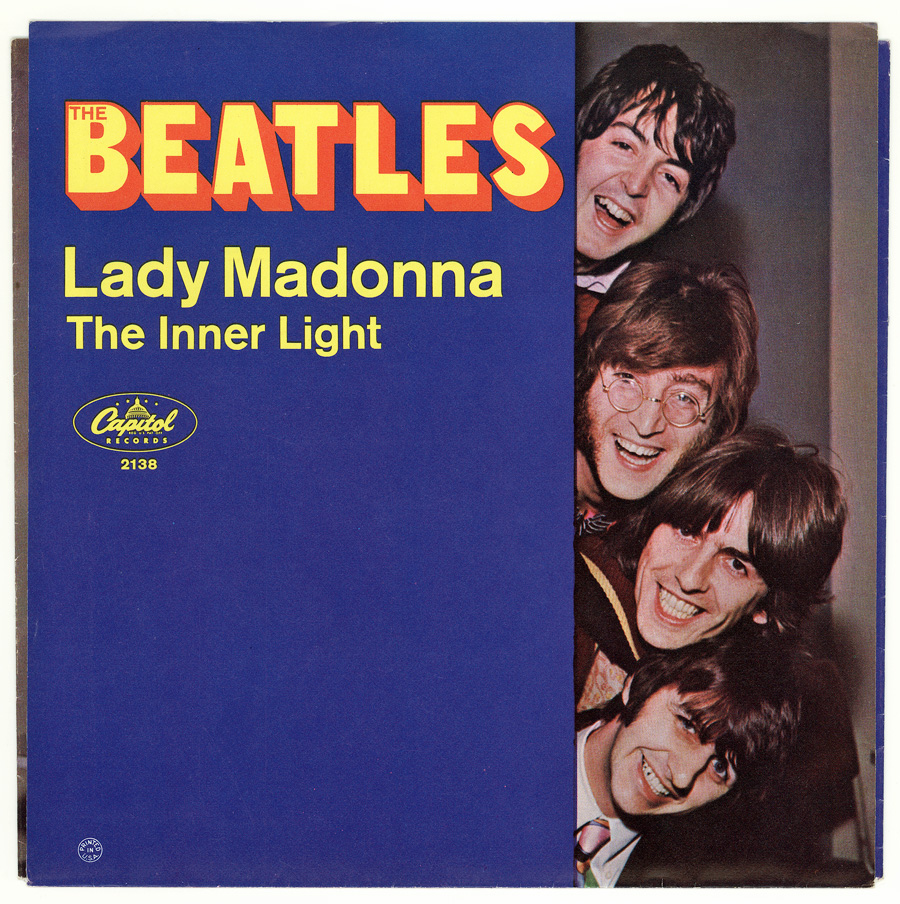
This song was the B side to Lady Madonna and a terrific song and melody. This is a George Harrison song and has gone largely unnoticed. It was George’s first song to appear on a single.
Harrison recorded the instrumental track for The Inner Light in India in January 1968, during the sessions for his Wonderwall Music soundtrack album. The only Beatles studio recording to be made outside Europe, the song introduced instruments such as sarod, shehnai, and pakhavaj.
George was reluctant to sing it because he was afraid he would not do it justice. Paul told him ‘You must have a go, don’t worry about it, it’s good.” McCartney and Lennon coaxed George into singing it. Two days later, McCartney and Lennon overdubbed backing vocals at the very end of the song, over the words “Do all without doing“.
George said about the song: : “Following John and I’s appearance on ‘The Frost Programme,’ the Sanskrit scholar Juan Mascaro, who was present in the audience, wrote a complimentary letter to me praising ‘Within You Without You.'” Juan’s letter stated: “It is a moving song. May it move the souls of millions.” George continues: “He also sent me a book called ‘Lamps Of Fire,’ suggesting that I wrote a song with the words of “Tao Te Ching.’ The words of ‘The Inner Light’ came from that book, page 66, 48a.”
“The Inner Light” finally appeared on an album called Rarities (released in the UK in 1978 and the US in 1980, and then the Past Masters CDs released in 1987.
Paul McCartney’s quote on the song… Forget the Indian music and listen to the melody. Don’t you think it’s a beautiful melody? It’s really lovely.
From Songfacts
George Harrison wrote this song. It was released as the B-side of “Lady Madonna” and was Harrison’s first song to appear on a single.
All the music was recorded by Indian session musicians at the EMI studios in Bombay, India, while George was working on the soundtrack to the movie Wonderwall.
George Harrison had originally recorded this for the Wonderwall soundtrack in January 1968. When The Beatles got together for recording sessions shortly before their trip to India, John and Paul added harmonies to the final line, “Do all without doing.”
The lyrics are a translation of a section of the Tao Te Ching. Juan Mascaro, a Sanskrit teacher at Cambridge University, sent the book to George.
This was Harrison’s last Indian-themed Beatles song.
The original release was in mono; a stereo version was mixed in 1970 and used on the Past Masters compilation. The mono mix features an extra Indian instrument in the intro that did not make it to the stereo version.
Jeff Lynne from Electric Light Orchestra performed this at George Harrison’s 2002 memorial show The Concert For George. Lynne was good friends with Harrison and played with him in The Traveling Wilburys.
The Inner Light
Without going out of my door
I can know all things of earth
Without looking out of my window
I could know the ways of heaven
The farther one travels
The less one knows
The less one really knows
Without going out of your door
You can know all things on earth
Without looking out of your window
You could know the ways of heaven
The farther one travels
The less one knows
The less one really knows
Arrive without traveling
See all without looking
Do all without doing
This beautiful song was written by Buddy Holly and Norman Petty.. recorded with the Ray Ellis orchestra on October 21, 1958. Holly wrote “True Love Ways” for his wife, Maria Elena Holly, as a wedding gift.
True Love Ways was not released until March 1960, after Buddy Holly’s tragic death, when it was included on the album, The Buddy Holly Story, Vol. 2, on the Coral label. The song’s melody was inspired by one of Buddy’s favorite black gospel hymns, “I’ll Be Alright,” which was recorded by The Angelic Gospel Singers.
The song peaked at #25 in the UK in 1960…it also recharted in the UK at #10 in 2018.
From Songfacts
This was co-written by Buddy and Norman Petty and recorded in October 1958. Petty was Buddy Holly’s first producer and owned the studio in Clovis, New Mexico where all of Buddy’s first recordings were made (Lubbock did not have a recording studio at the time).
This and “It Doesn’t Matter Any More” were Buddy’s first recordings to use orchestral string arrangements, which accentuated his vocal mannerisms. The strings were arranged by Dick Jacobs.
Notable covers include versions by Mickey Gilley, Peter & Gordon, and The Royal Philharmonic.
This wasn’t released until after Holly’s death in 1959. After he died in a plane crash, the album The Buddy Holly Story was released, which contained many of his early hits. This album came out a few months later and included many of his lesser-known or never released songs.
True Love Ways
Just you know why
Why you and I
Will bye and bye
Know true love ways
Sometimes we’ll sigh
Sometimes we’ll cry
And we’ll know why
Just you and I
Know true love ways
Throughout the days
Our true love ways
Will bring us joys to share
With those who really care
Sometimes we’ll sigh
Sometimes we’ll cry
And we’ll know why
Just you and I
Know true love ways
Throughout the days
Our true love ways
Will bring us joys to share
With those who really care
Sometimes we’ll sigh
Sometimes we’ll cry
And we’ll know why
Just you and I
Know true love ways









 PowerPop... An Eclectic Collection of Pop Culture