I was surfing youtube and found this odd combination of The Cure and Paul’s son James McCartney doing Hello, Goodbye. This song was on the album The Art of McCartney released in 2014. A tribute to Paul… I included the tracklist at the bottom and a couple of other songs. There were some interesting combinations.
You say yes, I say no You say stop and I say go go go, oh no You say goodbye and I say hello Hello hello I don’t know why you say goodbye, I say hello Hello hello I don’t know why you say goodbye, I say hello
I say high, you say low You say why and I say I don’t know, oh no You say goodbye and I say hello (Hello goodbye hello goodbye) Hello hello (Hello goodbye) I don’t know why you say goodbye, I say hello (Hello goodbye hello goodbye) Hello hello (Hello goodbye) I don’t know why you say goodbye (Hello goodbye) I say hello/goodbye
Why why why why why why do you say goodbye goodbye, oh no?
You say goodbye and I say hello Hello hello I don’t know why you say goodbye, I say hello Hello hello I don’t know why you say goodbye, I say hello
You say yes (I say yes) I say no (But I may mean no) You say stop (I can stay) and I say go go go (Till it’s time to go), oh Oh no You say goodbye and I say hello Hello hello I don’t know why you say goodbye, I say hello Hello hello I don’t know why you say goodbye, I say hello Hello hello I don’t know why you say goodbye, I say hello hello
Hela heba helloa Hela heba helloa, cha cha cha Hela heba helloa, wooo Hela heba helloa, hela Hela heba helloa, cha cha cha Hela heba helloa, wooo Hela heba helloa, cha cah cah [fade out]
The Tracklist
01 Billy Joel – “Maybe I’m Amazed” 02 Bob Dylan – “Things We Said Today” 03 Heart – “Band On The Run” 04 Steve Miller – “Junior’s Farm” 05 Yusuf Islam (Cat Stevens) – “The Long and Winding Road” 06 Harry Connick, Jr. – “My Love” 07 Brian Wilson – “Wanderlust” 08 Corrine Bailey Rae – “Bluebird” 09 Willie Nelson – “Yesterday” 10 Jeff Lynne – “Junk” 11 Barry Gibb – “When I’m 64″ 12 Jamie Cullum – “Every Night” 13 KISS – “Venus And Mars / Rock Show” 14 Paul Rodgers – “Let Me Roll It” 15 Roger Daltrey – “Helter Skelter” 16 Def Leppard – “Helen Wheels” 17 The Cure – “Hello Goodbye” (Feat. James McCartney) 18 Billy Joel – “Live And Let Die” 19 Chrissie Hynde – “Let It Be” 20 Robin Zander & Rick Nielsen of Cheap Trick – “Jet” 21 Joe Elliott – “Hi Hi Hi” 22 Heart – “Letting Go” 23 Steve Miller – “Hey Jude” 24 Owl City – “Listen To What The Man Said” 25 Perry Farrell – “Got To Get You Into My Life” 26 Dion – “Drive My Car” 27 Allen Toussaint – “Lady Madonna” 28 Dr. John – “Let ‘Em In” 29 Smokey Robinson – “So Bad” 30 Airborne Toxic Event – “No More Lonely Nights” 31 Alice Cooper – “Eleanor Rigby” 32 Toots Hibbert with Sly & Robbie – “Come And Get It” 33 B.B. King – “On The Way” 34 Sammy Hagar – “Birthday”
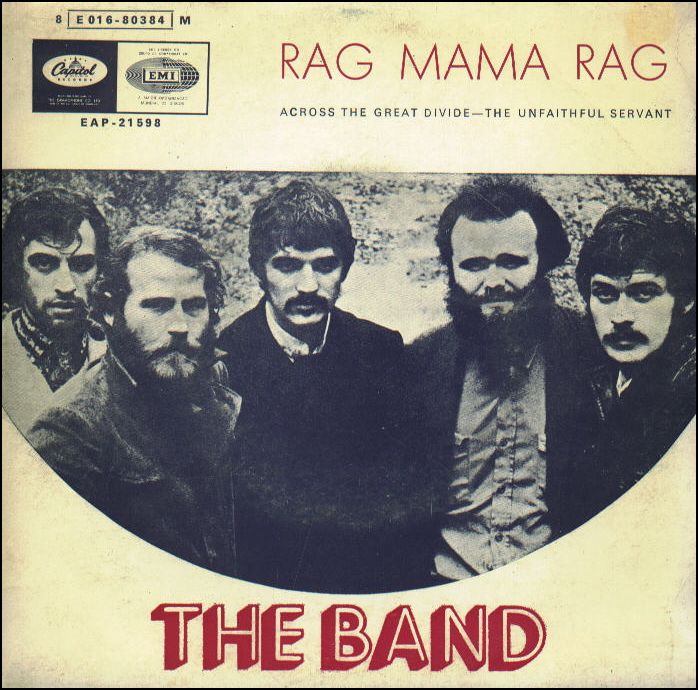
It doesn’t get much better than this. This wasn’t a huge hit but it doesn’t mean that much when it’s The Band.
The Band did this song by playing musical chairs with the instruments. Most of them grabbed something different than what they normally played. Levon (drummer) sang and played Mandolin, Richard Manuel (piano) played drums, Rick Danko (bass) played fiddle, Garth Hudson (keyboards) played uprigtht piano and producer John Simon played Tuba.
Robbie Robertson wrote the song and was the only one playing their normal instrument…guitar.
The song peaked at #57 in the Billboard 100, #46 in Canada, and #16 in the UK in 1970. The song was on their second album The Band.
Songfacts
One of the Band’s first big European hit singles, “Rag Mama Rag” has some unusual instrumentation. Lead pianist Richard Manuel played drums, drummer Levon Helm played mandolin and sang lead, and bassist Rick Danko played a fiddle. This left the bass spot open on this track, and it was filled by the album’s producer, John Simon. He improvised a bassline on tuba, although he had no idea how to play the instrument. >>
Robbie Robertson is the only songwriter credited on this track, although other members of the group claim they made contributions. The song finds Levon Helm trying to convince his girl to come back home so she can “rag all over” his house. What he has in mind in unclear: “rag” could mean playing ragtime music (a possibility, considering the line “rosin up the bow”), but he might have more prurient intentions.
Rag Mama Rag
Rag Mama rag, can’t believe its true. Rag Mama Rag, what did you do? Crawled up to the railroad track Let the four nine-teen scratch my back
Sag mama sag now What’s come over you Rag Mama Rag, I’m a pulling out your gag. Gonna turn you lose like an old caboose, Got a tail I need a drag.
I ask about your turtle, And you ask about the weather, Well, I can’t jump the hurdle And we can’t get together.
We could be relaxing in my sleeping bag, But all you want to do for me mama Is rag Mama rag there’s no-where to go, Rag Mama rag. Come on resin up the bow.
Rag Mama rag, where do ya roam? Rag Mama rag, bring your skinny little body back home. Its dog eat dog and cat eat mouse, you can You can rag Mama rag all over my house.
Hail stones beating on the roof, The bourbon is a hundred proof, Its you and me and the telephone Our destiny is quite well known.
We don’t need to sit and brag. All we gotta do is Rag Mama rag Mama rag. Rag Mama rag Where do you roam? Rag Mama rag, bring your skinny little body back home
I would hear this song over at my relatives when I was young. They had two or three Elvis greatest hit albums so I got to know his music pretty well. Before Elvis entered the army he was as about has hot of an entertainer as you could get. He was rock and roll to many people…the Big E, the King, The Hip Shaking Man…
Elvis released this in 1956 and it was the B side to Hound Dog. That is a pretty good single to say the least! According to Joel Whitburn It is the only single in history to have both sides reach #1 in the US.
Don’t Be Cruel written by Otis Blackwell, a songwriter who came up with a lot of hits for Elvis. In addition to this, he also wrote “Return to Sender,” “All Shook Up,” and “One Broken Heart for Sale” for Elvis. He also wrote “Fever,” which was made famous by Peggy Lee, and “Great Balls Of Fire” for Jerry Lee Lewis. Blackwell died in 2002 at age 70.
Cheap Trick covered this in 1988. Their version peaked at #4 in the Billboard 100, #2 in Canada, #6 in New Zealand, and #77 in the UK. I did like this version also.
Joel Whitburn (writer): “As far as the two-sided Presley hit ‘Hound Dog” / “Don’t Be Cruel,’ I’ve always tabulated that single 45 as two #1 hits. ‘Hound Dog’ was the first title to chart and the first one to be listed as the lead #1 song. Billboard’s ‘Best Sellers in Stores’ chart listed the the #1 song on 8/18/56 as ‘Hound Dog/Don’t Be Cruel.’ It was also shown that way when it first topped the ‘Most Played in Juke Boxes’ chart on 9/1/56. There is absolutely no doubt that the initial sales and ‘buzz’ about this record was for ‘Hound Dog.’ It was a smash #1 hit right out of the box. As airplay began to favor ‘Don’t Be Cruel,’ the two titles were flip-flopped at #1, with ‘Don’t Be Cruel’ actually showing more weeks as the #1 lead song. Again, I have always tabulated these two titles as two #1 songs. There is no way you can consider this 4-times platinum record as one #1 hit. And, neither does RIAA who awards gold and platinum selling records. They show ‘Hound Dog’ / ‘Don’t Be Cruel’ as both receiving platinum designations.”
From Songfacts
On Christmas Eve 1955, Otis Blackwell found himself on the streets in front of the Brill Building in New York City trying to stay warm. Things weren’t going well for Blackwell – it was raining and there were leaks in the soles of his shoes. His friend Leroy Kirkland walked by and asked Otis if he had written any more songs. Otis said yes. Over the next week, he sold 6 of them to a publishing company for $25 each. Management at The Brill Building liked him so much they offered him a full-time job writing, and Blackwell accepted. Not long after, Otis got some very good news: This up-and-coming rock star wanted to record one of his songs. The deal was, the guy wanted half the writer’s fee. Otis said, “No way I’m gonna give up half that song.” His friends convinced him that half of something was better than all of nothing. Besides, this new singer just might “make it” and if he did, Otis’ royalties would be tremendous. Over the next few days, Otis agreed. It wasn’t Elvis who wanted half the “writer’s fee.” It was his manager, Colonel Tom Parker. The song became one of Elvis’ biggest and longest running hits. (Thanks to the disc jockey, author and music historian Ron Foster.)
Elvis’ bass player Bill Black released an instrumental version of this in 1960 which hit US #11.
Don’t Be Cruel
You know I can be found Sitting home all alone If you can’t come around At least please telephone Don’t be cruel to who a heart that’s true
Baby, if I made you mad For something I might have said Please, let’s forget the past The future looks bright ahead Don’t be cruel to who a heart that’s true I don’t want no other love Baby it’s just you I’m thinking of
Don’t stop thinking of me Don’t make me feel this way Come on over here and love me You know what I want you to say Don’t be cruel to who a heart that’s true Why should we be apart? I really love you baby, cross my heart
Let’s walk up to the preacher And let us say I do Then you’ll know you’ll have me And I’ll know that I’ll have you, Don’t be cruel to who a heart that’s true I don’t want no other love, Baby it’s just you I’m thinking of
Don’t be cruel to who a heart that’s true Don’t be cruel to who a heart that’s true I don’t want no other love Baby it’s just you I’m thinking of
No matter how many times I’ve heard this song it sounds great.
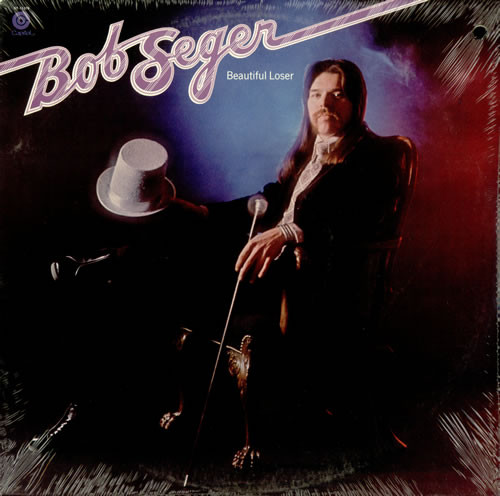
Seger worked hard for his success. He spent years touring and in 1968 with Capitol Records he scored a hit with Ramblin’ Gamblin’ Man. After that he didn’t have much success until his second stint with Capitol records.
He first left the label to record for Palladium, a Warner Bros. subsidiary run by his manager, Edward Andrews. Seger released three albums on Palladium, but when he delivered Beautiful Loser, Warner Bros. rejected it and Seger went back to Capitol. The album sold about as well as Seger’s previous releases, maybe 50,000 copies, mostly in Michigan. But his next release was the live album Live Bullet, recorded at two Detroit shows in 1975 and released in April 1976. With “Beautiful Loser” one of the standout tracks, the album proved a winner and had sold well over 100,000 by the time Seger released his next one, the breakthrough Night Moves. His sudden success stoked interest in his back catalog; Beautiful Loser ended up selling over 2 million.
Radio stations usually play the live version of “Beautiful Loser” together with “Traveling Man” off the 1976 Live Bullet album. The two songs are separate cuts but flow together perfectly.
Bob Seger:“I’ve never written the lyrics and tried to build the music around that. It’s usually a feel or a verse or a chorus, and the lyrics will come after I’ve decided that a certain pattern or groove or rhythm is cool. Then I’ll start singing gibberish over that and just find a lyrical idea that fits the ideas that I started out with.
Other times I’ll just sit down and say, ‘I wanna write a song called this.’ That’s how ‘Beautiful Loser’ happened. I just loved the title, which I got from a book of poetry from Leonard Cohen called Beautiful Losers, with an ‘s,’ and I thought it was a really cool title.
From Songfacts
This song is about people who set their goals so low, they never achieve anything. It is not about Seger personally. He told Creem magazine in a 1986 interview: “A lot of people think I wrote ‘Beautiful Loser’ about myself. I got the idea for that song from a book of Leonard Cohen poetry by the same name. The song was about underachievers in general. I very rarely write about myself that much. I draw on my own experiences like anyone else, but I’m not what you’d call auteuristic. I’m not like my songs at all. I’m a lot more up person than what I write.”
Cohen’s book that Seger refers to is called Beautiful Losers.
Seger took almost a year to write this. He played around with many different arrangements of the song until he got it right. In a 1994 interview with Music Connection, he explained:
Actually, I wrote three or four songs called ‘Beautiful Loser’ until I came up with the one that worked. But that’s a pretty rare thing.”
Glenn Frey, a member of the Eagles and a friend of Seger’s, was one of the first people Seger played this for. Frey loved it and helped Seger tweak it before it was released.
Seger spent a lot of time on the road, and he didn’t like to work on songs when he was touring. When it came time to make an album, he would work with his Silver Bullet Band, but also repair to Muscle Shoals Sound Studio in Alabama, where he a cadre of very talented musicians served as his backing band.
“Beautiful Loser” was one of the tracks he recorded at Muscle Shoals, which had two standout keyboard players in their ranks: Barry Beckett and Spooner Oldham.
Beautiful Loser
He wants to dream like a young man With the wisdom of an old man He wants his home and security He wants to live like a sailor at sea
Beautiful loser Where you gonna fall? When you realize You just can’t have it all
He’s your oldest and your best friend If you need him, he’ll be there again He’s always willing to be second-best A perfect lodger, a perfect guest
Beautiful loser Read it on the wall And realize You just can’t have it all You just can’t have it all
You just can’t have it all Ohh, ohh, can’t have it all You can try, you can try, but you can’t have it all Oh yeah
He’ll never make any enemies, enemies, no He won’t complain if he’s caught in a freeze He’ll always ask, he’ll always say please
Beautiful loser Never take it all ‘Cause it’s easier And faster when you fall
You just don’t need it all You just don’t need it all You just don’t need it all Just don’t need it all
I remember this song when I was a young fellow. The Five Man Electrical Band was a rock band from Ottawa, Ontario. They started out as The Staccatos in 1963 and had success in the Canadian Charts between 1965-1975. In 1969 is when they changed their name to The Five Man Electrical Band. They had 8 top twenty hits and 4 top ten hits in Canada.
In America though they were known mostly for Signs but they did have a top 40 song called Absolutely Right. Signs was the B-Side to Absolutely Right.
This was written by the lead singer Les Emmerson. Emmerson wrote the song after taking a road trip on Route 66 in California, where he noticed many billboards that obscured the beautiful scenery. This posed a question: Who is allowed to put up signs that interfere with nature? This led to another query: Who gets to make the rules that appear on so many signs?
“Signs” was included on their second album in 1970, but not considered single-worthy by their record label, as it didn’t fit a standard pop format.
In 1970, it was issued as the B-side to the single “Hello Melinda Goodbye,” which peaked at #55 on the Canadian chart. Disk jockeys preferred the flip side, however, and started playing “Signs,” which was then released as an A-side in 1971.
It peaked at #3 in the Billboard 100 and #4 in Canada in 1971.
The follow-up, “Absolutely Right,” also did well in America, peaking at #26 in the Billboard 100 and #3 in Canada.
From Songfacts
The song gave voice to those without power or property rights, which in many cases were young people.
This song starts with a line that became one of the most memorable in rock: “And the sign said, ‘Long-haired freaky people need not apply.'”
By starting with the word “And,” we feel that we are picking up a story, and it’s clear that the singer has put a lot of thought into this. The first verse is a classic tale of how looks can be deceiving, as the difference between an “upstanding man” and a hippie can be something as superficial as hair.
The next verse finds the singer looking at a “no trespassing” sign and questioning its authority. This resonates with anyone who has seen beautiful beaches, vistas, and other points of nature marked as private property, often with nobody there to enjoy it.
We then enter a private club with a strict dress code, and we hear the line most willful wanderers have been confronted with: “You ain’t supposed to be here.”
Finally, we end up in church, which brings God into our story. If ever there is something that is open to all, it it God, but even in church, a donation is called for. At this point, our hero turns the tables and makes his own sign, thanking God for the wonder of life.
Tesla revived this song in 1990 when they recorded a live, acoustic version for their album Five Man Acoustical Jam, which was recorded at the Trocadero Theatre in Philadelphia on July 2, 1990.
The band was on tour with Mötley Crüe, opening for the rockers on the Dr. Feelgood tour. July 2 was an off-day, so Tesla booked the acoustic show and had each band member pick a cover song to perform. Lead singer Jeff Keith picked “Signs,” a song he grew up listening to in Oklahoma. His bandmates, however, didn’t know the song, so Jeff had to round up a copy so they could learn it.
The song was the highlight of the performance, and the set was so well-received that it was released as an album, which they titled Five Man Acoustical Jam as an allusion to the original artist. Released as a single ahead of the album, the song made #2 on the Mainstream Rock chart, but didn’t crack the Hot 100. When the album started selling and MTV began airing the video, the song was re-released, making #8 on the Hot 100 in April 1991.
Tesla’s version was one of the first acoustic hit songs of the ’90s and helped launch the “Unplugged” trend. MTV ramped up their series of Unplugged concerts shortly after Tesla’s cover became a hit.
The line, “If God was here he’d tell you to your face, Man, you’re some kinda sinner” has a double-meaning, as “Man” could be just a throwaway expression, but could also be about man as a species.
In Tesla’s unedited version they replace the phrase “Blockin’ out the scenery, breakin’ my mind” with “F–kin’ up the scenery, breakin’ my mind.”
Signs
And the sign said “Long-haired freaky people need not apply” So I tucked my hair up under my hat and I went in to ask him why He said “You look like a fine upstanding young man, I think you’ll do” So I took off my hat, I said “Imagine that. Huh! Me workin’ for you!” Whoa-oh-oh
Sign, sign, everywhere a sign Blockin’ out the scenery, breakin’ my mind Do this, don’t do that, can’t you read the sign?
And the sign said anybody caught trespassin’ would be shot on sight So I jumped on the fence and-a yelled at the house, “Hey! What gives you the right?” “To put up a fence to keep me out or to keep mother nature in” “If God was here he’d tell you to your face, Man, you’re some kinda sinner”
Sign, sign, everywhere a sign Blockin’ out the scenery, breakin’ my mind Do this, don’t do that, can’t you read the sign?
Now, hey you, mister, can’t you read? You’ve got to have a shirt and tie to get a seat You can’t even watch, no you can’t eat You ain’t supposed to be here The sign said you got to have a membership card to get inside Ugh!
And the sign said, “Everybody welcome. Come in, kneel down and pray” But when they passed around the plate at the end of it all, I didn’t have a penny to pay So I got me a pen and a paper and I made up my own little sign I said, “Thank you, Lord, for thinkin’ ’bout me. I’m alive and doin’ fine.” Wooo!
Sign, sign, everywhere a sign Blockin’ out the scenery, breakin’ my mind Do this, don’t do that, can’t you read the sign?
I really like the sound they had at that time…it was dirty and raw.
For this song they got the idea from war stories they heard when they did a show at an American Air Force base during a tour of Europe. The four members wrote the song when they were in a grim deserted place in Zurich where they were playing for a small sum of money to an even smaller audience.
The band wanted to use this as the title of the album, but the record company thought it was too controversial and made them use “Paranoid,” another song on the album, instead. The album art, however, is a literal interpretation of a “War Pig,” showing a war “pig” with a sword and shield.
It was originally titled ‘Walpurgis’, an anniversary associated with witches and Satanists, but was changed on the recommendation of Black Sabbath’s record company. Ozzy released the original version on his 1997 album The Ozzman Cometh… the song though as the finish product was…just talk about the nightmare of War.
Geezer Butler : “Britain was on the verge of being brought into it, there was protests in the street, all kinds of anti -Vietnam things going on. War is the real Satanism. Politicians are the real Satanists. That’s what I was trying to say.”
Songfacts
This is one of many Black Sabbath songs that is often misinterpreted as evil. The song speaks out against the horrors of war.
On the US albums, this is listed as “War Pigs/Luke’s Wall.” “Luke’s Wall” is another name for the end of the song.
On the 1994 Black Sabbath tribute album Nativity In Black, Faith No More contributed a live cover version. Faith No More also covered this on their 1989 album The Real Thing.
War Pigs has been used as the name of various Black Sabbath tribute bands. We found one in Australia and another in Long Island, NY.
Ozzy’s former guitarist Zakk Wylde did a cover of this song after he went solo. Other artists who did covers: Slaves on Dope, Pig, Ether, Faith No More, Weezer, Boss Tweed, Red House Painters, Members Only, Badlands, Soulfly, Vital Remains, Ween, Sheavy, Gov’t Mule, Phish, Sacred Reich, Alice Donut, Flores Secas, Banda Arie, and Flores Secas.
This song is used for an encore in the video game Guitar Hero II for Playstation 2 and Xbox 360.
When the Sacramento band Tesla recorded this in 2007, lead guitarist Frank Hannon added a peace of Jimi Hendrix flavored “The Star Spangled Banner” to start the song.” It is the final track on Tesla’s Real To Reel 2-disk cover album, which is a tribute to Tesla’s mentors.
The song starts with the lyric, “Generals gathered in their masses. Just like witches at black masses.” Bassist and lyricist Geezer Butler was asked during a 2013 interview with Spin magazine why he used “masses” twice rather than coming up with a different word. “I just couldn’t think of anything else to rhyme with it,” he admitted. “And a lot of the old Victorian poets used to do stuff like that – rhyming the same word together. It didn’t really bother me. It wasn’t a lesson in poetry or anything.”
The song soundtracked a TV spot previewing the 2014 movie, 300: Rise Of An Empire.
War Pigs
Generals gathered in their masses Just like witches at black masses Evil minds that plot destruction Sorcerers of death’s construction In the fields the bodies burning As the war machine keeps turning Death and hatred to mankind Poisoning their brainwashed minds Oh lord yeah!
Politicians hide themselves away They only started the war Why should they go out to fight? They leave that role to the poor
Yeah
Time will tell on their power minds Making war just for fun Treating people just like pawns in chess Wait ’till their judgment day comes Yeah!
Now in darkness world stops turning Ashes where the bodies burning No more war pigs have the power Hand of God has struck the hour Day of judgment, God is calling On their knees the war pig’s crawling Begging mercy for their sins Satan laughing spreads his wings Oh lord yeah!
This song and Jessica are their two most well known instrumentals.
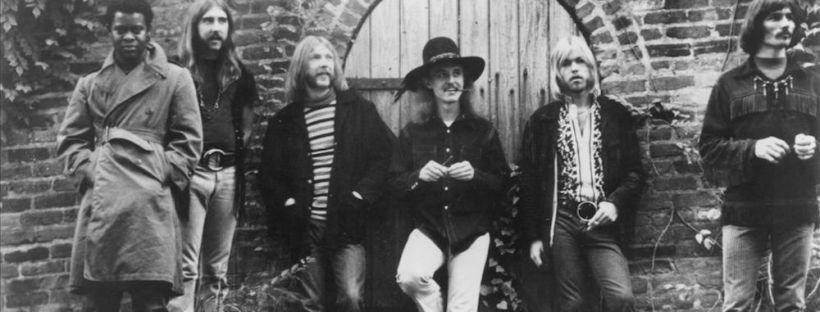
The Allman Brothers…much like the Grateful Dead could deliver live. They constantly toured early in their careers and played free concerts in parks all over to grow their audience. They released one of the best live albums of all time with At Fillmore East.
This song was originally on their second album Idlewild South in 1970 and later on their live album At Fillmore East.
Allmans guitarist Dickey Betts wrote this song for a girl, but not the one in the title. Elizabeth Reed Napier (b. November 9, 1845) is buried at the Rose Hill Cemetery in Macon, Georgia, where Betts would often write.
He used the name from her headstone as the title because he did not want to reveal who the song was really about: a girl he had an affair with who was Boz Scaggs’ girlfriend.
Duane Allman and Berry Oakley are buried in the same cemetery as Elizabeth Reed Napier.
From Songfacts
This was the first original instrumental song by The Allman Brothers.
Betts wrote this is based on Miles Davis’ “All Blues.” While Davis had been incorporating elements of rock into his jazz, Betts used pieces of jazz for this rock instrumental. Jazz rhythms make excellent use of the two-drummer format the Allmans use.
This is one of their live favorites. It usually evolves into a lengthy jam.
At concerts, this was a showcase for Allman’s drummers Jaimoe and Butch Trucks, who performed a drum solo at the end.
The live version on At Fillmore East takes up almost a whole side. Because of the extended jams, it became a double album, but the band insisted it be priced close to a single album.
The earliest known recordings of this song are from the band’s Fillmore East performances on February 11, 13 and 14, 1970. The Allman Brothers were on a bill with the Grateful Dead and Love; the Dead’s soundman Owsley “Bear” Stanley kept tape rolling and got the recordings, which were compiled into his “Sonic Journal” project and released in 2018 as Allman Brothers Band Fillmore East February 1970.
We have here a Stones- Beatles collaboration…a slight one with Mick Jagger is said to be singing backups to this song.The John and Paul returned the favor on the Stones song We Love You.
I first heard this on the Magical Mystery Tour album. I love the bass sound that Paul got on this song.
The cool sounding instrument on this song is the the Clavioline which John plays. It was a forerunner to the synthesizer.
John Lennon and Paul McCartney wrote parts of this separately and combined it to make one song… something they would repeat on “A Day In The Life.” At one point, the song was called “One Of The Beautiful People.”
On August 7th, 1967, just three weeks after the single was released in the US, George Harrison and entourage decided to make a brief visit to the Haight-Ashbury district of San Francisco, California, to visit the highly publicized “beautiful people” of the area and played the song on an acoustic after one was produced from a growing crowd. George didn’t stay too long.
Near the end of the song legend has it that John sings “Baby, you’re a rich f*g jew” as a reference to Brian Epstein toward the end of the song. Whether it is…it’s hard to tell. Whatever is in your head when you listen…it can become that. I’ve never read where John admitted it…and if he would have done that…I don’t see him shying away from admitting it.
Eddie Kramer…future producer for the Jimi Hendrix played the vibraphone.
From Songfacts
This song is about how everybody can have the things that matter, and it has nothing to do with material possessions. The Beatles were rich, but they claimed that money was not that important to them.
It was rumored that The Beatles sang “Baby you’re a rich fag Jew” as a slur to their manager, Brian Epstein. He was rich, gay and Jewish, but The Beatles never said this was about him. Epstein died later in that year when he overdosed on sleeping pills.
The Beatles started working on this song with the intention of using it on the Yellow Submarine soundtrack. It was used in the 1968 movie, but didn’t appear on the soundtrack.
Mick Jagger sang backup. McCartney and Lennon returned the favor by singing on The Stones’ “We Love You.”
Brian Jones, the guitarist from The Rolling Stones, played an oboe on this. A few years earlier, Lennon and McCartney gave The Stones a song called “I Wanna Be Your Man,” which was one of their first hits, and helped convince Mick Jagger and Keith Richards that they should write their own songs.
This was released as the B-side of “All You Need Is Love.”
Lennon played clavioline and piano on the song and George Harrison played tambourine. There is actually no guitar on this song at all. Paul played bass and piano as well.
This was released in mono, but in 1971 it was remixed in stereo along with several other tracks for a German version of Magical Mystery Tour. The stereo version is the one that is now the most common.
The comedy rap trio The Fat Boys performed this song in their 1987 movie Disorderlies.
In 2010, this song was used at the end of the movie The Social Network to punctuate the raging financial success of the guys who invented Facebook. It was one of the few Beatles songs licensed to a movie in its original form, meaning the Beatles version was used. Apple Corp. is very particular about where Beatles songs are used.
At one point in this song, The Beatles ask, “How does it feel to be one of the beautiful people?” The phrase “beautiful people” was used a lot in 1967 as a derisive way to describe the social elite. A popular book by Marilyn Bender was published that year called The Beautiful People: a Candid Examination of a Cultural Phenomenon – the Marriage of Fashion and Society in the ’60s.
Baby You’re A Rich Man
How does it feel to be One of the beautiful people Now that you know who you are What do you want to be And have you traveled very far? Far as the eye can see
How does it feel to be One of the beautiful people How often have you been there Often enough to know What did you see when you were there Nothing that doesn’t show
Baby you’re a rich man Baby you’re a rich man Baby you’re a rich man, too You keep all your money in a big brown bag Inside a zoo, what a thing to do Baby you’re a rich man Baby you’re a rich man Baby you’re a rich man, too
How does it feel to be One of the beautiful people Tuned to a natural E Happy to be that way Now that you’ve found another key What are you going to play
Baby you’re a rich man Baby you’re a rich man Baby you’re a rich man, too You keep all your money in a big brown bag Inside a zoo, what a thing to do Baby, baby, you’re a rich man Baby you’re a rich man Baby you’re a rich man, too, oh Baby you’re a rich man Baby you’re a rich man (baby) Baby you’re a rich man, too Baby you’re a rich man Baby you’re a rich man Baby you’re a rich man, too
I want to make an announcement (clears throat) Saturday I will have something different…I will be interviewing a Disc Jockey…he will answer some of my and other blogger’s questions that I requested. He has been kind of enough to do this through email.
This song will always be linked to John Lennon to me. The reason for this is right after John was murdered this was huge and on the charts. I listened to the radio religiously back then and got to know this one well.
Steely Dan were essentially the duo Donald Fagen (vocals & keyboards) and Walter Becker (guitar & bass) who formed the partnership in 1972 and used an ever-changing cycle of musicians. They took their moniker from the name of a female sex toy featured in Naked Lunch by William Burroughs.
Becker and Fagen parted ways in 1980, leaving “Hey Nineteen” un-played until their 1993 reunion.
The song peaked at #10 in the Billboard 100 and #5 in Canada in 1981. The song was on the album Gaucho which peaked at #9 in the Billboard Album Charts, #18 in Canada, and #27 in the UK in 1980.
From Songfacts
In this song, an older man is seducing a 19-year-old girl. He’s a bit conflicted, as her inexperience frustrates him when she doesn’t even remember Aretha Franklin. However, on this particular night and with the help of some Cuervo Gold tequila, everything is wonderful.
Steely Dan used a variety of musicians on their albums. On this track, Hugh McCracken played guitar, Rick Marotta was on drums, and Victor Feldman and Steve Gadd added percussion. Walter Becker also added guitar, and Donald Fagen played the Fender Rhodes electric piano and the synthesizer.
Roger Nichols, who was one of the engineers on the Gaucho sessions, fashioned a drum machine they used on this track. Dubbed “Wendel,” it was one of the first of its kind, and it allowed them to record Rick Marotta’s drum parts and play them back with perfect precision.
The LM-1, which was the first programable drum machine sold to the public that sampled real instruments, was introduced in 1980, the year Gaucho was released, so many assumed that’s what Steely Dan used. They didn’t, but there was a connection. Roger Linn, who created the LM-1, told Songfacts: “By coincidence, Roger and I had both bought our first computers in around 1975 at a place called Computer Power and Light in Studio City, an area of Los Angeles. Wendel used that same computer and a early but high-quality digital audio interface, running a program he had written to enter simple looping beats on the screen. A very creative and talented guy.”
Hey Nineteen
Way back when in sixty seven I was the dandy of Gamma Chi Sweet things from Boston So young and willing Moved down to Scarsdale And where the hell am I
Hey nineteen No we can’t dance together No we can’t talk at all Please take me along When you slide on down
Hey nineteen That’s ‘Retha Franklin She don’t remember the Queen of Soul It’s hard times befallen The sole survivors She thinks I’m crazy But I’m just growing old
Hey nineteen No we got nothing in common No we can’t talk at all Please take me along When you slide on down
Nice Sure looks good Mmm mmm mmm Skate a little roller now
The Cuervo Gold The fine Colombian Make tonight a wonderful thing Say it again
The Cuervo Gold The fine Colombian Make tonight a wonderful thing
The Cuervo Gold The fine Colombian Make tonight a wonderful thing
No we can’t dance together No we can’t talk at all
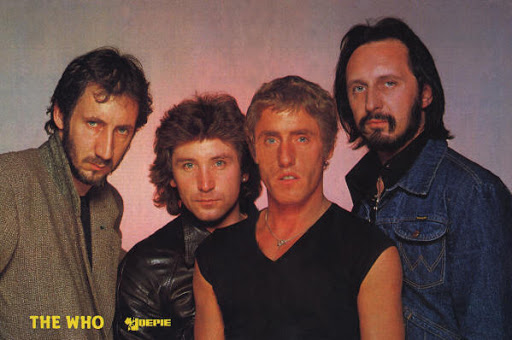
This was the first album the Who made without Keith Moon called Face Dances. Kenney Jones was playing drums and the album had a substantial hit with You Better You Bet. It was also the first new Who album I ever bought. The other ones had been collections of their older hits. I can’t say that I don’t the Moon version of the Who but the album did have some good songs on it.
This song is one of the best songs off of Face Dances. To my surprise it was not released as a single.
The album peaked at #4 in the Billboard Album Charts, #2 in the UK, and #1 in Canada in 1981.
Roger Daltrey:“Pete’s a very complicated bunch of people… And you never know which one of him you’re going to get. There’s one that’s so wonderful, so caring, so spiritual. But there are others that are horrendous-and I mean horrendous…. That’s the madness of genius, so I accept it. I don’t judge him. I love him. I love all of hims.”
Another Tricky Day
You can’t always get it When you really want it You can’t always get it at all Just because there’s space In your life it’s a waste To spend your time why don’t you wait for the call
(Just gotta get used to it) We all get it in the end (Just gotta get used to it) We go down and we come up again (Just gotta get used to it) You irritate me my friend (This is no social crisis) This is you having fun (No crisis) Getting burned by the sun (This is true) This is no social crisis Just another tricky day for you
You can always get higher Just because you aspire You could expire even knowing. Don’t push the hands Just hang on to the band You can dance while your knowledge is growing
(It could happen anytime) You can’t expect to never cry (Patience is priceless) Not when you try to fly so high (Just stay on that line) Rock and roll will never die (This is no social crisis) [etc.]
Another tricky day Another gently nagging pain What the papers say Just seems to bring down heavier rain The world seems in a spiral Life seems such a worthless title But break out and start a fire y’all It’s all here on the vinyl (No crisis) [etc.]
[Repeat verse 1.]
(Just gotta get used to it) Gotta get used to waiting (Just gotta get used to it) You know how the ice is (Just gotta get used to it) It’s thin where you’re skating (This is no social crisis) [etc.]
This is the 6th edition of this series. In Part 1, Part2, Part 3, Part 4, and Part 5. We covered Brian May’s Red Special, Willie Nelson’s Trigger, George Harrison’s Rocky, Eddie Van Halen’s Frankenstrat, Bruce Springsteen’s guitar, Neil Young’s Old Black guitar, John Lennon’s Casino + a Bonus, Keith Richards Telecaster, Paul McCartney’s Bass, and Eric Clapton’s Blackie.
Today it’s Jimmy Page’s Gipson EDS -1275 Guitar and Jerry Garcia’s Alligator
Jimmy Page’s Gibson EDS-1275 Double Neck Guitar
This guitar was born out of necessity for Page. They had just recorded Stairway to Heaven and Jimmy played a 12-string in the song after the intro. To play the song live without a 12-string would not work. He was the only guitar player in the band so to replicate that part they either needed another guitar player or a way for Jimmy to switch to the 12 string while playing the song.
The solution came in the shape of a Gibson double-neck. A 6-string and a 12-string on the same guitar. Jimmy had seen pictures of American guitarists with a double neck guitar… Grady Martin with a Bigsby double-neck, Joe Maphis with a Mosrite. He also saw a strange band named Family with a guitar player named Charlie Whitney with a double neck guitar.
Gibson first introduced the doubleneck guitar in 1958 with the EDS-1275’s forerunner the “Double 12”. The body and hardware specifications for the EDS-1275 include a solid mahogany SG-style body, a dark cherry finish with walnut filler, chrome hardware, a chrome ABR Bridge with chrome tumblewheels, Schaller strap locks, a five-play pickguard, two volume and tone control knobs, a three-way pickup-selector switch and a three-way neck selector switch.
Jimmy played Les Pauls and wanted to get another Gipson. By the time Page wanted an EDS-1275, they were no longer in production so he ordered a custom-made cherry guitar.
Page’s EDS-1275 has a slightly different body shape from that of the then current model. Page’s also has one-piece mahogany necks rather than the current three-piece maple, and has tailpieces positioned near the bottom of the body, reportedly increasing sustain, and Patent No. or T-Top humbucking pickups.
Jimmy’s EDS-1275 made its live debut in March 1971, allowing him to play 12-string and six-string parts without swapping guitars and it certainly did become iconic.
Page recently donated a later model EDS-1275 for charity, but it was not the famous one he used with Led Zeppelin. That guitar remains firmly in his possession.
Jimmy Page: “I asked to get one from Gibson, because I knew it was the only way,” “I knew I couldn’t do Stairway…, but it was essential to do it. So it became iconic, didn’t it? If a little tough on the left shoulder…Yeah, though I’ve got heavier guitars! But nevertheless, it was pretty weighty.”
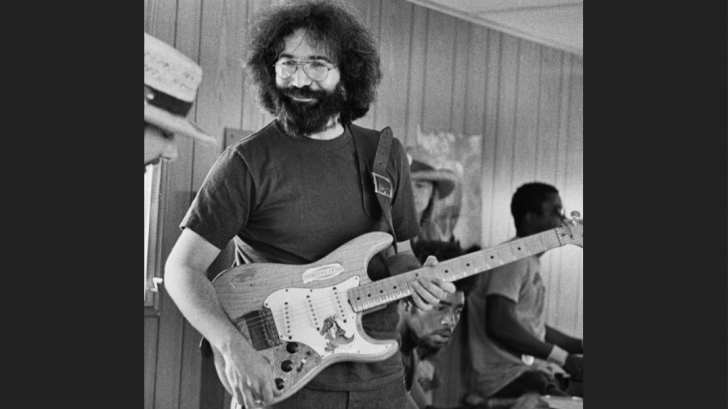
Jerry Garcia’s Alligator
Graham Nash gave this 1957 Strat to Jerry Garcia as a gift in 1970. Nash purchased the guitar in 1970 from a pawnshop in Phoenix. Graham wanted to show his appreciation for Jerry’s guitar work on his solo album “Songs for Beginners.”
Roadie Steve Parish recalled a night in Buffalo on Garcia’s first tour outside the band, where “it was so cold that when Jerry stepped out on stage and strummed his ‘Alligator’ … the face plate on the guitar broke and the guts popped out. That’s how the show began.” Alligator got patched up with gaffer’s tape, and a new brass plate affixed at the tour’s end.
The Dead helped start an instrument and gear-building auxiliary company called Alembic. Alembic was found by the Dead’s sound man and chemist Owsley Stanley. Garcia’s Strat found itself on the Alembic workbench numerous times.
In 1972, Garcia would add a number of stickers to the body, including a grinning cartoon alligator on the pickguard that gave the guitar its name. But by then nearly every other bit of the instrument had been overhauled in a series of refinements by Alembic technician Frank Fuller.
The guitar got new Schaller tuning pegs and gears, a series of bridges (Gibson ABR-1 Tune-o-Matic and an Alembic custom), a new control plate (hammered brass), taller frets, and an in-board post-volume “blaster”. “Each pickup cover had its own individually grounded wire.”
Technicians Frank Fuller and Rick Turner of Alembic Guitars modified the guitar regularly, so much so that they referred to it as a “Frankenstein” guitar. Jerry played this guitar on the Dead’s famous first full European tour in 1972 and their two great albums Working Man’s Dead and American Beauty. Alligator played its last show on Garcia’s 30th birthday…August 1st, 1973 in Jersey City, NJ.
The show was recorded by Deadheads, Alligator was sent off properly with a long version of “Dark Star.”
Jerry would play more custom built guitars through his career. Wolf (73-93), Tiger (79-95), Lighting Bolt (93-95), Rosebud (90-95), and Top Hat (95). My favorite remains Alligator.
Graham originally bought the guitar for $250 dollars…the guitar was sold at an auction in 2019 for $420,000 dollars.
It’s always an honor to post a Buddy Holly song. This one was written written by Buddy Holly and Norman Petty. Buddy was a singer, songwriter, producer, and performer. During his short career, Holly was able to merge the sounds of rockabilly, country music, and R&B to help make rock and roll popular.
The song was recorded in 1957 at the Norman Petty Studios in Clovis, New Mexico.
This song was released on September 20, 1957, as the B-side of “Peggy Sue”. On the original single the Crickets are not mentioned (legal issues), but it is known that Buddy plays acoustic guitar; drummer Jerry Allison slaps his knees for percussion and typewriter; Joe B. Mauldin plays a standup acoustic bass; and producer Norman Petty’s wife Vi Petty plays the celesta. That gives it a unique sound.
Holly’s version of this song never charted, but two others did. In 1972, John Denver took it to #81 US. Then in 1985, James Taylor made #61 with his cover.
From Songfacts
This upbeat song finds Holly in a hopeful mien, sure that he will soon land the girl of his dreams. He recorded the song in May 1957 with The Crickets at Norman Petty Studios in Clovis, New Mexico.
This is listed as being written by Charles Hardin and Norman Petty. Charles Hardin is actually Buddy Holly: his real name was Charles Hardin Holley.
This was used in the movies Big Fish and Stand By Me as well as a Season 4 episode of the TV show Lost.
Everyday
Everyday, it’s a-gettin’ closer Goin’ faster than a roller coaster Love like yours will surely come my way A-hey, a-hey hey
Everyday, it’s a-gettin’ faster Everyone said, “Go ahead and ask her” Love like yours will surely come my way A-hey, a-hey hey
Everyday seems a little longer Every way, love’s a little stronger Come what may, do you ever long for True love from me?
Everyday, it’s a-gettin’ closer Goin’ faster than a roller coaster Love like yours will surely come my way A-hey, a-hey hey
Everyday seems a little longer Every way, love’s a little stronger Come what may, do you ever long for True love from me?
Everyday, it’s a-gettin’ closer Goin’ faster than a roller coaster Love like yours will surely come my way A-hey, a-hey hey Love like yours will surely come my way
This song was #1 on the Billboard 100, Canada, The UK, and New Zealand on January 15th 1967… That day since we are talking about it…the first Superbowl was played when the Packers beat the Chiefs.
I grew up with this song so it is ingrained in the back of my mind. That organ intro will stick with you. Say what you want to about the Monkees…they produced some of the great pop songs of the sixties…no matter how much Jann Wenner (Rolling Stone Magazine) snubs them for the Rock and Roll Hall of Fame.
Every Monkees post I usually say something like that…what Wenner doesn’t get, among many things, is that the Monkees influenced a couple of generations of musicians (REM, XTC included). Like other bands of that time in California…studio musicians played on their first two albums and Wenner cannot forget that. They became a band after being cast together. They started to play on the 3rd album and continued with hits.
This was The Monkees second single, after “Last Train To Clarksville.” It was released during the first season of their TV show.
Neil Diamond wrote this song. He had his first big hit earlier in 1966 with “Cherry, Cherry,” which got the attention of Don Kirshner, who was looking for material for The Monkees. Kirshner was sold on “I’m A Believer,” and as part of the deal, allowed Diamond to record the song as well. Diamond’s version was released on his 1967 album Just For You. The Monkees version benefited from exposure on their television series.
Guitarist Michael Nesmith didn’t believe this would be a hit, complaining to the producer, Jeff Barry, “I’m a songwriter, and that’s no hit.” Jeff Barry banned him from the studio while Micky Dolenz recorded his lead vocal…Mr. Nesmith was wrong about this one.
Neil Diamond: “I was thrilled, because at heart I was still a songwriter and I wanted my songs on the charts. It was one of the songs that was going to be on my first album, but Donny Kirshner, who was their music maven, hears ‘Cherry, Cherry’ on the radio and said, ‘Wow, I want one like that for The Monkees!’ He called my producers, Jeff Barry and Ellie Greenwich – ‘Hey, does this kid have any more?’ And they played him the things I had cut for the next album and he picked ‘I’m A Believer,’ ‘A Little Bit Me, A Little Bit You’ and ‘Look Out (Here Comes Tomorrow),’ and they had some huge hits. But the head of my record company freaked. He went through the roof because he felt that I had given #1 records away to another group. I couldn’t have cared less because I had to pay the rent and The Monkees were selling records and I wasn’t being paid for my records.”
From Songfacts
The Monkees sang on this, but did not play any instruments. The producers used session musicians because they were not convinced The Monkees could play like a real band. This became a huge point of contention, as the group fought to play their own songs.
Monkees drummer Micky Dolenz sang lead on this. Dolenz also handled lead vocals on “Pleasant Valley Sunday,” “Mary Mary” and “(I’m Not Your) Steppin’ Stone.”
Neil Diamond had intended the song to be recorded by the Country artist Eddy Arnold, and was surprised when record executive Don Kirshner passed it instead to The Monkees.
A cover version by Smash Mouth was featured in the 2001 movie Shrek and went to #25 in the US. Diamond wrote the song “You Are My Number One” for Smash Mouth’s next album.
The single had an advance order of 1,051,280 copies and went gold within two days of release.
British singer-songwriter and Soft Machine founding member Robert Wyatt had a #29 in the UK in 1974 with an intense cover version. His rendition featured Andy Summers (later of The Police) on guitar, and drums by Nick Mason of Pink Floyd, who also produced the recording.
Wyatt told Q Magazine that he wanted to make a point with his cover. “I was very uncomfortable with having fans who said ‘Your music is so much better than all that banal pop music,'” he said. “It sounds like a socialist thing to say but pop music is the music of the people. It’s the folk music of the industrial age. If you don’t respect popular culture. You don’t respect people, in which case your political opinion is of no great value.”
Dolenz has painful memories of performing this on tour. Literally painful. He told Entertainment Weekly in 2016. “I do remember lots of snatches of touring back then. Unbelievable. No monitors. Screaming. Screaming, screaming. [When we played ‘I’m a Believer’] I couldn’t hear myself. I just had to pound away. Even to this day, I sing with my eyes closed, because I had to close my eyes and hit myself in the leg to keep time on the drums. I had a big bruise. [Laughs]”
I’m A Believer
I thought love was only true in fairy tales Meant for someone else but not for me Love was out to get me That’s the way it seemed Disappointment haunted all of my dreams
Then I saw her face, now I’m a believer Not a trace of doubt in my mind I’m in love I’m a believer, I couldn’t leave her if I tried
I thought love was more or less a giving thing Seems the more I gave the less I got What’s the use in tryin’ All you get is pain? When I needed sunshine, I got rain
Then I saw her face, now I’m a believer Not a trace of doubt in my mind I’m in love I’m a believer, I couldn’t leave her if I tried
Oh
Oh, love was out to get me Now, that’s the way it seemed Disappointment haunted all of my dreams
Then I saw her face, now I’m a believer Not a trace of doubt in my mind I’m in love I’m a believer, I couldn’t leave her if I tried
Yes, I saw her face, now I’m a believer Not a trace of doubt in my mind Said, I’m a believer, yeah, yeah, yeah, yeah, yeah, yeah (I’m a believer) Said, I’m a believer, yeah (I’m a believer) I said, I’m a believer, yeah (I’m a believer)
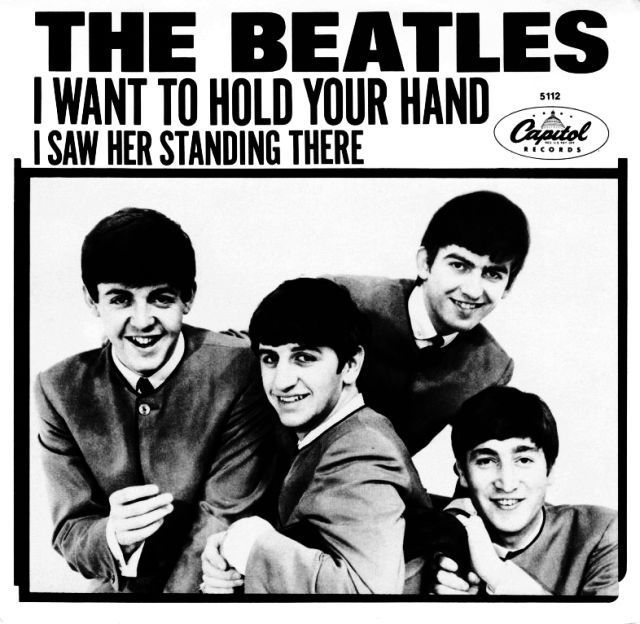
This helped start the modern rock era. No British rock act had dominated in America before the Beatles. Cliff Richard had tried and failed but with this song and an appearance on the Ed Sullivan Show…The Beatles kicked down the door and started the British Invasion and the Stones, Kinks, and Who would soon follow.
Rock and Roll can be divided up into two eras… pre Beatles and post Beatles. Everything would change after this. I bought an amp from a long time country studio musician and he told me that the day after he heard this on Ed Sullivan the world changed. Not just music but everything…music, thoughts, aspirations, and hair of course. Within weeks of this song hitting number 1 there were bands forming in every neighborhood in America. Guitars were bought, hair lengths were being tested, and a huge urge to learn everything British.
I always hold this song up to why vinyl is the way to listen to some records at times. All the CD versions I’ve heard of this song sound rather flat…when I hear the 45 vinyl single the song jumps out at you. It changes the whole dynamic of the song. After hearing the single the way it was meant to be heard… you can see why this song changed a lot of things. It was maybe the most important single they ever released…it may have had the biggest impact at least in America.
It is said that John and Paul wrote this with an America’s sound in mind. They must have guessed right. This song preceded the Beatles trip here at number 1. Lennon liked the melody so much that he talked about doing something with it again til his death.
This was played on the Washington, DC radio station WWDC before it was released in America by a DJ named Carroll Baker, who got the record from a stewardess. It was a huge hit with his listeners and prompted Capitol Records to release the song ahead of schedule – they planned to issue it on January 13, 1964.
The Beatles were in Paris and celebrated madly when they found out they were #1 in America. They came to America for the first time on February 7, 1964, greeted at the airport by screaming fans. “I Want To Hold Your Hand” was the #1 song in the country at that time, and it stayed on top for seven weeks, until their next single, the re-released “She Loves You,” replaced it.
Bob Dylan thought the line “I can’t hide” was “I get high,” and a reference to marijuana. He was surprised to learn they had never tried pot, and became part of Beatles lore when he introduced them to it.
At times John Lennon realized the crowds The Beatles played to were so loud they really couldn’t hear them sing, so sometimes instead of singing the line, “I want to hold your hand,” he would say, “I want to hold your gland” as a reference to women’s breasts…and people wonder why Lennon is my favorite Beatle!
The song peaked at #1 in the Billboard 100, Canada, UK, New Zealand, and probably on Mars also in 1964.
From Songfacts
This was the first Beatles song to catch on in America. In 1963, the Beatles became stars in England, but couldn’t break through in the US. They couldn’t get a major label to distribute their singles in America, so their first three singles there, “Please Please Me,” “From Me to You” and “She Loves You,” were issued on small labels and flopped, even though they were hits in England.
Late in 1963, American news outlets started reporting on this British sensation, and interest in the group started to rise. Capitol Records took notice and released “I Want To Hold Your Hand” Stateside on December 26. The song rose up the chart, and on February 1, 1964, hit #1. It sold better in the first 10 days of release in the US than any other British single, and remains the best-selling Beatles single in the United States, moving over 12 million copies.
Conquering the US was, and still is, a big deal for British bands. Many groups that are huge in the UK (Oasis, Blur) never really catch on in America. • John Lennon and Paul McCartney wrote this in Jane Asher’s basement. Asher was an actress who became Paul’s first high-profile girlfriend. After appearing in several movies, TV shows and stage productions, Asher became an authority on baking, and has her own business selling party cakes and supplying baking and decorating equipment. She and Paul broke up in 1968.
Jane had a brother named Pete Asher who teamed up with Gordon Waller to form the duo Peter & Gordon; McCartney wrote their hit single “A World Without Love.” Pete recalled in a 2010 interview with Gibson.com the two Beatles penning this song at his home: “My mother had a practice room that she used to give private oboe lessons when she wasn’t teaching at The Royal Academy, where she was a professor. There was just a piano, and an upright chair and a sofa. Paul used that room to write in, from time to time. One afternoon John came over, while I was upstairs in my room. The two of them were in the basement for an hour or so, and Paul called me down to listen to a song they had just finished. I went downstairs and sat on the sofa, and they sat side by side, on the piano bench. That’s where they played ‘I Want to Hold Your Hand’ for the first anywhere. They asked me what I thought. I said, ‘I think it’s very good.'” [laughs] •
The Beatles performed this on their first two Ed Sullivan Show appearances, which took place February 9 and 16, 1964. There was already a media frenzy around The Beatles, which was amplified when millions saw them on Sullivan’s show. The Beatles were booked for the show before they had a hit in the US, so they actually got paid less than many other guests for their appearance. •
• This was one of John Lennon’s favorite Beatles songs. It starts with a falling melody, which is typical of Lennon’s songwriting, and ends with a cadence with a quarter-interval: “I’ll think you’ll understand.” That quarter-interval cadence you can even hear in Lennon’s first bit of “From Me to You” and in “Tomorrow Never Knows.” McCartney most often uses second-intervals. Also typically Lennon is the sudden octave-run, “Haaaaand…” The same octave-run you can hear in the end of the middle part in Lennon’s “Please Please Me”: “To reason with youuuuuu…” Also note that the beginning of the melody in the middle part is almost the same melody as the beginning of the middle part in “Don’t Let Me Down.”
Two parody groups made answer songs to this in 1964: “I’ll Let You Hold My Hand” by The Bootles and “Yes, You Can Hold My Hand” by The Beatlettes.
This was the first Beatles song recorded on 4-track equipment. Some of their first songs were in mono.
The Beatles also cut a German version called “Komm Gib Mir Deine Hand.” They picked up some German while playing The Star Club in Hamburg in 1962.
In the 1960s it wasn’t uncommon for British stars to record new versions of their hits in other languages. The idea was to increase airplay on continental stations and to get a hit before an indigenous artist recorded a version in the local tongue. On January 29, 1964, The Beatles went into the Pathé & Marconi Studios in Paris and recorded “I Want To Hold Your Hand” and “She Loves You” (“Sie Liebt Dich”) in German. The lyrics had been hurriedly translated by a Luxembourger named Camillo Felgen, who was then a program director at Radio Luxembourg. As well, apart from their recording of “My Bonnie” in the early ’60s, this was the only time The Beatles recorded in another language. In addition it was the sole occasion on which they recorded outside London.
When this hit #1 in the US, it was the first time a British group topped the chart there since 1962, when “Telstar” by The Tornados did it. Until The Beatles came along, most British groups that had hits in America came and went pretty quickly. The Beatles kicked off the British Invasion, leading to a lengthy occupation on the charts for acts like The Rolling Stones, The Kinks and The Who as well as The Beatles.
It was the youth who discovered The Beatles, and while young people can be easily manipulated through hype and image, in the case of The Beatles it was the music that drew them in. An American girl Sanda Stewart, 15 years old in spring 1964 (according to Hunter Davies in his book Beatles) said: “I was one day in a shop with my mother when I suddenly heard ‘I Want to Hold Your Hand’ on the car radio. Such a special sound! I could never stop thinking about it. No song has effected me on that way. Several other girls in school had reacted in the same way. We saw the Beatles on photos and thought they were ugly. But their music was fantastic.”
This song was used in the movie Across the Universe at a much slower tempo.
A fairly straightforward and simple Beatles song, this one still has some musical complexity that foreshadowed what was to come. “The middle eight of that does something,” Tony Banks of Genesis explained. “The way the key changes at that point is something I hadn’t heard before.”
I Want To Hold Your Hand
Oh yeah, I’ll tell you somethin’ I think you’ll understand When I say that somethin’ I want to hold your hand I want to hold your hand I want to hold your hand
Oh please, say to me You’ll let me be your man And please, say to me You’ll let me hold your hand Now, let me hold your hand I want to hold your hand
And when I touch you I feel happy inside It’s such a feelin’ that my love I can’t hide I can’t hide I can’t hide
Yeah, you got that somethin’ I think you’ll understand When I say that somethin’ I want to hold your hand I want to hold your hand I want to hold your hand
And when I touch you I feel happy inside It’s such a feelin’ that my love I can’t hide I can’t hide I can’t hide
Yeah, you got that somethin’ I think you’ll understand When I feel that somethin’ I want to hold your hand I want to hold your hand I want to hold your hand I want to hold your hand
David Byrne at his visual performance best with this video. According to David Byrne’s own words, this song is about how we, as people, tend to operate half-awake or on autopilot. Or perhaps a better way of explaining that statement is that we do not actually know why we engage in certain actions which come define our lives.
The members of Talking Heads…David Byrne, Tina Weymouth, Chris Frantz and Jerry Harrison – all contributed to the writing of this song along with the track’s producer, Brian Eno. And “Once in a Lifetime” itself originated from jam sessions. With this album the band wanted a more democratic process instead of Byrne writing all of the songs.
The song was on the Remain in Light album released in 1980. The song peaked at #103 in the US Billboard Bubbling Under the Hot 100 chat, #28 in Canada, and #14 in the UK in 1981.
In 1985 the song peaked at #91 in the Billboard 100 with a live version of the song off of the album Stop Making Sense.
The video was huge back in the early 80s and that is where I found the song. It was choreographed by Toni Basil.
For this album they would improvise in the studio and take bits and pieces out. Their own version of “sampling” and “looping.” The 1973 Afrobeat record by Nigerian musician Fela Kuti, became the inspiration for the album
Brian Eno:“It had all been done,” Eno says, “and the only thing left worth doing was some sort of urban pessimism of some kind, and that record is terribly optimistic in a way. It’s very up and, like, looking out to the world and saying, ‘What a fantastic place we live in. Let’s celebrate it.’ And I think we knew that was a fresh thought at the time.”
David Byrne: “Most of the words in ‘Once in a Lifetime’ come from evangelists I recorded off the radio while taking notes and picking up phrases I thought were interesting directions. Maybe I’m fascinated with the middle class because it seems so different from my life, so distant from what I do. I can’t imagine living like that.”
From Songfacts
This song deals with the futility of not being happy with the things you have. Like trying to remove the water at the bottom of the ocean, there’s no way to stop life from moving on. The forces of nature (like the ocean) keep you moving almost without your conscious effort – like a ventriloquist moving a puppet.
Some of these evangelist recordings also made their way to a 1981 album called My Life in the Bush of Ghosts, by David Byrne and Brian Eno.
This stalled at #103 in February 1981, but when MTV launched that August, they played the video a lot, giving the song much more exposure.
David Byrne’s choreography in the video was done by the Toni Basil, who had a hit as a singer with “Mickey.” It was a very odd video, and for many viewers it was the first look they got at the Talking Heads (or at least Byrne – the full band didn’t appear in a video until “Burning Down the House” two years later).
As you watch David Byrne spasm like a malfunctioning robot interspersed with gesturing in Martian sign language, ponder this excerpt from the book MTV Ruled the World – The Early Years of Music Video, in which Toni Basil fills in some details about the choreography for this video: “He [Byrne] wanted to research movement, but he wanted to research movement more as an actor, as does David Bowie, as does Mick Jagger. They come to movement in another way, not as a trained dancer. Or not really interested in dance steps. He wanted to research people in trances – different trances in church and different trances with snakes. So we went over to UCLA and USC, and we viewed a lot of footage of documentaries on that subject. And then he took the ideas, and he ‘physicalized’ the ideas from these documentary-style films.”
Basil adds: “When I was making videos – whether it was with Devo, David Byrne, or whoever – there wasn’t record companies breathing down anybody’s neck, telling them what to do, what the video should look like. There was no paranoid A&R guy, no crazy dresser that would come in and decide what people should be wearing, and put them in shoes that they can’t walk in, everybody with their own agenda. We were all on our own.”
Basil also directed and choreographed the video for the Remain In Light track “Crosseyed And Painless,” which features dancers from a crew called The Electric Boogaloos. None of the band members appear in it.
Some critics have suggested that “Once In A Lifetime” is a kind of prescient jab at the excesses of the 1980s. David Byrne says they’re wrong; that the lyric is pretty much about what it says it’s about. In an interview with NPR, Byrne said: “We’re largely unconscious. You know, we operate half awake or on autopilot and end up, whatever, with a house and family and job and everything else, and we haven’t really stopped to ask ourselves, ‘How did I get here?'”
Brian Eno produced this song and wrote the chorus, which he also sang on. David Byrne wrote the verses, which he talk/sings in an intriguing narrative style. Remain In Light was the fourth Talking Heads album, and the third produced by Eno, whose artistic bent and flair for the unusual were a great fit for the group.
Unlike their previous album, the songs on Remain In Light were mostly written in the studio (Compass Point, the Bahamas) and all credited to the four band members plus Eno.
A surprising number of musicians cite “Once In A Lifetime” as one of the best songs ever recorded. Here are three:
Charlotte Church, who named it the first song she fell in love with. “The first time I heard it, my mind was blown,” she told NME. “There’s so magic in that song. I think David Byrne is an absolute G.”
Nick Feldman of Wang Chung, who loves the “almost randomly cacophonous keyboard burblings, the wonderful bass line and rhythm section groove and David Byrne’s slightly preacher-like vocals.” He told Songfacts: “When my personal life started to unravel many years later, the lyrics to this song still resonated for me. Byrne’s mesmeric and intense physical performance in the video to this track still compels today, and compliments and reflects the music it is interpreting.”
Glen Ballard, who produced and co-wrote hits for Alanis Morissette, Dave Matthews and Aerosmith. “That song can’t be touched,” he said in a Songfacts interview. “I listen to it like once a month because everything about it is so perfect.”
The video broke new ground when it was exhibited at the New York Museum of Modern Art as part of a 1982 exhibition called “Performance Video.” The exhibit helped explain to parents what their kids were watching on MTV. It explained how the “Once In A Lifetime” video “expands upon the song’s complex interweaving of moods and images as well as Byrne’s interest in African music and percussion.”
When Talking Heads toured to support their next album, Speaking in Tongues, in 1983, Byrne did the movements from the video when he performed the song. Not only that, he added movements to other songs they performed on that tour as well, making for some very unorthodox visual expression. Audiences were used to seeing pyro and flashing lights, but had never seen anything like the full band running in place (“Burning Down the House”) or Byrne turning himself into a human corkscrew (“Life During Wartime”). The experience was so striking it got the attention of director Jonathan Demme, who filmed a few of the shows and turned it into the acclaimed concert film Stop Making Sense.
This was used in the pilot episodes of That ’80s Show (2002) and Numb3rs (2005). It was used twice on The Simpsons (“Days of Future Future” – 2014, “Trust But Clarify” – 2016) and in these series:
The Deuce (“Morta di Fame” – 2019) Being Erica (“Being Adam” – 2010) Chuck (“Chuck Versus the Suburbs” – 2009) WKRP in Cincinnati (“Real Families” – 1980)
It also shows up in these movies:
Hot Tub Time Machine (2010) Secret Window (2004) Rock Star (2001) Alice and Martin (1998)
The live version from Stop Making Sense was used in the opening sequence of the 1986 movie Down And Out In Beverly Hills, which shows a homeless Nick Nolte pushing his grocery cart of possessions around Los Angeles and doing some dumpster diving. His character is in a classic, “How did I get here?” situation, but soon his fortunes take a turn. This version of the song was re-released as a single that year and charted at #91 in America.
The Exies released a haunting version of this song in 2006, releasing a video to go with it. It has also been covered by Smashing Pumpkins and sampled by Jay-Z on his song “It’s Alright.”
Phish covered the entire Remain In Light album on Halloween, 1996 at the Omni Coliseum in Atlanta. It took up the entire second set of their show and featured guest brass players. The performance is considered one of the best Phish “album-cover” attempts.
Benin superstar Angélique Kidjo covered this song along with the rest of Remain in Light in 2018. She explained to Mojo: “I wanted to bring the resilience of the Africans, and the joy, despite everything they throw at us.”
On May 5, 2018, Kidjo sang “Once In A Lifetime” with David Byrne at Carnegie Hall. She told Mojo: “It was not rehearsed or planned. I think if I thought about it I wouldn’t have been able to sing one note.”
In his 2019 Broadway production American Utopia, David Byrne evokes this song a few times, doing the movements associated with it and at one point asking, “How did I get here?” He does the song in the play as well, and on February 29, 2020, Byrne performed it on Saturday Night Live with his cast members. Later that year, American Utopia was released on HBO as a movie.
Once In A Lifetime
And you may find yourself Living in a shotgun shack And you may find yourself In another part of the world And you may find yourself Behind the wheel of a large automobile And you may find yourself in a beautiful house With a beautiful wife And you may ask yourself, well How did I get here?
Letting the days go by, let the water hold me down Letting the days go by, water flowing underground Into the blue again after the money’s gone Once in a lifetime, water flowing underground
And you may ask yourself How do I work this? And you may ask yourself Where is that large automobile? And you may tell yourself This is not my beautiful house! And you may tell yourself This is not my beautiful wife!
Letting the days go by, let the water hold me down Letting the days go by, water flowing underground Into the blue again after the money’s gone Once in a lifetime, water flowing underground
Same as it ever was Same as it ever was Same as it ever was Same as it ever was Same as it ever was Same as it ever was Same as it ever was Same as it ever was
Water dissolving and water removing There is water at the bottom of the ocean Under the water, carry the water Remove the water at the bottom of the ocean! Water dissolving and water removing
Letting the days go by, let the water hold me down Letting the days go by, water flowing underground Into the blue again into silent water Under the rocks and stones, there is water underground
Letting the days go by, let the water hold me down Letting the days go by, water flowing underground Into the blue again after the money’s gone Once in a lifetime, water flowing underground
You may ask yourself What is that beautiful house? You may ask yourself Where does that highway go to? And you may ask yourself Am I right? Am I wrong? And you may say yourself “My God! What have I done?”
Letting the days go by, let the water hold me down Letting the days go by, water flowing underground Into the blue again into the silent water Under the rocks and stones, there is water underground
Letting the days go by, let the water hold me down Letting the days go by, water flowing underground Into the blue again after the money’s gone Once in a lifetime, water flowing underground
Same as it ever was Same as it ever was Same as it ever was Look where my hand was Time isn’t holding up Time isn’t after us Same as it ever was Same as it ever was Same as it ever was Same as it ever was Same as it ever was Same as it ever was Letting the days go by Same as it ever was And here the twister comes Here comes the twister
Letting the days go by (same as it ever was) Same as it ever was (same as it ever was) Letting the days go by (same as it ever was) Same as it ever was Once in a lifetime Let the water hold me down Letting the days go by












 PowerPop... An Eclectic Collection of Pop Culture