I want to thank Dave at A Sound Day… he wanted us to pick one song we liked that’s about reality – either a real event or a real person, and tell us about it.
As a kid riding in my sister’s car going to one of her friends at the time…I heard this and I liked it right away. It was 1976, and I was 9 years old, so my sister went out and bought the single. I wore this one out and tried to look up the real story in our encyclopedias, but unfortunately, they were published in 1967.
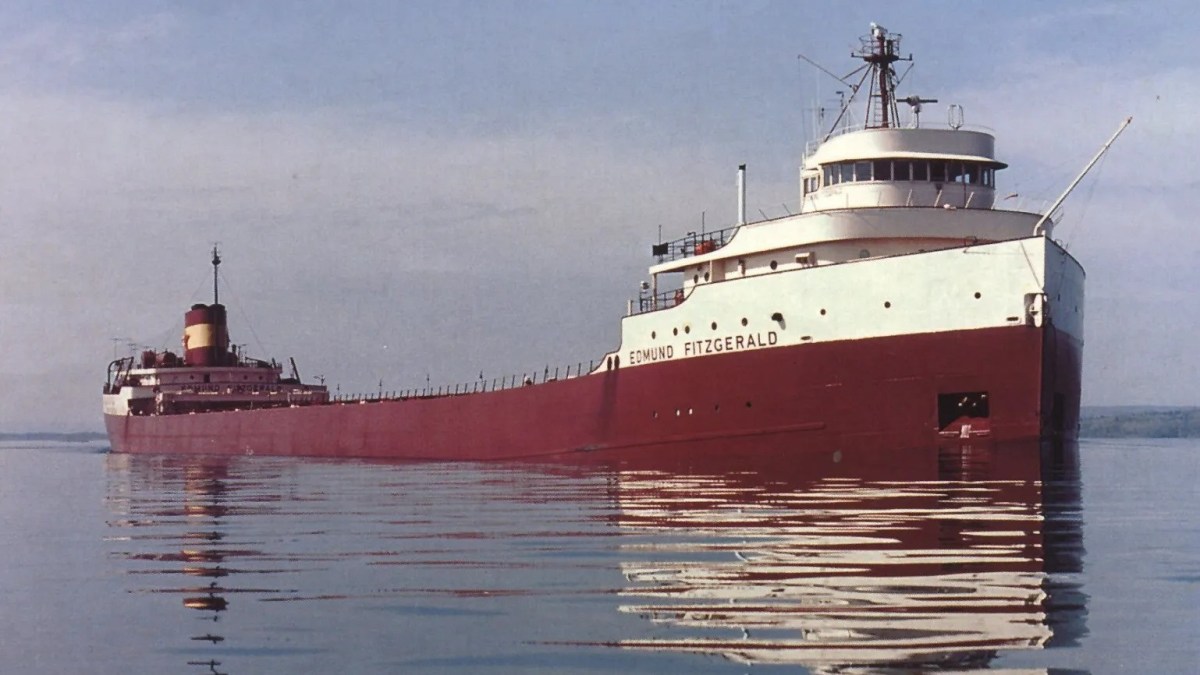
A song that was, unfortunately, a true story. It was written and performed by Gordon Lightfoot. The Edmund Fitzgerald was an American Great Lakes freighter that sank in a Lake Superior storm on November 10, 1975.
This is a factual retelling of a shipwreck on Lake Superior in November 1975 that claimed the lives of 29 crew members. On November 10, 1975, the S.S. Edmund Fitzgerald broke in half and sank in Lake Superior. The storm she was caught in reported winds from 35 to 52 knots, and waves anywhere from 10 to 35 feet high.
The ship was loaded with 26,116 tons of taconite pellets at the Burlington Northern Railroad, Dock #1. Her destination was Zug Island on the Detroit River. 29 crew members perished in the sinking. The tragedy of Edmund Fitzgerald had a huge impact on maritime safety regulations. It led to changes in shipping practices on the Great Lakes, including more accurate weather forecasting, monitoring, and requirements for lifeboat drills and onboard survival equipment.
The cause of the ship’s sinking remains a subject of speculation and debate. Different theories suggest factors such as structural failure, sudden shoaling, topside damage from the storm, or water intake through damaged hatches. The U.S. Coast Guard and National Transportation Safety Board conducted investigations, but a definitive conclusion was never reached.
In 1976, a dive to the wreck site, located at a depth of about 530 feet, confirmed that the ship had broken in two. Later dives and sonar mapping further documented the wreck, but never gave a clear explanation for the rapid sinking.
The song released in 1976 peaked at #1 in Canada and #2 on the Billboard 100. It did peak at #1 on Cash Box. The song was on his album Summertime Dream.
Gordon Lightfoot:“The Edmund Fitzgerald really seemed to go unnoticed at that time, anything I’d seen in the newspapers or magazines were very short, brief articles, and I felt I would like to expand upon the story of the sinking of the ship itself,” “And it was quite an undertaking to do that, I went and bought all of the old newspapers, got everything in chronological order, and went ahead and did it because I already had a melody in my mind and it was from an old Irish dirge that I heard when I was about three and a half years old.”
“I think it was one of the first pieces of music that registered to me as being a piece of music,” he continued. “That’s where the melody comes from, from an old Irish folk song.”
Gordon Lightfoot: “When the story came on television, that the Edmund had foundered in Lake Superior three hours earlier, it was right on the CBC here in Canada, I came into the kitchen for a cup of coffee and saw the news and I said ‘That’s my story to go with the melody and the chords.”
For those interested…I have a bio of the event at the bottom.
The Wreck of the Edmund Fitzgerald
The legend lives on from the Chippewa on down Of the big lake, they called Gitche Gumee The lake, it is said, never gives up her dead When the skies of November turn gloomy With a load of iron ore, twenty-six thousand tons more Than the Edmund Fitzgerald weighed empty That good ship and true was a bone to be chewed When the gales of November came early
The ship was the pride of the American side Coming back from some mill in Wisconsin As the big freighters go, it was bigger than most With a crew and good captain well seasoned Concluding some terms with a couple of steel firms When they left fully loaded for Cleveland And later that night when the ship’s bell rang Could it be the north wind they’d been feeling?
The wind in the wires made a tattle-tale sound And a wave broke over the railing And every man knew, as the captain did too ‘Twas the witch of November come stealing The dawn came late, and the breakfast had to wait When the gales of November came slashin’ When afternoon came, it was freezin’ rain In the face of a hurricane west wind
When suppertime came, the old cook came on deck sayin’ “Fellas, it’s too rough to feed ya” At seven p.m., a main hatchway caved in, he said “Fellas, it’s been good to know ya” The captain wired in he had water comin’ in And the good ship and crew was in peril And later that night when his lights went outta sight Came the wreck of the Edmund Fitzgerald
Does anyone know where the love of God goes When the waves turn the minutes to hours? The searchers all say they’d have made Whitefish Bay If they’d put 15 more miles behind her They might have split up or they might have capsized They may have broke deep and took water And all that remains is the faces and the names Of the wives and the sons and the daughters
Lake Huron rolls, Superior sings In the rooms of her ice-water mansion Old Michigan steams like a young man’s dreams The islands and bays are for sportsmen And farther below Lake Ontario Takes in what Lake Erie can send her And the iron boats go as the mariners all know With the gales of November remembered
In a musty old hall in Detroit, they prayed In the Maritime Sailors’ Cathedral The church bell chimed ’til it rang twenty-nine times For each man on the Edmund Fitzgerald The legend lives on from the Chippewa on down Of the big lake, they call Gitche Gumee Superior, they said, never gives up her dead When the gales of November come early
Merry Christmas everyone… another year older…and a new one just begun. This had to be the first Christmas song I posted.
This is my favorite Christmas song hands down…although I was just introduced to Slade’s Christmas song a few years back, that one is a strong 2nd. This song gets me in the Christmas mood like no other. The song is highly idealistic but that is alright. It was the early seventies and the time for idealism.
In 1969 John and Yoko had rented billboard spaces in 12 major cities around the world, for the display of black-and-white posters that declared “WAR IS OVER! If You Want It – Happy Christmas from John & Yoko”. Two years later this slogan became the basis for this song when Lennon decided to make a Christmas record with an anti-war message…plus John said he was sick of White Christmas.
John’s voice goes so well with this song. The song peaked at #2 in the UK charts, #38 on the Billboard 100, #10 in New Zealand, and #43 in Canada in 1971. The song did peak at #42 on the Billboard 100 in 2019.
John Lennon and Yoko Ono wrote this in their New York City hotel room and recorded it during the evening of October 28 and into the morning of the 29th, 1971 at the Record Plant in New York. It was released in the US for Christmas but didn’t chart. The next year, it was released in the UK, where it did much better, charting at #2. Eventually, the song became a Christmas classic in America, but it took a while.
Lennon originally wrote this as a protest song about the Vietnam War, and the idea “that we’re just as responsible as the man who pushes the button. As long as people imagine that somebody’s doing it to them and that they have no control, then they have no control.”
The children’s voices are the Harlem Community Choir, brought in to sing on this track. They are credited on the single along with Yoko and The Plastic Ono Band.
I think of High School when I hear this song. Our school had a Christmas poster contest and a buddy and I made a poster as a joke and wrote “So this is Christmas and what have you done another year over, and a new one just begun” and won first prize…with John’s assistance.
This didn’t appear on an album until 1975 when it was included on Lennon’s Shaved Fish singles compilation. This is one of the first Lennon albums I bought.
Happy Xmas (War is Over)
(Happy Christmas Kyoko) (Happy Christmas Julian)
So this is Christmas And what have you done Another year over And a new one just begun And so this is Christmas I hope you have fun The near and the dear one The old and the young
A very Merry Christmas And a happy new year Let’s hope it’s a good one Without any fear
And so this is Christmas For weak and for strong For rich and the poor ones The world is so wrong And so happy Christmas For black and for white For yellow and red ones Let’s stop all the fight
A very Merry Christmas And a happy new year Let’s hope it’s a good one Without any fear
And so this is Christmas And what have we done Another year over A new one just begun And so happy Christmas We hope you have fun The near and the dear one The old and the young
A very Merry Christmas And a happy new year Let’s hope it’s a good one Without any fear War is over, if you want it War is over now
I did a San Francisco music week a few months ago and featured this band for the first time. I’ve been wanting to come back to them and today is the day. They came out of the San Francisco scene in the 60s along with The Grateful Dead, Jefferson Airplane, Janis Joplin, and others. They were never as big as those bands but I’ve heard many of their songs that I liked.
It comes back to some bad luck and some self-sabotage. They had it all…including five members who could all write, sing and play. Record labels were lining up for them. They have since fought for decades between each other and especially their manager Matthew Katz. Other bands like Buffalo Springfield said that Moby Grape was one of the best bands from San Francisco.
One of their problems was hype. CBS was their record company and they decided it would be great to release FIVE singles at once by the band. The label was convinced that each of the 10 sides had the potential to make it to the top of the national charts. The thinking was that a shot-gun approach would ensure that at least one of the five would hit and garner maximum airplay and revenue. It failed miserably.
Nowadays an album is released and different songs are played… every song on an album can chart. That is why it’s almost impossible to compare the charts now to any other time in history before downloading. I guess CBS was ahead of their time but way too far ahead and the market wasn’t ready for it. You couldn’t just download it in 1967 with your love beads and patchouli oil…although I do like patchouli oil!
This song was one of the five singles released and it did better than the others. It did chart in the top 100 so there is that. It peaked at #88 on the Billboard 100 and #87 on the Canadian Charts in 1967. It’s a good song and I think it deserved to do better than that but with a glut of songs it was probably doomed to fail. It was on their debut album Moby Grape which peaked at #24 on the Billboard Album Charts.
They are still together with some of the original members. Peter Lewis, Jerry Miller, Bob Mosley, and Don Stevenson. Skip Spencer died in 1999 of lung cancer. His son Omar Spence is now with Moby Grape…singing his dad’s songs. There is a cult following of this band and they had the talent to do much more. This is a case of a record company really hurting them.
Omaha
Listen, my friends Listen, my friends Listen, my friends Listen, my friends Listen, my friends Listen, my friends
Listen, my friends, you thought never but Listen, my friends, I’m yours forever Listen, my friends, won’t leave you ever
Now my friends What’s gone down behind No more rain From where we came
Listen my love, get under the covers, yeah Squeeze me real tight, all of your lovin’ Into the light, beneath and above ya So out of sight, bein’ in love!
Listen, my friends Listen, my friends Listen, my friends Listen, my friends Listen, my friends Listen, my friends Listen, my friends
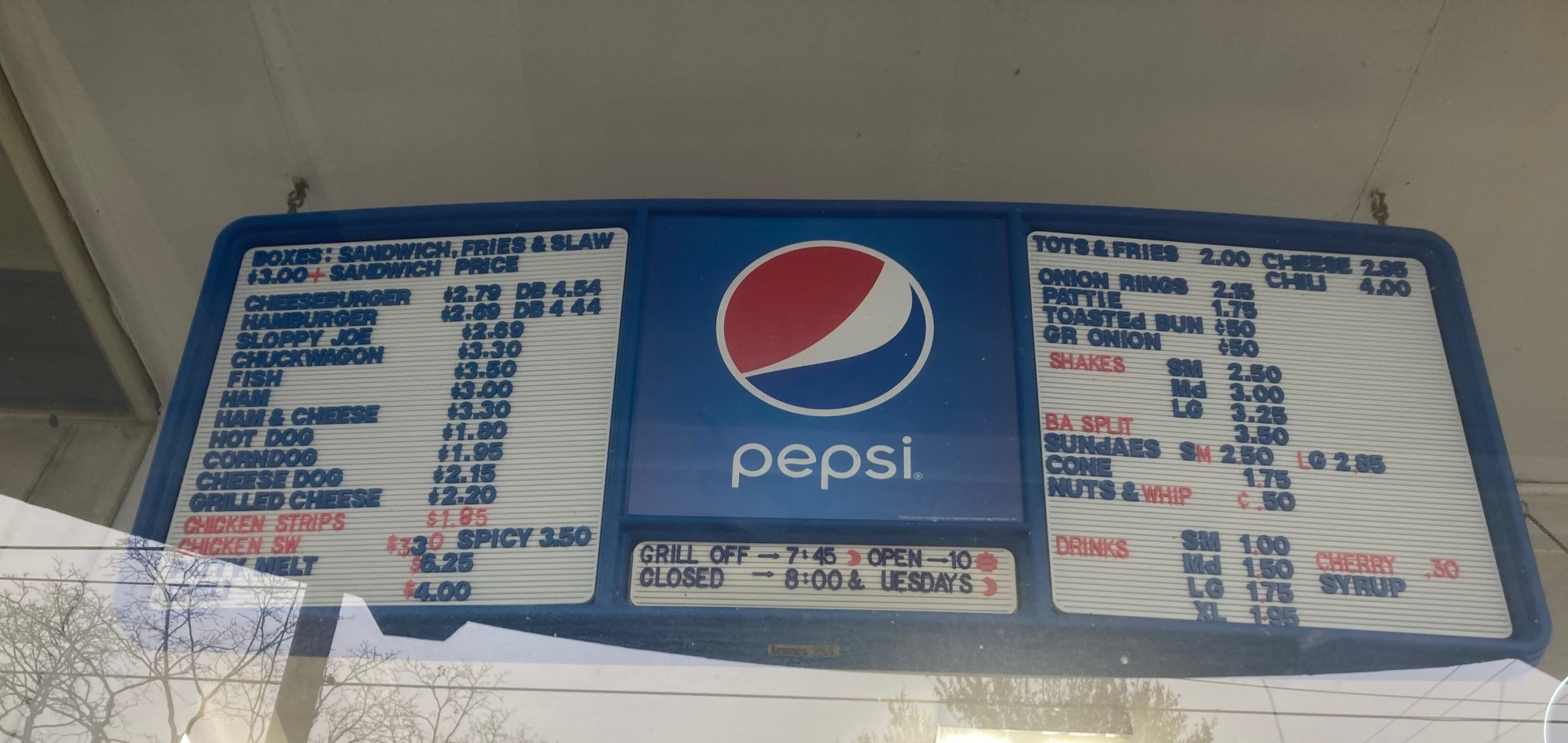
No music, movie, or TV Show today on this post. Let’s do Americana…not the music but the places. I love older buildings that represent the style of the era they were built. What’s more Americana than a milkshake, cheeseburger, and fries?
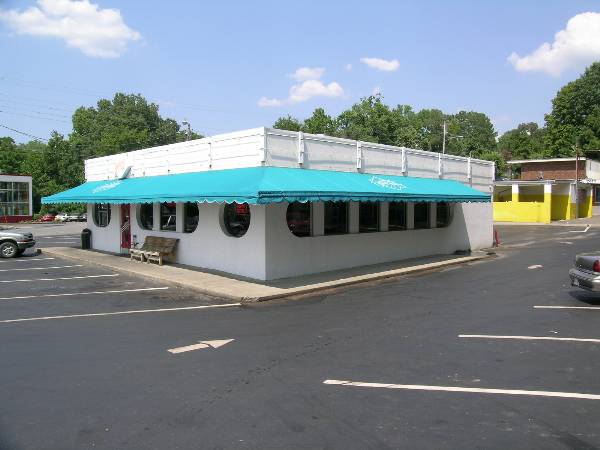
When I grew up we had a place named Strattons that was the dairy dip downtown in our small two red light town. It was the kind of place where you walked up to the window, ordered, waited, got your food, and then either sat on a picnic table or ate in your car. I remember doing that in the mid to late 70s with my sister. It was a very 70s-looking building but in the 1980s it was torn down and rebuilt. It became a 1950s-themed restaurant which was cool…but I missed the original dairy dip. Anyway, here is a picture of it before it right before it was torn down to make room for a Walgreens. Oh, how great progress is…NOT.
Below was the 1950s-themed Strattons before Walgreens in 2010.
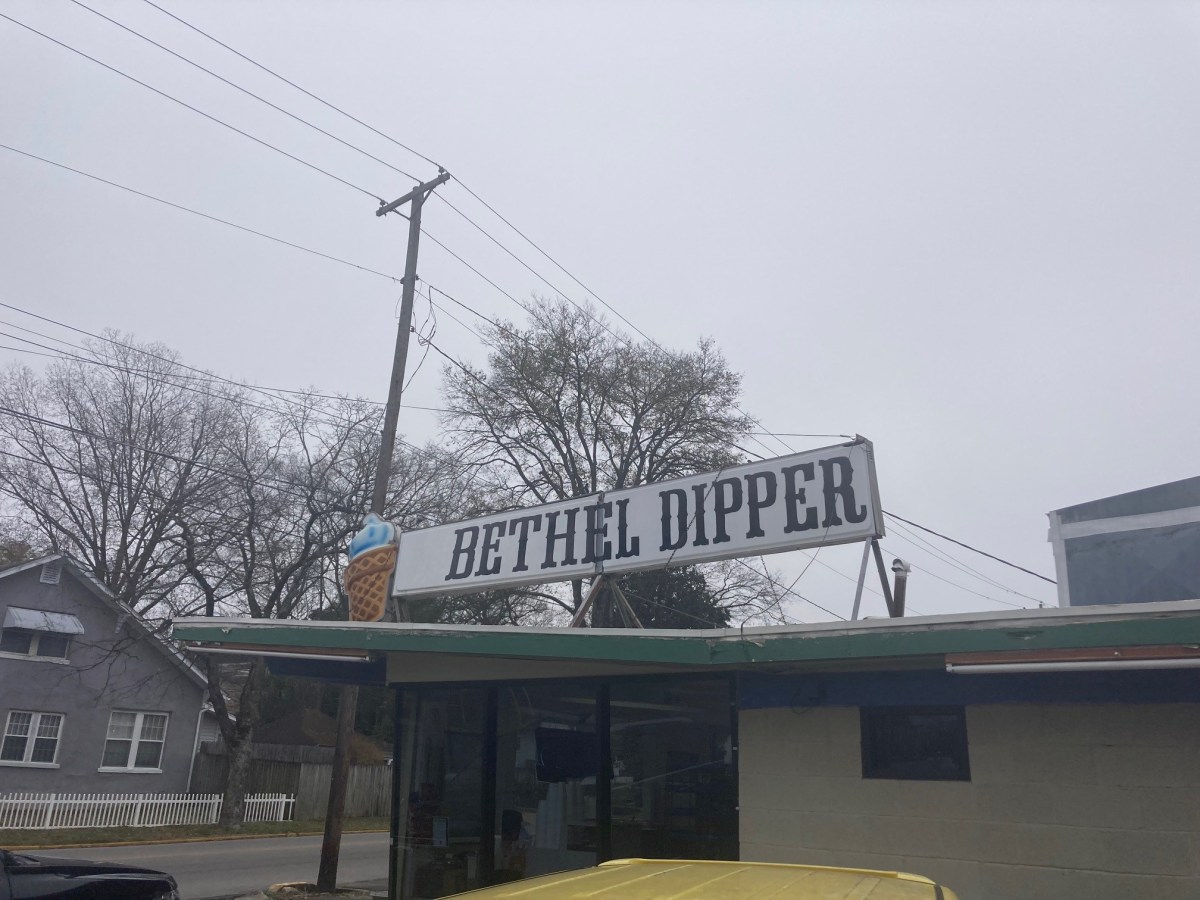
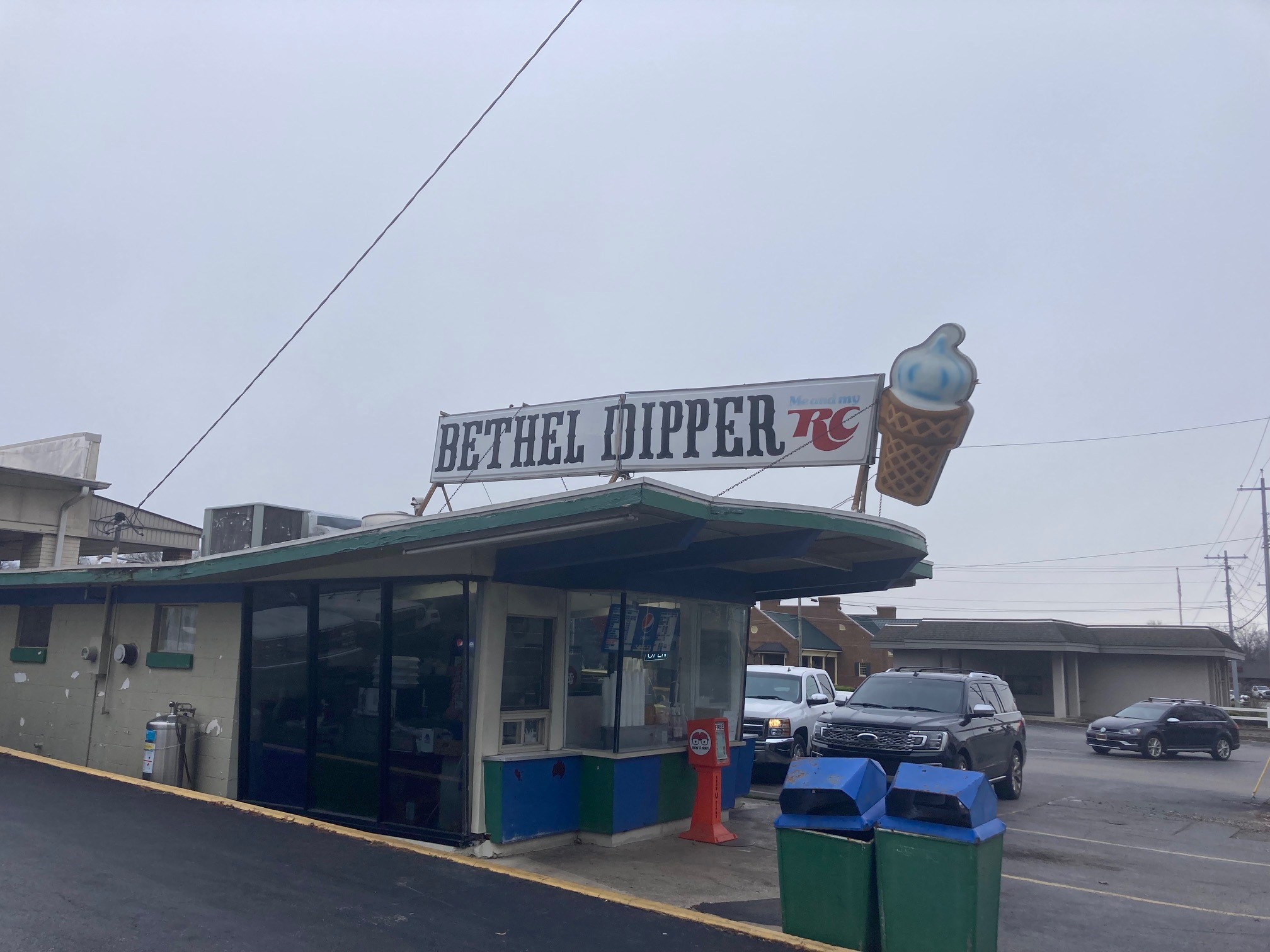
I was in Russellville Kentucky yesterday and I went to this establishment called The Bethel Dipper. I have been there a few times in the past and it looks really good at night with the carnival-type fluorescent lights. I like Russellville and want to move there one day. This place is kinda off the beaten path but not too much. It’s like walking into the past and I just wanted to share this.
I have tried to find the history of it but my guess is it started in the 60s. When you see the picture below take your best guess. Not only is the building really cool looking, I love the roof jetting out, but you will not believe the prices. I have the menu below the building. I asked them how they were able to keep it so cheap and they told me that they only take cash. The debit card companies wanted so much for each card swiped. They also don’t have an expensive POS system to pay monthly on. They also keep their menu simple and very good.
I always like hearing good country music and I like older music a lot…this is a fantastic cover. Eilen Jewell covers the song while keeping the original feel but injecting some great guitar shine in this. It has an undercurrent of rockabilly mixed with country. I can’t stress enough how she can shed one style and walk into another.
Eilen Jewell combines Americana, country, folk, blues, and rockabilly in her music. Her influences included Bob Dylan, Lucinda Williams, and Billie Holiday. She released her debut album in 2006 called Boundary County. Her second album, Letters from Sinners & Strangers (2007), brought her wider recognition. She has made an incredible 13 albums since 2006.
This song was off her 2010 album Butcher Holler: A Tribute to Loretta Lynn. The album has 12 Lynn songs and Jewell hits the mark with the album. Now lets switch gears here…Jewell made a blues album in 2017 called Down Hearted Blues. What a change, she has a great ability to slip into one style and the next. I’ll have one from this album at the bottom of the post.
Loretta Lynn and her sister Peggy Sue Wells wrote this song. She recorded it in 1969 at the Brandley’s Barn studio in Mount Juliet Tennessee. The song peaked at #6 on the Billboard Country Charts and #4 on the Canadian Country Charts in 1970. As my readers know, I adore this woman and she was one of the most important songwriters of the 20th century.
Eileen Jewel on Loretta Lynn: At first it was really just her voice when I heard Honky Tonk Girl for the first time in a cafe in Boston. I just froze when I heard that., I just thought that’s the voice for me, that’s the essence of classic country. Then, the more I got to listen to her stuff, the more I noticed that she wrote so fearlessly. She just kept rocking the boat and was a genius, sassy songwriter.
This song is on her blues album Down Hearted Blues.
You Wanna Give Me A Lift
Well, I’m game for just about anything But the game you’ve named I ain’t gonna play You say you take a little drink and we’ll go for a ride on a star You wanna give me a lift but this ol’ gal ain’t a goin’ that far
That happy pill you’re takin’ you say is a little weak And you wanna give me one so you say I won’t go to sleep Well your hands’re a gettin’ friendly but I know exactly where they are You wanna give me a lift but this ol’ gal ain’t a goin’ that far
You wanna give me a lift but this ol’ gal ain’t a goin’ that far I’m a little bit warm but that don’t mean I’m on fire You wanna take me for a ride in the back seat of your car You wanna give me a lift but this ol’ gal ain’t a goin’ that far
You wanna give me a lift but this ol’ gal ain’t a goin’ that far I’m a little bit warm but that don’t mean I’m on fire You wanna take me for a ride in the back seat of your car You wanna give me a lift but this ol’ gal ain’t a goin’ that far
You wanna give me a lift but this ol’ gal ain’t a goin’ that far…
I’m learning more about Canadian musicians as the years go by and I love what I’m finding. I have some Canadian followers and I appreciate all of your insights. CB suggested Bergmann and I’ve been listening to him this week. He is all over the map and gives you a great variety and he rocks. The more I heard the more I think of Paul Westerberg.
He has some quirky and deep lyrics throughout his songs. He also doesn’t always play by the music business rules. One band he formed was called the f**k band which turned into Los Popularos for a short time.
Art Bergmann is a Canadian singer/songwriter and a pioneer of punk rock in the country. Born in Vancouver…he was in the punk scene in the late ’70s, playing with bands like the Young Canadians (originally The K-Tels). Their track “Hawaii” (I love this surf punk song) became locally popular and set the stage for Bergmann’s career.
In the 1980s, Bergmann went solo, and his music started to change, blending his punk roots with elements of rock, folk, rockabilly, and even country. His debut solo album, “Crawl with Me” (1988), produced by none other than John Cale of The Velvet Underground, put him on the map. His songwriting kept getting edgier with albums like “Sexual Roulette” and “Art Bergmann” in the early ’90s. He has recorded a total of 12 albums with his last one coming in 2023 with the name of ShadowWalk: Legacy of Love.
Bound for Vegas is off the 1990 album Sexual Roulette. One critic wrote that the album is“Art Bergmann in Paul Westerbergish form” and then he described The Replacement’s new album All Shook Down as “Paul Westerberg in Art Bergmannish form.” I do get a heavy Paul Westerberg vibe or is it the other way around? Either way, he is good…listen.
Bergmann was made a member of the Order of Canada in 2021. He said this about it: I just thought it was a joke by maybe some friends that have grown up through the years and now work … at the Governor General’s office. I have been toiling in the underground for years, and awards like this are kind of anathema. So, you know, this would be the ultimate leg-pulling, I would think.
Art Bergmann: “People always say, ‘You’re so angry, and your words are so dangerous.’ And I say, ‘Does everybody forget Jimi Hendrix and the Stones and the Who and all the great rock and roll stuff?’ Everybody forgets what it is, you know.”
Art Bergmann: “I sort of grew up with music all around, my parents were heavy into classical —my dad thinks music died after Beethoven, so there was a lot of that around the house. And I had to sing in church; that’s where I got to know harmony from, I guess, and melody. And then my older brothers were greaseballs, and they had all the great stuff like Eddie Cochran and Elvis and Buddy Holly.”
Below is another song I was going to pick…Unfaithfully Yours.
Bound For Vegas
Load up the trucks Don’t forget the make-up We’ve got the six semis For the money None for the show We’ve got our costumes ready Got to go go go
Bound for Vegas Bound for Vegas
Who’s got the map Who’s gonna navigate We’ve got six shows On the strip It’s a sellout Wayne Newton doesn’t Want us to be late
It’s in my heart I’m making a financial start
They call me the performer I guess they always will Call me the entertainer Don’t retire me yet I ain’t over the hill I ain’t had my fill
It’s in my heart I’m making a financial start I’m a never was Trying to be a has-been A has-been on the come-back trail Come-back to me On the Vegas scene By the age of fifty
Good-bye Vancouver, Good-bye Toronto Good-bye New York Even the St. Louis blues I said buy Detroit, buy New York Ain’t going Route 66 Give me I-85
A few weeks ago I posted about Mouse and the Traps, a Texas band formed in the 1960s. I thought my fellow blogger friend Phil from Notes from the Cactus Patch may have known them. He did…. so I thought…I would like to write about Phil’s 1960s band. I first heard of Phil from Hanspostcard… he sent me THIS link to Phil’s post about meeting John Sebastian in Texas in the sixties along with the other Lovin Spoonful. He also briefly met Janis Joplin when she cut the food line at the Texas International Pop Festival. ” I survived one-hundred-degree temperatures for three days and got to meet Janis Joplin one late night when this nice gal with a Texas twang asked me if she could cut in line as I was waiting to buy a hot dog. It took a minute for me to realize it was her, but I was cool; it was the sixties, man. That night, ole Janis “took a little piece of my heart, now baby.”
I’m getting most of the info from this post. I urge you to read that because he tells a more complete story. Phil’s Dad, Johnny Strawn played with the Light Crust Doughboys so Phil was surrounded by music when he grew up. He went through a few bands on the way. He formed his first band in 1964 and they were called The Dolphins and in late 65 they became The Orphans. The Orphans lasted until 1967 and the members were Johnny Strawn, vocals and lead guitar – Jarry Davis, vocals and rhythm guitar- Danny Goode, lead vocals and bass – Marshall Sartain, vocals and keyboards- Barry Corbett, vocals.
The music they played was all over the place and everything that kept people on the dance floor. The music they played was Soul Music, Beatles, Bee Gees, Rascals, Hendrix, Doors, Steppenwolf, Cream, Stones, Vanilla Fudge, and Jefferson Airplane. They played all over Texas and parts of Oklahoma…and some of the clubs he mentioned were The Studio Club, LuAnn’s, Strawberry Fields, Phantasmagoria, The Cellar, The Box, and more. This was when three of the band were still in high school.
Phil Strawn: We used to do a lot of double bills at The Studio Club and LuAnn’s; that was a big thing back then. I remember playing a lot of them with Southwest F.O.B. We were playing at LuAnn’s one weekend when during the Jimi Hendrix song Fire, our drummer put lighter fluid on his cymbals, lit his drum sticks, then hit the cymbals and ignited them. It got a little out of hand and it burned up his drums. That kind of stuff wouldn’t fly nowadays, but back then, we didn’t think of the repercussions. The crowd loved it, sort of like The Who, only with real fire and smoke. Miss Lou Ann was not pleased and banned us from the club for about six months. We eventually worked our way back into her good graces. Ron Chapman the famous DJ on KLIF and KVIL remembered us as the band that nearly burned down LuAnn’s. Some legacy.
They met a guy named Mark Lee who became their manager. After they signed with him their gigs increased. They even opened up for Iron Butterfly at a place called Strawberry Fields. The Orphans committed a cardinal sin by learning an Iron Butterfly song called Possession and nailed it while opening for Iron Butterfly. Lee put them up to it because he knew it would get under Iron Butterfly’s skin…and it did! They ended up swiping Phil’s Vox Wah Wah pedal and a velvet Nehru suit from their drummer.
In 1968 they had to change their name. The drummer, Jerry Deaton, had a friend who wanted to manage them but they were happy with Mark Lee. The guy went out and had “The Orphans” copyrighted and told the band he would sue them if they continued so they changed their name. Phil said: “We liked ATNT {Alice talks “n” talks} and Jerry’s mother was the inspiration for that name. Later, we found out that he had managed another band called the Orphans for a while, so that was the reason for all the drama. He copyrighted the name so we had to change.”
Check out this 1968 Flower Fair entertainment. ATNT played and look at the other artists as well. Spencer Davis, Jimmy Reed, Mitch Ryder, The Lemon Pipers, and Neil Diamond. The Doors were going to play but they had scheduling conflicts.
In 1966 they recorded a song that Phil wrote called “Leader of My Mind” which was a Byrds-type song with harmonica but no one can find any copies. In 1968 they recorded two songs called “No One Told Me About Her” with the flipside Cobblestone Street.
They also did a couple of appearances on Mark Stevens TV Show which they lipsynced to their songs. Phil quit in the late sixties because of a disagreement with the rhythm guitar player. He had to make a choice and his final exams were coming up and Phil decided to study rather than just practice with the band.
After that, Phil said he didn’t play much until around 1974 when he started to play in the progressive country music scene in Austin and Dallas. I played with various people around town and some in south Texas and did some pick-up and studio work. I joined the Trinity River Band in late ’79 and played with them until ’85. I also played with The Light Crust Doughboys from time to time and did some studio work on the five-string banjo. I was fortunate to play on the Light Crust Doughboys album, ” One Hundred-Fifty Years of Texas Music.”
Phil Strawn: The A side is “Cobblestone Street,” written and sung by myself and our drummer Barry Corbett. The B side is ” No One Told Me About Her,” written and sung by our lead singer and bass player, Danny Goode. The two producers, Marvin Montgomery and Artie Glenn, suggested we add horns to get a Chicago Transit Authority sound. Before the brass was added, Cobblestone Street was loud and raw with loud guitars and organs. After adding the horns, we returned to the studio and tweaked the cuts. I purposely untuned my Gibson 335 a bit to give the guitar break a bit of an out-of-tune carnival sound. Marvin, who went by the name of Smokey, was a member of the Light Crust Doughboys since the 1930s and played with Bob Wills. He produced Paul and Paula and Delbert McClinton. Artie Glenn wrote the famous Elvis hit “Crying In The Chapel” and many others; he was also a Light Crust Doughboy western swing musician. These two men were top-shelf record producers, so we listened when they suggested.
Phil Strawn: It was absolutely the best time of my life. How could you not enjoy being a teenager in the ’60s and playing in a popular rock band? The people we met and played with, the experience that we will all carry with us the rest of our lives. It was just a part of life that helped shape us into what we are now – being part of that change in our country, that decade. It was a time of turmoil, but it was also the last year of the innocence we grew up with. Teenagers these days are so hardened. The music then was happy and said a lot. It would move you, whether you played it or danced to it. The music now has a meaner, harder edge, and reflects the times we live in.
Phil Strawn: I am a project manager in commercial construction, and do a lot of painting and artwork – mostly Texas art. After 35 years, Danny Goode, who I played with in ATNT and the Orphans, called me and asked me to be part of their group, The American Classics. I joined them about two years ago and that’s what we do nowadays. The band consists of Danny Goode, bass and lead vocals; John Payne, lead guitar and keyboards; Jordan Welch, drums; and me on rhythm guitar and vocals. We play about once a month or so around Dallas Fort Worth, mostly private parties. We recently played in Deep Ellum, and will probably be back down there soon. We stick to mostly ’60s music – it’s what we know well. It’s good to still be playing rock music at this age. You really never outgrow it.
I love the horns in this song but I would also love to hear what it sounded like with loud guitars as well.
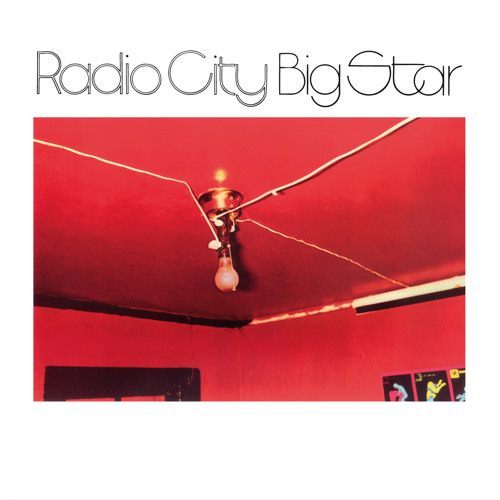
This song was on Radio City, their second album. Some say it is a response to the Chris Bell song off the first album called My Life Is Right…or a message to his girlfriend Diane that he was leaving her at the time. The chorus is perfect to me by the way he sings it.
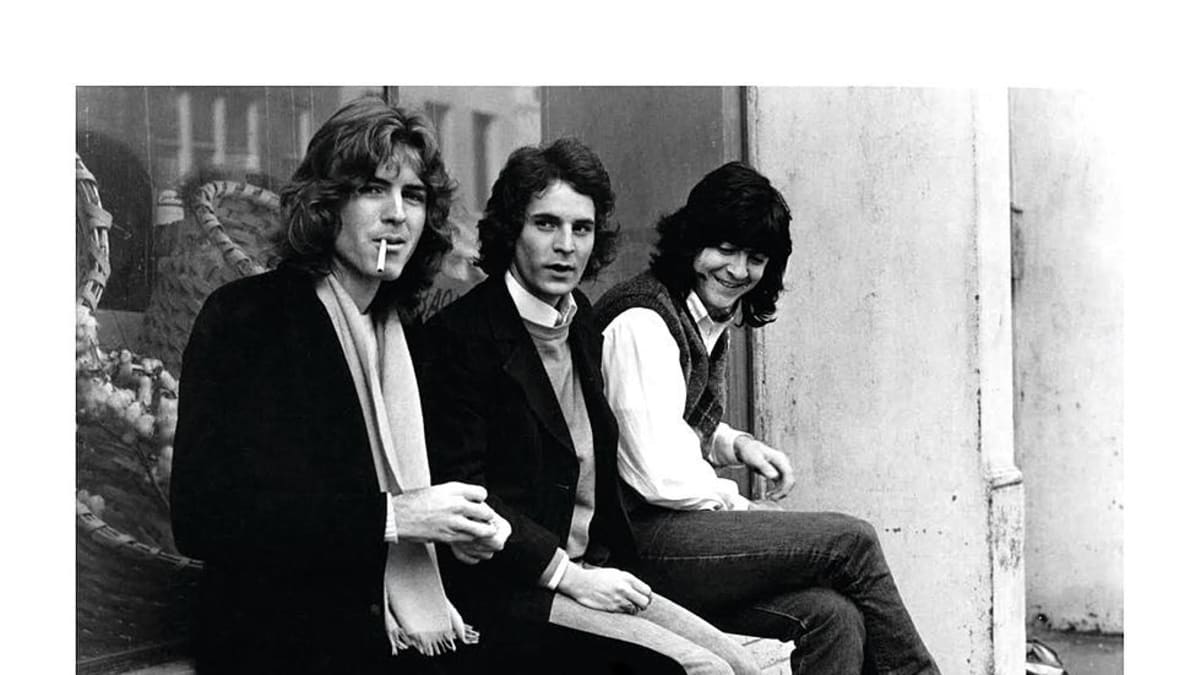
Big Star was formed out of a shared love for British Invasion bands like The Beatles, The Kinks, and The Byrds. Alex Chilton had already been successful as the teenage lead singer of the Box Tops, while Chris Bell had been active in local Memphis bands. They wanted to become the next Lennon-McCartney and for this fan…they were in song quality. The Ballad of El Goodo and Thirteen were as about as top shelf as you can get.
After the failure of their first album, singer/songwriter guitar player Chris Bell quit Big Star. Alex Chilton didn’t know if Big Star was going to make another album. He continued making demos because he could always do a solo album. The two other members, drummer Jody Stephens and bass player Andy Hummel weren’t sure either what was going to happen. They had talked about ending the band.
Their record company Ardent was under the Stax umbrella. They sent out invitations to all of the major rock journalists of the day in 1973. They invited them to Memphis to see Ardent’s roster of bands but most of all Big Star. The rock writers loved Big Star. Many legendary writers were there including Lester Bangs. The critics loved them but when your records don’t get to the record store because of distribution and promotional problems…nothing is going to happen. September Gurls should have got a nationwide audience.
You Get What You Deserve
Try to understand what I’m going through
Don’t blame me for what folks will do
For some of us it’s not a good time
But you’ve gotta to get used to it
And you’d better resign yourself
You get what you deserve
You ought to find out what it’s worth
And you’ve gotta have a lot of nerve
You just do what pleases you
Go on and sigh out every move
You’re gonna get a place in the scene
All God’s orphans get face in the dream
You get what you deserve
You ought to find out what it’s worth
And you’ve gotta have a lot of nerve
Too bad
Such a drag
So much pain
Down the drain
A lot of us ain’t got many friends
Try to understand what I’m going through
Don’t blame me for what folks will do
For some of us it’s not a good time
But you’ve gotta to get used to it
And you’d better resign yourself
You get what you deserve
You ought to find out what it’s worth
And you’ve gotta have a lot of nerve
You get what you deserve
Happy Thanksgiving! Watching The Last Waltz is just as part of Thanksgiving as the meal with the family…that and listening to Alice’s Restaurant.
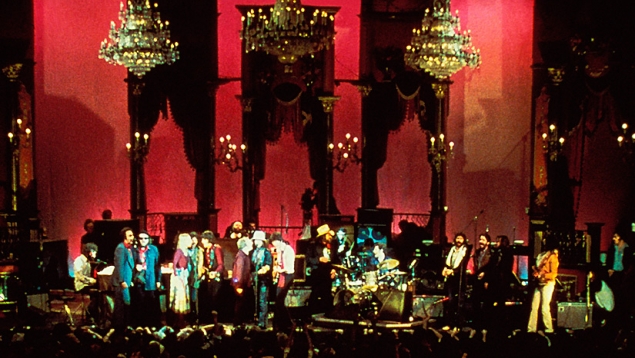
The Band on Thanksgiving in 1976 at Winterland. The film starts off with THIS FILM MUST BE PLAYED LOUD! A cut to Rick Danko playing pool and then it then to the Band playing “Don’t Do It”…the last song they performed that night after hours of playing. Through the music and some interviews, their musical journey and influences are retraced.
This film is considered by many the best concert film ever made. It was directed by Martin Scorsese. I love the setting with the chandeliers that were from the movie Gone With The Wind. The quality of the picture is great because it was shot with a 35-millimeter camera which wasn’t normally done with concerts.
Before the Band and guests hit the stage, Bill Graham, the promoter, served a Thanksgiving dinner to 5000 people that made up the audience with long tables with white tablecloths.
The Band’s musical guests included
Ronnie Hawkins, Bob Dylan, Neil Young, Dr. John, Paul Butterfield, Van Morrison (my favorite performance), Joni Mitchell, Eric Clapton and Muddy Waters
The Staple Singers and Emmylou Harris also appear but their segments were taped later on a sound stage and not at the concert.
Robbie wanted off the road earlier and that is what the Last Waltz was all about…the last concert by The Band with a lot of musical friends. He was tired of touring and also the habits the band was picking up… drugs and drinking. Richard Manuel, in particular, was in bad shape and needed time.
The rest of the Band supposedly agreed but a few years later all of them but Robbie started to tour as The Band again. Richard Manuel ended up hanging himself in 1986. Rick Danko passed away in 1999 at the end of a tour of a heart attack attributed to years of drug and alcohol abuse. Levon Helm died of cancer in 2012.
The Band sounded great that night and it might be the best version you will ever hear of The Night They Drove Old Dixie Down.
The Last Waltz is a grand farewell to a great band and a film that I revisit at least twice a year… once always around Thanksgiving.
The complete concert is at the bottom…without cuts.
Hello everyone and those of you who celebrate Thanksgiving… I hope you have a great one with your friends and family! Those of you who don’t…have a great day and weekend coming up. I know Thanksgiving is an American holiday mostly but I have talked to a few who celebrate it from other countries…like Bruce my friend from New Zealand.
Every Thanksgiving I listen to Alice’s Restaurant and this is the fifth year in a row that I’ve posted it on the 4th Thursday of November. Sorry if you are tired of it but it’s not Thanksgiving until Alice’s Restaurant is played…and the Last Waltz is also watched but that is a different story.
The movie that Arlo movie made called Alice’s Restaurant is fun to watch.
It’s not Thanksgiving without listening to this 1967 song. This song did not chart but he did have another version that did chart…it was called Alice’s Rock and Roll Restaurant that peaked at #97 in the Billboard 100.
Many radio stations play this on Thanksgiving. This is usually the only time they play it, since the song is over 18 minutes long.
There have been mixed reviews about the movie that was made…I’ve always found it enjoyable. It’s not going to be confused with Gone With The Wind but it’s a fun period movie.
In 1991, Arlo bought the church where this took place and set up “The Guthrie Center,” where he runs programs for kids who have been abused.
From Songfacts
Running 18 minutes and 34 seconds, this song is based on a true story that happened on Thanksgiving Day, 1965. Arlo was 18, and along with his friend Rick Robbins, drove to Stockbridge, Massachusetts to have Thanksgiving dinner with Alice and Ray Brock. Alice and Ray lived in a church – the former Trinity Church on Division Street in Stockbridge – and were used to inviting people into their home. Arlo and Rick had been traveling together, Arlo working his way up in folk singing and Rick tagging along. A number of people, Arlo and Rick included, were considered members of the family, so they were not guests in the usual sense.
When Ray woke up the next morning, he said to them, “Let’s clean up the church and get all this crap out of here, for God’s sake. This place is a mess,” and Rick said, “Sure.” Arlo and Rick swept up and loaded all the crap into a VW microbus and went out to the dump, which was closed. They started driving around until Arlo remembered a side road in Stockbridge up on Prospect Hill by the Indian Hill Music Camp which he attended one summer, so they drove up there and dumped the garbage.A little later, the phone rang, and it was Stockbridge police chief William J. Obanhein. “I found an envelope with the name Brock on it,” Chief Obanhein said. The truth came out, and soon the boys found themselves in Obanhein’s police car. They went up to Prospect Hill, and Obie took some pictures. On the back, he marked them, “PROSPECT HILL RUBBISH DUMPING FILE UNDER GUTHRIE AND ROBBINS 11/26/65.” He took the kids to jail.The kids went in, pleaded, “Guilty, Your Honor,” was fined $25 each and ordered to retrieve the rubbish. Then they all went back to the church and started to write “Alice’s Restaurant” together. “We were sitting around after dinner and wrote half the song,” Alice recalls, “and the other half, the draft part, Arlo wrote.”
Guthrie, the son of legendary folk singer Woody Guthrie, greatly exaggerated the part about getting arrested for comic effect. In the song, he is taken away in handcuffs and put in a cell with hardened criminals.
In the song, Guthrie avoids the draft and did not have to serve in Vietnam because of his littering arrest. In reality, he was eligible but wasn’t drafted because his number didn’t come up.
Guthrie performed this song for the first time on July 16, 1967, at the Newport Folk Festival.
This reflected the attitude of many young people in America at the time. It was considered an antiwar song, but unlike most protest songs, it used humor to speak out against authority.
After a while, Guthrie stopped playing this at concerts, claiming he forgot the words. As the song approached its 30th anniversary, he started playing it again.
Guthrie made a movie of the same name in 1969 which was based on the song.
Over the years, Guthrie added different words to the song. He recorded a new, longer version in 1995 at The Guthrie Center
Alice’s Restuarant
This song is called Alice’s Restaurant, and it’s about Alice, and the
Restaurant, but Alice’s Restaurant is not the name of the restaurant,
That’s just the name of the song, and that’s why I called the song Alice’s
Restaurant.
You can get anything you want at Alice’s Restaurant
You can get anything you want at Alice’s Restaurant
Walk right in it’s around the back
Just a half a mile from the railroad track
You can get anything you want at Alice’s Restaurant
Now it all started two Thanksgivings ago, was on – two years ago on
Thanksgiving, when my friend and I went up to visit Alice at the
Restaurant, but Alice doesn’t live in the restaurant, she lives in the
Church nearby the restaurant, in the bell-tower, with her husband Ray and
Fasha the dog. And livin’ in the bell tower like that, they got a lot of
Room downstairs where the pews used to be in. Havin’ all that room,
Seein’ as how they took out all the pews, they decided that they didn’t
Have to take out their garbage for a long time.
We got up there, we found all the garbage in there, and we decided it’d be
A friendly gesture for us to take the garbage down to the city dump. So
We took the half a ton of garbage, put it in the back of a red vw
Microbus, took shovels and rakes and implements of destruction and headed
On toward the city dump.
Well we got there and there was a big sign and a chain across across the
Dump saying, “Closed on Thanksgiving.” And we had never heard of a dump
Closed on Thanksgiving before, and with tears in our eyes we drove off
Into the sunset looking for another place to put the garbage.
We didn’t find one. Until we came to a side road, and off the side of the
Side road there was another fifteen foot cliff and at the bottom of the
Cliff there was another pile of garbage. And we decided that one big pile
Is better than two little piles, and rather than bring that one up we
Decided to throw our’s down.
That’s what we did, and drove back to the church, had a thanksgiving
Dinner that couldn’t be beat, went to sleep and didn’t get up until the
Next morning, when we got a phone call from officer Obie. He said, “Kid,
We found your name on an envelope at the bottom of a half a ton of
Garbage, and just wanted to know if you had any information about it. ” And
I said, “Yes, sir, Officer Obie, I cannot tell a lie, I put that envelope
Under that garbage. ”
After speaking to Obie for about forty-five minutes on the telephone we
Finally arrived at the truth of the matter and said that we had to go down
And pick up the garbage, and also had to go down and speak to him at the
Police officer’s station. So we got in the red vw microbus with the
Shovels and rakes and implements of destruction and headed on toward the
Police officer’s station.
Now friends, there was only one or two things that Obie coulda done at
The police station, and the first was he could have given us a medal for
Being so brave and honest on the telephone, which wasn’t very likely, and
We didn’t expect it, and the other thing was he could have bawled us out
And told us never to be seen driving garbage around the vicinity again,
Which is what we expected, but when we got to the police officer’s station
There was a third possibility that we hadn’t even counted upon, and we was
Both immediately arrested. Handcuffed. And I said “Obie, I don’t think I
Can pick up the garbage with these handcuffs on. ” He said, “Shut up, kid.
Get in the back of the patrol car. ”
And that’s what we did, sat in the back of the patrol car and drove to the
Quote Scene of the Crime unquote. I want tell you about the town of
Stockbridge, Massachusets, where this happened here, they got three stop
Signs, two police officers, and one police car, but when we got to the
Scene of the Crime there was five police officers and three police cars,
Being the biggest crime of the last fifty years, and everybody wanted to
Get in the newspaper story about it. And they was using up all kinds of
Cop equipment that they had hanging around the police officer’s station.
They was taking plaster tire tracks, foot prints, dog smelling prints, and
They took twenty seven eight-by-ten colour glossy photographs with circles
And arrows and a paragraph on the back of each one explaining what each
One was to be used as evidence against us. Took pictures of the approach,
The getaway, the northwest corner the southwest corner and that’s not to
Mention the aerial photography.
After the ordeal, we went back to the jail. Obie said he was going to put
Us in the cell. Said, “Kid, I’m going to put you in the cell, I want your
Wallet and your belt. ” And I said, “Obie, I can understand you wanting my
Wallet so I don’t have any money to spend in the cell, but what do you
Want my belt for? ” And he said, “Kid, we don’t want any hangings. ” I
Said, “Obie, did you think I was going to hang myself for littering?”
Obie said he was making sure, and friends Obie was, cause he took out the
Toilet seat so I couldn’t hit myself over the head and drown, and he took
Out the toilet paper so I couldn’t bend the bars roll out the – roll the
Toilet paper out the window, slide down the roll and have an escape. Obie
Was making sure, and it was about four or five hours later that Alice
(remember Alice? It’s a song about Alice), Alice came by and with a few
Nasty words to Obie on the side, bailed us out of jail, and we went back
To the church, had a another thanksgiving dinner that couldn’t be beat,
And didn’t get up until the next morning, when we all had to go to court.
We walked in, sat down, Obie came in with the twenty seven eight-by-ten
Colour glossy pictures with circles and arrows and a paragraph on the back
Of each one, sat down. Man came in said, “All rise.” We all stood up,
And Obie stood up with the twenty seven eight-by-ten colour glossy
Pictures, and the judge walked in sat down with a seeing eye dog, and he
Sat down, we sat down. Obie looked at the seeing eye dog, and then at the
Twenty seven eight-by-ten colour glossy pictures with circles and arrows
And a paragraph on the back of each one, and looked at the seeing eye dog.
And then at twenty seven eight-by-ten colour glossy pictures with circles
And arrows and a paragraph on the back of each one and began to cry,
’cause Obie came to the realization that it was a typical case of American
Blind justice, and there wasn’t nothing he could do about it, and the
Judge wasn’t going to look at the twenty seven eight-by-ten colour glossy
Pictures with the circles and arrows and a paragraph on the back of each
One explaining what each one was to be used as evidence against us. And
We was fined $50 and had to pick up the garbage in the snow, but that’s not
What I came to tell you about.
Came to talk about the draft.
They got a building down New York City, it’s called Whitehall Street,
Where you walk in, you get injected, inspected, detected, infected,
Neglected and selected. I went down to get my physical examination one
Day, and I walked in, I sat down, got good and drunk the night before, so
I looked and felt my best when I went in that morning. ‘Cause I wanted to
Look like the all-American kid from New York City, man I wanted, I wanted
To feel like the all-, I wanted to be the all American kid from New York,
And I walked in, sat down, I was hung down, brung down, hung up, and all
Kinds o’ mean nasty ugly things. And I waked in and sat down and they gave
Me a piece of paper, said, “Kid, see the phsychiatrist, room 604.”
And I went up there, I said, “Shrink, I want to kill. I mean, I wanna, I
Wanna kill. Kill. I wanna, I wanna see, I wanna see blood and gore and
Guts and veins in my teeth. Eat dead burnt bodies. I mean kill, Kill,
Kill, kill. ” And I started jumping up and down yelling, “kill, kill, ” and
He started jumping up and down with me and we was both jumping up and down
Yelling, “KILL, KILL.” And the Sargent came over, pinned a medal on me,
Sent me down the hall, said, “You’re our boy.”
Didn’t feel too good about it.
Proceeded on down the hall gettin more injections, inspections,
Detections, neglections and all kinds of stuff that they was doin’ to me
At the thing there, and I was there for two hours, three hours, four
Hours, I was there for a long time going through all kinds of mean nasty
Ugly things and I was just having a tough time there, and they was
Inspecting, injecting every single part of me, and they was leaving no
Part untouched. Proceeded through, and when I finally came to the see the
Last man, I walked in, walked in sat down after a whole big thing there,
And I walked up and said, “What do you want?” He said, “Kid, we only got
One question. Have you ever been arrested? ”
And I proceeded to tell him the story of the Alice’s Restaurant Massacre,
With full orchestration and five part harmony and stuff like that and all
The phenome… – and he stopped me right there and said, “Kid, did you ever
Go to court? ”
And I proceeded to tell him the story of the twenty seven eight-by-ten
Colour glossy pictures with the circles and arrows and the paragraph on
The back of each one, and he stopped me right there and said, “Kid, I want
You to go and sit down on that bench that says Group W…. Now kid!! ”
And I, I walked over to the, to the bench there, and there is, Group W’s
Where they put you if you may not be moral enough to join the army after
Committing your special crime, and there was all kinds of mean nasty ugly
Looking people on the bench there. Mother rapers. Father stabbers. Father
Rapers! Father rapers sitting right there on the bench next to me! And
They was mean and nasty and ugly and horrible crime-type guys sitting on the
Bench next to me. And the meanest, ugliest, nastiest one, the meanest
Father raper of them all, was coming over to me and he was mean ‘n’ ugly
‘n’ nasty ‘n’ horrible and all kind of things and he sat down next to me
And said, “Kid, whad’ya get?” I said, “I didn’t get nothing, I had to pay
$50 and pick up the garbage. ” He said, “What were you arrested for, kid? ”
And I said, “Littering.” And they all moved away from me on the bench
There, and the hairy eyeball and all kinds of mean nasty things, till I
Said, “And creating a nuisance.” And they all came back, shook my hand,
And we had a great time on the bench, talkin about crime, mother stabbing,
Father raping, all kinds of groovy things that we was talking about on the
Bench. And everything was fine, we was smoking cigarettes and all kinds of
Things, until the Sargeant came over, had some paper in his hand, held it
Up and said.
“Kids, this-piece-of-paper’s-got-47-words-37-sentences-58-words-we-wanna-
Know-details-of-the-crime-time-of-the-crime-and-any-other-kind-of-thing-
You-gotta-say-pertaining-to-and-about-the-crime-I-want-to-know-arresting-
Officer’s-name-and-any-other-kind-of-thing-you-gotta-say”, and talked for
Forty-five minutes and nobody understood a word that he said, but we had
Fun filling out the forms and playing with the pencils on the bench there,
And I filled out the massacre with the four part harmony and wrote it
Down there, just like it was, and everything was fine and I put down the
Pencil and I turned over the piece of paper, and there, there on the
Other side, in the middle of the other side, away from everything else on
The other side, in parentheses, capital letters, quotated, read the
Following words:
(“KID, HAVE YOU REHABILITATED YOURSELF?”)
I went over to the Sargent, said, “Sargeant, you got a lot a damn gall to
Ask me if I’ve rehabilitated myself, I mean, I mean, I mean that just, I’m
Sittin’ here on the bench, I mean I’m sitting here on the Group W bench
’cause you want to know if I’m moral enough join the army, burn women,
Kids, houses and villages after bein’ a litterbug. ” He looked at me and
Said, “Kid, we don’t like your kind, and we’re gonna send you fingerprints
Off to Washington. ”
And friends, somewhere in Washington enshrined in some little folder, is a
study in black and white of my fingerprints. And the only reason I’m
singing you this song now is cause you may know somebody in a similar
situation, or you may be in a similar situation, and if your in a
situation like that there’s only one thing you can do and that’s walk into
The shrink wherever you are, just walk in say “Shrink, You can get
Anything you want, at Alice’s restaurant. “. And walk out. You know, if
One person, just one person does it they may think he’s really sick and
They won’t take him. And if two people, two people do it, in harmony,
They may think they’re both faggots and they won’t take either of them.
And three people do it, three, can you imagine, three people walking in
Singin a bar of Alice’s Restaurant and walking out. They may think it’s an
Organization. And can you, can you imagine fifty people a day, I said
Fifty people a day walking in singing a bar of Alice’s Restaurant and
Walking out. And friends they may think it’s a movement.
And that’s what it is, the Alice’s Restaurant Anti-Massacre Movement, and
All you got to do to join is sing it the next time it comes around on the
Guitar.
With feeling. So we’ll wait for it to come around on the guitar, here and
Sing it when it does. Here it comes.
You can get anything you want, at Alice’s Restaurant
You can get anything you want, at Alice’s Restaurant
Walk right in it’s around the back
Just a half a mile from the railroad track
You can get anything you want, at Alice’s Restaurant
That was horrible. If you want to end war and stuff you got to sing loud.
I’ve been singing this song now for twenty-five minutes. I could sing it
For another twenty-five minutes. I’m not proud… Or tired.
So we’ll wait till it comes around again, and this time with four part
Harmony and feeling.
We’re just waitin’ for it to come around is what we’re doing.
All right now.
You can get anything you want, at Alice’s Restaurant
Excepting Alice
You can get anything you want, at Alice’s Restaurant
Walk right in it’s around the back
Just a half a mile from the railroad track
You can get anything you want, at Alice’s Restaurant
I will be reposting some of my Thanksgiving Posts along with some music until Thanksgiving. I’m so ready for Thanksgiving this year…we will be going over to a relative of mine and I get to see some family members I don’t get to see during the year.
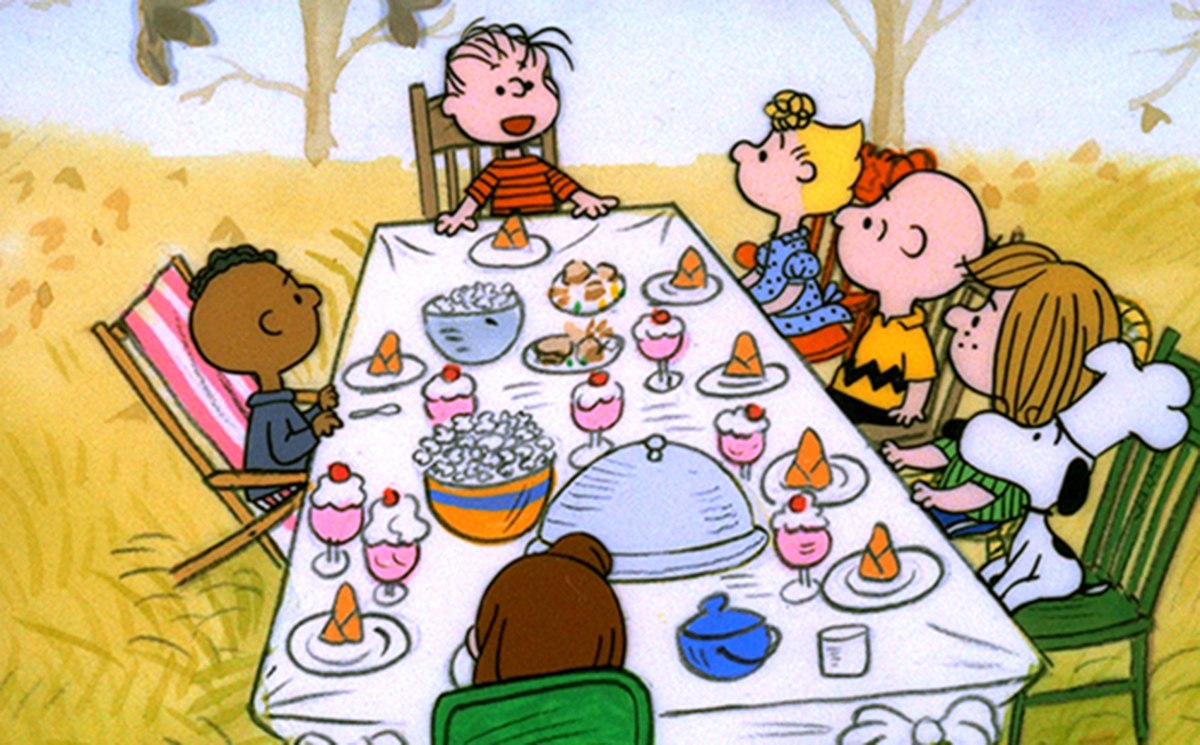
Happy Thanksgiving to everyone…we are only two days away for those who celebrate it. This special first premiered on November 20, 1973, on CBS and won an Emmy Award. Great Thanksgiving special as always with the earlier Peanuts.
The Halloween, Thanksgiving, and Christmas Peanuts specials I always looked forward to. The way their world was only for kids where grownups were heard but only as noise in the background. It starts off with Lucy tempting Charlie Brown with that football. Just one time I want to see Charlie kick the football…or Lucy.
It’s Thanksgiving and Peppermint Patty invites herself and Marcie over to Charlie Brown’s house but Charlie and Sally are ready to go to their grandmothers. Charlie talks to Linus and he suggests having two Thanksgiving dinners.
The only thing Charlie can come up with is feeding his friends toast and cold cereal which does not make Peppermint Patty happy whatsoever. She lets Charlie have it really bad until Marcie reminds her that she invited herself over.
Not going to give it away for those who have not seen this wonderful holiday cartoon. The music by Vince Guaraldi is excellent and makes every Peanuts cartoon special.
Louie Louie, Johnny B. Goode, and Wild Thing belong in a list that are staples for any garage band. Wipe Out belongs with them and your 15-year-old nervous singer doesn’t need to sing. It’s a song that everyone has heard and always was a popular one to play live. I also love that manic laughter intro.
The Surfaris were a surf rock band formed in 1962 in Southern California. That was absolutely the perfect time and place for a surf band. This song was not intended to be an A-side. They were recording a song called Surfer Joe and decided they needed to write something for the B side. Ron Wilson’s drumming is often hailed as one of rock’s most famous. It’s one that beginner drummers can actually do with a little work.
The song was written by band members Bob Berryhill, Pat Connolly, Jim Fuller, and Ron Wilson. It was released in 1963 and did very well for a song meant to be a B-side. It peaked at #2 on the Billboard 100, #5 in Canada, and #5 in the UK in 1963.
It’s been covered by 106 different artists per secondhandsongs. One cover was by The Fat Boys featuring The Beach Boys in 1987 and it peaked at #2 in the UK, #2 in New Zealand, and #12 on the Billboard 100 and Canada.
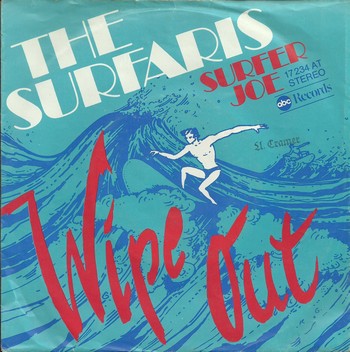
Here is the single…Surfer Joe and the B side…Wipe Out.
Thank you run-sew-read for making a comment and including this song. I have had this one in the draft section for a year. I started to really pay attention to Carter in the late 80s and early 90s.
I first heard her album C’est C Bon and it was alright but it had a pure 80s pop sound. By the time the ’90s came around, I could hear a change and I liked it. I heard a little more of her country roots plus a bit of pop in the best way possible.
Carlene Carter was the daughter of June Carter Cash and her first husband Carl Smith. She later married Nick Lowe. She grew up as part of the Carter Family legacy which strongly influenced her musical style, blending traditional country with contemporary pop.
Every Little Thing was released in 1993 as the lead single from Carlene Carter’s album Little Love Letters. It was produced by Howie Epstein and released by Giant Records. The song peaked at #3 on the Billboard US Hot Country Songs and #3 on the Canada Country Charts.
The song was on her Little Love Letters album released in 1993. It peaked at #35 on the Billboard Country Charts and #2 on the Canadian Country Charts.
Every Little Thing
I hear songs on the radio They might be fast or they might be slow But every song they play’s got me thinkin’ ’bout you I see a fella walkin’ down the street He looks at me and he smiles real sweet But he don’t matter to me ‘Cause I’m thinkin’ ’bout you
Every little dream I dream about you Every little thought I think about you Drives me crazy when you go away I oughta keep you locked up at home And like a wild horse I want to break you I love you so much I hate you Every little thing reminds me of you Honey when you leave me here all alone
My tongue gets tied when I try to talk My knees get weak when I start to walk So I might as well stay home and keep thinkin’ ’bout you “the young and the restless” on my tv set That’s just like us when we first met And when they start to kissin’ Got me thinking bout you
Every little dream I dream about you Every little thought I think about you Drives me crazy when you go away I oughta keep you locked up at home And like a wild horse I want to break you I love you so much I hate you Every little thing reminds me of you Honey when you leave me here all alone
Every little dream I dream about you Every little thought I think about you Drives me crazy when you go away I oughta keep you locked up at home And like a wild horse I want to break you I love you so much I hate you Every little thing reminds me of you Honey when you leave me here all alone
I know much more about The Replacements than Paul’s solo career but I’ve been listening and I’ve liked what I’ve heard. This song has catchy guitar riffs running through it and is accessible. It’s a good one to introduce him solo on here. During the 1980s Westerberg’s songwriting was second to none. I’m finding a lot of his solo work the same.
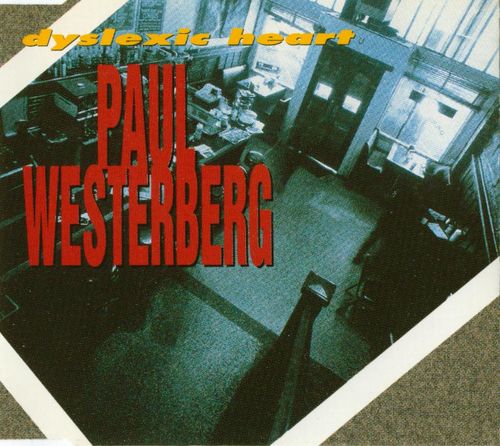
This song was used in the 1992 movie Singles and appears on the soundtrack along with tracks by Jimi Hendrix, Pearl Jam, Alice in Chains, Chris Cornell, The Smashing Pumpkins, Soundgarden, and more. Another Westerberg song, Waiting For Somebody, is also on it. The album peaked at #6 on the Billboard Album Charts. Dyslexic Heart peaked at #4 on the Billboard Alternative Charts. The album helped open up grunge to the mainstream.
Cameron Crowe (a huge Replacements fan) had asked Westerberg to contribute a couple of songs to the soundtrack. He made this song right after the Replacements disbanded. The following year, he would release his first solo album called 14 Songs.
The Replacements started out as a punk band. They eventually switched over to a more rock approach with rock songs and ballads. Westerberg remained a true punk in spirit with his irrelevant attitude.
The Singles soundtrack played a key role in popularizing grunge, and some even referred to Paul Westerberg as the “Godfather of Grunge.” Westerberg responded to this label with humor and humility:
“I don’t know… I guess I wore a plaid shirt, and yes, I played real loud, but… what is grunge? I don’t know. I don’t hear a lot of melody in what they’re doing on the West Coast. Nirvana, I suppose, has some hooks, I can see that, but a lot of it sounds to me like Boston with a hair up its ass. The Ramones probably have more to do with it than we did. Play Ramones records on 16 and you’ve got grunge!”
That response is one of the reasons I’m such a fan of him.
Here is a fuzzy video of him live in 1993.
Dyslexic Heart
You shoot me glances and they’re so hard to read
I misconstrue what you mean
Slip me a napkin and now that’s a start
Is this your name or a doctor’s eye chart?
I try and comprehend you but I got a dyslexic heart
I ain’t dying to offend you, I got a dyslexic heart
Thanks for the book, now my table is ready
Is this a library or bar?
Between the covers I thought you were ready
A half-angel, half-tart
I try and comprehend you but I got a dyslexic heart
I ain’t dying to offend you, I got a dyslexic heart
Do I read you correctly, you need me directly
Help me with this part
Do I date you? Do I hate you?
Do I got a dyslexic heart?
You keep swayin’, what are you sayin’?
Thinking ’bout stayin’?
Or are you just playing, making passes?
Well, my heart could use some glasses
Are you stayin’?
What are you sayin’?
Well are you swayin’?
Are you just playing, making passes?
Well, my heart could use some glasses
I try and comprehend you, I got a dyslexic heart
Do I read you correctly, I need you directly
Help me with this part
Do I love you? Do I hate you?
I got a dyslexic heart?
I first heard Del Amitri in the 90s. I remember hanging out in West End of Nashville at that time. It’s near Vanderbilt University and was a really hip place to be. I was looking for some Roger McGuinn glasses. Those small rectangle glasses that were very popular in the ’60s. I searched shop after shop and could not find them. I finally found them around closing time. Anyway…boy that was a long story but I remember that is when I heard Del Amitri for the first time…hey it stuck with me!
Some songs I hear and I think…I wish so much I would have written this song. This is one of those songs because it’s catchy without being too sweet. Not a profound lyric (teenage angst) in this one but clever and it’s the overall sound…right up my cobbled power pop alley. The crunchy and jangly guitars mesh with each other. This wasn’t as big as their other song Roll To Me but I always favored this one by a long shot.
I would have never guessed this wasn’t an American band. They formed in Glasgow, Scotland in 1980. The band was larger in the UK than here. This song is from the album Some Other Sucker’s Parade which peaked at #6 in the UK and #160 on the Billboard 100 in 1997. This song was played on our main rock station and got quite a bit of alternative play…if it came out today I would buy it.
The band was started by Justin Currie (vocals, bass) and a group of schoolmates. Currie became the constant band member over time. When they started they were influenced by Joy Division and The Cure. They switched to power pop and released their self-titled debut album in 1985. Waking Hours (1989) was their commercial breakthrough, featuring the hit single “Nothing Ever Happens”, which became a chart success and fan favorite. They have had 5 top-ten albums in the UK. They also had an astounding 15 top 40 hits in the UK. A shout out to CB who sent me a few of their songs and I’ve been happily getting reacquainted with this band.
It’s funny how some bands can get back on your radar. The Replacements are one of those bands that I rediscovered because of blogs. When I hear Del Amitri I think of a modern Badfinger because of the crunch and jangle of the guitar that feeds my inner power pop soul.
They took a break in 2002 but reunited in 2014 for a series of live shows. They continued to tour periodically in the following years. In 2021, they released Fatal Mistakes, their first studio album in nearly two decades, which was well-received by critics and fans alike.
Justin Currie: We’ve never pretended we didn’t want to be in the mainstream. I don’t mean in terms of sales, but in terms of everybody should be able to get our music. To me, that’s one of the functions of pop music. You bring everybody together in a room to sing along to a catchy tune.
Rhythm Guitar player Iain Harvie: “Probably about 80 per cent of the songs on this record don’t have overdubs, apart from the vocals obviously, with all the harmonies, and maybe the guitar solo if there was a really dreadful mistake in the middle that we just couldn’t live with. Wherever possible, we recorded with our live format of bass, drums, two guitars and keyboards for most of the songs.”
Not Where I’m At
With some girls it don’t matter who you hang with With some girls it don’t matter how you talk And some girls they are easy to be yourself with But the one girl that I want Ain’t easy to please with what I’ve got
With some girls it don’t matter where you’re aiming With some girls it don’t matter how you act And some girls they don’t care what car you came in But the one girl that I want She wants that one bit of geography I lack
Yeah, she don’t want me ‘Cause I’m not where it’s at Yeah I’m not where it’s at
And some girls they will worry about reactions And some girls they don’t give a damn for that But somehow I ain’t ever in on the action ‘Cause the one girl that I want She wants that one little quality I lack
Yeah she don’t want me ‘Cause I’m not where it’s at Yeah I’m not where it’s at
I don’t have my finger on the pulse of my generation I just got my hand on my heart I know no better location
Yeah she don’t want me ‘Cause I’m not where it’s I’m not where it’s I’m not where it’s at Yeah I’m not where it’s at







 After the failure of their first album, singer/songwriter guitar player Chris Bell quit Big Star. Alex Chilton didn’t know if Big Star was going to make another album. He continued making demos because he could always do a solo album. The two other members, drummer Jody Stephens and bass player Andy Hummel weren’t sure either what was going to happen. They had talked about ending the band.