***I have posted my 10 favorite covers of Beatle songs at Keith’s site nostaligicitalian ***
This takes me back to riding with my dad and him wearing a Merle Haggard 8-Track out completely. I knew so many of Merle’s songs before I was 6. One big regret I have is that I never saw Merle Haggard live. Haggard would be legally pardoned for his past crimes by California’s Governor Ronald Reagan in 1971.
This song peaked at #1 in the US Hot 100 Billboard Country Charts in 1967.
Merle Haggard went to jail for robbery in 1957, and was released in 1960. This song is about how he felt that no matter what he did, who would always be known for his time spent in jail “branded” as an inmate.
He was serving his time at San Quentin prison when Johnny Cash performed there. That event changed his life.
Future Eric Clapton drummer Jim Gordon played on this song.
Branded Man
I’d like to hold my head up and be proud of who I am But they won’t let my secret go untold I paid the debt I owed them, but they’re still not satisfied Now I’m a branded man out in the cold
When they let me out of prison, I held my head up high Determined I would rise above the shame But no matter where I’m living, the black mark follows me I’m branded with a number on my name
I’d like to hold my head up and be proud of who I am But they won’t let my secret go untold I paid the debt I owed them, but they’re still not satisfied Now I’m a branded man out in the cold
If I live to be a hundred, I guess I’ll never clear my name ‘Cause everybody knows I’ve been in jai No matter where I’m living, I’ve got to tell them where I’ve been Or they’ll send me back to prison if I fail
I’d like to hold my head up and be proud of who I am But they won’t let my secret go untold I paid the debt I owed them, but they’re still not satisfied Now I’m a branded man out in the cold
***I have posted my 10 favorite covers of Beatle songs at Keith’s site nostaligicitalian ***
This song was off of the 1983 album Hootenanny. This was their third release and second album. The album was all over the place style wise but it works.
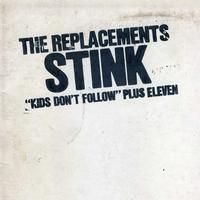
For the album cover they found a 1963 Crestview Records folk sample album and changed the type.
The original The Replacements Hootenanny
What first caught my ear was the unorthodox solo that Bob Stinson played. You can hear the feedback from the guitar before he starts it.
The band never sold many records but they influenced many musicians and as it turns out movie makers.
Daniel Waters wrote the black comedy “Heathers” movie in 1989. He was such a fan of their music that Waters peppered his script with Replacements references…from the school being Westerburg High (the spelling of Paul’s surname was changed at the urging of a film exec who felt that the name Westerberg seemed “a little too Jewish” for a Midwestern high school) to male lead J.D. (Christian Slater) and one of the Heathers saying, “Color me impressed.”
He also wanted to use a Replacements song in the credits but there was no money to buy the rights.
Paul Westerberg about Hootenanny: “You could hear me more or less trying to find my voice, or trying to find out where I fit in…a way of trying to fuse what I had been listening to growing up into what was happening at the time.”
Color Me Impressed
Everybody at your party They all look depressed Everybody dressin’ funny Color me impressed
Stayin’ out late tonight Won’t be gettin’ any sleep Givin’ out their word Because that’s all that they won’t keep
Put the party on the mirror Oh shit, pass the bill to Chris Intoxicated lover ending our french kiss
Can you stand me on my feet? Can you stand me on my feet?
(Everybody)
Everybody at your party They don’t look depressed And everybody’s dressin’ funny Color me impressed
Color me impressed Color me impressed Color me impressed Color me impressed I call it out
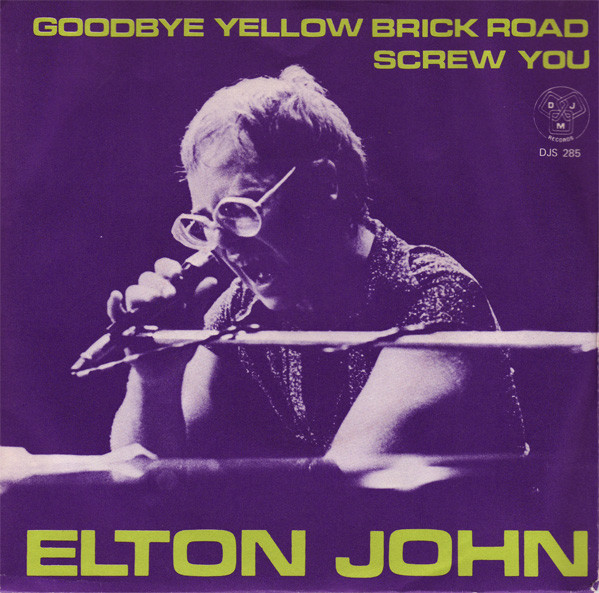
One of the songs that reminds me of childhood. This was Elton in his most fertile period of the seventies. Elton and Bernie had the Midas touch with songs.
Elton and his songwriting partner Bernie Taupin went to Jamaica to record the album, but the studio wasn’t up to standard, so the project was abandoned there with only a rough version of “Saturday Night’s Alright (For Fighting)” actually being recorded. “Goodbye Yellow Brick Road” and the rest of the album were recorded in France at Strawberry Studios (The Chateau d’Hierouville).
The song peaked at #2 in the Billboard 100, #1 in Canada, #6 in the UK, and #2 in New Zealand in 1973-74. This made the third Elton single to make number 1 in Canada in 1973.
The song’s B side was originally titled “Screw You”, although the US release re-titled the song “Young Man’s Blues” so that it would not offend American record buyers.
Bernie Taupin: “It’s funny, but there are songs that I recall writing as if it was yesterday. And then there are those I have absolutely no recollection of, whatsoever. In fact, I’d have to say that for the most part, if someone was to say that the entire Yellow Brick Road album was actually written by someone else, I might be inclined to believe them. I remember being there, just not physically creating.
There was a period when I was going through that whole ‘got to get back to my roots’ thing, which spawned a lot of like-minded songs in the early days, this being one of them. I don’t believe I was ever turning my back on success or saying I didn’t want it. I just don’t believe I was ever that naïve. I think I was just hoping that maybe there was a happy medium way to exist successfully in a more tranquil setting. My only naiveté, I guess, was believing I could do it so early on. I had to travel a long road and visit the school of hard knocks before I could come even close to achieving that goal. So, thank God I can say quite categorically that I am home.”
From Songfacts
The Yellow Brick Road is an image taken from the movie The Wizard of Oz. In the movie, Dorothy and her friends follow the yellow brick road in search of the magical Wizard of Oz, only to find they had what they were looking for all along. It was rumored that the song was about Judy Garland, who starred in the film.
Bernie Taupin wrote the lyrics to this and most of Elton’s other songs. He often seems to write about Elton, but this one appears to be about himself. The lyrics are about giving up a life of opulence for one of simplicity in a rural setting. Elton has enjoyed a very extravagant lifestyle, while Taupin prefers to keep it low key.
Bernie’s canine imagery, including the part about sniffing around on the ground, is a sly poke at Linda’s two little dogs. Linda was a girlfriend of Elton John’s.
In 2008, Ben & Jerry’s created a flavor of ice cream in honor of Elton John called “Goodbye Yellow Brickle Road.” Made of chocolate ice cream, peanut butter cookie dough, butter brickle and white chocolate chunks, it was made to commemorate Elton’s first concert in Vermont (home of the ice cream makers) on July 21, 2008 at the Essex Junction fairgrounds. Elton had played every other state before his Vermont show. He had some of the ice cream before the show.
Ben Folds told Rolling Stone magazine for their 100 Greatest Singers Of All Time issue: “He was mixing his falsetto and his chest voice to really fantastic effect in the ’70s. There’s that point in ‘Goodbye Yellow Brick Road,’ where he sings, ‘on the grooound’ – his voice is all over the shop. It’s like jumping off a diving board when he did that.”
American rock group Queens Of The Stone Age covered the song for the 2018 Elton John tribute album Revamp. Their version was produced by Mark Ronson and features backing vocals with Jake Shears of The Scissor Sisters.
“It’s nice to pick something that may seem off kilter at first for us to do. But ‘Goodbye Yellow Brick Road’ really has the psychedelic carousel nature to it,” said QOTSA’s Josh Homme. “I think at first we thought we will tinker with the arrangement, but there’s so many beautiful chords- the chord progression is so wonderful- once you step on that carousel, it’s just this beautiful musical swirl and it’s really intoxicating to be on that carousel. And it seemed like there’s a psychedelic element that we could bring out, that it’s touching on, and that maybe the key for us to do it would be to accentuate the wispiness that is going on in the song.”
Goodbye Yellow Brick Road
When are you gonna come down? When are you going to land? I should have stayed on the farm I should have listened to my old man
You know you can’t hold me forever I didn’t sign up with you I’m not a present for your friends to open This boy’s too young to be singing, the blues
So goodbye yellow brick road Where the dogs of society howl You can’t plant me in your penthouse I’m going back to my plough
Back to the howling old owl in the woods Hunting the horny back toad Oh I’ve finally decided my future lies Beyond the yellow brick road
What do you think you’ll do then? I bet that’ll shoot down your plane It’ll take you a couple of vodka and tonics To set you on your feet again
Maybe you’ll get a replacement There’s plenty like me to be found Mongrels who ain’t got a penny Sniffing for tidbits like you on the ground
So goodbye yellow brick road Where the dogs of society howl You can’t plant me in your penthouse I’m going back to my plough
Back to the howling old owl in the woods Hunting the horny back toad Oh I’ve finally decided my future lies Beyond the yellow brick road
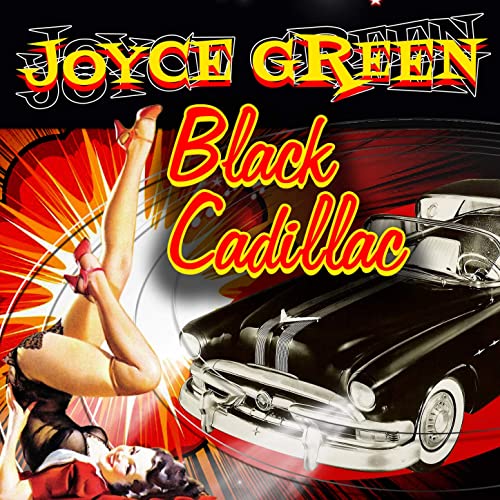
I caught you cheatin’ and runnin’ round And now I’m gonna put you in a hole in the ground I’m gonna ride to your funeral Daddy, in a black Cadillac….Joyce Green 1959
Joyce was only 19 and she didn’t play around in this song. How great are those lyrics? She not only sings this song…she owns it and you don’t want on Joyce’s bad side. Her voice is electric. It’s a downright shame she didn’t do much more. The quality is great.
When I heard this I thought I died and went to rockabilly heaven. A man named Tommy Holder is playing guitar and does he ever. This wasn’t a hit but it’s a treasure to find. Joyce embarked on a promotional tour with Carl Perkins to support the record. The record was never a hit and Joyce did not record again until the 1970s. These later recordings were lost in a fire… and that is sad.
The song was a reworking of an old blues number by Buddy Moss, with Moss’s V8 Ford replaced by a flashy Cadillac.
In 1959, Joyce wrote the song Black Cadillac with her sister Doris. She played the song for Arlen Vaden who arranged a recording session for her at KLCN in Blytheville, Arkansas. Joyce sang and played rhythm guitar on the record which included the song Tomorrow on the A-side and Black Cadillac on the B-side. I can’t believe this was a B side. This was her only release…the single Tomorrow/Black Cadillac.
The other musicians on the record included Tommy Holder on guitar, Teddy Redell on piano, Scotty Kuykendall on bass and Harvey Farley on drums. The record was released on Vaden Records 1959. Vaden Records, based in Trumann (Poinsett County), started as a mail-order company featuring gospel music. It soon grew into a regional studio that released music by such blues and early rock and roll artists as Bobby Brown, Teddy Riedel, Larry Donn, and many others who went on to regional and national fame.
Black Cadillac
I caught you cheatin’ and runnin’ round
And now I’m gonna put you in a hole in the ground
I’m gonna ride to your funeral
Daddy, in a black Cadillac
Oh yeah, you think you won
Oh baby, but you can’t come back
Now, I’m gonna bump you off
Gonna tell you the reason why
You’re worth more to me dead daddy
Than you is alive
I’m gonna ride to your funeral
Daddy, in a black Cadillac
Oh yeah, you think you won
Oh baby, but you can’t come back
I’m gonna buy me a pistol
A great big forty-five
I’m gonna bring you back baby, dead or alive
I’m gonna ride to your funeral
Daddy, in a black Cadillac
Oh yeah, you think you won
Oh baby, but you can’t come back
I’ll hire a black Cadillac
To drive you to your grave
I’m gonna be there baby
Throw that mud in your face
I’m gonna ride to your funeral
Daddy, in a black Cadillac
Oh yeah, you think you won
Oh baby, but you can’t come back
I’ll wear a black mink coat
A diamond ring on my hand
I’m gonna put you under ground
I’ll find myself another man
I’m gonna ride to your funeral
Daddy, in a black Cadillac
Oh yeah, you think you won
Oh baby, but you can’t come back
This song is probably the most important rock and roll song in the history of rock. Parts of it have been borrowed, stolen, and picked apart. Any rock band should be able to play this song or their rock-card gets taken away.
This song that was released in 1958 is based on Berry’s life. It tells the tale of a boy with humble beginnings with a talent for guitar. Some details were changed… Berry was from St. Louis, not Louisiana, and he knew how to read and write very well. He graduated from beauty school with a degree in hairdressing and cosmetology.
Chuck got the name “Johnny” from Johnnie Johnson, a piano player who collaborated with Berry on many songs, including “Maybellene,” “Roll Over Beethoven” and “Sweet Little 16.” Johnson often wrote the songs on piano, and then Berry converted them to guitar and wrote lyrics. Berry joined Johnson’s group, The Sir John Trio, in 1953, and quickly became the lead singer and centerpiece of the band.
Berry got the word “Goode” from the street in St. Louis where he grew up. He lived at 2520 Goode Avenue
Johnnie Johnson as very well-respected among many musicians. He played with Keith Richards, Eric Clapton, John Lee Hooker and many others before his death at age 80 in 2005.
In 1977, NASA sent a copy of this on the Voyager space probe as part of a package that was meant to represent the best in American culture. Someday, aliens could find it and discover Chuck Berry.
The contents of the golden record were selected for NASA by a committee chaired by Carl Sagan. Some disagreed with the inclusion of Johnny B. Goode on the disc, claiming that rock music was adolescent. Carl Sagan responded, “There are a lot of adolescents on the planet.”
The song peaked at #8 in the Billboard 100 in 1958.
From Songfacts
The line “that little country boy could play” was originally “that little colored boy can play.” Berry knew he had to change it if he wanted the song played on the radio, and he didn’t want to alienate his white fans, who could better relate to the tale of a “country” boy.
Berry lifted some guitar licks for this song: the intro came from the Louis Jordan song “Ain’t That Just Like A Woman,” and the guitar break came from a 1950 T-Bone Walker song called “Strollin’ With Bones.” Jordan was a very influential R&B singer and a huge influence on Berry; Walker was a famous guitarist in the ’40s and early ’50s who came up with an electric guitar sound and raucous stage act that Berry incorporated.
In 2000, Johnnie Johnson sued Berry, claiming that he never got credit for helping write many of Berry’s hits, including this. The case was dismissed in 2002, with the judge ruling that too much time passed between the writing of the songs and the lawsuit.
This song is a great example of the care and precision Berry used when writing and delivering his lyrics. He wanted the words to his songs to tell a story and stand on their own, and took care to clearly enunciate so listeners could understand them. Many of the Country and Blues singers who preceded Berry weren’t so clear with the words.
In 1981, Keith Richards went backstage at a Chuck Berry show in New York, where he made the mistake of plucking the strings on one of Berry’s guitars. Chuck came in and punched him, giving Richards a black eye. This wasn’t out of character for the sometimes-prickly Berry. Richards later said: “I love his work, but I couldn’t warm to him even if I was cremated next to him.”
Berry recorded a sequel to this song called “Bye Bye Johnny,” which tells the story of Johnny as a grown man.
Johnny Winter played this at the Woodstock festival in 1969. He released a studio version the same year on his album Second Winter.
At the Summer Jam in Watkins Glen, New York in 1973, The Band, The Allman Brothers and The Grateful Dead played this song as an encore. It was the largest rock concert ever, with about 600,000 people attending.
This was featured in the 1985 movie Back To The Future. Michael J. Fox’ character goes back in time and plays it to a stunned crowd as Marvin Berry looks on. Marvin rings his cousin, Chuck, saying that he thinks he has found the new style he is looking for, then points the telephone so that it catches most of the music coming from Marty McFly. This scene produced a classic line when McFly comes on stage and tells the band, “It’s a blues riff in B, watch me for the changes, and try to keep up.”
A musician named Mark Campbell sang Fox’s vocals, but was credited as “Marty McFly.”
Peter Tosh did a reggae version in 1983 that reached #48 in the UK and #84 in America. His producer, Donald Kinsey, told Mojo magazine that during the session, Tosh struggled to add anything sufficiently original to Chuck Berry’s rock and roll classic, but then Kinsey woke up with a breakthrough. “It hit me: the bassline, the vocal melody, The Almighty gave it to me,” he said. “I was so excited, I woke everybody up. The next day I told Peter, we need a hit record. Let me get the band and lay the track, brother. And if you don’t like it, burn it up.”
Along with Peter Tosh, these singers charted in America with covers of “Johnny B. Goode”:
71/64 Dion (#71, 1964) 114/69 Buck Owens (#114, 1969) 92/70 Johnny Winter (#92, 1970)
The Beatles, Jimi Hendrix, Jerry Lee Lewis, The Sex Pistols and the Grateful Dead are among the many artists to cover it.
In 1988, a movie called Johnny Be Good was released with a version of this song by the British metal band Judas Priest as the theme. The film, which stars Anthony Michael Hall and Robert Downey Jr., was soon forgotten; the Priest cover was included on the soundtrack as well as their album Ram It Down. Released as a single, it reached #64 in the UK. The music video, directed by Wayne Isham, uses footage from the film.
In 1991 Johnnie Johnson released his first solo album: Johnnie B. Bad.
In 2004, John Kerry used this as his theme song at most of his campaign events when he was running for president of the US. In 2008, John McCain used the song in his successful run for the Republican nomination, but phased it out and began using ABBA’s “Take A Chance On Me.” Chuck Berry made it clear that he supported McCain’s opponent, Barack Obama. >>
When AC/DC opened for Cheap Trick at a show in Sioux Falls, South Dakota on July 7, 1979 the bands joined together to play this song, a recording of which was circulated as a bootleg single. It was officially released in 2007.
Johnny B. Goode
Deep down in Louisiana close to New Orleans Way back up in the woods among the evergreens There stood a log cabin made of earth and wood Where lived a country boy named Johnny B. Goode Who never ever learned to read or write so well But he could play a guitar just like a-ringin’ a bell
Go go Go Johnny go go Go Johnny go go Go Johnny go go Go Johnny go go Johnny B. Goode
He used to carry his guitar in a gunny sack Go sit beneath the tree by the railroad track Oh, the engineers would see him sitting in the shade Strumming with the rhythm that the drivers made People passing by, they would stop and say “Oh my that little country boy could play”
Go go Go Johnny go go Go Johnny go go Go Johnny go go Go Johnny go go Johnny B. Goode
His mother told him “Someday you will be a man And you will be the leader of a big old band Many people coming from miles around To hear you play your music when the sun go down Maybe someday your name will be in lights Saying “Johnny B. Goode tonight”
Go go Go Johnny go Go go go Johnny go Go go go Johnny go Go go go Johnny go Go Johnny B. Goode
In Jimi’s short life he must have stayed hooked up to a recording console 24/7. So many albums have been released posthumously.
The only Jimi Hendrix Experience studio recording of this song crops up on the 2010 Valleys of Neptune album. The documentary film Experience (1968) features the only version released during Hendrix’s lifetime.
The song was inspired by earlier American spirituals and blues songs which use a train metaphor to represent salvation. Hendrix recorded the song in live, studio, and impromptu settings several times between 1967 and 1970, but never completed it to his satisfaction.
It was also known as “Getting My Heart Back Together Again,” Hendrix often played this song live.
Hendrix first played it in studio on December 19, 1967. During a photo shoot session, he was given a guitar and asked to play something for the camera. The original tape was re-discovered in 1993 only and remastered by Eddie Kramer.
Hendrix producer/engineer Eddie Kramer: “It shows a complete at-oneness with his instrument. Jimi had a thought in his mind, and in a nanosecond it gets through his body, through his heart, through his arms, through the fingers, onto the guitar.”
From Songfacts
The version on Hendrix’s posthumous album, People, Hell & Angels, was drawn from Jimi’s first ever recording session with his old army pal, Billy Cox, and drummer Buddy Miles. He would later record the groundbreaking album Band Of Gypsys with the powerhouse rhythm duo. Co-producer John McDermott commented to Digital Spy: “Billy and Buddy understood how to set the tempo. If you listen to this recording, they play it the same way as they did on the Live At The Fillmore East album. They knew intuitively that the song should have a great, menacing groove; it shouldn’t be old-school, old-tempo, four-bar stuff. They wanted it to have a totally different feel, and that’s what makes it exciting.”
Hear My Train A Comin’
Hear my train a comin’ Hey Wait around the train station Waitin’ for that train Take me Take me away From this lonesome time A whole lot of people put me through a lot of changes And my girl done put me down
Tears burnin’ me Burnin’ me Way down in my soul Way down in my heart It’s too bad you don’t love no more, child Too bad you and me have to part, have to part baby Have to part
Hear my train is coming Hear my train is coming Hear my train is coming Hear my train is coming
Gonna make it bigger With all that’s still in my heart Gonna be a magic boy ooh child Gonna come back and buy this town An’ put it all in my shoe In my shoe baby You make love to me one more time girl So I give a piece to you baby Hey hey hey
Hear my train is coming Hear my train is coming Here come the rest of my soul Movin’ through the washer baby Hear my train a comin’ yeah yeah
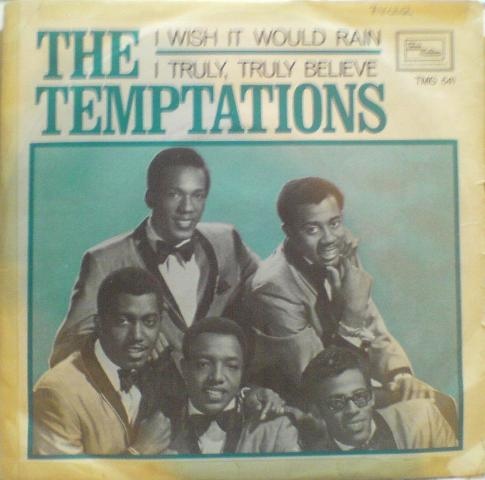
The Temptations classic lineup released this song in 1967 and peaked at #4 in the Billboard 100, #1 in the R&B charts, and #45 in the UK.
David Ruffin sings this song and you can feel the sadness and pain in his voice. The man had a tremendous voice. Naming my favorite Temptations song would be hard but this one would be near the top.
The song has been covered by Gladys Knight and the Pips, Marvin Gaye, Aretha Franklin and The Faces.
This song was released right before the psychedelic soul hit Cloud Nine and the bands style began to change.
It was written by Norman Whitfield, Barrett Strong, and Rodger Penzabene.
I Wish It Would Rain
Hmm hmm
Sunshine, blue skies, please go away A girl has found another and gone away With her went my future, my life is filled with gloom So day after day I stay locked up in my room I know to you, it might sound strange But I wish it would rain, oh yeah, yeah, yeah, yeah
‘Cause so badly I wanna go outside (such a lovely day) But everyone knows that a man ain’t supposed to cry Listen, I gotta cry ’cause crying eases the pain, oh yeah People this hurt I feel inside Words could never explain, I just wish it would rain, oh let it rain, rain, rain, rain, ooo baby
Let it rain, oh yeah, let it rain
Day in day out my tear-stained face Pressed against the window pane My eyes search the skies desperately for rain ‘Cause rain drops will hide my tear drops And no one will ever know that I’m crying Crying when I go outside To the world outside my tears I refuse to explain, ooo I wish it would rain, ooh, baby
Let it rain, let it rain I need rain to disguise the tears in my eyes Oh, let it rain Oh yeah, yeah, listen I’m a man and I got my pride ‘Til it rains I’m gonna stay inside, let it rain
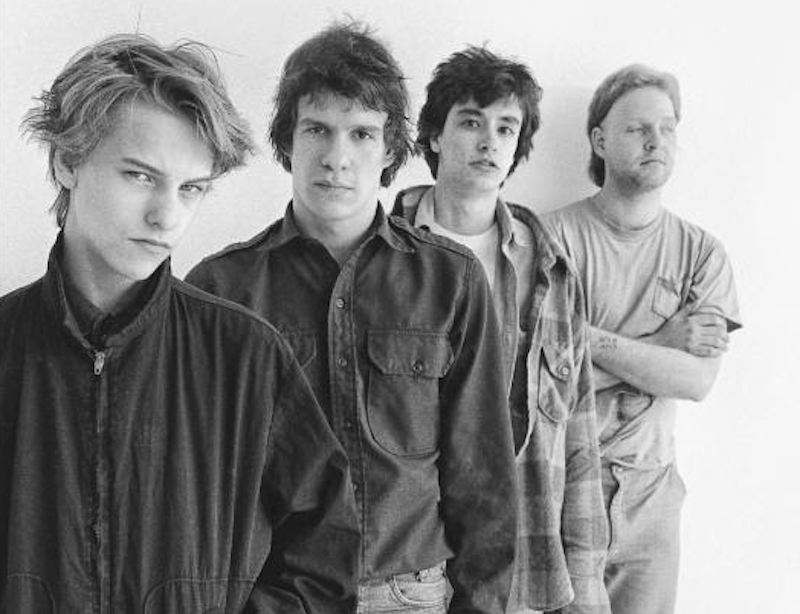
This Replacements song was inspired by U2’s I Will Follow. Paul Westerberg had seen U2 perform on April 1981 at bar named Sam’s, where they actually played the song twice in their set.
He liked the sound of “I Will Follow,” but he balked at what he considered its unrealistic message. The kids he knew weren’t going blindly forth, their faith steadfast, their belief unwavering in the face of adversity.
They were still in their punk phase but on the next album they would start expanding their sound. I’ve been listening to their albums in order and the first three I wasn’t as familiar with but I’ll be posting at least one song off of each album as I go.
The song was on their second release…an ep called Stink. It was released in 1982 on Twin/Tone Records.
The intro to the song was not made in the studio, it was a real party where the police was called because of the noise.
The Replacements were playing at a rent-party for visual artist Don Holzschuh, opening for the the band Warheads. It was a massive multi-keg affair attended by a lot of underage kids. The Replacements’ noise levels drew a visit and warning from the local police. Not long after they’d finished their set, the Minneapolis police decided to end the fun entirely.
As a uniformed officer took the microphone to disperse the crowd, Replacements’ soundman Terry Katzman pressed record on his tape player. “This is the Minneapolis Police . . . the party is o-ver,” he announced, to a collection of boos.
Future Soul Asylum singer Dave Pirner was at the party and he was one of the kids harassing the police. He has taken credit for being the one to yell “Hey, f**k you, maaaan!” starting at around 7 seconds below on the song.
Don Holzschuh talks about the party where the intro came from…
Kids Don’t Follow
Go home…..this is the Minneapolis police….the party’s over…if you all just grab your stuff & leave there won’t be any hassle..the party’s been closed….etc.
One, two, three, four
Kids won’t listen To what you’re sayin’ Kids ain’t wondering Kids ain’t praying Mo says he’s worried He says talk away He says yeah I’ve been cured
I need some attention No house of detention I’d love some attention Don’t start again
Kids don’t need that Kids don’t want that Kids don’t need nothing of the kind Kids don’t follow
What you’re doin’ In my face out my ear Kids won’t follow What you’re sayin We can’t hear
Can’t stop looting Can’t stop smoking Kids ain’t wondering Can’t stop choking Kids won’t stand still Kids won’t shut up Kids won’t do it You talk to ’em now
Kids don’t follow What you’re doin’ In my face and out my ear Kids won’t follow What you’re saying We can’t hear
Kids won’t follow What you’re saying In my face out my ear Kids don’t follow What you’re sayin’ We can’t hear What you say Not tomorrow Not today
Besides having one of the most unique names in the history of rock songs…this one is a really cool song off of Abbey Road. It’s always one of my favorite songs of the medley.
It’s in the medley on side 2 for those of you who have the vinyl album. I always wondered who that was coming through the bathroom window. Paul wrote the song about a fan, thought to be Diane Ashley. She said that there was a ladder in Paul’s garden and bunch of girls put it against the wall and Diane climbed up and went through the bathroom window when Paul was at the studio. I seriously doubt if she was the only one…more probable…They All Came Through Paul’s Bathroom Window. The girls that hung out waiting for the Beatles were called “Apple Scruffs” by the Beatles.
Now married with four children, Diane keeps a framed photo of herself with Paul on her kitchen shelf and looks back on her days as an Apple Scruff with affection: “I don’t regret any of it. I had a great time, a really great time.” It shows you how different of a time that was compared to now.
Margo Bird was on of the girls who Paul negotiated with to get some of his property back…he didn’t care if they got small souvenirs but when pictures went missing, Margo helped him track them down.
This was credited to Lennon/McCartney but seems to be all McCartney. The Beatles ran through it a few times earlier in the year in the Let It Be sessions. They were going to feature it in their rooftop concert but didn’t feel confident in it.
The song fit nicely between Polythene Pam and Golden Slumbers in the medley. Joe Cocker covered this song also.
Apple Scruff Margo Bird: “They rummaged around and took some clothes. People didn’t usually take anything of real value but I think this time a lot of photographs and negatives were taken. There were really two groups of ‘Apple Scruffs’ – those who would break in and those who would just wait outside with cameras and autograph books. I used to take Paul’s dog for a walk and got to know him quite well. I was eventually offered a job at Apple. I started by making the tea and ended up in the promotions department working with Tony King.”
From Songfacts
Paul McCartney wrote this about a fan who broke into his house. Diane Ashley claims it was her. “We found a ladder in his garden and stuck it up the bathroom window which he’d left slightly open,” she said. “I was the one who climbed up and got in.”
Landis Kearnon (known at the time as Susie Landis) gave us the following account:
Here, all this time I thought this song was written about me and my friend Judy. What a surprise to learn there was someone named Diane Ashley who put a ladder up to Paul’s house and climbed in through the bathroom window. This and the bit about “quit the police department” being inspired by an ex-cop taxi driver in NYC tells me something I already know about songwriting, which is that many songs are composites. This one obviously was because Diane wasn’t the only person having a profound effect on Paul McCartney by crawling in a bathroom window in 1967 (maybe ’68 in her case). Judy and I were paid $1500 by Greene & Stone, a couple of sleazy artist managers driving around the Sunset Strip in a Chinchilla-lined caddy limo, to “borrow” the quarter-inch master of “A Day In The Life” off of David Crosby’s reel-to-reel, drive it to Sunset Sound studios in Hollywood where Greene & Stone duped it, then put it back where we found it at Crosby’s Beverly Glen Canyon pad. Crosby was playing with the Byrds that day in Venice so we knew his house was empty. This was the day after a major rainstorm so the back of his house was one big mudslide. We climbed up it, leaving 8-inch deep footprints and, you guessed it, gained access via the bathroom window, leaving behind footprints and a veritable goldmine of forensic matter. We were really nervous and did not make clear mental notes of how the master reel was on the player, but did have the sense to leave Crosby’s front door unlocked while we drove across town and back. After the tape was back on the machine (badly) we changed out of our muddy shoes, drove to the Cheetah in Venice, and hung out with the Byrds into the evening, thinking we were awfully clever and cute. We did not know why Greene & Stone would pay so much money for a copy of a Beatles song, other than the fact that is was a groundbreaking and mind-blowing piece, but found out the next day when we heard “A Day In The Life” on KHJ, I think it was. Greene & Stone had used it as payola to get one of their groups, The Cake, singing “Yes We Have No Bananas,” on the air. Which they did, and it sucked, but oh well. By the following day “A Day In The Life” was no longer on the air. And just a day or two after that there was a front page blurb in the LA Times about “A Day In The Life” getting aired one month prior to the release date of the single and the Sgt. Pepper LP, which apparently cost the Beatles plenty and they were suing Capitol or Columbia, whichever the label was, for $2 million… and McCartney was flying in from London to deal with the mess. Oops. Judy and I nearly sank through the floor. Though we were active “dancers” in the various nightclubs on the Sunset Strip, we lay low for a while, not knowing what to expect. In fact, other than a song being written and a GREAT cover by Joe Cocker, nothing happened. We got our money, spent it on groovy clothes, of course (what else was there?) and never heard a word about it.
“I knew what I could not say” and “protected by a silver spoon” seemed to explain why there were no repercussions. My dad was a TV director who had already threatened to bust and ruin David Crosby for smoking pot with and deflowering his daughter; he had clout and David was afraid of him. Judy was from money and influence too. I feel that David knew exactly who had broken in and borrowed the tape but couldn’t press charges. He probably wasn’t supposed to be playing the master for all his friends and hangers-on, so there must have been hell to pay for him. I always felt bad for the cred it must have cost him with his friend Paul McCartney.
Oh, the bit about “Sunday’s on the phone to Monday, Tuesday’s on the phone to me” – that was somebody named Sunday, maybe a detective, I can’t remember now, calling the producer Billy Monday about the break-in and song leak. Billy Monday, knowing she was a friend of McCartney’s, called Tuesday Weld, and it was she who called Paul in London and told him the news. Well, I guess I didn’t make this very short after all. But you can’t tell me that this incident didn’t feed into the overall inspiration for the song. I’m just glad it turned out so cool and hope it made a heap for them in compensation for the publicity costs at the outset.
It was interesting and exciting then, that’s for sure. Even though I came of age into that scene and had nothing to compare it to, I still had a sense at the time of being at the epicenter of something big. Some of that was attributable to the hubris of youth, but some of it turned out to be real, as it happened. Now, present time, it makes my day to come across someone who still finds it interesting or even knows what or whom I’m talking about. By the way, I never did get to meet the Beatles, though I was invited to party where they were staying once, when I was 17. My mother wouldn’t let me go! I never forgave her.
I lived in LA until 1987 where I was a model, actress, (groupie, but that wasn’t professional), marching band manager, religious (Buddhist) leader, newspaper columnist, secretary, copywriter, copy editor, account executive, screenwriter, songwriter, band leader, session singer, textile designer, artist. Since then, in the Santa Fe area and now, since 1992, in Tucson, I continued my artistic and musical endeavors, ran a fabric-painting factory, was a jazz singer for several years (which has mutated to something more individual and artistic of late), have worked numerous odd jobs from pizza delivery to bookstore management, and am now close to completing my first novel, which is set in a Buddhist cult in the early ’70s.
In the ’70s I traveled halfway around the world on a square-rigged cargo ship, lived and sang in Europe for three years, and, as of 1991, am a mother of one though I never married.
Subsequent to the bathroom window event, my friend and partner in crime, as it were, Judy, went off with a Dick Clark Productions road show (can’t remember the name of it but it was something timely) as “Irma the Dancing Girl.” Her job, nightly, in each new town, was to put on a bikini, dance, and paint wild, acid abstract canvases with her extremely long blond hair. I, on the other hand, joined a Buddhist cult, which was like living on another planet entirely, and completely disappeared from view, as far as the “scene” was concerned. Judy and I didn’t hang out much after we realized the impact of our little romp. We didn’t talk about it, but we may have decided at some level that we pushed our combined wildness a bit too far on that one and moved on to “safer” friends. I saw her once in the early ’70s. She had been married and divorced, was the mother of one, and that was the last contact we had.
The Beatles recorded this as one song with “Polythene Pam.”
The Beatles gave this to Joe Cocker, who released it in 1969. The Beatles released their version first. Cocker’s version was used on the soundtrack to the movie All This and World War II, released in 1976. A strange mix of World War II documentary footage set to the music of the Beatles, the movie bombed and has barely been heard of since. Others who covered The Beatles on the soundtrack include Peter Gabriel, Elton John, Tina Turner, Leo Sayer, Frankie Laine and the Bee Gees.
This is part of a suite of songs at the end of Abbey Road. They used bits from many songs they never finished to put the suite together.
McCartney played lead guitar and Harrison played bass. It was usually the other way around.
McCartney said in a documentary shown February 6, 2002 in England that part of the lyric was inspired by sitting in the back of a New York cab. The drivers name was on display (Quitts) saying “Ex Police Department,” which inspired the line: “And so I quit the Police Department and got myself a steady job…”
She Came In Through The Bathroom Window
She came in through the bathroom window Protected by a silver spoon But now she sucks her thumb and wanders By the banks of her own lagoon
Didn’t anybody tell her? Didn’t anybody see? Sunday’s on the phone to Monday Tuesday’s on the phone to me
She said she’d always been a dancer She worked at fifteen clubs a day And though she thought I knew the answer Well, I knew what I could not say
And so I quit the police department And got myself a steady job And though she tried her best to help me She could steal but she could not rob
Didn’t anybody tell her? Didn’t anybody see? Sunday’s on the phone to Monday, Tuesday’s on the phone to me Oh yeah
This song peaked at #69 on the Billboard 100, and it was on ZZ Top’s second album “Rio Grande Mud.” This was their first hit and the only single off of the album.
The song was written by Steve Perron and Kenny Cordray. They were not given credit for many years, and they received little or no royalties for decades.
ZZ Top are still together and one of the reasons they lasted so long was their long time manager Bill Ham. he produced or co-produced all of their albums up through 1996’s Rhythmeen as well as being their manager. They parted ways in 2006. He passed away in 2016 at 79.
Frank Beard:“I truly think the band would have broken within three years if Bill hadn’t been involved. He was the guy that smoothed things out whenever we got our feathers ruffled with each other and who always encouraged us no matter what. He was our father figure, simple as that.”
Billy Gibbons on the album: It was the first record that brought us into step with the writing experience. We started documenting events as they happened to us on the road; all of these elements went into the songwriting notebook. As we went along, we were keeping track of skeleton ideas as they popped up. The craft was certainly developing.
Francine
Got a girl, her name’s Francine, finest thing you ever seen. And I love her, she’s all that I want. And I need her, she’s all that I need.
Well, Francine, oh Francis, why do you love me and make me cry? How I love her, she’s all that I want. How I need her, she’s all that I need.
If I ever caught her with Stevie P I’d throw her back in the Penitentiary, now. And if I caught her with my mother’s son I’ll call her daddy and get my gun.
My Fancine just turned thirteen, she’s my angelic teenage queen. And I love her, she’s all that I want. And I need her, she’s all that I need. And I love her, she’s all that I want. And I need her, she’s all that I need. And I love her, she’s all that I want. And I need her, she’s all that I need.
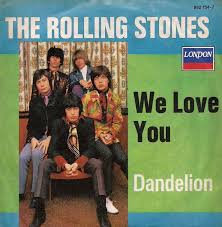
This song was recorded in 1966 but not released until the summer of 1967. The psychedelic sound fit in perfectly with the summer of love. The song was written by Mick Jagger and Keith Richards.
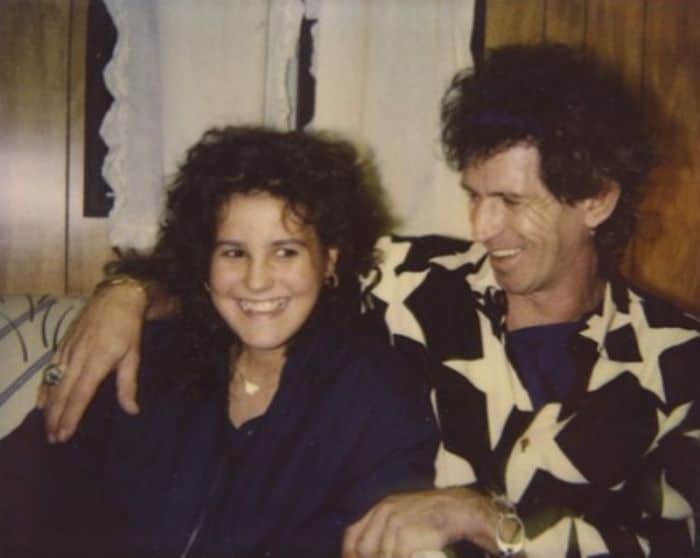
Later on Keith named his first daughter Dandelion but she decided later to use her middle name “Angela” instead…Her mom was the late Anita Pallenberg.
The Stones had some nice psychedelic pop songs in the mid-sixties that you don’t hear as much now. Personally I wished this period would have gone on a little longer. This song made #49 in Rolling Stone magazine rating the top 100 Rolling Stones songs.
Because of their drug bust at Keith’s home Redlands the Stones were not as involved in the summer of love as other bands. The song peaked at #9 in Canada and #14 in the Billboard 100 in 1967.
Keith Richards:“We didn’t have a chance to go through too much flower power because of the bust. We’re outlaws.”
Dandelion
Prince or pauper, beggar man or thing Play the game with ev’ry flower you bring Dandelion don’t tell no lies Dandelion will make you wise Tell me if she laughs or cries Blow away dandelion
One o’clock, two o’clock, three o’clock, four o’clock chimes Dandelions don’t care about the time Dandelion don’t tell no lies Dandelion will make you wise Tell me if she laughs or cries Blow away dandelion, blow away dandelion
Tho’ you’re older now its just the same You can play this dandelion game When you’re finished with your childlike prayers Well, you know you should wear it
Tinker, tailor, soldier, sailors lives Rich man, poor man, beautiful, daughters wives Dandelion don’t tell no lies Dandelion will make you wise Tell me if she laughs or cries Blow away dandelion, blow away dandelion
Little girls, and boys come out to play Bring your dandelions to blow away Dandelion don’t tell no lies Dandelion will make you wise Tell me if she laughs or cries Blow away dandelion, blow away dandelion
I didn’t get into the Sex Pistols at the time they came out. They were not as big over here as they were in the UK. I did find them later on. I can’t say I’m a huge fan but I do recognize that the Ramones and Sex Pistols help start the Punk rock movement… and they stirred up the rock music industry when it needed stirring up.
This was originally called “No Future.” The band played it live and recorded a demo version with that title, but changed it when lead singer Johnny Rotten got the idea to mock the British monarchy.
The U.K. Parliament threatened to ban all sales of the single. Despite the controversy, as major retailers like Woolworth refused to sell “God Save The Queen,” the record was selling up to 150,000 copies a day.
“God Save the Queen” peaked at #1 on the NME charts, but only peaked at #2 on the UK Singles Charts right behind Rod Stewart’s I Don’t Want To Talk About It. Many people have claimed since that
It was released right before Queen Elizabeth’s Silver Jubilee though drummer Paul Cook has said it wasn’t written specifically for the Queen’s Jubilee. He claimed they weren’t aware of it at the time… it wasn’t a contrived effort to go out and shock everyone.
Johnny Rotten:“There are not many songs written over baked beans at the breakfast table that went on to divide a nation and force a change in popular culture.”
“You don’t write ‘God Save The Queen’ because you hate the English race. You write a song like that because you love them, and you’re fed up with them being mistreated.”
From Songfacts
This song is about rebelling against British politics. A lot of young people felt alienated by the stifling rule of the old-fashioned royal monarchy, and the Queen (Queen Elizabeth), was their symbol.
“It was expressing my point of view on the Monarchy in general and on anybody that begs your obligation with no thought,” lead singer John Lydon (Johnny Rotten) told Rolling Stone. “That’s unacceptable to me. You have to earn the right to call on my friendship and my loyalty.”
The British national anthem is called “God Save The Queen.” This mocks it in a big way, which did not go over well with English royalty.
Sex Pistols manager Malcolm McLaren released this to coincide with The Queen’s Silver Jubilee, a celebration commemorating her 25th year on the throne. The Sex Pistols and their fans detested the monarchy and this celebration.
The Queen’s Silver Jubilee took place on June 7, 1977. On that day, The Sex Pistols attempted to play this song from the Thames river, outside of Westminster Palace. It was a typical Malcolm McLaren promotional stunt, as they played up how the band was circumventing a “ban” by playing on the river instead of setting foot on ground. The performance never took place, as they were thwarted by authorities.
God Save The Queen
God save the Queen The fascist regime, They made you a moron A potential H-bomb
God save the Queen She ain’t no human being There is no future And England’s dreaming
Don’t be told what you want Don’t be told what you need There’s no future No future No future for you
God save the Queen We mean it man We love our Queen God saves
God save the Queen ‘Cause tourists are money And our figurehead Is not what she seems
Oh God save history God save your mad parade Oh Lord God have mercy All crimes are paid
When there’s no future How can there be sin We’re the flowers In the dustbin We’re the poison In your human machine We’re the future You’re future
God save the Queen We mean it man We love our Queen God saves
God save the Queen We mean it man There is no future And England’s dreaming
No future no future no future for you No future no future no future for me No future no future no future for you No future no future for me
There was a time that I wouldn’t listen to the song because I was tired of it. Now after hearing it in a few movies…the love has come back. The guitar in this doesn’t mess around. There are not many bands…be it heavy metal, hard rock, or just rock bands that have such a vicious sound on guitar. Leslie West was a great guitar player who went for the throat.
Corky Laing (drummer) started working on this song with David Rea, who was a friend of the band and frequent songwriting partner…he and Mountain bass player Felix Pappalardi were in Ian & Sylvia’s band.
The reason Vicksburg is mentioned in the song is because Laing asked him if he knew any cities in the state…which Rea mentioned Vicksburg. Vicksburg is a small city on the Mississippi River known as the site of a famous Civil War battle in 1863.
The song peaked at #21 in the Billboard 100 in 1970…their highest charting single and only top 40 hit. The songwriters were Leslie West, Corky Laing, Felix Pappalardi, and David Rea.
Leslie West: When Corky (Laing, drummer) brought me the idea, it was a one-chord dance song. We got real high, took out a napkin, and I came up with the main riff and the chords. Then we fit the words over the sound.” Laing says of the song: “I was madly in love with The Band, and I decided to put a ‘Cripple Creek’ feel behind it. Later on, I told Levon Helm that I felt bad about ripping him off, but he said that he didn’t hear any similarity between the two songs, and that we didn’t owe them any money!
From Songfacts
The song is about a seductive woman who teaches the singer a thing or two about the ways of love, but with the success of “Proud Mary” a year earlier, it almost sounds like this could be another song about a riverboat. In 1976, the “Mississippi Queen” riverboat was put into service by the Delta Queen company, taking its last cruise in 2008.
This is one of the most famous cowbell songs of all time, but the band didn’t envision the instrument in the song. In a Songfacts interview with Leslie West, he explained: “The cowbell in the beginning was just in there because Felix wanted Corky to count the song off. So we used the cowbell to count it off – it wasn’t put in there on purpose. And it became the quintessential cowbell song.”
Mississippi is a special place for Leslie West not only because of this song, but because it’s where he had part of his leg amputated. On June 18, 2011, the day after playing a show at the Hard Rock Cafe in Biloxi, West’s right leg began to swell and he was taken to the emergency room in a Biloxi hospital, where it was amputated below the knee to save his life (West is diabetic). West told Songfacts: “When I play ‘Mississippi Queen’ now, I think about Jesus Christ. Of all places to lose my leg, it was Mississippi.”
TV, movie and video game uses of this song include:
The title of a episode of the anime series Cowboy Bebop The Simpsons in the 1996 “Homerpalooza” episode The Dukes of Hazzard movie in 2005 Guitar Hero III in 2007 Rock Band in 2007 The Expendables movie in 2010 Regular Show in “Weekend at Benson’s,” 2012
This was used in a popular commercial for Miller Genuine Draft beer where some guys traveling in a jungle open a bottle of the beer to magically freeze the body of water separating them from some lovely ladies who beckon.
This song got a music video for the first time on Aug 27, 2020, when Mountain posted a collage-style animated clip on YouTube.
Mississippi Queen
Mississippi Queen You know what I mean Mississippi Queen She taught me everything
Went down around Vicksburg Around Louisiana way Where lived the Cajun Lady Aboard the Mississippi Queen
You know she was a dancer She moved better on wine
While the rest of them dudes were gettin’ their kicks Boy, I beg your pardon, I was gettin’ mine
Mississippi Queen If you know what I mean Mississippi Queen She taught me everything
This lady she asked me If I would be her man You know that I told her I’d do what I can
To keep her lookin’ pretty Buy her dresses that shine
While the rest of them dudes were makin’ their friends Boy, I beg your pardon, I was loosin’ mine
You know she was a dancer She moved better on wine
While the rest of them dudes were gettin’ their kicks Boy, I beg your pardon, I was gettin’ mine
I remember this song as a teenager by George Thorogood. Bo Diddley was a little funkier than his rock and roll peers. He developed that wonderful riff that will live on forever where ever rock and roll is played. I could play this over and over on the guitar and never get tired of it. You can be a beginner at guitar but once you learn this…it sounds better than any other riff you can play…you can play it soft or loud…it doesn’t matter. The riff or beat has been called “The Bo Diddley Beat.”
The rhythm to this version is just infectious. Bo Diddley (Ellas McDaniel) wrote this song. It was released in 1956 but did not reach the charts…that boggles the mind.
In 2004, Rolling Stone magazine ranked Bo Diddley’s original song at number 133 on their list of the “500 Greatest Songs of All Time.”
You can be cool… but not Bo Diddley playing his square guitar cool… great guitarist and showman.
I always loved his square guitar. He built a guitar that looked like no other. He designed and constructed a custom built square shaped guitar for himself, he then commissioned Gretsch Guitars and Kinman Guitar Electrix to build further custom built square shaped models for him.
From Songfacts
The title is a play on the word “Hoodoo,” which is a folk religion similar to Voodoo and also popular in the American South. Many blues musicians mentioned Hoodoo in their songs and like Diddley, conjured up images of the skulls, snakes and graveyards.
George Thorogood And The Destroyers recorded a popular cover on their 1978 album Move It On Over. In 1982, Diddley appeared in Thorogood’s video for “Bad To The Bone.” It was good timing, since MTV was new didn’t have many videos.
British blues rockers Juicy Lucy had a #14 hit in the UK in 1970 with their version of this song.
Who Do You Love?
I walk forty-seven miles of barbed wire I use a cobra snake for a necktie I got a brand new house on the roadside Made from rattlesnake hide I got a brand new chimney made on top Made out of a human skull Now come on take a walk with me, Arlene And tell me, who do you love?
Who do you love? Who do you love? Who do you love? Who do you love? Who do you love?
Tombstone hand and a graveyard mind Just twenty-two and I don’t mind dying
Who do you love? Who do you love? Who do you love? Who do you love?
I rode a lion to town, used a rattlesnake whip Take it easy Arlene, don’t give me no lip
Who do you love? Who do you love? Who do you love? Who do you love?
Night was dark, but the sky was blue Down the alley, the ice-wagon flew Heard a bump, and somebody screamed You should have heard just what I seen
Who do you love? Who do you love? Who do you love? Who do you love?
Arlene took me by my hand And she said ooo-wee, Bo, you know I understand
Who do you love? Who do you love? Who do you love? Who do you love?
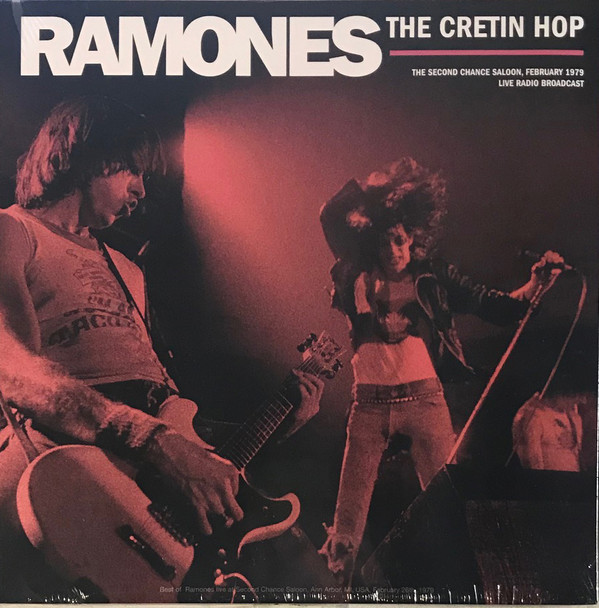
In 1977 you had disco nearing it’s peak and slick pop going on everywhere…and you also had the Ramones. They bucked the trend of radio at the time. When they were recording the album they first heard the Sex Pistols album.
Rocket to Russia was the album this song was on. They had a bigger budget on this album. Johnny Ramone had just heard the Sex Pistols album and wasn’t happy. He said: “These guys ripped us off and I want to sound better than this.” They recorded most of the album in one take so the rest of the money went toward production.
The album peaked at #49 in the Billboard 100, #36 in Canada, and #60 in the UK in 1977.
Joey Ramone: “‘Cretin Hop’ came from when we were in St. Paul, Minnesota. We went some place to eat and there were just all these cretins all over the place. And there was a Cretin Avenue, where we drove into the city.”
From Songfacts
The Ramones bucked the trends of the ’70s with simplistic rock songs, often about freaks and deviants. It didn’t make them rich, but it appealed to core group of fans that fell in with this culture. This being the disco era, songs like “Cretin Hop” were completely at odds with what was getting airplay. The Ramones were later rewarded for their skewed view and stewardship of their genre when they were inducted into the Rock and Roll Hall of Fame in 2002.
Cretin Hop
There’s no stoppin’ the cretins from hoppin’ You gotta keep it beatin’ for all the hoppin’ cretins
Cretin, cretin I’m gonna go for a whirl with my cretin girl My feet won’t stop doin’ the Cretin Hop Cretin, cretin
One-two-three-four, cretins want to hop some more Four-five-six-seven, all good cretins go to heaven
There’s no stoppin’ the cretins from hoppin’ You gotta keep it beatin’ for all the hoppin’ cretins
Cretin, cretin I’m gonna go for a whirl with my cretin girl My feet won’t stop doin’ the Cretin Hop Cretin, cretin
One-two-three-four, cretins want to hop some more Four-five-six-seven, all good cretins go to heaven




:format(jpeg):mode_rgb():quality(90)/discogs-images/R-3674792-1466793098-1432.jpeg.jpg)






 PowerPop... An Eclectic Collection of Pop Culture