The first time I saw Van Morrison was on November 4, 1978 on Saturday Night Live. I was 11 and didn’t know anything about him. I hadn’t even heard Brown Eyed Girl…I would not hear that song until I was 18 in 1985. That in itself is one of the mysteries of life…how I could of possibly go 18 years without hearing that song.
He was playing the song Wavelength and it sounded great. I would not become a fan until 1985…I bought a compilation album of the sixties and I heard Brown Eyed Girl…it started a Van Morrison record buying frenzy. Since then I’ve been a huge fan. I saw him on March 7, 2006 at the Ryman Auditorium and he didn’t disappoint. If I could sing like anyone in history…it would be Van.
Van has said that this song is about the Voice of America, which is a radio service run by the United States government for political purposes. Morrison said that he listened to the service when he was a kid.
The song peaked at #42 in the Billboard 100 and #63 in Canada in 1978. The album Wavelength peaked at #28 in the Billboard Album Charts, #31 in Canada, #27 in the UK, and #9 in New Zealand in 1978.
Van Morrison:“It’s actually about Europe, because that’s where the station was. It came out of Frankfurt, and the first time I ever heard Ray Charles was on the Voice of America. We tried to get a tape recording of the Voice of America to put on the front of that track, but it didn’t work out. I didn’t get it by the time the album was due to be mixed. But I think it would have made it a lot clearer if the signature thing was on the front of it. It doesn’t click for a lot of people.”
Wavelength
This is a song about your wavelength And my wavelength, baby You turn me on When you get me on your wavelength Yeah, yeah, yeah, yeah, yeah With your wavelength Oh, with your wavelength With your wavelength With your wavelength Oh mama, oh mama, oh mama, oh mama oh mama, oh mama
Wavelength Wavelength You never let me down no You never let me down no
When I’m down you always comfort me When I’m lonely you see about me You are ev’ry where you’re ‘sposed to be And I can get your station When I need rejuvenation
Wavelength Wavelength You never let me down no You never let me down no
I heard the voice of America Callin’ on my wavelength Tellin’ me to tune in on my radio I heard the voice of America Callin’ on my wavelength Singin’ “Come back, baby Come back Come back, baby Come back”
Do do do dou dit do do dou dit do do do do do Do do do dou dit do do dou dit do do do do do
Won’t you play that song again for me About my lover, my lover in the grass, yeah, alright You have told me ’bout my destiny Singin’ “Come back, baby Come back Come back, baby Come back”
On my wavelength Wavelength You never let me down no You never let me down no When you get me on When you get me on your wavelength When you get me Oh, yeah, Lord You get me on your wavelength
You got yourself a boy When you get me on Get me on your wavelength Ya radio, ya radio, ya radio Ya radio, ya radio, ya radio Wave wave wave
They were founded by singer, guitarist, and songwriter Todd Rundgren and bassist Carson Van Osten. Drummer Thom Mooney and vocalist/keyboardist Robert “Stewkey” Antoni would join last.
In celebration of Todd Rundgren getting in the Jann Wenner Rock and Roll Hall of Fame FINALLY…It makes no sense why the guy wasn’t in there 20 years ago. Not just as a performer but as a producer as well. Rundgren not getting in until now is one of the reasons it’s hard for me to take the Hall seriously…but I’m happy he is finally in.
In 2016, Rundgren told an interviewer: “It doesn’t have the same cachet as a Nobel Peace Prize or some historical foundation. If I told you about how they actually determine who gets into the Hall of Fame, you’d think that I was bullshitting you, because I’ve been told what’s involved. … It’s just as corrupt as anything else, and that’s why I don’t care.”
He was asked how he felt about finally being inducted and he said: “I’m happy for the fans. They’ve waited a long time for this.” He was probably more happy about the 2016 Honorary doctorate from Berklee College of Music, where he delivered the commencement address, and an honorary doctorate from DePauw University.
The Nazz self titled album was released in 1968. This was the A side of the single released…the B side was “Hello It’s Me”…yes the same song we know but an early version of it.
They formed in 1967 and their first concert was something to remember…opening for the Doors. Some say the band took its name from the Yardbirds’ 1966 song “The Nazz Are Blue”, other sources say the name came from a 1952 monologue, “The Nazz”, by the American Beatnik comedian Lord Buckley.
The band would release 3 albums after which Rundgren started a solo career.
Open My Eyes peaked at #112 in the Billboard Album Charts and Hello It’s Me peaked at #66 in 1968…
Todd would go on and released Hello It’s Me solo and it was a massive hit. It peaked at # 2 in the Billboard 100 and #17 in Canada in 1973.
He would also form the band Utopia in 1973.
Open My Eyes
Underneath your gaze I was found in The haze I’m wandering around in I am lost in the dark of my own room And I can’t see a thing but the fire in your eyes
Clear my eyes, make me wise Or is all I believe in lies I don’t know when or where to go And I can’t see a thing ’til you open my eyes
I’ve been told by some you’ll forget me The thought doesn’t upset me I am blind to whatever they’re saying And all I can see is the fire in your eyes
Clear my eyes, make me wise Or is all I believe in lies I really don’t know when or where to go And I can’t see a thing ’til you open my eyes Can’t see a thing ’til you open my eyes Can’t see a thing ’til you open my eyes Can’t see a thing ’til you open my eyes
Can’t believe that it’s on your mind To leave me behind
Clear my eyes, make me wise Or is all I believe in lies I really don’t know when or where to go And I can’t see a thing ’til you open my eyes Can’t see a thing ’til you open my eyes Can’t see a thing ’til you open my eyes Can’t see a thing ’til you open my eyes Can’t see a thing ’til you open my eyes
The Kinks were so different than other bands. They may have reached the popularity of the Who if they wouldn’t have been banned from touring in America in the late sixties.
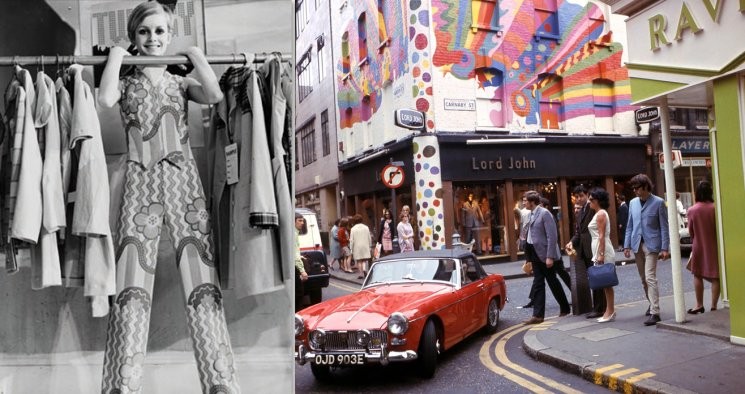
The song pokes fun at the fashion scene on Carnaby Street in the Swinging Sixties London…I was written from the point of view of someone who was there living every minute of it. It was released on the Pye label in the UK on February 25 backed by “Sittin’ On My Sofa,” and on Reprise in the United States on April 27. The band’s 10th UK single, it was produced by Shel Talmy.
The song makes me want to go to Carnaby Street but…only in the sixties when it acted as the epicenter of fashion.
The song peaked at #36 in the Billboard 100, #4 in the UK, and #11 in Canada in 1966.
Shel Talmy:“Ray Davies was one of the more prolific songwriters I have ever worked with. He could literally write a dozen songs overnight if he felt the mood. We used to get together about once a month or once every week or two and go through the stuff he had. I would pick out the ones that I thought were real far along, and the ones that were not so far along, and the ones that would probably never be far along. ‘Dedicated Follower Of Fashion’ was one that stood out immediately.”
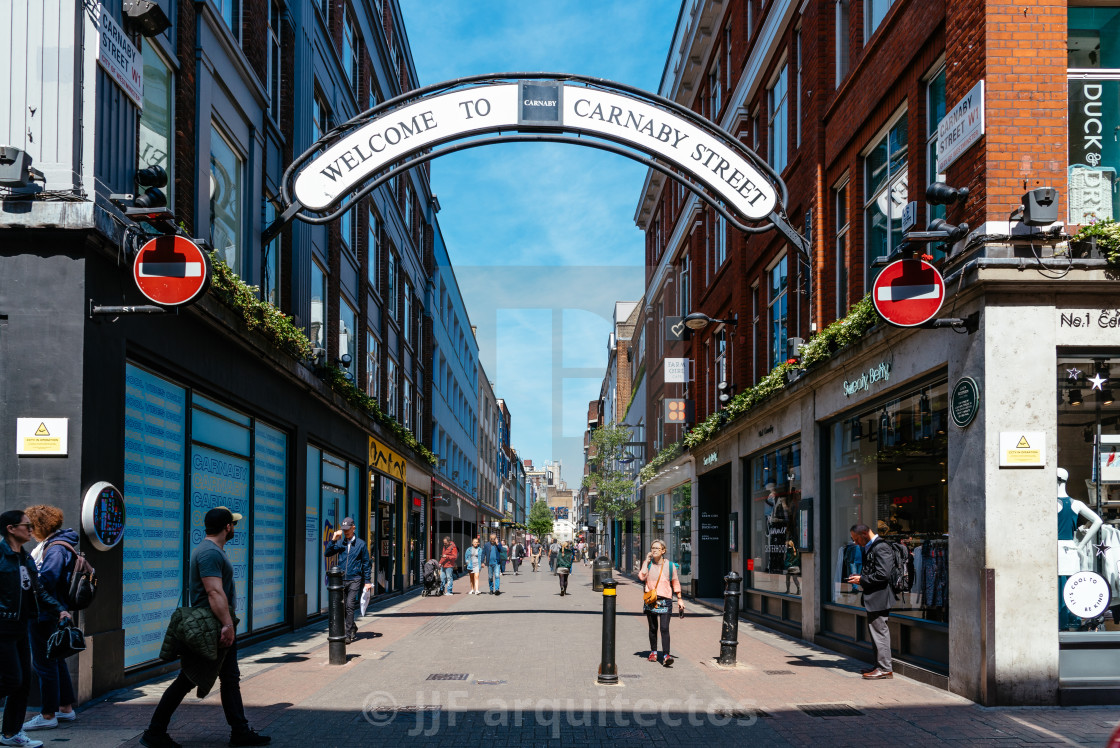
Carnaby Street…I look at sixties pictures of it and it looks really cool and different… when I see modern pictures of it…it looks like a shopping place that you could see at other places.
This looks like somewhere I would love to go
This one is modern…not as colorful!
From Songfacts
According to the online discography compiled by Kinks fan Dave Emlen, it was re-released in the US in August/September the following year, still on Reprise but backed by “Who’ll Be The Next In Line.”
“Dedicated Follower Of Fashion” is one of the band’s best-known songs, and has been included on a number of albums.
Although Carnaby Street dates to the 17th century, like the Kings Road, Chelsea, it will be linked forever to the fashion explosion that happened particularly in Britain during the so-called Swinging ’60s.
In spite of its chart success, not everyone in the Davies camp was enamored with the song. After Kinks bass player Peter Quaife died in June 2010, his obituary in the London Independent quoted him on it thus: “an incredibly boring song to play, and I had to play it night after night.”
According to a 2011 NME interview with Ray Davies, despite its fey overtones, the song is actually a scathing attack on a fop who made fun of the singer’s trousers.
Producer Shel Talmy helped frame The Kinks’ raucous guitar sound, and also had a great ear for a hit song. In a Songfacts interview with Talmy, he said:
Dedicated Follower Of Fashion
They seek him here, they seek him there His clothes are loud, but never square It will make or break him so he’s got to buy the best ‘Cause he’s a dedicated follower of fashion
And when he does his little rounds ‘Round the boutiques of London Town Eagerly pursuing all the latest fads and trends ‘Cause he’s a dedicated follower of fashion
Oh yes he is (oh yes he is), oh yes he is (oh yes he is) He thinks he is a flower to be looked at And when he pulls his frilly nylon panties right up tight He feels a dedicated follower of fashion
Oh yes he is (oh yes he is), oh yes he is (oh yes he is) There’s one thing that he loves and that is flattery One week he’s in polka-dots, the next week he is in stripes ‘Cause he’s a dedicated follower of fashion
They seek him here, they seek him there In Regent Street and Leicester Square Everywhere the Carnabetian army marches on Each one an dedicated follower of fashion
Oh yes he is (oh yes he is), oh yes he is (oh yes he is) His world is built ’round discotheques and parties This pleasure-seeking individual always looks his best ‘Cause he’s a dedicated follower of fashion
Oh yes he is (oh yes he is), oh yes he is (oh yes he is) He flits from shop to shop just like a butterfly In matters of the cloth he is as fickle as can be ‘Cause he’s a dedicated follower of fashion He’s a dedicated follower of fashion He’s a dedicated follower of fashion
I knew a few songs from The Smiths in the 80s but I found out more in the last few years from bloggers like Dave from A Sound Day. This intro is just plain epic. The Smiths had difficulty playing this song live. Johnny Marr, had troubles recreating the guitar effect in concert. The tremolo is perfect in this song.
Bassist, Andy Rourke, called the song “the bane of The Smiths’ live career.”
The song was released in 1985 and it peaked at #24 in the UK, #39 in New Zealand, an d #36 in the US Dance Chart… The single was re-released in 1992 and it peaked at #16 in the UK.
This incridble song was the B side to William, It Was Really Nothing. It was on the album Hatful of Hollow. The album was a compilation album released in 1984 and it peaked at #7 in the UK. In 2000, Q magazine placed the album at No. 44 on its list of the “100 Greatest British Albums Ever”.
Guitarist Johnny Marr has described this song as The Smiths’ “most enduring record.” It is supposedly about their singer’s Morrissey’s crippling shyness. It has since become an anthem for the alienated and socially isolated.
Johnny Marr:“I wanted an introduction that was almost as potent as ‘Layla.’ When it plays in a club or a pub, everyone knows what it is.”
Johnny Marr:“I wanted it to be really, really tense and swampy, all at the same time. Layering the slide part was what gave it the real tension. The tremolo effect came from laying down a regular rhythm part with a capo at the 2nd fret on a Les Paul, then sending that out in to the live room to four Fender Twins. John was controlling the tremolo on two of them and I was controlling the other two, and whenever they went out of sync we just had to stop the track and start all over again. It took an eternity.”
From Songfacts
Marr wrote this song, “William, It Was Really Nothing” and “Please, Please, Please, Let Me Get What I Want” over a productive four-day period in June 1984.
The Smiths installed red lightbulbs in their London studio to create the perfect atmosphere to record this song in.
The oscillating guitar has been compared to the one heard in The Rolling Stones’ cover of Bo Diddley’s song, “I Need You Baby (Mona).” This would not be the last time that Marr would steal a riff from the Stones!
This song was named after a question posed in Marjorie Rosen’s feminist film study, Popcorn Venus – one of Morrissey’s favorite books.
Morrissey lifted the line, “The heir to nothing in particular,” from the 19th century novel, Middlemarch, by George Eliot.
Marr told The Guardian newspaper that the producer, John Porter, misjudged this song’s opening lyric: “I remember when Morrissey first sang, ‘I am the son and the heir…’ John Porter went, ‘Ah great, the elements!’ Morrissey continued, ‘…of a shyness that is criminally vulgar.’ I knew he’d hit the bullseye there and then.”
Unlike many British acts, The Smiths hadn’t made any music videos. By 1985, MTV was very popular in America and a key to promoting songs to a young audience, so Jeff Ayeroff, who was in charge of video promotion at Warner Music, parent to The Smith’s US label Sire, commissioned a video. Video directors weren’t easy to come by at the time unless you had a substantial budget, and Ayeroff only wanted to shell out $5,000. He hired Paula Greif, who had been designing album covers, to make the video, giving her the instruction, “Find some performance footage and put a girl in it.”
Greif did just that, using footage from a show in Leicester shot in 1984 by the band’s live sound engineer, Grant Showbiz. She combined this with Super 8 video she shot of a female model dancing as if she was at the show. The band had no involvement.
Morrissey told Creem magazine that he detested the video. “It had absolutely nothing to do with The Smiths,” he said. “Quite naturally we were swamped with letters from very distressed American friends saying, ‘Why on earth did you make this foul video?’ And of course it must be understood that Sire made that video, and we saw the video and we said to Sire, ‘You can’t possibly release this… this degrading video.’ And they said, ‘Well, maybe you shouldn’t really be on our label.’ It was quite disastrous.”
Morrissey and Marr receive 25% of the royalties for the Soho hit, “Hippychick,” which interpolates this song’s guitar riff.
The band Love Spit Love, which included Psychedelic Furs members Richard and Tim Butler, recorded a new version of this song for the 1996 movie The Craft, which is about a coven of strikingly attractive teenage witches. In 1998, this same cover version was used as the theme song to the TV series Charmed, which is about a coven of strikingly attractive teenage witches.
The song also appears in the movies The Wedding Singer (1998) and Closer (2004).
The Russian duo t.A.T.u. of “All The Things She Said” fame covered this song in 2002. Marr slammed the “silly” cover, though Morrissey called it “magnificent.” Their version was used in the 2008 episode of Gossip Girl, “Pret-a-Poor-J.”
This song featured in a commercial for Pepe Jeans in 1988, also appeared in a 1999 commercial for the Nissan Maxima (without lyrics).
This was the B-side to the “William, It Was Really Nothing” single, which was released in 1984. After British radio picked up on the song, it was released as a standalone single in 1985, when it charted at an underwhelming #24, much to the disappointment of Morrissey, who bemoaned to Creem magazine: “It’s hard to believe that ‘How Soon Is Now’ was not a hit. I thought that was the one.” It was reissued for a third time in 1992, when it charted at #16.
The single artwork was a still of the actor, Sean Barrett, from the 1958 film, Dunkirk. Barrett was praying in the image, but because he also looked like he was holding his crotch, the sleeve was deemed to be offensive and was consequently banned in the US.
How Soon Is Now
I am the son And the heir Of a shyness that is criminally vulgar I am the son and heir Of nothing in particular
You shut your mouth How can you say I go about things the wrong way? I am human and I need to be loved Just like everybody else does
I am the son And the heir Of a shyness that is criminally vulgar I am the son and heir Of nothing in particular
You shut your mouth How can you say I go about things the wrong way? I am human and I need to be loved Just like everybody else does
There’s a club if you’d like to go You could meet somebody who really loves you So you go and you stand on your own And you leave on your own And you go home and you cry And you want to die
When you say it’s gonna happen “now” When exactly do you mean? See I’ve already waited too long And all my hope is gone
You shut your mouth How can you say I go about things the wrong way? I am human and I need to be loved Just like everybody else does
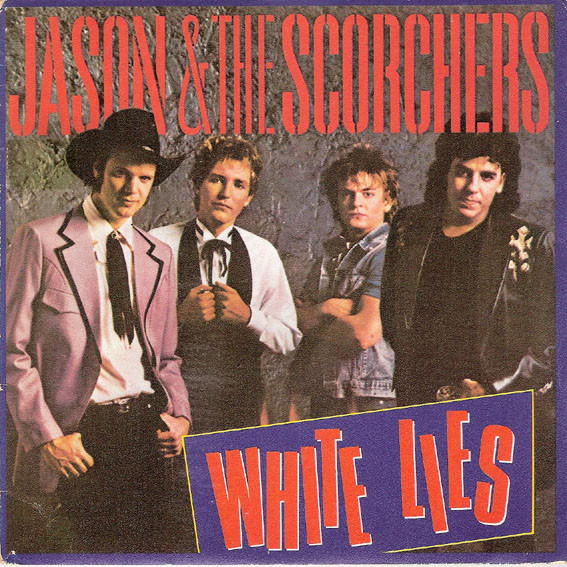
In the mid eighties I had a friend who were into Jason and the Scorchers so I gave them a listen. They were big on college radio and they had many ties with Nashville and played here quite often.
I first heard them do a live version of “The Race Is On”…the old George Jones song and it won me over. They were really a big deal in the southeast in the middle eighties and should have spread more. Their music seemed to have a kinship to the Georgia Satellites but they were a little more country. They did have some MTV play with this song and Golden Ball and Chain.
The band was formed in 1981. They were together through the 80s till the drummer Perry Baggs was diagnosed with diabetes and could not finish a 1990 tour. They have regrouped since then off and on and altogether have released 15 albums with the last one being in 2010. In 2012 Perry Baggs passed away because of diabetes.
They played a mixture between country and rock and fell into the cracks. They seemed too rock for country and too country for rock. Live they were unbeatable.
This song was released in 1985 on the album Lost and Found.
AllMusic’s Mark Deming called Lost & Found“the best record this fine band would ever make.”
Below is the reunited band on the Conan show in 1998…promoting a live album.
White Lies
White lies Every evening when I walk through the door I hear the same old lies that I’ve heard before: You’re going out for the evening, going out with a friend. Do you really want me to believe that again? You’re telling white lies, you’re telling white lies. I can see right through that this disguise. Can’t you tell I can tell when you’re telling white lies? Take these chains and set me free, Release me from this misery. Now, don’t you waste my time with your alibis ’cause your heart can’t hide what I see in your eyes. You’re telling white lies, you’re telling white lies. I can see right through that thin disguise. Can’t you tell I can tell when you’re telling white lies? Every evening when I walk through that door I get the same old lies that I’ve heard before: You’re going out for the evening, going out with a friend. Do you really want me to believe that again? You’re telling white lies, you’re telling whire lies. I can see right through that thin disguise. Can’t you tell I can tell when you’re telling white lies? You’re telling white lies, you’re telling white lies. I can see right through that thin disguise. Can’t you tell I can tell when you’re telling white lies? White lies White lies White lies
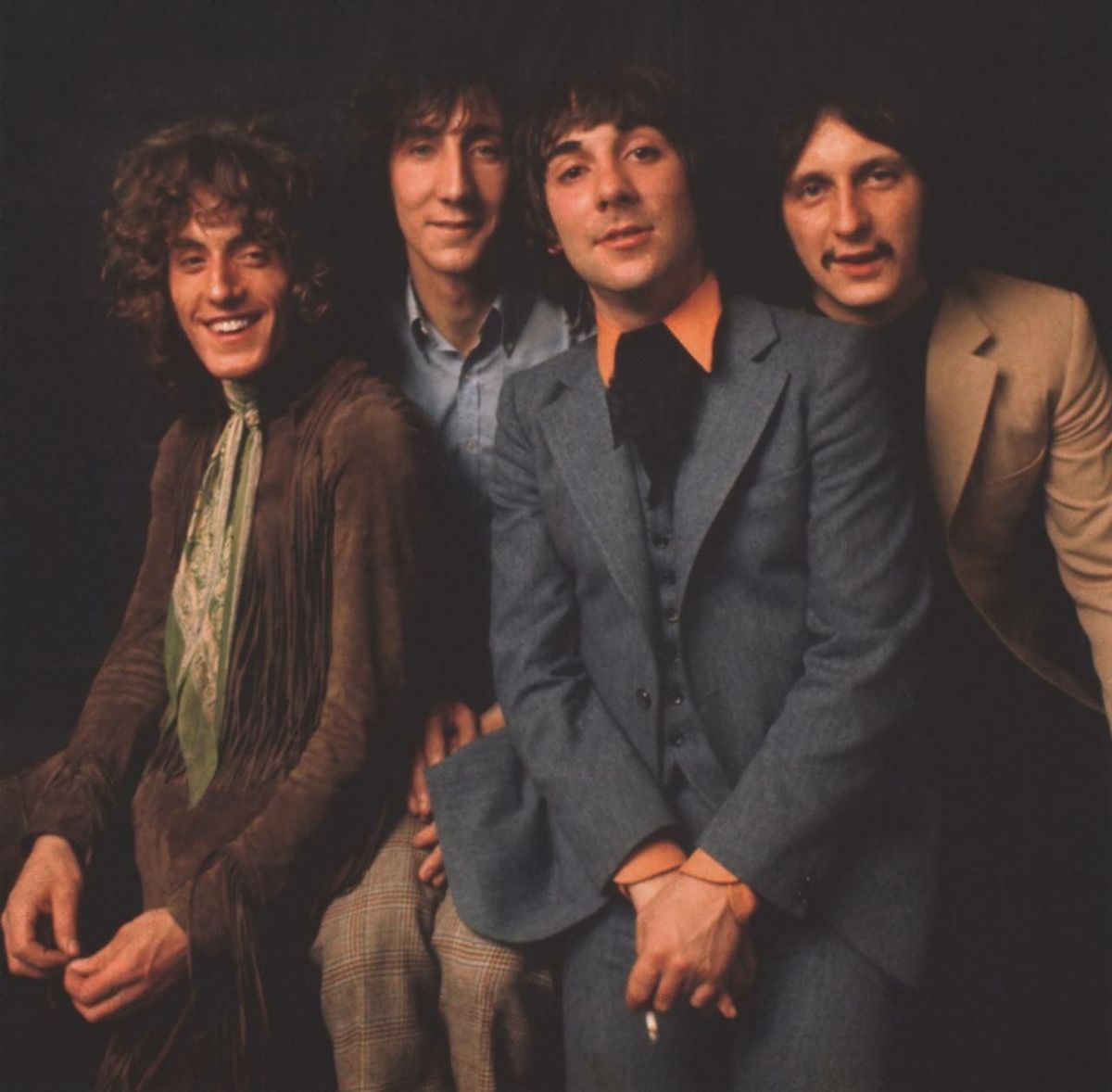
This song is one of my favorite songs off the 1969 Tommy album along with the song Christmas. I never thought Tommy was their best album by any means but it is the one that broke them to a mass audience.
While Townshend was backstage at a Door’s concert, a security guard roughly handled a girl who was attempting to touch Jim Morrison, just as Sally was attempting to touch Tommy. There is a video of the real “Sally Simpson” back stage and Jim Morrison is trying to help her. I have the video at the bottom. I never knew a video existed of this until recently.
The song was never released as a single but is a great section of the story of Tommy. In Baba O’Riley there is a lyric that mentions Sally or a different Sally. “Sally, take my hand we’ll travel south ‘cross land”…could it be? I doubt it but you never know.
The Who during this time were touring and including opera houses. They were as tight as a band can be…it was soon after that they released what I think is the greatest live album ever…Live At Leeds.
Here is video of Jim Morrison tending to “Sally” backstage. Yep, real footage of the girl that inspired Pete to write Sally Simpson.
Sally Simpson
Outside the house Mr. Simpson announced that Sally couldn’t go to the meeting. He went on cleaning his blue Rolls Royce and she ran inside weeping. She got to her room and tears splashed the picture of the new Messiah. She picked up a book of her fathers life and threw it on the fire!
She knew from the start Deep down in her heart That she and Tommy were worlds apart, But her Mother said never mind your part… Is to be what you’ll be.
The theme of the sermon was come unto me, Love will find a way, So Sally decided to ignore her dad, and sneak out anyway! She spent all afternoon getting ready, and decided she’d try to touch him, Maybe he’d see that she was free and talk to her this Sunday.
She knew from the start Deep down in her heart That she and Tommy were worlds apart, But her Mother said never mind your part… Is to be what you’ll be.
She arrived at six and the place was swinging to gospel music by nine. Group after group appeared on the stage and Sally just sat there crying. She bit her nails looking pretty as a picture right in the very front row And then a DJ wearing a blazer with a badge ran on and said ‘here we go!’
The crowd went crazy As Tommy hit the stage! Little Sally got lost as the police bossed The crowd back in a rage!
But soon the atmosphere was cooler as Tommy gave a lesson. Sally just had to let him know she loved him and leapt up on the rostrum! She ran cross stage to the spotlit figure and touched him on the face Tommy whirled around as a uniformed man, threw her of the stage.
She knew from the start Deep down in her heart That she and Tommy were worlds apart, But her Mother said never mind your part… Is to be what you’ll be. Her cheek hit a chair and blood trickled down, mingling with her tears, Tommy carried on preaching and his voice filled Sally’s ear She caught his eye she had to try but couldn’t see through the lights Her face was gashed and the ambulance men had to carry her out that night.
The crowd went crazy As Tommy left the stage! Little Sally was lost for the price of a touch And a gash across her face! OOoooh.
Sixteen stitches put her right and her Dad said ‘don’t say I didn’t warn yer’. Sally got married to a rock musician she met in California Tommy always talks about the day the disciples all went wild! Sally still carries a scar on her cheek to remind her of his smile.
She knew from the start Deep down in her heart That she and Tommy were worlds apart, But her Mother said never mind your part… Is to be what you’ll be.
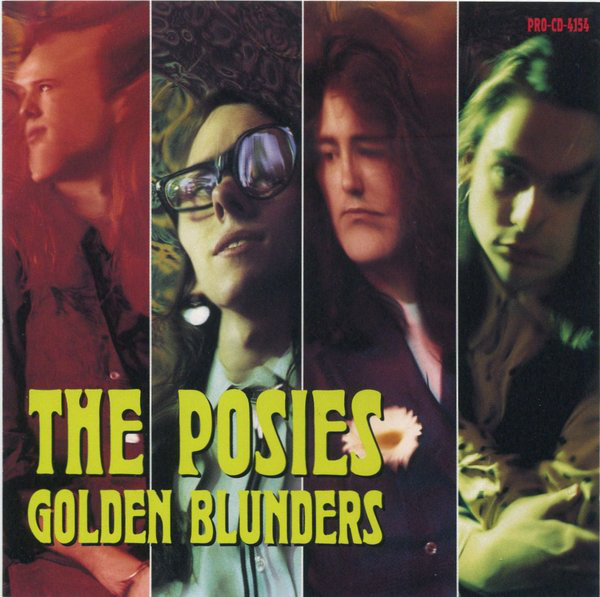
Ken Stringfellow and Jon Auer started to write songs together while in High School in Bellingham, Washington in 1986. They were influenced by The Hollies, Hüsker Dü, XTC, Elvis Costello, Squeeze, and Big Star.
They released an album Failure on cassette and vinyl near the end of 1988 on local indie label PopLlama. Several major labels noticed the band early on and in late 1989 they signed to new Geffen Records imprint DGC Records. The released an album Dear 23 in 1990 and this was their first single. The song peaked at #17 in the US Modern Rock Tracks in 1990.
Ringo Starr would cover Golden Blunders on his 1992 solo album Time Takes Time.
There is no surprise after listening to the Posies that guitarists Ken Stringfellow and Jon Auer would join Big Star’s Alex Chilton and drummer Jody Stephens to record and tour as Big Star in the 90s and up until Alex’s death in 2010.
Ken and Jon’s harmonies, writing, and playing are top notch. The 80’s and 90’s popular radio left a lot to be desired, at least to me, they could have really used these guys…I may have liked that era much better hearing more of this.
Jon Auer on Golden Blunders: “It’s about two kids in high school who mess up the rest of their lives,” “There’s the implication of a teenage pregnancy but there’s not any amazing message here.”
Golden Blunders
Golden blunders come in pairs, they’re very unaware What they know is what they’ve seen Education wasn’t fun, but now that school is done Higher learning’s just begun (Chorus) You’re gonna watch what you say for a long time You’re gonna suffer the guilt forever You’re gonna get in the way at the wrong time You’re gonna mess up things you thought you would never Disappointment breeds contempt, it make you feel inept Never thought you’d feel alone (at home) His and hers forever more, throw your freedom out of the door Before you find out what it’s for (Chorus) Four weeks seemed like a long time then – but nine months is longer now But even if you never speak again – you’ve already made the wedding vow (Chorus) Honeymoons will never start, bonds will blow apart Just as fast as they were made Men and women please beware : don’t pretend you care Nothing lasts when nothing’s there (Repeat Chorus)
Back in the 80s I bought some compilation Byrds tape with this song on it. I had never heard it before but I liked it right away. It does borrow from 50’s rock and roll just a little bit just enough to give it flavor.
Tiffany Queen was written and recorded live in the studio and it is a fun song. The song was on the album Farther Along and was released in 1971. The album peaked at #152 in the Billboard Al bum Charts and #41 in Canada.
Farther Along was not their best album…their next album would be the reunion of the original members in 1973. That album was called Byrds and it peaked at #20 in the Billboard Album Charts, #19 in Canada, and #31 in the UK.
Roger McGuinn:“We wouldn’t really write at a session, because studio time was so expensive. Usually the writing would take place at someone’s house, either my house or the other guy’s house. We’d sit down at a table and chairs with a legal pad and start working on it. And you know, it definitely is work, it’s a lot more perspiration than inspiration! Once in a while you get a tune that’s pretty fully formed, like you wake up having heard it in a dream or something, but that’s only happened once in a while to me. An example of that would be the song Tiffany Queen: I dreamed that song and went in and recorded it the next day. I can’t think of any others.”
Tiffany Queen
Happiness hit me on the first day that we met She was sitting in my kitchen with a face I can’t forget She was looking in my direction and calling with her eyes I was trying to do and interview and telling them all lies Last year in the summer with a tiffany lamp over her head
They asked me what I thought about the 50’s rock n roll Then they got into a limousine and fell into a hole I moved into the kitchen and I quickly fell in love The warden came along and asked me what I was thinking of Last year in the summer with a tiffany lamp over her head
Well I grabbed her by the hand and with a few things I could The warden said your leaving you better leave for good I made it to Tasmania to buy a devil dog We met a handsome prince who turned into a frog Last year in the summer with a tiffany lamp over her head
Now we’re living out in Malibu the ocean by our side Laying in the sunshine drifting with the tide Happiness hit me on the first day that we met She was sitting in my kitchen with a face I can’t forget Last year in the summer with a tiffany lamp over her head Over her head
Their Satanic Majesties Request…the more I listen to this album the more I like it. It wasn’t up to their normal standards but it is nice to know the St0nes stretched themselves and tried something different. They would later dip into reggae and disco but this was an album worth of change that never happened again.
This psychedelic period was coming off of one of their best stretches which I think they produced some of their best music with songs like Ruby Tuesday.
Mick Jagger got the idea for this while in jail on drug charges from the famous Redland’s bust.
On this track, their lead guitarist, Brian Jones, played a Mellotron, an early synthesizer. Jones played a number of unusual instruments in his time with the band, which lasted from their founding in 1962 until 1969, when he was fired after a number of clashes with the rest of the Stones.
Brian Jones has been over rated and underrated but his subtle touch on songs was missed.
Just weeks after leaving the band… Jones drowned in his swimming pool.
After Brian was gone it was noticeable in the Stones. He was a great utility guy who could play about any instrument. Mick Taylor replaced him and that lead to the Stones golden period. In my opinion, Taylor was the best guitar player the Stones ever had in the band. He was a huge part of their sound. When he left there was a hole in the sound that never came back.
From Songfacts
Space exploration was big at the time, and was probably an influence on this song. Pink Floyd was making music with a similar sound.
The psychedelic sound reflected the times. It was the summer of love (1967).
The Stones played this on their Steel Wheels tour in 1989. A show in Atlantic City was broadcast with this song shot in 3D, which viewers could see using those goofy glasses.
Various echo effects and drum sounds were added in overdubbing.
The ’90s psychedelic group The Brian Jonestown Massacre recorded a tribute to the Stones’ psychedelic period (and this song) called Their Satanic Majesties’ Second Request.
2000 Light Years From Home
Sun turnin’ ’round with graceful motion We’re setting off with soft explosion Bound for a star with fiery oceans It’s so very lonely You’re a hundred light years from home
Freezing red deserts turn to dark Energy here in every part It’s so very lonely You’re six hundred light years from home
It’s so very lonely You’re a thousand light years from home It’s so very lonely You’re a thousand light years from home
Bell flight fourteen you now can land See you on Aldebaran Safe on the green desert sand It’s so very lonely You’re 2000 light years from home It’s so very lonely You’re 2000 light years from home
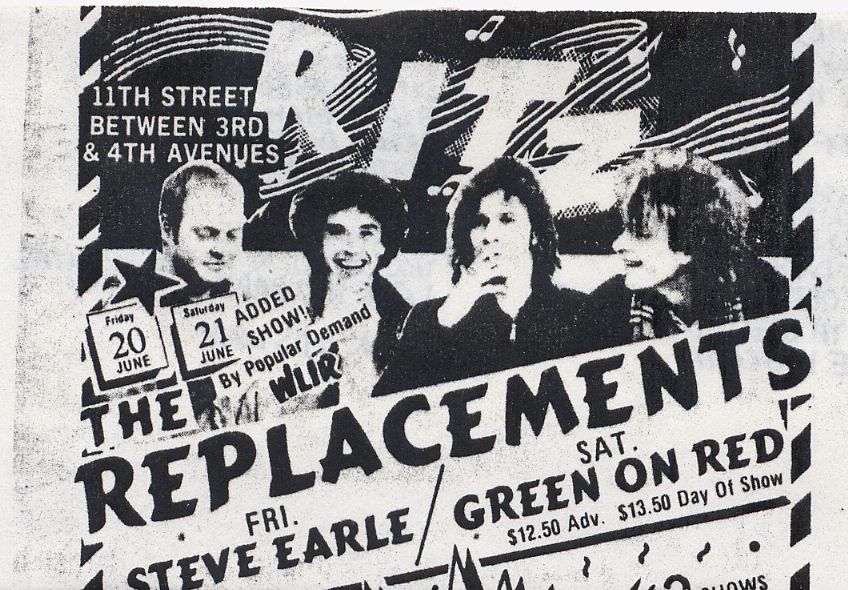
Since I finished the Replacements as far as taking one song off each of their albums… I’m going to put aside Mondays for some 1980s alternative college radio music for the next few weeks.
I really like the riff underneath this song being framed by the sixties sounding organ.
I’ve read where someone said about this band…it’s alt.country meets the Replacements. In some songs that is true. Some of their songs sound epic and they were reaching for something big…and many times pulled it off.
Green On Red have been described as Desert Rock, Paisley Underground, Alternative Country-Rock, ‘Garage-Country, and ‘Country-Punk. They made their mark in the 80s touring college towns on the circuit with REM, Replacements, and other alternative bands.
Earlier records have the wide-screen psychedelic sound of first-wave desert rock, while later releases tended more towards traditional country rock. They did not pigeon hole themselves into one style.
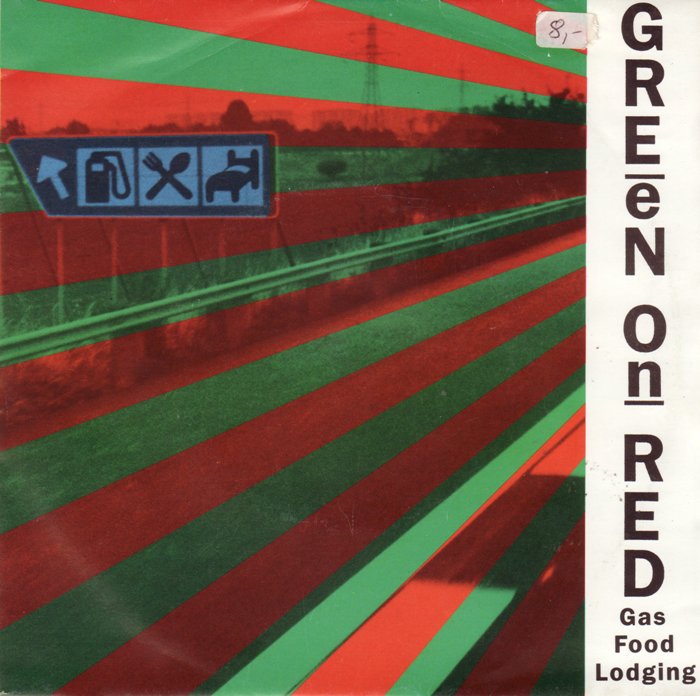
This song was on the album “Gas Food Lodging” which becomes their biggest seller and will eventually be credited as a forerunner to alt-country/americana. They would be produced by some great producers such as Jim Dickenson, Glyn Johns, and Al Kooper but could not connect with the masses.
They were active between 1979 to 1992 and they reunited in 2005 to 2006. They shared a bill with a lot of different musicians.
Sixteen Ways
16 kids 16 ways They shot my babies by mistake I’m all alone on a midnight ride My 16 kids all have died
Chorus They ain’t coming back It’s too late They shot my babies but They killed my faith
I haven’t slept in 14 days Now it’s time to barricade Myself in these four walls My 16 kids all are gone
Chorus
I worked so hard for 40 years I told myself I had nothing to fear Then one by one they got shot down The youngest one held a gun to his ear
It sounds like it could have been recorded in 1966 by a garage band in Ohio. This song is a bit unknown but like most songs today you may have heard it on commercials. This song just hits you right away with it’s distorted organ.
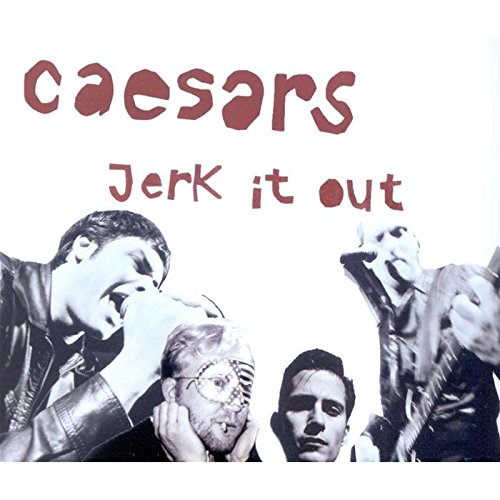
What a cool mid-sixties garage sound The Caesars had on this song…I like good riffs…and this one has a great organ hook. I first heard it in the mid-2000s and I’ve loved it ever since. It peaked at #70 in the Billboard 100 in 2005 and #8 in the UK in 2003. I first noticed it on an Ipod commercial and have recommended it to friends.
This was the first hit for The Caesars, who are known as The Caesar’s Palace in their native country of Sweden, and Twelve Caesars throughout the rest of Scandinavia…However due to copyrights from Caesars Palace Casino, they are known as The Caesars throughout the rest of the world.
The band went on hiatus in 2012 but since has reunited. I posted this song when I first started but only had one maybe two readers…I heard it again yesterday and had to repost it.
From Songfacts.
No hidden meaning in this song – it’s just about dancing and getting loose. It received a lot of attention in the United States after it was featured in an iPod ad. The popular iPod ads also helped boost the popularity for songs like “Are You Gonna Be My Girl” by Aussie rock band JET, and “Flathead” by the Scottish band The Fratellis.
According to the band, the title “Jerk It Out” means “to just let out some steam, freak out, let yourself go, get crazy, etc.” The title has a double meaning, as it can easily be taken as being about masturbation. Keeping with the sexual double meanings, the remix of this song was called “Jerk It Harder.”
Jerk It Out
Wind me up Put me down Start me off and watch me go I’ll be runnin’ circles around you sooner than you know A little off center And I’m out of tune Just kickin’ this can along the avenue But I’m alright
‘Cause it’s easy once you know how it’s done You can’t stop now It’s already begun You feel it runnin’ through your bones And you jerk it out And you jerk it out
Shut up Hush your mouth Can’t you hear you talk too loud No can’t hear nothin’ ’cause I got my head up in the clouds I bite off anything that I can chew I’m chasing cars up and down the avenue But that’s okay
‘Cause it’s easy once you know how it’s done You can’t stop now It’s already begun You feel it runnin’ through your bones And you jerk it out
‘Cause it’s easy once you know how it’s done You can’t stop now It’s already begun You feel it runnin’ through your bones And you jerk it out And you jerk it out
And you jerk it out And you jerk it out Oh baby don’t you know You really gotta jerk it out When you jerk it out Oh baby don’t you know You really gotta jerk it out When you jerk it out Oh baby don’t you know you You really gotta jerk it out
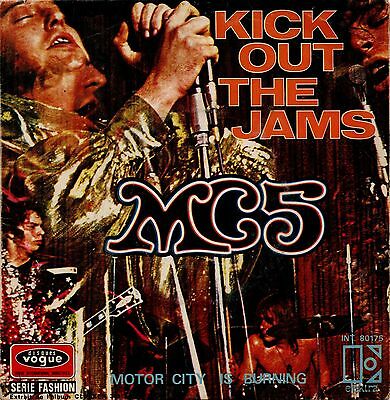
I read about this song long before I actually heard it. It’s loud hard rock right in your face. It’s famous for lead singer Rob Tyner’s uncensored “Kick out the jams motherf***ers” rather than the tamer version that is “Kick out the jams brothers and sisters. ”
They were using the expression for a long time, because they would be critical of other bands that came to Detroit that the MC5 would open for. They’d come into town with a big reputation, and then they’d get up on stage and if they were weak the MC5 would harass them. They would yell at them, ‘Kick out the jams or get off the stage, motherf–ker!’ Finally, one day they used the expression for a title of a song.
Many bands benefit from controversy, but the controversy over this song did not go well for them, and when they pushed it too far, it got them dropped from their label.
Many retailers refused to stock the album, including a local chain called Hudson’s. The band took this as an affront and placed an ad in an underground newspaper called the Fifth Estate that read, “F–k Hudson’s.” Hudson’s responded by threatening to pull all Elektra albums, so in 1969, the label dropped the MC5, recalled the Kick Out The Jams albums still in stores, and replaced them with clean versions.
Atlantic quickly signed the band and teamed them with producer Jon Landau, but their two albums on the label flopped, and by 1973 what was just a few years earlier the most promising band in Detroit was out of action.
“MC5” stands for Motor City Five. The name was derived from The Dave Clark Five, otherwise known as the DC5. The group went through a few managers, including Bruce Burnish, before John Sinclair took them on.
Jeff Buckley who was not known as a loud artist was a huge fan of this song and often performed it at his live shows, injecting a burst of rock into his setlists.
The song peaked at #82 in the Billboard 100 in 1969.
From Songfacts
The signature song of the MC5, “Kick Out The Jams” was also their rallying cry and credo. The phrase was often taken to mean “overcome obstacles,” but it wasn’t written as a song of perseverance.
Along with the rest of the album, this was recorded live at the Grande Ballroom in Detroit on October 30 and 31 (Mischief Night and Halloween), 1968. By this time, the MC5 had gained a fervent live following in the Detroit area, but had not released any material. By the time the album was issued a few months later in early 1969, they had stirred up lots of controversy for their revolutionary stunts and associations: they sometimes brought unloaded rifles on stage, and their manager, John Sinclair, founded the White Panther party, devoted to upending political and cultural norms. The song peaked on the Hot 100 on April 5, 1969; In July, Sinclair was given a 10-year prison sentence for possession of two marijuana cigarettes. He became a cause célèbre, as many rockers voiced support for him. In 1971, John Lennon lionized him in the song “John Sinclair.”
Elektra Records president Jac Holzman is listed as the co-producer on this track along with Bruce Botnick, as they handled the live recording. Botnick was the engineer for The Doors.
This was likely the first rock song on a major label to use the word f–k in the lyrics (it was also printed in the liner notes, written by John Sinclair). It proved very provocative, but also drew attention away from other storylines, like their furious live shows and role in defining the Detroit rock sound.
The entire band was credited as writers on this song, per custom on their first album. Lead singer Rob Tyner, who died of a heart attack in 1991 at age 46, did most of the work on this one. Wayne Kramer told Songfacts:
“We were going through a very creative period. The band had just moved in together for the very first time. There used to be a building in downtown Detroit that was a dentist’s office on the second floor, and we all moved into different rooms in the dentist’s office as our bedrooms. And then downstairs was a storefront. I covered the walls with egg crates and made it a rehearsal studio, so for the first time we could rehearse whenever we wanted to – all day, all night if we wanted to – and we all lived there.
So, it became possible to really develop some songs and some music. And Tyner and I developed a little habit of sitting down at the kitchen table with a couple of joints of reefer, a little amp, my electric guitar. He’d have a notepad, I would just play guitar riffs, and he would listen and say, ‘Wait, wait… play that one again. No, change that a little bit. OK, play that again. Play that four times.’ And then we would start to cobble the songs together. That was where ‘Kick Out The Jams’ was born.”
Rage Against The Machine covered this on their 2000 album Renegades. On August 27, 2008, Rage performed the song with MC5 guitarist Wayne Kramer at the Denver Coliseum during the Democratic National Convention, which was being held nearby.
This was the first song played on XFM’s launch as a Londonwide commercial station on September 1, 1997. 23 years later, it was the also the final track broadcast by XFM before its re-branding as Radio X on September 21, 2015.
The censored version
The uncensored version
Kick Out The Jams
Kick out the jams motherfuckers ! Yeah! I, I, I, I, I’m gonna I’m gonna kick ’em out ! Yeah !
Well I feel pretty good And I guess that I could get crazy now baby Cause we all got in tune And when the dressing room got hazy now baby
I know how you want it child Hot, quick and tight The girls can’t stand it When you’re doin’ it right Let me up on the stand And let me kick out the jam Yes, kick out the jams I want to kick ’em out!
Yes I’m starting to sweat You know my shirt’s all wet What a feeling In the sound that abounds And resounds and rebounds off the ceiling
You gotta have it baby You can’t do without When you get that feeling You gotta sock ’em out Put that mike in my hand And let me kick out the jam Yes ! Kick out the jams I want to kick ’em out
So you got to give it up You know you can’t get enough Miss Mackenzie Cause it gets in your brain It drives you insane Leaping frenzy
The wailin’ guitars girl The crash of the drums Make you want to keep-a-rockin’ Till the morning comes
Let me be who I am And let me kick out the jams Yes, kick out the jams I done kicked em out!!!
Chris Bell was the founding member and guitarist/singer/songwriter for Big Star. Chris left after the first album never sold.. He played afterwards a little but then went into a huge depression.
This song has a hard trippy edge to it. I love his voice in this one…he sounds like he is on a mission and he was at the time.
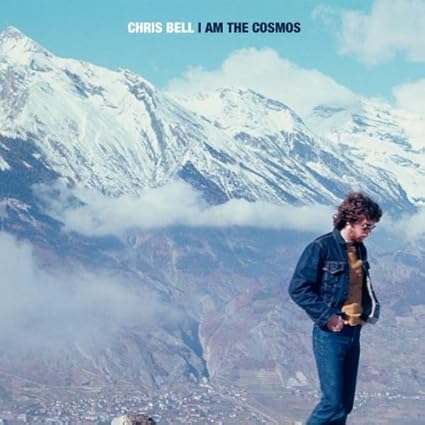
He was doing drugs, drinking, and basically shutting himself off to people. He was this way for months and his brother David took him over to Italy to try to help him. His brother snapped this picture of Chris that was used on his debut album that was released after his death.
Little by little Chris started to get better and more religious…that helped him cut out the hard drugs. He would battle depression for the rest of his short life but he never got as bad as when he quit Big Star. You can hear the hurt in his voice in this song.
This song is about him finding God.. The lyrics are brutally honest. He did attempt suicide twice and states that in the song. Although this was recorded in the mid-seventies…it wasn’t released until the 90s long after Chris had died in an auto accident.
Better Save Yourself
I walk the streets I’m all alone I just can’t think What I’ve been doing wrong
I know you’re mine He treats you nice It’s suicide I know, I tried it twice
You should’ve given your love to Jesus It couldn’t do you no harm Should’ve given your love to Jesus It wouldn’t do you no harm You’ve been sitting on your ass Trying to find some grace But you better save yourself If you wanna see his face
I guess there are things You’d like to know It’s getting late And I know you want to go
I love watching old Slade videos on youtube. They were a lot of fun to listen to and watch. They were a hard rocking glam band that somehow never made it in America. Some of their songs did a decade later covered by Quiet Riot. Slade did have a couple of hits in the 80s in America but their golden period was in the early to mid seventies.
They weren’t the only UK band not to hit big in America. They are joined by T. Rex, The Small Faces, Oasis, and The Jam just to name a few.
This song peaked at #1 in the UK and #97 in the Billboard 100 in 1972. The song was written by band members Noddy Holder and Jim Lea.
Jim Lea said he had been working on the song for a few years… he stole a phrase or two from The Beatles Everybody’s Got Something to Hide Except Me and My Monkey and nobody ever noticed.
Came up to you one night noticed the look in your eye, I saw you was on your own, and it was alright, yeh it was alright. They said I could call you Sidney, oh I couldn’t make out why, standing here on your own an’ it was alright, yeh it was alright.
[Chorus] So won’t you take me back home, a take me back home, and if we can find plenty to do and that will be alright yeh it will be alright
O you and your bottle of brandy, both of you smell the same, you’re still on your feet, still standing so it was alright, yeh it was alright. The superman comes to meet you, looks twice the size of me, I didn’t stay round to say goodnight so it was alright, yeh it was alright.
[Chorus]
So won’t you take me back home my baby, ah won’t you take me back home yeh I said take me, take me take, take me back home, take me take me take, take me back home oh won’t you..
I didn’t first hear this song when it was originally released in 1981. I had a friend who played it to me a few years later after it was re-recorded. It was an important song in REM’s career…it broke them on the charts…not super high but on the charts just the same.
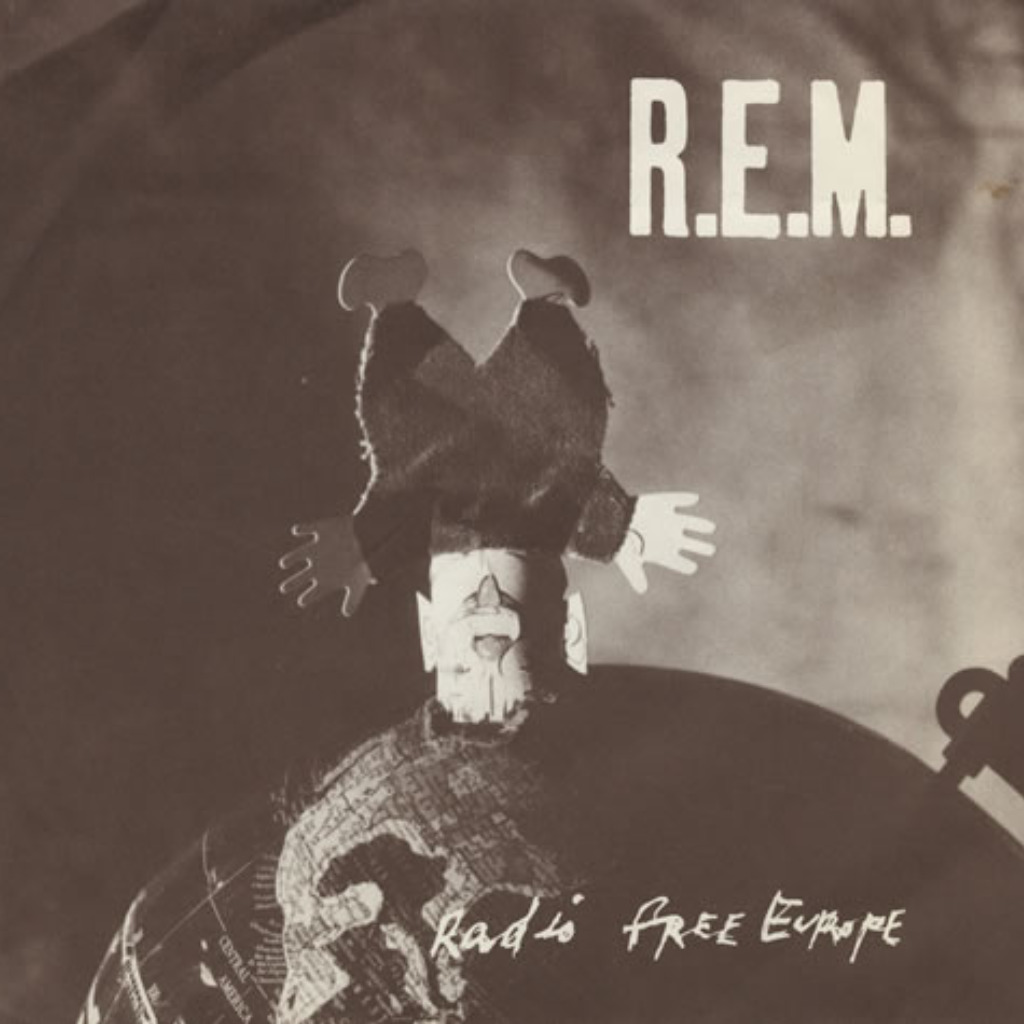
This song was R.E.M.’s first single, released in 1981 on the short-lived independent record label Hib-Tone. The single received critical acclaim, and its success earned the band a record deal with I.R.S. Records. R.E.M. re-recorded the song for their 1983 debut album Murmur.
The re-recording was released by a larger I.R.S. and peaked at #78 in the Billboard 100 and #25 on the Mainstream Rock Chart.
Radio Free Europe is a radio network run by the United States government that broadcasts to Europe and the Middle East. The mission of the broadcasts is to promote democracy and freedom, but R.E.M. makes the point that this can easily cross the line into propaganda.
Drummer Bill Berry: “This song was pivotal to the continuation of our career,” “Most fans may not realize that for two years before Murmur was released, we barely made financial ends meet by playing tiny clubs around the southeast. Our gasoline budget prevented us from venturing further. Put simply, our existence was impoverished. College radio and major city club scenes embraced this song and expanded our audience to the extent that we moved from small clubs to medium-sized venues and the additional revenue made it possible to logically pursue this wild musical endeavor. I dare not contemplate what our fate would have been had this song not appeared when it did.”
From Songfacts
There was a good reason for Michael Stipe’s infamously indecipherable lyrics on this song: he hadn’t finished them by the time they recorded it. In a 1988 NME interview, Stipe described the lyrical content as “complete babbling.”
R.E.M. lead singer Michael Stipe said in a 1983 interview with Alternative America: “We were all so scared of what the other one would say, that everyone nodded their head in agreement to anything to come up. The earlier songs were incredibly fundamental, real simple, songs that you could write in five minutes. Most of them didn’t have any words. I just got up and howled and hollered a lot.
That’s true. I’ve got to write words for ‘Radio Free Europe,’ because we’re going to re-record that for the album. It still doesn’t have a second or third verse. I think there are actually lyrics to every song on the EP.”
Stipe noted being apparently unaware of his own genius: “The guys always said I do something harmonically here that made them all go ‘whoa,’ because it was so advanced … or something, in the ‘straight off the boat’ part. I wonder if I tricked them by accident? I still have no idea what it is they’re talking about.”
The video for this song, directed by Arthur Pierson, was shot in the famed Paradise Gardens, a folk art sculpture garden crafted by artist Howard Finster in Pennville, Georgia. Finster, a Baptist minister, also painted the album art for R.E.M.’s second album, Reckoning.
This version is the original Hib-Tone version.
Radio Free Europe
Beside yourself if radio’s gonna stay Reason: it could polish up the gray Put that, put that, put that up your wall That this isn’t country at all
Raving station, beside yourself
Keep me out of country and the word Deal the porch is leading us absurd Push that, push that, push that to the hull That this isn’t nothing at all
Straight off the boat Where to go?
Calling on in transit Calling on in transit Radio Free Europe Radio
Beside defying’ media too fast Instead of pushin’ palaces to fall Put that, put that, put that before all That this isn’t fortunate at all
Raving station, beside yourself
Calling on in transit Calling on in transit Radio Free Europe Radio
Decide yourself Calling on a boat Media’s too fast
Keep me out of country and the word Disappointers into us absurd
Straight off the boat Where to go?
Calling on in transit Calling on in transit Radio Free Europe Radio Free Europe
Calling on in transit Calling on in transit Radio Free Europe Radio Free Europe