Rolling Stones – Honky Tonk Women

Of all the Rolling Stones songs I have posted…B sides and album cuts…I’m astonished that I haven’t posted this one. This is one of the Stones’ best 60s singles. It’s B side was You Can’t Always Get What You Want. I consider Jumping Jack Flash, Honky Tonk Women, and Brown Sugar their best rock singles. A case could be made for Satisfaction and Start Me Up as well.

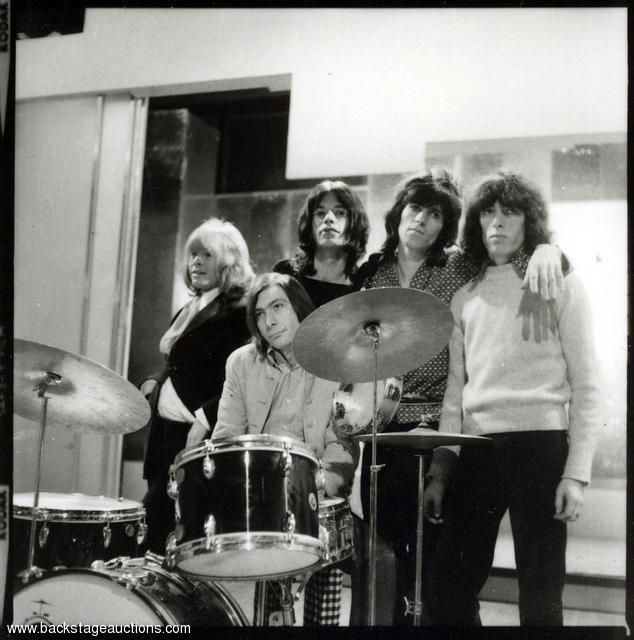
When the Stones finished this recording on June 8, 1969…they drove to Brian Jones’s house to fire him. By this time he was trying to get himself clean of drugs and actually was getting better. He also had an arrest on his record that would stop the Stones from touring at the time. He started to record demos on his own and other people have said that it sounded like Creedence Clearwater Revival and that style. He would die on July 3, 1969, from drowning in his pool under a lot of controversy that still is questioned to this day. The song was released on July 4, 1969

This song was also the track that introduced Stones fans to guitarist Mick Taylor. The former member of John Mayall’s Bluesbreakers was brought in to replace founding member Brian Jones. Taylor, only 20 at the time, provided the glue for the song, helping the transition from verse to chorus. Guitarist Ry Cooder also was an inspiration for the song.

The song started on a trip that Richards and Mick Jagger took to Brazil. Inspired by the cowboys working the ranch where they were vacationing, the two started knocking together a Hank Williams/Jimmie Rodgers-inspired tune, with Jagger using the countrified tone of the music as inspiration for his lyrical ode to the working women of the Old West. That version you can hear in Country Honk on the Let It Bleed album. Honky Tonk Women was released as a non-album single.

The song peaked at #1 on the Billboard 100, in the UK, in New Zealand, and #2 in Canada in 1969.

Keith Richards: ‘Honky Tonk Women’ started in Brazil. Mick and I, Marianne Faithfull and Anita Pallenberg who was pregnant with my son at the time. Which didn’t stop us going off to the Mato Grasso and living on this ranch. It’s all cowboys. It’s all horses and spurs. And Mick and I were sitting on the porch of this ranch house and I started to play, basically fooling around with an old Hank Williams idea. ‘Cause we really thought we were like real cowboys. Honky tonk women. And we were sitting in the middle of nowhere with all these horses, in a place where if you flush the john all these black frogs would fly out. It was great. The chicks loved it. Anyway, it started out a real country honk put on, a hokey thing. And then couple of months later we were writing songs and recording. And somehow by some metamorphosis it suddenly went into this little swampy, black thing, a Blues thing. Really, I can’t give you a credible reason of how it turned around from that to that. Except there’s not really a lot of difference between white country music and black country music. It’s just a matter of nuance and style. I think it has to do with the fact that we were playing a lot around with open tunings at the time. So we were trying songs out just to see if they could be played in open tuning. And that one just sunk in.”

Honky Tonk Women

I met a gin-soaked, bar-room queen in Memphis
She tried to take me upstairs for a ride
She had to heave me right across her shoulder
‘Cause I just can’t seem to drink you off my mind

It’s the honky tonk women
Gimme, gimme, gimme the honky tonk blues

I laid a divorcée in New York City
I had to put up some kind of a fight
The lady then she covered me with roses
She blew my nose and then she blew my mind

It’s the honky tonk women
Gimme, gimme, gimme the honky tonk blues
It’s the honky tonk women
Gimme, gimme, gimme the honky tonk blues
It’s the honky tonk women
Gimme, gimme, gimme the honky tonk blues
Humble Pie – 30 Days In The Hole

I heard this song before I knew who Marriott was…I learned later he was the same singer as in Itchycoo Park and Lazy Sunday which didn’t compute. I really wish I could have seen this band live. His voice in this is nasty…a perfect rock voice for this song.

Do you want a song that rocks? Humble Pie tried something different than most hard rock bands at the time. Marriott combined hard rock with a gospel feel. This is one of the nastiest songs you will hear. It’s as sleazy as you can get but it rocks.

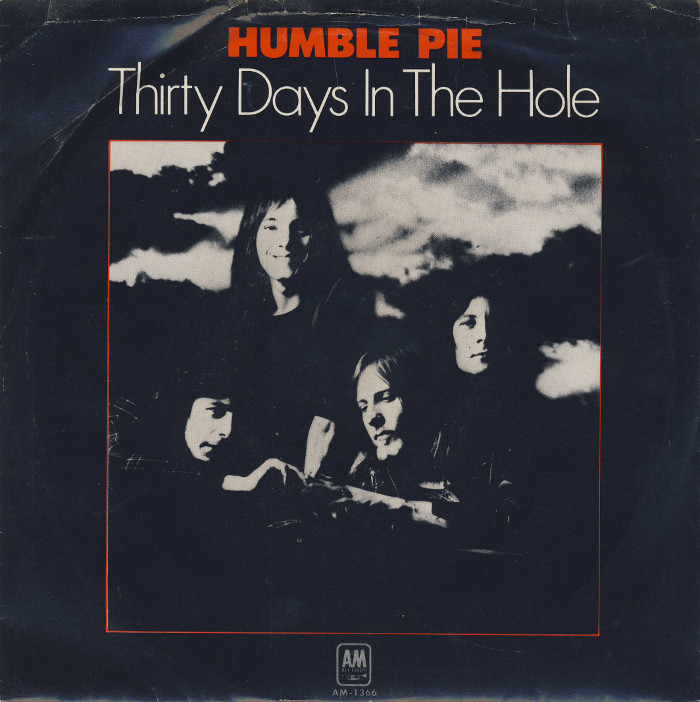
This is personally my favorite song by Humble Pie. The band also included Peter Frampton for a while and was known for their excellent live shows. In 1969 Marriott left The Small Faces and teamed up with Frampton to start Humble Pie. They were a very successful touring band and mostly concentrated on albums…much like The Faces. This song never charted but did get some FM play.

While touring in Kentucky, Marriott read that getting caught with drugs in that state would give you an automatic 30 days in jail. He was also thinking about a friend of the band’s who had been sent to jail for having a joint. Drugs were part of the culture back then and just a way of life on the road. He used a lot of street names for drugs like “Chicago Green” is pot, and New Castle Brown is a kind of heroin…not to be confused with Newcastle Brown which is ale. Black Nepalese Hash is a rare variant of hashish that hails from the Highland regions of Nepal.

Marriott has said that inspiration for the title came from a Humphrey Bogart/James Cagney movie he saw on TV, where Bogart plays a prisoner who gets sent to “30 days in the hole.”

30 Days in the Hole

Roll my tape
Ooh, ooh, ooh

Thirty days,
Anyone doin’ that one?
I’m doin’ that one

30 days in the hole
30 days in the hole
30 days in the hole

All right all right all right all right, yeah

Chicago Green, talkin’ ’bout Black Lebanese
A dirty room and a silver coke spoon
Give me my release, come on
Black Nepalese, it’s got you weak in your knees
Sneeze some dust that you got buzzed on
You know it’s hard to believe

30 days in the hole
30 days in the hole
30 days in the hole
That’s what they give you
30 days in the hole
I know

Newcastle Brown, I’m tellin’ you, it can sure smack you down
Take a greasy whore and a rollin’ dance floor
It’s got your head spinnin’ round
If you live on the road, well there’s a new highway code
You take the urban noise with some dirt with poison
It’s gonna lessen your load

30 days in the hole
That’s what they give you now
30 days in the hole
Oh, yeah
30 days in the hole
All right, all right
30 days in the hole

What you doin’ boy?
You here for 30 days
Get, get, get your long hair cut
And cut out your ways

Black Nepalese, it got you weak in your knees
Gonna sneeze some dust that you got busted on
You know it’s so hard to please
Newcastle Brown can sure smack you down
You take a greasy whore and a rollin’ dance floor
You know you’re jailhouse-bound

30 days in the hole
30 days in the hole
30 days in the hole
Oh, yeah
30 days in the hole
30 days, 30 days in the hole
30 days in the hole
30 days in the hole
30 days in the hole
30 days in the hole
30 days in the hole
30 days in the hole
30 days in the hole
30 days in the hole

Max Picks …songs from 1968

1968

It was a turbulent year, to say the least. We lost two proponents of peace—Martin Luther King, Jr., and Robert F. Kennedy. Other events include the Vietnam War’s Tet Offensive, riots in Washington, DC, the Civil Rights Act of 1968, and heightened social unrest over the Vietnam War, values, and race.

The music was also toughened up by moving away from psychedelic music. The social climate and The Band’s album Music from Big Pink had a lot of influence on this. You still had psychedelic music released but overall, music was more stripped down to the basics.

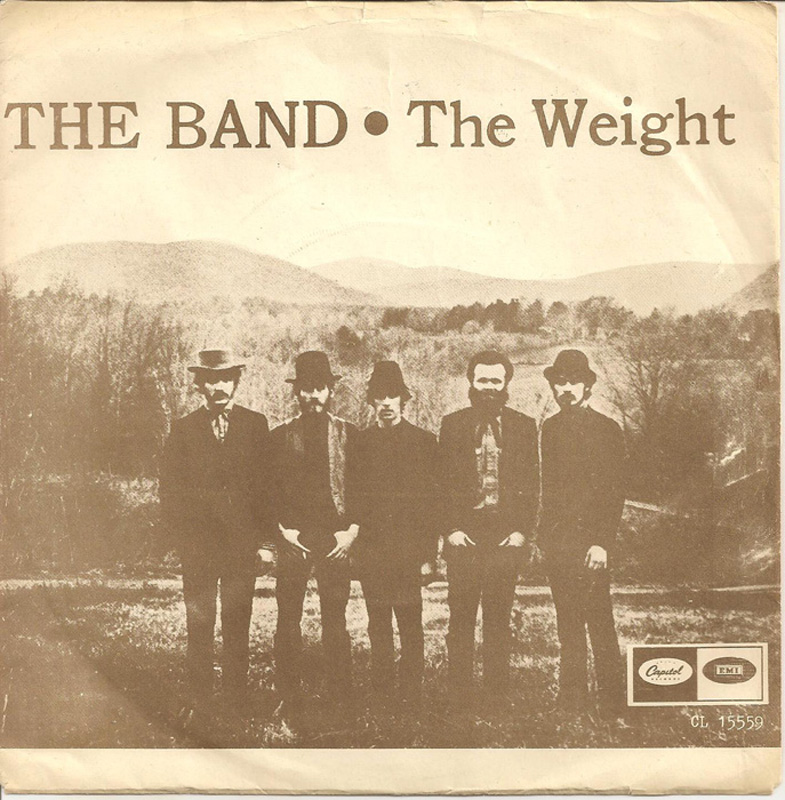
Let’s start off with The Band…Music From Big Pink was one of the most important albums ever released. Its influence was everywhere. The song The Weight was also later included in the movie Easy Rider.

The Beatles would release the super single Hey Jude/ Revolution and The White Album. I could go with many songs like Lady Madonna, Hey Jude, Back in the USSR, Helter Skelter, Dear Prudence,  and the list is almost endless… but I’ll go with Revolution. This song was written by John Lennon and Paul McCartney…but mostly Lennon.

The Rolling Stones released what some considered their best song ever with Jumping Jack Flash. It was written by Keith Richards and Mick Jagger.

Maybe the first supergroup in rock…Cream with White Room. Pete Brown wrote the lyrics and Jack Bruce wrote the music. Bruce was inspired by a cycling tour that he took in France. The “white room” was a literal place: a room in an apartment where Pete Brown was living.

Now we will go with the legendary Otis Redding singing (Sittin’ On) The Dock Of The Bay.

The song is a true classic. Stax guitarist Steve Cropper wrote this with Redding. Cropper produced the album when Redding died, including this track with various songs Redding had recorded the last few years.

Redding died in a plane crash on December 10, 1967, a month before this song was released (January 8, 1968) and three days after he recorded it. It was by far his biggest hit and was also the first-ever posthumous #1 single in the US.

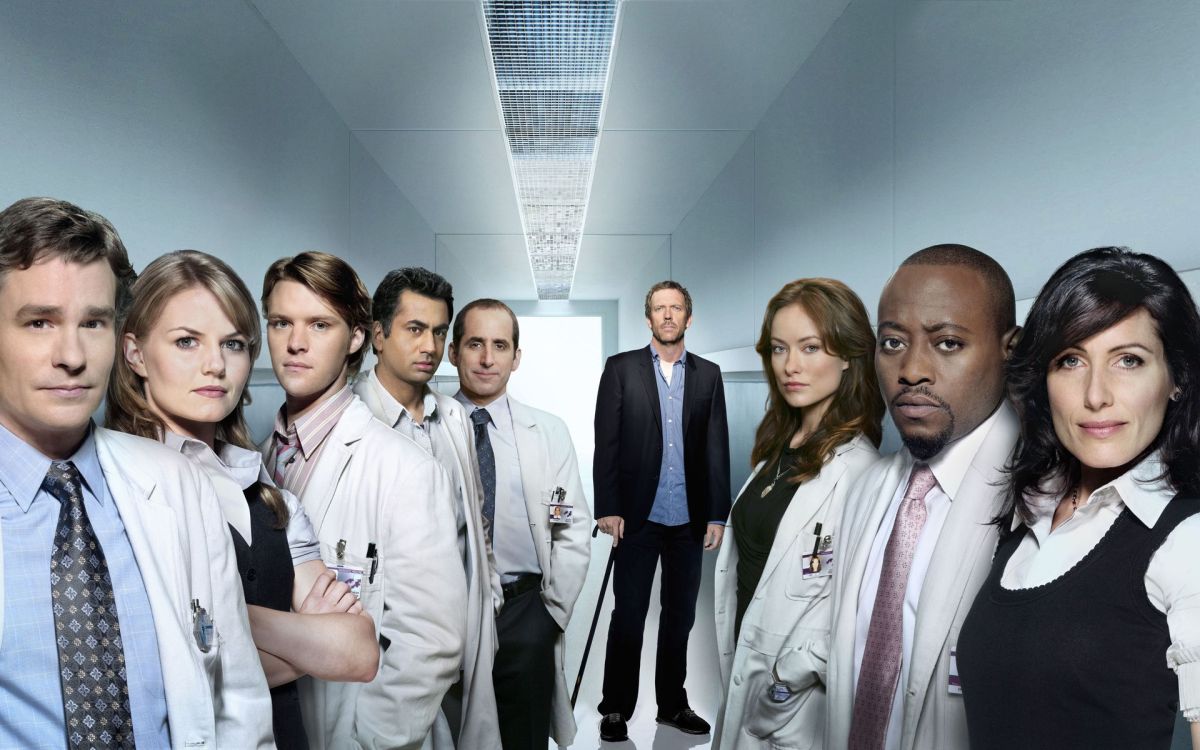
House MD

I’m usually late getting into a show or a band. I didn’t watch The Sopranos, Breaking Bad, or The Wire until years after they went off the air. I just found House MD in May and I’ve been binging on it. It ran from 2004 to 2012. It was one of the most intelligent shows on television. Hugh Laurie did a fantastic job on his show along with the rest of the actors.

Gregory House is a doctor with a horrible bedside manner and that is putting it mildly. He is a genius, mad doctor. House is the head of a diagnostic team that was put together around him. They get the most challenging cases in the hospital and solve them more often than not. On the surface, he has little interest in patients and instead, it is about solving the puzzle of their ailment that draws him in but we see many subtle instances which prove he does have a heart for both his patients and his friends. That is the root of the show that extends not only to patients but to his life and friends. He seems to have Antisocial Personality Disorder (ASPD).

The writers based the show on Sherlock Holmes and Watson. House could have been a master detective because his ability to read people is incredible. Even the names were common…Holmes-House and his best friend on the show was an oncologist named Wilson who was House’s Watson.

The parallels are very close. Both House and Holmes are drug addicts, and both are tortured musicians. But more fundamentally, House is really a detective show, not a medical show. It’s about solving the cause of mysterious diseases in the face of numerous misdirections (which often turn out to be caused by flaws in human nature) as opposed to solving mysterious crimes.

House goes around the hospital popping Vicodin because he is in constant pain. He suffered a leg injury that left him with severe pain for the rest of his life. The injury was caused by an infarction incurred while golfing. He is cynical, often cruel, but yet undeniably a genius. The actor behind House, Hugh Laurie, openly admitted to experimenting with Vicodin to “get closer to the character.” Speaking about his experience, “I wouldn’t recommend it – we have to be careful. But then again … if you’re not in pain it gives a floaty, pleasurable feeling.”

Although House appears to be uncaring to his patients he will do unethical procedures to save them, risking his own career. That could be to solve the all-important “puzzle” also. He does rub off on people. The team that stays around him starts to become him in some ways. They want to work with him because of how great he is at what he does. He spies on their personal life and tells their secrets but they keep coming back. My theory is they would do anything to be around greatness…and have that rub off.

Lisa Cuddy is the Dean of Medicine in the hospital. She tries to reign in House and that is almost impossible but she is strong and sometimes wins the battle. She makes House do “clinic duty” in the free clinic hoping that will improve his relationship with patients but he actively hates it and tries to dodge it because usually, there is no puzzle. As he said… that job can be done by a monkey with a bottle of Motrin. Here are a few clips from the clinic duty. These are not serious cases…but they are funny. Be on the lookout for the lady with an asthma inhaler.

His best friend Wilson is a kind person who is the only friend who can put up with House long term. Wilson is not stupid…he is intelligent and can be manipulative in a way but is not in the same league as House in that department. They are totally different but play college pranks on each other and need each other to be whole in a lot of ways.

The show stays fresh because his team changes through the years but the original team does rejoin at different points. It’s not just about cases…in fact, some episodes don’t even have a case at all.

This is a true ensemble show. Yes, it centers around House but the characters Foreman, Chase, Cameron, Thirteen, Taub, Kutner,  Masters, and more are just as important and you get an insight into their lives as well. You can see them slowly change into House’s logic that “Everybody Lies.”

Medical shows usually bore me but this one kept my attention all the way through. The cases they handle are based on real cases but they are very rare. It’s not a comedy…it’s a drama with comedy thrown in…the writing is second to none. The writers go deep into the characters.

Would you want him as your doctor if you had something terribly wrong with you? Would you care in the end if it was just a puzzle for him to solve or if he cared about you or not? I’ll end it here with just a simple statement…watch this show.

This is a show where you can store up quotes. I used one on the guy who works for me at work when we were both trying to solve a problem together. “I thought I’d get your theories, mock them, then embrace my own. The usual.”

The look on his face was priceless.

Here are a few short clips together from the first season.

Smokey Robinson & The Miracles – Tears Of A Clown

I somehow got a lot of singles from relatives when I was a kid. They just ended up at our house. I had the original single of this and I loved it and still do. Smokey has such a smooth and cool voice. I can’t tell you how much I like this song. It’s high on my list of all-time songs I love. I remember being 12 and going to baseball practice and listening to this song before I left…it stayed with me through practice in the heat and that night. His voice is pure gold.

To me, Smokey is like American royalty or a national treasure as people say. When your peers like Dylan, Lennon, and everyone else sing your praises…you are doing something right.

Stevie Wonder and Hank Cosby (producer) came up with the music for this song. Smokey Robinson listened to the song for a few days and decided it sounded like a circus so he came up with the lyrics based on the sad clown Conio from the opera Pagliacci. It was Ruggero Leoncavallo’s opera about fatal jealousies in a traveling troupe of actors based on a real-life story… a case encountered by Leoncavallo’s father, who was a police magistrate in Naples.  Pagliacci was around in the late 1800s.

It was recorded in 1967 and was just an album track on the album Make It Happen. In 1970 it was released as a single (with a new mix) and was a huge hit. The song peaked at #1 on the Billboard 100, #7 in Canada, and #1 in the UK. It was written by Robinson, Stevie Wonder, and Hank Cosby. It was recorded in 1967 but it was released in 1970.

undefined

It’s hard to believe but this song would be their only #1 hit on the Billboard 100 with Smokey. They had 42 songs in the top 100 and 6 top ten hits. Smokey would soon leave the Miracles after this song. He would be replaced by Billy Griffin on vocals. Now THAT had to be a hard gig to replace Smokey Robinson. Billy did a good job though because they had another number 1 with Love Machine Part 1. He does sound a lot like Smokey.

Smokey Robinson: “I was trying to think of something that would be significant, that would touch people’s hearts, but still be dealing with the circus, so what is that? Pagliacci, of course. The clown who cries. And after he makes everyone else happy with the smile painted on his face, then he goes into his dressing room and cries because he’s sad. That was the key.”

Below is Smokey Robinson telling the story of the song. Below that is the single version that we have all heard. What was it with those 60s-70s shows with the backdrops to the singers? Did they think it was Smokey Robinson and the Plumbers?

Tears of a Clown

Oh yeah, yeah, yeah

Now if there’s a smile on my face
It’s only there trying to fool the public
But when it comes down to fooling you
Now honey, that’s quite a different subject

But don’t let my glad expression
Give you the wrong impression
Really, I’m sad
Oh, I’m sadder than sad
You’re gone and I’m hurtin’ so bad
Like a clown I pretend to be glad

Now there’s some sad things known to man
But ain’t too much sadder than
The tears of a clown
When there’s no one around

Oh yeah, baby

Now if I appear to be carefree
It’s only to camouflage my sadness
In order to shield my pride I’ve tried
To cover this hurt with a show of gladness

But don’t let my show convince you
That I’ve been happy since you
Decided to go
Oh, I need you so
I’m hurt and I want you to know
But for others I put on a show

Oh, there’s some sad things known to man
But there ain’t too much sadder than
The tears of a clown
When there’s no one around, oh yeah

Just like Pagliacci did
I try to keep my sadness hid
Smiling in the public eye
But in my lonely room I cry
The tears of a clown
When there’s no one around

Oh yeah, baby

Now if there’s a smile on my face
Don’t let my glad expression
Give you the wrong impression
Don’t let this smile I wear
Make you think that I don’t care
Really, I’m sad
Hurtin’ so bad

Ronettes – Be My Baby

Some people have said they cannot comment on this post…some can some cannot…I’ve emailed WP and am trying live chat but of course, it’s not open. So it might let you leave a comment…and it might not

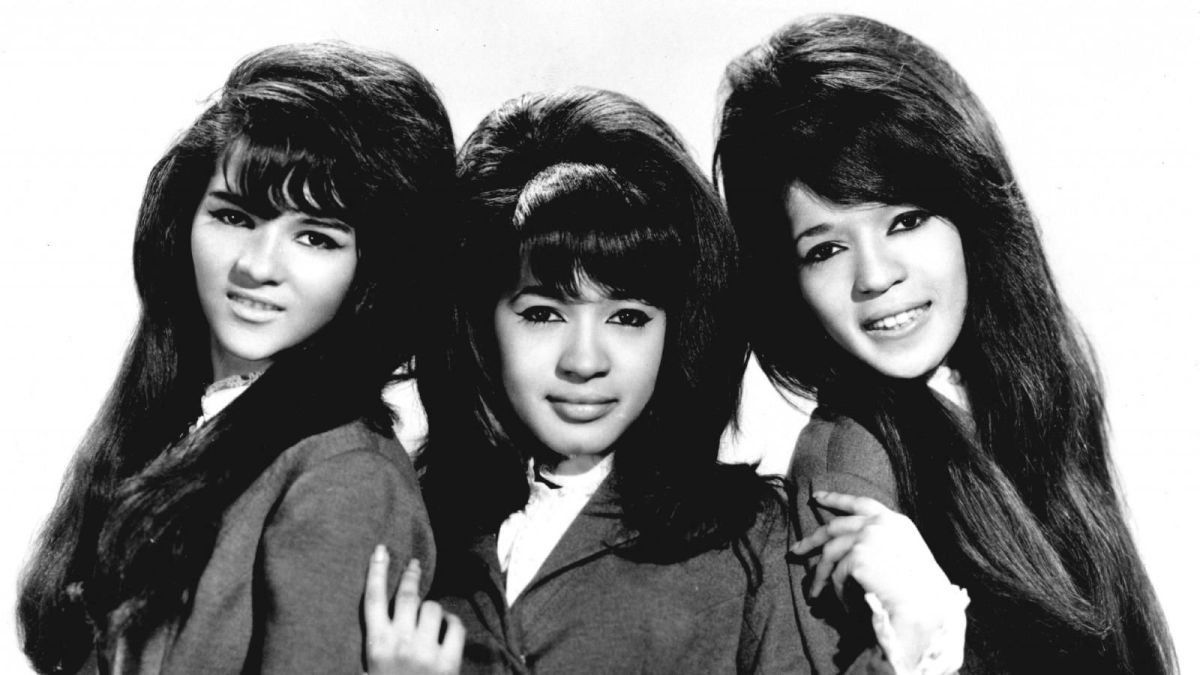
The Ronettes were Veronica (Ronnie) Bennett, her sister Estelle Bennett, and their cousin Nedra Talley. One of the great songs of the sixties.

I’m a huge fan of this song and The Ronettes. I like many of the female groups of the early sixties like The Marvelettes, Martha and the Vandellas, The Shirelles, and the Supremes but no one sounded like Ronnie Spector. But… I’m not the fan that Brian Wilson has been since he heard the song.

Count Brian Wilson as a huge fan of this song. Well, being a fan is an understatement…he was totally obsessed with this song.  He was driving in the 60s when he heard it and had to pull the car over and analyze the chorus. He then bought the single and put it in his home jukebox and played it endlessly. In the seventies, as his fellow Beach Boys would be recording in his basement…he would be blasting Be My Baby at full volume with the curtains closed. One great thing came out of his obsession… it inspired him to write Don’t Worry Baby.

Mike Love remembered Wilson comparing Be My Baby to Albert Einstein’s theory of relativity. Wilson told The New York Times in 2013 that he had listened to the song at least 1,000 times. Beach Boy Bruce Johnston gave a higher estimation: “Brian must have played ‘Be My Baby’ ten million times. He never seemed to get tired of it.” He also called it the best song ever recorded. Brian Wilson’s daughter Carnie has one distinct memory from her childhood, listening to, and more accurately being woken up with, Be My Baby.

Brian Wilson: “I felt like I wanted to try to do something as good as that song and I never did, I’ve stopped trying. It’s the greatest record ever produced. No one will ever top that one.”

To me, this song is brilliant and one of my favorites… although I wouldn’t go as far as Wilson did. It’s one of Phil Spector’s best-produced songs. The song peaked at #2 on the Billboard 100, #2 in Canada, #2 in New Zealand, and #4 in the UK.

This was the first Ronettes song produced by Phil Spector and released on his label, Philles Records. It also featured Spector’s “Wall Of Sound” production technique, where he layered lots of instruments and used echo effects.

Don’t expect to find B-side gold on many of Spector’s singles. Spector had Tommy Tedesco and Bill Pitman (session musicians) record a throwaway instrumental that he called “Tedesco And Pitman.” Spector made sure the B-sides of his singles were garbage so there was no doubt what song should be played. This also allowed him more studio time to craft the hit.

The future Ronnie Spector was the only Ronette to sing on this. Phil Spector rehearsed her for weeks and had her do 42 takes before he got the sound he wanted. Spector and Bennett got married in 1968, and they divorced in 1974. Ronnie Spector said the home they shared was pretty much a prison for her.

She woke up on her wedding night to workers erecting a barbed-wire fence around the estate. Bars were soon installed over windows, and intercoms in all the rooms. Ronnie was rarely allowed out alone, unless with a life-size dummy of Spector in the passenger seat of her car. But the worst was being unable to perform on stage.

I never heard about Ronnie Spector until the 80s when she appeared on the Eddie Money song Take Me Home Tonight. After that, I looked up all I could about her.

Jeff Barry and Ellie Greenwich wrote this song. As was his custom, Phil Spector also took a songwriting credit on the track. Producers did that in the 50s and 60s and it was wrong.

One thing I respected about George Martin…he blew the whistle on the hugely successful producer Norrie Paramor in the early sixties to a young David Frost who roasted Paramor on his show “That Was the Week That Was”. Paramor would force artists to record his songs for B sides and also take writers’ credit for others. Frost kept Martin’s name out of it. No one ever found out who dished out the goods to Frost about Paramor.

Be My Baby

The night we met I knew I needed you so
And if I had the chance I’d never let you go.
So won’t you say you love me,
I’ll make you so proud of me.
We’ll make ’em turn their heads every place we go.

So won’t you, please, be my be my baby
Be my little. baby my one and only baby
Say you’ll be my darlin’, be my be my baby
Be my baby now, my one and only baby
Wha-oh-oh-oh.

I’ll make you happy, baby, just wait and see.
For every kiss you give me I’ll give you three.
Oh, since the day I saw you
I have been waiting for you.
You know I will adore you ’til eternity.

So won’t you, please, be my be my baby
Be my little. baby my one and only baby
Say you’ll be my darlin’, be my be my baby
Be my baby now, my one and only baby
Wha-oh-oh-oh.

So come on and, please, be my be my baby
Be my little baby my one and only baby
Say you’ll be my darlin’, be my be my baby
Be my baby now, my one and only baby
Wha-oh-oh-oh.

Be my be my baby be my little baby.
My one and only baby oh oh,
Be my be my baby oh,
My one and only baby wha-oh-oh-oh-oh.
Be my be my baby oh,
My one and only baby
Be my be my baby oh,
Be my baby now

Patsy Cline – Walkin’ After Midnight

I’ve always liked Patsy Cline…her voice was so good.  Fellow blogger Dana mentioned her name in the comments and I’m surprised I’ve never done a Cline post.

She was born Virginia Patterson Hensley. Known in her youth as “Ginny,” she began to sing with local country bands while a teenager, sometimes accompanying herself on guitar. By the time she had reached her early 20s, Cline was promoting herself as “Patsy” and was on her way toward country music stardom.

This song came out in 1957 but her voice sounds so fresh and vibrant. This was her first hit. It was a big crossover hit after she performed it on the variety show Arthur Godfrey’s Talent Scouts and won that night’s competition.

At only 15 years old, songwriter Alan Block wrote the original version of “Walkin’ After Midnight” in 1954. The song was based on a personal experience of Block’s, in which he found himself taking a solitary midnight stroll through the city streets. Block’s friend Donn Hecht later collaborated with him on the song, and the two fine-tuned its lyrics and melody.  It was originally intended for Kay Starr, a pop and jazz singer but she turned it down.

Cline didn’t like the song when she heard it but compromised with the record company (Four Star Records) and she recorded it. It was first released by Lynn Howard and the Accents the year before but wasn’t a hit.

The song peaked at #12 on the Hot 100 and #2 on the Country Charts in 1957.

Walkin’ After Midnight

(Wa-wa-walking, wa-wa-walking)
I go out walkin’ after midnight
Out in the moonlight
Just like we used to do, I’m always walkin’
After midnight, searchin’ for you (wa-wa-walking, wa-wa-walking)

I walk for miles along the highway
Well, that’s just my way
Of sayin’ I love you, I’m always walkin’
After midnight, searchin’ for you (wa-wa-walking, wa-wa-walking)

I stop to see a weepin’ willow
Cryin’ on his pillow
Maybe he’s cryin’ for me
And as the skies turn gloomy
Night winds whisper to me
I’m lonesome as I can be

I go out walkin’ after midnight
Out in the moonlight
Just hopin’ you may be somewhere a-walkin’
After midnight, searchin’ for me (Wa-wa-walking, wa-wa-walking)

I stop to see a weepin’ willow
Cryin’ on his pillow
Maybe he’s cryin’ for me
And as the skies turn gloomy
Night winds whisper to me
I’m lonesome as I can be

I go out walkin’ after midnight
Out in the moonlight
Just hopin’ you may be somewhere a-walkin’
After midnight, searchin’ for me (wa-wa-walking, wa-ooh-ah)

Townes Van Zandt – Pancho and Lefty

After the country post on Saturday…I looked through a lot of lists you all made. I listened…I want to thank Lisa for bringing this one up. It’s high time I did a post on Townes Van Zant. He was one of the best songwriters of the 20th Century.

What a songwriter Towns Van Zandt was…this song is probably best known for the Merle Haggard and Willie Nelson cover in 1983. The song peaked at #1 on the Country Billboard Charts and #1 on the Canadian Country Charts in 1983.

Willie Nelson has said that his and Merles duet album was almost complete but it lacked THAT song to put it over the top. Nelson said his daughter Lana suggested to him to listen to Pancho and Lefty by Townes Van Zandt. Willie then asked Townes what the song was about…and Townes said he didn’t know. Nelson then cut the track with his band. Willie and Merle had never heard that song before.

Nelson recorded it that night with his band and had to go and drag a sleepy Haggard (who was sleeping on his bus) to do the vocal part. The vocals were recorded in one take that night. They made a video of it and invited Townes to be in it. He was in the video as one of the Mexican  Federales.

The royalties from this song helped Van Zandt through the years. He told a story of getting pulled over by a couple of policemen. His car sticker was out of date so he got into the police car and they asked him what he does for a living. He said he was a songwriter and the policemen shook their heads. He then told them that he wrote “Pancho and Lefty” and their eyes lit up and they started to grin. Pancho and Lefty were the policemen’s police radio code names. They let Townes go after that.

Van Zandt did not like fame or what came attached to it. It’s been reported that he turned down opportunities to write with Bob Dylan. He respected Dylan a great deal but it was the celebrity part he didn’t want. He never ended up on a major label through his career…by choice. Steve Earle counted Townes Van Zandt as his mentor, and the two formed a close bond in the years since their initial encounter in 1978.

Unfortunately, Earle also adopted Van Zandt’s drug and alcohol habits. So bad, in fact, that Van Zandt actually visited Earle during a rare moment in which Townes was sober. Earle told him “I must be in trouble if they’re sending you.” Earle eventually named his son after Townes Justin Townes Earle.

The original song was on Van Zandt’s 1972 album The Late Great Townes Van Zandt. 

For Willie’s Big 60 show, Bob Dylan and Willie Nelson sang Pancho and Lefty. Bob covered the song sporadically in concert during the 90’s. In 2004, Rolling Stone ranked “Pancho and Lefty” 41st on its list of the “100 Greatest Country Songs of All Time.

Townes Van Zandt on being invited to be in the video: “It was real nice they invited me,”they didn’t have to invite me and I made I think $100 dollars a day. I was the captain of the federales. And plus I got to ride a horse. I always like that. It took four and a half days and that video was four and a half minutes long…The money goes by a strange life, or elsewhere. I mean it doesn’t come to me. But money’s not the question. I would like if I could write a song that would somehow turn one five-year-old girl around to do right. Then I’ve done good. That’s what I care about.”

Townes Van Zandt:  “I realize that I wrote it, but it’s hard to take credit for the writing, because it came from out of the blue. It came through me and it’s a real nice song, and I think, I’ve finally found out what it’s about. I’ve always wondered what it’s about. I kinda always knew it wasn’t about Pancho Villa, and then somebody told me that Pancho Villa had a buddy whose name in Spanish meant ‘Lefty.’ But in the song, my song, Pancho gets hung. ‘They only let him hang around out of kindness I suppose’ and the real Pancho Villa was assassinated.”

Pancho and Lefty

Living on the road my friend,
Is gonna keep you free and clean
Now you wear your skin like iron,
Your breath as hard as kerosene.
You weren’t your mama’s only boy,
But her favorite one it seems
She began to cry when you said goodbye,
And sank into your dreams.

Pancho was a bandit boy,
His horse was fast as polished steel
He wore his gun outside his pants
For all the honest world to feel.
Pancho met his match you know
On the deserts down in Mexico
Nobody heard his dying words,
Ah but that’s the way it goes.

All the Federales say
They could have had him any day
They only let him slip away
Out of kindness, I suppose.

Lefty, he can’t sing the blues
All night long like he used to.
The dust that Pancho bit down south
Ended up in Lefty’s mouth
The day they laid poor Pancho low,
Lefty split for Ohio
Where he got the bread to go,
There ain’t nobody knows

The poets tell how Pancho fell,
And Lefty’s living in cheap hotels
The desert’s quiet, Cleveland’s cold,
And so the story ends we’re told
Pancho needs your prayers it’s true,
But save a few for Lefty too
He only did what he had to do,
And now he’s growing old

Max Picks …songs from 1967

1967

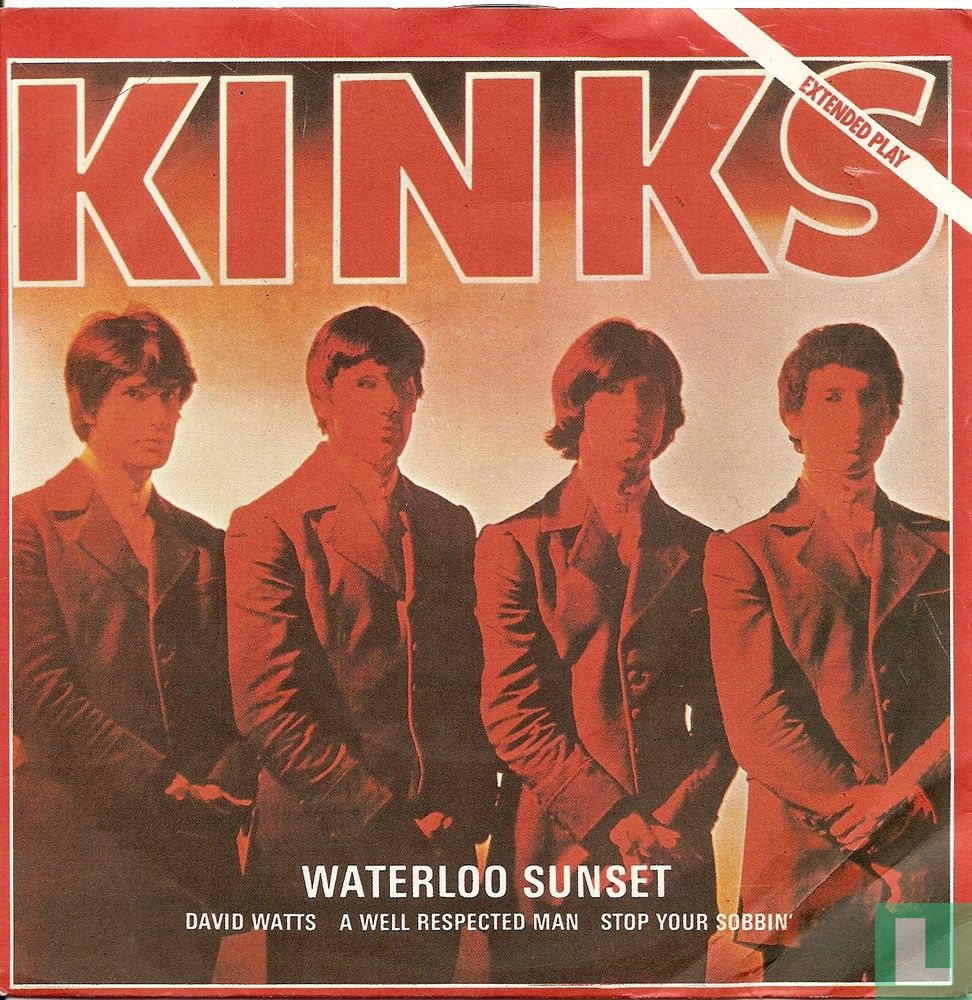
This year contained the Summer of Love and psychedelia was everywhere. This year alone had many of my favorite songs I still listen to. I want to start with a song that I think is one of the best of the sixties. The Kinks Waterloo Sunset.

People ask me my favorite Beatles song all of the time. Usually, I say A Day In The Life but this one comes really close. The Beatles released Sgt Peppers this year but also released one of…if not the best single ever with Strawberry Fields/Penny Lane. Strawberry Fields was credited to Lennon/McCartney but Lennon is said to have written most of it.

Speaking of favorites…this is one of my top songs from the 60s and ever. Procol Harum with a Whiter Shade Of Pale. Gary Brooker and Keith Reid were credited with writing the song but Matthew Fisher the former keyboard player in the band sued for partial writing credit and won on July 24, 2008. Now the song’s writing credit is Reid-Brooker-Fisher. Gary Brooker and Fisher wrote the music and Reid wrote the lyrics. This was the first song Procol Harum recorded.

Another landmark song…The Doors in Light My Fire. The organ intro to this song by Ray Manzarek is one of the most iconic intros in rock. I first heard this song as a kid and automatically loved it. It is the song that the Doors are most known for. I like the album version that is longer and has more of a solo.

The four band members were credited for writing this song Jim Morrison, Robby Krieger, John Densmore, and Ray Manzarek.

This one is a no-brainer…the one and only Aretha Franklin with Respect…and I have plenty of it for her. It was written by the great Otis Redding.

Black Sabbath – Iron Man

I hope many of you enjoyed a long weekend!

This is a fun song. Now its popularity has risen to an all-time high with the 2008 Marvel movie Ironman. I know most serious movie fans are not big fans of the Marvel movies. I fit in there also because I don’t like watching a lot of CGI. As a music fan though, I’m glad they are sharing 60s and 70s music to a new generation.

Another song that the riff is easy for beginning guitar players to learn how to play. It was one of the first ones I learned. This was the biggest US hit for Black Sabbath. It got very little radio play but developed a cult following, which led to enough sales to give it a chart position.

Iron Man peaked at #52 in 1971 on the Billboard 100 and #68 in Canada. The song was written by all of the members of the band. It was on the album Paranoid released in 1970. The album peaked at #12 on the Billboard Album Charts, #20 in Canada, and #1 in the UK Album Charts.

They did something smart as far as singles. They followed the Led Zeppelin way of doing it. In the UK they didn’t release this as a single because they had released Paranoid the year before. People would show up in the UK wanting to hear one song…Paranoid… so they limited their single releases there.

Black Sabbath Bass guitar player Geezer Butler: “I was walking down the street one day and thought… ‘what if there were a bloody great bloke made out of metal walking about?”‘ 

EMS VCS3 1970's MKII modular analog classic synthi NO KS keyboard image 1

There is debate on how Ozzy got his voice distorted in the intro. Some say he got that by singing from behind a metal fan. Others say it was him singing through a VCS-3 Synthesizer…they came out in 1969. Another rumor was a  processor called a ring modulator (effects box) ran through a tremolo. Why don’t they just ask Ozzy? Uh…ok never mind! just kidding.

This is the only Black Sabbath album that I owned. I always liked it… Paranoid, War Pigs, Iron Man, and Hand of Doom I liked. One cool fact I read is Frank Zappa surprised Black Sabbath by covering this song because he knew they were in the audience.

Here is a partial list of artists who have covered this song from Songfacts: Marilyn Manson, Alice in Chains, Butthole Surfers, Add N To (X), Busta Rhymes, Therapy, NOFX, Auburn U. Band, Sir Mix-A-Lot, Tim McCarthy, Heavy Voltage, DYS, Tanzwut, EMO, Amoco Renegades, Dead Alewives, Replacements, The Cardigans, The Mats, and Offspring.

Tony Iommi:  “A lot of the words in the songs – a lot of the moods of the songs – are aggressive, especially in the early days – Satanic, if you like… That was the way it felt, so that was the way we played. But it got out of hand. With Paranoid in England, for instance. There was a girl (Hillary Pollard) found dead – a nurse she was: dead in her room with our album on the turntable going round. And it was taken to court saying that it was because of the album that she was depressed and killed herself, which was totally ridiculous, I think.”

Geezer Butler: “If the moral majority don’t understand it they’ll try to put it down, or get other people to read all sorts of things into it … The moral majority sort of people picked up on the Satanic part of it. I mean, most of it was about stopping wars and that side of it, and some science fiction stuff. There wasn’t that much Satanic stuff, and what there was it wasn’t exactly for the devil or anything like that; it was just around at the time and we just brought it to people’s attention.” 

Iron Man

I am iron man

Has he lost his mind?
Can he see or is he blind?
Can he walk at all
Or if he moves will he fall?

Is he alive or dead?
Has he thoughts within his head?
We’ll just pass him there
Why should we even care?

He was turned to steel
In the great magnetic field
Where he traveled time
For the future of mankind

Nobody wants him
He just stares at the world
Planning his vengeance
That he will soon unfold

Now the time is here
For iron man to spread fear
Vengeance from the grave
Kills the people he once saved

Nobody wants him
They just turn their heads
Nobody helps him
Now he has his revenge

Heavy boots of lead
Fills his victims full of dread
Running as fast as they can
Iron man lives again

Who – Summertime Blues

I wrote this for Dave’s site when he asked a group of bloggers to pick a song that signifies “summer” to you. Now summer is starting to wind down…I thought I would post this one.

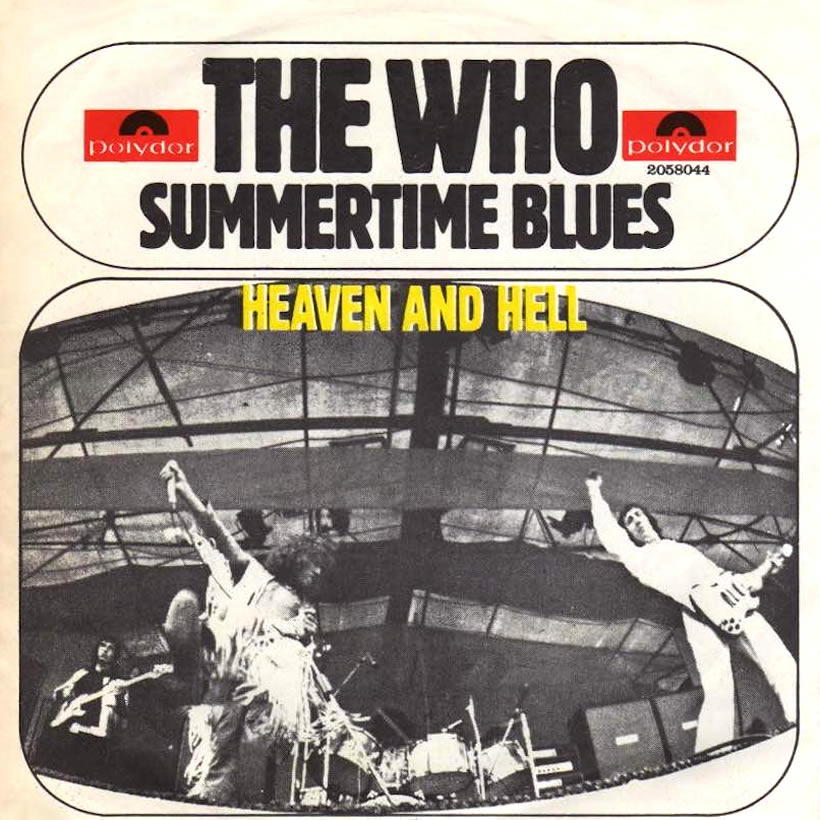
I first heard this song by The Who. The Who’s version is a good one for bar bands to play but it’s hard to keep it under control in a bar setting. It must be loud before it works…although it’s fun to see some patrons with their hands over their ears…it’s best to limit that.

Eddie Cochran wrote Summertime Blues with his friend Jerry Capehart and released it in 1958. Capehart helped Cochran get a record deal. Capehart said: “There had been a lot of songs about summer, but none about the hardships of summer.” With that idea and a guitar lick from Cochran, they wrote the song in 45 minutes.”

The song was going to be a B side of the Cochran single “Love Again” written by Sharon Sheeley. The record company wisely made the decision to make Summertime Blues the A side. In 1960 Sheeley was his girlfriend and was in the car that crashed killing Cochran. She died in 2002 five days after having a cerebral hemorrhage.

I like the Cochran version…and the Who version…and they are completely different. I’ve always loved the way The Who covered Summertime Blues. If I had a time machine… The Who would be a stop to see them live at this time. The version they released in 1970 was on their album Live At Leeds…a great rock live album.  The song peaked at #27 on the Billboard 100, #8 in Canada, and #38 in the UK in 1970.

Live at Leeds would be my pick for the best rock live album ever. The album peaked at #4 on the Billboard 100, #2 in Canada, and #3 in the UK. It’s raw, raucous, and in your face…in other words, a great rock song!

Summertime Blues

Well, I’m a gonna raise a fuss, I’m a gonna raise a holler
I’ve been working all summer just to try and earn a dollar
Well, I went to the boss, said I got a date
The boss said “No Dice, son, you gotta work late”

Sometimes I wonder, what am I gonna do
There ain’t no cure for the summertime blues

Well, my mom and poppa told me, “Son you gotta earn some money
If you want to use the car to go out next Sunday”
Well, I didn’t go to work, I told the boss I was sick
He said “You can’t use the car cause you didn’t work a lick”

Sometimes I wonder, what am I gonna do
There ain’t no cure for the summertime blues

Gonna take two weeks, gonna have a fine vacation
Gonna take my problems to the United Nations
Well, I went to my congressman, he said, quote
“I’d like to help you son but you’re too young to vote”

Sometimes I wonder, what am I gonna do
There ain’t no cure for the summertime blues

Rolling Stones – Salt Of The Earth

Let’s drink to the hard-working people
Let’s drink to the lowly of birth
Raise your glass to the good and the evil
Let’s drink to the salt of the earth

This song is on my favorite Rolling Stones album, Beggars Banquet. There is not a bad song on the LP. This one and Prodigal Son I always liked. The album peaked at #5 on the Billboard Album Charts, #3 in the UK, and #3 in Canada in 1969.

I played this album to death. As with most Stones albums, you get what you get…rock, blues, and a little country thrown in the mix. I got this album when I was 12 and it opened my eyes wide to the Stones…much more than a collection of their hits would ever do.

This album is not considered up there with Sticky Fingers or Exile On Main Street but I have the strongest connection to it. I’ve always related Beggars Banquet to the White Album. They were both released in 1968 and were raw and honest. No studio trickery to either…a big departure from the psychedelic era of 1967 for both bands. I think the Stones and Beatles also owe a nod to The Band’s rootsy music (Music From Big Pink) which was influencing everyone around this time.

I learned that a greatest hits package from The Beatles and Rolling Stones was NOT enough. Those two bands taught me to buy albums and not just rely on the “hits” which even at that time were worn out. You never got the really good songs that lay hidden like this one. The two well-known songs off of the album were great like Sympathy for the Devil and Street Fighting Man but I liked some of the others just as much. Now with certain artists…yes, a Greatest Hits package is fine but not with the Beatles, Stones, Who, Kinks, Bob Dylan, Van Morrison, and a few more.

I don’t think Jimmy Miller gets enough credit for their sound. That is not a knock against the Stones but the Miller-produced albums are special. He produced them during their 5 album stretch golden period. Keith and Mick Jagger both sing on this with the Los Angeles Watts Street Gospel Choir singing background…Nicky Hopkins is on piano. It was written by Keith Richards and Mick Jagger.

The title refers to the working class…they are “The salt of the Earth.” Jagger later said: “The song is total cynicism. I’m saying those people haven’t any power and they never will have.” 

Speaking of albums. My friend Paul has a massive site with album reviews called The Punk Panther Music Reviews. I can almost promise you he will have what you are looking for.

Also, Graham has a wide selection of albums that he reviewed…it’s called Aphoristic Album Reviews. When I want to see album reviews I go to those two sites. I hardly ever do album reviews because frankly, I’m not that good at it but I still try once in a while.

Salt Of The Earth

Let’s drink to the hard working people
Let’s drink to the lowly of birth
Raise your glass to the good and the evil
Let’s drink to the salt of the earth

Say a prayer for the common foot soldier
Spare a thought for his back breaking work
Say a prayer for his wife and his children
Who burn the fires and who still till the earth

And when I search a faceless crowd
A swirling mass of gray and
Black and white
They don’t look real to me
In fact, they look so strange

Raise your glass to the hard working people
Let’s drink to the uncounted heads
Let’s think of the wavering millions
Who need leaders but get gamblers instead

Spare a thought for the stay-at-home voter
His empty eyes gaze at strange beauty shows
And a parade of the gray suited grafters
A choice of cancer or polio

And when I look in the faceless crowd
A swirling mass of grays and
Black and white
They don’t look real to me
Or don’t they look so strange

Let’s drink to the hard working people
Let’s think of the lowly of birth
Spare a thought for the rag taggy people
Let’s drink to the salt of the earth

Let’s drink to the hard working people
Let’s drink to the salt of the earth
Let’s drink to the two thousand million
Let’s think of the humble of birth

Max Picks …songs from 1966

1966

This may be the best year ever in pop music. So many choices but as Ricky Nelson said “You Can’t Please Everyone…” so here it goes.

There are so many Beatles songs this year like Day Tripper, Eleanor Rigby, Paperback Writer, and more. My two favorite Beatles songs of this year would be And Your Bird Can Sing and this one…the B side to Paperback Writer…Rain. The bass in this song is incredible. The song was credited to Lennon/McCartney but it’s more of a Lennon song.

Now we have The Beatles arch-rivals…just kidding. Actually, they were friends who worked together and made sure their releases didn’t overlap each other. The Rolling Stones in Paint It Black. Personally, I like this one better than Satisfaction. Paint It Black was written by Mick Jagger and Keith Richards.

Wild Thing…you make my heart sing. That’s all that needs to be said by this band. They were not a one-hit wonder though. I’ve been a fan of The Troggs since I bought their single as a kid in the late seventies. Their hits included Wild Thing, With a Girl Like You, and the song that has been covered many times…Love Is All Around. They were punk rock before punk rock. The song was written by Chip Taylor.

Let’s go to the American band The Lovin Spoonful who scored huge with this single. The song was written by John Sebastian, Mark Sebastian, and Steve Boone.

This man would change rock guitar forever and some still consider him the best. Hey Joe was released in December of 1966. The Jimi Hendrix Experience was making its debut. The song’s songwriting credits have been disputed. Here is what Wiki said: Public Domain (1st pressing), Dino Valenti a.k.a. Chet Powers (2nd & 3rd pressings), and Billy Roberts (copyrighted)

Rush – The Spirit of Radio

A very radio-friendly song by Rush. When I was a teen many local bands covered Rush…usually terrible, but they gave it a try. When I first heard this song…right away I made a connection to another older song written by Paul Simon. Sound of Silence has the lyrics:

And the sign said, “The words of the prophetsAre written on the subway wallsAnd tenement halls

Spirit of the Radio has:

For the words of the profits
Were written on the studio wall
Concert hall

Other than that…the songs have no other connection but I can’t help but think that Peart made that connection with Sound of Silence. That’s one of the reasons I liked it…plus the musical break during that time of the song. It gave the song a huge dynamic.

I always liked the intro by Alex Lifeson, who doesn’t get the credit he deserves compared to Lee and Peart. He is not doing a Van Halen finger tapping or hammer on… during that intro…he is actually picking those notes.

With the lyric “Sound of Salesmen” Peart would listen to bands they were opening for every night saying THIS was the city they loved the most… wherever they were… every night it was the same disingenuous spiel. One of the bands Peart was talking about was KISS who would market anything. Rush did open for KISS many times in the 1970s.

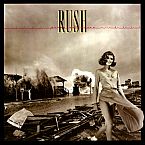
The song was on the Permanent Waves album released on January 18, 1980. The album peaked at #3 in Canada, #4 on the Billboard Album Charts, and #3 in the UK.

The song peaked at #22 in Canada, #51 on the Billboard 100, and #13 in the UK in 1980.

The song is Rush’s only entry on The Rock and Roll Hall of Fame’s 500 Songs that Shaped Rock and Roll. Rush wasn’t inducted into the Hall until 2013; they were first eligible in 1999.

Neil Peart: “‘The Spirit Of Radio’ was actually written as a tribute to all that was good about radio, celebrating my appreciation of magical moments I’d had since childhood, of hearing ‘the right song at the right time.’ However, [the song’s] celebration of the ideals of radio necessarily seemed like an attack on the reality – on the formulaic, mercenary programming of most radio stations, with music the last of anyone’s concerns. And yes, it was really ironic that such a song became popular on radio, though it was a kind of litmus test. Some radio guys who ‘got it’ could hear the song and think, ‘That’s the way it ought to be,’ while others – the shallow, swaggering salesmen-of-the-air – could be oblivious to the song’s meaning and proudly applaud themselves, ‘That’s about me!’

From Songfacts: Rush released a new animated video for the song on June 12, 2020 in celebration of the 40th anniversary of Permanent Waves. The conceptual clip references milestones and influential broadcasters in FM rock radio history, including an homage to the pioneering Italian radio inventor Guglielmo Marconi. It closes with a personal tribute to the late Rush drummer Neil Peart, who died in January 2020. Fantoons.tv created the visual along with producer Linda Otero and directors David Calcano and Alberto Hadyar.

The Spirit of Radio

Begin the day with a friendly voice
A companion, unobtrusive
Plays that song that’s so elusive
And the magic music makes your morning mood

Off on your way hit the open road
There is magic at your fingers
For the spirit ever lingers
Undemanding contact in your happy solitude

Invisible airwaves crackle with life
Bright antennae bristle with the energy
Emotional feedback on a timeless wavelength
Bearing a gift beyond price almost free

All this machinery making modern music
Can still be open-hearted
Not so coldly charted it’s really just a question
Of your honesty, yeah, your honesty

One likes to believe in the freedom of music
But glittering prizes and endless compromises
Shatter the illusion of integrity, yeah

Invisible airwaves crackle with life
Bright antennae bristle with the energy
Emotional feedback on a timeless wavelength
Bearing a gift beyond price almost free

For the words of the profits
Were written on the studio wall
Concert hall

And echoes with the sound of salesmen
Of salesmen, of salesmen

Star Trek – Turnabout Intruder

★★★1/2 June 3, 1969 Season 3 Episode 24

If you want to see where we are…and you missed a few…HERE is a list of the episodes in my index located at the top of my blog. 

This show was written by Gene Roddenberry and Arthur Singer

This is IT! The last episode of the last season. Because the original series was canceled instead of coming to a natural end, and the idea of a series finale was not as popular in the 1960s, “Turnabout Intruder” was close to a normal episode and did not have the “finale” touches. The remastered version of “Turnabout Intruder” ended with the Enterprise flying toward a colorful nebula, to artistically signify the episode as being the last of the original series.

First of all, I want to thank all of you for reading all of these posts or just dropping back by once in a while. I know I narrow my audience doing these television shows so I am so thankful that some of you who really never watched it jumped in and I hope some of you come away watching a few of them. Some of you like Lisa, Obbverse, and Liam re-watched the shows as we went along and I thank you for it and the rest that did.

This episode is basically “Freaky Friday” in space.

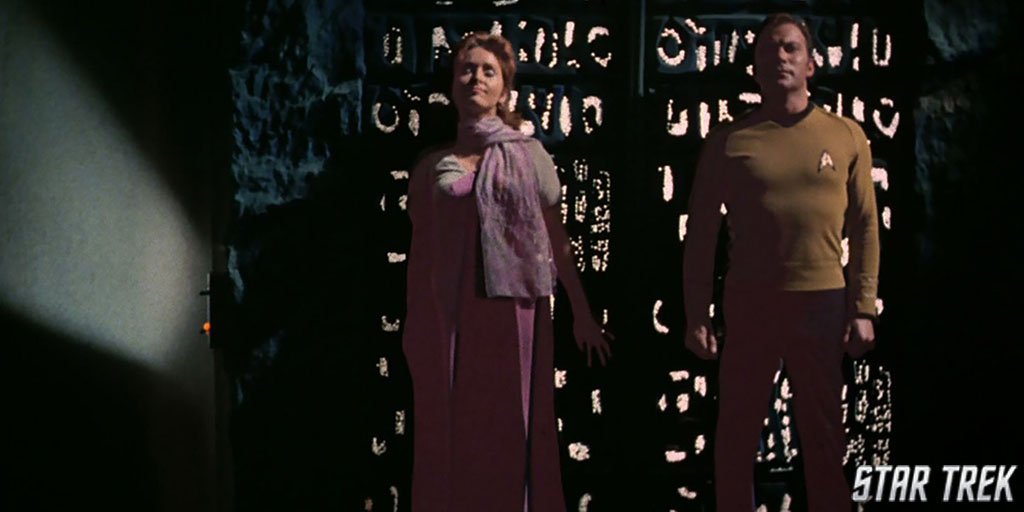
Kirk’s body gets kidnapped by his former lover Janice Lester (played by Sandra Smith) who has gone jealously insane over the fact that Starfleet apparently doesn’t allow women captains (Roddenberry regretted this in the script). While the script may have been intended as a social commentary on the 1960s, it doesn’t quite work for a Star Trek series that was supposedly set in the 23rd century.

Star Trek - Turnabout Intruder B

Surely by then, women would have risen up the ranks to become captains of starships! While it seems implausible that Kirk would allow his body to be kidnapped on Camus II by an alien device, this cannot be dismissed outright. As Spock rightly notes, the Enterprise has been to many new places and witnessed many strange events. Moreover, Kirk was once cloned in ‘What Are Little Girls Made of?’ and even split into two in ‘The Enemy Within.’

I think Shatner does a fair acting job in this one. He is much more emotional because Lester is in his body. I think this one is an average episode of the third season. Not one of the greats but not bad. 

From IMDB:

William Shatner had a severe case of ‘flu’ during filming of this episode. At one point, he had to lift Sandra Smith in his arms, carry her to a couch and put her on it: during the first take, he got as far as the couch and dropped her. Fortunately, it was well padded, and Smith bounced several times; according to Joanie Winston, who was visiting the set, Shatner looked down at Smith and said, “You know I love you, baby, but you’ve got to lose about six inches off that ass.”

Leonard Nimoy is the only actor to appear in every episode of the series. William Shatner appeared in every episode with the exception of the first pilot, The Cage (1966).

Gene Roddenberry regretted the line about the Federation supposedly not allowing female captains, as he felt it was sexist.

The transposition sequence was the last footage shot for The Original Series.

This episode is subtly referenced in Legacy (1990). Jean-Luc Picard mentions that they are bypassing an archaeological survey on Camus II, the same planet that this episode begins on. This was mentioned because, with the airing of its 80th episode “Legacy”, Star Trek: The Next Generation officially became longer than TOS.

Leonard Nimoy (Spock) and Majel Barrett (Nurse Christine Chapel and Number One) are the only actors to appear in both the series finale and the first pilot The Cage (1966).

Nurse Chapel’s (Majel Barrett) hair color is brown for this episode, not its usual blonde color.

This episode was originally scheduled for broadcast on March 28, 1969. Special network coverage of the death of Dwight D. Eisenhower pre-empted it, and it didn’t air until June 3.

Lieutenant Galloway reappears in this episode, despite being killed by Ronald Tracey in The Omega Glory (1968). He was credited as Galloway (misspelled as “Galoway”) even though actor David L. Ross had been recast as Lieutenant Johnson in Day of the Dove (1968) after the character of Galloway was killed off.

Although this was the last episode of the Original Series to be filmed and aired, this episode has a lower stardate than the previous episode, All Our Yesterdays (1969).

The production crew nicknamed this episode “Captain Kirk: Space Queen”.

Though her voice is muffled, Dr. Lester protests to Dr. Coleman, “Go to Hell!” a rare case of a “swear” sneaking past the network censors.

According to Harry Landers, he was very fatigued during this episode because he had just had his upper right lung removed due to an infection. He wanted to turn the role down but did it as a favor to producer Fred Freiberger.

After two years on the series, Roger Holloway finally gets to speak dialogue, all of two words. His character’s name (Lemli) was the same as William Shatner’s license plate at the time, a mixture of his daughters’ (Leslie, Melanie, Lisabeth) names.

Summary

On the planet Camus II, Kirk meets his old flame, Janice Lester, who is supposedly dying of radiation poisoning. She is a woman scorned and is out to get her revenge on Kirk with whom she was in love many years ago. She has discovered an alien process that will allow her to transfer her essence into Kirk’s body and vice versa. Returning to the Enterprise in Kirk’s body, she now has command of the Enterprise. Kirk on the other hand is now in Lester’s body and can get no one to believe that he is really Kirk. It soon becomes obvious that Lester is incapable of command, leading Spock to accept that she has, in fact, taken over Kirk’s body.

THANKS AGAIN! One final message…Live Long and Prosper. 

CAST

William Shatner … Captain James Tiberius ‘Jim’ Kirk
Leonard Nimoy … Mister Spock
DeForest Kelley … Dr. McCoy
Sandra Smith … Janice Lester
Harry Landers … Dr. Coleman
James Doohan … Scott
George Takei … Sulu
Walter Koenig … Chekov
Majel Barrett … Nurse Chapel
Barbara Baldavin … Communications Officer
David L. Ross … Lt. Galoway
John Boyer … Guard
Tom Anfinsen … Medical Technician (uncredited)
Bill Blackburn … Lieutenant Hadley (uncredited)
James Drake … Security Guard (uncredited)
Roger Holloway … Lt. Lemli (uncredited)