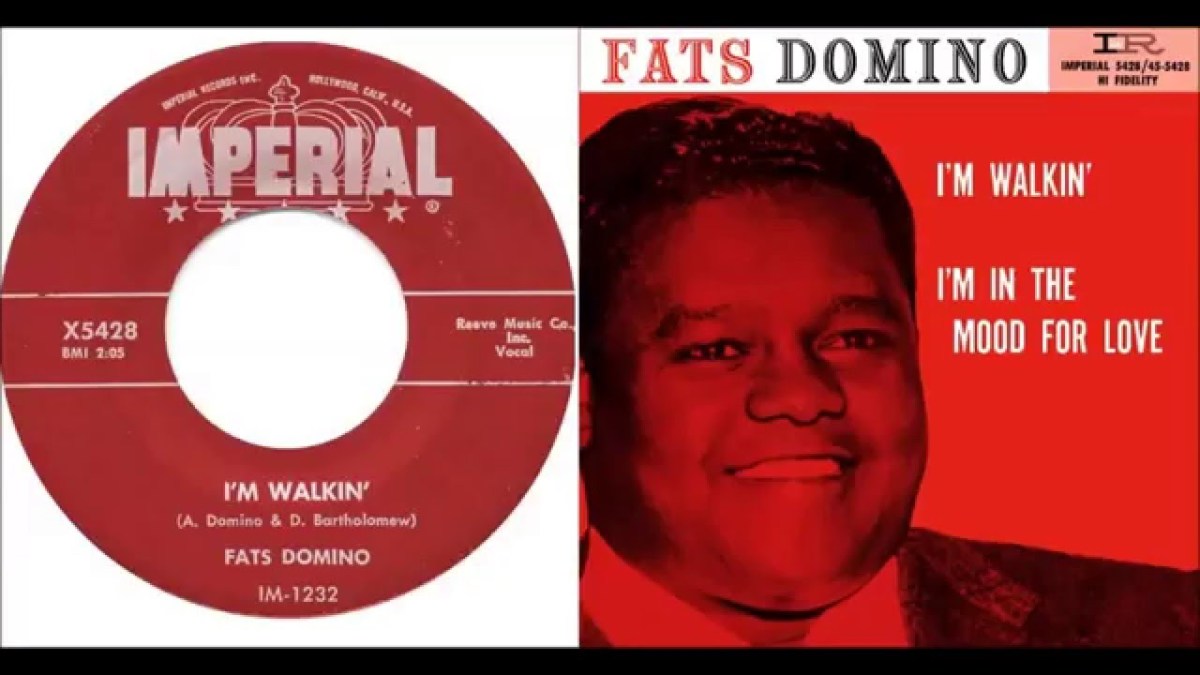
I bought some records at a relative’s yard sale when I was really young. A Chuck Berry album, The Doors LA Woman album, and this single. So for a dollar, I took home a great deal. This one is an excellent song with a beat that won’t leave you.
Antoine “Fats” Domino Jr. was not flashy and wild like some of his 1950s peers such as Elvis, Little Richard, and Jerry Lee Lewis. The first I heard of Fats Domino was on “Happy Days” and the song Blueberry Hill.
Domino was the youngest of eight children in a musical family, he spoke Creole French before learning English. At age 7 his brother-in-law taught him how to play the piano. By the time he was 10, he was already performing as a singer and pianist.
This song was inspired by a comment a fan made to Domino after Domino’s car broke down: “Hey, look at Fats Domino, he’s walking!” Domino then thought to himself, “Yeah, I’m walking,” and wrote the song as he walked.
Domino wrote this song with Dave Bartholomew, a fellow New Orleans musician who did a lot of work arranging and composing songs for him. One thing about the song that just jumps out is the sax solo by Herbert Hardesty. He also played on Ain’t That A Shame.
It peaked at #5 in the Billboard 100 and #19 in the UK in 1957.
Domino received The Lifetime Achievement Grammy, a National Medal of the Arts from President Bill Clinton, and induction into the Rock and Roll Hall of Fame. Fats semi-retired in the 80s and said he would not travel outside of New Orleans.
He lived in New Orleans During Hurricane Katrina, he lost most of his possessions and he and his family were rescued by the Coast Guard. He unselfishly made many personal appearances to raise money for the hurricane relief. His house was hit hard and he lost his National Medal and gold records but George Bush gave him another medal to replace the lost one and the RIAA gave him replacement gold records.
To raise money for repairs for his own home, friends and fellow musicians recorded a tribute album, Goin’ Home: A Tribute to Fats Domino, featuring the likes of Robert Plant, Elton John, and Sir Paul McCartney. He was living in New Orleans at the time of his death on October 24, 2017.
I’m Walkin’
I’m walkin’, yes indeed, and I’m talkin’ ’bout you and me
I’m hopin’ that you’ll come back to me (yes)
I’m lonely as I can be, I’m waitin’ for your company
I’m hopin’ that you’ll come back to me
What ‘ya gonna do when the well runs dry?
You’re gonna run away and hide
I’m gonna run right by your side, for you pretty baby I’ll even die
I’m walkin’, yes indeed, I’m talkin’ ’bout you and me
I’m hopin’ that you’ll come back to me
I’m walkin’, yes indeed, and I’m talkin’ ’bout you and me
I’m hopin’ that you’ll come back to me (yes)
I’m lonely as I can be, I’m waitin’ for your company
I’m hopin’ that you’ll come back to me
What ‘ya gonna do when the well runs dry?
You’re gonna sit right down and cry
What ‘ya gonna do when I say bye-bye?
All you’re gonna do is dry your eye
I’m walkin’, yes indeed, I’m talkin’ ’bout you and me
I’m hopin’ that you’ll come back to me
After this year, my fandom with The Replacements and REM began to accelerate because of the top 40. There is still some great top 40 coming but alternative music started to make more of an impression on me.
1983
U2 – Sunday Bloody Sunday – Of all the U2 songs this one is probably on the top of my list right beside Angel of Harlem. The drum pattern sounds like they are marching off to battle. It’s raw and you can hear the conviction in what Bono is singing. The Edge’s guitar is crunchy and perfect. The drum beat was composed by Larry Mullen Jr. It was recorded in a staircase of their Dublin recording studio because producer Steve Lillywhite was trying to get a full sound with natural reverb.
“Bloody Sunday” was a term given to an incident, which took place on 30th January 1972 in Derry, Northern Ireland where British Soldiers shot 28 unarmed civilians who were peacefully protesting against Operation Demetrius. Thirteen were killed outright, while another man lost his life four months later due to injuries. It was reported that many of the victims who were fleeing the scene were shot at point-blank range.
The first person to have addressed these events musically was John Lennon who composed “Sunday Bloody Sunday” and released it on his third Solo album “Sometime In New York City”. His version of the song directly expresses his anger towards the massacre
David Bowie – Modern Love – This was my favorite song off of the Let’s Dance album released in 1983.
Stevie Ray Vaughan played guitar on this song. Bowie asked him to play on the Let’s Dance album after seeing him perform at a music festival.
David Bowie and Nile Rodgers wrote this song. Modern Love peaked at #14 in the Billboard 100, #2 in Canada, #2 in the UK, and #6 in New Zealand in 1983. The album was also produced by Bowie and Rodgers.
Nile Rodgers said that Bowie came into his apartment one day and showed him a photograph of Little Richard in a red suit getting into a bright red Cadillac, saying “Nile, darling, that’s what I want my album to sound like.”
How cool is that?
John Mellencamp – Pink Houses -I remember this song well but I also remember the MTV giveaway contest “Paint The Mutha Pink”. Oh yes, you could win a free house in Indiana where Mellencamp was from…a pink one of course! MTV got a good deal on the first house…20,000 dollars…there was a reason for that. It was across the street from a toxic dump. MTV then had to get another house and they finally did and gave it away. Susan Miles won the house along with a pink jeep and a garage full of Hawaiian Punch…not sure how that factored in.
According to a 1991 article in the Herald times online, it turned out that Susan Miles had only kept the house long enough to reap some tax advantages from owning a property. She never actually lived in the house. She went back to Bellevue, Washington after the contest was over.
Inspiration for this song came when Mellencamp was driving on Interstate 65 in Indianapolis. As described in the first verse, he saw a black man sitting in a lawn chair just watching the road. The image stuck with Mellencamp, who wasn’t sure if the man should be pitied because he was desolate, or admired. After all, he was happy.
MTV Contest
Big Country – Big Country – I love the drums in this song…they are so BIG…no pun intended. In America, this was their only song that hit big. Stuart Adamson was inspired to write “In A Big Country” after hearing what producer Steve Lillywhite was able to achieve on Big Country’s “Fields of Fire” single.
I thought this had bagpipes in it but it doesn’t. The guitarist, Stuart Adamson, used a technique called the “e-bow” to achieve the sound that resembles bagpipes. This technique involves using a handheld electronic device to vibrate the guitar strings, creating a sustained, bagpipe-like sound. For almost all of their music, Big Country was an all-guitar band.
Van Halen – Jump – This song was unusual for Van Halen because of the Oberheim OB-Xa synthesizer. Roth didn’t want to use it because he was afraid people would look at it as selling out to get a record in the charts. ZZ Top was doing the same thing at the time.
Eddie wanted to use it and had written the riff in 1981. Songfacts said: 1984 was David Lee Roth’s last album with Van Halen before he left the band in 1985; the video for “Jump” inflamed the tensions that led to his departure. The video was produced by Robert Lombard, who wanted to show the personal side of the band on stage. Roth, however, wanted the performance intercut with footage of him in various hedonistic pursuits, so they shot him doing things like riding a motorcycle and getting arrested while wearing nothing but a towel. Lombard edited the video and used none of the extra Roth footage, taking it to Eddie and Alex for approval. Two days later, the band’s manager fired him for bypassing Roth; Lombard says he never received the award the video won from MTV.
I started this book back in July of 2022 while driving across America in an audiobook format. I then got sidetracked by a couple of other books but returned to it. It is a very good biography of the Dead. Dennis McNally worked as the Dead’s publicist from the 1980s through to 1995 when Jerry Garcia died. He also continued in those duties for Grateful Dead Productions until its dissolution in 2004.
The way he writes is interesting. He starts off in the 80s and then goes back and starts at the beginning. He does this throughout the book but it is smooth and not forced. He finds something that links the 80s and 90s to the 60s and 70s. If you don’t know much about the Grateful Dead…this is the book to get. He goes through their entire history and it’s deep.
Jerry Garcia of The Grateful Dead talks backstage with band publicist Dennis McNally before a concert in Oakland.
Everyone that came into contact with the band…gets their own mini-biography in this book. The road crew, former friends, wives, and everyone else. You get a well-rounded look at the band and the history of those who surrounded them.
The only critical thing I would say is if you want more personal fun stories from band members… other books do that better. Bill Kreutzmann’s book Deal orSo Many Roads by David Browne will give you more personal stories. That’s not to say you don’t get any in this book.
If you don’t know much about the Grateful Dead and you want to know their history…this is the book for you. I wish I would have started with this one to begin with. Dennis McNally doesn’t exaggerate or dig up a lot of dirt…he tries to get the story right. Garcia wanted him to write a biography of the band in the 1980s so McNally was trusted.
Overall, it’s the best Grateful Dead book I’ve read about their history in detail. So I give it a big thumbs up.
In the seventies, I would sometimes sneak a peek at SNL when I was a kid. I wasn’t old enough to get the jokes but I liked the music. This was back when Lorne Michaels would actually take a chance and let someone play that wasn’t on the charts or “hot.” He was so different then. The way he looked, sounded and presented himself. You would expect Mark Twain to pop out at any moment.
This guy I could never forget. In the middle of disco and punk, he was a throwback from the 1920s or so. Leon Redbone’s musical style was shaped by his deep love for early jazz, blues, and country music. He spent countless hours studying the recordings of legendary artists from the 1920s and 1930s, seeking to recreate the sound and feel of that era. This dedication, coupled with his exceptional talent and passion for music, allowed him to develop a truly unique style that set him apart from his contemporaries.
Bob Dylan himself said that if he owned a record company, he would sign Leon Redbone. Soon thereafter, Leon Redbone did sign with a major label, Warner Brothers.
Redbone was one of the best vocalists of his time. He basically gave 1970’s audiences vintage music at a time when nobody was asking for it. He mixed blues of various dialects and included them in his musical performances along with early country, ragtime, tin pan alley favorites, and songs from America. He played music that was so far out of the mainstream he was labeled an eccentric. The truth of the matter was that it was beautiful music played brilliantly.
This song was off on his 1994 album Whistling in the Wind. If you want something different find some Leon Redbone, sip on a Mint Julep, and enjoy life. I wish I would have caught him live in concert. He passed away on May 30, 2019, at the age of 69.
I Ain’t Got Nobody
I ain’t got nobody and nobody cares for me
I got the blues, the weary blues
There’s a saying going ’round and I begin to think it’s true
It’s awful hard to love someone, when they don’t care ’bout you
Once I had a lovin’ man, as good as many in this town
But now I’m sad and lonely, for he’s gone and turned me down, now
I ain’t got nobody and nobody cares for me
I got the blues, the weary blues
And I’m sad and lonely, won’t somebody come and take a chance with me?
I’ll sing sweet love songs honey, all the time
If you’ll come and be my sweet baby mine
‘Cause I ain’t got nobody, and nobody cares for me
Won’t somebody go and find my man and bring him back to me
It’s awful hard to be alone and without sympathy
Once I was a loving gal, as good as any in this town
But since my daddy left me, I’m a gal with her heart bowed down
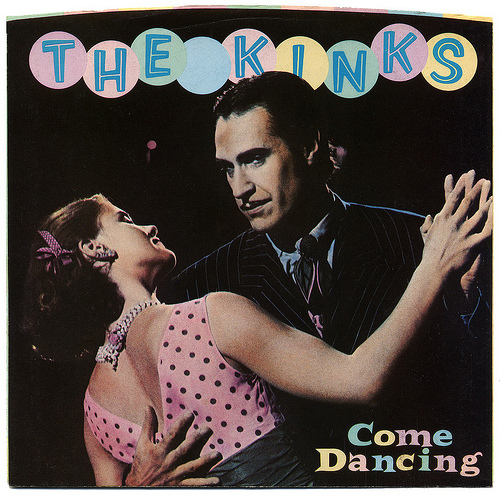
Kinks – Come Dancing – I saw the Kinks on this tour. It remains one of the best concerts I’ve ever been to…if not the best. They were in their early forties at this point and all over the stage. This song got heavy play on MTV at a time when I watched it. The Kinks are one of the four walls that make up modern rock including The Beatles, Who, and Stones.
Dexys Midnight Runners – Come On Eileen – It was very different than what was on the radio at the time. It was a refreshing song to hear in the early eighties.
I really thought this band would score another hit but they ended up a one-hit wonder in America…one thing that didn’t help was when they were opening up for David Bowie in France, Kevin Rowland called Bowie a bad copy of Bryan Ferry and later he told the British press: “We only agreed to the show because France is an important market for us – not because I have any respect for Bowie”… Not a smart thing to do.
Billy Joel – Allentown – A great single by Billy Joel with a song off of the Nylon Curtain album.
Allentown is a town in Northeast Pennsylvania about 45 minutes away from the Pocono mountains. An industrial town, many of the once-thriving factories and mills had fallen on hard times when Joel wrote the song, and unemployment in the area was at an all-time high of 12%.
Also mentioned in the song is nearby Bethlehem, Pennsylvania, whose main employer, Bethlehem Steel, had been closing operations. Joel sings about the unemployed workers in the line, “Out in Bethlehem they’re killing time, filling out forms, standing in line.”
Judas Priest – Living After Midnight -I liked this one the first time I heard it. I never really cared what a band was…as long as they sounded good…and this does.
John Lennon has a distant connection to this song. Judas Priest was renting Tittenhurst Park (John Lennon’s former home) in 1980 to record their album British Steel. As they were watching television…guitarist Glenn Tipton said they saw John Lennon’s Imagine video and were in the very same room where it was filmed… he said they could imagine the piano and the white walls…and how surreal it was…
Rob Halford actually got the inspiration for the lyrics for Living After Midnight as his bandmates kept him awake by blasting out riffs and drum beats in the studio below.
He came downstairs to complain and said, Hey, guys, come on. It’s gone midnight…and they wrote the song.
Madness – Our House – At the start of MTV the small town I lived in had yet to get cable…but it wouldn’t take too long. At that time I had to travel to relatives in Nashville before I got a chance to see it. I would spend the weekend and we would watch MTV for hours at a time. Binge-watching before binge-watching was a saying. We would wake up bleary-eyed the next day and turn on more MTV.
I did find some music I never heard before. This band and song caught my attention. The song was on the The Rise & Fall album. They were different…they have been described as a British ska and pop band.
This was Madness only top-10 hit in the US. Much of the song’s success in America was helped out by the clever music video that was in heavy rotation in the early days of MTV.
I never go too long without watching this movie because I love it. It started a new style of comedy movies although the copies never measured up to the guys at the Delta Tau Chi fraternity.
This was an ensemble movie but make no mistake…it was built around the force of nature that was John Belushi. Lorne Michaels has said that Belushi lived 3 different lives a day with 3 eight hour shifts. A set of different friends for each shift. Belushi hung out with rock stars, authors, and actors constantly. Keith Richards, Ronnie Wood, Bill Kreutzmann, Robin Williams, Robert de Niro, Akyroyd, and also with Hunter S. Thompson. The rock equivalent would probably be Keith Moon.
The movie changed college life forever. My dad took me to a Tennessee Vol game in the early eighties, around 2-3 years after this movie. I walked around campus and out of two different dorms I heard Louie Louie blasting and yes a party going on at 10am.
Movies…some that were inspired by this movie were the American Pie films, Old School, and The Hangover. The movie also opened the door to music comedies. The playing of classic rock and R&B songs in the movie. Like the Blues Brothers that came the following year…they shined the light on some early classic songs. It also spawned some terrible knockoff movies but it’s not its fault.
I love watching the adventures of Bluto, D-Day, Pinto, Otter, Flounder, Hoover, Stork, and the list goes on. Some great scenes in this movie are The Cafeteria scene with Bluto (See if you can guess, what I am now), the initiation, the bar scene, and so on…the ending is great.
This is on many lists of movies that have been deemed “Politically Incorrect”…that makes me want to watch it even more.
The album Running On Empty album was always very interesting to me. He basically made a new album in front of audiences and in hotels. The songs were not his old songs…they were songs he would have ordinarily gone into a studio with. This song was recorded at the Merriweather Post Pavilion in Columbia, Maryland on August 27, 1977. It was the first live rock album with all new songs.
The album and song were about life on the road in all its glory and squalor. To emphasize this notion even further, Browne literally recorded the album on the road, in hotel rooms, on buses, and, in the case of “Running On Empty,” on stage.
The dates and ages given in the song (“In ‘65 I was seventeen” and “In ‘69 I was 21”) synch up with Jackson’s own timeline. He imagines a life spent running for so long that it becomes difficult to know where it all started or where it will end. He is not looking back in the song…he sings it in the present tense. He wrote about himself and where he was at in 1978.
In 1976 Browne had a terrible year. His wife, model Phyllis Major, had committed suicide, leaving Browne to raise their toddler son alone. The grief of her death permeated his fourth album, The Pretender. You can hear it in the single off of that album, “Here Come Those Tears Again,” co-written by Major’s mother, Nancy Farnsworth.
The song’s title track and opening cut blasted strong right out of the gate, landing on radio playlists across the country as the single soared up the charts. The single peaked at #11 on the Billboard 100 and #4 in Canada.
The album peaked at #3 on the Billboard Album Chart in 1978. and #8 in Canada (the best I can find) in 1978.
Jackson Browne: “I’ve always been real close with my crew, as a matter of fact, the guy who’s my manager now. Lines like, “The first to come and the last to leave,” come from him. His name’s Buddha. He’s a guy that you’d wind up spending an incredible amount of time with… people that you’d get to know because the closeness. These guys work really hard, and at least in those days they really did make practically the minimum wage.”
Running On Empty
Looking out at the road rushing under my wheels
Looking back at the years gone by like so many summer fields
In sixty five I was seventeen and running up 101
I don’t know where I’m running now, I’m just running on
Running on, running on empty
Running on, running blind
Running on, running into the sun
But I’m running behind
Gotta do what you can just to keep your love alive
Trying not to confuse it with what you do to survive
In sixty-nine I was twenty-one and I called the road my own
I don’t know when that road turned, into the road I’m on
Running on, running on empty
Running on, running blind
Running on, running into the sun
But I’m running behind
Everyone I know, everywhere I go
People need some reason to believe
I don’t know about anyone but me
If it takes all night, that’ll be all right
If I can get you to smile before I leave
Looking out at the road rushing under my wheels
I don’t know how to tell you all just how crazy this life feels
Look around for the friends that I used to turn to to pull me through
Looking into their eyes I see them running too
Running on, running on empty
Running on, running blind
Running on, running into the sun
But I’m running behind
Honey you really tempt me
You know the way you look so kind
I’d love to stick around but I’m running behind
You know I don’t even know what I’m hoping to find
Running into the sun but I’m running behind
The harmonica intro to this song is dirty as hell. You can hear the slide cutting in like a knife while the rhythm is chugging along. The song was written by Sleepy John Estes, son of a Tennessee sharecropper and blind in one eye, in 1930. He wrote it as Milk Cow Blues. It was recorded in Memphis with piano, mandolin, and Este’s guitar.
Leaving Trunk was on Taj Mahal’s self-titled debut album released in 1968. Like Ry Cooder two years after…he had a great band backing him up. On slide guitar and harmonica is Taj Mahal. The great Jesse Ed Davis is on slide guitar also on this album as well as Ry Cooder on rhythm guitar.
He covered songs written by Estes, Robert Johnson, himself, Sonny Boy Williamson II, and Blind Willie McTell. Leaving Trunk is a song that has been covered by many artists over the years, and it continues to be a favorite among blues fans. Secondhandsongs.com says it has 39 different versions to date. Everyone from Bob Willis to The Black Keys has covered this song. This album played a big part in influencing Duane Allman with Statesboro Blues.
I’ve listened to this album in the past few days I’ve been off of work. I’ve been rotating this one and the debut album of Ry Cooder. The slide guitar work on this album is blistering. I can’t state the importance of this album enough. I can see why Duane Allman was so inspired by it. I won’t go through the complete story but Duane was sick with a cold and his brother Gregg gave him a bottle of Coricidin and this album for Duane’s birthday. Below Gregg Allman tells it.
Gregg Allman: And then I looked on the table and all these little red pills, the Coricidin pills, were on the table. He had washed the label off that pill bottle, poured all the pills out. He put on that Taj Mahal record, with Jesse Ed Davis playing slide on “Statesboro Blues,” and starting playing along with it. When I’d left those pills by his door, he hadn’t known how to play slide. From the moment that Duane put that Coricidin bottle on his ring finger, he was just a natural.
Looking back on it, I think that learning to play slide was a changing moment in his life, because it was like he was back in his childhood—or maybe not his childhood, because it never seemed to me like Duane was a child, so it was more like going back to his first days of playing the guitar. He took to the slide instantly and mastered it very quickly. He practiced for hours and hours at a time, playing that thing with a passion—just like he did when he first learned to play the guitar.
Leaving Trunk
I went upstairs to pack my leavin’ trunk
I ain’t see no blues, whiskey made me sloppy drunk
I ain’t never seen no whiskey, the blues made me sloppy drunk
I’m going back to Memphis babe, where I’ll have much better luck
Look out mama you know you asked me to be your king
She said, “You kiddin’ man, if you want it, keep it hid
But please don’t let my husband, my main man catch you here
Please don’t let my main man, my husband catch you here”
The blues are mushed up into three different ways
One said, “Go the other”, two said, “Stay”
I woke up this mornin’ with the blues three different ways
You know one say, “Go baby, I want to hang up”
The other two said, “Stay”
Wake up mama, I got something to tell you
You know I’m a man who loves to sing the blues
Now you got to wake up baby, mama now
I got something, I got something to tell you
Well, you know I’m the man, I’m the man
Oh yes, and I love to sing the blues
Come on Davis
Come on, come on
I went upstairs to pack my leavin’ trunk, you know
I ain’t see no blues or whiskey made me sloppy drunk
I never seen no whiskey, the blues made me sloppy drunk
I go home baby and I lay down on the lawn
This song is for Song Lyric Sunday for Jim Adams’s blog. This week’s prompt is Gone But Not Forgotten. We lost Jeff Beck this year and he was a huge loss.
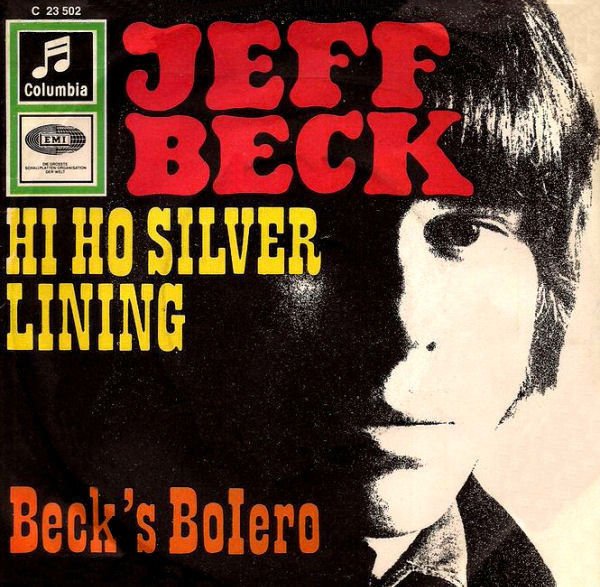
I hardly ever post instrumentals but this one is special. Keith Moon on drums, John Paul Jones on bass, Nicky Hopkins on keyboard, and Jimmy Page, on 12-string guitar along with Jeff Beck on slide guitar. John Paul Jones said the group that played on Beck’s Bolero was kicking around the idea of touring. They also were thinking about trying to get the Small Faces singer Steve Marriott but his management would not go for that.
Beck’s Bolero was recorded over one day on May 16th, 1966. At this point, Moon was unhappy in The Who, and this impromptu band did initially plan to record and release a full album, but contractual obligations…amongst other things, prevented them from ever doing it.
John Entwistle, who originally agreed to play bass in the session, pulled out at the last minute and was replaced with session ace John Paul Jones. Personally, I’m glad this didn’t gel because The Who would have stopped dead most likely.
When you listen to the song…there isn’t a doubt who was playing drums. Jeff Beck later claimed that Pete Townshend “glared like daggers at me” after he found out about the recording sessions.
Jimmy Page is credited with writing the song but Jeff has said no… that he worked more of it out. Instead of me writing out the differences…I’ll let Beck and Page do it below.
Jimmy Page: “On the ‘Beck’s Bolero’ thing I was working with that, the track was done, and then the producer just disappeared. He was never seen again; he simply didn’t come back. Napier-Bell, he just sort of left me and Jeff to it. Jeff was playing and I was in the box (recording booth). And even though he says he wrote it, I wrote it. I’m playing the electric 12-string on it. Beck’s doing the slide bits, and I’m basically playing around the chords. The idea was built around (classical composer) Maurice Ravel’s ‘Bolero.’ It’s got a lot of drama to it; it came off right. It was a good lineup too, with Keith Moon, and everything.”
Jeff Beck: “No, Page didn’t write that song, we sat down in his front room once, this tiny, pokey room, and he was sitting on the arm of a chair and he started playing that Ravel rhythm. He had a 12-string, and it sounded so full, really fat and heavy. And I just played the melody. And I went home and worked out the other bit [the up-tempo section].”
This song was the B side to Hi Ho Silver Lining which peaked at #14 in the UK in 1967. The song was later on Jeff Beck’s Truth album.
Jeff Beck: Me and Jim Page arranged a session with Keith Moon in secret, just to see what would happen. But we had to have something to play in the studio because Keith only had a limited time — he could only give us like three hours before his roadies would start looking for him. So I went over to Jim’s house a few days before the session, and he was strumming away on this 12-string Fender electric that had a really big sound. It was the sound of that Fender 12-string that really inspired the melody. And I don’t care what he says, I invented that melody, such as it is. I know I’m going to get screamed at because in some articles he says he invented it, he wrote it. I say I invented it. This is what it was: He hit these Amaj7 chords and the Fm7 chords, and I just started playing over the top of it. We agreed that we would go in and get Moonie to play a bolero rhythm with it. That’s where it came from, and in three or four takes it was down. John Paul Jones on the bass. In fact, that group could have been a new Led Zeppelin.
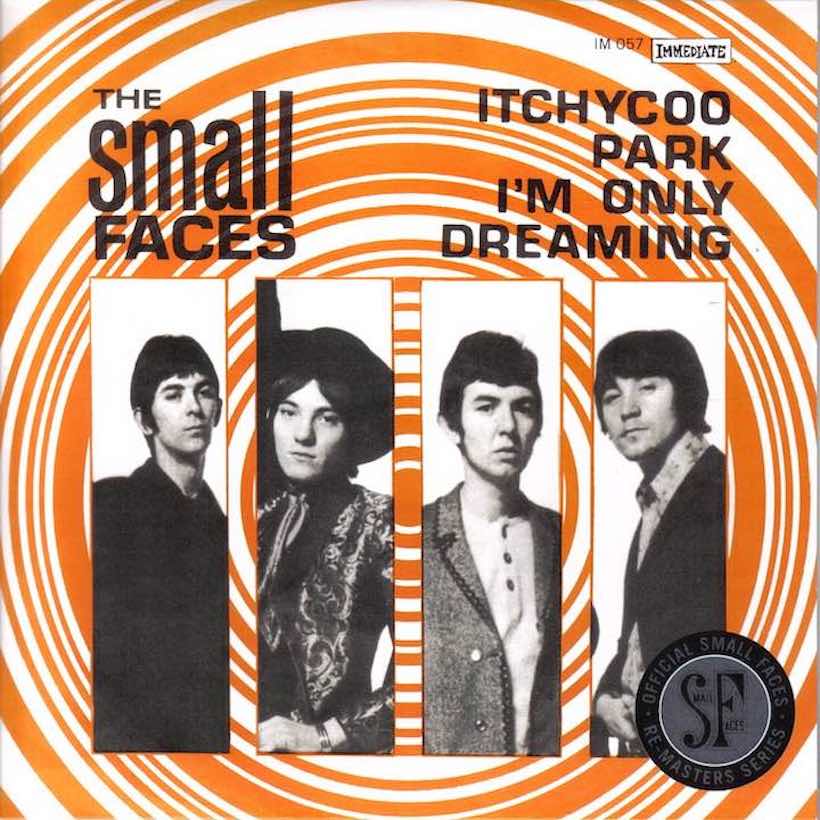
This song was released in 1967 by The Small Faces and it peaked at #16 on the Billboard 100, #1 in Canada, and #3 in the UK. I was born in 1967 and cannot remember a thing but this song makes me feel like I was there. It was written by Ronnie Lane and Steve Marriott. A psychedelic song that hit on both sides of the ocean which was rare for the Small Faces who never toured America.
Ronnie Lane had been reading a leaflet on the virtues of Oxford University which mentioned its dreaming spires. Several sources claim the song’s name is derived from the nickname of Little Ilford Park, on Church Road in the London suburb of Manor Park where Small Faces’ singer and songwriter Steve Marriott grew up.
The park is Manor Park’s Itchycoo Park (officially Little Ilford Park) in London. An “Itchycoo” is slang for a flower found in the park called a “Stinging Nettle,” which can burn the skin if touched. Ronnie Lane said “It’s a place we used to go to in Ilford years ago. Some bloke we know suggested it to us because it’s full of nettles and you keep scratching.”
Producer Glynn Johns used a new technique of phasing in the drum breaks. He got credit for doing that but it was his assistant that came up with it. The flange effect could be made by placing a finger on the supply reel creating drag, causing the machine to slow down, which increased the delay and lowered the pitch of the notches. The sound could be swept upward by doing the opposite…touching the take-up reel and speeding it up slightly.
Glyn Johns: I have often been given credit for this, but in fact the method used to achieve it was discovered by my assistant at the time, George Chkiantz, who demonstrated it to me as I arrived for the session. I thought it was a fantastic effect and decided to use it on the track we cut that afternoon. This happened to be “Itchycoo Park,” a song about taking LSD, as coincidence would have it, and if you listen you will see why it was so effective.
Glyn Johns: This was one hell of a band. They had a massive amount of energy that was unleashed on their audiences from the minute they hit the stage until they left it. If they had ever made it to America, they would undoubtedly have been as successful as any of the British bands that took it by storm in the sixties. That was not to be, as they broke up in 1969 before ever going there.
Ian McLagan: “I never liked ‘Itchycoo Park’ because me and Ronnie had to sing, ‘It’s all too beautiful,’ and you sing that a few times, and you think… It’s not. The ‘bridge of sighs’ is the one in Cambridge. The ‘dreaming spires’ are a reference to Oxford. Then ‘to Itchycoo Park… That’s where I’ve been,’ Ronnie was saying, ‘I didn’t need rich privilege or education. Found beauty in a nettle patch in the East End of London.”
Itchycoo Park
Over bridge of sighs
To rest my eyes in shades of green
Under dreaming spires
To Itchycoo Park, that’s where I’ve been
(What did you do there?) I got high
(What did you feel there?) well, I cried
(But why the tears there?) tell you why
It’s all too beautiful, it’s all too beautiful
It’s all too beautiful, it’s all too beautiful
I feel inclined to blow my mind
Get hung up, feed the ducks with a bun
They all come out to groove about
Be nice and have fun in the sun
I’ll tell you what I’ll do (what will you do?) I’d like to go there now with you
You can miss out school (won’t that be cool?) why go to learn the words of fools?
(What will we do there?) we’ll get high
(What will we touch there?) we’ll touch the sky
(But why the tears there?) I’ll tell you why
It’s all too beautiful, it’s all too beautiful
It’s all too beautiful, it’s all too beautiful
I feel inclined to blow my mind
Get hung up, feed the ducks with a bun
They all come out to groove about
Be nice and have fun in the sun
It’s all too beautiful, it’s all too beautiful
It’s all too beautiful, hah
It’s all too beautiful, it’s all too beautiful
It’s all too beautiful, it’s all too beautiful
It’s all too beautiful, it’s all too beautiful
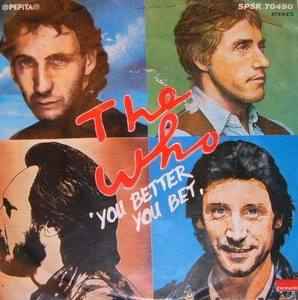
The Who – You Better You Bet..I always thought of this song as the sister song to Who Are You. You Better You Bet was on the album Face Dances. This was the first album without Keith Moon and with Kenney Jones on drums.
Pete Townshend has said he wrote it “over several weeks of clubbing and partying” while the still-married guitarist was dating a younger woman. He said: “I wanted it to be a great song because the girl I wrote it for is one of the best people on the planet.”
Rolling Stones – Start Me Up…I was over at my friend Kenny’s house and I heard this song. Kenny loved animals and had a tarantula, piranha, and other sorts of fun animals. I think it was his radio alarm that went off but I heard this song and knew exactly who it was and I was hooked. This was before it was worn completely out. The opening riff is straight out of the 5-string open G tuning for all of you guitarists. That tuning helped Keith come up with all of those great riffs.
All the news at the time was on their tour. They were called old and over the hill…funny now thinking back…they were only in their late 30s and early 40s. Nowadays that is a young band. I went out and bought the album and loved it. The next year I bought the live (from that tour) Time is On My Side and Going To A Go-Go singles. I then broke down and bought the Still Life live album they came from. This video is amusing…it’s a video a high school band would make with one take but it worked for them. Charlie’s expressions are worth watching alone.
Kim Carnes – Bette Davis Eyes – More than any other song at that time…this one seemed so different and I knew music was changing in the 80s. I still liked it and I bought the single. Just like with Bonnie Tyler and It’s A Heartache…my first thought when hearing this was Rod Stewart. I really like Carne’s raspy voice more than the pop singers at the time…and now. Now I’d love to hear a duet with Kim Carnes and Bonnie Tyler.
“Bette Davis Eyes” was originally recorded by Jackie DeShannon on her 1975 album New Arrangement. DeShannon wrote the song with the songwriter Donna Weiss. According to DeShannon, she got the idea after watching the 1942 Bette Davis movie Now Voyager. It was Donna Weiss who submitted the demo to Carnes, who along with her band and producer Val Garay, came up with the hit arrangement for the song.
Rick James – Super Freak..Me being a bass player…this song is impossible to resist. The movie Little Miss Sunshine used this song to great effect. When James exclaims, “Blow, Danny!,” he’s talking to his sax player Daniel LeMelle just before his solo.
The song featured backup vocals by The Temptations. You will hear James point it out in the song when he says: “Tempations sing.” Temptation member Melvin Franklin was Rick James’ uncle.
One story bout Rick James… He dodged the Vietnam War draft by heading across the Canadian border from his hometown of Buffalo. But as soon as he got into Toronto, three drunk guys tried to beat him up for going AWOL. Some other guys came over to help Rick out… Two of those guys were Garth Hudson and Levon Helm, then playing backup for Ronnie Hawkins…later The Band. He also became friendly with Joni Mitchell and she introduced him to Neil Young…Rick and Neil would soon form a band called the Mynah Birds.
Talking Heads – Once in a Lifetime… David Byrne at his visual performance best with this video. According to David Byrne’s own words, this song is about how we, as people, tend to operate half-awake or on autopilot. Or perhaps a better way of explaining that statement is that we do not actually know why we engage in certain actions that come to define our lives.
The members of Talking Heads…David Byrne, Tina Weymouth, Chris Frantz and Jerry Harrison – all contributed to the writing of this song along with the track’s producer, Brian Eno. And “Once in a Lifetime” itself originated from jam sessions. With this album the band wanted a more democratic process instead of Byrne writing all of the songs.
We are entering the new decade. This is the year I became a teenager and I was looking forward to the 1980s. It started off terrible in December of 1980. John Lennon was murdered for no reason. As the decade went on my love for the top 40 practically vanished in around 84-85. This is the decade that I found alternative music like The Replacements and R.E.M. This is the decade of big hair, one glove, parachute pants, synths, and yes some good music came out of it.
John Lennon – (Just Like) Starting Over. Great song but every time I hear it…it’s December 1980 again and I’m watching news stories about Lennon’s death. Double Fantasy was a strong comeback album for John…a little more Yoko than I would have liked but a good album all the same. John would have been 83 if he would have lived.
When it was released Ringo had said John Lennon sounds like Elvis at the beginning of this song…then he said no…he doesn’t sound like Elvis…he IS Elvis. John Lennon himself said: “All through the taping of ‘Starting Over,’ I was calling what I was doing ‘Elvis Orbison.’ It’s like Dylan doing Nashville Skyline, except I don’t have any Nashville, being from Liverpool. So I go back to the records I know – Elvis and Roy Orbison and Gene Vincent and Jerry Lee Lewis.”
ACDC – Back In Black -The album Back In Black was very popular. I think it was a requirement for every teenage boy to own a copy or two all over the world.
The rock band I was in my Sophomore year in high school played this song in our first gig in the school theater. We had the only singer around who could actually sing it. The riff to the song is one of the more memorable ones in rock.
This was the first AC/DC single and album featuring new lead singer Brian Johnson. He replaced Bon Scott, who died on February 19, 1980, after a drinking binge. Scott’s father made it clear to the band that they should find a new singer and keep going.
Bruce Springsteen released The River this year. The title track of the album is one of the most depressing but best songs ever…the reason is because it’s so true.
Bruce saves the best for last though. He is talking about the dreams we have when we are younger about what we are going to do in life until life wakes us up with a bang…at least that is what I interrupt.
Now those memories come back to haunt me They haunt me like a curse Is a dream a lie if it don’t come true Or is it something worse
Queen – Another One Bites The Dust – Supposedly Steve McQueen is Steve in the opening lyrics. Steve died the year this was released on November 7, 1980. You couldn’t go anywhere in 1980 without hearing someone sing, whistle, or hum this song. I remember the high school band did a version of it. Queen released The Game in 1980 and it was huge here.
Brian May: “Freddie sung until his throat bled on Another One Bites The Dust. He was so into it. He wanted to make that song something special.”
Motorhead – Ace Of Spades. I’m not a huge Motorhead fan and it’s a bit harder music than I usually listen to… but I do like this song. I also like any interview of Lemmy I’ve ever listened to. After playing this for years, Lemmy admitted he was sick of the song, but said he kept it in the setlist because, “If I went to a Little Richard concert, I’d expect to hear Long Tall Sally.”
Dave has asked us…The magic that is Christmas is that you can invite any musician (or person from the music world) to be your guest. Even if they’ve passed away, they can be at your table for a meal and a few stories. So, who would you invite? And any little musical gift you hope they might possibly come with?
Well, I’m cheating a bit…my Christmas guest left the earth in 1964 and yes, he was a musician…just not a rock musician. He played the harp and played it quite well…his nickname even contained that name…Harpo Marx. But Max…why not a rock musician? If I had to pick a rock musician, it would be one of two people. John Lennon or Keith Moon. I would say Lennon would be my number one choice but I wanted to go a different route.
Why am I picking Harpo? He hung out with the top artists, writers, musicians, and athletes of his time. He was always at peace with himself. He has said he never had a bad night’s sleep. The guy was close to what you see on screen. He had so many stories about his life that just those would keep you entertained. There are more reasons…but here are some of the things he did.
The man was born in 1888 and grew up in New York. He didn’t graduate from high school…no, he jumped out the window of his second-grade classroom and never went back to his teacher Miss Flatto. Did the lack of education stop him in life? No, not at all as you will see.
In 1909 his mother Minnie roped him into appearing on stage with his brothers in a singing play. He was dressed in a duck suit and promptly peed in his pants. “Coney Island, New York. Made my debut at Henderson’s and peed in my pants. I felt shamed and disgraced, but Minnie wouldn’t let me quit the act on any such flimsy pretext. She hung my trousers out to dry in the sea breeze between shows. By the second show, I was much less scared, so enthusiastic in fact that everybody was afraid I might sing. But I didn’t. I just opened my mouth when Groucho did.”
The brothers hit the vaudeville circuit and any rock stars who say their beginning was rough…they don’t know what rough is. The Brothers would stay in boarding houses when possible but sometimes slept in the park. They ate food that was infested with bugs and people treated them terribly because show people were frowned upon at that time. They were in Vaudeville from 1909 to 1924. That was a lot of hard living and the brothers were in their mid-thirties before they hit Broadway.
The review that would change Harpo’s life came in 1924 in their first play (I’ll Say She Is) to make Broadway. The review was written by the author Alexander Woollcott. He wrote glowingly about all the brothers, but Harpo is the one he singled out. Woollcott met Harpo backstage and soon introduced Harpo to some of the most sophisticated writers and artists of that time. Harpo soon became a member of the Algonquin Round Table. That was where witty and cutting remarks flowed like water. Groucho said it was like falling in a den of lions. Some of the regulars were Dorothy Parker, Alexander Woollcott, Heywood Broun, Robert Benchley, Robert Sherwood, George S. Kaufman, Franklin P. Adams, Marc Connelly, Harold Ross, and Russell Crouse. Harpo has said that he was a professional listener. Despite only having a 2nd grade education he could hold his own and was a vivacious reader.
Kaufman would co-write 2 plays for the brothers, The Cocoanuts and Animal Crackers. They were Broadway smashes and soon the brothers would be making movie versions of both. In 1929 they made The Cocoanuts movie in New York while acting in Animal Crackers on Broadway. They would make Animal Crackers next and then move to Hollywood. Their film career lasted from 1929 to 1949 with a movie called Love Happy with Marilyn Monroe. They made 13 in all.
Harpo was a happy bachelor until he met Susan Fleming in 1932 and they were married in 1936. He was very much like his character on the screen except he talked of course. He hung out with royalty, artists, and even toured Russia in 1933 and carried secret papers taped to his leg out of the country for America. He never found out what he risked is life for though. Some FBI agents got the papers as soon as he got to New York.
Harpo and Susan wanted children, so they adopted. Harpo had said he wanted a child in every window when he went to work. So, they adopted 4 kids and from all accounts…was one of the best dads you could possibly get. If he came home late, he would sometimes wake one of his children just to play games with them. None of his kids ever wrote books on how bad he was or ever said anything bad publicly. He did have a set of rules that he went by and had them pinned up. This is them and I had the same rules on our refrigerator when Bailey was small, although a few were altered because we had no pool table or harp.
Life has been created for you to enjoy, but you won’t enjoy it unless you pay for it with some good, hard work. This is one price that will never be marked down.
You can work at whatever you want to as long as you do it as well as you can and clean up afterwards and you’re at the table at mealtime and in bed at bedtime.
Respect what the others do. Respect Dad’s harp, Mom’s paints, Billy’s piano, Alex’s set of tools, Jimmy’s designs, and Minnie’s menagerie.
If anything makes you sore, come out with it. Maybe the rest of us are itching for a fight, too.
If anything strikes you as funny, out with that, too. Let’s all the rest of us have a laugh.
If you have an impulse to do something that you’re not sure is right, go ahead and do it. Take a chance. Chances are, if you don’t you’ll regret it – unless you break the rules about mealtime and bedtime, in which case you’ll sure as hell regret it.
If it’s a question of whether to do what’s fun or what is supposed to be good for you, and nobody is hurt whichever you do, always do what’s fun.
If things get too much for you and you feel the whole world’s against you, go stand on your head. If you can think of anything crazier to do, do it.
Don’t worry about what other people think. The only person in the world important enough to conform to is yourself.
Anybody who mistreats a pet or breaks a pool cue is docked a months pay.
Harpo played in some of the seediest joints you could imagine and had to endure a lot of antisemitism, but he was loved by all around him including children and animals.
His son Bill, who is a talented musician, released a book a few years ago. He said in 1964 that Harpo loved The Beatles when they first arrived. Bill was a professional piano player and he didn’t think The Beatles would last. Harpo told him that he better get used to them because they would be remembered in history because they were starting something new. Bill said six years later he was playing a gig and many of his songs were Beatle songs. He thought… “Dad was right again” while playing Let It Be.
Here is an intro that Harpo wrote to Harpo Speaks…I thought you would enjoy this…he gives a brief story of him.
I’ve played piano in a whorehouse. I’ve smuggled secret papers out of Russia. I’ve spent an evening on the divan with Peggy Hopkins Joyce. I’ve taught a gangster mob how to play Pinchie Winchie. I’ve played croquet with Herbert Bayard Swope while he kept Governor Al Smith waiting on the phone. I’ve gambled with Nick the Greek, sat on the floor with Greta Carbo, sparred with Benny Leonard, horsed around with the Prince of Wales, played Ping-pong with George Gershwin. George Bernard Shaw has asked me for advice. Oscar Levant has played private concerts for me at a buck a throw. I have golfed with Ben Hogan and Sam Snead. I’ve basked on the Riviera with Somerset Maugham and Elsa Maxwell. I’ve been thrown out of the casino at Monte Carlo. Flush with triumph at the poker table, I’ve challenged Alexander Woollcott to anagrams and Alice Duer Miller to a spelling match. I’ve given lessons to some of the world’s greatest musicians. I’ve been a member of the two most famous Round Tables since the days of King Arthur—sitting with the finest creative minds of the 1920s at the Algonquin in New York, and with Hollywood’s sharpest professional wits at the Hillcrest. (Later in the book, some of these activities don’t seem quite so impressive when I tell the full story. Like what I was doing on the divan with Peggy Hopkins Joyce. I was reading the funnies to her.) The truth is, I had no business doing any of these things. I couldn’t read a note of music. I never finished the second grade. But I was having too much fun to recognize myself as an ignorant upstart. I can’t remember ever having a bad meal. I’ve eaten in William Randolph Hearst’s baronial dining room at San Simeon, at Voisin’s and the Colony, and the finest restaurants in Paris. But the eating place I remember best, out of the days when I was chronically half starved, is a joint that was called Max’s Busy Bee. At the Busy Bee, a salmon sandwich on rye cost three cents per square foot, and for four cents more you could buy a strawberry shortcake smothered with whipped cream and a glass of lemonade. But the absolutely most delicious food I ever ate was prepared by the most inspired chef I ever knew—my father. My father had to be inspired because he had so little to work with. I can’t remember ever having a poor night’s sleep. I’ve slept in villas at Cannes and Antibes, at Alexander Woollcott’s island hideaway in Vermont, at the mansions of the Vanderbilts and Otto H. Kahn and in the Gloversville, New York, jail. I’ve slept on pool tables, dressing-room tables, piano tops, bathhouse benches, in rag baskets and harp cases, and four abreast in upper berths. I have known the supreme luxury of snoozing in the July sun, on the lawn, while the string of a flying kite tickled the bottom of my feet.
I can’t remember ever seeing a bad show. I’ve seen everything from Coney Island vaudeville to the Art Theatre in Moscow. If I’m trapped in a theatre and a show starts disappointingly, I have a handy way to avoid watching it. I fall asleep. My only addictions—and I’ve outgrown them all—have been to pocket billiards, croquet, poker, bridge and black jelly beans. I haven’t smoked for twenty years.
The only woman I’ve ever been in love with is still married to me.
My only Alcohol Problem is that I don’t particularly care for the stuff.
Who wouldn’t want to talk to this man? Thank you…and as far as a musical gift… I would love to hear Harpo play either the Harp, or piano, or just tell me Vaudeville stories!
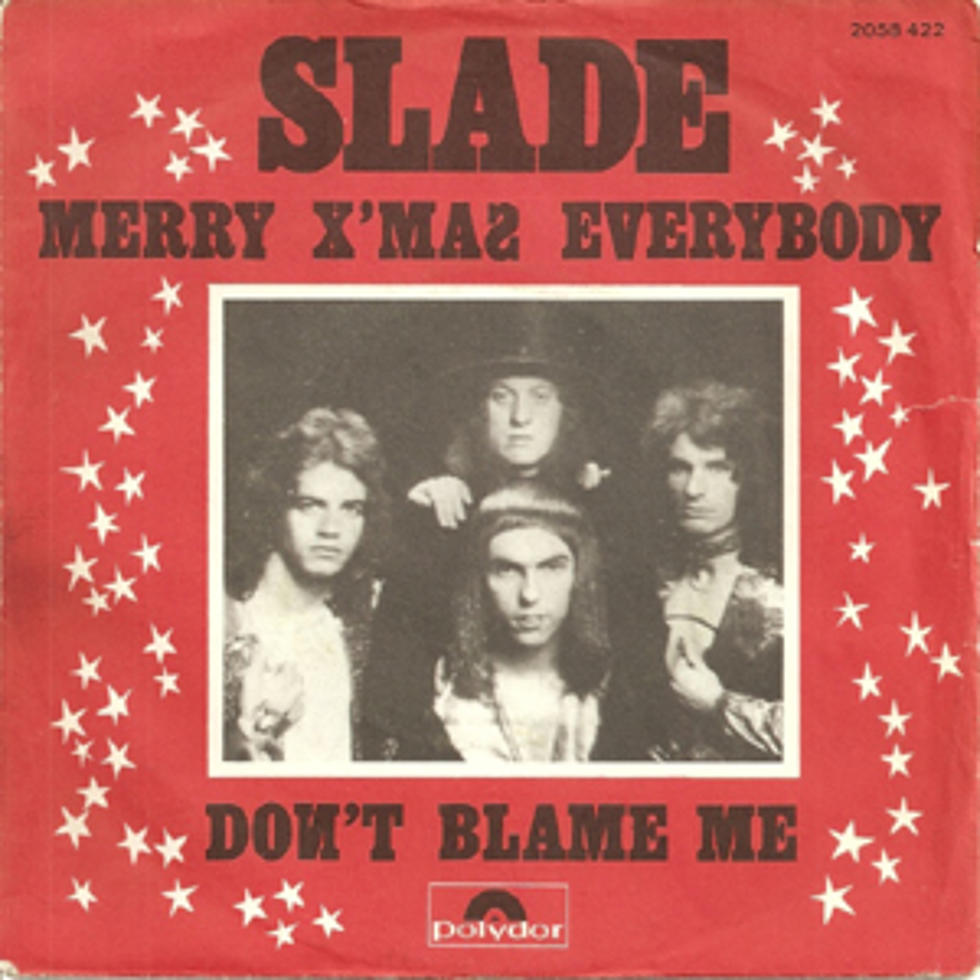
This is a great Christmas song that was released in 1973 and ever since it re-enters the charts every December in the UK. The song never hit in America but it went to #1 in the UK Charts. I first heard it on a Doctor Who episode in the mid-2000s and have liked it ever since.
This was based on a psychedelic song, “My Rocking Chair,” which Noddy Holder wrote in 1967. In 1973 the Slade vocalist decided to convert it into a Christmas song after a night out drinking at a local pub.
He and the band’s bass player and co-writer Jimmy Lea camped out at Noddy’s mother’s house and got down to changing the lyrics to make them more Christmassy. Jimmy Lea incorporated into the verse parts of another song which he was then writing and Noddy re-wrote the words incorporating different aspects of the Christmas holiday season as they came to mind.
This went straight in at #1 in the UK, selling over 300,000 copies on the day of its release, making it at the time the fastest ever selling record in Britain. It eventually became Slade’s best-ever selling single in the UK, selling over a million copies.
In the UK this has become a standard, and it is usually reissued in its original form each Christmas. On several occasions, the song has re-entered the Top 40.
UK copyright collection society and performance rights organization PRS For Music estimated in 2009 that 42 percent of the earth’s population has heard this tune.
The song was written by Noddy Holder and Jim Lea of Slade. It was produced by Chas Chandler formerly of the Animals. The harmonium used on this is the same one that John Lennon used on his Mind Games album, which was being recorded at the studio next door.
Noddy Holder: “I wrote the original verse with the lyrics, ‘Buy me a rocking chair, I’ll watch the world go by. Bring me a mirror, I’ll look you in the eye,’ in 1967 in the aftermath of The Beatles’ Sgt Pepper,” I was being psychedelic. Dave (Hill) wrote another part to the song but it didn’t work so we put it away. Then in 1973 he remembered my verse one day when we were trying to write a Christmas single. We changed the words to, ‘Are you hanging up your stocking on the wall?’ and the rest fell into place.”
Noddy Holder: “As a lad we used to knock sleds with old orange boxes and go tobogganing down this big old quarry in the snow at Christmas. It was the inspiration for the line ‘are you hoping that the snow will start to fall.’”
I want that hat he starts off with… in this video…very subtle.
Merry Christmas Everybody
Are you hanging up a stocking on your wall? It’s the time that every Santa has a ball Does he ride a red nosed reindeer? Does a ‘ton up’ on his sleigh Do the fairies keep him sober for a day?
Chorus: So here it is merry Christmas Everybody’s having fun Look to the future now It’s only just begun
Are you waiting for the family to arrive? Are you sure you got the room to spare inside? Does your granny always tell ya that the old are the best? Then she’s up and rock ‘n’ rollin’ with the rest
Chorus: So here it is merry Christmas Everybody’s having fun Look to the future now It’s only just begun
What will your daddy do When he sees your Mama kissin’ Santa Claus? Ah ah
Are you hanging up a stocking on your wall? Are you hoping that the snow will start to fall? Do you ride on down the hillside in a buggy you have made? When you land upon your head then you’ve been slayed
Chorus (4x) So here it is merry Christmas Everybody’s having fun Look to the future now It’s only just begun
I watched this on Saturday…gearing up for Christmas…it’s not Christmas without The Peanuts and watching them all dance to “Linus and Lucy.”
The Peanuts were my favorite cartoon growing up and I would never miss their Thanksgiving, Halloween, and Christmas specials. Everyone can relate to Charlie Brown because we all lose more than we win in life. He doesn’t get to kick that football, his dog has more things than he does, and he is forever trying to get the elusive little redhead girl to notice him.
The Peanuts inhabit a kids world where grownups are felt but not heard. At least not in English. I’ve said this before but… Charlie Brown, one day when you grow up… I hope you end up with the little red head girl that you like so much and win just for once…for all of us.
This 1965 special has everything good about them in one show.
The gang is skating and Charlie Brown is telling Linus that despite Christmas being a happy time he is depressed. Linus tells Charlie that is normal and Lucy pipes in with “Of all the Charlie Browns in the world, you’re the Charlie Browniest.” That sums it all up.
Charlie gets to direct the Christmas play and his main job was to get a spectacular Christmas tree under Lucy’s orders. …He picks the only real tree there…more like a branch but he is sure it will do the job. Most of the gang do not agree when he comes back with the tree but Charlie persists. Linus gets up and reads from the Bible and the inflection he lends to the reading is great.
After that, you will need to watch because it will be worth it.
Aluminum Christmas trees were marketed beginning in 1958 and enjoyed fairly strong sales by eliminating pesky needles and tree sap. But the annual airings of A Charlie Brown Christmas swayed public thinking: In the special, Charlie Brown refuses to get a fake tree. Viewers began to do the same, and the product was virtually phased out by 1969. The leftovers are now collector’s items.
Actors and Actresses The early Peanuts specials made use of both untrained kids and professional actors: Peter Robbins (Charlie Brown) and Christopher Shea (Linus) were working child performers, while the rest of the cast consisted of “regular” kids coached by Melendez in the studio. When Schulz told Melendez that Snoopy couldn’t have any lines in the show—he’s a dog, and Schulz’s dogs didn’t talk—the animator decided to bark and chuff into a microphone himself, then speed up the recording to give it a more emotive quality.










 PowerPop... An Eclectic Collection of Pop Culture