Always had a Bean Bag

I have had a bean bag in my place of residence ever since I was a teenager. They are very handy to throw somewhere and sit. When you play guitar or want to watch a movie it’s a comfortable place to sit. They are also affordable and can be a good alternative sometimes to chairs.

The only part of owning one I don’t like is the inevitable end when the white small styrofoams like “beans” (expanded polystyrene) start coming out and going everywhere.

I would like to get an original leather bean bag one day.

According to some historians, bean bags were first invented by the ancient Egyptians sometime around 2000 B.C., and for thousands of years, they were used to play games and for other recreational diversions. The first bean bags were small, round and made of leather. They were most likely filled with dried beans or pebbles.

The first bean bag chairs as we know them were developed in the sixties. They were first called a Sacco chair, and released in 1969. They were designed by Cesare Paolini, Piero Gatti, and Franco Teodoro who were commissioned to create the piece by Zanotta Design in Italy.

Bean bags were huge in the 1970s and they were at first usually made of leather and filled with PVC (short for PolyVinyl Chloride) pellets. Soon nylon and polyester were used with expanded polystyrene (EPS) for filler. That combination proved to be more durable.

During the 1980s and 1990s, the popularity of bean bags declined greatly in popularity, but they were still being manufactured by several companies.

Now they are now experiencing a strong resurgence in popularity. You can get a regular bean bag or one pre-formed into a chair or couch. They are being sold for use as pet beds.


Wiffle Ball was a Blast

I had almost as much fun playing wiffle ball as a kid as I did little league. I was completely into playing baseball with friends or for years in leagues until I was 16. In my front yard, we would play wiffle ball until dark. If only one friend was over that was enough… we could still play. Hit it over the house, a home run…hitting a window, a double, in the creek a triple… etc.

You didn’t have to worry about breaking a window or knocking your buddy out while pitching as fast as you could. You would learn how to grip it and you could make it curve, rise, or sink a ridiculous amount. We would play for hours until night or until the ball was stuck on the roof or in a tree.

In the late 70s and 80s it was a fun alternative to playing baseball when not enough friends were around or you had to play in a neighborhood full of houses with nice big windows.

Image result for Wiffle Ball curve gif

In 1953, David N. Mullany was watching his 12-year-old son and some friends playing a baseball-like game with a perforated plastic golf ball and a broomstick in their backyard. The boys tried throwing curveballs and sliders but with no success. They couldn’t use a baseball because of the trail of broken windows and upset neighbors.

Mullany, who had been a semipro pitcher himself, knew all too well what thousands of Little Leaguers have had to painfully learn. Nothing shreds a young arm quite as effectively as throwing breaking balls. Mullany set about trying to save the boys’ shoulders and elbows by creating a ball that would curve and bend on its own.

He tried a hard plastic ball that served as packaging for Coty perfume. After having the boys experiment with various designs, Mullany hit on the Wiffle Ball we now know and love.

Mullany’s son and his friends referred to strikeouts as “whiffs.” Since the new invention made knee-buckling curveballs a breeze to throw, pitchers started racking up the strikeouts. Mullany named the product the Wiffle Ball to honor its strikeout-friendly breaks.

When they started to advertise them they would use old photographs of MLB players. The Mullanys later explained in interviews that doing actual photo shoots with the players would have been too pricey, so they just negotiated with players’ agents and then used any old photograph.

Image result for first wiffle ball box


The slots on one side make the ball curve and rise. Just like a real baseball…the more scuffs a ball has the more it can curve. They have Wiffle Ball leagues now where players play competitively.


http://www.wiffle.com/pages/welcome.asp?page=welcome


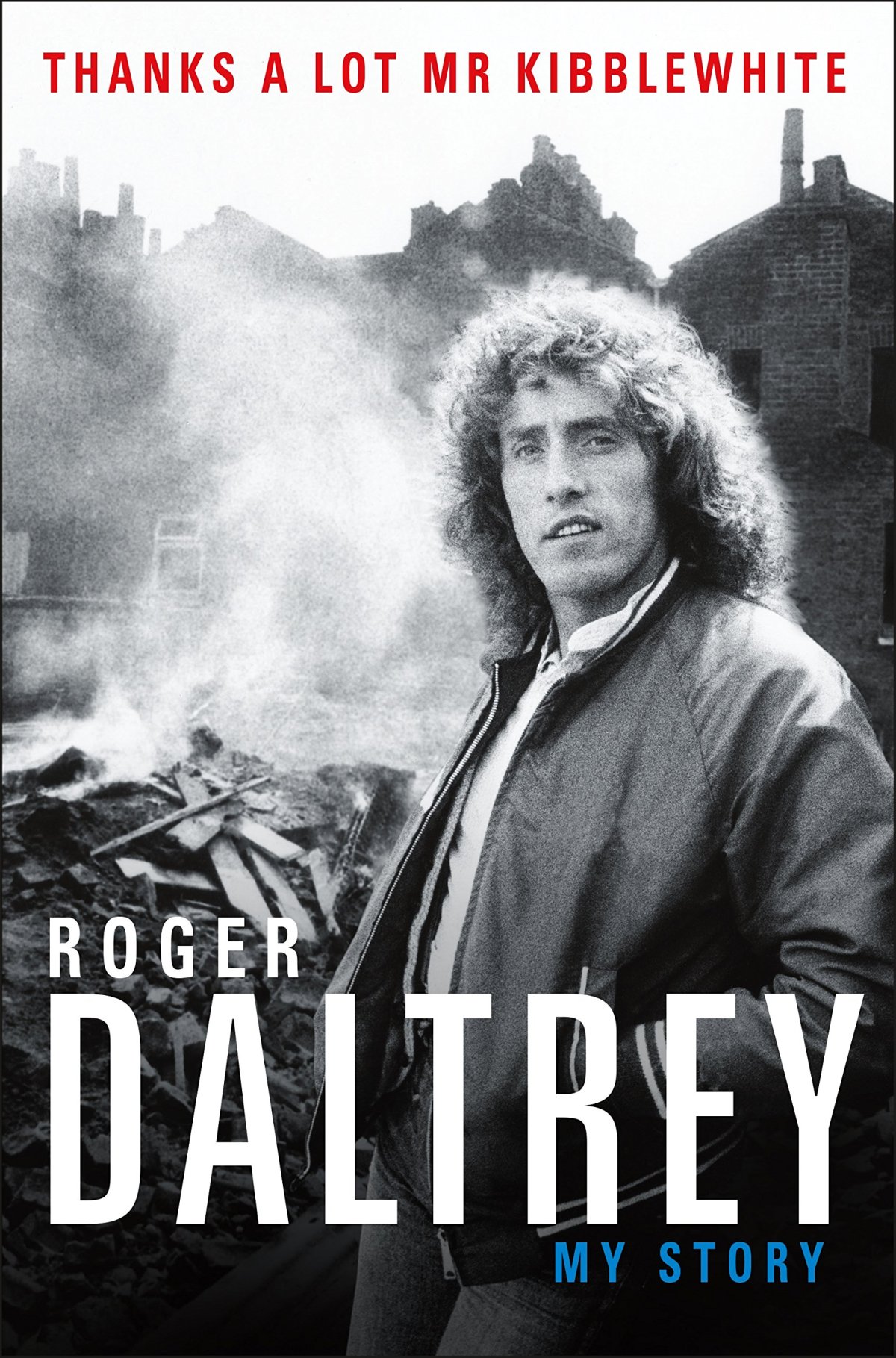
Thanks A Lot Mr. Kibblewhite: My Story Roger Daltrey

I just finished the audio version of this book. I’m a huge Who fan and I was looking forward to it. It was nice to hear the book narrated by Roger himself. It’s a solid book but I have only one complaint that I will get into below.

The positive about the book is you find out more about the different personalities of the Who and the reason they fought. Pete the artist, John the dark one, Keith the lunatic, and Roger blue-collar man of the band. We all knew those descriptions before but Roger tries to explain how it worked and didn’t work as a band. If you want to know The Who’s impact on rock music and culture go to Pete Townshend. If you want to get straight to the point with just the highlights…Roger is your man.

Roger is grounded, avoided most of the pitfalls in his profession,  hard-working, and loves interpreting Pete’s music to the world. He goes into how he changed his singing style with Pete’s writing. How he became Tommy and the mod in Quadrophenia. He hits the highlights of The Who and his life without the Who in the 80s and part of the 90s.

The strongest part of this book is about his childhood and his collection of relatives. Roger seems very approachable, likable, and down to earth. Roger was the one constant in the band that you didn’t have worry about his on tour activities. He does talk about the high points of the Who and his acting career.

My biggest complaint is the book is too short. You get the impression that he didn’t think that anyone would want to hear any details whatsoever.  He does give you some good stories but touches a subject and quickly leaves. It’s almost a cliff notes version as he didn’t dwell in any period long.

It is a quick and enjoyable read but leaves you wanting more.


When Waterbeds were cool

I had a waterbed in the early 80s as a young teen. I always liked it and thought it was comfortable. Two things I didn’t like about it was… if there was a leak you would not know until 2:30 am and on a school night…always. If the heater was either turned down or went out…you would wake up as a human popsicle at…you guessed it… 2:30 am. Nothing ever happened to it at noon on a Saturday.

in the early 1800s. Scottish physician Dr. Neil Arnott devised a water-filled bed to prevent bedsores in invalids.

In 1873, Sir James Paget, of St. Bartholomew Hospital in London, presented the waterbed designed by Dr. Arnott as a treatment and prevention of ulcers, a common condition at this time. Paget found that waterbeds allowed for even pressure distribution over the entire body. The only problem was that you could not regulate the water temperature.

In 1968 Charles Hall presented the waterbed as his Master’s Thesis project to his San Francisco State University design class. While showcasing their work, students rotated through workshops to see each other’s inventions. Once they reached Hall’s project – a vinyl mattress filled with heated water – the class never left. “Everybody just ended up frolicking on the waterbed,” Hall recalls.

Hall’s first waterbed mattress was called ‘the Pleasure Pit’ and it quickly gained popularity with the hippie culture of the 1960’s and 1970’s.

Time Magazine in 1971 about waterbeds. “Playboy Tycoon Hugh Hefner has one–king-size, of course, and covered with Tasmanian opossum. The growing number of manufacturers and distributors, with such appropriate names as Aquarius Products, the Water Works, Innerspace Environments, Joyapeutic Aqua Beds and the Wet Dream, can hardly meet the demand. They have sold more than 15,000 since August.”

Sex always sells… one ad stated. “Two things are better on a waterbed. One of them is sleep.” and “She’ll admire you for your car, she’ll respect you for your position, but she’ll love you for your waterbed.”

waterbedad.jpg

By the 80s waterbeds were in the suburbs and gaining in popularity. In 1987, waterbeds had achieved their peak, representing 22 percent of all U.S. mattress sales.

At the end of the 1980s waterbed sales fell off. Some say it was because they were too connected to the 70s that had fallen out of favor (the horror!)… but most think it was because of the maintenance and pain in setting them up and moving them. Also, you had to make sure your floor was braced enough to have one depending on the size and weight of it.

Today you can still buy them but most are designed thinner to hold less water in rolls instead of sleeping on a lake beneath you.

I had mine until I was 20 with plenty of patches but it still held water and me… but I left it behind when I moved.

This egg-shaped one below I would gladly take home now

waterbedegg.jpg

COME NOW! TO THE WATERBED WAREHOUSE!

Keith Moon talks about a waterbed

https://en.wikipedia.org/wiki/Waterbed

The Walkman

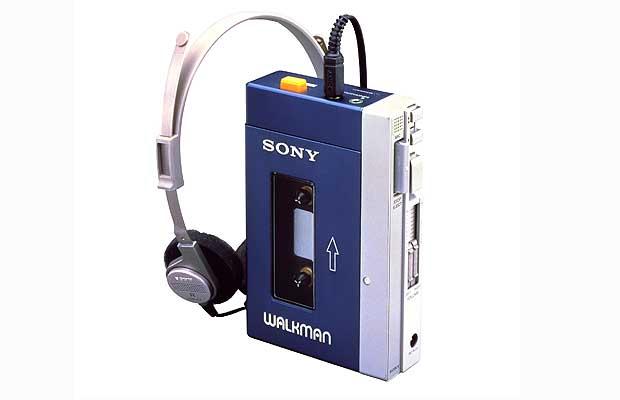
In July of 1979, the Sony Walkman was released to the public. You had portable music anywhere you went. It cost $150 ($546.21 in today’s money).

The 1980s was the Walkman’s decade. Cassettes started to outsell albums and this device was one of the reasons. By 1986 the word “Walkman” had entered the Oxford English Dictionary. Its launch coincided with the birth of the aerobics craze, and millions used the Walkman to make their workouts more entertaining.

Between 1987 and 1997 — the height of the Walkman’s popularity — the number of people who said they walked for exercise increased by 30 percent.

Sony continued to roll out variations on its theme, adding such features as AM/FM receivers, bass boost, and auto-reverse. Sony even made a solar-powered Walkman, water-resistant Sport Walkmans and even devices with two cassette drives. With the introduction of compact discs in 1982, the cassette format began to go the way of the dinosaur.

Sony was fairly quick to jump to new formats: it introduced the D-50 portable CD player a year after the first compact discs were sold, and later rolled out MiniDisc and MP3 players under the Walkman brand.

It caught on with the public in a big way. Today with iPods, iPhones and other devices we take it for granted are descendants from the 1979 Walkman.

https://www.youtube.com/watch?v=xOTfzZCyCmo&ab_channel=TheRetroTimeMachine


https://www.theverge.com/2014/7/1/5861062/sony-walkman-at-35


Someone Who Really Didn’t Like Me

I felt bad after the story below happened. I’ve never been an angel but this was one time I didn’t know what was going on.

In 1990 our band was playing in a club called Ronnies every weekend. It was the best time we ever had playing at any place. They had a patio out back and the place was packed on weekends. I was single and was working three jobs, a full time and part time job trying to get ahead and playing music.

The weekends at Ronnie’s was from 8pm – 3am with 15 minute breaks Friday and Saturday. That took more out of me than my full-time job. After my part-time job every day I would go to the park and jog for 2-3 miles…it was the only way I could make it through Friday and Saturday nights. I’m not complaining because it was a great time in my life.

There was a bartender working there and she was really nice and cute and her name was Chrissy. She started to talk to me and we went out on a date after I had known her for a while. We had a good time and I was going to ask her out again the next weekend…This is where it gets interesting.

A week went by and the management of the club thought it would be a good idea to have two bands alternate sets over the weekend so we did that. The other band was good and played similar music. Both bands went over well but it was a pain changing up after sets. When they got off the stage I went up and shook hands with three of them but the drummer didn’t offer his hand back and just ignored me.

I was wondering why this guy ignored me. He shook hands and talked with the rest of us but me. Then I found out that he didn’t like me and I didn’t blame him. I discovered late that night that Chrissy was his girlfriend and he had heard I went out with her…which I had no clue that she had a boyfriend. I’m glad that double band arrangement only lasted one weekend. After that, we were the only band to play…and no I never asked her out again.

After a few more months the owner lost everything and that was the end of Ronnies…but not the end of the story.

A year or so later Chrissy called me up out of the blue and asked me how I’d been. I thought for a second that she missed my charming self (just kidding) and maybe she wanted to go out again…I was wrong. No, she called because she had a friend for me to go out with that I would be “perfect” for… She said her name was Dana and she was attractive, nice, but very quiet. I met Dana at a restaurant a few days later and she was everything Chrissy described her as…in fact I liked her better…so Dana and I started to go out regularly.

I met Dana’s parents after about a month of dating…They liked me and everything was fine until a familiar looking guy walked in the door with a shocked look. He ignored me…yes he was Chrissy’s boyfriend, the drummer from a year before… and the worst part was…he was Dana’s brother!

To tell you the truth it’s a wonder the guy didn’t pick up something and hit me over the head. Not only did I go out with his girlfriend (unknowingly but still)…now I was dating the poor guy’s sister. After that, he and I stayed clear of each other. Not a bad word was shared between us…not a word at all. Dana and I broke up after a couple of months but not because of that. We just didn’t click. I never understood why Chrissy didn’t clue me in on the brother situation.

I never met Dana, Chrissy, or her boyfriend (I don’t remember his name) again after that and I’m sure he was glad to be rid of the likes of me. I was like a bad penny to the guy.

We needed a drummer (good ones are hard to find) later on and part of me thought about calling the guy because he was a good drummer…but I wisely thought better of it.

Toss Across

I had this as a kid and would play it at family gatherings at our house. I bought an original one from 1969 from eBay a couple of years ago and still once in a while will play it. It plays like a carnival game. My son didn’t think much of it at first but when he started to play it…he liked it.

The game came out in 1969 by the Ideal Toy Company. The game was designed by Marvin Glass and Associates and created by Hank Kramer, Larry Reiner, and Walter Moe.

They still sell a version of it today. POOF Outdoor Games Chuck-O Tic Tac Toss


It’s tic tac toe with bean bags…that about sums it up. Go Go Go for 3 in a row!

Now… please tell me what the little girl says after the dog drops the bag…please


https://en.wikipedia.org/wiki/Toss_Across

Lava Lamps

I own a couple of lava lamps and I run them quite a bit. I didn’t get my first one until the 80s and I still have it. They do nothing but do their thing…and they create a mood. I have one in my office at work…it helps at times.

The lava lamp was invented in 1963 by Edward Craven WalkerHe was passing the time in a pub when he noticed a homemade egg timer crafted from a cocktail shaker filled with alien-looking liquids bubbling on a stove top. Craven Walker’s company was manufacturing millions of “Astro Lamps,” as he called them, per year. In 1965, he sold the U.S. manufacturing rights to a company called Lava Lite.

Lava lamps caught on in the sixties and continued to be big to the late seventies. The sales cooled off until the Austin Power movies and the sales started to pick up again in the hundreds of thousands a year. Now Lava Lite supplies millions of lava lamps to retailers.

Far Out Man

Related imageRelated imageRelated imageRelated imageRelated image

Etch a Sketch

Oh, how this toy teased me as a kid. I would start drawing something halfway decent and then I would hit a wall because I would get so close to what I wanted and then make a wrong move…then came the shake part and start all over again. The definition of insanity would be this toy in my hands…but yet I still tried. Some people can do interesting things with it…I’m not one of those people.

In the late 50s French electrical technician André Cassagnes applied his experience with the clinging properties of an electrostatic charge to invent a drawing toy with no spare parts.

The Ohio Art Company took a look at the toy and invested $25,000.  It has sold more than 175 million units worldwide since it hit stores on July 12, 1960.

They have new versions of it now with more options. Related image


https://en.wikipedia.org/wiki/Etch_A_Sketch

Lite-Brite

One of my favorite toys growing up. To this day I like collecting any vintage lighting fixture like soft drink clocks or signs probably because of this toy. They came with designs that you could use to create different cartoons and clowns but I never used those. I liked to create my own masterpieces.

This toy allowed you to be creative in a very different way. It brought out the artistic side in you. You could design different things and it would light up your room in the dark with colors.

Lite-Brite was invented by Joseph M. Burck, a senior designer at Chicago toy and game design company Marvin Glass and Associates.

Of course…when I got older I would make crude messages on the Lite Brite for friends.

Lite Brite commercial from the 1970s.

Al Kooper: Backstage Passes Backstabbing Bastards

This is an autobiography of Al Kooper. Al has worked with many people in the music industry. He was a songwriter, musician, producer, A&R man and everything in between.

His book is well written and Al uses humor all the way through.

A few of his career highlights are helping to form Blood, Sweat, and Tears, playing the organ on “Like a Rolling Stone” (although he didn’t know how to really play organ), organized the Super Sessions with Stephen Stills and Mike Bloomfield, found and signed a band while in Atlanta named Lynyrd Skynyrd. While in Atlanta he started a record label called “Sounds of the South” in conjunction with MCA records.

He goes over working with Lynyrd Skynyrd and how their first three albums were recorded and why they parted company. Another band that he signed was Mose Jones who was going to be his Beatles type group to counterpoint the Lynyrd Skynyrd Stones sound for his label. Mose Jones ended up being ignored my MCA.

There is so much musical history this man was involved in…he makes light of getting called Alice Cooper on many occasions.

In Al Kooper’s words 

Let’s clear the air.
This is not a book by or about Vincent Furnier (né Alice Cooper.) It is a book by and about Al Kooper. If you don’t know who Al Kooper is, that’s fine. But don’t let that stop you from perusing these eye-opening accounts of encounters with Bob Dylan, Jimi Hendrix, Gene Pitney, The Royal Teens, Bill Graham, Quincy Jones, Blood, Sweat & Tears, Mike Bloomfield, The Rolling Stones, Lynyrd Skynyrd, George Harrison, Miles Davis, The Tubes, Nils Lofgren, Stevie Ray Vaughan, and all the other wonderful people I’ve been fortunate enough to cross paths with over the last forty years.

What was really interesting to me is he shared the same manager (Stan Polley) as Badfinger and was able to get out of his clutches with at least some of his money intact. I picked the book up cheap and I really have enjoyed it. I would recommend this to music fans. Many funny stories and he is such a talented musician.

Another quote from Kooper on the Like A Rolling Stone Session… Tom Wilson was the producer who knew Kooper didn’t normally play the organ.

Thirty seconds into the second verse of the playback, Dylan motioned toward Tom Wilson. “Turn the organ up,” he ordered. “Hey, man,” Tom said, “that cat’s not an organ player.” Thanks, Tom. But Dylan wasn’t buying it: “Hey, now don’t tell me who’s an organ player and who’s not. Just turn the organ up.” He actually liked what he heard!

Al Kooper and Bob Dylan

alkooper bob.jpg

George Harrison, Ringo Starr, Barbara Bach, and Al Kooper

alkoopergeorgeharrison.jpg

Jimi Hendrix and Al Kooper

alkooper_jimihendrix.jpg

Al Kooper…he wanted to set the record straight

alkooperalice.png.

Helpdesk Calls – Sally’s Computer

Sally’s Computer

I have worked in IT for twenty years and back in the 90’s, I got my start by working on a Helpdesk for a restaurant chain. Back in the late 90s people just didn’t know much about computers…they were hired to serve, cook or whatever… not to be a tech. I couldn’t stand the rude techs who talked down to people. It took patience at times but it was nice helping people.

But…it was hard not laughing at times. Some people thought a computer didn’t work with the natural laws of life like everything else.

I took one call from a lady named Sally. She told me her computer would not turn on. Well, I had Sally go through the cords and electrical cables on the back of the computer right after checking the power button. This restaurant she was working at had a very small office…not too much bigger than a broom closet. Anyway, I was walking her through it and describing what she was looking for…

I hear her moving things around and I heard her say OOOW! I didn’t think anything of it but then I heard an OOHHHH! I asked her if she was alright and she said yes she had hit her head. Ok, we continued on our journey and  I was telling her to make sure it was plugged in…another very loud BUMP…OOWW… She said she hit her head again.

I asked her again if she was alright…Sally was a trooper…I thought maybe a little clumsy but a trooper nonetheless.

I wanted to make sure she wasn’t holding the network cable instead of the electrical cable so I asked her what color the cable was in her hand…she said she didn’t know…Ok…

I then asked, Sally you can’t tell what color it is? Sally said no, she said she didn’t know what color it was because there was no light in the office. She said she was in the dark.

I thought maybe a light bulb had gone out in the office…Nope…

Sally then proceeded to tell me that the electricity had been out in the office for over an hour.

Holding back the laughter I told Sally that could very well explain her computer problem.


Counting Crows – Mr. Jones

If you were reading music magazines in 1993 you know this band was really overhyped. There is no way any band could have lived up to it. When I heard this song though I could tell the singer listened to Van Morrison because some of the phrasings are the same. In 1993 The song went to #5 on the Hot 100 Airplay, #1 in Canada and #28 in the UK.

From Songfacts about the song.

This was written by lead singer Adam Duritz and guitarist David Bryson (the other three band members also got composer credits). On an episode of VH1’s Storytellers, Adam explained: “It’s really a song about my friend Marty and I. We went out one night to watch his dad play, his dad was a Flamenco guitar player who lived in Spain (David Serva), and he was in San Francisco in the mission playing with his old Flamenco troupe. And after the gig we all went to this bar called the New Amsterdam in San Francisco on Columbus and we got completely drunk. And Marty and I sat at the bar staring at these two girls, wishing there was some way we could go talk to them, but we were too shy. We kept joking with each other that if we were big rock stars instead of such loser, low-budget musicians, this would be easy. I went home that night and I wrote a song about it. I joke about what it’s about, that story. But it’s really a song about all the dreams and all the things that make you want to go into doing whatever it is that seizes your heart, whether it’s being a rock star or being a doctor or whatever. Those things run from ‘all this stuff I have pent up inside of me’ to ‘I want to meet girls because I’m tired of not being able to.’ It is a lot of those things, it’s about all those dreams, but it’s also kind of cautionary because it’s about how misguided you may be about some of those things and how hollow they may be too. Like the character in the song keeps saying, ‘When everybody loves me I will never be lonely,’ and you’re supposed to know that that’s not the way it’s gonna be. I knew that even then. And this is a song about my dreams.”

Mr. Jones

Sha, la, la, la, la, la, la
Mmm
Uh huh
I was down at the New Amsterdam
Staring at this yellow-haired girl
Mr Jones strikes up a conversation
With a black-haired flamenco dancer
You know, she dances while his father plays guitar
She’s suddenly beautiful
We all want something beautiful
Man, I wish I was beautiful
So come dance the silence down through the morning
Sha la, la, la, la, la, la, la
Yeah
Uh huh
Yeah
Cut up, Maria!
Show me some of that Spanish dancin’
Pass me a bottle, Mr Jones
Believe in me
Help me believe in anything
‘Cause I want to be someone who believes
Yeah
Mr Jones and me
Tell each other fairy tales
And we stare at the beautiful women
She’s looking at you
Ah, no, no, she’s looking at me
Smilin’ in the bright lights
Coming through in stereo
When everybody loves you
You can never be lonely
Well, I’m gonna paint my picture
Paint myself in blue and red and black and gray
All of the beautiful colors are very, very meaningful
Yeah, well, you know gray is my favorite color
I felt so symbolic yesterday
If I knew Picasso
I would buy myself a gray guitar and play
Mr Jones and me
Look into the future
Yeah, we stare at the beautiful women
She’s looking at you
I don’t think so
She’s looking at me
Standing in the spotlight
I bought myself a gray guitar
When everybody loves me
I will never be lonely
Said I’m never gonna be
Lonely
I wanna be a lion
Yeah, everybody wants to pass as cats
We all wanna be big, big stars
Yeah, but we got different reasons for that
Believe in me
‘Cause I don’t believe in anything
And I wanna be someone to believe, to believe, to believe
Yeah!
Mr Jones and me
Stumbling through the Barrio
Yeah, we stare at the beautiful women
She’s perfect for you
Man, there’s got to be somebody for me
I wanna be Bob Dylan
Mr Jones wishes he was someone just a little more funky
When everybody love you
Oh! Son, that’s just about as funky as you can be
Mr Jones and me
Starin’ at the video
When I look at the television, I wanna see me
Staring right back at me
We all wanna be big stars
But we don’t know why, and we don’t know how
But when everybody loves me
I’m wanna be just about as happy as I can be
Mr Jones and me
We’re gonna be big stars

Del Amitri – Roll to Me

In 1995 “Roll to Me” peaked at #10 in the Billboard 100, #5 in Canada and #22 on the UK charts. I liked the song the first time I heard it and it is incredibly catchy.

Ironically it was the bands biggest hit and they did not like the song.

From songfacts

Del Amitri toured the US when this became a hit, but they played the song reluctantly, often telling the audience that it was something they had to do. Del Amitri wasn’t able to get a foothold in the States, and this was their last hit there.


Roll to Me

Look around your world pretty baby
Is it everything you hoped it’d be
The wrong guy, the wrong situation
The right time to roll to me
Roll to me
Look into your heart pretty baby
Is it aching with some nameless need?
Is there something wrong
And you can’t put your finger on it?
Right, then roll to me
And I don’t think I have ever seen
A soul so in despair
So if you want to talk the night through
Guess who will be there?
So don’t try to deny it pretty baby
You’ve been down so long you can hardly see
When the engine’s stalled and it won’t stop raining
It’s the right time to roll to me
Roll to me
Roll to me
And I don’t think I have ever seen
A soul so in despair
So if you want to talk the night through
Guess who will be there?
So,
Look around your world pretty baby
Is it everything you hoped it’d be
The wrong guy, the wrong situation
The right time to roll to me
The right time to roll to me…oooh

Cheap Trick

I’ve always admired Cheap Trick. First of all, they didn’t look like any other band. They had two bonafide looking rock stars in lead singer Robin Zander and bassist Tom Peterson. Their great guitar player Rick Nielsen looked like Huntz Hall from the old Bowery Boys films and the drummer Bun E Carlos looked like an old uncle you would have somewhere.

They were a hard-working band from Rockford Illinois in the mid-70s. None of their first three albums made it in the top 40 but they did have a single to chart…a single off their third album “Heaven Tonight” was the first to chart in America…”Surrender” (Studio Version) peaked at #61 on the Billboard 100 in 1978. They were not getting any traction in America but in Japan, they were getting huge.

They toured Japan in 1978 with a Beatlemania atmosphere and played at Budakon and recorded a live album there. “Cheap Trick at Budakon” is what finally broke them in America in 1979.

I got to see Cheap Trick in 1984 in Opryland and I  became a fan. They had some great rockers but also some power-pop gems like “Voices.” The albums I like are Heaven Tonight, Dream Police, In Color and of course Live at Budakon.

They never had that milestone studio album that really marked their career like some bands but they made enough good music to be remembered. They were inducted into the Rock and Roll Hall of Fame in 2016.

Voices

You didn’t know what you were looking for
Till you heard the voices in your ear

Hey, it’s me again
Plain to see again
Please, can I see you every day?
I’m a fool again
I fell in love with you again
Please, can I see you every day?

You didn’t know what you were looking for
Till you heard the voices in your ear
You didn’t know what you were looking for
Till you heard the voices in your ear

Words don’t come out right
I try to say it oh, so right
I hope you understand my meaning
Hey, it’s me again
I’m so in love with you again
Please, can I see you every day?

You didn’t know what you were looking for
Till you heard the voices in your ear
You didn’t know what you were looking for
Till you heard the voices in your ear

I remember every word you said (word you said)
I remember voices in my head (in my head)
I remember every word you said (word you said)

(I) Your voices 
(Heard your voice) Cool voices 
Warm voices
It was just what I needed to

(Words) Cool voices 
(Don’t seem right) Warm voices
Your voices
It’s just what I needed for

(Love) Warm voices
(Is the word) Your voices
Cool voices
It was just what I needed to

(I) Your voices 
(Heard your voice) Cool voices 
Warm voices
It was just what I needed to
Just what I needed to
Just what I needed

You didn’t know what you were looking for
Till you heard the voices in your ear
You didn’t know what you were looking for
Till you heard the voices in your ear