A great song by The Byrds that was written by Bob Dylan. The Byrds released this song in 1968 and it was on their classic album Sweetheart of the Rodeo. Their version was released 3 years before Dylan commercially released a version of the song on his Greatest Hits Vol 2 album in 1971.
You Ain’t Going Nowhere peaked at #74 on the Billboard 100 in 1968. This country-rock song has been covered many times by different artists.
Dylan’s original Basement Tapes demo of this song contained the lyric “Pick up your money, pack up your tent”, which was mistakenly altered by McGuinn in the Byrds’ version to “Pack up your money, pick up your tent.” Dylan took note of this lyric change in his 1971 recording of the song, singing “Pack up your money, put up your tent McGuinn. You ain’t goin’ nowhere.” McGuinn said: “It was an honor to be in a Bob Dylan song! I got the words wrong and he changed all the words for his version of it. He and I have always been kind of like that. He likes to poke fun at me.”
From Songfacts
The likely influence on this song was Dylan’s 1967 motorcycle accident, which severely limited his mobility. The song was recorded in the basement of a house where members of The Band lived, and played with Dylan while he experimented with new sounds. The Basement Tapes album was not officially released until 1975, but the songs were circulated and this one drew the attention of The Byrds, who released it on their 1968 album Sweetheart of the Rodeo.
The Byrds released “You Ain’t Going Nowhere” as the first single off the album peaking at #45 in the US and #74 in the UK. Guitarist and singer Roger McGuinn recalled to Uncut that their record label, Columbia Records (which was also Dylan’s record label), sent their producer Gary Usher some demos from Dylan’s Woodstock sessions. Among them were “You Ain’t Goin’ Nowhere” and “Nothing Was Delivered” (which the Byrds also recorded),
Roger McGuinn said “I thought they sounded really good,” he said. “You didn’t know what Bob was up to; and far as I knew, he was just laid up from a motorcycle accident. But I think it was probably a reaction to the psychedelic thing. It just got to be too much and everybody wanted to back off.”
You Ain’t Going Nowhere
Clouds so swift Rain won’t lift Gate won’t close Railings froze Get your mind off wintertime You ain’t goin nowhere Whoo-ee ride me high Tomorrow’s the day My bride’s gonna come Oh, Oh are we gonna fly Down in the easy chairI don’t care How many letters they send Morning came and morning went Pack up your money Pick up your tent You ain’t goin nowhere Whoo-ee ride me high Tomorrow’s the day My bride’s gonna come Oh, Oh are we gonna fly Down in the easy chairBuy me a flute And a gun that shoots Tailgates and substitutes Strap yourself To a tree with roots You ain’t goin nowhere Whoo-ee ride me high Tomorrow’s the day My bride’s gonna come Oh, Oh are we gonna fly Down in the easy chair
Now Genghis Kahn He could not keep All his kings Supplied with sleep We’ll climb that hill no matter how steep When we get up to it Whoo-ee ride me high Tomorrow’s the day My bride’s gonna come Oh, Oh are we gonna fly Down in the easy chair
This was a song on their second album Bayou Country which peaked at #7 in 1969. Cool song and cool guitar lick by John Fogerty. The song is about things that are forbidden…only makes you want them more. Fogerty said: “Why is it that those things that are really bad for you – candy, ice cream, alcohol – taste so good? Why is it that the things that we can’t have we want even more?”
This song was not one of their big hits but a great song all the same. The band made a video for the song with them playing on a yacht and fans coming aboard.
From Songfacts
A bootleg is an example of an item made more appealing because it is illicit. In the ’60s, a bootleg was an illegal recording of a concert. These were often very low quality but still coveted, as they were rare and unauthorized.
Tom Fogerty played the acoustic guitar on this track.
Suzy maybe give you some cherry pie, But lord, that ain’t no fun. Better you grab it when she ain’t lookin’ ‘Cause you know you’d rather have it on the run.
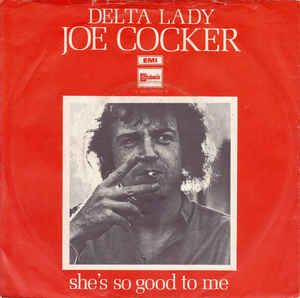
Leon Russell wrote this song. The “Delta Lady” is Rita Coolidge, who was born in Tennessee and moved to Memphis in 1967, where she met Russell. They started dating, and in 1969 Russell wrote this song about her. He was working on Joe Cocker’s second album at the time, so he contributed this song, which Cocker released as the first single from the set. Russell included the song on his first solo album the following year.
The song peaked at #69 in the Billboard 100 in 1969. The song was off the album Joe Cocker! that peaked at #11 in 1970. Leon and Rita Coolidge would tour with Cocker and appear on the live Mad Dogs and Englishmen album…Cocker’s highest-charting LP.
It’s always been one of my favorites from Joe…I still can’t help but think of John Belushi when Joe Cocker’s name comes up.
From Songfacts
This song’s muse Rita Coolidge is one of the backing vocalists on the track. In her autobiography, she recalls Cocker recording the song at Russell’s studio on Skyhill Drive in Los Angeles, where she served tea to the musicians and crew. She didn’t know at the time that the song would become her calling card: she named that autobiography Delta Lady.
The song is very sensual, with Cocker singing about finding the Delta Lady “wet and naked in the garden,” and how he thinks about those times when he’s away from her and longs for her touch. No matter where he goes, he thinks of her.
Leon Russell and Rita Coolidge joined Joe Cocker on his Mad Dogs and Englishmen tour, where she would sing “Superstar,” a song written by Russell and Bonnie Bramlett. “Here she is, our own Delta Lady,” Cocker would announce when introducing her, imprinting that appellation.
Russell wrote another song about Rita Coolidge, “A Song For You,” which also appeared on his debut album. The couple split soon after, just as their careers started taking off. Coolidge issued her first album in 1971 and had her first big hit in 1977 with a cover of Jackie Wilson’s “(Your Love Keeps Lifting Me) Higher And Higher.”
Delta Lady
Woman of the country now I’ve found you Longing in your soft and fertile delta And I whisper sighs to satisfy your longing For the warmth and tender shelter of my body Oh you’re my, yes you’re my Delta Lady Yes, you’re my, me oh my, Delta Lady
Please don’t ask how many times I found you Standing wet and naked in the garden And I think of days and different ways I held you Held you closely to me, yes our heart was beating Oh you’re my
Oh, and I’m over here in England But I think of you, think about you Because I love you
There are concrete mountains in the city And pretty city women live inside them And yet it seems the city scene is lacking I’m so glad you’re waiting for me in the country Oh you’re my
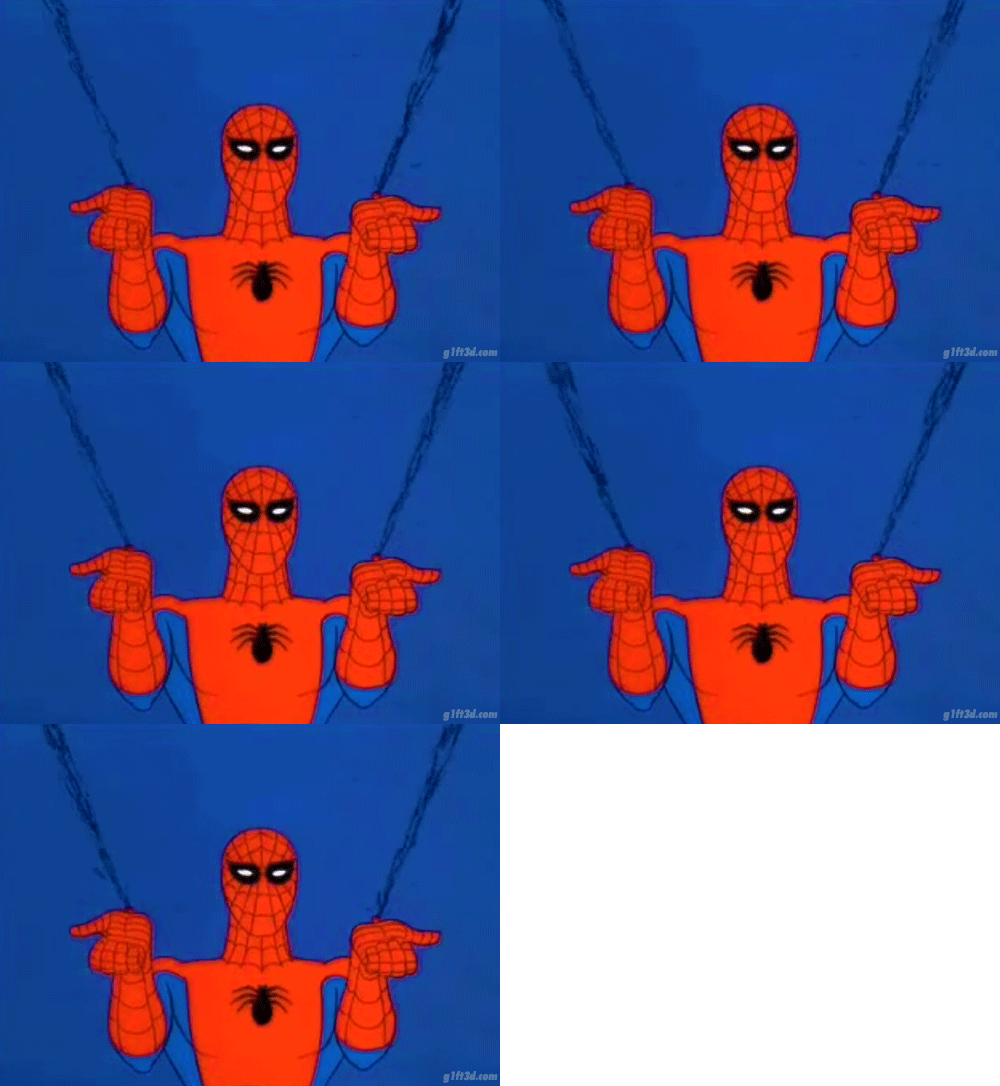
This is my Spiderman. When I hear “Spiderman” this is what I think of…I loved the animation and its sixties background music. I watched it in syndication in the 70s and it still plays today. The budget wasn’t huge for the show and it did have repetition but it was a fun watch.
The first show to ever feature Spiderman premiered on September 9, 1967, on the ABC television network and ran for a total of three seasons, entering into syndication during its final season in 1970.
Grantray-Lawrence Animation was the original production company responsible for the series but was on the brink of bankruptcy by the time it premiered and had filed for it by year’s end, forcing them to hand over production duties to Krantz Films, Inc. Krantz Films cut the pre-existing budgets in half. The classic comic book villains were thrown out because of licensing costs, replaced by generic green-skinned alien King Mooks and their Mook henchmen, more often than not the product of Stock Footage recycled from episodes of Robin Hood…another of Krantz’s shows.
It remained quite popular in it’s day and also now with many fans. The theme song was written by Paul Francis Webster and Robert “Bob” Harris. The original song was recorded at RCA Studios in Toronto (where the cartoon was also produced) featuring 12 CBC vocalists (members of the Billy Van Singers, and Laurie Bower Singers groups) who added to the musical backing track supplied by RCA Studios, New York. The singers were paid only for the session and have had no residuals from its use since then.
Spiderman, Spiderman! Does whatever a spider he can. Spins a web any size, Catches thieves, just like flies. Look out! Here comes the Spiderman!
Is he strong? Listen, Bud! He’s got radioactive blood. Can he swing from a thread? Take a look overhead. Hey there, there goes the Spiderman!
In the chill of night, At the scene of the crime Like a streak of light He arrives just in time
Spiderman, Spiderman Friendly neighborhood Spiderman Wealth and fame he’s ignored Action is his reward To him, life is a great big bang-up Wherever there’s a hang-up You’ll find the Spiderman!
I had a Zombies Greatest Hits CD in the 80s that had their popular songs and also a few more. This song was never a big hit but it caught my attention. Imagine The Swan was recorded after the classic Oracle and Odessy LP. Time of the Season was a big hit in 1969 but the band had already broken up.
The record company then wanted the Zombies to reform to cash in but that wasn’t going to happen. Rod Argent, the keyboard player did a couple of tracks under The Zombies name…he sang this one, not lead singer Colin Blunstone…Zombie member Chris White wrote the song.
It blended in well with the rest of their songs. Rod Argent would go on to form the band, Argent.
It was released as a single and wasn’t on an album until a late seventies compilation. The song made it to #109 on Billboard and #77 in Cash Box in America in 1969.
Rod Argent and Colin Blunstone talking about this song.
Imagine The Swan
Well I have a picture in color of you And it’s there in my room to remind me of you So it was with surprise that I saw you today And I did not recognize you, girl, what more can I say?
For the colors are gone You’ve become kind of gray And you’re not like the swan That I knew yesterday…
Now the pictures are wrong You’ve become kind of gray I imagine the swan That you were yesterday…
The sadness that I felt was hard on my eyes And the truth on my face was hard to disguse So I let you walk by I turned out of your way And I tried to close my eyes And let the sadness fall away…
For the colors are gone You’ve become kind of gray And you’re not like the swan That I knew yesterday…
Now the pictures are wrong You’ve become kind of gray I imagine the swan That you were yesterday…
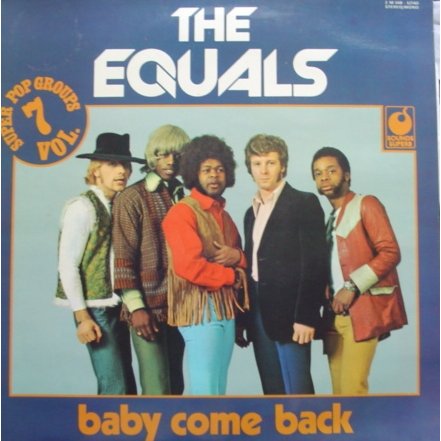
If you were wondering what Eddy Grant did before Electric Avenue…wonder no more. He was writing this song for the band he was in called The Equals.
The Equals were a pop/reggae/rock group that formed in North London, England in 1965. Eddy Grant, founded the group. Also in the original line-up were the twin brothers Derv and Lincoln Gordon, as well as John Hall and Pat Lloyd. They were noted as being the first major interracial rock group in the UK and one of the few racially mixed bands of the era.
This song was originally released in 1966 as a B side. Throughout Europe DJ’s started to play this song and it charted in Germany. It was re-released in 1968 in the UK and it peaked at #1 and in the US it made it to #32.
In 1980, The Clash recorded a cover version of the Equals’ song “Police on My Back”. Willie Nelson also covered the song in 2006.
Baby Come Back would be their only charting song in America but in the UK they found success.
“I Get So Excited” / “The Skies Above” – (1968) (UK #44)
“Baby Come Back” / “Hold Me Closer” – (1968) (UK #1, IRL #2, NOR #4, U.S. #32)
“Laurel And Hardy” / “The Guy Who Made Her a Star” – (1968) (UK #35)
“Softly Softly” / “Lonely Rita” – (1968) (UK #48)
“Michael and The Slipper Tree” / “Honey Gum” – (1969) (UK #24)
“Viva Bobby Joe” / “I Can’t Let You Go” – (1969) (UK #6, IRL #3)
“Rub A Dub Dub” / “After the Lights Go Down Low” – (1969) (UK #34)
“Black Skin Blue Eyed Boys” / “Ain’t Got Nothing to Give You” – (1970) (UK #9)
From Songfacts
Originally, this was the B-side of The Equals’ “Hold Me Closer” single. That record did not capture much attention, but in early 1968 this was released as a single in Germany, where it rose to #1. After it subsequently topped the charts in Belgium and Holland the song was finally reissued in the UK, where it soared to #1.
The Equals were a pop group formed in England in 1965 by Derv Gordan (vocals), his twin brother Lincoln (guitar), Grant (guitar), John Hall (drums) and Pat Lloyd (guitar). They went on to have 12 more hits in Germany and two other UK Top 10 hits (“Viva Bobby Joe” and “Black Skin Blue Eyed Boys”) before legal problems with the record company made it impossible to release any more records.
Baby Come Back
Come back Baby, come back Baby, come back Baby, come back
This is the first time [unintelligible] today That you have run away I’m asking you for the first time Love me [unintelligible] stay (all right)
Hey (all right) Hey (all right!) Hey, yeah Come back
Baby, come back Baby, come back Baby, come back
There ain’t no use in you crying ‘Cause I’m more hurt than you I shoulda not been out flirting But now my love is true
Ooh (all right) Ooh (OK!) Ooh, yeah Come back
Baby, come back Baby, come back Baby, come back Come back, baby, don’t you leave me
Baby, baby, please don’t go Oh, won’t you give me a second chance Baby, I love you so (all right) Oh (oh, yeah)
Oh (unintelligible) Oh, yeah Come back I said baby, come back
I said baby, come back Oh won’t you please come back Oh won’t you please come back [Repeat until fade]
I watched this a some as a kid and enjoyed it. When I watched it as an adult I thought it was Jackie Mason and Dean Martin voicing the cartoon.
John Byner voiced the Ant and the Aardvark. He imitated Jackie Mason as the Aardvark and Dean Martin as the Ant.
The Ant and the Aardvark was a series of theatrical cartoons produced at DePatie-Freleng Enterprises from 1969 to 1971, about a blue aardvark always trying to catch a red ant named Charlie.
The series consisted of 17 cartoons that ran from 1969 to 1971. After its initial theatrical run, The Ant and the Aardvark later became a part of The Pink Panther Show, with all 17 episodes airing in reruns, with the characters themselves being integrated into later iterations of The Pink Panther itself.
When I watch the intro I can’t help but think Monsters Inc got a little inspiration from the beginning.
Some songs are so ingrained in our psyche that a cover version would not make us forget the original or improve it. Covering them in concert is one thing but remaking them is another. When you compete against a memory…the memory wins. I know some will disagree but there are songs that in my opinion that are untouchable. That doesn’t mean I want to hear these songs over and over…some are worn out. I’m not saying the cover version would be bad…but it would not replace the original.
These are in no order. There are many more…any suggestions?
Bohemian Rhapsody – Queen – I can’t even imagine someone seriously trying to pull this off…
I Am The Walrus – Beatles -This bizarre piece of music would be hard to duplicate.
Stairway to Heaven – Led Zeppelin – It’s been tried…even by Pat Boone…Mr Soul Sucker who can take the soul out of a room by simply walking in. Dolly Parton even took a stab at it.
Freebird – Lynyrd Skynryd – I don’t think anyone would want to try.
Won’t Get Fooled Again – How would you match the intensity and power of this recording?
Good Vibrations – Beach Boys – Todd Rundgren remade this and copied it almost exactly…but what was the point? He did a fine job of copying it.
Sympathy for the Devil – Rolling Stones – I don’t see anyone matching the Stones version.
Born To Run – Bruce Springsteen – Bruce layered so many guitars (I’ve read up to 24) to make his own wall of sound…I don’t see this being topped.
Band On The Run – This is basically three songs into one with McCartney’s style
Like A Rolling Stone – Bob Dylan – Maybe the best single ever released. Bob is one of the most covered artists but his voice just stings on this recording and it would be hard to match.
A few more I thought of… American Pie, A Day In The Life, Sounds of Silence
I can hear Needles and Pins by The Searchers slightly in this song and that just makes it better. Gene Clark of the Byrds wrote this song and also sang it. The song was the B side to All I Really Want to Do and it was released in 1965 and as a B side managed to peak at #103 on the Billboard charts.
Tom Petty did a great cover of this song on his Full Moon Fever album released in 1989. Tom was heavily influenced by the Byrds.
Gene Clark talked about the song:
“There was a girlfriend I had known at the time, when we were playing at Ciro’s. It was a weird time in my life because everything was changing so fast and I knew we were becoming popular. This girl was a funny girl, she was kind of a strange little girl and she started bothering me a lot. And I just wrote the song, ‘I’m gonna feel a whole lot better when you’re gone,’ and that’s all it was, but I wrote the whole song within a few minutes.”
I’ll Feel a Whole Lot Better
The reason why oh, I can’t say I have to let you go, baby and right away
After what you did I can’t stay now
And I’ll probably feel a whole lot better when you’re gone
Baby for a long time (baby for a long time) you had me believe (you had me believe)
That your love was all mine (that your love was all mine) and that’s the way it would be
But I didn’t know (but I didn’t know) that you were putting me on
And I’ll probably feel a whole lot better when you’re gone, when you’re gone
Now I gotta say (I gotta say) that it’s not like before (that it’s not like before)
And I’m not gonna play your games any more (and I’m not gonna play)
After what you did (after what you did)I can’t stay on
And I’ll probably feel a whole lot better when you’re gone
Oh, when you’re gone, oh when you gone,oh when you gone
I did Part 1 over a year ago and it was a fun post. I’ve been meaning to do this again. I remembered some of the lyrics suggested by my friends hanspostcard and allthingsthriller on the last post…I have added those to list. Thanks to both of you.
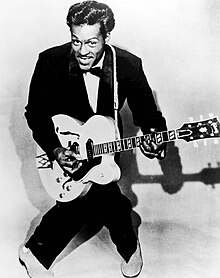
I saw her from the corner when she turned and doubled back, And started walkin toward a coffee colored Cadillac… Chuck Berry
Freedom’s just another word for nothin’ left to lose, And nothin’ ain’t worth nothin’ but it’s free… Janis Joplin/Kris Kristofferson
And I need you more than want you, And I want you for all time… Jimmy Webb
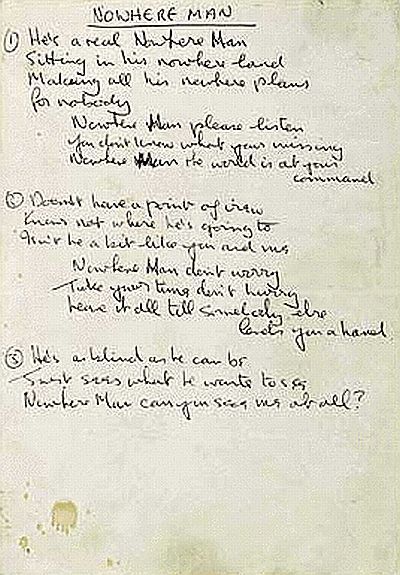
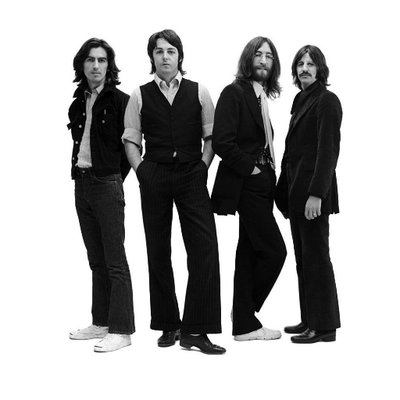
Doesn’t have a point of view / Knows not where he’s going to / Isn’t he a bit like you and me…The Beatles
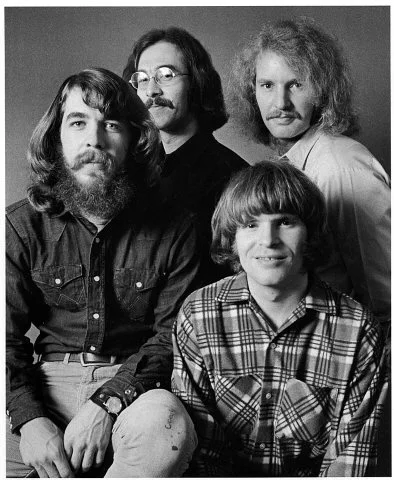
Met myself a coming county welfare line,I was feeling strung out, Hung out on the line…Creedence Clearwater Revival
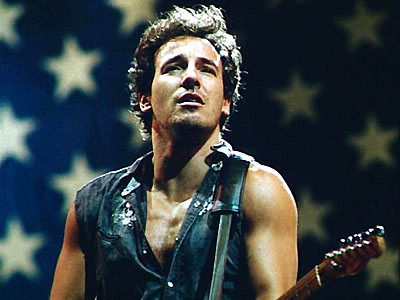
And you’ve got to learn to live with what you can’t rise above…Bruce Springsteen
He’d end up blowing all his wages for the week / All for a cuddle and a peck on the cheek…Kinks
Well it’s too late, tonight, To drag the past out into the light, We’re one, but we’re not the same, We get to carry each other, Carry each other…U2
You can blow out a candle but you can’t blow out a fire…Peter Gabriel
Living is easy with eyes closed,misunderstanding all you see…The Beatles
Where you drink champagne and it tastes just like cherry cola, C-O-L-A Cola…Kinks
It was gravity which pulled us down and destiny which broke us apart…Bob Dylan
A drunkard’s dream if I ever did see one… The Band
And the sign said, The words of the prophets, are written on the subway walls, and tenement halls… Simon and Garfunkel
I lit up from Reno, I was trailed by twenty hounds, Didn’t get to sleep that night Till the morning came around…Grateful Dead
When I said that I was lying, I might have been lying…Elvis Costello
Though nothing will keep us together/We can be heroes/Just for one day…David Bowie
Lose your dreams and you. Will lose your mind…Rolling Stones
It’s a town full of losers, I’m pulling out of here to win…Bruce Springsteen
The motor cooled down, the heat went down, and that’s when I heard that highway sound…Chuck Berry
We were the first band to vomit at the bar, and find the distance to the stage too far…The Who
David John Harman (Dave Dee), Trevor Leonard Ward-Davies (Dozy), John Dymond (Beaky), Michael Wilson (Mick) and Ian Frederick Stephen Amey (Tich), who were childhood friends from Wiltshire formed a group in 1961. They were originally called Dave Dee and the Bostons. A few years later they changed their names to Dave Dee, Dozy, Beaky, Mick and Tich.
They never made it big in America but they were huge in the UK. They had 13 UK Top forty hits, 8 UK Top 10’s, and 13 UK top 75, and 1 Number 1…the number 1 was LEGEND OF XANADU.
Hold Tight peaked at #4 in the UK Charts, #27 in the Australian Charts, and #8 in the New Zealand Charts in 1966.
I heard them a bit through the 80s and 90s but not much. Quentin Tarantino must have liked them because he featured this song in his movie Death Proof during the infamous crash scene.
Hold Tight
Hold tight, count to three Gotta stay close by me And hold tight, sing and shout Just ride my round-about And hold tight, shut your eyes, girl You suit me for size Forget the other guys You’ll never fall, each time you call Hold tight, hold tight, hold tight
Hold tight, make me feel What you say is for real And hold tight, Carousel Girl you’ll soon ring my bell And hold tight, we will fly swinging low, swinging high We’re gonna make the sky You’ll never fall, each time you call Hold tight, hold tight, hold tight
Hold tight, count to three Gotta stay close by me And hold tight, sing and shout Just ride my round-about And hold tight, shut your eyes, girl You suit me for size Forget the other guys You’ll never fall, each time you call Hold tight, hold tight, hold tight
This song was released in 1966 and it appears on The Who’s debut album My Generation. The song peaked at #41 in the UK but didn’t make it into the top 100 in the US. This song, along with My Generation, became anthems for The Who, as well as for the Mod movement in England.
Pete Townshend said this about it in 2000: When I wrote this song I was nothing but a kid, trying to work out right and wrong through all the things I did. I was kind of practicing with my life. I was kind of taking chances in a marriage with my wife. I took some stuff and I drank some booze. There was almost nothing that I didn’t try to use. And somehow I’m alright
I first heard this on Meaty Beaty Big and Bouncy a compilation album of the band’s singles… In the UK it was more of a greatest hits LP…in America, while a few were known…most never charted.
One of my favorite albums by the Who.
From Songfacts
The song was written by Pete Townshend as a tribute to the Mods, who were trendy and often rebellious British youth.
Check out Keith Moon’s drumming on this song – he used his cymbals and toms to emphasize the vocal lines, crashing down at the end of lyrical lines. This was one of his innovations with The Who.
A 1979 rockumentary concerning the Who shares the same title.
This song has been covered by both Goldfinger and Green Day.
The Offspring song The Kids Aren’t Alright is a reference to this
The Kids Are Alright
I don’t mind other guys dancing with my girl That’s fine, I know them all pretty well But I know sometimes I must get out in the light Better leave her behind with the kids, they’re alright The kids are alright
Sometimes, I feel I gotta get away Bells chime, I know I gotta get away And I know if I don’t, I’ll go out of my mind Better leave her behind with the kids, they’re alright The kids are alright
I know if I go, things would be a lot better for her I had things planned, but her folks wouldn’t let her
I don’t mind other guys dancing with my girl That’s fine, I know them all pretty well But I know sometimes I must get out in the light Better leave her behind with the kids, they’re alright The kids are alright
Sometimes, I feel I gotta get away Bells chime, I know I gotta get away And I know if I don’t, I’ll go out of my mind Better leave her behind with the kids, they’re alright The kids are alright, the kids are alright, the kids are alright
When asked what my favorite Beatle song is…It usually depends on what Beatle mood I’m in…early, middle or late…but this one is always near the top.
The beginning of this song was based on two stories John Lennon read about in the Daily Mail newspaper. Guinness heir Tara Browne dying when he smashed his Lotus into a parked van, and an article in the UK Daily Express in early 1967 which told of how the Blackburn Roads Surveyor had counted 4000 holes in the roads of Blackburn and commented that the volume of material needed to fill them in was enough to fill the Albert Hall.
McCartney contributed the line “I’d love to turn you on.” This was a drug reference, but the BBC banned it because of another section, which they assumed was about marijuana…that guaranteed it would be huge.
George Martin once said he got chills listening to John’s voice in this song. I can relate to that.
A 41-piece orchestra played on this song. The musicians were told to attend the session dressed formally. When they got there, they were presented with party novelties (false noses, party hats, gorilla-paw glove) to wear, which made it clear this was not going to be a typical session. The orchestra was conducted by Paul McCartney, who told them to start with the lowest note of their instruments and gradually play to the highest. >>
This was recorded in three sessions: First the basic track, then the orchestra, then the last note was dubbed in.
Regarding the article about Tara Browne, John Lennon stated: “I didn’t copy the accident. Tara didn’t blow his mind out. But it was in my mind when I was writing that verse.” At the time, Paul didn’t realize the reference was to Tara. He thought it was about a “stoned politician.” The article regarding the “4000 holes in Blackburn, Lancashire” was taken from the UK Daily Express, January 17, 1967 in a column called “Far And Near.”
John’s friend Terry Doran was the one who completed John’s line, “Now they know how many holes it takes to fill…” Terry told him “fill the Albert Hall, John.”
The ban was finally lifted when author David Storey picked it as one of his Desert Island Discs.
Speaking with GQ in 2018, Paul McCartney explained this song’s origin story: “‘A Day In The Life’ was a song that John had started. He had the first verse, and this often happened: one of us would have a little bit of an idea and instead of sitting down and sweating it, we’d just bring it to the other one and kind of finish it together, because you could ping-pong – you’d get an idea. So he had the first verse: ‘I read the news today oh boy,’ and we sat in my music room in London and just started playing around with it, got a second verse, and then we got to what was going to lead into the middle. We kind of looked at each other and knew we were being a little bit edgy where we ‘I’d love to turn you on.’ We knew that would have an effect.
It worked. And then we put on another section I had: ‘Woke up, fell out of bed, dragged a comb across my head.’ Then we finished the song up and did a big sort of epic recording of it with a big full orchestra and everything. And then did that crescendo thing in the middle of it with the orchestra, which was an idea I’d had because I’d been talking to people and reading about avant-garde music, tonal stuff and crazy ideas. I came up with this idea. I said to the orchestra, ‘You should start, all of you.’ And they sat all looking at me puzzled. We’ve got a real symphony orchestra in London who are used to playing Beethoven, and here’s me, this crazy guy out of a group and I’m saying, ‘Everyone start on the lowest note your instrument can play and work your way up to the highest at your own pace.’ That was too puzzling for them, and orchestras don’t like that kind of thing. They like it written down and they like to know exactly what they’re supposed to do. So George Martin, the producer, said to the people, ‘You should leave this note and this point in the song, and then you should go to this note and this note,’ and he left the random thing, so that’s why it sounds like a chaotic sort of swirl. That was an idea based on the avant-garde stuff I was into at the time.”
The final chord was produced by all four Beatles and George Martin banging on three pianos simultaneously. As the sound diminished, the engineer boosted to faders. The resulting note lasts 42 seconds; the studio air conditioners can be heard toward the end as the faders were pushed to the limit to record it.
The rising orchestra-glissando and the thundering sound are reminiscent of “Entry of the Gods into Valhalla” from Richard Wagner’s opera “Das Rheingold,” where after the rising glissando, Thor beats with his hammer. George Martin said in his 1979 book All You Need is Ears that the glissando was Lennon’s idea. After Lennon’s death, Martin seems to have changed his mind. In his 1995 book Summer of Love: The Making of Sgt. Pepper, he states that the rising orchestra-glissando was McCartney’s idea. >>
This being the last song on the album, The Beatles found an interesting way to close it out. After the final note, Lennon had producer George Martin dub in a high pitched tone, which most humans can’t hear, but drives dogs crazy. This was followed by a loop of incomprehensible studio noise, along with Paul McCartney saying, “Never could see any other way,” all spliced together. It was put there so vinyl copies would play this continuously in the run-out groove, sounding like something went horribly wrong with the record. Another good reason to own vinyl.
In 2004, McCartney did an interview with the Daily Mirror newspaper where he said he was doing cocaine around this time along with marijuana. “I’d been introduced to it, and at first it seemed OK, like anything that’s new and stimulating,” he said. “When you start working your way through it, you start thinking, ‘This is not so cool and idea,’ especially when you start getting those terrible comedowns.”
The movie reference in the lyrics (“I saw a film today, oh boy. The English Army had just won the war”) is to a film John Lennon acted in called How I Won The War.
McCartney’s middle section (woke up, got out of bed…) was intended for another song.
The Beatles started this with the working title “In The Life of…”
This is a rare Beatles song with a title that is not part of the lyrics. Another one is “Yer Blues.”
That’s Mal Evans doing the counting during the first transition from John to Paul. He set the alarm clock (heard on the recording) to go off at the end of his 24-bar count. Evans also helped with the composition of a couple of songs on the Sgt. Pepper album. Although he never received composer’s credit, the Beatles did pay his estate a lump sum in the 1990s for his contributions. Evans died January 5, 1976 after a misunderstanding with the police.
George Martin (from Q Magazine, July 2007): “John’s voice – which he hated – was the kind of thing that would send shivers down your spine. If you hear those opening chords with the guitar and piano, and then his voice comes in, ‘I heard the news today, oh boy’ It’s just so evocative of that time. He always played his songs to me on the guitar and I would sit on a stool as he strummed. The orchestral section was Paul’s idea. We put two pieces of songs together that weren’t connected in any way. Then we had that 24-bars-of-nothing in between. I had to write a score, but in the climax, I gave each instrument different little waypoints at each bar, so they would know roughly where they should be when they were sliding up. Just so they didn’t reach the climax too quickly. With ‘A Day In The Life,’ I wondered whether we were losing our audience and I was scared. But I stopped being scared when I played it to the head of Capitol Records in America and he was gob smacked. He said, That’s fantastic. And of course, it was.”
In the original take, the 41-piece orchestra was not used. Instead, Lennon had roadie Mal Evans count to 21 in a very trippy manner and set off an alarm clock after the 21 counts. This version is on the second Anthology CD, and is very different than the one on Sgt. Pepper.
David Crosby was at Abbey Road studios when The Beatles were recording this. In an interview with Filter magazine, he said: “I was, as near as I know, the first human being besides them and George Martin and the engineers to hear ‘A Day In The Life.’ I was high as a kite – so high I was hunting geese with a rake. They sat me down; they had huge speakers like coffins with wheels on that they rolled up on either side of the stool. By the time it got the end of that piano chord, man my brains were on the floor.”
The orchestral bit was used in the Yellow Submarine movie. Photos of different geographical areas were shown as The Beatles were apparently traveling in the submarine to try and find Pepperland.
When asked by Rolling Stone magazine what songs of his dad’s constantly surprise him, Sean Lennon said: “I’ve listened so much to that stuff that there are very few surprises. But I do think ‘A Day In The Life’ is always inspiring.”
The American rock band Hawthorne Heights originally named themselves A Day in the Life after this song. In 2003, lead vocalist/rhythm guitarist JT Woodruff changed it to their current name.
On June 18, 2010 John Lennon’s handwritten lyric sheet for this song featuring corrections and alternate crossed-out lines was auctioned at New York Sotheby’s. It was sold for $1.2 million to an anonymous American buyer.
This was rated the greatest ever Beatles song in a special collector’s edition issue by The Beatles: 100 Greatest Songs. The list was compiled to coincide with the 40th anniversary of the Fab Four’s final studio album, Let It Be.
There is term for the techniques The Beatles used in arranging the final chords of this song: Deceptive Cadence. Glen Burtnik, who was a member of Styx and was also in a popular Beatles tribute band, told us: “It’s an instance where the listener assumes the next chord, or melody note, will go somewhere it doesn’t. Even though all the indications lead you to expecting a certain outcome, the writer/arranger intentionally surprises you by going someplace else musically. Not sure it’s simple to understand, as you’re conditioned to being used to the outcome.”
Peter Asher, who worked for The Beatles at Apple Records and produced the biggest hits of James Taylor and Linda Ronstadt, considers this the greatest Beatles song from a production standpoint. “‘A Day In The Life’ certainly combined Beatle ideas and George Martin ideas very effectively,” he told Songfacts.
Keith Richards named his second son Tara after Tara Brown, the Guinness heir who smashes his car in Lennon’s first verse. Richard’s son was premature and died soon after birth.
A Day In The Life
I read the news today oh boy About a lucky man who made the grade And though the news was rather sad Well I just had to laugh
I saw the photograph He blew his mind out in a car He didn’t notice that the lights had changed A crowd of people stood and stared They’d seen his face before Nobody was really sure If he was from the House of Lords
I saw a film today oh boy The English army had just won the war A crowd of people turned away But I just had to look Having read the book I’d love to turn you on
Woke up, fell out of bed Dragged a comb across my head Found my way downstairs and drank a cup And looking up I noticed I was late Found my coat and grabbed my hat Made the bus in seconds flat Found my way upstairs and had a smoke Somebody spoke and I went into a dream
I read the news today oh boy Four thousand holes in Blackburn, Lancashire And though the holes were rather small They had to count them all Now they know how many holes it takes to fill the Albert Hall I’d love to turn you on
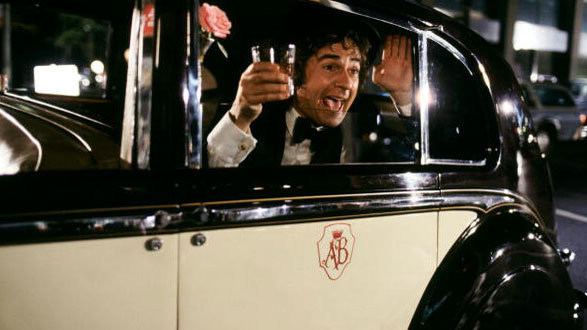
Arthur –I race cars, play tennis, and fondle women, BUT! I have weekends off, and I am my own boss.
at 1:36
The Empire Strikes Back –Try not, Do or Do Not, There is no Try
Cool Hand Luke –Calling it your job don’t make it right boss.
Airplane –There’s no reason to become alarmed, and we hope you’ll enjoy the rest of your flight. By the way, is there anyone on board who knows how to fly a plane?
At 5:30
Anchorman –He had a voice that could make a wolverine purr and suits so fine they made Sinatra look like a hobo
At 0:036
Office Space – The thing is, Bob, it’s not that I’m lazy, it’s that I just don’t care
At 1:18
Caddyshack –Judge, give someone else a chance! You lucky devil! Come here, honey! And loosen up! You’re a lot of woman, you know? You wanna make 14 dollars the hard way?
The Breakfast Club – Does Barry Manilow know that you raid his wardrobe?
Full Metal Jacket –I am Gunnery Sgt. Hartman, your senior drill instructor. From now on you will speak only when spoken to, and the first and last words out of your filthy sewers will be ‘Sir.’ Do you maggots understand that?
0:00 – 0:013
Animal Crackers –One morning I shot an elephant in my pajamas. How he got in my pajamas, I don’t know
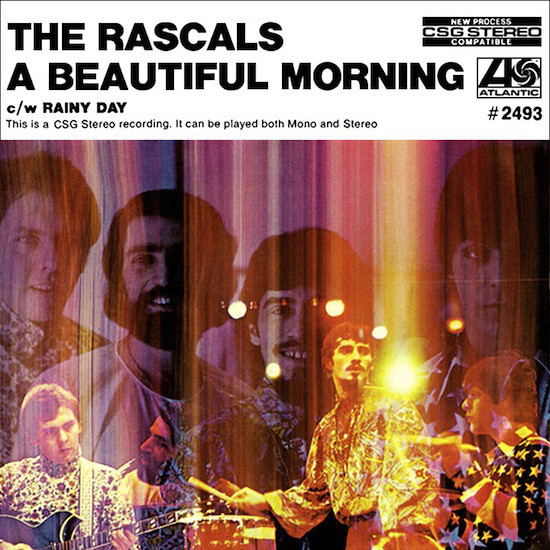
This was the first of the group’s singles to be credited to “The Rascals,” the original name of the group, rather than “The Young Rascals” which their producer had them take in order to avoid confusion from listeners with another group “The Harmonica Rascals.”
This song peaked at #3 in the Billboard 100 in 1968. Beautiful Morning was written by Felix Cavaliere and Eddie Brigati. The Rascals don’t get talked about as much as some of their peers… which is a shame…they were a great singles band. The band had 18 songs in the Billboard 100, 3 number 1 hits and 6 top ten hits. The Rascals were inducted into the Rock and Roll Hall of Fame on May 6, 1997.
From Songfacts
Written by band members Felix Cavaliere and Eddie Brigati, this is an upbeat, optimistic song similar in theme to their 1967 hit “Groovin’.” While the late ’60s were a tumultuous time in America and a lot of the music dealt with social and political issues of the time, The Rascals provided hopeful songs that were a welcome relief for many listeners.
Beautiful Morning
It’s a beautiful mornin’, ah I think I’ll go outside a while And just smile Just take in some clean fresh air, boy! Ain’t no sense in stayin’ inside If the weather’s fine, and you got the time It’s your chance to wake up and plan another brand new day Either way It’s a beautiful mornin’, ah Each bird keeps singin’ his own song So long! I’ve got to be on my way now Ain’t no fun just hangin’ around I’ve got to cover ground; you couldn’t keep me down It just ain’t no good if the sun shines When you’re still inside Shouldn’t hide, still inside, shouldn’t hide Ah, oh! (Shouldn’t hide) Ah, ah, oh
(Doo, doo-wa) (Doo, doo-wa)
There will be children with robins and flowers Sunshine caresses each new waking hour Seems to me that the people keep seeing More and more each day; gotta say, lead the way It’s okay, Wednesday, Thursday, it’s okay (Ah) Monday, Wednesday, Friday, weekday, ah, ah, oh
















 PowerPop... An Eclectic Collection of Pop Culture