Animals – Don’t Let Me Be Misunderstood

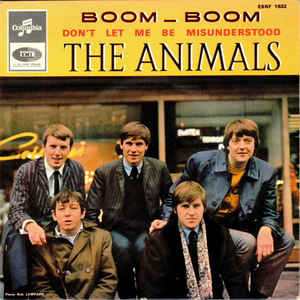
This song peaked at #15 in the Billboard 100 and #3 in the UK in 1965. The Animals were a tough Rhythm and Blues band formed in Newcastle upon Tyne. Burdon’s voice drives this Animals song.

This song was written by Horace Ott, Bennie Benjamin, and Sol Marcus. Benjamin and Marcus were a songwriting team that had been working together since the 40s… their songs include “Lonely Man” by Elvis Presley and “Fabulous Character” by Sarah Vaughan.

Ott started writing the song after getting in a heated argument with Gloria Caldwell, whom he had recently married. Sitting down at the piano, he expressed in song how he was well-intentioned, but misunderstood by his wife – a sentiment many married men could relate to.

Gloria Caldwell is listed on the credit instead of Ott because of contractual issues. She learned to understand him: the couple stayed together.

The Animals were one of the British Invasion bands…One of the rawer and bluesy bands.

From Songfacts

Nina Simone was the first to record this song, releasing an orchestrated, downtempo rendition on her 1964 album Broadway-Blues-Ballads that nicked the US chart at #131. The best-known version is by The Animals, who reworked it into a rock song. Eric Burdon recalled in Rolling Stone magazine, “It was never considered pop material, but it somehow got passed on to us and we fell in love with it immediately.”

In our 2010 interview with Eric Burdon, he said: “I’ve really been misunderstood. By my mom, my dad, school teachers, a couple of the women that I married. I’ve been misunderstood all of my life.”

In 2013, Eric Burdon recorded a new version of this song with Jenny Lewis for the HBO TV series True Blood. “When I was asked to record a new version of ‘Don’t Let Me Be Misunderstood’ for the new season with Jenny Lewis, I had to bite,” Burdon said of recording the song for the vampire drama. The song was included on Volume 4 of the show’s soundtrack.

Other well-known versions include covers by:

Joe Cocker, who covered this on his 1969 debut album, With a Little Help from My Friends. His version was played over the ending credits of the 2004 film Layer Cake.

Disco group Santa Esmeralda’s 1977 dance version, which incorporated flamenco, salsa, and other Latin rhythm and ornamentation elements. Released as a single it reached #15 on the Billboard Hot 100. The song’s instrumental passage was later used by Quentin Tarantino during the duel between The Bride and O-Ren Ishii in his 2003 movie Kill Bill: Volume 1

Lana Del Rey, who covered this for her 2015 Honeymoon album. Her version is in the vein of Nina Simone’s jazz original but also uses The Animals organ sound. Del Rey had previous covered another Nina Simone song “The Other Woman” for her Ultraviolence album. The “Video Games” singer told NME she is drawn to Simone’s “melodies and words.” “Personality-wise we’re quite different,” she added. “We may have had some of the same issues, but I picked that song simply because it resonated with me.”

Don’t Let Me Be Misunderstood

Baby, do you understand me now?
Sometimes I feel a little mad
But don’t you know that no one alive can always be an angel
When things go wrong I feel real bad.

I’m just a soul whose intentions are good
Oh Lord, please don’t let me be misunderstood

Baby, sometimes I’m so carefree
With a joy that’s hard to hide
And sometimes it seems that, all I have to do is worry
And then you’re bound to see my other side

I’m just a soul whose intentions are good
Oh Lord, please don’t let me be misunderstood

If I seem edgy, I want you to know,
That I never mean to take it out on you
Life has its problems, and I get my share,
And that’s one thing I never mean to do

Cause I love you,
Oh,

Oh, oh, oh, baby – don’t you know I’m human
I have thoughts like any other one
Sometimes I find myself, Lord, regretting
Some foolish thing, some little simple thing I’ve done

I’m just a soul whose intentions are good
Oh Lord, please don’t let me be misunderstood
Yes, I’m just a soul whose intentions are good
Oh Lord, please don’t let me be misunderstood
Yes, I’m just a soul whose intentions are good
Oh Lord, please don’t let me be misunderstood

Yes, I’m just a soul whose intentions are good

Speed Racer 1967

   “Here he comes, here he comes; Speed Racer. He’s a demon on wheels…” that will always stick with me. 

I first saw this in the 70s at some point and it was different. I had said that Jonny Quest was different and it was but this one…was completely different than anything I had seen. It was my first viewing of Japanese Anime.  Speed Racer was one of the first Japanese anime cartoons to make it stateside back in the 1960s. The show originally called Mach Go Go Go reached millions of kids around the world while in syndication. My first thought while watching it while I was older…this was NOT Hanna-Barbera. 

I discovered Speed Racer and Jonny Quest at the same time. I would watch it at my cousin’s house and was blown away by the different animation.

Speed Racer (Go Mifune) is the young driver of the Mach 5, an incredible supercar designed by his father “Pops” Racer (Daisuke Mifune). Speed would race dangerous routes against dangerous people and come out on top with his “girlfriend” Trixie (Michi Shimura) trailing him in a helicopter and his little brother Spritle (Kurio) and his pet chimp Chim-Chim (Sanpei) frequently stowing away in the trunk.

Through the years there have been remakes of the show in the 90s and a movie in 2008 which was not received well. It was a groundbreaking show in the US and opened the door for Japanese Anime afterward.

I still catch the show when I can.


https://tvtropes.org/pmwiki/pmwiki.php/Anime/SpeedRacer


Arlo Guthrie – Coming Into Los Angeles

Seeing the news and blog posts on the 50th anniversary of Woodstock made me think of this song. I bought the Woodstock triple album set in the late seventies or early eighties…this song I liked automatically. It’s catchy and is about as anti-authority as you can get. The imagery is fun in this song… Chicken flying everywhere around the plane
Could we ever feel much finer and Walking in the hall with his things and all
Smiling, said he was the Lone Ranger

This is the song that really got me into Arlo…though I had heard City of New Orleans. After hearing this I wanted to check out his music.

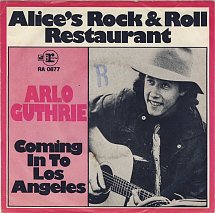
Arlo wrote this song and it was on his second album Running Down the Road. The great Clarence White played guitar on this song. Other musicians on the album were Ry Cooder, Gene Parsons, and James Burton. The song didn’t chart because it’s pretty clear why (Coming into Los Angeles, Bringing in a couple of ki’s, don’t touch my bags if you please
mister customs man)…but the album peaked at #54 in the Billboard Album Charts in 1969.

The best-known version is the Woodstock version.

Studio Version

Woodstock

Coming Into Los Angeles

Coming in from London from over the pole
Flying in a big airliner
Chicken flying everywhere around the plane
Could we ever feel much finer

Coming into Los Angeles
Bringing in a couple of ki’s
Don’t touch my bags if you please
Mister customs man, yeah

There’s a guy with a ticket to Mexico
No, he couldn’t look much stranger
Walking in the hall with his things and all
Smiling, said he was the Lone Ranger

Coming into Los Angeles
Bringing in a couple of ki’s
Don’t touch my bags if you please
Mister customs man

Hip woman walking on the moving floor
Tripping on the escalator
There’s a man in the line and she’s blowing his mind
Thinking that he’s already made her

Coming into Los Angeles
Bringing in a couple of ki’s
Don’t touch my bags if you please
Mister customs man

Coming in from London from over the pole
Flying in a big airliner
Chicken flying everywhere around the plane
Could we ever feel much finer

Coming into Los Angeles
Bringing in a couple of ki’s
Don’t touch my bags if you please
Mister customs man, yeah, all right

Beatles – Nowhere Man

This song’s harmonies are great and so is the incredibly treble solo in the middle. John wrote this song. John wrote this song after he spent all night trying to write a song. He eventually gave up and laid down and then the song came to him. The song peaked at #3 in the Billboard 100 in 1966.

John: “I’d spent five hours that morning trying to write a song that was meaningful and good, and I finally gave up and lay down.  Then ‘Nowhere Man’ came, words and music, the whole damn thing, as I lay down…So letting it go is what the whole game is.  You put your finger on it, it slips away, right?  You know you turn the lights on and the cockroaches run away.  You can never grasp them.”

The guitar solo was performed by both John and George in unison on their identical Sonic Blue Fender Stratocasters. George: “I decided I’d get a Strat, and John decided he’d get one too.  So we sent out our roadie, Mal Evans, said go and get us two Strats.  And he came back with two of them, pale blue ones.  Straight away we used them on the album we were making at the time, which was ‘Rubber Soul.’  I played it a lot on that album, (most noticeably) the solo on ‘Nowhere Man’ which John and I both played in unison.”

The Beatles pushed the engineers to add treble to the solo that John and George were playing. Run it through and put the treble on it again and again. The Engineers said, “We can’t do that”…Paul told them that it was ok…if it is terrible we simply won’t use it…they kept on pushing and it worked perfectly. The engineers were also afraid of getting fined by EMI for doing things against regulations…with the Beatles though it soon became commonplace.

This shows how the Beatles were changing the rules as they were going along. Not only in writing superb songs but pushing the limits of the studio as well as doing things that pop stars just didn’t do before them…

From Songfacts

John Lennon came up with this after struggling to write a song for the album. Said Lennon: “I thought of myself sitting there, doing nothing and getting nowhere.”

This was used in the animated Beatles movie Yellow Submarine. They sing it to Jeremy Hillary Boob, Ph.D., who describes himself as an “eminent physicist, polyglot classicist, prize-winning botanist, hard-biting satirist, talented pianist, good dentist too.” The Beatles decide to take him Somewhere, and he eventually helps them to defeat the Blue Meanies. >>

This starts with a three-part harmony sung by Lennon, Harrison, and McCartney.

This is probably the first Beatles song that has nothing to do with love.

Typical of many John Lennon compositions are the “falling” melodies, which can be heard in “Nowhere Man.” Folk music often has falling melodies, indicating melancholy. In Baroque music, a falling melody means sadness. 

There is a very audible feedback 38 seconds into the song after the word “missin’.”

Natalie Merchant performed this at the 2001 special, Come Together: A Night For John Lennon’s Words And Music. She did a mellow version, as the show was also a tribute to victims of the terrorist attacks on America.

In a 1971 interview with Rolling Stone, Lennon recalled the background to this song: “I remember I was just going through this paranoia trying to write something and nothing would come out so I just lay down and tried to not write and then this came out, the whole thing came out in one gulp.”

In 2003, John Lennon’s original handwritten lyrics to this song were auctioned at Christie’s of New York for $455,500. 

One of the many songwriters influenced by The Beatles is Graham Gouldman of 10cc, who toured with Ringo’s All-Starr Band in 2018. According to Gouldman, this song is an example of how they would create a two-part harmony, but leave out third part, which is implied. “That’s screaming out for the third harmony, but they never did it,” he told Songfacts. “And in your head, you sing along, if you’re musical, the third harmony.”

Nowhere Man

He’s a real nowhere man
Sitting in his nowhere land
Making all his nowhere plans for nobody

Doesn’t have a point of view
Knows not where he’s going to
Isn’t he a bit like you and me?
Nowhere man please listen
You don’t know what you’re missing
Nowhere man, The world is at your command

He’s as blind as he can be
Just sees what he wants to see
Nowhere man, can you see me at all
Nowhere man don’t worry
Take your time, don’t hurry
Leave it all till somebody else
Lends you a hand
Ah, la, la, la, la

Doesn’t have a point of view
Knows not where he’s going to
Isn’t he a bit like you and me?
Nowhere man please listen
You don’t know what you’re missing
Nowhere man, The world is at your command
Ah, la, la, la, la

He’s a real nowhere man
Sitting in his nowhere land
Making all his nowhere plans for nobody

Jonny Quest

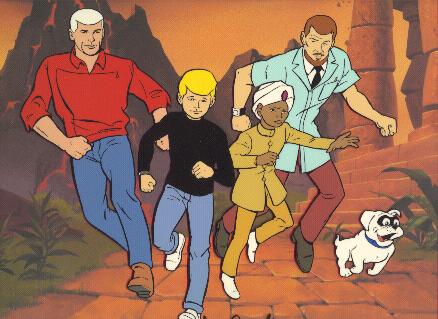
Jonny Quest was different than many cartoons I watched…the artwork and stories were above the normal ones at the time.

Jonny Quest the series was about the globe-trotting adventures of an eleven-year-old boy (Jonny), his scientist father (Dr. Benton Quest), his adopted brother Hadji (from Calcutta, India), his government bodyguard (Race Bannon) and his bulldog (Bandit). A young future Animal House actor Tim Matheson voiced Jonny Quest.

When I was a kid I loved Jonny’s father Dr. Benton Quest’s hands-off approach in raising Jonny and Hadji. They would be scuba diving with sharks and off in the jungle with their dog Bandit without any parent around…The character Race would help them out and protect them when needed. It was exciting to see kids have the freedom to explore new places.

The series that premiered on September 18th, 1964 that is one of the most celebrated and influential animated series to come from Hanna-Barbera. The series premiered on September 18th, 1964 and is one of the best and most influential animated series to come from Hanna-Barbera. Jonny Quest only ran for one season with 26 episodes but the influence of that series is still being felt and it spawned a comic book, a remake in the 1980s, 1990s, and a couple of tv movies.

Doug Wildey was the artist and the show was going to be based on an old radio show called Jack Armstrong but Hanna-Barbera thought the rights were too expensive so they just made their own show. Wildey drew some influence from the James Bond movie Doctor No.

The artwork and the stories made Jonny Quest special.


Higgins (Benji)

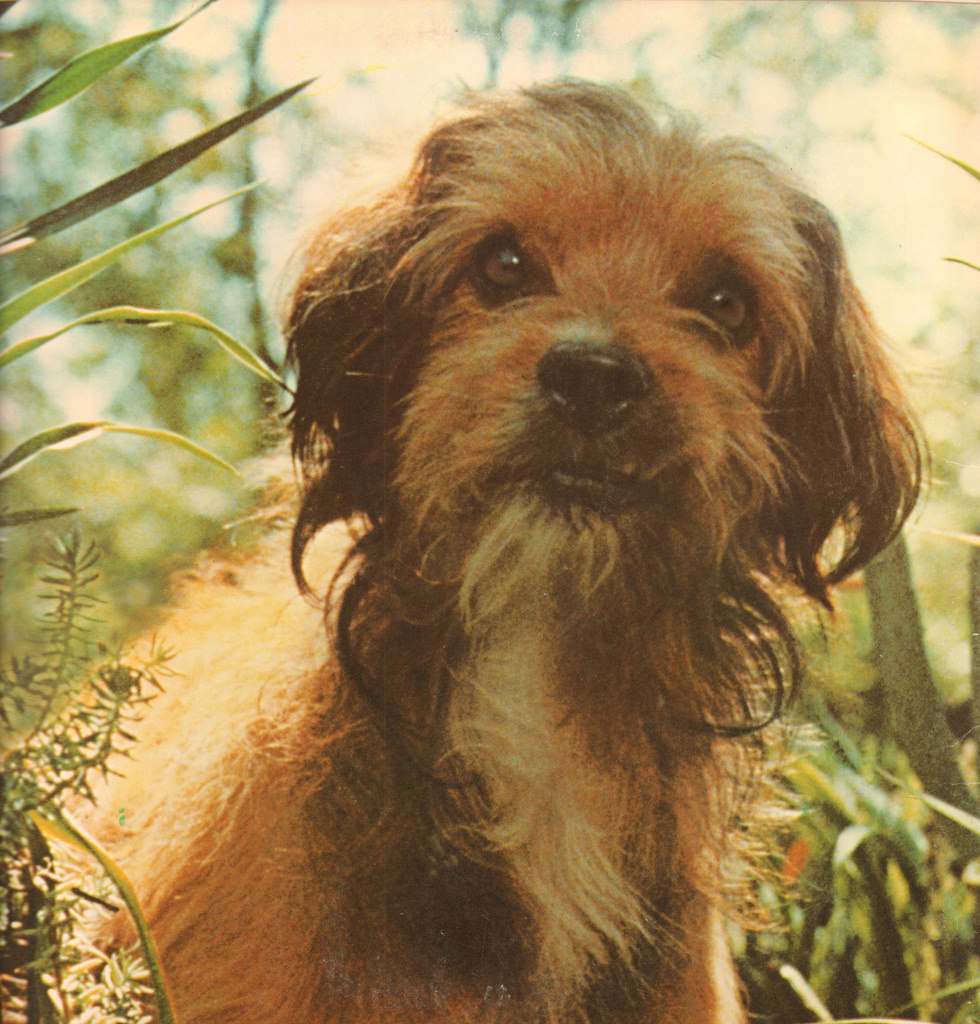
Probably the most famous dog actor in the 60’s and 70’s. The two roles he is best known for were Benji and “The Dog” on Petticoat Junction.

In 1960, animal trainer Frank Inn found Higgins at the Burbank Animal Shelter as a puppy. A fluffy black-and-tan mixed-breed dog, he was marked like a Border Terrier, and Inn believed him to be a mix of Miniature Poodle, Cocker Spaniel, and Schnauzer. He took an immediate liking to Higgins and saw a real potential for acting in him. Higgins ended up being his biggest star.

Frank Inn, also trained Arnold Ziffel (the pig) and all of the other animals used on The Beverly HillbilliesPetticoat JunctionGreen Acres, and The Waltons TV series.

Higgins won a Patsy Award in 1967, and he was cover-featured on an issue of TV Guide magazine. He was really close to Edgar Buchanan who played Uncle Joe on Petticoat Junction. They were both in the movie Benji and it would be the last role for each actor.

From 1964-1970 he was in 174 episodes of Petticoat Junction. He also appeared in The Beverly Hillbillies, Village of the Giants, Green Acres, and in the early 1970s appeared in Lassie. In 1971, at the age of 14, Higgins starred in a TV movie with Vincent Price  called “Mooch Goes to Hollywood.” Frank Inn retired Higgins, but in 1974, he brought him out of retirement to star in his greatest role, the loveable dog “Benji.”

Higgins was born December 12, 1957 (per wiki), and sadly passed away November 11, 1975…he was 4 weeks shy of his 18th birthday. Frank Inn had Higgins cremated and wanted his ashes buried with him when he died. Frank died in 2002 but because of changes in the law…Higgins could not be buried with him.

After Higgins passed away his daughter played “Benji” in the next Benji movie in 1977.


History of the “The One Take Dog”


Byrds – You Ain’t Going Nowhere

A great song by The Byrds that was written by Bob Dylan. The Byrds released this song in 1968 and it was on their classic album Sweetheart of the Rodeo. Their version was released 3 years before Dylan commercially released a version of the song on his Greatest Hits Vol 2 album in 1971.

You Ain’t Going Nowhere peaked at #74 on the Billboard 100 in 1968. This country-rock song has been covered many times by different artists.

Dylan’s original Basement Tapes demo of this song contained the lyric “Pick up your money, pack up your tent”, which was mistakenly altered by McGuinn in the Byrds’ version to “Pack up your money, pick up your tent.” Dylan took note of this lyric change in his 1971 recording of the song, singing “Pack up your money, put up your tent McGuinn. You ain’t goin’ nowhere.” McGuinn said: “It was an honor to be in a Bob Dylan song! I got the words wrong and he changed all the words for his version of it. He and I have always been kind of like that. He likes to poke fun at me.”

From Songfacts

The likely influence on this song was Dylan’s 1967 motorcycle accident, which severely limited his mobility. The song was recorded in the basement of a house where members of The Band lived, and played with Dylan while he experimented with new sounds. The Basement Tapes album was not officially released until 1975, but the songs were circulated and this one drew the attention of The Byrds, who released it on their 1968 album Sweetheart of the Rodeo

The Byrds released “You Ain’t Going Nowhere” as the first single off the album peaking at #45 in the US and #74 in the UK. Guitarist and singer Roger McGuinn recalled to Uncut that their record label, Columbia Records (which was also Dylan’s record label), sent their producer Gary Usher some demos from Dylan’s Woodstock sessions. Among them were “You Ain’t Goin’ Nowhere” and “Nothing Was Delivered” (which the Byrds also recorded), 

Roger McGuinn said “I thought they sounded really good,” he said. “You didn’t know what Bob was up to; and far as I knew, he was just laid up from a motorcycle accident. But I think it was probably a reaction to the psychedelic thing. It just got to be too much and everybody wanted to back off.”

You Ain’t Going Nowhere

Clouds so swift
Rain won’t lift
Gate won’t close
Railings froze
Get your mind off wintertime
You ain’t goin nowhere
Whoo-ee ride me high
Tomorrow’s the day
My bride’s gonna come
Oh, Oh are we gonna fly
Down in the easy chairI don’t care
How many letters they send
Morning came and morning went
Pack up your money
Pick up your tent
You ain’t goin nowhere
Whoo-ee ride me high
Tomorrow’s the day
My bride’s gonna come
Oh, Oh are we gonna fly
Down in the easy chairBuy me a flute
And a gun that shoots
Tailgates and substitutes
Strap yourself
To a tree with roots
You ain’t goin nowhere
Whoo-ee ride me high
Tomorrow’s the day
My bride’s gonna come
Oh, Oh are we gonna fly
Down in the easy chair

Now Genghis Kahn
He could not keep
All his kings
Supplied with sleep
We’ll climb that hill no matter how steep
When we get up to it
Whoo-ee ride me high
Tomorrow’s the day
My bride’s gonna come
Oh, Oh are we gonna fly
Down in the easy chair


Creedence Clearwater Revival – Bootleg

This was a song on their second album Bayou Country which peaked at #7 in 1969. Cool song and cool guitar lick by John Fogerty. The song is about things that are forbidden…only makes you want them more. Fogerty said: “Why is it that those things that are really bad for you – candy, ice cream, alcohol – taste so good? Why is it that the things that we can’t have we want even more?”

This song was not one of their big hits but a great song all the same. The band made a video for the song with them playing on a yacht and fans coming aboard.

From Songfacts

A bootleg is an example of an item made more appealing because it is illicit. In the ’60s, a bootleg was an illegal recording of a concert. These were often very low quality but still coveted, as they were rare and unauthorized.

Tom Fogerty played the acoustic guitar on this track.

Bootleg

Bootleg, bootleg,
Bootleg, howl.
Bootleg, bootleg,
Bootleg, howl.

Take you a glass of water
Make it against the law.
See how good the water tastes
When you can’t have any at all.

Bootleg, bootleg,
Bootleg, howl.
Bootleg, bootleg,
Bootleg, howl.

Findin’ a natural woman,
Like honey to a bee.

But you don’t buzz the flower.
When you know the honey’s free.

Bootleg, bootleg,
Bootleg, howl.
Bootleg, bootleg,
Bootleg, howl.

Suzy maybe give you some cherry pie,
But lord, that ain’t no fun.
Better you grab it when she ain’t lookin’
‘Cause you know you’d rather have it on the run.

Bootleg, bootleg,
Bootleg, howl.
Bootleg, bootleg,
Bootleg, howl.

Joe Cocker – Delta Lady

Leon Russell wrote this song. The “Delta Lady” is Rita Coolidge, who was born in Tennessee and moved to Memphis in 1967, where she met Russell. They started dating, and in 1969 Russell wrote this song about her. He was working on Joe Cocker’s second album at the time, so he contributed this song, which Cocker released as the first single from the set. Russell included the song on his first solo album the following year.

The song peaked at #69 in the Billboard 100 in 1969. The song was off the album Joe Cocker!  that peaked at #11 in 1970. Leon and Rita Coolidge would tour with Cocker and appear on the live Mad Dogs and Englishmen album…Cocker’s highest-charting LP.

It’s always been one of my favorites from Joe…I still can’t help but think of John Belushi when Joe Cocker’s name comes up.


From Songfacts

This song’s muse Rita Coolidge is one of the backing vocalists on the track. In her autobiography, she recalls Cocker recording the song at Russell’s studio on Skyhill Drive in Los Angeles, where she served tea to the musicians and crew. She didn’t know at the time that the song would become her calling card: she named that autobiography Delta Lady.

The song is very sensual, with Cocker singing about finding the Delta Lady “wet and naked in the garden,” and how he thinks about those times when he’s away from her and longs for her touch. No matter where he goes, he thinks of her.

Leon Russell and Rita Coolidge joined Joe Cocker on his Mad Dogs and Englishmen tour, where she would sing “Superstar,” a song written by Russell and Bonnie Bramlett. “Here she is, our own Delta Lady,” Cocker would announce when introducing her, imprinting that appellation.

Russell wrote another song about Rita Coolidge, “A Song For You,” which also appeared on his debut album. The couple split soon after, just as their careers started taking off. Coolidge issued her first album in 1971 and had her first big hit in 1977 with a cover of Jackie Wilson’s “(Your Love Keeps Lifting Me) Higher And Higher.”

Delta Lady

Woman of the country now I’ve found you
Longing in your soft and fertile delta
And I whisper sighs to satisfy your longing
For the warmth and tender shelter of my body
Oh you’re my, yes you’re my Delta Lady
Yes, you’re my, me oh my, Delta Lady

Please don’t ask how many times I found you
Standing wet and naked in the garden
And I think of days and different ways I held you
Held you closely to me, yes our heart was beating
Oh you’re my

Oh, and I’m over here in England
But I think of you, think about you
Because I love you

There are concrete mountains in the city
And pretty city women live inside them
And yet it seems the city scene is lacking
I’m so glad you’re waiting for me in the country
Oh you’re my

Spiderman 1967

This is my Spiderman. When I hear “Spiderman” this is what I think of…I loved the animation and its sixties background music. I watched it in syndication in the 70s and it still plays today. The budget wasn’t huge for the show and it did have repetition but it was a fun watch.

The first show to ever feature Spiderman premiered on September 9, 1967, on the ABC television network and ran for a total of three seasons, entering into syndication during its final season in 1970.

Grantray-Lawrence Animation was the original production company responsible for the series but was on the brink of bankruptcy by the time it premiered and had filed for it by year’s end, forcing them to hand over production duties to Krantz Films, Inc. Krantz Films cut the pre-existing budgets in half. The classic comic book villains were thrown out because of licensing costs, replaced by generic green-skinned alien King Mooks and their Mook henchmen, more often than not the product of Stock Footage recycled from episodes of Robin Hood…another of Krantz’s shows.

It remained quite popular in it’s day and also now with many fans. The theme song was written by  Paul Francis Webster and Robert “Bob” Harris. The original song was recorded at RCA Studios in Toronto (where the cartoon was also produced) featuring 12 CBC vocalists (members of the Billy Van Singers, and Laurie Bower Singers groups) who added to the musical backing track supplied by RCA Studios, New York. The singers were paid only for the session and have had no residuals from its use since then.

https://en.wikipedia.org/wiki/Spider-Man_(theme_song)

Spiderman

Spiderman, Spiderman!
Does whatever a spider he can.
Spins a web any size,
Catches thieves, just like flies.
Look out! Here comes the Spiderman!

Is he strong? Listen, Bud!
He’s got radioactive blood.
Can he swing from a thread?
Take a look overhead.
Hey there, there goes the Spiderman!

In the chill of night,
At the scene of the crime
Like a streak of light
He arrives just in time

Spiderman, Spiderman
Friendly neighborhood Spiderman
Wealth and fame he’s ignored
Action is his reward
To him, life is a great big bang-up
Wherever there’s a hang-up
You’ll find the Spiderman!


The Zombies – Imagine The Swan

I had a Zombies Greatest Hits CD in the 80s that had their popular songs and also a few more. This song was never a big hit but it caught my attention. Imagine The Swan was recorded after the classic Oracle and Odessy LP. Time of the Season was a big hit in 1969 but the band had already broken up.

The record company then wanted the Zombies to reform to cash in but that wasn’t going to happen. Rod Argent, the keyboard player did a couple of tracks under The Zombies name…he sang this one, not lead singer Colin Blunstone…Zombie member Chris White wrote the song.

It blended in well with the rest of their songs. Rod Argent would go on to form the band, Argent.

It was released as a single and wasn’t on an album until a late seventies compilation. The song made it to #109 on Billboard and #77 in Cash Box in America in 1969.

Rod Argent and Colin Blunstone talking about this song.


Imagine The Swan

Well I have a picture in color of you
And it’s there in my room to remind me of you
So it was with surprise that I saw you today
And I did not recognize you, girl, what more can I say?

For the colors are gone
You’ve become kind of gray
And you’re not like the swan
That I knew yesterday…

Now the pictures are wrong
You’ve become kind of gray
I imagine the swan
That you were yesterday…

The sadness that I felt was hard on my eyes
And the truth on my face was hard to disguse
So I let you walk by
I turned out of your way
And I tried to close my eyes
And let the sadness fall away…

For the colors are gone
You’ve become kind of gray
And you’re not like the swan
That I knew yesterday…

Now the pictures are wrong
You’ve become kind of gray
I imagine the swan
That you were yesterday…


The Equals – Baby Come Back

If you were wondering what Eddy Grant did before Electric Avenue…wonder no more. He was writing this song for the band he was in called The Equals.

The Equals were a pop/reggae/rock group that formed in North London, England in 1965. Eddy Grant, founded the group. Also in the original line-up were the twin brothers Derv and Lincoln Gordon, as well as John Hall and Pat Lloyd. They were noted as being the first major interracial rock group in the UK and one of the few racially mixed bands of the era.

This song was originally released in 1966 as a B side. Throughout Europe DJ’s started to play this song and it charted in Germany. It was re-released in 1968 in the UK and it peaked at #1 and in the US it made it to #32.

In 1980, The Clash recorded a cover version of the Equals’ song “Police on My Back”. Willie Nelson also covered the song in 2006.

Baby Come Back would be their only charting song in America but in the UK they found success.

  • “I Get So Excited” / “The Skies Above” – (1968) (UK #44)
  • “Baby Come Back” / “Hold Me Closer” – (1968) (UK #1, IRL #2, NOR #4, U.S. #32)
  • “Laurel And Hardy” / “The Guy Who Made Her a Star” – (1968) (UK #35)
  • “Softly Softly” / “Lonely Rita” – (1968) (UK #48)
  • “Michael and The Slipper Tree” / “Honey Gum” – (1969) (UK #24)
  • “Viva Bobby Joe” / “I Can’t Let You Go” – (1969) (UK #6, IRL #3)
  • “Rub A Dub Dub” / “After the Lights Go Down Low” – (1969) (UK #34)
  • “Black Skin Blue Eyed Boys” / “Ain’t Got Nothing to Give You” – (1970) (UK #9)


From Songfacts

Originally, this was the B-side of The Equals’ “Hold Me Closer” single. That record did not capture much attention, but in early 1968 this was released as a single in Germany, where it rose to #1. After it subsequently topped the charts in Belgium and Holland the song was finally reissued in the UK, where it soared to #1.

The Equals were a pop group formed in England in 1965 by Derv Gordan (vocals), his twin brother Lincoln (guitar), Grant (guitar), John Hall (drums) and Pat Lloyd (guitar). They went on to have 12 more hits in Germany and two other UK Top 10 hits (“Viva Bobby Joe” and “Black Skin Blue Eyed Boys”) before legal problems with the record company made it impossible to release any more records.

Baby Come Back

Come back 
Baby, come back 
Baby, come back 
Baby, come back 

This is the first time [unintelligible] today 
That you have run away 
I’m asking you for the first time 
Love me [unintelligible] stay (all right) 

Hey (all right) 
Hey (all right!) 
Hey, yeah 
Come back 

Baby, come back 
Baby, come back 
Baby, come back 

There ain’t no use in you crying 
‘Cause I’m more hurt than you 
I shoulda not been out flirting 
But now my love is true 

Ooh (all right) 
Ooh (OK!) 
Ooh, yeah 
Come back 

Baby, come back 
Baby, come back 
Baby, come back 
Come back, baby, don’t you leave me 

Baby, baby, please don’t go 
Oh, won’t you give me a second chance 
Baby, I love you so (all right) 
Oh (oh, yeah) 

Oh (unintelligible) 
Oh, yeah 
Come back 
I said baby, come back 

I said baby, come back 
Oh won’t you please come back 
Oh won’t you please come back [Repeat until fade]

https://en.wikipedia.org/wiki/The_Equals


The Ant and the Aardvark

I watched this a some as a kid and enjoyed it. When I watched it as an adult I thought it was Jackie Mason and Dean Martin voicing the cartoon.

John Byner voiced the Ant and the Aardvark. He imitated Jackie Mason as the Aardvark and Dean Martin as the Ant.

The Ant and the Aardvark was a series of theatrical cartoons produced at DePatie-Freleng Enterprises from 1969 to 1971, about a blue aardvark always trying to catch a red ant named Charlie.

The series consisted of 17 cartoons that ran from 1969 to 1971. After its initial theatrical run, The Ant and the Aardvark later became a part of The Pink Panther Show, with all 17 episodes airing in reruns, with the characters themselves being integrated into later iterations of The Pink Panther itself.

When I watch the intro I can’t help but think Monsters Inc got a little inspiration from the beginning.

Songs That Would Be Pointless to Remake.

Some songs are so ingrained in our psyche that a cover version would not make us forget the original or improve it. Covering them in concert is one thing but remaking them is another. When you compete against a memory…the memory wins.  I know some will disagree but there are songs that in my opinion that are untouchable. That doesn’t mean I want to hear these songs over and over…some are worn out. I’m not saying the cover version would be bad…but it would not replace the original.

These are in no order. There are many more…any suggestions?

  1. Bohemian Rhapsody – Queen – I can’t even imagine someone seriously trying to pull this off…
  2. I Am The Walrus – Beatles -This bizarre piece of music would be hard to duplicate.
  3. Stairway to Heaven – Led Zeppelin – It’s been tried…even by Pat Boone…Mr Soul Sucker who can take the soul out of a room by simply walking in. Dolly Parton even took a stab at it.
  4. Freebird – Lynyrd Skynryd – I don’t think anyone would want to try.
  5. Won’t Get Fooled Again – How would you match the intensity and power of this recording?
  6. Good Vibrations – Beach Boys – Todd Rundgren remade this and copied it almost exactly…but what was the point? He did a fine job of copying it.
  7. Sympathy for the Devil – Rolling Stones – I don’t see anyone matching the Stones version.
  8. Born To Run – Bruce Springsteen – Bruce layered so many guitars (I’ve read up to 24) to make his own wall of sound…I don’t see this being topped.
  9. Band On The Run – This is basically three songs into one with McCartney’s style
  10. Like A Rolling Stone – Bob Dylan – Maybe the best single ever released. Bob is one of the most covered artists but his voice just stings on this recording and it would be hard to match.

A few more I thought of… American Pie, A Day In The Life, Sounds of Silence


Byrds – I’ll Feel a Whole Lot Better

I can hear Needles and Pins by The Searchers slightly in this song and that just makes it better. Gene Clark of the Byrds wrote this song and also sang it. The song was the B side to All I Really Want to Do and it was released in 1965 and as a B side managed to peak at #103 on the Billboard charts.

Tom Petty did a great cover of this song on his Full Moon Fever album released in 1989. Tom was heavily influenced by the Byrds.

Gene Clark talked about the song:

“There was a girlfriend I had known at the time, when we were playing at Ciro’s. It was a weird time in my life because everything was changing so fast and I knew we were becoming popular. This girl was a funny girl, she was kind of a strange little girl and she started bothering me a lot. And I just wrote the song, ‘I’m gonna feel a whole lot better when you’re gone,’ and that’s all it was, but I wrote the whole song within a few minutes.”


I’ll Feel a Whole Lot Better

The reason why oh, I can’t say I have to let you go, baby and right away
After what you did I can’t stay now
And I’ll probably feel a whole lot better when you’re gone

Baby for a long time (baby for a long time) you had me believe (you had me believe)
That your love was all mine (that your love was all mine) and that’s the way it would be
But I didn’t know (but I didn’t know) that you were putting me on
And I’ll probably feel a whole lot better when you’re gone, when you’re gone

Now I gotta say (I gotta say) that it’s not like before (that it’s not like before)
And I’m not gonna play your games any more (and I’m not gonna play)
After what you did (after what you did)I can’t stay on
And I’ll probably feel a whole lot better when you’re gone
Oh, when you’re gone, oh when you gone,oh when you gone