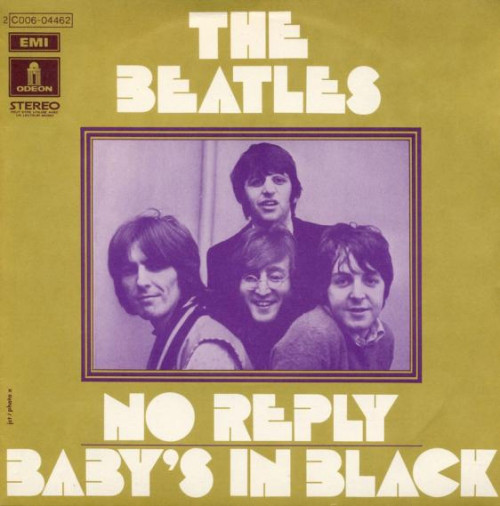
Beatles – If I Needed Someone

Mid-Sixties pop classic. If I Needed Someone is a George Harrison song that was on the album Rubber Soul. In America this was one of the four songs left off of Capital’s version of Rubber Soul…it was included on Yesterday and Today…an album that Capital put together for the American market.  It was originally issued only in the United States and Canada

George Harrison said the song was influenced by the Byrds:  “It was based on the twelve-string figure from ‘The Bells Of Rhymney’ by The Byrds.”

McCartney called the song the first “landmark” song written by George for the Beatles.

George Harrison:  “It was like a million other songs written around one chord, a D chord actually.”  “If you move your fingers about you get various little melodies.  That guitar line, or variations on it, is found in many a song, and it amazes me that people still find new permutations of the same notes.”

As a guitarist,  there are many songs that have been written around the D chord by moving your fingers in different positions. Here Comes The Sun, Woman by Lennon, Free Falling, Sweet Home Alabama, and like George said…a million others.

On January 24th, 1996, “If I Needed Someone” got its first and only release on a single.  The Capitol series of “For Jukebox Only” singles paired the song as the b-side to “Norwegian Wood” and was printed on both black and green vinyl.

The Hollies received an early version of the song and then quickly recorded their own version of the song and released it as their next single at the end of 1965.  It reached #20 in the UK, making it the first George Harrison composition to make the charts.

George made it known he didn’t like their version…but to me, the Hollies did a good job.

From Songfacts

This was written by George Harrison, who got the idea from a few of The Byrds’ songs including “The Bells of Rhymney” and “She Don’t Care About Time.” It was not Ravi Shankar that introduced George to the wonderment of sitar, but Byrd traveler David Crosby shortly after Shawn Phillips had shown him the basic steps. In 1965 The Beatles toured the US and visited Ravi at World Pacific Studios where The Byrds had permanent residency. It was also here that Roger McGuinn’s Rickenbacker jingle jangle influenced Harrison’s “If I Needed Someone.” In turn, The Byrds were influenced by Harrison’s 12-string guitar work. >>

Former Byrds guitarist Roger McGuinn recalled to Christianity Today magazine: “George Harrison wrote that song after hearing the Byrds’ recording of “Bells of Rhymney.” He gave a copy of his new recording to Derek Taylor, the Beatles’ former press officer, who flew to Los Angeles and brought it to my house. He said George wanted me to know that he had written the song based on the rising and falling notes of my electric Rickenbacker 12-string guitar introduction. It was a great honor to have in some small way influenced our heroes the Beatles.”


If I Needed Someone

If I needed someone to love
You’re the one that I’d be thinking of
If I needed someone

If I had some more time to spend
Then I guess I’d be with you my friend
If I needed someone
Had you come some other day
Then it might not have been like this
But you see now I’m too much in love

Carve your number on my wall
And maybe you will get a call from me
If I needed someone
Ah, ah, ah, ah

If I had some more time to spend
Then I guess I’d be with you my friend
If I needed someone
Had you come some other day
Then it might not have been like this
But you see now I’m too much in love

Carve your number on my wall
And maybe you will get a call from me
If I needed someone
Ah, ah

Kinks – Village Green Preservation Society

Some songs can be written by anyone. Songs can be very popular but generic. Some can only be written by certain songwriters. This would be one of those songs. Ray Davies’s songs have their own DNA. This was on the great 1968 album The Kinks Are the Village Green Preservation Society.

This nostalgic song is a favorite of mine. This is a big jump from You Really Got me to…”We are the Sherlock Holmes English-speaking Vernacular, God save Fu Manchu, Moriarty and Dracula.”

Ray Davies: “You have to remember that North London was my village green, my version of the countryside. The street and district I grew up in was called Fortis Green, and then there was Waterlow Park and the little lake. I sang in the choir at St James’s Primary School until I was about 10, then I trained myself to sing out of tune so I could hang around with a gang called the Crooners instead. Our Scottish singing teacher Mrs. Lewis said, ‘Never mind, Davies – I hear crooners are making a lot of money these days.'”

From Songfacts

A very reflective and nostalgic song written by lead singer Ray Davies, this is about the innocent times in small English towns, where the village green was the community center. The entire album was based on this theme.

This plays in the movie Hot Fuzz as Sgt. Angel is jogging through a village.

Some critics thought the album’s snapshots of village life were partly inspired by performances by the Kinks in rustic Devon. Instead, they were based on memories of his growing up in London. 

Ray Davies namechecks various fictional characters that bring back childhood memories, such as music hall act Old Mother Riley and Mrs. Mopp, who was a character from the wartime radio comedy, ITMA.

We are the Draught Beer Preservation Society.
God save Mrs. Mopp and good old Mother Riley.

Davies explained to Q magazine: “The people in it are all characters I liked as a kid or people my family could relate to, like Old Mother Riley and Mrs Mopp. Because I used to love listening to the BBC Light Programme on Sundays, like Round The Horne with Kenneth Williams. A time when the population was allowed to be trivial.”

Village Green Preservation Society

We are the Village Green Preservation Society.
God save Donald Duck, vaudeville and variety.
We are the Desperate Dan Appreciation Society.
God save strawberry jam and all the different varieties.

Preserving the old ways from being abused.
Protecting the new ways, for me and for you.
What more can we do?

We are the Draught Beer Preservation Society.
God save Mrs. Mopp and good old Mother Riley.
We are the Custard Pie Appreciation Consortium.
God save the George Cross, and all those who were awarded them.

Oooh…

We are the Sherlock Holmes English-speaking Vernacular.
God save Fu Manchu, Moriarty and Dracula.
We are the Office Block Persecution Affinity.
God save little shops, china cups, and virginity.
We are the Skyscraper Condemnation Affiliates.
God save Tudor houses, antique tables, and billiards.

Preserving the old ways from being abused.
Protecting the new ways, for me and for you.
What more can we do?

We are the Village Green Preservation Society.
God save Donald Duck, vaudeville and variety.
We are the Desperate Dan Appreciation Society.
God save strawberry jam and all the different varieties.

God save the village green!


My 5 Favorite Baseball Announcers of All Time

This list will be different for every baseball fan. Many times it’s your team’s announcer and other times it’s a network announcer you grew up with. I tend to like announcers who are not complete homers although some I like… like Harry Caray. He made it fun even though he openly rooted for the Cubs…and Budweiser.

There are many more that could be on this list.

Related image

5: Harry Caray – He injected fun into the game. It was like a fan announcing the game. He wasn’t technically the best baseball announcer but he was enjoyable.

Related image

4: Mel Allen – I remember Mel when I was a kid on “This Week in Baseball.” That voice was a part of my childhood.

Related image

3: Bob Uecker – “Just a bit outside” the more I listen to him the more I appreciate him.

Related image

2: Jack BuckNOT Joe… You could hear his excitement for the game in his voice. For me, the best is between Jack and…

Image result for vin scully

1: Vin Scully – Being a Dodgers fan I was spoiled by Vin Scully… my number 1 favorite. If you tuned into a Dodger game you would not know who employed Mr. Scully. He would not root for the Dodgers and he knew when not to say anything and let the action speak for itself.

Vin

Jack


Cream – I’m So Glad

I’m So Glad appeared on Cream’s debut album Fresh Cream. Cream covered this song and did something that other bands (looking at you Led Zeppelin) should have done. The writer of the song was Skip James an American Delta blues singer, guitarist, pianist and songwriter who was born in 1902. Cream went out of their way to make sure that Skip received royalties off of the song.

Because of Cream’s diligence, James had at least some comfort in his last days. Skip had the opportunity to see Cream perform his song on stage before he succumbed to cancer in 1969 but his widow sent a thank you letter to Jack Bruce for covering his song.

The song didn’t chart but the album did at #39 in 1968.

I’m So Glad

[Chorus:]
I’m so glad
I’m so glad
I’m glad, I’m glad, I’m glad 

Don’t know what to do

Tired of weeping
Tired of moaning
Tired of groaning for you

[Chorus]

Tired of weeping 
Tired of moaning
Tired of groaning for you

[Chorus: x8]

Buffalo Springfield – For What It’s Worth

This was Buffalo Springfield’s only top 40 hit. I’ve always liked the song, especially Neil Young’s harmonics on guitar. The album Buffalo Springfield was the band’s first album, and this song was not originally included on it. After “For What It’s Worth” became a hit single, it replaced “Baby Don’t Scold Me” on re-issues of the album.

According to BMI, the song’s publishing house, “For What It’s Worth” been played 8 million times on TV and radio since its release. In 2014, it came in at number three on Rolling Stone‘s readers poll of the best protest songs.

For What It’s Worth peaked at #7 in the Billboard 100 and #9 in Canada.

From Songfacts

Written by Buffalo Springfield guitarist Stephen Stills, this song was not about anti-war gatherings, but rather youth gatherings protesting anti-loitering laws, and the closing of the West Hollywood nightclub Pandora’s Box. Stills was not there when they closed the club, but had heard about it from his bandmates.

In the book Neil Young: Long May You Run: The Illustrated History, Stephen Stills tells the story of this song’s origin: “I had had something kicking around in my head. I wanted to write something about the kids that were on the line over in Southeast Asia that didn’t have anything to do with the device of this mission, which was unraveling before our eyes. Then we came down to Sunset from my place on Topanga with a guy – I can’t remember his name – and there’s a funeral for a bar, one of the favorite spots for high school and UCLA kids to go and dance and listen to music.

[Officials] decided to call out the official riot police because there’s three thousand kids sort of standing out in the street; there’s no looting, there’s no nothing. It’s everybody having a hang to close this bar. A whole company of black and white LAPD in full Macedonian battle array in shields and helmets and all that, and they’re lined up across the street, and I just went ‘Whoa! Why are they doing this?’ There was no reason for it. I went back to Topanga, and that other song turned into ‘For What It’s Worth,’ and it took as long to write as it took me to settle on the changes and write the lyrics down. It all came as a piece, and it took about fifteen minutes.”

Notable when you consider this song’s success, the group quietly recorded this without involving their producers Charles Greene and Brian Stone, with whom they had had immense dissatisfaction about the recording of their album up until then. Greene and Stone had insisted on recording each musician separately and then combining them later into mono to stereo tracks, which produced a tinny sound. This was the first time the group’s united performance was caught on tape. (Thanks to Dwight Rounds for his help with this. Dwight is author of The Year The Music Died, 1964-1972.)

This was used in a commercial for Miller beer. The anti-establishment message was, of course, ignored and the song was edited to avoid the line “There’s a man with a gun over there, telling you-you’ve got to beware.” The commercial replaced this line by pulling up the chorus of “Everybody look what’s going down.”

Songwriting powerhouses Jim Messina and Neil Young were also in Buffalo Springfield, but Stills wrote this song himself. Young has never allowed his songs to be used in commercials, and wrote a song bashing those who do called “This Note’s For You.”

This song helped launch the band to stardom and has remained one of the era’s most enduring protest songs, but Stephen Stills, who authored the tune, had very different feelings than many might expect. He said, “We didn’t want to do another song like ‘For What It’s Worth.’ We didn’t want to be a protest group. That’s really a cop-out and I hate that. To sit there and say, ‘I don’t like this and I don’t like that’ is just stupid.”

Public Enemy sampled this on their 1998 song “He Got Game,” which was used in the movie of the same name. Stephen Stills appears on this song.

This song gets covered a lot – for a weird experience, check out the cover versions of “For What It’s Worth” done by Ozzy Osbourne on the Under Cover album and Queensryche on their Take Cover album. Both of them pretty much murder it.

This song plays during the opening credits of the movie Lord Of War starring Nicolas Cage, and was used in the movie Forrest Gump starring Tom Hanks.

Buffalo Springfield

There’s something happening here
What it is ain’t exactly clear
There’s a man with a gun over there
Telling me I got to beware

I think it’s time we stop, children, what’s that sound
Everybody look what’s going down

There’s battle lines being drawn
Nobody’s right if everybody’s wrong
Young people speaking their minds
Getting so much resistance from behind

It’s time we stop, hey, what’s that sound
Everybody look what’s going down

What a field-day for the heat
A thousand people in the street
Singing songs and carrying signs
Mostly say, hooray for our side

It’s s time we stop, hey, what’s that sound
Everybody look what’s going down

Paranoia strikes deep
Into your life it will creep
It starts when you’re always afraid
You step out of line, the man come and take you away

We better stop, hey, what’s that sound
Everybody look what’s going down
Stop, hey, what’s that sound
Everybody look what’s going down
Stop, now, what’s that sound
Everybody look what’s going down
Stop, children, what’s that sound
Everybody look what’s going down

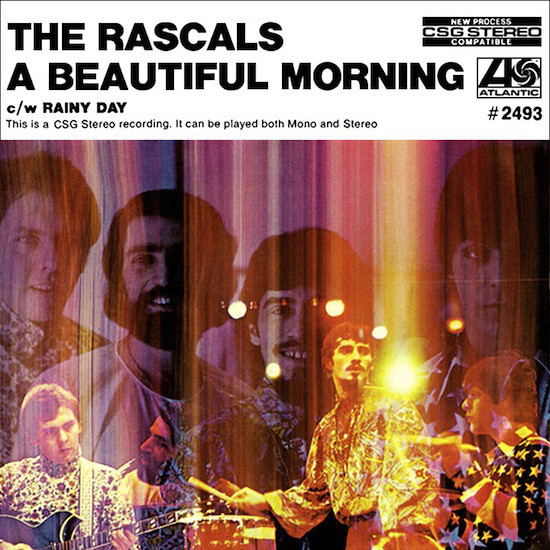
The Young Rascals – Groovin

If I had to pick out favorite cruising songs…this would be in the top 5. A great song by an underappreciated band. This song peaked at #1 in the Billboard 100, #1 in Canada, and #9 in the UK.

This was the second of three #1 hits for The Rascals, after “Good Lovin'” and before “People Got to Be Free.”

The song was off of the album of the same name in 1967 and it peaked at #5 in the Billboard Chart.

From Songfacts

Felix Cavaliere and Eddie Brigati of The Rascals wrote this song after they realized that because of their work schedule, they could see their girlfriends only on Sunday afternoons. It’s implied that these Sunday afternoons are spent with a nice romp. Cavaliere told Seth Swirsky, who was shooting footage for his documentary Beatles Stories, “I met this young girl and I just fell head over heels in love. I was so gone that this joyous, wonderful emotion came into the music. Groovin’ was part of that experience. If you look at the story line, it’s very simple: we’re groovin’ on a Sunday afternoon because Friday and Saturdays are when musicians work. The simplicity of it is that Sundays you could be with your loved one. And the beauty of is this joyous bliss that at that time I equated with a person, but that’s the beauty of music – when it’s an example of what you do it lasts forever. You’re in love forever because of that moment in time that you captured, and that’s what was happening with Groovin’.”

The record company executives who worked on “Groovin'” didn’t particularly like the song, but as they listened to the playback, influential New York DJ Murray the K overheard it and pronounced it a #1 record. Unbeknownst to the group, Murray went to Atlantic Records president Jerry Wexler and demanded it be released. As the program manager and top DJ on the first FM rock station (WOR-FM), Murray the K had this kind of clout, and also the rare ability to connect with listeners and recognize what songs would become hits. The Rascals, who started out as The Young Rascals, were playing at The Gordion Knot club on York Avenue when Murray picked them as his “house band” – the group that backed him up at personal appearances. It was that relationship (based on Murray’s gut sense that the band had genuine potential) that drove his partisan support.

In the US, this spent two weeks at #1, then two weeks at #2 (as Aretha Franklin’s “Respect” took over to top spot), then returned to the top for two more weeks.

The term “Groovy” was becoming popular around this time, and the title of this song is a variation on the term. The first popular “Groovy” song was “A Groovy Kind Of Love,” and the first popular use in lyrics was in “59th Street Bridge Song.”

Smokey Robinson got the idea for his song “Cruisin'” from this one – his original hook was “I love it when we’re groovin’ together,” but he thought “cruisin'” was more intimate.

Groovin

Groovin’, on a Sunday afternoon
Really couldn’t get away too soon

I can’t imagine anything that’s better
The world is ours whenever we’re together
There ain’t a place I’d like to be instead of

Groovin’, down a crowded avenue
Doin’ anything we like to do

There’s always lots of things that we can see
We can be anyone we want to be
And all those happy people we could meet just

Groovin’, on a Sunday afternoon
Really couldn’t get away too soon

Ah-ha-ha
Ah-ha-ha
Ah-ha-ha

We’ll keep on spending sunny days this way
We’re gonna talk and laugh our time away
I feel it comin’ closer day by day
Life would be ecstasy, you and me endlessly

Groovin’, on a Sunday afternoon
Really couldn’t get away too soon

Ah-ha-ha
Ah-ha-ha
Ah-ha-ha

Beatles – I’ll Cry Instead

“I’ve got a chip on my shoulder that’s bigger than my feet”…you didn’t see lines like this in early pop songs very much. The song was the A Hard Day’s Night album released in 1964. The song was going to be in the film but it got replaced by Can’t Buy Me, Love. “I wrote that for ‘A Hard Day’s Night’ but Dick Lester didn’t even want it,” John explained, “He resurrected ‘Can’t Buy Me Love’ for that sequence instead.”

The song did get released as a single in the US in 1964 and peaked at #25 in the Billboard 100.

John Lennon on the Dylan influence – “I’d started thinking about my own emotions,”  “Instead of projecting myself into a situation, I would try to express what I felt about myself, which I’d done in my books. I think it was Dylan who helped me realize that – not by any discussion or anything, but by hearing his work.”

Cynthia Lennon said this: “It reflects the frustration he [John Lennon] felt at that time. He was the idol of millions, but the freedom and fun of the early days had gone.”

I’ll Cry Instead

I’ve got every reason on earth to be mad
‘Cause I just lost the only girl I had
If I could get my way
I’d get myself locked up today
But I can’t, so I’ll cry instead

I’ve got a chip on my shoulder that’s bigger that my feet
I can’t talk to people that I meet
If I could see you now
I’d try to make you sad somehow
But I can’t, so I’ll cry instead

Don’t want to cry when there’s people there
I get shy when they start to stare
I’m gonna hide myself away
But I’ll come back again someday

And when you do you’d better hide all the girls
I’m gonna break their hearts all round the world
Yes, I’m gonna break them in two
And show you what your lovin’ man can do
Until then I’ll cry instead

The Everly Brothers – Let It Be Me

When I think of the Everly Brothers this is not the first song that springs to my mind but it is a lovely ballad by them. The melody of this song is beautiful. It is a reworking of a French song recorded in 1955 by Gilbert Becaud called Je T’Appartiens.

The song peaked at #7 in the Billboard 100, #13 in the UK in 1960.

Just before this became a hit, The Everly Brothers left their original label, Cadence Records, and signed with Warner Brothers for a $100,000 bonus, which was huge at the time.

From Songfacts

The first English version of this song was released in 1957 by an actress named Jill Corey, who recorded it with Jimmy Carroll and his orchestra. This version went to #57 in 1957, two years before The Everly Brothers version. 

Don Everly heard an instrumental rendition on the 1959 album Chet Atkins In Hollywood and fell in love with the melody. When he found out there were lyrics, he brought the song to producer Archie Bleyer. Wesley Rose, owner of the publishing company Acuff-Rose that signed the Everly Brothers as songwriters and connected them with Bleyer’s Cadence label, sparred with Bleyer over the tune but lost. Don recalled: “I went to Archie and told him I wanted to do it with strings. Wesley just sat there pouting through the whole session like a kid.”

This was one of the first pop songs to use a string section – eight violins and a cello were used. It was also the first Everly Brothers song to use strings.

This was the first Everly Brothers song they did not record in Nashville. It was done in New York.

In America, six other versions of this song charted in the ’60s:

Betty Everett & Jerry Butler (#5, 1964)
Arthur Prysock (#124, 1966)
Nino Tempo & April Stevens (#127, 1968)
Glen Campbell & Bobbie Gentry (#36, 1969)

Willie Nelson returned the song to the charts in 1982 when he took it to #40.

Bob Dylan recorded this on his 1970 album Self Portrait. We asked Ron Cornelius, who played guitar on the album, why Dylan recorded it. He replied: “No one would be being truthful with you to tell you what was ever in Bob Dylan’s mind. No Way.”

Gilbert Becaud – Je T’Appartiens

Let It Be Me

I bless the day I found you
I want to stay around you
And so I beg you, let it be me

Don’t take this heaven from one
If you must cling to someone
Now and forever, let it be me

Each time we meet love
I find complete love
Without your sweet love what would life be

So never leave me lonely
Tell me you love me only
And that you’ll always let it be me

Each time we meet love
I find complete love
Without your sweet love what would life be

So never leave me lonely
Tell me you love me only
And that you’ll always let it be me


Beatles – Rain

This song would make my personal top ten of Beatle songs… Rain was the B side to Paperback Writer. Personally, I like this song better. First off the sound was different compared to previous songs…the bass comes through like never before and Ringo’s drumming complimented the bass so well.

They experimented with a new way of recording bass.  This technique involved “using a loudspeaker as a microphone,” explains engineer Geoff Emerick.  “We positioned it directly in front of the bass speaker and the moving diaphragm of the second speaker made the electric current.”

The peaked at #23 in the Billboard 100 in 1966.

Ringo on this recording is outstanding and some think it’s his best moment on record. Personally, I like his playing on A Day In The Life but this one is great.

At the end of the song, the vocals are backward. There are different stories on how this happened. One was that a stoned John took the tape home and put it in backward and was astonished at what he heard and wanted the whole song backward. George Martin remembered it differently: “I was always playing around with tapes,” Martin explains, “and I thought it might be fun to do something extra with John’s voice.  So I lifted a bit of his main vocal off the four-track, put it onto another spool, turned it around and then slid it back and forth until it fitted.  John was out at the time but when he came back he was amazed…They all thought it was marvelous.”

Whichever way it was…it fits this song perfectly

Paul McCartney said this about who wrote the song:

I don’t think he brought the original idea, just when we sat down to write, he kicked it off. Songs have traditionally treated rain as a bad thing and what we got on to was that it’s no bad thing. There’s no greater feeling than the rain dripping down your back. The most interesting thing about it wasn’t the writing, which was tilted 70-30 to John, but the recording of it.

From Songfacts

John Lennon wrote most of “Rain.” It was his first song to get really deep, exploring themes of reality and illusion – after all, rain or shine is just a state of mind.

This was the first song to use a tape played backward, which created the strange audio effect. John Lennon discovered the technique when he put the tape for “Tomorrow Never Knows” on the wrong way. He was stoned at the time, and producer George Martin had to convince him that using a backward recording for the entire song was a bad idea. 

Ringo Starr has said this is his best drumming on a Beatles song.

The backward vocal at the end fade out is actually the songs first line: “When the rain comes they run and hide their heads”.

This was one of the first Beatles records to feature loud, booming bass. McCartney’s bassline is extremely recognizable, in contrast to The Beatles’ older records. 

This was released as the B-side of “Paperback Writer.” It was recorded during the Revolver sessions.

As part of the studio manipulation that gave this song such an unusual sound, the rhythm track was played fast and then slowed down on tape.

The Beatles shot a video for this song with director Michael Lindsay-Hogg, who was tapped because he worked on the UK music show Ready, Steady,Go!. The videos for “Rain” and “Paperback Writer” were shot at the same time, with some footage recorded at Abbey Road studios, but most of it outdoors at the Chiswick House gardens in London.

These videos were done so The Beatles could promote the single without actually performing on the various TV shows that drew huge audiences and drove sales. In doing so, they set a standard for music videos, as other bands followed suit. The “Rain” video uses many elements that would become commonplace, including candid shots from between takes.

Rain

If the rain comes 
They run and hide their heads
They might as well be dead
If the rain comes
If the rain comes

When the sun shines 
They slip into the shade
And sip their lemonade
When the sun shines
When the sun shines

Rain, I don’t mind
Shine, the weather’s fine

I can show you 
That when it starts to rain
Everything’s the same
I can show you
I can show you

Rain, I don’t mind
Shine, the weather’s fine

Can you hear me
That when it rains and shines
It’s just a state of mind
Can you hear me
Can you hear me

Beatles – Cry For A Shadow

I’ve always liked this instrumental because it is a fun listen. Nothing intricate but just a fun song. Its original name was Beatle Bop. This was not released on any Beatle albums during their time. This was before Brian Epstein and fame.

This instrumental is the only Beatles track to be credited to John Lennon and George Harrison alone (who play rhythm and lead respectively). It was intended as a parody of British rock band The Shadows (Hence the name), whose instrumental music was enjoying success. Whilst Harrison imitates Shadow’s guitarist Hank Marvin’s signature lead sound, McCartney can be heard replicating the style of bassist Jet Harris.

This song was recorded in Hamburg in 1961 when they were backing Tony Sheridan by the name of the Beat Brothers.

This song is one of only two officially released Beatles singles to feature Pete Best on drums. The other is “Ain’t She Sweet,” although it is alleged that a studio drummer “sweetened” the drum parts on this recording for American release. The producer Bert Kaempfert would take away Pete’s bass drum at these sessions and kept him only on the snare because of his timing issues.

From Songfacts

In a 1987 interview with Guitar Player magazine, George Harrison said: “In Hamburg we had to play so long, we actually used to play ‘Apache‘… But John and I were just bulls–tting one day, and he had this new little Rickenbacker with with a funny kind of wobble bar on it. And he started playing that off, and I just came in, and we made it up right on the spot.”

This track features the original Beatles drummer Pete Best, who received some royalties from the song when it was included on the 1995 Anthology collection.

This track was recorded in Hamburg whilst the Beatles performed under the moniker “The Beat Brothers” as a backing band for English singer Tony Sheridan. The track was produced by German big band leader and composer Bert Kaempfert.

Released on Polydor Records, the label declined further recordings from The Beatles, who returned to England, whilst Tony Sheridan stayed in Hamburg. At the request of The Beatles new manager Brian Epstein, Kaempfert dissolved his contract with the band in May 1962.


The Hollies – Bus Stop

A good mid-sixties pop song from The Hollies. The song peaked at #5 in the Billboard 100, #5 in the UK, and #1 in Canada in 1966.

Bus Stop was written by Graham Gouldman, who went on to form the band 10cc, best known for their hit “I’m Not In Love.” Gouldman was just 19 when he wrote “Bus Stop,” but he had already written three Yardbirds songs: “For Your Love,” “Heart Full of Soul” and “Evil Hearted You.”

Graham Nash of The Hollies recalls learning about this song when their manager, Michael Cohen, told them about “this little kid who lives down the street,” which was Graham Gouldman. When Gouldman played it for them, they knew they had a winner. Nash says they recorded it in just an hour and 15 minutes.

From Songfacts

This song is about a couple who meet one rainy day at a bus stop. Love blooms when they share an umbrella.

In a Manchester newspaper, Graham Gouldman said he wrote it whilst riding on the No. 95 bus, which ran from East Didsbury – the route went through Manchester city center, to Sedgeley Park, Cheetham Hill, Prestwich, and on to Whitefield near Bury. Gouldman was living with his family on this route in Broughton Park Salford at the time. >>

Graham Gouldman’s father was a talented and creative writer who often helped his son with song ideas. Graham had the idea for bus stop setting, and his dad came up with the first line: “Bus stop, wet day, she’s there, I say, ‘please share my umbrella.'” From that starting point, he was able to finish the song.

In a Songfacts interview with Gouldman, he explained: “He gave me those words and I immediately, as I was reading them, heard the melody in my head, and it just kind of wrote itself. And then the middle part of the song I wrote – I got the melody and the words all in one chunk.”

The timeline in this song is a little askew. We know that love bloomed over the summer, but then we get the line, “Came the sun, the ice was melting.” This harkens spring, so apparently, time has passed. In Gouldman’s Songfacts interview, he clarified: “Winter is over, the snow is passed because the sun has melted it, so there’s no need to shelter anymore under the umbrella. You could say the snow is underfoot so you don’t need an umbrella anyway, but it’s poetic license: it could have been snowing so the umbrella can protect you from the snow as well as the rain.”

According to Gouldman, this song’s middle eight was one of the few instances in his songwriting career when he had a sudden inspiration rather than having to resort to hard toil. He explained to Mojo magazine in a 2011 interview: “You have to be working to make something happen. Occasionally you can wait for some magic, like McCartney waking up with Yesterday already written in his mind, which does happen – it’s like a gift from your own subconscious. Or sometimes, it’s like a tap’s turned on. When I’d written most of ‘Bus Stop,’ I was actually on a bus thinking about how the middle eight should go. And this whole, ‘Every morning I would see her waiting at the stop / Sometimes she’d shop…’ that all came to me in one gush, and I couldn’t wait to get home to try it. When that sort of thing happens, it’s really amazing. But that’s rare. Mostly, you have to do the slog.”

Herman’s Hermits also recorded this song in 1966. They got first crack at many of Gouldman’s songs because their manager was married to his sister.

In the Songfacts interview with Peter Noone, the Herman’s Hermits frontman explained: “‘Bus Stop’ went to the Hollies before us, because Graham didn’t think it was the kind of song that we would like. Then when we heard it, it was like, Are you kidding me? We want that. Luckily John Paul Jones heard it when we were trying to figure it out and he said ‘Nah, I’ve got it,’ and he re-invented the song. That’s John Paul Jones who turned that into a hit record, nobody else. It is not a hit song. If you listen to the Hollies demo version of it, it’s just not good. He reorganized the song and made it what it is: serious artwork.”

There is a short instrumental passage midway through the song, but the vocals, sung by Allan Clarke, carry the day. The only real verse section is in the middle – the rest is chorus and bridge, which at the end of the song is flipped – “Every morning I would see her waiting at the stop” comes in before the “bus stop, wet day” part, providing a bookend.

With so little verse, there are very few details – we have no idea what the bus or people look like – but that works to the song’s advantage because the listener can fill in the gaps. It’s a technique Gouldman picked up listening to The Beatles. “Sometimes it’s what’s left out that makes it work,” he says.

Bus Stop

Bus stop, wet day
She’s there, I say
Please share my umbrella
Bus stops, bus goes
She stays, love grows
Under my umbrella

All that summer we enjoyed it
Wind and rain and shine
That umbrella we employed it
By August she was mine

Every morning I would see her
Waiting at the stop
Sometimes she’d shop
And she would show me what she’d bought

Other people stared
As if we were both quite insane
Someday my name and hers
Are going to be the same

That’s the way the whole thing started
Silly but it’s true
Thinking of our sweet romance
Beginning in a queue

Came the sun
The ice was melting
No more sheltering now
Nice to think that that umbrella
Led me to a vow

Every morning I would see her
Waiting at the stop
Sometimes she’d shop
And she would show me what she’d bought

Other people stared
As if we were both quite insane
Someday my name and hers
Are going to be the same

Bus stop, wet day
She’s there, I say
Please share my umbrella
Bus stops, bus goes
She stays, love grows
Under my umbrella

All that summer we enjoyed it
Wind and rain and shine
That umbrella we employed it
By August she was mine


Beatles – I’m So Tired

Another gem from the White Album. John Lennon loved to sleep…he referenced it in another song on Revolver named “I’m Only Sleeping.” Paul would have a songwriting session planned with Lennon and would arrive at John’s house only to have to wake him up. I’ve always liked this song and fit perfectly with the diverse song styles of the album.

John wrote this at a transcendental meditation camp in India when he couldn’t sleep. He was meditating day and night, and after three weeks of meditation and lectures by the Maharishi, he thought of his future wife Yoko Ono while his current wife Cynthia was there with him.  and came up with the song. He even thought of inviting Yoko with him along with Cynthia… that would have added some spice to the trip. Bringing a date on a trip with your wife…probably a bad idea.

John mumbles something at the end of the song.

Mark Lewisohn’s book “The Beatles Recording Sessions” explains this final bit of Lennon mumbling as “Monsieur, monsieur, how about another one?“, insinuating that he was requesting another attempt at the backing vocals.  This final mumbling was the only one that made it onto the finished mix.

In 1969 when the “Paul is dead” rumor went around the world people insisted  when the mumbling at the end of this song was played backward, John was saying “Paul is dead, miss him, miss him, miss him!”  This made for yet another clue for the poor departed Paul …but of course was not true and Paul was and is very much alive… but it did ruin a lot of record player needles in the process of trying to find out.

John said this about the song: “One of my favorite tracks. I just like the sound of it, and I sing it well“.

From Songfacts

The voice at the end sounds like, “Paul is dead man, miss him,” when played backward. This helped fuel rumors that McCartney was dead and replaced by an actor that looked like him.

The line “When I hold you in my arms, and feel my finger on your trigger” from “Happiness Is A Warm Gun” appears in bootlegged, unreleased versions of this song as “When I hold you in your arms, when you show each one of your charms, I wonder should I get up and go to the funny farm.” 

The word “get” as used in this song is a well-known term as a quite mild insult that is still commonly used on Merseyside. Lennon is cursing Sir Walter Raleigh (who is credited with introducing tobacco to Britain from America in the 16th century) for indirectly getting him hooked on cigarettes.

At the bottom below the lyrics, I found a version of Paul singing the song and having a good time. It possibly is from the Let It Be sessions…I’m not sure.

I’m So Tired

I’m so tired, I haven’t slept a wink
I’m so tired, my mind is on the blink
I wonder should I get up and fix myself a drink
No, no, no.

I’m so tired, I don’t know what to do
I’m so tired, my mind is set on you
I wonder should I call you but I know what you would do

You’d say I’m putting you on
But it’s no joke, it’s doing me harm
You know I can’t sleep, I can’t stop my brain
You know it’s three weeks, I’m going insane
You know I’d give you everything I’ve got
For a little peace of mind.

I’m so tired, I’m feeling so upset
Although I’m so tired, I’ll have another cigarette
And curse Sir Walter Raleigh
He was such a stupid get.

You’d say I’m putting you on
But it’s no joke, it’s doing me harm
You know I can’t sleep, I can’t stop my brain
You know it’s three weeks, I’m going insane
You know I’d give you everything I’ve got
For a little peace of mind.

Give you everything I’ve got
For a little peace of mind.

I’d give you everything I’ve got
For a little peace of mind.

Zombies – This Will Be Our Year

This sounds like it should have been a hit but it was never pushed as a single at the time. It was the B side to Butcher’s Tale  (Western Front 1914) which is an experimental song and was a big surprise to the band that it was picked as the first single. Both are from the great album Odessey and Oracle in 1968. There are several songs on this album that could have been in the charts but Time of the Season was the only one that made it and it was a year after the album was released.

Bruce Eder of AllMusic gave the album five stars out of five, calling it “one of the flukiest (and best) albums of the 1960s, and one of the most enduring long-players to come out of the entire British psychedelic boom”.

On recording Odessey and Oracle….Rod Argent

“We had the chance of going in and putting things down in the way we wanted people to hear them and we had a new studio, we walked in just after The Beatles had walked out [after recording Sgt. Pepper]. We were the next band in. They’d left some of their instruments behind … I used John Lennon’s Mellotron, that’s why it’s all over Odessey and Oracle. We used some of their technological advances … we were using seven tracks, and that meant we could overdub for the first time. And it meant that when i played the piano part I could then overdub a Mellotron part, and it meant we could have a fuller sound on some of the songs and it means that at the moment the tour we’re doing with Odessey and Oracle it means we’re actually reproducing every note on the original record by having extra player with us as well.”

This Will Be A Year

The warmth of your love
Is like the warmth of the sun
And this will be our year
Took a long time to come

Don’t let go of my hand 
Now darkness has gone
And this will be our year 
Took a long time to come

And I won’t forget 
The way you held me up when I was down
And I won’t forget the way you said, 
“Darling I love you”
You gave me faith to go on

Now we’re there and we’ve only just begun
This will be our year
Took a long time to come

The warmth of your smile
Smile for me, little one
And this will be our year
Took a long time to come

You don’t have to worry
All your worried days are gone
This will be our year
Took a long time to come

And I won’t forget 
The way you held me up when I was down
And I won’t forget the way you said, 
“Darling I love you”
You gave me faith to go on

Now we’re there and we’ve only just begun
And this will be our year
Took a long time to come

Yeah we only just begun
Yeah this will be our year
Took a long time to come

Those Who Could Not Escape Their Character.

I’m not saying that these actors and actresses never acted in anything else but they ended up trapped in the role that ended up defining them good or bad. This list could have been much longer.

Bob Denver – Gilligan – I just picked Bob because he was the star of the show but a point could be argued that the entire cast of this show was eternally typecast. Bob Denver also played Maynard Krebs (which I loved) on The Many Lives of Dobie Gillis but Gilligan wins out.

Image result for bob denver

Mark Hamill – Luke Skywalker – After he auditioned for the title role in 1983 movie Amadeus the director dismissed the idea saying “I don’t want Luke Skywalker in this film.” He has broken a little out of the image by doing voiceovers like the Joker in Batman animated cartoons.

Related image

Carrie Fischer – Princess Leia – Harrison Ford was able to break out more successfully than his other two co-stars in Star Wars. Carrie Fischer acted in a lot of movies but could never shake Princess Leia…she is forever frozen in time in the minds of teenage nerds at the time and now.

Image result for princess leia no bra star wars

Christopher Reeve – Superman – He is said to have stated that he spent his career trying to “escape the cape.”… When I think of Superman…I do think of Christopher Reeve’s version

Image result for christopher reeves superman

George Reeves – Superman – See Above

Image result for george reeves superman

Barbara Eden – Jeannie – She appeared in many TV  movies but nothing topped beautiful Jeannie. Larry Hagman did manage to escape his character in I Dream of Jeannie into another…J.R. Ewing.

Related image

Elizabeth Montgomery – Samantha – Everyone’s favorite witch. Like Eden she did many TV movies…a lot of them really good but is known for Samantha.

Image result for Elizabeth Montgomery - Samantha

Don Adams – Maxwell Smart -Adams also provided the voices for the animated series Tennessee Tuxedo and His Tales  and Inspector Gadget but was

Image result for Don Adams - Maxwell Smart

Anthony Perkins – Is Norman Bates and there is no arguing that.

Image result for anthony perkins norman bates

Robert Englund – Freddie Kruger – and I don’t believe he minds at all.

Image result for robert englund freddy krueger