What do the Monkees and Dwight Yoakum have in common? They both covered this song.
Tomorrow’s Gonna Be Another Day is a song written by Tommy Boyce and Steve Venet that appears on The Monkees, the debut album of the Monkees.
Micky sang the lead on this song. He is the only Monkee on this recording but this setup fell away quickly as the band began to take ownership of their music and come into their own as musicians and songwriters by the 3rd album. This song has the same sound as Last Train To Clarksville…it is a nice pop song.
It was not released as a single but it was a solid song for the Monkees brand of pop.
Dwight Yoakam also covered this song. The song was on his album Tomorrow’s Gonna Be Another Day and was released in the summer of 2016.
Tomorrow Is Gonna Be Another Day
I’m gonna pack up my pain, I been a keepin’ in my heart, I’m gonna catch me the fastest train And make me a brand new start But that’s okay, Tomorrow’s gonna be another day, Hey, hey, hey. And I don’t care what they say Tomorrow’s gonna be, tomorrow’s gonna be, Tomorrow’s gonna be another day. Yay, yay, yay, Yay, yay, yay.
They say there’s a lotta fish, Swimmin’ in the deep blue sea, I’m gonna catch me a pretty one And she’ll be good to me. But that’s okay, Tomorrow’s gonna be another day, Hey, hey, hey. And I don’t care what they say Tomorrow’s gonna be, tomorrow’s gonna be, Tomorrow’s gonna be another day. Yay, yay, yay, Yay, yay, yay.
Well, I ain’t gonna think about ya, ‘Cause it ain’t no use no more, I’m gonna make it fine without ya, Just like I did before, I’m on my way. Tomorrow’s gonna be another day, Hey, hey, hey. And I don’t care what they say Tomorrow’s gonna be, tomorrow’s gonna be, Tomorrow’s gonna be another day. Yay, yay, yay, Yay, yay, yay.
Love the Beggars Banquet album (1968) and this song in particular. Mick remembers the working class in this song. It was written by Mick and Keith.
It’s a mostly acoustic number, with Charlie Watts playing tabla and Ric Grech sitting in on fiddle. Grech was a violinist and bass player who was a member of the band Family in the ’60s and went on to play in Blind Faith with Eric Clapton. He also played on Gram Parsons’ solo albums in the ’70s, and he appears on Ron Wood and Ronnie Lane’s 1976 Mahoney’s Last Stand project.
Dave Mason, who did some session work for Jimi Hendrix and was a member of the band Traffic, played the mandolin on this song.
The song wasn’t released as a single but it’s a great song like most of what’s on Beggars Banquet.
Drummer Charlie Watts: “On Factory Girl, I was doing something you shouldn’t do, which is playing the tabla with sticks instead of trying to get that sound using your hand, which Indian tabla players do, though it’s an extremely difficult technique and painful if you’re not trained.”
From Songfacts
This song is a great example of Mick Jagger taking on a persona, which he often did in his lyrics. Here, he sings from the perspective of a guy who is waiting for his girlfriend – a destitute, disheveled sort – to get out of work at the factory. It’s quite a contrast to Jagger’s reality: a glamorous rock star who often dated models.
Guitarist Keith Richards: “To me ‘Factory Girl’ felt something like Molly Malone, an Irish jig; one of those ancient Celtic things that emerge from time to time, or an Appalachian song. In those days I would just come up and play something, sitting around the room. I still do that today.”
Factory Girl
Waiting for a girl who’s got curlers in her hair Waiting for a girl she has no money anywhere We get buses everywhere Waiting for a factory girl
Waiting for a girl and her knees are much too fat Waiting for a girl who wears scarves instead of hats Her zipper’s broken down the back Waiting for a factory girl
Waiting for a girl and she gets me into fights Waiting for a girl, we get drunk on Friday night She’s a sight for sore eyes Waiting for a factory girl
Waiting for a girl and she’s got stains all down her dress Waiting for a girl and my feet are getting wet She ain’t come out yet Waiting for a factory girl
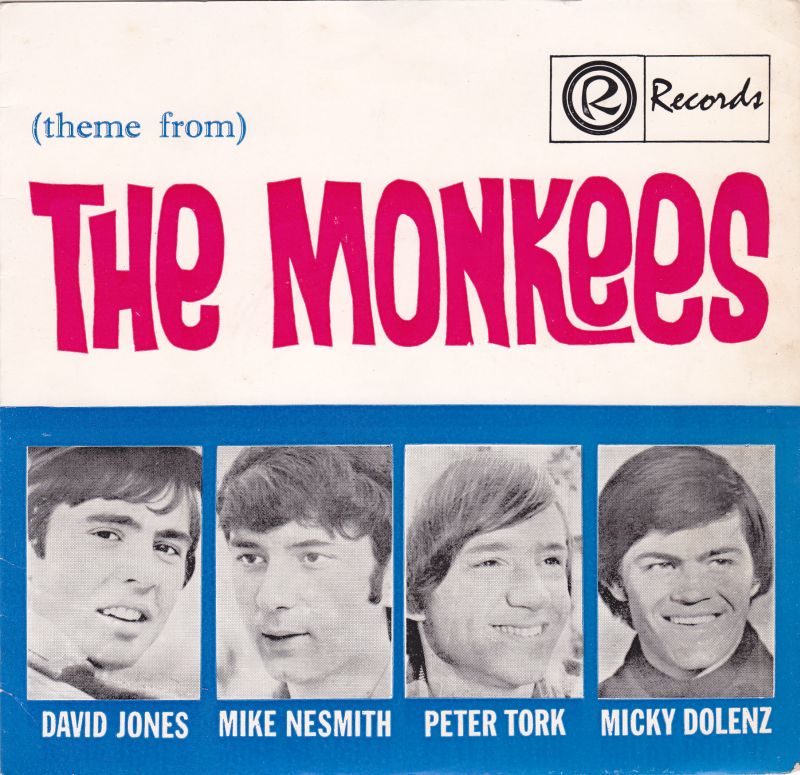
Hey Hey…Let’s all wake up to the Monkees on this quarantined morning. It’s hard to resist this song…it’s fun and reminds me of the intro to their television show…which is a good thing.
This was the first song written and recorded for The Monkees TV series, which ran on NBC 1966-1968. Written to introduce the Monkees and used as the theme song for the show.
It was written by the songwriter/producers Tommy Boyce and Bobby Hart, who were hired to write three songs for the show’s pilot, including the theme. When they wrote it, the cast had not been chosen and they had very little direction…the show was pitched as “An American version of The Beatles” and loosely based on the Beatles movie A Hard Day’s Night.
Peter Tork:“I always thought the song worked fine as the theme song for the TV show. But I never allowed us to sing it in public,” “The whole idea of standing up there and singing, ‘We’re wonderful/We’re the wonderful ones/And our names are The Wonderful Ones,’ was too self-congratulatory. What we do now is, the backing band plays [the music] and Micky and I come out onstage to it. I can’t ever see us singing ‘Hey, hey, we’re the Monkees!’ I couldn’t bear it.”
From Songfacts
The finger snaps and “here we come” line were influenced by the Dave Clark Five song “Catch Us If You Can,” where they sing, “Here we come again, catch us if you can.”
The Monkees didn’t play on their early albums, so very often the only band member to appear on a song would be its lead vocalist, which in this case was Micky Dolenz. This song was produced by the song’s writers, Tommy Boyce and Bobby Hart, who had members of their band, the Candy Store Prophets, play the instruments. The backing credits are as follows:
Micky Dolenz: vocal Tommy Boyce: backing vocals Wayne Erwin, Gerry Mcgee & Louie Shelton: guitar Larry Taylor: bass Billy Lewis: drums Gene Estes: percussion
Turns out this song works very well in a documentary about actual monkeys: It was used to open the 2015 Disney film Monkey Kingdom.
The Monkees Theme
Here we come Walkin’ down the street We get the funniest looks from Everyone we meet
Hey, hey, we’re the Monkees And people say we monkey around But we’re too busy singing To put anybody down
We go wherever we want to Do what we like to do We don’t have time to get restless There’s always something new
Hey, hey, we’re the Monkees And people say we monkey around But we’re too busy singing To put anybody down
We’re just tryin’ to be friendly Come and watch us sing and play We’re the young generation And we’ve got something to say, oh
Any time Or anywhere Just look over your shoulder Guess who’ll be standing there?
Hey, hey, we’re the Monkees And people say we monkey around But we’re too busy singing To put anybody down
Whaaa, one time!
Hey, hey, we’re the Monkees And people say we monkey around But we’re too busy singing To put anybody down
We’re just tryin’ to be friendly Come and watch us sing and play We’re the young generation And we’ve got something to say
Hey, hey, we’re the Monkees Hey, hey, we’re the Monkees
As Van Morrison would say…Into The Mystic… this song off of Sgt Pepper was a George Harrison song…and he was the only Beatle on it… This is about as sixties as you can get with the sitar and philosophical lyrics.
This was a brilliant addition to Sgt Pepper to show yet another side to the Beatles.
It’s hard to overestimate how profound of an effect that the introduction to Eastern religion had on George Harrison. Under the name of Sam Wells, George, along with his wife Pattie, vacationed in Bombay, India for six weeks, beginning on September 20th, 1966. At the suggestion of Ravi Shankar, from whom he was going to take sitar lessons while there, he grew a mustache as a subtle disguise so as to ward off any Indian “Beatlemaniacs” that may have been around in the area.
The book Autobiography Of A Yogi really changed his life and mind. It influenced his writing of songs like Within You Without You’ and many others. George started to write this song on a pedal harmonium at friend Klaus Voormann’s home.
During the recording, George was there with Indian musicians and they had a carpet on the floor and there was incense burning.
At George Harrison’s request, they added a small bit of laughter at the end of the song as it faded out to lighten the mood a bit.
John Lennon: “I think that is one of George’s best songs, one of my favorites of his. I like the arrangement, the sound and the words. He is clear on that song. You can hear his mind is clear and his music is clear. It’s his innate talent that comes through on that song, that brought that song together. George is responsible for Indian music getting over here. That song is a good example.”
From Songfacts
Although this song is billed as being recorded by the Beatles, George Harrison was the only Beatle to play on the track. There is no guitar or bass, but there are some hand-drums.
Harrison spent weeks looking for musicians to play the Indian instruments used on this. It was especially difficult because Indian musicians could not read Western music.
This is based on a piece by Indian musician Ravi Shankar, who helped teach Harrison the sitar. Harrison wrote his own lyrics and shortened it considerably.
Harrison wrote this as a 30-minute piece. He trimmed it down into a mini-version for the album.
This was the only song Harrison wrote that made it onto the album. He also contributed “Only A Northern Song” (recorded in February of 1967 as verified by the Anthology 2 album), but it was left off the album at the last minute. It was initially intended to go on the first side of Sgt. Pepper between “She’s Leaving Home” and “Being for the Benefit of Mr. Kite.” >>
This was one of Harrison’s first songs to explore Eastern religion, which would become a lifelong quest. He believed in reincarnation, which helped him accept death in 2001, when he lost his life to cancer.
Oasis covered this for the BBC to celebrate the 40th anniversary of Sgt. Pepper’s Lonely Hearts Club Band.
This is the second Indian classical-influenced song that George Harrison wrote for the Beatles, the first being “Love You To.”
“Now “Within You/Without You” was not a commercial song by any means. But it was very interesting. [George Harrison] had a way of communicating music by the Indian system of kind of a separate language… the rhythms decided by the tabla player.” –Sir George Martin, from the documentary The Material World.
Within You Without You
We were talking About the space between us all And the people Who hide themselves behind a wall of illusion Never glimpse the truth Then it’s far too late when they pass away
We were talking About the love we all could share When we find it To try our best to hold it there, with our love, with our love We could save the world, if they only knew
Try to realize it’s all within yourself, no-one else can make you change And to see you’re really only very small And life flows on within you and without you
We were talking About the love that’s gone so cold And the people Who gain the world and lose their soul They don’t know, they can’t see Are you one of them?
When you’ve seen beyond yourself then you may find peace of mind is waiting there And the time will come when you see we’re all one And life flows on within you and without you
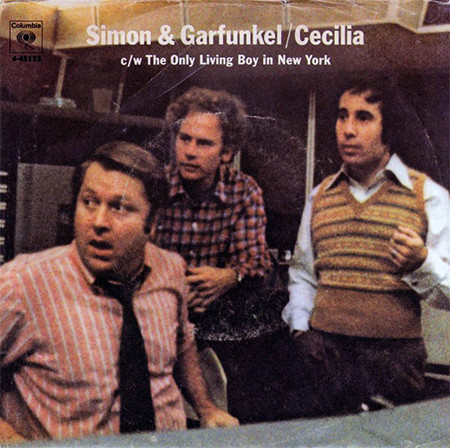
This was the B side to Cecilia. I’ve had two different bloggers mention this song to me in the past few days. I started to get into this song a little later than the others but it’s a beautiful song.
Paul Simon wrote this song about his partner Art Garfunkel going to Mexico to act in a movie called Catch-22, which was directed by Mike Nichols, who gave Simon & Garfunkel a big boost when he featured their songs in his 1967 film The Graduate. Simon was also going to be in the film, but Nichols cut his part, which separated the duo. Garfunkel spent months working on the film while Simon returned to New York, where he toiled away on the Bridge Over Troubled Water album.
Paul Simon sent letters to keep in touch with Garfunkel and update him on the album’s progress. Up to that point, the pair had always partnered musically and shared a bond, which was now breaking… Simon and Garfunkel split up after the album was released…Paul recorded as a solo artist, and Art pursued his acting career.
From Songfacts
Regarding the lyrics, “Tom get your plane right on time. I know that your eager to fly now,” before the folk duo became famous, they were known as Tom and Jerry. Tom was Art’s stage name, so this line symbolizes their increasing need for musical and personal freedom.
In a 1990 interview with SongTalk magazine, Simon said: “I liked the ‘aaahhhs,’ the voices singing ‘aaah.’ That was the best I think that we ever did it. It was quite a lot of voices we put on, maybe twelve or fifteen voices. We sang it in the echo-chamber.”
This song was addressed during a screening of the Simon & Garfunkel documentary Songs of America. At the screening, Garfunkel said, “I had Paul sort of waiting: ‘All right, I can take this for three months. I’ll write the songs, but what’s the fourth month? And why is Artie in Rome a fifth month? What’s Mike [Nichols] doing to Simon & Garfunkel?’ And so there’s Paul in the third month, still with a lot of heart, writing about, ‘I’m the only living boy in [New York]. You used to be the other one.”
This was used in the 2004 movie Garden State. Zach Braff, who wrote and directed the movie, thought the song worked perfectly to convey the loneliness of a character. Simon & Garfunkel rarely license the song, but they let Braff use it for a greatly reduced fee after seeing the scene.
The session musician Joe Osborn played an 8-string bass on this track, which the album’s producer Roy Halee said was the featured musical element of the song. Years later, when Osborn tried to relearn his part to demonstrate it, he realized it was very difficult to reproduce live, as Halee spliced together various takes for the recording.
The Only Living Boy In New York
Tom, get your plane right on time
I know your part’ll go fine
Fly down to Mexico
Do-n-do-d-do-n-do and here I am,
The only living boy in New York
I get the news I need on the weather report
I can gather all the news I need on the weather report
Hey, I’ve got nothing to do today but smile
Do-n-doh-d-doh-n-doh and here I am
The only living boy in New York
Half of the time we’re gone
But we don’t know where,
And we don’t know where
Half of the time we’re gone
But we don’t know where,
And we don’t know where
Tom, get your plane right on time
I know you’ve been eager to fly now
Hey let your honesty shine, shine, shine now
Do-n-do-d-do-n-do
Like it shines on me
The only living boy in New York,
The only living boy in New York
In 1975 my friends and cousin had a clubhouse that was an old horse barn. We had a record player, a lantern, and a one-armed bandit. My cousin played the Meet The Beatles album and me… being a Monkee fan soaked it up and it started a lifelong love for The Beatles.
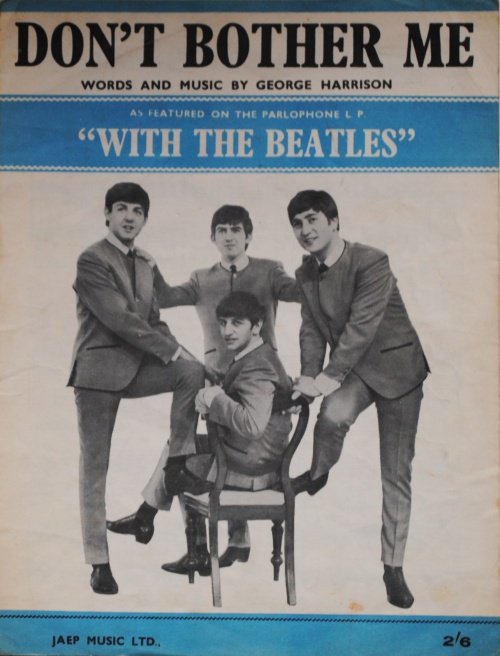
My first favorite Beatle song was It Won’t Be Long…then this one came in second at the time. George wrote this when he was down with the flu in a hotel room in the Northeast of England. It was the first song he wrote……technically he did have partial credit on the instrumental Cry For A Shadow.
Is it George’s best song? Of course not but it fits in well with the early Beatles and it gets overlooked. If you think about it…”Don’t Bother me” is so George and his attitude at times. I always really liked it…the overall feel of it is cool. It was a very good attempt at his first song.
George Harrison:“I don’t think it’s a particularly good song… It mightn’t even be a song at all, but at least it showed me that all I needed to do was keep on writing, and then maybe eventually I would write something good.”
Tom Petty:“I thought it was just the coolest song, like nothing I’d heard in rock,” Petty said in 2014 “I’d say, ‘Well, I like it. A lot. If you did that today, I’d say it was really good.’ And he’d go, ‘Well, you’d be wrong.'”
The Smithereens did a great job covering this song.
From Songfacts
This was George Harrison’s first recorded song. It was his response to critics who claimed he was not an important member of the group because he did not write songs.
A Harrison-penned song would not appear again until the 1965 album Help!. That would be “You Know What To Do.”
This song has a darker, more pessimistic mood that was uncommon of The Beatles main sound, but would come to be Harrison’s trademark stamp. This is actually part of what made the Beatles’ formula work: McCartney was the chirpy, positive one, and Harrison was the melancholic counterpart.
Years later these were sold off at one of the London auction houses. This song in it’s very earliest stages is available on bootleg and features George working the music and lyrics out as he goes along. George stated, “I wrote the song as an exercise to see if I could write a song. I was sick in bed. Maybe that’s why it turned out to be ‘Don’t Bother Me.'”
For your information, the photography technique for the cover of With The Beatles, in which the Fab Four’s headshots hover in a half-moon, light-and-shadow effect, is called “chiaroscuro.” It’s an Italian word to describe the Renaissance technique of dramatically contrasted lighting effects in oil paintings.
This was the first song on Side 2 of Meet The Beatles, their first album released in the US. With The Beatles was their second UK release.
Don’t Bother Me
Since she’s been gone I want no one to talk to me It’s not the same but I’m to blame, it’s plain to see
So go away, leave me alone, don’t bother me I can’t believe that she would leave me on my own It’s just not right when every night I’m all alone
I’ve got no time for you right now, don’t bother me I know I’ll never be the same if I don’t get her back again Because I know she’ll always be the only girl for me
But ’til she’s here please don’t come near, just stay away I’ll let you know when she’s come home Until that day Don’t come around, leave me alone, don’t bother me
I’ve got no time for you right now, don’t bother me I know I’ll never be the same if I don’t get her back again Because I know she’ll always be the only girl for me
But ’til she’s here please don’t come near, just stay away I’ll let you know when she’s come home Until that day
Don’t come around, leave me alone, don’t bother me Don’t bother me Don’t bother me Don’t bother me Don’t bother me
As a teenager, I could relate to this song. Now in this world, we live in now… I can relate to this song even more. I love the harmonies in this song.
Brian Wilson suffered from severe agoraphobia and refused to leave his bedroom for a significant amount of time. He wrote this song to give people an idea of how he felt. The song, like many Beach Boys songs, has beautiful harmonizing. The song was written by Brian Wilson and Gary Usher.
This song was the B side to Be True To Your School released in 1963. The song peaked at #23 in the Billboard 100 in 1963.
Brian Wilson: “When Dennis, Carl and I lived in Hawthorne as kids, we all slept in the same room. One night I sang the song ‘Ivory Tower’ to them and they liked it. Then a couple of weeks later, I proceeded to teach them both how to sing the harmony parts to it. It took them a little while, but they finally learned it. We then sang this song night after night. It brought peace to us. When we recorded ‘In My Room,’ there was just Dennis, Carl and me on the first verse… and we sounded just like we did in our bedroom all those nights. This story has more meaning than ever since Dennis’ death.”
From Songfacts
In the 1998 documentary Endless Harmony, Brian Wilson described this song as about being “somewhere where you could lock out the world, go to a secret little place, think, be, do whatever you have to do.”
Charles Manson, who was convicted of orchestrating the murders of six people in 1969, made repeated claims that The Beach Boys stole this song from him. In Manson’s view, he wrote a song called “In My Cell” which was about how he feels peace with himself in his jail cell. Manson did have a connection to The Beach Boys – he knew their drummer Dennis Wilson – and did write and record some songs. His claims have little basis in fact – something that is true of most of his proclamations.
Bill Medley from The Righteous Brothers recorded this with Phil Everly and Brian Wilson for his album Damn Near Righteous, his first new album since the untimely 2003 death of his partner Bobby Hatfield.
Interesting food for thought: Brian Wilson just might have inadvertently inspired one of the greatest jazz fusion bands, Blood Sweat & Tears, albeit indirectly. Al Kooper relates in Backstage Passes and Backstabbing Bastards that he was sitting in Brian Wilson’s living room while he showed off the Pet Sounds album. He was just leaving The Blues Project and wandering around California in an existential haze wondering what to do next, when while visiting with Brian Wilson, “Deep in the back of my mind was a band that could put dents in your shirt if you got within fifteen rows of the stage…” He explains his idea of having a band with a horn section in it, more than R&B bands but less than Count Basie’s or Buddy Rich’s. “Somewhere in the middle was a mixture of soul, jazz, and rock that was my little fantasy.”
This was released as the B-side of “Be True To Your School.”
Linda Ronstadt and Tammy Wynette both covered this song.
One of the many who found solace in this song is Steve Perry of Journey fame, who told Rolling Stone: “This was an anthem to my teenage isolation. I just wanted to be left alone in my room, where I could find peace of mind and play music.”
In My Room
There’s a world where I can go and tell my secrets to In my room, in my room In this world I lock out all my worries and my fears In my room, in my room
Do my dreaming and my scheming Lie awake and pray Do my crying and my sighing Laugh at yesterday
Now it’s dark and I’m alone I won’t be afraid In my room, in my room In my room, in my room In my room, in my room
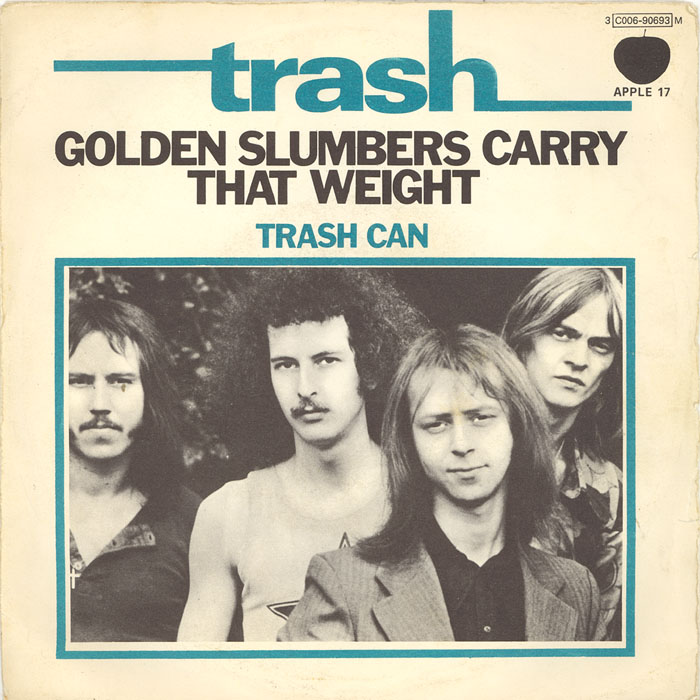
White Trash or Trash as they were later called signed with Apple Records and released these Beatles songs from the Beatles then-upcoming Abbey Road album. John Lennon loved it but Paul was upset about the recording…the reason why is below.
I’m critical on Beatle covers because I’m such a fan…but this is pretty good.
This was supposed to be just a demo but it was a finished product. Paul was not happy about the money spent producing it…
When they recorded what was supposed to be a demo of it, Paul was furious: “I asked for a demo and I’m handed a finished master of a full production with strings on it and the lot!” Everyone thought the record was dead,
but press officer Derek Taylor grabbed the record and took it to John Lennon.
When it was over, Lennon pointed to one of the speakers and declared, “That’s a good imitation of us! It’s going out!”
They started out as the Pathfinders, a Scottish group from Glasgow, doing a Goffin-King song called “Road To Nowhere”, which Tony Meehan brought to George Harrison and Paul McCartney who liked it and said “Let’s put it out.” DiLello worked in the Apple Press Office, interviewed the band, and came up with a better name — White Trash. Unfortunately, the record distributors didn’t go for that, so they censored the offensive word “White” and just called the band “Trash”. The band consisted of: Ian Crawford Clews, vocalist, Fraser Watson, lead guitar Colin Hunter-Morrison, Bass, Ronald Leahy, organ, and Timi Donald, percussion
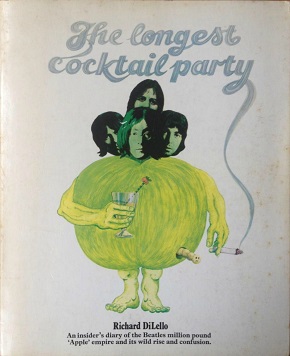
Richard DiLello was the “House Hippie” of Apple Records in the press department and was writing the press biography for the band and was trying to come up with a tag line for them. His choice? “They begin where The Cream leave off!” Apple’s press officer Derek Taylor said a big fat NO. A bit later, Richard came up with an alternate: “They Leave Off where the Cream BEGAN?”
In 1969, White Trash hooked up with singer Marsha Hunt and went on
tour. When she ripped her vocal cords one night, a long rest was recommended for her, and by mid-September The White Trash found themselves rehearsing to perfection their version of Golden Slumbers from the Beatles’ “Abbey Road”.
To any Beatle fan, I would recommend the Richard DiLello book The Longest Cocktail Party.It’s informative and hilarious.
Golden Slumbers/Carry That Weight
Once there was a way To get back homeward
Once there was a way To get back home
Sleep, pretty darling Do not cry And I will sing a lullaby
Golden slumbers Fill your eyes Smiles await you when you rise Sleep pretty darling Do not cry And I will sing a lullaby
Once there was a way To get back homeward
Once there was a way To get back home
Sleep, pretty darling Do not cry And I will sing a lullaby
Carry That Weight
Boy, you gotta carry that weight Carry that weight a long time Boy, you gonna carry that weight Carry that weight a long time
I never give you my pillow I only send you my invitation And in the middle of the celebrations I break down
Boy, you gotta carry that weight Carry that weight a long time Boy, you gotta carry that weight You’re gonna carry that weight along time
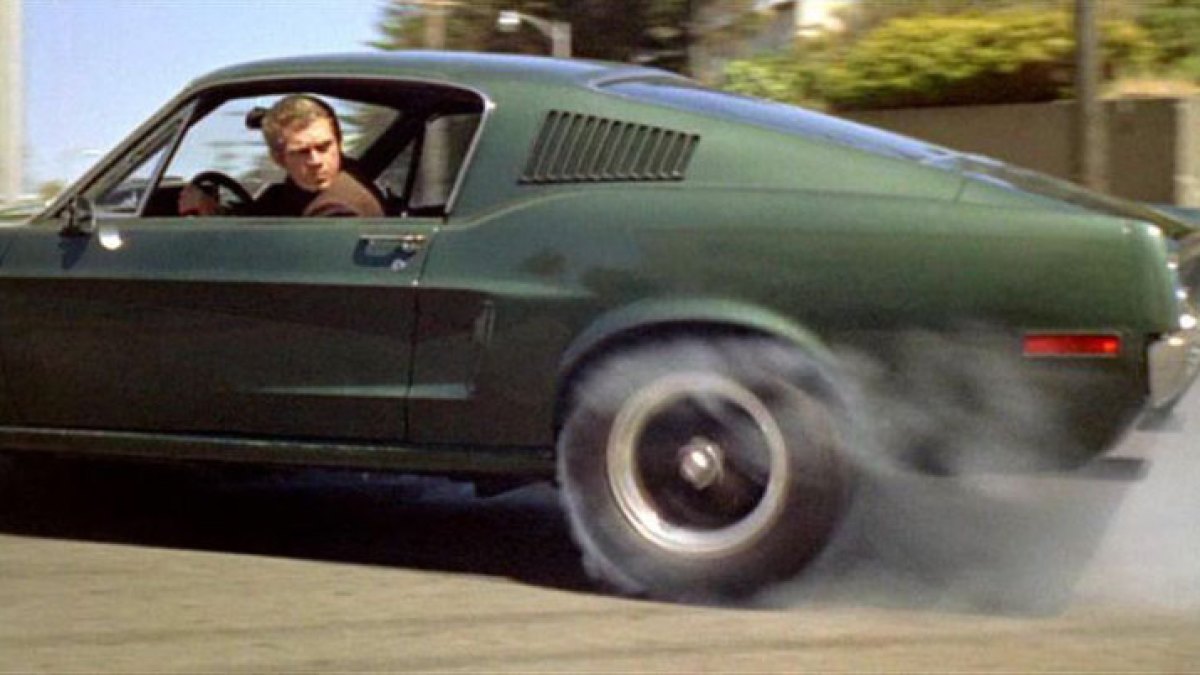
After Bullitt finished filming, the car was sold to a studio executive in Los Angeles, who kept it briefly before selling it, coincidentally, to a police detective. The officer shipped the car to New York and kept it for about three and a half years before placing a for-sale ad in the back of Road & Track magazine in 1974. His $6,000 asking price was somewhat steep, but Robert Kiernan, a New Jersey insurance executive, and Mustang fan went out to look at it. He bought it for his wife, Robbie to use as a daily driver.
The Kiernans kept the car a secret, mainly to ward off thieves and gawkers. Steve McQueen found out that the Kiernans owned the car and he tried to buy it but insisted that the price had to be right. Apparently, it never was right. McQueen never did buy the car.
Robert and Robbie’s son, Sean Kiernan decided to sell the car in 2020.
It stayed in the garage for decades after it was driven by his mother, Robbie, back in the day to St. Vincent’s parish, where she taught third grade. Her husband took a train to work in New York City. This month, Robbie Kiernan went to the auction with her 7-week-old grandchild.
The car will be inducted into the Historic Vehicle Association roster this year—kind of like the National Register of Historic Places, but for cars. It’s only the 21st car to be so honored.
“I am OK with any price. But I would like it to be the most valuable Mustang ever,” he said… he succeeded.
Before he sold the Mustang, he brought it home in October for his mother’s birthday and put it in the garage where the car had been hidden for four decades.
“I had never prepped the car to sell, so I changed all the fluids and did all the car stuff to it,” Kiernan said. “My sister, my mom, my wife, Sam’s dad came down from Dearborn and sat in the car. That car had been in the garage forever. It was her spot. I think everybody cried at some point or another.”
They all said goodbye to the car….But… hello to 3.74 million dollars to an unknown buyer on January 10, 2020.
Thanks to everyone who has read my “Where Is” posts…here are the rest:
One thing that strikes me about this song is the constant guitar. The song was on perhaps the most famous rock album…or album ever released. Sgt Peppers Lonely Hearts Club Band was released on May 26, 1967. No singles were pull off of this album when it was released.
Paul McCartney: “It’s an optimistic song,” “I often try and get on to optimistic subjects in an effort to cheer myself up and also, realizing that other people are going to hear this, to cheer them up too. And this was one of those. The ‘angry young man’ and all that was John and I filling in the verses about schoolteachers. We shared a lot of feelings against teachers who had punished you too much or who hadn’t understood you or who had just been bastards generally. So there are references to them.”
John Lennon had a bad acid trip during the recording. While doing the overdubs, John began to get very sick. He said, “I suddenly got so scared on the mike. I thought I felt ill and I thought I was going to crack. I said I must get some air.” George Martin took him up on the roof of the studios for air and John started walking towards the edge. Martin panicked, thinking that John would fall or leap off and that would be it. On the roof, when John saw Martin looking at him “funny,” he realized he was on acid. John decided he couldn’t do anymore that night, so he sat in the booth and watched the others record. Paul eventually took him home and stayed to keep him company, and he decided to drop some acid with John. It was Paul’s first LSD experience.
John Lennon: “I thought I was taking some uppers and I was not in the state of handling it. I took it and I suddenly got so scared on the mike. I said, ‘What is it? I feel ill.’ I thought I felt ill and I thought I was going cracked. I said I must go and get some air. They all took me upstairs on the roof, and George Martin was looking at me funny, and then it dawned on me that I must have taken some acid. I said, ‘Well, I can’t go on. You’ll have to do it and I’ll just stay and watch.’ I got very nervous just watching them all, and I kept saying, ‘Is this all right?’ They had all been very kind and they said, ‘Yes, it’s all right.’ I said, ‘Are you sure it’s all right?’ They carried on making the record.”
The idea of “Getting Better” came to Paul McCartney while he was walking his dog, Martha. The sun started to rise on the walk and he thought “it’s getting better.” It also reminded him of something that Jimmy Nichol used to say quite often during the short period when he was The Beatles drummer. This song was a true collaborative effort for Lennon and McCartney, with Lennon adding that legendary part about being bad to his woman. He later admitted to being a “hitter” when it came to women. He said “I was a hitter. I couldn’t express myself, and I hit.”
George Harrison played the tamboura, a large Indian string instrument. It is the droning noise about 2/3rds of the way through.
The string sound at the end was Beatles producer George Martin hitting the strings inside a piano.
Lennon contributed the pessimistic viewpoint, coming up with the line, “It can’t get no worse.” McCartney usually wrote much happier lyrics than Lennon. Lennon revisited this song when he used the lyrics, “Every day, in every way, it’s getting better and better” for his 1980 track “Beautiful Boy (Darling Boy).” This time, instead of taking the cynical side, he was affirming that life does just get keep getting better and better.
This was used in commercials for Phillips television sets in 1999. The living Beatles resent the use of their songs in advertisements, but cannot prevent it because they do not own the publishing rights; Michael Jackson does.
The Beatles had stopped touring by the time this was released. The first time McCartney played it live was on his 2002 “Back In The US” tour. That tour was made into a CD and a 2-hour concert film that aired on ABC and was released on DVD.
This was used in the 2003 movie The Cat in the Hat starring Mike Myers.
Getting Better
It’s getting better all the time I used to get mad at my school The teacher’s that taught me weren’t cool You’re holding me down Filling me up with your rules
I’ve got to admit it’s getting better A little better all the time I have to admit it’s getting better It’s getting better since you’ve been mine
Me used to be angry young man Me hiding me head in the sand You gave me the word I finally heard I’m doing the best that I can I’ve got to admit it’s getting better
I used to be cruel to my woman I beat her and kept apart from the things that she loved Man I was mean but I’m changing my scene And I’m doing the best that I can
I admit it’s getting better A little better all the time Yes I admit it’s getting better It’s getting better since you’ve been mine…
Rarely if ever do I say a song is a piece of art. This one would qualify in my opinion. I can’t imagine being a peer at the time and having to compete with this.
Paul McCartney wrote most of this song. It is said he got the name “Eleanor” from actress Eleanor Bron, who appeared in the 1965 Beatles film Help!. “Rigby” came to him when he was in Bristol, England and spotted a store: Rigby and Evens Ltd Wine and Spirit Shippers. He liked the name “Eleanor Rigby” because it sounded natural and matched the rhythm he wrote.
There is also a gravestone for an Eleanor Rigby in St. Peter’s Churchyard in Woolton, England. Woolton is a suburb of Liverpool and Lennon first met McCartney at a fete at St. Peter’s Church. The gravestone bearing the name Eleanor Rigby shows that she died in October 1939, aged 44. McCartney has denied that that is the source of the names, though he has agreed that they may have registered subconsciously.
This song was on the great Revolver album that peaked at #1 in the Billboard Album Charts in 1966. Eleanor Rigby peaked at #11 in 1966. This was on a double A-sided single paired with Yellow Submarine.
The Beatles didn’t play any of the instruments on this track. All the music came from the string players, who were hired as session musicians. A string section scored by Beatles producer George Martin consisting of four violins, two violas, and two cellos were used in the recording.
Paul McCartney:“When I was really little I lived on what was called a housing estate, which is like the projects – there were a lot of old ladies and I enjoyed sitting around with these older ladies because they had these great stories, in this case about World War II. One in particular I used to visit and I’d go shopping for her – you know, she couldn’t get out. So I had that figure in my mind of a sort of lonely old lady.
Over the years, I’ve met a couple of others, and maybe their loneliness made me empathize with them. But I thought it was a great character, so I started this song about the lonely old lady who picks up the rice in the church, who never really gets the dreams in her life. Then I added in the priest, the vicar, Father McKenzie. And so, there was just the two characters. It was like writing a short story, and it was basically on these old ladies that I had known as a kid.”
From Songfacts
McCartney explained at the time that his songs came mostly from his imagination. Regarding this song, he said, “It just came. When I started doing the melody I developed the lyric. It all came from the first line. I wonder if there are girls called Eleanor Rigby?”
McCartney wasn’t sure what the song was going to be about until he came up with the line, “Picks up the rice in a church where a wedding has been.” That’s when he came up with the story of an old, lonely woman. The lyrics, “Wearing the face that she keeps in a jar by the door” are a reference to the cold-cream she wears in an effort to look younger.
The song tells the story of two lonely people. First, we meet a churchgoing woman named Eleanor Rigby, who is seen cleaning up rice after a wedding. The second verse introduces the pastor, Father McKenzie, whose sermons “no one will hear.” This could indicate that nobody in coming to his church, or that his sermons aren’t getting through to the congregation on a spiritual level. In the third verse, Eleanor dies in the church and Father McKenzie buries her.
“Father Mackenzie” was originally “Father McCartney.” Paul decided he didn’t want to freak out his dad and picked a name out of the phone book instead.
After Eleanor Rigby is buried, we learn that “no one was saved,” indicating that her soul did not elevate to heaven as promised by the church. This could be seen as a swipe at Christianity and the concept of being saved by Jesus. The song was released in August 1966 just weeks after the furor over John Lennon’s remarks, “Christianity will go. It will vanish and shrink. I needn’t argue about that; I’m right and I will be proved right. We’re more popular than Jesus now.”
For the most part, the song eluded controversy, possibly because the lilting string section made it easier to handle.
In Observer Music Monthly, November 2008, McCartney said: “These lonely old ladies were something I knew about growing up, and that was what ‘Eleanor Rigby’ was about – the fact that she died and nobody really noticed. I knew this went on.”
This was originally written as “Miss Daisy Hawkins.” According to Rolling Stone magazine, when McCartney first played the song for his neighbor Donovan Leitch, the words were “Ola Na Tungee, blowing his mind in the dark with a pipe full of clay.”
The lyrics were brainstormed among The Beatles. In later years, Lennon and McCartney gave different accounts of who contributed more of the words to the song.
Microphones were placed very close to the instruments to create and unusual sound.
Ray Charles reached #35 US and #36 UK with his version in 1968; Aretha Franklin took it to #17 US in 1969. A year later, an instrumental by the group El Chicano went to #115. The song reached the chart again in 2008 when David Cook of American Idol fame took it to #92.
Because of the string section, this was difficult to play live, which The Beatles never did. On his 2002 Back In The US tour, Paul McCartney played this without the strings. Keyboards were used to compensate.
This song was not written in a normal chord, it is in the dorian mode – the scale you get when you play one octave up from the second note of a major scale. This is usually found in old songs such as “Scarborough Fair.”
Vanilla Fudge covered this in a slowed-down, emotional style, something they did with many songs, including hits by ‘N Sync and The Backstreet Boys. Their version of “You Keep Me Hangin’ On” was a #6 US hit in 1968. Fudge drummer Carmine Appice told Songfacts: “Most of the songs we did, we tried to take out of the realm they were in and try to put them where they were supposed to be in our eyes. ‘Eleanor Rigby’ was always a great song by The Beatles. It was done with the orchestra, but the way we did it, we put it into an eerie graveyard setting and made it spooky, the way the lyrics read. Songs like ‘Ticket To Ride,’ that’s a hurtin’ song, so we slowed it down so it wouldn’t be so happy. We would look at lyrics and the lyrics would dictate if it was feasible to do something with it or not.”
In 1966, this song took home the Grammy Award for Best Contemporary Pop Vocal Performance, Male. It was awarded to Paul McCartney.
In August 1966, the long-defunct British music magazine Disc And Music Echo asked Kinks frontman Ray Davies to review the then newly released Revolver album. This is how he reacted to this song: “I bought a Haydn LP the other day and this sounds just like it. It’s all sort of quartet stuff and it sounds like they’re out to please music teachers in primary schools. I can imagine John saying: ‘I’m going to write this for my old schoolmistress’. Still it’s very commercial.”
The chorus of this song was sampled as part of Sinead O’Connor’s 1994 song “Famine,” which is based on the story of the potato famine in Ireland. >>
In 2008 a document came to light that showed that McCartney may have had an alternative source for the Eleanor Rigby name. In the early 1990s a lady named Annie Mawson had a job teaching music to children with learning difficulties. Annie managed to teach a severely autistic boy to play “Yellow Submarine” on the piano, which won him a Duke of Edinburgh Silver Award. She wrote to the former Beatle telling him what joy he’d brought. Months later, Annie received a brown envelope bearing a “Paul McCartney World Tour” stamp. Inside was enclosed a page from an accounts log kept by the Corporation of Liverpool, which records the wages paid in 1911 to a scullery maid working for the Liverpool City Hospital, who signed her name “E. Rigby.” There was no accompanying letter of explanation. Annie said in an interview that when she saw the name Rigby, “I realized why I’d been sent it. I feel that when you’re holding it you’re holding a bit of history.”
When the slip went up for auction later that year, McCartney told the Associated Press: “Eleanor Rigby is a totally fictitious character that I made up. If someone wants to spend money buying a document to prove a fictitious character exists, that’s fine with me.”
This was released simultaneously on August 5, 1966 on both the album Revolver and as a double A-side with “Yellow Submarine.”
The thrash band Realm covered this song on their 1988 album Endless War. It is a speed metal version of the song that got them signed to Roadrunner Records.
McCartney told Q magazine June 2010 that after recording the song, he felt he could have done better. He recalled: “I remember not liking the vocal on Eleanor Rigby, thinking, I hadn’t nailed. I listen to it now and it’s… very good. It’s a bit annoying when you do Eleanor Rigby and you’re not happy with it.”
Former US President Bill Clinton has stated that this is his favorite Beatles song. >>
Richie Havens covered this on his 1966 debut album, Mixed Bag, and again on his 1987 Sings Beatles and Dylan album.
Eleanor Rigby
Ah look at all the lonely people Ah look at all the lonely people
Eleanor Rigby, picks up the rice In the church where a wedding has been Lives in a dream Waits at the window, wearing the face That she keeps in a jar by the door Who is it for
All the lonely people Where do they all come from? All the lonely people Where do they all belong?
Father McKenzie, writing the words Of a sermon that no one will hear No one comes near Look at him working, darning his socks In the night when there’s nobody there What does he care
All the lonely people Where do they all come from? All the lonely people Where do they all belong?
Ah look at all the lonely people Ah look at all the lonely people
Eleanor Rigby, died in the church And was buried along with her name Nobody came Father McKenzie, wiping the dirt From his hands as he walks from the grave No one was saved
All the lonely people Where do they all come from? All the lonely people Where do they all belong?
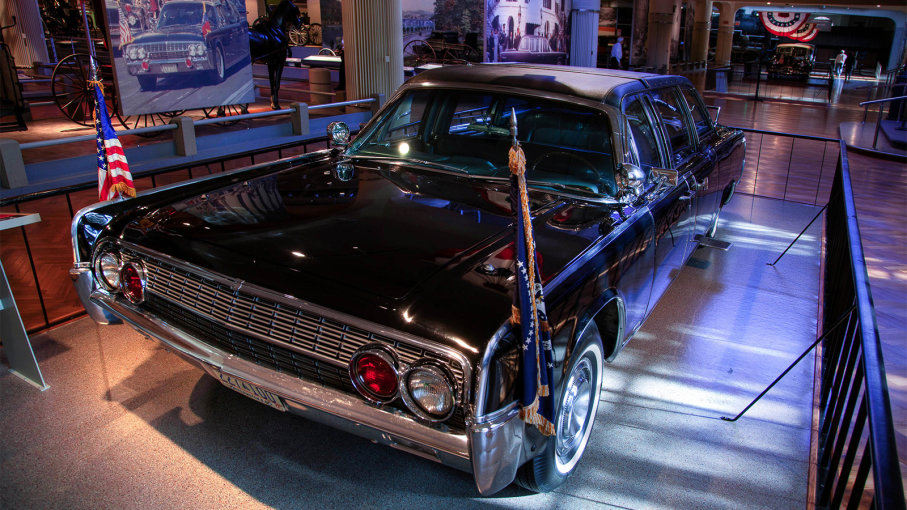
I would have thought this car would have been preserved and never touched after the Kennedy assassination on November 22, 1963…I was completely wrong.
The car started out as a standard 1961 Lincoln that had some upgrades of course. The changes and upgrades made to the car cost nearly $200,000 in 1961. After the changes, the car was known as the X-100.
The car’s special features included the removable steel and transparent plastic roof panels; a hydraulic rear seat that could be raised 10-1/2 inches to elevate the president; a massive heating and air conditioning system with auxiliary blowers and dual control panels; dark blue broadcloth lap robes with gray plush linings and hand-embroidered presidential seals housed in special door pockets; four retractable steps for Secret Service agents; two steps on the rear bumper for additional agents; flashing red lights; a siren; a blue mouton rug in the rear compartment; lamps that indicated when the door was ajar or the steps were out; dual flagstaffs and spotlights; auxiliary jump seats for extra passengers; two radio telephones; and interior floodlights.
I thought the car was retired after the assassination. But no… the X-100 was given a $500,000 redesign, complete with bullet-resistant glass, a roof and 1,600 pounds of armor.
The car got additional modifications in 1967 and was used by Presidents Johnson, Nixon, Ford, and Carter before it was retired in 1977.
It’s now on display at the Henry Ford Museum in Dearborn, Michigan
I think some of us will be thinking of this title soon if we haven’t already.
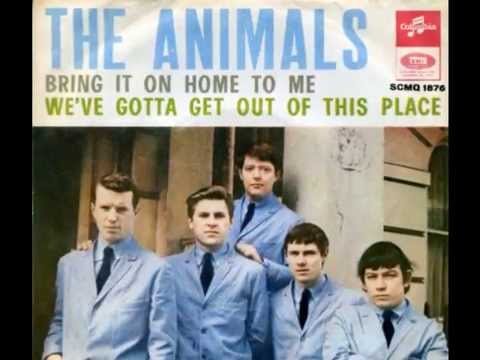
This was written by the husband and wife songwriting team of Barry Mann and Cynthia Weil. The Animals producer Mickie Most heard this song and had the band record it. He was looking for American material as he was trying to break the band in the States, and had a call out to the New York City songwriters in the Brill Building and 1650 Broadway looking for songs.
Eric Burdon:“I’ve always viewed myself as a punk. The Animals could have evolved that way. We had the energy and the anger, but we didn’t stick together. When the punk scene became commercial, I was all for the politics of the movement, but the music didn’t really stand up and ultimately, it was self destructive.”
The song peaked at #13 in the Billboard 100, #2 in the UK, and #2 in Canada in 1965.
From Songfacts
Mann had just signed a record deal and recorded this song himself, but his version was pulled when The Animals released the song. Mann and Weil were very productive in the mid-’60s, as they made the transition from writing fluffy pop songs like “Blame It On The Bossa Nova” to songs with more of a message, which appealed to rock bands like The Animals.
Animals lead singer Eric Burdon came in #57 in a Rolling Stone poll to find the greatest singers of all time. On this song, he delivers an anger and energy that was an influence on later punk bands.
There are two entirely different recordings of this song by The Animals. The US single version is an alternate take, shipped to MGM, The Animals’ American record label, by mistake. Nevertheless, this is a far superior version of the song. Unfortunately, it’s this version that’s played by almost all Oldies radio stations today.
Adrian Cronauer (the movie Good Morning Vietnam was based on his life) mentioned on a special Independence Day show on Sirius Satellite Radio that this was the most requested song on Armed Forces Radio when he was in Vietnam.
Other artists to record the song include Blue Oyster Cult, Grand Funk Railroad, and Ann Wilson of Heart.
TV series to use this song include:
Supernatural (“A Little Slice of Kevin” – 2012) Heroes (“Into Asylum” – 2009) Absolutely Fabulous (“The Last Shout: Part 1” – 1996) The A-Team (“Beneath the Surface” – 1986) Miami Vice (“Glades” – 1984)
Among the movies to use it:
Fahrenheit 9/11 (2004) Hamburger Hill (1987)
At the 2012 SXSW festival in Austin, Texas, Bruce Springsteen talked about this song when he gave the keynote speech. After reciting the lyrics, he said, “That’s every song I’ve ever written.”
Bruce was referring to his penchant for writing songs about getting away in search for something better in life.
Denmark + Winter recorded a dark electronic cover as part of their 2014 Re: Imagined album. Their version was featured on the season 5 episode of Pretty Little Liars “Taking This One to the Grave” to underscore a character’s death.
We’ve Gotta Get Out Of This Place
In this dirty old part of the city Where the sun refused to shine People tell me there ain’t no use in tryin’
Now my girl, you’re so young and pretty And one thing I know is true You’ll be dead before your time is due, I know
Watch my daddy in bed a-dyin’ Watched his hair been turnin’ grey He’s been workin’ and slavin’ his life away, oh yes I know it
(Yeah!) he’s been workin’ so hard (yeah!) And I’ve been workin’ too, baby (yeah!) Every night and day (yeah, yeah, yeah, yeah!)
We gotta get out of this place If it’s the last thing we ever do We gotta get out of this place ‘Cause girl, there’s a better life for me and you
Now my girl you’re so young and pretty And one thing I know is true, yeah You’ll be dead before your time is due, I know it
Watch my daddy in bed a-dyin’ Watched his hair been turnin’ grey, yeah He’s been workin’ and slavin’ his life away I know he’s been workin’ so hard
(Yeah!) I’ve been workin’ too, baby (yeah!) Every day baby (yeah!) Whoa! (Yeah, yeah, yeah, yeah!)
We gotta get out of this place If it’s the last thing we ever do We gotta get out of this place Girl, there’s a better life for me and you Somewhere baby Somehow I know it, baby
We gotta get out of this place If it’s the last thing we ever do We gotta get out of this place Girl, there’s a better life for me and you Believe me baby I know it baby You know it too
This was written by the multitalented Shel Silverstein, who later wrote several hits for Dr. Hook, including “Sylvia’s Mother” and “Cover Of The Rolling Stone.” He got the idea for the song from his friend Jean Shepherd – a guy who had to deal with a girl’s name.
Shel Silverstein sang his song ‘Boy Named Sue,’ and Johnny’s wife June Carter thought it was a great song for Johnny Cash to perform. And not too long after that they were headed off to San Quentin to record a record Live At San Quentin and June said, ‘Why don’t you bring that Shel song with you.”And so they brought the lyrics. And when he was on stage he performed that song for the first time ever, he performed it live in front of that captive audience, in every sense of the word.
When Johnny performed this song at San Quentin he read the lyrics from a sheet of paper on the stage.
The song peaked at #2 in the Billboard 100 and #1 in the Billboard Country Charts. The album Johnny Cash At San Quentin peaked at #1 in 1969.
Johnny Cash performed this song in the East Room of the White House on April 17, 1970, when he and his wife were invited by President Richard Milhous Nixon. Nixon’s staff had requested the song along with Okie From Muskogee and the song “Welfare Cadillac,” but Cash refused to perform those songs, saying he didn’t have arrangements ready.
Thanks to Victoria at The Hinoeuma for suggesting this Johnny Cash song.
From Songfacts
This is about a boy who grows up angry at his father not only for leaving his family, but for naming him Sue. When the boy grows up, he sees his father in a bar and gets in a fight with him. After his father explains that he named him Sue to make sure he was tough, the son understands.
Cash recorded this live at San Quentin Prison in February 1969. Shel Silverstein’s nephew Mitch Myers told us the story: “In those days in Nashville, and for all the people that would visit, the most fun that anyone really could have would be to go over to someone’s house and play music. And they would do what one would call a ‘Guitar Pull,’ where you grabbed a guitar and you played one of your new songs, then someone else next to you would grab it and do the same, and there were people like Johnny Cash or Joni Mitchell, people of that caliber in the room.
It wasn’t touched up, it wasn’t produced or simulated. They just did it, and it stuck. And it rang. I would say that it would qualify in the realm of novelty, a novelty song. Shel had a knack for the humorous and the kind of subversive lyrics. But they also were so catchy that people could not resist them.”
Shel Silverstein went on to write another song titled “The Father of the Boy Named Sue.” It’s the same story, but from the father’s point of view.
In the 2019 animated film Missing Link, the main character, a male Sasquatch voiced by Zach Galifianakis, is named Susan.
A Boy Named Sue
I want you to uh, I want to a, If you don’t mind Carl, I’d like you to stay out and help us on some songs I’d love to One of the greatest guitar players as well as song writers and singers in Memphis Appreciate a little help on guitar, alright. Thank you Carl
Well,my daddy left home when I was three And he didn’t leave much to ma and me Just this old guitar and an empty bottle of booze Now, I don’t blame him cause he run and hid But the meanest thing that he ever did Was before he left, he went and named me Sue
Well, he must o’ thought that is quite a joke And it got a lot of laughs from a’ lots of folk It seems I had to fight my whole life through Some gal would giggle and I’d get red And some guy’d laugh and I’d bust his head, I tell ya, life ain’t easy for a boy named Sue
Well, I grew up quick and I grew up mean My fist got hard and my wits got keen I’d roam from town to town to hide my shame But I made a vow to the moon and stars That I’d search the honky-tonks and bars And kill that man who gave me that awful name
Well, it was Gatlinburg in mid-July And I just hit town and my throat was dry I thought I’d stop and have myself a brew At an old saloon on a street of mud There at a table, dealing stud Sat the dirty, mangy dog that named me Sue
Well, I knew that snake was my own sweet dad From a worn-out picture that my mother’d had And I knew that scar on his cheek and his evil eye He was big and bent and gray and old And I looked at him and my blood ran cold And I said, “My name is Sue, how do you do Now you’re gonna die”
(yeah, that’s what I told him)
Well, I hit him hard right between the eyes And he went down, but to my surprise He come up with a knife and cut off a piece of my ear But I busted a chair right across his teeth And we crashed through the wall and into the street Kicking and a’ gouging in the mud and the blood and the beer
I tell ya, I’ve fought tougher men But I really can’t remember when He kicked like a mule and he bit like a crocodile I heard him laugh and then I heard him cuss He went for his gun and I pulled mine first He stood there lookin’ at me and I saw him smile
And he said, “Son, this world is rough And if a man’s gonna make it, he’s gotta be tough And I knew I wouldn’t be there to help ya along So I give ya that name and I said goodbye I knew you’d have to get tough or die And it’s the name that helped to make you strong”
He said, “Now you just fought one hell of a fight And I know you hate me, and you got the right To kill me now, and I wouldn’t blame you if you do But ya ought to thank me, before I die For the gravel in ya guts and the spit in ya eye ‘Cause I’m the son-of-a-bitch that named you Sue”
Well what could I do? What could I do? I got all choked up and I threw down my gun And I called him my Pa, and he called me his son And I came away with a different point of view And I think about him, now and then Every time I try and every time I win And if I ever have a son, I think I’m gonna name him.. Bill or George! Any-damn-thing but Sue!
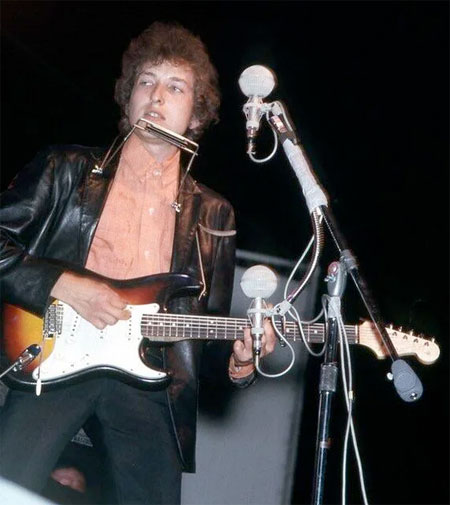
Bob Dylan released his first album in 1962. He was primarily known as a folk artist. Dylan would play with his acoustic guitar and harmonica.
On Saturday, July 24, 1965, Bob Dylan played the Newport Folk Festival and he played an acoustic set that all of his fans wanted. He received great applause… After that, he walked back on stage with a rock band and plugged in his 1964 Fender Stratocaster and all hell broke loose. His folk fans did NOT want him playing an electric guitar with a rock band. He did receive some cheers but they were mixed with a lot of boos. Dylan’s appearance is one of the most iconic performances of rock and roll.
Even after the boos, he was determined to continue down his electric path. It has been known as the time when “Dylan went electric.”
He toured in 1965 and 1966 with “The Hawks” as a backing band. The Hawks changed their name after the 66 tour and became The Band. During those tours, the boos continued throughout but Dylan pressed on. On the British leg of the tour the boos intensified and in one concert a fan of the old Dylan yelled out “Judas!”
Now back to the electric guitar that Bob played at Newport.
Dawn Peterson thought she owned the guitar, her father was a pilot who flew music acts in the 1960s. He said Dylan left this guitar on his plane. Dawn didn’t believe it until she saw a documentary picturing Bob Dylan on that Newport stage playing a guitar that looked just like her dad’s.
Bob Dylan thought he still had this Stratocaster…but in 2012 on the PBS series History Detectives… The experts matched the wood grain on the guitar owned by Dawn from the pictures of the historical event in 1965. The guitar was a match and it was no doubt that Dawn’s guitar was the one. Also in the guitar case were some of Dylan’s lyrics that he was working on in 65.
Lawyers got involved but it was soon settled that Dawn could sell the guitar.
Indianapolis Colts owner Jim Irsay purchased Dylan’s Newport guitar in 2013 for $965,000 in an auction, making it the most expensive guitar to ever hit the auction block.
Within the case itself was another hidden gem: early-draft lyrics to three Dylan tunes (“Absolutely Sweet Marie,” “I Wanna Be Your Lover” and two others). Those pieces were estimated between $3,000 and $30,000 by the auction house.
The guitar was on display from November 2018 through November 2019 at the American Writers Museum in Chicago as part of Bob Dylan: Electric – an interactive exhibit curated by music journalist Alan Light chronicling Dylan’s impact on American writing and pop culture following the Newport performance.











 PowerPop... An Eclectic Collection of Pop Culture