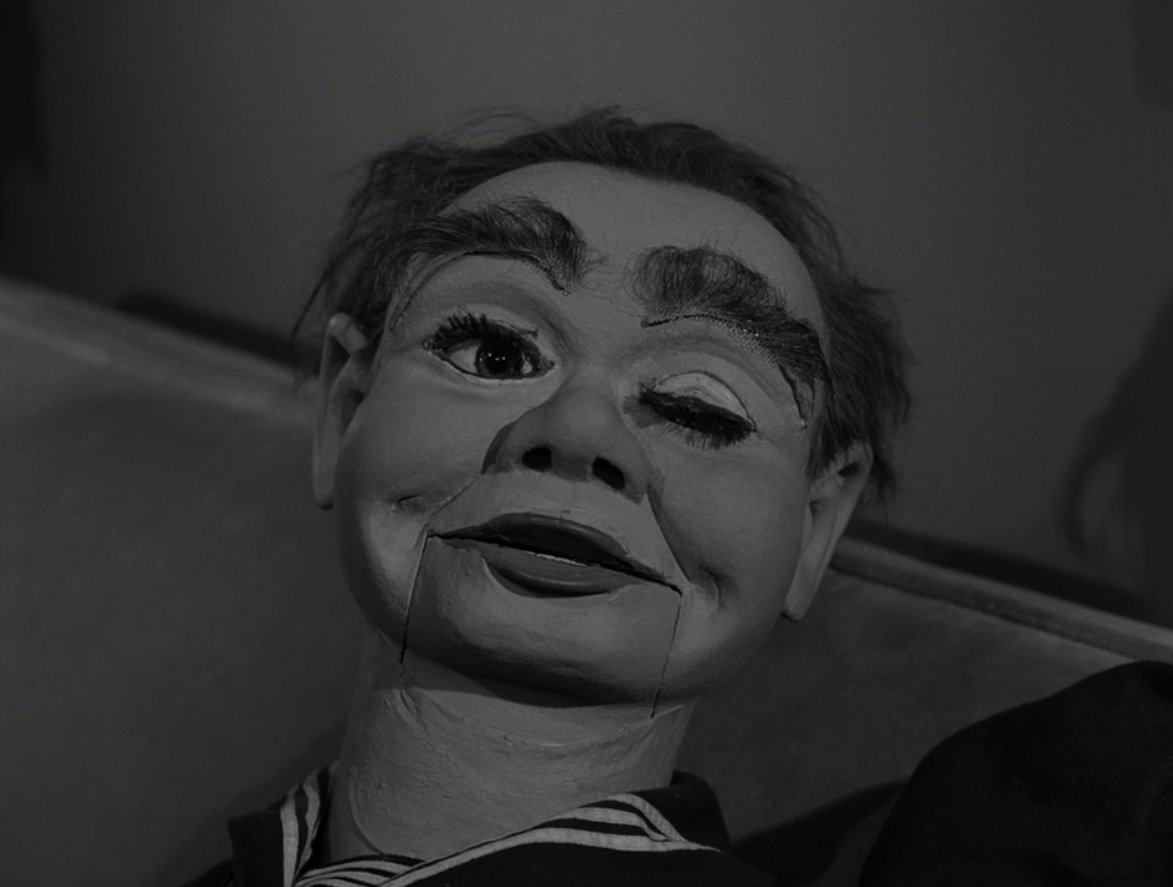
Twilight Zone – The Dummy

★★★★★  May 4, 1962 Season 3 Episode 33

If you want to see where we are…HERE is a list of the episodes.

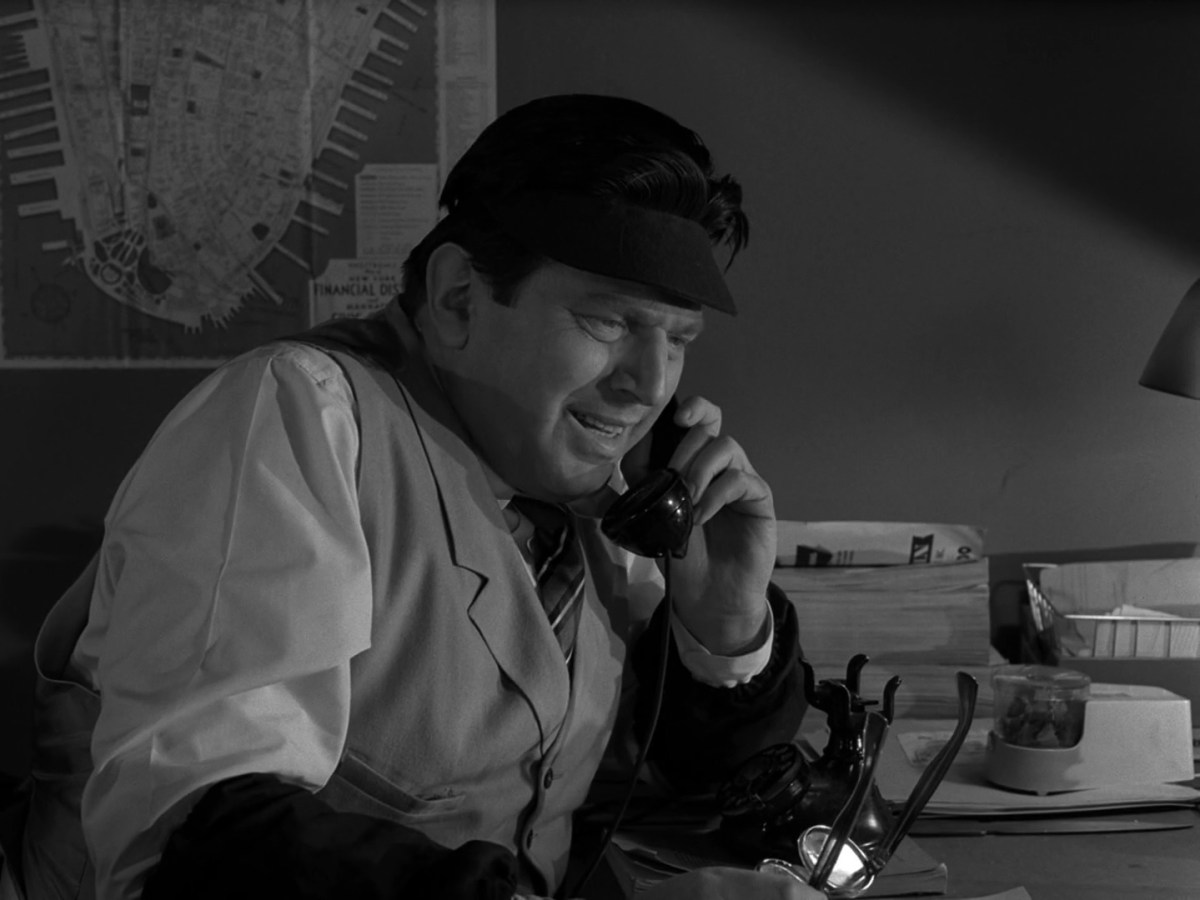
The story of a ventriloquist and his dummy has been done but the ending keeps this fresh.  This episode still works today. The Twilight Zone covers a lot of ground and some episodes do scare people. This one would be one of those. It’s creepy and may have influenced the 1978 movie Magic.

Cliff Robertson plays Jerry Etherson and is great in this role as a talented but alcoholic ventriloquist. Frank Sutton, who most people know as Sgt Carter from Gomer Pyle, is in the episode as Etherson’s agent Frank. At first you don’t know if Etherson is imagining what is happening or not.

Frank cares about Jerry but after so many missed performances because of his drinking problem….he drops him as a client.  He also suggests Jerry to get help because Jerry swears that “Willy” (the dummy) is alive.

The Dummy has one of the most chilling final shots of any episode of The Twilight Zone.

Any show with a dummy, gives me the creeps. After seeing this when I was younger… I had relatives who had one of those things lying around…I never took my eyes off that  thing.

The dummy “Willy” was created by American ventriloquist supplies maker Revillo Pettee, while the dummy seen at the end was created by English builder Len Insull. “Willy” is in the private collection of magician David Copperfield.

This show was written by Rod Serling and Lee Polk

Rod Serling’s Opening Narration: 

You’re watching a ventriloquist named Jerry Etherson, a voice-thrower par excellence. His alter ego, sitting atop his lap, is a brash stick of kindling with the sobriquet ‘Willy.’ In a moment, Mr. Etherson and his knotty-pine partner will be booked in one of the out-of-the-way bistros, that small, dark, intimate place known as the Twilight Zone.

Summary

Jerry Etherson has a reasonably successful nightclub act as a ventriloquist but has one major problem: he believes his dummy Willie is a sentient being who speaks to him and manipulates his life. His agent Frank thinks Jerry needs psychiatric help and tells him he has no future in the business if he doesn’t do something about his delusions. Jerry decides to lock Willie in a trunk and try his act with a different dummy. Willie has plans of his own however.

Rod Serling’s Closing Narration:

What’s known in the parlance of the times as the old switcheroo, from boss to blockhead in a few uneasy lessons. And if you’re given to nightclubbing on occasion, check this act. It’s called Willy and Jerry, and they generally are booked into some of the clubs along the ‘Gray Night Way’ known as the Twilight Zone.

CAST

Rod Serling … Narrator / Self – Host (uncredited)
Cliff Robertson … Jerry Etherson
Frank Sutton … Frank
George Murdock … Willie
John Harmon … Georgie
Sandra Warner … Noreen
Ralph Manza … Doorkeeper
Rudy Dolan … Emcee (uncredited)
Bethelynn Grey … Chorus Girl (uncredited)
Edy Williams … Chorus Girl (uncredited)

Twilight Zone – The Gift

★★★  April 27, 1962 Season 3 Episode 32

If you want to see where we are…HERE is a list of the episodes.

This episode is slow moving but at times interesting . It contains elements that could have been a great Twilight Zone but the acting in this one is subdued and the story is slow. I did like the study of human nature at the end but the script was  uneven.

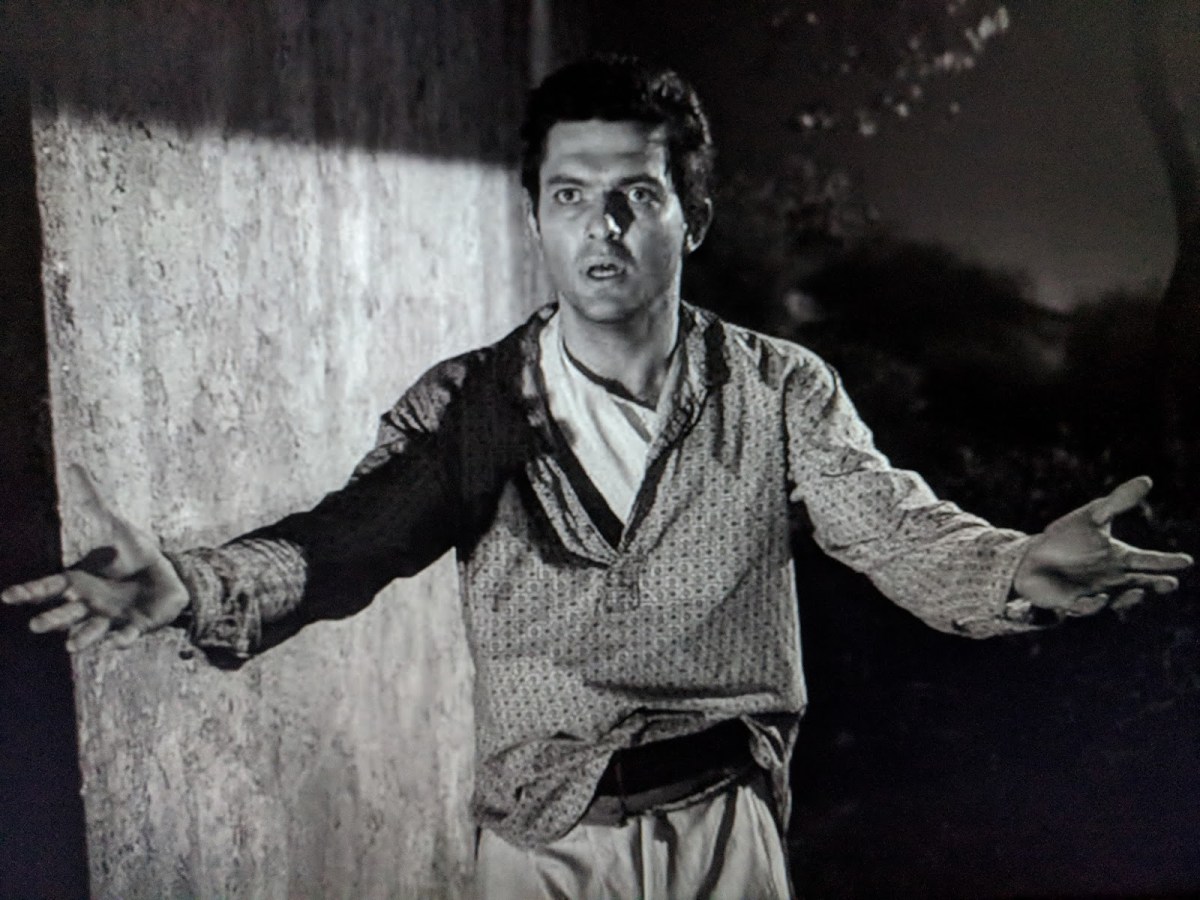
A Christ-like alien ventures into a small Mexican village. He comes into a bar after being shot and hurting. He bonds with a little boy named Pedro played by Edmund Vargas. A doctor looks at the alien and by all accounts should have been dead. Everyone was fearful of him and he is referred to as a creature with powers. The alien offers a gift but will the lack of trust in the new comer accept it?

I did like the musical score for this one. The Gift has a guitar score composed and performed by Laurindo Almeida, one of the great classical guitarists.This story was originally written as one of the series’ possible pilots, but was passed over for The Twilight Zone: Where Is Everybody?

This show was written by Rod Serling

Rod Serling’s Opening Narration: 

The place is Mexico, just across the Texas border, a mountain village held back in time by its remoteness and suddenly intruded upon by the twentieth century. And this is Pedro, nine years old, a lonely, rootless little boy, who will soon make the acquaintance of a traveler from a distant place. We are at present forty miles from the Rio Grande, but any place and all places can be the Twilight Zone.

Summary

The residents of a small Mexican village, just 40 miles or so south of the Rio Grande, panic when they learn a being from another planet may have crashed near by. As the result of an altercation with local police, one policeman is dead and the alien is severely wounded. A young boy, Pedro, quickly forms a friendship with the alien who says he has come in peace. He also says he has a gift for the people of the Earth, but the villagers’ fear means that mankind will never benefit from the alien’s generosity.

Rod Serling’s Closing Narration:

Madeiro, Mexico, the present. The subject: fear. The cure: a little more faith. An Rx off a shelf in the Twilight Zone.

CAST

Rod Serling … Narrator / Self – Host (uncredited)
Geoffrey Horne … Williams – the Alien
Nico Minardos … Doctor
Cliff Osmond … Manolo
Edmund Vargas … Pedro
Vladimir Sokoloff … Guitarist
Paul Mazursky … Officer
Henry Corden … Sanchez
Vito Scotti Vito Scotti … Rudolpho
Eumenio Blanco … Townsman (uncredited)
Carmen D’Antonio … Woman (uncredited)
David Fresco … Man (uncredited)
Lea Marmer … Woman (uncredited)
Joseph V. Perry … Man (uncredited)

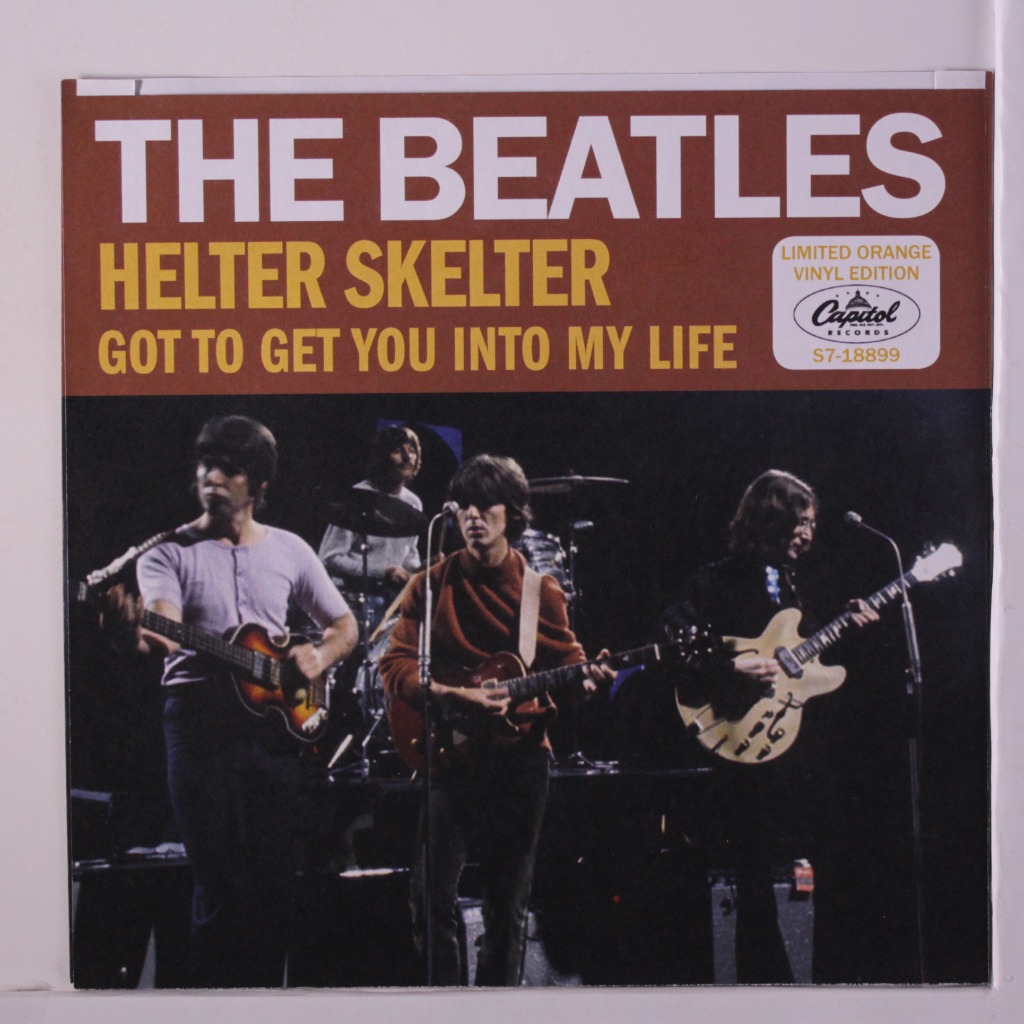
Beatles – Helter Skelter

This is my tenth and last song pick for Hanspostcard’s song draft. The Beatles Helter Skelter.

I want to thank Hans for hosting this draft and having me as one of the participants. Thanks everyone for the great songs. A Beatles song had to be in play in the draft for me. I didn’t pick my favorite Beatles song, but one that scared the hell out of me as a kid. This song gave me the creeps because it was so loud. That was before I saw the Manson TV movie.

Now, the sheer energy of it gets me every time. In 1964 they gave us I Want To Hold Your Hand and four years later we hear Helter Skelter…that is growing and versatility. This song was by the band I most admire and it was influenced by another band I admire…The Who…sort of.

The origin of the song…I’ll turn it over to Paul: “I was in Scotland and I read in Melody Maker that Pete Townshend had said: ‘We’ve just made the raunchiest, loudest, most ridiculous rock’n’roll record you’ve ever heard.’ I never actually found out what track it was that The Who had made, but that got me going, just hearing him talk about it. So I said to the guys, ‘I think we should do a song like that; something really wild.’ And I wrote ‘Helter Skelter.’”

The track that Townshend was talking is thought to be I Can See For Miles. Paul took the description and ran with it. Paul and George played the guitars while John played a six string bass…Mr blisters on his fingers played drums.

I’ve played this song at the different places I’ve worked (on cassette and computer) and I get inquiries…who is that? When I tell them who…they don’t believe me at first. A reply that I have got is… no that is NOT The Beatles…that is just not them. This is why I love the Beatles. They covered genres well.

The song has picked up evil vibes along the way because of Manson grabbing the title for his awful deeds. Some have said it was the first Heavy Metal song, but I don’t hear that. I do think it was a cog in the machine and influenced the harder bands though.

I’ve heard so many bands try to cover this song…even down to heavier bands and none match the intensity and energy of this recording. The secret is the punk rawness with it’s jagged edges showing. The only cover I like is U2’s live version on Rattle and Hum because it helped the song regain it’s reputation back and take it from Manson’s grasp to a then modern audience.

I’ve played this song with a band a few times and that little riff is so powerful and so much fun to play. I told the rest of the band…no distortion boxes…no processing…just pure loud overdrive (turn it up to 11 and beyond)…and it works.

The White Album…another reason I love it…you have Blackbird, Rocky Racoon, Dear Prudence, and Helter Skelter on the same album. The album is the very definition of eclectic.

Thank you all again for the songs.

Helter Skelter

When I get to the bottom I go back to the top of the slide
Where I stop and I turn and I go for a ride
Till I get to the bottom and I see you again

Do, don’t you want me to love you
I’m coming down fast but I’m miles above you
Tell me, tell me, tell me, come on tell me the answer
Well, you may be a lover but you ain’t no dancer

Helter skelter, helter skelter
Helter skelter

Will you, won’t you want me to make you
I’m coming down fast but don’t let me break you
Tell me, tell me, tell me the answer
You may be a lover but you ain’t no dancer

Look out
Helter skelter, helter skelter
Helter skelter
Look out, ’cause here she comes

When I get to the bottom I go back to the top of the slide
And I stop and I turn and I go for a ride
And I get to the bottom and I see you again, yeah, yeah

Well do you, don’t you want me to make you
I’m coming down fast but don’t let me break you
Tell me, tell me, tell me your answer
You may be a lover but you ain’t no dancer

Look out
Helter skelter, helter skelter
Helter skelter

Look out, helter skelter
She’s coming down fast
Yes, she is
Yes, she is
Coming down fast

(I’ve got blisters on my fingers)

Twilight Zone – The Trade-Ins

★★★★1/2  April 20, 1962 Season 3 Episode 31

If you want to see where we are…HERE is a list of the episodes.

This episode is very poignant. The older we get we all start becoming aware of our mortality. Serling offers a way out with a choice.  What if one day when we all get old…we can go and get new bodies? You would not just be young again  but you pick the body you want. Joseph Schildkraut as John Holt was superb in this role. The show stays realistic through out the episode.

John and Marie Holt visit the New Life Corporation, hoping to transplant their personalities into youthful, artificial bodies. Unfortunately, they can only afford the procedure for one of them…but which one? The episode also touches on mercy from Theodore Marcuse who plays Farraday who ordinairly doesn’t hand it out daily.

Unbeknownst to all but those on the set, something terrible was happening to Schildkraut during the filming of the episode. Director Elliot Silverstein recalls, He was undergoing a tragedy at the time … his own wife was dying. As a matter of fact, in the middle of the three-day schedule, his wife did in fact die. And he insisted that we not stop production for him; the Schildkraut family was a great theatrical family in Europe he would finish the film and then mourn. He was in real tears, off-screen.

This show was written by Rod Serling

Rod Serling’s Opening Narration: 

Mr. and Mrs. John Holt, aging people who slowly and with trembling fingers turn the last pages of a book of life and hope against logic and the preordained that some magic printing press will add to this book another limited edition. But these two senior citizens happen to live in a time of the future where nothing is impossible, even the trading of old bodies for new. Mr. and Mrs. John Holt, in their twilight years, who are about to find that there happens to be a zone with the same name.

Summary

John and Marie Holt have been married for a great many years. Age is catching up with them and John is frequently in pain. They visit the New Life Corporation where they have the opportunity to have their consciousness transferred to new, younger bodies. They only have enough money to pay for one transformation however and once complete, a decision on their future life together must be made.

Rod Serling’s Closing Narration:

From Kahlil Gibran’s The Prophet: “Love gives not but itself and takes not from itself, love possesses not nor would it be possessed, for love is sufficient unto love.” Not a lesson, just a reminder, from all the sentimentalists in the Twilight Zone.

CAST

Rod Serling … Narrator / Self – Host (uncredited)
Joseph Schildkraut … John Holt
Noah Keen … Mr. Vance
Alma Platt Alma Platt … Marie Holt
Theodore Marcuse … Farraday (as Ted Marcuse)
Edson Stroll … Young John Holt
Terence de Marney … Gambler (as Terrence deMarney)
Sailor Vincent … Gambler (as Billy Vincent)
Mary McMahon … Receptionist
David Armstrong … Surgeon

Twilight Zone – Hocus-Pocus And Frisby

★★★★  April 13, 1962 Season 3 Episode 30

If you want to see where we are…HERE is a list of the episodes.

What happens when a man that tells the tallest tales meets aliens that believe every word? I won’t tell you but I wll tell you that it’s a fun episode. Nothing phases this guy.

Andy Devine plays Somerset Frisby…it’s hard not to like Devine. He is a character actor that I have really enjoyed seeing in other shows and movies. He usually brightens up any scene his is in. Frisby is a good natured guy that loves telling tall tales that are fun but obviously not true. This episode is a re-telling of The Boy Who Cried Wolf but you root for Mr. Frisby. The episode is worth watching just for Devine.

Howard McNear is in this one and he plays Mitchell…McNear played Floyd Lawson (Floyd the Barber) on the Andy Griffith Show.  Dabs Greer plays Scanlan and he played Mr. Jonas on Gunsmoke and  Reverend Robert Alden on Little House on the Prairie.

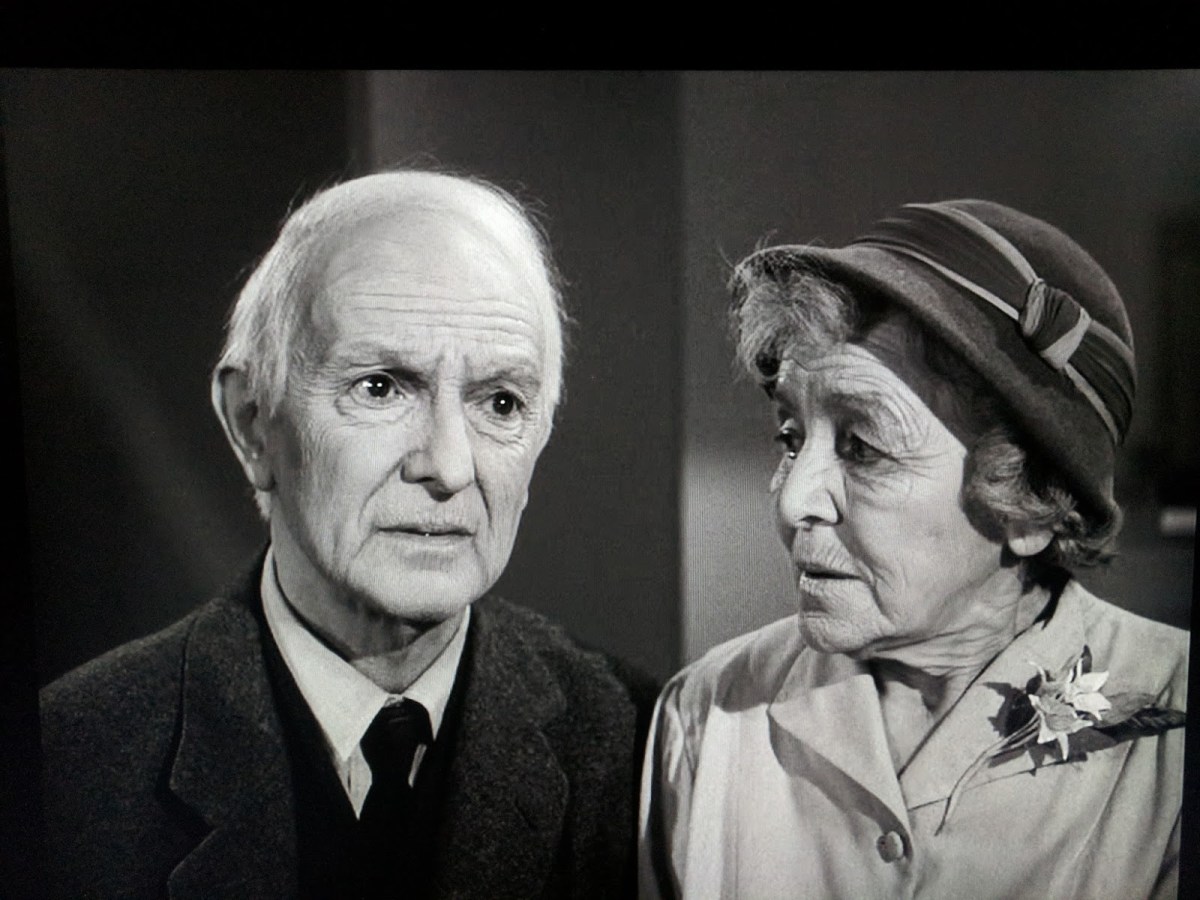
Clem Bevans who played Pete is the earliest born actor of any Twilight Zone Episode…he was born 10-16-1879.

Clem Bevans — The Movie Database (TMDB)

He has all the drive of a broken camshaft and the aggressive vinegar of a corpse. Rod Serling

This show was written by Rod Serling and Frederick Louis Fox

Rod Serling’s Opening Narration: 

The reluctant gentleman with the sizable mouth is Mr. Frisby. He has all the drive of a broken camshaft and the aggressive vinegar of a corpse. As you’ve no doubt gathered, his big stock in trade is the tall tale. Now, what he doesn’t know is that the visitors out front are a very special breed, destined to change his life beyond anything even his fertile imagination could manufacture. The place is Pitchville Flats, the time is the present. But Mr. Frisby’s on the first leg of a rather fanciful journey into the place we call the Twilight Zone.

Summary

Somerset Frisby runs a country store and gas station and loves to tell tall tales to his friends. To listen to him he’s graduated from several universities and his advice to Henry Ford created the auto industry. His friends always have a good laugh but two patrons seem to take a interest in Somerset and his stories. They’re aliens who think they’ve found the perfect human specimen to take back to their home planet. Somerset wants nothing to do with and to his great surprising has the weapon he needs to make his escape in his pocket. It all should give him a good tale for his pals.

Rod Serling’s Closing Narration:

Mr. Somerset Frisby, who might have profited by reading an Aesop fable about a boy who cried wolf. Tonight’s tall tale from the timberlands of the Twilight Zone.

CAST

Rod Serling … Narrator / Self – Host (uncredited)
Andy Devine … Somerset Frisby
Milton Selzer … Alien
Howard McNear … Mitchell
Dabbs Greer … Scanlan
Clem Bevans … Pete
Rest of cast listed alphabetically:
John Albright … Alien (uncredited)
Larry Breitman … Alien (uncredited)
Peter Brocco … Alien (uncredited)
Bartlett Robinson … Alien passenger in convertible (uncredited)

Twilight Zone – Four O’Clock

★★ April 06, 1962 Season 3 Episode 29

If you want to see where we are…HERE is a list of the episodes.

First of all…it’s not a great episode but that doesn’t include Theodore Bikel’s acting job in this one…it’s good…maybe a little over the top. The character is an ordinary man with a god complex that borderlines on cartoonish. He conveys very well that this character is insane. I think Bikel does a good job out of what he had…which wasn’t much. Linden Chiles who plays Mr. Hall does a good job as the FBI agent that shows a great contrast to Bikel’s Mr Crangle.

It’s in my top five of least favorite episodes.  It’s the story that is weak to me. The origin of this story would be the McCarthy witch hunt of the 50s. Anyone that was different would be labeled a communist, subversive, and or thieves.

I love that Serling highlighted that awful period that but the script doesn’t live up to the outrage. I wish he would have hit the mark of McCarthy with a litte more. This is the lowest I have labeled an episode so far…but this is episode 94 so that is not bad since Serling was involved in writing every episode so far. It’s not the worse episode but it’s not up to Twiight Zone standards… which are very high. The ending…I won’t get into what happens but unlike many Twilight Zones…this one is too predictable.

Theodore Bikel, in real life, was a human and civil rights activist who ardently opposed blacklisting and McCarthyism during the 1950s.

This show was written by Rod Serling and Price Day

Rod Serling’s Opening Narration: 

That’s Oliver Crangle, a dealer in petulance and poison. He’s rather arbitrarily chosen four o’clock as his personal Götterdämmerung, and we are about to watch the metamorphosis of a twisted fanatic, poisoned by the gangrene of prejudice, to the status of an avenging angel, upright and omniscient, dedicated and fearsome. Whatever your clocks say, it’s four o’clock, and wherever you are it happens to be the Twilight Zone.

Summary

Oliver Crangle seems to like making other people miserable. He phones a young man’s employer to say that the man is a communist. He phone a school board to tell them a teacher is acting inappropriately with his students. He has a long list of people that he wants to tell on. He even arranges a meeting with an FBI agent and tells him that at 4 p.m. all of the nasty people in the world will undergo a transformation. The agent suggests he seek psychiatric treatment but it turns out he’s right.

Sorry there is not a small clip on youtube of this. Paramount has them locked down. 

Rod Serling’s Closing Narration:

At four o’clock, an evil man made his bed and lay in it, a pot called a kettle black, a stone-thrower broke the windows of his glass house. You look for this one under ‘F’ for fanatic and ‘J’ for justice in the Twilight Zone.

CAST

Rod Serling … Narrator / Self – Host (uncredited)
Theodore Bikel … Oliver Crangle
Phyllis Love … Mrs. Lucas
Linden Chiles … Mr. Hall
Moyna MacGill … Mrs. Williams

Twilight Zone – The Little People

★★★★1/2  March 30, 1962 Season 3 Episode 28

If you want to see where we are…HERE is a list of the episodes.

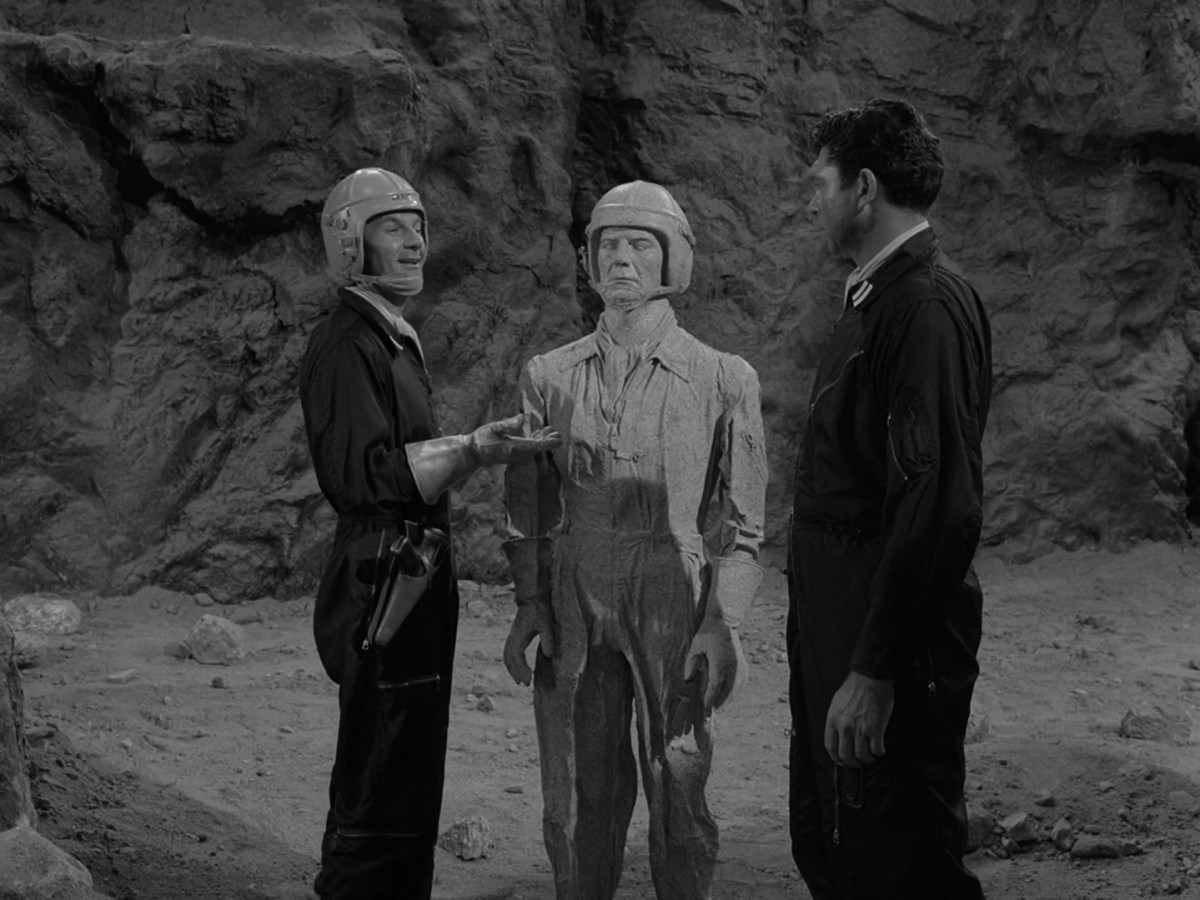
The Twiight Zone lesson in this episode is… absolute power can and will almost always corrupt. The best Twilight Zone episodes are the ones that are as thought-provoking and timely today as they were then. This one fits that bill.   Claude Akins does a great job as he appears  as Commander William Fletcher. He would appear in two Twilight Zones.

Joe Maross  plays Navigator Peter Craig who starts off as a simple jerk and then climbs all the way to a megalomaniac. Without giving the ending away…there is justice at the end of the epidsode. The more I watch this episode the more I’ve liked it through the years.

From IMDB The rocket launch depicted was in reality a test flight of a Mercury-Atlas booster. This was quite timely; this episode aired about a month after NASA’s John Glenn became the first astronaut to attain Earth orbit upon such a rocket.

This show was written by Rod Serling

Rod Serling’s Opening Narration: 

The time is the space age, the place is a barren landscape of a rock-walled canyon that lies millions of miles from the planet Earth. The cast of characters? You’ve met them: William Fletcher, commander of the spaceship; his copilot, Peter Craig. The other characters who inhabit this place you may never see, but they’re there, as these two gentlemen will soon find out. Because they’re about to partake in a little exploration into that gray, shaded area in space and time that’s known as the Twilight Zone.

Summary

When a spacecraft makes an emergency landing on an unknown planet the commander, William Fletcher, is anxious to get underway again as soon as possible. Not so for his navigator, Peter Craig, who is insubordinate and is fed up taking orders all of the time. While Fletcher makes repairs to the ship Craig explores the area around them and is astonished to find that there are living beings there only a fraction of the size of humans. Soon, he is being recognized by them as a god and refuses to leave when the ship ready. He is to realize that one’s place in the universe is a relative thing.

Sorry there is not a small clip on youtube of this. Paramount has them locked down. 

Rod Serling’s Closing Narration:

The case of navigator Peter Craig, a victim of a delusion. In this case, the dream dies a little harder than the man. A small exercise in space psychology that you can try on for size in the Twilight Zone.

CAST

Rod Serling … Narrator / Self – Host (uncredited)
Joe Maross … Navigator Peter Craig
Claude Akins … Cmdr. William Fletcher
Michael Ford … Spaceman
Robert Eaton … Spaceman

Rolling Stones – Have You Seen Your Mother Baby, Standing In The Shadow?

This is one you don’t hear everyday.

There is guitar feedback at the beginning and end. The followed The Beatles as the Beatles had used it for I Feel Fine before this one. This was also the first Stones song that used a horn section, which was arranged by Mike Leander. He also did the horns on The Stones As Tears Go By and wrote the score for the Beatles She’s Leaving Home when McCartney didn’t want to wait for George Martin.

The Stones performed this on The Ed Sullivan Show in 1966. Lead guitarist Brian Jones wore a cast on his hand. It was rumored that he got the injury when he punched a wall in a dressing room.

This was the first Stones song released in the US and England at the same time. The Beatles and Stones sometimes would work together on album and single releases. They didn’t want to release something each at the same time so they would make sure to stagger the releases.

This song peaked at #9 in the Billboard 100, #5 in the UK, and #8 in Canada in 1966. The song was credited to Jagger/Richards.

Keith Richards: “I liked the track, I hated the mix. Mainly because there was a fantastic mix of the thing, which was just right. But because they were in a rush and they needed to edit it down for the Ed Sullivan Show, the mix was rushed and the essential qualities of it, for me, disappeared. Just because of the lack of time. It needed another couple weeks. The rhythm section is almost lost completely.” 

From Songfacts

This song is shadowy indeed. “Mother” could be code for “girlfriend,” or something else entirely. Keith Richards asks that we don’t read too much into it. “You must listen to it and place your own interpretation on the lyric,” he said. “There is no attempt to present a controversial ‘Mother’ theme.”

The American single has a picture of The Stones in women’s clothes on the sleeve. According to legend, after the photo session, they kept their costumes on and went to a bar in New York.

Footage of the band dressed as women for the single photo shoot was compiled into a promotional film for the song that was distributed to various broadcast outlets. This was an early example of a music video, although they were still using film back then. The Beatles made them for some of their songs as well.

The B-side of the single was Who’s “Driving Your Plane?” Both sides of the single are questions.

Glyn Johns, who engineered the “As Tears Go By” session in 1965, engineered this song as well. This led to more work with The Stones, recording the live album Got Live If You Want It! in the fall of 1966 and then engineering the London Between The Buttons sessions in November of that year. He was used as chief engineer for the producer-less Their Satanic Majesties Request in 1967, after which he suggested to the Rolling Stones that they use Jimmy Miller as their next producer. 

Have You Seen Your Mother Baby, Standing In The Shadow?

Have you seen your mother, baby, standing in the shadow?
Have you had another, baby, standing in the shadow?
I’m glad I opened your eyes
The have-nots would have tried to freeze you in ice

Have you seen your brother, baby, standing in the shadow?
Have you had another baby, standing in the shadow?
Well I was just passing the time
I’m all alone, won’t you give all your sympathy to mine?

Tell me a story about how you adore me
Live through the shadow, see through the shadow,
Live through the shadow, tear at the shadow
Hate in the shadow, love in the shadow life

Have you seen your lover, baby, standing in the shadow?
Have they had another baby, standing in the shadow?
Where have you been all your life?
Talking about all the people who would try anything twice

Have you seen your mother, baby, standing in the shadow?
Has she had another baby, standing in the shadow?
You take your choice at this time
The brave old world or the slide to the depths of decline

Twilight Zone – Person Or Persons Unknown

★★★★1/2  March 23, 1962 Season 3 Episode 27

If you want to see where we are…HERE is a list of the episodes.

This is a strong Twilight Zone episode.

David Gurney, played wonderfully by Richard Long, wakes up to find that no one, not his wife Wilma, his fellow workers, his best friend, or even his own mother knows him. The Twilight Zone has touched on this before in “And When the Sky Was Opened”  but not this in depth.

This was a well thought out script. I like that Gurney slowly is trying to tie himself to the world he knows. He goes over every detail of his life that could have been missed by this gag or whatever it is… that someone could have missed. He does think of something that no one knows about but him…will it help or not? When he is losing hope…another twist is thrown at Mr. Gurney.

From IMDB: One of the first instances on television to show a couple sharing a single bed, sleeping next to each other. Around this time, TV shows could only portray couples sleeping in separate beds due to television’s strict standards & practices. In season five’s The Twilight Zone: Stopover in a Quiet Town, a very similar situation occurs. In both cases, the man is sleeping on top of the covers, is still fully dressed (even wearing his shoes), and they are hung over from a bout of heavy drinking.

This show was written by Charles Beaumont and Rod Serling

Rod Serling’s Opening Narration: 

Cameo of a man who has just lost his most valuable possession. He doesn’t know about the loss yet. In fact, he doesn’t even know about the possession. Because, like most people, David Gurney has never really thought about the matter of his identity. But he’s going to be thinking a great deal about it from now on, because that is what he’s lost. And his search for it is going to take him into the darkest corners of the Twilight Zone.

Summary

David Gurney awakens on his bed fully clothed and realizes he’s late for work. He and his wife Wilma had a few drinks the night before and she is sound asleep. When he can’t find his razor he wakes her but she says he doesn’t know who he is and demands he leave her house. His clothes are nowhere to be found and so heads off to work. He knows everyone there but like his wife, none of his co-workers have any idea who he is. He’s desperate to find one piece of his identity to prove who he is. When all finally seems resolved, he faces another shock.

Sorry there is no preview on youtube

Rod Serling’s Closing Narration:

A case of mistaken identity or a nightmare turned inside out? A simple loss of memory or the end of the world? David Gurney may never find the answer, but you can be sure he’s looking for it in the Twilight Zone.

CAST

Rod Serling … Narrator / Self – Host (uncredited)
Richard Long … David Andrew Gurney
Frank Silvera … Dr. Koslenko
Shirley Ballard … Wilma #1
Julie Van Zandt … Wilma #2
Betty Harford … Clerk
Edmund Glover … Sam Baker (as Ed Glover)
Michael Keep … Policeman
Joe Higgins … Bank Guard
John Newton … Cooper
John Brahm … Winston Churchill (uncredited)
Robert McCord … Man on Steps Eating Apple (uncredited)

Twilight Zone – Little Girl Lost

★★★★★  March 16, 1962 Season 3 Episode 26

If you want to see where we are…HERE is a list of the episodes.

This episode had to inspire the 1982 movie  Poltergiest. Out of all the episodes I’ve posted…I have had more people ask about this one. It is a scary episode and the special effects were great. I can see how this would freak kids out when it was shown. Fall off of your bed and you might end up in another dimension.

This was a good story and a very good script. Charles Aidman as the physicist Bill turned in a believable performance.

I like how they portrayed the other dimension. They were very clever the way they shot it. They didn’t give much away but show you enough to know this place is not your normal place.

Richard Matheson based this story on a real-life occurrence involving his own daughter. Matheson: “she cried out one night and I went to where she was and couldn’t find her anywhere. I couldn’t find her on the bed, I couldn’t find her on the ground. She had fallen off and rolled all the way under the bed against the wall. At first, even when I felt under the bed, I couldn’t reach her. It was bizarre, and that’s where I got the idea.”

This show was written by Richard Matheson and Rod Serling

Rod Serling’s Opening Narration: 

Missing: one frightened little girl. Name: Bettina Miller. Description: six years of age, average height and build, light brown hair, quite pretty. Last seen being tucked in bed by her mother a few hours ago. Last heard: ‘ay, there’s the rub,’ as Hamlet put it. For Bettina Miller can be heard quite clearly, despite the rather curious fact that she can’t be seen at all. Present location? Let’s say for the moment… in the Twilight Zone.

Summary

When he hears his young daughter Tina calling out in the night, Chris Miller go to her room but finds she isn’t there. At first he thinks she fallen off the bed or slid herself under it but despite hearing her call out she’s nowhere to be seen. He gets help from a friend, Bill, who concludes that Tina has slid through a portal into another dimension. They find the portal opening but Tina is lost inside and Chris goes in after her.

Rod Serling’s Closing Narration:

The other half where? The fourth dimension? The fifth? Perhaps. They never found the answer. Despite a battery of research physicists equipped with every device known to man, electronic and otherwise, no result was ever achieved, except perhaps a little more respect for and uncertainty about the mechanisms of the Twilight Zone.

CAST

Rod Serling … Narrator / Self – Host (uncredited)
Sarah Marshall … Ruth Miller
Robert Sampson … Chris Miller
Charles Aidman … Bill
Rod Serling … Narrator / Self – Host (uncredited)
Tracy Stratfor … Tina Miller (uncredited)
Rhoda Williams … Tina Miller (voice) (uncredited)

Jan and Dean – The Little Old Lady (from Pasadena)

This music is about Summer, fun, fun…and did I mention fun? Musically I loved the surf drummers and musicians. They were good and very fast.

I first found out about Jan and Dean when I was a kid. There was a TV movie in 1978 about them.

Jan and Dean were William Jan Berry, and Dean Ormsby Torrence, who formed in Los Angeles and 1958. They helped to shape the California Sound and vocal surf music. Jan and Dean had over 20 charting songs and going strong until Jan Berry was in a horrendous car crash that left him brain damaged and severely handicapped for the rest of his life in 1966.

After numerous brain operations, Jan spent six weeks in coma and awoke severely brain damaged, unable to speak, and completely paralyzed on his right side. He fought back and was able…although tremendously handicapped to return to the recording studio the next year to work on material for an unreleased Jan & Dean project that was not to be released until 2010 called Carnival of Sound.  He still could not sing well enough to perform.

Dean would go on to be a graphic artist and make album covers for  Harry Nilsson, Steve Martin, the Nitty Gritty Dirt Band, Dennis Wilson, Bruce Johnston, the Beach Boys, Diana Ross and the Supremes, Linda Ronstadt, Canned Heat and more.

Jan and Dean performed again in 1976…10 years after the accident. Jan and Dean continued to tour through the 80’s to the 2000’s. Jan died in 2004.

This song was released in 1964 and it peaked at #4  in the Billboard 100.

For those who have time…below is the 1978 movie in its entirety. 

It’s the little old lady from Pasadena

It’s the little old lady from Pasadena…

The little old lady from Pasadena
(Go granny, go granny, go granny, go)
Has a pretty little flowerbed of white gardenias
(Go granny, go granny, go granny, go)
But parked in a rickety old garage
Is a brand-new, shiny red, super-stock Dodge

And everybody’s sayin’ that there’s nobody meaner
Than the little old lady from Pasadena
She drives real fast and she drives real hard
She’s the terror of Colorado Boulevard

It’s the little old lady from Pasadena…

If you see her on the street, don’t try to choose her
(Go granny, go granny, go granny, go)
You might drive a goer, but you’ll never lose her
(Go granny, go granny, go granny, go!)
Well, she’s gonna get a ticket now, sooner or later
‘Cause she can’t keep her foot off the accelerator

And everybody’s sayin’ that there’s nobody meaner
Than the little old lady from Pasadena
She drives real fast and she drives real hard
She’s the terror of Colorado Boulevard

It’s the little old lady from Pasadena…

Go granny, go granny, go granny, go

The guys come to race her from miles around
But she’ll give ’em a length, then she’ll shut ’em down

And everybody’s sayin’ that there’s nobody meaner
Than the little old lady from Pasadena
She drives real fast and she drives real hard
She’s the terror of Colorado Boulevard

It’s the little old lady from Pasadena…
Go granny, go granny, go granny, go (repeat until end and fade)

Beatles – Glass Onion

The Walrus was Paul! I never knew that John. This song was written by John and Paul but mostly a John song. The song was about people trying to analyze the lyrics to Beatle songs.

Lennon mentioned other Beatles songs in the lyrics: “Strawberry Fields,” “I am the Walrus,” “Lady Madonna,” “The Fool on the Hill,” and “Fixing a Hole.”  One phrase in the song is “cast iron shore,” which is actually a nickname for a coastal area of south Liverpool also known by the locals as “The Cazzy.”

John had started the song during their spring 1968 visit to Rishikesh, India to study Transcendental Meditation with the Maharishi. Most of the songs written in India ended up on the terrific White Album. The most eclectic album The Beatles ever did.

A new name was needed for a newly signed Apple band called The Iveys. John suggested Glass Onion…this was rejected, along with another Lennon suggestion “Prix.” The band  went with the working title for the Beatles song With A Little Help From My Friends… Bandfinger Boogie. They shortened it and became the great power pop band Badfinger.

John Lennon: “I was having a laugh because there had been so much gobbledegook about ‘Pepper,’ play it backwards and you stand on your head and all that.” 

Paul McCartney: “He and Yoko came round to Cavendish Avenue and John and I went out into the garden for half an hour, because there were a couple of things he needed me to finish up, but it was his song, his idea…It was a nice song of John’s.  We had a fun moment when we were working on the bit, ‘I’ve got news for you all, the walrus was Paul.’  Because, although we’d never planned it, people read into our songs and little legends grew up about every item of so-called significance, so on this occasion we decided to plant one.  What John meant was that in ‘Magical Mystery Tour,’ when we came to do the costumes on ‘I Am The Walrus,’ it happened to be me in the walrus costume.  It was not significant at all, but it was a nice little twist to the legend that we threw in.  But it was John’s song.  I’d guess I had minor input or something as we finished it up together…We still worked together, even on a song like ‘Glass Onion’ where many people think there wouldn’t be any collaboration.”

From Songfacts

John Lennon used meaningless lyrics to confuse people who were reading too much into his songs. He got a kick out of people trying to analyze his lyrics.

A glass onion is a coffin with a see-through lid. Because of this, it became a big part of the “Paul is Dead” hoax. Another clue for those who believed the hoax: Lennon sang, “The Walrus is Paul.” In many European countries, a walrus represents death. 

Lennon wanted to name one of the bands they signed to Apple Records “Glass Onion.” They chose “Badfinger” instead.

One theory is that “Glass Onion” refers to Lennon’s opinion of the yogic concept of the lotus with its layered petals (layers of consciousness to be stripped away, much like an onion, through meditation) as a bunch of transparent bull used by the Maharishi to manipulate and seduce. He’s also saying the Maharishi’s whole shtick stinks and is a crying shame. 

When Lennon sings about the “Cast Iron Shore,” he’s referring to what was an area of beach at Liverpool, that is now partly built over. This area of Liverpool is called Otterspool. 

According to Mojo magazine, the Beatles recorded 34 takes of the song’s basic rhythm track on Wednesday September 11, 1968, then returned the next day to overdub Lennon’s vocal and again on Friday and the following Monday for further overdubs. On October 10th George Martin, after returning from holiday, added the string section.

Lennon explained to Rolling Stone in a 1971 interview why he said “The Walrus is Paul.” Said Lennon: “‘I Am The Walrus’ was originally the B side of ‘Hello Goodbye.’ I was still in my love cloud with Yoko and I thought, well, I’ll just say something nice to Paul: ‘It’s all right, you did a good job over these few years, holding us together.’ He was trying to organize the group, and organize the music, and be an individual and all that, so I wanted to thank him. I said ‘the Walrus is Paul’ for that reason. I felt, ‘Well, he can have it. I’ve got Yoko, and thank you, you can have the credit.'”

Glass Onion

I told you about strawberry fields
You know the place where nothing is real
Well here’s another place you can go
Where everything flows.

Looking through the bent-backed tulips
To see how the other half live
Looking through a glass onion.

I told you about the walrus and me, man
You know we’re as close as can be, man
Well here’s another clue for you all
The walrus was Paul.

Standing on the cast iron shore, yeah
Lady Madonna trying to make ends meet, yeah
Looking through the glass onion

Oh yeah, oh yeah, oh yeah
Looking through the glass onion.

I told you about the fool on the hill
I tell you man he’s living there still
Well here’s another place you can be
Listen to me.

Fixing a hole in the ocean
Trying to make a dove-tail joint, yeah
Looking through a glass onion.

Twilight Zone – The Fugitive

★★★1/2  March 23, 1962 Season 3 Episode 27

If you want to see where we are…HERE is a list of the episodes.

This is a feel good episode with J. Pat O’Malley as Old Ben. Ben is a good friend to the neighborhood kids but with a twist… he is from another planet. He does tricks for the kids like hit a baseball out of site and turn into a martian. Two men are looking for Ben…turns out they are from his home planet and want to take him back.

He is close to Jenny, a girl with braces on her legs, who lives with her aunt. Aunt Agnes (Nancy Kulp) is Jenny’s bitter guardian. Unlike some of the other Twilight Zone “bad” characters…Aunt Agnes shows she does indeed care about Jenny when she was sick. 

It’s not a classic episode but is entertaining.

In Jenny’s room you will see a portrait of right-handed White Sox pitcher Monty Stratton. Stratton accidentally shot himself while hunting and lost his leg as a result. He battled back after his injury to pitch in the minor leagues despite having an artificial leg. Monty Stratton would have been an obvious inspiration for Jenny, who had also lost the use of one of her legs. A biopic about him starring Jimmy Stewart was released in 1949 and was titled The Stratton Story.

This show was written by Charles Beaumont, Rod Serling, and Richard P. McDonagh

Rod Serling’s Opening Narration: 

It’s been said that science fiction and fantasy are two different things: science fiction, the improbable made possible; fantasy, the impossible made probable. What would you have if you put these two different things together? Well, you’d have an old man named Ben who knows a lot of tricks most people don’t know and a little girl named Jenny who loves him — and a journey into the heart of the Twilight Zone.

Summary

Little Jenny wears a brace on her leg. Her best friend, an old man named Old Ben, brightens her life by performing magic, including turning into anything he wants. One day, two men show up looking for Old Ben and Jenny asks if they are policemen. Not exactly. Old Ben evades them and confesses to Jenny that he’s from another planet – a fugitive but not a criminal

Rod Serling’s Closing Narration:

Mrs. Gann will be in for a big surprise when she finds this under Jenny’s pillow, because Mrs. Gann has more temper than imagination. She’ll never dream that this is a picture of Old Ben, as he really looks, and it will never occur to her that eventually her niece will grow up to be an honest-to-goodness queen — somewhere in The Twilight Zone.

CAST

Rod Serling … Narrator / Self – Host (uncredited)
Susan Gordon … Jenny
J. Pat O’Malley … Old Ben
Nancy Kulp … Agnes Gann
Wesley Lau … Man #1
Paul Tripp … Man #2
Russ Bender … Doctor
Stephen Talbot … Howie Gutliff
Johnny Eimen … Pitcher (as Johnny Eiman)

Twilight Zone – To Serve Man

★★★★★  March 2, 1962 Season 3 Episode 24

If you want to see where we are…HERE is a list of the episodes.

This episode may have the most famous of all twists and be the most remembered episode of the Twilight Zone. The Kanamits arrive on Earth with seemingly one purpose in mind: to aid mankind in every possible way using their superior technology. They end famine, supply a cheap power source and provide defensive force fields. Armies become obsolete. Earrth becomes without cold war or hunger worries…sounds great! As the old saying goes…nothing is for free.

Richard Kiel appeared as many of the Kanamits. He would later be better known as Jaws in a couple of James Bonds movies.

This one is a classic. It serves as a commentary on the Cold War mentality of the time and this scfi episode works today. This episode has been parodied in a lot of shows including The Simpson’s first Treehouse of Terror. Watch this one if you get a chance.

Damon Knight (writer): To Serve Man was written in 1950, when I was living in Greenwich Village and my unhappy first marriage was breaking up. I wrote it in one afternoon, while my wife was out with another man. Serling kept the basics of Knights story, but made some changes, the first of which was in the aliens themselves. In the story, the Kanamit (singular: Kanama) look something like pigs and something like people. In his script, Serling made them nine feet tall and essentially humanoid, noting, At the moment, no one knows whether we cast this part, or make it! As they appear in the show, the Kanamits (singular: Kanamit) resemble angels gone to seed, with full-length robes, high-domed heads, and just a hint of corruption about the eyes and mouth. The effect is striking, with seven-foot-two Richard Kiel (later to play the character Jaws in several James Bond films) playing the various Kanamits.

I thought the adaptation was kind of neat it made me famous in Milford, Pennsylvania; suddenly everybody knew who I was. I didnt mind the aliens being acromegalic giants, because I knew they couldnt film my pig-people without making it look like a Disney film. The only thing that bugged me was Serlings treating the alien language as if it were just another kind of code.

This show was written by Rod Serling and Damon Knight

Rod Serling’s Opening Narration: 

Respectfully submitted for your perusal – a Kanamit. Height: a little over nine feet. Weight: in the neighborhood of three hundred and fifty pounds. Origin: unknown. Motives? Therein hangs the tale, for in just a moment, we’re going to ask you to shake hands, figuratively, with a Christopher Columbus from another galaxy and another time. This is the Twilight Zone.

Summary

Michael Chambers recounts recent events on Earth after the arrival of a alien space craft. The aliens, known as Kanamit, seem friendly and assure everyone they have nothing to be afraid of. In fact, they offer to share wonderful technology that will provide limitless energy, cure all disease and convert deserts into lush gardens. For the people of Earth, paradise has arrived. Chambers is an encryption specialist and they try their best to decrypt a book the Kanamit left behind. The book’s title seems benign – but it’s not what they think it is.

The COMPLETE EPISODE on Daily Motion

Rod Serling’s Closing Narration:

The recollections of one Michael Chambers, with appropriate flashbacks and soliloquy. Or, more simply stated, the evolution of man. The cycle of going from dust to dessert. The metamorphosis from being the ruler of a planet to an ingredient in someone’s soup. It’s tonight’s bill of fare from the Twilight Zone.

CAST

Rod Serling… Narrator / Self – Host (uncredited)
Lloyd Bochner…Michael Chambers
Richard Kiel…the Kanamits (all of whom appear alike)
Susan Cummings…Patty
Joseph Ruskin…Kanamit voice
Hardie Albright…Secretary General
Theodore Marcuse…Citizen Gregori
Bartlett Robinson…Colonel #1
Carleton Young…Colonel #2 (credited…Carlton Young)
Nelson Olmsted…Scientist

Joe South – Games People Play

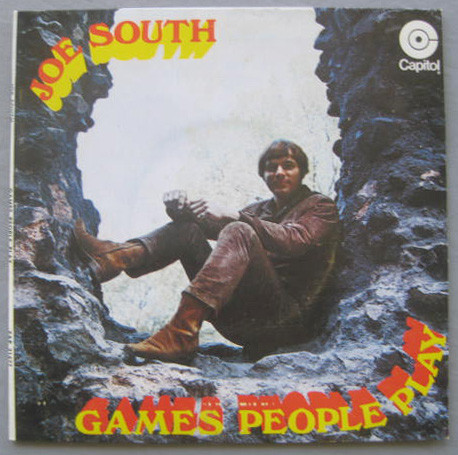
I had this single when I was a kid that was passed down from a cousin. Joe South was a great songwriter. He wrote songs such as Hush, Rose Garden, Walk A Mile In My Shoes, and Down in the Boondocks.

Joe South did not record any more hits, but he did write and record the original version of Rose Garden, which three years later became a hit for the country artist Lynn Anderson.

He was originally a session man, and among the hits he played the guitar on are Aretha Franklin’s “Chain Of Fools,” Tommy Roe’s “Sheila” and Simon & Garfunkel’s “The Sound Of Silence.” He also played on Bob Dylan’s Blonde On Blonde album.

The Games People Play album was one of the first to be multitracked. Joe South performed all the vocal and instrumental parts himself, and some consider it the first ever Country-Soul album.

South won Grammy Awards for Song of the Year and Best Contemporary Song for this.

From Songfacts

Written by Joe South, this song is about how people can go through life preoccupied with negative thoughts. Instead of living lives of service and accomplishment, they deceive others in an effort to get ahead, which ultimately leads to unhappiness.

 It was originally released in 1968 as Introspect before being reissued as Games People Play when the title track became a hit.

Mel Tormé recorded a notable cover version of this song later in 1969 which appeared on his A Time for Us album. The prominent bass in his version was performed by Carol Kaye, who was one of the studio musicians behind hits for The Monkees, The Beach Boys, Joe Cocker and many others. In a Songfacts interview with Carol Kaye, she talked about this session: “There was one time when I overplayed on bass to try to wake up a drummer. The drummer was in on tour and he was sleeping. You could tell that. And it was a big band. He was slowing down in the parts and the part that I was playing was slow according to the tune. The tune required just a few notes on my part, so somebody in the band said, ‘Do something, Carol.’ So I played a lot of notes and it woke up the drummer. And I walked in the booth after the take, and I said, ‘Now we can do a take.’ And they looked at me and laughed and said, ‘That was the take.’ I said, ‘Oh, no, that’s a bass solo.’

The bass part that I invented is a test now at schools around the world. And he’s just going, ‘La di da’ and here’s all this bass and stuff coming in. I thought, That’ll never be a hit. And it was a big smash hit for him.”

Games People Play

Mmm
La-da-da, da-da-da, da-da
La-da-da, da-da-da, da-dee
La-da-da, da-da
La-da-da, da-da-da

Whoa, the games people play now
Every night and every day now
Never meanin’ what they say now
Never sayin’ what they mean

While they wile away the hours
In their ivory towers
‘Til they’re covered up with flowers
In the back of a black limousine
Whoa-ah

La-da-da, da-da-da, da-da
La-da-da, da-da da, da-dee
Talkin’ ’bout you and me
And the games people play now

Whoa, we make one another cry
Break a heart then we say goodbye
Cross our hearts and we hope to die
That the other was to blame
Whoa-ah

But neither one will ever give in
So we gaze at an eight by ten
Thinkin’ ’bout the things that might have been
And it’s a dirty rotten shame
Whoa-ah

La-da-da, da-da-da, da-da
La-da-da, da-da da, da-dee
Talkin’ ’bout you and me
And the games people play now

Oh, yes
Oh, alright
Oh, yes
C’mon, c’mon, c’mon, c’mon, c’mon

Whoa oh-oh-oh-oh-oh

Now look here
People walkin’ up to you
Singin’ glory hallelujah, ha-ha
And they try and to sock it to you
In the name of the Lord

They’re gonna teach you how to meditate
Read your horoscope, cheat your fate
And furthermore to hell with hate
Come on, get on board
Whoa-ah

La-da-da, da-da-da, da-da
La-da-da, da-da da, da-dee
Talkin’ ’bout you and me
And the games people play

Now, wait a minute
Look around tell me what you see?
What’s happenin’ to you and me?
God grant me the serenity
To just remember who I am
Whoa-ah

‘Cause you’ve given up your sanity
For your pride and your vanity
Turn you back on humanity
Oh, and you don’t give a
Da, da, da, da, da

La-da-da, da-da-da, da-da
La-da-da, da-da da, da-dee
I’ll keep a-talkin’ ’bout you and me, brother
And the games people play now, now

La-da-da, da-da-da, da-da
La-da-da, da-da da, da-dee
Gonna talk ’bout you and me
Oh, and the games people play
I wonder can you come out and play?
Early in the mornin’, whoa yes
Talkin’ ’bout you and me
And the games people play now