TV Draft Round 7 – Pick 7 – Liam Selects – The Rocky and Bullwinkle Show

Welcome to the Hanspostcard TV Draft. I hope you will enjoy it! Today’s post was written by Liam at https://othemts.wordpress.com/

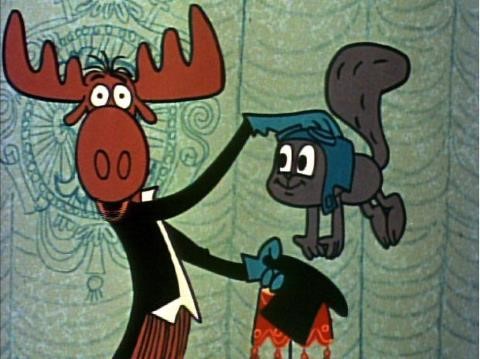
The Rocky and Bullwinkle Show

(1959 – 1964)

When you have an animated series featuring talking animals, the natural inclination is to file it under “Children’s Entertainment.”  And yet The Rocky and Bullwinkle Show featured witty wordplay, spoofs of popular culture, self-referential humor, and political satire (particularly regarding the Cold War). You can tell that network execs were confused by the fact that they sometimes aired the show in prime time and sometimes on Saturday morning.  During the show’s five season run from 1959 to 1964 it also switched networks.  For the first two seasons it was on ABC and called Rocky and His Friends. Then it moved to NBC and became The Bullwinkle Show.  CBS never gave it a shot but the show lived on in syndication under the names The Rocky Show, The Rocky and Bullwinkle Show, The Adventures of Rocky and Bullwinkle, and The Adventures of Bullwinkle and Rocky. Whew!

Ok, but beyond this rocky (pun intended) broadcast history, what was the show about?  Jay Ward created the show to be an ongoing adventure serial about a moose and a squirrel. Animator Alex Anderson created many of the characters but declined to work on the show itself.  Ward hired Bill Scott as head writer and co-producer of the show, as well as writers Chris Hayward and Allan Burns. General Mills came on board as the show’s main sponsor. The ongoing serial featured four main characters, two heroes and two villains:

  • Rocket J. Squirrel (a.k.a. Rocky the Flying Squirrel), voiced by June Foray, is a noble all-American kid in squirrel form who serves as the straight man to his partner Bullwinkle’s antics. His catchphrase is “Hokey smokes!”
  • Bullwinkle J. Moose, voiced by Bill Scott, is a good-hearted and optimistic, but very dimwitted moose. He and Rocky are roommates in the fictional town of Frostbite Falls, Minnesota.  He attended Wossamotta U. on a football scholarship.
  • Boris Badenov, voiced by Paul Frees, is a spy from the fictional nation of Pottsylvania (a thinly disguised amalgamation of countries behind the Iron Curtain.). He is constantly up to no good and scheming on a plan given to him by his Fearless Leader or concocting his own criminal conspiracy. He proudly introduces himself as the “world’s greatest no-goodnik.”
  • Natasha Fatale, voiced by June Foray, is another Pottsylvania spy and Boris’ partner in crime. The design of Boris and Natasha are inspired by Charles Addams’ characters Gomez and Morticia Addams.

Over five seasons and 163 episodes, Rocky & Bullwinkle and Boris & Natasha appeared in 28 different serialized story arcs. The shortest serial had only 4 chapters while the longest had 40!  And this was in the days before DVD box sets and streaming video made binge watching possible, so the creators of the show put a lot of faith in the audience remembering what happened earlier in the story.

A typical 23-minute episode would have two segments of a Rocky & Bullwinkle serial, each ending on a cliffhanger (and a bad pun).  Additionally, the show would have a couple of supporting features drawn from the following:

  • Dudley Do-Right of the Mounties – In a parody of silent film melodramas, the brave but dumber-than-Bullwinkle mounted policeman Dudley Do-Right (Bill Scott) attempts to foil the plots of the villainous Snidley Whiplash (Hans Conried). This usually requires rescuing Nell Fenwick (June Foray), whom Dudley loves, but she in return is only fond of his horse.
  • Aesop and Son – Old fables are retold in a comical way by Aesop (Charles Ruggles) and his son, Junior (Daws Butler).
  • Fractured Fairy Tales – Edward Everett Horton narrates fairy tales updated with modern themes and a lot of puns.
  • Peabody’s Improbable History – Mister Peabody (Bill Scott), a genius talking dog, adopts a boy named Sherman (Walter Tetley). Since the boy needs exercise, Peabody invents a time machine called the WABAC. They travel to various historical events to see what “really” happened.
  • Bullwinkle’s Corner – Bullwinkle attempts to be cultured by reading poetry with comical results.
  • Know-it All – Bullwinkle, who we have already noted is quite dim, attempts to be the authority of various topics while Boris Badenov undermines his efforts.

The one great flaw of The Rocky and Bullwinkle Show is its animation style.  Television animation of the 50s and 60s relied on the practices of limited animation such as reusing simple backgrounds and the stilted motions of the characters to save money.  But even by the standards of limited animation, The Rocky and Bulwinkle Show’s animation was choppy and full of visible flaws.  General Mills insisted on outsourcing the animation to the Mexican studio Gamma Productions S.A. de C.V, and Ward was never happy with the quality.  But ultimately, the witty scripts and terrific voice acting made the poor quality animation irrelevant to the show becoming a classic.

The Rocky and Bullwinkle Show legacy lives on in syndicated reruns.  Despite never being a morning person, I went through a phase as a teenager in the late 1980s where I would get up to watch it at 6am before school!  The show has also been released in various home media formats.  Attempts to revive the show in the 1970s and 80s failed but it eventually found its way to the big screen.  Boris and Natasha: The Movie (1992) and Dudley Do-Right (1999) were live-action adaptations that both bombed. A live-action/animated hybrid movie The Adventures of Rocky and Bullwinkle (2000) was also poorly received.  Mr. Peabody & Sherman (2014) from DreamWorks Animation got much better reviews and spun off a Netflix series (2015-2017).  DreamWorks Animation Television followed up with a reboot series of The Adventures of Rocky and Bullwinkle (2018-2019) on Amazon Prime Video.  I have not watched any of these having remained loyal to the original work of Jay Ward and company.

Creedence Clearwater Revival – Wrote A Song For Everyone

If I had to pick a favorite song of Creedence Clearwater Revival it would be hard… but this song would be a contender and probably my overall favorite. It’s the way Fogerty wearily sings the lyrics, he sounds so much older than he was at the time. The song is off of the “Green River” album.

Sometimes lines grab my attention and these did. Met myself a comin’ county welfare line. I was feelin’ strung out, Hung out on the line.

The album did very well…the Green River album peaked at #1 in the Billboard Album Charts, #2 in Canada, and #20 in the UK in 1969. If you want proof that life isn’t fair… Green River the title track was kept from #1 because of the novelty bubblegum song “Sugar, Sugar” by The Archies.

With Creedence…you won’t hear any “alternative takes” with the band. Fogerty destroyed all copies of the first version of songs because he never wanted any of his outtakes to make it into the public’s hands. This has been a regular practice of him throughout his career.

The album ended up charting 4 different songs. Green River, Lodi, Bad Moon Rising, and Commotion.  John Fogerty released a new version of the song on his ninth solo studio album, also titled Wrote a Song for Everyone. This version features Miranda Lambert and Tom Morello.

Jeff Tweedy of Wilco has cited this as a song that had a profound influence on him. A huge Fogerty fan, Wilco credits him with forming the foundation of the Americana genre.

John Fogerty: “Inspired by my young wife at the time. It was early ’69, and I was 23 years old. We had our first child, who, at the time, was two and a half. I was sitting in my room, writing the songs, pushing my career. Without the songs, the career ends. You might be a great band, but without the songs, you’re not going anywhere. At one point, my wife and I had a mild misunderstanding, I wouldn’t even call it a fight, She was miffed, taking our young son out, wishing I would be more involved. But there I was, the musician manic and possessed the only guy holding things up. Without me, it all collapses, so I’m feeling quite put upon. As she walks out the door, I say to my self, “I wrote a song for everyone, and I couldn’t even talk to you.” I looked at my piece of paper and changed gears. How many great leaders can’t even manage their own families? So I went with that. “Pharaohs spin the message/Round and round and true/Richmonds about to blow up” referring to nearby Richmond, California. It was actually a true emotion that took on a larger meaning. It’s still a special song in the sense that it keeps my feet on the ground. You sit and write these songs, yet you try to talk to your own son and daughter and maybe you’re totally inadequate, trying to explain life to a child. We used to record our album very quickly and I remember finishing five different songs in one afternoon. The fifth one didn’t work, and that was “Wrote A Song For Everyone.” I had to start over on that one.” 

“Wrote A Song For Everyone”

Met myself a comin’ county welfare line.
I was feelin’ strung out, Hung out on the line.
Saw myself a goin’, down to war in June.
All I want, All I want is to write myself a tune.

[Chorus:]
Wrote a song for ev’ryone,
Wrote a song for truth.
Wrote a song for ev’ryone
And I couldn’t even talk to you.

Got myself arrested, Wound me up in jail.
Richmond ’bout to blow up, communication failed.
If you see the answer, now’s the time to say.
All I want, All I want is to get you down to pray.

[Chorus]

[Chorus]

Saw the people standin’ thousand years in chains.
Somebody said it’s diff’rent now, look, it’s just the same.
Pharoahs spin the message, round and round the truth.
They could have saved a million people, How can I tell you?

[Chorus]
[Chorus]
[Chorus]

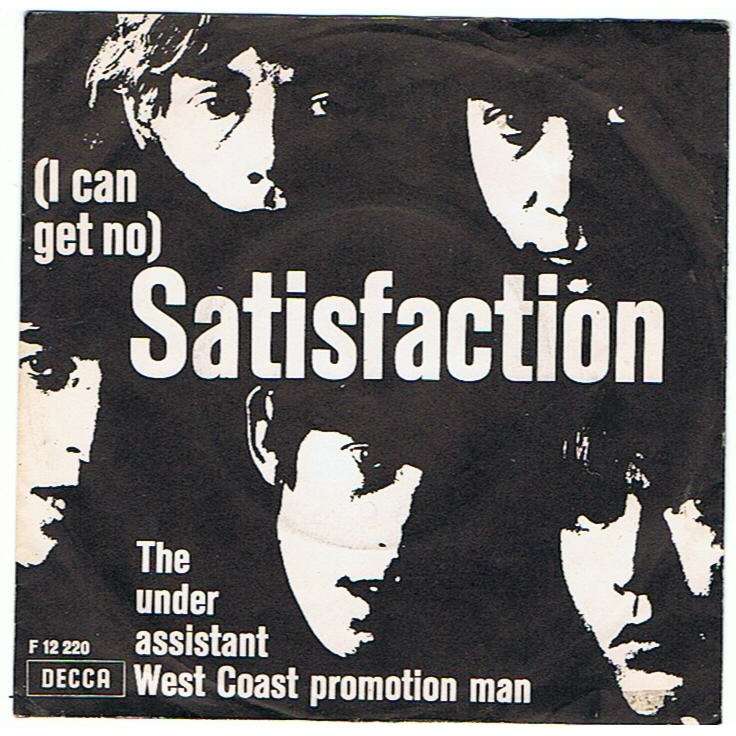
Rolling Stones – The Under Assistant West Coast Promotion Man

What if I told you this was one of The Rolling Stone’s largest selling singles in America? It was… but it was a package deal…the song on the other side of the single was Satisfaction.

Not the most well-known song by the Stones but a lot of Americans owned it. I bought the single Satisfaction in 1979 and flipped it over and found this oddly named likable song. This was the American B side to Satisfaction. Not exactly Day Tripper/We Can Work It Out but a likable single all the same. The song was released in 1965.

The song is about George Sherlock who was the London Records promotions man who accompanied the Stones to California. This was their response to having a chaperone who was a music executive in the early 60s. The Stones did not hide their disdain for him, giving him the nickname Surfer Baby, and they crystallized their feelings in the song.

The Stones recorded this in Chess studios in Chicago.  This song was written by Mick Jagger and Keith Richards who were becoming a great songwriting team. They likely borrowed the lick from Buster Brown’s song Fannie Mae.

Fannie Mae peaked at #1 in the R&B Charts and #38 in the Billboard 100 in 1960. He received more attention in 1973 when his song “Fannie Mae” was included in the film American Graffiti Soundtrack.

Buster Brown – Fannie Mae

Well, I’m waiting at the bus stop in downtown L.A.
But I’d much rather be on a boardwalk on Broadway

Well, I’m sitting here thinkin’ just how sharp I am
I’m an under assistant west coast promo man

Well, I promo groups when they come into town
Well they laugh at my toupee, they’re sure to put me down

Well, I’m sitting here thinking just how sharp I am
Yeah, I’m sitting here thinking just how sharp I am
I’m a necessary talent behind every rock and roll band

Yeah, I’m sharp
I’m really, really sharp
I sure do earn my pay
Sitting on the beach every day, yeah
I’m real real sharp, yes I am
I got a Corvette and a seersucker suit
Yes, I have

Here comes the bus, uh oh
I thought I had a dime
Where’s my dime
I know I have a dime somewhere
I’m pretty sure

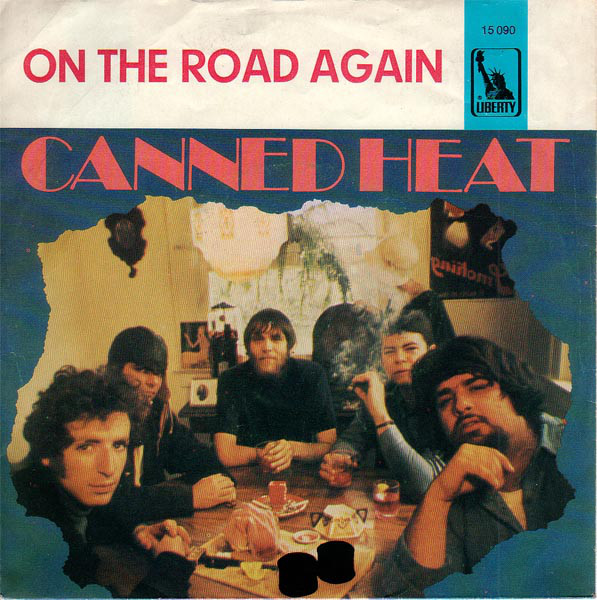
Canned Heat – On The Road Again

Such an underrated band.  What made this band real to me was their live album with John Lee Hooker called Hooker ‘n Heat…it is incredible. They also represent part of the Woodstock era well. When I think of Woodstock…this song and Going Up Country come to mind.

Their appearance there raised their stock higher. They had two hit singles Going Up Country and  On The Road Again. They were both written by Alan “Blind Owl” Wilson and based on old blues songs. His unusual voice came from him trying to mimic the voice of old blues singers. Wilson was not the lead singer of Canned Heat but did sing on some songs.

Wilson’s nickname, “Blind Owl,” was bestowed upon him by friend John Fahey during a road trip in 1965 from Boston to Los Angeles and was a reference to the extra-thick lenses Wilson wore.

He had an encyclopedic knowledge of the blues. Wilson and Bob Hite founded the band in 1965. Lead singer Bob “The Bear” Hite was extroverted and a terrific 300lb showman. Wilson was just the opposite. He was very intelligent, awkward, suffered from depression, and was not a prototypical rock star. He was a great guitar and harp player.

Alan Wilson and Bob Hite, 1970. : r/blues

Alan “Blind Owl” Wilson and Bob “The Bear” Hite

The song peaked at #16 in the Billboard 100, #8 in the UK and #8 in Canada in 1968. This song was on Canned Heat’s album “Boogie with Canned Heat.”Alan Wilson played a tamboura on this song to get the droning effect. Wilson’s falsetto was in the style of Skip James. The song was written by Alan Wilson and Floyd Jones.

Alan Wilson died on September 3, 1970. No one knows if it was a suicide or an accidental overdose of Seconal… Later in 1981 Bob “The Bear” Hite would also die of an overdose in 1981.

The band is still touring. They have drummer Adolfo de la Parra who has been with them since the sixties as the only long term member.

On The Road Again

Well, I’m so tired of crying
But I’m out on the road again
I’m on the road again
Well, I’m so tired of crying
But I’m out on the road again
I’m on the road again
I ain’t got no woman
Just to call my special friend

You know the first time I traveled
Out in the rain and snow
In the rain and snow
You know the first time I traveled
Out in the rain and snow
In the rain and snow
I didn’t have no payroll
Not even no place to go

And my dear mother left me
When I was quite young
And my dear mother left me
When I was quite young
She said “Lord, have mercy
On my wicked son”

Take a hint from me, mama
Please don’t you cry no more
Don’t you cry no more
Take a hint from me, mama
Please don’t you cry no more
Don’t you cry no more
‘Cause it’s soon one morning
Down the road I’m going

But I ain’t going down
That long old lonesome road
All by myself
But I ain’t going down
That long old lonesome road
All by myself
I can’t carry you, baby
Gonna carry somebody else

Skydog – The Duane Allman Story: by Randy Poe

After re-reading Gregg Allman’s biography My Cross To Bear  I noticed this book about his brother Duane… the founding member of the Allman Brothers Band. It’s a good read and an informative book. Its forward is written by one of his friends…ZZ Top’s guitarist Billy Gibbons.

The Allman Brothers Band formed in 1969 and they lost their leader Duane Allman in 1971. They continued on to be one of the most successful American bands ever. They finally called it quits in 2014.

I saw this book about Duane and I was excited to read it. Going in… I had read Gregg’s bio, Duane’s daughter’s (Galadrielle Allman) book Please Be With Me: A Song for My Father, Duane Allman, and One Way Out: The Inside History of the Allman Brothers Band so I was well rounded on the Allman Brothers. Duane lived a short life but Poe seemed to find many of the musicians he played within the 60s and 70s.

Duane believed in brotherhood…not just with his brother but the band and the entire cast around them. Phil Walden was the president of Capricorn Records, The Allman Brothers record label. He would call for a meeting with the band…he really only wanted to see Duane. Duane not only brought everyone in the band but he brought the roadies also. He told Walden flatly.. .you will not talk with just me but with all of us. Walden would reply …but Duane why are the roadies in here? Duane said they were just as important as the band…without them, we can’t play. The roadies would stay. Duane’s lack of ego in his vision for the Allman Brothers Band made them who they were even after he was gone.

He created a family atmosphere with the Allman Brothers organization. Their 3rd album At Fillmore East was their breakthrough…the album cover shows the band against a brick wall. On the other side of the album shows the roadies in front of the wall also…and a picture of one roadie Twiggs Lyndon who couldn’t be there that day. Another band that shared that same philosophy was the Grateful Dead where the roadies were family. Modern businesses would be wise to take this philosophy and use it.

Duane worked with many musicians and touched their lives. Many that drifted in and out of his bands were not forgotten. The original keyboard player for the Allman Brothers was Reese Wynans until Greg joined. Duane broke it to Reese that the band didn’t need two keyboard players.

In a short time, Duane met Boz Scaggs and recommended Reese to play with him and he did. That started his successful career and he would play with many musicians in his career and was the keyboard player in Stevie Ray Vaughan’s band Double Trouble.

This book doesn’t stop at Duane’s death. It follows the band all the way up to their end in 2014. In the end, he gives a good discography of Duane’s studio recordings. It’s really incredible how many sessions the man was on and he didn’t even reach the age of 25.

The book goes over why he turned Eric Clapton down on joining Derek and the Dominos. This was before the Allman Brothers had made it. He remained loyal to his band because it took him so long to find the right mix of musicians to get the sound he wanted. They didn’t have a hit until the Live At Fillmore East album was released in July of 1971. It would go gold 5 days before Duane was killed. 

I would recommend this book to anyone wanting to know more about Duane and The Allman Brothers. It is full of great information. After you read it you will want to look up all of the recordings he was on. His playing was edgy, tasteful, and like great jazz…takes you on a journey.

At the end of the book, you have to wonder how far he would have gone if he would have lived.

One passage from the book: “In September 2003 ‘Rolling Stone’ published its list of the “100 Greatest Guitarists of All Time”, placing Duane at #2 just behind Jimi Hendrix. Gregg Allman commented that he thought it was a very wonderful gesture and said “…I thought ‘You made your mark man. You didn’t make any money, but you made your mark.”‘ Rounding out the top five were B.B. King, Eric Clapton and Robert Johnson—pretty impressive company for a kid from the South who didn’t even live to see his 25th birthday.”.

If you want to read about the Allman Brothers I would recommend these books also.

My Cross To Bear by Alan Light and Gregg Allman

One Way Out: The Inside History of the Allman Brothers Band by Alan Paul

For a more personal view and her journey to know her dad…

Please Be With Me: A Song for My Father, Duane Allman by Galadrielle Allman

TV Draft Round 6 – Pick 5 – Keith Selects – Get Smart

Welcome to the Hanspostcard TV Draft. I hope you will enjoy it! Today’s post was written by Keith at https://nostalgicitalian.com/

It’s time for my next pick in the Hanspostcard TV Show Draft. My next pick is sort of a guilty pleasure. So many of the gags are ones you see coming a mile away, but they still crack me up. It is another one of those shows that was loaded with great guest stars and a solid cast. My next pick is Get Smart.

In the early 1960’s, America got their first look at James Bond and the secret agent/spy genre took off in full force. In 1965, Daniel Melnick, who was a partner in the production firm of Talent Associates in New York City, decided that it was time for a TV series that satirized James Bond. He approached Mel Brooks and Buck Henry to write a script about a “bungling James Bond-like hero.”

mel and buck

Mel said that Talent Associates had a pool table. He and Buck met at the pool table and while playing discussed the show. Mel says, “I knew we could do this thing together because we couldn’t stop babbling about things like the Shoe Phone and the Cone of Silence. These things just rolled out of our mouths.”

Henry said they created the script for the pilot in about three months around the pool table. “We decided on a secret agent named Smart – Maxwell Smart – and gave him, as his most sterling quality, a remarkable lack of insight. Nevertheless, since he was our hero, he would always win out despite his inspired inefficiency. We also gave him a number, which all operatives must have.” The number they chose was 86, which was chosen by Melnick and derived from the slang expression “to eighty-six someone.”

The show was pitched to ABC. The pitch was pretty much exactly what the show ended up being: Max would work for the Chief, the head of the Washington-based US intelligence agency Control. He would have a beautiful and brilliant young partner known only as Agent 99. Loaded up with gadgets, they would fight against the evil agents of Kaos, an international organization seeking world domination.

Originally, Mel Brooks considered playing Smart himself. Orson Bean was also considered. ABC decided that if it aired the show, Tom Poston (best known for his work on the Steve Allen Show and Newhart) would star as Agent 86. ABC liked the pilot, but wanted to change things up. They wanted Max to have a mother and a dog on the show. Brooks hated the idea of Max coming home to his mother at the end of every show and explaining everything to her. When they told ABC “no,” they passed on the show calling it “un-American.”

They took the script to NBC. NBC had already spent all the money allotted for making pilots. Grant Tinker was contacted about the show and was told that he “had to” read the pilot. “I read it and I just loved it. It was exactly the kind of thing that makes me laugh.” He called the head of programming at NBC and convinced him to come up with the money for one more pilot. They did so one one condition – Tom Poston, who was not under contract at NBC, would be replaced by Don Adams, who was.

The Cast

s-l400

Maxwell Smart – Agent 86

You have to wonder how Max keeps his job! He is extremely clumsy and forgetful. He’s forever on the Chief’s last nerve, yet he always wins. He is a proficient marksman, skilled in hand to hand combat, and incredibly lucky. Believe it or not, he is one of the top Control agents!

Once Don Adam’s was brought in as Max, many of his routines from his stand up act were incorporated into the character. He had used his “Would you believe…” before, but it became a staple on Get Smart.

Smart: At this very moment, 25 Control agents are converging on this building.

Kaos Agent: I don’t believe it.

Smart: Would you believe 2 squad cars and a motorcycle cop?

Kaos Agent: No

Smart: How about a vicious street cleaner and a toothless police dog?

Agent 99

e25e819b3d06dee354505946e6d1efb7

Played by Barbara Feldon, whom Buck Henry says he fought for from the beginning. Despite some sources, the creators of the show and Feldon herself say that 99’s real name is never mentioned. Originally, they wanted her to be Agent 69, but Henry says, “We knew it would never get past the censors. So 99 was our little joke.”

99 is another of Control’s top agents and often works together with Max. One had to wonder what an intelligent and sensible woman like 99 sees in a goofball like Maxwell Smart!

The Chief

36c1d166f3793f32ae9ddbde2dd0dfb5

For the Chief, Mel Brooks and Buck Henry wanted someone who would “personify authority and grave intensity all while delivering ludicrous information with a stern voice and fatherly demeanor.” They had seen Ed Platt in North by Northwest and Rebel Without a Cause and knew he was their Chief.

He is the head of Control. He oversees all of Control’s activities and missions. He frequently speaks to the President over a direct line. He considers 86 and 99 to be Control’s best agents and his best friends, even though Max seems to be a continuous thorn in his side.

Chief: All we know is that they threaten to wipe out the city containing our finest intellectual minds and greatest leaders!

Max: Well, at least Washington is safe.

Larabee

cd648b6cd5cb7758082c19e4cc56a1e7--the-chiefs-vintage-tv

Larabee (played by Robert Karvelas) is the Chief’s right hand man and assistant. In all honesty, he is even more slow-witted and incompetent than Max! Don Adams said that they used Larabee for the jokes that were “too dumb for Max.” Despite his stupidity, his unwavering dedication and extremely simple mind make him an indispensable government employee.

Hymie The Robot

Hymie-e1638322712559

Hymie (played by Dick Gautier) was a robot originally designed by Kaos to battle against Control. However, in his first appearance on the show, Max mistakes him for a rookie Control agent and takes him under his wing. When Hymie is ordered to kill Max, Hymie shoots his creator instead. Max then reprograms him to work for Control.

Hymie often takes things literally. When told to get a grip on himself, he grabs himself. Many jokes of this type were Hymie oriented (“Kill the lights,” “Grab a waiter,” “Hop to it,” “Knock it off,” and so on.

Agent 13

getsmart

Agent 13 (David Ketchum) is forever spying from odd places. You will find him in washing machines, in mailboxes, file cabinets, lockers, fire hydrants, and other small places. He is loyal to Control, but often complains about his assignments. Though he complains, he always gets the job done intercepting messages, overhearing plans, and often coming to Max’s rescue.

From 1965-1966, Agent 44 was played by Victor French and was also confined to small spaces like Agent 13.

Professor Carlson

MV5BM2E3Yjc4MDktMGFkNC00Y2IwLWFiNzQtZWJhYjBjNDI2MmZhXkEyXkFqcGdeQXVyMjA3MTcwMzc@._V1_

Carlson (Stacy Keach Sr.) is a Control scientist and inventor. He often presents Max with gadgets that will be used on his assignment. Carlson succeeded Professor Parker who was played by Milton Selzer.

KAOS

2971765847_6a84c9d07c_z

Maxwell Smart calls Kaos “a monstrous organization of evil dedicated to the destruction of the free world and the systematic subjugation of every man, woman, and child on this planet. Kaos Agent Omar Shurok describes it as “the international organization of evil formed in 1904 in Bucharest , designed to foment unrest and revolution throughout the world.”

Ludwig Von Seigfried

Bernie-Kopell-and-Don-Adams-e1473733166271

Seigfried (played wonderfully by Bernie Kopell) is described as “the merciless, fiercely conceited, preeminent Kaos kingpin” who “considers himself vastly superior to his underlings and his adversaries.” He is also described as “undeniably sinister, shrewd, underhanded, conniving, contemptuous, haughty, scornful, and explosive. He considers all Kaos agents thick-witted, nitwits, fools, incompetents, bunglers, dummkopfs, dunderheads, and sissies, and he is easily angered by the slightest display of incompetence or silliness.”

Seigfried (on the phone with Max): Your Chief was just silenced by a pistol butt.

Max: That’s a little drastic, wasn’t it, Seigfried? Couldn’t you have just shushed him?

Seigfried: We don’t SHUSH here!

Shtarker (or Starker)

c2c40de05e3936fba37a30673d5ccbc2

(King Moody) He is Seigfried’s ruthless, but often inept henchman. Shtarker is the Yiddish word for a “strong-arm man” or a “tough guy.” He certainly is a towering bodyguard, but he is nothing more than a goofball.

Gadgets

Throughout the show there are many gadgets. No doubt, many of these were inspired by the James Bond series. There are too many to list here, but there are a couple that have become synonymous with the show.

Shoe Phone

backdrop-1920

Mel Brooks is credited with coming up with the idea for the Shoe Phone. It came to him one day when every phone in his office started ringing and he took his shoe off and began speaking into it.

In 2002, the prop shoe phone was placed on display in an exhibit called “Spies: Secrets from the CIA, KGB, and Hollywood” which featured real and fake spy gear in the Ronald Reagan Presidential Library.

Cone of Silence

Buck Henry claims to have come up with this recurring gag.

Whenever something needed to be discussed that was sensitive, Max would insist on Control’s protocol of using the Cone of Silence. It was designed to keep whatever was discussed audible to whoever was in it. However, it almost never worked. Many times the people under it could not hear each other, or couldn’t understand what the other was saying. Sometimes they had to yell so loud that the people outside the Cone of Silence could hear better than the ones under it.

Catchphrases

cf277eca5bc9b072fcf5f635a09653af--smart-quotes-tv-quotes

Get Smart contributed many catchphrases that were popular among viewers. “Would you believe…” which I already mentioned was just one of them. Others were:

  • “Missed it by that much.”
  • “Sorry about that Chief”
  • “I asked you not to tell me that”
  • “….and LOVING it!”
  • “Of course, the (such and such). Just one question. What’s the (such and such)?
  • “The old (such and such) trick”

Passwords

Sometimes a password was needed to enter Control buildings. Other times a sign and counter sign was needed.

Passwords include:

  • Ricardo Montalban hates tortillas
  • Herb Alpert takes trumpet lessons from Guy Lombardo

Signs/Countersigns include:

Sign: Camptown ladies sing this song

Countersign: Doo-dah. Doo-dah.

Sign: Camptown racetrack five miles long

Countersign: Oh Doo-dah day.

The Show

Get Smart aired for 5 seasons. The first four seasons were on NBC and when faced with cancellation, it moved to CBS for it’s fifth and final season. In the final season, the show “jumped the shark” and 86 and 99 got married and had kids, which many say is what killed the show.

get-smart-wedding

Afterward

In 1980, Don Adams starred in the theatrical film, The Nude Bomb. It lacked much of what made the show so good. Max is not working for Control, 99 is not present, and it lacked all the fun of the show.

In 1988, many of the original cast reunited for Get Smart Again, a TV movie that aired on ABC. It reunited 86, 99, Larabee, Hymie, and Agent 13. Seigfried and Shtarker return as Kaos agents. It was more true to the original series and it helped spawn a short-lived weekly series on Fox in 1995.

Why I Picked It

Today, we are bombarded with all kinds of shows on TV that try to push a political or social message. Get Smart makes me laugh. It is one of those shows that I wish didn’t have a laugh track (the only thing I hate about it). I love to watch the interaction of the characters and enjoy the guest stars. It’s one of my favorite guilty pleasures.

The theme song is one of my favorites, too! When I worked at one hospital, I used to have to walk down a long hallway and I would often find myself humming the theme! Silly, yes! Incidentally, it is interesting to note that in 2010, TV Guide ranked the opening title sequence at number 2 on its list of Top 10 credits sequences as selected by readers. It’s classic!

Thanks for reading!!

Tremeloes – Here Comes My Baby

This is a fun mid-sixties pop song by The Tremeloes. I like the live party atmosphere they created. Here Comes My Baby was written in 1966 by Cat Stevens. It was almost released as Steven’s first single, but “I Love My Dog” was thought to be stronger.

After “I Love My Dog’s” success, “Here Comes My Baby” was shelved for several months. The Tremeloes picked it up and it became their breakthrough hit in America and their first hit in the UK since their lead singer Brian Poole left them. The song’s success helped establish Cat Stevens as a songwriter and he included it on his first album Matthew And Son.

The Tremeloes had been a backup band for Brian Poole and when they split in 1966 after 8 UK hits, they looked to be another backing band set for junk pile. They bought in Len “Chip” Hawkes as their bassist and lead singer and their career took off.

Some trivia about the Tremeloes. Decca was looking to sign a guitar group in 1962 and the Tremeloes (at the time known as Brian Poole and the Tremeloes) and The Beatles auditioned… Decca picked The Tremeloes over The Beatles mostly because they were closer, based in London…while The Beatles were far away in Liverpool (Whoops!). That decision would haunt Dick Rowe (Decca Executive) for the rest of his life…He did end up signing The Rolling Stones though after a suggestion by George Harrison.

The song peaked at #13 in the Billboard 100, #4 in the UK Charts, and #7 in Canada in 1967.

This is one of those songs that I never get tired of and it always makes me feel good.  They did have some success after this song…Silence is Golden #13, Even the Bad Times Are Good #37, and several successful singles in the UK.

Cat Stevens version

Here Comes My Baby

In the midnight moonlight hour
I’ll be walking a long and lonely mile,
And every time I do,
I keep seeing this picture of youHere comes my baby, here she comes now,
And-a it becomes as no surprise to me
with another guy,Well, here comes my baby, here she comes now,
Walking with a love,
With a love that’s oh so fine
Never to be mine, no matter how I try,

You’ll never walk alone,
and you’re forever talking on the phone
I try to call you names,
but every time it comes out the same

Here comes my baby; here she comes now,
And-a it becomes as no surprise to me
with another guy,

Here comes my baby; here she comes now,
And-a it becomes as no surprise to me
with another guy

Here comes my baby.

Wilson Pickett – Hey Jude

It’s rare that I post a cover of a Beatles song but this one is worth it. This song was a groundbreaker in the world of R&B and Soul because of the song selection and Duane Allman. This is a great performance of a great song. For me, it’s up there with Joe Cockers With A Little Help from My Friends as one of the best Beatle cover versions.

Duane Allman was working at Muscle Shoals playing on records in 1968. He played on some Clarence Carter records and then in walked Wilson Pickett. The problem was they had no song for Pickett to sing at the booked sessions. Duane Allman brought up Hey Jude to cover in front of Pickett and Rick Hall the producer.

Wilson Pickett and Rick Hall said no they didn’t want to cover the song. Hall and Pickett had objections that the song was currently moving up the charts and  the length of the song made getting it played on the radio almost impossible if you were not the Beatles,

Rick Hall told Allman that it didn’t make sense…the Beatles were the biggest band in the world and their version was clearly going to number 1. He told Allman it would be crazy to do it. Allman shook his head and said no it wouldn’t be crazy. Yes, he said the Beatles are the biggest band in the world and yes it will hit number 1 but that is the reason we should do it. He said just think of the attention we will get having a black artist cover this new Beatle song. Hall thought about it and soon agreed with Allman.

Rick Hall: ‘Their single’s gonna be number one. I mean, this is the biggest group in the world! And Duane said, ‘That’s exactly why we should do it — because [the Beatles single] will be Number one and they’re so big. The fact that we would cut the song with a black artist will get so much attention, it’ll be an automatic smash.’ That made all the sense in the world to me. So I said, ‘Well, okay. Let’s do it.’”

Pickett was not as easy to persuade.  Allman was firm but gentle with Pickett and finally, Wilson relented and he recorded it. It turned out to be an R&B classic. The head-turner was when Pickett started to scream and in came this electric slide guitar of Allman. At that point, you didn’t hear much electric slide on records outside of the blues. After this record, R&B and soul producers started to bring in more rock guitars to compliment what they had.

This record changed Allman’s career in ways he couldn’t have known. One of Duane’s guitar heroes heard this version and called Atlantic records (Wilson’s record label) and asked who is that guitar player? I want to know now. That guitar player who asked was Eric Clapton.

Later when Clapton was recording the Layla and Other Assorted Love Songs album his producer Tom Dowd asked him if he would mind if Duane Allman dropped by and watch him play. Clapton turned and confirmed that Allman was the guitar player on Pickett’s Hey Jude and when Dowd said yes…Clapton said yes tell him to come by because I want to see HIM play. Allman would end up playing and contributing to most of the Layla album.

The song peaked at #23 in the Billboard 100 and #13 in the R&B Charts in 1969. The rhythm guitar player in Muscle Shoals Jimmy Johnson later credited Allman’s performance on Wilson Pickett’s album Hey Jude as the beginning of Southern Rock. This was recorded a few months before the Allman Brothers formed.

Eric Clapton: “I remember hearing ‘Hey Jude’ by Wilson Pickett and calling either Ahmet Ertegun or Tom Dowd and saying, ‘Who’s that guitar player? To this day, I’ve never heard better rock guitar playing on an R&B record. It’s the best.”

Wilson Pickett: “He stood right in front of me, as though he was playing every note I was singing, and he was watching me as I sang, and as I screamed, he was screaming with his guitar.”

As a Beatle fan…the ironic thing about this song is that George and Paul got into a big disagreement with the Beatle version. George wanted to add guitar fills in between lines to echo them…that is what Duane Allman did in this version.

Hey Jude

Hey Jude, don’t make it bad
Take a sad song and make it better
Remember to let her into your heart,
Then you can start to make it better.

Hey Jude, don’t be afraid
You were made to go out and get her
The minute you let her under your skin,
Then you begin to make it better

And anytime you feel the pain, hey Jude, refrain,
Don’t carry the world upon your shoulders
For well you know that it’s a fool who plays it cool
By making his world a little colder

Hey Jude, don’t let me down
You have found her, now go and get her
Remember to let her into your heart,
Then you can start to make it better

So let it out and let it in, hey Jude, begin
You’re waiting for someone to perform with
And don’t you know that it’s just you, hey Jude, you’ll do
The movement you need is on your shoulder

Hey Jude, don’t make it bad
Take a sad song and make it better
Remember to let her under your skin,
Then you’ll begin to make it
Better better better better better better, (make it Jude) ooh

Na na na nananana, nananana, hey Jude (Repeat)

Yeah, yeah yeah yeah yeah yeah

Ju- Jude-y Jude-y Jude-y Jude-y Jude-y oow-wow

TV Draft Round 5 – Pick 6 – Max Selects – The Andy Griffith Show

Welcome to the Hanspostcard TV Draft. I hope you will enjoy it! Today’s post was written by Max at https://powerpop.blog

There has been so much written about this show and the writing will never stop. It was a show about the quirky citizens of a fictional town called Mayberry. The Andy Griffith Show is not just another show. The series will be around long after we are gone and still being discovered by future generations.

Some of the love I have for the show is about escapism. The low pressure of living in Mayberry is attractive. A place where you are allowed to live slowly and friends are only a few miles away. Nowadays our lives are so full of technology and rush that it would be tempting to walk through the screen to join Andy and Opie fishing out on Meyers Lake.

andy1.jpg

Mayberry was based on a small North Carolina town called Mount Airey where Andy grew up. Griffith has also said that although the show was in the sixties, Mayberry had a 1930s-1940s feel to it. When I’m asked where I grew up, I’ll say in a town kind of like Mayberry and they get what I’m saying.

The episode that best explains the show is… Man In A Hurry. A businessman’s car breaks down two miles from Mayberry on a Sunday. He has a business appointment in Charlotte the next morning. He walks to town and finds it deserted until church lets out. The garage is also closed on Sunday. Gomer is working but can only pump gas and Wally refuses to repair the car until Monday. The stranger can’t believe the pace of life in Mayberry and everyone’s lack of urgency. Andy tries to talk him into spending the night and getting the car fixed on Monday… he won’t have any of this non-sense… first but then he slowly realizes what great lives these people lead and ends up staying a little while longer than he could have.

Andy Griffith and Don Knotts were a great comedy team. I wish they would have made a few movies together. Knotts wanted to do that but Griffith always backed away from it. You can put them up there with other great comedy teams. Andy was a great straight man and Don played off of him well.

I’ve seen parents play episodes to their kids for lessons, schools play episodes for students, and heard of preachers writing sermons around episodes. The humor wasn’t dirty but it wasn’t sterile either. Most if not all of the first 5 season episodes are classics. It’s a show that you can catch at any time. During a rainout, between movies, and a binge-watch.

Dillards

The show offered a little of everything… One of the things I liked was the bluegrass music of The Dillards who appeared on the show as the Darlings. Denver Pyle played Briscoe Darling Jr. and played the jug with the Dillards. They were and STILL are a bluegrass band that tours and releases albums.

Andy had many girlfriends throughout the show. There was Ellie and she gave Andy all he could handle. Ellie, unfortunately, left after the first season. He saw the county nurse Mary Simpson (My favorite), Peggy McMillian, and then he met Helen Crump. Personally, I never liked Helen as much. Her nickname from some fans was Helen Grump because she could be a grump quite often. Andy ended up marrying Helen in the last season.

Thelma Lou was one of my favorite characters of the show. She put up with Barney’s shenanigans but was always there for him. Barney was foolish for letting her go but they finally got married. It didn’t happen on the show’s original run but they finally tied the knot in the reunion movie.

Aunt Bee

Then there was Aunt Bee Taylor. She took care of Andy and Opie and made sure they were fed well and came home to a clean house. Aunt Bee had a smile for everyone unless you got on her bad side. She could be stubborn and formidable when angered and she commanded the utmost respect from everyone. She was in a way, everyone’s Aunt.

Gomer and Goober

The two characters from Wally’s gas station were Gomer Pyle and Goober. Goober was a great mechanic and Gomer mostly filled your tank up with a story to go along with it. They were not the sharpest tools in the shed but both had hearts of gold and added to the show’s comedy.

Opie

Andy’s son from his only marriage was Opie Taylor. You never found out how Opie’s mother passed away but she did before we got to meet the Taylors. Opie is a super kid and Andy raised him the right way. He is kind and polite and when he does something wrong he usually had the sense to recognize that and correct the problem.

Otis Campbell

Otis Campbell… Otis was a good guy with only one problem. He was the town drunk. Andy and Barney knew him so well that they let Otis grab the jail key and let himself in when he was a bit intoxicated. During the reunion movie made in the 80s, he had given up the booze and was selling ice cream.

Seasons 1-5 were in Black and White with Don Knotts as Barney Fife. Don’s last season was the 5th season and seasons 6-8 were in color.  I have all of the Griffith Show episodes but I will admit…I don’t really watch the color episodes as much as the black and white ones. Yes, there are some good later episodes but it’s Andy. He walks around Mayberry like he is owed money. Andy later admitted on many of the later episodes he was going through the motions.

He started to get a little tenser on screen in the 5th season but Barney was still there and kept things light. In the 6th season with Barney gone, Andy acted impatient with his fellow quirky citizens where at one time he enjoyed them. The show just changed dramatically with color. It remained at number 1 but it just wasn’t the same.

It was one of the most successful television shows ever. The Series went out on top and had a successful spinoff called Mayberry RFD.

In the early 70s Mayberry RFD and other shows such as  The Beverly Hillbillies, Green Acres, Mister Ed, Lassie, Petticoat Junction, and Hee Haw were canceled because of the rural purge the network did… everything that had a tree got canceled it seemed. More important shows were coming like All In The Family and others but there was always room for others. In syndication these shows do great.

So follow me to Mayberry and don’t look back.

Who – Young Man Blues

Young Man Blues was written by jazz artist Mose Allison in 1957. Mose’s version is jazzy and smooth. The Who took the song and set it afire with an explosive charge. Mose Allison called The Who’s version The “Command Performance” of his song. That’s a great compliment from the author. Pete was a big fan of Mose Allison. He has said that if he never heard this song he would not have written My Generation.

The Who version has great dynamics. The bass and drums are all over the place and yet perfect. The Who sound like they are driving near a cliff and you know the song is going to fall off but they save it at the last moment time after time. The song was on the Live At Leeds album released in 1970.

The key to this song and most Who songs was the rhythm section. Keith Moon and John Entwistle pushed each other to greatness. The frenetic chaotic bass and drums made it exciting. You had the lead guitar player punching in licks between the lead bass and drums. Later on, when Keith passed away and Kenney Jones took his place…they were not the same. That is nothing against Jones…he was one of the best British drummers at that time but that touch of insanity was gone permanently.

A year or so before John Entwistle died, Roger Daltrey was complaining about John’s volume on stage to Pete. Pete replied that without that volume and John’s style…they are not the Who. That was a true statement. I saw the Who with John and later on without him. It wasn’t the same. Was it a great show without him? Yes, the songs were great but that element of danger was gone. That is what both Keith and John added to the Who.

So I’ll take this note for myself… February 14, 1970… I’ll buy a ticket for Leeds University when I get my time machine working…I’ll take some cotton balls though.

Young Man Blues

Oh well a young man ain’t got nothin’ in the world these days
I said a young man ain’t got nothin’ in the world these days

You know in the old days
When a young man was a strong man
All the people they’d step back
When a young man walked by

But you know nowadays
It’s the old man,
He’s got all the money
And a young man ain’t got nothin’ in the world these days
I said nothing

Everybody knows that a young man ain’t got nothin’
Everybody!
Everybody knows that a young man ain’t got nothin’
He got nothin’
Nothin’

Take it easy on the young man
They ain’t got nothin’ in the world these days
I said they ain’t got nothin’!
They got sweet fuck-all!

….

Beatles – Across The Universe

When I became a Beatles fan way back when I was 8 years old…and up to my teenage years I hardly ever heard this one mentioned by people. I’ve seen its popularity grow through the years. My biggest problem with it is they should have spent more time on it. Lennon accused McCartney of subconsciously trying to destroy it. You could see Paul let out a big yawn while rehearsing in the Let It Be film but that probably had more to do with him being tired after hours of playing in a studio…but maybe Lennon had a point.

One of the reasons John got upset with Paul was because instead of getting professional backup singers or a choir…Paul went out the Abbey Road door and grabbed two “Apple Scruffs” to sing backup on the song. That version did not go on the Let It Be album, however. That version was on a charity album.

This first appeared on No One’s Gonna Change Our World, a 1969 charity album for the World Wildlife Fund. Bird noises were dubbed into this version to create a nature theme. It didn’t sound too bad.

No One's Gonna Change Our World (1969, Vinyl) - Discogs

When I bought the Let It Be album it took a few listens but soon this one intrigued me. The lyrics alone are enthralling because of the imagery. Since I first heard it, the song has taken on huge popularity.

It even had a movie that was made around its title and worked around Beatle lyrics in 2007. That alone boosted its popularity.

I always wondered about the Jai guru deva om phrase. “Jai guru deva, om” translates to “hail to the Heavenly Teacher” or “I give thanks to Guru Dev.” That was a mantra was invented by the Indian guru, Maharishi Mahesh Yogi – the late protégé of Guru Dev.

On February 4, 2008 “Across The Universe” became the first track to be beamed directly into space. It was transmitted through NASA’s antenna in the DSN’s Madrid Deep Space Communication Complex, towards the North Star, Polaris, 431 light-years from Earth. The broadcasting of the Beatles song was done to mark both NASA’s 50th birthday and the 40th anniversary of Across The Universe. Paul McCartney described the transmission as an “amazing feat” adding, “Well done, NASA. Send my love to the aliens!”

David Bowie also did a good version of this song. Liam Gallagher has cited this song as a huge influence on him starting to write songs.

John Lennon: “I was lying next to me first wife in bed, and I was irritated. She must have been going on and on about something and she’d gone to sleep and I kept hearing these words over and over, flowing like an endless stream. I went downstairs and it turned into sort of a cosmic song rather than an irritated song… it drove me out of bed. I didn’t want to write it, but I was slightly irritable and I went downstairs and I couldn’t get to sleep until I’d put it on paper.”

John Lennon: “It’s one of the best lyrics I’ve written. In fact, it could be the best.” He added: “It’s good poetry, or whatever you call it, without chewin’ it. See, the ones I like are the ones that stand as words, without melody. They don’t have to have any melody, like a poem, you can read them.”

John Lennon: “The Beatles didn’t make a good record of it. I think subconsciously sometimes we – I say ‘we’ although I think Paul did it more than the rest of us – Paul would, sort of subconsciously, try and destroy a great song… meaning we’d play experimental games with my great pieces, like ‘Strawberry Fields,’ which I always thought was badly recorded.”

The World Wildlife Fund

Across The Universe

Words are flowing out
Like endless rain into a paper cup
They slither wildly as they slip away across the universe
Pools of sorrow waves of joy
Are drifting through my opened mind
Possessing and caressing me

Jai Guru Deva, Om
Nothing’s gonna change my world

Images of broken light
Which dance before me like a million eyes
They call me on and on across the universe
Thoughts meander like a
Restless wind inside a letter box
They tumble blindly as they make their way across the universe

Jai Guru Deva, Om
Nothing’s gonna change my world

Sounds of laughter, shades of life
Are ringing through my opened ears
Inciting and inviting me
Limitless undying love
Which shines around me like a million suns
It calls me on and on across the universe

Jai Guru Deva, Om
Nothing’s gonna change my world

Jai Guru Deva
Jai Guru Deva
Jai Guru Deva
Jai Guru Deva
Jai Guru Deva

Beach Boys – Wouldn’t It Be Nice

When I graduated in 1985, The Beach Boys were on my tape deck in my car. Although the music was 20 years old I could identify with them more than the music I was hearing on top 40 radio.

This was the leadoff track to The Beach Boys’ legendary Pet Sounds album. While the “Wouldn’t It Be Nice” and “God Only Knows” singles sold very well, the album had very disappointing sales when it was first released in America. The UK appreciated it much more along with Paul McCartney and John Lennon. America wanted more surf songs but Brian Wilson had moved into a different place.

I was very surprised to read that as of 2021, “Wouldn’t It Be Nice” is the Beach Boys’ most streamed song on Spotify. I would have thought Good Vibrations or one of their early surf songs.

Brian Wilson wrote the song with contributions from vocalist Mike Love and lyricist Tony Asher. Asher wrote all of the lyrics except for the “Good night, my baby, sleep tight, my baby” lines at the end of the song, which was Love’s contribution.

Pet Sounds peaked at #10 in the Billboard Album Charts, #2 in the UK. Wouldn’t It Be Nice peaked at #8 in the Billboard 100, #4 in Canada, #12 in New Zealand, and #58 in the UK in 1966.

Mike Love has said that Brian Wilson made him do his part over 30 times. He started to call Wilson “Dog Ears” because he could hear something that no one else could.

Mike Love: “Brian must have been part canine because he was reaching for something intangible, imperceptible to most, and all but impossible to execute,”

Nick Kent journalist: “This time [he] was out to eclipse these previous sonic soap operas, to transform the subject’s sappy sentiments with a God-like grace so that the song would become a veritable pocket symphony.”

Tony Asher (Lyricist) “It was a great joy making music with him but that any other relationship with Brian was a great chore. I found Brian’s lifestyle so damn repugnant. I mean, for say, every four hours we’d spend writing songs, there’d be about 48 hours of these dopey conversations about some dumb book he’d just read. Or else he’d just go on and on about girls… his feelings about this girl or that girl… it was just embarrassing.”

Wouldn’t It Be Nice

Wouldn’t it be nice if we were older
Then we wouldn’t have to wait so long?
And wouldn’t it be nice to live together
In the kind of world where we belong?

You know it’s gonna make it that much better
When we can say goodnight and stay together

Wouldn’t it be nice if we could wake up
In the morning when the day is new?
And after having spent the day together
Hold each other close the whole night through?

Happy times together we’ve been spending
I wish that every kiss was never ending
Oh, wouldn’t it be nice?

Maybe if we think and wish and hope and pray
It might come true (run run ooo)
Baby, then there wouldn’t be a single thing we couldn’t do
We could be married (we could be married)
And then we’d be happy (and then we’d be happy)
Oh, wouldn’t it be nice?

You know it seems the more we talk about it
It only makes it worse to live without it
But let’s talk about it
Oh, wouldn’t it be nice?

Good night, oh baby
Sleep tight, oh baby
Good night, oh baby
Sleep tight, oh baby

Steppenwolf – Sookie Sookie

Steppenwolf…they all look like badasses…all of them especially the ring leader John Kay. They had some danger in their rock and roll and Kay’s voice is just killer. I saw a version of Steppenwolf once in the 80s and John Kay demanded and commanded the stage swinging his mic stand like a weapon.

I met Mr. Kay one time very briefly…just shook his hand…a very nice guy so he wasn’t a badass that day. This song was written by Don Covay who wrote a lot of early rock songs about dancing. Don Covay was recording for Atlantic Records at this time. As they did with many of their artists, they sent Covay to Memphis to record at Stax Records, where the house band was top-notch. Covay wrote Sookie Sookie there with Stax guitarist Steve Cropper.

Steppenwolf had this song on their 1968 debut album Steppenwolf.  It was released as the first single that year but didn’t do too well. The song did peak at #92 in Canada and that was it. The next single did a little better…it was a song called Born To Be Wild.

The third single was“Magic Carpet Ride,” ABC-Dunhill saw the wisdom of re-releasing the “Sookie Sookie”….however, this time it was a “B” side. Like the “Born to be Wild” and “Magic Carpet Ride,” “Sookie Sookie” not only featured the extraordinary guitar work of Michael Monarch and vocals by John Kay, it had that Steppenwolf signature organ sound

The song also ended up being used by some radio stations as background music for promos and commercials.

Sookie Sookie

Let it hang out baby, let it hang out now, now na-na now
Let it hang out baby, everybody work out
Sookie, Sookie, Sookie, Sookie, Sookie, Sookie, Sue

Let it hang out baby, do the Baltimore jig
Let it hang out baby, boomerang with me
Sookie, Sookie, Sookie, Sookie, Sookie, Sookie, Sue

Really got it bad child, drink a bottle of turpentine
When you wake up in the morning, feelin’ kinda fine
Let it hang out baby, let it hang out now, now na-na now

You better watch your step girl, don’t step on that banana peel
If your foot should ever hit it, you’ll go up to the ceiling
Hang it in baby, hang it in baby
Sookie, Sookie, Sookie, Sookie, Sookie, Sookie, Sue

Let it hang out baby, let it hang out now, now na-na now
Let it hang out baby, everybody work out
Hang it in baby, hang it in baby, hang it in baby
Sookie, Sookie, Sookie, Sookie, Sookie, Sookie, Sue

Rolling Stones – I’m Free

This song has been underappreciated throughout the band’s history. It’s a good song that sometimes comes off better live than the studio version they recorded. The song sounds like an anthem, and it deserves to be heard. The song was played a lot in 2008 because it was released on the DVD Shine A Light. Shine a Light was a 2008 concert film directed by Martin Scorsese documenting The Rolling Stones’ 2006 Beacon Theatre performances during their A Bigger Bang Tour. 

I saw them on the Bigger Bang Tour at Churchill Downs in Kentucky. Although Churchill Downs is well known for its horse racing it was not built for concerts. Alice Cooper opened and he sounded great but they never could get the Stones sound right. On top of it all…it rained all through their performance. The next day I went home and actually downloaded a bootleg of the show so I have it for always which is cool. My dream tour of the Stones would be them just playing the Brian Jones era. They are the Stones…they could get by with it. 

The song was released on their Out Of Our Heads album in the UK and later on December’s Children (And Everybody’s) album in America in 1965. They seemed to be listening to their competition because the line Hold me, love me, hold me, love me was in the Beatles Eight Days A Week. It’s a great B side to Get Off Of My Cloud.  Rolling Stone Magazine rated it 78th best Rolling Stone song. The magazine had this to say about it:  “A tambourine-spangled folk rocker with chime-y, Byrds-like guitar, this offhandedly libertarian tune wasn’t a big hit, but it’s one of the Sixties’ most pliant anthems.”

I think the song stands up with their hit songs at the time. They must think the same because it ended up on a lot of live albums. I’ve always liked B sides because sometimes you hit gold. Give me a choice between Get Off Of My Cloud and I’m Free…I’ll take I’m Free. The song was written by Mick Jagger and Keith Richards. You could see the growth in their songwriting after Lennon and McCartney gave them I Wanna Be Your Man. 

John Lennon: We were taken down to meet them at the club where they were playing in Richmond by Brian Epstein and some other guy. They wanted a song and we went to see what kind of stuff they did. Mick and Keith heard we had an unfinished song – Paul just had this bit and we needed another verse or something. We sort of played it roughly to them and they said, “Yeah, OK, that’s our style.” But it was only really a lick, so Paul and I went off in the corner of the room and finished the song off while they were all still sitting there talking. We came back, and that’s how Mick and Keith got inspired to write … because, “Jesus, look at that. They just went in the corner and wrote it and came back!” You know, right in front of their eyes we did it. So we gave it to them.

I’m Free

I’m free to do what I want any old time
So love me, hold me, love me, hold me
Cause I’m free any old time to get what I want

I’m free to sing my song though it gets out of time
So love me, hold me, love me, hold me
Cause I’m free any old time to get what I want

Yeah

Love me, hold me, love me, hold me
Cause I’m free any old time to get what I want

I’m free to choose whom I please any old time
I’m free to please whom I choose any old time
So hold me, love me, love me, hold me
Cause I’m free any old time to get what I want, yes I am

TV Draft Round 4 – Pick 7 – Max selects – The Monkees

Welcome to the Hanspostcard TV Draft. The remaining 7 rounds will be posted here. I hope you will enjoy it! Today’s post was written by Max from https://powerpop.blog

The Monkees

Does this show compare to All In The Family, Barney Miller, or other great sitcoms? No, it’s not even in the same zip code but it’s an off-beat quirky 1966 show that I have come to appreciate more and more. They influenced music more than other tv shows but its influence is still felt. How many young soon-to-be musicians have watched this show? I was one and it made me want to play music. I soon found other bands to follow …but I never left The Monkees completely. They were not great actors, musicians, or songwriters…although the late Mike Nesmith was a good songwriter. They made music fun…fun is something that I picked up on early on and I ended up playing in many bands.

The comedy was part physical, part Marx Brothers, and pure irrelevance. Bob Rafelson and Bert Schneider wanted to build a television show that had elements of A Hard Days Night and cast four musicians/actors. Stephen Stills auditioned for a part and ended up recommending his friend Peter Tork. They ended up being a real band and toured.

The Monkees were four cast members who could all play an instrument and could sing. Michael Nesmith and Peter Tork were working musicians. Davy Jones could play some guitar and drums and Mickey played guitar in a band so they weren’t just actors.

Davy was the cute one, Mike the serious one, Mickey the funny one, and Peter the innocent one. There is no need to describe any episode plots because they are not important. You would have some kind of plot and within the story, a couple of music montages later known as music videos. The show could be surreal and they constantly broke the 4th wall. They had a lot of cutaway scenes that people associate now with Family Guy. The show was shot in color and the sets were vivid.

Blog - Monkees Live Almanac

You could see the difference in the show between the first season and the latter part of the second season. The first was a little more of a slick production…the later part of the second season they had more influence and you could see there were 4 stoned Monkees running amuck. It was much looser and anything went basically.

The Monkees only made 58 episodes from September 1966 to March 1968. After the show came to an end they made a television special and then a very trippy movie called Head. I do not binge-watch the show but I will occasionally need a laugh or to enjoy the same thing I enjoyed at 7 years old.

The Monkees had a big impact on pop culture with not only music but with music videos. The show was their own MTV at the time. Long after the show was over I was 7 years old and watching the three channels we had at the time and I loved The Monkees.

I had no idea The Monkees stopped making the show 7 years before when I watched them. I thought the band was still together and filming shows. Turns out I was watching the show in syndication but I didn’t find out till later. A generation was influenced like I was in the 70s. In the 1980s MTV played a marathon of episodes and their popularity soared yet again. I saw them in 1986 when they reunited and had a new song in the top 40. They also made comeback in the early 90s.

They didn’t play instruments on their first two albums because they were not allowed. Micheal Nesmith was a songwriter and did manage to get a couple of songs on there. Most of the Byrds also didn’t play on their first album…that is the way it was done in the early 60s for some bands. After the success of the show, they were asked to tour. Mickey spent time learning the drums because they wanted Davy Jones upfront and Mickey became a competent drummer. The band became real during the tour.

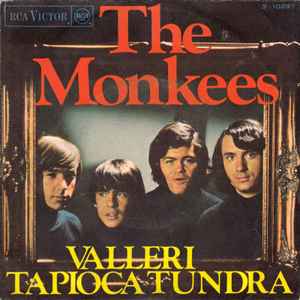
The Monkees led a revolt and demanded to play on their own albums. It started with their third album Headquarters and went on from there. They still had some top 40 hits after taking over like Daydream Believer, Pleasant Valley Sunday, Valleri, and more.

Mickey Dolenz: “You know, the Monkees becoming a real band, I’ve often said, is like Leonard Nimoy really becoming a Vulcan!”

Mickey Dolenz: The Monkees are to the Beatles what ‘Star Trek’ is to NASA. They are both totally valid in their contexts.

The Untold Truth Of The Monkees TV Show

The Monkees were such a big influence on me. I picked up a guitar in part because of their influence. The shows were funny…and still are. Once I found The Beatles I was lost forever but the Monkees were important to a lot of musicians through the years.

They made it look fun being in a rock band. No mention of the backbiting and jealousy that goes along with it. For a seven-year-old kid…this was the life I wanted! Living in a cool beach house, playing in a rock band, and driving around in the Monkeemobile!

1966 PONTIAC GTO 'MONKEEMOBILE'

They had some famous guest stars like Frank Zappa, Liberace, Mike Farrell, Burgess Meredith, Julie Newmar, and Sammy Davis Jr.

Blog - Monkees Live Almanac

Blog - Monkees Live Almanac

I have all of the episodes and once in a while I will play a few and realize again why they are still remembered. Will the show ever be considered among the greats? NO… but it came along at a perfect time and when I need to watch something funny and irrelevant I turn on the Monkees.

I never got famous playing my music but that wasn’t the point. I still get great satisfaction and fun in playing my guitar now…and I can thank the Monkees for that. BTW…where is my beach house and my Monkeemobile?

The Monkees (TV Series 1966-1968) — The Movie Database (TMDB)

….