Power Pop fan, Baseball, Beatles, Alternative music, old movies, and tv show fan. Also anything to do with pop culture in the 60s and 70s... I'm also a songwriter, bass and guitar player. Not the slightest bit interested in politics at all.
The caravan was initially bought by Lennon as a gift for his son Julian’s fourth birthday. He hired the pop art designing trio from Amsterdam who called themselves ‘The Fool’ to paint his son’s extravagant present with the famous Sgt Pepper motif and the art designs that were so popular amongst travelers at that time.
Lennon also had “The Fool” paint his Rolls Royce in a Sgt Pepper era motif.
In 1967 John bought a small 21-acre island called Dorinish. He at first planned to build a house on it but never did. He did stay at the island some and had the caravan floated out to it for a while. Through the years he would take the caravan out some.
After John was murdered, Ringo Starr took ownership as part of the late Beatles estate. In 1982, he called in Cookham-based vintage caravan restorer John Pockett to restore it. In September 1983 it was restored to its former glory from Mr. Pockett’s Cookham workshop and was placed beside Ringo’s swimming pool.
In 2013 it was found at Ringo Starr’s former Surrey home under a tarp. A charitable trust, the Ascot Lawyers Foundation, has taken ownership of the piece of Sgt Pepper memorabilia. They working on restoring it.
The number 9 popped up constantly in Lennon’s life. The song peaked at #9 (what else?) in the Billboard 100, #23 in the UK and #35 in Canada in 1974. I’ve always liked this unusual song and its approriate dream-like qualities.
John Lennon was born on October 9, 1940, in Liverpool
Liverpool has 9 letters
The Beatles’ manager, Brian Epstein, first saw the Beatles play in the Cavern club on November 9, 1961.
The Beatles’ record contract with EMI was secured on May 9, 1962.
The Beatles played the Ed Sullivan show on February 9, 1964.
John Lennon met Yoko Ono on November 9, 1966.
John and Yoko lived at the Dakota apartments on West 72nd Street (7+2=9)
Construction started on the Dakota in 1881 (1+8=9 and 8+1=9, 9+9=18, 1+8=9)
Their son Sean was born on October 9, 1975.
John Lennon was murdered on December 8, 1980, in New York City at 10:50 pm, but because of the 5 hour time difference, it was December 9 in England, his place of birth.
1980: 1+9=10+8=18, 1+8=9.
He was taken to Roosevelt hospital on 9th avenue, where he was pronounced dead at 11:07 pm (1+1+7=9)
The mystery voice that calls Lennon’s name “John” during the first bridge was performed by his lover, May Pang – on the second bridge he reversed the tape of her saying his name. According to May Pang’s book Loving John, Lennon told her that he did not know what the song was about, but it was not about her. He also did not “convince” her to sing the vocals, she sang them because the female vocalist scheduled for the session did not show up. (Thanks to David Thoener, who was an engineer at the sessions.)
John admitted that he “borrowed” the string arrangement from Harry Nilsson’s “Many Rivers To Cross” from Nilsson’s album Pussy Cats – which John produced!
#9 Dream
So long ago Was it in a dream? Was it just a dream? I know, yes I know It seemed so very real Seemed so real to me
Took a walk down the street Through the heat whispered trees I thought I could hear Hear Hear Hear
Somebody call out my name (John) As it started to rain Two spirits dancing so strange Ah! Bowakawa, pousse pousse Ah! Bowakawa, pousse pousse Ah! Bowakawa, pousse pousse
Dream, dream away Magic in the air Was magic in the air? I believe, yes I believe More I cannot say What more can I say?
On a river of sound Through the mirror go round, round I thought I could feel Feel Feel Feel Music touching my soul Something warm, sudden cold The spirit dance was unfolding Ah! Bowakawa, pousse pousse Ah! Bowakawa, pousse pousse Ah! Bowakawa, pousse pousse Ah! Bowakawa, pousse pousse Ah! Bowakawa, pousse pousse Ah! Bowakawa, pousse pousse Ah! Bowakawa, pousse pousse Ah! Bowakawa, pousse pousse Ah! Bowakawa, pousse pousse Ah! Bowakawa, pousse pousse Ah! Bowakawa, pousse pousse Ah! Bowakawa, pousse pousse
I wrote this back in May but since it’s December 8th I thought I would repost it…I can’t believe it’s been 38 years ago… Seeing that date depresses me…this was not the way to start the decade that was my teens.
Since second grade, I’d been listening to the Beatles. While a lot of kids I knew listened and talked about modern music …I just couldn’t relate as much. By the time I was ten I had read every book about The Beatles I could get my hands on. In a small middle TN town…it wasn’t too many. I was after their generation but I knew the importance of what they did…plus just great music. The more I got into them the more I learned about the Who, Stones, and the Kinks. I wanted to get my hands on every book about the music of the 1960s. Just listening to the music wasn’t enough…I wanted to know the history.
I spent that Monday night playing albums in my room. Monday night I didn’t turn the radio on…I’m glad I didn’t…The next morning I got up to go to school and the CBS morning news was on. The sound was turned down but the news was showing Beatle video clips. I was wondering why they were showing them but didn’t think much of it.
Curious, I walked over to the television and turned it up and found out that John Lennon had been shot and killed. I was very angry and shocked. The bus ride to school was quiet, at school, it was quiet as well. Some teachers were affected because John was their generation. Some of my friends were shocked but some really didn’t get the significance at the time and some didn’t care. A few but not many kids acted almost gleeful which pissed me off…It was obvious their parents were talking through them.
I went out and bought the White Album, Abbey Road and Double Fantasy in late December of 1980…I can’t believe I didn’t have the two Beatle albums already…now whenever I hear any song from those albums they remind me of the winter of 80-81. I remember the call-in shows on the radio then…pre-internet… people calling to share their feelings for John or hatred for the killer.
The next few weeks I saw footage of the Beatles on specials that I had never seen before. Famous and non-famous people pouring their heart out over the grief. Planned tributes from bands and everyone asking the same question…why?
My young mind could not process why a person would want to do this to a musician. A politician yea…I could see that…not that it’s right but this? A musician? Martin Luther King, Bobby Kennedy, and JFK were before my time. By the mid-1970s John had pretty much dropped out of sight…John and Yoko released Double Fantasy on November 17, 1980, and suddenly they were everywhere…Less than a month later John was murdered. The catchwords were Catcher in the Rye, Hawaii, handgun and insane. The next day we were duly informed on who killed John in the First, Middle, and Last name format they assign to murderers.
I didn’t want to know his name, his career, his wife’s name, his childhood…I just wanted to know why… he says now…”attention”
I noticed a change happened after that Monday night. John Lennon was instantly turned into a saint, something he would have said was preposterous. Paul suddenly became the square and the uncool one and George and Ringo turned into just mere sidemen. Death has a way of elevating you in life. After the Anthology came out in the 90s that started to change back a little.
I called my dad a few days after it happened and he said that people were more concerned that The Beatles would never play again than the fact a man, father, and husband was shot and killed. He was right and I was among those people until he said that. Dad was never a fan but he made his point.
When you see this you probably think of the seventies. More than one person has claimed they created it. I have a friend’s dad who was a graphic artist in the sixties and seventies who claimed he came up with it. This is one of the most iconic images in the world.
50 years ago in Worcester, Massachusetts Harvey Ross Ball, an American graphic artist, and ad man created it to raise the moral of an insurance company… he was paid 45 dollars for less than 10 minutes of work. The State Mutual Life Assurance Company made posters, buttons, and signs to lift the morale of their workers.
Neither Ball nor State Mutual tried to trademark or copyright the design. That was a mistake.
In Europe, In 1972 French journalist Franklin Loufrani became the first person to register the mark for commercial use when he started using it to highlight the rare instances of good news in the newspaper France Soir. He trademarked the smile, dubbed simply “Smiley,” in over 100 countries and launched the Smiley Company by selling smiley T-shirt transfers.
In the early 1970s, brothers Bernard and Murray Spain, owners of two Hallmark card shops in Philadelphia, came across the image in a button shop, noticed that it was incredibly popular, and simply used it.
The brothers knew that Harvey Ball came up with the design in the 1960s but after adding the slogan “Have a Happy Day” to the smile, the Brothers Spain were able to copyright the revised mark in 1971, and immediately began producing their own novelty items. By the end of the year, they had sold more than 50 million buttons and countless other products, turning a profit. Despite their acknowledgment of Harvey’s design, the brothers publicly took credit for icon in 1971 when they appeared on the television show “What’s My Line.”
In 1996, Loufrani’s son Nicolas took over the family business and transformed it into an empire. He formalized the mark with a style guide and further distributed it through global licensing agreements including, perhaps most notably, some of the earliest graphic emoticons. Today, the Smiley Company makes more than $130 million a year and is one of the top 100 licensing companies in the world. The company has taken a simple graphic gesture and transformed it into an enormous business as well as a corporate ideology that places a premium on “positivity.”
Loufrani isn’t convinced that Ball came up with the design…well of course.
In 2001, Charlie Ball tried to reclaim the legacy of his father’s creation from unbridled commercialization by starting the World Smile Foundation, which donates money to grass-roots charitable efforts that otherwise receive little attention or funding.
The rumor of who this song is about is almost as big as the song. The rumors include Warren Beatty, Kris Kristofferson, Cat Stevens, and Mick Jagger. In 1974, she told Modern Hi-Fi and Music: “That song is about a lot of people. I mean I can think of a lot of people. The actual examples that I’ve used in the song are from my imagination, but the stimulus is directly from a couple of different sources. It’s not just about one particular person.”
Carly has played it up through the years…but it’s a great song regardless.
The song peaked at #1 in the Billboard 100, #1 in Canada, and #3 in the UK. You can hear Mick Jagger singing in the background through the chorus.
In 2003, Simon held an auction for a charity on Martha’s Vineyard where she offered to tell the high bidder who this song is about. The winning bidder was Dick Ebersol, the president of NBC Sports, who paid $50,000. Ebersol had to sign a confidentiality agreement, but was allowed to give one hint – the man’s name contains the letter “E.” Over the next few years, Simon further revealed that there is also an “A” and an “R” in the name.
Richard Perry, who produced the album, has his own ideas about the song’s subject matter. He said in the book The Record Producers: “It’s about a compilation of men that Carly had known, but primarily Warren Beatty.”
Simon started recording this with Harry Nilsson singing backup, but Mick Jagger ended up singing on it instead (listen for him on the “don’t you” parts), although he was not credited on the album.
When asked how she was able to get him, Simon said: “I guess it was kind of chance in a way. I was in London, it was 1972 and he happened to call at the studio while I was doing the background vocals with Harry Nilsson. Mick said ‘Hey, what cha doin’?’ and I said ‘We’re doing some backup vocals on a song of mine… why don’t you come down and sing with us?’ So Mick and Harry and I stood around the mic singing ‘You’re So Vain’ and Harry was such a gentleman – he knew the chemistry was between me and Mick; in terms of the singing, so he sort of bowed out saying, ‘The two of you have a real blend – you should do it yourselves.'” >>
In a 2000 interview with Charlie Rose, Simon explained the origin of this song: “There was originally a song that had the melody of what is now ‘You’re So Vain,’ called ‘Bless You Ben.’ It went ‘Bless you Ben, you came in, where nobody else left off, there I was, by myself, hiding up in my loft.’ It never went anywhere, I could never fall in love with it. And then I was at a party and somebody walked in and my friend said to me ‘Doesn’t he look like he’s just walked on to a yacht?’ So, I thought to myself – hmmm, let me write that in my notebook. And then one day, when I was playing ‘Bless You Ben’ on the piano, I substituted ‘You walked into the party, like you were walking onto a yacht’ and the exchange was equal. And it felt natural and it felt good and then I could get into that man, I knew who I was talking about.”
Simon came up with the “Clouds in my coffee” line on a cross-country flight. She explained the meaning of the phrase, saying: “Clouds In My Coffee are the confusing aspects of life and love. That which you can’t see through, and yet seems alluring… until. Like a mirage that turns into a dry patch. Perhaps there is something in the bottom of the coffee cup that you could read if you could (like tea leaves or coffee grinds).”
The phrase came courtesy of her friend and musical collaborator Billy Mernit, who was sitting next to Simon on the flight. Carly had the window seat, and Mernit noticed the clouds from the window reflecting in her coffee. He said, “look at the clouds in your coffee,” and mentioned that it looked like a shot from the 1967 French movie 2 or 3 Things I Know About Her, directed by Jean-Luc Godard. In the film, there’s a poignant shot of cream swirling in a cup of coffee. According to Mernit, he and Simon both wrote the line down in their journals, and a few weeks later, Carly called him and asked if she could use it in a song.
Glenn A. Walsh, who was Astronomical Observatory Coordinator and a Planetarium Lecturer for Pittsburgh’s original Buhl Planetarium, told us:
There actually is another part of the “You’re So Vain” mystery that few people are aware of. Most people think that most lyrics are simply creative. However, one lyric in this song is very curious:
“Then you flew your Learjet up to Nova Scotia to see the total eclipse of the sun.”
When I first heard this lyric in June of 1972, I immediately knew what it meant. I am sure that nearly ANY scientist who heard this lyric in 1972 knew exactly what it referred to!
In fact, one day in mid-June of 1972, a colleague and I were in the radio station when the record was played. When that particular lyric was heard, he turned to me and said, “that would be nice.” I knew he meant that it would be nice to fly to Nova Scotia and see the eclipse the next month.
There was a total eclipse of the Sun on July 10, 1972 and Nova Scotia would be one of the best places to observe this particular eclipse (see an image of the eclipse).
Even though Carly Simon wrote the lyric in past-tense, she was really writing about an actual event in the not-too-distant future!
This brings-up several questions: – Did she write the lyric in past-tense because she did not think the record would be released until after the eclipse? Or she did not think it would become popular until after the eclipse?
– Did this guy tell her about the upcoming eclipse and his plans to see it? Or did she know about the eclipse herself or did some other friend tell her about it as she was writing the lyrics – and she knew this guy would possibly fly to Nova Scotia to see the eclipse?
– Did this guy actually fly to Nova Scotia to see the eclipse? Or, did the release of this record actually make him decide NOT to fly to Nova Scotia to see the eclipse (AND, was this Carly Simon’s purpose in writing the lyric)?
The mystery continues with these questions!
As the mystique surrounding this song grew, Simon became more evasive about its subject, but in the ’70s and ’80s she was relatively straightforward when asked about it. Here’s what she told Bob Shannon and John Javna for their Behind The Hits book, published in 1986: “There isn’t as direct an answer as you would like, or as my public would like to hear. I mean, I can’t answer and say it is about Warren Beatty, who a lot of people think it is about. Yes, it is about Warren Beatty. But it’s not only about Warren Beatty.”
You’re So Vain
You walked into the party Like you were walking on a yacht Your hat strategically dipped below one eye Your scarf, it was apricot You had one eye on the mirror And watched yourself gavotte And all the girls dreamed that they’d be your partner They’d be your partner, and
You’re so vain You probably think this song is about you You’re so vain, I’ll bet you think this song is about you Don’t you? Don’t you?
Oh, you had me several years ago When I was still naive Well, you said that we made such a pretty pair And that you would never leave But you gave away the things you loved And one of them was me I had some dreams, they were clouds in my coffee Clouds in my coffee, and
You’re so vain You probably think this song is about you You’re so vain, you’re so vain I’ll bet you think this song is about you Don’t you? Don’t you?
Well I hear you went to Saratoga And your horse, naturally, won Then you flew your Learjet up to Nova Scotia To see the total eclipse of the sun Well, you’re where you should be all the time And when you’re not, you’re with some underworld spy Or the wife of a close friend, Wife of a close friend, and
You’re so vain You probably think this song is about you You’re so vain, you’re so vain I’ll bet you think this song is about you Don’t you? Don’t you?
Feel in love with this song the first time I heard the harmonica part. It was a big influence on John Lennon and the Beatles. The song peaked at #1 in the Billboard 100 and #2 in the UK. Delbert McClinton played harmonica on this record.
Here is a bit of trivia for ya… This was the first Hot 100 #1 with an exclamation point in its title.
Channel wrote this around 1959 with his friend Margaret Cobb. He had already been performing the tune for a couple of years before recording it amidst a series of demos for Fort Worth producer Major Bill Smith. First released locally on Smith’s label, it was picked up for national distribution by Smash.
Delbert McClinton played the harmonica part. At one Channel’s shows, he was supported by a then-unknown Liverpool group, the Beatles. John Lennon was so impressed with the harmonica intro that he asked McClinton how to play it. A year later a similar harmonica passage showed up on The Beatles “Love Me Do.”
In 2001, 20-year-old Austrian producer/DJ Gerry Friedle, who performed under the name of DJ Otzi, recorded a Euro Dance version of this with added “ooh aahs.” When he was a DJ he was always doing “ooh aahs” and he found the audience loved it. His version reached #1 in the UK, rising from #45 to replace Bob The Builder at the top, the highest ever leap to #1 in the UK. Otzi’s initial goal in life was to be a farmer; a plan he was forced to abandon due to a fear of cows. He turned to music during chemotherapy for testicular cancer. He had 2 more UK top 10 hits, following up with his version of Manfred Mann’s “Do Wah Diddy”(#9) and the following year a #10 hit with a remixed version of this to coincide with the 2002 soccer World Cup. By this time “Hey Baby” had become a song football supporters sang at matches.
Hey! Baby
Hey, hey hey baby I want to know if you’ll be my girl Hey, hey hey baby I want to know if you’ll be my girl
When I saw you walking down the street I said that’s a kind of girl I’d like to meet She’s so pretty, Lord she’s fine I’m gonna make her mine all mine
Hey, hey hey baby I want to know if you’ll be my girl
When you turned and walked away That’s when I want to say C’mon baby, give me a whirl I want to know if you’ll be my girl
Hey, hey hey baby I want to know if you’ll be my girl
When you turned and walked away That’s when I want to say C’mon baby, give me a whirl I want to know if you’ll be my girl
Hey, hey hey baby I want to know if you’ll be my girl Hey, hey hey hey hey, baby c’mon, baby now
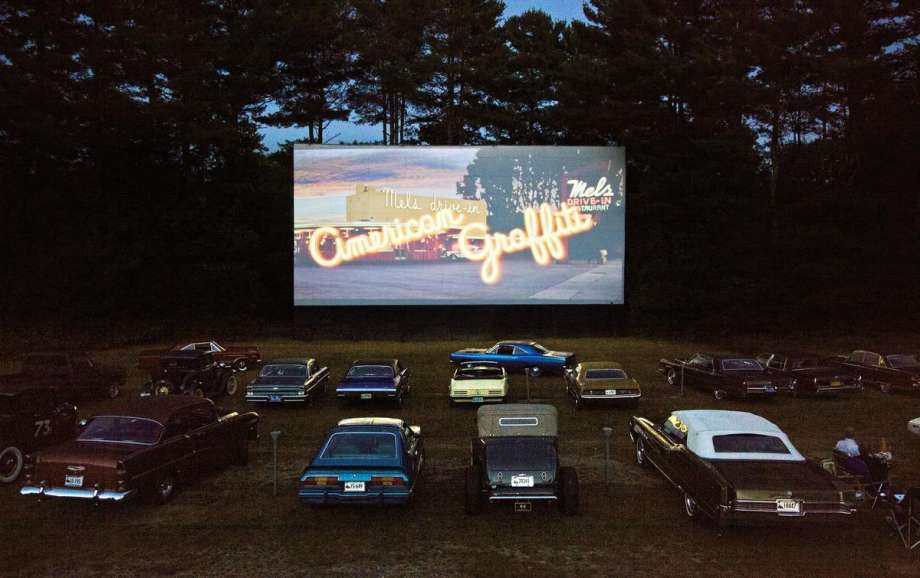
I remember Drive-In Theaters from way back. My sister is 8 years older than I am. When she was 16 I was 8 and mom made her take me with her on dates and that included the Drive-In. Most Drive-Ins charged by the person so guess where I was located? A mile up from the Drive-In I would know the routine…I would climb in the trunk. I remember smelling the old dirty tire and whatever else…I would hear us roll over the gravel and then the car would stop…my sister would let me out.
I would climb in the back seat and start watching. Although I make fun of her for this I actually enjoyed it. It was fun to do as a kid. I was a laid-back kid anyway. I remember the only movie showing one time was an R rated movie. It was called “Revenge of the Cheerleaders” from 1976…I got quite an education on the female anatomy. She would tell me don’t look now… then she and her date would go out and talk to friends parked around. I was of course looking and I never told mom…I knew I would not get to come back if I told her.
There are a few around here and once in a while, we will go see them. No Cheerleaders though.
In 1933, eager motorists park their automobiles on the grounds of Park-In Theaters, the first-ever drive-in movie theater, located on Crescent Boulevard in Camden, New Jersey. Richard Hollingshead opened it up. He thought of it because his mother was to large for theater seats. He charged just 25 cents per car.
The Drive-In didn’t really take off until the in-car speakers were invented by the late 40s. By 1958, the number of drive-ins peaked at 4,063.
Indoor theaters were more practical because they could show a movie 5-6 times a day and not have to worry about the weather or being light so the Drive-In’s started to get B movies (Revenge of the Cheerleaders!) and the fad started to slow down. Also, land value pushed the Drive-In’s out.
Now there are roughly 400 Drive-Ins left in America.
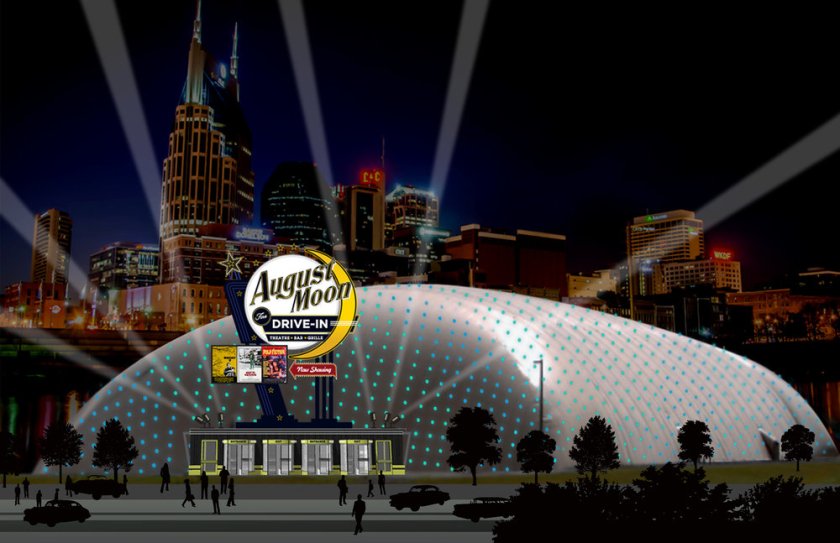
In Nashville, they are building an indoor Drive-In Theater. When it is finished I will check it out. You will not drive in with your car…you will walk in and sit in one of the classic cars they will have ready for you…I’m ready…but no trunks
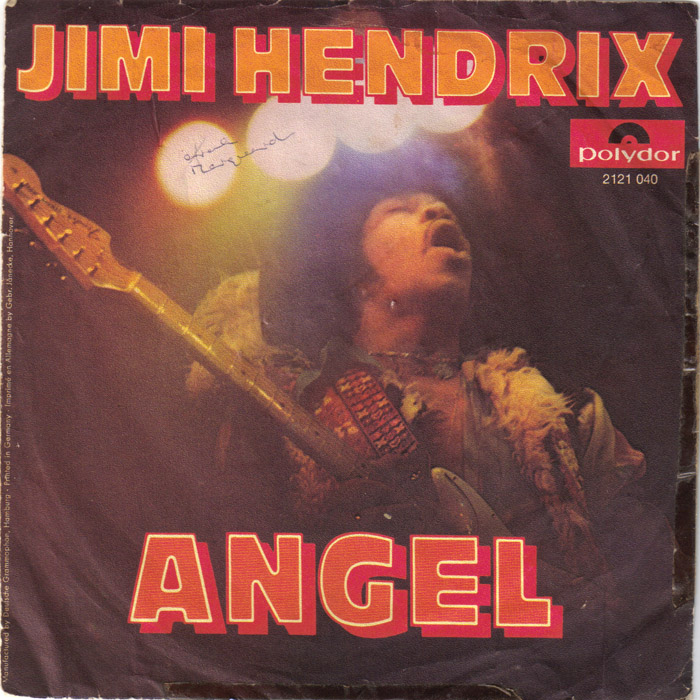
This is a beautiful spacey song by Jimi Hendrix. Hendrix started working on this in 1967 along with “Little Wing,” which was similar. He gave up on it, but pulled it out and recorded it on July 23, 1970 – just a few months before his death on September 18, 1970. The song takes you on a ride.
It was originally released on his 1971 posthumous album The Cry of Love. It was written by Hendrix and recorded at Electric Lady Studios with drummer Mitch Mitchell and bassist Billy Cox. Rod Stewart later covered this song…of course, he has covered about every song.
The song was inspired by a dream Hendrix had about his mother, Lucille. His vocal performance here is relaxed and almost whispered in places, as if the song wasn’t meant for a crowd at all, just for the person in the dream. Mitch Mitchell keeps it light, more brush than hammer, and Billy Cox anchors it without intruding. The whole thing feels like it’s floating.
Angel
Angel came down from heaven yesterday She stayed with me just long enough to rescue me And she told me a story yesterday, About the sweet love between the moon and the deep blue sea And then she spread her wings high over me She said she’s gonna come back tomorrow
And I said, “Fly on my sweet angel, Fly on through the sky, Fly on my sweet angel, Tomorrow I’m gonna be by your side”
Sure enough this morning came unto me Silver wings silhouetted against the child’s sunrise And my angel she said unto me, “Today is the day for you to rise Take my hand, you’re gonna be my man, You’re gonna rise” And then she took high over yonder
And I said, “Fly on my sweet angel, Fly on through the sky, Fly on my sweet angel, Forever I will be by your side”
Some of these restaurant chains, people will remember some won’t because it depends on where you live and if any were in your market. A few may have a handful open with Franchisees but for the most part, they are closed.
Steak and Ale -1966 – 2008 I liked the Mock Tudor building and the atmosphere inside…the food was good. They are trying to make a comeback…I hope they make it. Last time I ate at one was in the 90s in Huntsville Alabama.
Burger Chef – 1954 – 1996 They had over 1200 locations at one time. Many were bought out and turned into Hardees.
Rax Roast Beef 1967 – (handful open now)I liked the Roast Beef but the best thing was the chocolate chip milkshake. There are a few lone Franchisees left. I remember going to them in the 80s.
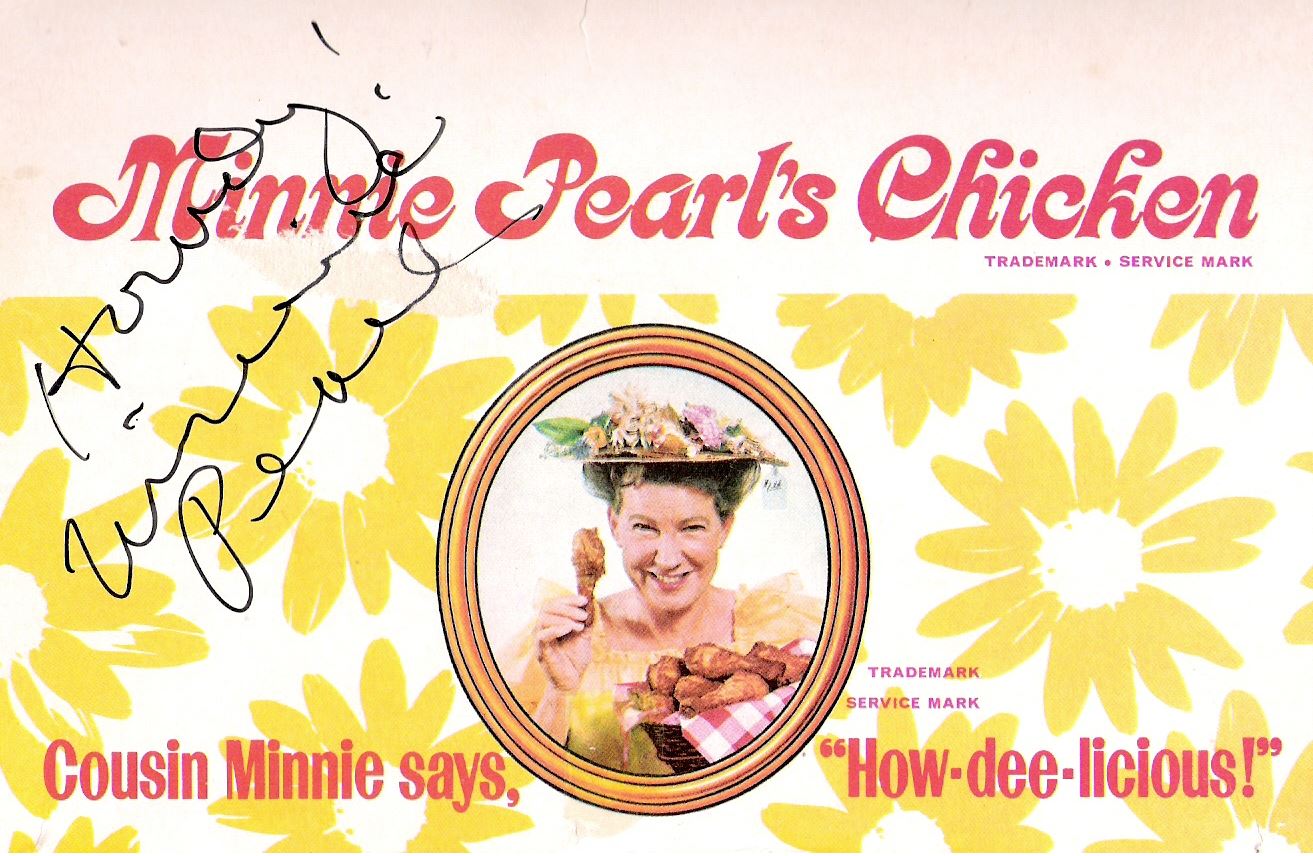
Minnie Pearl’s Fried Chicken 1968 to mid-1970s – How-dee-licious…indeed. It was actually really good. When I was in 2nd grade we would go to one in a nearby town once in a while…really good chicken… it went down because of faulty accounting… Great article here.
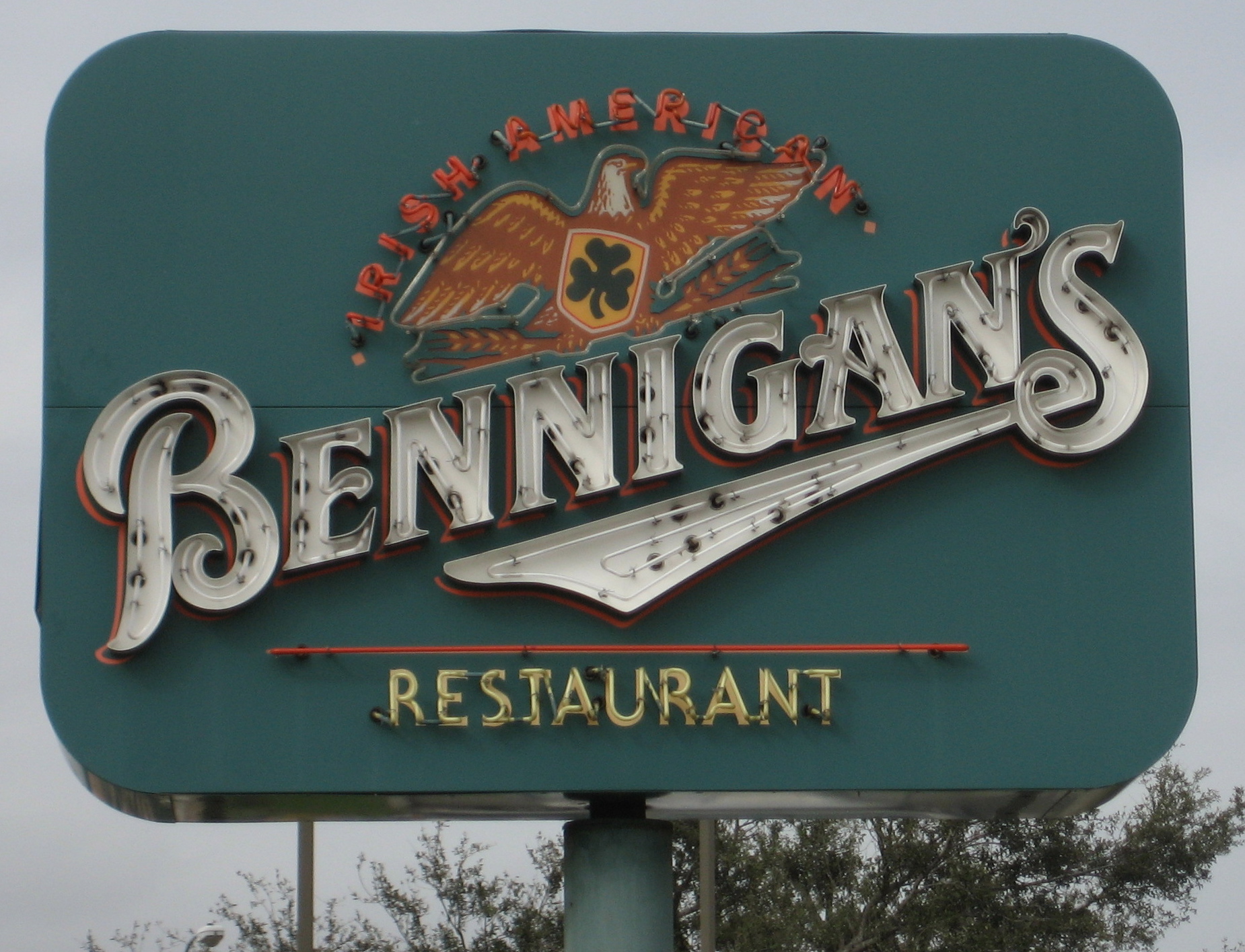
Bennigan’s 1976 – (Bennigan’s and Steak and Ale making a comeback together)An Irish Pub theme restaurant. I went there a few times. There are a few locations left…
Red Barn – 1961-1988 They were known for the “Big Barney” and Barnbuster burger. I see an old Red Barn where I work and now it’s a Mexican restaurant.
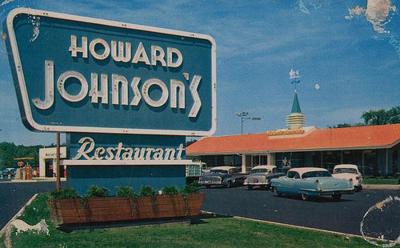
Howard Johnson’s Restaurant – 1953-2017 I do remember eating at a few of these traveling. In 2017 there was one left in New York but the owner was arrested and now it’s closed.
LUMS – 1956-1982 I did go to one but I was really young and traveling at the time.
Bonanza Steak House – 1963 – 2008 (bankruptcy) There are a few of these left… these and Ponderosa… Dan Blocker (Hoss Cartwright) was an original investor. In the late seventies before we would go to a movie we would stop at a Bonanza. I did go to a Ponderosa a few years back.
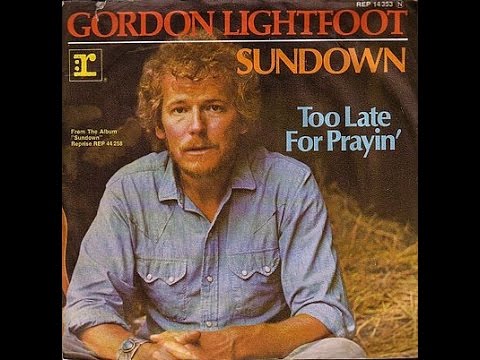
I first noticed Candian Gordon Lightfoot riding in the car with my sister …with the AM radio station playing this song. Sundown got a lot of airplay back then. It peaked at #1 in the Billboard 100, #1 in Canada, and #33 in the UK in 1974.
The inspiration for this song was his girlfriend Cathy Smith who would later have a romantic relationship with Richard Manuel of The Band and a fatal encounter with John Belushi.
The inspiration for this song came from Lightfoot worrying about his girlfriend, who was out at bars all day while he was at home writing songs. He recalled during a Reddit AMA: “I had this girlfriend one time, and I was at home working, at my desk, working at my songwriting which I had been doing all week since I was on a roll, and my girlfriend was somewhere drinking, drinking somewhere. So I was hoping that no one else would get their hands on her, because she was pretty good lookin’!”
“As a matter of fact, it was written just around Sundown,” he added, “just as the sun was setting, behind the farm I had rented to use as a place to write the album.”
Lightfoot most likely wrote this about the stormy relationship with his one time girlfriend Cathy Smith, who was later sentenced for delivering a lethal dose of heroin to John Belushi.
Sundown
I can see her lyin’ back in her satin dress In a room where ya do what ya don’t confess Sundown you better take care If I find you beenn creepin’ ’round my back stairs Sundown ya better take care If I find you been creepin’ ’round my back stairs
She’s been lookin’ like a queen in a sailor’s dream And she don’t always say what she really means Sometimes I think it’s a shame When I get feelin’ better when I’m feelin’ no pain Sometimes I think it’s a shame When I get feelin’ better when I’m feelin’ no pain
I can picture every move that a man could make Getting lost in her lovin’ is your first mistake Sundown you better take care If I find you been creepin’ ’round my back stairs Sometimes I think it’s a sin When I feel like I’m winnin’ when I’m losin’ again
I can see her lookin’ fast in her faded jeans She’s a hard lovin’ woman, got me feelin’ mean Sometimes I think it’s a shame When I get feelin’ better when I’m feelin’ no pain Sundown you better take care If I find you been creepin’ ’round my back stairs Sundown you better take care If I find you been creepin’ ’round my back stairs Sometimes I think it’s a sin When I feel like I’m winnin’ when I’m losin’ again
I remember most of these. Once in a while when I’m in a good mood at work…I will slip some of these in just to see the reactions. I’m in IT so I can get by with it…we are viewed as weird anyway. I never realized how much out of date slang there is out there. This doesn’t even scratch the surface.
Do Me a Solid – do me a favor
To the Max – I still use this one…it contains my name so it fits.
Disco Biscuits – Quaaludes
Cool Beans – Not a side dish but it’s cool
10-4 – good buddy – an understanding
Sweet! – very cool
Psyche – To fake someone out…love this one
Groovy – Everything is cool
Stop dipping in my Kool-Aid – Stop getting into my business
Do Me A Solid – Do me a favor
Catch you on the flip-side – See you later
Far Out – Cool and groovy
Can You Dig It – Do you understand
Wicked – Awesome
The Skinny – The lowdown
Good Night Johnboy – from the Waltons…a form of goodbye
Dy-no-mite! – JJ or Jimmy Walker from Goodtimes…something that is great.
Dream On – Saying something is unrealistic
The Man – Well this one is used today…the authority, corporations, police, government… the boss
Bitch’n – very cool
Gimme Five – This one has totally vanished…I’m updating this one…many do this with kids now…so I see a comeback.
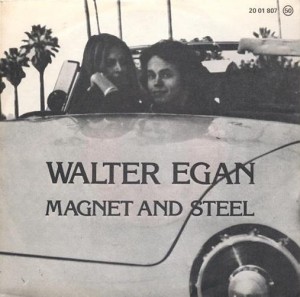
One of my favorite pop/rock songs. Beautifully crafted melody. In 1978 this song peaked at #8 in the Billboard 100. Walter wrote this song about Stevie Nicks and she sang on the track. The bass and drum sound in this song is fantastic.
Stevie Nicks sang on this track and provided inspiration for the lyrics. Walter Egan tells us about this song:
“In 1976 I was living in Pomona, California and I had a notion to write a song with the ‘stroll’ beat (made famous by Chuck Willis) and so began the rough outline of what was tentatively called ‘Don’t Turn Away Now.’ Now, this was also at the time of putting together my first album, Fundamental Roll, and my two new friends and producers, Lindsey Buckingham and Stevie Nicks and I were starting the recording process.
On the night when Stevie did the background vocals for my song ‘Tunnel o’ Love,’ my nascent amorous feelings toward her came into a sharper focus – I was smitten by the kitten, as they say. It was on my drive home at 3 AM from Van Nuys to Pomona that I happened to be behind a metal flake blue Continental with ground effects and a diamond window in back. I was inspired by the car’s license plate: “Not Shy.”
By the time I pulled into my driveway I had formulated the lyrics and come up with the magnet metaphor. From there the song was finished in 15 minutes.
It was especially satisfying to have Stevie sing on ‘Magnet,’ since it was about her (and me).”
This was used in the 1997 movie Boogie Nights.
This was Egan’s only Top 40 chart entry for his own recordings, though he also wrote Night’s first hit, “Hot Summer Nights,” which reached #18.
Magnet and Steel
Ooh ooh ah Now I told you so you ought to know Ooh it takes some time for a feelin’ to grow Ooh you’re so close now I can’t let you go Ooh and I can’t let go For you are a magnet and I am steel
I can’t hope that I’ll hold you for long Ooh you’re a woman who’s lost to your song Ooh but the love that I feel is so strong Ooh and it can’t be wrong
With you I’m not shy to show the way I feel With you I might try my secrets to reveal For you are a magnet and I am steel For you are a magnet and I am steel
I’ve always liked Tie-Dye shirts and whatever else that it is applied to. I’ve bought some things at street fairs and watched them as they did it. There is an art to doing it.
I’m astonished they did this in the 1920s.
Methods of tie-dye were formed in India, Japan, and Africa as early as the sixth century. the oldest known tie-dye tradition that is still practiced is an Indian method called Bandhani.
Tie-Dye was popular in the 1920s from home decorating to dresses.
In the sixties, tie-dye soared in America with the hippie movement. Hippies wanted to throw off the norm of the fifties with flashy and out of the norm clothes.
Before tie-dye became popular, Rit Dye was struggling. Don Price, a marketer for Hellmann’s Mayonnaise, began a marketing campaign for the dye in Greenwich Village, where many hippies lived. He went door to door, looking for artists who would use Rit for tie-dyeing. Then came Will and Eileen Richardson, two retired artists who made tie-dye pieces that Price showed to designers and fashion editors. After clothing designer Halston started using tie-dye in his designs, stars such as Janis Joplin were wearing it. Soon enough, tie-dye became a bandwagon the entire youth generation jumped on.
To this day you can go anywhere and buy anything tie-dyed you want…it’s not just for the counterculture anymore.
This song was the first I heard from the Pretenders. When I think of The Pretenders I think of this song. it wasn’t their best song but it is memorable. Most Pretenders songs were written solo by Hynde, but the group’s guitarist, James Honeyman-Scott, is also a credited writer on this track. The song peaked at #14 in the Billboard 100 and #1 in the UK in 1979.
In a VH1 interview, Hynde admitted to loathing the song, and said that since so many fans love it, she continues to play it.
Lead singer Chrissie Hynde grew up in Akron, Ohio and was a student at Kent State University in 1970 when four students were killed by members of the US National Guard. She left for England in 1973, where she formed the group with three guys from Hereford.
Chrissie Hynde rarely explained what her songs were about, but she let on with this one in a 1980 interview with Sounds: “It’s very lightweight pop type of song, nothing heavy about it. It’s along the lines of the guy who is feeling very insecure, not about pulling a girl but, say, trying to be accepted by the guys down the pub. It’s a front he’s putting up. It’s like buying a pair of new boots and you feel great but then you get home and see you spots in the mirror. Or take a couple of dexies and you’re in gear for the evening but on the train home it’s different.”
She had clearly internalized the British argot. “Pulling a girl” means finding a companion for the evening; “dexies” are Dexedrine pills, which give the user a jolt of energy. At the time, dexy abuse was common in the UK, especially amongst musicians and clubgoers. The band Dexys Midnight Runners took their name from the pill.
The song’s title came about after The Pretenders first-ever UK gig, when they were in the communal dressing room with The Strangeways, who they were supporting. Chrissie Hynde wanted to know whose trousers were sprawled over the back of a chair. One of The Strangeways Ada Wilson said: “I’ll have them if there’s any brass in the pockets.”
When Chrissie inquired what he meant by brass, it was explained to her that brass is a northern slang term for money. Chrissie fell in love with the expression and was inspired to write the song.
It usually doesn’t show up in printed lyrics, but at the end of the song, Hynde coos the line, “Oh and the way you walk.” She says that’s an important part of the song; it’s her telling the insecure peacock that she approves of his offering.
In the video, directed by Mark Robinson, lead singer Chrissie Hynde plays a waitress, implying that “brass” was the change she got from tips. Hynde worked as a waitress in the US before moving to London.
This was the breakout hit from the first Pretenders album, which was a triumph by any measure. In the UK, three singles were released before the album appeared. The first was a cover of The Kinks song “Stop Your Sobbing,” which was released in January 1979 and reached #34 in March 1979. “Kid” followed in June, going to #33 in August. In November, “Brass In Pocket” was released; it rose to the top in January 1980, and stayed at #1 for two weeks.
The album was also released in January 1980, and went to #1 in the UK. In America, it took a while for the group to get noticed. “Brass In Pocket” was the first single there, going to #14 in May 1980. “Stop Your Sobbing” followed, reaching #65 in July. The album is consistently cited as one of the greatest debuts in rock.
In an interview with the Observer newspaper from December 12, 2004, Chrissy Hynde said, “When we recorded the song I wasn’t very happy with it and told my producer that he could release it over my dead body, but they eventually persuaded me. So I remember feeling a bit sheepish when it went to #1.”
Brass in Pocket
Got brass in pocket Got bottle, I’m gonna use it Intention, I feel inventive Gonna make you, make you, make you notice
Got motion, restrained emotion Been driving Detroit leaning No reason, just seems so pleasing Gonna make you, make you, make you notice
[Chorus:] Gonna use my arms Gonna use my legs Gonna use my style Gonna use my side step Gonna use my fingers Gonna use my, my, my imagination
‘Cause I gonna make you see There’s nobody else here No one like me I’m special so special I gotta have some of your attention give it to me
Got rhythm I can’t miss a beat Got new skank it’s so reet Got something I’m winking at you Gonna make you, make you, make you notice
[Chorus]
‘Cause I gonna make you see There’s nobody else here No one like me I’m special, so special I gotta have some of your attention Give it to me ‘Cause I gonna make you see There’s nobody else here No one like me I’m special, so special I gotta have some of your attention
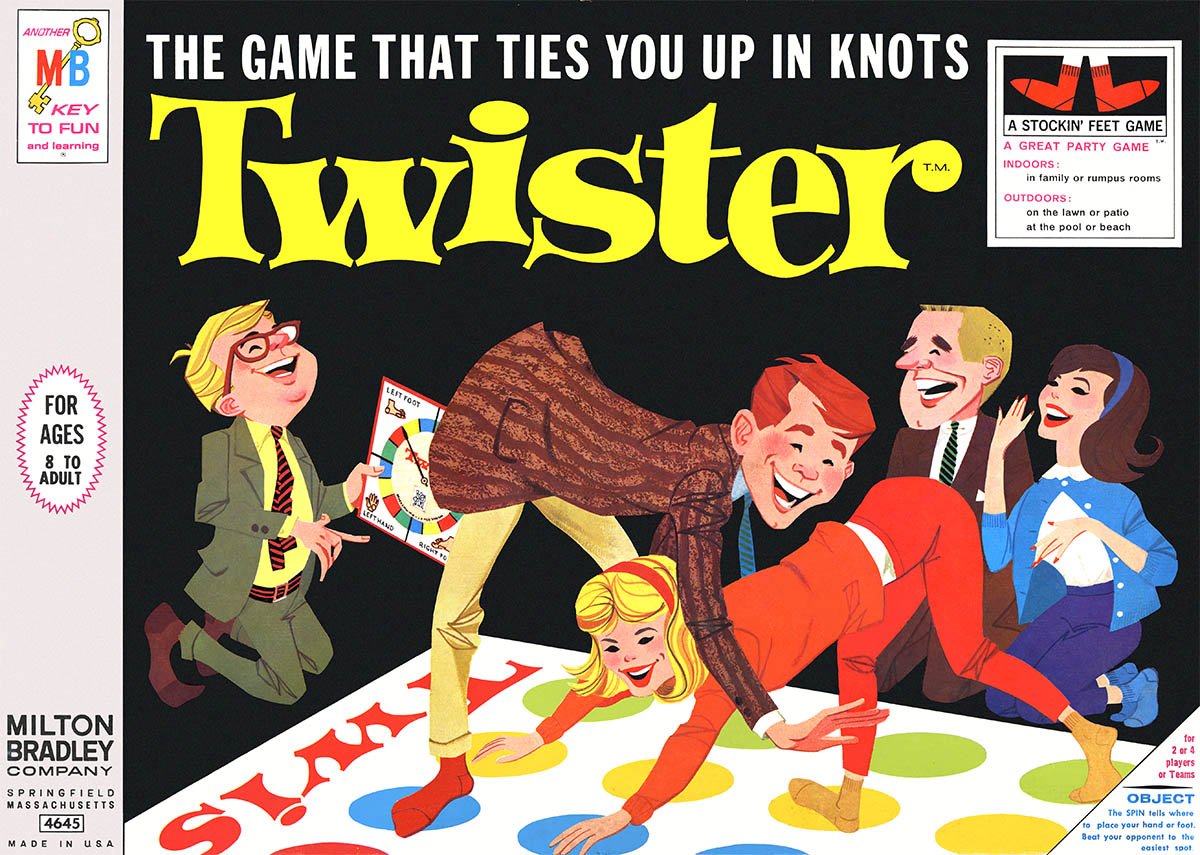
If not for Johnny Carson and Eva Gabor…Twister may not have been part of our culture.
In 1965 Reyn Guyer, of the Reynolds Guyer Agency of Design had been hired to do a promo display for a shoe polish company, and he was tinkering with colored polka dot paper for ideas. He was suddenly hit with inspiration for something much different…a board game where the pieces were people not plastic.
Reyn tested it with office workers who were divided into two teams and the game was called “Pretzel”. He showed it to 3M and they turned the game down.
Reyn took the game to the Milton Bradley Company in Springfield, MA where Mel Taft, the senior vice-president of R & D, chose “Pretzel” as the best of the eight-game ideas. Mel found there was a trademark problem, so he changed the game’s name to Twister, and Milton Bradley began to market Twister in 1966.
Milton Bradley’s competitors started to call the game “SEX IN A BOX” to destroy the game before it was marketed properly.
Milton Bradley discovered that stores were refusing to stock the game so they were going to pull it from the shelves. What they didn’t know was the public relations man they hired had made an arrangement to have the game played on The Tonight Show.
On May 3, 1966, Johnny Carson, the host of the show, was enticed by the “Twister” mat and demonstrated the game along with the beautiful Eva Gabor. That helped the game to say the least. Three million were sold the next year.
Twister was named “The Game of the Year” in 1967.
In 1985 Hasbro acquired the Milton Bradley Company, becoming Twister’s parent company. The Reyn Guyer Creative Group continues to work closely with Hasbro to develop and market new additions to the line of Twister products.









:format(jpeg):mode_rgb():quality(40)/discogs-images/L-1308739-1503287571-2115.jpeg.jpg)





 PowerPop... An Eclectic Collection of Pop Culture