Power Pop fan, Baseball, Beatles, Alternative music, old movies, and tv show fan. Also anything to do with pop culture in the 60s and 70s... I'm also a songwriter, bass and guitar player. Not the slightest bit interested in politics at all.
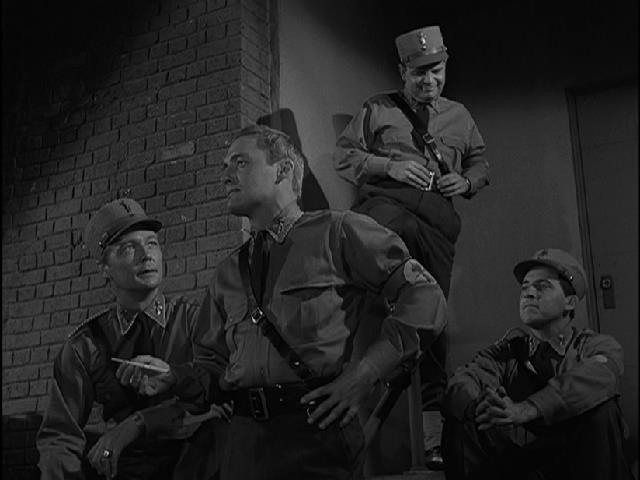
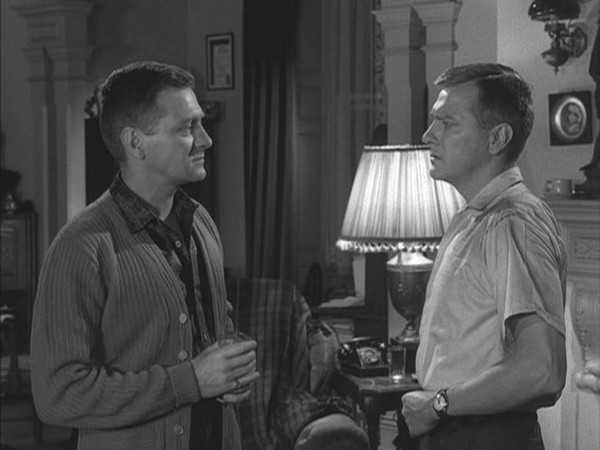
This episode is not subtle…there is no reading between the lines in this one. Serling lays it out on the table for everyone to see. Dennis Hopper plays Peter Vollmer who is a disenfranchised young man and a xenophobic would be Nazi trying to gain a following. The episode was not the best of the Twilight Zone but it packs a punch and as Serling said…it probably was the most important episode of the Twilight Zone.
Peter Vollmer is struggling to gain followers for his hate causes. He then starts getting advice from a shadowy figure who we cannot see…until later on. The advice he gets is all too familiar unfortnately…it reeks of hatred, bigotry, and ignornace. How to manipulate the situations around him to gain followers for his movement.The mystery man leads Peter along and when he is uncovered it is shocking. In 1963 WWII was still fresh in people’s minds
From IMDB….Rod Serling considered this episode, which he wrote and which examines the subject of Nazism (National Socialism), to be the most important of the series.
The episode’s director Stuart Rosenberg would later direct Dennis Hopper in the classic film Cool Hand Luke
This show was written by Rod Serling
Rod Serling’s Opening Narration:
Portrait of a bush-league Führer named Peter Vollmer, a sparse little man who feeds off his self-delusions and finds himself perpetually hungry for want of greatness in his diet. And like some goose-stepping predecessors he searches for something to explain his hunger, and to rationalize why a world passes him by without saluting. That something he looks for and finds is in a sewer. In his own twisted and distorted lexicon he calls it faith, strength, truth. But in just a moment Peter Vollmer will ply his trade on another kind of corner, a strange intersection in a shadowland called the Twilight Zone.
Summary
Peter Vollmer is the leader of a small neo-Nazi movement in a large American city. He’s having trouble getting his message across and seems to alienate people every time he opens his mouth. After a particularly bad rally, he hears a voice and sees a man standing in the shadows. He begins to advise Peter on what to say and how he can structure his message to make it more appealing to his particular audience. Peter has success but his mentor begins pushing him to extremes. There is a limit however and there is a voice of reason in the mob that seemed so willing to follow him
Rod Serling’s Closing Narration:
Where will he go next, this phantom from another time, this resurrected ghost of a previous nightmare – Chicago? Los Angeles? Miami, Florida? Vincennes, Indiana? Syracuse, New York? Anyplace, everyplace, where there’s hate, where there’s prejudice, where there’s bigotry. He’s alive. He’s alive so long as these evils exist. Remember that when he comes to your town. Remember it when you hear his voice speaking out through others. Remember it when you hear a name called, a minority attacked, any blind, unreasoning assault on a people or any human being. He’s alive because through these things we keep him alive.
CAST
Rod Serling … Narrator / Self – Host (uncredited) Dennis Hopper … Peter Vollmer Ludwig Donath … Ernst Ganz Paul Mazursky … Frank Howard Caine … Nick Barnaby Hale … Stanley Jay Adler … Gibbons Wolfe Barzell … Proprietor Bernard Fein … Heckler Curt Conway … Adolf Hitler Edward Astran … Audience Member (uncredited) Sam Bagley … Audience Member (uncredited) Chet Brandenburg … Audience Member (uncredited) Paul Bryar … Cop (uncredited) Bud Cokes … Audience Member (uncredited) Joe Evans … Audience Member (uncredited) Bobby Gilbert … Man With Cat (uncredited) Buck Harrington … Audience Member (uncredited) Ed Haskett … Audience Member (uncredited) Robert McCord … Cop (uncredited) William Meader … Brawling Townsman (uncredited) Jim Michael … Guard (uncredited) Sol Murgi … Audience Member (uncredited) William H. O’Brien … Audience Member (uncredited) Jose Portugal … Ice Cream Man (uncredited) Paul Ravel … Audience Member (uncredited) Bill Zuckert … Detective (uncredited)
I had something else planned to post but I found out that Mike Nesmith passed away. Nesmith was a big inspiration to me. There is no question…Nesmith would have made it without the Monkees…he was a talented writer, actor, producer, novelist and a very good Texas guitar player. He wrote some great country rock songs, Elephant Parts, and even a hit for Linda Ronstadt’s band The Stone Poneys…Different Drum.
While watching the reruns of the Monkees I bugged my mom to buy me a green wool hat with buttons but you can’t buy them off the shelf. She got me a green stocking cap…it wasn’t the same but I was happy. When the Monkees are mentioned some people cringe but they still have a place in my 5-year-old heart…plus how many bands can say that Jimi Hendrix opened up for them? Although that might be the worst pairing ever.
I’m not saying they deserve to be remembered with the best bands ever. Not at all but they do need to be recognized for their influence on a couple of generations. They influenced a lot of kids to form bands…mostly because of their weekly prime-time television show and ensuing hit singles. In the 80s they had a big comeback with a tour and massive airplay on MTV… I got to see them then…without Nesmith though.
They were a lot of fun. I thought WOW… I must be in a band one day. Little did I know that being in a band was not living in a cool place at the beach and having adventures at every turn…not to mention everyone getting along…it just doesn’t happen that way…but it is a special feeling being in a band with an us against them attitude and a great growing experience.
After I went through the Monkees faze I discovered the Beatles, The Who, Stones, Kinks…anything British but I still have a soft spot for some of the old Monkees songs.
The Monkees basically took A Hard Days Night movie humor and made a television show around a life of a mid-sixties rock band. Kids wanted to form bands after seeing them romp around the screen with girls…who wouldn’t want that gig? Michael Stipe from REM has said he was influenced by them.
They were not allowed to play on their first couple of albums…only sing…The Monkees were put together by Bob Rafelson and Bert Schneider for Screen Gems with two real musicians in the band…Michael Nesmith and Peter Tork… Micky Dolenz (he did sing in cover bands before The Monkees) and Davy Jones could sing and act…. and Mickey quickly learned drums.
When news came out that they didn’t play on their albums they were roundly criticized in the 1960s. They fought Don Kershner who controlled what they sang…. and won… The funny thing is many sixties pop bands didn’t play on their records and the Monkees actually started to play their own instruments on their third album (Headquarters) and writing some songs for every album afterward.
In the second season of their tv show they started to gain more control. Some of those last episodes are very pot influenced…especially the episode called “The Frodis Caper”… It is surreal and broke the fourth wall…the second season is worth a watch…all of them are fun but the 1st season is more formulaic.
I still like many songs by them…anything written by Michael Nesmith (famous also for Elephant Parts), Pleasant Valley Sunday, Randy Scouse Git, Steppin Stone and Saturday’s Child.
All in all, they ended up singing and playing on some of the best-known sixties pop-rock hits.
I’ll just add one more thing…he Monkees belong in the Rock and Roll Hall of Fame.
One of the thought-provoking episodes of the 4th season. I like the story and the pace for the hour long format is brisk. They cover a lot of ground in this episode. Ed Nelson as Philip Redfield plays this role with passion. He is traveling through back roads and runs through a small nothing little town called Peaceful Valley.
He notices something different and the townspeople can do things that are impossible…make a dog disappear, bring that same dog back from the dead, and invisible force fields. He finds out the history of the town from the leaders and wants them to share this with the world.
If you had the technology to end poverty, sickness, and even death in cases…do you use it? If you do, you risk someone getting the technology and using it for evil things. Are humans outside of this peaceful town ready for that much power? Dorn doesn’t think so…and I don’t either.
. Al the actors do a great job. David Opatoshu as the “town” leader Dorn plays it with compassion and common sense. You will know James Doohan in a minor role…still a few years away from Scotty in Star Trek.
Watch this one…it could have been a great sci-fi movie.
The title comes from the King James Version of the 23rd Psalm in the Hebrew Bible. “Yea, though I walk through the valley of the shadow of death, I will fear no evil: for thou art with me; thy rod and thy staff they comfort me.”
This show was written by Rod Serling and Charles Beaumont
Rod Serling’s Opening Narration:
You’ve seen them. Little towns, tucked away far from the main roads. You’ve seen them, but have you thought about them? What do the people in these places do? Why do they stay? Philip Redfield never thought about them. If his dog hadn’t gone after that cat, he would have driven through Peaceful Valley and put it out of his mind forever. But he can’t do that now, because whether he knows it or not his friend’s shortcut has led him right into the capital of the Twilight Zone.
Summary
On the back roads, trying to find his way back home, reporter Philip Redfield and his dog, Rollie, stop in the small town of Peaceful Valley, for gas and food, and directions. When Rollie runs off in pursuit of a cat, a young girl points a device at the dog, and he disappears. Though her father brings Rollie back, Philip finds it all very strange. When Phillip tries to leave town, his car crashes into an invisible barrier, preventing his departure. Shaken up, the town’s mayor, Dorn, reveals their secret, and gives Philip the choice; join them or die
Rod Serling’s Closing Narration:
You’ve seen them. Little towns, tucked away far from the main roads. You’ve seen them, but have you thought about them? Have you wondered what the people do in such places, why they stay? Philip Redfield thinks about them now and he wonders, but only very late at night, when he’s between wakefulness and sleep in the Twilight Zone.
CAST
Rod Serling … Narrator / Self – Host (uncredited)
David Opatoshu … Dorn
Ed Nelson … Philip Redfield
Natalie Trundy … Ellen Marshall
Jacques Aubuchon … Connolly
Dabbs Greer … Evans
James Doohan … Father
Morgan Brittany … Girl (as Suzanne Cupito)
Henry Beckman … Townsman
Bart Burns Bart Burns … Townsman
King Calder … Townsman
Pat O’Hara Pat O’Hara … Townsman
Sandy Kenyon … The Attendant
I must admit I never heard of Bonds until Bruce Springsteen wrote a song for him called This Little Girl on Bond’s 1981 Dedication album.
Bruce covered this song in the seventies live. One performance in paticular was outstanding… the 1979 No Nukes concert encore (at the bottom).
I like Gary’s version a lot because of the party atmosphere which contrasts to the smoother records at the time.
After listening to the lyrics…I wondered who Daddy G was…Daddy G is Gene Barge, tenor saxman in an instrumental group called The Church Street Five, which released a song called “A Night With Daddy G” that reached #111 in February 1961.
Bonds’ real name is Gary Anderson. His label boss, Frank Guida, changed it to “U.S. Bonds” for his first single, New Orleans, as a play on the posters asking Americans to “buy U.S. savings bonds.” Pretty clever, but too many people, including many DJs, got it wrong and thought it was the name of a group. His next single, “Quarter To Three,” was initially issued as U.S. Bonds but soon changed to Gary U.S. Bonds, along with his subsequent releases.
The writing credits on this song go to Bonds and the three men who wrote the instrumental on which it is based…A Night With Daddy G. They would be Gene Barge (Daddy G), Frank Guida, and Guida’s engineer and songwriting partner Joe Royster.
Daddy G was a popular guy…he got another mention a few months later when he showed up in the lyric to The Dovells song “Bristol Stomp,” where they sing about how they “rocked with Daddy G.” That song went to #2 in 1961.
The song went to #1 in the Billboard 100, #3 on the R&B Charts, and #7 in the UK in 1961.
From Songfacts
In this song, Gary U.S. Bonds sings about staying up till quarter to three in the morning, dancing to the swinging sax of Daddy G.
Like Bonds, The Church Street Five were signed to Legrand Records, owned by former record store owner Frank Guida. Bonds wrote a lyric for the song and recorded it (with Daddy G on saxophone) as “Quarter To Three.” In June 1961, it went to #1, where it stayed for two weeks.
Bruce Springsteen, a big fan of Bonds, played this at many of his concerts in the ’70s before and after his rise to stardom. When Springsteen played The Palladium in New York City on October 29, 1976, he brought Bonds on stage to perform the song. By this time, Bonds had long fallen out of favor (his last Hot 100 hit was in 1962 with “Copy Cat”) and stuck on the cabaret circuit. Springsteen worked at a breakneck pace for the next few years, but found time after the release on his 1980 album The River to work with Bonds, resulting in a successful 1981 comeback album for Bonds called Dedication.
Springsteen wrote a lot more songs than he could record, and three of them went to Bonds: “This Little Girl,” “Your Love” and the title track. Springsteen and members of his E Street band also played on the album and worked on the production. “This Little Girl” was a hit, going to #11 in the US and reviving Bonds’ career. When Springsteen brought Bonds on stage a few times in 1981, the crowds were far more familiar with him. In 1982, Springsteen and his band worked on another album for Bonds: On the Line.
Bonds sued Chubby Checker in 1962, claiming he stole “Quarter To Three” for his song “Dancin’ Party.” The case was settled out of court.
Quarter To Three
Don’t you know that I danced I danced till a quarter to three With the help, last night, of Daddy G He was swingin on the sax like a nobody could And I was dancin’ all over the room Oh, don’t you know the people were dancin’ Like they were mad It was the swingin’est band they had ever had It was the swingin’est song that could ever be It was a night with Daddy G Let me tell you now I never had it so good Yeah and I know you never could Until you get hip with that jive And take a band like the Church Street Five Oh don’t you know that I danced I danced till a quarter to three With the help last night of Daddy G Everybody was as happy as they could be And they were swingin with Daddy G Blow Daddy
Let me tell you now I never had it so good Yeah and I know you never could Until you get hip with that jive And take a band like the Church Street Five Oh don’t you know that I danced I danced till a quarter to three With the help last night of Daddy G He was swingin on the sax like nobody could And I was dancin all over the room Oh don’t you know the Dance, do bee wa dah Dance, do bee wah dah You can dance, do bee wah dah You can dance, dance, dance
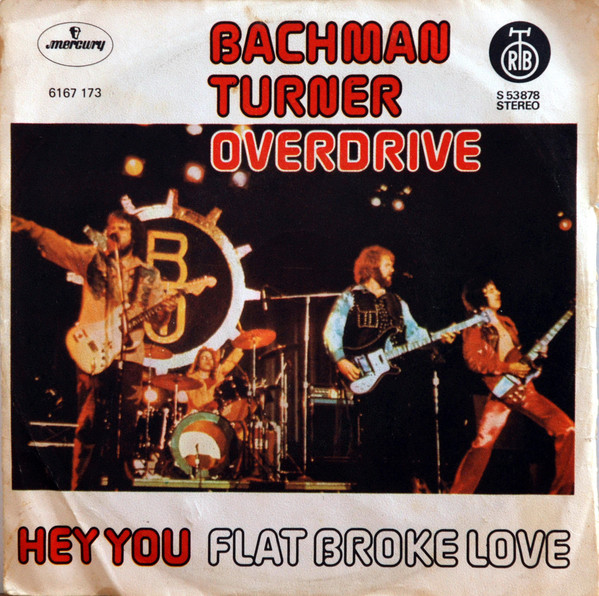
As a kid growing up this is one of the first bands that I knew the name of…I knew them as BTO and later found out their full name. Something that I didn’t know…”Bachman” is pronounced “Back-man” not “Bock-man“…I always used the latter pronouncement. An American DJ pronounced it wrong and it stuck for Americans.
Randy Bachman not only wrote this song but also was the lead singer. Turns out there was a purpose to this song…Randy was inspired.
There were rumors that Randy Bachman was directing the lyrics straight out of his old lead singer…Burton Cummings. They were both from The Guess Who. Cummings had said that Bachman would never make it in the music business after leaving their band. Burton was wrong in this case.
Randy did confirm all of the rumors years later. Randy Bachman: “I deserved to gloat a bit after all the mud Burton had slung at me.”
The song was on Four Wheel Drive and that album peaked at #1 in Canada and #5 in the Billboard Album Charts in 1975. There were two singles that were released… Quick Change Artist which charted at #7 and this one. Hey You did as well as the album…it peaked at #1 in Canada and #21 in the Billboard 100.
Randy left the band in 1977 but the band continued as “BTO.” Bachman returned in 1983, and the band has toured and recorded sporadically since.
I remember BTO opening up for Van Halen in 1986 on an 11-month tour. This was Van Halen’s first tour with new lead singer Sammy Hagar, who wanted BTO to blast out hits to get the crowd fired up. Van Halen would take the stage minutes later, leaving no time for the crowd to think about David Lee Roth.
Hey You
Hey you, you say you wanna change the world It’s alright, with me there’s no regret It’s my turn, the circle game has brought me here And I won’t let down ’til every song is set
You realize now You should have tried now, ooh The music’s gone now You lost it somehow Hey you, sha la la la Hey you, sha la la la Woo! Sha la la Woo! Sha la la
Hey you, you say the race is much too fast It’s okay, with me I’m keeping pace It’s my game, the music is inside my head For every one on top there’s one who can’t retrace
You realize now You should have tried now, ooh ooh The music’s gone now, you’ll find out You lost it somehow Hey you, sha la la la Hey you, sha la la la Woo! Sha la la Woo! Sha la la
You realize now, ooh You could have tried now The music’s gone now You lost it somehow Hey you, hey you, sha la la la Hey you, sha la la la Woo! Sha la la Woo! Sha la la
Sha la la la, hey you, hey you, hey you (Woo!) Sha la la la, ba-ba-ba-ba-ba-ba-baby, it’s true (Woo!) Sha la la la, no time, no time left, no time (Woo!) Sha la la la, don’t let me down, don’t let me down (Woo!) Sha la la la, you gotta learn to take it easy, baby (Woo!) Sha la la la, music’s over, it’s over (Woo!) Sha la la la, too late, too late, too late (Woo!) Sha la la la, I should have realised it a lot sooner than this (Woo!) Sha la la la, hey you
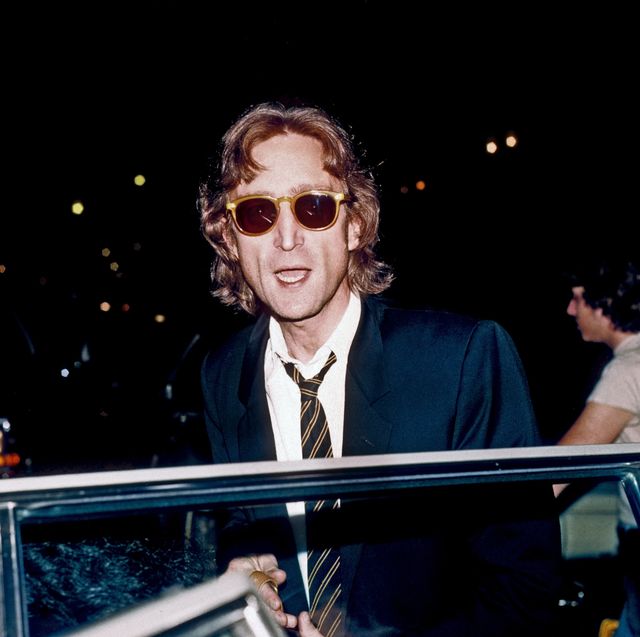
Damn this date. Every Dec 8th I can’t help but think of where I was at when I heard. Get Back only heightened the anger and confusion over what happened.
It’s odd to think the Beatles had only been broken up for 10 years when this happened…to a 13 year old at the time…that was a lifetime but in reality it’s nothing.
Since second grade, I’d been listening to the Beatles. While a lot of kids I knew listened and talked about modern music …I just couldn’t relate as much. By the time I was ten I had read every book about The Beatles I could get my hands on. In a small middle TN town…it wasn’t too many. I was after their generation but I knew the importance of what they did…plus just great music. The more I got into them the more I learned about the Who, Stones, and the Kinks. I wanted to get my hands on every book about the music of the 1960s. Just listening to the music wasn’t enough…I wanted to know the history.
I spent that Monday night playing albums in my room. Monday night I didn’t turn the radio on…I’m glad I didn’t…The next morning I got up to go to school and the CBS morning news was on. The sound was turned down but the news was showing Beatle video clips. I was wondering why they were showing them but didn’t think much of it.
Curious, I walked over to the television and turned it up and found out that John Lennon had been shot and killed. I was very angry and shocked. The bus ride to school was quiet, at school, it was quiet as well. Some teachers were affected because John was their generation. Some of my friends were shocked but some really didn’t get the significance at the time and some didn’t care. A few but not many kids acted almost gleeful which pissed me off…It was obvious their parents were talking through them.
I went out and bought the White Album, Abbey Road and Double Fantasy in late December of 1980…I can’t believe I didn’t have the two Beatle albums already…now whenever I hear any song from those albums they remind me of the winter of 80-81. I remember the call-in shows on the radio then…pre-internet… people calling to share their feelings for John or hatred for the killer.
The next few weeks I saw footage of the Beatles on specials that I had never seen before. Famous and non-famous people pouring their heart out over the grief. Planned tributes from bands and everyone asking the same question…why?
My young mind could not process why a person would want to do this to a musician. A politician yea…I could see that…not that it’s right but this? A musician? Martin Luther King, Bobby Kennedy, and JFK were before my time. By the mid-1970s John had pretty much dropped out of sight…John and Yoko released Double Fantasy on November 17, 1980, and suddenly they were everywhere…Less than a month later John was murdered. The catchwords were Catcher in the Rye, Hawaii, handgun and insane. The next day we were duly informed on who killed John in the First, Middle, and Last name format they assign to murderers.
I didn’t want to know his name, his career, his wife’s name, his childhood…I just wanted to know why… he says now…”attention”
I noticed a change happened after that Monday night. John Lennon was instantly turned into a saint, something he would have said was preposterous. Paul suddenly became the square and the uncool one and George and Ringo turned into just mere sidemen. Death has a way of elevating you in life. After the Anthology came out in the 90s that started to change back a little.
I called my dad a few days after it happened and he said that people were more concerned that The Beatles would never play again than the fact a man, father, and husband was shot and killed. He was right and I was among those people until he said that. Dad was never a fan but he made his point.
Below is a video of James Taylor telling on how he met the killer a day before Lennon was murdered.
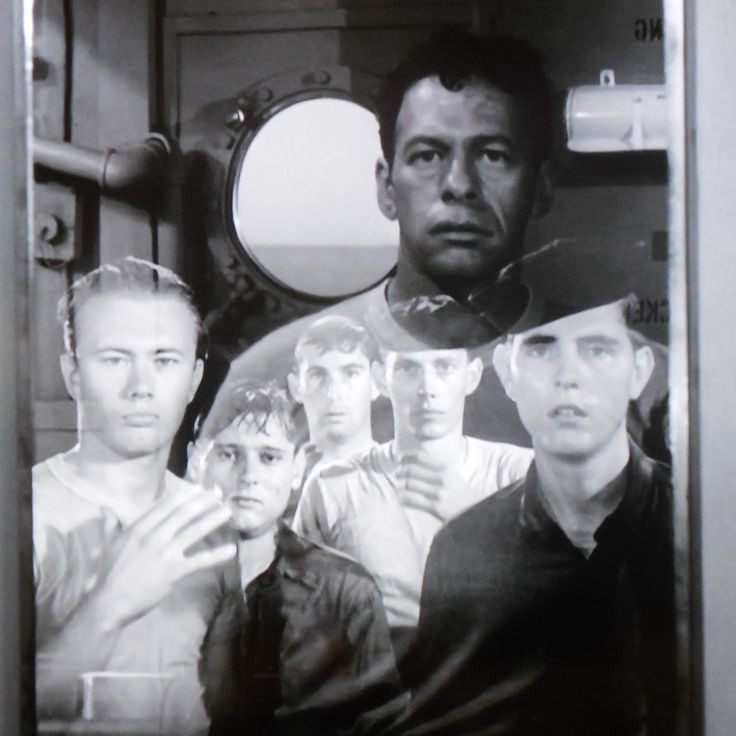
This is the second episode in the new hour long format. This story has some added padding…a direct consequence of the hour-long format of this episode. That doesn’t mean it isn’t good. The story is creepy but they visited this theme before in the second season opener King Nine Will Not Return.
The cast is excellent. Mike Kellin plays Chief Bell who is having survivors guilt that brings to mind PTSD. You find out later that it’s more than that. Simon Oakland is Captain Beecham and gives a very realistic performance as Oakland does in whatever he is in. The most famous actor in this one…at least to my generation is Bill Bixby. He only plays a supporting role and it’s interesting to see him as a younger actor.
Basically it’s a great story but too much padding but…very watchable.
This is from IMDB…it’s a piece of trivia that is very eerie: Mike Kellin portraying the main character, Chief Bell, died 26 August 1983, the ship used for exterior shots in the episode was decommissioned 11 August 1983. Simon Oakland, who portrayed the captain, died three days later on 29 August 1983.
Also this explains why this episode drags a bit: Season four of Twilight Zone is the only one of the five seasons that ran its episodes in hour long time slots rather then the conventional half-hour format. The Thirty-Fathom Grave was written by Rod Serling before the network and producers decided to try out the series in the new lengthier format. Since the episode had already been optioned for season four it was necessary for Rod Serling to re-write and expand the episode to fit the new hour slot. Therefore several new scenes had to be added or padded to fill up time. As a result, this episode received mostly negative feedback based on its slow pace and unnecessary dialogue.
This episode would have been so much better at the original 30 minutes.
This show was written by Rod Serling
Rod Serling’s Opening Narration:
Incident one hundred miles off the coast of Guadalcanal. Time: the present. The United States naval destroyer on what has been a most uneventful cruise. In a moment, they’re going to send a man down thirty fathoms and check on a noise maker – someone or something tapping on metal. You may or may not read the results in a naval report, because Captain Beecham and his crew have just set a course that will lead this ship and everyone on it into the Twilight Zone.
Summary
As a U.S. Navy destroyer cruises near Guadalcanal in the South Pacific, its sonar detects muted but constant hammering on metal undersea. The eerie sounds emanate from a submarine on the ocean floor, apparently there since World War II. The ship’s chief boatswain’s mate becomes very nervous, having served aboard that sub – and he was its sole survivor.
Rod Serling’s Closing Narration:
Small naval engagement, the month of April, 1963. Not to be found in any historical annals. Look for this one filed under ‘H’ for haunting in the Twilight Zone.
CAST
Rod Serling … Narrator / Self – Host (uncredited)
Mike Kellin…Chief Bell
Simon Oakland…Captain Beecham
David Sheiner…Doc
John Considine…McClure
Bill Bixby…OOD
Conlan Carter…Ensign
Forrest Compton…ASW Officer
Henry Scott…Jr. OOD
Anthony D. Call…Lee Helmsman
Charles Kuenstle…Sonar Operator
Derrik Lewis…Helmsman
Vincent Baggetta…Crewman
Louie Elias…Crewman
This band was never huge but should have been. They were many things…a blues rock band and then blossomed into a great power-pop band. This song is during their blues/rock period.
It is off of their album Teenage Head. Years later a band in Canada were influenced by the Flaming Groovies…a band named after this album… Teenage Head. This album and Sticky Fingers by the Stones were released within weeks of each other. Mick Jagger reportedly noticed the similarities between the Groovies Teenage Head album … and thought the Flamin’ Groovies did the better take on the theme of classic blues and rock ‘n roll revisited in a modern context.
It’s a mid-tempo song but when the vocal hits we have a hint of Sun Records slap back and I love it. Lead singer Roy Loney left the band just three weeks after Teenage Head was released. Some critics hold it up to Sticky Fingers.
By the end of the sixties they clashed over where to go. Loney was more Stones and Cyril Jordon leaned toward the Beatles. Loney left in 1971 and they got an 18 year old lead singer named Chris Wilson and the power pop era began.
Whiskey Woman
I’ve been hungry all day long For that girl whose wastin’ time She was here but now she’s gone I’ve got a taste for wine
Whiskey woman, why can’t you See the hell you put me through? We are tears dressed in blue
As I sit and write this song You’re the one thing on my mind We’ve been lovers far too long The good times were passin by
Whiskey woman, I feel good Locked me in her womanhood Like I always knew she would
Yeah
Whiskey woman, I want you Whiskey woman, I want you Whiskey woman, I want you
Come on, come on I want you I want you I want you
Where is the woman Where are you Where, where are you? I want you I want you, yeah
The great Garth Hudson gives us a wonderful intro to this song. In live shows, the song became a Hudson showcase, with him improvising wildly on organ (and later, on synthesizer) before cutting into the song. This improvisation came to be known as “The Genetic Method.” .Eventually the improvisation quoted Bach’s “Fugue in D Minor” and followed into the song’s main riff. Only part of the improvisation was included on the actual album cut.
Garth Hudson was the Band’s secret weapon according to Robertson. Back when they were backing Ronnie Hawkins….they asked the classically trained Hudson to join them. His parents didn’t like the idea but… Hudson agreed to join the band on two conditions: that Hawkins buy him a Lowrey organ, and that he be paid an extra $10 a week to give music lessons to the other Hawks. After that he was in The Band.
This gem came from Music From Big Pink in 1968. The song is credited to Robbie Robertson. Levon Helm said that he and Richard Manual wrote the lyrics to the song.
I was talking to another blogger the other day about the Band. They lived up to their name more than about any other band. Not only did they all contribute to songs…not writing…but all of them did contribute some but they all could play each others instruments.
Music From Big Pink was a huge influence on other artists back then and to this day. George Harrison and Eric Clapton were two that were influenced by it. Eric even had ideas of joining the Band. You can hear it in music at that time. Psychedelic was out and more Americana or roots music was in. The album’s influence far outweighed it’s chart position.
The album peaked at #18 in Canada and #30 in the Billboard Album Chart. It has to be on the list of best debut albums of all time.
Robbie Robertson:When Garth played the intro to “Chest Fever,” which he called “The Genetic Method,” I was reminded there was no other keyboard player in rock ’n’ roll who had his improvisational abilities and imagination.
Robbie Robertson:“It’s kind of a hard love song,” “But it’s a reversal on that old rock & roll thing where they’re always telling the girl, ‘He’s a rebel, he’ll never be any good.’ This time, it’s the other way around.”
From Songfacts
The Band’s guitarist, Robbie Robertson, felt he needed a counterbalance for the album’s centerpiece, “The Weight.” He wrote the music for the song solely for that purpose.
Robertson, drummer Levon Helm, and pianist Richard Manuel improvised lyrics (Robertson often calls them meaningless) over the course of the song. Those lyrics remain unchanged on the track, although they loosely tell a story of a man thrown aside by a hard-drinking, fast-talking woman who subsequently literally becomes sick with love for her.
This was the opening song for the Band’s set at the Woodstock Festival in 1969.
Chest Fever
I know she’s a tracker Any style that would back her They say she’s a chooser But I just can’t refuse her She was just there, but then she can’t be here no more
And as my mind unwheels I feel the freeze down in my knees But just before she leaves, she receives
She’s been down in the dunes And she’s dealt with the goons Now she drinks from a bitter cup I’m trying to get her to give it up She was just here, I fear she can’t be there no more
And as my mind unwheels I feel the freeze down in my knees But just before she leaves, she receives
It’s long, long when she’s gone I get weary holding on Now I’m coldly fading fast I don’t think I’m gonna last very much longer
She’s stoned said the Swede, And the moon calf agreed But I’m like a viper in shock With my eyes in the clock She was just there somewhere and here I am again
And as my mind unweaves I feel the freeze down in my knees But just before she leaves, she receives
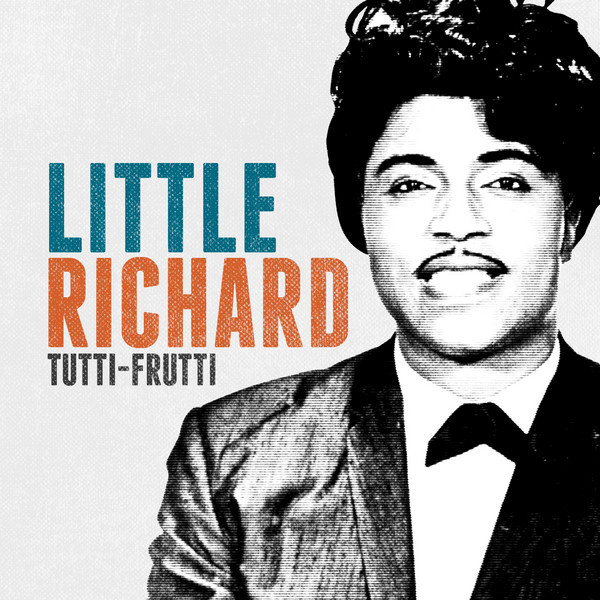
Greetings on this Sunday Morning…Pure poetry! What a voice! This song is like a shot of adrenaline. If Little Richard came out today…what kind of music would he sing?
Little Richard wrote this song in 1955 when he was working as a dishwasher at a Greyhound bus station in his hometown of Macon, Georgia.
Little Richard’s real name was Richard Wayne Penniman and was born in Macon, Georgia. He was one of twelve children… “Little Richard” was his childhood nickname, and even though he was not a little adult (almost 6 feet tall), he kept the name. His family listened to singers like Bing Crosby and Ella Fitzgerald. Richard couldn’t find any music he liked, so he created it.
This was Little Richard’s first hit, but his success was far from instant. His first recordings were in 1952 for RCA Records, and were failures. He moved to Peacock Records the next year and released some singles with the Johnny Otis Trio backing him up.
Richard’s break came when the singer Lloyd Price played a show in Macon, Georgia, and Richard, who was selling drinks at the gig, went to the dressing room and played Price “Tutti Frutti” on the piano.
The song peaked at #18 in the US, #2 in the R&B Charts, and #29 in the UK in 1955.
This song was a huge influence on many future rock stars, but it had special significance for David Bowie, as it was the first rock song he heard. Bowie’s father, who ran a London music hall, brought the record home when David was 9 years old.
Bowie said: “My heart nearly burst with excitement,” “I had heard God.”
Little Richard:“I couldn’t talk back to my boss man. He would bring all these pots back for me to wash, and one day I said, ‘I’ve got to do something to stop this man bringing back all these pots to me to wash,’ and I said, ‘Awap bop a lup bop a wop bam boom, take ’em out!’ and that’s what I meant at the time. And so I wrote ‘Tutti Frutti’ in the kitchen, I wrote ‘Good Golly Miss Molly’ in the kitchen, I wrote ‘Long Tall Sally’ in that kitchen.”
Little Richard:“My greatest achievement would have to be ‘Tutti Frutti.’ It took me out of the kitchen – I was a dishwasher at the Greyhound bus station, making $10 a week working 12 hours a day, and ‘Tutti Frutti’ was a blessin’ and a lesson. I thank God for ‘Tutti Frutti’.”
From Songfacts
Richard says that “Awap bop a lup bop a wop bam boom” was kind of his catch phrase, something he would reply to folks who asked him how he was doing.
Long before Richard recorded this, he performed it at his shows as “Tutti Frutti, Good Booty.” It was a very raucous and sexual song and was considered too suggestive for white audiences, so it was cleaned up considerably when he recorded it for Specialty Records. The chorus was changed to “Tutti Frutti, aw Rudi,” and these original lyrics were replaced:
If it’s tight, it’s alright
If it’s greasy, it makes it easy
Some sources have claimed that Richard also sang “A good God damn” instead of “a wop bam boom,” but according to the notes in the 2012 reissue of the album, Richard (who later became a minister) never took the Lord’s name in vain and never sang that lyric. Price encouraged Richard to send a tape to Specialty Records, so he sent them a demo of two songs he recorded in February 1955 with his group The Upsetters: “Baby” and “All Night Long.” Specialty owner Art Rupe was unimpressed, but Richard kept calling and sending letters.
His persistence paid off and Rupe finally sent his producer Bumps Blackwell to New Orleans, where on September 13 and 14, they recorded the nine songs that would comprise the Here’s Little Richard album. “Tutti Frutti” was released as a single and became a breakout hit, which Richard found out when the record company called him in Georgia to explain. They flew him to Hollywood and had him record follow-up singles “Long Tall Sally” and “Slippin’ and Slidin’.”
This was the last song recorded for the album, and it barely made it. The first eight tracks Richard put down were blues numbers which weren’t wowing his producer Bumps Blackwell, who took a break and brought Richard to a local bar called the Dew Drop Inn. Richard, feeling more relaxed with an audience to play for, sat down at a piano in the bar and started playing his live favorite “Tutti Frutti.” This got Blackwell’s attention, and he insisted that Richard record the song.
Of course, the original racy lyrics about “good booty” had to be replaced, and Little Richard had no particular talent for writing words that would match his melody yet mollify a white audience. This task fell to Dorothy LaBostrie, who Blackwell described as “a girl who kept hanging around the studio to sell songs.” She was on hand because Richard recorded her song “I’m Just A Lonely Guy” earlier that day. With time running out in the session, an embarrassed Richard sang her the raunchy lyrics, looking at the wall while he did so. LaBostrie left and came back with the sanitized lyrics with just 15 minutes of studio time remaining. They quickly recorded the song, getting it right on the third take with two minutes to spare. Dorothy LaBostrie earned what became a very lucrative writing credit for her efforts.
This song introduced Little Richard’s famous “Whooooo,” and also a big “Aaaaaaahhh” scream which he sings just before the tenor sax solo performed by Lee Allen. Richard’s scream had a practical purpose: to let Allen know when to start playing. They were recording on just three tracks, so overdubbing the horns wasn’t a practical option.
You can also hear Richard’s classic line in this song, “A wop bop a lu bop, a wop bam boom!” He felt you could express your emotions without singing actual words. He would also put a little something extra into the words he sang, which he called “that thing.” It was something he learned playing piano and singing in church, and it was a style that would influence the next generation of rock music.
This is one of the most famous songs of all time, making #43 on Rolling Stone magazine’s list of the 500 Greatest Songs, but it was not a huge hit, going to #2 on the R&B charts and reaching just #17 on the Hot 100.
Pat Boone fared better with his 1956 cover, taking it to #12. Boone had a long career doing sanitized covers of songs by black artists, and he also covered Richard’s “Long Tall Sally.” Many listeners at the time only knew the song through Boone, so Little Richard’s promotional materials often labeled him “Original ‘Tutti Frutti’ Man.”
Boone changed some of the lyrics, so “Boy you don’t know what she’s doing to me” became “Pretty little Susie is the girl for me.”
“The kids didn’t care – they didn’t know,” he said in a Songfacts interview. Boone went on to explain that Little Richard was grateful for the exposure, as he introduced the song to a white audience.
Like “Long Tall Sally,” this song was covered by Elvis. Little Richard once said, “Elvis may be the King of Rock and Roll, but I am the Queen.”
Little Richard did not invent the name “Tutti Frutti”; it was a popular flavor of ice cream. The phrase is Italian for “All Fruits,” and the ice cream had little bits of candied fruit mixed in. In 1938, the Jazz duo Slim Gaillard and Slam Stewart, who recorded as Slim And Slam, released a popular song called “Tutti Frutti,” which was about the ice cream. Little Richard’s was a completely different song.
Little Richard recorded this at J&M Studios in New Orleans, which was the only place to record in the city for many years. Opened in the late ’40s, Ray Charles, Sam Cooke and Jerry Lee Lewis recorded there as well. It has since become a laundromat. >>
Huey “Piano” Smith played the piano on the first eight songs during the session that produced this album, but he didn’t have time to learn “Tutti Frutti” so Richard played it himself. The drummer on the session was Earl Palmer, who later moved to Los Angeles and became one of the most prolific drummers of all time, playing on songs by the Righteous Brothers, Elvis Costello, B.B. King and hundreds of others. On this song, Palmer had no rehearsal and Richard was pounding out a rock rhythm on the piano.
Palmer later explained, “The only reason I started playing what they come to call a Rock and Roll beat was came from trying to match Richard’s right hand – with Richard pounding the piano wih all ten fingers, you couldn’t so very well go against that. I did at first – on ‘Tutti Frutti you can hear me playing a shuffle. Listening to it now, it’s easy to hear I should have been playing that rock beat.” (From Backbeat: Earl Palmer’s Story.)
Buchanan & Goodman sampled this in their 1956 novelty hit, “The Flying Saucer.”
Charles Connor, Little Richard’s drummer in the 1950s and 60s told Uncut magazine the rock ‘n’ roll star took his “Awap bop a lup bop a wop bam boom” catch phrase from his drums. “Richard called me about a month and a half before he passed, and we talked for a long time,” Connor added. “He said, ‘Charles, thanks for helping me create my style of singing.’ He called us the architects of rock and roll, but I said I was the bricklayer, laying the foundation of the rhythm for him.”
On Queen’s last tour with Freddie Mercury (in 1986), they included this song in their setlist along with another ’50s favorite, “Hello Mary Lou” by Ricky Nelson.
Tutti Frutti
Wop bop a loo bop a lop bom bom!
Tutti frutti oh rootie Tutti frutti oh rootie Tutti frutti oh rootie Tutti frutti oh rootie Tutti frutti oh rootie Wop bop a loo bop a lop ba ba!
I got a gal, named Sue, she knows just what to do I got a gal, named Sue, she knows just what to do She rock to the East, she rock to the West But she is the gal that I love best
Tutti frutti oh rootie Tutti frutti oh rootie, ooh Tutti frutti oh rootie Tutti frutti oh rootie Tutti frutti oh rootie Wop bop a loo bop a lop bom bom!
I got a gal, named Daisy, she almost drives me crazy Got a gal, named Daisy, she almost drives me crazy She knows how to love me, yes indeed Boy you don’t know what she do to me
Tutti frutti oh rootie Tutti frutti oh rootie, ooh Tutti frutti oh rootie Tutti frutti oh rootie Tutti frutti oh rootie Wop bop a loo bop!
Oh tutti frutti oh rootie Tutti frutti oh rootie ooo Tutti frutti oh rootie Tutti frutti oh rootie Tutti frutti oh rootie Wop bop a loo bop a lop bom bom!
I got a gal, named Daisy, she almost drive me crazy Got a gal, named Daisy, she almost drive me crazy She knows how to love me, yes indeed Boy you don’t know what she do to me
Tutti frutti oh rootie Tutti frutti oh rootie Tutti frutti oh rootie Tutti frutti oh rootie Tutti frutti oh rootie Wop bop a loo bop a lop bam boom!
In His Image is a great sci-fi episode that has more twists and turns than a cheap garden hose. George Grizzard plays both title characters and does a great job of going through a book of emotions. You get a shock to start out the episode and the changes keep coming at you. It explores a familiar theme in the Twilight Zone of “no one knows who I am.” The difference is this time, with the hour format, it is fully explored.
This episode is one of the best of the 4th season. It takes a little time to get accustomed to the hour long format. You need to watch the fourth season with a different frame of mind. This episode would have been almost impossible for the 30 minute format. In His Image keeps you guessing on what is going on. I would like to expand on this but I would give it away.
In His Image is exciting, suspenseful and thought-provoking. If this was to be a representative example of the hour-long shows, the series had nothing to worry about. Unfortunately, such was not the case.
First of 4th series episodes, airing from January to May 1963. These episodes were one hour in length. CBS executives decided to switch the show’s time, and for this single season, the longer timeslot allowed for hour-long episodes
This show was written by Charles Beaumont and Rod Serling
Rod Serling’s Opening Narration:
What you have just witnessed could be the end of a particularly terrifying nightmare. It isn’t – it’s the beginning. Although Alan Talbot doesn’t know it, he’s about to enter a strange new world, too incredible to be real, too real to be a dream. It’s called The Twilight Zone.
Summary
A young man grapples with an urge to kill and confusion about his origins. After a shocking scene on a subway platform he goes to his fiancé’s apartment and takes her and visit his old home town. When they get there nothing is the same and he is not known.
Rod Serling’s Closing Narration:
In a way, it can be said that Walter Ryder succeeded in his life’s ambition, even though the man he created was, after all, himself. There may be easier ways to self-improvement, but sometimes it happens that the shortest distance between two points is a crooked line – through the Twilight Zone.
CAST
Rod Serling … Narrator / Self – Host (uncredited)
George Grizzard … Alan Talbot / Walter Ryder, Jr.
Gail Kobe Gail Kobe … Jessica Connelly
Katherine Squire … The Old Woman (as Katharine Squire)
Wallace Rooney … Man
George Petrie … Driver
James Seay … Sheriff
Jamie Forster … Hotel Clerk
Sherry Granato … Girl
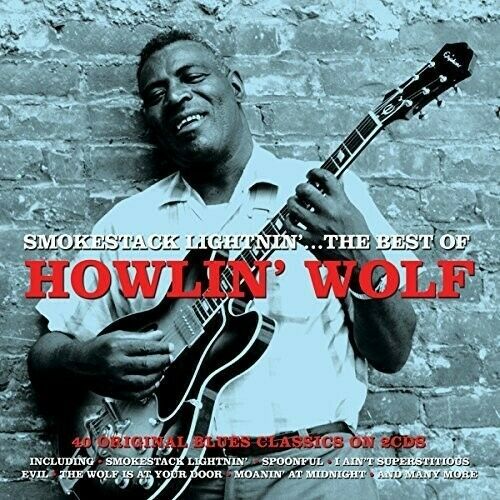
I first learned about Howlin’ Wolf after reading a Rolling Stones biography. It contained an interview that Brian Jones did in the early sixties. He founded the Stones and pushed the Stones toward the blues.
Howlin’ Wolf’s real name was Chester Burnett and he was born in 1910. He was a blues singer, guitarist, and harp player. He had a professional rivalry with fellow bluesman Muddy Waters. Waters ended up getting Wolf his first job in Chicago.
This classic song was recorded way back in 1956 at the legendary Chess studios in Chicago. Wolf is listed as the songwriter and the producers were Leonard Chess, Phil Chess, and Willie Dixon. He lives up to the Howlin’ part of his name…his voice is powerful. He has been credited as one of the first to move acoustic blues to electric guitar.
The Yardbirds (The Clapton version) covered this song and Howlin’ Wolf himself considered their version the definitive version of his song. That had to be quite an honor coming from the man himself.
After reading many of Christian’s posts…I realized I need to add some more blues into my blog…
Smokestack Lightning
Whoa, smokestack lightnin’ Shinin’ just like gold Why don’t you hear me cryin’? A-whoo-hoo, a-whoo-hoo, whoo
Whoa-oh, tell me, baby What’s the matter here? Why don’t you hear me cryin’? Whoo-hoo, whoo-hoo, whoo
Whoa-oh, tell me, baby Where did you stay last night? Why don’t you hear me cryin’? Whoo-hoo, whoo-hoo, whoo
Whoa-oh, stop your train Let a poor boy ride Why don’t you hear me cryin’? Whoo-hoo, whoo-hoo, whoo
Whoa-oh, fare-you-well Never see a you no more Why don’t you hear me cryin’? Whoo-hoo, whoo-hoo, whoo
Whoa-oh, who been here baby since I, I been gone a little bitty boy? Girl, be on A-whoo-hoo, whoo-hoo, whoo
I want to thank you all who have stuck with me through this long haul. We are now finished with the 3rd season! The next season will be quick with only 18 hour long episodes. If you want… please comment on what you think I got wrong, right, or just your favorite episodes.
Season three was not as consistent as seasons 1 and 2 but it still contained some classics such as To Serve Man, A Game Of Pool, The Midnight Sun, Deaths-Head Revisited, Nothing In The Dark, The Dummy, and more.
By the close of the third season, The Twilight Zone had made cultural inroads beyond its status as a mere television series. The show started to fit into popular culture, the twilight zone was a phrase perfectly suited to describe any number of strange situations.
Dean Rusk, the Secretary of State, in a speech to the Senate, referred to the Twilight Zone in diplomacy, Serling noted. When that happened, I thought, My gosh, we’ve arrived! During the 1962 California gubernatorial primaries, Governor Pat Brown said he was looking forward to the post-election TV logs reading, Richard Nixon Returns to Twilight Zone.
In the spring of 1962, The Twilight Zone was late in finding a sponsor for its fourth season. As a result, CBS programmed a new show, Fair Exchange, into its time slot for the fall. Suddenly and without prior warning, The Twilight Zone was off the air.
After CBS dropped The Twilight Zone, Serling accepted a teaching post at Antioch College, effective September, 1962, through January, 1963. CBS did of course pick the series back up after a while. The series renewal made no change in this decision. Serling was tired of The Twilight Zone and burned out. Over the next two seasons, his involvement in the show would be greatly decreased. He would still host the show and contribute his share of scripts, but his input on the details of production would be minimal. Those decisions would be made by others.
CBS ordered only 18 episodes for the 4th season but…they would now be an hour long in format. With Serling’s less involvement combined with the hour format…the shows quality declined in this season. It would somewhat bounce back in the 5th season.
The Raspberries formed in the early 1970s when Eric Carmen and Jim Bonfanti envisioned a band that would emulate bands such as The Beatles, The Who, and The Beach Boys.
This song came off of the Side 3 album released in 1973. This song…well the way I would describe it is country tinged power pop. It was an odd and cool album cover. It was a die-cut of a basket of Raspberries, with the group’s name placed on top of the LP sleeve.
Three members wrote and sang songs. It wasn’t just Eric Carmen…This song was written and sung by Dave Smalley the bass player. This was their third album and they would end up releasing four studio albums.
The band consisted of Eric Carmen (vocalist/guitarist/bassist/pianist), Wally Bryson (guitarist), Jim Bonfanti (drummer), and Dave Smalley (guitarist/bassist).
Their last appearance as the original lineup was on The Mike Douglas Show in 1974. Shortly after… Bonfanti and Smalley both quit the band to pursue individual music careers. Michael McBride and Scott McCarl replaced them and shortly after Raspberries went on to produce their fourth and final album Starting Over…which yielded what could be their masterpiece… Overnight Sensation.
In 2004, the original four members of the group performed at Cleveland’s House of Blues. This resulted in a 2005 mini-tour. The Raspberries performed at other venues around the United States, with their final concert performance in Cleveland, Ohio at KeyBank State Theatre on December 14th, 2007.
Should I Wait
Don’t you know you’re gonna lose If you love somebody that don’t love you? You’ll believe him when he’s untrue But I can’t bear seein’ him break your heart in two I’ve let it happen much too long
Should I wait, hopin’ you’ll find out on your own? It’s me who’s loved you for so long
If he hurts you with his lies Don’t let it take too long to open your eyes You’re gonna see through his disguise But I can’t bear seein’ him break your heart in two I’m tired of tryin’ to play it cool
Should I wait, hopin’ you’ll find out on your own? The one you love is just a fool
If I had the chance I’d make you see When you fall in love how it should be A love that makes you sad can only turn out bad So I’ll be hangin’ ’round until you’re free
Don’t you know you’re gonna lose If you love somebody that don’t love you? You’ll believe him when he’s untrue But I can’t bear seein’ him break your heart in two I’ve let it happen much too long
Should I wait, hopin’ you’ll find out on your own? It’s me who’s loved you for so long
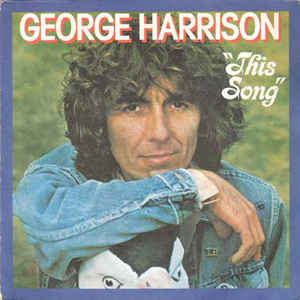
After being sued for My Sweet Lord, George Harrison wrote this song. This was Harrison’s funny send-up of the He’s So Fine and My Sweet Lord plagiarism court case.
The line, “This tune has nothing Bright about it,” is a reference to Bright Tunes Music, the company that owned the publishing rights to “He’s So Fine” and sued Harrison.
It was the first single for Harrison’s Thirty Three & 1/3 album, and features Billy Preston on piano and organ, and Monty Python’s Eric Idle calling out a falsetto “Could be ‘Sugar Pie, Honey Bunch,” “No, sounds more like ‘Rescue Me’!” interjection right before the instrumental break.
The song peaked at #25 in the Billboard 100 and #30 in Canada in 1976. I bought this album when I was 10 and still enjoy it. I couldn’t stop playing Crackerbox Palace.
U.S. District Court Judge Richard Owens found that while he did not feel that George had ‘deliberately’ plagiarized the song ‘He’s So Fine’, there was substantial evidence that he did infringe on the song’s copyright. George was found guilty and ordered to pay damages in the amount of $587,000.”
From Songfacts
Harrison made a video for this song where he is seen pleading his case in courtroom that devolves into a full-on circus by the end, a metaphor for the actual proceedings. The video was shown on Saturday Night Live when Harrison was the musical guest on November 20, 1976. On the same show, Harrison’s video for “Crackerbox Palace” also aired.
This Song
This song has nothing tricky about it This song ain’t black or white and as far as I know Don’t infringe on anyone’s copyright, so
This song, we’ll let be This song is in E This song is for you and
This tune has nothing bright about it This tune ain’t bad or good and come ever what may My expert tells me it’s okay
As this song came to me Unknowingly This song could be you could be, ooh
This riff ain’t trying to win gold medals This riff ain’t hip or square, well-done or rare May end up one more weight to bear
But this song could well be A reason to see That without you there’s no point to this song Ooh, ooh
But this song could well be A reason to see That without you there’s no point to this song








 PowerPop... An Eclectic Collection of Pop Culture