This song is why I first bought this album. I heard it and it’s country/blues/rock style stayed with me. The song sounds low down, dirty, and sleazy…that only the Stones can deliver.
Keith Richards’ fingers began to bleed as he played acoustic guitar for hours while Mick Jagger worked with an engineer on the drum track. The title came from Keith’s desire to record his track. At least that’s the story the Mick and Keith tells. The phrase “Let It Bleed” is an intravenous drug user slang for successfully finding a vein. The syringe plunger is pulled back and if blood appears, it is called letting it bleed.
This was recorded around the same time as The Beatles Let It Be, but the similar titles were just a supposed coincidence.
The Stones recorded this after the death of Brian Jones but before Mick Taylor joined the band as his replacement. As a result, Keith Richards played both acoustic and slide electric guitar, and Bill Wyman played bass and autoharp.
The song wasn’t a single but the album (also named Let It Bleed) peaked at #3 in the Billboard Album Chart in 1969.
From Songfacts
This was the first Stones song to also be the album title.
Ian Stewart, often considered “The sixth Stone,” played the piano. This was his only appearance on Let It Bleed.
There are many references to sex and drugs in the lyrics to this track – an example of the Stones writing about what they knew.
Autoharp is a string instrument with a series of chord bars attached to dampers which, when pressed, mute all but the desired chord. An autoharp is not really a harp – it’s a zither.
The English TV cook and author Delia Smith baked the cake on the album sleeve before she became famous. She got the gig through being a friend of the photographer, Don McAllester. In 1971, two years after the release of Let It Bleed, Delia Smith’s first cookery book, How To Cheat at Cooking, was launched and by the end of the decade she’d become the UK’s best known TV cook.
Let It Bleed
Well, we all need someone we can lean on And if you want it, you can lean on me Yeah, we all need someone we can lean on And if you want it, you can lean on me
She said, my breasts, they will always be open Baby, you can rest your weary head right on me And there will always be a space in my parking lot When you need a little coke and sympathy
Yeah we all need someone we can dream on And if you want it baby, you can dream on me Yeah, we all need someone we can cream on Yeah and if you want to, you can cream on me
I was dreaming of a steel guitar engagement When you drunk my health in scented jasmine tea But you knifed me in my dirty filthy basement With that jaded, faded, junky nurse oh what pleasant company, ha
Though, we all need someone we can feel on Yeah and if you want it, you can feel on me, hey Take my arm, take my leg Oh baby don’t you take my head Hoo
Yeah, we all need someone we can bleed on Yeah but if you want it, well you can bleed on me Yeah, we all need someone we can bleed on Yeah yeah and if you want it baby why don’t ya You can bleed on me All over, hoo
Ah, get it on rider, hoo Get it on rider Get it on rider You can bleed all over me, yeah Get it on rider, hoo Get it on rider, yeah You can cream all over, you can come all over me, ah Get it on rider ey Let it out rider Let it out rider You can come all over me
This track sums up the 70s Stones very well. Great riff, great tone, and great Mick Jagger vocal. This song and album were produced by Jimmy Miller who also played percussion on this track.
This song was on the album Sticky Fingers. The album peaked at #1 in the Billboard Album Charts, #1 in the UK and #1 in Canada in 1971.
The Stones played a shorter version of this song a few times before it was released on the Sticky Fingers album. These performances took place on their 11-date UK farewell tour before they left England to avoid taxes. After these shows, they didn’t play it live again until 2002, at which point they could bring alone plenty of musicians to support it.
Mick Taylor: “‘Can’t You Hear Me Knocking’ is one of my favorites. (The jam at the end) just happened by accident; that was never planned. Towards the end of the song I just felt like carrying on playing. Everybody was putting their instruments down, but the tape was still rolling and it sounded good, so everybody quickly picked up their instruments again and carried on playing. It just happened, and it was a one-take thing. A lot of people seem to really like that part.”
From Songfacts
This is an unusually long Stones track, running 7:14. Mick Jagger’s work is done by 2:45, however, as the groove plays out for the next four-and-a-half minutes. The Stones were experimenting with different styles around this time, and “Can’t You Hear Me Knocking?” has a distinct Santana influence.
This featured Bobby Keys on sax, Rocky Dijon on percussion, and Billy Preston on the organ. Keys, along with trumpet player Jim Price, joined The Stones on their 1970 European tour after performing on Sticky Fingers. His lengthy sax solo on this track wasn’t planned out, but once he got going, he kept blowing while the tape ran and Keith Richards loved it.
Probably best not to read too much into the lyrics of this one, since even Mick Jagger isn’t exactly sure what he wrote. As Robert Greenfield recounts in his book Ain’t It Time We Said Goodbye, shortly before the album was released, someone realized that the lyrics for this song and a few others had not been filed, making them impossible to copyright. Members of the Stones camp were dispatched to write down the words by listening to the acetate pressings, and on this song, the best they could come up with for one of the lines near the end was “I’ve got flatted feet, now.” Jagger insisted he didn’t write that line, but couldn’t remember what the real line was, so it stuck.
Andy Warhol designed the Sticky Fingers album cover. Before he started working on it, Mick Jagger send Warhol a note warning that a complicated design could cause nasty production delays, but nonetheless giving him total creative control. The artist responded with a cover that contained an actual working zipper, which of course was a production nightmare.
The cover, however, was one of the most memorable ever made. It showed a man wearing very tight jeans behind that working zipper – many folks assumed this was Mick Jagger, but it was actually Joe Dallesandro, a actor and Warhol cohort. Dallesandro appeared on the cover of the April 15, 1971 issue of Rolling Stone magazine; the album was released on April 23.
Jimmy Miller mixed records for The Spencer Davis Group and produced Steve Winwood’s next group, Traffic.
This was used in the movies Casino (1995), Blow (2001), Without a Paddle (2004) and The Fighter (2010).
Mick Taylor was lead guitarist for The Stones at the time. This was one of his earliest songs with the band – he replaced Brian Jones, who died in 1969.
This appears in the video game Guitar Hero II.
With mentions of “cocaine eyes” and “speed-freak jive,” this song contains some pretty obvious drug references, which makes sense considering the company the band was keeping at the time – pretty much everyone in their circle was doing drugs.
Can’t You Hear Me Knocking
Yeah, you got satin shoes Yeah, you got plastic boots Y’all got cocaine eyes Yeah, you got speed freak jive now
Can’t you hear me knockin’ On your window Can’t you hear me knockin’ On your door Can’t you hear me knockin’ Down your dirty street All right now
Help me baby I ain’t no stranger Help me baby I ain’t no stranger
Can’t you hear me knockin’ Are you safe asleep Can’t you hear me knockin’ Down your gaslight street Can’t you hear me knockin’ Throw me down the keys
Hear me ringin’ Big bell toll Hear me singin’ Soft and low I’ve been beggin’ On my knees I’ve been kickin’ Help me please
Hear me howlin’ I wanna take you down Hear me growlin’ Yeah, I got flatted feet now now now Hear me prowlin’ All around your street Hear me knockin’ All around your town
Of all of the Rolling Stones riffs…this one is one of the most memorable. It’s menacing with a dash of eastern influence. Brian Jones plays a sitar on this record. This was one of the Stones best periods. Whatever song they wrote, Jones would play a different instrument to color the song.
The Stones were more adventurous in the mid-sixties. Along with some blues they ventured into pop, rock, and a bit of psychedelia. After Brian left they played mostly blues-rock along with a little reggae-influenced music later on.
The song peaked at #1 in the Billboard 100, #1 in Canada, #1 in the UK, and #4 in New Zealand in 1966.
The Stones former manager Allen Klein owned the publishing rights to this song. In 1965, The Stones hired him and signed a deal they would later regret. With Klein controlling their money, The Stones signed over the publishing rights to all the songs they wrote up to 1969. Every time this is used in a commercial or TV show, Klein’s estate (he died in 2009) gets paid.
From Songfacts
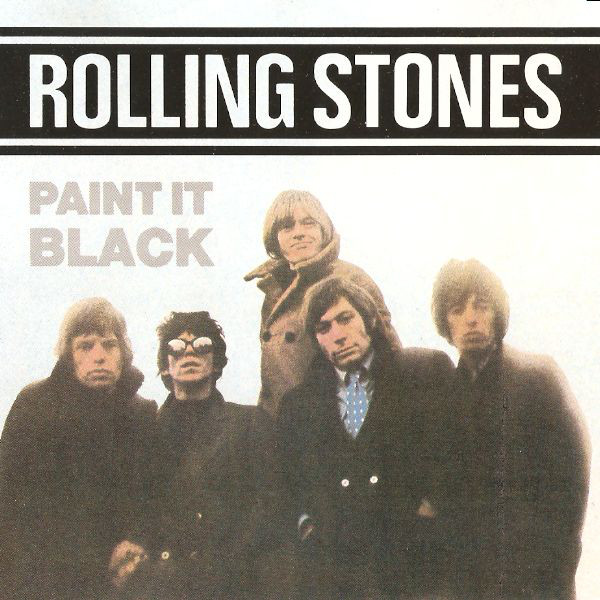
This is written from the viewpoint of a person who is depressed; he wants everything to turn black to match his mood. There was no specific inspiration for the lyrics. When asked at the time why he wrote a song about death, Mick Jagger replied: “I don’t know. It’s been done before. It’s not an original thought by any means. It all depends on how you do it.”
The song seems to be about a lover who died:
“I see a line of cars and they’re all painted black” – The hearse and limos.
“With flowers and my love both never to come back” – The flowers from the funeral and her in the hearse. He talks about his heart being black because of his loss.
“I could not foresee this thing happening to you” – It was an unexpected and sudden death.
“If I look hard enough into the setting sun, my love will laugh with me before the morning comes” – This refers to her in Heaven.
The Rolling Stones wrote this as a much slower, conventional soul song. When Bill Wyman began fooling around on the organ during the session doing a takeoff of their original as a spoof of music played at Jewish weddings. Co-manager Eric Easton (who had been an organist), and Charlie Watts joined in and improvised a double-time drum pattern, echoing the rhythm heard in some Middle Eastern dances. This new more upbeat rhythm was then used in the recording as a counterpoint to the morbid lyrics.
On this track, Stones guitarist Brian Jones played the sitar, which was introduced to pop music by The Beatles on their 1965 song Norwegian Wood (This Bird Has Flown). Jones made good television by balancing the instrument on his lap during appearances.
Keith Richards: “We were in Fiji for about three days. They make sitars and all sorts of Indian stuff. Sitars are made out of watermelons or pumpkins or something smashed so they go hard. They’re very brittle and you have to be careful how you handle them. We had the sitars, we thought we’d try them out in the studio. To get the right sound on ‘Paint It Black’ we found the sitar fitted perfectly. We tried a guitar but you can’t bend it enough.”
This was used as the theme song for Tour Of Duty, a CBS show about the Vietnam War which ran from 1987-1989.
On the single, there is a comma before the word “black” in the title, rendering it, “Paint It, Black.” This of course changes the context, implying that a person named “Black” is being implored to paint. While some fans interpreted this as a statement on race relations, it’s far more likely that the rogue comma was the result of a clerical error, something not uncommon in the ’60s.
Mick Jagger: “That was the time of lots of acid. It has sitars on it. It’s like the beginnings of miserable psychedelia. That’s what the Rolling Stones started – maybe we should have a revival of that.”
U2 did a cover for the 7″ B-side of “Who’s Gonna Ride Your Wild Horses,” and used some of it in live versions of “Bad.” Other artists who have covered the song include Deep Purple, Vanessa Carlton, GOB, Tea Party, Jonny Lang, Face to Face, Earth Crisis, W.A.S.P., Rage, Glenn Tipton, Elliott Smith, Eternal Afflict, Anvil, and Risa Song.
Jack Nitzsche played keyboards. Besides working with The Stones, Nitzsche arranged records for Phil Spector and scored many movies. Nitzsche had an unfortunate moment when he appeared on the TV show Cops after being arrested for waving a gun at a guy who stole his hat. He died of a heart attack in 2000 at age 63.
This is featured in the closing credits of the movie The Devil’s Advocate. It is also heard at the end of Stanley Kubrick’s movie Full Metal Jacket, where it serves as an allegory of the sorrow of the sudden death in the song relating to the emotional death of the men in the film, and of all men in war.
This song was used in the movie Stir Of Echoes with Kevin Bacon. In the movie, Bacon’s character hears the first few chords of it in a memory, but could not think of the song. It drives him crazy through most of the movie.
Talking on his Absolute Radio show, Stones’ co-guitarist Ronnie Wood disclosed that Keith Richards has trouble remembering how to play this song. He revealed, “We always have this moment of hesitation where we don’t know if Keith’s going to get the intro right.”
Keith Richards: “What made ‘Paint It Black’ was Bill Wyman on the organ, because it didn’t sound anything like the finished record until Bill said, ‘You go like this.'”
Ciara recorded a breathy, stirring cover for the 2015 movie, The Last Witch Hunter. The R&B star told Rolling Stone that it was a surprise for her when she got the call from Universal Publishing and Lionsgate to record the tune. “When they asked me to do this, I was like, ‘Absolutely. This would be an honor,'” she said. “I had never thought to cover this song. It was never on my radar to cover it, but when the opportunity came along, I was very thrilled, because I love what the producer Adrianne Gonzales did.”
“The direction that she went in was actually a sound I’ve always wanted to play with, and it just didn’t get any better than being able to cover a Rolling Stones song,” Ciara continued. “I feel like it pushes the edge and the limit for me, in reference to what people probably expect from me. So this was so many cool things in one. It was a huge honor, and then creatively I just got to really have some fun that I don’t usually do in my music.”
This wasn’t the only “black” hit of 1966; the Spanish group Los Bravos went to #4 US and #2 UK with “Black Is Black” that year.
In the two weeks this song was at #1 in June 1966, the #2 song was “Did You Ever Have to Make up Your Mind?” by The Lovin’ Spoonful, an American group that made inroads against the British Invasion bands with relentlessly upbeat pop songs. Their jaunty song about trying to decide between two girls was quite a contrast to “Paint It Black.”
In his 2002 book Rolling with the Stones, Bill Wyman explained that the album was intended to be the soundtrack for the never-filmed movie Back, Behind And In Front. The deal fell through when Mick Jagger met director Nicholas Ray (who directed James Dean in Rebel Without A Cause) and didn’t like him.
Paint It Black
I see a red door and I want it painted black No colors anymore, I want them to turn black I see the girls walk by dressed in their summer clothes I have to turn my head until my darkness goes
I see a line of cars and they’re all painted black With flowers and my love, both never to come back I see people turn their heads and quickly look away Like a newborn baby it just happens ev’ryday
I look inside myself and see my heart is black I see my red door and I must have it painted black Maybe then I’ll fade away and not have to face the facts It’s not easy facing up when your whole world is black
No more will my green sea go turn a deeper blue I could not foresee this thing happening to you If I look hard enough into the setting sun My love will laugh with me before the morning comes
I see a red door and I want it painted black No colors anymore I want them to turn black I see the girls walk by dressed in their summer clothes I have to turn my head until my darkness goes
I want to see your face painted black, black as night, black as coal Don’t want to see the sun, flying high in the sky I want to see it painted, painted, painted, painted black, yea
When I saw the Stones on the 2006 Bigger Bang tour I was looking forward to this song than any other. It was the second time I had gone to see them. This time it was in Kentucky at the famous Churchill Downs venue that is not meant for Rock and Roll but it was cool.
The lyric “Making bets on Kentucky Derby Day” drew a huge response from the rain-drenched crowd. The song was on the great Sticky Fingers album released in 1971. Gram Parsons who was into country music heavily and hanging around with the Stones probably influence this track to a point.
This song rolled during the final credits of The Big Lebowski. Allen Klein, the ex Rolling Stones manager and owner of the song initially wanted $150,000 for the movie’s use of it. He was then convinced to let them use it for free when he saw the scene in which The Dude says, “I hate the f—in’ Eagles, man!”. The version in the movie was a Townes Van Zandt cover.
From Songfacts
In this song, Mick Jagger addresses a girl named Susie with more than a little disdain: She’s welcome to send him dead flowers, but he’ll put roses on her grave. The music and lyrics both have a distinct country vibe. Jagger explained in 1995: “I love country music, but I find it very hard to take it seriously. I also think a lot of country music is sung with the tongue in cheek, so I do it tongue-in-cheek. The harmonic thing is very different from the blues. It doesn’t bend notes in the same way, so I suppose it’s very English, really. Even though it’s been very Americanized, it feels very close to me, to my roots, so to speak.”
Mick Jagger, 2003: “The ‘Country’ songs we recorded later, like ‘Dead Flowers’ on Sticky Fingers or Far Away Eyes on Some Girls, are slightly different (than our earlier ones). The actual music is played completely straight, but it’s me who’s not going legit with the whole thing, because I think I’m a blues singer not a country singer – I think it’s more suited to Keith’s voice than mine.” >>
The line, “I’ll be in my basement room with a needle and a spoon” is probably a reference to shooting up heroin.
Dead Flowers
Well when you’re sitting there in your silk upholstered chair Talkin’ to some rich folk that you know Well I hope you won’t see me in my ragged company Well, you know I could never be alone
Take me down little Susie, take me down I know you think you’re the queen of the underground And you can send me dead flowers every morning Send me dead flowers by the mail Send me dead flowers to my wedding And I won’t forget to put roses on your grave
Well when you’re sitting back in your rose pink Cadillac Making bets on Kentucky Derby Day Ah, I’ll be in my basement room with a needle and a spoon And another girl to take my pain away
Take me down little Susie, take me down I know you think you’re the queen of the underground And you can send me dead flowers every morning Send me dead flowers by the mail Send me dead flowers to my wedding And I won’t forget to put roses on your grave
Take me down little Susie, take me down I know you think you’re the queen of the underground And you can send me dead flowers every morning Send me dead flowers by the U.S. Mail Say it with dead flowers in my wedding And I won’t forget to put roses on your grave No, I won’t forget to put roses on your grave
Yeah when you call my name, I salivate like a Pavlov dog…One of the raunchiest riffs around. Combine that with the lyrics and you have a great little rock song. This is the Stones at the top of their game.
This song was the B side to Brown Sugar. Not a bad deal for your money. It’s another great song off of the Sticky Fingers LP. Here is a review of Sticky Fingers at Aphoristic’s site.
Below Andy Johns talks about the importance of Keith Richards…no matter if he was tardy a few times.
Andy Johns engineer: When we were doing “Bitch,” Keith was very late. Jagger and Mick Taylor had been playing the song without him and it didn’t sound very good. I walked out of the kitchen and he was sitting on the floor with no shoes, eating a bowl of cereal. Suddenly he said, Oi, Andy! Give me that guitar. I handed him his clear Dan Armstrong Plexiglass guitar, he put it on, kicked the song up in tempo, and just put the vibe right on it. Instantly, it went from being this laconic mess into a real groove. And I thought, Wow. THAT’S what he does
Bitch was written by Mick Jagger and Keith Richards, “Bitch” was recorded during October 1970 at London’s Olympic Studios, and at Stargroves utilizing the Rolling Stones Mobile studio.
From Songfacts
Love is the “bitch,” not any specific woman. Mick Jagger had many relationships he could base this on, including his breakup with Marianne Faithfull. He broke up with her after she tried to commit suicide while they were in Australia in late 1969 (Mick was filming Ned Kelly). As soon as Marianne recovered, Mick dumped her.
The Stones recorded this song, and many others on the album, at the Stargroves estate in Hampshire, England, using their mobile recording unit manned by engineer Andy Johns.
Despite (or maybe because of) the rather provocative title, this became one of the more popular Rolling Stones songs, often appearing in their setlists. It wasn’t released as a single but got plenty of play on rock radio.
In 1974, Elton John broke the “bitch” barrier on pop radio with “The Bitch Is Back,” which went to #4 in the US.
Along with “Under My Thumb,” this didn’t help the Stones’ image with women’s groups.
The album cover was designed by Andy Warhol. It was a close-up photo of a man in a pair of jeans complete with an actual zipper. The zipper caused problems in shipment because it scratched the record. They figured out that if they opened the zipper before shipment, it did minimal damage.
Speaking with Rolling Stone, Keith Richards said: “It comes off pretty smooth, but it’s quite tricky. There’s an interesting bridge you have to watch out for. Otherwise, it’s a straightforward rock and soul that we love. It’s Charlie Watts’ meat and potatoes.”
This features Bobby Keys on sax and Jim Price on trumpet. They provided horns on albums and tours for The Stones in the early ’70s.
The Goo Goo Dolls covered this in 1997 on the compilation album No Alternative.
The album title Sticky Fingers refers to the aptitude of a person who is likely to steal. It went well with the lawless image The Stones put forward.
Bitch
Feeling so tired, can’t understand it Just had a fortnight’s sleep I’m feeling so tired, I’m so distracted Ain’t touched a thing all week
I’m feeling drunk, juiced up and sloppy Ain’t touched a drink all night I’m feeling hungry, can’t see the reason Just ate a horse meat pie
Yeah when you call my name I salivate like a Pavlov dog Yeah when you lay me out My heart is beating louder than a big bass drum, alright
Yeah, you got to mix it child You got to fix it must be love It’s a bitch, yeah You got to mix it child You got to fix it but love It’s a bitch, alright
Sometimes I’m sexy, move like a stud Like kicking the stall all night Sometimes I’m so shy, got to be worked on Don’t have no bark or bite, alright
Yeah when you call my name I salivate like a Pavlov dog Yeah when you lay me out My heart is bumpin’ louder than a big bass drum, alright
I said hey, yeah I feel alright now Got to be a Hey, I feel alright now Hey hey hey Hey hey yeah Hey hey hey Hey hey yeah Hey hey hey Hey hey yeah Hey hey hey Hey hey yeah Hey hey hey
One of my favorite intros to any song. Billy Preston did a funky clavinet intro that sounds dark and huge. Mick Taylor’s solo on this song is perfect…without Mick Taylor they would have made those stretch of albums in the late sixties and early seventies but they would have sounded different. When Mick Taylor quit…they lost their sound from this period.
The song peaked at #15 in the Billboard 100 in 1974. It was on the great album Goats Head Soup which peaked at #1 in 1973.
From Songfacts
This tells two stories, a young man shot by police in a case of mistaken identity, and a 10-year girl who dies in an alley of a drug overdose. Neither is based on a true story, but is a commentary on urban America.
The horns were arranged by trumpet player Jim Price, who along with Bobby Keys on sax, provided the brass on records and tours for The Stones in the early ’70s. This was the last time Price recorded with The Stones. He went on to produce other artists, including Joe Cocker.
Keith Richards played bass and shared lead guitar duties with Mick Taylor.
Billy Preston played the piano.
The Stones played this on their 1973 European tour, even though it describes events in America.
Chuck Findley played trumpet on this. Other artists he worked for include George Harrison, Quincy Jones, Diana Ross, the Carpenters, Julio Iglesias, Rod Stewart, Robert Palmer and Madonna.
Doo Doo Doo Doo Doo Heartbreaker
The police in New York City They chased a boy right through the park And in a case of mistaken identity The put a bullet through his heart
Heart breakers with your forty four I want to tear your world apart You heart breaker with your forty four I want to tear your world a part
A ten year old girl on a street corner Sticking needles in her arm She died in the dirt of an alleyway Her mother said she had no chance, no chance!
Heart breaker, heart breaker She stuck the pins right in her heart Heart breaker, pain maker Stole the love right out of you heart
Oh yeah, oh yeah Want to tear your world apart Oh yeah, oh yeah Want to tear your world apart
Heart breaker, heart breaker You stole the love right out of my heart Heart breaker, heart breaker I want to tear that world I want to tear that world I want to tear that world apart
Heart breaker, heart breaker Stone love, stone love Oh yeah, oh yeah
Heartbreaker, heartbreaker Want to tear that world apart
One of my favorites off of Exile on Main Street. This was going to be the first single off of the album but Tumbling Dice… understandably was the first. This song didn’t chart but it just added to the greatness that is Exile on Main Street.
Engineer Andy Johns talked about this single. It was the first song finished for the album and Mick thought it was perfect for the first single. Andy disagreed and told Mick. I know this is a long quote but it’s worth a read. It shows you how much power some bands like the Stones had in the 60s and 70s.
Andy Johns:
“It was the first one that was finished cause we’d be working for months and months. Mick got very enamored. ‘It’s finished! It’s going to be the single!’ I thought, ‘This isn’t really a single, you know.’ I remember going out and talking to him and he was playing the piano. ‘Mick, this isn’t a single. It doesn’t compare to “Jumpin’ Jack Flash” or “Street Fighting Man.” ‘Come on, man.’ He went, ‘Really? Do you think so?’ I thought, ‘My God. He’s actually listening to me.’ (laughs). And then, I was having a struggle with the mix I thought was gonna be it. Ahmet Ertegun then barged in with a bunch of hookers and ruined the one mix. He stood right in front of the left speaker with two birds on each arm (laughs). I told Mick, ‘I can’t hear it here. If I could hear it on the radio that would be nice.’ It was just a fantasy. ‘Oh, we can do that.’ ‘Stew (piano player Ian Stewart), go to the nearest FM radio station with the tape and say we’d like to hear it over the radio. And we’ll get a limo and Andy can listen to it in the car.’ I went, ‘Bloody hell…Well, it’s the Stones. OK.’ So sure enough, we’re touring down Sunset Strip and Keith is in one seat, and I’m in the back where the speakers are with Mick, and Charlie is in there, too. Just because he was bored (laughs). And Mick’s got the radio on and the DJ comes on the air, ‘We’re so lucky tonight. We’re the first people to play the new Stones’ record.’ And it came on the radio and the speakers in this car were kind of shot. I still couldn’t tell. And it finishes. Then Mick turns around. ‘So?’ ‘I’m still not sure, man.’ I’m still not used to these speakers’. ‘Oh, we’ll have him play it again then.’ Poor Stew. ‘Have them play it again’ like they were some sort of radio service. It was surreal. Up and down Sunset Strip at 9:00 on a Saturday night. The Strip was jumpin’ and I’m in the car with those guys listening to my mixes. It sounded OK. ‘I think we’re down with that.’ So then we moved on.”
From Songfacts
When The Stones gave this to a Los Angeles radio station in 1971 while they were still working on it so they could hear what it sounded like on the radio, it spread rumors that it would be the first single off Exile on Main St., but that honor went to “Tumblin’ Dice.”
Producer Jimmy Miller added percussion. He had to play some of the instruments on the album because The Stones were rarely together during the sessions, which took place at a French villa Keith Richards rented.
Kathi McDonald sang backup. She was a backup singer for Leon Russell and went on to record with Nicky Hopkins and Quicksilver Messenger Service.
All Down The Line
Yeah, heard the diesel drumming all down the line. Oh, heard the wires a humming all down the line. Yeah, hear the women sighing all down the line. Oh, hear the children crying all down the line.
(All down the line) We’ll be watching out for trouble, yeah. (All down the line) And we’d better keep the motor running, yeah. (All down the line) Well, you can’t say yes and you can’t say no, Just be right there when the whistle blows. I need a sanctified girl with a sanctified mind to help me now.
Yeah, all the people singing all down the line. Mmmm, watch the men all working, working, yeah. (All down the line)
(All down the line) We’re gonna open up the throttle yeah. (All down the line) We’re gonna bust another bottle, yeah. (All down the line)
I need a shot of salvation, baby, once in a while. Hear the whistle blowing, hear it for a thousand miles.
(All down the line) We’re gonna open up the throttle, yeah. All down the line, we’re gonna bust another bottle, yeah. Well you can’t say yes, and you can’t say no, Just be right there when the whistle blows. I need a sanctified mind to help me out right now.
Be my little baby for a while. Won’t you be my little baby for a while? Won’t you be my little baby for a while? Won’t you be my little baby for a while? Won’t you be my little baby for a while?
I remember back in 1981 when the Stones were touring across America. This song was released from the tour with a great version of Twenty Flight Rock. I bought the singles Going to a Go-Go and this one, the live album (Still Life) and then I saw the video Let’s Spend The Night Together. It was going to be the LAST tour of the Stones…uh yeah
The song was written by Jerry Ragovoy (using the pseudonym “Norman Meade”). The song was originally released by the Stones in 1964 and it peaked at #6 in the Billboard 100. This is one of the very few songs that I prefer the live version to the studio version in 1964.
Keith Richards said of this song: “In America we were basically known for heavy, slowish kind of ballads. ‘Time Is On My Side,’ ‘Tell Me,’ ‘Heart of Stone,’ that was what we were known for. Strangely enough that was our thing. Every single was a slow song. Who would believe it? You’d think they’d be clamoring for out-and-out rock and roll, but no, it was the soul ballads that happened for us in America.”
From Songfacts
This song was originally recorded by the jazz trombonist Kai Winding and his Orchestra on the Verve Records label in October 1963. His version was mostly instrumental with just the lyric “time is on my side” sung by the background trio of Cissy Houston, Dionne Warwick and Dee Dee Warwick.
The first fully vocal version was recorded by the New Orleans soul singer Irma Thomas; her version was released as the B-side of “Anyone Who Knows What Love Is (Will Understand)” in June 1964. The Rolling Stones released their version of the song in the US on September 26, 1964, and it became their first Top 10 hit in America. Thomas’ version contains a spoken part in the middle that the Stones left out.
The lyrics were most likely written by Jimmy Norman, who was a member of The Coasters. The songwriting credit is unclear, and usually lists Jerry Ragovoy, who wrote “Piece Of My Heart” and “Try” for Janis Joplin, as the only writer, sometimes as “Norman Meade,” which he used as a pseudonym. Thomas’ original single lists the credit as “J. Norman – N. Meade.” Ragovoy, who also produced the song for Thomas, died in 2011 at age 80.
In this song, Mick Jagger has lost his girl, but he knows it’s just a matter of time until he returns. After all, he’s got “the real love, the kind that you need.”
This was one of two songs The Stones performed on their first Ed Sullivan Show appearance, October 25, 1964. The other was “Around And Around,” a Chuck Berry cover.
That February, The Beatles made their historic debut on Sullivan to crowd hysteria. The Stones hadn’t yet developed a fan base in America, but the teenage girls in the audience still went crazy. The appearance earned them lots of attention and helped send “Time Is On My Side” up the chart – it reached #6 on December 5.
The Stones returned to the show five more times, always earning a wildly enthusiastic greeting from the crowd. On their fifth appearance, they capitulated to Sullivan by changing “Let’s Spend The Night Together” to “Let’s Spend Some Time Together.”
The Rolling Stones released two versions of this song. The US single was recorded in England and is slower, with a gospel organ. The British version was recorded at Chess studios in Chicago.
This song played a key role in the suspense thriller Fallen with Denzel Washington and John Goodman.
Time Is On My Side
Time is on my side, yes it is. Time is on my side, yes it is. Now you all were saying that you want to be free But you’ll come runnin’ back (I said you would baby), You’ll come runnin’ back (like I told you so many times before), You’ll come runnin’ back to me.
Time is on my side, yes it is. Time is on my side, yes it is. You’re searching for good times but just wait and see, You’ll come runnin’ back (I said you would darling), You’ll come runnin back (Spent the rest of life with ya baby), You’ll come runnin’ back to me.
Go ahead baby, go ahead, go ahead and light up the town! And baby, do anything your heart desires Remember, I’ll always be around. And I know, I know like I told you so many times before You’re gonna come back, Yeah you’re going to come back baby Knockin’, knockin’ right on my door.
Time is on my side, yes it is. Time is on my side, yes it is. ‘Cause I got the real love, the kind that you need. You’ll come runnin’ back (I knew you would one day), You’ll come runnin’ back (Baby I told you before), You’ll come runnin’ back to me.
Time, time, time is on my side, yes it is. Time, time, time is on my side, yes it is. Time, time, time is on my side
I wish this era of the Stones would have lasted longer. Yes, I love the electric blues slanted work they did after this but they wrote some great pop songs. Brian Jones plays the recorder (it sounds like a flute) in this song. You don’t hear much about Brian now but he expanded their sound in the mid-sixties with an array of instruments.
Bill Wyman said that Keith wrote the lyrics and Brian helped finish the melody. This song was the B side to “Let’s Spend The Night Together.”
This song peaked at #1 in the Billboard 100 in 1967.
Keith Richards: “That’s one of those things – some chick you’ve broken up with. And all you’ve got left is the piano and the guitar and a pair of panties. And it’s goodbye you know. And so it just comes out of that. And after that, you just build on it. It’s one of those songs that are easiest to write because you’re really right there and you really sort of mean it. And for a songwriter, hey break his heart and he’ll come up with a good song.”
From Songfacts
The fourth US #1 hit for the Rolling Stones, this ballad is about a groupie. It may have been inspired by Linda Keith, who was Keith Richards’ girlfriend. Richards said in According to the Rolling Stones: “It was probably written about Linda Keith not being there (laughs). I don’t know, she had pissed off somewhere. It was very mournful, very, VERY Ruby Tuesday and it was a Tuesday.”
Originally, this was called “Title B.”
Keith Richards and Brian Jones wrote most of this, but in keeping with Stones tradition, it was credited to Mick Jagger and Keith Richards.
Brian Jones was their lead guitarist until he died in 1969, and could play just about any instrument.
A large double-bass was used. Bill Wyman plucked the notes while Richards played it with a bow.
This was not on the English version of Between The Buttons because it was already released as a single there, and it was customary not to put singles on albums.
This was supposed to be the B-side of “Let’s Spend the Night Together,” but many radio stations shied away from the sexual implications of that song, so they played this instead and made it a hit.
Jagger: “Ruby Tuesday is good. I think that’s a wonderful song. It’s just a nice melody, really. And a lovely lyric. Neither of which I wrote, but I always enjoy singing it.”
The singer Melanie, who had a #1 hit with “Brand New Key” in 1971, released a cover of “Ruby Tuesday” in 1970 that went to #9 in the UK and #52 in the US. Rod Stewart also released a popular cover that was accompanied by a video. His version made #11 in the UK in 1993.
Ruby Tuesday
She would never say where she came from Yesterday don’t matter if it’s gone While the sun is bright Or in the darkest night No one knows, she comes and goes
Goodbye Ruby Tuesday Who could hang a name on you? When you change with every new day Still I’m gonna miss you
Don’t question why she needs to be so free She’ll tell you it’s the only way to be She just can’t be chained To a life where nothings gained And nothings lost, at such a cost
Goodbye Ruby Tuesday Who could hang a name on you? When you change with every new day Still I’m gonna miss you
“There’s no time to lose”, I heard her say Catch your dreams before they slip away Dying all the time Lose your dreams and you will lose your mind Ain’t life unkind?
Goodbye Ruby Tuesday Who could hang a name on you? When you change with every new day Still I’m gonna miss you
Goodbye Ruby Tuesday Who could hang a name on you? When you change with every new day Still I’m gonna miss you
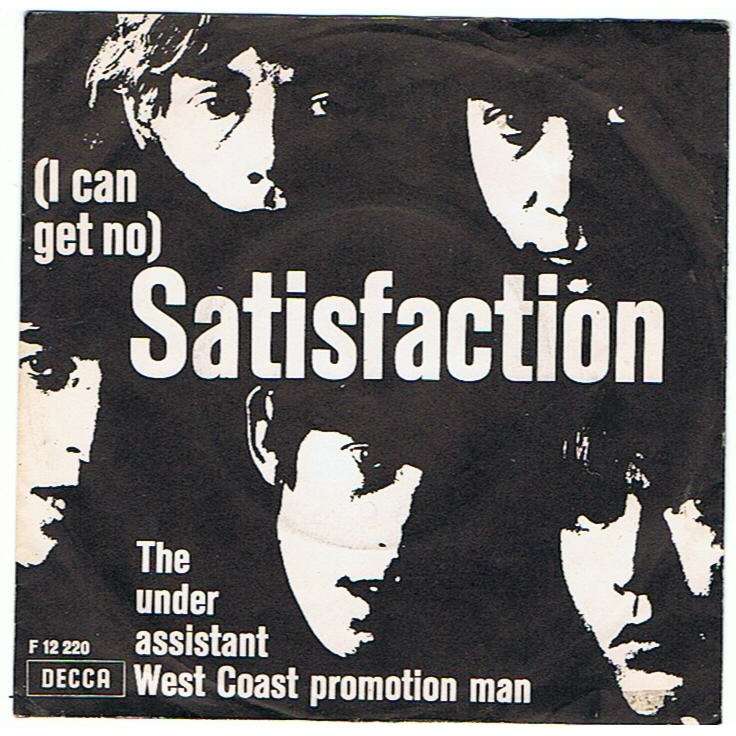
Not the most well-known song by the Stones but a lot of American’s owned it. I bought the single Satisfaction in 1979 and flipped it over and found this oddly named likable song. This was the American B side to Satisfaction. Not exactly Day Tripper/We Can Work It Out but a likable single all the same. The song was released in 1965.
The Stones recorded this in Chess studios in Chicago.
The song is about George Sherlock who was the London Records promotions man who accompanied the Stones to California. This was their response to having basically a chaperone.
Well, I’m waiting at the bus stop in downtown L.A.
Well, I’m waiting at the bus stop in downtown L.A.
But I’d much rather be on a boardwalk on Broadway
Well, I’m sitting here thinkin’ just how sharp I am
Well, I’m sitting here thinkin’ just how sharp I am
I’m an under assistant west coast promo man
Well, I promo groups when they come into town
Well, I promo groups when they come into town
Well they laugh at my toupee, they’re sure to put me down
Well, I’m sitting here thinking just how sharp I am
Yeah, I’m sitting here thinking just how sharp I am
I’m a necessary talent behind every rock and roll band
Yeah, I’m sharp
I’m really, really sharp
I sure do earn my pay
Sitting on the beach every day, yeah
I’m real real sharp, yes I am
I got a Corvette and a seersucker suit
Yes, I have
Here comes the bus, uh oh
I thought I had a dime
Where’s my dime
I know I have a dime somewhere
I’m pretty sure
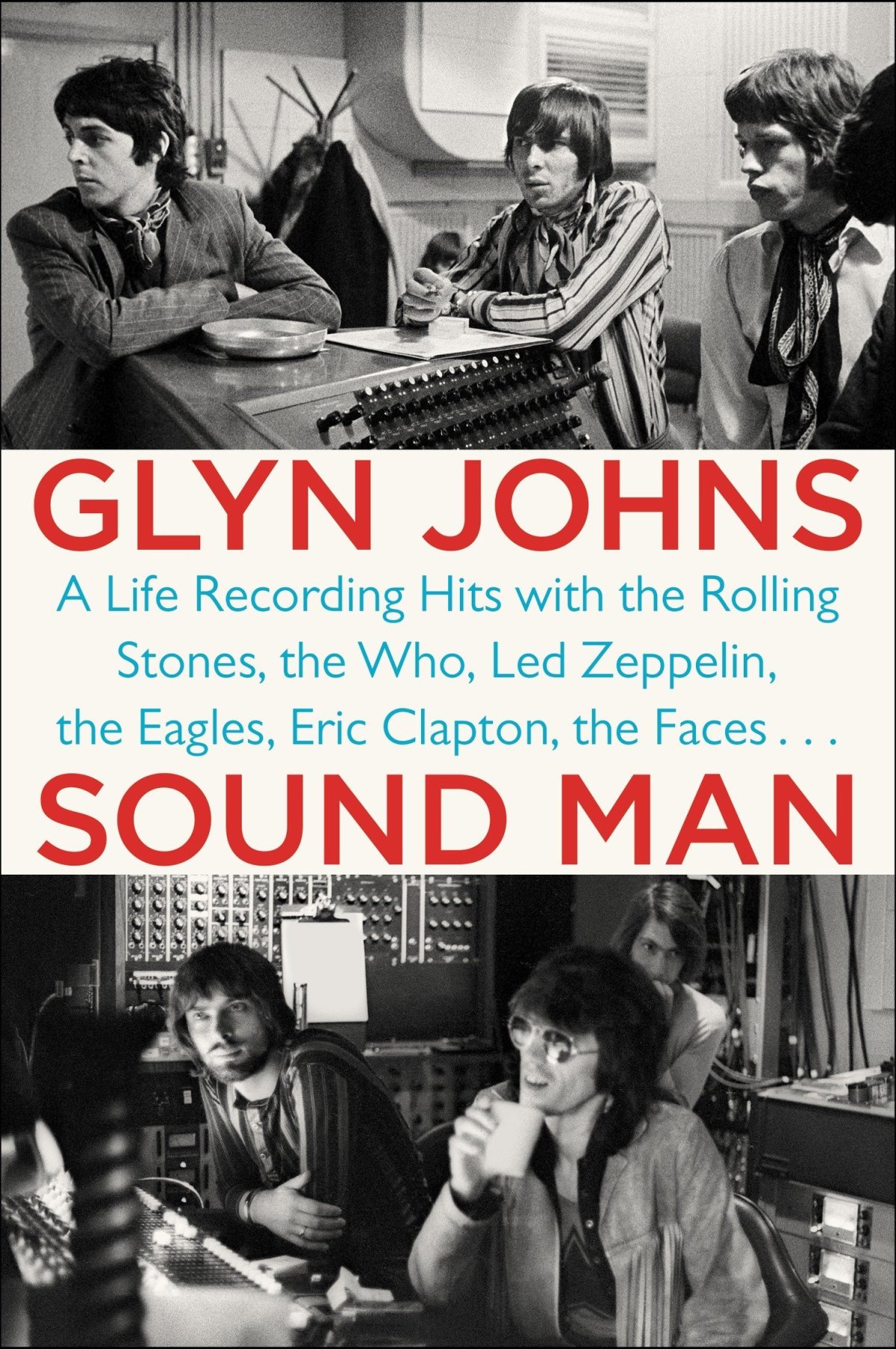
I read this book not knowing what to expect but I did know of Glyn Johns… so many of my albums had his name on it…A name that is known throughout the music industry as a great recording engineer, producer, and mixer. Glyn has worked with huge rock groups such as The Rolling Stones, Beatles, Who, Small Faces, Led Zeppelin, The Band and more.
Glyn is a no-nonsense guy and unlike most of the autobiographies of musicians in that era, he never did drugs and always did his job well. Glyn wanted to be a singer and did make a few records, he covered Rolling Stones Lady Jane, but he stuck with engineering and gradually became a producer.
Back when Glyn started in the early sixties engineers did not graduate to producing. It was very much a British class system in the music industry. He became the first freelance engineer in the industry because of the clients he attracted. He was one of the first to record the Stones and he began a relationship with them that lasted for years. He knew the Stones because he was really good friends with Ian Stewart and even shared a flat with him.
The Beatles called him to engineer Let It Be and he also helped engineer some of Abbey Road. He worked on Led Zeppelin’s first album. He produced Steve Miller’s first albums and also the first couple of Eagles albums.
This book will be very interesting to classic rock fans. Many anecdotes about the Stones, Beatles, Who and others. Glyn minces no words and has a reputation for saying what is on his mind. He isn’t too technical about recording in the book, he keeps it at a fast enjoyable pace.
He worked on some of the most classic albums ever. The Stones 60’s albums and the classic stretch of albums the Stones released until Black and Blue. He worked on Who’s Next, Quadrophenia, Led Zeppelin, A Nod Is As Good As a Wink… to a Blind Horse, Who Are You, Slowhand, just to name a few.
One interesting thing that happened in 1969. Glyn met Bob Dylan and Dylan told Johns that he would like to make an album with the Beatles and Stones. Glyn went back to England very excited and told Keith Richards and George Harrison and they were all for it. Ringo, Charlie, and Bill said they would do it. John didn’t say no but Mick and Paul said absolutely not…leaves you to wonder what it would have sounded like…
At the bottom of the page, I copied his discography from Wikipedia…it is incredible.
Excerpt from Sound Man about the Stones.
While Keith, Charlie, and Bill drove the band rhythmically, Mick’s energy and intellect drove everything else. I was constantly amazed by his skill as a songwriter and by the extraordinary energy he managed to summon for his vocal performances in the studio. Both Mick and Keith would take an active part in the mixing process and drove me nuts making me mix a track for hours when I felt I had got it in the first couple of passes. We certainly did not always agree. I guess it would have been even more boring if we had. There were a couple of occasions when finally putting the album together I would play back earlier mixes that I had done on my own, to compare with the one they had chosen after hours of farting around, and in the cold light of day they would agree that mine were better. Equally, there were many occasions when they insisted on me changing a mix quite drastically from the way I heard it, with great effect. Working with the Stones for all those years certainly had some amazing moments and I am proud to have been associated with them during a period of time when their music was so influential. However, Charlie summed it up perfectly when asked in a recent interview his experience of being in the band for fifty years. He replied, “Ten years of working and forty years of hanging around.”
Excerpt about The Beatles Let It Be
I had been retained originally as an engineer and was quite happy with that, even when I realized that George Martin was not producing. He did come to Twickenham a couple of times to check us out. He had arranged for the gear to be loaned for the recording at Savile Row and turned up on the day we did the filming on the roof, but had nothing to do with the production of the music. At the outset I was quite embarrassed when I realized he was not going to be involved. A couple of days into the project I asked Paul where George Martin was, only to be told that they had decided not to use him. By the time we moved to Savile Row, George, realizing I was in an awkward position, was kind enough to take me to lunch in order to put my mind at rest, saying I was doing a great job, everything was fine, and I was not stepping on his toes in any way. What a gentleman he is. Having delivered the mixed master of my version of Let It Be, I approached each member of the band separately, asking if I could have a production credit on the album when it was released. I made it quite clear that I was only asking for that and not a royalty. Paul, George, and Ringo had no objection to my request but John was suspicious and could not understand why I was not asking for a royalty. I explained that I felt, because of their stature, the sales of the album would not be affected by my involvement one way or another, so a credit would be a fair settlement for what I had done, as by association it could only be positive for my career in the future. I never got an answer from John. As it turned out, none of this mattered, as in the end, after the group broke up, John gave the tapes to Phil Spector, who puked all over them, turning the album into the most syrupy load of bullshit I have ever heard. My master tape, perhaps quite rightly, ended up on a shelf in the tape store at EMI. At least my version of the single of “Get Back”/“Don’t Let Me Down” had been released in April 1969.
Below is Glyn’s discography…what a body of work.
Artist
Year
Album
Producer
Engineer
Mixing
Georgie Fame
1964
Rhythm and Blues at the Flamingo
The Rolling Stones
1965
December’s Children
co-eng.
co-mix.
The Pretty Things
1965
Get the Picture?
co-prod.
The Rolling Stones
1965
Out of Our Heads
co-eng.
co-mix.
The Rolling Stones
1966
Aftermath
co-eng.
co-mix.
The Rolling Stones
1966
Got Live if You Want It!
Chris Farlowe
1966
The Art of Chris Farlowe
The Small Faces
1966
Small Faces (Decca)
Chris Farlowe
1966
14 Things to Think About
Twice as Much
1966
Own Up
The Small Faces
1967
From the Beginning
Rolling Stones
1967
Between the Buttons
The Small Faces
1967
Small Faces (Immediate)
The Rolling Stones
1967
Flowers
co-eng.
co-mix.
The Rolling Stones
1967
Their Satanic Majesties Request
Johnny Hallyday
1967
San Francisco (EP)
The Rolling Stones
1968
Beggars Banquet
The Steve Miller Band
1968
Children of the Future
Twice as Much
1968
That’s All
The Pentangle
1968
The Pentangle
The Move
1968
Something Else from the Move
Spooky Tooth
1968
It’s All About
The Small Faces
1968
Ogdens’ Nut Gone Flake
The Steve Miller Band
1968
Sailor
Gerry Temple
1968
Burn Up!
Procol Harum
1968
Shine on Brightly
The Move
1968
The Move
Easybeats
1968
Vigil
Traffic
1968
Traffic
Billy Nichols
1968
Would You Believe
The Steve Miller Band
1969
Brave New World
Family
1969
Family Entertainment
The End
1969
Introspection
The Beatles
1969
Abbey Road
Joe Cocker
1969
Joe Cocker!
Johnny Hallyday
1969
Johnny Hallyday
Led Zeppelin
1969
Led Zeppelin
The Rolling Stones
1969
Let it Bleed
The Steve Miller Band
1969
Your Saving Grace
Lambert and Nuttycombe
1970
At Home
Bob Dylan
1970
Self Portrait
co-eng.
The Rolling Stones
1970
Get Yer Ya-Ya’s Out!
Humble Pie
1970
Humble Pie
Philamore Lincoln
1970
The North Wind Blew South
Billy Preston
1970
That’s the Way God Planned It
Leon Russell
1970
Leon Russell
The Beatles
1970
Let it Be
Joe Cocker
1970
Mad Dogs & Englishmen
Delaney & Bonnie & Friends
1970
On Tour with Eric Clapton
The Move
1970
Shazam
The Band
1970
Stage Fright
co-eng.
Spooky Tooth
1970
The Last Puff
McGuinness Flint
1970
McGuinness Flint
The Faces
1971
A Nod Is As Good As a Wink… to a Blind Horse
Boz Scaggs
1971
Boz Scaggs & Band
Ben Sidran
1971
Feel Your Groove
McGuinness Flint
1971
Happy Birthday, Ruthie Baby
Jesse Ed Davis
1971
¡Jesse Davis!
Leon Russell
1971
Leon Russell and the Shelter People
Boz Scaggs
1971
Moments
Rita Coolidge
1971
Nice Feelin’
Howlin’ Wolf
1971
The London Howlin’ Wolf Sessions
Humble Pie
1971
Rock On
Graham Nash
1971
Songs for Beginners
The Rolling Stones
1971
Sticky Fingers
co-eng.
co-mix.
Spooky Tooth
1971
Tobacco Road
The Who
1971
Who’s Next
co-prod.
Eagles
1972
Eagles
The Rolling Stones
1972
Exile on Main St.
co-eng.
co-mix.
Rita Coolidge
1972
The Lady’s Not for Sale
Neil Young
1972
Harvest
co-eng.
Nicky Hopkins, Ry Cooder, Mick Jagger, Bill Wyman, and Charlie Watts
1972
Jamming with Edward
Chris Jagger
1973
Chris Jagger
Eagles
1973
Desperado
Eric Clapton
1973
Eric Clapton’s Rainbow Concert
The Faces
1973
Ooh La La
The Who
1973
Quadrophenia
co-prod.
co-eng.
Ric Grech
1973
The Last Five Years
Paul McCartney and Wings
1973
Red Rose Speedway
co-eng.
Gallagher & Lyle
1973
Seeds
The Ozark Mountain Daredevils
1973
The Ozark Mountain Daredevils
co-prod.
Gallagher & Lyle
1973
Willie and the Lapdog
The Ozark Mountain Daredevils
1974
It’ll Shine When It Shines
co-prod.
The Rolling Stones
1974
It’s Only Rock ‘n’ Roll
Eagles
1974
On the Border
co-prod.
co-eng.
Gallagher & Lyle
1974
The Last Cowboy
Georgie Fame
1974
Georgie Fame
Fairport Convention
1975
Rising for the Moon
The Who
1975
The Who by Numbers
Andy Fairweather Low
1976
Be Bop ‘n’ Holla
Fools Gold
1976
Fools Gold
Joan Armatrading
1976
Joan Armatrading
Ron Wood & Ronnie Lane
1976
Mahoney’s Last Stand
The Rolling Stones
1976
Black and Blue
co-eng.
Buckacre
1976
Moring Comes
The Bernie Leadon—Michael Georgiades Band
1977
Natural Progressions
Pete Townshend & Ronnie Lane
1977
Rough Mix
Joan Armatrading
1977
Show Some Emotion
Eric Clapton
1977
Slowhand
Eric Clapton
1977
Backless
Craig Nuttycombe
1977
It’s Just a Lifetime
Joan Armatrading
1978
To the Limit
Paul Kennerly and various Artists
1978
White Mansions
The Who
1978
Who Are You
co-prod
co-eng.
Mark Benno
1979
Lost in Austin
Joan Armatrading
1979
Steppin’ Out
Live Wire (band)
1979
Pick it UP
Lazy Racer
1980
Formula II
Tim Renwick
1980
Tim Renwick
Paul Kennerly
1980
Legend of Jessie James
Danny Joe Brown
1981
Danny Joe Brown and the Danny Joe Brown Band
Jools Holland
1981
Jools Holland and His Millionaires
Midnight Oil
1981
Place Without a Postcard
Nine Below Zero
1981
Don’t Point Your Finger
Chris de Burgh
1981
Best Moves
The Clash
1982
Combat Rock
The Who
1982
It’s Hard
Local Boys
1983
Moments of Madness
Various artists
1984
ARMS Concert
Jimmy Page, John Paul Jones, Albert Lee,
1984
No Introduction Necessary
Téléphone
1984
Un Autre Monde
Bob Dylan
1984
Real Live
Immaculate Fools
1985
Hearts of Fortune
Téléphone
1986
Le Live
Roaring Boys
1986
Roaring Boys
The Big Dish
1986
Swimmer
New Model Army
1986
The Ghost of Cain
Joolz
1987
Hex
Spooky Tooth
1987
Spooky Tooth
Helen Watson
1987
Blue Slipper
Labi Siffre
1987
(Something Inside) So Strong
John Hiatt
1988
Slow Turning
Nancy Griffith
1989
Storms
Green on Red
1989
This Time Around (Green on Red album)
John Hiatt
1990
Stolen Moments
Summerhill
1990
West of Here
Del Shannon
1991
The Liberty Years
Energy Orchard
1992
Stop the Machine
Ethan Johns
1992
Independent Years
David Crosby
1993
Thousand Roads
Crosby, Stills, & Nash
1994
After the Storm
The Subdudes
1994
Annunciation
Jackopierce
1995
Bringing on the Weather
Bruce Cockburn
1994
Dart to the Heart
Joe Satriani
1995
Joe Satriani
The Beatles
1996
Anthology 3
co-eng.
Eric Clapton
1996
Crossroads 2: Live in the Seventies
The Rolling Stones and various artists
1996
The Rolling Stones Rock and Roll Circus
Warm Jets
1997
Future Signs
Bill Wyman’s Rhythm Kings
1998
Struttin’ Our Stuff
Linda Ronstadt
1998
We Ran
Bill Wyman’s Rhythm Kings
1999
Anyway the Wind Blows
Emmylou Harris & Linda Ronstadt
1999
Western Wall: The Tucson Sessions
Various artists
1999
Return of the Grievous Angel: A Tribute to Gram Parsons
John Hiatt and various artists
20o2
Disney’s The Country Bears
musical dir.
Bruce Cockburn
2005
Speechless
Andy Fairweather Low
2006
Sweet Soulful Music
The Clash
2008
Live at Shea Stadium
Ian McLagan & the Bump Band
2008
Never Say Never
+ mastering
Ryan Adams
2011
Ashes & Fire
Ben Waters
2011
Boogie 4 Stu: A Tribute to Ian Stewart
The Rolling Stones
2012
Charlie is My Darling: Ireland 1965
The Staves
2012
Dead & Born & Grown Up & Live
co-prod.
The Rolling Stones
2012
GRRR!
Band of Horses
2012
Mirage Rock
Ethan Johns
2012
If Not Now Then When?
Aaron Neville
2013
My True Story
Patty Griffin
2013
Silver Bell
Stephen Stills
2013
Carry On
co-prod.
co-eng.
co-mix
Bob Dylan
2013
Another Self Portrait (1969-1971: The Bootleg Series, Vol. 10)
co-eng.
Benmont Tench
2014
You Should Be So Lucky
Ian McLagan & the Bump Band
2014
United States
Joe Satriani
2014
The Complete Studio Recordings
Bruce Cockburn
2014
Rumours of Glory (True North)
David Bowie
2014
Nothing Has Changed
co-eng.
The Small Faces
2014
Here Come the Nice: The Immediate Years 1967-1969
The Small Faces
20..
Greatest Hits: The Immediate Years 1967-1969
The Faces
2015
You Can Make Me Dance, Sing or Anything: 1970-1975
Various artists
2015
Truckers, Kickers, Cowboys Angels: The Blissed-Out Birth of Country-Rock , Vol. 7: 1974
A biography about Brian Jones who founded the Rolling Stones written by Paul Trynka. This is more of a sympathetic look on Brian than other books I’ve read. Trynka digs deep with meticulous research. He tries to be fair and Brian isn’t always shown as the nicest guy in the world but he also isn’t always the person that Mick and Keith seem to remember when they actually remember him at all.
This book is not just a rehash of the best-known things about Jones and the Stones. Some instances that Stones fans know like the period where Keith ran off with Brian’s girlfriend Anita Pallenberg, we get more information on what happened. He researched Brian’s childhood and adult life thoroughly and you feel like you know the man before the book is over.
This is not only a good book on Brian but also the birth of the Stones. After reading what I’ve read about Brian in past books, I had to wonder to myself, is this author trying to make Brian look better than he was? After reading more I didn’t think so. He interviewed over 100 people for this biography and many of them were either close friends or knew Brian. He was fair about the good and bad.
When you think of Brian Jones you can’t help but think of the way his life ended. Paul Trynka doesn’t miraculously find the definite answer to Brian’s death but he gives you the most recent events that have been uncovered and basic common sense answers to a mystery that probably will never be solved.
The Rolling Stones had three different lead/rhythm guitarists. Brian Jones, Mick Taylor, and Ronnie Wood. I make no secret of loving the Taylor period of the Stones. Saying that I will admit during the Brian Jones era they were more creative and tried different things. He was very important to their sound. Under My Thumb, Paint It Black, No Expectations, The Last Time, and Ruby Tuesday would not have been the same without Brian.
The book deals with the complicated relationship between Brian, Mick, and Keith. George Harrison and Brian Jones became friends and they had a lot in common. They were in a similar situation in their respective bands. The big difference was George had more of a support system than Brian did in his band. John and Paul had a monopoly on the songwriting but they would help George and he was given a chance to grow as a songwriter within the group. The Stones didn’t work that way.
Brian could be his own worst enemy and had a hard time handling fame but he was a very talented musician. Maybe the best musician in the band. Keith and Mick learned a lot from Brian. His musicianship, image, and outlook on life rubbed off on the more inexperienced Mick and Keith.
I would recommend this book to any Stones fan. You get a better picture of the earlier days. It is a reminder that it took more than Keith and Mick to get the Stones rolling.
Brian Jones is to the Rolling Stones what Leon Trotsky was to the Russian Revolution: organizer, ideologist and victim of a power struggle. Jones founded the group, gave it its name and recruited the schoolboys Mick Jagger and Keith Richards, who then marginalized him, eventually expelling him from the band. Since his death in 1969, a month after he was forced out, Jones has largely been airbrushed from the group’s history.
Paul Trynka’s biography “Brian Jones: The Making of the Rolling Stones” challenges the standard version of events, focused on Mr. Jagger and Mr. Richards, in favor of something far more nuanced. Though Mr. Trynka sometimes overstates Jones’s long-term cultural impact, his is revisionist history of the best kind — scrupulously researched and cogently argued — and should be unfailingly interesting to any Stones fan.
Specifically, “Brian Jones” seems designed as a corrective to “Life,” Keith Richards’s 2010 memoir. Mr. Trynka, the author of biographies of David Bowie and Iggy Pop, and a former editor of the British music magazines Mojo and Guitar, has interviewed Mr. Richards several times over the years and obviously likes him, but also considers his memory of events highly unreliable.
“History is written by the victors, and in recent years we’ve seen the proprietors of the modern Rolling Stones describe their genesis, their discovery of the blues, without even mentioning their founder,” Mr. Trynka remarks in the introduction. Without naming Mr. Richards, he also expresses his distaste for an assessment that appears in “Life,” that Brian Jones was “a kind of rotting attachment.”
The portrait of Jones that Mr. Trynka offers here is bifurcated. Though he is impressed with Jones’s “disciplined, honed sense of musical direction” and his dexterity on guitar and many other instruments, he does not hesitate to point out his subject’s more unpleasant personality traits: He was narcissistic, manipulative, misogynistic, conniving and dishonest about money. It’s not accidental that this book is called “Sympathy for the Devil” in Britain.
Mr. Trynka attributes Jones’s downfall to a conjunction of factors, some related to those character flaws but others external to him. Much has been written about the drug busts that swept up Mr. Jagger and Mr. Richards in the mid-1960s and their court battles, though Jones seems to have been even more of a target, because he was such a dandy and so successful with women.
But as Mr. Trynka tells it, Jones did not receive strong legal advice or fight charges as hard or as successfully as the Jagger-Richards team. After his first arrest, he pleaded guilty, which drove a wedge between him and other band members, who feared it would mean they could no longer tour abroad, all of which left him feeling crushed, isolated and vulnerable. That, in turn, increased his consumption of drugs and alcohol and made him less productive as a musician.
Nevertheless, Mr. Trynka demonstrates convincingly that the original Rolling Stones were Jones’s band and reflected his look, tastes and interests, not just the blues but also renaissance music and what today would be called world music. (He recorded the master musicians of Joujouka in the mountains of Morocco.) In “Life,” Mr. Richards describes his discovery of the blues-tinged open G guitar tuning, familiar from hits like “Honky Tonk Women” and “Start Me Up,” as life changing, and says it came to him via Ry Cooder in the late 1960s. But Mr. Trynka notes that Jones often played in that tuning from the band’s earliest days and quotes Dick Taylor, an original member of the Stones, as saying, “Keith watched Brian play that tuning, and certainly knew all about it.”
Some of Mr. Trynka’s account is not new, having appeared in “Stone Alone,” the often overlooked 1990 memoir of the Rolling Stones bassist Bill Wyman, or other books written by band outsiders. What makes Mr. Trynka’s book fresh and interesting, and gives it credibility, is the length he has gone to find witnesses to corroborate and elaborate on those stories.
It’s not just that Mr. Trynka has sought out those who worked with the band on the creative side, such as the singer Marianne Faithfull, the arranger Jack Nitzsche and the recording engineers Eddie Kramer, Glyn Johns and George Chkiantz. He has also interviewed those with more of a worm’s-eye view: drivers, roadies, office staff, old girlfriends and former roommates like James Phelge, whose surname the band would appropriate to designate songs that were group compositions rather than Jagger-Richard numbers.
“Brian Jones was the main man in the Stones; Jagger got everything from him,” the drummer Ginger Baker, who played in the band at some of its earliest shows and went on to become famous as a member of Cream, says in the book. “Brian was much more of a musician than Jagger will ever be — although Jagger’s a great economist.”
Citing those present at the creation, Mr. Trynka contends that Jones had a hand in composing some well-known Stones tracks, including “Paint It, Black” and “Under My Thumb.” He also claims that “Ruby Tuesday,” a No. 1 hit early in 1967, is actually a Jones-Richards collaboration — written not by Mr. Richards in a burst of inspiration and heartbreak in a Los Angeles hotel room, which is how the story is told in “Life” and elsewhere, but, according to Ms. Faithfull and Mr. Kramer, “labored over” by the pair in London for weeks.
“I used to say to Brain, ‘What on earth are you doing?’ ” Stan Blackbourne, the accountant for the Rolling Stones at their mid-1960s peak, recalls in the book. “ ‘You write some of these songs, and you give the name over as if Mick Jagger has done it. Do you understand, you’re giving ’em thousands of pounds!’ All the time I used to tell him, ‘You’re writing a blank check.’ ”
Mr. Trynka also looks into the circumstances of Jones’s death, on July 3, 1969, in the swimming pool at his home in East Sussex, once owned by A. A. Milne, but after all the Sturm und Drang that has come before, the subject is somewhat anticlimactic. In numerous books and in films like “Stoned,” it has been suggested that Jones was murdered, but Mr. Trynka painstakingly examines the flaws in each of the theories, and ends up close to the official verdict, “death by misadventure,” because of drug and alcohol consumption.
“The official coroner’s verdict on Brian’s death was perfunctory and lazy,” Mr. Trynka concludes. Nonetheless, “I’ve come to share their belief that Brian’s death was most likely a tragic accident” and to believe that “many of the existing theories that his death was in fact murder rely on unreliable witnesses.”
In the end, with the advantage of 45 years’ perspective, Mr. Trynka maintains, it is Jones’s music that matters. “It’s understandable why the survivors resent Brian Jones beyond the grave,” given his founder’s role, he argues, and also writes: “Brian Jones got many things wrong in his life, but the most important thing he got right.”
The Dick Cavett Show on ABC was a smart alternative to the Tonight Show with Johnny Carson and Cavett frequently booked intellectuals for extended and in-depth conversations
You actually got to really know the guests. He took more than 10 minutes, unlike today…there were no distractions, no busy sets just great conversations.
The knock on Cavett was….snob, name-dropper and controversial guests. All three were correct and I loved it. Yes, he attended Yale and yes he was/is a name dropper…If I got to hang out with people like Groucho Marx I would be a name dropper also… you better believe it. He would book John Lennon, Jimi Hendrix, Katharine Hepburn, Bette Davis, and many more. He welcomed the counterculture and Nixon hated him…that is a seal of approval for me.
He would mix and match guests….Janis Joplin, Raquel Welch and Gloria Swanson on the same show…together!
His ABC show in the early 70s was the best out of all of his different shows (PBS, CBS, USA Network). If he had a special rare guest he would only have that one guest for the entire show or sometimes two…
He had Norman Mailer and. Gore Vidal going at it… One show featured Salvador Dalí, Lillian Gish, and Satchel Paige. He took chances and it paid off… Johnny Carson once said that Dick Cavett was the only one that could have given him a serious challenge…but ABC then was a distant 3rd in the network race.
This is not knocking Johnny whatsoever. Johnny’s show is the blueprint of today’s talk shows…Cavett just gave you a smarter show.
Watching the shows now it’s like watching a time capsule. Not everything is topical though. To hear Marlon Brando and Katherine Hepburn who hardly ever did talk shows is very interesting.
It was NOT… hey my name is Miss fill in the blank and my favorite color is blue…bye until next time I need to plug something… You really got to know the person and Dick could usually bring out something interesting. My favorite interview of George Harrison is by Dick. It didn’t look promising at first but George finally warmed up to a very relieved Cavett… this one was right after John and Yoko were guests.









 PowerPop... An Eclectic Collection of Pop Culture