One of many songs by Chuck Berry that helped defined Rock and Roll. I first heard the song by the Rolling Stones as Keith Richards is a huge fan of Berry. The Beatles also covered the song live.
Berry’s assistant, Francine Gillium, told Berry about the High School that she worked at and helped him get in the right mindset to write these songs about teenagers. He mostly stayed away from politics and topical references in his songs…which is why many are relatable today.
Chuck Berry got the name Carol from the daughter of Clyde McPhatter’s girlfriend’s daughter. McPhatter was popular R&B singer who fronted The Drifters for a time.
The song peaked at #18 in the Billboard Hot 100 and #9 in the R&B Charts in 1958.
From Songfacts
This song is about a boy who must learn to dance or risk losing Carol to other men. He insists he will learn, and tempts her with a trip to a jumping little joint he knows about.
The Rolling Stones covered this on their first album in 1964. They were the first to bring this and many other R&B songs to a white audience.
The Beatles recorded this song for a BBC radio special in 1963. This recording was released in 1994 of on the Live At The BBC album.
Carol
Oh Carol, don’t let him steal your heart away I’m gonna learn to dance if it takes me all night and day
Climb into my machine so we can cruise on out I know a swingin’ little joint where we can jump and shout It’s not too far back off the highway, not so long a ride You park your car out in the open, you can walk inside A little cutie takes your hat and you can thank her, ma’am Every time you make the scene you find the joint is jammed
Oh Carol, don’t let him steal your heart away I’m gonna learn to dance if it takes me all night and day
And if you want to hear some music like the boys are playin’ Hold tight, pat your foot, don’t let ’em carry it away Don’t let the heat overcome you when they play so loud Oh, don’t the music intrigue you when they get a crowd You can’t dance, I know you wish you could I got my eyes on you baby, ’cause you dance so good
Oh Carol, don’t let him steal your heart away I’m gonna learn to dance if it takes me all night and day
Don’t let him steal your heart away I’ve got to learn to dance if it takes you all night and day Oh Carol
This song is probably the most important rock and roll song in the history of rock. Parts of it have been borrowed, stolen, and picked apart. Any rock band should be able to play this song or their rock-card gets taken away.
This song that was released in 1958 is based on Berry’s life. It tells the tale of a boy with humble beginnings with a talent for guitar. Some details were changed… Berry was from St. Louis, not Louisiana, and he knew how to read and write very well. He graduated from beauty school with a degree in hairdressing and cosmetology.
Chuck got the name “Johnny” from Johnnie Johnson, a piano player who collaborated with Berry on many songs, including “Maybellene,” “Roll Over Beethoven” and “Sweet Little 16.” Johnson often wrote the songs on piano, and then Berry converted them to guitar and wrote lyrics. Berry joined Johnson’s group, The Sir John Trio, in 1953, and quickly became the lead singer and centerpiece of the band.
Berry got the word “Goode” from the street in St. Louis where he grew up. He lived at 2520 Goode Avenue
Johnnie Johnson as very well-respected among many musicians. He played with Keith Richards, Eric Clapton, John Lee Hooker and many others before his death at age 80 in 2005.
In 1977, NASA sent a copy of this on the Voyager space probe as part of a package that was meant to represent the best in American culture. Someday, aliens could find it and discover Chuck Berry.
The contents of the golden record were selected for NASA by a committee chaired by Carl Sagan. Some disagreed with the inclusion of Johnny B. Goode on the disc, claiming that rock music was adolescent. Carl Sagan responded, “There are a lot of adolescents on the planet.”
The song peaked at #8 in the Billboard 100 in 1958.
From Songfacts
The line “that little country boy could play” was originally “that little colored boy can play.” Berry knew he had to change it if he wanted the song played on the radio, and he didn’t want to alienate his white fans, who could better relate to the tale of a “country” boy.
Berry lifted some guitar licks for this song: the intro came from the Louis Jordan song “Ain’t That Just Like A Woman,” and the guitar break came from a 1950 T-Bone Walker song called “Strollin’ With Bones.” Jordan was a very influential R&B singer and a huge influence on Berry; Walker was a famous guitarist in the ’40s and early ’50s who came up with an electric guitar sound and raucous stage act that Berry incorporated.
In 2000, Johnnie Johnson sued Berry, claiming that he never got credit for helping write many of Berry’s hits, including this. The case was dismissed in 2002, with the judge ruling that too much time passed between the writing of the songs and the lawsuit.
This song is a great example of the care and precision Berry used when writing and delivering his lyrics. He wanted the words to his songs to tell a story and stand on their own, and took care to clearly enunciate so listeners could understand them. Many of the Country and Blues singers who preceded Berry weren’t so clear with the words.
In 1981, Keith Richards went backstage at a Chuck Berry show in New York, where he made the mistake of plucking the strings on one of Berry’s guitars. Chuck came in and punched him, giving Richards a black eye. This wasn’t out of character for the sometimes-prickly Berry. Richards later said: “I love his work, but I couldn’t warm to him even if I was cremated next to him.”
Berry recorded a sequel to this song called “Bye Bye Johnny,” which tells the story of Johnny as a grown man.
Johnny Winter played this at the Woodstock festival in 1969. He released a studio version the same year on his album Second Winter.
At the Summer Jam in Watkins Glen, New York in 1973, The Band, The Allman Brothers and The Grateful Dead played this song as an encore. It was the largest rock concert ever, with about 600,000 people attending.
This was featured in the 1985 movie Back To The Future. Michael J. Fox’ character goes back in time and plays it to a stunned crowd as Marvin Berry looks on. Marvin rings his cousin, Chuck, saying that he thinks he has found the new style he is looking for, then points the telephone so that it catches most of the music coming from Marty McFly. This scene produced a classic line when McFly comes on stage and tells the band, “It’s a blues riff in B, watch me for the changes, and try to keep up.”
A musician named Mark Campbell sang Fox’s vocals, but was credited as “Marty McFly.”
Peter Tosh did a reggae version in 1983 that reached #48 in the UK and #84 in America. His producer, Donald Kinsey, told Mojo magazine that during the session, Tosh struggled to add anything sufficiently original to Chuck Berry’s rock and roll classic, but then Kinsey woke up with a breakthrough. “It hit me: the bassline, the vocal melody, The Almighty gave it to me,” he said. “I was so excited, I woke everybody up. The next day I told Peter, we need a hit record. Let me get the band and lay the track, brother. And if you don’t like it, burn it up.”
Along with Peter Tosh, these singers charted in America with covers of “Johnny B. Goode”:
71/64 Dion (#71, 1964) 114/69 Buck Owens (#114, 1969) 92/70 Johnny Winter (#92, 1970)
The Beatles, Jimi Hendrix, Jerry Lee Lewis, The Sex Pistols and the Grateful Dead are among the many artists to cover it.
In 1988, a movie called Johnny Be Good was released with a version of this song by the British metal band Judas Priest as the theme. The film, which stars Anthony Michael Hall and Robert Downey Jr., was soon forgotten; the Priest cover was included on the soundtrack as well as their album Ram It Down. Released as a single, it reached #64 in the UK. The music video, directed by Wayne Isham, uses footage from the film.
In 1991 Johnnie Johnson released his first solo album: Johnnie B. Bad.
In 2004, John Kerry used this as his theme song at most of his campaign events when he was running for president of the US. In 2008, John McCain used the song in his successful run for the Republican nomination, but phased it out and began using ABBA’s “Take A Chance On Me.” Chuck Berry made it clear that he supported McCain’s opponent, Barack Obama. >>
When AC/DC opened for Cheap Trick at a show in Sioux Falls, South Dakota on July 7, 1979 the bands joined together to play this song, a recording of which was circulated as a bootleg single. It was officially released in 2007.
Johnny B. Goode
Deep down in Louisiana close to New Orleans Way back up in the woods among the evergreens There stood a log cabin made of earth and wood Where lived a country boy named Johnny B. Goode Who never ever learned to read or write so well But he could play a guitar just like a-ringin’ a bell
Go go Go Johnny go go Go Johnny go go Go Johnny go go Go Johnny go go Johnny B. Goode
He used to carry his guitar in a gunny sack Go sit beneath the tree by the railroad track Oh, the engineers would see him sitting in the shade Strumming with the rhythm that the drivers made People passing by, they would stop and say “Oh my that little country boy could play”
Go go Go Johnny go go Go Johnny go go Go Johnny go go Go Johnny go go Johnny B. Goode
His mother told him “Someday you will be a man And you will be the leader of a big old band Many people coming from miles around To hear you play your music when the sun go down Maybe someday your name will be in lights Saying “Johnny B. Goode tonight”
Go go Go Johnny go Go go go Johnny go Go go go Johnny go Go go go Johnny go Go Johnny B. Goode
Chuck was more than a than a rock and roll guitar player in the 50s. He was a rock and roll poet. A side note…I’ve seen this listed as School Day and School Days.
This song described teenage life in the 50s wonderfully. Teenagers were the target audience for most rock music in that era, and Berry, 30 years old when he wrote the song, knew that he could sell a lot of records by appealing to this crowd.
School days hadn’t changed much since he was there, so his story about getting through the hectic day while thinking about dancing and being with your girl was still relevant to him.
He describes school as restrictive but when it came to rock music…it was all about freedom and Drop the coin right into the slot.
It peaked at #5 in the Billboard Hot 100, #1 in the R&B Charts, and #25 in the UK in 1956.
From Songfacts
Many people mistakenly think the title is the first line in the last verse, “Hail, hail, rock ‘n’ roll.” The line was used as the title for a 1988 rock documentary featuring Berry.
The stops and starts in this song evoke the nature of high school, where you go from one class or activity to another. Berry remembered a big change going from elementary school, where he stayed in the same room all day, to the peripatetic high school routine.
This was Berry’s first hit in the UK.
Berry released a follow-up to this in 1971 called “Lonely School Days (Version 2).”
School Days
Up in the mornin’ and out to school The teacher is teachin’ the Golden Rule American history and practical math You studyin’ hard and hopin’ to pass Workin’ your fingers right down to the bone And the guy behind you won’t leave you alone
Ring, ring goes the bell The cook in the lunch room’s ready to sell You’re lucky if you can find a seat You’re fortunate if you have time to eat Back in the classroom, open your books Keep up the teacher don’t know how mean she looks
Soon as three o’clock rolls around You finally lay your burden down Close up your books, get outta your seat Down the halls and into the street Up to the corner and ’round the bend Right to the juke joint, you go in
Drop the coin right into the slot You’re gotta hear somethin’ that’s really hot With the one you love, you’re makin’ romance All day long you been wantin’ to dance, Feeling the music from head to toe Round and round and round we go
Drop the coin right into the slot You’re gotta hear somethin’ that’s really hot With the one you love, you’re makin’ romance All day long you been wantin’ to dance, Feeling the music from head to toe Round and round and round we go
Hail, hail rock and roll Deliver me from the days of old Long live rock and roll The beat of the drums, loud and bold Rock, rock, rock and roll The feelin’ is there, body and soul
Nice little Christmas song by the father of Rock and Roll Chuck Berry. The song has a “Carol” vibe to it and that is never a bad thing. It was one of the first rock and roll Christmas songs and it was released in 1958.
Berry based this song on “Rudolph The Red-Nosed Reindeer,” giving Rudolph a bit of an attitude as he delivers the toys. The song is credited to Johnny Marks and Marvin Brodie. Johnny Marks wrote Rudolph the Red Nose Reindeer. Chuck puts his stamp on this song.
The song is sometimes known as “Run Run Rudolph,” which is how it appears on some other covers. Other artists to record the song include Sheryl Crow, Bryan Adams, The Grateful Dead, Jimmy Buffett, Dwight Yoakam, Bon Jovi and Keith Richards.
The song peaked at #69 in the Billboard 100 in 1958 and has re-charted many times through the years…it peaked at #36 in the Billboard 100 in January of 2020…and I’m sure it is charting now.
The song appeared in a lot of films including Home Alone, Diner, The Santa Clause 2, Cast Away and Jingle All the Way.
Run Rudolph Run
Out of all the reindeers you know you’re the mastermind Run, run Rudolph, Randalph ain’t too far behind Run, run Rudolph, Santa’s got to make it to town Santa make him hurry, tell him he can take the freeway down Run, run Rudolph ’cause I’m reelin’ like a merry-go-round
Said Santa to a boy child what have you been longing for? All I want for Christmas is a rock and roll electric guitar And then away went Rudolph a whizzing like a shooting star Run, run Rudolph, Santa’s got to make it to town Santa make him hurry, tell him he can take the freeway down Run, run Rudolph, reeling like a merry-go-round
Run, run Rudolph, Santa’s got to make it to town Santa make him hurry, tell him he can take the freeway down Run, run Rudolph, reeling like a merry-go-round
Said Santa to a girl child what would please you most to get? A little baby doll that can cry, sleep, drink and wet And then away went Rudolph a whizzing like a Saber jet Run, run Rudolph, Santa’s got to make it to town Santa make him hurry, tell him he can take the freeway down Run, run Rudolph ’cause I’m reelin’ like a merry-go-round
I like going back to the pioneers who started all of this. Those old raw recordings have been inspected, dissected, and copied to this day. All rock bands will do a Chuck Berry riff somewhere and most likely will cover at least one of his many songs.
I first was introduced to Chuck Berry by the Beatles faithful version. This song is a staple of early rock and roll. Everyone from George Harrison to Keith Richards were influenced by Chuck Berry. His songs were mini stories set against a fast guitar with a driving beat.
This song is about the rock ‘n’ roll craze that was taking over America. Beethoven and Tchaikovsky were classical composers who were being bumped aside by rock. At the time, many critics dismissed rock music as a passing fad…and the fad is still going on.
Berry started writing this song to rib his younger sister, Lucy, who played classical music on the family piano. Chuck was telling her to stop playing so he could play rock and roll.
The song peaked at #29 in the US Charts and #2 in the R&B Charts in 1956.
From Songfacts
Berry was careful to write lyrics that told a coherent story, which in this case follows a young many as he pursues his favorite music. Berry also took care to deliver his lyrics clearly so a wider audience could understand them. This helped him avoid the fate of many Little Richard songs: more popular, but sanitized covers by Pat Boone.
The line, “Early in the mornin’ I’m a givin’ you a warnin'” is a tribute to Louis Jordan’s 1947 track “Early In The Mornin’.”
Jordan, a jump-blues innovator, certainly earned the tribute: his 1946 song “Ain’t That Just Like A Woman” has a guitar intro (played by Carl Hogan) that Berry lifted for “Roll Over Beethoven.”
The Beatles released a version of this song in 1963, which they played at most of their early live shows. The following year, The Beach Boys released “Fun, Fun, Fun,” which copied the intro to “Roll Over Beethoven” nearly note for note.
This was used in the 1992 movie Beethoven, which is about a Saint Bernard.
The Electric Light Orchestra covered this in 1973, mixing in some of Beethoven’s music. It was their biggest hit at the time, going to #6 in the UK and #42 in the US.
ELO was inducted into the Rock and Roll Hall of Fame on April 7, 2017, less than a month after Berry’s death. They opened the ceremony with a performance of this song in tribute to Berry.
For a February 4, 1977 primetime special celebrating 25 years of American Bandstand, Berry performed this song joined by Seals & Crofts, Gregg Allman, Junior Walker, Johnny Rivers, the Pointer Sisters, Charlie Daniels and Doc Severinsen. This was one of the first “all-star jams” that would later become commonplace. This performance served as a showcase for the musicians, who were introduced as they performed by Paul Williams.
Iron Maiden spoofed this on their song “Roll Over Vic Vella,” which was used as the B-side to the single for “From Now to Eternity” It’s one of the few singles that featured a photograph of the band performing as cover art.
Leon Russell often covered this song. He performed it on the musical variety show Shindig! in 1964.
The Beatles version…the bands I’ve played in used more powerful amps in a small club than the Beatles had at that time for stadiums. They made it necessary to boost the power with larger amps…to this day I don’t see how they heard each other…they probably didn’t.
Roll Over Beethoven
Well, I’ma write a letter I’m gon’ mail it to my local DJ Yeah that’s the jumpin little record I want my jockey to play Roll over Beethoven, I gotta hear it again today
You know, my temperature’s risin’ The jukebox blowin’ a fuse My heart’s beatin’ rhythm And my soul keeps a-singin’ the blues Roll over Beethoven, tell Tchaikovsky the news
I got the rockin’ pneumonia I need a shot of rhythm and blues I caught the rollin’ arthritis Sittin’ down at a rhythm review Roll over Beethoven, they rockin’ in two by two
Well, if you feel and like it Go get your lover, then reel and rock it Roll it over and move on up just a Trifle further, then reel and rock it Wind another Roll over Beethoven, dig these rhythm and blues
Well in the mornin’ I’m givin’ you my mornin’ Don’t you step on my blue suede shoes Hey diddle diddle, I’ma play my fiddle Ain’t got nothin’ to lose Roll over Beethoven, tell Tchaikovsky the news
You know she wiggles like a glow worm Dance like a spinnin’ top She got a crazy partner Ya oughta see ’em reel and rock Long as she got a dime the music will never stop
Roll over Beethoven Roll over Beethoven Roll over Beethoven Roll over Beethoven Roll over Beethoven, dig these rhythm and blues
And now the young monsieur and madame have rung the chapel bell “C’est la vie”, say the old folks, it goes to show you never can tell
Now when I hear this song I think of Pulp Fiction because it was feature in the 1994 classic.
The song peaked at #14 in the Billboard 100, #11 in Canada, and #23 in the UK in 1964.
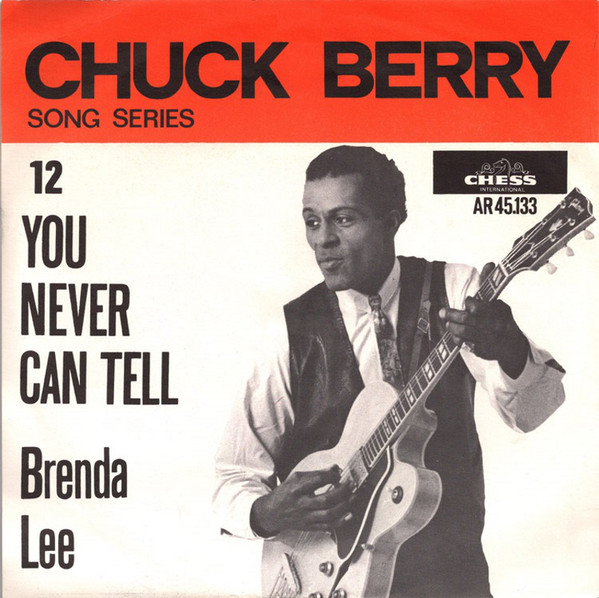
You Never Can Tell was written at a time when Chuck Berry was in prison…he also wrote Nadine in there. He was convicted in late 1961 of violating the Mann Act. Berry served one and one-half years in prison, from February 1962 to October 1963.
When he returned he was now facing the British invasion with the Beatles and the other bands out of England.
This song was released on his album St. Louis to Liverpool album in 1964. The album peaked at #124 in the Billboard Album Charts. The album included No Particular Place To Go and Promised Land.
In 1977, Emmylou Harris had a Top 10 Country hit with her version, which she renamed “(You Never Can Tell) C’est La Vie.”
From Songfacts
This song tells the story of a teenage couple getting married and staying together. Many of Berry’s songs are written from the perspective of young people, but this one even takes a dig at the older generation: “‘C’est la vie,’ say the old folks,” Berry sings. (“C’est la vie'” is French for “That’s life”).
Most songs that describe a young couple in love on their way to adulthood don’t end well, as disaffection or tragedy strikes. This song is unusual in that the couple does just fine, settling in with a nice record collection and some Roebuck furniture. As they settle into married life, their love stays strong. It’s not the storyline you’d expect, but you never can tell.
This was one of the new batch of hits Berry produced after being released from prison in 1963 after serving 20 months for “transporting an underage female across state lines for immoral purposes.” Berry had met a 14-year-old girl in Mexico who he brought back to St. Louis to work in his nightclub.
There is very little guitar on this track, which is driven by piano and saxophone.
When Berry sings, “The Coolerator was crammed with TV dinners and ginger ale,” he’s referring to a brand of refrigerator called a Coolerator that was popular in the 1950s.
This was featured in the 1994 film Pulp Fiction. It was used in the scene where Uma Thurman and John Travolta dance to it in the twist contest at Jack Rabbit Slim’s.
This is quoted in Stephen King’s 1995 novel, Rose Madder, when Norman – a policeman with a violent temper – contemplates his new promotion: “It made him think of a Chuck Berry song, one that went ‘C’est la vie, it goes to show you never can tell.'”
King referenced the tune again in The Institute (2019) to describe a successful teenage marriage like the one in the song.
You Never Can Tell
It was a teenage wedding, and the old folks wished them well You could see that Pierre did truly love the mademoiselle And now the young monsieur and madame have rung the chapel bell “C’est la vie”, say the old folks, it goes to show you never can tell
They furnished off an apartment with a two room Roebuck sale The coolerator was crammed with TV dinners and ginger ale But when Pierre found work, the little money comin’ worked out well “C’est la vie”, say the old folks, it goes to show you never can tell
They had a hi-fi phono, boy, did they let it blast Seven hundred little records, all rock, rhythm and jazz But when the sun went down, the rapid tempo of the music fell “C’est la vie”, say the old folks, it goes to show you never can tell
They bought a souped-up jitney, ’twas a cherry red ’53 They drove it down to Orleans to celebrate the anniversary It was there that Pierre was married to the lovely mademoiselle “C’est la vie”, say the old folks, it goes to show you never can tell
At the same yard sale that I purchased LA Woman by the Doors for 10 cents I got a Chuck Berry’s Greatest Hits album for the same price. That is when I became a huge Chuck Berry fan. This song in particular (no pun intended) caught my attention.
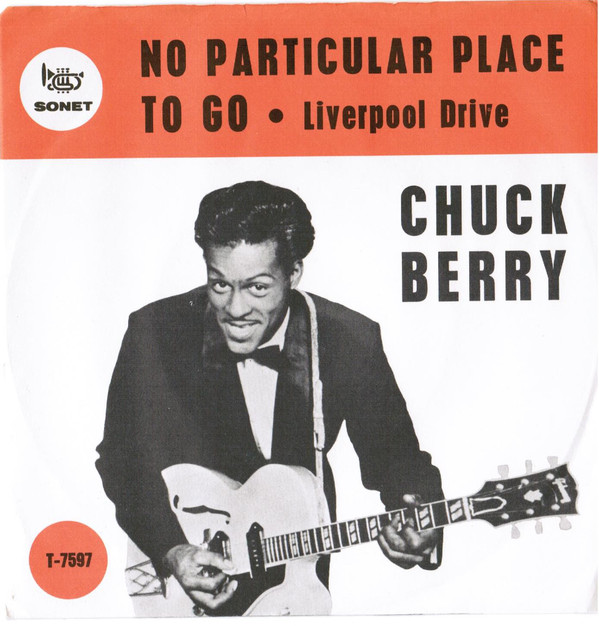
“No Particular Place To Go” was written at a time when Chuck Berry had literally no place to go… He was in prison…he also wrote Nadine in there. He was convicted in late 1961 of violating the Mann Act. Berry served one and one-half years in prison, from February 1962 to October 1963.
When he returned he was now facing the British invasion with the Beatles and the other bands out of England.
This song was released on his album St. Louis to Liverpool album in 1964. Music critic Dave Marsh named it “one of the greatest rock & roll records ever made.” The album peaked at #124 in the Billboard Album Charts. The album included You Never Can Tell and Promised Land.
No Particular Place to Go peaked at #10 in the Billboard 100, #6 in Canada, #3 in the UK, and #2 in New Zealand in 1964.
From Songfacts
Chuck first saw the inside of a slammer back in the 1940s due to a youthful folly, but it is fair to say that since then his encounters with the law have been more low key and if anything somewhat contrived.
Although this song didn’t enrage Mrs. Whitehouse like his later, number one hit, in which he offered to show us his ding-a-ling, it is fairly laden with innuendo, although of the tragic kind, because herein, our hero is unable to unfasten his safety belt.
“No Particular Place To Go” was released in May 1964 backed by the instrumental “Liverpool Drive”, and is instantly recognizable as a Berry composition with his distinctive, clean cut guitar style.
No Particular Place To Go
Riding along in my automobile My baby beside me at the wheel I stole a kiss at the turn of a mile My curiosity running wild Crusin’ and playin’ the radio With no particular place to go
Riding along in my automobile I’s anxious to tell her the way I feel So I told her softly and sincere And she leaned and whispered in my ear Cuddlin’ more and drivin’ slow With no particular place to go
No particular place to go So we parked way out on ko-ko-mo The night was young and the moon was gold So we both decided to take a stroll Can you image the way I felt I couldn’t unfasten her safety belt
Riding along in my calaboose Still trying to get her belt a-loose All the way home I held a grudge For the safety belt that wouldn’t budge Crusin’ and playing the radio With no particular place go
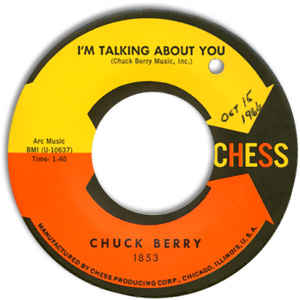
The song was written by Chuck Berry, whose version was released as a single in February 1961, with ‘Little Star’ on the b-side.
I first heard the song by the Beatles on the Live! At The Star-Club In Hamburg, Germany; 1962 album released in 1977. I then heard the Chuck Berry version on Ken Burns’s great documentary Baseball.
I’m Talking About You’ was also recorded by a number of other British groups at the time, including The Hollies, The Yardbirds, and The Rolling Stones.
The song was on Chuck Berry’s fifth studio album “New Juke Box Hits.”
I’m Talking About You
Let me tell you ’bout a girl I know I met her walking down a uptown street She’s so fine you know I wished she was mine I get shook up every time we meet
I’m talkin about you Nobody but you Yeah, I do mean you I’m just trying to get a message to you
Let me tell you ’bout a girl I know I tell ya now she looks so good Got so much skills and such a beautiful will She oughta be somewhere in Hollywood
I’m talkin ’bout you Nobody but you Come on and give me a cue So I can get a message to you
Let me tell you ’bout a girl I know She’s sitting right here by my side Lovely indeed that why I asked if she Promised someday she will be my bride
Talkin ’bout you I do mean you Nobody but you Come on, let me get a message through
Since I posted Paul McCartney’s Concert for Kampuchea yesterday I thought I would concentrate on the festival John Lennon popped up at in 1969… The Toronto Rock and Roll Revival. Unlike Kampuchea which was spread out on multiple days and nights, this festival was held on one day September 13, 1969.
John Lennon and the Plastic Ono Band just played fifties songs plus John’s new song that Beatles rejected…Cold Turkey. The reason for the fifties’ songs was because the band had limited time to rehearse and they wanted to do songs they all knew.
It was a great festival lineup but it’s remembered mostly by John Lennon’s participation. The Doors were the headliners and John only agreed to do it
The concert was conceived by promoters John Brower and Ken Walker with financial backing from Eaton’s department store but stymied by poor ticket sales, the venture began to lose support. The festival was almost canceled but Brower called Apple Records in the UK to ask John Lennon to emcee the concert. Lennon agreed to appear on the condition he would be allowed to perform.
The Lennons flew in from England with a makeshift band that included Eric Clapton, Klaus Voormann, Alan White, and Yoko. They arrived at the backstage area at about 10 p.m, while Cat Mother and the All Night Newsboys were singing Good Old Rock ‘n’ Roll to an audience of about 20,000.
Lennon was quoted as saying “I threw up for hours until I went on” because it had been three years since he played live in a concert setting. The band went on and did a good job…ragged but it was a hastily assembled band with only a rehearsal on the plane ride and backstage.
John Lennon:“The ridiculous thing was that I didn’t know any of the lyrics. When we did Money and Dizzy, I just made up the words as I went along. The band was bashing it out like hell behind me. Yoko came on stage with us, but she wasn’t going to do her bit until we’d done our five songs….Then after Money there was a stop, and I turned to Eric and said, ‘What’s next?’ He didn’t know either, so I just screamed out ‘C’mon!’ and started into something else.”
Little Richard: “I remember the show that people were throwing bottles at Yoko Ono. They were throwing everything at her. Finally, she had to run off the stage. Oh, boy, it was very bad.”
John Lennon:And we tried to put it out on Capitol, and Capitol didn’t want to put it out. They said, ‘This is garbage; we’re not going to put it out with her screaming on one side and you doing this sort of live stuff. And they just refused to put it out. But we finally persuaded them that, you know, people might buy this. Of course it went gold the next day.”
John Lennon and Yoko’s setlist
Blue Suede Shoes.
Money (That’s What I Want)
Dizzy Miss Lizzy.
Yer Blues.
Cold Turkey.
Give Peace a Chance.
Don’t Worry Kyoko (Mummy’s Only Looking for Her Hand in the Snow)
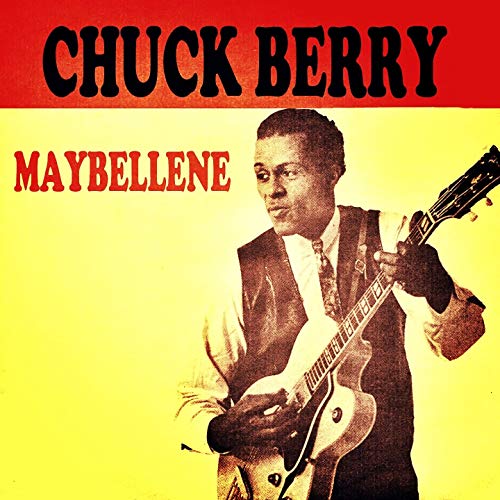
Chuck Berry was THE first guitar hero in Rock and Roll. He was also rock’s first poet. This song evolved out of “Ida Red,” a hillbilly song by Bob Wills and The Texas Playboys from the early ’50s. Berry heard that song on the Country radio station KMOX in St. Louis but didn’t know who recorded it.
Not only is the music great with the steady beat… but those lyrics. The motor cooled down the heat went down, And that’s when I heard that highway sound, the Cadillac a-sittin’ like a ton of lead, a hundred and ten half a mile ahead, the Cadillac lookin’ like it’s sittin’ still, and I caught Mabellene at the top of the hill
You can see what is happening in the song in your head with no problem… no MTV story video needed. He was one of the best descriptive lyricist rock and roll has ever had.
The song made it to #5 in the Billboard Pop Chart in 1955.
From Songfacts
Berry had never recorded, but when he went to Chicago to see Muddy Waters perform, he stayed in town to pitch himself to Leonard Chess of Chess Records, who asked him to come back the next week with some original songs. Berry returned with his bandmates Johnnie Johnson (piano) and Eddie Hardy (drums), and a demo reel with four songs, including “Ida Mae.” That’s the one Leonard Chess liked best, but he asked Berry to change so there wouldn’t be any confusion with “Ida Red” and to fend off any copyright claims. Berry changed the lyrics, turning it into a song about fast cars – one of his favorite topics. It was the first song the band recorded, and it proved a challenge: they recorded 36 takes.
This song tells the story of a girl who keeps cheating on her man. Various cars appear in the lyrics; Berry sings about chasing Maybellene in his V8 Ford while she drag races a man in a Cadillac with her Coupe de Ville.
There are a few different stories floating around about how the song got its name. Berry has said that Maybellene was the name of a cow in child’s nursery rhyme, but Johnnie Johnson recalled that there was a box of Maybellene mascara in the office, which gave Leonard Chess the idea for the title.
Chess Records gave the disc jockey Alan Freed a cowriting credit on this song (and also some cash) in exchange for playing it on the radio. Deals like this led to the Payola scandals, which led to rules prohibiting record companies from paying DJs to play their songs. Marshall Chess, the son of Chess founder Leonard Chess, recalled to The Independent newspaper May 27, 2008: “He [Freed] played the hell out of Chuck’s first record, ‘Maybellene’, because of that. My father says he made the deal, and by the time he got to Pittsburgh, which was half a day’s drive away, my uncle back at home was screaming, ‘What’s happening? We’re getting all these calls for thousands of records!'”
Deals like this were perfectly legal and fairly common at the time, but when the government took action in 1959, Freed refused to admit to taking Payola, insisting he was acting as a consultant to the music industry. Holding steadfast to this position, the radio and TV stations he worked for fired him, and his career never recovered. In contrast, Dick Clark admitted to taking cash and gifts, and simply stopped doing so when it was declared illegal. He was able to grow his media empire considerably after the scandal.
Berry was 29 years old when he recorded this song, but he knew that his audience was teenagers, so he wrote the song to appeal to that crowd – the ones fascinated with cars and experiencing young love. Berry also took care to sing it as clearly as possible so it would have more crossover appeal with a white audience. His strategy worked: the song went to #1 on the R&B chart and also made #5 on the Pop chart.
Chuck Berry was a rock and roll original, but he didn’t consider this a rock song. Said Berry: “‘Maybellene’ was very much a country song, with country lyrics. Maybe a little faster but basically it was country.”
Soon after this was released, Elvis Presley started performing it at some of his live appearances. Many other artists also recognized its propulsive appeal and covered the song. British acts – notably The Beatles and The Rolling Stones – often recorded Berry’s songs, but the UK act that grabbed this one was Gerry and the Pacemakers, who included it on their 1963 debut album How Do You Like It?
Other artists to cover the song include George Jones, The Searchers, Jerry Lee Lewis and Foghat.
The B-Side of the single was a slow blues song called “Wee Wee Hours.”
One-third of the composing credit went to Russ Fratto for the sole purpose of making sure that Berry got more royalties than Alan Freed (Fratto was a local DJ who was a close friend of Berry’s). He agreed to give Berry his share. In those days, it was common to give Freed a composer credit in exchange for airplay on his show. Freed would get royalties, and the song would become a hit.
A version by Johnny Rivers reached #12 in the US in 1964.
Later in 1955, Fats Domino released his own song with a three-syllable girl in the title: “I Can’t Go On (Rosalie).”
Berry died in 2017, the same year Fats Domino passed away. Jon Batiste and Gary Clark, Jr. paid tribute at the Grammy Awards in 2018 by performing “Maybellene” and “Ain’t That A Shame.”
Maybellene
Maybellene, why can’t you be true Oh Maybellene, why can’t you be true You’ve started back doin’ the things you used to do
As I was motivatin’ over the hill I saw Mabellene in a Coup de Ville A Cadillac arollin’ on the open road Nothin’ will outrun my V8 Ford The Cadillac doin’ about ninety-five She’s bumper to bumper, rollin’ side by side Maybellene Why can’t you be true Oh Maybellene, why can’t you be true You’ve started back doin’ the things you used to do
The Cadillac pulled up ahead of the Ford The Ford got hot and wouldn’t do no more It then got cloudy and started to rain I tooted my horn for a passin’ lane The rainwater blowin’ all under my hood I know that I was doin’ my motor good Maybellene Why can’t you be true Oh Maybellene, why can’t you be true You’ve started back doin’ the things you used to do
Oh, Maybellene Why can’t you be true Oh Maybellene, why can’t you be true You’ve started back doin’ the things you used to do
The motor cooled down the heat went down And that’s when I heard that highway sound The Cadillac a sittin’ like a ton of lead A hundred and ten half a mile ahead The Cadillac lookin’ like it’s sittin’ still And I caught Mabellene at the top of the hill Maybellene Why can’t you be true Oh Maybellene, why can’t you be true You’ve started back doin’ the things you used to do
I did Part 1 over a year ago and it was a fun post. I’ve been meaning to do this again. I remembered some of the lyrics suggested by my friends hanspostcard and allthingsthriller on the last post…I have added those to list. Thanks to both of you.
I saw her from the corner when she turned and doubled back, And started walkin toward a coffee colored Cadillac… Chuck Berry
Freedom’s just another word for nothin’ left to lose, And nothin’ ain’t worth nothin’ but it’s free… Janis Joplin/Kris Kristofferson
And I need you more than want you, And I want you for all time… Jimmy Webb
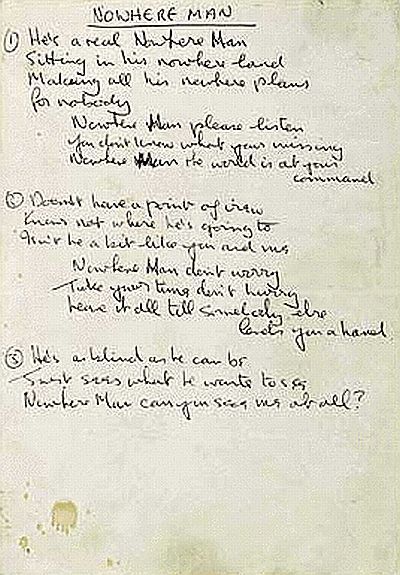
Doesn’t have a point of view / Knows not where he’s going to / Isn’t he a bit like you and me…The Beatles
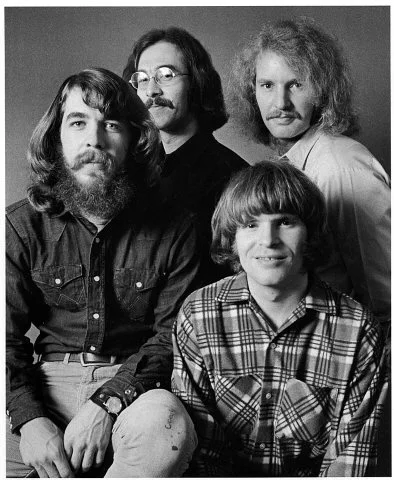
Met myself a coming county welfare line,I was feeling strung out, Hung out on the line…Creedence Clearwater Revival
And you’ve got to learn to live with what you can’t rise above…Bruce Springsteen
He’d end up blowing all his wages for the week / All for a cuddle and a peck on the cheek…Kinks
Well it’s too late, tonight, To drag the past out into the light, We’re one, but we’re not the same, We get to carry each other, Carry each other…U2
You can blow out a candle but you can’t blow out a fire…Peter Gabriel
Living is easy with eyes closed,misunderstanding all you see…The Beatles
Where you drink champagne and it tastes just like cherry cola, C-O-L-A Cola…Kinks
It was gravity which pulled us down and destiny which broke us apart…Bob Dylan
A drunkard’s dream if I ever did see one… The Band
And the sign said, The words of the prophets, are written on the subway walls, and tenement halls… Simon and Garfunkel
I lit up from Reno, I was trailed by twenty hounds, Didn’t get to sleep that night Till the morning came around…Grateful Dead
When I said that I was lying, I might have been lying…Elvis Costello
Though nothing will keep us together/We can be heroes/Just for one day…David Bowie
Lose your dreams and you. Will lose your mind…Rolling Stones
It’s a town full of losers, I’m pulling out of here to win…Bruce Springsteen
The motor cooled down, the heat went down, and that’s when I heard that highway sound…Chuck Berry
We were the first band to vomit at the bar, and find the distance to the stage too far…The Who
I had a hard time deciding which version to use…Chuck Berry’s who wrote the song or the Elvis version. This is the version I know the best. The many reasons I really like this version is the clavinet and Ron Tutt’s drumming…and of course, that guy named Elvis does a good job. He also did a really good job on the charts. Altogether he had 109 songs in the Billboard 100, 25 top ten hits and 7 number 1 hits.
I heard this song a lot growing up along with his other hits.
Promised Land peaked at #14 in the Billboard 100 and #9 in the UK Charts. Chuck Berry wrote this when he was serving time in jail for violating the Mann Act. He had to borrow an atlas of the US from the prison library to plot his hero’s journey from Virginia to California.
Promised Land
I left my home in Norfolk Virginia California on my mind I Straddled that Greyhound, and rolled in into Raleigh and all across Carolina
Stopped in Charlotte and bypassed Rock Hill And we never was a minute late We was ninety miles out of Atlanta by sundown Rollin’ out of Georgia state
We had motor trouble it turned into a struggle, Half way ‘cross Alabam And that ‘hound broke down and left us all stranded In downtown Birmingham
Right away, I bought me a through train ticket Ridin’ cross Mississippi clean And I was on that midnight flier out of Birmingham Smoking into New Orleans
Somebody help me get out of Louisiana Just help me get to Houston town There are people there who care a little ’bout me And they won’t let the poor boy down
Sure as you’re born, they bought me a silk suit Put luggage in my hands, And I woke up high over Albuquerque On a jet to the promised land
Workin’ on a T-bone steak a la carte Flying over to the Golden State Oh when The pilot told me in thirteen minutes We’d be headin’ in the terminal gate
Swing low chariot, come down easy Taxi to the terminal zone Cut your engines, cool your wings And let me make it to the telephone
Los Angeles give me Norfolk Virginia Tidewater four ten O nine Tell the folks back home this is the promised land callin’ And the poor boy’s on the line
This one was the most fun to do. These are the songwriters that I have listened to and admired the most.
1… Bob Dylan – There was no one else I could remotely place as number 1.
2… Lennon – McCartney – As a team…it was quantity and quality. Their music will live long after we are gone.
3…Chuck Berry – He wrote the blueprint for future rockers.
4…Jagger – Richards – For blues rock it doesn’t get much better than these two.
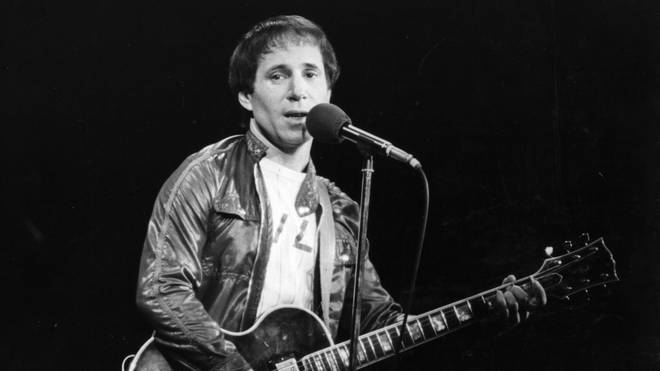
5…Paul Simon – One of the best craftsman of pop songs there is…
6…Bruce Springsteen – One of the best writers of his generation.
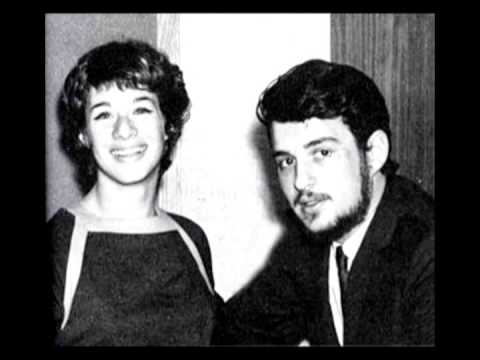
7…Goffin and King – Wrote some of the best known and successful songs of the sixties.
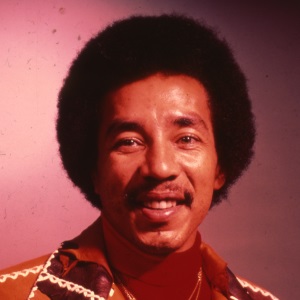
8…Smokey Robinson – Bob Dylan said of Robinson…”America’s greatest living poet”
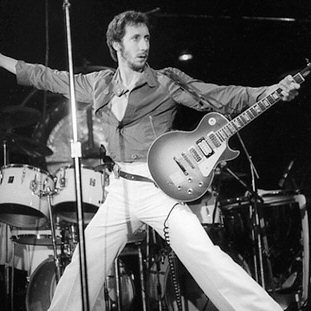
9…Pete Townshend – Took the “Rock Opera” to new levels.
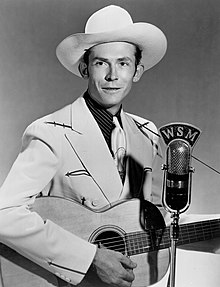
10…Hank Williams – The country poet.
Honorable Mention
Paul McCartney, John Lennon, Ray Davis, Neil Young, Townes Van Zandt, Leiber and Stoller, Elvis Costello, Randy Newman, Woody Guthrie, Merle Haggard, Robbie Robertson, Elton John and Bernie Taupin, Tom Petty, Curtis Mayfield, John Prine, George Harrison, Steve Wonder, Warren Zevon, Brian Wilson
Here are some of my favorite guitarists. Being fast is not something I care about… I’ve always liked guitarists who play with feel more than finger tapping.
Roger McGuinn, Byrds – He will not rip off lightning licks but he plays the Rickenbacker 12 string like no one else. I like the tone and his understated style.
Neil Young – This may seem like an odd choice but when Neil plays the electric guitar…anything that can happen will. He plays by feel and feedback and God bless him for that.
Brian May, Queen– You can hum his solos. One of the most melodic lead guitar players I’ve ever heard.
Pete Townsend, Who – The king of the power chord. Pete does not have blinding speed but every note he plays is for a purpose.
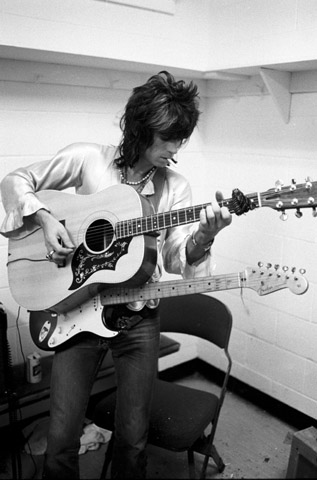
Keith Richards, Stones – The Human Riff… When Keith found G tuning the Stones sound changed forever and it may have been the key to their longevity.
George Harrison, Beatles – After the Beatles, he reinvented himself into a great slide guitar player. Guitar players are still trying to find that tone. He had a great touch and taste in whatever he played.
Buddy Guy – For electric blues and the tone he gets Buddy Guy is the man. Below is a picture of Buddy at the Festival Express playing a great version of Money.
Jimi Hendrix – Like Keith Moon…many musicians have tried to copy him but none have. It is controlled chaos but I like it.
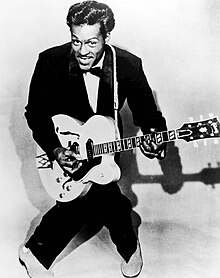
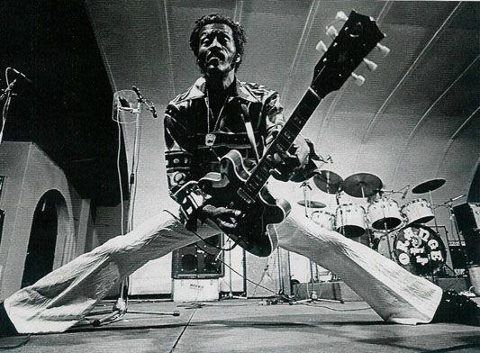
Chuck Berry – Rock and roll owes a lot to him…he has been copied more than anyone.
Scotty Moore, Elvis – The guitar player backing Elvis on his great 50s hits. Keith Richards said of Moore… Everyone else wanted to be Elvis, I wanted to be Scotty.
Also
Robert Johnson, Eric Clapton, Duane Allman, Peter Green, Lindsey Buckingham, BB King, Joe Walsh, Jimmy Page






















 PowerPop... An Eclectic Collection of Pop Culture