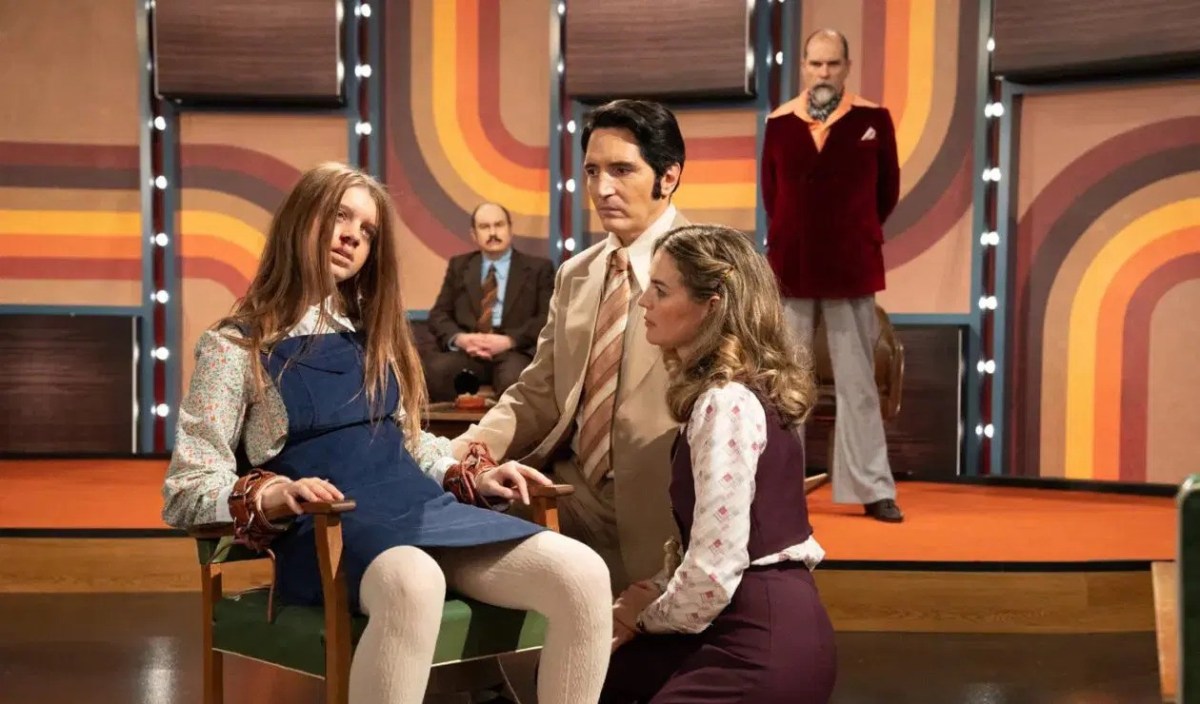
Usually, I only review older movies but this one is right up powerpop.blog’s alley! It’s a 2023 film set in the year 1977. They have the 1970s down…one of the best time-period movies I’ve seen as far as getting the era right. The audience in the movie could have been off a film clip of the Johnny Carson era Tonight Show. This movie marries nostalgia with horror quite nicely. It’s almost like The Exorcist meets Johnny Carson. It will make you uneasy and you have to pay attention because there are a few subplots you can miss if not. Some of it is based on the reception of the 1980 book Michelle Remembers by Canadian Lawrence Pazder. That book helped cause the “Satanic Panic” around that time on talk shows and the public.
It’s about a talk show host Jack Delroy who was a popular DJ in Chicago who got a chance to host a late-night talk show that was going against Johnny Carson. He signed a 5 year deal in 1972 and now in 1977 it’s running out. A year after the tragic death of Jack’s wife, ratings have plummeted. It’s a “found footage” movie and the footage being a master tape that was never shown again. Desperate to turn it around, Jack plans a Halloween special like no other, unaware he is about to unleash evil on late-night television.
On Halloween night 1977, Jack is set to host a special live episode featuring an array of guests, including a renowned paranormal expert with a single name, Christou. However, what starts as exploring the supernatural quickly devolves into chaos when a series of unexplained events unfold.
You get to know Jack’s past and about his wife that just passed away from lung cancer. Jack was part of a secret club called The Grove (a reference to the Bohemian Club) that many celebrities and elites joined. That info plays a big part of this movie. Did Jack essentially sacrifice his wife to be popular? It asks the question…what are you prepared to give up for success?
It all starts with Christou picks an audience member and accurately tells her about her son who killed himself. After that, a skeptical but nasty guest named Carmichael the Conjurer starts to say how all supernatural and unusual events are not real. He offered Christou $100,000 to prove he was not a con man. He books an interview with a parapsychologist and the subject of her recent book, a young teenager who was the sole survivor of a Satanic church’s mass suicide. Naturally, all hell breaks loose when paranormal activity begins wreaking havoc during the show.
The plot blurs the lines between reality and the supernatural, with the audience left questioning what’s real as Jack faces his worst fears live on air. The tension mounts as the show’s studio audience becomes unsettled, mirroring Jack’s descent into madness. The film’s use of practical effects and atmospheric cinematography sells what is happening.
Horror movies… the one thing that bothers me about most of them are the endings. This one has an ending with a twist. My only complaint…being the 1970s lover I am…I wish they would have used the same kind of film look the Tonight Show had but the set was great. At the end of the movie you will also hear a song by Flo and Eddie called Keep It Warm.
David Dastmalchian did a great job as Jack Delroy.
In the early eighties, I joined Columbia House and I would sign up fictional people and get free albums. I would buy the required albums for these fictional people but you would get 6-7 free albums for signing up someone to buy one album. Plus that person would get free albums when they joined. I saw the loophole and took advantage of it but I always paid. I got most of my Doors, Moody Blues, and a few other albums through Columbia House.
This Robbie Krieger-written song is immediately likable. This Doors song and album differed from many others because of its orchestral arrangement, which includes brass and strings. It was largely arranged by producer Paul Rothchild. It was also very radio-friendly and Morrison’s voice sounded great in this pop backdrop…he did keep his edge up on the track. Many critics and fans saw the track as a sell-out for The Doors. To me, it was just them expanding their sound to a different genre. Plus the solo in the middle is clearly jazz-influenced not heard in many top 40 hits at the time.
The song was on the Soft Parade album released in 1969. The album peaked at #6 on the Billboard Album Charts and #4 in Canada. The song did really well. It peaked at #3 on the Billboard 100, #1 in Canada, and #6 in New Zealand.
Soft Parade was their 4th studio album. They would only release two more albums with Morrison, Morrison Motel, and L.A. Woman (my personal favorite). With Soft Parade the band decided to experiment with a more polished, orchestral sound. Producer Paul A. Rothchild and arranger Paul Harris introduced horns, strings, and elaborate arrangements and this song is a good example. The two singles off this album were Touch Me and Wishful Sinful which just missed the top forty at #44.
In the Smothers Brothers clip, you will see Robbie Krieger with a black eye. Ray Manzarek said this: Three rednecks got in a fight with Jim and Robbie down the street from the Doors’ office at a bar and there was pushing and shoving and Robbie Krieger got whacked in the eye. Jim ducked a punch, Robbie wasn’t able to duck the punch. That was 2 days before we went on The Smothers Brothers’ Show. They said to Robbie on the show, Let’s put some make-up on that black eye. You don’t want to be on national television with a black eye. And Robbie said, Yes, I do! No one has ever gone on TV with a black eye. I’m going to be the first! It’s a badge of honor.
Touch Me
Come on, come on, come on, come on Now touch me, babe Can’t you see that I am not afraid? What was that promise that you made? Why won’t you tell me what she said? What was that promise that you made?
Now, I’m going to love you ‘Til the heavens stop the rain I’m going to love you ‘Til the stars fall from the sky For you and I
Come on, come on, come on, come on Now touch me, babe Can’t you see that I am not afraid? What was that promise that you made? Why won’t you tell me what she said? What was that promise that you made?
Now, I’m going to love you ‘Til the heavens stop the rain I’m going to love you ‘Til the stars fall from the sky For you and I
I’m going to love you ‘Til the heavens stop the rain I’m going to love you ‘Til the stars fall from the sky For you and I
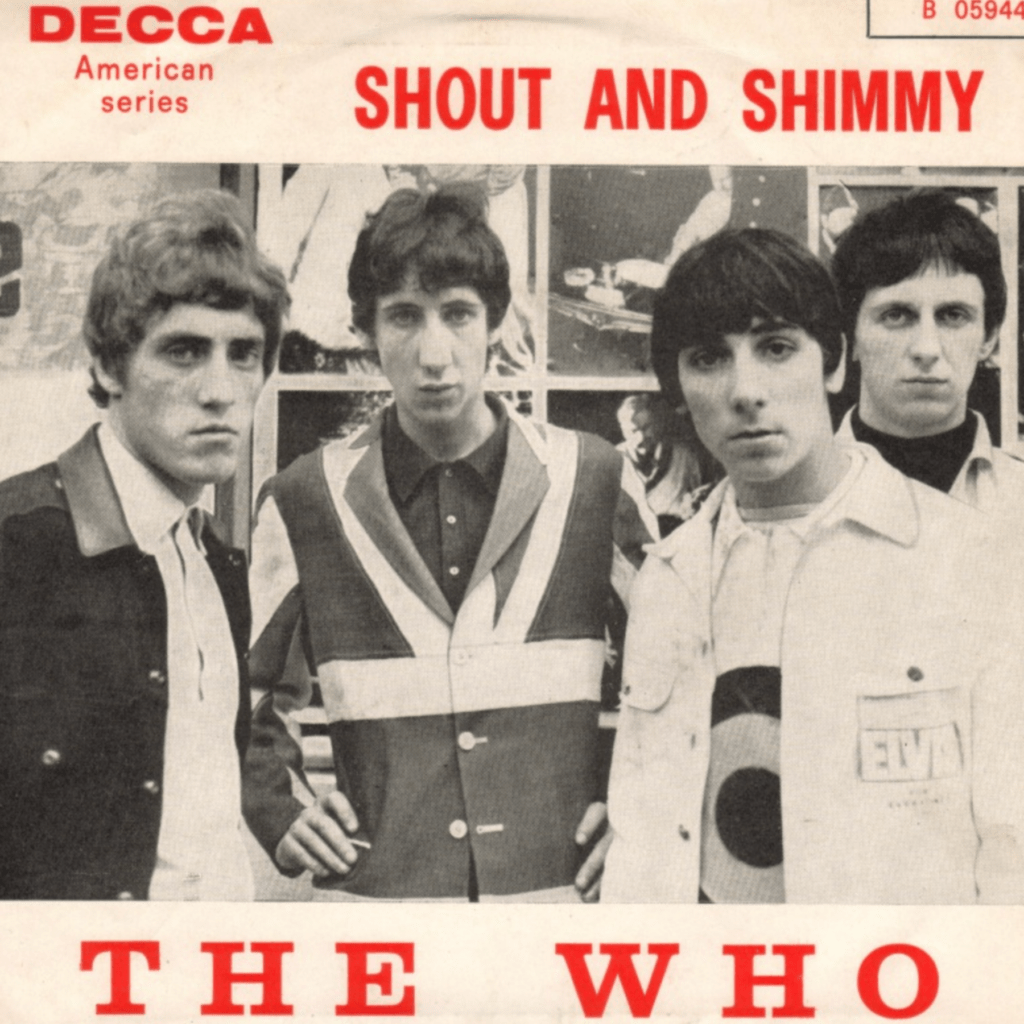
If this song doesn’t get you up nothing will! I’ve probably covered The Who more than any other band but I’ve missed this excellent cover they did back in 1965. In this post, we will look at the song and the original drummer of The Who.
This is a cover of a lively James Brown original from 1962. The Who recorded in 1965, it was on their My Generation album. It was also part of their appearance on the music show Ready, Steady, Go! alongside the song Anyway, Anyhow, Anywhere. Shout and Shimmy did not achieve widespread fame, it reflects the band’s devotion to R&B and soul, influences that heavily shaped their early sound. They also covered the Marvelettes song Heat Wave which was a part of the Mod culture. James Brown wrote and released Shout and Shimmy in 1962.
The Who’s rendition captures the raw energy of their early sound. Keith Moon in the live cut of this is a blur on drums. He was 19 years old and joined The Who the year before replacing The Who’s original drummer Doug Sandom.
Sandom was a good guy and a solid drummer but he was 34 in 1964 and considered far too old for The Who by the record company. Pete Townshend wrote a moving forward to Sandom’s book in 2014: Had we continued together back in 1964 with Doug on drums we may never have become as successful as we are today. Keith Moon was a born publicist as well as a highly eccentric performer. But I have no doubt that personally, I would have been happier as a young man. Partly because I think we would have continued to put music and friendship first in our band because that was Doug’s way. With Doug as my friend, I believe I could have been a better man.
Doug drummed for them as The Detours and The Who. He had this to say about The Detours changing to The Who: “We were setting up our gear when the Ox arrived and told us there was another band called The Detours and they’d already been on TV so we had to change our name. That night we all went back to a friend of Pete’s – a wonderful chap called Richard Barnes (an author and has worked with the Who for decades), or Barnsy, to try to find a new name.
Barnsy initially suggested The Group and Pete favoured The Hair. Someone else suggested No One until we imagined a compere on stage saying: ‘Ladies and gentlemen, please welcome No One.’ We’d have been a laughing stock. It was Barnsy who came up with The Who. Pete tried to compromise by suggesting The Hair And The Who until it was pointed out that it made us sound like a pub. Anyway, Roger came round to mine the next day and said it was to be The Who.”
On one of their recording dates, Townshend and Sandom were not in good moods and Sandom retold it: “He had a terrible go at me, snarling, ‘What’s wrong with you? If you can’t get it right then you’re out.’ I just got up from my stool and said, ‘That’s it, I quit.’ It was the biggest mistake of my life.
Sandom stayed in touch with the band until he passed in 2019 at the age of 89 years old.
I always try to give a studio and live version…but in this case…live is the way to go. Around 1:29 is where Moon kicks in.
Shout and Shimmy
Do you feel alright? Well do you feel alright children? Do you feel alright? You know you make me want to shout shimmy, oh yeah you gonna shout shimmy, Oh yeah you gonna shout shimmy, oh yeah you gonna shout shimmy, Oh yeah you know I walk up to the front, I try to do the flop, I walk up to the back, and I move on side to side, Then I stop, oh yeah and then I drop, Oh yeah and then I drop, oh yeah and then I do a little thing ?????, Do you feel alright? Do you feel so good? Do you feel so good? Do you feel alright? Do you feel alright? Tell me now, tell me now, Do you feel alright? Do you feel alright? Everybody do you feel so good? You know I feel alright, you know you make me want to shout shimmy, Oh yeah you gonna shout shimmy, oh yeah you gonna shout shimmy, Oh yeah you gonna shout a little bit soft, shout a little bit quieter, Shout a little bit soft, come on soft, shout a little bit soft, A little bit soft, cool down, cool down, come on, cool it down, I feel so good, I feel alright, drum on, drum on, drum on drummer, Everybody everybody everybody clap your hands, come on clap your hands, Clap your hands, a little bit harder, a little bit louder, A little bit harder, a little bit louder, a little bit louder, Come on and shout, everybody, come on and shout, come on and shout baby, Come on and shout baby, do you feel alright? Do I feel so good? Do you feel alright? Do I feel so good? Call a doctor, call a doctor, Do you feel alright? Do you feel alright? Do you feel alright? Do you feel alright? Do you feel alright? You know I feel so good I’m gonna shout and shimmy all night, I feel all, you know I feel alright.
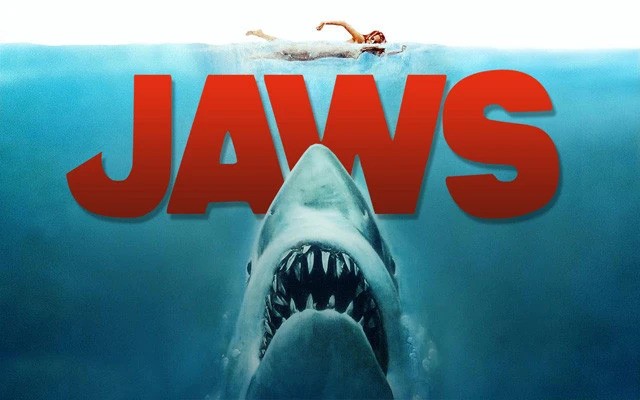
June 20, 1975, was not only the opening of this movie but it turned into a huge pop culture event of the 1970s. It’s a movie known around the world. There were T-shirts, novelty songs, and hype…but the movie lived up to it and then some.
Why was it so great? For me, I would say that Spielberg kept it simple. Jaws is based on the 1974 novel by Peter Benchley, which was inspired by a series of shark attacks off the coast of New Jersey in 1916. Benchley’s book tells the story of a great white shark terrorizing a small coastal town, and the efforts of three men to hunt it down.
The acting in this was excellent to me. The one that I always pick out is Robert Shaw as the character Quint. He makes himself known quickly by the fingernails down the chalkboard tactic. Shaw made that character real to me. My favorite scene was him telling the story of delivering the atomic bomb, the sinking of the USS Indianapolis, and the shark attacks that happened. His performance is probably the main reason for Jaws being one of my favorite films of all time. The speech is based on a real event. The USS Indianapolis sank in 1945, resulting in the greatest loss of life due to shark attacks in history.
Spielberg wanted Lee Marvin for Quint and Jon Voight for Hooper. Spielberg got it right for this film. Roy Scheider as Martin and newcomer Richard Dreyfuss as Matt Hooper were great. It’s the realism that Shaw added that pushed this over.
Spielberg’s use of tension, combined with John Williams’ score proved that a horror thriller could achieve both critical and commercial success. The film won three Academy Awards (for editing, score, and sound) and remains highly regarded by critics. But perhaps its greatest legacy is even today, many people feel some fear whenever they step into the ocean.
John Williams…The man is renowned for his film scores. Along with Jaws and barely scratching the surface…he also did Star Wars, Indiana Jones, E.T., Harry Potter, and Jurassic Park, just to name a few.
The movies Duel and Jaws were Spielberg’s first two big movies. They share a common thread. Duel features a large diesel truck that is much like Jaws on dry land. Both movies work well.
PLOT
It’s a hot summer on Amity Island, a small community whose primary business is its beaches. When new Sheriff Martin Brody discovers the remains of a shark attack victim, his first inclination is to close the beaches to swimmers. It doesn’t sit well with Mayor Larry Vaughn and several local business people. Brody backs down to his regret of that weekend. A predator kills a young boy. The dead boy’s mother puts out a bounty on the shark, and Amity is soon swamped with amateur hunters and fishermen hoping to cash in on the reward. A local fisherman with much experience hunting sharks, Quint, offers to hunt down the creature for a hefty fee. Soon, Quint, Brody, and Matt Hooper from the Oceanographic Institute are hunting the Great White shark at sea. As Brody succinctly surmises after their first encounter with the creature, they will need a bigger boat.
QUOTES
Quint: [Quint first scratches the chalk board to get everyone’s attention] Y’all know me. Know how I earn a livin’. I’ll catch this bird for you, but it ain’t gonna be easy. Bad fish. Not like going down the pond chasin’ bluegills and tommycods. This shark, swallow you whole. Little shakin’, little tenderizin’, an’ down you go. And we gotta do it quick, that’ll bring back your tourists, put all your businesses on a payin’ basis. But it’s not gonna be pleasant. I value my neck a lot more than three thousand bucks, chief. I’ll find him for three, but I’ll catch him, and kill him, for ten. But you’ve gotta make up your minds. If you want to stay alive, then ante up. If you want to play it cheap, be on welfare the whole winter. I don’t want no volunteers, I don’t want no mates, there’s just too many captains on this island. $10,000 for me by myself. For that you get the head, the tail, the whole damn thing.
_______________________________________________
Ellen Brody: Martin hates boats. Martin hates water. Martin… Martin sits in his car when we go on the ferry to the mainland. I guess it’s a childhood thing. It’s a… there’s a clinical name for it isn’t there?
Today’s installment of this series goes back to Max at Power Pop (that’s me!). We are stopping here but haven’t closed the door on revisiting more famous brother acts. Randy’s original post on mostlymusiccovers.com is here. Randy and I want to thank all of you who have followed along! At the bottom, I have the complete series labeled.
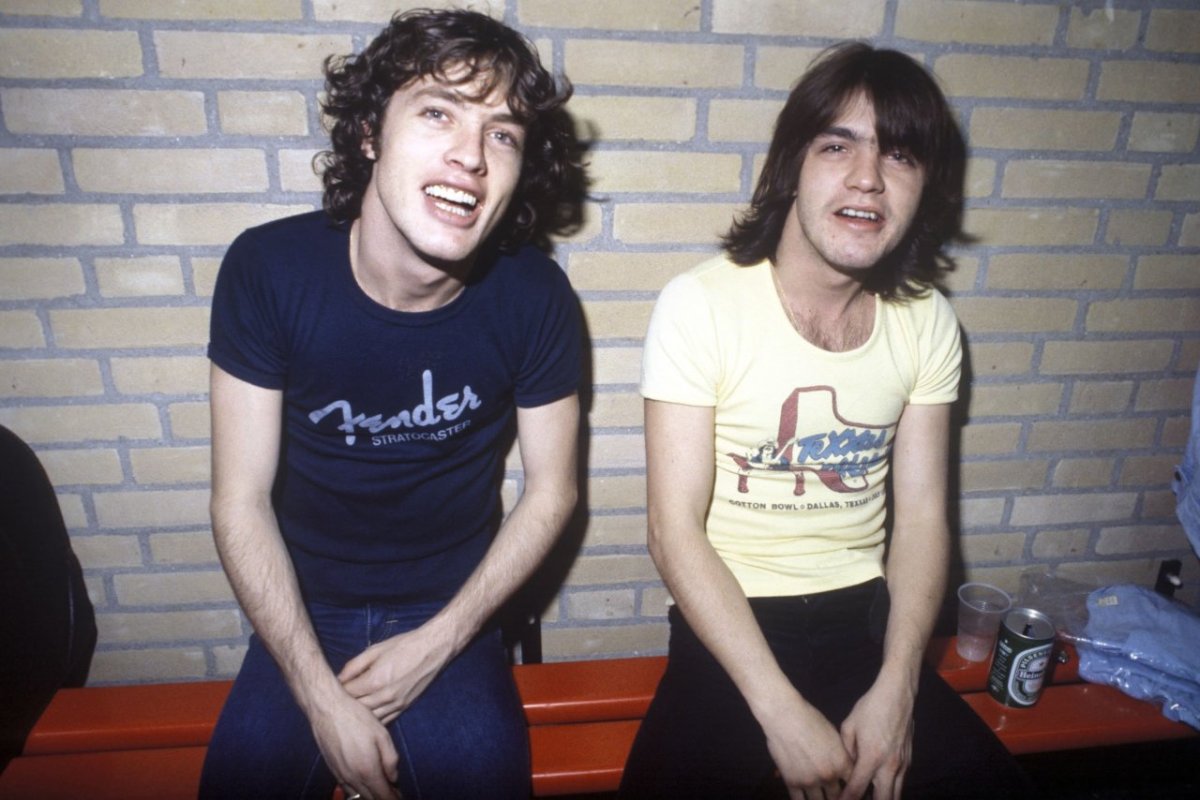
Angus and Malcolm Young were the co-founders of the legendary rock band AC/DC. They had a unique and dynamic relationship that was marked by both collaboration and rivalry. The band was formed in 1973 by Malcolm, with Angus joining a little later. They were called AC/DC. The band’s name is inspired by the abbreviation for “alternating current/direct current” (AC/DC), signifying power and energy. They were influenced most by Chuck Berry, and you can hear it in their music. Malcolm would play rhythm guitar with Angus taking up the lead guitar for decades to come. They also had a brother named George who would help his younger brothers immensely in music. His contributions cannot be overstated.
Malcolm was born on January 6, 1953, and Angus on March 31, 1955, in Glasgow Scotland. In 1963 the family moved to Sydney Australia. George Young was born in 1946 and started a band called The Easybeats in 1964 playing rhythm guitar and either writing or co-writing many of their songs. They had 7 top 10 hits in Australia, two number one hits, and altogether 15 top 40 hits there! They did have one international hit which was “Friday On My Mind” which peaked at #1 in Australia, #2 in New Zealand, #6 in the UK, #13 in Canada, and #16 on the Billboard 100. It’s still played on classic rock radio today.
He encouraged his younger brothers to form a band, recognizing their talent and potential. George, along with his Easybeats bandmate Harry Vanda, mentored Malcolm and Angus. His experience in the music industry provided insights into songwriting, recording, and navigating the business. George would end up co-producing (with Vanda) six AC/DC albums. He would also produce some songs for future albums. The band underwent several lineup changes before settling with Bon Scott as the lead vocalist. They release their debut album, “High Voltage” exclusively in Australia in 1974. Angus and Malcolm would collaborate closely with songwriting.
Malcolm was a perfectionist in the studio while Angus was more of a free spirit. That caused some clashes but none to the degree of other brothers in rock.
Angus’s schoolboy-uniformed antics on stage were a stark contrast to Malcolm’s more reserved presence. This was important to the band’s success. They went through tough times with Bon Scott dying and starting again with a new singer Brian Johnson, but they only got more popular. It was a sad ending for Malcolm though. In 2014 Malcolm could no longer remember lyrics to songs. He was diagnosed with alcohol-related dementia and passed away in 2017. These brothers used their rivalries as a positive thing and pushed each other to greatness.
I really like the mood of this one. It reminds me of Fever but it is different. A very finger-snapping song. It was written by Buddy Blue (Bernard Seigal). I could picture this being played in a blues club in the 50s or 60s…such a groove to it…and it swings…slowly. After listening to it a couple of times I was hooked on it. I feel like I found a gem that no one knows about.
Originally a member of bands like The Beat Farmers and The Jacks, Buddy Blue was a figure in the roots rock and Americana genres. When I was on my break I was listening to different music but this is one of the guys I was listening to.
It was released in 2000 on the album Diposmania. He also did a different version of the song in his 2003 album Sordid Lives. I like the original version a little more because it’s more minimalist and his solo in the middle is fantastic.
He was the frontman and guitarist for The Beat Farmers. Buddy Blue’s musical roots began to paint its first strokes on the canvas of American rock ‘n’ roll. The band’s fusion of rock, punk, and country elements was a sonic cocktail that left audiences thirsty for more. With Blue’s vocals leading the band, The Beat Farmer’s energy became their trademark.
This song has a nice blues/jazz feel that I love. The sound sounds modern but also goes back to the 1950s.
Upsettin’ Me
The way you move when you walk in your black satin high heel shoes
Your perfume and your deep green eyes turn me into a fool
Well look on your faces everywhere I go
The heat of your body is all that I want to know
I’m never going to give you up baby you’re upsetting me
Nobody else can love you the way that your daddy do
Can’t you feel better at all I’m raising my flag just for you
Well I don’t have no money or fancy things
But Buddy is going to give you everything that you need
I’m never going to give you up you’re upsetting me
How you’re upsetting me
With your skin so sweet and your lips such a ruby red
You bending my soul baby yet and deep inside of my head
Well I tell you one thing honey ain’t no Lie
Another man touch you and he’s going to die
I’m never going to give you up babe you’re upsetting me
Yeah you’re upsetting me
Yeah you’re upsetting me
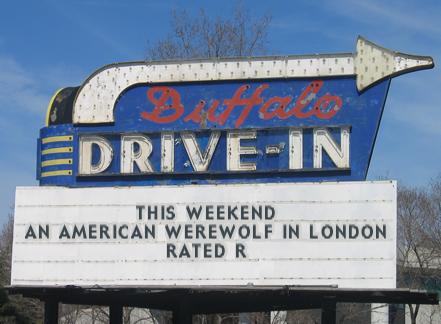
Most of the time a comedy-horror doesn’t work but in this 1981 film, it works perfectly. I always come back to this movie. It’s not a parody…but a horror movie that happens to have funny moments. When the movie came out on VHS I bought it. It was also the first movie I bought on DVD. It has aged very well.
If you like horror movies you should like this. I would not recommend the sequel An American Werewolf in Paris…that one doesn’t stack up against the original. This one does have violence, blood, and gore and it’s very effective. The scene in the pub is worth watching the movie. I’ve never felt as uncomfortable for two people in a movie when David and Jack walked into that pub.
Two Americans (David and Jack) are traveling through Europe. They go to a pub (The Slaughtered Lamb) and it’s strongly hinted for them to stick to the main roads on their way out by the unfriendly locals…well guess what? They don’t and soon Jack is ripped to shreds and David is badly scratched by a werewolf. David wakes up in a hospital with Nurse Alex Price taking care of him. That is the nurse I would want.
David starts having horrific nightmares. In the hospital, Jack reappears to David as a decomposing corpse. He keeps telling David that he should kill himself because David will turn into a werewolf and kill others. David goes home with Alex and Jack keeps reappearing and eventually, David does turn into a werewolf.
John Landis had just finished The Blues Brothers and Animal House when he directed this. In two years he would hit again with Trading Places. Rick Baker did the special effects for this movie. The transformation is great and the wolf is perfect. It is the best transformation scene I’ve ever seen. The effects worked very well for me because it felt real.
The music is great. Bad Moon Rising, Blue Moon, and Moondance are featured. Supposedly Max Landis, John’s son is planning to remake this movie. Personally, I don’t think it needs it. It’s hard to remake a classic.
Plot IMDB
Two American college students are on a walking tour of Britain and are attacked by a werewolf. One is killed, the other is mauled. The werewolf is killed but reverts to its human form, and the local townspeople are unwilling to acknowledge its existence. The surviving student begins to have nightmares of hunting on four feet at first but then finds that his friend and other recent victims appear to him, demanding that he commit suicide to release them from their curse, being trapped between worlds because of their unnatural deaths.
Quotes
Dart Player: Go. Stay on the road. Keep clear of the moors.
David: Yeah. Thank you.
Chess Player: Beware the moon, lads.
__________________________________________
Gerald Bringsley: [accusing David of his murder] Whereas I am a victim of your carnivorous lunar activities.
The guy was only with us for a few short years but boy he made a huge mark. I had a Buddy Holly marathon while painting and this song stood out. Without Buddy, rock music would have been drastically different. Buddy was a self-contained artist who wrote, arranged, and recorded his own songs. His chord changes and melodies were different from fellow rockers Jerry Lee Lewis, Little Richard, and Chuck Berry. I have always thought that Buddy was the father of power pop.
The song was credited to Joe B. Mauldin, Niki Sullivan, and Norman Petty but some think Holly wrote the majority of it. It was also covered by Blondie on their Parallel Lines Album. Holly released the song in 1957. It’s on the self-titled Buddy Holly album released on Coral Records. This album contained the classics Peggie Sue, Everyday, Rave On, and Worlds of Love.
William Ruhlmann, who is an American rock critic, said this about the ownership of the song. The song is credited to Joe B. Mauldin, Holly’s bass player; Norman Petty, his producer; and Nikki Sullivan, his sometime rhythm guitarist (who was not heard on the recording). There have long been questions about the songwriting credits assigned to the original songs Holly recorded, and Jerry Allison, his drummer, has gone on record stating that “I’m Gonna Love You Too” actually was written primarily by Holly, with Allison composing the bridge. Certainly the song sounds characteristic of the man who wrote “That’ll Be the Day.” It is another up-tempo number with an infectious tune and boastful lyrics that only thinly veil heartbreak.
Buddy Holly was among the first group of inductees to the Rock and Roll Hall of Fame in 1986. In 2004, Rolling Stone ranked Holly #13 among “The 100 Greatest Artists of All Time”.
What really hurts about Holly’s career is that he was just getting started. He had matured and was experimenting more than his rocking peers. Fortunately for all of us, he left behind a significant musical catalog that still influences new and old artists today.
It’s a-gonna happen, a-some day You’re gonna see things a-my way Yes, you’re gonna say you’ll a-love me ‘Cause I’m a-gonna love you too
A-you’re gonna tell me a-sweet things You’re gonna make a-my heart sing Yes, a-you’re gonna hear those a-bells ring ‘Cause I’m a-gonna love you too
After all, another fella took you But I still can’t overlook you I’m a-gonna do my best to hook ya After all is said and done
A-you’re gonna say you’ve a-missed me A-you’re gonna say you’ll a-kiss me Yes, you’re gonna say you’ll a-love me ‘Cause I’m a-gonna love you too I’m a-gonna love you too I’m a-gonna love you too
I’ve been reading about the Beatle’s early days when they were leather-bound hoodlums on the streets of Hamburg and Liverpool. Liverpool had a lot of bands and they tended to do the same songs. The Beatles broke out of that by picking B sides rather than playing a top 40 hit every time. They had excellent taste. They played this one in Hamburg at the Star Club. If you haven’t heard the low-quality album Beatles Live At the Star Club…it’s worth listening to. It’s The Beatles in rock/punk mode.
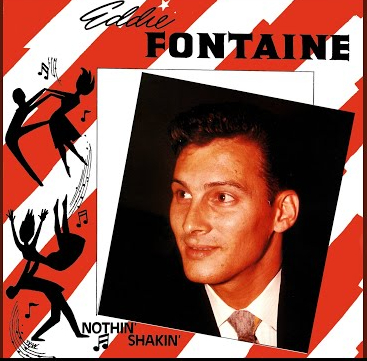
Eddie Fontaine, singer and actor, released this song in 1958. It has it all…twangy 1950s guitar and a cool lyric to boot. Eddie Fontaine never became a major name in rock and roll but his song left an impression on a generation of young rockers.
Eddie was from Massachusetts and RCA signed him in 1954 as a vocalist. He first gained attention as a singer with his single Cool It, Baby in 1956, which had moderate success. It was featured in the film The Girl Can’t Help It. However, Nothin’ Shakin in 1958 brought him more recognition, especially within the rockabilly crowd.
Eddie was an actor as well. He has 27 actor credits in IMDB. He appeared in TV shows like 77 Sunset Strip, The Wild Wild West, Ironside, Kojak, Planet of the Apes, Baretta, and many more.
This song peaked at #64 on the Billboard 100 in 1958. Below is a more refined Beatles version they did on the BBC radio and the original by Eddie himself.
Nothin’ Shakin’
I’m finding out what love is all about And every day at three when school lets out I see my baby I get weak in the knees There’s nothin’ shakin’ but the leaves on the trees Why must she be such a doggone tease? There’s nothin’ shakin’ but the leaves on the trees
We meet the gang and go to Rockin’ Joe’s The cats are stompin’ on their heels and toes I grab my baby, tried to give her a squeeze Nothin’ shakin’ but the leaves on the trees My daddy told me there’d be times like these There’s nothin’ shakin’ but the leaves on the trees
She’s got a way that makes me act like a fool Oh, she spends my money then she plays me cruel I’m beggin’ her for kisses on bended knees Gimme some lovin’ baby, please, please, please
But I keep trying hard to make her mine Someday the wind will blow, the sun will shine Until that time she puts my heart at ease There’s nothin’ shakin’ but the leaves on the trees She locked my heart and threw away the keys There’s nothin’ shakin’ but the leaves on the trees Ha ha ha!
Nothin’ shakin’ but the leaves on the trees She’s got a way that makes me act like a fool Oh, spends my money then she plays me cruel I’m beggin’ for her kisses on bended knees Why don’t ya gimme some lovin’ baby, please, please, please
But I keep trying hard to make her mine Someday the wind will blow, the sun will shine Until that time she puts my heart at ease There’s nothin’ shakin’ but the leaves on the trees Why must she be such a doggone tease? There’s nothin’ shakin’ but the leaves on the trees Nothin’ shakin’ but the leaves on the trees Nothin’ shakin’, oh shakin’
I’ve seen the man live 8 times and this song…I saw him play one time. Whenever you see Bob Dylan you usually get a variety of songs. He is not an oldies show…he will throw in some but he doesn’t do a Vegas Greatest Hits show.
I don’t post many Dylan songs…not because I’m not a huge fan…like I said I’ve seen the man 8 times. If I get a chance, I’ll see him 8 more times. When you post a Dylan song you almost feel the urge to do an interpretation of the song…I have no interest in doing that. It would lead me down too many roads. Some people are good at that though…I’m not.
Dylan was growing frustrated with the recording in New York so producer Bob Johnston mentioned Nashville. Dylan’s manager at the time, Albert Grossman, told Johnston if he ever mentioned Nashville again that he would fire him. Didn’t work…Dylan ended up recording Blonde On Blonde in Nashville. He would also go to record more here as well.
This song was one of my many favorites of this album. Dylan is still going in 2024, but this was his peak for me. In the mid-60s, Dylan was on fire, cranking out songs that blurred the lines between folk, rock, blues, and poetry. Dylan later described the sound of Blonde on Blonde as “that thin, wild mercury sound”—a phrase as cryptic as Bob can be. What does that mean exactly? No one knows for sure, but the music does have a thin sound… almost surreal quality to it.
In Al Kooper’s book, he talked about some of the stories that Johnston shared making the album. Kooper said that Bob Johnston shared one of the wilder stories from those sessions, one that captures the vibe of those late-night Nashville nights. He recounted an incident involving a blind keyboard player nicknamed Pig (Hargus “Pig” Robbins), who played on the album.
Pig was hanging out with some drunk friends one night when he suddenly declared, “I wanna drive. You so-and-so’s move over and let me navigate this Cadillac!” And because this was Nashville in the 60s, and because his buddies were drunker than Pig, they actually pulled over and let him behind the wheel.
Now, picture this… A blind man is driving a car down the highway, while a bunch of rowdy passengers coach him from the front seat: “A little to the left … good … now a little to the right … speed up a bit…” And for a few glorious moments, they were pulling it off until the red-and-blue lights of the Tennessee Highway Patrol appeared in the rearview. They panicked and had Pig pull over, but what happened next? Johnston said people were laughing too hard by then to care how it ended.
Bob released 5 singles from this double album. He had two top 10 hits, two top 40 hits out of it. This was the end of an era for Bob. After this album, he had a motorcycle accident and he changed his songwriting style. He followed this album with John Wesley Harding and Nashville Skyline which was nothing like his earlier music.
The musicians on this album included Robbie Roberston, Al Kooper, Rick Danko, Kenny Buttrey, Charlie McCoy, and Charlie McCoy. After this, his songs became a little less wordy and chaotic and became more structured.
I checked on “Pig” for information about the blind session man. It looks like Pig drove a lot when given a chance. Walter Haynes was a Nashville studio session man and he told this story. “Pig and I have worked together many times in the studio, he has played on many sessions that I produced. He has a most remarkable ear and you only have to run a song once and he’s ready to do it. As you know, Pig is blind and one day I was walking behind Columbia Records and I saw pig driving a car down the alley, of course someone was sitting beside him telling him which way to turn the wheel, what a guy!”
Al Kooper: The credits are vague on the Blonde on Blonde album. Maybe I can fill in a few holes for the reader. Joe South is playing bass on “Visions of Johanna.” He has a very special style of playing bass, sort of hillbilly funk. His unique guitar style is most discernible in the mix on “Memphis Blues Again.” He and I have some nice organ-guitar trade-offs in that on
Stuck Inside Mobile With These Memphis Blues Again
Oh, the ragman draws circles Up and down the block I’d ask him what the matter was But I know that he don’t talk And the ladies treat me kindly And they furnish me with tape But deep inside my heart I know I can’t escape Oh, Mama, can this really be the end To be stuck inside of Mobile with the Memphis blues again
Well, Shakespeare, he’s in the alley With his pointed shoes and his bells Speaking to some French girl Who says she knows me well And I would send a message To find out if she’s talked But the post office has been stolen And the mailbox is locked Oh, Mama, can this really be the end To be stuck inside of Mobile With the Memphis blues again
Mona tried to tell me To stay away from the train line She said that all the railroad men Just drink up your blood like wine An’ I said, “Oh, I didn’t know that But then again, there’s only one I’ve met An’ he just smoked my eyelids An’ punched my cigarette” Oh, Mama, can this really be the end To be stuck inside of Mobile With the Memphis blues again
Grandpa died last week And now he’s buried in the rocks But everybody still talks about how Badly they were shocked But me, I expected it to happen I knew he’d lost control When I speed built a fire on Main Street And shot it full of holes Oh, Mama, can this really be the end To be stuck inside of Mobile With the Memphis blues again
Now the senator came down here Showing ev’ryone his gun Handing out free tickets To the wedding of his son An’ me, I nearly got busted An’ wouldn’t it be my luck To get caught without a ticket And be discovered beneath a truck Oh, Mama, is this really be the end To be stuck inside of Mobile With the Memphis blues again
Now the tea preacher looked so baffled When I asked him why he dressed With twenty pounds of headlines Stapled to his chest But he cursed me when I proved it to him Then I whispered and said, “Not even you can hide You see, you’re just like me I hope you’re satisfied” Oh, Mama, can this really be the end To be stuck inside of Mobile With the Memphis blues again
Now the rainman gave me two cures Then he said, “Jump right in” The one was Texas medicine The other was just railroad gin An’ like a fool I mixed them An’ it strangled up my mind An’ now people just get uglier An’ I have no sense of time Oh, Mama, can this really be the end To be stuck inside of Mobile With the Memphis blues again
And when Ruthie says come see her In her honky-tonk lagoon Where I can watch her waltz for free ‘neath her Panamanian moon An’ I say, “Aw come on now You know you knew about my debutante” An’ she says, “Your debutante just knows what you need But I know what you want” Oh, Mama, can this really be the end To be stuck inside of Mobile With the Memphis blues again
Now the bricks lay on Grand Street Where the neon madmen climb They all fall there so perfectly It all seems so well timed An’ here I sit so patiently Waiting to find out what price You have to pay to get out of Going through all these things twice Oh, Mama, can this really be the end To be stuck inside of Mobile With the Memphis blues again
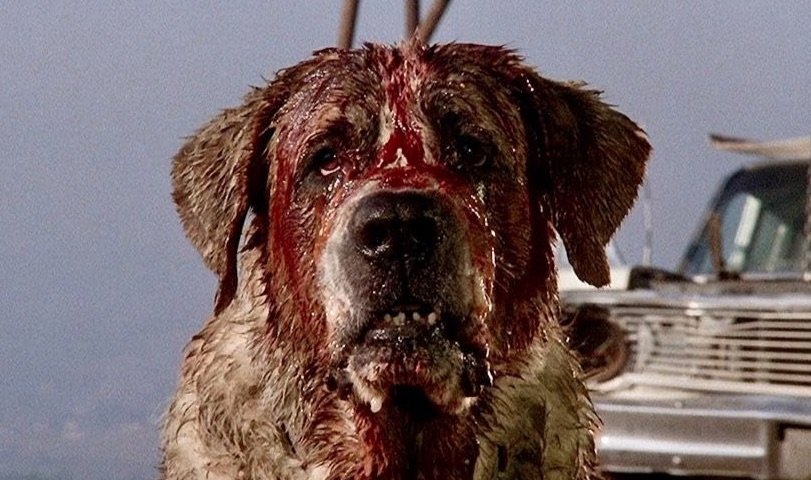
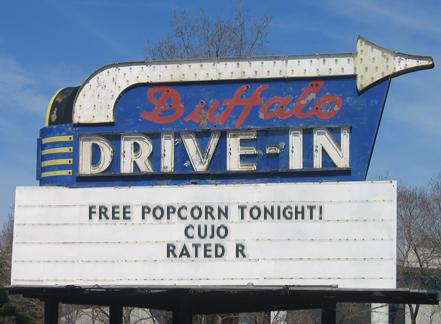
It’s getting near Halloween so I’m going to feature some more horror movies in the next two weeks…that’s my excuse anyway. I will start by saying that this is not the best Stephen King adaptation by any stretch but it’s entertaining. I think it’s thrilling and I like the director’s pacing in this one. Plus…the ability to make a Saint Bernard look convincingly menacing takes a lot of work. Also, check out a movie reviewer… my friend Bernie from Reelybernie. He is one of the best movie reviewers on WP and he is doing a Halloween series now.
As some of you know, I have had three Saint Bernards, so I like any movie with them, even if it’s evil. Cujo is not really evil; he has rabies and it’s a frightening thought. They are very strong dogs, they can pull thousands of pounds so if one was rabid you would be…to put it mildly in bad trouble. I have played wrestle each one and I couldn’t imagine if they were being serious. I watched this movie again with Martha, my current Saint, right beside me which was cool because she is the spitting image of Cujo with her marks.
Our first Saint was 175lbs with no fat on her. I did see her in action though one time. A German Shepard was coming at my wife from across the street, our dog knocked down our metal gate and ended up body-slamming the Shepard to the ground. It got up and never came back. She also wandered out on the road one day after getting out of the house. She was hit by a church bus…I thought she was dead but she got back up and barked at the bus. We did take her to a vet and she had some bruising but that was it. They are tough dogs but the most lovable lugs you would ever meet.
This 1983 movie starts with a big fun Saint Bernard chasing a rabbit…he sticks his big nose down a rabbit hole and is bitten by a bat. Cue the slow descent into a rabid madness. I’ve never read this book before but in the movie, nothing supernatural happens which is strange for a Stephen King adaptation. I’ve read where the book does have some supernatural events in it but not many. The movie just concentrates on the story.
At first, Cujo is just a regular, lovable dog who belongs to a mechanic named Joe Camber, his son, and his wife. But after the bat bite, Cujo starts acting strange and becomes more aggressive as the rabies takes over. You could tell that Joe Camber was not father or husband of the year material. His wife and son planned on a trip to her sister’s home. The movie didn’t say but I think they were leaving and never coming back.
Meanwhile, we meet the main characters, Donna Trenton (played by Dee Wallace), her husband Vic, and their young son Tad. Donna is having some personal troubles because she’s having an affair, and her marriage is falling apart. Vic, her husband, has to leave town for work, leaving Donna and Tad on their own. Dee Wallace was fantastic in this role. The critics were mixed but most gave her high marks for this movie.
One day, Donna and Tad drive out to Joe Camber’s farm to get their car fixed, but when they arrive, they discover that Cujo is no longer the friendly dog he once was. My favorite scene is where Camber’s son Brent calls for Cujo before he and his mom leave for her sister’s house…Cujo comes out of the fog growling and foaming but recognizes Brent (his owner) and slowly walks away. No one else gets that lucky.
They are now stuck at the farm and Cujo is now rabid and bloodthirsty and he quickly attacks them. Donna and Tad end up trapped in their broken-down car, with Cujo circling around them, ready to pounce. The heat inside the car is unbearable, and they can’t escape because the dog is waiting for them.
Dee Wallace was fantastic in this film. The movie got mixed reviews but Wallace was singled out by most as doing a great job. Lewis Teague directed this movie and I have to give him credit. He didn’t try to rush it, he slowly built the tension up and it paid off at the end.
Despite the film’s portrayal of Cujo as a terrifying dog, the Saint Bernard dogs used on set were friendly and often wagged their tails during scenes where they were supposed to be menacing. To overcome this, the filmmakers had to tie down the dogs’ tails until they finished with the scene.
I’m going to post a couple of posts today…this one and one that is leading up to Halloween!
On October 26, 1997, I saw The Rolling Stones at Vanderbilt. That is where I met Steve Forbert and that is the only time I got to see Sheryl Crow. It was in the afternoon and her voice soared through the Fall afternoon air. She performed great and I became even more of a fan that day.
At the time you had female artists like Gwen Stefani, Mariah Carey, Celine Dion, and then here comes Sheryl with her electric guitar with a rock edge…one of the best opening acts I ever saw. In the late 80s, she struggled to break through as artists like Madonna and Paula Abdul ruled the airwaves. Her first album Tuesday Night Music Club wasn’t released until she was 31 in 1993. That was because female singer/songwriters finally started to gain popularity in the 90s.
The song was written by Sheryl Crow and her producer Bill Bottrell. This song is off of her debut album Tuesday Night Music Club. The song peaked at #36 on the Billboard 100, #3 in Canada, and #33 in the UK in 1994.
Now she is really into pro-environmental concerns. On her tours, she demands only biodegradable cups and dinnerware be used by the caterer, as well as food that is “organic and purchased from local suppliers as much as possible” and water that “must be sourced from a local spring water vendor.” She also asks for separate plastic, glass, and paper recycling bins and wants her buses and trucks to be fueled with biodiesel only.
A fun sidenote to Sheryl. The first guitar she ever had was a 1964 Gibson Country and Western acoustic and she calls it The Moneymaker because most of the hits she wrote…was on that guitar.
Sheryl Crow:You’ve got a bunch of really young women out there who don’t really understand the importance of what they’re doing. They allow themselves to be exploited and they actually play that game and use sex to sell themselves. It undermines our credibility as artists.
Sheryl Crow talking about her parents: My earliest, most vivid memories are of them coming home with their friends and playing records – Stan Getz, Stan Kenton, Ella Fitzgerald – and me and my sisters sleeping out on the stairs so we could hear them.
Can’t Cry Anymore
Tell me you don’t care
Or tell me you’re just scared
But give me something I can hold on to
Just say what’s on your mind
Or am I just wasting time?
If you don’t want somebody loving you
You’ve got one foot in and one foot out the door
And baby I can’t take it anymore
Just give it to me
Give it to me
Give it to me
All your love
You’ve got demons in your past
You think real love doesn’t last
So you pull me close and then push me away
Can’t you look me in the eye?
Could you scream or laugh or cry?
But baby if you’re leaving say goodbye
But if you can’t find the right words anymore
Well then take me up the stairs and close the door
Give it to me
Just give it to me
Give it to me
All your love
Oh baby I’m begging you please
You’ve got me down on my knees tonight
I know what we have is real
Please remember how it feels to us
You’ve got one foot in and one foot out the door
And baby I can’t take it anymore
Give it to me
Just give it to me
Give it to me
All your love
Give it to me
Give it to me
Give it to me
All your love
The 50th anniversary of this is coming up in 16 days. I thought I would go ahead and post it today. It brings back a lot of memories with my dad. We will get back to music and movies tomorrow. If you ever wondered where the phrase “rope-a-dope” got famous…this is it. This is one of the most iconic events of the 20th Century.
I was 7 years old when this took place but I remember my dad was super excited for this fight. I also remember him griping how it wasn’t on television. It was on closed-circuit TV in theaters back on October 30, 1974, in America. It was later played on television here a week later I believe on Wild World of Sports. I watched it with my dad and he was happy that Ali won so I was as well.
It was George Foreman against Muhammid Ali. Ali, written off by most, faced the seemingly unbeatable Foreman, who was younger, stronger, and terrifying. Foreman had thoroughly beaten Joe Frazier and Ken Norton…the two men who had given Ali serious trouble.
The event took place in Kinshasa, Zaire (now the Democratic Republic of Congo) Africa, a choice by promoter Don King. King promised both fighters $5 million each (a staggering amount for the time) and found a host in Zaire’s dictator, Mobutu Sese Seko, who saw this as an opportunity to showcase his country to the world.
From the moment Ali landed in Zaire, it was clear… Ali was the people’s champion. He embraced the locals, chanting “Ali, bomaye!” (“Ali, kill him!”). Ali knew the power of spectacle, and he hyped the fight into a clash of good vs. evil—himself, the people’s hero, against the seemingly cold and invincible Foreman. Ali knew all about spectacles and how to create them. No one could hype an event like Ali could. Below this is what happened in the fight.
Foreman, by contrast, kept to himself. He was intense and silent, bringing his deadly reputation but lacking Ali’s charisma and showmanship. As Ali paraded through the streets of Kinshasa, the crowd adored him, feeding his ego and energizing his mission. Foreman? He just looked like a man on a mission to destroy Ali. Foreman threw a hell of a punch. If you got caught flat-footed with him…one punch is all it would take. Ali wasn’t the Cassius Clay a few years before…he was a little older and a little slower (still faster than Foreman)…but smarter.
Before writing this I sat down and watched the entire eight rounds. Ali was 32 years old but Foreman was 25 and the current Heavy Weight Champion of the World. You could still feel the electricity in the air now when you watch it. Ali came out swinging but in the second round Ali would lean against the ropes a cover…all the while Foreman would punch and punch…and punch. He got some hits in Ali’s side but Foreman could not land THAT punch. As this was going on…Ali’s mouth was running as usual…telling Foreman to punch him and punch again. He kept antagonizing him Foreman and it made him do exactly what Ali wanted… use up his energy.
I won’t go through every round but basically, Ali got Foreman to punch and use his energy up on useless punches. Ali knew that Foreman hadn’t gone over 4 rounds since 1971 plus George is a huge guy. By the 8th round, you could tell George was spent. He still was throwing punches but he wasn’t as focused and it cost him. Ali connected on 6 straight punches and the 7th punch knocked Foreman down and Ali was once again…the World’s Heavy Weight Champion. Ali said the famous phrase “rope-a-dope” as the way he beat Foreman…laying on the ropes while Foreman punched himself to a loss.
The local crowd was with Ali because of his hype and the professionals mostly picked Foreman in an easy win over the older Ali. George never got the rematch with Ali and that is a shame. In 1977 Foreman became a Christian Minister and retired and a much nicer guy. On November 5, 1994, at the age of 45 years old George Foreman beat Michael Moorer for the Heavy Weight Champion of the World. He was behind in point until George unloaded that lethal punch and that was it. Moorer was down and he lost the championship. I know it well because our band was playing in a sports bar and I got to announce it to the crowd there.
There is so much more to talk about with this fight but the post has gone on much longer than I had wanted. Hope you enjoyed it! The two ended up being National Treasures and some of that started with this fight.
One commenter named Beth brought up the documentary When We Were Kings about this….it’s worth a watch!
When this came out in 1984 it was some exciting times. Michael Jackson and Prince had released two massive albums. I didn’t really relate to Thriller but I loved Purple Rain. When this album dropped I bought it without buying the lead single which I did for some reason at times. Unlike The River or Nebraska, this one was in your face. The record company knew what they had here…they had a blockbuster album.
After this album, Springsteen wasn’t just a cult-following guy anymore. Just like I mentioned about Bob Seger with Against the Wind…some Springsteen fans loved it and some refused to listen. It was a massive hit and that is one of the reasons given by Springsteen fans I knew at the time. He wasn’t just their secret anymore. The album served as a bridge for people who had heard of him but didn’t really know him. Now the serious ones were going through his catalog.
Bruce toyed with not releasing it. He recorded a lot of it in 1982…2 years before it was released. He knew it was going to be a hit…and because of that, he hesitated. It probably got larger than he ever imagined. From 1984 to 1986 I never stopped listening to this album and neither did radio listeners. I still do from time to time and it holds up well.
My immediate reaction was the sound! Let’s forget the songs for a second. Listen to the clarity of the album. It was the clearest production I’d ever heard and stands as probably the cleanest-sounding rock album I’ve heard to this day. Bob Clearmountain mixed it and that made a huge difference. It sounded so good over your 1980s car stereo at the time…you could hear everything so clearly. Grab some headphones and listen to the album today.
The first big hit off the album wasn’t my favorite. That song was Dancing In The Dark and I liked it but not like the others. When I got the album, the songs to really hook me were Darlington County, No Surrender, Bobby Jean, and the huge title track. This was never my favorite Springsteen album but it broke him into the mainstream with a huge blast.
I thought I would highlight the songs that got me into the album. Most of these were not worn out by radio except maybe the title track. Believe me…if you listened to the radio in the mid-80s…you know the rest! If not I have the album on Spotify at the bottom.
Darlington County – When I think of this album this is the song I think about. This is one of the very few on the album that wasn’t a hit…but it’s just as good as many of the others. Bruce originally wrote this for his 1978 album Darkness On The Edge Of Town, but it didn’t make the cut. The riff in the song reminds me of Cadillac Ranch which was on The River album.
The song resolves itself in the end with the narrator’s buddy in trouble. I have a friend named Paul who I thought of when he mentioned Wayne.
Driving out of Darlington County My eyes seen the glory of the coming of the Lord Driving out of Darlington County Seen Wayne handcuffed to the bumper of a state trooper’s Ford
Surrender – When you are 17 years old and waiting for your life to start… then hear the lyrics Well, we busted out of class, Had to get away from those fools, We learned more from a three-minute record, than we ever learned in school… it gets your attention.
I think every song on the album could have been released as a single. This one did not chart but remains a strong song. Steven Van Zandt convinced Springsteen to include this song on the album because Bruce was going to leave it off.
Born In The USA – It’s probably the most misunderstood Springsteen song out there. Springsteen wrote this about the problems Vietnam veterans encountered when they returned to America. Vietnam was the first war the US didn’t win, and while veterans of other wars received a hero’s welcome, those who fought in Vietnam were mostly ignored when they returned to their homeland.
What a demented-sounding vocal…I LOVE it! I haven’t heard anything like this since Twist and Shout by the Beatles. I remember back in the 80s Chrysler offered Springsteen $12 million to use this in an ad campaign with Bruce… Springsteen turned them down so they used “The Pride Is Back” by Kenny Rogers instead. Springsteen had never let his music be used to sell products. He also turned Ronald Reagan down who wanted to use it for his re-election against Walter Mondale. Walter Mondale then said “I share the same American Dream” as Bruce. Bruce disagreed and said so. I’m happy that he turned both of them down.
Goin’ Down -Bruce makes it abundantly clear that he is not going to town, nor around, or in any way… up…nope he is going down, down, down, etc… He repeats “down” over eighty times in this song…My word count is 90 in the song. I don’t care…its a good song and as Bruce always does he sings it with conviction. It’s a very likable rock/pop song.
The reason I like this song is the overall sound that Bruce got on the guitar and the echo in his voice… it’s just perfect. I can hear the Sun Records’ influence in this one.
Bobby Jean -This one I really think would have been a hit if they had released it as a single…but that can be said about a few other ones also. This song was really poignant when I heard it because I was about to graduate and I was starting to say goodbye to a lot of classmates that I knew I’d never see again.
This was written as a farewell message to guitarist Steven Van Zandt, who left the E Street Band during the recording of Born In The U.S.A. to pursue other projects. Van Zandt returned to the band years later.
Here is the complete tracklist and the Spotify if you want to indulge yourself today.
1. Born in the U.S.A.
2. Cover Me
3. Darlington County
4. Working on the Highway
5. Downbound Train
6. I’m On Fire
7. No Surrender
8. Bobby Jean
9. I’m Goin’ Down
10. Glory Days
11. Dancing in the Dark
12. My Hometown
We all know the great album Brothers in Arms from Dire Straits, but sometimes those brothers are “at arms” rather than in them. In this series from myself and Randy, have discussed “Rock ‘Em Sock ‘Em” Siblings. This week Randy talks about the Burnette brothers. They were at it while most of the other brother’s acts were still in diapers. The original post is here.
“Tear It Up” by Johnny Burnette and The Rock ‘n Roll Trio (1956) written by Paul Burlison, Dorsey Burnette, and Johnny Burnette. Covered 40 times including Rod Stewart in 1981.
Dorsey William Burnett Jr. (December 28, 1932 – August 19, 1979) and his younger brother John Joseph Burnette (March 25, 1934 – August 14, 1964) along with Paul Burlison (February 4, 1929 – September 27, 2003) were the original Rockabilly band. One thing The Rock ‘n Roll Trio loved almost as much as music, was fighting.
Dorsey and Johnny grew up in the housing projects of Memphis where being tough was a distinct advantage. They both took to boxing and became Golden Glove Champions. In 1949 while working on oil barges on the Mississippi they met another Golden Glove champ, Paul Burlison, also from Tennessee. After work the three began playing in bars at night and in 1952 they formed a band.
After several wins at Amateur contests they landed a record deal with Coral Records. Unfortunately their national TV debut on the Ted Mack Amateur Hour aired on ABC the same night as Elvis’s September 9, 1956 Live appearance on CBS that had 82% of the viewing audience. Misadvised I would say, they performed “Hound Dog” that Elvis had released in July. They appeared on a few other shows but they struggled to gain wide spread fame, but they never gave up.
“Rock Billy Boogie” (1956) by Johnny Burnette and The Rock ‘n Roll Trio, written by Dorsey Burnette, Johnny Burnette, George Hawkins and Henry Jerome.
First cover of “Rock Billy Boogie” was by Robert Gordon in 1979.
The two brothers never entirely gave up ‘boxing’ either. Life on the road was tough and the tensions would lead to some nasty fistfights between Dorsey and Johnny. Sometimes the fights started on stage and would spread into the audience. Apparently one night the three of them took on everyone in the place, and won. This led to several bans from bars and tours. One night in August of 1956 in Niagara Falls, NY the brothers had a brutal fight. The next day Dorsey left the band and it was just days before their big break to appear in the Alan Freed movie Rock! Rock! Rock!
Johnny quickly recruited Bill Black’s (Elvis’s bass player) younger brother Johnny Black and the appearance went ahead. The record company credited their next release with Johnny Burnette at the front and even when Dorsey returned a year later that’s how they were billed. They would then pursue solo careers and continue to write some great rock and roll songs. Johnny would die in a boating accident in 1964. His original recording of “You’re Sixteen” appears on the American Graffiti Movie Soundtrack. Covered over 90 times and of course by Ringo Starr that hit #1 on the Hot 100 in 1973.
“You’re Sixteen” (1960) by Johnny Burnette reached #8 on the Hot 100, written by Richard Sherman and Robert B. Sherman. The Sherman brothers would go on to write all those amazing songs for Disney Movies such as “Chim Chim Cheree”, “I Wan’na Be Like You (The Monkey Song)”, “Super-Cali-Fragil-Istic-Expi-Ali-Docious”, “It’s a Small World” and dozens more.








 PowerPop... An Eclectic Collection of Pop Culture