Johnny Burnette Trio – Lonesome Train

The first time I heard this song I was knocked out by that guitar sound. Not just the playing, but that incredible slapback echo that seems to jump right out of the speakers. You can buy countless pedals and plugins today that promise the same effect, but to my ears, nothing quite captures what they were doing in the 1950s. There is just something alive about it. I get all nerdy over this sound but I can’t help it.

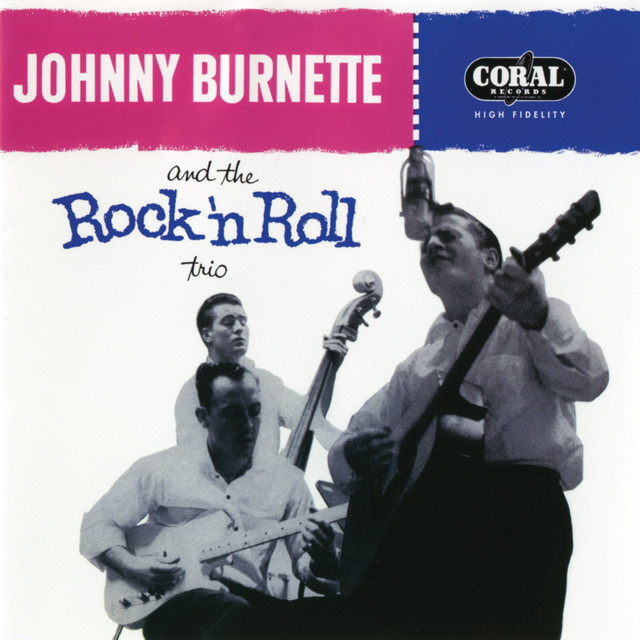
The Johnny Burnette Trio was one of the wildest rockabilly bands of the era. They were formed by brothers Johnny and Dorsey Burnette, along with guitarist Paul Burlison; they blended country, rhythm and blues, and early rock into a raw sound. This song, recorded in 1956, became one of their signature recordings. It wasn’t a major hit at the time, but it became one of the defining records of rockabilly. Burlison’s guitar playing, along with Johnny Burnette’s vocal, gave the record an excitement that still comes across nearly seventy years later.

Paul Burlison always maintained that part of his distorted guitar sound happened because a tube in his amplifier had become loose during a rough drive to a studio. Rather than fixing it, he liked the gritty sound and kept playing. Whether every detail of that story is exactly as remembered has been debated over the years, but it’s one of rockabilly’s great legends. It helped point the way toward the distorted guitar sounds that became common in rock music years later.

I’m going to get a little technical on this subject…see nerdy again. One of the secrets behind that sound was the recording itself. In the 1950s, there were no digital effects and very few electronic echo units. Engineers often created an echo by using two tape machines. The signal was recorded on one machine and immediately played back on a second machine a fraction of a second later. By mixing the original signal with that of the delayed playback, they created the famous slapback echo that became a trademark of rockabilly. Studios also used echo chambers, actual rooms with a speaker at one end and a microphone at the other. The natural reflections inside the room produced reverb that sounded warm and real because it actually was. Every studio had its own sound, which is one reason records from that era have so much personality. You can tell if it’s a Stax or Motown by the sound in the sixties as well.

This song reminds me that sometimes limitations create the greatest music. The musicians couldn’t rely on technology to make a recording exciting. They had to play with energy, and the engineers had to invent ways to capture it. The result is a record that still sounds fresh today. If you want to hear rockabilly at its finest, with one of the greatest guitar sounds ever put on tape, this is a train well worth climbing aboard.

Below in the live cut, Johnny Black is on bass, filling in for Dorsey Burnette.

Lonesome Train

Lonesome train, on a lonesome track
I am goin’ away, ain’t comin’ back
I am goin’ somewhere far from my baby

On a lonesome train, on a lonesome track

A lonesome train, on a lonesome track
Got all my troubles in one big pack
My baby left me, so sad and lonely

On a lonesome train, on a lonesome track

Lonesome train, on a lonesome track
My girl don’t love me and that’s a fact
No use in livin’, no use in dyin’

On a lonesome train, on a lonesome track

On a lonesome train, on a lonesome track
I want my baby, I want her back
Don’t want to go on forever travelin’
On a lonesome train, on a lonesome track

Brothers At Arms – Johnny and Dorsey Burnette

We all know the great album Brothers in Arms from Dire Straits, but sometimes those brothers are “at arms” rather than in them. In this series from myself and Randy, have discussed “Rock ‘Em Sock ‘Em” Siblings. This week Randy talks about the Burnette brothers. They were at it while most of the other brother’s acts were still in diapers. The original post is here.

“Tear It Up” by Johnny Burnette and The Rock ‘n Roll Trio (1956) written by Paul Burlison, Dorsey Burnette, and Johnny Burnette. Covered 40 times including Rod Stewart in 1981.

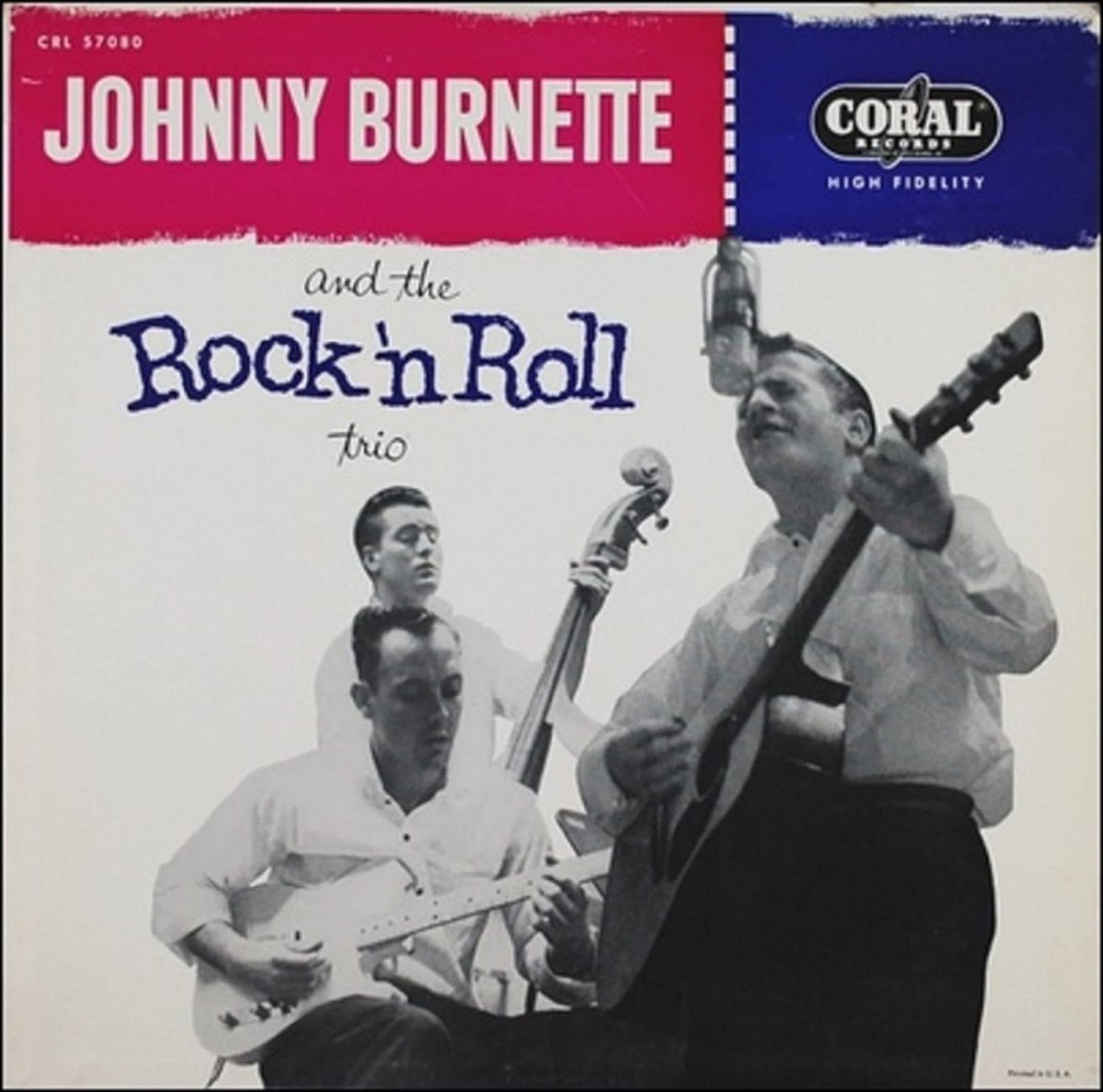
Dorsey William Burnett Jr. (December 28, 1932 – August 19, 1979) and his younger brother John Joseph Burnette (March 25, 1934 – August 14, 1964) along with Paul Burlison (February 4, 1929 – September 27, 2003) were the original Rockabilly band. One thing The Rock ‘n Roll Trio loved almost as much as music, was fighting.

Dorsey and Johnny grew up in the housing projects of Memphis where being tough was a distinct advantage. They both took to boxing and became Golden Glove Champions. In 1949 while working on oil barges on the Mississippi they met another Golden Glove champ, Paul Burlison, also from Tennessee. After work the three began playing in bars at night and in 1952 they formed a band.

After several wins at Amateur contests they landed a record deal with Coral Records. Unfortunately their national TV debut on the Ted Mack Amateur Hour aired on ABC the same night as Elvis’s September 9, 1956 Live appearance on CBS that had 82% of the viewing audience. Misadvised I would say, they performed “Hound Dog” that Elvis had released in July. They appeared on a few other shows but they struggled to gain wide spread fame, but they never gave up.

“Rock Billy Boogie” (1956) by Johnny Burnette and The Rock ‘n Roll Trio, written by Dorsey Burnette, Johnny Burnette, George Hawkins and Henry Jerome.

First cover of “Rock Billy Boogie” was by Robert Gordon in 1979.

The two brothers never entirely gave up ‘boxing’ either. Life on the road was tough and the tensions would lead to some nasty fistfights between Dorsey and Johnny. Sometimes the fights started on stage and would spread into the audience. Apparently one night the three of them took on everyone in the place, and won. This led to several bans from bars and tours. One night in August of 1956 in Niagara Falls, NY the brothers had a brutal fight. The next day Dorsey left the band and it was just days before their big break to appear in the Alan Freed movie Rock! Rock! Rock!

Johnny quickly recruited Bill Black’s (Elvis’s bass player) younger brother Johnny Black and the appearance went ahead. The record company credited their next release with Johnny Burnette at the front and even when Dorsey returned a year later that’s how they were billed. They would then pursue solo careers and continue to write some great rock and roll songs. Johnny would die in a boating accident in 1964. His original recording of “You’re Sixteen” appears on the American Graffiti Movie Soundtrack. Covered over 90 times and of course by Ringo Starr that hit #1 on the Hot 100 in 1973.

“You’re Sixteen” (1960) by Johnny Burnette reached #8 on the Hot 100, written by Richard Sherman and Robert B. Sherman. The Sherman brothers would go on to write all those amazing songs for Disney Movies such as “Chim Chim Cheree”, “I Wan’na Be Like You (The Monkey Song)”, “Super-Cali-Fragil-Istic-Expi-Ali-Docious”, “It’s a Small World” and dozens more.

Johnny Burnette Trio-Train Kept A Rollin’

This song you may remember from the Yardbirds and Aerosmith but this version rocks roots style. No matter what version you know…this song is built for a rock band of any kind.

It was written by Tiny Bradshaw, Howard Kay, and Lois Mann, this song was originally performed by Tiny Bradshaw’s Big Band in 1951.

This version features guitar lines in what many historians consider to be the first recorded example of intentionally distorted guitar in rock music, although blues guitarists, such as Willie Johnson and Pat Hare, had recorded with the same effect years earlier.

The Trio’s guitarist, Paul Burlison, recounted that he noticed the sound after accidentally dropping his amplifier, which dislodged a power tube. Later, “Whenever I wanted to get that sound, I’d just reach back and loosen that tube”

Johnny Burnette recorded this rock version in 1956, and The Yardbirds popularized the song with their rendition in 1965. Aerosmith covered it in 1974, often playing the song as their encore in their early years. Tyler had seen the Yardbirds do it in the sixties and as he said it knocked him out.

Train Kept A Rollin’

I caught a train
I met a dame
She was a hepster
And a real gone dame
She was pretty
From New York City
And we trucked on down that old fair lane
With a heave and a ho
Well i just couldn’t let her go

Get along, creepy little woman
Get along, well be on your way
Get along, creepy little woman
Get along, well be on your way
With a heave and a ho
Well i just couldn’t let her go

Well, the train kept a-rollin all night long
The train kept a-rollin all night long
The train kept me movin’ all night long
The train kept a-rollin all night long
With a heave and a ho
Well i just couldn’t let her go

We made a stop
In Alberquerque
She must of thought
That I was a real gone jerk
We got off the train
At El Paso
Our lovin was so good, jack
I couldn’t let her go
Get along
Well I just couldn’t let her go

Get along, creepy little woman
Get along, well be on your way
Get along, creepy little woman
Get along, well be on your way
With a heave and a ho
Well I just couldn’t let her go

The train kept a-rollin all night long
The train kept her movin’ all night long
The train kept a-rollin all night long
With a heave and a ho
Well I just couldn’t let her go-oh-oh