Big Sugar – Diggin a Hole

I was looking for a band to cover, and CB sent me a link to this terrific Canadian band. I liked the music right away. The first thing I noticed was the great musicianship on the songs. They are the real deal musically, and the guitarist Geordie Johnson is top shelf, and so is the bass player Garry Lowe.  

They were formed in Toronto in the late 1980s, initially as a blues trio built around the guitar work of frontman Gordie Johnson. Before Big Sugar became popular, Johnson started out backing legends like the Muddy Waters alumni and Mavis Staples. 

Another member who made them sound distinctive was bass player Garry Lowe. Lowe joined Big Sugar in 1994 and played on eight of their albums.  He bridged the reggae and Rastafarian culture of his native Jamaica with a rock audience.  Lowe was sometimes criticized for working in Big Sugar by Rastas and Jamaican music followers who wanted him to keep reggae pure, but he continued to play and blend his style into others. 

They have released 11 studio albums since 1991 and 2 live albums. Their last studio album was released in 2020 and is called Eternity Now. Their success has been mostly in Canada, with one song getting some US airplay with You Better Get Used To It.

I’ve been listening to different cuts, and they cover a lot of ground. They have some heavy blues riffs, some reggae rhythms, roots music, with a pinch of psychedelia here and there. Their breakthrough album was Five Hundred Pounds, which hit big on Canadian college radio at the time.

This song was on the 1996 album Hemi-Vision. It was their biggest hit in Canada, peaking at #9 in the Canadian Charts. I asked my friend Deke if he had heard of them, and he has seen them live a few times. He also sent me this video of Jack White (who is a fan) who is releasing their album Five Hundred Pounds again on vinyl.

Diggin A Hole

Got my head in a haze
Feel like a cat in a cage
I’ve been crying for days and I’m falling apart
Digging a hole in my heart
Give me the lies on page
I’m feelin’ twice my age
I’ve been crying for days and I’m falling apart
Digging a hole in my heart

Digging a hole is that the way you treat me
Digging a hole just tie me up and beat me

Got my head in a haze
Feel like a cat in a cage
I’ve been crying for days and I’m falling apart
Give me the lies on page
I’m feelin’ twice my age
I’ve been crying for days and I’m falling apart
Digging a hole in my heart

Digging a hole is that the way you treat me
Digging a hole just tie me up and beat me

Got my head in a haze
Feel like a cat in a cage
I’ve been crying for days and I’m falling apart
Give me the lies on page
I’m feelin twice my age
I’ve been crying for days and I’m falling apart
Digging a hole in my heart
Digging a hole is that the way you treat me
Digging a hole just tie me up and beat me

Jimi Hendrix – Voodoo Child (Slight Return)

This song explosion is like an atom bomb going off. From the first words “Well, I stand up next to a mountain and I chop it down with the edge of my hand” you know Jimi means business. This is no boy band, folk cafe, or pop song. Jimi is shooting to kill. This song is off the great 1968 Electric Ladyland album. From the tone of the guitar and how he spits out the lyrics, the song is a masterpiece. The guitar riff is one of, if not the best. There was another song called Voodoo Chile that was recorded, but it is a different song. 

This song was recorded by The Jimi Hendrix Experience in May 1968, during the sessions for Hendrix’s third and final studio album, Electric Ladyland. The day before this was recorded, Jimi, Steve Winwood, Jack Casady, and some others had a jam in the studio called Voodoo Chile. This song was almost an accident after they built this song with a riff from the previous day. 

A camera crew from ABC-TV came by to film Hendrix for a documentary. Hendrix, always the showman, wanted to give them something great. So, he grabbed his guitar, and the Experience basically created “Voodoo Child (Slight Return)” on the spot. It was a stripped-down, turbo-charged echo of the longer “Voodoo Chile” jam from the previous day.  This time built around that now-iconic riff.

Unfortunately, that footage from this day is said to be stolen. The footage of the previous day’s jam was left alone. Did the thief die and leave the unattended films to rot into dust? Are the reels locked away in some forgotten vault or stashed in an attic? Were the films destroyed in a fire, deliberate or accidental? Is some private collector viewing them at this moment? We may never know.

The readers of Music Radar voted this the very best rock riff ever. That is saying a lot, but I can’t fight that much at all. If you are wondering, Guns N Roses’ Sweet Child O’ Mine came second in the poll and Led Zeppelin’s Whole Lotta Love” third.

Voodoo Child (Slight Return) was released in the UK after his death. It peaked at #1 in 1970. It was his only number 1 hit in the UK. 

Joe Satriani: “It’s just the greatest piece of electric guitar work ever recorded. In fact, the whole song could be considered the holy grail of guitar expression and technique. It is a beacon of humanity.”

Voodoo Child (Slight Return)


Well, I stand up next to a mountain
And I chop it down with the edge of my hand
Well, I stand up next to a mountain
And I chop it down with the edge of my hand
Well, I pick up all the pieces and make an island
Might even raise a little sand
Yeah

‘Cause I’m a voodoo child
Lord knows I’m a voodoo child, baby

I want to say one more last thing

I didn’t mean to take up all your sweet time
I’ll give it right back to you one of these days, hahaha
I said I didn’t mean to take up all your sweet time
I’ll give it right back one of these days
Oh yeah
If I don’t meet you no more in this world, then
I’ll meet you in the next one
And don’t be late
Don’t be late

‘Cause I’m a voodoo child, voodoo child
Lord knows I’m a voodoo child, baby

I’m a voodoo child, baby
I don’t take no for an answer
Question no
Lord knows I’m a voodoo child, baby

Neil Young – Down By The River

This song and Like a Hurricane are high on my list of Neil’s songs. I also like the live versions of this song, which can stretch into 15 minutes at times. He keeps it interesting. 

Young traded licks with Danny Whitten of Crazy Horse, Neil wrings every drop of feeling out of a few simple chords as he always does. He has always been one of the best at getting everything out of one simple note. That is why he is one of my favorite guitar players. He doesn’t do it with technical brilliance or flash, just total feel. He can sit on one note and make it scream. 

This song was on the 1969 Everybody Knows This Is Nowhere released in 1969. Crazy Horse was on the album also…Crazy Horse included Danny Whitten – guitar, Billy Talbot – Bass, and Ralph Molina on drums.  The album included Cinnamon Girl and Cowgirl in the Sand. This was the first album of many to feature Crazy Horse. 

Neil Young wrote Down by the River and Cinnamon Girl in 1968, reportedly during a bout of high fever and delirium while bedridden with the flu at a house in Topanga Canyon, California. That is a great day’s work, sick or not. Young used a Gibson Les Paul nicknamed “Old Black,” run through a small Fender amp cranked to overdrive for a natural distortion.

The album peaked at #32 in Canada and #34 on the Billboard Album Charts in 1970. Down by the River didn’t chart, but Cinnamon Girl did peak at #25 in Canada. With the chorus of “I shot my baby down by the river,” this song gets your attention. In a 1970 interview, Neil Young cleared it up: “There’s no real murder in it. It’s about blowing your thing with a chick. See, now in the beginning, it’s ‘I’ll be on your side, you be on mine’. It could be anything. Then the chick thing comes in. Then at the end it’s a whole other thing. It’s a plea… a desperation cry.” 

Neil Young: “I’d like to sing you a song about a guy who had a lot of trouble controlling himself, he let the dark side come thru a little too bright.” The explanation goes on the describe the murder, the killer’s arrest and, finally, the guilt he feels as he realized what he’s done.”

Neil Young: “I’m trying to make records of the quality of the records that were made in the late Fifties and the Sixties, like Everly Brothers records and Roy Orbison records and things like that. They were all done with a sort of quality to them. They were done at once. It’s just a quality about them, the singer is into the song and the musicians were playing with the singer and it was an entity, you know. It was something special that used to hit me all the time, that all these people were thinking the same thing, and they’re all playing at the same time. It happens on a few cuts, you can hear it. I think “Cinnamon Girl,” “Everybody Knows This Is Nowhere,” and “Round And Round” has that feeling of togetherness, although it was just Danny and me and Robin Lane.”

Down By The River

Be on my side I’ll be on your side, baby
There is no reason for you to hide,
This much madness is too much sorrow,
It’s impossible to make it today,
Hey, hey, ooh-ooh

She could drag me over the rainbow,
Send me away.

Down by the river
I shot my baby
Down by the river,
Dead, shot her dead.

You take my hand, I’ll take your hand,
Together we may get away.

Thin Lizzy – Cowboy Song

This song starts off slow, and then it really kicks the door in.  They had bigger hits such as The Boys Are Back in Town and Jailbreak, but this song is really good. It’s always been at the top of my Thin Lizzy song list. It has a cinematic feel to it. I like this one because of a great moment after the bass break, and Phil kicks it in full force. I love dynamics when they are done right, and this is. 

What a groundbreaking band Thin Lizzy was at the time. You had a black Irish singer-bass player, Phil Lynott,  who reminded people of Van Morrison singing and a little of Springsteen in some of his writing…all in a harder rock format. I always liked Thin Lizzy because of two things. The brilliant Phil Lynott and the dual guitar lead that this band made popular. 

The song was written by Phil Lynott and drummer Brian Downey, tells the story of a drifting cowboy longing for love. It was released as a single in 1976 and peaked at #77 on the Billboard 100. The song was on their Jailbreak Album. The album peaked at #18 on the Billboard Album Charts, #5 in Canada, and #10 in the UK. 

The members of Thin Lizzy were bassist and singer Phil Lynott, Drummer Brian Downey, guitarist Brian Robertson, and guitarist Scott Gorham. Gary Moore was a member for a few months and also Them’s keyboardist Erix Wrixon but Moore and Wrixon didn’t stay long.

I first heard the song on the Live and Dangerous album that was released two years later. 

Scott Gorham: “Cowboy Song” originally began as a joke. During a writing session, Lynott half-seriously suggested they try to write a “cowboy song.” But as the ideas started flowing, it took on a life of its own… one of the best songs we ever did.

Phil Lynott biographer Mark Putterford: “a cross between Clint Eastwood and Rudolph Valentino, with a bit of George Best thrown in for good measure. Philip strode into the sunset of his own imagination and always, of course, lived to fight another day.”

Cowboy Song

I am just a cowboy, lonesome in the trail.
Starry night, campfire light, and the coyote calls where the howlin’ winds will.
So I ride out to the ol’ sundown. I am just a cowboy, lonesome on the trail.
Lord I’m just thinking about a certain female.
And the nights we spent together, riding on the range.
Looking back, it doesn’t seem so strange.

Roll me over and turn me around. Let me keep spinning ’til I hit the ground.
Roll me over and let me go, riding in the rodeo.

I was took in Texas, I did not know her name.
But Lord all these southern girls, they seem the same.
But down below the border, in a town in Mexico,
I got my job busting broncs for the rodeo.

Roll me over ans turn me around, let me keep spinnin till I hit the ground.
Roll me over and let me go, running free with the buffalo.

Roll me over, and I’ll turn around.
And I’ll move my fingers up and down.
Up and down.

It’s ok amigo, just let me go.
Riding in the rodeo.

Roll me over and turn me around, let me keep spinning till I hit the ground.
Roll me over and let me go, riding in the rodeo.
Roll me over and set me free, the cowboy’s life is the life for me.

Steely Dan – Dirty Work

I’ve always liked Steely Dan, and this song is at the top of my list. You don’t hear this one as much as Hey Nineteen or others, but I love it. It sounded different than many of their other songs, and there is a reason for that. Donald Fagen and Walter Becker wrote the song, but it was sung by David Palmer. Palmer left the band soon after. 

Palmer was brought into Steely Dan as a vocalist because the label, ABC Records, had concerns about Donald Fagen’s unconventional singing style. Palmer handled lead vocals on a few tracks from Can’t Buy a Thrill, including this song and Brooklyn (Owes the Charmer Under Me). Fagen eventually took over all lead vocals as Steely Dan evolved into more of a studio band than a touring band.

Fagen and Becker had a reputation and were infamous for requesting take after take, pushing musicians to their breaking point. I love reading some of the stories about this band. It probably was a pain for some of them, but it worked well for Steely Dan. 

This song came off the 1972 Can’t Buy a Thrill album. It’s a song about an affair from the man’s point of view. Palmer did a great job on the song and helped Steely Dan build an audience.  The song is well known, but it did not chart because it wasn’t released as a single here. 

Becker and Fagen debated leaving the song on the album. It has since also been recorded by other artists, including The Pointer Sisters, Iain Matthews, and Melissa Manchester.

Dirty Work

Times are hard
You’re afraid to pay the fee
So you find yourself somebody
Who can do the job for free
When you need a bit of lovin’
Cause your man is out of town
That’s the time you get me runnin’
And you know I’ll be around

I’m a fool to do your dirty work
Oh yeah
I don’t want to do your dirty work
No more
I’m a fool to do your dirty work
Oh yeah

Light the candle
Put the lock upon the door
You have sent the maid home early
Like a thousand times before
Like the castle in its corner
In a medieval game
I foresee terrible trouble
And I stay here just the same

I’m a fool to do your dirty work
Oh yeah
I don’t want to do your dirty work
No more
I’m a fool to do your dirty work
Oh yeah

Cars – My Best Friend’s Girl

This song is from The Cars’1978 great debut album. This album has been known by fans as their “greatest hits.” It was one of the best debut rock albums ever released. It is a power pop masterpiece. They were all simple songs, but totally effective. The album contained Good Times Roll, My Best Friend’s Girl, Just What I Needed, Moving In Stereo, and Bye Bye Love. All of which still gets played. 

This song is full of catchy hooks, but what makes it special to me is guitarist Elliot Easton’s rockabilly licks flowing through it. Ric Ocasek wrote and sang the song, which peaked at #44 in the Billboard 100, #3 in the UK, and #55 in Canada in 1978. Speaking of Elliot Easton, he was their secret weapon. The guy could have made any song catchy by just inserting his guitar licks. 

The song sounds both old (Easton’s licks) and modern with Greg Hawke’s synthesizer in the background. Hawke would color a song but hardly ever take it over. It’s been covered by multiple artists, featured in films and TV shows, and still sounds fresh. 

The album The Cars peaked at #18 on the Billboard Album Charts, #50 on the Canadian Album Charts, #29 in the UK, and in New Zealand it peaked at #5 in 1978. It seems New Zealand appreciated it much more and realized they were here to stay. They were one of the few power pop bands that had a somewhat long career. The two singers were usually Ric Ocasek (who was also the main songwriter) and bass player Benjamin Orr. Their voices were very similar. 

Below, Ocasek explains how he wrote the song. 

Ric Ocasek: Nothing in that song happened to me personally. I just figured having a girlfriend stolen was probably something that happened to a lot of people. I wrote the words and music at the same time: “You’re always dancing down the street / with your suede blue eyes / And every new boy that you meet / he doesn’t know the real surprise.” The “suede blue eyes” line was a play on Carl Perkins’s “Blue Suede Shoes.” When I wrote, “You’ve got your nuclear boots / and your drip-dry glove,” I envisioned the boots and gloves as a cool ’50s fashion statement.

As for the last lines—“And when you bite your lip / it’s some reaction to love”—they were an emotional gesture. I was reading a lot of poets then. At some point, I realized my lyrics didn’t include the words “My Best Friend’s Girl.” So I pulled out the lyrics someone had typed up and added a chorus in the margin in pen: “She’s my best friend’s girl / she’s my best friend’s girl / but she used to be mine. I liked the twist. Up until that point, you think the singer stole his best friend’s girl based on how good he feels about her: “When she’s dancing ’neath the starry sky / she’ll make you flip.”

With the last line of the chorus, “But she used to be mine,” you realize the guy didn’t steal his best friend’s girl—his friend stole her away from him.

My Best Friend’s Girl

You’re always dancing down the street
With your suede blue eyes
And every new boy that you meet
He doesn’t know the real surprise
Here she comes again
When she’s dancing ‘neath the starry sky
She’ll make you flip
Here she comes again
When she’s dancing ‘neath the starry sky
You kinda like the way she dips
She’s my best friend’s girl
And she used to be mine
You’ve got your nuclear boots
And your drip dry glove
And when you bite your lip
It’s some reaction to love

A Replacements Revival

Thanks, Dave, for asking me to participate. Dave wanted us to pick a band we would like to see reunited based on reality and not bringing people back to life. A lot of bands that I would love to get back together, but most have deceased members, and under his rules, we cannot raise them again. Allman Brothers, The Band, Big Star, and many others where one or a few are alive. I considered The Kinks because Ray and Dave Davies are still alive, along with Mick Avory, the drummer. I also considered REM, CCR, J Geils, and The James Gang. Even if Dave had said we could resurrect people, I still would not pick The Beatles. I’m forever grateful they didn’t try it before Lennon passed. There is no way they would have lived up to people’s expectations. 

The Replacements, Paul Westerberg, Tommy Stinson, and Chris Mars are still doing well. Their lead guitar player, Bob Stinson, passed away in 1995. He was replaced by Slim Dunlap in the ’80s when Bob quit. Slim passed away in 2024. He didn’t tour with them in the teens when they DID reunite because of a stroke he had in 2012.

They reunited in 2012 and started to tour, which lasted until 2015. They sold out huge arenas, made more money, and played in front of more fans than they did in their prime. Although their last show in Chicago drew over 50,000 people in 1991.

They had a penchant for shooting themselves in the foot in the ’80s over and over. Grabbing their new producer and tearing his clothes off and throwing him in the hall, saying the F word on Saturday Night Live and then getting banned, guest hosting a radio show and picking old blues records they knew had cuss words, and getting kicked out of there, and opening up for Tom Petty and breaking in Petty’s dressing room and stealing and wearing his wife’s clothes on stage (they finished the tour though…Petty had a sense of humor), refusing to make videos, knowing that record executives from big labels were coming to watch them and getting drunk playing TV theme songs plus KISS covers all night long. No need to add more things…you get the point.

I’ve heard from people who saw them in their prime. They usually have two things to say about them if they have seen them at least twice. “The best rock and roll band I’ve ever seen or heard” OR “The most drunken display I’ve ever seen” but even when they said that…they said they liked them and they still beat most bands. It does make sense, though. They started off as a punk band and slowly developed into a rock band when Westerberg developed as a songwriter. They had a rebellious spirit to the end. 

Personally, I think if they had played the music company game like REM, they could have been popular in the mainstream. They had some of the strongest songs of the 1980s because of Paul Westerberg, and I put his songwriting on the level of Springsteen. Now let’s get into the songs of the band. I think many of their songs rival The Beatles, The Who, Led Zeppelin, Stones, or anyone you could throw out there. Bastards of Young, Here Comes A Regular, Alex Chilton, Androgynous, Can’t Hardly Wait, I Will Dare, Left Of The Dial, Unsatisfied, Kiss Me on the Bus, Skyway, Color Me Impressed, The Ledge, and so many more. If they had gotten proper airplay, I have no doubt they would have been hits. 

Most indie bands were out of touch with the mainstream at the time, and that is the reason they all had such a large fan base. It started to cross over, though in the late eighties or early nineties at last, but by that time…The Replacements were winding down. This is a band I would want to see again, clicking on all cylinders. From the reviews of all of their reunion shows…they were on. 

So Paul and Tommy…how about one more go around? Please include some TV Themes and KISS cover songs…just because you can. If you guys are happy…we will be. 

Merle Haggard – I’m A Lonesome Fugitive

Whenever I hear this man’s voice, it takes me back to my dad, who would listen to his songs in our red Plymouth Valiant. Songs like Sam Hill, Swinging Doors, and others, he would have blasting at 7 in the morning. 

Merle was genuine through and through. He didn’t run from his past but used it to tell stories and warn people about going the wrong way. Merle wasn’t posing; he was the real deal. This song helped shape the outlaw country movement before it had a name.

Most people know that he spent his early adulthood behind bars for a failed attempt at robbery. While in San Quentin State Prison, Haggard wrote many songs while dreaming of freedom and life beyond the bars of a cell.

He knew a couple of inmates, James Rabbit and Caryl Chessman. Haggard and James Rabbit hatched a plan one night to escape (they would hide inside a desk he was building in the prison furniture factory), though at the last moment, Rabbit advised Haggard not to take part in the plan. Rabbit escaped, was recaptured, killed an officer, and was brought back to San Quentin to be executed. It was the first of many events to change something in Haggard’s criminal ways.

What is surprising is that Merle did not write this song. It was written by Liz Anderson and her husband, Casey Anderson, a songwriting couple who were fans of Haggard and knew of his prison past. When they sent the song his way, it clicked instantly. Haggard later said he related to it so personally that he felt like it had to be his.

The song peaked at #1 on the Billboard Country Charts, and the album of the same name peaked at #3 on the Billboard Country Album Charts. 

One of my biggest concert regrets is that I never saw this great artist live. 

I’m A Lonesome Fugitive

Down every road there’s always one more cityI’m on the run, the highway is my home

I raised a lot of cane back in my younger daysWhile mama used to pray my crops would failNow I’m a hunted fugitive with just two waysOutrun the law or spend my life in jail

I’d like to settle down but they won’t let meA fugitive must be a rolling stoneDown every road there’s always one more cityI’m on the run, the highway is my home

I’m lonely but I can’t afford the luxuryOf having one I love to come alongShe’d only slow me down and they’d catch up with meFor he who travels fastest goes alone

I’d like to settle down but they won’t let meA fugitive must be a rolling stoneDown every road there’s always one more cityI’m on the run, the highway is my homeI’m on the run, the highway is my home

Creedence Clearwater Revival – Born on the Bayou

This song is so ominous with that noise and then tremolo guitar opening. I’m ready to follow whatever comes next after that.  What came after was the other instrument in the band that no other band had or could match, John’s voice. I think of Little Richard, but with a little more control. We will revisit Richard in this post.  The song was the B side to Proud Mary and never did chart, but it remains one of their best-remembered songs. It should be a law, you have to wear headphones with the volume at 11 when you listen to this song. Fogerty’s voice will amaze you. 

When you listen to the song, you are in a bayou, whether you want it or not. You have hound dogs barking, rolling with a Cajun Queen, running through the backwoods bare, and all the inhabitants of the bayou within your reach. Although none of the band members were from Louisiana (they were based in California), Fogerty created a vivid, swampy Southern sound that came to define CCR’s identity with this song. 

John Fred was a singer (Judy In Disguise), and he played a part in this song. Fred was from Louisiana, and when Creedence played a show in Baton Rouge in 1969, he met Fogerty at a rehearsal and offered to take him to a real bayou. They drove 15 minutes to Bayou Forche, where they ate some crabs and crayfish, which helped give Fogerty the idea for this song.

The song was on their album Bayou Country, released in 1969. The album contained Proud Mary and one of my favorite CCR songs Bootleg. On making the album, John said: Everybody wanted to sing, write, make up their own arrangements, whatever, right? This was after ten years of struggling. Now we had the spotlight. Andy Warhol’s fifteen minutes of fame. ‘Susie Q’ was as big as we’d ever seen. Of course, it really wasn’t that big…I didn’t want to go back to the carwash.” The album peaked at #7 on the Billboard album charts, #14 in Canada, and #62 in the UK.

I found one of the most interesting covers of this song. Little Richard (I have it below) covered it in 1971. After a 2:00 spoken intro, his voice blasts into it, and it feels just right.

John Fogerty: “We were the #7 act on the bill, bottom of the totem pole. And as the first guys to go on, we were the last to soundcheck before they opened the doors. It was like, ‘Here’s the drums, boom, boom; here’s the guitar, clank, clank.’ I looked over at the guys and said, ‘Hey, follow this!’ Basically, it was the riff and the attitude of ‘Born on the Bayou,’ without the words.” 

John Fogerty: “Born on the Bayou,” “Proud Mary,” and “Choolgin'” were all connected in John Fogerty’s mind. In Bad Moon Rising, he said, “I was writing these at night, and I remember that Bobby Kennedy got killed during this time. I saw that late at night. They kept showing it over and over. ‘Bayou’ and ‘Proud Mary’ and ‘Chooglin” were all kind of cooking at that time. I’d say that was when the whole swamp bayou myth was born—right there in a little apartment in El Cerrito. It was late at night and I was probably delirious from lack of sleep. I remember that I thought it would be cool if these songs cross-referenced each other. Once I was doing that, I realized that I was kind of working on a mythical place.”

If you want to hear a live version by CCR, I couldn’t find a good video except the audio right here.

Born on the Bayou

Now, when I was just a little boyStandin’ to my daddy’s kneeMy papa said, “Son, don’t let the man get youAnd do what he done to me”‘Cause he’ll get you‘Cause he’ll get you now, now

And I can remember the fourth of JulyRunnin’ through the backwood bareAnd I can still hear my ol’ hound dog barkin’Chasin’ down a hoodoo thereChasin’ down a hoodoo there

Born on the bayouBorn on the bayouBorn on the bayou, Lord, Lord

Wish I was back on the bayouRollin’ with some Cajun QueenWishin’ I were a fast freight trainI’m just a chooglin’ on down to New Orleans

Born on the bayouBorn on the bayou, mm, mm, mmBorn on the bayou, do it, do it, do it, do itAlright

Oh, get back, boy

And I can remember the fourth of JulyRunnin’ through the backwood bareAnd I can still hear my ol’ hound dog barkin’Chasin’ down a hoodoo thereChasin’ down a hoodoo there

Born on the bayouBorn on the bayou, oh, ohBorn on the bayouAlright, do it, do it, do it, do it

Happy Birthday Bailey

This is a little departure from my regularly scheduled programming. 25 years ago, my son Bailey was born on 4-20-2000. So after midnight, it’s official. I wanted to put this up for him. I couldn’t ask for a better son…even though he arrived on the official Weed Day lol. 

One of Dylan’s songs he really likes. 

And Beatles

Fleetwood Mac – Man of the World

And there’s no one I’d rather beBut I just wish that I’d never been born

I have to thank obbverse and CB for their enthusiasm for this version of the band. It really made me look back into their catalog more and find these great songs. This song in particular, really hit me hard lyrically and musically. Incredibly haunting and beautiful.  After a couple of listens, it has stuck with me ever since. 

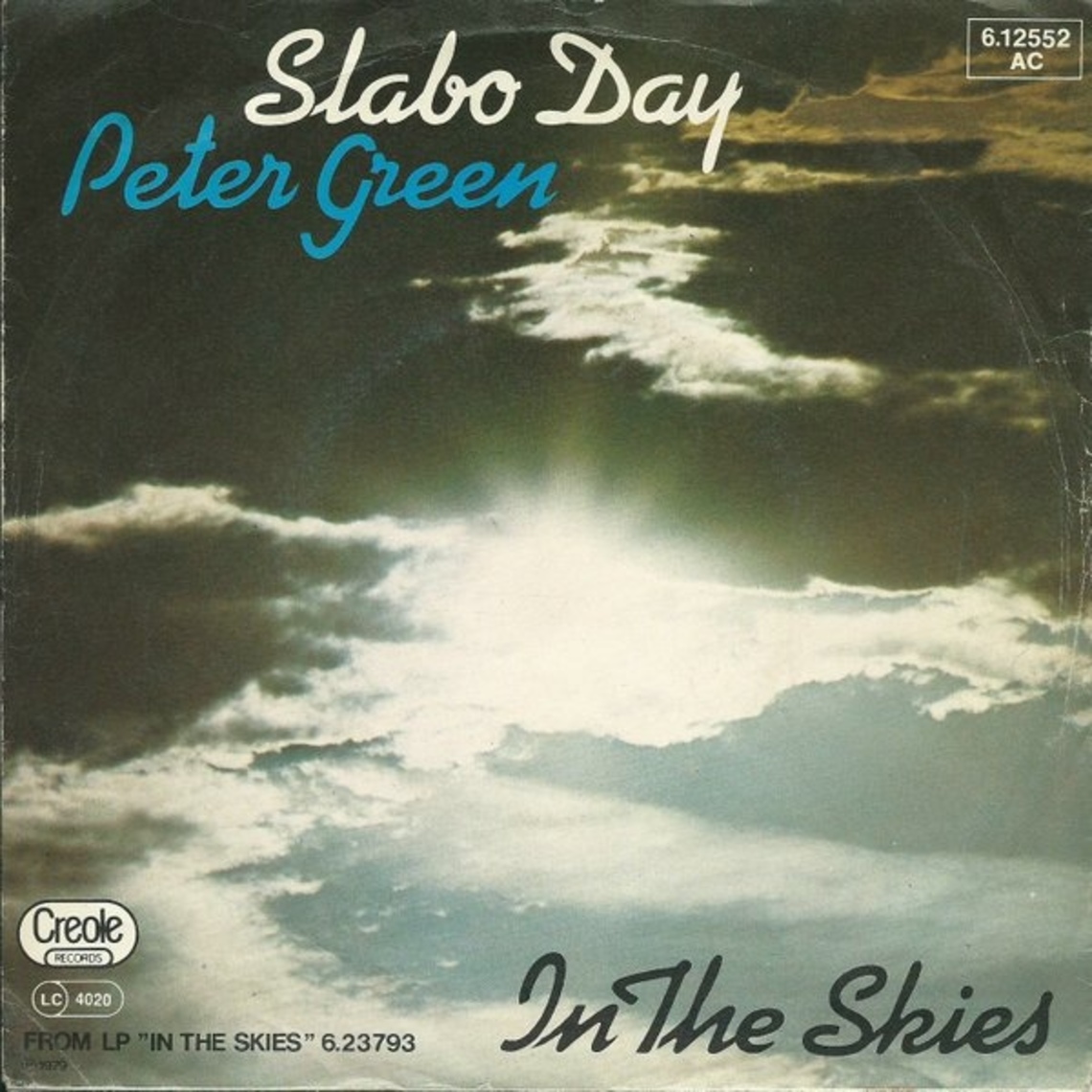
The more I hear this early stuff by Fleetwood Mac, the more I like it. I knew about it from friends growing up who had these albums, but never really explored them until around 5-6 years ago. This song really shows how much soul Peter Green had in him. This song was part song, part confession, and so genuine. The song peaked at #2 in the UK in 1968. This version of the band was rooted in British blues and driven by the Green.

He wrote this song during a time he was getting wary of the fame, wealth, and the music business. A song that someone who appears to have everything but is lost. Green was battling depression and had begun experimenting heavily with LSD. Within a year, he would walk away from Fleetwood Mac entirely, unable to cope with the spotlight and pressure. What followed was a long period of mental health struggles, hospitalization, and silence for many years.

This song was released as a standalone single in April 1969. It marks one of Green’s most poignant personal songs, a ballad that stands apart from the blues-heavy sound the band was known for during its early years.

Peter Green quit Fleetwood Mac a year after this was released and gave all his money away to charity. He played some with Fleetwood Mac in 1971 but vanished. In 1977, Mick Fleetwood arranged a record deal for Green, but it fell through when Peter refused to sign the contract.

Mick Fleetwood: “It’s a sad song. Had we known what Peter was saying… What’s that line? ‘How I wish that I’d never been born.’ You know, whoa. It’s pregnant with passion, it’s a prayer, it’s a crying out.”

Ian Anderson has a nice cover of this song as well.

Man of the World

Shall I tell you about my lifeThey say I’m a man of the worldI’ve flown across every tideAnd I’ve seen lots of pretty girls

I guess I’ve got everything I needI wouldn’t ask for moreAnd there’s no one I’d rather beBut I just wish that I’d never been born

And I need a good womanTo make me feel like a good man shouldI don’t say I’m a good manOh, but I would be if I could

I could tell you about my lifeAnd keep you amused I’m sureAbout all the times I’ve criedAnd how I don’t want to be sad anymoreAnd how I wish I was in love

Eddie and the Hot Rods – Do Anything You Wanna Do

I was looking through some pub rock bands lately and found this band. It’s such an interesting musical era in the early to mid-seventies with pub rock. I love the stripped-down feel of that music. They almost go back to a ’50s sound. Barrie Masters was their energetic lead singer. He was skinny and hyper with great stage presence. I love the live performances I’ve seen from them. He was all over the place. 

This band was between Pub Rock and Punk with a little Power Pop thrown in. They seemed too musical for punk but too edgy for radio, but this one hit the charts. Later on, bands like The Jam, The Undertones, and even early Blondie were picking up the same feel. Do Anything You Wanna Do peaked at #9 in the UK in 1977.

On how they got their name and why they were not Barrie and the Hot Rods, lead singer Barrie Masters said: “Because Barrie and the… would’ve sounded STUPID! The only reason it was Eddie and the Hot Rods… We loved the name when Dave came up with Hot Rods! And then we wanted Something and the Hot Rods. Do you remember those old Cruisin’ albums? The guy in those cars was always called Eddie. That’s how it came about — Eddie and the Hot Rods, and it stuck.” 

They formed in 1975 in Southend-on-Sea, Essex, England. They came up in the pub rock scene that rebelled against prog and glam. Bands like Dr. Feelgood, The Count Bishops, and Kilburn and the High Roads were doing away with glitter and mystique, trading them in for raw stripped-down R&B. Between 1976 and ‘79, the band (Barrie Masters, Dave Higgs, Paul Gray and Steve Nichol, later to be joined by Graeme Douglas) released three great albums and toured extensively in the UK, Europe, and America.

By 1980, the constant touring took its toll. Paul Gray and Graeme Douglas left the band and joined The Damned. They released another album after that, but a lack of promotion caused poor sales, and they broke up. 

Masters would reform the band multiple times in the decades that followed, keeping the Hot Rods on the pub and festival circuit. Barrie Masters passed away in 2019. 

Do Anything You Wanna Do

Gonna break out of the cityLeave the people here behindSearching for adventureIt’s the type of life to findTired of doing day jobsWith no thanks for what I doI’m sure I must be someoneNow I’m gonna find out who

Why don’t you ask them what they expect from you?Why don’t you tell them what you are gonna do?You’ll get so lonely, maybe it’s better that wayIt ain’t you only, you got something to sayDo anything you wanna doDo anything you wanna do

Don’t need no politicians to tell me things I shouldn’t beNeither no opticians to tell me what I oughta seeNo one tells you nothing even when you know they knowBut they tell you what you should doThey don’t like to see you grow

Why don’t you ask them what they expect from you?Why don’t you tell them what you are gonna do?You’ll get so lonely, maybe it’s better that wayIt ain’t you only, you got something to sayDo anything you wanna doDo anything you wanna do

Gonna break out of the cityLeave the people here behindSearching for adventureIt’s the type of life to findTired of doing day jobsWith no thanks for what I doI’m sure I must be someoneNow I’m gonna find out who

Why don’t you ask them what they expect from you?Why don’t you tell them what you’re gonna do?You’ll get so lonely, maybe it’s better that wayIt’ain’t you only, you got something to sayDo anything you wanna doDo anything you wanna do

James Gang – Walk Away

I’ve always liked the edge of the James Gang. I like their rawness, and I wish they had stayed together longer. This song, Funk #49, and Midnight Man are the two I remember the best. This is the Joe Walsh period that I personally like the best. They toured a lot at this time, opening for bands like The Who. Keith Moon schooled Walsh on hotel destruction and causing havoc. 

The James Gang released the album Thirds in 1971, which yielded this song, their highest-charting single, “Walk Away.” It peaked at #51 in the Billboard 100. The band released a live album James Gang Live In Concert in 1971. Walsh left the group in 1971 to form his own group, Barnstorm. He later joined The Eagles. 

The James Gang went through changes over the years after Walsh left.  They brought in Tommy Bolin and a new lead singer, but the lineup they will be remembered for is the classic James Gang lineup — Walsh (Guitarist), Peters (Bass Player), and Fox (Drums).

They got together again for the first time to perform for then-President Bill Clinton’s election rally in late 1996. The group also made appearances on The Drew Carey Show during the late 1990s and performed at the Rock and Roll Hall of Fame in Cleveland, Ohio, in February 2001. They have gotten together since and played concerts here and there. 

The classic James Gang trio also toured across the country in the summer of 2006, where they were supported by backing vocalists and musicians.

Walk Away

Taking my time
Choosin’ my line
Tryin’ to decide what to do
Looks like my stop
Don’t wanna get off
Got myself hung up on youSeems to me
You don’t want to talk about it
Seems to me
You just turn your pretty head and walk awayPlaces I’ve known
Things that I’m growin’
Don’t taste the same without you
I got myself in
The worst mess I’ve been
And I find myself startin’ ta doubt you

Seems to me
Talk all night, here comes the mornin’
Seems to me
You just forget what we said
And greet the day

Seems to me
You don’t wanna talk about it
Seems to me
You just turn your pretty head and walk away

I’ve got ta cool myself down
Stompin’ around
Thinkin’ some words I can’t name ya
Meet ya half way
Got nothin’ to say
Still I don’t s’pose I can blame ya

Seems to me
You don’t want to talk about it
Seems to me
You just turn your pretty head and walk away

Walk away

Beatles – Lovely Rita

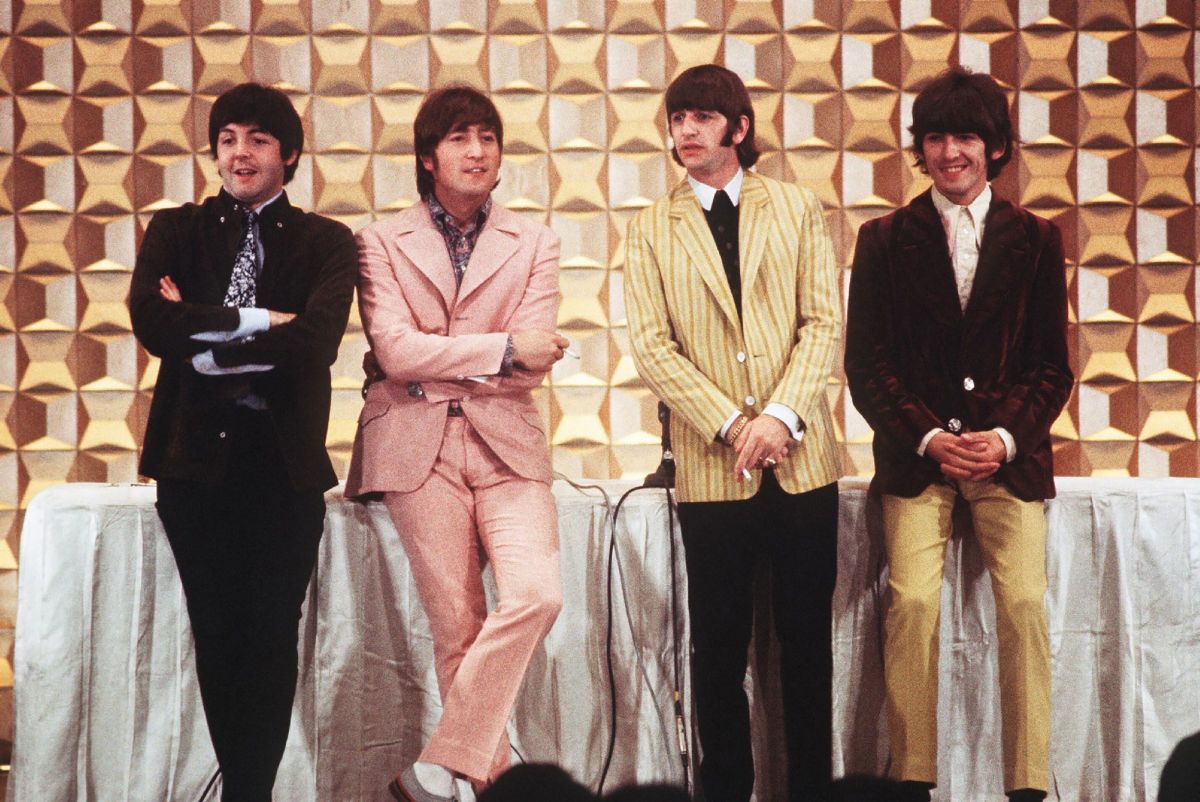
I got Sgt Pepper in 1977 when I was 10. I sat there for hours, staring at the cover and listening to this music I had never heard before. This is one of the songs that grabbed my attention. I liked Lucy in the Sky with Diamonds, Good Morning, Good Morning, and Lovely Rita, but that quickly expanded. 

This song isn’t about a real person. It was Paul making up the character (I have his quote below) after hearing in America that they called Parking Meter Women “Meter Maids.” John didn’t particularly like the song because he liked songs about real things. He hardly ever just made things up…Lennon would write about people he knew or his experiences.

The Beatles recorded their debut album, Please Please Me, in a remarkably short amount of time. The entire recording process for the album took approximately 9 hours and 45 minutes of studio time. Now let’s fast forward 5 years from 1962 to 1966-67.

The Beatles spent up to 700 hours in the studio recording Sgt. Pepper’s Lonely Hearts Club Band. One of the main reasons was their desire to go beyond the limitations of the standard four-track recorder. To achieve this, they linked two four-track machines together—an innovative move at the time—and experimented throughout the process. While this technique wasn’t commonly used, it allowed them to push the boundaries of what was possible in the studio. Sgt. Pepper’s remains one of the most important albums in music history, not just for its songs, but for the groundbreaking recording techniques that helped shape the future of music.

The following year, The Band changed the course of music in some ways. They released Music From The Big Pink and influenced a generation. Bands started to play more earthy…more roots-oriented music. The Beatles did that by recording the rootsy White Album.

Beatles - Lovely Rita Lyrics

Paul McCartney: “I was bopping about on the piano in Liverpool when someone told me that in America, they call parking-meter women meter maids. I thought that was great, and it got to ‘Rita Meter Maid’ and then “Lovely Rita Meter Maid’ and I was thinking vaguely that it should be a hate song: ‘You took my car away and I’m so blue today’ and you wouldn’t be liking her; but then I thought it would be better to love her and if she was very freaky too, like a military man, with a bag on her shoulder. A foot stomper, but nice. The song was imagining if somebody was there taking down my number and I suddenly fell for her, and the kind of person I’d be, to fall for a meter maid, would be a shy office clerk and I’d say, ‘May I inquire discreetly when you are free to take some tea with me.’ Tea, not pot. It’s like saying ‘Come and cut the grass’ and then realizing that could be pot, or the old teapot could be something about pot. But I don’t mind pot and I leave the words in. They’re not consciously introduced just to say pot and be clever.” 

John Lennon: That’s Paul writing a pop song. He made up people like Rita, like a novelist. You hear lots of McCartney influence going on now on the radio: these stories about boring people being postmen and writing home.

Lovely Rita

(Lovely Rita, meter maid)

Lovely Rita, meter maid
Nothing can come between us
When it gets dark I tow your heart away

Standing by a parking meter
When I caught a glimpse of Rita
Filling in a ticket in her little white book
In a cap she looked much older
And the bag across her shoulder
Made her look a little like a military man

Lovely Rita, meter maid
May I inquire discreetly
When are you free to take some tea with me?

Rita

Took her out and tried to win her
Had a laugh and over dinner
Told her I would really like to see her again

Got the bill and Rita paid it
Took her home, I nearly made it
Sitting on the sofa with a sister or two

Oh, lovely Rita, meter maid
Where would I be without you
Give us a wink and make me think of you

(Lovely Rita, meter maid)

Rock’em Sock’em Robots

This was maybe the best toy of the 70s in some ways. Loved this game to death. We would play this for hours. Now comes the sad part. When I saw they were making them again around twenty years ago, I had to order them (for my son, of course!). I got it, and it was like Rock ’em Sock ’em Cheap Miniatures. They are small and very cheap now.

Marx released this great toy in 1966, the world’s first boxing robots with “Rock ‘Em Sock ‘Em Robots,” a game designed by Marvin Glass & Associates. At the time, the toy became hugely popular during the 1960s and ‘70s.

You would control the robots by joysticks, and you would counter the other person’s moves by dodging the oncoming punch. You would maneuver your robot and  hit the other robot at just the right angle, you’ll be able to “knock his block off!” In other words, the robot’s spring-loaded head is knocked loose and pops up, signaling the end of the “round.”

When that happened, you would just push his spring-loaded head back down and go again. The great thing about the game is you do not need batteries… you just pulled it out of your closet or from underneath your bed and played.