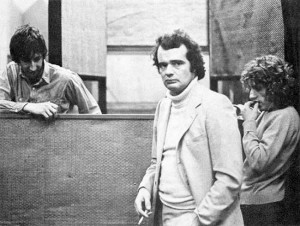
Dear Boy: The Life Of Keith Moon

I didn’t think I would ever see an extensive book (nearly 600 pages) on Keith Moon. Tony Fletcher wrote this book and he thoroughly researched Keith and he had been a fan since his teenage years. As a teenager, he actually met Keith before he died. I’ll post what happened at the end of the blog from Tony’s website.

The book is huge and Fletcher talks to everyone of importance in Keith’s life. The only disappointing thing for me and for Fletcher himself is he had to debunk some of the myths about Keith. The great story of him driving a car in the pool of a Flint Michigan Holiday Inn…didnt happen… but the real story is just as interesting though.

The veil is drawn back on a lot of myths. It’s not a book full of Keith doing wild things like the book “Full Moon”. This one shows his ugly side also. Keith had one of the most dangerous traits you could have…the ability not to be embarrassed. Think about that…that keeps us in check at times. With Keith, anything could happen at any time.

Keith was diagnosed with Borderline Personality Disorder and elements of schizophrenia…add that with alcohol and drug abuse and it’s a wonder he lived as long as he did… In his first and only marriage, he was terrible to his wife Kim who finally had enough and left him for Ian McLagan and Keith never recovered from that. Kim would say he would dress up and be Hitler one day, a Pirate the next and Noel Coward at other times…not only dress up but BE those people all day.

The book also concentrates on his drumming and the influence he was to so many. The author wanted to show it was more to Keith than the Moon the Loon image…and it was. He was fantastic to fans and his friends. He would play with friends kids…like Ringo’s son Zak and Larry Hagman’s child for hours but yet basically ignore his daughter Mandy. It also touched on his relationship with each member of the band and his love of the Beach Boys and friendship with The Beatles.

He would go to schools and talk to unruly kids and explain to them that they need to settle down. He could get by with bad things because he was a pop star but they would get thrown in jail.

He became a caricature of his self at the end. He tried to live up to the image that he created. Many people have said that during the last few months of his life he was trying to settle down and even started to write an autobiography so he could put to bed the Moon the Loon image. He was trying to stop drinking but he would go into seizures because his body craved alcohol so bad.

A doctor gave him Heminevrin to ease the withdrawal symptoms from alcohol and he took too many and overdosed. Heminevrin should not have been given to him, it should have only been administered in a hospital but he was a rock star and so the doctor looked the other way. He kept waking up through the night and taking more…32 tablets were found in his system.

The book covers everything about the man and information about The Who I never knew. You can’t help but laugh at some of the things he did. At the same time, it’s sad knowing the man was mentally unstable. That probably helped his drumming on the edge but the price was too high.

There is just too much in the book to cover in a blog. It is an interesting read… The first line says it all… How do you attempt to capture an exploding time bomb? These were the first words put to me by one of the vast number of people I talked to while researching the life of Keith Moon.

From Tony Fletcher’s iJammin! website…  http://www.ijamming.net/Moon/ChasingTheMoon.html

On August 1, 1978, an exhibition of Who memorabilia curated by the group’s fans opened at the Institute Of Contemporary Arts on The Mall, near Buckingham Palace in London.

It was perhaps inevitable that members of the band would turn up to the opening. Their presence brought the process full circle: if the Who meant so much to their fans that the audience should mount an exhibition, then it followed that the fans meant so much to the Who that the band would want to see it.

So it came about that both Pete Townshend and Keith Moon immersed themselves among the hundreds of diehard Who worshippers that first day of ‘Who’s Who’ to make their way around the exhibition, pausing to talk with the audience along the way.

To a fourteen-year old fanzine writer, who had identified with the Who since first discovering pop music, and had attended the group’s last London stadium show as an excited twelve-year old, being in the same room as Pete and Keith was a significant moment. Like many others throwing nervous glances his heroes’ way, he respected them enough to grant them their privacy, but still he wanted an autograph, a chance to talk. While studying a bizarre life-size hologram of Keith Moon at the drums, the boy turned to find the real thing standing next to him. Keith looked shorter in real life, and somewhat chubbier. But it was unmistakably him: the hologram had obviously been based on a recent picture or film. The boy made a comment about the surreal situation, looking at an illusion while standing next to the real thing, and the rock star, quietly, in contrast to his larger-than-life reputation, said something in agreement. The boy then seized his moment. He pulled from his sports bag a lone copy of the fanzine he produced and asked Keith Moon to autograph a basic biography on the Who he had written for it.

The drummer looked at the cheaply produced fanzine, checked the cover to register the name — Jamming! — examined the boy’s face, and said, “I don’t think I’ve seen this one.”

You wouldn’t have, thought the boy, given that there were only one hundred copies in existence, and those mainly sold at his school. “It’s my own magazine,” he said aloud.

“I’d like to read this article some time,” said the rock star with evident sincerity.

“You can keep it if you want,” replied the boy, eager to please.

“No, you want it autographed,” said Moon, signing his name across the page with a flourish. “Tell you what, though.” He produced a slip of paper from an inside pocket and scribbled an address in Mayfair on it. “Here’s where I live,” he said as he handed it to the incredulous fourteen year old. “Come and see me. Bring a copy of your magazine with you. Any time’s fine by me.”

A week or so after meeting his hero, the fourteen-year old boy made his way nervously to a plush apartment building in London’s Mayfair. He carried the star’s address in his pocket: Flat 9, 12 Curzon Place, London W1. He did not know if he possessed the courage. It didn’t make sense his being invited around like that; it was hardly as if someone so popular could be lonely for company. With no security to stop him, he made his way to the fourth floor. His heart in his mouth, he approached Flat 9 with his magazine under his arm and knocked quietly. He thought he could hear music, yet from which apartment he was not sure. He knocked again, a little louder this time. But there was no reply. He slipped the magazine under the door along with an appreciative note bearing his own phone number and address. He didn’t really expect to hear back from his hero.
And he never did. Just a couple of weeks later, Keith Moon died in that same Mayfair apartment.

I cried when I learned of Keith Moon’s death: on Capital Radio at 9pm, at the start of Nicky Horne’s show, as I vividly recall it being, late that Thursday evening of September 7. (At 10pm every night, I would turn religiously to John Peel on Radio 1.) It was the first time anybody’s death had ever hit me personally, and it affected me in much deeper ways than I believe my family could understand at the time. To them he was just another alcoholic rock star, pissing away his limited talent and excess wealth, and indeed there was an ugly scene at a cousin’s communion shortly thereafter, when an aunt dared to insult the dead drummer for his general debauchery and lack of morals as she had read about in a middle-class tabloid and I jumped passionately to my dead hero’s defense. For me, Keith Moon had been more than just a world-famous rock star, more than simply a brilliant drummer, more even than the most irrepressible and carefree character of rock’n’roll’s last (and British rock’s first) fifteen years. He had been a human being, an approachable, affable man who had never forgotten what it was like to be a fan or a dreamer. More than that, for those few minutes that August on The Mall, he had been as a friend.

This website has stories from Jeff Beck, Alice Cooper, and Dave Edmunds about Keith. If you have the time check them out.

The night before he died.

keith last.jpg


Roller Skating and Music

In the mid-seventies, my big sister would take me to the skating rink. I would go in as a little kid and trade my shoes for skates. I never understood why my sister went there and hardly ever skated. She would be in the corner with her girlfriends talking to guys while I was out there falling down. There was not a lot to do in a small town so this was a lot of fun.

I remember being exposed to a lot of music while skating. Someone would say over the intercom “All Skate” and they would blast a song at ear-splitting volume. Songs like “Juniors Farm”, “Sally G”, “Can’t Get Enough of Your Love”, “Rocky Mountain Way” and Free’s “All Right Now” would play while I learned how to skate decent soaking up the atmosphere.

They would play the 4 corners. You would skate until the music stopped. You would then go to a corner and they would call a corner number and those people in that corner were eliminated. This would go on till there was only one person left.  I won one time. The song that was playing and then stopped as I went to my corner on that night was Frankenstein. What I won was a single by Wings called Silly Love Songs. It was the first thing I ever won…I earned that single and still have it today and also bugged my Mom till she bought me the Wings at the Speed of Sound album…not Pauls best to say the least but it brings back too many good memories to be that bad.

In the seventies skating and going to rinks was huge. It was a place to gather and have fun with your friends. No texting or emails or blogs…Some were great at skating backward, doing tricks, and sabotaging other skaters…I was just a simple skater…As time went by I would find my own way down to the rink…as I got older I was the one that hung with friends and wanted to talk to girls instead of skating. I kept going to the rink until I was around 15 and then all of my friends and me just stopped at once. We had moved on to other things by then.

I did go again after my son was born in 2000…we had fun but the music sucked…no loud guitar music at all…just programmed electronic dance music… I guess you really can’t go back home.

I’ll never forget my friends and the music in that period of my life…That is why music is so important…it can transport you back through time and you are at that place again.


Testimony

The autobiography of Robbie Robertson. I read this right after My Cross To Bear by Gregg Allman. The only surprising part is it stops at 1976 and doesn’t cover Robbie’s solo career.

Robbie is 33 when the book ends. It ends at a recording session where only Robbie shows up after The Last Waltz.

If you have read Levon Helm’s This Wheels on Fire you know that Levon was pretty hard on Robbie. He rips him for songwriting credits and The Last Waltz. Robbie takes the high road in his book. He talks about the brotherhood they all shared. He mentions that Levon was his best friend he ever had in his life.

Robbie was in the middle of musical history throughout the book. He talks about joining Ronnie Hawkins and the Hawks and befriending Levon…they eventually picked up Richard Manuel, Rick Danko, and Garth Hudson. After they split with Ronnie they get busted and gigged at various bars while meeting music legends Sonny Boy Williamson II, Paul Butterfield, Mike Bloomfield and then Bob Dylan. After meeting Dylan they start backing him on his first electric tour.

They are in the middle of the chaos of Dylan’s electric tour…Levon quits a few shows into it because of the booing and the people that surround Dylan. The rest of the Band (still called the Hawks) continue to back Dylan around the world. Along the way, they make friends with Brian Jones, The Beatles, Johnny Cash and eventually Jimi Hendrix (Jimmy James at the time).

He also mentions about living at the Chelsea Hotel, Big Pink, Levon coming back, living in Woodstock, playing Woodstock, and being friends with Dylan. This is one book that gives you a side of Dylan you never read much about. Robbie humanizes him while keeping respect. The Band much like the Allman Brothers valued brotherhood. They stuck together and got along really well until heroin started to enter the picture.

He goes into his songwriting and where he got the ideas. A lot of his ideas came from hanging out with Levon at Levon’s home in Arkansas. Robbie enjoyed the area and the southern culture that surrounded him.

Robbie is big foreign film buff who read many screenplays and would have people to pick them up when going through New York. After reading those he said it helped him to express what he felt in lyrics.

You get such a mix of personalities in the book… Edie Sedgwick, Carly Simon, Eric Clapton, George Harrison, to smoking pot with John Lennon in the sixties with John’s special made “cigarettes.”

All of the Band had street smarts and mixed with killers, thieves and mafia members before they made it. They were without money at one point and Robbie and Levon were actually going to wear masks and hold up a high stakes poker game. It’s a wonder one of them wasn’t killed before the band met Dylan.

I’ve read both Levon’s and Robbie’s books. I liked them both. Robbie is more consistent in his telling. There is a reason Robbie wanted to get off the road. Richard Manuel was not in good shape…even on The Last Waltz and Robbie was no angel himself. The road brought temptations that were hard for them to resist.

If you are a Band fan and/or Dylan fan…get it. I would place this book up there with Keith Richard’s book Life. That is about the highest praise I can give…


Free As A Bird

In the 1990s I kept reading about the Beatles Anthology coming out and the three surviving Beatles getting back together to release old never heard before music as well as new. They were going to take a John Lennon demo and add something to it. This was beyond exciting for me. I was too young to remember a new Beatles song coming out.

It had an older feel but sounded modern at the same time. George Harrison’s distorted slide guitar playing brought an edge to it. It even had the strange ending like some of their other songs.

I got an early release of the Anthology CD from a friend of mine that worked in a record store and he said…don’t tell anyone. I sat glued to Free As a Bird because for once I was listening to a new Beatles song… I was one-year-old in1968 so I missed them when they were originally out. I liked the song and still do. I have talked to Beatles fans who don’t really like it that much but the song has stuck with me. Real Love…the second release didn’t do as much for me because it was basically a solo John Lennon song.

Was Free As a Bird the best song in the Beatles catalog? No not even close but just to hear something new was fantastic. The Anthology videos and CDs jump-started their popularity all over again…and it hasn’t stopped since then. I had cousins who were teenagers at the time who never had an interest in them until Anthology came out. All I could say to them was…I’ve told you for years.

The video of Free As a Bird is fantastic and still one of my favorite music videos. It told their history through the different eras of their career. Every time I watch it I always notice something I didn’t notice before.

Little did he know that day in1977 when John made a demo of a song idea on a cheap cassette recorder… it would be a future Beatle song. Not to even mention that the tape itself would be part of the song.

It did win a Grammy Award for Best Pop Performance by a Duo or Group with Vocal…

After reading the mixed reactions one thing dawned on me. The Beatles did the right thing by not reuniting when John was alive. There is no way they could have made anything that would have lived up to the expectations of everyone…You cannot compete against a memory because you lose every time… But yea… I still would have loved to hear it.


A Brief Word with Pete Best

One day in 1987 (I cannot pin down the day)… My friend Paul and I heard on the radio that Pete Best was going to show up at a used record shop…The Great Escape near Vanderbilt… for a book signing. I was a bigger fan than Paul. I was nervous when I walked in because there was the guy I’ve read about in all of those books in person. The man that really got left at the altar. After reading as much as I did about the Beatles…I was twenty and they were more like characters out of a book… not real people.

We were flat broke and could not buy the book but I was told by the staff that was ok…he would still sign. What did I do? I walked over to a magazine rack with free newsletters and it just so happened that there was a newsletter (Cavern City Tours) about the Beatles. I didn’t think a thing about it but there on the front was John, Paul, George and……..Ringo. I was too busy thinking about what I was going to say to him. I didn’t want to say what the other people were saying…don’t you hate the Beatles now? That was terrible of them! On and on…

I thought of something quick and I went to the table…laid the newsletter in front of him with Ringo’s smiling face and Pete was gracious enough to sign it with no dirty looks or a comment and I asked him…Have you talked to Astrid Kirchherr lately? He said yes, in fact, he just talked to her in the last month. I also asked him if he talked with Klaus Voorman and he told me no he didn’t keep up with him…Why I asked those questions I don’t know. I just wanted to think of something different than what he was being asked.

He took the time and talked with me for a couple of minutes which was really nice. I can’t remember anything that was said after the questions…probably just pleasantries. Just knowing this guy was in Hamburg in the early 60s at the beginning of the Beatles as we know them was incredible.

After I walked away…did I think wow this poor guy went through hell? Nope…All I could think was I met a Beatle! I still feel bad about that.

Pete.jpg

Since The Beatles Anthology Pete is not a poor guy at all…money wise… He got millions off of that release because they used some of the tracks he played drums on. I read where Paul McCartney himself called Pete and told him wrongs needed to be righted and some money would be there for Pete and that he could take it or leave it…Of course, Pete took it and that was the right thing to do.

The Beatles made the right choice in Ringo but I’m glad they included Pete on that release so he could share in some of the glory and money… Listening to the tracks Pete played drums on there is no question that Ringo fit the Beatles best…no pun intended.

John, Paul, and George have said they regretted how it was handled… but not the outcome.


My Cross To Bear

I was never a huge Allman Brothers Band fan. I always respected them and I liked their radio songs and heard enough of Duane Allman to know he was a great slide guitar player. I also knew Gregg could make any song his song because of his vocals. I never really wanted to know more about them.

A friend of mine recommended Gregg Allman’s autobiography My Cross To Bear. I have a 72-mile round trip car ride to work every day so I downloaded the audio version. I took a  chance on this one a couple of years ago and I really enjoyed it.  I also downloaded the E-book after I finished it.

The Allman Brothers have always been known as the Godfathers of Southern Rock. I never considered them Southern Rock…like Gregg himself said… they were a blues band with some jazz thrown in and they were from the south.

The audiobook is narrated by Will Patton who does a great job of channeling Gregg.

It is like having Gregg over on your back porch telling you these great stories. He is very down to earth and does not try to make his mistakes sound like someone else’s fault. If you want to know about Duane Allman get this book. He is honest about his brother…warts and all. He doesn’t try to whitewash himself either.

He starts at the Rock and Roll Hall of Fame induction where he was sick, miserable, and bloated because of his drinking problem…from there he starts going back through his personal history and the many ups and downs of the Allman Brothers. He covers the bands that Duane and he formed…The Escorts, The Allman Joys (which I would have kept that name) and Hourglass.

Hourglass made a couple of albums of original material and covers but the record company made them “pop” everything up. They would not let them play with an edge. The Escorts and Allman Joys were cover bands… very good cover bands.

After reading the book I have started to listen to the Allman Brothers more. He gives you some funny stories and you see how close that band was in the early days before Duane and Berry Oakley died. He mentions his struggles with Dickey Betts, alcohol, drugs and wives. You also read about a “foot shooting” party…

He also talks about being on stage noticing Eric Clapton among the audience. That led to the Layla sessions. Eric was a big fan of Duane’s slide playing.

You learn some history about a cover band’s travels, trials, and tribulations in the mid-1960s…youtube has a few crude recordings of the Allman Joys live in the mid-60s. Below is The Allman Joys version of Help. I would have never thought it was Gregg Allman singing.

If you are a music fan you will probably enjoy this book.

Help by the Allman Joys in 1966 is the opening song.

Adam 12

I watched this in syndication in the mid-seventies. I never thought much of it at the time. When I started to watch it as an adult I was surprised at how good this show was. I couldn’t believe how realistic it was for that time. They covered subjects like child pornography, drug addiction, and everything else criminally related.

It was on 7 seasons from 1968 through 1975.

Sometimes as an adult and you watch shows or movies you did as a kid you think wow…how did I like this? Now I’m thinking why didn’t I like it more?

The show starred Martin Milner as Officer Pete Malloy and Kent McCord as Officer Jim Reed. The show was created by Jack Webb and Robert Cinader. The pair also created a spinoff from Adam-12…Emergency. Jack Webb also created Dragnet.

They wanted to capture a typical day in the life of a police officer. There was no Dirty Harry on this force. These officers went by the book even if it would have benefitted them at times not to.

Some of the guest stars were… Tony Dow, Willie Aimes, Ed Begley Jr, Karen Black, David Cassidy, Micky Dolenz, Tim Matheson, Ozzie Nelson and many others. It was odd seeing Robert Donner…who played Yancy Tucker on The Waltons a few years later…playing a heroin addict-informant.

The episodes were written around actual police cases to add some realism. The showed all that the censors would allow.

Reed is happily married and Malloy is the happy bachelor. The interplay seems natural and not forced. The one big thing I like about the show is the continuity from beginning to end. You see a raw rookie in Jim Reed and Malloy slowing training him up and eventually both becoming friends as seasons past by.


The Zombies

Since the first time I heard this band, I loved their sound. I liked their hits but a few years ago I bought their album Odessey and Oracle and was blown away. The Beatles were big fans of them in the sixties.

They formed in 1961 by Rod Argent and Colin Blunstone. The hit big in 1964 with singles She’s Not There that went to #2 in American and the follow up Tell Her No that went to #6 on the charts. After that, they released some more singles but nothing hit.

They went into Abbey Road studio right after The Beatles recorded the Sgt Pepper album. When recording the album they even used The Beatle’s Mellotron they left there. They recorded it in Abbey Road and some in Olympic Studio in London.

By the time the album came out they had already broken up. In 1968 CBS records were not going to release it in America at all but a young  A&R man at the time named Al Kooper who worked for CBS told Clive Davis (President of CBS Records) that there were hit singles on the album. The album was released and the single “Time of Season” went to number 1 on the Cash Box Top 100 and number 3 in US Billboard Hot 100…

The album contains much more than that though. Personally, I think “Care of Cell 44” is one of the best pop songs I’ve heard. It’s as if mid-60s Paul McCartney and Brian Wilson had a baby…and Care Of Cell 44 is it.

A Rose for Emily is another good pop song. “This Will Be Our Year” is another one. This album is one of my favorite pop albums of all time. The songs have well-crafted melodies and the sound is wonderful. Time of Season is a classic and has a mood, unlike any other song.

Colin Blunstone has a unique voice all his own. He did have a few solo hits in the UK charts during the 1970s.

Rod Argent went on to form the band Argent… they had a hit with “Hold Your Head Up” and “God Gave Rock and Roll to You” later covered by Petra and KISS with modified lyrics.

The Zombies regrouped in the 90s and are still touring. Get a good pair of headphones and listen to Care of Cell 44.

From the Al Kooper book, Backstage Passes… Talking about Odessey and Oracle

I made an appointment with Clive Davis and put the album on his desk. “I really think we should purchase the master rights to this album for the U.S.,” I aggressively suggested. He took one look at the cover and replied, “We already own this album. I was just about to sign off on our option to release it domestically.”
Now, it got good to me—
“I think that would be a huge mistake Clive. Why there’s at least two hit singles here.” He told me he would sleep on it and thanked me for bringing it to his attention. Two weeks later I got an interoffice memo saying they were gonna put it out, with instructions to rewrite the liner notes and pick a single. Cautiously, Clive released it on a little subsidiary label CBS had called Date Records, in case I turned out to be wrong. But my lucky streak was goin’ strong and that is how the single “Time of the Season” by The Zombies came to be number one. The album Oddesey [sic] and Oracle had been out quite awhile in England. (In fact, the band had already broken up and metamorphosed into a new band called Argent that CBS had signed before “Time” was released.) A buncha Zombies crossed the ocean to take photos and get gold records. No one at CBS thanked me for this; I received no gold record or cash recompense. But The Zombies, who knew what really happened, made sure to come to my office and thank me profusely. That was worth it all to me at that time.

Jonestown

When I think of evil human beings…Jim Jones checks off every box. When people think of Jonestown or the Peoples Temple they probably remember the horrible images and disbelief that blanketed the news from Guyana. Interviews with people who happened to be out of Jonestown that afternoon or one of the very few who escaped (36) who started their day there.

The death toll kept rising daily on the news…200, 400, and then 800 or more. The reason was the bodies were on top of each other and the more they were moved the more they realized some were 3 deep.

918 children and adults died on November 18, 1978, in Jonestown, and most were murdered not suicide. Drink the poisoned Flavor-Aid or get shot or injected right after watching the kids poisoned. According to the Guyanese court which had jurisdiction in the matter, all but three of the deaths in Jonestown were ruled to be the result of murder, not suicide. Source: The New York Times, 12/12/78

The Peoples Temple was a microcosm of society.  Some people joined for socialism, religion (ironic since Jones was an atheist) or just to belong somewhere. There were young naive members, elderly vulnerable members, drug addicts, drunks, lawyers, doctors, rich, middle class, poor, black and white.

I always wanted to know more about what happened. There are some good books on this. The best one I’ve read is Raven: The Untold Story of the Rev. Jim Jones and His People by Tim Reiterman. Tim was there for two days including the last day when Congressman Leo Ryan was killed…Reiterman was also shot but survived.

The event, of course,  inspired the phrase “Don’t Drink The Kool-Aid”…although it was really a cheap knockoff…Flavor-Aid.

The more I read the more I was imagining being held prisoner in that jungle under his totalitarian rule…what a helpless feeling…and I was wanting the impossible to happen…a different ending.

It’s so puzzling that today with all the info we have there are still cult leaders out there playing by the Jim Jones playbook.

A good abbreviated version of Jonestown and Jim Jones can be found here at History Channel website. https://www.history.com/topics/jonestown

A documentary of Jonestown and Peoples Temple.

MatchGame 73-79

I’m not big into game shows but this one was my favorite. When I was at my grandmothers I would watch Match Game. This was the one I looked forward to. The questions were written for the dirty minded… you could see what the celebrities wanted to write down but they had to stay somewhat clean. Dick DeBartolo from Mad Magazine wrote most of the questions so it had that humor.

Mary liked to pour gravy over John’s ______

It was fun for the celebrities and from the documentries I’ve seen they would film 12 episodes over a weekend and drinks would be flowing at lunch and dinner. The styrofoam cups you would see them drinking from  would sometimes be vodka instead of water on air.

The regulars I remember were Brett Somers, Charles Nelson Reilly and Richard Dawson (until he left for his own show). The others that would be on the show occasionally were Betty White, Fannie Flagg, Joyce Bulifant, Nipsey Russell, Marcia Wallace, Patti Deutsch and more.

Sometimes the celeberties would have so much fun that I would feel sorry for the contestant trying to win money when the celebrities would write joke answers. Richard Dawson and Charles Nelson Reilly would usually be serious on the answers.

So many women would pick Dawson because he was the best player and because they wanted to kiss him if they won…or lost really…That was a glimpse to his future game show.

Gene Rayburn was the host and he would hold everything together barely. It really did seem Rayburn was having a great time.

I remember Richard Dawson’s last week on the show. He wore dark glasses and would not smile. He seemed bored (he had started to do Family Feud by this time) and serious. Turns out that he wanted off the show but they would not let him…After that final show of him being sullen and not smiling…he was gone.

The game was also changed because of Dawson. In the last round more times than not he was picked…well he was good… The producers changed the rules and  made people spin a wheel to see which celeb they would get in the final round.

They would push the censors as far as they could for the 1970s…I watch it whenever I can…


The Last Waltz

The Band on Thanksgiving in 1976 at the Fillmore West. The film starts off with THIS FILM MUST BE PLAYED LOUD! A cut to Rick Danko playing pool and then it then to the Band playing “Don’t Do It”…the last song they performed that night after hours of playing. Through the music and some interviews, their musical journey and influences are retraced.

This film is considered by many the best concert film ever made. It was directed by Martin Scorsese. I love the setting with the chandeliers that were from the movie Gone With The Wind. The quality of the picture is great because it was shot with 35-millimeter which wasn’t normally done with concerts.

Before the Band and guests hit the stage, Bill Graham, the promoter, served a Thanksgiving dinner to 5000 people that made up the audience with long tables with white tablecloths.

The Band’s musical guests included

Ronnie Hawkins, Bob Dylan, Neil Young, Dr. John, Paul Butterfield, Van Morrison (my favorite performance of a guest), Joni Mitchell, Eric Clapton and Muddy Waters

The Staple Singers and Emmylou Harris also appear but their segments were taped later on a sound stage and not at the concert.

Robbie wanted off the road earlier and that is what the Last Waltz was all about…the last concert by The Band with a lot of musical friends. He was tired of touring and also the habits the band was picking up…the drugs and drinking. Richard Manuel, in particular, was in bad shape and needed time.

The rest of the Band supposedly agreed but a few years later all of them but Robbie started to tour as The Band again. Richard Manuel ended up hanging himself in 1986. Rick Danko passed away in 1999 at the end of a tour of a heart attack attributed to years of drug and alcohol abuse. Levon Helm died of cancer in 2012.

The Band sounded great that night and it might be the best version you will ever hear of The Night They Drove Old Dixie Down.

The Last Waltz is a grand farewell to a great band and a film that I revisit at least twice a year… once always around Thanksgiving.

The Band

Any band that calls themselves The Band…better be great…this band most certainly was… Four Canadians with one American who wrote and sang Americana music better than anyone.

They started out backing up Ronnie Hawkins in the early sixties… From there they backed up Bob Dylan on his famous conversion to “electric” music. They toured all over the world with Dylan getting booed because of the folk purists hate of Bob’s new electric direction. Levon left at the beginning of that tour but came back when they started to work on their own music.

They were a band in the best sense of the word. the members were Robbie Robertson who played guitar and was the main songwriter. Levon Helm who was the drummer and one of the three singers. Richard Manual played piano and was probably the best singer of the Band. Rick Danko the bass player and also singer and great at harmonies. Garth Hudson the keyboard player extraordinaire. They all could play other instruments…

They would switch up instruments and record at times just to get a different texture to their music.

They rented a house in West Saugerties New York…a big pink house and started to set up in the basement. Bob Dylan would come over and they would record demos.

Bob Dylan was a big influence on The Band. The Band also influenced Bob Dylan in the basement. He had never recorded outside of a studio before and it freed him up a bit. Those recordings were meant to be demos for other performers to sing but were heavily bootlegged so they were officially released in 1975 as “The Basement Tapes” with songs by Dylan and The Band. The songs had pure raw energy and showed a sense of humor also.

They influenced everyone from Eric Clapton..who hid a secret desire to join them…to George Harrison and many more. Their first two albums (Music From Big Pink and The Band) were groundbreaking. They changed the musical landscape…the move from psychedelic to an older sounding looser type of music.

In 1974 Bob Dylan and the Band toured together again. The Band backed Dylan again but also played their own set. They released a live album of that tour called Before The Flood.

Some bands have great voices and tight harmonies. The Beatles, Beach Boys, Eagles to name a few but The Band’s harmonies were loose but at the same time just as tight in their own way. Their music sounded spontaneous but it was well crafted. They always left enough raw edge to keep it interesting.

Robbie Robertson’s words and melodies were Americana flowing through a Canadian who had part Jewish and Native-Canadian roots. He would read one movie screenplay after another. It helped him with his songwriting to express the images he had in his head. Robbie also took stories Levon told him of the south and shaped them into songs.

The Band was no frills…you were not going to see lasers or a Mick Jagger clone running about… they just played their music and did it well. They did not follow trends but they were not afraid to experiment especially Garth Hudson the keyboard player who was always playing with different sounds.

Songs like The Weight, Cripple Creek, The Shape I’m In, The Night They Drove Old Dixie Down, Rag Mama Rag, This Wheels On Fire, Stage Fright and the list goes on. The songs still sound fresh and fit perfectly on their respective albums.

You can’t go wrong with a Band album but the ones I would recommend would be Music From Big Pink (1968) and The Band (1969).

The Greatest Hits album has the radio songs you know but you miss some great songs by not getting the original albums. The ultimate would be the 2005 release of the box set called A Musical History. It has everything the original band recorded.

They broke up in 1976 and played their last concert with all of the original members in a film called The Last Waltz…

Their music was always uniquely their own. This band earned their name…


Bedazzled 1967

This is one of my favorite comedies. Peter Cook and Dudley Moore were always a great team and this movie they work very well together. It’s the old story of selling your soul to the Devil for wishes…but as always the wishes are not exactly what the wisher has in mind.

Dudley Moore plays Stanley Moon who is a shy and pathetic figure who pines for a waitress (Eleanor Bron) who works at Wimpy’s Burger where is employed as a cook. Peter Cook is the devil… He is perfect for this part. He is a hilarious devil and at times likable but does the most annoying things like tearing the last page out of mysteries, scratching LPs and just petty things to aggravate people.

The movie is very British and very funny.

The chemistry is great between Moore and Cook and by this time they had been together for a while. There was a version of this movie released in 2000 but it is not as subtle as this the original version. This is an offbeat quirky film.

This film also features Raquel Welch appropriately as Lust. She is only in it for a few minutes but she plays Lust to the hilt. The film had no name at first and in an interview, Peter Cook said he wanted to name the movie “Raquel Welch”…when asked why he wanted to name it after the actress when it wasn’t about her he said because the Marquee would read “Peter Cook and Dudley Moore in Raquel Welch”… The producers didn’t like that.

Eleanor Bron plays Margaret the waitress and the object of Stanley’s desire was also in HELP! with The Beatles.

Check this film out if you can. Personally, I think it beats the remake.

Farrah Fawcett Poster

If you were a male teenager in the 1970s… odds are you owned or wanted to own this poster. Over 12 million of these were sold and I remember seeing them everywhere. On friends bedroom walls, doors, closets, ceilings, and lockers.

She wasn’t even my favorite Angel…but still.

Other posters were popular during the 1970’s like Cheryl Tiegs, Olivia Newton-John, Loni Anderson but nothing came close to the numbers generated by Farrah’s poster at 3 dollars a pop.

The poster that came out in 1976 is so iconic that when you look at it you think “1970s”…

This is Bruce McBroom the photographer in Time Magazine.

 I shot rolls of film, and it just wasn’t happening. She’s a beautiful woman, but there wasn’t anything that I would put on a poster. I just didn’t feel it. By now we’re running out of backgrounds — we used the swimming pool, etc. I said, “Farrah, are you sure you don’t have a bikini? Something different?”

She went in to look around and came out of the back door and stood in the doorway in this red suit, and she said in her Southern accent, “Well, is this anything?” And I literally said to myself, “Oh my God.” I knew that was it. I had an Indian blanket from Mexico that served as the seat cover for my beat-up 1937 Chevy pickup with colors that, it just popped into my head, would match the suit. I’d like to make it sound like it was all planned. But it was a spontaneous, happy intersection of coincidence. I didn’t do anything. I just put her in a spot and asked her to turn it on. When I saw the film processed, I knew we’d gotten it — somewhere in these 36 frames, there’s a poster. I went back over to her house, and I showed her all the pictures. She told me later that she had picked out her top two favorites and marked them on the slides. I’ve since heard that when the guy in Cleveland got the pictures, he went, “First of all, where’s the bikini?” He told me he wasn’t ever gonna pay me because he hated the pictures. But I guess he showed them around to people in his business and they changed his mind. It was Farrah’s pose, Farrah’s suit, Farrah’s idea. She picked that shot. She made a lot of money for him and for herself and made me semi-famous.

Why it was so iconic I don’t know. If you think back, no one knew who Farrah Fawcett was. Charlie’s Angels didn’t come out until six months later. But this poster came out and sold millions of copies at, I think, $3 a pop. I think the reason it was such a success is that Farrah had such a fresh face. She was the girl next door. So if you were a teenager, you could bring this in the house and put it up in your room — as long as Mom didn’t look too closely. Once her poster became such an overnight success, the other actresses from Charlie’s Angels contacted the guy and wanted to do posters too. There were many that followed. And none of them came close.