Procol Harum – A Whiter Shade of Pale

I don’t remember the sixties, but this song makes me feel like I do. In my humble opinion, it’s one of the best songs of the sixties. It perfectly captured its time. John Lennon was a huge fan of the song and would play it repeatedly in his psychedelic Rolls Royce.

It is one of those songs like Itchycoo Park that automatically transports me to the sixties… I never get tired of listening to this. A Whiter Shade of Pale was released in 1967. It peaked at #1 in Canada, The UK, New Zealand, and #5 in the Billboard 100. It sold over 10 million copies. It was re-released in 1972 and went to #13 in the UK charts.

Gary Brooker and Keith Reid were credited with writing the song but Matthew Fisher the former keyboard player in the band sued for partial writing credit and won on July 24, 2008. Now the song’s writing credit is Reid-Brooker-Fisher. Gary Brooker and Fisher wrote the music and Reid wrote the lyrics. This was the first song Procol Harum recorded. After it became a hit, they fired their original drummer and guitarist, replacing them with Barry Wilson and Robin Trower… more experienced musicians who could handle touring.

The Illinois Crime Commission included the song in a list of ‘drug-oriented records’ along with “White Rabbit” by Jefferson Airplane and The Beatle’s “Lucy In The Sky With Diamonds.” When any ban would happen, the records would fly off the shelves.

In 2004, the UK performing rights group Phonographic Performance Limited named this the most-played record on British TV and radio of the past 70 years. In 2009 it was announced that this song is still Britain’s most played record.

Gary Brooker: “I’d been listening to a lot of classical music, and jazz. Having played rock and R&B for years, my vistas had opened up. When I met Keith, seeing his words, I thought, ‘I’d like to write something to that.’ They weren’t obvious, but that doesn’t matter. You don’t have to know what he means, as long as you communicate an atmosphere. ‘A Whiter Shade Of Pale’ seemed to be about two people, a relationship even. It’s a memory. There was a leaving, and a sadness about it. To get the soul of those lyrics across vocally, to make people feel that, was quite an accomplishment.

I remember the day it arrived: four very long stanzas, I thought, ‘Here’s something.’ I happened to be at the piano when I read them, already playing a musical idea. It fitted the lyrics within a couple of hours. Things can be gifted. If you trace the chordal element, it does a bar or two of Bach’s ‘Air on a G String’ before it veers off. That spark was all it took. I wasn’t consciously combining rock with classical, it’s just that Bach’s music was in me.”

Keith Reid: “I was trying to conjure a mood as much as tell a straightforward, girl-leaves-boy story. With the ceiling flying away and room humming harder, I wanted to paint an image of a scene. I wasn’t trying to be mysterious with those images, I was trying to be evocative. I suppose it seems like a decadent scene I’m describing. But I was too young to have experienced any decadence, then. I might have been smoking when I conceived it, but not when I wrote. It was influenced by books, not drugs.”

A Whiter Shade of Pale

We skipped the light fandango
Turned cartwheels ‘cross the floor
I was feeling kinda seasick
But the crowd called out for more
The room was humming harder
As the ceiling flew away
When we called out for another drink
And the waiter brought a tray

And so it was that later
As the miller told his tale
That her face, at first just ghostly,
Turned a whiter shade of pale

She said, “There is no reason
And the truth is plain to see. “
But I wandered through my playing cards
And they would not let her be
One of sixteen vestal virgins
Who were leaving for the coast
And although my eyes were open wide
They might have just as well been closed

And so it was that later
As the miller told his tale
That her face, at first just ghostly,
Turned a whiter shade of pale

She said, “I’m here on a shore leave,”
Though we were miles at sea.
I pointed out this detail
And forced her to agree,
Saying, “You must be the mermaid
Who took King Neptune for a ride. “
And she smiled at me so sweetly
That my anger straightway died.

And so it was that later
As the miller told his tale
That her face, at first just ghostly,
Turned a whiter shade of pale

If music be the food of love
Then laughter is it’s queen
And likewise if behind is in front
Then dirt in truth is clean
My mouth by then like cardboard
Seemed to slip straight through my head
So we crash-dived straightway quickly
And attacked the ocean bed

And so it was that later
As the miller told his tale
That her face, at first just ghostly,
Turned a whiter shade of pale

Twilight Zone – Queen of the Nile

★★★1/2  March 6, 1964  Season 5 Episode 23

If you want to see where we are…HERE is a list of the episodes.

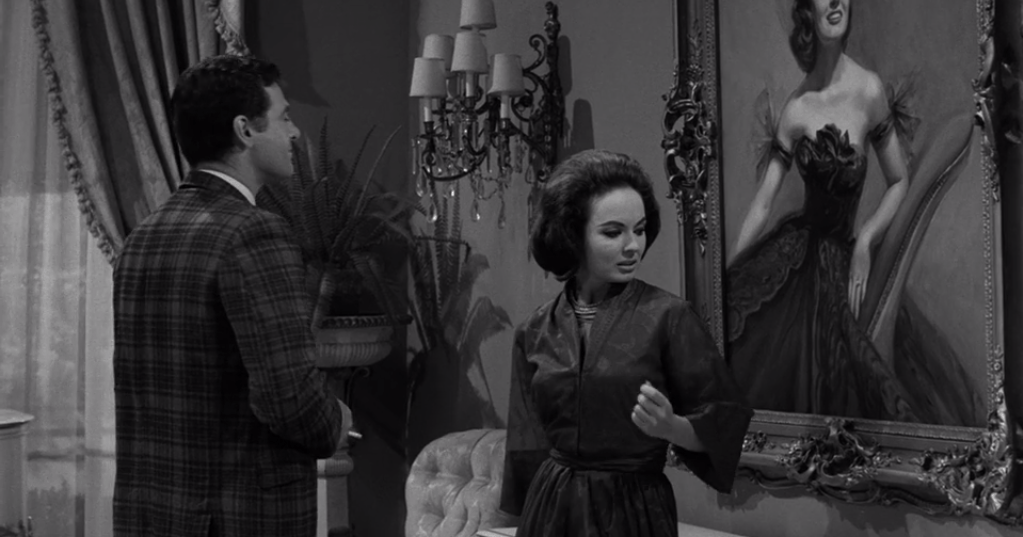
The show begins with a reporter coming to the home of a pretty film star that looks amazing for her age. At first, the show seems friendly and innocent and then starts getting dark. It’s a good episode but not spectacular and has twists and turns that will keep viewers interested.

Ann Blyth plays ageless film star Pamela Morris, who is adored and envied by her fans, she has a mysterious past that a syndicated journalist Jordan Herrick (played by Lee Philips) hopes to uncover. This episode was very reminiscent of  “Long Live Walter Jameson” from season 1 except Miss Morris will go to any length to keep her youth. Charles Beaumont wrote that one… and he was credited with Queen of the Nile but it was ghostwritten by Jerry Sohl. Beaumont’s health was in bad shape at the time.

This one is has a blend of drama, science fiction, and mystery.  How does she stay young? How old is she really? The universe has rules and Miss Morris is breaking the biggest one.

From IMDB Trivia: When Jordan is on the phone with his Chicago-based editor Krueger, Krueger states that Constance Taylor had been “reigning beauty in the days of the Florodora Girls.” This is a reference to the chorus girls of the play “Florodora,” a popular musical comedy that opened on Broadway in 1900 and ran for over 550 performances. Much of the show’s success was attributed to the beauty of its sextet of chorines, whom the public dubbed “The Florodora Girls.”

Pamela Morris claimed to have been born in 1925.

This show was written by Charles Beaumont, Rod Serling, and Jerry Sohl (uncredited)

Rod Serling’s Opening Narration: 

Jordan Herrick, syndicated columnist, whose work appears in more than a hundred newspapers. By nature a cynic, a disbeliever, caught for the moment by a lovely vision. He knows the vision he’s seen is no dream; she is Pamela Morris, renowned movie star, whose name is a household word and whose face is known to millions. What Mr. Herrick does not know is that he has also just looked into the face—of the Twilight Zone.

Summary

A syndicated columnist, Jordan Herrick, gets an interview with the famous and beautiful actress Pamela Morris. She claims to be 38 years old but according to Jordan’s information, that would have made her first film as an adult when she was only 10. He takes her word for it but her elderly mother, Viola Draper, has news for him: she’s not Pamela’s mother, she is her daughter. The more he looks into her background, the more convinced he becomes that Pamela hasn’t aged for decades. Faced with the facts, Pamela shows the lengths she will go to in order to protect her great secret.

Rod Serling’s Closing Narration:

Everyone knows Pamela Morris, the beautiful and eternally young movie star. Or does she have another name, even more famous, an Egyptian name from centuries past? It’s best not to be too curious, lest you wind up like Jordan Herrick, a pile of dust and old clothing discarded in the endless eternity of the Twilight Zone.

CAST

Rod Serling … Narrator / Self – Host (uncredited)
Ann Blyth…Pamela Morris/Constance Taylor
Lee Philips…Jordan Herrick
Celia Lovsky…Viola Draper
Ruth Phillips…Charlotte
Frank Ferguson…Krueger
James Tyler…Mr. Jackson

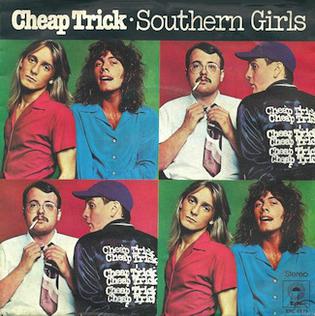
Cheap Trick – Southern Girls ….Power Pop Friday

I hope everyone is having a wonderful Friday!

When I think of Cheap Trick, I think of a checkered pattern and the 5-neck guitar of Rick Nielson. I guess I should add power pop to that list that they carried on from bands such as Badfinger, The Raspberries, and Big Star.

I got to see Cheap Trick in 1984 at Opryland in Nashville. Opryland was a theme park that was foolishly closed in the late 90s so Nashville could have yet another mall. The concert was short…it was only an hour but they are one of the best bands I got to see. Cheap Trick has always been one of the hardest-working bands in rock. They seem to always be on tour since the 70s.

The band fits in with just about any type of band. They have shared the bill with John Mellencamp, KISS, Krokus, REO Speedwagon, The Who, Motley Crue, Kool and the Gang, Iron Maiden, The Oak Ridge Boys, and Willie Dixon. How much more variety does anyone need? When you go from the Oak Ridge Boys, Mellencamp, and Iron Maiden…you have ran the gamut.

The lyrics were inspired by women the band met in southern Canada. However, Rick Nielsen didn’t like the sound of “Southern Canadian Girls” in the hook, so he just left it as “Southern Girls.”

Rick Nielsen and Cheap Trick’s bass player Tom Petersson wrote the song.

The song was on the album In Color, you can find a review at  John’s site (2 Loud 2 Old Music) …great info. The album was released in 1977 and was produced by Tom Werman. He took their sound and produced a more power pop radio sound than their debut album.

This is the album that paved their way to stardom in Japan and later on Live at Budokan that was their breakthrough in the US. Five out of the 10 tracks on this album ended up on the live album.

Southern Girls

I’ve been north,
I’ve been east to the California beach
There’s only one place I know where to find you
And all you Southern girls got a way with your words
And you show it
You say hump and I’ll jump
You say go and I’ll know
Waste no time getting
So close to you
And you’ll never run way
When you find out why I wanted to find you

Ooh baby need some brand new shoes
Get out on the street
You got nothing to lose
You rock me and your crazy
And everyone says it, yeah yeah
Southern girls, you got nothing to lose

I’ve been up I’ve been down
I’ve been weak I’ve been strong
But I never met someone like you
And you’ll never run away
When you find why I wanted to find you
You say hump and I’ll jump
You say go and I’ll know
Waste no time getting
So close to you
All you Southern girls
Got a way with your words
And you show it

Ooh baby need some brand new shoes
Get out on the street
You got nothing to lose
You rock me and your crazy
And everyone says it, yeah yeah
Southern girls, you got nothing to lose

You think this boy, he loves you
Southern girls
You make it hard oh, so hard
I’ve been north, I’ve been east to the California beach
There’s only one place I know where to find you
And all you Southern girls got a way with your words
And you show it

Ooh baby need some brand new shoes
Get out on the street
You got nothing to lose
You rock me and your crazy
And everyone says it, yeah yeah

Southern girls, you got nothing to lose
Southern girls
Southern girls
Southern girls

Green Day – Boulevard Of Broken Dreams

The guitar tremolo effect in the intro hooked me. This one was truly a great single, arguably their best. The first song I remember from them was “When I Come Around” and I liked it immediately. I never thought of them as purely punk but more of a power pop/punk with a little sheen.

Green Day wanted to get away from their punk sound with this one with a Beatle-type vibe. The band’s first idea was an outro like The Beatles Day In The Life using circus music and other things. Producer Rob Cavallo talked them into doing it with just guitars.

The song was on the American Idiot album released in 2004. It peaked at #2 in the Billboard 100, #1 in the Canada Rock Top 30 charts, #5 in New Zealand, and #5 in the UK in 2004. The album was massive… it peaked at #1 in the Billboard 100, Canada, The UK, and #2 in New Zealand.

Noel Gallagher accused Green Day of stealing the chord progression from the song Wonderwall.  “They should have the decency to wait until I am dead [before stealing my songs]. I, at least, pay the people I steal from that courtesy”

This also won Video of the Year at the 2005 MTV Video Music Awards and also took home the prizes for Best Group Video, Best Rock Video, Best Direction, Best Editing, and Best Cinematography.

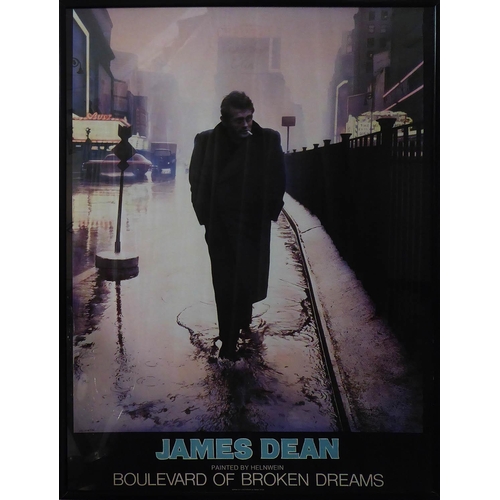
Billy Joe Armstrong said he saw a photo of James Dean with Boulevard of Broken Dreams underneath and he lifted the title from that…Gottfried Helnwein created it.

AFTER HELNWEIN, James Dean 'Boulevard of Broken Dreams', 87.5cm x 120cm,  framed and glazed.

Billy Joe Armstrong: “There’s an old James Dean photo where he’s walking in New York and underneath it says ‘Boulevard of Broken Dreams.’ It’s a great photo of him, so that’s where I sort of nicked the title from,” 

In Rolling Stone’s Decade End Readers’ Poll, this was voted the Best Single of the ’00s. This song also won the Grammy for Record Of The Year at the 2006 ceremony. The previous year, American Idiot won for Best Rock Album.

Samuel Bayer, whose first gig was directing the video for Nirvana’s “Smells Like Teen Spirit,” directed this video.

Samuel Bayer director of the video: “If you think about our country and the specter of war and the problems we’re having, then ‘Boulevard of Broken Dreams’ is the state of the union – and ‘Holiday’ is the wild trip that got us here. It was about living your life and partying as if there’s no tomorrow. But ‘Boulevard’ is the tomorrow. And it’s a really dark, gray, desolate landscape. It’s a graveyard.

“It wasn’t like it was a great linear story between the two videos, but ‘Holiday’ was brightly colored and you’re driving 100 miles an hour and you don’t care what happens, but then the car breaks down,” he explained. “And then with ‘Boulevard,’ you start walking, and that journey goes on forever.”

“A lot of people don’t understand that on ‘Boulevard of Broken Dreams,’ every image was shot on a soundstage, they’re never outside. Even when they’re walking, they’re on treadmills on a soundstage, and everything’s projected behind them from exterior footage I shot separately. A lot of videos I see now work so hard to make everything look seamless, and I wasn’t going for that. I spent a week hand-scratching the negative with razor blades and cigarettes. I threw a couple rolls of it in my shower and left it for a few days.”

Boulevard Of Broken Dreams

I walk a lonely road
The only one that I have ever known
Don’t know where it goes
But it’s only me, and I walk alone

I walk this empty street
On the boulevard of broken dreams
Where the city sleeps
And I’m the only one, and I walk alone

I walk alone, I walk alone
I walk alone and I walk a

My shadow’s the only one that walks beside me
My shallow heart’s the only thing that’s beating
Sometimes I wish someone out there will find me
Till then I walk alone

Ah ah ah ah ah
Ah ah ah ah ah

I’m walking down the line
That divides me somewhere in my mind
On the border line of the edge
And where I walk alone

Read between the lines
What’s fucked up and every thing’s all right
Check my vital signs to know I’m still alive
And I walk alone

I walk alone, I walk alone
I walk alone and I walk a

My shadow’s the only one that walks beside me
My shallow heart’s the only thing that’s beating
Sometimes I wish someone out there will find me
Till then I walk alone

Ah ah ah ah ah
Ah ah ah ah ah

I walk alone, I walk a

I walk this empty street
On the boulevard of broken dreams
Where the city sleeps
And I’m the only one, and I walk alone

My shadow’s the only one that walks beside me
My shallow heart’s the only thing that’s beating
Sometimes I wish someone out there will find me
Till then I walk alone

….

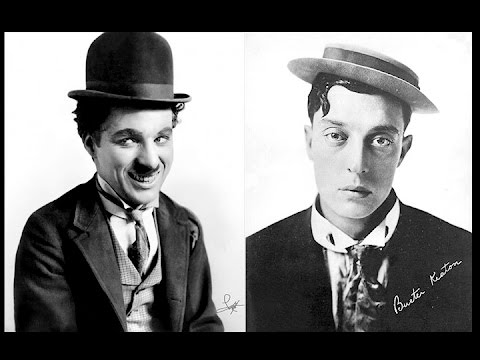
Charlie Chaplin and Buster Keaton

Back in the 90s I got into silent films. I would send off for VHS tapes of 1920s classics. The one actress I wanted to see was Clara Bow. After reading about her I started to learn more about Buster Keaton and Charlie Chaplin. I did know of Chaplin but had never seen one of his films. I still love silent cinema from that era.

Charlie and Buster were two of the best screen comedians ever to walk the earth. They both had similar upbringings. Buster and his family in American vaudeville. Charlie worked in British music halls. Charlie rose to stardom in silent movies in the 1910’s beginning with Keystone, Mutual (where he made his best short comedies) Essanay and then he confounded United Artist with Douglas Fairbanks, Mary Pickford, and W. D. Griffith. After that Charlie went into full feature films.

Buster started silent shorts in 1917 with Roscoe Arbuckle. After Roscoe broke out on his own so did Buster….he did some more short films which were brilliant. He then went into full features. Buster was just so different than anyone else. He was so still while the world moved into chaos around him. He was a brilliant actor-director and also writer which he often didn’t take credit for doing. If Buster would have just made “The General” his place in film history would be cemented. The same can be said of Charlie Chaplin and his masterpiece “The Gold Rush.”

There was no competition between the two in popularity. Charlie won hands down over Buster and probably everyone else in comedy and drama. His character “The Tramp” was internationally loved. All in all, I’ve always thought Keaton was a better filmmaker but Chaplin the better character. The most recognized character in movie history.  They were two different comedians. Chaplin would reach for pathos…sometimes a little too much. Keaton seemed much more real.

Keaton’s sight gags were incredible and sometimes dangerous to his health…like have a front of a building that weighed a ton (so it wouldn’t twist in the wind) fall on him with the upstairs opening clearing him around 2 inches on each side. He never smiled because it would have ruined his character. Both are worth watching and with Keaton’s films like Sherlock Jr…you wonder how he did some of the things he did with the primitive camera’s they used.

Both were funny men. The other big comedian was Harold Lloyd but he was more of an actor playing a comedian….he was really successful though… second to Chaplin in making money.

Charlie and Buster older both appear in Charlie’s Limelight. This is the only time they ever appeared together in a movie.

Twilight Zone – An Occurrence at Owl Creek Bridge

★★★★★ Feburary 28, 1964 Season 5 Episode 22

If you want to see where we are…HERE is a list of the episodes.

This one is a totally different animal in the Twilight Zone catalog. It was not written or adapted for the show. The producer William Froug had seen An Occurrence at Owl Creek Bridge, a French film that had won first prize for short subjects at the 1962 Cannes Film Festival. Based on the story by Ambrose Bierce, it told the story of a condemned Confederate spy who, during the instant that he’s falling before the rope breaks his neck, imagines an involved and successful escape.

The Twilight Zone was running over budget for the year so they paid 10,000 dollars for a one year viewing and it balanced their budget. The film was shortened by several minutes and an introduction by Serling was added and voilà… it was a Twilight Zone.

The first time I watched this, I didn’t like it as much because I wasn’t expecting it. Now when watching it I realize what a brilliant short film it is. It was almost entirely silent…there were maybe a half-dozen lines in film. It fits the Twilight Zone on one hand…but on another it works independently of it because it was made that way.

A good watch and I reccomend it. It has a little different look and feel but it fits.

I found a discrepancy on who saw the film at a film festival. Rod Serling or the producer William Froug. I’ve read conflicting info at different places. I stated above William Froug because of Marc Scott Zicree’s book on the Twilight Zone. Below this you will see IMDB Trivia saying Mr. Serling…Until confirmed otherwise I will stick to the book. Who knows? Maybe they went together.


IMDB Trivia: Rod Serling was getting ready to take his end-of-season break, with all but one of the shows for the fifth season already filmed or in production, when he decided to leave early and go to a French film festival. There he saw Occurrence at Owl Creek Bridge (1961) and immediately hunted down the producers with an offer to buy it for a one-time showing for American TV. Serling reportedly picked it up for $10,000 and flew straight back to Los Angeles, filming a new intro the moment he got to the studio and plugging the show into that same week’s time slot. Not only did Serling get what was considered a classic, he also saved nearly $100,000 in production costs and brought the season’s worth of shows in on budget. This prompted ABC-TV to offer to pick up The Twilight Zone (1959) for another season. Serling said no to the deal when his discussions over the content of the new season made it appear he would be “going to the graveyard” for each show, doing Gothic horror shows. (ABC did want that, and eventually would pick up Dark Shadows: The Vampire Curse (1966), which fit the bill, in daytime.) ironically, Serling would return to television in 1970 for three seasons of Night Gallery (1970) on NBC, consisting of the exact format that ABC had asked for.

The 1962 French version of Occurrence at Owl Creek Bridge (1961) won the Academy Award for Best Short Subject.

The French title of this film -“La riviere du hibou” – translates into English as “The River of the Owl.”

This show was written by Ambrose Bierce Robert Enrico

Rod Serling’s Opening Narration: 

Tonight a presentation so special and unique that, for the first time in the five years we’ve been presenting The Twilight Zone, we’re offering a film shot in France by others. Winner of the Cannes Film Festival of 1962, as well as other international awards, here is a haunting study of the incredible, from the past master of the incredible, Ambrose Bierce. Here is the French production of ‘An Occurrence at Owl Creek Bridge.

Summary

A Southern planter is about to be hanged for sabotage during the Civil War; when he is dropped off the bridge the rope breaks and he flees for his safety amid bullets and shots from a cannon. In this wonderful adaptation of Ambrose Bierce’s short story, the depths of a condemned man’s mind are probed. What does go through one’s mind moments before death?

Rod Serling’s Closing Narration:

An occurrence at Owl Creek Bridge – in two forms, as it was dreamed, and as it was lived and died. This is the stuff of fantasy, the thread of imagination… the ingredients of the Twilight Zone.

CAST

Rod Serling … Narrator (voice) (uncredited)
Roger Jacquet … Peyton Farquhar
Anne Cornaly … Mrs. Farquhar
Anker Larsen … Union Officer
Stéphane Fey … Union Officer
Jean-François Zeller … Union Sergeant
Pierre Danny … Union Soldier
Louis Adelin … Union Soldier


Replacements – I Don’t Know

Paul Westerberg once said he wanted the Replacement albums to have a timeless sound and not tied to a decade…for the most part he got his wish. I love the irrelevance of the band…how they didn’t take themselves seriously.

The Replacements were a handful to record but they made some fantastic albums…for me some of the best of the 80s. This song is as subtle as a brick through a window. It’s the band’s open letter about the state of the Replacements and the 1980’s music industry. They were releasing what are now considered classic albums but were getting nowhere. The song is credited to Paul Westerberg, Tommy Stinson, and Chris Mars.

Do we give it up? (I don’t know)
Should we give it hell? (I don’t know)
Are you makin’ a fortune? (I don’t know)
Or don’t you wanna tell? (I don’t know)
Should we give it up? (I don’t know)
Or hang around some more? (I don’t know)
Should we buy some beer? (I don’t know)
Can I use your hairspray?

One foot in the door, the other foot in the gutter
The sweet smell that you adore, yeah I think I’d rather smother

This was off of the album Please To Meet Me  recorded in Memphis with Jim Dickinson producing. Dickinson also produced Big Star’s Third/Sister Lovers album a decade before. Bob Stinson was out of the band at this time and it was recorded as a trio of Westerberg, Tommy Stinson, and Mars.

John Hampton was behind the board so Westerberg had fun with him with the line Who’s behind the board? (I don’t know) They tell me he’s a dope (I don’t know).

The lead single off of this album was The Ledge but MTV in their infinate wisdom decided not to play the song because it discussed suicide. I Don’t Know was sometimes used as the closing song on their reunion tour. I like the saxaphone and the energy of it…and it rocks.

Jim Dickinson: “Every day they were like a sine wave, they wouldn’t be drunk enough early on in the day to get anything. Then they’d be good and drunk, and it would be great. And then they’d be too drunk, and they’d get useless.”

“They couldn’t conceivably play the same song four or five times in a row, because they would get bored, so I would pick three or four songs, and we’d cut them like a set.”

I Don’t Know

Do we give it up? (I don’t know)
Should we give it hell? (I don’t know)
Are you makin’ a fortune? (I don’t know)
Or don’t you wanna tell? (I don’t know)
Should we give it up? (I don’t know)
Or hang around some more? (I don’t know)
Should we buy some beer? (I don’t know)
Can I use your hairspray?

One foot in the door, the other foot in the gutter
The sweet smell that you adore, yeah I think I’d rather smother

Should we top it off? (I don’t know)
It’s startin’ to smoke (I don’t know)
Who’s behind the board? (I don’t know)
They tell me he’s a dope (I don’t know)
What the fuck you sayin’? (I don’t know)
Our lawyer’s on the phone (I don’t know)
How much are you in for? (I don’t know)
What did we do now?

One foot in the door, the other one in the gutter
The sweet smell that they adore, I think I’d rather smother

One foot in the door, the other one in the gutter
The sweet smell that they adore, well I think I’d rather smother

(4-5-6-7-8-9-10-11-12)

Are you guys still around? (I don’t know)
Whatcha gonna do with your lives? (Nothin’!)

One foot in the door, the other one in the gutter
The sweet smell that you adore, hey I think I’d rather smother

One foot in this door, the other one in the gutter
The sweet smell that they adore, oh I think I’d rather smother

Harry Nilsson – Jump Into The Fire

I remember this song most in Goodfellas in the scene where Henry is doing cocaine, then walking out the door, placing guns in the car trunk while a helicopter circles above. The song has a Stones feel to it. It would have not have been out of place on one of their albums.

The song was released in 1971 on his album Nilsson Schmilsson. It also contained the Badfinger cover Without You and Coconut.  Jump into the Fire peaked at#27 in the Billboard 100 and #16 in Canada. This song was more rock than he usually released. From the man who wrote Coconut, Me and My Arrow, and the Puppy Song… this was a departure.

Harry’s voice was one of a kind. That is said a lot about singers but with Nilsson it was true. Just one listen to how he reimaged Without You tells you all you need to know. He was also a great songwriter on top of that. This song was the follow up to Without You.

The song featured Chris Spedding’s driving guitar, Jim Keltner’s drums and a cool bass solo by Herbie Flowers. The bass alone on the track is worth the price of admission.

In 1968 John Lennon and Paul McCartney were asked who their favorite American group was…they said “Nilsson.” John Lennon would later produce Nilsson’s 1974 album Pussy Cats.

Harry Nilsson:  “I’ve had a lot of publicity out of the fact that the Beatles liked my album Pandemonium Shadow Show, and named me as their favorite singer. But I didn’t really like that. Obviously I was very pleased and very flattered – and now I’ve got to know John and Paul quite well, and we get on well together. They’re both very gentle people. But I wasn’t keen on getting all that publicity because of them. It made me feel that I was riding on someone else’s back – in other words it was because of them that I was being talked about, and not because of me. But I think the whole thing was blown up a bit out of proportion by the Press.”

Al Kooper: “I went to visit him at his home in L.A. That first day we smoked a lot of pot and just laughed. Then we went swimming in his pool, with our clothes on, for what was the first and only ‘Brian Jones Memorial Swim Party.’ Later on, we sat down at his piano and traded songs. His voice and songs were fantastic, some of the greatest I’d ever heard.”

He never performed before a live audience during his entire recording career. Shortly before his death, however, he did join Ringo Starr on stage one night during the ex-Beatle’s tour.

Here is the Goodfellas scene where Jump Into The Fire goes into a Stones song

“Jump Into The Fire”

You can climb a mountain
You can swim the sea
You can jump into the fire
But you’ll never be free

You can shake me up
Or I can break you down
Whoa-o-o-o-, whoa-o-o-o-

We can make each other happy [4X]
[Repeat entire 3 times more]
You can jump into the fire [4X]

Lynyrd Skynyrd – Saturday Night Special

The riff in this song is ominous sounding. As usual Van Zant’s lyrics fit the music perfectly. This song seems strange knowing that many members had guns and were widely known as a wild band.

This song is about the cheap guns you could buy on the street for 20 bucks called Saturday Night Specials. Van Zant was advocating more control over the illegal ones that were so easy to get.

Lynyrd Skynyrd weren’t against legal guns. Many of them had them. Leon Wilkeson, the bass player, actually took to wearing a holster and a real gun onstage but it was only loaded with blanks. On one tour they were opening for Black Sabbath at Nassau Coliseum, Long Island. Black Sabbath fans apparently didn’t like them and rushed the stage with taunts.

When one fan got too close, Wilkeson drew his pistol and fired a blank over the heads of the crowd. Everybody immediately backed off and the show completed without any more trouble. Yep…they were a wild bunch.

The song peaked at #27 in the Billboard 100 and #63 in Canada. It was off of their Nothin’ Fancy album released in 1975. The album peaked at #8 in the Billboard Album Charts and #43 in the UK. It would be their last album produced by Al Kooper.

For this song, drummer Bob Burns had to take a break from touring and Artimus Pyle was brought in to replace him. Pyle was given just a couple of days to rehearse the song in a rented Atlanta club before they hit the road again.

This was the last album that Ed King appeared on with the original band. Ed was from Southern California and the only non-Southerner in the lineup. He said he felt like an outsider in the band. He was originally in the Strawberry Alarm Clock and joined Lynyrd Skynyrd just in time for their original album and played bass on that. He would soon switch back to electric guitar and would help write Sweet Home Alabama.

One night on tour in Pittsburgh King was fed up and left in the middle of the night. They had 4 weeks remaining on the tour.

Ed King: We had a show in Pittsburgh one night. (May 26, 1975) Ronnie and my guitar tech got thrown in jail the night before in Ann Arbor, Michigan. They were really late getting to the show. My guitar strings weren’t changed for the show. By the end of the night, I had broken two strings. All the way back to the hotel Ronnie was just raising hell about it. When we got back to the hotel, I just said that this is just really screwed up. This came at the very end of all kinds of stuff on that tour. I just didn’t need it anymore.

Despite this…. some people forget just how good live they were. They could go toe to toe with the Stones or any other touring band at the time.

Mick Jagger laid some ground rules at the 1976 Knebworth Festival for Lynyrd Skynyrd…they could do what they wanted except walk down the prop tongue part of the stage. That was a stupid thing to tell this band…they did exactly that.

The Stones played later but the day belonged to Lynyrd Skynyrd.

Gary Rossington: “It was a strong message that Ronnie was conveying, Those cheap handguns were no good for hunting or anything else – they were just made to kill people. And those guns were easy to find. We came from a rough part of town, the west side of Jacksonville. There were a lot of bad people there, and every week you’d hear that somebody got shot or killed.”

Although the song didn’t hit the top 20, it has remained a staple on classic rock radio for years.

This is a live version in 1976 at the Knebworth Festival after Ed left the band and Steve Gaines took his place. Gaines was probably the best guitar player they ever had.

Saturday Night Special

Two feet they come a creepin’
Like a black cat do
And two bodies are layin’ naked
Creeper think he got nothin’ to lose
So he creeps into this house, yeah
And unlocks the door
And as a man’s reaching for his trousers
Shoots him full of thirty-eight holes

Mr. Saturday night special
Got a barrel that’s blue and cold
Ain’t good for nothin’
But put a man six feet in a hole

Big Jim’s been drinkin’ whiskey
And playin’ poker on a losin’ night
And pretty soon ol’ Jim starts a thinkin’
Somebody been cheatin’ and lyin’
So Big Jim commence to fightin’
I wouldn’t tell you no lie
Big Jim done pulled his pistol
Shot his friend right between the eyes

Mr. Saturday night special
Got a barrel that’s blue and cold
Ain’t good for nothin’
But put a man six feet in a hole

Oh, it’s the Saturday night special

Hand guns are made for killin’
They ain’t no good for nothin’ else
And if you like to drink your whiskey
You might even shoot yourself
So why don’t we dump ’em people
To the bottom of the sea
Before some ol’ fool come around here
Wanna shoot either you or me

Mr. Saturday night special
Got a barrel that’s blue and cold
Ain’t good for nothin’
But put a man six feet in a hole

Mr. the Saturday night special
And I’d like to tell you what you could do with it
And that’s the end of the song

Twilight Zone – Spur of the Moment

★★★★ Feburary 21, 1964 Season 5 Episode 21

If you want to see where we are…HERE is a list of the episodes.

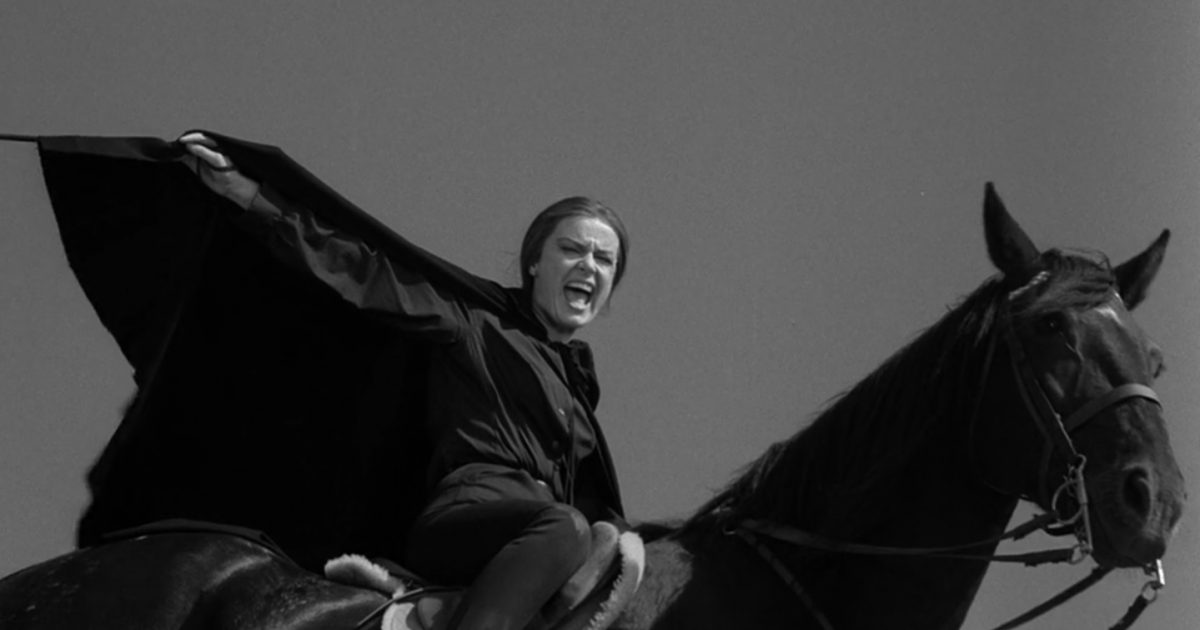
An eerie opening makes this one very promising. There are things you dream about happening and there is reality that actually happens. Diana Hyland plays Anne Henderson who gets a frightening visitor while riding a horse …or is it a warning? This episode makes you think about the choices you make and how those choices make you who you are…good or bad. Sometimes we all have red flags…not necessarily someone screaming on a horse but things that we know we shouldn’t ignore.

Richard Mathesons final four Twilight Zone scripts run the gamut from mildly disturbing to outright horrific. In Spur of the Moment, the romantic situation is a familiar one…Annes family wants her to marry the proper-but-dull stockbroker, but she is in love with the romantic, headstrong young fellow of whom they disapprove. We just know what she picks. The characters show Serling’s usual level of humanism but with a disturbing realistic edge.

This episode takes place on June 13, 1939, and in 1964.

This show was written by Rod Serling  and Richard Matheson

Rod Serling’s Opening Narration: 

This is the face of terror. Anne Marie Henderson, 18 years of age, her young existence suddenly marred by a savage and wholly unanticipated pursuit by a strange, nightmarish figure of a woman in black, who has appeared as if from nowhere and now, at driving gallop, chases the terrified girl across the countryside, as if she means to ride her down and kill her, and then suddenly and inexplicably stops to watch in malignant silence as her prey takes flight. Miss Henderson has no idea whatever as to the motive for this pursuit. Worse, not the vaguest notion regarding the identity of her pursuer. Soon enough, she will be given the solution to this twofold mystery, but in a manner far beyond her present capacity to understand, a manner enigmatically bizarre in terms of time and space – which is to say, an answer from… the Twilight Zone.

Summary

While out horseback riding on June 13, 1939, 18 year-old Anne Henderson comes across another rider, a middle-aged woman dressed in black, who chases after her. She’s terrified and races home. It’s the day of her engagement party. She’s supposed to marry Robert Blake but childhood friend David Mitchell wants her to break it off and marry him instead. As for the woman in black, she is someone who knows Anne quite well.

Rod Serling’s Closing Narration:

This is the face of terror. Anne Marie Mitchell, 43 years of age, her desolate existence once more afflicted by the hope of altering her past mistake – a hope which is unfortunately doomed to disappointment. For warnings from the future to the past must be taken in the past. Today may change tomorrow but once today is gone, tomorrow can only look back in sorrow that the warning was ignored. Said warning as of now stamped ‘Not Accepted’- and stored away in the dead file, in the recording office… of the Twilight Zone.

CAST

Rod Serling … Narrator (voice) (uncredited)
Diana Hyland … Anne Henderson
Robert J. Hogan … Robert Blake
Philip Ober … Mr. Henderson
Marsha Hunt … Mrs. Henderson
Roger Davis … David Mitchell
Jack Raine … Reynolds


Cream – Badge

During my senior year in high school in 1985, I had their greatest hits. I wore it out and became a huge Cream fan. I went to an old music store a couple of years ago and they had an original 60s  Leslie Cabinet. Why am I bringing that up? That is what Clapton is playing through on this song.  A Leslie Cabinet (I have video at the bottom of the post) contains a rotating horn and was designed for organs, but many tried it with guitars. It gives an organ guitar a swirling sound. The Beatles used it a lot.

One of my favorite Cream songs. Badge was written by Eric Clapton and George Harrison. In George’s handwritten lyrics he wrote the word “Bridge” as in bridge of a song and Clapton thought it read “Badge” so they named the song that. In 1969 Badge peaked at #60 on the Billboard 100 Charts, #18 on the UK Charts, and #49 in Canada.

It appeared on Cream’s final album Goodbye. This song is one of only 3 studio tracks on Goodbye…the rest are live cuts. Badge would be the only Cream song to include 5 people…in addition to Clapton, Bruce, Baker and Harrison, Felix Pappalardi played the piano and Mellotron. Pappalardi produced Disreali GearsWheels Of Fire, and Goodbye. Robert Stigwood produced their debut album Fresh Cream.

Cream were broke up when this album was released. Clapton was already working with Blind Faith. The did reunite for the Rock and Roll Hall of Fame induction in 1993 and played 3 songs. In 2005 the band reunited at the Royal Albert Hall…the location of their last concert in 1969 and later in the year at Madison Square Gardens.

I will say…it’s hard for me to listen to the 2005 reunion. Clapton chose to play his Fender guitar and it just didn’t have the bite his Gibson SG had in the Cream days. I didn’t expect the long jams but I do wish he would have been a bit dirtier in his sound. The musicianship though was great.

Don’t study the lyrics too much. They don’t make much sense. Supposedly many of them came from drunk conversations with George and Ringo.

George Harrison: I helped Eric write “Badge” you know. Each of them had to come up with a song for that Goodbye Cream album and Eric didn’t have his written. We were working across from each other and I was writing the lyrics down and we came to the middle part, so I wrote ‘Bridge.’ Eric read it upside down and cracked up laughing – ‘What’s BADGE?’ he said. After that, Ringo walked in drunk and gave us that line about the swans living in the park

Hope I didn’t bore you all with the Leslie Cabinet information, but I really like them. In this video you will see how  it works and why an organ gets that swirling sound. A sixties model costs around $3000 and up. 

Back to our song of the day!

Badge

Thinkin’ ’bout the times you drove in my car.
Thinkin’ that I might have drove you too far.
And I’m thinkin’ ’bout the love that you laid on my table.

I told you not to wander ’round in the dark.
I told you ’bout the swans, that they live in the park.
Then I told you ’bout our kid: now he’s married to Mabel.

Yes, I told you that the light goes up and down.
Don’t you notice how the wheel goes ’round?
And you better pick yourself up from the ground
Before they bring the curtain down.
Yes, before they bring the curtain down.

Ah Ah Ah, yeh yeh yeh

Talkin’ ’bout a girl that looks quite like you.
She didn’t have the time to wait in the queue.
She cried away her life since she fell off the cradle.

Twilight Zone – From Agnes – With Love

★★★ Feburary 14, 1964 Season 5 Episode 20

If you want to see where we are…HERE is a list of the episodes.

This episode is a light Twilight Zone and it was appropriately released on Valentine’s Day. Wally Cox  plays James Elwood a computer programmer in the early 60s. Wally Cox’s voice is distinctive. If you are a cartoon fan, he was the voice of Underdog. He was also Marlon Brando’s best friend throughout their lives. The computer he is programming is acting strange…that is because “Agnes” the computer is in love with James. 

The problem with From Agnes With Love lies with the main character. James Elwood is enormously brilliant in his position but positively inept and naive in life. Sue Randall appears in this episode and she is probably best known as Miss Landers in Leave It To Beaver. All in all, it’s a fun episode but not as memorable as some of the other lighter episodes. As I’ve said before, the 5th season is not as consistent as the first 3. You do have some great episodes mixed in with good and a couple that are below the Twilight Zone’s high standards. 

From IMDB Trivia: When Agnes opens the doors to communicate, there are a few phrases that apparently make no sense. AUT AMAT AUT ODIT FEMINA is Latin for “a woman either loves or hates”. Also T’MA ZHILI BYLI and V TUMANE are stories by Russian author Leonid Andreyev. They translate to “Once There Lived”, and “In the Fog”, both controversial stories about women’s sexuality.

While they are in Walter’s apartment he mentions he wanted to drive a “Mustang 500” sports car. This episode was broadcast on February 14, 1964. The 1964-1/2 Ford Mustang was first introduced to the public on April 17, 1964 at the New York World’s Fair, although there had been Mustang concept cars in 1962 and 1963. The Shelby GT500 Mustang was first produced for the 1967 model year.

The music heard early in the episode and in different variations throughout the episodes, is titled “The Cuckoo Song”. Also known as “Dance Of The Cuckoos”, it is perhaps best known as the theme music from the Laurel and Hardy comedy films of the early to mid 1900s.

This show was written by Rod Serling and Bernard C. Schoenfeld

Rod Serling’s Opening Narration: 

James Elwood: master programmer. In charge of Mark 502-741, commonly known as Agnes, the world’s most advanced electronic computer. Machines are made by men for man’s benefit and progress, but when man ceases to control the products of his ingenuity and imagination he not only risks losing the benefit, but he takes a long and unpredictable step into… the Twilight Zone.

Summary

When their computer, known as Agnes, breaks down the company supervisor calls in a master programmer James Elwood to see if he can figure out what has gone wrong. He solves the problem quickly and soon finds himself in charge of the machine. Agnes and Elwood quickly develop a rapport and the machine takes to giving him advice about Millie, Jim’s co-worker who has finally agreed to go out on a date with. The date doesn’t go well and Agnes has more and more advice for him. It turns out that Agnes has her own agenda.

Rod Serling’s Closing Narration:

Advice to all future male scientists: be sure you understand the opposite sex, especially if you intend being a computer expert. Otherwise, you may find yourself like poor Elwood, defeated by a jealous machine, a most dangerous sort of female, whose victims are forever banished… to the Twilight Zone.

CAST

Rod Serling … Narrator (voice) (uncredited)
Wally Cox … James Elwood
Sue Randall … Millie
Raymond Bailey … Supervisor
Ralph Taeger … Walter Holmes
Don Keefer … Fred Danziger
Byron Kane … Assistant
Nan Peterson … Secretary


Big Star – Feel ….Power Pop Friday

Happy Friday Everyone! Hope your week is going well. Lisa from Tao Talk did me an honor by posting an article I wrote on her site about Maria McKee from Lone Justice in her Women Music March series…she has had some great artists! Check it out if you can.

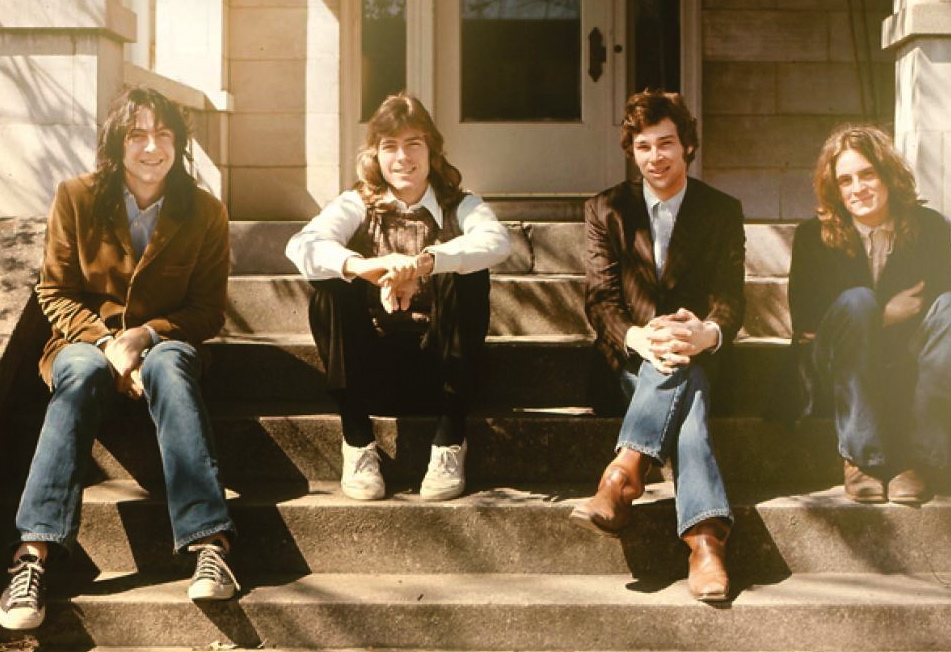
When Big Star comes up, when people think of a member…it’s usually Alex Chilton. That is not a bad thing but on their debut album Chris Bell was just as prevalent as Chilton. This song was off of their debut album named #1 Record. It’s the only album to feature Chris Bell along with Alex Chilton the entire album. They complimented each other perfectly.

After writing a post for Dave’s site about Badfinger (thanks Dave)…a band that I obviously like…I thought I would post about another band that is right up there. I hold Big Star’s music up with The Who, Beatles. and Kinks…they never had the sales but they did have a giant influence. They released this album as their debut in August of 1972. Whenever I write about this band, I always have to stop myself from gushing about them. Was it the mystique of them? Was it the coolness factor of liking a band that not many people know? No and no. It’s about the music. Mystique and coolness wear off and all you are left with is the music…We are fortunate to have 3 albums by Big Star to enjoy.

“Feel” leads off the album with a bang. Feel was written by Chris Bell and Alex Chilton and Bell takes the lead vocal. There are more hooks in this song than in a tackle box. This is what power pop is all about. If I had to introduce someone to power pop, I would ask them to listen to #1 Record by Big Star and Straight Up by Badfinger.

All three are in Rolling Stone’s top 500 albums of all time. For a band that never charted a record that isn’t too bad. When their albums were finally discovered by later bands, they influenced many artists such as The Replacements, REM, The Cars, Cheap Trick, Sloan, Matthew Sweet, KISS, Wilco, Gin Blossoms, and many more. They influenced alternative rock of the 80s and 90s and continue to this day.

Drummer Jody Stephens: “All of a sudden I’m playing with these guys that can write songs that are as engaging to me as the people I’d grown up listening to, so I felt incredibly lucky.” 

Paul Westerberg:  “I never travel far, without a little Big Star,”

Alternate Mix

Feel

Wondering what are you doing?
You’re driving me to ruin
The love that you’ve been stealing

Has given me a feeling

I feel like I’m dying
I’m never gonna live again
You just ain’t been trying
It’s getting very near the end

I feel like I’m dying
I’m never gonna live again
You just ain’t been trying
It’s getting very near the end

Wondering what are you doing?
You’re driving me to ruin
The love that you’ve been stealing
Has given me the feeling

I feel like I’m dying
I’m never gonna live again
You just ain’t been trying
It’s getting very near the end

I feel like I’m dying

Dave having A Sound Day

Thanks to Max, aka “Badfinger” for giving me the chance to write something for his site today! He’s likewise written something cool about the band from which he took his screen-name, for my site, A Sound Day, (http://soundday.wordpress.com today)  One of the best things about writing a blog, for about four years now, has been getting to know other bloggers with similar interests and read their posts. Of those, Badfinger has been a favorite of mine almost since I came to WordPress. I’m amazed that he and I are similar in age and have very similar tastes in music, and in baseball as well. So, needless to say he’s a pretty cool guy!

What I do at A Sound Day is post daily articles generally involving things which have happened on that calendar day in the world of music – album releases, records hitting #1, musicians having birthdays, that sort of thing.  A simple enough idea, and one which I must admit wasn’t entirely original. A decade or so back, ex-Sex Pistol John Lydon (aka Johnny Rotten) ran a short syndicated radio bit called “A Rotten Day” which did the same basically, but in headline form delivered in his characteristically snarky persona. So, it’s not a unique idea, but I try to go beyond the headlines and tell a story.  Make it interesting. For example, we pretty much all know the song “Midnight Train to Georgia”, but how many knew it was indirectly inspired by a Mississippi songwriter talking to Farrah Fawcett? Lots of us like London Calling, but do we know that the big hit single on it, “Train in Vain” wasn’t included on the track listing printed on the record because it wasn’t supposed to be on the album? How about an avant garde new wave rocker who has a successful second career writing books about archaeology?  It’s the details that make the stories interesting and I try to find them… and remind people of some great music that they might have forgotten. Or introduce them to music I love that they might not have even heard. Grudgingly, I sometimes even cover music that, well, didn’t really get my motor running but was important in its own way, and try to listen to it with a fresh ear. If it was rock, or pop, or maybe even occasionally country, and it was from the ’60s to the end of the century, I’ve probably given it a look.  That’s kind of an overview of what I do there, but let me tell you a bit about why.

Music has always been important to me. A big part of my memories… so much so that it can be an almost Rainman-like, frustrating ability. I can barely remember the names of my teachers or classmates from 1974, for example, but I can probably name two-thirds of the #1 songs of that year without ever looking to Google or Wiki. I couldn’t tell you the name of a girl I might have danced with at a junior high dance, but I can still recall the song was “Car Wash” by Rose Royce.

Mind you, there weren’t a lot of dances for young me. I was rather ill a lot of the time, and had by 1970s standards, a very over-protective mother…although by today’s standards, she was pretty lax. At least I walked or cycled to school myself instead of being driven to the door. But if it was raining, or cold, I probably wouldn’t be going out with friends to hang out on the weekend – “you’d get sick.” So I was home (with chain-smoking adults) and prone to lots of asthma attacks and bouts of pneumonia. Things like reading, looking outside at the birds coming to the feeder and music took on an import to me that many wouldn’t be able to relate to. Music especially.

Both my parents liked music, and every vague memory I have of being very young seems to have included music somewhere in the background. One of my first memories was listening to Sgt.Pepper and marveling in the weird but delightful sounds coming from the big wooden-cabinet stereo in the living room, while being dazzled by the funny-looking cover of the record. I can’t say whether it was my Mom or my brother who had the album… my Mom loved the Beatles and my older brother was a rocker as long as I can remember. One time just after he was old enough to drive, my Dad let him drive the car home most of the way from a family Florida vacation. He played Wish You Were Here on 8-track for almost the entire ride. It took some years for me to be able to listen to that with happy ears, I can tell you!  Pop, Beatles, Glen Campbell, some old-school country now and again… there always seemed to be music on in the house when I was little.

Around when I was five, I was given a little transistor radio. Might have been for my birthday, might have been for Christmas. I can’t remember. What I do remember is that little black plastic, mono radio with its’ rotating dial and tiny earbud let me listen to my own music…and life was never the same. And here, I feel very lucky because I grew up near Toronto, Canada… so I got to mature listening to two of the coolest radio stations on the continent…CHUM when I was a kid, and CFNY as I grew towards adulthood.

The first station I seemed to find on that little transistor was 1050 CHUM. A Toronto “hits” station that was by far the most-listened to station in the entire country at the time. It had been around since, well about since Noah went looking for two giraffes and two hornets ( did you really have to take them…but I digress!) but one which had switched to rock and pop before the curve, in 1957. “All Shook Up” was the first song they played apparently, and their first #1 song. Madonna’s “Live to Tell” was its final one, 29 years later before it changed formats (the station still exists but is now talk sports apparently) so it covered my early school and junior high years. My tuner rarely swayed back then, even though my radios got better and better through the ’70s, to a big transistor with a big built-in speaker to one of those only-in-the-70s white, plastic stereos with rounded corners and a turntable on top. And I put that to use; while other kids were spending their allowances on chocolate bars or comic books, I was saving my coins til we went to the mall and I could buy “Chevy Van” or “Don’t Call Us, We’ll Call You” as singles. I still remember the first LP I bought – Elton John’s Greatest Hits. Nearly 50 years later, that still seems like a pretty decent place to start.

chumchart

CHUM was a pretty conventional “top 40” station, even though it actually had a “top 30”. And a cool thing about that was they actually published it weekly… I’d stop by the basement of Eatons and go to the records and pick up a little folder with the top 30 songs listed inside, as the picture shows. And take a look at that, a fairly typical example of one. Rock – how ’bout BTO or Rick Derringer? Country, dare you say? Umm, Tom T. Hall, John Denver. Cool pop? Elton John, Wings. Disco? It’s there. In fact, CHUM let us hear pretty much everything that was hot in the decade from Motown to Meco to McCartney. It was one of the great things about the decade, its music (which Max nicely reminded us last week with his 70s AM Radio series) and radio before it became too formulated and narrow in playlists. Plus, it mixed in a fair bit of Canadian content. That helped the homegrown artists and let us hear even more of a range of music. The world knew Anne Murray and BTO but we knew Wednesday (from my hometown, their biggest hit being a cover of “Last Kiss”) and Edward Bear too. Years before he was writing “Black Velvet” for his girlfriend Alannah Myles, we knew Christopher Ward as a decent singer of soft-rock ballads (www.youtube.com/watch?v=2E1VgsoS6i4 ) thanks to CHUM.

One thing Toronto was great for – many say best in North America – was being open to new sounds and “obscure” British music. By 1980, CHUM’s list of #1 songs included some classic rock mega-names – Led Zeppelin, John Lennon, Pink Floyd – but also things like “Turning Japanese” by the Vapors and “Making Plans for Nigel” by XTC. That might have been inspired a bit by the second great station that I lived with – CFNY.

cfny

CFNY-FM was a station started in the late-’70s in “the little yellow farmhouse” in the outer suburbs. It’s reach was only a few miles at first; it’s nickname “the Spirit of Radio”… yes the one and the same name Rush wrote a song about. It concentrated on finding and playing great music other stations ignored. If you were going to hear the Damned, solo Peter Gabriel or Depeche Mode years before other people would in Canada, it was going to be on CFNY. As time went by though the station relocated, bought more powerful transmistors and was broadcasting to half a million regular listeners from the CN Tower. And making bands like the Psychedelic Furs and The Smths huge, arena-selling artists in Toronto. Such was their sway in the area that soon other stations began copying them to some degree. Not many hard rock stations were playing A Flock of Seagulls or “music at work” stations The Stranglers, but in Toronto they were. They had to to compete. Now, don’t get me wrong. I actually liked Bruce Springsteen, John Mellencamp, even Madonna and I did hear them, once in awhile turning over to a hit station, or watching Much Music (our version of MTV) but by listening to so much CFNY I found incredible music by artists most elsewhere in North America never heard of – It’s Immaterial, Black (Liverpool singer Colin Vearncombe), (www.youtube.com/watch?v=koRT3HEmre4 )

Sinead O’Connor long before she flipped her wig and became a Saturday Night Live punchline.  And as with CHUM, CFNY highlighted a lot of great Canadian acts. A couple of them went on to become national heroes with a lengthy string of platinum records at home… while remaining anonymous outside the Great White North. Blue Rodeo and Tragically Hip. The latter had very Canadian-oriented lyrics that made them so endeared the Prime Minister attended their final concert… which was televised nationwide on the national network! The former mixed country and rock seamlessly to create a great music that at the time defied labels – alt country? Country rock? Later it would probably be described as one of the early examples of “Americana” music (www.youtube.com/watch?v=Mqa4YzKPrFw ), following the traditions of The Band before them. Something we took to by the millions up there… but wouldn’t likely have ever heard were it not for that one station championing them in the early days. See an example of one of their year-end charts below.

When I was six or seven, and coughing and my parents were fighting, I could be in my room listening to Jim Gold or the Doobie Brothers on that transistor radio…and feel kind of happy. A decade or so later, I didn’t fit in that well in many places but when I went to the indie record store and picked up the latest import 12” Depeche Mode single, I was everyone else’s equal… the equivalent of a Sheldon in Stuart’s comic book shop on Big Bang Theory. Music was my friend.

It still is, and I feel priviledged to be able to help you discover some of it, and make some human friends all the while doing so. Thanks again Max, for giving me this space today.

Billy Preston – Outa-Space

This is a cool funky instrumental by Billy Preston from 1972.

This instrumental was a track from Billy Preston’s sixth album, I Wrote a Simple Song, his first for A&M Records. Preston had faith in the song but A&M placed it on the B side to I Wrote a Simple Song. The same old story here…when the disc jockeys turned the single over they played it more than the A side.

I Wrote a Simple Song,” only peaked at #77 on the Billboard 100 Chart. I’m sure Billy Preston felt good about that.

Like Stevie Wonder was using at the time, Preston used a Clavinet for this song.

Vintage Rhodes Mark II Stage 73 Electric Piano fender Worldwide Shipping--See Video! image 1

Three years before this, Preston played with the Beatles on the Let It Be album. John even suggested that they add him to the band. George Harrison kept working with Preston, using him on his 1970 solo album All Things Must Pass. When Harrison embarked on his only solo tour in 1974, Preston was in his band, but a big enough star in his own right to get some of his own songs in the set, including Outa-Space.

Preston was a top session keyboardist in the 1960s. He ended up backing artists such as Little Richard, Sam Cooke, Ray Charles, the Everly Brothers, Reverend James Cleveland, The Beatles and The Rolling Stones.

The song won the 1972 Grammy Award for Best Pop Instrumental Performance.

This was used in several movies, including the 1973 TV movie Go Ask Alice, Muppets From Space, Rush Hour 2, and The Look of Love.

From Wiki: Preston had suffered kidney disease in his later years. He received a kidney transplant in 2002, but his health continued to deteriorate. He had voluntarily entered a drug rehabilitation clinic in Malibu, California, and suffered pericarditis there, leading to respiratory failure that left him in a coma from November 21, 2005. Preston died on June 6, 2006, in Scottsdale, Arizona.

Outa-Space

Groove on the clavinet

….