Welcome to the Hanspostcard TV Draft. I hope you will enjoy it! Today’s post was written by Liam at https://othemts.wordpress.com/
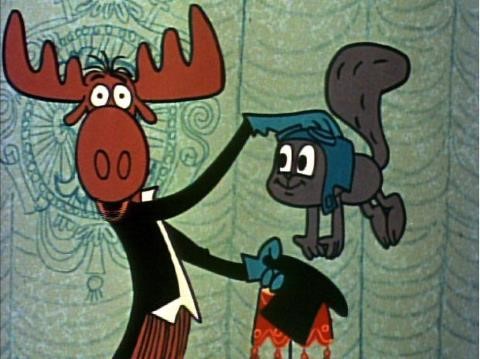
The Rocky and Bullwinkle Show
(1959 – 1964)
When you have an animated series featuring talking animals, the natural inclination is to file it under “Children’s Entertainment.” And yet The Rocky and Bullwinkle Show featured witty wordplay, spoofs of popular culture, self-referential humor, and political satire (particularly regarding the Cold War). You can tell that network execs were confused by the fact that they sometimes aired the show in prime time and sometimes on Saturday morning. During the show’s five season run from 1959 to 1964 it also switched networks. For the first two seasons it was on ABC and called Rocky and His Friends. Then it moved to NBC and became The Bullwinkle Show. CBS never gave it a shot but the show lived on in syndication under the names The Rocky Show, The Rocky and Bullwinkle Show, The Adventures of Rocky and Bullwinkle, and The Adventures of Bullwinkle and Rocky. Whew!
Ok, but beyond this rocky (pun intended) broadcast history, what was the show about? Jay Ward created the show to be an ongoing adventure serial about a moose and a squirrel. Animator Alex Anderson created many of the characters but declined to work on the show itself. Ward hired Bill Scott as head writer and co-producer of the show, as well as writers Chris Hayward and Allan Burns. General Mills came on board as the show’s main sponsor. The ongoing serial featured four main characters, two heroes and two villains:
Rocket J. Squirrel (a.k.a. Rocky the Flying Squirrel), voiced by June Foray, is a noble all-American kid in squirrel form who serves as the straight man to his partner Bullwinkle’s antics. His catchphrase is “Hokey smokes!”
Bullwinkle J. Moose, voiced by Bill Scott, is a good-hearted and optimistic, but very dimwitted moose. He and Rocky are roommates in the fictional town of Frostbite Falls, Minnesota. He attended Wossamotta U. on a football scholarship.
Boris Badenov, voiced by Paul Frees, is a spy from the fictional nation of Pottsylvania (a thinly disguised amalgamation of countries behind the Iron Curtain.). He is constantly up to no good and scheming on a plan given to him by his Fearless Leader or concocting his own criminal conspiracy. He proudly introduces himself as the “world’s greatest no-goodnik.”
Natasha Fatale, voiced by June Foray, is another Pottsylvania spy and Boris’ partner in crime. The design of Boris and Natasha are inspired by Charles Addams’ characters Gomez and Morticia Addams.
Over five seasons and 163 episodes, Rocky & Bullwinkle and Boris & Natasha appeared in 28 different serialized story arcs. The shortest serial had only 4 chapters while the longest had 40! And this was in the days before DVD box sets and streaming video made binge watching possible, so the creators of the show put a lot of faith in the audience remembering what happened earlier in the story.
A typical 23-minute episode would have two segments of a Rocky & Bullwinkle serial, each ending on a cliffhanger (and a bad pun). Additionally, the show would have a couple of supporting features drawn from the following:
Dudley Do-Right of the Mounties – In a parody of silent film melodramas, the brave but dumber-than-Bullwinkle mounted policeman Dudley Do-Right (Bill Scott) attempts to foil the plots of the villainous Snidley Whiplash (Hans Conried). This usually requires rescuing Nell Fenwick (June Foray), whom Dudley loves, but she in return is only fond of his horse.
Aesop and Son – Old fables are retold in a comical way by Aesop (Charles Ruggles) and his son, Junior (Daws Butler).
Fractured Fairy Tales – Edward Everett Horton narrates fairy tales updated with modern themes and a lot of puns.
Peabody’s Improbable History – Mister Peabody (Bill Scott), a genius talking dog, adopts a boy named Sherman (Walter Tetley). Since the boy needs exercise, Peabody invents a time machine called the WABAC. They travel to various historical events to see what “really” happened.
Bullwinkle’s Corner – Bullwinkle attempts to be cultured by reading poetry with comical results.
Know-it All – Bullwinkle, who we have already noted is quite dim, attempts to be the authority of various topics while Boris Badenov undermines his efforts.
The one great flaw of The Rocky and Bullwinkle Show is its animation style. Television animation of the 50s and 60s relied on the practices of limited animation such as reusing simple backgrounds and the stilted motions of the characters to save money. But even by the standards of limited animation, The Rocky and Bulwinkle Show’s animation was choppy and full of visible flaws. General Mills insisted on outsourcing the animation to the Mexican studio Gamma Productions S.A. de C.V, and Ward was never happy with the quality. But ultimately, the witty scripts and terrific voice acting made the poor quality animation irrelevant to the show becoming a classic.
The Rocky and Bullwinkle Show legacy lives on in syndicated reruns. Despite never being a morning person, I went through a phase as a teenager in the late 1980s where I would get up to watch it at 6am before school! The show has also been released in various home media formats. Attempts to revive the show in the 1970s and 80s failed but it eventually found its way to the big screen. Boris and Natasha: The Movie (1992) and Dudley Do-Right (1999) were live-action adaptations that both bombed. A live-action/animated hybrid movie The Adventures of Rocky and Bullwinkle (2000) was also poorly received. Mr. Peabody & Sherman (2014) from DreamWorks Animation got much better reviews and spun off a Netflix series (2015-2017). DreamWorks Animation Television followed up with a reboot series of The Adventures of Rocky and Bullwinkle (2018-2019) on Amazon Prime Video. I have not watched any of these having remained loyal to the original work of Jay Ward and company.
If I had to pick a favorite song of Creedence Clearwater Revival it would be hard… but this song would be a contender and probably my overall favorite. It’s the way Fogerty wearily sings the lyrics, he sounds so much older than he was at the time. The song is off of the “Green River” album.
Sometimes lines grab my attention and these did. Met myself a comin’ county welfare line. I was feelin’ strung out, Hung out on the line.
The album did very well…the Green River album peaked at #1 in the Billboard Album Charts, #2 in Canada, and #20 in the UK in 1969. If you want proof that life isn’t fair… Green River the title track was kept from #1 because of the novelty bubblegum song “Sugar, Sugar” by The Archies.
With Creedence…you won’t hear any “alternative takes” with the band. Fogerty destroyed all copies of the first version of songs because he never wanted any of his outtakes to make it into the public’s hands. This has been a regular practice of him throughout his career.
The album ended up charting 4 different songs. Green River, Lodi, Bad Moon Rising, and Commotion. John Fogerty released a new version of the song on his ninth solo studio album, also titled Wrote a Song for Everyone. This version features Miranda Lambert and Tom Morello.
Jeff Tweedy of Wilco has cited this as a song that had a profound influence on him. A huge Fogerty fan, Wilco credits him with forming the foundation of the Americana genre.
John Fogerty:“Inspired by my young wife at the time. It was early ’69, and I was 23 years old. We had our first child, who, at the time, was two and a half. I was sitting in my room, writing the songs, pushing my career. Without the songs, the career ends. You might be a great band, but without the songs, you’re not going anywhere. At one point, my wife and I had a mild misunderstanding, I wouldn’t even call it a fight, She was miffed, taking our young son out, wishing I would be more involved. But there I was, the musician manic and possessed the only guy holding things up. Without me, it all collapses, so I’m feeling quite put upon. As she walks out the door, I say to my self, “I wrote a song for everyone, and I couldn’t even talk to you.” I looked at my piece of paper and changed gears. How many great leaders can’t even manage their own families? So I went with that. “Pharaohs spin the message/Round and round and true/Richmonds about to blow up” referring to nearby Richmond, California. It was actually a true emotion that took on a larger meaning. It’s still a special song in the sense that it keeps my feet on the ground. You sit and write these songs, yet you try to talk to your own son and daughter and maybe you’re totally inadequate, trying to explain life to a child. We used to record our album very quickly and I remember finishing five different songs in one afternoon. The fifth one didn’t work, and that was “Wrote A Song For Everyone.” I had to start over on that one.”
“Wrote A Song For Everyone”
Met myself a comin’ county welfare line. I was feelin’ strung out, Hung out on the line. Saw myself a goin’, down to war in June. All I want, All I want is to write myself a tune.
[Chorus:] Wrote a song for ev’ryone, Wrote a song for truth. Wrote a song for ev’ryone And I couldn’t even talk to you.
Got myself arrested, Wound me up in jail. Richmond ’bout to blow up, communication failed. If you see the answer, now’s the time to say. All I want, All I want is to get you down to pray.
[Chorus]
[Chorus]
Saw the people standin’ thousand years in chains. Somebody said it’s diff’rent now, look, it’s just the same. Pharoahs spin the message, round and round the truth. They could have saved a million people, How can I tell you?
Welcome to the Hanspostcard TV Draft. I hope you will enjoy it! Today’s post was written by Mike at https://musiccitymike.net
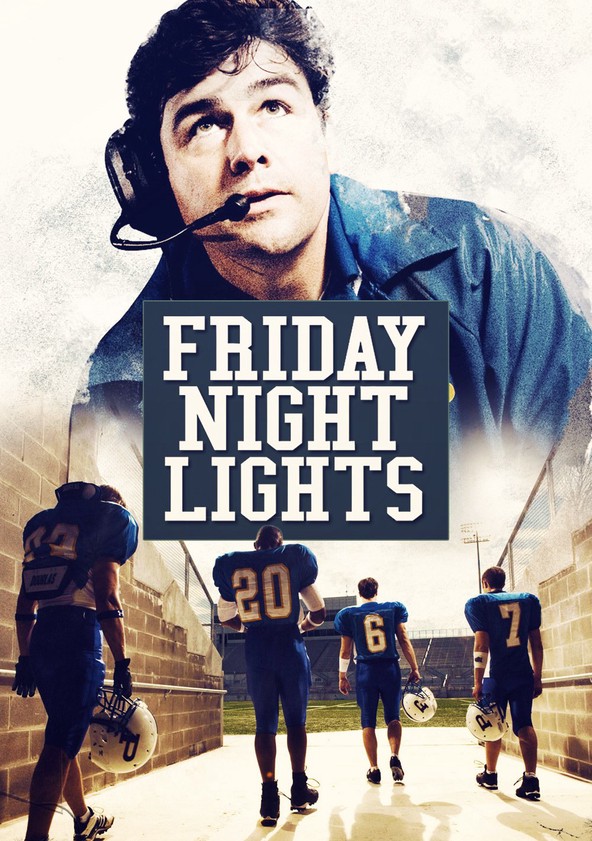
Friday Night Lights
Back in the 1960s when I attended high school in New Jersey, high school football was important, but as I would later realize when I moved to Texas in the 1970s, maybe just not that important. While we went to all the games and rooted for our friends on the field, outside of a pretty lame pep rally at school on Friday afternoon, there wasn’t that much more to it. And if you looked hard the next day, you probably could find the box score in the Sports pages of the local morning paper.
Although I was warned, I still could not believe it until I saw it myself, that in Texas, the local TV stations showed filmed highlights of high school football on game nights. It also seemed that locals talked more about their favorite high school team than they did about the Cowboys or the Oilers. Then there were these large football fields all over town where on Friday nights in the fall and winter you would get stuck in traffic and yes, see those stadium lights!
This Texas phenomenon was dubbed Friday Night Lights and first memorialized in a 1990 non-fiction book that chronicled a small-town team in Odessa, Texas. In 2004, it was adapted for the big screen and was later made into the fictionalized television series that ran five seasons from 2006-2011. After the television version captured my heart on several levels, I went back and watched the movie only to quit after about 15 minutes. It was no match for the television series, and I just could not let it spoil my love for what I had seen on the small screen.
It goes without saying that having a love for football will make Friday Night Lights a more enjoyable experience, but the show does more than just portray Texas high school football. It features one of the best television families of all time with Kyle Chandler and Connie Britton playing parents to both their own child as well as the high schoolers they coach and counsel, respectively.
The show includes just about everything those high school years were about in addition to football. You see all the ups and downs of being a teenager in the 1980s brought on by social pressures and challenging relationships and of course the inevitable interference from sex, drugs, and alcohol. In addition to the coach’s family, there are several other family dynamics in play with storylines to follow.
Then there’s the football! As far as fictionized sports go, the drama of each season as well as of individual games is expertly depicted creating both the excitement of victory and the heartbreak of defeat. The show also works in all the behind-the-scenes stuff very well including the interfering influence of the local community and the pressure felt by the players, some of whom dreamed of playing in college and beyond.
Like any good show, Friday Night Lights is packed with emotion and runs us through cycles of bringing us down with setbacks later lifting our spirits through redemption. It’s a roller coaster ride for sure and features many great young actors who shine throughout the series. The show also deserves acclaim for its filming technique where most scenes were shot in a single take giving it a more natural feel.
Although it never scored a touchdown in the ratings, Friday Night Lights was a critical success, and it eventually received some Emmy nods in its final two seasons. The show is a must if you like football but don’t mind remembering how tough it was to go through school. I’m glad I gave it a try because it was well worth it despite bringing back some old memories I’d rather forget.
PS – There is one quick personal story that is too memorable for me not to share. While in the middle of obsessively streaming this show on-line, I took a respite from the annual East Nashville Tomatofest event on a hot summer’s afternoon to watch an episode in a coffee shop. Can you imagine my surprise when I walked out the door and immediately came upon actress Connie Britton, then star of the Nashville TV series, walking by pushing a baby stroller!
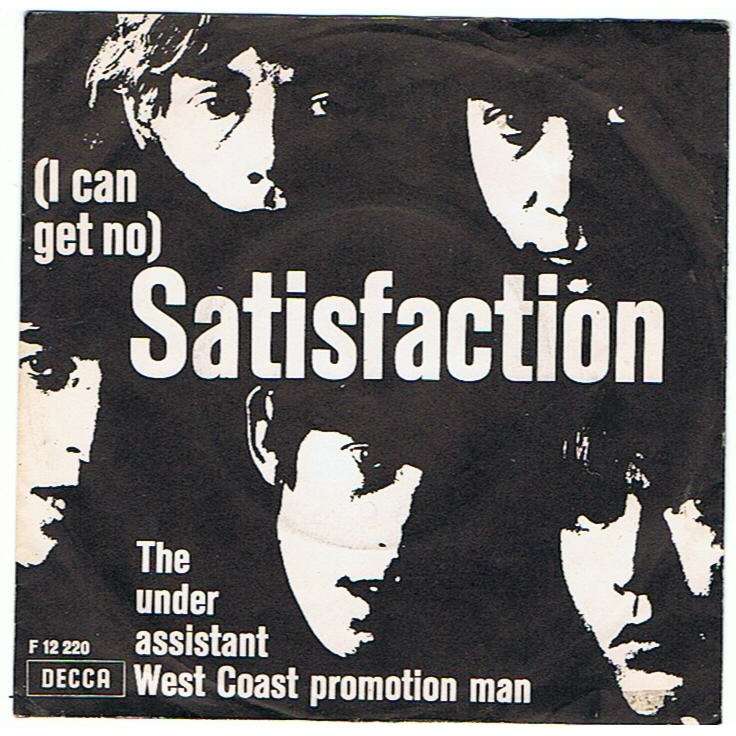
What if I told you this was one of The Rolling Stone’s largest selling singles in America? It was… but it was a package deal…the song on the other side of the single was Satisfaction.
Not the most well-known song by the Stones but a lot of Americans owned it. I bought the single Satisfaction in 1979 and flipped it over and found this oddly named likable song. This was the American B side to Satisfaction. Not exactly Day Tripper/We Can Work It Out but a likable single all the same. The song was released in 1965.
The song is about George Sherlock who was the London Records promotions man who accompanied the Stones to California. This was their response to having a chaperone who was a music executive in the early 60s. The Stones did not hide their disdain for him, giving him the nickname Surfer Baby, and they crystallized their feelings in the song.
The Stones recorded this in Chess studios in Chicago. This song was written by Mick Jagger and Keith Richards who were becoming a great songwriting team. They likely borrowed the lick from Buster Brown’s song Fannie Mae.
Fannie Mae peaked at #1 in the R&B Charts and #38 in the Billboard 100 in 1960. He received more attention in 1973 when his song “Fannie Mae” was included in the film American Graffiti Soundtrack.
Buster Brown – Fannie Mae
Well, I’m waiting at the bus stop in downtown L.A. Well, I’m waiting at the bus stop in downtown L.A. But I’d much rather be on a boardwalk on Broadway
Well, I’m sitting here thinkin’ just how sharp I am Well, I’m sitting here thinkin’ just how sharp I am I’m an under assistant west coast promo man
Well, I promo groupswhen they come into town Well, I promo groups when they come into town Well they laugh at my toupee, they’re sure to put me down
Well, I’m sitting here thinking just how sharp I am Yeah, I’m sitting here thinking just how sharp I am I’m a necessary talent behind every rock and roll band
Yeah, I’m sharp I’m really, really sharp I sure do earn my pay Sitting on the beach every day, yeah I’m real real sharp, yes I am I got a Corvette and a seersucker suit Yes, I have
Here comes the bus, uh oh I thought I had a dime Where’s my dime I know I have a dime somewhere I’m pretty sure
Burn Notice aired on the USA Network from 2007 to 2013, 111 episodes in all. It was created by Matt Nix, based in Miami, and was a single-camera show.
l-r: Sharon Gless, Bruce Campbell, Jeffrey Donovan, Gabrielle Anwar.
Michael Westen (Jeffrey Donovan) is a spy. Or he was, until, in the middle of an operation, he gets a call informing him that he’s been burned, identified as an unreliable or risky operative. This comes as he’s closing a deal with a group of Nigerians, who take him out, beat him and leave him for dead. He wakes up sometime later in a hotel, being tended to by his former girlfriend Fiona Glenanne (Gabrielle Anwar), a former member of the IRA, who tells him that he’s in Miami, his hometown.
At this point, he has nothing: no work history, no money, no contacts in the intelligence community; in essence, he doesn’t exist. He’s being surveilled constantly, and knows that, if he leaves Miami, he’ll be arrested. He needs to do something for money, and, more importantly, find out who burned him and why. He enlists the help of Sam Axe (Bruce Campbell), a retired operative and Michael’s best friend, in his pursuits. Sam has no money (he hits on older women to sustain himself) and is known as “the guy who knows a guy.” Both Michael (Army Rangers, Green Berets) and Sam (Navy SEAL) have a Special Forces background, which makes their work as private investigators a natural fit. Fiona invites herself to help them, and her contributions (mostly with firearms) are not insignificant.
Michael’s mother, Madeline (Sharon Gless), usually sits at home, smoking cigarettes and fretting about Michael and his brother Nate (Seth Peterson), but she occasionally gets involved in Michael’s business. One interesting example: when Michael needed a list of names from the DMV, he sent his mother in to get it, where she worked with (and became friends with) a clerk played by Tyne Daly (a reunion of the lead characters in the ’80’s series Cagney & Lacey).
In the fourth season, Michael inadvertently burns another agent, Jesse Porter (Coby Bell). The two eventually reconciled and Jesse joined the group for the remainder of the series.
The shows themselves relied on action and, more importantly, narration by Westen as to what he was doing and why he was dong it, as though he was narrating a training film for operatives. It was a show that had a lot of supporting characters (many of whom were only in one episode) and several interesting subplots. Michael does manage to work his way back into the CIA, only to be hunted, arrested, shot at, and bullied. His friends stood with him, his brother died helping him dispose of a particularly psychopathic agent, and Madeline makes the ultimate sacrifice for him at the end of the series.
There was a prequel movie made, Burn Notice: The Fall of Sam Axe, that aired toward the end of the series, that focused on Sam during his days as a SEAL. Tod Goldberg wrote five tie-in novels that were particularly good that you can probably get at your local used bookstore (that’s where I got mine).
I really enjoyed the series because the characters, as wild and off-the-wall as they seemed, were very relatable. You can feel the heat between Michael and Fiona as their relationship goes from “former lovers” to “lovers,” you can appreciate the friendship between Michael, Sam, and Jesse, and witness Maddie’s love for her sons and Michael’s friends. The series doesn’t seem to be running on TV, but relatively inexpensive used copies of the DVD’s are available on eBay.
I remember this song on the radio in the seventies. Of all places, it was played a lot at our local skating rink. It’s high on the list of my favorite songs. It wasn’t the best song written by Garcia and Hunter but I can listen to it at any time. Probably the first Dead…or close to a Dead song I ever heard. The song has stuck with me my entire life.
Jerry Garcia played most of the instruments on this album except drums and Dead drummer Bill Kreutzmann handled those. Sugaree was on the Garcia album released in 1972. He had teamed up with other players in the past but this was his first solo album. The song peaked at #94 on the Billboard 100 in 1972. I always liked the vague lyrics to this song. I first thought it was about death… you can take it a lot of ways.
The Grateful Dead did this live many times…Jerry Garcia and Robert Hunter wrote this song. The Dead made their reputation live. They got very little radio play and didn’t sell many albums, but they are one of the top-grossing concert acts of all time.
Like the Allman Brothers, they formed a family atmosphere with their crew and it extended to their audience. From the early Kool-Aid acid tests to later on allowing the audience to tape their shows drew their audience closer. They would later give them their own section to record in…while other bands like Led Zeppelin would send people to bust their tape recorder or head. Garcia commented:Well, my feelings are, the music is for the people…I mean after it leaves our instruments it’s of no value to us, ya know what I mean? it’s like, ya know…what good is it? So it might as well be taped, my feeling is that..and if people enjoy taping it and enjoy having the tapes to listen to, that’s real great. “
They never played the same show twice. They would take songs in different directions and Garcia has said that he couldn’t play something twice the same. He just wasn’t built like that. That made every show unique…not that every show was great. The Dead has admitted they had their share of bad ones.
On Deadheads following them around the country: “Well, it’s obviously very important to them. And more than that, it’s giving them an adventure. They have stories to tell. Like, “Remember that time we had to go all the way to Colorado and we had to hitchhike the last 400 miles because the VW broke down in Kansas.” Or something like that. Y’know what I mean? That’s giving them a whole common group of experiences which they can talk about. For a lot of people, going to Grateful Dead concerts is like bumping into a bunch of old friends.”
Bill Kreutzmann…if you get a chance read his book Deal: My Three Decades of Drumming, Dreams, and Drugs with the Grateful Dead. I covered it here a while back. It’s an education in the rock world…or the Dead world of the 60s through the 90s. If you are offended by drugs, sex, and great music…pass it by.
Robert Hunter: “Sugaree was written soon after I moved from the Garcia household to China Camp. People assume the idea was cadged from Elizabeth Cotten’s ‘Sugaree,’ but, in fact, the song was originally titled ‘Stingaree,’ which is a poisonous South Sea manta. The phrase ‘just don’t tell them that you know me’ was prompted by something said by an associate in my pre-Dead days when my destitute circumstances found me fraternizing with a gang of minor criminals. What he said, when departing, was: ‘Hold your mud and don’t mention my name.’
“Why change the title to ‘Sugaree’? Just thought it sounded better that way, made the addressee seem more hard-bitten to bear a sugar-coated name. The song, as I imagined it, is addressed to a pimp. And yes, I knew Libba’s song, and did indeed borrow the new name from her, suggested by the ‘Shake it’ refrain.”
Bill Kreutzmann Drummer for the Dead:The album, Garcia, was cut at Wally Heider Studios in July 1971 and released by Warner Brothers the following January. There are a lot of songs on there that became Grateful Dead mainstays, in addition to “Deal”—we’re talking about straight-up classics like “Sugaree,” “Loser,” and “The Wheel.” Also, “Bird Song” is on there, which, to this day, is one of my all-time favorite Dead songs and one of my absolute favorite songs to play live (along with “Dark Star” and “The Other One”).
When I want musicians I’m playing with to learn any of those songs, I give them the Garcia versions. They’re just so good. I had a really great time making that album. Dealing exclusively with Jerry was the most effortless thing in the world. I didn’t have to do anything other than be myself. And play.
Cocaine was our special guest throughout those recording sessions, but you’d never be able to tell because everything was very laid back. I have no idea how we were able to do that, because cocaine isn’t exactly known for its relaxing properties. Maybe it was just the dynamic between us that made it all so … easy.
Sugaree
When they come to take you down When they bring that wagon round When they come to call on you and drag your poor body down
Just one thing I ask of you Just one thing for me Please forget you knew my name My darlin Sugaree
Shake it, shake it Sugaree Just don’t tell them that you know me
You thought you was the cool fool Never could do no wrong Had everything sewed up tight How come you lay awake all night long?
Just one thing I ask of you Just one thing for me Please forget you knew my name My darlin Sugaree
Shake it, shake it Sugaree Just don’t tell them that you know me
You know in spite of all you gained you still have to stand out in the pouring rain One last voice is calling you and I guess it’s time you go
Just one thing I ask of you Just one thing for me Please forget you knew my name My darlin Sugaree
Shake it, shake it Sugaree Just don’t tell them that you know me
Shake it up now, Sugaree I’ll meet you at the Jubilee If that Jubilee don’t come Maybe I’ll meet you on the run
One thing I ask of you Just one thing for me Please forget you knew my name my darling Sugaree
Shake it, shake it Sugaree but don’t tell them that you know me Shake it, shake it Sugaree Just don’t tell ’em that you know me
One of the reasons I started to blog in the first place back in 2017 was to tell people about this British show. The storyline is perfect for me. Life On Mars was made in 2006-2007 so for me, this is brand new! This one caught my attention immediately. The series only has 16 episodes total so it doesn’t take a lot of your time. Unlike America…they don’t usually milk a program to its last drop.
If any of you are looking for something different…watch it!
This is the show I most wanted to post about other than the Twilight Zone. It has Time Travel and the early seventies…whats not to like?
Life on Mars is simply great. I’m talking about the BBC original version… NOT the American version. Sometimes I wonder why instead of remaking a series as great as this… why not just show the superior British version in America in prime time? Do they think that it would be impossible for people to understand British accents? Why remake something that is inferior to the original?
The plot is about a police officer (Sam Tyler) in 2006 who gets hit by a car and wakes up in 1973…he doesn’t know if he has traveled through time, gone mad, or is in a coma. When he wakes he is a cop (Detective Inspector) in 1973 and has to deal with a non PC world that is vastly different from where he just came from… People do things with feel more than data gathering etc.
Same begins to understand that the modern world he came from didn’t have everything right. There is room for hunches and gut feelings. Gene sees that some of Sam’s ways work well on cases. The continue to learn from each other but it takes a while. Gene is not above framing a guilty man with little evidence while Sam pleads with him not to. Sam also learns to trust his inner instinct instead of just by the numbers police work.
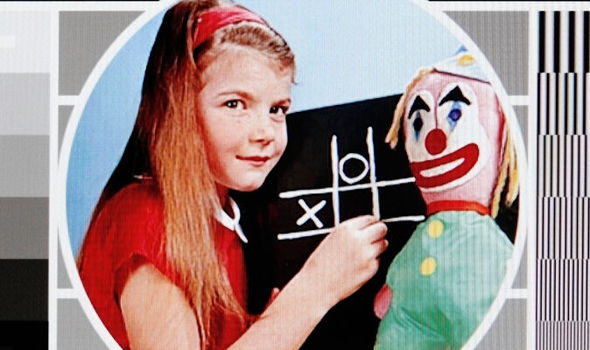
Sam had grown up in that neighborhood and he meets his mother and father but of course, they don’t see him as their son…he was only 4 years old at that time. None of the characters know he is from 2006. He only tells one person…Annie Cartwright and she doesn’t believe him. She thinks he received a concussion and this is a side effect. When Sam watches TV by himself…sometimes the people on a show will know who he is and try to communicate. The famous UK Test Card Girl will also come to life.
They get the era down almost perfectly. The soundtrack is outstanding. The song in which the show is named is my favorite David Bowie song. I found music in this show that I had never known about…like Atomic Rooster’s The Devil’s Answer…just to pick out one. It has one of the best soundtracks I’ve heard. Plus I never get tired of hearing the title track.
They asked Paul McCartney if they could use Live and Let Die and he flatly refused. They sent him a few episodes to look at…he agreed instantly after that. The sequence to Live and Let Die is great. This show borrowed heavily from the UK 1970s Cop show The Sweeney…which is a great show itself.
They made a sequel later on called Ashes To Ashes about a modern female police officer that gets trapped in the 80s with an older version of the original characters except for Sam and Annie. I would recommend watching that one also. I know of two bloggers (Hanspostcard and Lisa) who have watched this show because I recommended it…they both seemed to have liked it. Just DONT get the American version…it’s very cheesy and ends bad.
You can watch this show on Amazon Prime.
For fans of the show… this was announced in March of 2022.
Life on Mars co-creator Matthew Graham has confirmed that he and his longtime collaborator Ashley Pharoah have scripted the pilot episode to a proposed sequel series.
News broke in 2020 that the team were developing a follow-up titled Lazarus, which would tie up the story that began in Life on Mars and continued in Ashes to Ashes.
The Characters are:
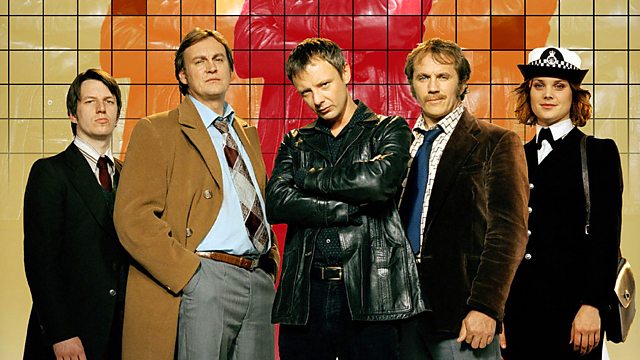
Chief Inspector Gene Hunt (Philip Glenister): – One of the best tv characters…EVER. Politically Incorrect to the core but a decent human being although he doesn’t always show it. He is Sam’s superior and although he won’t admit it much…he does respect Sam and Sam begrudgingly respects him. He does police work the old way…by feeling and hunches and it irritates Sam to no end. One of my favorite lines by him is “You are surrounded by armed bastards.” and “Your son, Mrs Bathurst, was a cold-hearted killer. And if there is a hell, he’s going there to be poked up the arse with sharp fiery sticks, forever and ever, Amen!”
The interplay between Gene Hunt and his crew is great:
Gene Hunt: “I think you’ve forgotten who you’re talking to.” Sam Tyler: “An overweight, over-the-hill, nicotine-stained, borderline-alcoholic homophobe with a superiority complex and an unhealthy obsession with male bonding?” Gene Hunt: “You make that sound like a bad thing.”
Chris Skelton: “I wonder what killed him?” Gene Hunt: “That would be the bloody enormous hole in his chest where the bullet went in!”
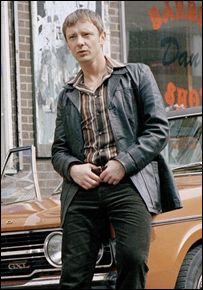
Sam Tyler (John Simm): A modern man stuck in 1973 and he must work on police cases without a computer or data. He learns from Gene also…he doesn’t want to admit it but he finds out that the old hunches work out at times more than the data gathering. Both Sam and Gene need each other and when they are not fighting…they compliment each other rather well.
Annie Cartwright (Liz White): A female in police at a time where women were often ignored, underused, undermined, and taken for granted. Annie is a bright woman, she studied for a psychology degree, wants to help people, deals with sexism well, has to be wary of what she says in front of the men, and leaves the situation otherwise she may get sacked. She slowly gets accepted by the team as a detective and helps solve a lot of cases. She ended up being one of my favorite characters.
Ray Carling (Dean Andrews): Ray is a tough-minded man who prefers brutality and corruption to do things Sam’s way. He is the one against Sam the most. Carling had applied for promotion to DI (Detective Inspector) that Sam got.
Chris Skelton (Marshall Lancaster): Chris is extremely naive and is learning on the job. He is generally regarded as a waste of space by Hunt throughout both series and plays only minor roles in the storylines that unfold. Skelton finally proves himself by saving Hunt, Tyler, and Annie Cartwright from death when he shoots and kills a criminal at point-blank range.
This is a good George Harrison song off of Revolver. This song held the distinction of the first Beatles song where the bass was overdubbed after recording. it’s a great opening riff…a very underrated riff.
The first time I heard the song…what jumped out at me was the alarming flat-ninth notes played by Paul on the piano. It jars you but not in a bad way. The song has a strange structure and The Beatles had some trouble recording it. The timing was hard to nail down. Even artists that covered it later…one being Ted Nugent had a lot of trouble recording it because he kept jumping the time up.
Paul McCartney: “This track proved very difficult for us to learn, I kept on getting it wrong, because it was written in a very odd way. It wasn’t 4/4 or waltz time or anything. Then I realized that it was regularly irregular, and, after that, we soon worked it out.”
Three Harrison compositions on a single Beatles album was unheard of at that time. George’s quality started to rise during this period.
With the sessions for the Revolver album winding down, The Beatles only needing four more songs to complete the album, George offered up his third composition for recording. He actually offered 4…his other song Isn’t It A Pity was rejected. I’m sure though that the song wasn’t the seven-minute opus we know today at that time.
I always thought with a little more work on this song…it could have been a single. It has the element of edgy power pop. Revolver had everything you could ask for from a band. Revolver peaked at #1 in the US, Canada, and the UK in 1966.
George Harrison:“The mind is the thing that hops about telling us to do this and do that. What we need is to lose the mind.”
George Harrison: “About the avalancheof thoughts that are so hard to write down or say or transmit.”
George Harrison:“All I needed to do was keep on writing and maybe eventually I would write something good,” George Harrison once stated. “It’s relativity. It did, however, provide me with an occupation.”
George Martin:“I think the trouble with George was that he was never treated on the same level as having the same quality of songwriting, by anyone – by John, by Paul or by me, I’m as guilty in that respect. I was the guy who used to say: ‘If he’s got a song, we’ll let him have it on the album’ – very condescendingly. I know he must have felt really bad about that…George was a loner and I’m afraid that was made the worse by the three of us. I’m sorry about that now.”
I Want To Tell You
Iwant to tell you My head is filled with things to say When you’re here All those words they seem to slip away
When I get near you The games begin to drag me down It’s all right I’ll make you maybe next time around
But if I seem to act unkind It’s only me, it’s not my mind That is confusing things I want to tell you I feel hung up and I don’t know why I don’t mind I could wait forever, I’ve got time
Sometimes I wish I knew you well Then I could speak my mind and tell Maybe you’d understand
I want to tell you I feel hung up and I don’t know why I don’t mind I could wait forever, I’ve got time I’ve got time I’ve got time
Welcome to the Hanspostcard TV Draft. I hope you will enjoy it! Today’s post was written by Dave at https://soundday.wordpress.com/
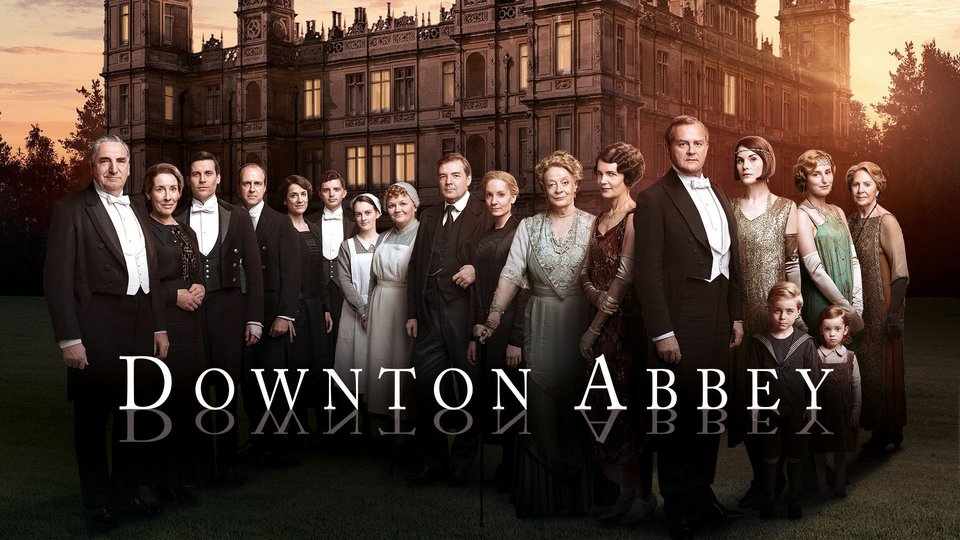
The Brits seem to have a knack for making high-quality TV shows that stand the test of time. Max already looked at one of the funniest comedies of all-time, Fawlty Towers, and for my next pick I look at a British drama that I, like most of North America, fell in love with unexpectedly – Downton Abbey. Like Fawlty Towers, part of their secret of success was for it to not overstay its welcome, nor rush out vast quantities of inferior episodes.
When Downton Abbey first appeared (2011 in North America, a few months after its debut in the UK), there was quite a buzz about it. At the time, my sweetie and I were still a long-distance relationship and she talked about it enthusiastically every week; it had become her first “must-see” show since Friends ended, I think. But despite her great reviews and descriptions of it being believable and full of surprises, I was a bit skeptical. After all, it was basically a story about British nobility set a hundred years ago. That didn’t grab my fancy right away. Anyhow, when we ended up together, the series was midway through its run, and she wanted to keep watching, obviously. After a couple of episodes, I was not only hooked, but needed to go back to the start to find out how they arrived at their present “point B” – see what the “point A” was in effect. I’m very glad I did. It’s become one of my all-time favorite shows, and right now, she and I are trying to watch the series together again before it disappears off Netflix next week (I won’t mind buying a season or two on DVD since we likely won’t run through all six years of it before June.)
For those who somehow aren’t at least vaguely aware of the show (which might be difficult in this day and age given the media hype about the subsequent movies of it which have been made), Downton Abbey looks at one big British noble family in the early-20th Century, the Crawleys (who through the eccentricities of British protocol are also referred to as “Granthams”). I’m no expert on nobility, but to simplify, it would be fair to suggest they are like a lower-end royal family, living in a huge, stately erstwhile castle (the namesake of the show) on a huge estate, with a small village being part of their holdings. However, they’re also responsible for the upkeep of the land and village, so it’s not all a champagne and caviar carefree life for the Crawleys. The show involves the lives of their family, as well as the servants who work for them in the Abbey – a cast of cooks, maids, butlers, footmen and so on who are every bit as interesting as the landowners. And yes, it’s better than that sounds!
The Crawleys are headed by Robert, played by veteran actor Hugh Bonneville who seemed to be born for the part, a middle-aged, traditional man who is dubbed “Lord Grantham.” He’s married to an American though, Cora, who brought a good deal of cash…and an air of comparative casualness… to the estate. They had three daughters, eldest Mary, middle Edith and youngest Sybil, who were all in their late teens or early-20s when the show began and each quite a handful for their parents in their own way. And the scene-stealer, and probably the real power in the family, Robert’s mother, termed the “Dowager”, played with some of the best lines in the entire series by superstar of the British screen, Maggie Smith.
Meanwhile, “downstairs”, the household staff is run with a stern frown and hand from Carson, the aging and ever-so traditional butler; and Mrs. Hughes, the softer and slightly more progressive head of the female staff. Under them are a host of various positions – head cook Mrs. Patmore, her assistant cooks, scullery maids, the conniving Mrs. O’Brien, the head maid and her bedroom maids, ladies’ maids, footmen and valets. Among the most interesting of them are Mr. Bates and Anna; Lord Grantham’s personal valet and the daughters maid and attendant. Bates comes in with a limp and a dignity second only to Carson…and the combination of impeccable discretion and devotion to the job paired with a murky background and a vaguely sinister air around him. Bates seems loyal to a fault but also a man you don’t want to get on the wrong side of. Robert once notes to Carson when they hear a rumor Bates had stolen silverware on another job, “I could more imagine Bates an assasin than a thief.” He and Anna, sweet but sharing his devotion to the job, fall in love…with complications.
The show was created by Julian Fellowes, who’d won an Academy Award before for Best Screenplay for the loosely-similar themed Gosford Park. A stickler for detail, he hired a member of the Royal Family’s household staff (a historian in himself) as an advisor. As one actor, a minor character in the show pointed out “there were definitely a few times when I was told to sit differently or take my hands out of my pockets. And every meal, we’re reminded ‘You shouldn’t hold a fork this way’.” If an earl’s daughter had to know which fork and spoon to use for every course, and how to hold them precisely, so too did the Downton actors portraying them. One of the few complaints thrown at the show is that most of the staunchly Church Of England family seem somewhat anti-Catholic and the very few Black people who appear are tolerated, barely, only in a role as entertainers. As the Washington Post put it, Lord Grantham is “xenophobic…but at least historically accurate.” There were coaches for accents, and historians deciding on accurate costumes for all, staff and nobility alike.
Fellowes’ attention to detail, as well as glorious cinematography, elegant sets and English countryside scenery, helped make the show popular. How popular? Well, in Britain, where it ran on ITV, during its third and fourth seasons, it averaged nearly 12 million viewers a week, or one in five adults in the land. Over here, despite being on PBS, it drew over five milllion a week, their biggest success since Ken Burns’ Civil War series. Since then it’s been seen in over 200 countries, sold in the millions on DVD and been a big draw for Netflix, besides launching the spinoff movies.
But the authenticity was only one of the minor selling points that make it a must-see. (The following few paragraphs do contain a few spoilers, beware if you haven’t seen the whole series.) There were many others, many having to do with the universal themes it depicts. Fashions, slang, music, even common values change, but things like workplace backstabbing, marital discord and problematic children will always be with ut. They might have been British, and living a century ago in either privilege (the Crawley’s and their friends) or servitude (the staff), but there was lots in their lot we can still relate to. Like the problematic kids.
Early on in the series, Lady Mary, all of 22 or 23 at the time, is seduced by a handsome Turkish ambassador visiting the estate…who happens to have the misfortune of dying whilst “with” her in her bed. A scandal like that could bring shame on the entire family and render her “un-marriageable”…so of course her jealous younger sister Edith sends off a letter spilling the beans to the dead man’s embassy. Sybil, the youngest is arguably the prettiest and definitely the kindest of the girls, but also a rebel who wants to work, vote and eventually falls for the family’s driver, a servant and worse, a common Irishman. The family has to reconcile whether their love for doing things properly – bluebloods marrying bluebloods – is more important than their love for their daughter and her spirit.
Robert and Cora have to deal with ups and downs in their marriage, and things like downsizing. So much an unwelcome catch phrase of the past couple of decades, even then it became a necessity in their household as revenue dwindles while staff numbers kept rising on the estate. The at times toxic workplace environment is all too familiar. Footmen scheme against each other, the kitchen maids waste time trying to attract the footmen who inevitably seem interested in someone else, some sneak out to smoke and gossip on the clock…change the décor and background music and it could believably be a modern hotel or office. Carson at times has to hold his nose and be pragmatic and advance less-qualified people just to quell in-house staff battles and keep the peace.
And of course, the world is changing. It was changing in 1922 just as it is in 2022. During Season 2, World War I is raging and Lord Grantham’s son-in-law and heir to the estate is in the trenches with a previously disliked footman from his estate. Then the Spanish flu wipes out people on the estate as well as in the town. Sadly, when the show first came out around 2013, many assumed pandemics were as much ancient history as the hand-cranked phonographs they listened to music in Downton with. Robert and Carson hate change and have trouble dealing with the reality of the new world, brought to their doors by newcomers like Matthew (the middle-class lawyer who ends up marrying Mary) and worse, Branson, the Irish chauffeur reluctantly brought into the family fold. Most of the female staff seem a little more pragmatic and reluctantly open to the inevitable. Even telephones are viewed with suspicion – “is this an instrument of communication or torture?” the Dowager scowls while looking at the household’s first one, noticing the young people’s fascination with it.
Speaking of which, the old Dowager had some of the most memorable lines of this or any other series of late; the master of the subtle insult and way of putting things in proportion despite her displeasure – when the man dies in Mary’s bed, she notes “it could only happen to a foreigner. No Enlgishman would dream of dying in someone else’s house.” When Cora smiles at her after one of her other comments and says “I’ll take that as a compliment,” the dowager sniffs “then I must have said it wrong.” Little wonder she won three Emmys on her own for the Best Supporting Actress role in it.
But most importantly, it was well-written and the characters realistic. Rather like All in the Family that Paula covered this week, it was fairly written and the characters, rich and poor alike had both redeeming and negative traits…although some had more of one than the other! And they’re full of surprises. Bates can’t stand Thomas, the footman who has tried to force him out (to make room for his own promotion) by trying to implicate him in some household thefts. The valet threatens to punch Thomas’ pearly teeth out the back of his head when he toys with a kitchen maid he has no interest in. But when another footman tries to blackmail the household and force Thomas out without any reference for the “crime” of being gay and not concealing it well enough, it’s Bates who rallies to his defence. Few saw that coming. He’d just spent time in prison for a crime he’d not committed but was set up for and feels for others who are being punished for things for which they’re not guilty, and that overrides his personal dislike for Thomas. As the years go by, we see the characters grow (except for the unfortunate ones killed off along the way – another factor in its unique success,Fellowes wasn’t afraid of rocking the boat and eliminating even popular characters…did we mention Sybil was the most popular of the daughters?) – and weather storms they face, dealing with a new world they’re not quite prepared for. Which might make them very much like us and those we know, work with and love.
A history lesson, well-written, well-acted, well-shot, and with enough cliffhangers and unexpected twists to make it a roller-coaster. No wonder the show, through its six seasons and 52 episodes, won at least 15 Emmys, was named by Elle the “best TV show” around and has resulted in two popular big screen movies so far (by the way, I saw the first, and while a perfectly nice-looking and interesting film, it was a bit pedestrian and lacked much of the intrigue of the TV series.)
A great show, and a great reminder to me that sometimes great things come in unexpected places.
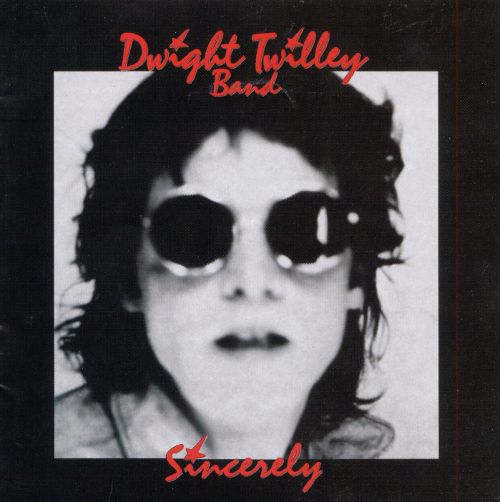
You know…I haven’t been living up to my page’s name. I’ve had very little power pop on powerpop.blog lately. I hope to solve that coming up. Here is a song I’ve always liked from the mid-seventies. Dwight Twilley is one of those artists who had great songs but only had 2 hits in his career…and this is one of them.
This is a great power pop song from 1975. It peaked at #16 in 1975 on the Billboard 100. The band was formed by Dwight Twilley and Phil Seymour. I always thought Twilley should have been more popular.
This was his first single from the album Sincerely. The song was released in 1975 and it did quite well. There was one big problem… the label he was on was Leon Russell’s Shelter Records and they were barely making it. Shelter Records could not release the album until a year after this single was out which killed the momentum of the single.
Shelter Records was formed by Leon Russell and Denny Cordell in 1969 and ran until 1981 but Leon Russell left in 1976 as it was falling apart. Tom Petty was also part of the label for a while. It seems like many power pop artists are accompained by a story similiar to this.
Dwight Twilley: We thought we were indestructible. And we were proven wrong really quick! We had so many problems right from the get-go. The album didn’t even come out until a year after “I’m On Fire,” and it would have gone gold if it had come out then. They believed in it so much they were going to release two more singles before it came out. They released the second single and then the company went under.
Dwight Twilley on knowing Leon Russell: “I learned a lot from Leon. We were a Tulsa-based band when we were originally signed, and Leon lived here. And we ended up being signed to his label. A lot of people thought that Leon was the driving force behind it. But we didn’t really meet Leon until after we’d had our hit single ‘I’m On Fire.’ And I guess the surprising thing was just what a kind man he was, and how generous he was. He invited us into his own home studio and had us recording in his 40-track studio. And for little kids who six months ago had only been in a 4-track studio, that was a big deal. He was very kind and super talented, and he really didn’t say much. Just by following and by example we could see some of the things that he did that were just amazing. And I think he’s a terrific talent. I’m really proud of the way that he has sustained, that he’s out there still doing it.”
I’m On Fire
Got your lady on the line Got your name on the cover Though your friends are ninety-nine Honey you ain’t got no lover And you ain’t, you ain’t, you ain’t got no lover And you ain’t, you ain’t, you ain’t got no other
I remember the feelin’ that I could be free Now I know it could never ever be me ‘Cause I’m on fire Got myself on fire
Got your joker on the table You’ve been told from time to time I’ll be willin’, I’ll be able You could read between the lines
But you ain’t, you ain’t, you ain’t got no lover, lover, lover And you ain’t, you ain’t, you ain’t got no other
I remember the feelin’ that I could be free Now I know it could never ever be me ‘Cause I’m on fire I’m-a I’m on fire
But you ain’t, you ain’t, you ain’t got no lover, lover, lover, lover And you ain’t, you ain’t, you ain’t got no other, other, other, other And you ain’t, you ain’t, you ain’t got no lover, lover, lover
I’m on fire I’m on fire (and you ain’t, you ain’t, you ain’t got no lover, lover, lover) I’m on fire (lover, lover, lover, lover) I’m on fire (lover, lover, lover)
Welcome to the Hanspostcard TV Draft. I hope you will enjoy it! Today’s post was written by Lisa at https://tao-talk.com/
l.-r.: Julian, Bubbles, Ricky
I know that originally I was going to write about the mixed martial arts series, Kingdom, but it had too much of a Ray Donovan vibe, so I decided to write about Trailer Park Boys, a beloved series that I haven’t watched all episodes of but have watched dozens of them. The series started out with a movie pilot first in 1999, where the boys are introduced. Between 2001 and 2018, twelve seasons were made. Set mostly in Nova Scotia, Canada with also some in New Brunswick; but to be honest it doesn’t matter what geographical location it is set at because what matters is that it is set a trailer park. There is a wealth of very cool trivia on the show at imdb. This is one piece about “the” trailer park :
The first 4 seasons were filmed in different trailer parks in Nova Scotia, Canada. The pilot was filmed in Spryfield, Nova Scotia. The first season was filmed in Sackville, the second in Dartmouth, the third in Lakeside, the fourth in Dartmouth again (in a different park than the second). For the Christmas special and season 5 and onward, they have used a park they purchased in Dartmouth.
OK, where do I begin to talk about the varied residents of the fictional Sunnyvale Trailer Park?It’s probably best to introduce the three main characters, Ricky, Julian, and Bubbles, best friends from way back, all of them pretty shiftless petty criminals who love to smoke weed and scheme their harebrained schemes. Around them revolves an endlessly entertaining cast of characters. You wouldn’t think life in Sunnyvale could sustain a pilot movie and twelve seasons, but the comedic genius of creator, Mike Clatterburg, and through the comedic skills of the cast, its shine has not only been sustained but rebooted for new audiences to love and laugh with when Netflix added it to the roster.
Characters
John Paul Tremblay plays Julian. Dark hair, handsome, and always carrying a glass of rum and coke with clinking ice. He often comes up with ideas that sound like they might work if he had a crew that wasn’t so bat-sh*t crazy in their various ways. Inevitably, the plan goes awry, and if he and the crew are lucky all they get out of it is caught. Several times though, Julian is sent back to prison. He knows his boys will wait for him to get things going again once he’s out. Julian is fairly unlucky in love. He’s tried a few relationships but they aren’t sustained.
Rob Wells plays Ricky. Ricky is hands-down the most outrageous and shifty one of the three guys. Ricky has a potty mouth, and I’ll admit it took me a bit to get used to his profanity. Another bit of trivia from imdb about that:
Throughout Season 1 to Season 7, including the Christmas Special, but not the movies, the word “fuck” is said a total of 1,284 times (averaging 46 times an episode). The word “shit” is said a total of 967 times (averaging 31 an episode). From all uses of the words, 74.3% of the time, it is said from Ricky.
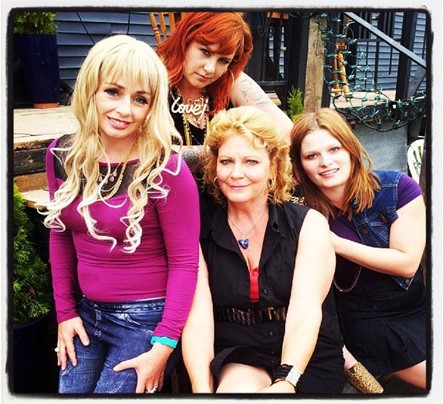
l.-r.: Lucy, Sarah (in the back,) Mrs. Leahy, and Trinity
Ricky is the only one of the three that has a family. His on again, off again girlfriend, Lucy, played by Lucy Decoutere, lives most of time with her friend, Sarah, played by Sarah Dunsworth, who is always trying to talk Lucy out of having anything to do with Ricky; yet the chemistry is strong between Ricky and Lucy and they always keep getting back with each other, if only for a night. Ricky and Lucy have a daughter, Trinity, played by Jeanna Harrison. Ricky adores Trinity and makes it his mission – when he’s not scheming with his buddies or in prison – to teach Trinity the ropes about life in the trailer park. The things he teaches her are wildly inappropriate for a child or anyone who hopes to lead a law-abiding lifestyle. Ricky’s dad, Ray, played by Barrie Dunn, also lives in the park. Ray is in a wheelchair and collects disability checks from the government, but at some point you begin to wonder just how disabled Ray is. Another aspect of Ricky is his educational aspiration. Ricky has only made it to Grade 6, and his dream is to go on and get his Grade 7. Finally, Ricky is a smooth talker extraordinaire. You will be amazed at the things Ricky is able to talk his way out of!
Mike Smith plays Bubbles. I think part of the reason Bubbles has the nickname he does is his thick coke bottle bottom glasses which look like big bubbles over his eyes; the glasses give the effect of blowing his eyes way out of proportion to his face through magnification. He has a particularly humorous and endearing way of talking. Bubbles lives in a garden shed in somebody’s yard and has two great passions: shopping carts and kitties. He nabs the beat up carts that have rolled into the gully from the edge of the mall parking lot. I know he fixes them up and I think he sells them back to the mall. Bubbles is a soft touch for kittens and has turned his shed into both a sanctuary and a shrine to them. Bubbles has a strict moral sense about things and often speaks the voice of reason when it comes to some of Ricky and Julian’s schemes. Even so, he can be convinced to bend a little, and when he’s in, he’s in all the way. His love for his buddies is consistent and unshakable. In a later season, we meet Bubbles’ alter ego in the form of wise-cracking and cruel ventriloquist puppet named Conky.
Now that the three “boys” and a few others are introduced, it is time to meet some of the other residents of the park.
Randy and Mr. Jim Leahy
John Dunsworth (Sarah’s real-life dad) plays Mr. Jim Leahy. Jim is married to the owner of Sunnyvale, Mrs. Barb Leahy, played by Shelley Thompson. Jim is a “whole hog” functional alcoholic that is seldom, if-ever, sober. Jim is the manager of the trailer park, who is ever-vigilant about trying to bust the boys while they are carrying out their schemes, but is also extremely unsuccessful in doing so. They are just too wily for him. Jim is also gay. Jim’s somewhat younger lover is Randy, played by Patrick Roach. Randy has been a gigolo in the past, regardless of gender. He’s an opportunist. Randy’s trademark is white pants that ride under his big beer gut, which is always in view as Randy seldom (never?) wears a shirt. I can’t remember if Randy drinks, and it seems he’s trying to get Jim to slow down. Randy gets very sexually adventurous with Mr. Leahy. He also acts as Mr. Leahy’s joined-at-the-hip (in more ways than one!) sidekick in trying to bust the boys. When Mrs. Leahy catches on about Jim and Randy, they break up and she starts a relationship with Sam, played by Sam Tarasco. Sam is a veterinarian that can be handy to patch the boys up when they get into scrapes. Sam likes to grill out and have picnics.
Cory and Trevor
Just when you think Ricky, Julian, and Bubbles have reached the bottom (or is it the top?) of the trailer park food chain, there is Cory, played by Cory Bowles, and Trevor, played by Michael Jackson. Cory and Trevor idolize Ricky and Julian and are on stand-by to assist in carrying out scams with them. Most of the time they don’t question their roles; yet even when something tells them it’s not a good idea, it doesn’t take much convincing to get their help.
Tyrone and J-Roc
Aspiring rappers J-Roc, played by Jonathan Torrens and Tyrone, played by Tyrone Parsons, have their own entrepreneurial side schemes going on which are usually separate from the boys’ but sometimes they intersect.
Last but not least are law enforcement who keep getting called by Mr. Leahy, who used to be a police officer and so has somewhat of an “in” with them, to investigate the crimes the boys are involved with, but again, the boys are too slick for the law. Officer George Green, played by George Green is one; Detective Ted Johnson, played by Jim Swansburg, is another.
The format of the show is that a camera crew follows the boys around to document what living in a trailer park is like. Without going into the nitty gritty of the plots, now that you’ve met the characters you can imagine what kinds of hilarious plots they get engaged in. Although the show clearly is making fun of people who live in trailer parks, and with the folks in this show, they are definitely worthy of being made fun of, you also get to love each and every one of them.
I don’t think you can find these DVDs at your local library. They are being streamed on Netflix. You can probably find some out on YouTube. They are well-worth hunting down.
Genre: Comedy Grade: 10 Etc.: Warning: extreme profanity; drug (weed) and crime-oriented themes; LGBTQIA+ friendly; some crazy gun play Awards: 4 wins and 22 nominations
Warning: lots of profanity in the video
Sources: imdb trivia
Julian, Bubbles, Ricky image
Lucy, Sarah, Mrs. Leahy, Trinity image
Randy and Mr. Leahy image
Many people posted this song during the lockdown and I can see why.
I always liked the song and understood that isolation doesn’t equate to loneliness. You can be in a crowd of people and yet feel isolated or alone. You can be physically isolated from others yet still feel very much connected to others.
The bass player on this track was Klaus Voormann, who was a friend of the Beatles from their Hamburg days. He was also an artist… he is the artist who designed the cover of Revolver. Ringo Starr also lends a hand with drums on this track.
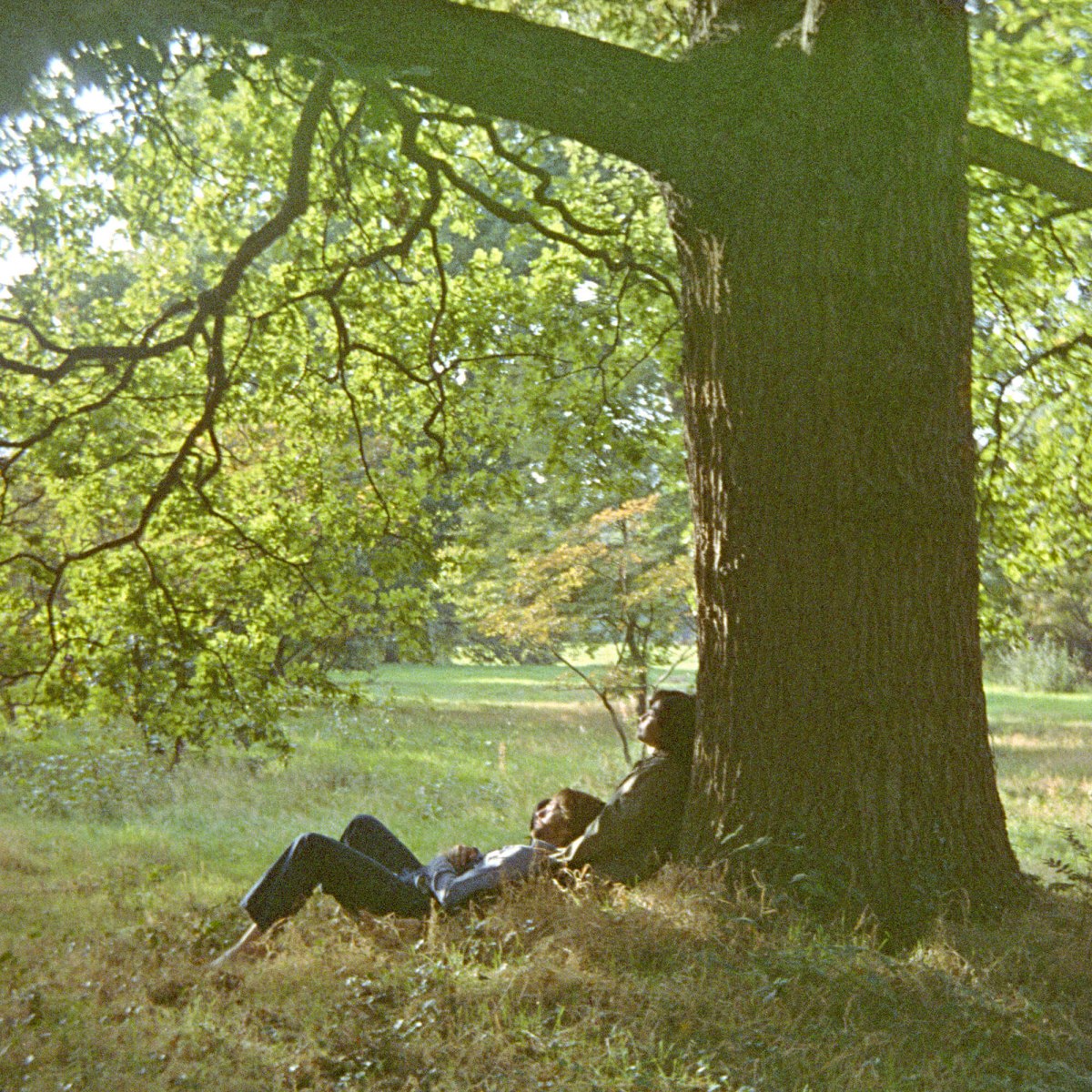
The song was released on his true debut album John Lennon/Plastic Ono Band in 1970. Arguably one of if not his best album. Like Paul’s debut this one was not big in production but unlike Pauls…this album was not light pop songs. You can feel John releasing his inner feelings for everyone to see on this album. Not an album to play to get a party going. You can hear John’s disillusionment with life, fame, and his three former bandmates.
This was during the time John Lennon went to see Doctor Arthur Janov in scream therapy. A way to bare his soul for his feelings like his mom that was killed when he was a teenager.
John Lennon:‘Isolation’ and ‘Hold On John’, they’re the rough remixes. I just remixed them that night on seven-and-a-half [inches per second tape] to take them home to see what else I was going to do with them. And then I didn’t really, I didn’t even put them onto fifteen [IPS], so the quality is a bit hissy on ’em too. By the time I’d done everything, I started listening. I found out it’s better that, with ‘Instant Karma’ and other things, you remix it right away that night. I’d known that before, but never followed it through.
I usually don’t pay much attention to covers. I ignore actors turn singers but I did find a very good version of this song out there. In 2020 Jeff Beck and Johnny Depp recorded this song and Beck’s guitar work is great. Depp also does the vocals justice in this.
Isolation
People say we got it made Don’t they know we’re so afraid Isolation We’re afraid to be alone Everybody got to have a home Isolation
Just a boy and a little girl Trying to change the whole wide world Isolation The world is just a little town Everybody trying to put us down Isolation
I don’t expect you, to understand After you caused so much pain But then again, you’re not to blame You’re just a human, a victim of the insane
We’re afraid of everyone Afraid of the sun Isolation The sun will never disappear But the world may not have many years Isolation
Welcome to the Hanspostcard TV Draft. I hope you will enjoy it! Today’s post was written by Paula at http://paulalight.com
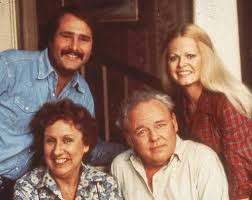
I’m extra-excited to do this write-up because not only was All in the Family one of my favorite shows way back when, but it’s also one of the few that stands the test of time. So many other shows that I enjoyed in my youth are impossible for me to watch now because they are so full of sexism and jokes that just fall flat. AITF was unique in that it took the common bigotries and stuffed them into the character of Archie Bunker so the rest of us could see how ridiculous they were. (Sadly, many of them persist regardless.) But in his way, Archie was lovable, and he did end up changing, especially after his wife Edith died and he went on to the spin-off Archie Bunker’s Place.
AITF was a sitcom created by Norman Lear. It debuted on CBS on January 12, 1971 (over 50 years ago!) and ran for nine seasons. The show was based on a British sitcom Till Death Us Do Part, and it was produced by Norman Lear and Bud Yorkin. Carroll O’Connor played the main character Archie Bunker, Jean Stapleton played his wife Edith, Sally Struthers played their daughter Gloria, and Rob Reiner played Gloria’s husband Michael Stivic. Most people will recognize the opening theme song “Those Were the Days,” which Archie and Edith warbled off-key, thus beginning each episode on a funny note. [My source for this post is Wikipedia.]
The writing touched upon many issues that had previously been avoided on network comedy: abortion, anti-Semitism, homosexuality, rape, religion, cancer, menopause, etc. Due to its bravery in tackling these topics, AITF has been regarded as one of the greatest series in history. It also went from meh Nielsen ratings in the first season to No. 1 during summer reruns and afterward. The Writers Guild of America ranked it as the fourth-best written TV series ever.
The premise of the show is that Archie, a middle-aged working-class white man in Queens, NY, has the perpetual grumps toward his family, his neighbors, and the world in general. He is narrow-minded and conservative, and he views people strictly through his prejudices and stereotypes. One of the most frequent targets of his snide asides is his son-in-law Michael, a graduate student with a Polish background. Archie calls him “Meathead,” and Michael earnestly tries to enlighten Archie about new cultural ideas resulting in much hilarity for the audience.
To save money, the Stivics live with the Bunkers, so there are plenty of opportunities for the two men to butt heads, over topics major and minor.
Gloria is often exasperated with their arguments, but since she’s a feminist, she’ll take a stand on issues relating to women’s rights. She also gets particularly incensed at the inconsiderate way Archie treats her mom. For her part, Edith tries to keep the peace in their home by ignoring Archie’s nasty comments.
Another frequent target of Archie’s snark is a family of black neighbors, the Jeffersons. George Jefferson (played by Sherman Hemsley) is hilarious in his own right and ends up successful and wealthy enough to move out of the neighborhood to a posh place. The Jeffersons is a spin-off of AITF (there are many!), with George and Louise living in a luxury building (kinda similar to the one in Only Murders!).
If you’ve never seen AITF, I highly recommend checking out a few eps. Personally, I never get tired of stumbling across a clip here or there. This is one of my favorites, and it never fails to make me laugh.
~*~
Paula Light is a poet, novelist, flash fiction fan, cupcake connoisseur, mom, grandma, cat mommy, etc. Her blog can be found at http://paulalight.com.
I always liked trios and the Canadian band Triumph was a great one. I’ve come to appreciate Rik Emmett’s guitar playing more and more through the years. Whenever I post a Canadian band…I can’t help but think of my Canadian friends Dave and Deke. Deke has this review of the 40th anniversary of Allied Forces, the album this song was on. Deke also hosts a video show Scotch on the Rocks with some great authors, musicians, producers, and everyone else in between. Check it out if you can.
You know this song has some age to it when a person in the song is waiting for their favorite DJ to play their favorite song. Those days have been gone for a long time with streaming music, unfortunately…but the spirit remains. This song makes me feel 16 again listening to it.
This song was written by the band… drummer Gil Moore, bassist/keyboard Mike Levine, and guitar/singer Rik Emmett. Along with Rush and Saga, Triumph was one of the big Canadian rock bands with progressive leanings. Triumph was popular in America and Canada in the 70s and 80s. In some parts more popular than Rush.
This song was on their fifth studio album Allied Forces. The song peaked at #14 in Canada, #51 in the Billboard 100, and #8 in the Mainstream Rock Charts. The album peaked at #13 in Canada, #23 in the Billboard Album Charts, and #64 in the UK. This was the highest-charting song in the US and Canada.
Rik Emmett left the band in 1988 and it took 20 years for the trio to play again, which took place in shows in Sweden and Oklahoma in 2008. They did reunite for an invitation-only three-song reunion show in 2020, which will be featured in the documentary Triumph: Rock and Roll Machine… it was released on May 13th…I have a trailer below.
Rik Emmett:“I wrote it about myself as a 9-year-old with a transistor radio, and then I changed the pronouns to ‘she’ and ‘her.’ If there hadn’t been a John Sebastian ‘Do You Believe in Magic?’ and a Pete Townshend ‘Won’t Get Fooled Again’/Who’s Next, ‘Magic Power’ might not have ever been born.
Magic Power
Something’s at the edge of your mind, you don’t know what it is Somethin’ you were hopin’ to find but your not sure what it is Then you hear the music and it all comes crystal clear The music does the talkin’ says the things you want to hear
I’m young, I’m wild and I’m free Got the magic power of the music in me I’m young, I’m wild and I’m free Got the magic power of the music in me
She climbs into bed, she pulls the covers overhead and she turns her little radio on She’s had a rotten day so she hopes the DJ’s gonna play her favorite song It makes her feel much better, brings her closer to her dreams A little magic power makes it better that it seems
She’s young now, she’s wild now, she wants to be free She gets the magic power of the music from me She’s young now, she’s wild now, she wants to be free She gets the magic power of the music from me
If you’re thinkin’ it over but you just can’t sort it out Do you want someone to tell you what they think it’s all about Are you the one and only who’s sad and lonely, reachin’ for the top Well the music keeps you goin’ and it’s never gonna stop Never gonna stop Never gonna, never gonna, never gonna stop
The world is full of compromise, and infinite red tape But the music’s got the magic, it’s your one chance for escape So turn me on turn me up it’s your turn to dream A little magic power makes it better than it seems
I’m young now, I’m wild now I want to be free I got the magic power of the music in me I’m young now, I’m wild and I’m free Got the magic power of the music in me
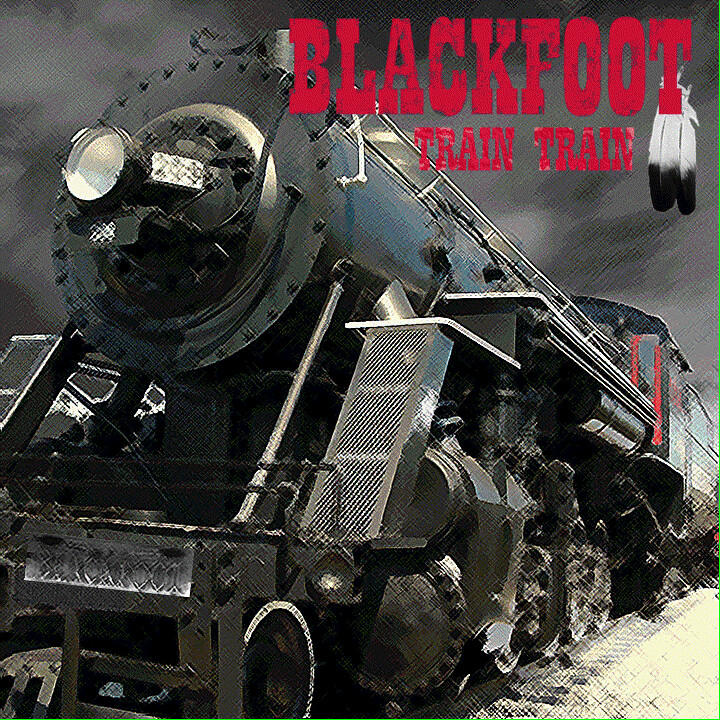
How many grandfathers write your biggest hit song? This one was written by Shorty Medlocke and later covered by his grandson Rickey Medlocke’s band Blackfoot. Shorty was a bluegrass and Delta blues musician and played the blues harp intro on the track. This song doesn’t play around…it’s straight seventies boogie rock and comes straight at you.
On a side note…train songs. There are so many great ones. Big Train From Memphis, Love Train, Midnight Train to Georgia, Peace Train, Train In Vain, Downbound Train, Train Kept a Rollin’ and I could go on and on but I’ll stop.
Before founding Blackfoot, Rickey Medlocke was also an early member of Lynyrd Skynyrd as a second drummer. Blackfoot had a number of hit albums but proved to be more popular in Europe than in the United States. Blackfoot Strikes was their first platinum album and produced their only Top 40 hits: “Highway Song” and this one.
They named themselves Blackfoot because they decided to change their name to represent the American Indian heritage of its members. Jakson Spires had a Cheyenne/French father and a Cherokee mother. Rickey Medlocke’s father was Lakota Sioux and Blackfoot Indian, and his mother’s side is Creek/Cherokee, Scottish and Irish. Greg “Two Wolf” Walker is part of Eastern (Muskogee) Creek. Charlie Hargrett was the only one without Native American heritage in the original, classic line-up.
Train Train peaked at #38 in the Billboard 100 in 1979. While this song was in the Charts, they opened up for the Who in 1979. The album Blackfoot Strikes peaked at #42 in the Billboard Album Charts.
The group disbanded in the early 1980s but has reunited a few times since then, the second time including all the original members except Medlocke, who had rejoined Lynyrd Skynyrd in 1996.
This song has been covered by hard rock band Warrant and… Dolly Parton.
They did go through different names as many bands do… Fresh Garbage, Hammer, and Free.
Charlie Hargrett (guitar player): The band found out there was another Hammer already in operation. We needed a new name quick, Since we were moving up north to start a big recording career, we thought, ok, we’ll call it ‘Free’, because we’re free now. And then AllRight Now came out, and we were like, ‘Shit’. So Jakson came up with Blackfoot, because of his Native American heritage.”
Train Train
Oh, here it comes
Well, train, train, take me on out of this town Train, train, Lord, take me on out of this town Well, that woman I’m in love with, Lord, she’s Memphis bound
Well, leavin’ here, I’m just a raggedy hobo Lord, I’m leaving here, I’m just a raggedy hobo Well, that woman I’m in love with, Lord, she’s got to go
Well, goodbye pretty mama, get yourself a money man Goodbye, pretty mama, Lord, get yourself a money man You take that midnight train to Memphis Lord, leave me if you can Oh, take that midnight train to Memphis Lord, leave me if you can Oh, take that train, baby











 PowerPop... An Eclectic Collection of Pop Culture


_1473785048.jpg)