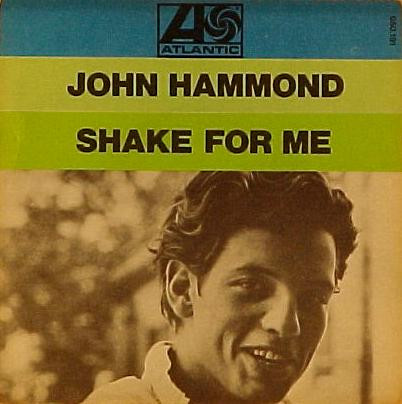
Some rocking blues from John Hammond, Duane Allman, and the Muscle Shoals rhythm section. This one is not a well-known song but it is worth hearing. This was made for vinyl and a turntable. The percussion makes the song jump at you.
The song was written by Willie Dixon. It was recorded in 1969 at Muscle Shoals Sound Studios. Hammond is the son of famous record producer John H. Hammond, who signed some of the most famous musicians ever. A partial list includes Bob Dylan, Bruce Springsteen, Benny Goodman, Harry James, Charlie Christian, Billie Holiday, Count Basie, Teddy Wilson, Big Joe Turner, Pete Seeger, Babatunde Olatunji, Aretha Franklin, George Benson, Freddie Green, Leonard Cohen, Arthur Russell, Jim Copp, Asha Puthli, Stevie Ray Vaughan and Mike Bloomfield. He is also largely responsible for the revival of delta blues artist Robert Johnson’s music.
When Duane heard John Paul Hammond was scheduled to record an album at Muscle Shoals Sound in November of 1969, he headed down to meet him.
Hammond come down from New York City to cut a record with Marlin Green, a producer who had worked with Aretha Franklin and Wilson Pickett. He didn’t know what to expect walking into the studio, but he felt an immediate chill from the musicians he had come to play with. He had expected the Muscle Shoals Rhythm Section to be black, and they expected the same of him.
Duane showed up in the middle of this awkward realization that they were a bunch of white dudes. Eddie Hinton, the guitar player, and songwriter was the one guy who was nice to Hammond and understood what he wanted to do. He wanted to record Howlin’ Wolf and Muddy Waters tunes.
“I was getting very frustrated,”Hammond recalled. “On the third day, Duane arrived with Berry Oakley. Duane said, ‘I want to meet this John Hammond guy! I have one of his records!’ Everybody loved him, and when they heard Duane wanted to meet me, they looked at me completely different. The whole mood of the session changed; everything changed. Eddie Hinton turned to me and said, ‘This is Duane Allman. He’s a phenomenal player, and you’re really going to like him.’
“Duane started to play and my mouth dropped open, he was so good. There was a break at the end of the day, and I had an old National steel guitar with me. Duane had never seen one, so I gave it to him to play, and it was in open tuning. He said, ‘Gee what is this?’ And I told him it was an open tuning, an A. He played slide in a straight tuning.
They recorded four songs the next day, and everyone was a winner. In fact, Duane inspired the whole studio band to get it together. The songs were included on the album Southern Fried.
“All of a sudden they understood exactly what I was talking about the day before,” Hammond said. “Duane was born with that magnetism.” It was the beginning of another important friendship for Duane.”
John Hammond:I asked Duane how he got so good and he said, “I took speed every day for three years and played every night all night.” I think this was partly true and partly apocryphal but he really couldn’t get enough. He was just phenomenal.
Shake For Me
Sure you look good But it don’t mean a thing to me Oh, you sure look good But you don’t mean a thing to me I’ve got a hip shakin’ woman, boy She shake like a willow tree
You went away baby You got back just a little too late You went away baby You got back just a little too late I’ve got a hip shakin’ woman, boy Shake like Jello on a plate
When my baby walks you know Lord, she’s fighting melow When my baby walks, you know Lord, she’s fighting melow I’ve got a hip shakin’ woman, boy Her flesh tastes just like Jello
Shake it baby, shake it for me Shake it baby, shake it for me I’ve got a hip shakin’ woman, boy Shake like a willow tree
Welcome to the Hanspostcard TV Draft. I hope you will enjoy it! Today’s post was written by John from The Sound Of One Hand Typing.
Sunday nights at the Holton house in Chicago would see Mary and I in front of the TV at 10 PM, watching Monty Python’s Flying Circus, Dave Allen At Large (which it doesn’t look like anyone choe for this; maybe I’ll write it up later), The Two Ronnies, and Doctor Who.
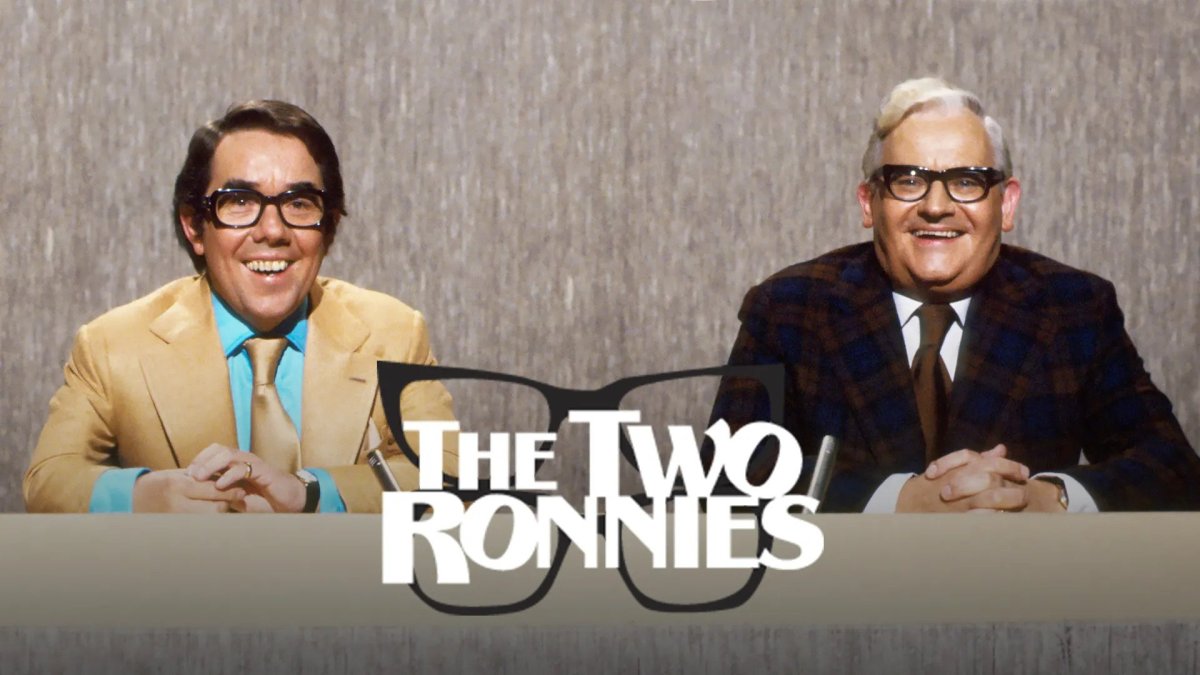
The Two Ronnies was a comedy and variety show that ran on the BBC from April 1971 to December 1987. It starred British comedians and actors Ronnie Corbett and Ronnie Barker. They met in 1963 when Corbett was a bartender at The Buckstone Club in Haymarket, London, and Barker was making a name for himself in the West End and on radio. They first appeared on The Frost Report with John Cleese, but their big break came when they improvised through an eleven minute technical issue at the BAFTA Awards in 1970. In the audience was Bill Cotton, head of Light Entertainment for the BBC, who signed them to a contract.
Personality- and appearance-wise, the two looked completely different: Barker was big, heavy, and spoke with a blue-collar accent, while Corbett was short, slight, and spoke with more of an upper-class accent. They didn’t become a comedy team like Morecambe & Wise and continued to work on separate projects while they were doing the show. They had some of the best comedy writers working with them, including most of the cast of Monty Python’s Flying Circus (John Cleese, Eric Idele, Michael Palin, and Terry Jones), and Spike Milligan, and Corbett wrote some sketches using the pseudonym “Gerald Wiley.” The humor was, for its time, off-color, relied on double-entendres and what would now be considered not politically correct and sometimes downright offensive. Kind of a higher-class The Benny Hill Show.
The show started and ended with a “news broadcast,” where the two would take turns reading humorous fake news items, such as “Someone broke into the local police station and stole all the toilet seats. Police have nothing to go on.” During the rest of the show, they would do comedy sketches together and separately. For example, “Swedish Made Simple.”
Another with the two: “The Inventor’s Convention.”
An example of Barker working alone is “TV Symbols.”
During each show, Corbett would sit in a chair and tell a joke, getting sidetracked as he was telling it.
The last sketch of the show was usually a musical one, in the grand tradition of the British musical theater. Some of the earlier shows had a continuing story instead of the musical number; I don’t recall seeing any of them when they were broadcast on WTTW in Chicago. I have a couple of examples. This is “Yeomen of the Guard.”
Another: “The Sultan’s Harem.”
The show would end as it began, with Corbett and Barker reading some late “news items,” and with a running gag, where Corbett would say, “that’s all we have time for, so it’s good night from me,” and Barker would say “And it’s good night from him.”
All the shows have been released on DVD. Many of them are available from eBay. Britbox or Acorn might have them available as well. Many of their sketches and musical numbers can be found on YouTube as well.
All it took was for me to get a greatest hits album by the Lovin’ Spoonful and I was a fan. This song was their debut single and it’s still heard today on the radio and in advertisements. The song peaked at #9 on the Billboard 100 and #3 in Canada in 1965.
They turned down a deal from Phil Spector because they didn’t want to be swallowed up under his name, that was probably a smart move. The Lovin’ Spoonful signed to a new record label called Kama Sutra. This was the first song they recorded for the label, and it was the first of a string of hits for the group
Sebastian said the autoharp intro was inspired by Martha and the Vandellas Heat Wave. “It had an ascending chord sequence that I was fascinated with. By chance, I was playing the autoharp, experimenting with electrifying it through this big amplifier. I realized that if I turned a few of the major 7ths to minor 7ths, I would have those chords. I also wanted that groove from ‘Buzz Buzz Buzz.'”
This was written by John Sebastian, who formed The Lovin’ Spoonful with his friend, Zal Yanovsky. Sebastian and Yanovsky were in a group called The Mugwumps and made a name for themselves playing clubs in Greenwich Village.
When the other Mugwumps – Mama Cass Elliot and Denny Doherty – moved to California and formed The Mamas And The Papas, they formed the band and Sebastian began focusing on songwriting. The Lovin’ Spoonful started playing electric instruments to get away from the folk music sound and attract a younger contemporary rock audience.
As the ’60s drew to a close, The Lovin’ Spoonful disbanded and Sebastian started working on a variety of projects. He wrote music for the Care Bear series, published children’s books, made harmonica instruction videos, and, he wrote the theme song to the TV show Welcome Back, Kotter, which was a #1 hit. Dave’s site has a post about this song.
John Sebastian:“We were playing pretty steadily for the local people from Greenwich Village who were part of the jazz scene or part of the kind of downtown ‘in crowd.’ They were ‘finger poppers,’ guys who played chess, ‘beatniks.’ But there was this one particular night as we were playing, I looked out in the audience and saw this beautiful 16-year-old girl just dancing the night away. And I remember Zal and I just elbowed each other the entire night because to us that young girl symbolized the fact that our audience was changing, that maybe they had finally found us. I wrote ‘Do You Believe In Magic’ the next day.”
Alan Merrill who wrote I Love Rock and Roll: “This was mid-’60s. The Lovin’ Spoonful were starting, and Laura Nyro said, ‘Why don’t you audition for the Lovin’ Spoonful? Now you know how to play bass, they’re looking for a bass player. But you’d have to quit school.’ And I said, ‘I don’t want to quit school.’ So I went over to her house after school one day, and she put this record on, and it was ‘Do You Believe In Magic.’ She just looked at me and said, ‘This is what you didn’t go to do.’ And I was like, ‘Oh, s–t, it’s gonna be a #1 record. I blew it. I could have been the 14-year-old bass player in the Lovin’ Spoonful.'”
I wish I had this set…yea I would love to have it at home…the wife wouldn’t like it but I pick my battles well. And this one I would pick…and I’d take the Saint Bernard that appears also.
Do You Believe In Magic
Do you believe in magic in a young girl’s heart How the music can free her, whenever it starts And it’s magic, if the music is groovy It makes you feel happy like an old-time movie I’ll tell you about the magic, and it’ll free your soul But it’s like trying to tell a stranger ’bout rock and roll
If you believe in magic don’t bother to choose If it’s jug band music or rhythm and blues Just go and listen it’ll start with a smile It won’t wipe off your face no matter how hard you try Your feet start tapping and you can’t seem to find How you got there, so just blow your mind
If you believe in magic, come along with me We’ll dance until morning ’til there’s just you and me And maybe, if the music is right I’ll meet you tomorrow, sort of late at night And we’ll go dancing, baby, then you’ll see How the magic’s in the music and the music’s in me
Yeah, do you believe in magic Yeah, believe in the magic of a young girl’s soul Believe in the magic of rock and roll Believe in the magic that can set you free Ohh, talking ’bout magic
Do you believe like I believe (Do you believe in magic) Do you believe like I believe (Do you believe, believer) Do you believe like I believe (Do you believe in magic)
***I have a bonus below the videos…an interview I did with a real DJ…Keith Allen (who is in our draft) about WKRP.***
I was 11 when this show aired. It was one of the shows from the late 70s that I wouldn’t miss.
This show was not like the Mary Tyler Moore Show, Bob Newhart, or All In The Family. Those are great shows…some of the best ever sitcoms…but they were aimed more at adults while this one I always felt was largely aimed at teenagers. The show aired from 1978 to 1982. Rock and Roll on a sitcom was not common at that time at all. It was the hippest show on television in primetime.
WKRP in Cincinnati” was produced by MTM – the studio Mary Tyler Moore and Grant Tinker built that produces shows such as The Bob Newhart Show, Mary Tyler Moore Show, Phyllis, The White Shadow, Rhoda, and many others.
The episode I remember the most having an effect on me was about the horrible event in 1979 when eleven people were killed at a Who concert in Cincinnati’s Riverfront Park. The show handled the tragic situation very well.
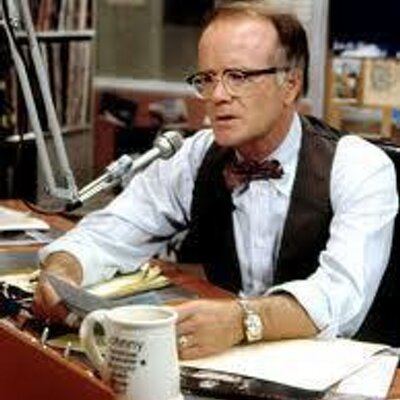
The plot…to make it short was about a Program Director (Andy Travis) who had a perfect record in turning bad radio stations around joins the staff at WKRP. The station is at the bottom of the ratings and he wants to change the format to Rock from Laurence Welk type music which is met with trepidation from the oddball staff. Actual radio DJs were excited because they loved that the show portrayed sides of the industry you never see. They were such big fans that they would send in bumper stickers, posters, and other items that were used to decorate the walls in the TV radio station studio. Howard Hesseman who played Dr. Johnny Fever was a DJ in the 60s in San Francisco.
The show would feature new rock music as well as old. Blondie gave the show one of their gold records in appreciation because the show played “Heart of Glass” and helped to make it number 1.
When you watch the reruns…they don’t look as clear as some of the other shows of the era. Unlike Cheers, The Bob Newhart Show, Mary Tyler Moore, or M*A*S*H… WKRP was shot on videotape instead of film. That’s why WKRP reruns are murky, instead of the pristine clarity of filmed shows
The show also caught radio before it started the change. The change was giant companies buying radio stations and having them pre-program shows without local flavor. It was beginning during the show’s run. Slowly but surely the radio would be taken over by monopolies and we would lose some of the attachments we had to local DJ’s… MTV came and made the divide wider.
Close to 10 years after WKRP in Cincinnati had left the air, The New WKRP in Cincinnati premiered in 1991. Rejoining the cast was Gordon Jump (Arthur Carlson), Richard Sanders (Les Nessman), Howard Hesseman (Dr. Johnny Fever), and Frank Bonner (Herb Tarlek). Both Tim Reid and Loni Anderson made guest appearances but Jan Smithers and Gary Sandy decided to skip it.
Before I end I must mention an iconic episode that is always remembered. The Turkeys Away episode. Forty live turkeys were dropped from a helicopter onto an unsuspecting Cincinnati shopping mall below. In what was supposed to be a Thanksgiving giveaway promotion, the station’s manager… Arthur “Big Guy” Carlson….decided to drop live turkeys from a helicopter.
At the end, Mr. Carlson says the phrase that elevates the episode to a classic. “As God as my witness, I thought turkeys could fly”
How close was WKRP to real stations? See below the videos…
The extended theme song by Steve Carlisle Wkrp In Cincinnati peaked at #65 on the Billboard 100 in 1979.
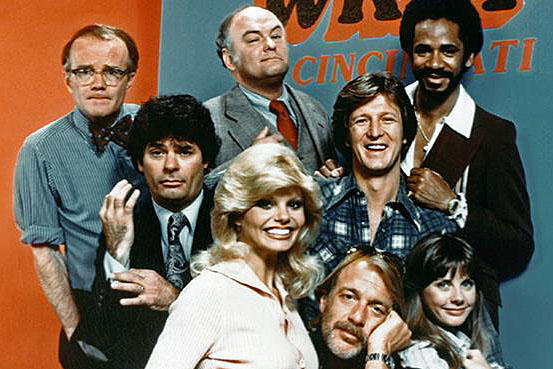
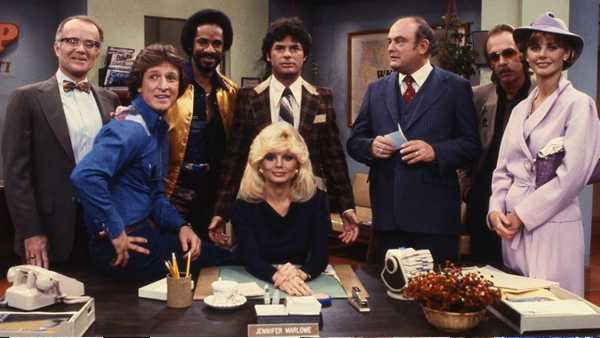
The Cast
Bailey Quarters – Jan Smithers – A shy soft-spoken lady in charge of billing and station traffic soon worked herself up to an on-air personality and other duties. She and Jennifer on the show were a bit like Mary Ann and Ginger on Gilligans Island…my pick is Miss Quarters any day of the week!
Andy Travis – Gary Sandy –Andy comes to the station as the new Program Director to turn the station around and finds the station’s employees…are like from the Island of Misfit Toys. He finds their strengths and tries to make it work. His character was based on real-life Program Director Mikel Herrington.
Dr. Johnny Fever – Howard Hesseman – Fun Fact…David Cassidy was offered this role but turned it down. The role ultimately went to Howard Hesseman, but only after he was invited to read for Herb Tarlek’s character and flatly refused to read anything but Johnny.
Johnny had been around for a while and was fired off a Los Angeles radio station for saying booger on air. He was probably my favorite character…next to Bailey…on the show when I first watched. Dr. Johnny Fever was based on real DJ “Skinny” Bobby Harper.
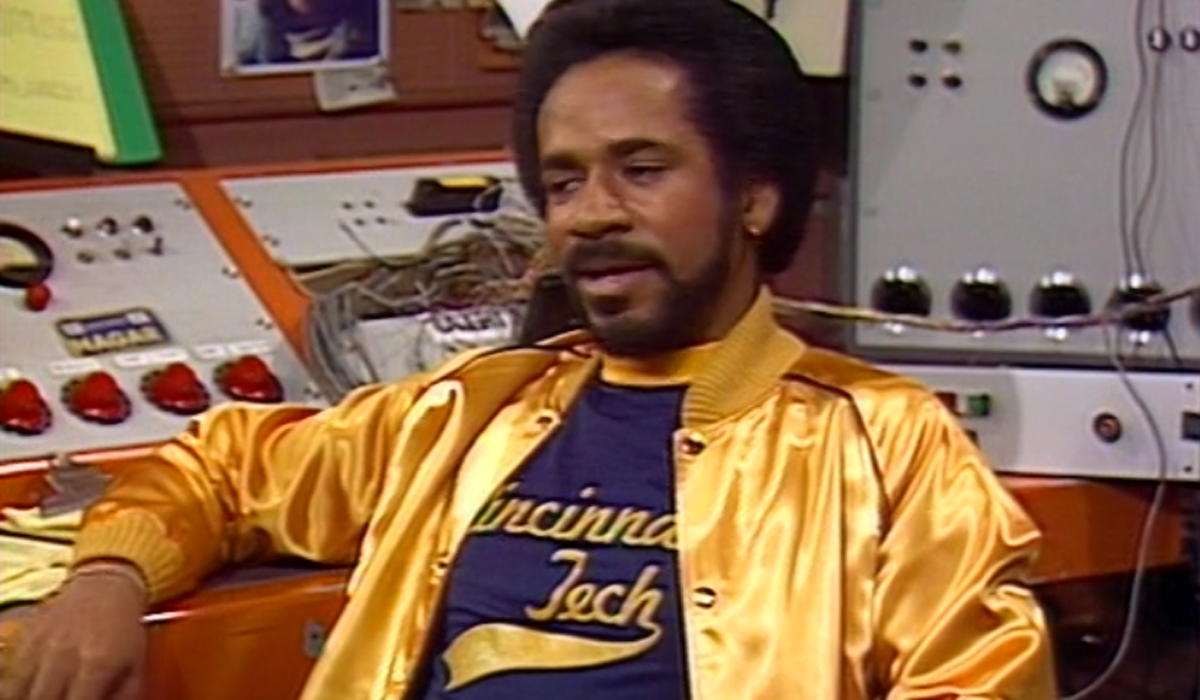
Venus Flytrap – Tim Reid – Venus was the night DJ and was one of the smoothest DJ’s ever…Venus wears 70’s type flashy clothes and in the series eventually becomes Assistant Program Director. Venus was the coolest character on the show.
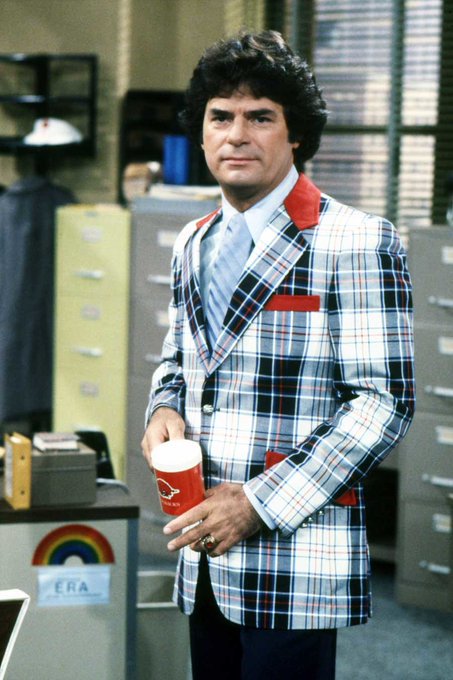
Herb Tarlek – Frank Bonner – Herb was a salesman and dressed very tacky and loud. He hits on Jennifer at every opportunity, despite being married… but gets turned down constantly.
Jennifer Marlowe – Loni Anderson – She was Ginger to Bailey’s Mary Ann. Mr. Carlson’s receptionist…she was the highest-paid employee at the station even though refusing to do most things that receptionists are required to do. She was very intelligent though and Anderson demanded that before taking the role.
Arthur Carlson – Gordon Jump – The lovable but ineffective station manager who is the son of the station’s owner. He never wanted to know what was going on…, but when he tries to be hands-on…it leads to disastrous results (see Turkey’s Away episode)
Les Nessman – Richard Sanders – The incompetent News Director…Les was obsessed with the region’s hog farming industry…constantly mispronounced names… ignored obvious news stories for Hog Reports…but he would win the Silver Sow Award and The Buckeye Newshawk Award. He also had an invisible office with invisible walls that the station could not afford to build.
I interviewed a DJ…and he is Keith Allen who is in the TV Draft. I asked him
WKRP, what about it is realistic and what is not?
LOL – DJ’s and other radio people get asked this a lot! I guess it depends on who you ask. Here are my thoughts –
Are there sales people like Herb? Yes. Are they as annoying? Yes!
Are all news people like Les? No, but there are plenty other folks in the biz like him.
Do all stations have a sexy secretary/receptionist? Some of the stations I worked at did.
Are all General Managers like Mr. Carlson? No, some are actually quite bright and know their stuff.
Do DJ’s usually give their program directors (like Andy) a headache? Yes. Very much so!
Do Programmers and General Managers often not see eye to eye on what’s going on with the station? Many times this is true.
Can you get fired for saying “booger” on the air? I don’t think so. We spent an entire morning talking about how those green raisins look like boogers and we weren’t fired.
Do many DJ’s have big egos like Venus and weird idiosyncrasies like Johnny? Yes, and you know it almost immediately when you meet them.
In many ways, WKRP is very realistic and while radio people probably find the show funnier than the average viewer, we also find one thing particularly annoying – the DJ’s don’t wear headphones in the studio. When a DJ turns on the microphone, the speakers in the studio shut off so there is no feedback. The DJ can hear the music and his/her voice in the headphones, so they know when to stop talking. These guys never seem to have headphones on and it has always bothered me.
They also seem to have the uncanny ability to throw a record on the turntable and have the song cued up immediately. I never had to spin vinyl until I moved to the west side of the state. I can tell you, you have to put the needle on the start of the groove, play it through a small cue speaker and wait for the song to start. You then stop it and turn the record back a ¼ turn, so that when you hit start, it plays at the right speed and doesn’t wind up to it. Carts are a whole lot easier, but almost all the music on WKRP is on vinyl.
Songs like this are what made The Replacements the Replacements.
Waitress in the Sky” was written for one of Paul Westerberg’s sisters…Julie. She was a career flight attendant. In the song, Westerberg’s character came on like every stewardess’s nightmare passenger. “I was playing the character of the creep who demands to be treated like a king. I’d heard all the stories from my sister about how [passengers] would yell at the flight attendants and how then they’d ‘accidentally’ spill something on them.”
Later on, when they signed to Warner Bros and an executive told them to make a music video. That is something that they absolutely would not do. Westerberg was willing to compromise though.
He did joke with the executive with a quote worth remembering… ‘Tell you what… if you get The Replacements on Hee-Haw then I’ll lip-synch to ‘Waitress in the Sky.’
Warner Bros were not amused. The conversation did lead to a live TV gig though. Westerberg didn’t think Warner Brothers would be able to swing a deal for a TV spot so he agreed. He would soon regret his decision. Yes, Warner Bros got them not only a TV gig but a live one. They were then scheduled on SNL and that led to being permanently banned from the show after Westerberg uttered a naughty word on national television.
They were stuck on the 18th floor waiting all day for SNL. To soothe the band’s nerves, soundman Monty Lee Wilkes smuggled some alcohol into the studio in a little road case. As they began to dip in, the show’s host, Harry Dean Stanton, said hello. Harry ended up joining in and becoming quite intoxicated. Word began to circulate that the host was getting drunk mere hours before the live show. Panic ensued until a production assistant dragged Stanton out of the band’s dressing room.
Sufficiently lubricated, their rehearsal set went off smoothly. Bob Stinson shocked everyone by donning a striped lady’s unitard. The only hitch occurred during “Bastards of Young” — Bob was late coming in on the solo. Westerberg would make sure he didn’t miss his cue during the live broadcast. Make sure he did… he cued Bob by saying to Bob, just off mic: “Come on, f****r.”
This was a low point for SNL…Michael Lorne had just returned and the show was rumored to be canceled…so he didn’t take this well. They were permanently banned from playing there again…although Westerberg played there later during his solo career.
The song was on the Tim album released in 1985. Tim was the fourth studio album by The Replacements. It was released in October 1985 on Sire Records (a subsidiary of Warner Brothers). It was their first major-label release.
Looking back on their career…it gets maddening. They bucked at playing nice with industry figures, purposely tanked do-or-die shows, and antagonized producers until they quit. They wanted to make it on their own terms but ended up sabotaging themselves. They could have been up there with R.E.M. but they couldn’t get out of their own way.
Julie was indeed a lifelong flight attendant…or Waitress in the sky…she retired in 2019 from Delta Airlines
Their performance on SNL…sorry for the quality but this is the only one the SNL police will allow.
Waitress In The Sky
She don’t wear no pants and she don’t wear no tie Always on the ball, she’s always on strike Struttin’ up the aisle, big deal, you get to fly You ain’t nothin’ but a waitress in the sky You ain’t nothin’ but a waitress in the sky Paid my fare, don’t want to complain You get to me, you’re always outta champagne Treat me like a bum, don’t wear no tie ‘Cause you ain’t nothin’ but a waitress in the sky You ain’t nothin’ but a waitress in the sky, oh hoh And the sign says, “Thank you very much for not smoking” My own sign says, “I’m sorry, I’m smokin'” Don’t treat me special or don’t kiss my ass Treat me like the way they treat ’em up in first class
Sanitation expert and a maintenance engineer Garbage man, a janitor and you my dear A real union flight attendant, my oh my You ain’t nothin’ but a waitress in the sky You ain’t nothin’ but a waitress in the sky You ain’t nothin’ but a waitress in the sky
Welcome to the Hanspostcard TV Draft. I hope you will enjoy it! Today’s post was written by Dave at https://soundday.wordpress.com/
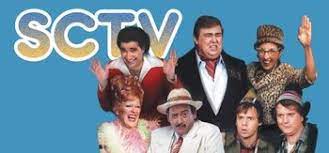
SCTV
For my next pick in this TV event, I go to a show that always made me laugh hysterically…and make me feel a bit proud. SCTV was not only one of the funniest and most creative shows of its era, it was Canadian to boot.
SCTV stands for “Second City Television”, because it sprung forth from Second City. That was (and remains to this day) a ground-breaking comedy troupe and theater from Chicage (America’s “Second City”). It opened its doors in 1959, and by 1961 was making stars out of people like Joan Rivers and Alan Arkin with their creative comedy sketches. But instead of just playing their home city, the organization had big dreams – ones they’ve fulfilled as they describe themselves as “the most influential and prolific comedy empire in the world.” They began touring with their show and found an enthusiastic response in Toronto when they played there in 1963. Second City took note, and ten years later opened a second club there, in its early months “no air conditioning, no liquor license and almost no audience.” That quickly changed though as they moved to a bigger venue and found homegrown wits like Catherine O’Hara, Dave Thomas and John Candy.
Only a couple of years in, there was interest in making it into a TV show. Once the idea was hatched to do a show about “the world’s smallest TV station”, the cast was on board. They saw endless possibilities of skits involving actual TV shows they could satirize, goofy commercials and behind-the-scenes follies involving the fictional station’s management. Global TV (a Canadian network) was interested and put them on air in 1976, with a half-hour show. After a couple of years, they canceled it but soon an independent company in Edmonton bought the idea, moved the players to the Prairies and resurrected it, soon selling the show to Canada’s premier network, CBC. A few stations in the U.S. began running re-runs, and soon NBC came knocking, wanting a replacement for the Midnight Special. They ran it for a couple of years as a 90-minute late night show (rather akin to Saturday Night Live) but were said to be rather lacking in commitment to it, and after two seasons axed it when the crew refused to re-jig the show to run on Sunday evenings against 60 Minutes. (NBC also wanted it made much more G-rated, family-oriented humor rather than the edgy satire they SCTV was making.) At that time Cinemax cable in the U.S. and a Canadian subsidiary revived it for one final season of 45 minute shows. By 1984 when it wrapped up, they’d made 135 episodes of varying length and production quality…and created both some big-name stars and some entirely memorable characters.
SCTV‘s original cast was largely kept in tact through the years and was a goldmine of comic talent. They were essentiallly unknown then but wouldn’t stay that for long. Andrea Martin, Catherine O’Hara, John Candy, Eugene Levy, Rick Moranis, Joe Flaherty, Harold Ramis… funny each one in their own right but brilliant together in an ensemble. Of them, only Ramis was brought in from American Second City; Moranis came in directly from a background of being a radio DJ in Toronto! We see their ongoing work in so many great comedy films like Home Alone, Ghostbusters, My Big Fat Greek Wedding, Splash and TV shows like Schitt’s Creek. In terms of launching great careers in comedy, it’s probably second only to Saturday Night Live…and that one has had an advantage of 40 more years of talent to be culled from.
That alone made the show noteworthy, but it was great because of the strength of the shows themselves and the sketches they created. The station which was set in the imaginary town of Melonville was run by Guy Caballero, a boss played by Joe Flaherty, whose character was as shady as his suit was blinding white. Guy was confined to a wheelchair… but quick to jump up and run away when threatened. His station was inhabited by regulars like boozy, washed up playboy-type Johnny LaRue (Candy), and the owner, leopard-print clad cougar Edith Prickley (Martin), and the hapless local news team of dim-witted Earl Camembert (Levy) and hard-nosed Floyd Robertson (Flaherty). Between the workplace bits we got to see the fine programming of SCTV…things like Bill Needle’s ascerbic talk show, Count Floyd’s “Monster Horror Chiller Theater” (which sometimes boasted titles like the “3D House of Cats”… you simply had to see it to appreciate the “3D” effect!) , kids show “Mrs Falbo’s Tiny town” and various movies, usually parodies of real hit ones. And in between we’d get commercials for local businesses like Harry, the Guy with the Snake on His Face and his adult video store. Like the Simpsons later, the shows were funny enough at face value but took on an added level of hilarity when one was wise to exactly what they were spoofing.
About 40 years has passed since it went off the air, but even the thought of things like the opening scene of “Mrs. Falbo’s Tiny Town” (remember her trying to drive?), Flaherty as Count Floyd (the frustrated late night movie host dressed as a vampire who often had to admit, “well that wasn’t very scary, kids…”) John Candy as Paul Fistinyourface, the angry high school teen on the TV dance show or as Gil Fisher “The Fishin’ Musician” crack me up. Speaking of the last, “The Fishin’ Musician” with Candy as Gil, the fisherman with his guide Ol’ Willie (who looked a lot like Willie Nelson and took the fishing boat ‘out into the weeds’ every time, natch) was their way of allowing for musical numbers. Through the years bands like Rough Trade, The Tubes and Boomtown Rats went fishin’ with Gil…and playing a little number or two. In retrospect, years later it became even funnier seeing Bob Geldof as a disgruntled punker with the Boomtown Rats and acting as a high school tough in their parody of To Sir with Love , “Teacher’s Pet” (with Eugene Levy as Ricardo Montalban, an ongoing spoof on the show, being the Corinthian lether-loving teacher).
It was a different kind of humor, probably ahead of its time and perhaps to Americans, a wee bit odd. I’m frequently told, living in the U.S., that I have a different sense of humor than many Americans; I think Canada is a cultural “bridge” between the States and Britain, and that applies to our comic sensibilites too. SCTV found the happy medium to be edgy for the mainstream but not so much so as to be confounding or alienating. All that said, ironically, the ongoing skit on SCTV I found the most tiresome was the one that was probably it’s most popular and the one which reveled in its Canadianism – Bob and Doug McKenzie and the “Great White North.” But no one hits it out of the park every time…SCTV is remembered because it did more often than not. When a show of largely social satire from four decades back can still make me fall on the floor laughing, they must have been something special. And they were.
I first noticed this song on the concert film The Festival Express a few years ago. I’ve heard the two studio versions but that live version is the one I like best. It’s something about it I really connect to. Garcia and Weir sound great singing together along with Pigpen playing the harmonica. It’s just a simple blues-type song but it works well for me anyway.
As soon as I heard it I took one of my acoustic guitars off the wall and kept running back the video file back and playing with them…I didn’t think they would mind.
This song was first released by the Dead in 1966 as their first single with Stealin on the flip side. That version is good and it reminds me of the band Them…not the voice but the music. They also released it again on their Go To Heaven album in 1980 but that version to me is a little too slick. The version on Festival Express shows all the ragged edges in the best way. It is pure Americana. They would do it live many times later on but I still go back to the Festival version.
They also covered it before they were the Grateful Dead. They started off as a jug band called Mother McCrees Uptown Jug Champions and most likely covered it when they were called the Warlocks.
They might have heard the version of the song by Henry Thomas…an old blues artist that lived from 1874 to around 1930. If you want to learn more in detail about Thomas and this song go here to Jim’s site. It also sounds close to a song by Jelly Roll Morton called Don’t You Leave Me Here. On the Go To Heaven album, it’s credited to “traditional arranged by The Grateful Dead.” The single that was released in 1966 was credited to Garcia but I’ve read where he didn’t authorize that and didn’t ask for a credit.
Speaking of the Festival Express…it was The Transcontinental Pop Festival… better known as the Festival Express. Great idea on paper… rounding up musicians in 1970 and placing them on a train going across Canada and stopping along the way to play festivals. What could go wrong? Actually, I would have loved to have been on that train. The lineup: The Band, The Grateful Dead, Janis Joplin, Buddy Guy Blues Band, The Fly Burrito Brothers, Sha Na Na, and Delaney & Bonnie & Friends.
There were artists that were not in the film like Traffic, Ten Years After, Tom Rush, Ian & Sylvia, Mountain, and more.
A DVD was released of this in 2004. All these musicians were on a train full of liquor and an assortment of drugs… liquor was the popular choice among the musicians on this ride. The tour was to have events in Montreal, Toronto, Winnipeg, Calgary, and Vancouver. The Montreal event was canceled as was Vancouver. In Toronto, protesters were saying the festival promoters were price gouging so The Grateful Dead played a free concert in a park nearby to ease tensions with the protesters.
When watching the film you can see the performers are having a ball jamming with each other because they didn’t get a lot of chances to do that on the road.
Here is the link to the full movie free on youtube…if you have time…it’s worth it!
Bill Kreutzmann (drummer for the Dead): We celebrated Janis Joplin’s birthday at the last stop the traditional way: with birthday cake. In keeping with our own kind of tradition, somebody—within our ranks, I would imagine—had secretly infused the cake with a decent amount of LSD. So it quickly became an electric birthday celebration. Allegedly, some generous pieces of that birthday cake made it to the hands and mouths of the local police who were working the show. “Let them eat cake!” (To be fair, I didn’t have anything to do with that … I was just another cake-eating birthday reveler, that night.) And that was it for the Festival Express. It was a wonderful time and I think what really made it great was the level of interaction and camaraderie among the musicians, day and night, as we were all trapped on this train careening across the great north. It probably helped that we were all trashed the entire time. Whiskey was in the conductor’s seat on that ride.
I would recommend getting the DVD of this event. It’s a great time capsule of that time in music and culture.
Don’t Ease Me In
Don’t ease, don’t ease, don’t ease me in I’ve been all night long coming home, don’t ease me in
I was standing on the corner, talking to Miss Brown When I turned around, sweet mama, she was way across town So I’m walking down the street, with a dollar in my hand I’ve been looking for a woman, sweet mama, ain’t got no manDon’t ease, don’t ease, don’t ease me in I’ve been all night long coming home, don’t ease me inThe girl I love, she’s sweet and true You know the dress she wears, sweet mama, it’s pink and blue She brings me coffee, you know she brings me tea She brings about every damn thing, but the jailhouse keyDon’t ease, don’t ease, don’t ease me in I’ve been all night long coming home, don’t ease me inDon’t ease, don’t ease, don’t ease me in I’ve been all night long coming home, don’t ease me inDon’t ease, don’t ease, don’t ease me in I’ve been all night long coming home, don’t ease me in
Talking to Miss Brown Well I turned around, sweet moma She was way cross town
So I’m walking down the street With a dollar in my hand I’ve been looking for a woman, sweet moma Ain’t got no man
The girl I love She’s sweet and true You know the dress she wears, sweet moma It’s pink and blue
She brings me coffee You know she brings me tea She brings ’bout every damn thing But the jailhouse key
Welcome to the Hanspostcard TV Draft. I hope you will enjoy it! Today’s post was written by Lisa at https://tao-talk.com/
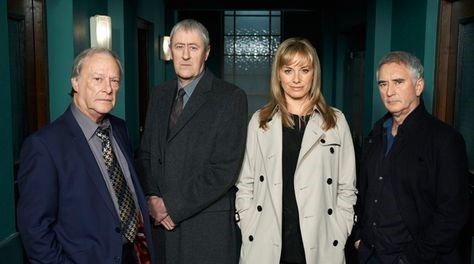
l. – r. Jack, Gerry, Sandra, and Brian
Although I had another series slated for this spot, I changed my mind again. I noticed I had no series chosen with a female lead, and that just isn’t cool in my book. Instead of whatever it was, now it is the UK’s BBC Series, “New Tricks,” which ran for 12 seasons (107 episodes,) from 2003 – 2015. Originally airing on BBC, it is now available, depending on season, on BBC Video, Acorn Media, or BBC First.
I remember browsing titles at the library’s online database and happening across it. I immediately loved the premise for the series, which describes a very talented and rising star in the law enforcement ranks being asked to lead a newly formed task force to work cold cases. The team is a group of older, already retired detectives that are being asked to come out of retirement to try to crack old cases that have remained unsolved for sometimes twenty years or more. The genres of New Tricks are comedy and crime.
Cute video about how team was formed:
Amanda Redman as Deputy Superintendant Sandra Pullman
The Cast:
Amanda Redman as Deputy Superintendant Sandra Pullman is the tough-edged, wise-cracking career law enforcement rising star. Sandra has never married and has no children. She has a nice home that she doesn’t seem to get very much time to relax in and enjoy as the tacit understanding with her team is that she is available to them 24/7; and they do take her up on it. Sandra’s mother lives in assisted living; but the two feel mutually uncomfortably incompatible with each other. Sandra preferred her late father, who was also a police officer, and there is a sense that Sandra’s mother resents her for choosing her dad over her. At the same time Sandra’s mom has never told Sandra the whole truth about her dad, whose story does get slowly revealed over time.
Dennis Waterman as Gerry Standing
Dennis Waterman plays Gerry Standing, a man who has been divorced a few times and has at least a few babymama’s. He is always complaining that his ex-wives are draining him dry with child support. Gerry has got a roving eye for the ladies and is frequently trying to make time with a “tasty piece of skirt.” It doesn’t take much to imagine he might be multiply divorced because of that tendency. That said, he’s very friendly with all of his ex-wives and his daughters, and his ex-wives and daughters are all friendly with each other. Poor Gerry doesn’t stand a chance with all of that estrogen power. As the series rolls on there is a suggestion that Gerry might have had some crooked or at least semi-crooked history while he was a detective before. He also may have/had a problem with gambling, which can always lead a person down a crooked path. Gerry lives alone in a nice home. Once in awhile he does get lucky and finds a date.
Alun Armstrong as Brian Lane
Alun Armstrong plays Brian Lane. Brian is married to Esther, who is played by Susan Jameson. Brian is what some might call an odd duck. His history is that of a raging alcoholic that has gone to rehab and remains sober; mental health issues manifest themselves in myriad Aspergersian perceptions, beliefs, and actions. Brian is highly intelligent and has a tendency to obsess over cases and lots of other things. He’s a master of internet and other records searches and has the analytic capacity to synthesize clues into often viable theories. He’s frequently trying new hobbies or practicing old ones. He rides his bike everywhere (not sure if he lost his driver’s license from drunk driving or not.)
Susan Jameson as Esther
Esther is an endearing character, but she doesn’t take much of Brian’s guff. At the same time, she is there for him, steadfast, calm, and catering to him in a way that keeps him emotionally regulated (with the help of his prescription medications.) Esther has made a lovely home atmosphere and keeps her own mind and body active with socializing with friends and with hobbies. She is also very welcoming of the other team members, as they, along with the work, also help to keep Brian stable.
James Bolam as Jack Halford
James Bolam plays Jack Halford. Jack is a widower whose wife, Mary, was killed, where the details of her death are revealed over time. Jack has a shrine of his wife set up in his back yard. He has regular conversations with her spirit that remains very much alive to Jack. Jack is the most by-the-book of the team, both with regulations and with ethics. Don’t ask Jack to bend the rules; he’s likely to box your ears. Jack is another excellent clue analyzer. He probably has the worst temper of the bunch and gets stressed out a lot.
Anthony Calf as D.A.C. Strickland
Anthony Calf plays D.A.C. Strickland. Strickland is the administrator who hired Sandra and lays out his expectations for the Cold Case Team (UCOS is its official acronym that sometimes gets made fun of.) If I remember correctly all four of them are resistant to all of the others at first for one reason or another. Strickland is a very sharp-minded strategist who knows what he’s doing and is often several moves ahead of everyone else. His presentation is deadpan, but his humor is sharp. Even though he seems intimidating, Sandra can usually wheedle what she needs out of him. When the team is successful, he, of course, makes sure everyone knows he is the one who made it happen.
The other main cast characters are other team members who replace the main four, but only after many seasons have passed. I watched the series through season 10, but stopped after more of the original people were gone than remained. I can’t say a lot about these other folks other than who they are and who they played.
l. – r.: Gerry, Danny, Sasha, and Steve
Denis Lawson as Steve McAndrew
Nicholas Lyndhurst as Danny Griffin
Tamzin Outhwaite as DCI Sasha Miller
Most every episode there is a new villain or villains; very few carry over beyond one. The locations vary from urban to rural. One of my favorite episodes (a 2-part) is set at The Rock of Gibraltar.
Writing and Directing Credits
Writing credits on every episode go to Nigel McCrery and Roy Mitchell, with almost 40 others getting credits over the 12 seasons. There were 25 different directors, with Julian Simpson directing the most, at 17.
Synopsis: As already described above, the team has been pulled together to solve cold cases. Although Sandra was on an upward trajectory, she’s been convinced to give this project a chance. I think it is sold as having potential to put a nice feather in her professional cap. Gerry is convinced because he needs the money to pay child support. Brian needs to be consumed with work to keep himself sane so he jumps at the chance. Jack is lost without his beloved Mary and agrees because he has nothing better to do in his solitude. As the team members orient themselves to each other and solve a few cases, things begin to fall together with them. All three guys don’t take Sandra very seriously until they begin to see she’s a tough bird who isn’t going to tolerate any guff from any of them. What follows is a grudging admiration for her management and crime-solving skills, that over time becomes a trusting and bonding for all of them. That said, it doesn’t mean she doesn’t have to bust their chops from time to time.
Impressions: My years as a team member in a juvenile probation department has me very much appreciating, “New Tricks.” When you’re dealing with dangerous crimes and criminals you had better know your co-workers have your back. I love how they all work together. They team up all sorts of ways, from two-somes, three-somes, or all-somes. They also frequently socialize together after work. They are available to each other 24/7, as you never know when a piece of the puzzle falls together and you want to share it with your buds. I love the humor in the show also. Brian is the most obvious nutcase that gets into some way-out situations, but all of them play into the humor together. Sandra has the cosmos in her eyes and her expressions are priceless. Gerry has some hilarious expressions and situations also. Jack is the most serious one of the bunch but even he lightens up from time to time.
In conclusion, the combined investigative experience of the team is impressive, and they all have long memories from their earlier work days. It really comes in handy when they are investigating long-cold cases. I also don’t think I’ve ever seen a TV series that focuses only on cold cases. I love the title, and I love the unspoken message that older people still have a lot to give to better their communities.
Etc.: filmed in London; The theme song for the series is performed by Dennis Waterman (Gerry Standing). The song “End of the Line” is originally by the Traveling Wilburys. I’m very sorry to say I just learned that Dennis Waterman, who played Gerry, passed away on 5/8. After watching a YouTube (https://youtu.be/q8Hmp5lvF4A) I also learned that he was once considered the “hottest man on TV.”
The last time I posted a Steppenwolf song (Sookie Sookie)…a fellow blogger obbverse reminded me of this one and it had been a long time since I heard it.
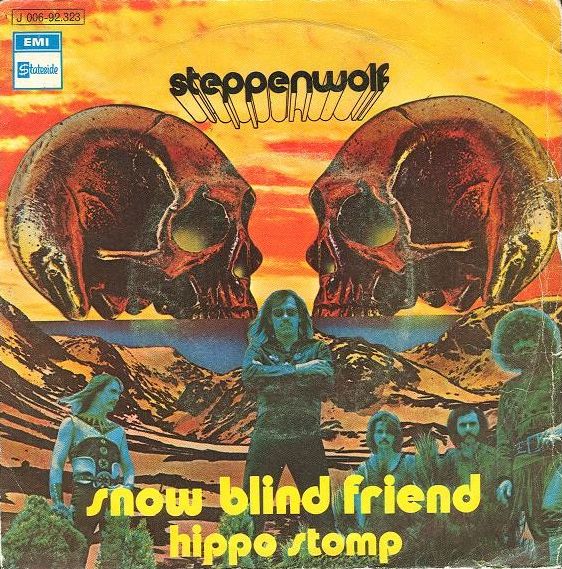
Snowblind Friend was written by Hoyt Axton, who first released it on his 1969 album My Griffin Is Gone. The song was written about one of his musician friends who died of a drug overdose. Hoyt did not glamorize drug use in this song. He had his own problems with drug addiction and did what he could to warn of the dangers
Stoned on some new potion he found upon the wall Of some unholy bathroom in some ungodly hall
Hoyt Axton wrote so many songs…one of them was Joy To The World, he wrote it around the same time as Snowblind Friend. Steppenwolf was offered Joy To The World but they passed. It ended up going to Three Dog Night… who took it to number 1. What I wouldn’t give to hear a Steppenwolf version of Joy to the World!
This song introduced the word “snowblind” to the rock music lexicon to describe addiction, specifically to cocaine. The insidiousness of the drug and its grip on the user has never been conveyed so accurately and poignantly.
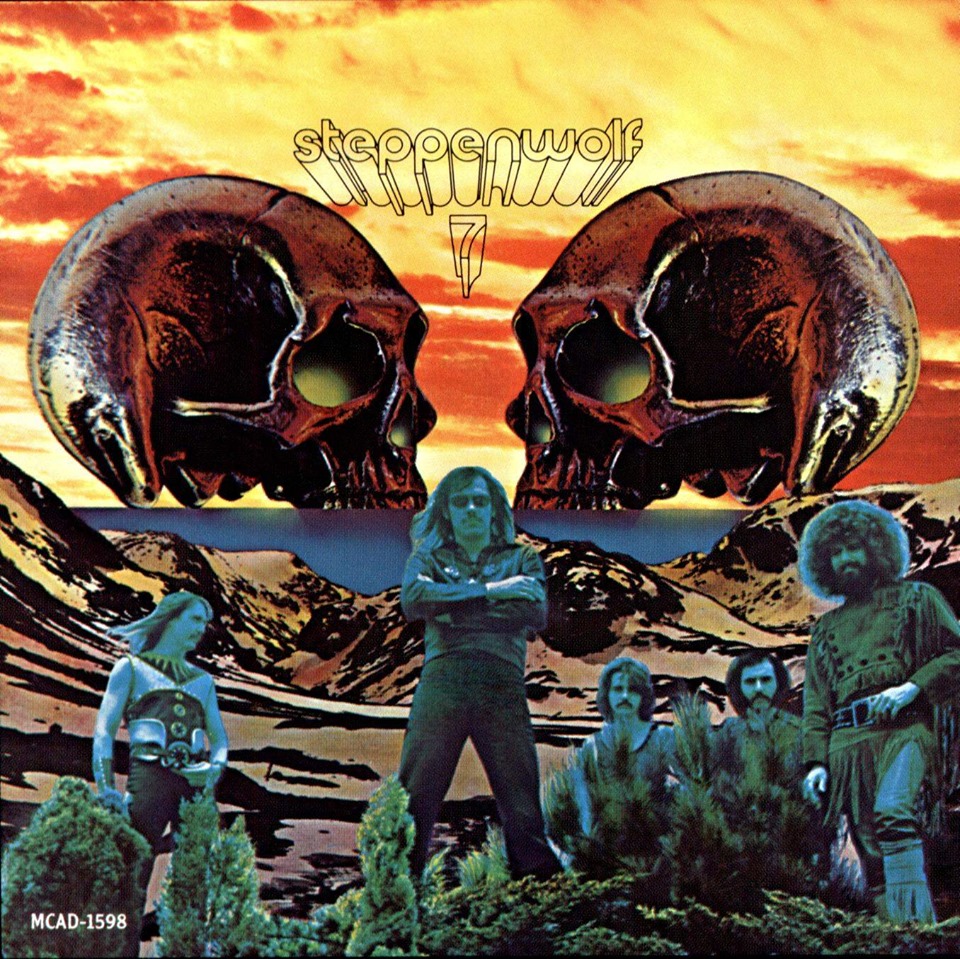
Steppenwolf 7
Snowblind Friend peaked at #60 in the Billboard 100 and #37 in Canada in 1970. It was on the album Steppenwolf 7 and it peaked at #19 in the Billboard Album Charts and #14 in Canada. This would be Steppenwolf’s last top 20 album in their career. They did have a Greatest Hits album that peaked at #24 the following year.
They are not in the Hall of Fame yet but were nominated in 2017 but didn’t make it. In 2018 the Hall did pick “Born to Be Wild” as one of the first five singles that shaped rock and roll to be inducted into the hall in its history.
Altogether they had 13 studio albums, 5 live albums, and 21 singles. 8 of the albums were in the top 40 and 7 of their singles were in the top 40. In Canada they were very popular…they had two #1’s in Born To Be Wild and Magic Carpet Ride and 11 singles in the top 40.
John Kay:“That song spoke to me because I knew the person that the song was written about. That’s why I decided, as a tribute to this young man, that we would do a version of it on the Steppenwolf 7 album.”
This is a TV special on the Steppenwolf 7 album
Snowblind Friend
You say it was this morning when you last saw your good friend Lyin’ on the pavement with a misery on his brain Stoned on some new potion he found upon the wall Of some unholy bathroom in some ungodly hall He only had a dollar to live on ’til next Monday But he spent it on some comfort for his mind Did you say you think he’s blind?
Someone should call his parents, a sister or a brother And they’ll come to take him back home on a bus But he’ll always be a problem to his poor and puzzled mother Yeah he’ll always be another one of us He said he wanted Heaven but prayin’ was too slow So he bought a one way ticket on an airline made of snow Did you say you saw your good friend flyin’ low? Flyin’ low Dyin’ slow
Home Before Daylight…My Life On The Road With The Grateful Dead by Steve Parish
I bought this book thinking it was going to be another Grateful Dead history book by a roadie and manager. I was wrong on that account. Parish had no desire to retell what’s been told in so many books. It was more of his story and the brotherhood shared with the roadies and band. Yes…it is a book about sex, drugs, and rock and roll…make no mistake about that…but around the Dead things were different.
Parish’s story is worth hearing. How he worked himself up from a roadie working for free…to a paid roadie with this traveling circus of a band. After years of adventure, Garcia appointed him manager of the Jerry Garcia Band while also working as a roadie for them and The Grateful Dead. He was one of Jerry’s most trusted friends to the end.
He goes into all the members of the Dead…past and present and the members of that wild road crew. He got along with the band really well except for one…for a while anyway. Like I said at the beginning yes there was drink, drugs, and sex but these guys did work hard. The roadies would have at times, 16-20 hour days, especially in the 70s. At the time it was easy to see how drugs slipped into their world. What was amazing is how all of them cared about each other and wanted the best show possible for the band. That crew wielded an exceptional amount of power and influence. It’s safe to say more than any other road crew at that time and probably ever.
After driving all day and all night, Parish was in an accident while riding in the equipment truck in Texas. It’s a miracle no one wasn’t killed. Phil Lesh, the bass player for the Dead, pulled him aside later that night and told him he was relieved no one died and this would not happen again. Phil told him it was not worth this so they started to have regular drivers for the trucks so the roadies didn’t have to drive plus setup everything.
Parish also tells us of the tragedies through the years and the friends they lost. He also had an extremely large personal loss in the 80s but the band rallied around him and helped him through it. He also goes into detail about how the Hells Angels played a part in their world. I never knew how close they were to the roadies and a few members of the band.
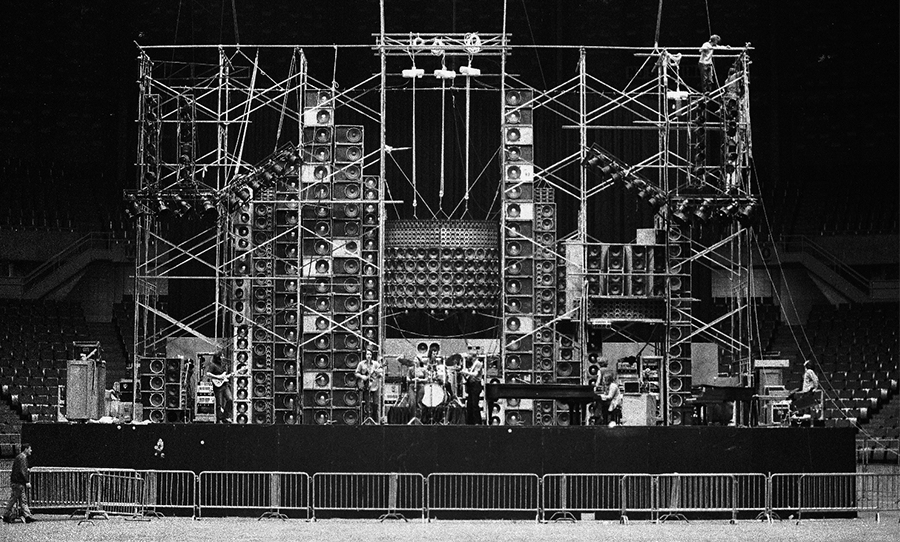
He also talked about the Wall Of Sound. A giant PA system that Owsley Stanley designed. The wall was impressive to look at as well to listen to. It was created to prevent feedback and distortion. It took four semi-trailers and 21 crew members were required to haul and set up the 75-ton Wall. The sound had a reach of a quarter of a mile. It stood 3 stories high…just think of the work it took for the crew to set it up and take it down nightly. Some specs from wiki:
89 300-watt solid-state and three 350-watt vacuum tube amplifiers generating a total of 26,400 watts of audio power. 604 speakers total.
586 JBL speakers and 54 Electro-Voice tweeters powered by 48 McIntosh MC-2300 Amps (48 × 600 = 28,800 watts of continuous (RMS) power).
Here is some grainy footage of the wall.
All in all…if you like rock and roll books…this one is really interesting.
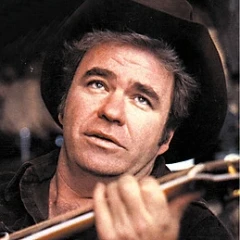
I cannot remember the first time I heard this song but I heard it alot growing up. The imagery of the lyrics is a lot of fun. It’s country but it’s also a little rock and a little blues. It’s hard to classify many of his songs although he was mainly known for being a country singer and songwriter. He also ventured out into garage rock, folk, and hard rock with his songs.
Hoyt Axton:“I’m one of those fringe dudes: half folkie, half hippie, half Okie. My input has been very eclectic. I was always surrounded by all kinds of music, as my family moved around the country: jazz, classical, gospel, whatever… the influences enter from a lot of directions.”
Hoyt Axton was a talented artist. He was a singer, songwriter, and actor. We all know his songs. Joy To The World, Never Been To Spain, Snowblind Friend, The Pusher, The No, No Song, and When the Morning Comes. He was also in a number of movies, commercials, and tv shows. The movie I remember him most for was Gremlins. Axton always came off as incredibly likable.
Hoyt Axton’s mom could write songs herself…Mae Boren Axton, a songwriter, co-wrote the classic rock “Heartbreak Hotel”, which became a major hit for Elvis and an iconic rock song. Now that is a cool mom.
Axton had his big hits with other people singing his songs. His composition “Joy to the World”, as performed by Three Dog Night, was #1 on the charts for six straight weeks in 1971, making it the top hit of the year. He named his record label Jeremiah after the bullfrog mentioned in the song.
Axton had an addiction problem early in his career. He wrote songs about it like Snowblind Friend, The Pusher, and The No No Song which Ringo covered.
There are a lot of theories about this song. The dog and cat are real people. He is being purposely vague as they were all involved in some shady dealings…hanging out with what is obviously a drug dealer and murderer, but the narrator is no snitch….he’s a “cool cat.” There are a lot of theories about the song…it’s a fun story song regardless.
This song was released in 1979 and peaked at #17 on the Billboard Country Charts. It was on his album A Rusty Old Halo that peaked at #27 in the Billboard Country Charts and #14 in the Canada Album Charts.
Hoyt Axton passed away on October 26, 1999, at the age of 61.
On November 1, 2007, Axton and his mother were both inducted posthumously into the Oklahoma Music Hall of Fame in Muskogee, Oklahoma.
Tomorrow I have another Axton song but not with Hoyt singing.
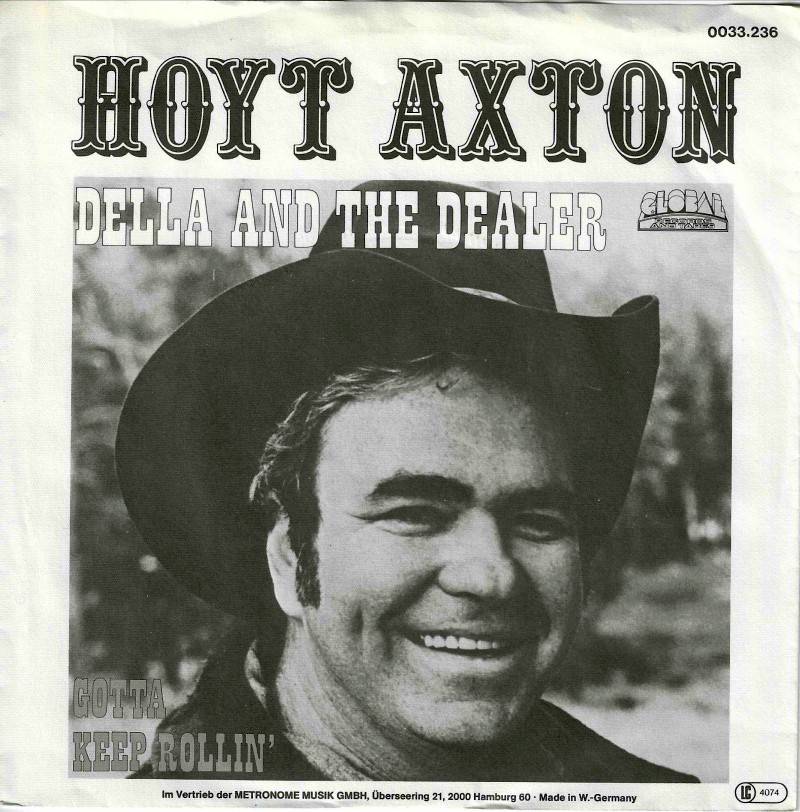
Della and the Dealer
It was Della and the Dealer and a dog named Jake And a cat named Kalamazoo. Left the city in a pick up truck, Gonna make some dreams come true.
Yea, they rolled out west where the wild sunsets And the coyote bays at the moon. Della and the Dealer and a dog named Jake and a cat named Kalamazoo
If that cat could talk what tales he’d tell About Della and the Dealer and the dog as well But the cat was cool, and he never said a mumblin word.
Down Tucson way there’s a small cafe Where they play a little cowboy tune. And the guitar picker was a friend of mine By the name of Randy Boone.
Yea, Randy played her a sweet love song And Della got a fire in her eye The Dealer had a knife and the dog had a gun and the cat had a shot of Rye.
If that cat could talk what tales he’d tell About Della and the Dealer and the dog as well But the cat was cool, and he never said a mumblin word.
Yea, the dealer was a killer, He was evil and mean And he was jealous of the fire in her eyes.
He snorted his coke through a century note And swore that Boone would die.
The stage was set when the lights went out. There was death in Tucson town. Two shadows ran for the bar back door And one stayed on the ground
If that cat could talk what tales he’d tell About Della and the Dealer and the dog as well But the cat was cool, and he never said a mumblin word.
Two shadows ran from the bar that night And dog and cat ran too. And the tires got hot on the pick up truck As down the road they flew.
It was Della and her lover and a dog named Jake And a cat named Kalamazoo. Left Tucson in a pick-up truck Gonna make some dreams come true.
If that cat could talk what tales he’d tell About Della and the Dealer and the dog as well But the cat was cool, and he never said a mumblin word.
Ken Stringfellow and Jon Auer started to write songs together while in High School in Bellingham, Washington in 1986. They were influenced by The Hollies, Hüsker Dü, XTC, Elvis Costello, Squeeze, and Big Star.
When they started out, a cassette of songs Stringfellow and Jon Auer traded back and forth went viral, which in the late ’80s meant copies got passed around and radio stations started playing them. The had one big problem though. They didn’t have an actual band together. Drummer Mike Musberger and bassist Rick Roberts were added as the first Posies rhythm section.
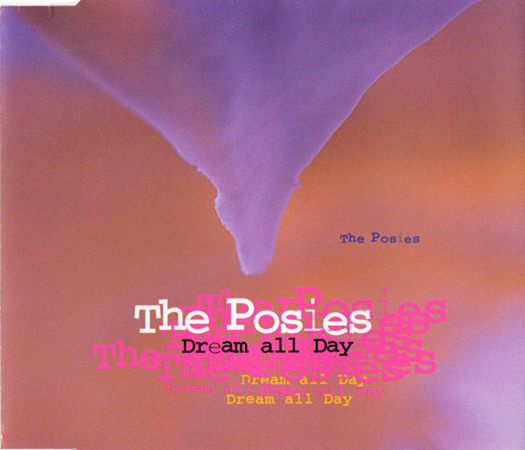
This song was on their third album released in 1993 called Frosting On The Beater. Dave Fox had replaced Rick Roberts by this time on bass. Dream All Day was released as the first single on the album.
The song peaked at #4 on the Billboard Alternative Airplay Charts and #17 in the Billboard Mainstream Charts in 1993.
The Posies soon got signed to DGC and “Golden Blunders,” the first single from their Dear 23 debut on the label, became enough of a college radio hit that Ringo Starr recorded as part of his 1992 album Time Takes Time.
The made 8 albums altogether with the last one being in 2016.
In 1993 Ken Stringfellow and Jon Auer joined Big Star’s Jody Stephens and Alex Chilton to reform Big Star. They toured and released a Big Star album in 2005 called In Space. It came to an end in 2010 with the death of Alex Chilton.
Dream All Day
I’ve got a lot of thoughts Got a lot of plans I lost a lot of sleep Trying to understand
I could dream all day
In a blackened room Staring into space Underneath a thousand blankets Just to find a place Where everything is reachable Imagining is safe I tried to make it so I didn’t even know
I could dream all day
I dreamt I was awake My mouth was colored grey As the world revolved around me I could only say
I first heard this song in the 80s and later on, I heard it in a Tarantino movie called Jackie Brown. You feel like you are walking down that Street in 1973 with this song. You can see the sights and feel the grime as the song finishes. It’s R&B, Soul, and a touch…just a small touch of Motown in the background.
Across 110th Street Pimps trying to catch a woman that’s weak Across 110th Street Pushers won’t let the junkie go free Across 110th Street Woman trying to catch a trick on the street, ooh, baby Across 110th Street You can find it all in the street
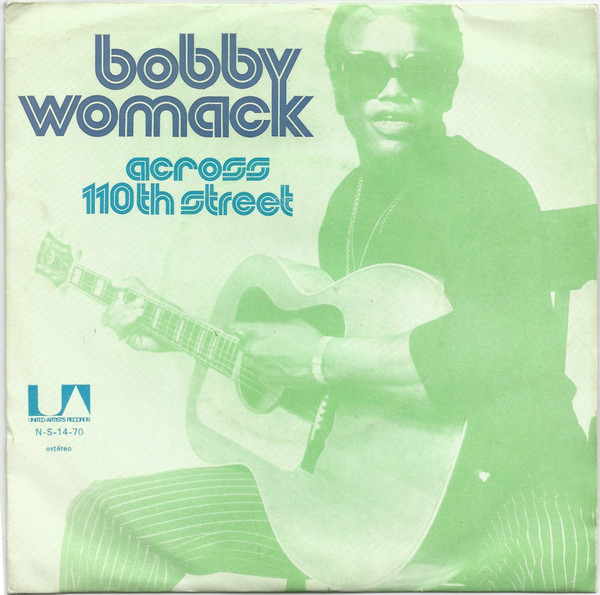
Bobby Womack’s 1973 hit single Across 110th Street was the title song from Barry Shear-directed movie starring Anthony Quinn for which Womack provided the soundtrack music. The song peaked at #56 on the Billboard 100 and #19 in the R&B Charts. The song was written by Bobby Womack and J.J. Johnson.
It was used in the movie by Quentin Tarantino “Jackie Brown” in 1997 and featured in the 2007 movie “American Gangster.” I’m glad that it has had a revival of sorts and didn’t get lost in history.
Bobby Womack was asked if he noticed his audience changed after this song.
Bobby Womack: I did simply because, at that particular time, that was a change for me, to record with orchestration like that. Across 110th Street had meaning, because although I lived on Central Avenue in Cleveland Ohio [growing up], it was like Across 110th Street. That’s what made me in the frame of mind to write the lyric as I did, because it sort of typified me and my brothers growing up.
I was the third brother of five Doing whatever I had to do to survive I’m not saying what I did was all right Trying to break out of the ghetto was a day-to-day fight
Been down so long, getting up didn’t cross my mind But I knew there was a better way of life that I was just trying to find You don’t know what you’ll do until you’re put under pressure Across 110th Street is a hell of a tester
Across 110th Street Pimps trying to catch a woman that’s weak Across 110th Street Pushers won’t let the junkie go free Across 110th Street Woman trying to catch a trick on the street, ooh, baby Across 110th Street You can find it all in the street
Ooh, ooh-ooh-ooh, ooh-ooh-ooh, oh-oh-oh
I got one more thing I’d like to talk to y’all about right now
Hey, brother, there’s a better way out Snorting that coke, shooting that dope, man, you’re copping out Take my advice, it’s either live or die You got to be strong if you want to survive
The family on the upper side of town Would catch hell without a ghetto around In every city you’ll find the same thing going down Harlem is the capital of every ghetto town Help me sing it
Across 110th Street Pimps trying to catch a woman that’s weak Across 110th Street Pushers won’t let the junkie go free Oh, across 110th Street A woman trying to catch a trick on the street, ooh, baby Across 110th Street You can find it all In the street Yes, you can
Oh, look around you, look around you Look around you, look around you Yeah Yeah
Welcome to the Hanspostcard TV Draft. I hope you will enjoy it! Today’s post was written by Keith at https://nostalgicitalian.com/
For my next pick in the Hanspostcard TV Show Draft is one that is one of my all time favorites. I don’t remember when I first was introduced to this show, but I am guessing my dad had something to do with it. Early on in the draft, I chose Police Squad, which only aired 6 episodes. This show is known for its “Classic 39” – The Honeymooners.
This isn’t my first blog about the show. Some time ago, I took part in a “Favorite TV Episode” Blogathon and picked 2 of my favorite episodes to present. You can read that blog here:
When you think about 50’s TV shows, there was very little struggle involved. Think about it. I Love Lucy, The Adventures of Ozzie and Harriet, The Andy Griffith Show, and Leave it to Beaver all showed families who were living in nice homes or apartments, showed no signs of financial struggles, and while there may be a misunderstanding here and there, it was mostly “bliss.” In 1955-1956, however, The Honeymooners focused on two couples from New York, who were struggling to get by.
The show focused on the lives of Ralph (Jackie Gleason) and Alice Kramden (Audrey Meadows), and Ed (Art Carney) and Trixie Norton (Joyce Randolph). One article I found on the show says this about Gleason’s Kramden character: Ralph was the get-rich-quick scheming, short-tempered, soft-hearted guy who was always striving for greatness, but never made it out of that two-room Brooklyn apartment. And that’s one of the main attractions for even the most casual of viewers: the characters are so identifiable. As Jackie himself said at the time, “Everything we did could have happened. People like the show, because we are them.”
The show began as a simple sketch on the DuMont Television Network, on the Cavalcade of Stars. The original hosts were Jack Carter and Jerry Lester, but in July of 1950 comedian Jackie Gleason took over the hosting duties. In the process, Gleason took the struggling show and turned it around to be a hit. The show, which featured comedy skits and a number of different performers each week, was broadcast live in front of a theater audience. In 1951, Jackie and his writers came up with the idea for a sketch called The Honeymooners. It was about a struggling couple living in Brooklyn who frequently fought, but in the end, there was no question that they loved each other.
Leonard Stern was a writer on both The Honeymooners and The Jackie Gleason Show. In an interview with the Archive of American Television he stated, “We started doing one sketch of The Honeymooners every five or six weeks and the response of people on the street was tremendous. So we started doing them every other week. Eventually, though, everyone, including Jackie, lost interest in the other characters in the different sketches, so we started to do them every week until the fatigue level hit its high and we’d have to take a break. I think Gleason had fun doing them, because he recognized the impact Kramden and Alice and Norton and Trixie were having on the audience. I’m not a great fan of ratings, but let me say that 53% of the total television audience was watching the show. There’s nothing like that in existence today. It was astonishing and the show itself was live. Remember, the audience of 3,000 people filled that theater. You earned your laughs. It was a resounding success and very exhilarating for all of us. It was opening night every week.”
When Gleason left the Dupont Network and went to CBS, he hosted the Jackie Gleason Show, where the Honeymooners sketches continued. In the 1952 season, the sketches usually ran between seven and 13 minutes. In the following season, and those sketches ran for a minimum of 30 minutes, and sometimes longer. Then, in the 1954-55 season, they actually filled the entire hour of The Jackie Gleason Show and was doing so well in the ratings that it occasionally surpassed the viewership of I Love Lucy. That is almost unheard of!
In the 1955-56 season, The Jackie Gleason Show literally became The Honeymooners! It aired as a half-hour sitcom that was filmed in front of a studio audience. In total, 39 episodes were produced, and these episodes are the ones that are still being broadcast today. These 39 episodes are the ones that most people remember.
I read an article that said Jackie Gleason had actually been given a three-year contract from CBS for 78 episodes of The Honeymooners to be produced in the first two seasons. The contract also included an option for a third season of 39 more. For whatever it is worth, Gleason felt the quality of the scriptwriting couldn’t be maintained, and the show was mutually canceled by him and CBS.
A Closer Weekly article says: What’s particularly impressive about The Honeymooners living on the way it has is the fact that back in the day, there needed to be a minimum of 100 episodes of a show available so that local stations could run it five days a week. Any less made syndication difficult, since the cycle would be repeated that much sooner. But then there was The Honeymooners, with a mere 39 episodes to offer up, yet it worked. And continues to do so.
In a 1996 appearance on The Tonight Show with Johnny Carson, Jackie was asked why the show ended. He told Carson, “We were running out of ideas. I liked The Honeymooners and I liked doing them, and I didn’t want to denigrate them by forcing scenes that didn’t mean anything. So I wanted to quit, but they didn’t believe me. They thought I had another job someplace, but I didn’t. I’m glad I did stop them, because what we had done was good and if we had gone any further, we might have spoiled it.”
Those “Classic 39” are classic for a reason. They are still funny. The situations that The Kramdens and the Nortons muddle through every week will make you laugh, cry, think, and smile. They still hold up today. Each one of them has memorable scenes and quotable lines.
In one episode Ralph tells his boss he is a great golfer and is immediately asked to go play around with him. Now Ralph needs to learn how to play – and fast. He finds the perfect teacher in his best friend Ed Norton. In pure Art Carney fashion, Ed reads from a book that you must “address the ball,” to which he takes the club, stands in front of the ball, looks down and says, “Hello, Ball!”
An episode of the show was featured in the movie Back To The Future. When Marty McFly winds up in 1955, a family is watching the episode The Man From Space. Intending to win the $50 first prize at the Racoon Lodge’s costume ball, Ralph decides to create his own outfit. And what an outfit! After appropriating (among other things) a faucet, a pot, a radio tube, and the icebox door, he presents himself as the Man from Space.
In another episode, Alice says she wants to go dancing. Ralph has Ed come over to teach him how to dance. Ralph’s outfit is hilarious (he tells Alice it is “what all us cats where! I’m hip!”). The dance (to the song The Hucklebuck) is worth the watch.
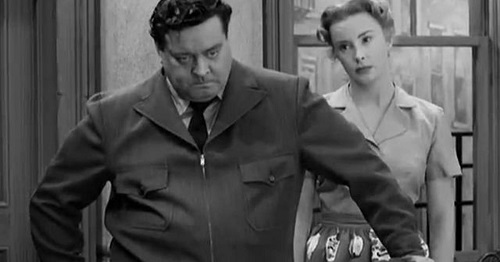
To me, sometimes the funniest stuff can be as simple as Ralph’s face …
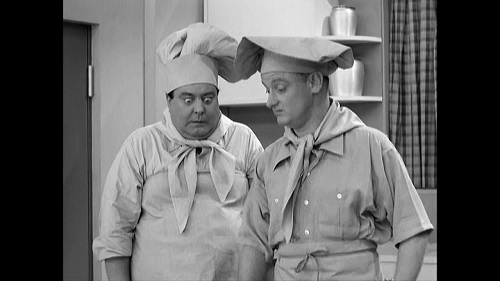
In another classic episode, Ralph and Norton appear on a TV commercial trying to sell their Handy Housewife Helper, a kitchen gadget that can, among other things, open cans, remove corns, and “core an apple.” In the inspired, ad-lib-laden episode, “Chef of the Future” Ralph demonstrates the wonders of the gizmo to “Chef of the Past” Norton. Rehearsal goes great, but in front of live cameras, Ralph freezes up.
Art Carney was the perfect second banana. The play between him and Gleason is classic. In one episode Norton’s sleepwalking becomes a waking nightmare for Ralph. Ralph can’t get any sleep because he’s been asked to keep his pal from wandering off on late-night strolls around the neighborhood.
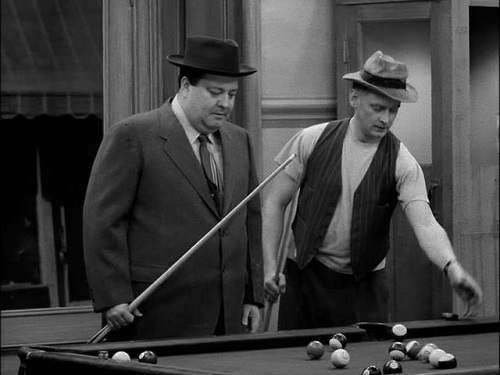
Another classic episode takes place at the pool hall where Ralph gets into an argument with the diminutive guy named George. “My friend is even bigger than me,” he tells Ralph. “I have a friend Shirley that’s bigger than you,” Ralph counters. But then he comes eye-to-chin with George’s friend, the towering Harvey, who challenges Ralph to a fight. This prompts Norton to observe: “He’s even bigger than your friend Shirley.”
Many of the plot lines from the classic episodes made it into the Joe Piscopo and Eddie Murphy novelty hit “The Honeymooners Rap.”
In the 1980’s, Jackie Gleason announced that in his vault he had found a number of Honeymooners skits from The Jackie Gleason Show that had been shot on Kinescope, which is a way of filming directly through a lens that actually focused on the screen of a video monitor. 107 of those skits were released on DVD and syndicated to television stations. These would have been shot before the “Classic 39” and two of them stand out to me.
Jackie had been a guest star on the Jack Benny Show, so Jack makes an appearance as the Kramden’s landlord. The rent is being raised and Ralph is mad. When there is a knock on the door, Ralph opens it and Jack Benny is standing there. The audience chuckles in anticipation. Ralph calls to Alice that “the Landlord’s here” and the audience erupts. Benny stands there quietly as Ralph reads him the riot act! He calls him a “penny pincher” (which plays into Benny’s “cheap” character”) and says that he pinches a penny so hard that when he is through “both heads and tails are on the same side of the coin!”
In another lost episode, Ralph must lose weight for work. All through the episode, he is starving. Finally, he is left alone in the apartment and sitting at the kitchen table. He notices a cake pan. He lifts the lid and sees the cake. His eyes bulge and he goes nuts. As he is about to tear into the cake Alice walks in. “Everybody get back,” he yells! The brief 3 minutes of him staring at the cake before getting ready to eat it is comedy genius!
As brilliant as Jackie Gleason was as Ralph Kramden, he never won an Emmy Award for it. Art Carney, however, won 5 Emmys for Best Supporting Actor on The Honeymooners and the Jackie Gleason Show.
The Honeymooners influenced a huge 1960s cartoon – The Flintstones. It is a blatant rip-off of the show and was a huge hit. It is said that Gleason considered suing Hanna-Barbera Productions because of the similarities, but decided that he did not want to be known as “the guy who yanked Fred Flintstone off the air”
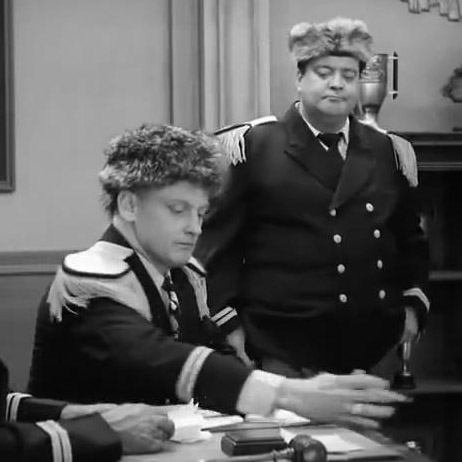
Water Buffalo members and Racoon members
The Honeymooners is over 65 years years old! Joyce Randolph, who played Trixie Norton is 97 years old and still going strong. I wonder if Gleason ever thought that those 39 episodes would still find an audience today and that they would still bring much laughter.
In 1990, Audrey Meadows joined Bob Costas on Later to discuss the show. You can see that footage here:
If you have never seen an episode, I encourage you to do so. The two episodes I mentioned in a previous blog are good places to start – TV or Not TV or A Matter of Record. Most are available on Youtube.
This and I Want To Be Sedated are my two favorite songs by the Ramones. I’ve been apprehensive about posting this one because of obvious reasons. UK #1s blog (Stuart) and I were talking a couple of weeks ago about how much we liked this song. It has a couple of really interesting stories that go with it as you might imagine.
There are two stories about how this song came to be. The most popular (but probably not true) is this one. Johnny Ramone, the politically conservative member of the group, stole away liberal Joey Ramone’s girlfriend Linda Daniele, and Joey wrote this song about it. So Joey made the comparison of the KKK to Johnny in the song…not because Johnny was a racist but because of his conservative views and being a tad upset about the Linda thing. Johnny eventually married Linda, causing a huge strain on his relationship with Joey.
More likely it’s this one. Joey’s brother, Mickey Leigh, has said that the song was written before he knew about Johnny and Linda. Leigh said their parents disapproved of interracial relationships. Joey was dating a black woman at the time and one day Leigh noticed they weren’t together anymore. He asked Joey what happened to the girl and Joey responded by saying “the KKK took my baby away.” The KKK was Joey’s parents who broke them up.
I seriously doubt if Johnny would have played on a song with him being referred to as the KKK. That being said…the marriage did cause a huge strain on Joey and Johnny’s personal relationship. Even before this, they were extreme in their political beliefs so they didn’t have an easy relationship anyway.
Monte Melnick the band’s tour manager on Joey and Johnny after the marriage: “They came to an agreement where they kind of tolerated each other, It’s like a business. You’re working with someone you don’t particularly like, but you’re still working there because you like your job.”
Linda Daniele: “So when it came time for Joey and me to break up, we understood. It was time to move on. Johnny was in love with me, I had been falling in love with Johnny. Joey knew that. For the first couple of years, I didn’t speak to Joey and then of all a sudden, this guy was doing a Ramones book. And out of the blue Joey called me. From that moment on, me and Joey always stayed in touch. I know people go, ‘Oh, you broke his heart.’ But Joey got another girlfriend right away after I left!”
The song was on their 1981 album Pleasant Dreams. The album peaked at #58 in the Billboard Album Charts.
Here are the Drive-By Truckers with a cover
The KKK Took My Baby Away
She went away for the holidays Said she’s going to L.A. But she never got there She never got there She never got there, they say
The KKK took my baby away They took her away Away from me The KKK took my baby away They took her away Away from me
Now I don’t know Where my baby can be They took her from me They took her from me I don’t know Where my baby can be They took her from me They took her from me
Ring me, ring me ring me Up the President And find out Where my baby went Ring me, ring me, ring me Up the FBI And find out if My baby’s alive Yeah, yeah, yeah








 l. – r. Jack, Gerry, Sandra, and Brian
 Amanda Redman as Deputy Superintendant Sandra Pullman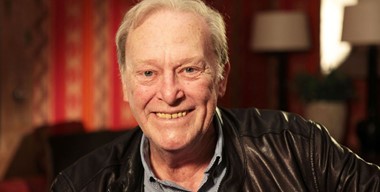

 Susan Jameson as Esther











 PowerPop... An Eclectic Collection of Pop Culture