Twilight Zone – Nick Of Time

★★★★★ November 18, 1960 Season 2 Episode 7

If you want to see where we are…HERE is a list of the episodes. (I have cleaned the page up)

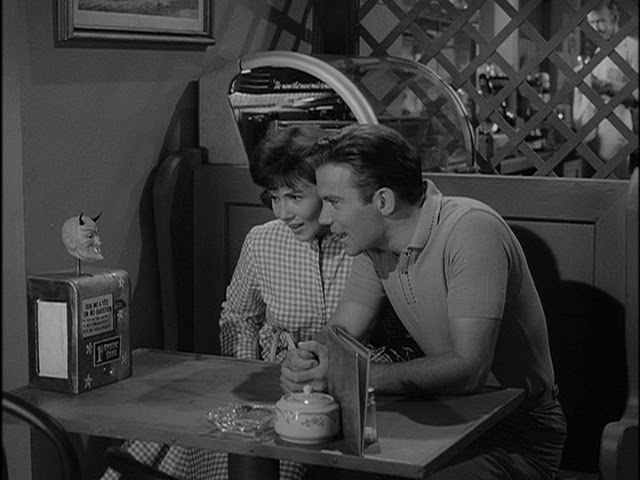
This is one of the two Twilight Zones that William Shatner appeared in. In this one we never know if any thing supernatural is happening or not. It plays on people’s superstitions and beliefs. William Shatner’s character Don Carter is superstitious and comes with a four leaf clover and rabbits foot. That quietly sets up the episode.  Although the answers are extremely general, he soon becomes convinced that the machine has correctly predicted two events: his promotion to office manager and a close call he and Pat have while crossing the street.

The couple has to make a decision, will they let the machine decide their destiny or will they try to make it on their own? Both Shatner and Patricia Breslin play this well…although especially Shatner. I never think of him as a great actor but he hits this one out of the park.  It’s not just Don that has trouble getting past this possible mystical machine…more believing customers are on their way.

It took me a few viewings to appreciate this episode as much as I do. It works on a Twilight Zone level and beyond that. This one could have easily been on Hitchcock. The suspense builds through out the episode because Shatner and Breslin’s chemistry.

In fact Richard Matheson, said that he wished that Pat Breslin (who played Pat Carter) had been available again to play the wife of Shatner’s character in the season five episode “Nightmare at 20,000 Feet.” That would have been great as the couple would have continued their story.

The Magic 8 Ball comes to mind that were popular in the seventies and even now.

The Twilight Zone" Nick of Time (TV Episode 1960) - IMDb

This show was written by Richard Matheson and Rod Serling

Rod Serling’s Opening Narration: 

The hand belongs to Mr. Don S. Carter, male member of a honeymoon team on route across the Ohio countryside to New York City. In one moment, they will be subjected to a gift most humans never receive in a lifetime. For one penny, they will be able to look into the future. The time is now, the place is a little diner in Ridgeview, Ohio, and what this young couple doesn’t realize is that this town happens to lie on the outskirts of the Twilight Zone.

Summary

Don and Pat Carter are on their honeymoon when their car breaks down in the small town of Ridgeview, Ohio. They have a few hours to spare while their car is being repaired and spend time in the diner. There they find a fortune-telling machine, a game where you can ask a question and for a penny will spit out an innocuous answer. When the machine apparently begins to predict events – Don’s promotion at work, a near accident on the street outside – a superstitious Don becomes infatuated with the device threatening his marriage and his future with Pat.

Rod Serling’s Closing Narration:

Counterbalance in the little town of Ridgeview, Ohio. Two people permanently enslaved by the tyranny of fear and superstition, facing the future with a kind of helpless dread. Two others facing the future with confidence — having escaped one of the darker places of the Twilight Zone.

CAST

Rod Serling … Narrator / Self – Host (uncredited)
William Shatner … Don Carter
Patricia Breslin… Pat Carter
Guy Wilkerson … Counterman
Stafford Repp … Mechanic
Walter Reed … Man
Dee Carroll … Woman
Robert McCord … Diner Patron (uncredited)

Twilight Zone – The Eye of the Beholder

★★★★★  November 11, 1960 Season 2 Episode 6

If you want to see where we are…HERE is a list of the episodes.

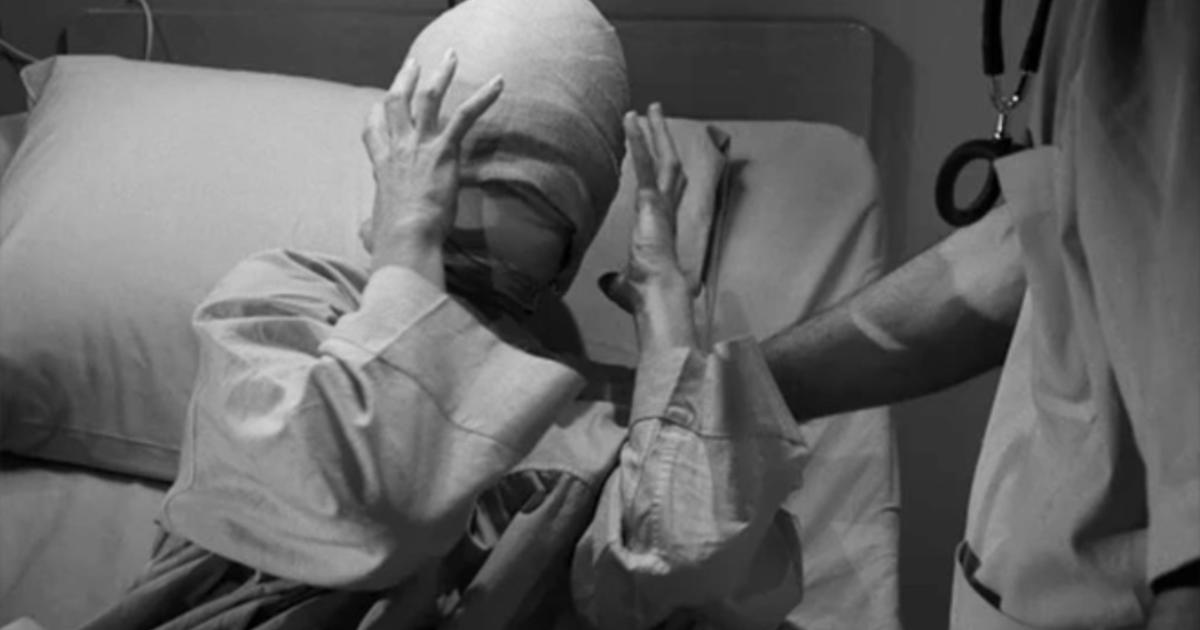
One of the true classic Twilight Zones. The episode is set in a dystopian society. Rod Serling was great at creating them. To be different…  means being ostracized with the rest of your kind. It could be set on earth, a far away planet, or in a different time…it doesn’t matter. Undesirables get exiled for the crime of being different.

The ending has an incredible twist. It still holds up through on repeat viewings. What is normal? What is beauty? Who decides that?

Two actresses play the same character in this episode. Maxine Stuart and Donna Douglas.  The first was Maxine Stuart, as Janet Tyler in bandages. The director cast her because of her voice, her voice did not suggest a beautiful girl it suggested a strong, harsh, realistic woman, and therefore the unveiling would be a surprise. She was going to dub her voice over the top of Donna Douglas’s part but Donna’s voice was so similar to  they just kept her voice.

A young Donna Douglas plays Janet Tyler. Although not well known at the time, she soon would be, as Jed Clampett’s daughter Ellie on The Beverly Hillbillies. She was not yet known to anybody, but she was absolutely stunning.

I’ve seen this epidsode listed by two names…now I know why. Originally a “The” preceded the title, until television producer Stuart Reynolds threatened to sue Rod Serling for the use of the name because at the time he was selling an educational film of the same name to public schools. Reruns following the initial broadcast featured the title screen “The Private World of Darkness.”

This show was written by Rod Serling

Rod Serling’s Opening Narration: 

Suspended in time and space for a moment, your introduction to Miss Janet Tyler, who lives in a very private world of darkness. A universe whose dimensions are the size, thickness, length of the swath of bandages that cover her face. In a moment we will go back into this room, and also in a moment we will look under those bandages. Keeping in mind of course that we are not to be surprised by what we see, because this isn’t just a hospital, and this patient 307 is not just a woman. This happens to be the Twilight Zone, and Miss Janet Tyler, with you, is about to enter it.

Summary

Janet Tyler is in hospital having undergone treatment to make her look normal. It’s her 11th trip to the hospital for treatment and she is desperate to look like everyone else. Some of her earliest childhood memories are of people looking away, horrified by her appearance. Her bandages will soon come off and she can only hope that this, her last treatment, will have done the trick. If not, her doctor has told she will be segregated with a colony of similar looking people. All that to say that truth is truly in the eye of the beholder.

VIDEO SPOILERS

Rod Serling’s Closing Narration:

Now the questions that come to mind: “Where is this place and when is it?” “What kind of world where ugliness is the norm and beauty the deviation from that norm?” You want an answer? The answer is it doesn’t make any difference, because the old saying happens to be true. Beauty is in the eye of the beholder, in this year or a hundred years hence. On this planet or wherever there is human life – perhaps out amongst the stars – beauty is in the eye of the beholder. Lesson to be learned in the Twilight Zone.

CAST

Rod Serling – Narrator
Maxine Stuart – Janet Tyler (under bandages)
Donna Douglas – Janet Tyler (unmasked)
William D. Gordon – Doctor Bernardi
Jennifer Howard – Nurse
Edson Stroll – Walter Smith

Twilight Zone – The Howling Man

★★★★★  November 4, 1960 Season 2 Episode 5

If you want to see where we are…HERE is a list of the episodes.

This one was included in my top 10…but it’s been months now so I thought I would post this with some changes. This weekend will be the best for Twilight Zones so far…two classic episodes. Warning…it’s almost impossible writing this review without spoilers for this particular episode. 

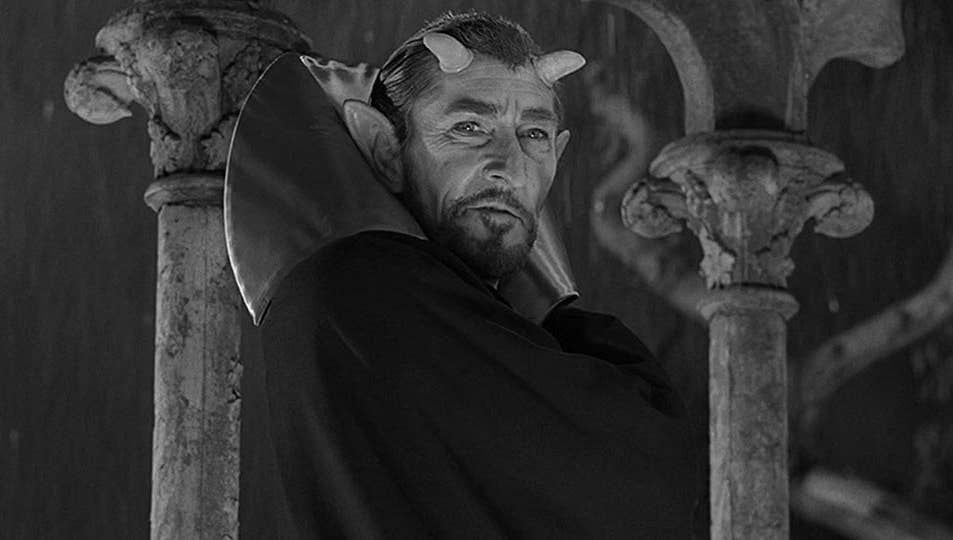
This one is not one of the comedic episodes…it is deadly serious, haunting and chilling. The Howling Man doesn’t have a lot of action but you feel sorry for David Ellington…he realized too late that he has set the devil loose in the world. The special effects of the ragged looking man turning into the devil was spot on. It would look good now in todays time. One well known actor was in this one, John Carradine played Brother Jerome.

This is very much a classic Twilight Zone episode. The set reminds me of those Universal Monster movie sets of the 40s and 50s. The episode tells us that evil can come in many forms and appeal to human weaknesses. As far as David Ellington… the road to hell is paved with good intentions.

Charles Beaumont had originally envisioned the monks would keep the Howling Man imprisoned by putting a cross in front of his cell door. Fearful of a backlash in the religious community, the producers substituted the “staff of truth,” over Beaumont’s objections.

This show was written by Charles Beaumont and Rod Serling

Rod Serling’s Opening Narration: 

The prostrate form of Mr. David Ellington, scholar, seeker of truth and, regrettably, finder of truth. A man who will shortly arise from his exhaustion to confront a problem that has tormented mankind since the beginning of time. A man who knocked on a door seeking sanctuary and found, instead, the outer edges of The Twilight Zone.

Summary

David Ellington recounts a story, one that began just after the end of World War I. He was hiking in Europe when he sought refuge during a violent rain storm. The residence is isolated and its head, Brother Jerome, tells him he cannot stay. Ellington is ill however and during his short stay meets someone who is being kept prisoner and howls constantly through the night. Ellington believes the Howling Man is being kept there for no good reason but Brother Jerome tells him of the man’s true nature. The decision Ellington makes will haunt him for the rest of his life.

Rod Serling’s Closing Narration:

Ancient folk saying: “You can catch the Devil, but you can’t hold him long.” Ask Brother Jerome. Ask David Ellington. They know, and they’ll go on knowing to the end of their days and beyond — in the Twilight Zone.

CAST

Rod Serling … Narrator / Self – Host (uncredited)
H.M. Wynant … David Ellington
John Carradine … Brother Jerome
Robin Hughes … The Howling Man
Frederic Ledebur … Brother Christophorus
Ezelle Poule … Housekeeper

Twilight Zone – A Thing About Machines

★★★ October 28, 1960 Season 2 Episode 4

If you want to see where we are…HERE is a list of the episodes.

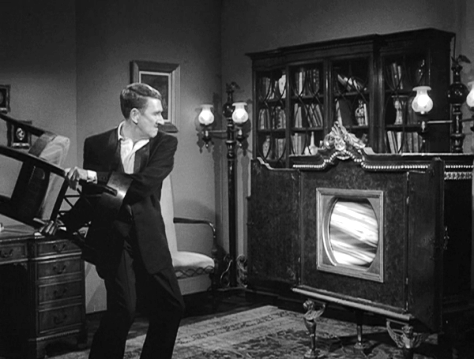
There is one question about this episode. Are the machines really against him or is he having delusions? Richard Haydn plays Bartlett Finchley  a writer who is an insulting snob and one of the most unlikable characters you could meet.  There are not many redeemable qualities in Finchley…change “not many” to none. He has trouble with machines and it seems that machines have trouble with him…but is it in his mind?

Richard Haydn is great in this part of playing this character. You meet his secretary and TV repairman and it seems the abuse from Finchley has been going on for a while…so this is nothing new. Machines can be bothersome…your computer freezing, car stalling, or your phone dying when you really need it. On that note you can relate but it’s still hard to dig up sympathy for Mr. Finchley.

You have to wonder if this episode influenced future works like Christine and The Car.

This weekend we will have two excellent episodes…two of the best. 

This show was written by Rod Serling

Rod Serling’s Opening Narration: 

This is Mr. Bartlett Finchley, age forty-eight, a practicing sophisticate who writes very special and very precious things for gourmet magazines and the like. He’s a bachelor and a recluse with few friends, only devotees and adherents to the cause of tart sophistry. He has no interests save whatever current annoyances he can put his mind to. He has no purpose to his life except the formulation of day-to-day opportunities to vent his wrath on mechanical contrivances of an age he abhors. In short, Mr. Bartlett Finchley is a malcontent, born either too late or too early in the century, and who, in just a moment, will enter a realm where muscles and the will to fight back are not limited to human beings. Next stop for Mr. Bartlett Finchley – The Twilight Zone.

Summary

Bartlett Finchley is an odd man, a writer who contributes to food magazines and the like. He lives alone and is always it seems in need of a repairman for one piece of household equipment or another. As time has gone by, he seems to be in a constant battle with machines – his typewriter, his television – which all have the same message for him: get out of the house. He has no intention of doing so however and the battle begins

Rod Serling’s Closing Narration:

Yes, it could just be. It could just be that Mr. Bartlett Finchley succumbed from a heart attack and a set of delusions. It could just be that he was tormented by an imagination as sharp as his wit and as pointed as his dislikes. But as perceived by those attending, this is one explanation that has left the premises with the deceased. Look for it filed under ‘M’ for Machines – in The Twilight Zone.

CAST

Rod Serling … Narrator / Self – Host (uncredited)
Richard Haydn … Bartlett Finchley
Barbara Stuart … Ms. Rogers
Barney Phillips … TV Repairman
Henry Beckman … Cop
Jay Overholts … Intern
Margarita Cordova … Girl on TV
Lew Brown … Telephone Repairman (uncredited)

Twilight Zone – Nervous Man in a Four Dollar Room

★★★★  October 14, 1960 Season 2 Episode 3

If you want to see where we are…HERE is a list of the episodes.

If you want to see The Twilight Zone now that Netflix lost the rights to it…you can see it on Hulu.

Rod Serling could write about a certain kind of character better than most. The small time criminal who is a loser. They are not or ever will be a successful crook or human being just the B level kind…forever bench warmers.

In this episode Rod took a different approach to the crook (Jackie Rhoades) played by Joe Mantell and you have some sympathy for him…which usually is not the case in the Twilight Zone. In Jackie you can find a trace of conscious although it’s buried in his cowardice.

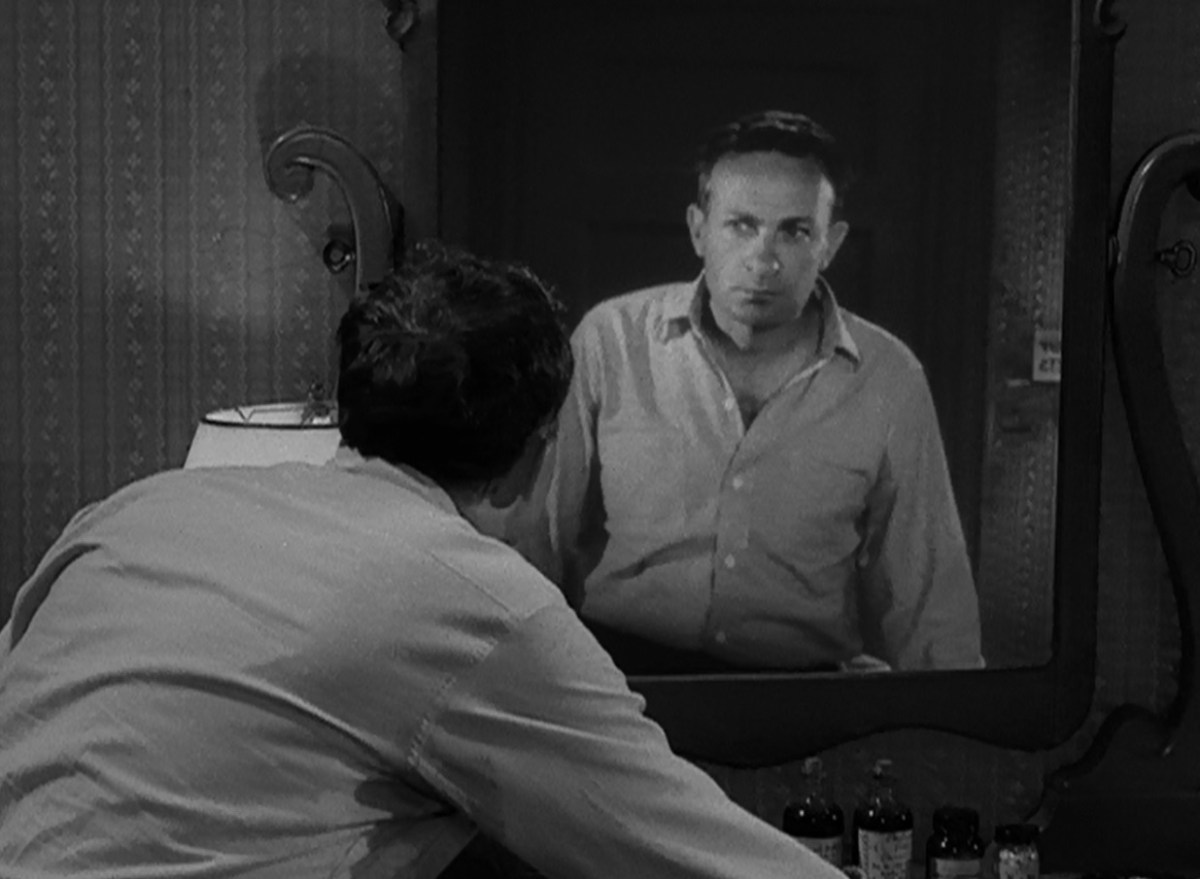
Jackie battles himself in this episode and Mantell pulls this off wonderfully. Like King Nine Will Not Return, Mantell turns this into a one man show for most of the episode. His boss (George) played by William D. Gordon takes advantage of the coward Jackie and wants him to do the ultimate crime. The battle begins between Jackie and himself in his hot cheap motel room.

The special effects with the mirror in this one are really good.

This one is about redemption or the chance of redemption if you can find it in yourself.

Something I noticed in this episode is Joe Mantell talking into the mirror at himself said “You talking to me?” and I had to wonder if Martin Scorsese was taking notice before he made Taxi Driver.

This show was written by Rod Serling

Rod Serling’s Opening Narration: 

This is Mr. Jackie Rhoades, age thirty-four, and where some men leave a mark of their lives as a record of their fragmentary existence on Earth, this man leaves a blot, a dirty, discolored blemish to document a cheap and undistinguished sojourn amongst his betters. What you’re about to watch in this room is a strange mortal combat between a man and himself, for in just a moment, Mr. Jackie Rhoades, whose life has been given over to fighting adversaries, will find his most formidable opponent in a cheap hotel room that is in reality the outskirts of The Twilight Zone.

Summary

Rod Serling’s Closing Narration:

Exit Mr. John Rhoades, formerly a reflection in a mirror, a fragment of someone else’s conscience, a wishful thinker made out of glass, but now made out of flesh, and on his way to join the company of men. Mr. John Rhoades, with one foot through the door and one foot out of the Twilight Zone.

CAST

Joe Mantell … Jackie Rhoades
William D. Gordon … George
Rod Serling … Narrator / Self – Host (uncredited)

Twilight Zone – The Man in the Bottle

★★★★  October 07, 1960 Season 2 Episode 02

If you want to see where we are…HERE is a list of the episodes.

This is a dark take on the Genie in the Bottle/Monkey’s Paw…but what else would you expect in the Twilight Zone? It’s another be careful for what you wish for episode and it’s a good one.

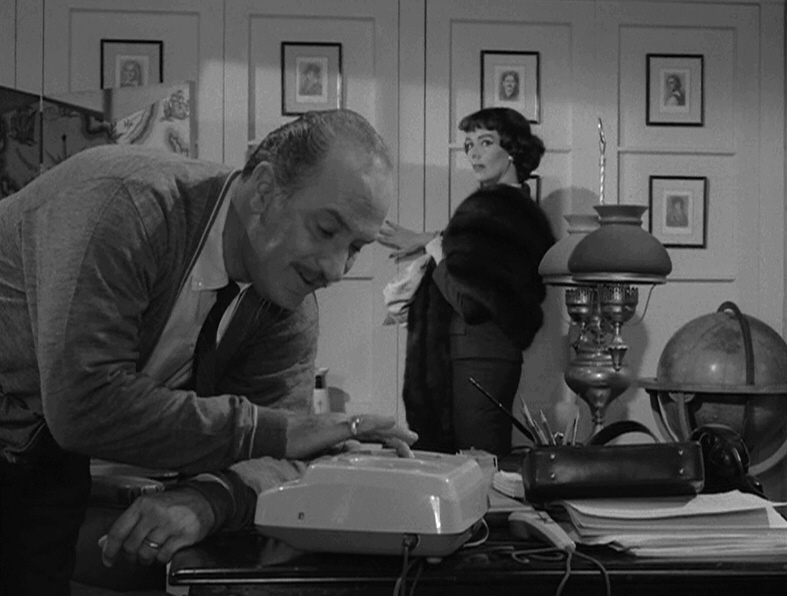
Luther Adler and Vivi Janiss play Arthur and Edna Castle, a poor couple running a pawn shop. They are near bankruptcy but with kind hearts…helping those around them. There is always a price to be paid for anything you get…something Arthur and Edna learn really quick.

Again casting got this one perfect. Joseph Ruskin plays the Genie and creepy is a nice word for him. This is not your Genie in a turban or Barbara Eden in a skimpy outfit. This Genie doesn’t play…he is honest to a fault and you are not going to slip something by him. As the wishes count up…. Arthur loses his cool and himself.

The third wish I won’t talk about here…but it’s got plenty of consequences for Arthur. Appreciate what you have is the message that I get.

This show was written by Rod Serling

Rod Serling’s Opening Narration: 

“Mr. and Mrs. Arthur Castle, gentle and infinitely patient people whose lives have been a hope chest with a rusty lock and a lost set of keys. But in just a moment that hope chest will be opened and an improbable phantom will try to bedeck the drabness of these two people’s failure laden lives with the gold and precious stones of fulfillment. Mr. and Mrs. Arthur Castle, standing on the outskirts and about to enter the Twilight Zone.”

Summary

Arthur and Edna Castle run a small antique shop but business is not good and they’re having trouble paying their bills. Despite that, the good-hearted Arthur buys an old wine bottle from the desperate Mrs. Gumley for a dollar. When he knocks the bottle open, a genie appears offering them four wishes. They soon find that their wishes don’t lead them to the outcomes they had hoped for and certainly don’t lead to happiness.

Rod Serling’s Closing Narration:

A word to the wise, now, to the garbage collectors of the world, to the curio seekers, to the antique buffs, to everyone who would try to coax out a miracle from unlikely places. Check that bottle you’re taking back for a two-cent deposit. The genie you save might be your own. Case in point, Mr. and Mrs. Arthur Castle, fresh from the briefest of trips into The Twilight Zone.

CAST

Rod Serling … Narrator / Self – Host (uncredited)
Luther Adler … Arthur Castle
Vivi Janiss … Edna Castle
Joseph Ruskin … Genie
Olan Soule … IRS Man (as Olan Soulé)
Lisa Golm … Mrs. Gumley
Peter Coe … German (uncredited)
Albert Szabo … German Officer #2 (uncredited)

Twilight Zone – King Nine Will Not Return

★★★ 1/2  September 30, 1960 Season 2 Episode 1

If you want to see where we are…HERE is a list of the episodes.

Now we are starting the second season.

This is an episode about survivor’s guilt….how Captain Embry thinks he should have been with his crew . Robert Cummings plays Captain James Embry and the episode is driven by him. Cummings does a fantastic one man show for the first of the episode.

This revisits the pilot episode’s plot and it would explore again in the fourth season with The Thirty-Fathom Grave. The scenery and they way they present this episode is realistic.

The episode was based on a real event – the discovery of the B-24 Liberator four engine bomber Lady Be Good. The plane lost course during a WWII raid over Italy in 1943, and crashed deep in the Libyan desert. In 1959, a team of British geologists stumbled upon the wreckage — discovering that while the supplies were intact, the nine-man team were nowhere to be found. In the episode, the marker of a grave of a member of the crew of King Nine is dated “5 April, 1943,” the day on which the Lady Be Good was lost.

The bomber aircraft used in this episode was a North American Aviation B-25C-10NA 42-32354, which still exists in storage with Aero Trader, Borrego Springs, California. The plane was bought from the air force for $2500 (rather than the original cost — $345,000). It was disassembled, flown to set, and reassembled there.

This show was written by Rod Serling

Rod Serling’s Opening Narration: 

This is Africa, 1943. War spits out its violence overhead, and the sandy graveyard swallows it up. Her name is King Nine, B-25, medium bomber, Twelfth Air Force. On a hot, still morning, she took off from Tunisia to bomb the southern tip of Italy. An errant piece of flak tore a hole in the wing tank and, like a wounded bird, this is where she landed, not to return on this day, or any other day.

Summary

The pilot of a downed B-25, Capt. James Embry, awakens in the desert, with no memory of how he got there. More worrisome, his crew’s nowhere to be found. He begins to wonder if he’s hallucinating, especially after he sees one of his men, sitting in the cockpit. When he awakens in hospital, he thinks it might’ve all been a dream, but wonders: did any of this really happen?

Rod Serling’s Closing Narration:

Enigma buried in the sand, a question mark with broken wings that lies in silent grace as a marker in a desert shrine. Odd how the real consorts with the shadows, how the present fuses with the past. How does it happen? The question is on file in the silent desert, and the answer? The answer is waiting for us – in the Twilight Zone.

CAST

Rod Serling … Narrator / Self – Host (uncredited)
Robert Cummings … Capt. James Embry (as Bob Cummings)
Gene Lyons … Psychiatrist
Paul Lambert … Doctor
Jenna McMahon … Nurse
Richard Lupino … Blake (uncredited)

Twilight Zone Season 1 Review

This is an extra post today after todays Twilight Zone…A World Of His Own

What a debut season! Out of 36 episodes we only had one episode below the Twilight Zone standards. That would be The Fever. We had nine 5 star episodes and it very easily could have been 12.

I thought I would post a tally for season 1 of this great series. There are a few I wish I would have bumped up from 4 1/2 to 5… Those would be The Lonely,  Long Live Walter Jameson, and The Last Flight.

Do any of you have any different thoughts on the rankings below?

I would like to link to two different bloggers doing other tv shows. The will be going through show by show like I’m doing here. Join in if you have a favorite show that you like. I’ll continue to have the Twilight Zone every Saturday, Sunday, and Wednesday.

Hanspostcard is going through the episodes of The Andy Griffith Show

Best 'The Andy Griffith Show' episodes, ranked - GoldDerby

John Holton is going through each episode of Hogan’s Heroes 

Hogan's Heroes Intro - YouTube

THE TWILIGHT ZONE

Season 1      
Episode Date Episode Stars
1 Oct 2, 1959 Where is Everybody?       3
2 Oct 9, 1959 One for the Angels     3.5
3 Oct 16, 1959 Mr. Denton on Doomsday  4.5
4 Oct 23, 1959 The Sixteen-Millimeter Shrine 3.5
5 Oct 30, 1959 Walking Distance   5
6 Nov 6, 1959 Escape Clause  4
7 Nov 13, 1959 The Lonely  4.5
8 Nov 20, 1959 Time Enough at Last     5
9 Nov 27, 1959 Perchance to Dream    3
10 Dec 4, 1959  Judgment Night  3.5
11 Dec 11, 1959 And When the Sky Was Opened    5
12 Dec 25, 1959 What You Need       3.5
13 Jan 1, 1960 The Four of Us Are Dying   3.5
14 Jan 8, 1960  Third From the Sun    5
15 Jan 15, 1960 I Shot an Arrow Into the Air  4
16 Jan 22, 1960 The Hitch-Hiker  5
17 Jan 29, 1960 The Fever 2.5
18 Feb 5, 1960 The Last Flight   4.5
19 Feb 12, 1960 The Purple Testament 4
20 Feb 19, 1960 Elegy  4
21 Feb 26, 1960 Mirror Image  3.5
22 Mar 4, 1960 The Monsters Are Due on Maple Street 5
23 Mar 11, 1960 A World of Difference   4
24 Mar 18, 1960 Long Live Walter Jameson  4.5
25 Mar 25, 1960 People Are Alike All Over  4
26 April 1, 1960 Execution 4
27 April 8, 1960 The Big Tall Wish 4
28 April 15, 1960 A Nice Place to Visit 5
29 April 29, 1960 Nightmare as a Child 4
30 May 6, 1960 A Stop at Willoughby  5
31 May 13, 1960 The Chaser 3
32 May 20, 1960 A Passage for Trumpet 4
33 June 3, 1960 Mr. Bevis  3.5
34 June 10, 1960 The After Hours  5
35 June 17, 1960 The Mighty Casey       3
36 July 1, 1960 A World of His Own  4

ELBA FLAMENCO | Rod Serling's Social Commentary in 'The Twilight Zone' |  DIGITAL PRODUCT MANAGER | PRODUCER | WRITER

Twilight Zone – A World of His Own

★★★★  July 1, 1960 Season 1 Episode 36

If you want to see where we are…HERE is a list of the episodes.

We have some to the last episode of the first season!

This episode features Rod Serling briefly interacting into the episode…not just giving a narration. It’s a clever story and it’s wrapped up in a light hearted episode and it’s one of the better ones. This episode has grown on me through the years. There is a small cast in this one. Keenan Wynn portrays playwright Gregory West  who can do something extraordinary with his Dictaphone.

Phyllis Kirk plays his unlikable wife to perfection. This is an interesting episode because the power that Gregory West has… could have been quite dangerous in the hands of another person. The show closes season 1 on a lighter note.

Years later Stephen King would write a story similar to this one called Word Processor of the Gods that would be turned into a Tales From The Darkside.

Rod Serling’s cameo at the end of the episode marked his first onscreen appearance in the show. Although Serling appeared on-screen at the end of most first season Twilight Zone episodes to plug the following week’s show, this is the only episode in the first season in which Rod Serling appears on-screen within the episode itself and not in a separate “coming next week” segment. This is also one of only two episodes of the entire series where Serling appears on camera at the conclusion of the episode.

This show was written by Richard Matheson

Rod Serling’s Opening Narration: 

The home of Mr. Gregory West, one of America’s most noted playwrights. The office of Mr. Gregory West. Mr. Gregory West—shy, quiet, and at the moment, very happy. Mary—warm, affectionate…And the final ingredient: Mrs. Gregory West.

Summary

Peeking into the window of her husband Gregory’s study, Victoria West sees him with a beautiful woman. When she finally gets into the room however, the woman is nowhere to be found. His explanation is preposterous – he claims that when he speaks into his dictation machine, the characters for his play come to life before his eyes. Victoria’s first reaction is that her husband should be committed and a demonstration still doesn’t quite convince her. Gregory has something else to show her.

Rod Serling’s Closing Narration:

Leaving Mr. Gregory West—still shy, quiet, very happy… and apparently in complete control of The Twilight Zone.

CAST

Rod Serling … Narrator / Self – Host (uncredited)
Keenan Wynn … Gregory West
Phyllis Kirk … Victoria West
Mary LaRoche … Mary (as Mary La Roche)
Modoc … Elephant (uncredited)

Twilight Zone – The Mighty Casey

★★★  June 17, 1960 Season 1 Episode 35

If you want to see where we are…HERE is a list of the episodes.

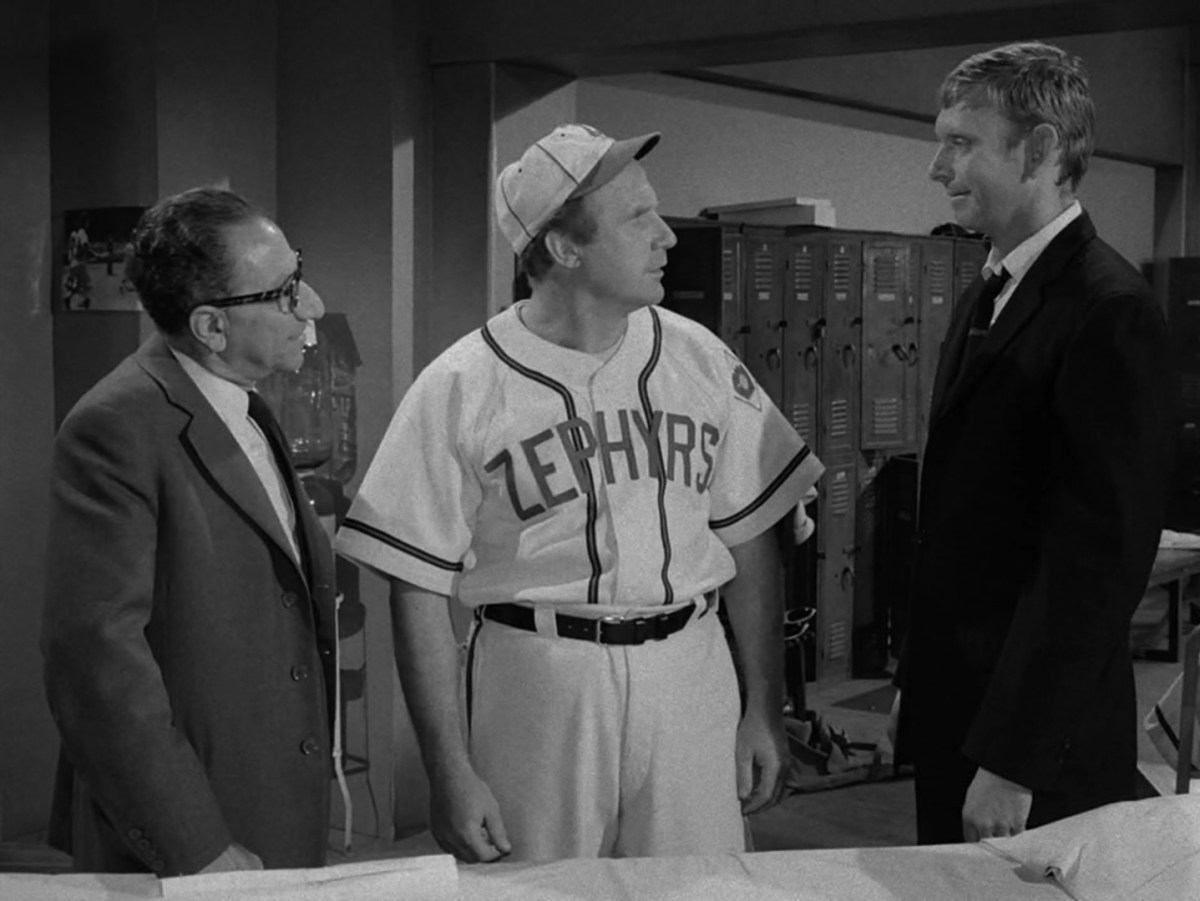
I’m a huge baseball fan and this one is a fun one. It’s a light hearted episode that features Jack Warden who is a frustrated manager. This is an episode that I watch once in a while but it’s not one on my heavy rotation. The plot is somewhat forced but it’s meant to be fun. Baseball fans would like this one.

This says a lot about Rod Serling….Paul Douglas, who had drinking habits, was originally cast to play McGarry but on set began to look red and read raspingly, and it wasn’t until his coronary-related death days after the episode was completed that it was realized he had been suffering poor health rather than reaction to drink. Because the episode was supposed to be a comedy, Rod Serling was reluctant to let it be broadcast with Douglas’ impending death essentially captured on film.

When CBS refused to pay for the episode to be re-shot, Serling personally underwrote the $27,000 it cost to have Jack Warden brought in to replace Douglas and to have some scenes re-done with Warden in place of Douglas.

The only shot that survived in the  broadcast version with Paul Douglas. You cannot tell it’s him but his back is to the camera. Serling had the humanity and dignity that he often wrote about.

File:The Mighty Casey.png

The closing narration was referencing the Dodgers that had moved to LA a few years before this was made by team owner Walter O’Malley, but in the following season after this aired, 1961, Sandy Koufax emerged as a future Hall of Famer, winning 129 games over the next 6 seasons with an ERA of 2.19. His teammate, Don Drysdale, won 111 games with an ERA of 2.88. The Dodgers won three pennants (1963, 1965, 1966) in those six years and two World Series (1963, 1965)…so Serling’s crystal ball was working.

This show was written by Rod Serling

Rod Serling’s Opening Narration: 

What you’re looking at is a ghost, once alive but now deceased. Once upon a time, it was a baseball stadium that housed a major league ball club known as the Hoboken Zephyrs. Now it houses nothing but memories and a wind that stirs in the high grass of what was once an outfield, a wind that sometimes bears a faint, ghostly resemblance to the roar of a crowd that once sat here. We’re back in time now, when the Hoboken Zephyrs were still a part of the National League, and this mausoleum of memories was an honest-to-Pete stadium. But since this is strictly a story of make believe, it has to start this way: once upon a time, in Hoboken, New Jersey, it was tryout day. And though he’s not yet on the field, you’re about to meet a most unusual fella, a left-handed pitcher named Casey.

Summary

Mouth McGarry is the manager of the Hoboken Zephyrs professional baseball team. They are perennial losers and are already so far back in the standings that they have no chance of winning the pennant. McGarry is approached by Dr. Stillman who has a solution for him, Casey, who seems to be an ideal pitcher, the best McGarry has ever seen. The catch is that Casey is a robot. McGarry is eager to win and decides to use Casey without telling anyone. When his ruse is discovered, Dr. Stillman agrees to give Casey a heart to make him more human. The results aren’t quite what McGarry had hoped for.

If you cannot see the video below…here is a LINK to the complete episode. There were no snippets on youtube. 

Rod Serling’s Closing Narration:

Once upon a time, there was a major league baseball team called the Hoboken Zephyrs, who, during the last year of their existence, wound up in last place and shortly thererafter wound up in oblivion. There’s a rumor, unsubstantiated, of course, that a manager named McGarry took them to the West Coast and wound up with several pennants and a couple of world championships. This team had a pitching staff that made history. Of course, none of them smiled very much, but it happens to be a fact that they pitched like nothing human. And if you’re interested as to where these gentlemen came from, you might check under ‘B’ for Baseball – in The Twilight Zone.

CAST

Rod Serling … Narrator (voice)
Jack Warden … Mouth McGarry
Abraham Sofaer … Dr. Stillman
Robert Sorrells … Casey
Alan Dexter … Beasley
Don Kelly … Monk (as Don O’Kelly)
Jonathan Hole … Team Doctor
Rusty Lane … Commissioner

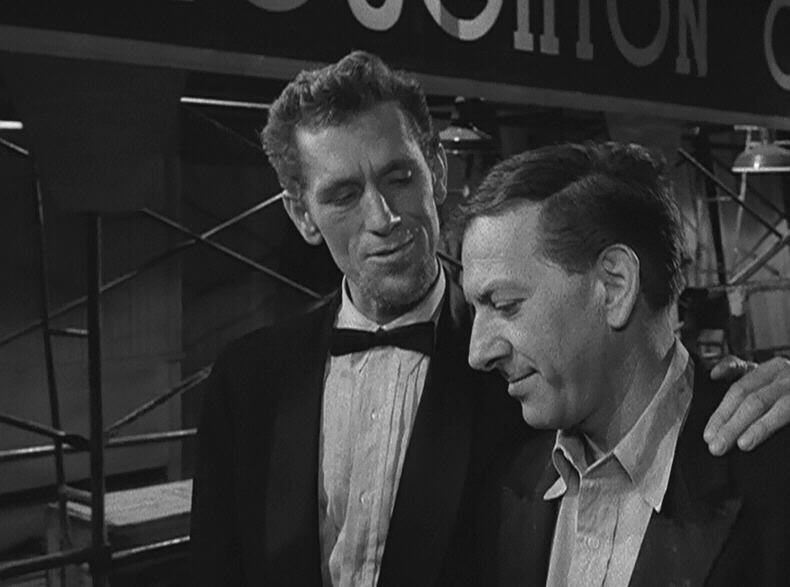
Twilight Zone – The After Hours

★★★★★  June 10, 1960 Season 1 Episode 34

If you want to see where we are…HERE is a list of the episodes.

This one is a classic… a 5-star episode. As surprise endings go…this one is near the top. This episode lacks explanation for things but that makes it more mysterious. There is no big moral lesson here just a great episode.

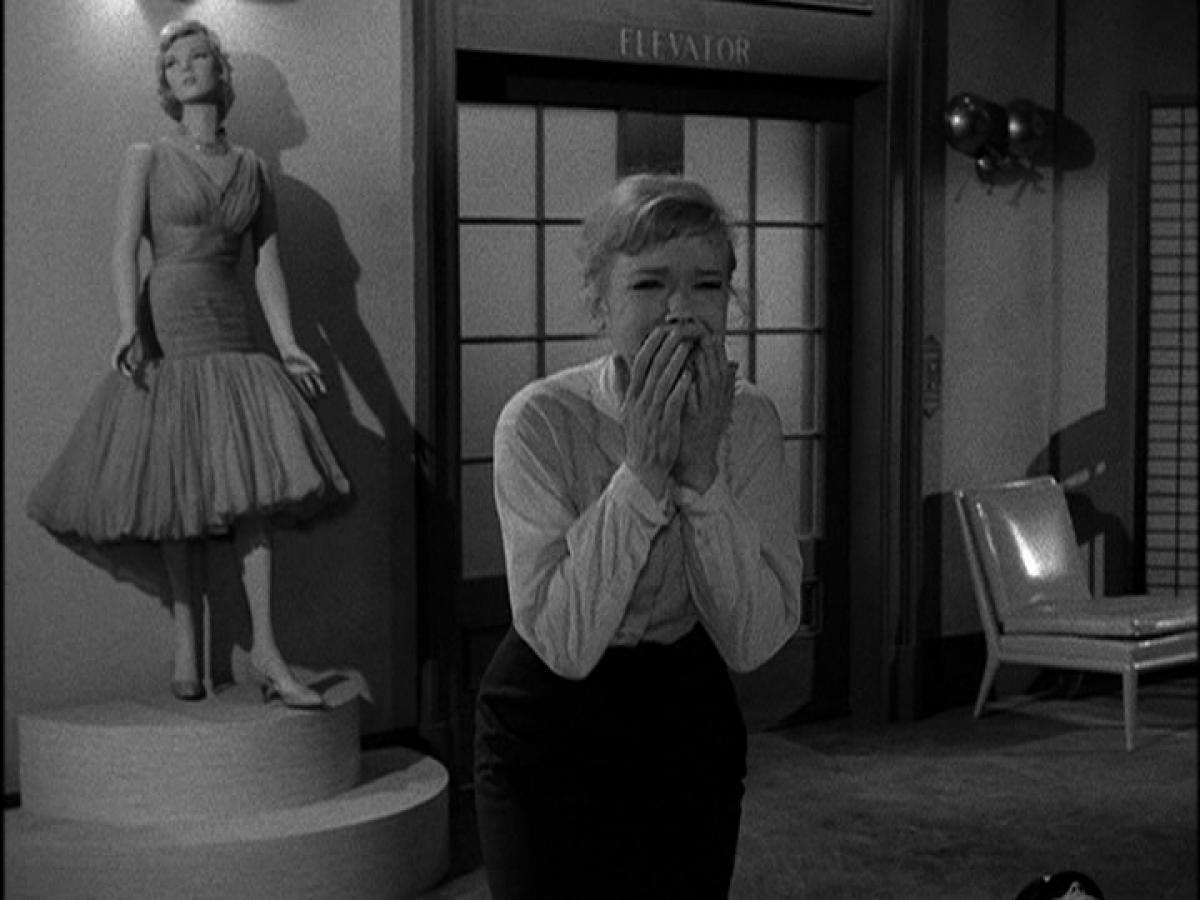
Anne Francis’s portrayal of Marsha White was great. She is demanding and a little whiny at first but when you see the nightmare situation she is in…you understand why. She wonders how many of the store workers know her name and so much about her…and we wonder the same thing. This is the first appearance of Anne Francis in the starring role of a Twilight Zone episode. She would appear again in the season four episode “Jess-Belle”.

The twist totally took me off guard the first time I watched this one. The 1985 Twilight Zone redid this one and it was a mess.

Here is something interesting. The band 9fm (short for Ninth Floor Mannequin) song “Below the Ninth Floor” was inspired by “The After Hours.”

This show was written by Rod Serling

Rod Serling’s Opening Narration: 

Express elevator to the ninth floor of a department store, carrying Miss Marsha White on a most prosaic, ordinary, run-of-the-mill errand.

Miss Marsha White on the ninth floor, specialties department, looking for a gold thimble. The odds are that she’ll find it—but there are even better odds that she’ll find something else, because this isn’t just a department store. This happens to be The Twilight Zone.

Summary

Marsha White is looking for a gold thimble as a gift for her mother. She can’t find it anywhere in the store and an elevator operator suggests she try the 9th floor. She arrives there to find it abandoned but a sales clerk suddenly appears and has just what she is looking for. On the way back down to the main floor, she realizes the thimble she bought is scratched and goes to the complaints department where she is told there is no 9th floor in the building. She is shocked however to see a mannequin that looks just like the woman who served her. A return to the absent floor reveals the explanation to her dilemma.

Rod Serling’s Closing Narration:

Marsha White, in her normal and natural state, a wooden lady with a painted face who, one month out of the year, takes on the characteristics of someone as normal and as flesh and blood as you and I. But it makes you wonder, doesn’t it, just how normal are we? Just who are the people we nod our hellos to as we pass on the street? A rather good question to ask . . . particularly in the Twilight Zone.

CAST

Rod Serling … Narrator (voice)
Anne Francis … Marsha White
Elizabeth Allen … Saleswoman
James Millhollin … Mr. Armbruster
John Conwell … Elevator Man
Patrick Whyte … Mr. Sloan
Nancy Rennick … Miss Keevers

Twilight Zone – Mr. Bevis

★★★1/2  June 3, 1960 Season 1 Episode 33

If you want to see where we are…HERE is a list of the episodes.

This episode is one of the light hearted Twilight Zones. Some TZ reviewers have a problem with them but I never have…although I would not rate them as the best. Mr. Bevis played by Orson Bean is an oddball but in 2021 he would probably be considered a hipster. He seems to be happy with his lot in life despite his struggles.

He is given a chance at success by his all business like guardian angel J. Hardy Hempstead played by the character actor Henry Jones. Mr. Bevis will find out that with success comes responsibilities. Are physical comforts and security worth losing yourself over? Personally I think you can have both and we will see what Mr. Bevis will do. The episode borrows a portion from It’s A Wonderful Life.

This episode served as a pilot for a spin-off series where Burgess Meredith was to play Bevis, but the series was not ordered once Rod Serling learned he declined the role.

This episode features 4 prolific and noticeable character actors in the history of TV and motion pictures. According to IMDB, Henry Jones, William Schallert, Charles Lane and Vito Scotti combined have a total of 1200 acting credits.

This show was written by Rod Serling

Rod Serling’s Opening Narration: 

In the parlance of the twentieth century, this is an oddball. His name is James B. W. Bevis, and his tastes lean toward stuffed animals, zither music, professional football, Charles Dickens, moose heads, carnivals, dogs, children, and young ladies. Mr. Bevis is accident prone, a little vague, a little discombuberated, with a life that possesses all the security of a floating crap game. But this can be said of our Mr. Bevis: without him, without his warmth, without his kindness, the world would be a considerably poorer place, albeit perhaps a little saner…Should it not be obvious by now, James B. W. Bevis is a fixture in his own private, optimistic, hopeful little world, a world which has long ceased being surprised by him. James B. W. Bevis, on whom Dame Fortune will shortly turn her back, but not before she gives him a paste in the mouth. Mr. James B. W. Bevis, just one block away from The Twilight Zone.

Summary

James B.W. Bevis is, by almost any definition, eccentric. He drives a car that once was Henry Ford’s dream, he likes zither music and makes model ships. He’s a bookkeeper by profession and his desk at work is always cluttered. He likes to bring in children at Christmas-time to sing carols. It all leads to him being fired. While drowning his sorrows at a nearby bar, he meets none other than his guardian angel who shows him that life can be considerably different for him if he wishes it….but is he prepared to make the changes necessary to obtain that lifestyle?

***Note…this is not a great clip and doesn’t tell you a lot but on youtube it’s hard to get a decent clip of the TZ because of a strong copyright hold by CBS I would presume.

Rod Serling’s Closing Narration:

Mr. James B. W. Bevis, who believes in a magic all his own. The magic of a child’s smile, the magic of liking and being liked, the strange and wondrous mysticism that is the simple act of living. Mr. James B. W. Bevis, species of twentieth-century male, who has his own private and special Twilight Zone.

CAST

Rod Serling … Narrator (voice)
Orson Bean … James B.W. Bevis
Henry Jones … J. Hardy Hempstead
Charles Lane … Mr. Peckinpaugh
Horace McMahon … Bartender
William Schallert … Policeman at Accident
Florence MacMichael … Margaret
Dorothy Neumann … Landlady
Vito Scotti … Peddler
House Peters Jr. … Policeman Writing Ticket
Colleen O’Sullivan … Michelle (as Coleen O’Sullivan)
Timmy Cletro … Boy

Twilight Zone – A Passage for Trumpet

★★★★  May 20, 1960 Season 1 Episode 32

If you want to see where we are…HERE is a list of the episodes.

This show was written by Rod Serling

Jack Klugman was a great character actor and he was always excellent in the four Twilight Zones that he was in. In this one he conveys depression, suicidal behavior, and alcoholism.

This is a touching episode that works well. It shines the spotlight on a down on his luck alcoholic trumpet player…and this visit in The Twilight Zone gives a chance for salvation if he takes it . This is not a scary, weird, or funny episode…it’s a well written story that works outside of the Twilight Zone. 

John Anderson who plays the Angel Gabriel is believable as a jazz goatee wearing Gabriel. Rod Serling must have been a lover of jazz music because there are a few episodes that feature jazz players and he has the lingo down. 

When Baron is talking to Joey in the alley, he compares him to three famous trumpeters of the big band era. Harry James was a trumpet playing band leader known for his technical proficiency as well as his tone. Max Kaminsky played with big bands like Tommy Dorsey and Artie Shaw, his style was full toned and economical in the style of Louis Armstrong. And Billy Butterfield played trumpet, flugelhorn, and coronet with Artie Shaw, Les Brown, and Benny Goodman.

Rod Serling’s Opening Narration: 

Joey Crown, musician with an odd, intense face, whose life is a quest for impossible things like flowers in concrete or like trying to pluck a note of music out of the air and put it under glass to treasure…Joey Crown, musician with an odd, intense face, who, in a moment, will try to leave the Earth and discover the middle ground – the place we call The Twilight Zone.

Summary

Musician Joey Crown is down on his luck. An alcoholic, he can’t find work because no one trusts him. Broke, he hocks his trumpet but then steps in front of truck which knocks him onto the sidewalk. He awakens in a strange world where no one can see him and he presumes that he has died. He eventually bumps into someone who can in fact see him, a fellow horn player who tells him that it’s still within Joey’s power to decide on life or death.

Rod Serling’s Closing Narration:

Joey Crown, who makes music, and who discovered something about life; that it can be rich and rewarding and full of beauty, just like the music he played, if a person would only pause to look and to listen. Joey Crown, who got his clue in the Twilight Zone.

CAST

Rod Serling … Narrator (voice)
Jack Klugman … Joey Crown
John Anderson … Gabriel
Frank Wolff … Baron
Mary Webster … Nan
James Flavin … Truck Driver
Ned Glass … Pawnshop Man

Twilight Zone – The Chaser

★★★  May 13, 1960 Season 1 Episode 31

If you want to see where we are…HERE is a list of the episodes.

This is another “be careful what you wish for” episode. This one starts off as one of the  light hearted episodes but it’s the Twilight Zone… it turns dark near the end. The real star of this episode is John McIntire  as Professor A. Daemon…the man who has any powder, liquid, or potion that you will need. When you are done with your need…he has an answer for that also. I love the warning that he gives Roger about the love potion and how Roger blissfully ignores the wise man.

This episode gives “glove cleaner” a whole new meaning.

The episode is not without it’s charm but it doesn’t cross over to a great one. The twist at the end is interesting.

This was the only first season episode that was not written by one of the Big Three (Rod Serling, Charles Beaumont, Richard Matheson).

The professor is named A. Daemon, a play on words for A Demon as evidenced by the outcome.

George Grizzard (Roger Shackleforth) wears the same smoking jacket worn by Rod Taylor (H. George Wells) in The Time Machine.

This show was written by  Robert Presnell Jr. and  John Collier

Rod Serling’s Opening Narration: 

Mr. Roger Shackelforth. Age: youthful twenties. Occupation: being in love. Not just in love, but madly, passionately, illogically, miserably, all-consumingly in love – with a young woman named Leila, who has a vague recollection of his face and even less than a passing interest. In a moment, you’ll see a switch, because Mr. Roger Shackelforth, the young gentleman so much in love, will take a short, but very meaningful journey into the Twilight Zone.

Summary

Roger Shackleforth’s infatuated with Leila, a young woman who wants nothing to do with him. Whilst monopolizing a pay phone, someone waiting to make a call refers him to Professor A. Dæmon, a seller of books, notions and potions, who – the man says – can help Roger with his love problem.. Though the Professor tries to dissuade him, Roger happily buys the potion for $1, anyways. It most certainly works. But 6 months later, Roger returns to the Professor – to find a solution to his new problem…

Rod Serling’s Closing Narration:

Mr. Roger Shackelforth, who has discovered at this late date that love can be as sticky as a vat of molasses, as unpalatable as a hunk of spoiled yeast, and as all-consuming as a six-alarm fire in a bamboo and canvas tent. Case history of a lover boy, who should never have entered the Twilight Zone.

CAST

John McIntire … Prof. A. Daemon
Patricia Barry … Leila
George Grizzard … Roger Shackleforth
J. Pat O’Malley … Homburg
Marjorie Bennett… Old Woman
Barbara Perry … Blonde Woman
Rusty Wescoatt … Tall Man
Duane Grey … Bartender (uncredited)
Rod Serling … Narrator (voice) (uncredited)

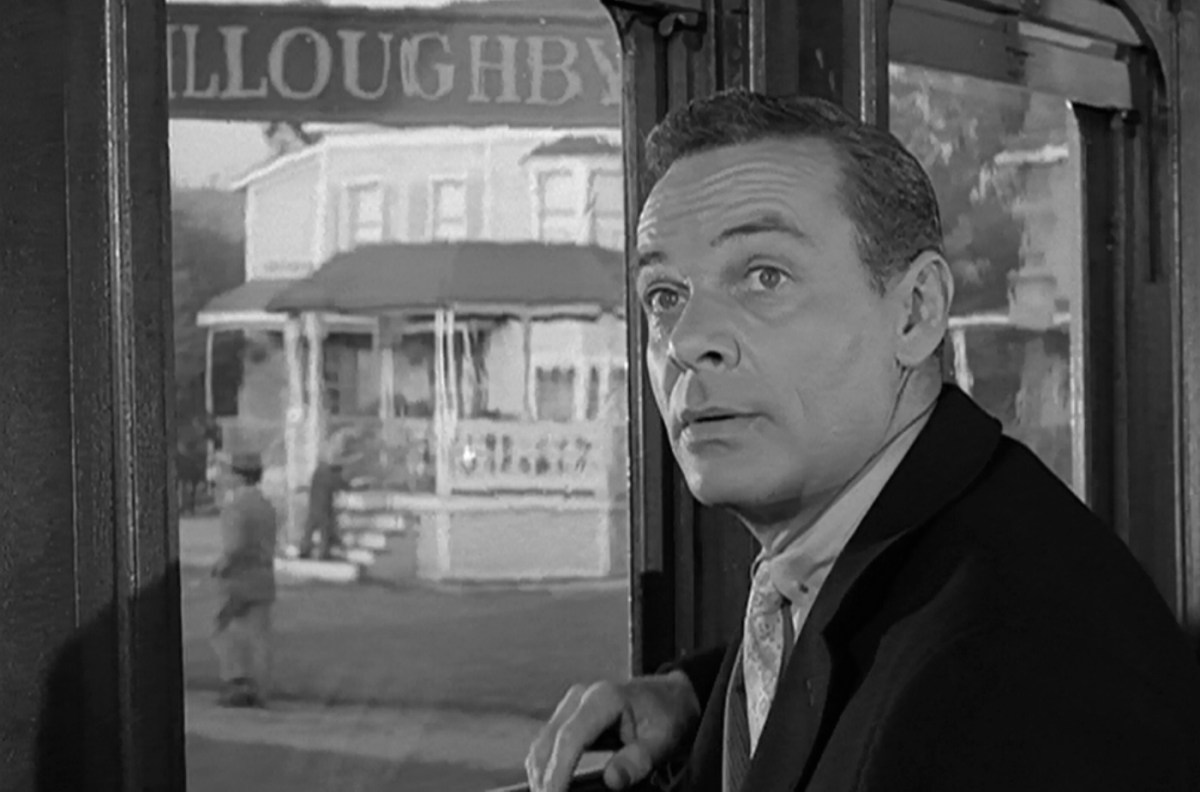
Twilight Zone – A Stop at Willoughby

★★★★★ May 6, 1960 Season 1 Episode 30

If you want to see where we are…HERE is a list of the episodes.

This one is one of my favorites…it could have made my top ten. This one is very modern. James Daly plays Gart Williams who is pushed to the edge of a nervous breakdown by a boss who won’t let up and a wife who can’t get enough status symbols. Daly was great in this role… At some point all of us has felt like Gart Williams. A quote from Gart’s character while arguing with his wife: Some people aren’t built for competition, Janie, or big pretentious houses they can’t afford, or rich communities they don’t feel comfortable in, or country clubs they wear around their neck like a badge of status.

This one had a twist that I did not see coming. The transition to the last scene is brilliant. If Gart could see in the future he would see work tying employees to cell phones twenty four hours a day…”Push Push Push” would take on a whole new meaning.

This was Rod Serling’s first season favorite episode.

The train stations called out by the conductor on the 1960 train are real. At the time of the filming, stations such as “Stamford” and “Westport & Saugatuck” were stations on the New Haven Railroad. They continue to exist as of August 2015 as stations on the Metro North Railroad.

This show was written by Rod Serling

Rod Serling’s Opening Narration: 

This is Gart Williams, age thirty-eight, a man protected by a suit of armor all held together by one bolt. Just a moment ago, someone removed the bolt, and Mr. Williams’ protection fell away from him, and left him a naked target. He’s been cannonaded this afternoon by all the enemies of his life. His insecurity has shelled him, his sensitivity has straddled him with humiliation, his deep-rooted disquiet about his own worth has zeroed in on him, landed on target, and blown him apart. Mr. Gart Williams, ad agency exec, who in just a moment, will move into the Twilight Zone—in a desperate search for survival.

Summary

Ad agency executive Gart Williams has had a particularly rough day – his young protégé has left to work at another agency and took a $3-million account him. He falls asleep on the train home and wakes up in another place and another time. It’s July 1888 and he’s in the village of Willoughby, a peaceful town where life is easy. He comes to back in his own time but as the pressures of works and his home life continue to mount, he decides Willoughby is exactly where he would like to spend the rest of his days.

Rod Serling’s Closing Narration:

Willoughby? Maybe it’s wishful thinking nestled in a hidden part of a man’s mind, or maybe it’s the last stop in the vast design of things—or perhaps, for a man like Mr. Gart Williams, who climbed on a world that went by too fast, it’s a place around the bend where he could jump off. Willoughby? Whatever it is, it comes with sunlight and serenity, and is a part of The Twilight Zone.

CAST

Rod Serling … Narrator (voice)
James Daly … Gart Williams
Howard Smith … Misrell
Patricia Donahue … Janie Williams
Jason Wingreen … 1960 Conductor
Mavis Neal Palmer … Helen (as Mavis Neal)
James Maloney … 1888 Conductor
Billy Booth … Short Boy (uncredited)
James Gonzalez … Passenger (uncredited)
Herschel Graham … Executive (uncredited)
Ryan Hayes … Engineer (uncredited)
Butch Hengen … Tall Boy (uncredited)
Perk Lazelle … Executive (uncredited)
Clark Ross … Executive (uncredited)
Bernard Sell … Executive (uncredited)
Max Slaten … Man on Wagon (uncredited)
Hal Taggart … Executive (uncredited)
Billy Booth … Short Boy (uncredited)
James Gonzalez … Passenger (uncredited)
Herschel Graham … Executive (uncredited)
Ryan Hayes … Engineer (uncredited)
Butch Hengen … Tall Boy (uncredited)
Perk Lazelle … Executive (uncredited)
Clark Ross … Executive (uncredited)
Bernard Sell … Executive (uncredited)
Max Slaten … Man on Wagon (uncredited)
Hal Taggart … Executive (uncredited)