This was on the soundtrack to their 1968 trippy movie Head. Where else would you find Annette Funicello, The Monkees, and Frank Zappa in the same movie?
They may have been seeking some countercultural acceptance after their show ended. The movie blew the image of the Monkees up…some say deconstruction of the Monkees completely. It was a stream of consciousness black comedy that mocks war, America, Hollywood, television, the music business, and the Monkees themselves.
If kids went into the theater expecting the Monkees TV show…they were in for a big surprise. On the other hand, kids couldn’t watch the movie because of its R rating.
Carole King and Gerry Goffin wrote this song and Goffin produced it…even recording a porpoise for good measure.
I’ve watched the movie and it’s interesting but you have to remember what kind of movie it is. Jack Nicolson help write it with the band along with Bob Rafelson. Nicholson hung out with The Monkees for several weeks, even going with them on tour. Once this movie was made, Rafelson abandoned The Monkees and went off to bigger projects, starting with Easy Rider.
Mickey Dolenz – “It wasn’t so much about the deconstruction of the Monkees, but it was using the deconstruction of the Monkees as a metaphor for the deconstruction of the Hollywood film industry”
The Porpoise Song
My, my, the clock in the sky Is pounding away And there’s so much to say
A face, a voice An overdub has no choice An image cannot rejoice
Wanting to be To hear and to see Crying to the sky
But the porpoise is laughing Goodbye, goodbye Goodbye, goodbye, goodbye
Clicks, clacks, riding the backs of giraffes for laughs S’alright for a while
sings of castles And kings and things that go With a life of style
Wanting to feel To know what is real Living is a, is a lie
The porpoise is waiting Goodbye, goodbye Goodbye, goodbye, goodbye Goodbye, goodbye, goodbye Goodbye, goodbye, goodbye
I first heard this song by the ‘Beatles in Hamburg on the Star Club album. They took the song and injected it with steroids…George ripped through it. The quality is terrible but the energy is not.
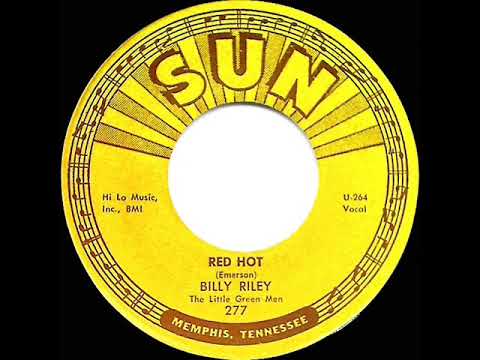
“Red Hot” featured Jerry Lee Lewis on piano. The song was written by Billy “The Kid” Emerson. Emerson had already had a minor hit when Elvis Presley recorded “When It Rains It Really Pours“. “Red Hot” was showing a lot of promise as a big hit record, but Sam Phillips pulled Sun Records promotion for the single and switched it to “Great Balls Of Fire” by Jerry Lee Lewis.
Riley earned notoriety throughout the South with his wild live performances, and in the late’50s his shows were banned by various town councils and college administrators who worried that Riley’s raucous “devil’s music” would corrupt the souls of innocent teenagers. Riley’s backing band, The Little Green Men, were the main Sun studio band. They were Riley, Roland Janes, J.M. Van Eaton, Marvin Pepper, and Jimmy Wilson, later joined by Martin Willis.
These are the kind of singles that the Beatles liked to cover…not massive hits but good songs that not many bands were covering.
Red Hot
My gal is red hot Your gal ain’t doodly squat Yeah, my gal is red hot Your gal ain’t doodly squat Well, she ain’t got no money But man, she’s a-really got a lot
Well, I got a gal, six feet four Sleeps in the kitchen with her feet out the door, but
My gal is red hot Your gal ain’t doodly squat Yeah, my gal is red hot Your gal ain’t doodly squat Well, she ain’t got no money But man, she’s a-really got a lot
Well, she walks all night, talks all day She’s the kinda woman who’ll have her way, but
My gal is red hot Your gal ain’t doodly squat Yeah, my gal is red hot Your gal ain’t doodly squat Well, she ain’t got no money But man, she’s a-really got a lot
Well, she’s the kinda woman who louds around Spreadin’ my business all over town, but
My gal is red hot Your gal ain’t doodly squat Yeah, my gal is red hot Your gal ain’t doodly squat Well, she ain’t got no money But man, she’s a-really got a lot
Well, she’s a one man’s woman, that’s what I like But I wish she wasn’t gonna change her mind everynight, but
My gal is red hot Your gal ain’t doodly squat Yeah, my gal is red hot Your gal ain’t doodly squat Well, she ain’t got no money But man, she’s a-really got a lot
I love the visuals in this song. I’ve never had the pleasure of being there but it feels like I’m standing in the middle of Penny Lane in 1967.
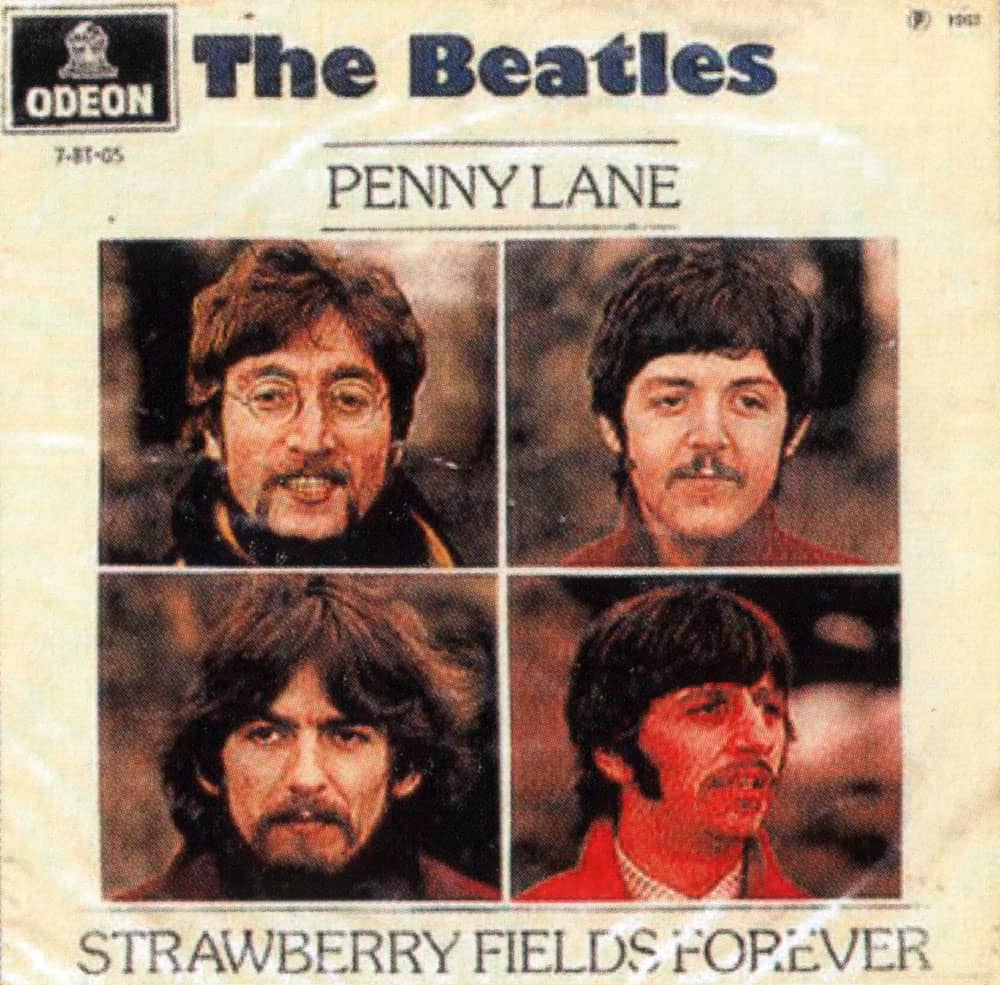
This song was part of what I think was the best single ever released. Penny Lane/Strawberry Fields. Both of the songs are connected with Liverpool. Both John and Paul wrote about places where they grew up. Paul explained that Penny Lane was a suburban district where, until age four, he lived with his mother and father.
The Beatles did not include these two songs on Sgt Pepper. They recorded singles and albums separately for the most part. They ended up on the Magical Mystery Tour album in America.
Lennon and McCartney were competitive and for the most part it was a good competitiveness that resulted in timeless songs that will be still remembered 100 years from now.
They made promotional films for both songs. This must have been a shock to some people. They had not seen the Beatles since the year before…they had ditched the mop tops and gone weird…that must have been in some people’s minds. The music had a sophistication that earlier songs didn’t have.
The single only made #2 in the UK…it was locked out of the #1 position by no other than Elbert Humperdinck with Release Me. It did peak at #1 in the Billboard 100, #1 in Canada, and #1 in New Zealand in 1967.
In 1967, Capitol released Beatles music on a new but short-lived format called “Playtapes.” These tape cartridges did not have the capabilities to include entire albums, so a truncated four-song version of “Magical Mytery Tour” was released in early 1968 in this portable format, some rare copies having a picture from the “Help!” soundtrack album on the front of the tape. “Penny Lane” was one of the four songs on this release. These Playtapes are highly collectable today.
Paul McCartney:“When I came to write it, John came over and helped me with the third verse, as often was the case. We were writing childhood memories: recently faded memories from eight or ten years before, so it was a recent nostalgia, pleasant memories for both of us. All the places were still there, and because we remembered it so clearly we could have gone on.” John himself relates: “We really got into the groove of imagining Penny Lane, you know – the bank was there, and that was where the tram sheds were and people waiting and the inspector stood there, the fire engines were down there. It was just reliving childhood.” In John’s Playboy interview of 1980, he concurs about his input in writing the song: “I wrote some of the lyrics. I can’t remember which. It was all Paul’s melody.”
“There was a barber shop called Bioletti’s with head shots of the haircuts you can have in the window and I just took it all and arted it up a little bit to make it sound like he was having a picture exhibition in his window. It was all based on real things; there was a bank on the corner so I imagined the banker, it was not a real person, and his slightly dubious habits and the little children laughing at him, and the pouring rain. The fire station was a bit of poetic license; there’s a fire station about half a mile down the road, not actually in Penny Lane, but we needed a third verse so we took that and I was very pleased with the line ‘It’s a clean machine.’ I still like that as a phrase, you occasionally hit a lucky little phrase and it becomes more than a phrase. So the banker and the barber shop and the fire station were all real locations.”
Here are the two videos…Strawberry Fields and Penny Lane… See those glasses that John Lennon slips on in the Penny Lane Video? The square ones…I have some identical from that time period…they are really cool.
Penny Lane
In Penny Lane, there is a barber showing photographs Of every head he’s had the pleasure to know And all the people that come and go Stop and say, “Hello”
On the corner is a banker with a motorcar And little children laugh at him behind his back And the banker never wears a mac In the pouring rain, very strange
Penny Lane is in my ears and in my eyes There beneath the blue suburban skies I sit, and meanwhile back In Penny Lane there is a fireman with an hourglass And in his pocket is a portrait of the Queen He likes to keep his fire engine clean It’s a clean machine
Penny Lane is in my ears and in my eyes A four of fish and finger pies In summer, meanwhile back Behind the shelter in the middle of the roundabout The pretty nurse is selling poppies from a tray And though she feels as if she’s in a play She is anyway
In Penny Lane, the barber shaves another customer We see the banker sitting waiting for a trim And then the fireman rushes in From the pouring rain, very strange
Penny Lane is in my ears and in my eyes There beneath the blue suburban skies I sit, and meanwhile back Penny Lane is in my ears and in my eyes There beneath the blue suburban skies Penny Lane!
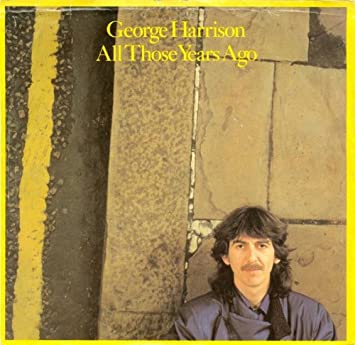
I remember this George Harrison song well in 1981. This song was tribute to John Lennon, who was shot and killed the year before. The song had a bouncy melody and it was originally wrote for Ringo. After Lennon was murdered George re-wrote the lyrics to show is feelings for John.
Ringo did end up playing on the track with Paul and Linda McCartney, and Denny Laine from McCartney’s band Wings. Long time Beatle producer George Martin produced this for Harrison. Geoff Emerick, one of The Beatles sound engineers, also had a hand in this tune.
This appeared on the album Somewhere In England. I bought the single and then the album. The album peaked at #11 in the Billboard Album Charts, #13 in the UK, and #14 in Canada. The song peaked at #2 in the Billboard Album Charts, #13 in the UK, and #3 in Canada in 1981.
Al Kooper:“George was in the kitchen, white as a sheet, real shook up. We all had breakfast. He took calls from Paul and Yoko, which actually seemed to help his spirit, and then we went into the studio and started the day’s work. Ray and I kept George’s wine glass full all day…”
All Those Years Ago
I’m shouting all about love While they treated you like a dog When you were the one who had made it so clear All those years ago
I’m talking all about how to give They don’t act with much honesty But you point the way to the truth when you say All you need is love
Living with good and bad I always looked up to you Now we’re left cold and sad By someone the devil’s best friend Someone who offended all
We’re living in a bad dream They’ve forgotten all about mankind And you were the one they backed up to the wall All those years ago You were the one who imagined it all All those years ago
All those years ago All those years ago
Deep in the darkest night I send out a prayer to you Now in the world of light Where the spirit free of lies And all else that we despised
They’ve forgotten all about God He’s the only reason we exist Yet you were the one that they said was so weird All those years ago You said it all though not many had ears All those years ago You had control of our smiles and our tears All those years ago
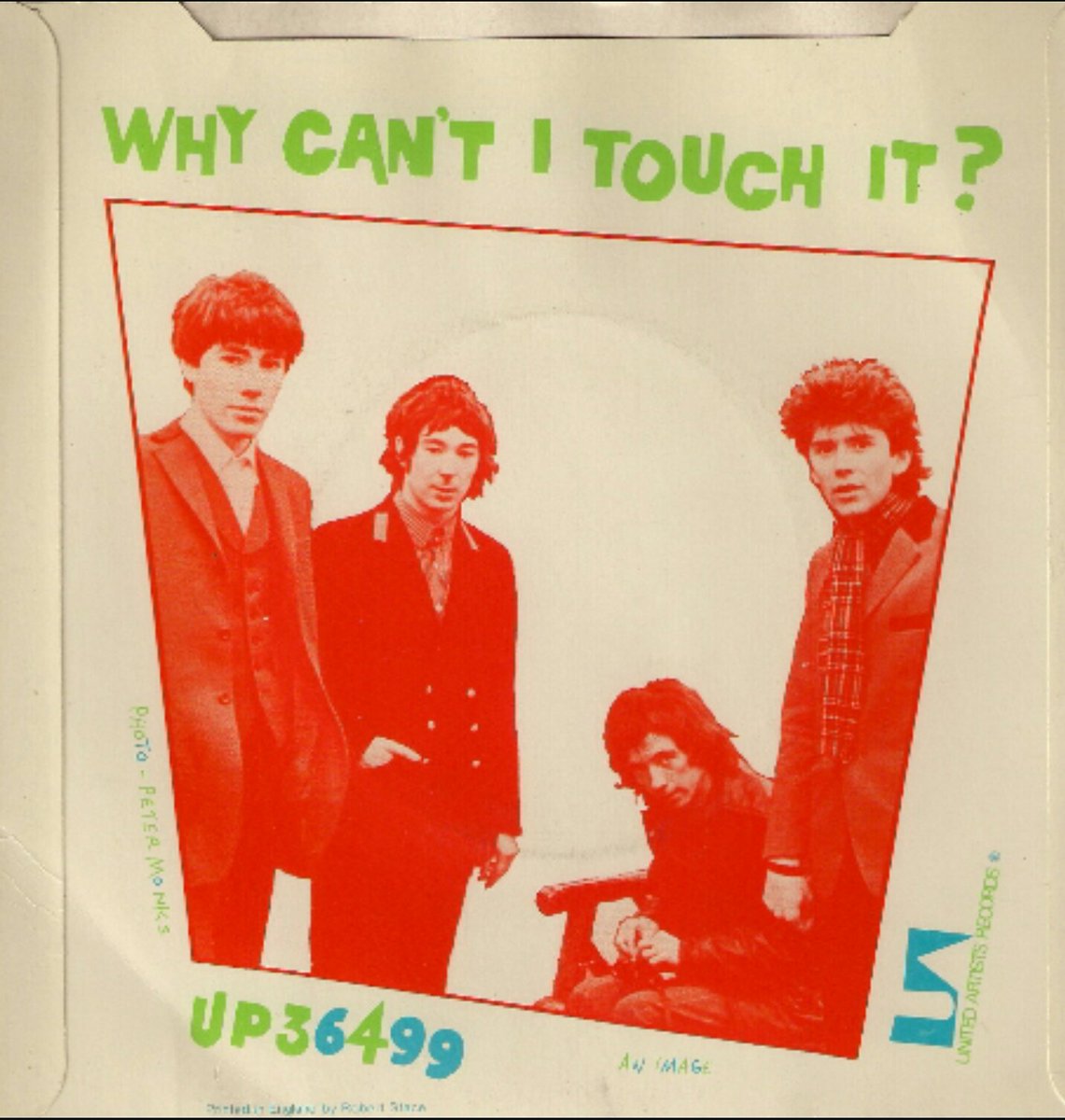
This song is tight and very likable right off the bat. The band was punk but with a pop sensibility…a great combination.
The song didn’t appear on a studio album….it was the B side to Everybody’s Happy Nowadays. The single peaked at #29 in the UK in 1979. This is too good to be a B side…the song has been included on movie soundtracks and The Guardians of the Galaxy: The Telltale Series video game. It also was featured on Entourage in 2009.
The Buzzcocks formed in Bolton, England in 1976 by singer-songwriter-guitarist Pete Shelley and singer-songwriter Howard Devoto. They chose the name Buzzcocks after reading the headline, “It’s the Buzz, Cock!”, in a review of the TV series Rock Follies in Time Out magazine. The “buzz” is the excitement of playing on stage; “cock” is northern English slang meaning friend.
Why Can’t I Touch It was written by Steve Diggle, Steve Garvey, John Maher, and Pete Shelley.
Why Can’t I Touch It
Well, it seems so real I can see it And it seems so real I can feel it And it seems so real I can taste it And it seems so real I can hear it
So why can’t I touch it? So why can’t I touch it?
But then it looks so real I can see it And it feels so real I can feel it And it tastes so real I can taste it And it sounds so real I can hear it
So why can’t I touch it? So why can’t I touch it?
Then it looks so real I can feel it And it feels so real I can taste it And it tastes so real I can hear it And it sounds so real I can see it
So why can’t I touch it? So why can’t I touch it?
Now, it is so real I can see it And it is so real I can feel it And it is so real I can hear it And it is so real I can be it
The guitar intro to this song is worth the price of admission.
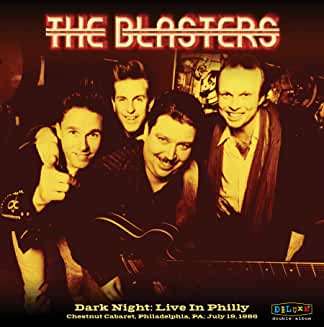
Some rockabilly bands, or roots rock bands, sound like they came in on a nostalgia wave from the 1950s. There is nothing wrong with that but…not the Blasters. They sounded contemporary in the 80s even in the middle of a period where production was at its height. Their music still sounds timely now…years after it was released.
Just the intro to this song sends shiver up my spine. This song was on the Hard Line album released in 1985. This album featured Stan Lynch from Tom Petty and the Heartbreakers on a few tracks and Blasters fan John Mellencamp wrote and co-produced a track (Colored Lights) also. Hard Line was the Blasters’ final studio album with their original lineup.
Dave Alvin wrote all the songs on the album except the Mellencamp song. He left the band in 1986 for a solo career. He has played in some other bands like X and with The Flesh Eaters. Now he occasionally will rejoin The Blasters on reunion tours with the original lineup.
The song has gained recognition for its appearances in several films and tv shows with its most famous being in the 1996 vampire movie From Dusk Till Dawn of which it is the main theme.
The song was also used in an episode of Miami Vice in 1985.
Dark Night
Hot air hangs like a dead man From a white oak tree People sitting on porches Thinking how things used to be Dark night It’s a dark night Dark night It’s a dark night
The neighborhood was changing Strangers moving in A new boy fell for a local girl When she made eyes at him
She was young and pretty No stranger to other men But windows were being locked at night Old lines were drawn again
I thought these things Didn’t matter anymore I thought all that blood Had been shed long ago Dark night It’s a dark night
He took her to the outskirts And pledged his love to her They thought it was their secret But someone knew where they were
He held her so close He asked about her dreams When a bullet from a passing car Made the young girl scream
I thought these things Didn’t happen anymore I thought all that blood Had been shed long ago
Dark night It’s a dark night Dark night It’s a dark night
Well…it is “Next Year” today…I hope 2022 is a great year for all of us.
You could call this a power ballad. It sounds a little like Britpop and Dave Grohl has criticized the song…no not critize…he HATES the song but it’s one of my favorites by them.
Dave Grohl: ‘Next Year’ is a piece of shit! That song is so stupid! It’s weird.”
I like weird Dave…
The song was released in December of 2000. It was on the album There Is Nothing Left to Lose. It peaked at #14 in the US Alternative Airplay Charts, #12 in Canada, and #42 in the UK in 2000-2001.
The video is great… it remakes the Apollo 11 mission with clips around that time. It ends with the Foo Fighters in astronaut gear similiar to this Led Zeppelin photo.
From Wiki: The opening of “Next Year” was used as the theme song for the NBC television series Ed (2000–2004). The show’s creators, Rob Burnett and Jon Beckerman (formerly of the Late Show with David Letterman) used the song despite knowledge of production company Viacom’s insistence that they own the rights to the show’s theme song. “Next Year” was thus ultimately replaced by Clem Snide’s “Moment in the Sun” during the second season. As a result of outcries from Burnett and Beckerman, however, Viacom relented and “Next Year” returned as the theme song in the third and fourth seasons.
Next Year
I’m in the sky tonight There I can keep by your side Watching the wide world riot And hiding out I’ll be coming home next year
Into the sun we climb Climbing our wings will burn white Everyone strapped in tight We’ll ride it out I’ll be coming home next year
Come on, get on, get on Take it till life runs out No one can find us now Living with our heads underground
Into the night we shine Lighting the way we glide by Catch me if I get too high When I come down I’ll be coming home next year
I’m in the sky tonight There I can keep by your side Watching the whole world wind Around and round I’ll be coming home next year
Come on, get on, get on Take it till I fall down No one can find us now Living with our heads underground
I’ll be coming home next year I’ll be coming home next year Everything’s all right up here And if I come down I’ll be coming home next year
Say goodbye Say goodbye Say goodbye Say goodbye
I’ll be coming home next year I’ll be coming home next year Everything’s all right up here And if I come down I’ll be coming home next year I’ll be coming home next year I’ll be coming home next year
Next to Auld Lang Syne this is my favorite New Years Song. A favorite of mine from a favorite band of mine. Everyone… I wish you a Happy New Year in 2022.
You didn’t have to read my blog but you did and I really appreciate it…I want to thank all of you for reading and commenting in 2021.
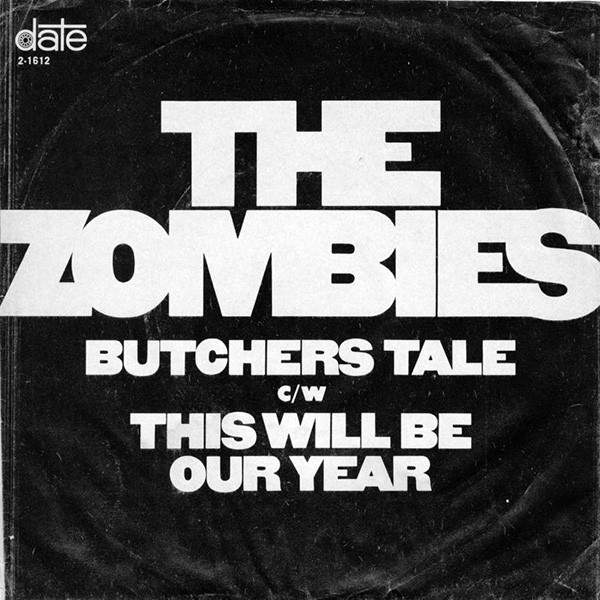
This song sounds like it should have been a hit but it was never pushed as a single at the time. It was the B side to Butcher’s Tale (Western Front 1914) which is an experimental song and was a big surprise to the band that it was picked as the first single. Both are from the great album Odessey and Oracle in 1968. There are several songs on this album that could have been in the charts but Time of the Season was the only one that made it and it was a year after the album was released.
Bruce Eder of AllMusic gave the album five stars out of five, calling it “one of the flukiest (and best) albums of the 1960s, and one of the most enduring long-players to come out of the entire British psychedelic boom”.
On recording Odessey and Oracle….Rod Argent
“We had the chance of going in and putting things down in the way we wanted people to hear them and we had a new studio, we walked in just after The Beatles had walked out [after recording Sgt. Pepper]. We were the next band in. They’d left some of their instruments behind … I used John Lennon’s Mellotron, that’s why it’s all over Odessey and Oracle. We used some of their technological advances … we were using seven tracks, and that meant we could overdub for the first time. And it meant that when I played the piano part I could then overdub a Mellotron part, and it meant we could have a fuller sound on some of the songs and it means that at the moment the tour we’re doing with Odessey and Oracle it means we’re actually reproducing every note on the original record by having extra player with us as well.”
This Will Be A Year
The warmth of your love Is like the warmth of the sun And this will be our year Took a long time to come
Don’t let go of my hand Now darkness has gone And this will be our year Took a long time to come
And I won’t forget The way you held me up when I was down And I won’t forget the way you said, “Darling I love you” You gave me faith to go on
Now we’re there and we’ve only just begun This will be our year Took a long time to come
The warmth of your smile Smile for me, little one And this will be our year Took a long time to come
You don’t have to worry All your worried days are gone This will be our year Took a long time to come
And I won’t forget The way you held me up when I was down And I won’t forget the way you said, “Darling I love you” You gave me faith to go on
Now we’re there and we’ve only just begun And this will be our year Took a long time to come
Yeah we only just begun Yeah this will be our year Took a long time to come
This song is a great way to start a year! Anytime you can hear Otis…you are on the right path! Have a Happy New Year!
Stax’s house band, Booker T & the MGs, provides the backing. Note Booker T’s subtle but effective organ lending the song a spiritual element, while Donald “Duck” Dunn’s bass and Steve Cropper’s tasteful guitar licks ground the track’s rhythm
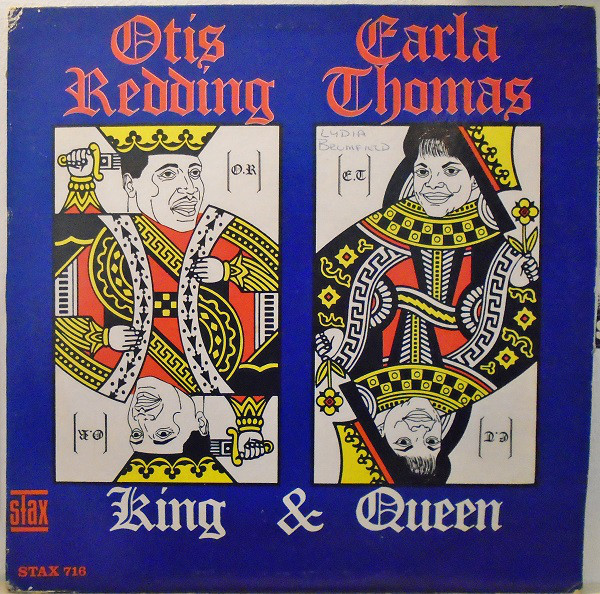
Stax was hoping to replicate the success of Marvin Gaye and Tammi Terrell. Stax paired two of their greatest stars for the 1967 album King & Queen, which produced the hit “Tramp.” The album featured their takes on classics such as “Knock on Wood,” “When Something Is Wrong with My Baby,” “Bring It on Home to Me,” and “It Takes Two”
This song was on the King and Queen album released in 1967. This is the only album they got to make because Otis died in a plane crash on December 10, 1967.
New Year’s Resolution
I hope it’s not too late Just to say that I’m sorry, honey All I want to do Is just finish what we started, baby
Let’s turn over a new leave And baby let’s make promises That we can keep And call it a New Year’s resolution, hmmm
Oh, I’m a woman And woman makes mistakes too But will you, will you forget the changes That I put you through
let’s try it again Just you and me And, baby, let’s see how happy honey, yeah That we can be And call it a New Year’s resolution, yeah, yeah, yeah
Many times we had our ups and downs And times you needed me I couldn’t be found I’m sorry And I’m sorry too I’ll never, never do it again, no, no, no So baby before we fall out Let’s fall on in, yeah, yeah Oh, and we’re gonna try harder Not to hurt each other again, oh Love me baby, huh Week after week And baby let’s make promises That we can keep And call it a New Year’s resolution, yeah, oh I know we can do it Carla I’m gonna keep my promises I’m gonna hold on that we can do it, baby Oh, it’s not too late You’re gonna love me Nobody else Oh Otis let’s finish what we started Talk no mean
When Phil and Don would sing….their two voices would become one.
The song peaked at #1 in the Billboard 100, #1 in the UK, and #2 in Canada in 1960. The B side was Always It’s You and it peaked at #56 in the Billboard 100. This was the first single to simultaneously top the UK and US charts. This was the first single ever released on the Warner Bros. label in the UK, where it got the catalog number WB-1.
This song was inspired by one of Don Everly’s ex-girlfriends, this song is about a guy Cathy dumps. The writer credits on this song went to both Don and Phil Everly until 1980, when a deal was made to make Don the solo composer.
This was the first Everly Brothers single for Warner Brothers. Records. They signed with the label in 1960 after a string of hits for Cadence Records, which couldn’t afford to re-sign them. They paid the Everlys a reported $1 million and expected a hit. The Everlys delivered a hit with “Cathy’s Clown… holding the top spot for five weeks.
It had a hint of the future in this song. There was only one drummer on this track, but he was augmented by a tape loop that engineer Bill Porter used to add additional beats. This being 1960, it was done on the fly, with Porter switching to the loop when he wanted it to come in.
Cathy’s Clown
Don’t want your love anymore, Don’t want your kisses that’s for sure, I die each time I hear this sound, Here he comes that’s Cathy’s clown
I gotta stand tall You know a man can’t crawl, When he knows your tellin’ lies and He hears ’em passing by, he’s Not a man at all
Don’t want your love anymore, Don’t want your kisses that’s for sure, I die each time I hear this sound, Here he comes that’s Cathy’s clown
When you see me shed a tear, And you know that it’s sincere Don’t you think it’s kinda sad that You’re treating me so bad or don’t You even care?
Don’t want your love anymore, Don’t want your kisses that’s for sure, I die each time I hear this sound, Here he comes that’s Cathy’s clown
This was one of those songs that sounded so good over AM radio…and I guess still does if you can catch it on AM. It’s a song I forget about from time to time. I was reminded when I saw Paul in 2010 and 2014. He just keeps playing songs you remember and you think…did this guy write every hit of the 20th century?
It takes me back to when my sister would skip school (she is eight years older) and take me with her…maybe that is the reason I can’t spell worth a dam. Mom never found out about those days or my sister would have been grounded forever.
It’s far from his best song but it’s a good pop hit. It was recorded for the album Venus and Mars. It was a song which McCartney had high hopes for, but early recordings did not live up to the song’s potential. The missing indgredient was Jazz musician Tom Scott’s sax solo. They ended up keeping the first take.
Listen To What The Man Said peaked at #1 in the Billboard 100, #1 in Canada, #6 in the UK, and #8 in New Zealand in 1975. The album peaked at #1 in the Billboard Album Charts, #1 in Canada, #1 in the UK, and #1 in New Zealand.
Paul’s impression of Leo Nocentelli, the guitarist for The Meters…many people thought he was imitating Wolfman Jack.
Paul McCartney and John Lennon were talking seriously about getting together during the Venu and Mars sessions in New Orleans but John reunited with Yoko and didn’t come. This was after John’s “lost weekend” when he was separated from Yoko. May Pang (his girlfriend at the time) verified this.
Paul McCartney: “It was one of the songs we’d gone in with high hopes for. Whenever I would play it on the piano, people would say ‘Oh, I like that one.’ But when we did the backing track, we thought we didn’t really get it together at all.”
“Someone said [famous jazz musician] ‘Tom Scott lives near here.’ We said, yeah, give him a ring, see if he turns up, and he turned up within half an hour! There he was, with his sax, and he sat down in the studio playing through. The engineer was recording it. We kept all the notes he was playing casually. He came in and I said ‘I think that’s it.’ He said ‘Did you record that?’ I said yes, and we listened to it back. No one could believe it, so he went out and tried a few more, but they weren’t as good. He’d had all the feel on this early take, the first take.”
My stuff is never ‘a comment from within’. Basically I’m saying: ‘Listen to the basic rules, don’t goof off too much’. But if you say ‘The Man’, it can mean God, it can mean ‘Women, listen to your man’, it can mean so many things. Later I did a song with Michael Jackson called ‘The Man’ and again, it’s quite nice leaving things ambiguous: I’m sure for Michael, probably ‘The Man’ meant God.
Listen To What The Man Said
Alright, okay Very good to see you down in New Orleans, man Yeah here it is Yeah, yeah
Any time, any day You can hear the people say That love is blind Well, I don’t know but I say love is kind
Soldier boy kisses girl Leaves behind a tragic world But he won’t mind, he’s in love And he says love is fine
Oh yes, indeed we know That people will find a way to go No matter what the man said
And love is fine for all we know For all we know, our love will grow That’s what the man said
So won’t you listen to what the man said He said
Ah, take it away
Oh yes, indeed we know That people will find a way to go No matter what the man said
And love is fine for all we know For all we know, our love will grow That’s what the man said
So won’t you listen to what the man said He said
Oh yes, indeed we know That people will find a way to go No matter what the man said
And love is fine for all we know For all we know, our love will grow That’s what the man said
So won’t you listen to what the man said He said
The wonder of it all, baby The wonder of it all, baby The wonder of it all, baby, yeah yeah yeah
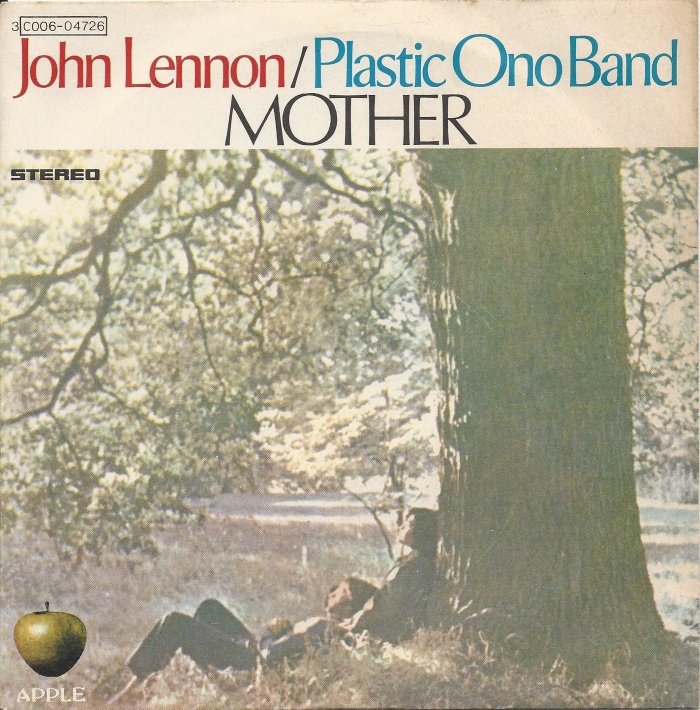
This came off of John Lennon’s debut solo album….John Lennon/Plastic Ono Band. The church bell heard at the start of this track was actually faster and higher-pitched initially, and John actually slowed it down to make it sound spookier and more haunting.
What I’ve told people is if you have a party going on…don’t play this album! Don’t get me wrong…this is one of the great solo Beatle albums but it’s not a toe tapper to say the least. It’s probably my favorite Lennon album. This song is obviously about his mom Julia.
This is one of three songs which Lennon wrote for his mother, along with “Julia” and “My Mummy’s Dead”.
He lost his mother when he was 17. She was walking to catch a bus and was hit at a crosswalk and killed instantly. The driver was Eric Clague an off-duty cop… he was also a learner-driver and shouldn’t have been on the road unaccompanied, and he was suspended from the force because of it…he was never charged with being drunk, and alcohol wasn’t mentioned at the inquest.
His Aunt Mimi raised John from a youth when his mom and dad split up and his dad left never to be seen by John again until he was famous. He lost his mom when he was young and permanently at 17 when she was killed.
Lennon wrote this while he was undergoing Primal Scream therapy by psychotherapist Arthur Janov… where he was dealing with a lot of issues that were detailed in the lyrics.
The album peaked at #6 in the Billboard Album Charts, #2 in Canada, and #8 in the UK in 1970.
Lou Reed: “That was a song that had realism,” “When I first heard it, I didn’t even know it was him. I just said, ‘Who the f–k is that? I don’t believe that.’ Because the lyrics to that are real. You see, he wasn’t kidding around. He got right down to it, as down as you can get. I like that in a song.”
From Songfacts
This features Klaus Voormann on bass and Ringo Starr on drums. In addition to his work in music, Voorman is an artist, and designed the cover of The Beatles album Revolver. He also played bass with Manfred Mann.
On many of his early solo recordings such as this one, Lennon’s arrangements are more simpler and sparser than on the Beatles songs. In the January 1971 edition of Rolling Stone, he explained this was because, “I’ve always liked simple rock.” The former Beatle added: “I was influenced by acid and got psychedelic, like the whole generation, but really, I like rock and roll and I express myself best in rock. I had a few ideas to do this with ‘Mother’ and that with ‘Mother’ but when you just hear, the piano does it all for you, your mind can do the rest. I think the backings on mine are as complicated as the backings on any record you’ve ever heard, if you’ve got an ear.
Anybody knows that. Any musician will tell you, just play a note on a piano, it’s got harmonics in it. It got to that. What the hell, I didn’t need anything else.”
Producer John Leckie explained to Uncut magazine August 2010 that the screams heard on this track were actually edited into the song once the rest of the vocal had been recorded. Lennon would attempt the screaming finale every night, careful never to try it in the daytime in case it destroyed his voice. “The screams were double-tracked,” Leckie pointed out. “John didn’t like the raw sound of his own voice. He always wanted lots of stuff on it. Spector’s contribution, really, was to be generous with reverb and echo.”
Arthur Janov created primal scream therapy, which he detailed in his book The Primal Scream. Folks were always sending Lennon books, and a copy of Janov’s book found him. Lennon was intrigued because the therapy reminded him of the screaming Yoko would often do in her works, but then he looked into it as a way of helping him resolve issues from his childhood. John and Yoko invited Janov to England, where they met with him to vet his practice. They liked what they heard and decided to try some sessions when they went to Los Angeles. For Lennon, it was a breakthrough, and led to this song.
“It’s just a matter of breaking the wall that’s there in yourself and come out and let it all hang out to the point that you start crying,” Yoko said in describing the therapy (Uncut, 1998). She added: “He was going back to the days of when he wanted to scream, ‘Mother.’ He was able to go back to that childhood, that memory.”
This is the theme song to the FX TV series Better Things, which stars Pamela Adlon as a single mom to three girls. To get the song, she wrote a letter to Yoko Ono and lobbied FX to budget for it.
David Bowie covered this in 1998 for a Lennon tribute collection that never came to fruition. His take was done in collaboration with longtime producer Tony Visconti. It remained unreleased until January 8, 2021, when it was made available for the first time to mark what would have been Bowie’s 74th birthday.
Mother
Mother, you had me But I never had you I, I wanted you You didn’t want me So, I I just got to tell you Goodbye Goodbye
Father, you left me But I never left you I needed you You didn’t need me So, I I just got to tell you, mm Goodbye Goodbye
Children, don’t do What I have done I couldn’t walk And I tried to run So, I I just got to tell you Goodbye Goodbye
Mama don’t go Daddy come home Mama don’t go Daddy come home Mama don’t go Daddy come home Mama don’t go Daddy come home
Mama don’t go Daddy come home Mama don’t go Daddy come home Mama don’t go Daddy come home Mama don’t go Daddy come home
Mama don’t go Daddy come home Mama don’t go Daddy come home
I hope everyone had a great Christmas Eve, Christmas, and Boxing day. My first non-holiday post since last week…we will start off with the smooth ool soul sound of the Chi-Lites.
This song is a perfect soul/pop song. I need to dive into the Chi-Lites catalog more because the two I know from them the most are this one and Have You Seen Her?
I never knew how to prounce their name until I found this bit of info…you pronounce it Shy-Lites“… This song could be the definition of 1970s soul music. I never knew for sure if it was “shy” Chi like Chicago.
Oh Girl was written and sung by group leader Eugene Record. The other three Chi-Lites contributed harmonies. Eugene wasn’t enamored of the song after he wrote it but it soon would prove to be his most successful. Eugene, Robert “Squirrel” Lester, and Clarence Johnson formed the doo wop group the Chanteurs in the late ’50s.
In 1964…they changed their name to Marshall & the Chi-Lites, adding the “C” as tribute to their hometown Chicago. By the end of the year, Johnson had left the group and the remaining quartet shortened their name to the Chi-Lites. Over the next four years, the group continued to perform and release independent singles, with Record slowly emerging as the group’s lead singer, songwriter, and producer.
The song peaked at #1 in the Billboard 100, #1 in the R&B Charts, #9 in Canada, and #3 in the UK in 1972.
Members have come and gone in the band. Eugene Record passed away in 2005. The band is still out there performing with Marshall Thompson as the lone original member.
I remember in the 1980s that Paul Young did a really good version of this song. Others to cover this song was Leo Sayer and Smokey Robinson.
Eugene Record:“I gave Carl Davis 7 songs on a tape and he called me to say there’s a #1 tune on there. I named them all before ‘Oh Girl’ and I thought he was kidding.”
Oh Girl
Oh, girl I’d be in trouble if you left me now ‘Cause I don’t know where to look for love I just don’t know how
Oh, girl How I depend on you To give me love when I need it Right on time you would always be
All my friends call me a fool They say, “Let the woman take care of you” So I try to be hip and think like the crowd But even the crowd can’t help me now, oh…oh…oh…oh…oh…oh…
Oh, girl Tell me what am I gonna do I know I’ve got a guilty face Girl, I feel so out of place, oh, yeah…yeah…
Don’t know where to go, who to see, yeah
Oh, girl I guess I better go I can save myself a lot of useless tears Girl, I’ve gotta get away from here
Oh, girl Pain will double if you leave me now ‘Cause I don’t know where to look for love And I don’t, I don’t know how
Oh, yeah Mmm…hmm…
Oh, girl Why do I love you so, yeah Mmm… Better be on my way, I can’t stay
This song is not only my favorite Christmas Carol… I think it’s up there with the best songs ever written. I hope everyone has a great Christmas/Holiday.
There are over 26,000 different versions of “Silent Night” on Spotify, meaning you could listen to a different rendition of the carol every night for 72 years.
Halfway through December 1818, the church organ in St. Nicholas in Oberndorf, 11 miles north of Salzburg in what is now Austria, broke (a popular version of the story claims that mice had eaten out the bellows). The curate, 26-year-old Josef Mohr, realized it couldn’t be repaired in time to provide music on Christmas Eve. He told his troubles to his friend, a headmaster and amateur composer named Franz Gruber, while giving him as a present a poem he had written two years earlier. Gruber was so taken by the rhythm of the poem that he set it to music, and on Christmas Eve there was music after all. Mohr played his guitar while the pair sang the song. It was the first public performance of “Stille Nacht” or as we know it “Silent Night.”
It is believed that Silent Night has been translated into over 300 languages around the world, and it is one of the most popular carols of all time.
From Songfacts
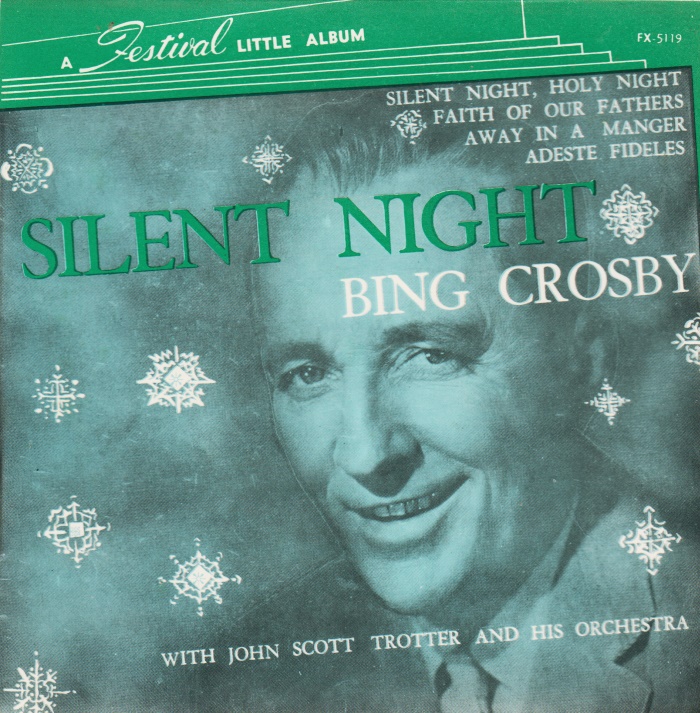
Bing Crosby’s version became his best-seller of the 1930s.
Music licensing company PPL announced in December 2010 that this carol tops the list of Britain’s “most recorded Christmas song of all time.” Said Mike Dalby, Lead Reporting Analyst at PPL: “Silent Night is a beautiful carol which encapsulates the feeling of Christmas entirely. Everyone from punk band The Dickies right through to Sinead O’Connor has recorded it, which exemplifies just how much it resonates with all different types of artists.”
According to PPL, Sinead O’Connor’s 1991 recording was the most popular version of the carol in Britain.
When the organ builder finally did show up to repair the St. Nicholas organ, he was given a copy of the “Silent Night” composition and brought it home. From there, traveling folk singers got a hold of it and began incorporating the carol into their repertoire. It didn’t make its way to America until 1839.
As the song gained traction throughout Europe, Franz Gruber composed several different orchestral arrangements. He donated all profits from the carol to local charities for children and the elderly, and eventually died penniless.
According to Steve Sullivan’s Encyclopedia of Great Popular Song Recordings, Crosby, a devout Catholic, refused to record the religious song, arguing it would be “like cashing in on the church or the Bible.” Crosby met with Father Richard Ranaghan, a priest trying to raise money for overseas missions, and decided to donate the royalties to the cause. But Ranaghan died in a car accident later that year, so the money went to several charities throughout the US and abroad.
This song lends itself to interpretation because the first four bars are all on the same chord. Jim Brickman explains: “There’s room to treat it dynamically in a different way: in the tempo, in the sounds and silences, in the time signature.”
Silent Night
Silent night, holy night.
All is calm, all is bright.
‘Round yon virgin mother and child.
Holy infant so tender and mild.
Sleep in heavenly peace,
Sleep in heavenly peace.
Silent night, holy night.
All is calm, all is bright.
‘Round yon virgin mother and child.
Holy infant so tender and mild.
Sleep in heavenly peace,
Sleep in heavenly peace.
Good morning everyone and I hope you have a great Christmas.
The guitar in this song is haunting…
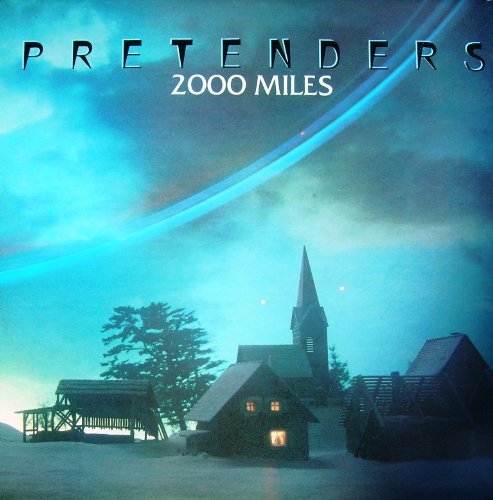
This song is actually Hynde’s tribute to guitarist and founding band member James Honeyman-Scott, who died of a drug overdose in 1982 at the age of 25.
“2000 Miles” was released as a single in December of 1983 and appeared as the 10th track of The Pretenders’ Learning to Crawl album. The single was popular in the UK, where it peaked at #15 on the UK Singles Chart. Learning to Crawl peaked at #5 in the Billboard 200 albums chart.
In 2014, while finishing up her album Stockholm, Hynde collaborated with Bjorn Yttling on an updated version of “2000 Miles. It was released as a Christmas single in the UK that December.
2000 Miles
He’s gone two thousand miles It’s very far The snow is falling down Gets colder day by day I miss you The children will sing He’ll be back at Christmas timeIn these frozen and silent nights Sometimes in a dream you appear Outside under the purple sky Diamonds in the snow sparkle Our hearts were singing It felt like Christmas timeTwo thousand miles Is very far through the snow I’ll think of you Wherever you go
He’s gone two thousand miles It’s very far The snow is falling down Gets colder day by day I miss you
I can hear people singing It must be Christmas time I hear people singing It must be Christmas time







 PowerPop... An Eclectic Collection of Pop Culture