The Beatles officially broke up in April of 1970…I hate leaving the 60s behind. The seventies was the time of my childhood at the age of 3 through 13. My music tastes were formed in this decade by listening to…well mostly the 60s.
So let’s get started with The Grateful Dead. They released two of their most popular albums this year… Workingman’s Dead and American Beauty. Two excellent albums and it was hard to pick a song off of them…but this one does quite nicely. It was written by Jerry Garcia and Robert Hunter.
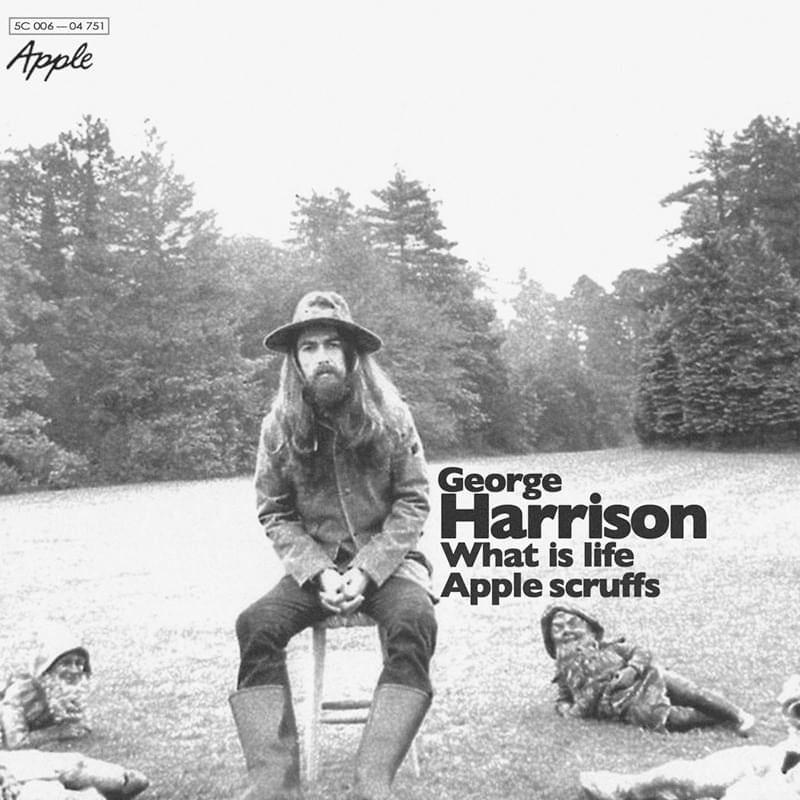
It’s George Harrison time again. When the Beatles broke up, no one knew what to expect from him. Well…George delivered a knockout punch with his album All Things Must Pass. At that time he was outselling John and Paul and just about everyone else. George wrote this song.
This was the opening track on the AQuestion Of Balance album by the Moody Blues, and at one point it was going to be the title track. The song was recorded several months earlier than the other tracks on the album and its title was shortened from “Question Of Balance” to “Question.”
When I was younger I started with this album and owned everything up until Long Distance Voyager. Their early seventies output is my favorite period but I liked their entire catalog as a whole. It was written by Justin Hayward.
This is what I wrote in my post on this song a while back...”The bass in this song punches you like a heavy-weight fighter and will roll you like wholesale carpet…the timing is absolutely perfect. I hear some Otis and Wilson Pickett in this song and it will make you move.” Huh…I still agree with me!
Groove Me has been a favorite of mine for so long. King Floyd takes almost a full minute to build up to the chorus and it’s well worth the wait when he kicks it in. Thank you King Floyd for writing this song.
This song by Simon and Garfunkel has become a standard. Bridge Over Troubled Water along with Georgia On My Mind was my mom’s favorite song…so I couldn’t leave it off. It was written by Paul Simon.
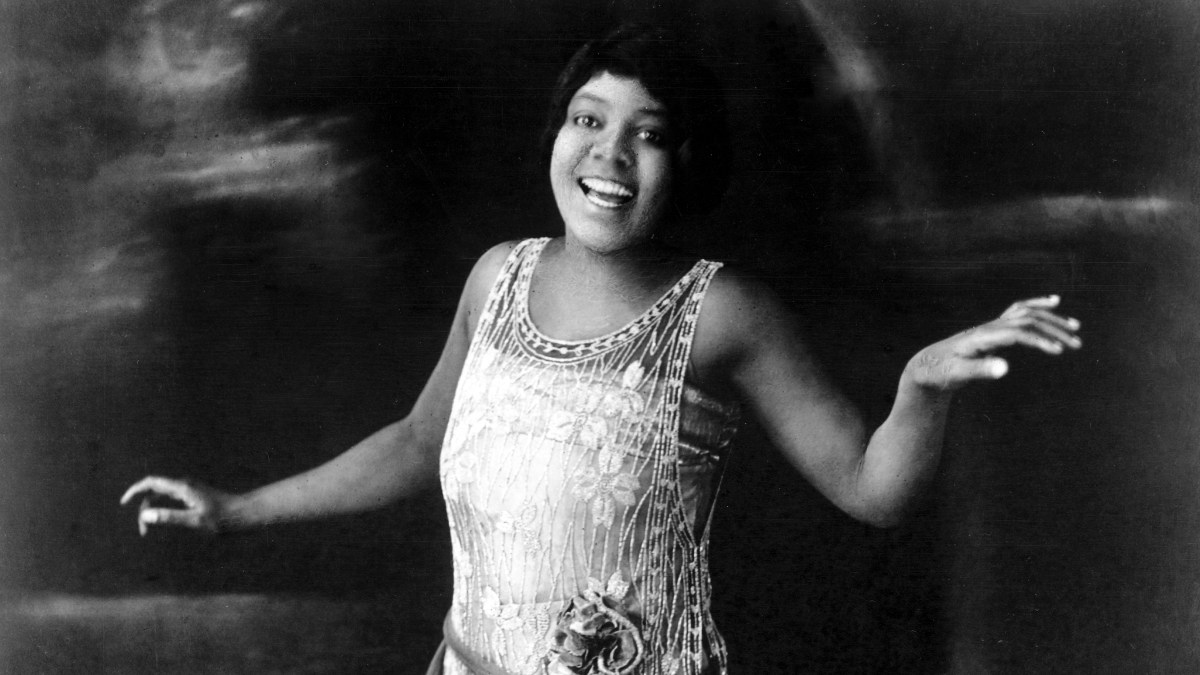
When I heard this woman sing…I was shocked. Listen to the purity of her voice…she still amazes me. We cannot forget the pioneers of any genre. Artists like Mahalia Jackson, Janis Joplin, and Norah Jones have all given Bessie Smith credit as their inspiration.
It seems like the female singers I like the most have a growl to their voices. That includes Janis Joplin, Aretha Franklin, Willie Mae Thorton, and yes Bessie Smith.
Within 10 months of signing Smith, the Columbia label sold two million records. Over the next four years, her sales reached six million. But she sang a wider repertoire than most, in her traveling tent show, on theatrical tours, and, later, in jazz clubs. The blues made Smith the highest-paid black entertainer of her era, but she was just as adept at singing show tunes and more popular Tin Pan Alley songs, which became the basis of many early jazz standards. Those record sales don’t sound as high now but remember this was in the 1920s!
This song came out in 1923 and peaked at #6 on the Billboard 100… I just looked it up…Billboard first published a chart in 1894.
Whenever I hear Bessie Smith I hear pain and greatness all at once. I’ve written about her song No One Loves You When You’re Down And Out and I’ve been revisiting her lately. This song was written by Charles Warfield and Clarence Williams in 1919. It’s been covered by Louie Prima and Frank Sinatra.
I got into Bessie Smith from listening to Janis Joplin and reading about her. Bessie’s voice sends chills up my spine…that is my litmus test. This particular song grabs me because of Smith’s voice and the recording vibe. She sings it, means it, and she damn well lived it. The sound of the record and her voice is just unbeatable. Yes, we have digital now but digital could not give you this sound.
Smith took care of her own…she moved her sister and other family to live near her in Philadelphia and supported them financially when they squandered her money.
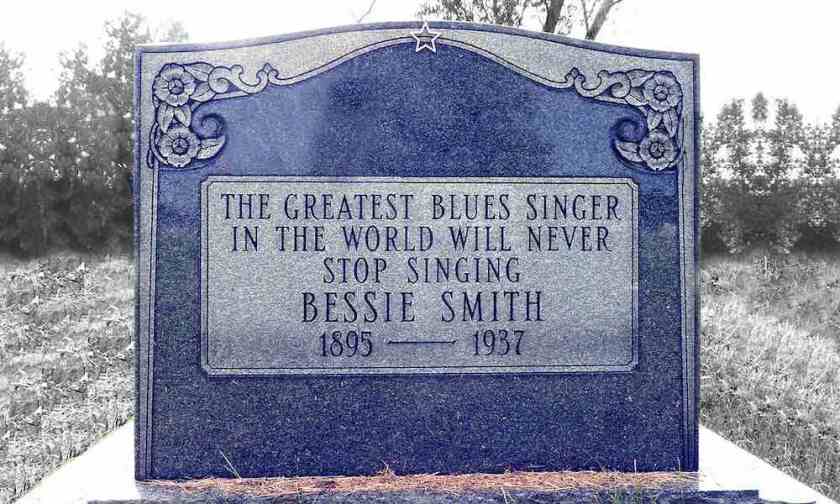
She died from injuries in a car accident in 1937, having not recorded a song in years, more than 5,000 people attended her funeral. Her grave had no headstone. There wasmoney for a headstone apparently, but her estranged husband spent it on something or someone else.
Janis Joplin helped buy Smith’s headstone in 1971…two weeks before her own untimely death. But the real story was the other person who helped buy the stone. That was Juanita Green… a little girl whom Smith once told to give up singing and stay in school.
Louis Armstrong: “I say, ‘Look here Bessie, you got change for a hundred? And she say, ‘Sure my man.’ She raised up her dress standing and there was, like, [you know,] how a carpenter keeps his nails? Man, so much money in the apron under her skirt that killed me.”
Danny Barker a New Orleans musician: “If you have a church background, like people who came from the South as I did, you would recognize a similarity between what she was doing and what those preachers and evangelists from there did, and how they moved people … Bessie did the same thing on stage.”
Baby Won’t You Please Come Home
I’ve got the blues, I feel so lonely
I’ll give the world if I could only
Make you understand
It surely would be grand
I’m gonna telephone my baby
Ask him won’t you please come home
‘Cause when you’re gone
I’m worried all day long
Baby won’t you please come home
Baby won’t you please come home
I have tried in vain
Evermore to call your name
When you left you broke my heart
That will never make us part
Every hour in the day
You will hear me say
Baby won’t you please come home, I mean
Baby won’t you please come home
Baby won’t you please come home
‘Cause your mama’s all alone
I have tried in vain
Nevermore to call your name
When you left you broke my heart
That will never make us part
Landlord gettin’ worse
I’ve got to move May the first
Baby won’t you please come home, I need money
Baby won’t you please come home
Some songs are just fun…and this is one of them. Yes, I like the Manfred Mann version a bunch and I also like Bob Dylan’s released version. It’s a live version with The Band at the Isle of Wight. Bob’s voice fits this song so well…he is over the top, sloppy, and loud but it works. It’s an irresistible melody and hook that Bob wrote in this song. Bob’s version is the only version I knew for a long time.
Bob Dylan wrote this song and I first heard it through his Greatest Hits II album, and then the Basement Tapes of him and The Band. Some time later I heard the Manfred Mann version of it. Something different though…Manfred Mann was the first to release it. This usually didn’t happen but Mike D’abo from Manfred Mann explains it: “We met in a publisher’s house as Bob Dylan was making some new material available to other artists, we heard about 10 songs and I thought ‘This Wheel’s On Fire’ would be the one to do, but Manfred liked The Mighty Quinn, which was called ‘Quinn The Eskimo’ then. It was sung in a rambling monotone but Manfred had recognized its potential. He sold me on the idea of doing this song, but I had to make up some of the words as I couldn’t make out everything he was saying. It was like learning a song phonetically in a foreign language. I have never had the first idea what the song is about except that it seems to be ‘Hey, gang, gather round, something exciting is going to happen ’cause the big man’s coming.’ As to who the big man is and why he is an Eskimo, I don’t know.”
The Basement Tapes version is much more mellow. This is probably the demo that Manfred Mann received.
It is thought that Bob Dylan came up with the song after seeing the 1959 movie The Savage Innocents. In that movie, Anthony Quinn plays an Eskimo named Inuk…that would explain Quinn and why he mentions an Eskimo in a pop song. That film also was the screen debut of Peter O’Toole.
Bob released the song in 1970 on his Self Portrait album… a live version recorded at the Isle of Wight Festival on August 31, 1969, with The Band backing him. His voice is great on this…it fits the song. The “heeyyyyyyyys” and the “whooooaaaas”s are perfect for it.
Manfred Mann released this in 1968 and it was a huge hit for them. The song peaked at #1 in the UK, #3 in Canada, #1 in New Zealand, and #10 on the Billboard 100 in 1968.
A little trivia for Beatle fans…Klaus Voormann who drew the Revolver cover, was on this song, he played the flute part on the Manfred Mann version. I also believe he played bass but I can’t verify…that is what instrument he played.
Having turned down offers from bands like the Hollies and the Moody Blues, Voormann agreed to become a part of Manfred Mann. He got to know the Beatles when they arrived in Germany. When Stuart Sutcliffe quit playing bass…McCartney took over and a little while later Stuart volunteered…if he had spoken up sooner…you never know what could have happened.
Ron Cornelius who played on the Self Portrait album: “There’s everybody and his brother flying into Nashville to play on that thing. If you look at the credits, it’s amazing how many people were delighted to come and play on it. Out of everybody I’ve worked with, I don’t know of anyone who’s been any nicer than Bob Dylan.”
The Mighty Quinn
Come all without, come all within
You’ll not see nothing like the mighty Quinn
Come all without, come all within
You’ll not see nothing like the mighty Quinn
Everybody’s building ships and boats
Some are building monuments
Others jotting down notes
Everybody’s in despair
Every girl and boy
But when Quinn the Eskimo gets here
Everybody’s gonna jump for joy
Come all without, come all within
You’ll not see nothing like the mighty Quinn
I like to go just like the rest, I like my sugar sweet
But jumping queues and making haste
Just ain’t my cup of meat
Everyone’s beneath the trees feeding pigeons on a limb
But when Quinn the Eskimo gets here
All the pigeons gonna run to him
Come all without, come all within
You’ll not see nothing like the mighty Quinn
Come all without, come all within
You’ll not see nothing like the mighty Quinn
Let me do what I wanna do, I can’t decide ’em all
Just tell me where to put ’em and I’ll tell you who to call
Nobody can get no sleep, there’s someone on everyone’s toes
But when Quinn the Eskimo gets here, everybody’s gonna wanna doze
Come all without, come all within
You’ll not see nothing like the mighty Quinn
Come all without, come all within
You’ll not see nothing like the mighty Quinn
Come all without, come all within
You’ll not see nothing like the mighty Quinn
Come all without, come all within
You’ll not see nothing like the mighty Quinn
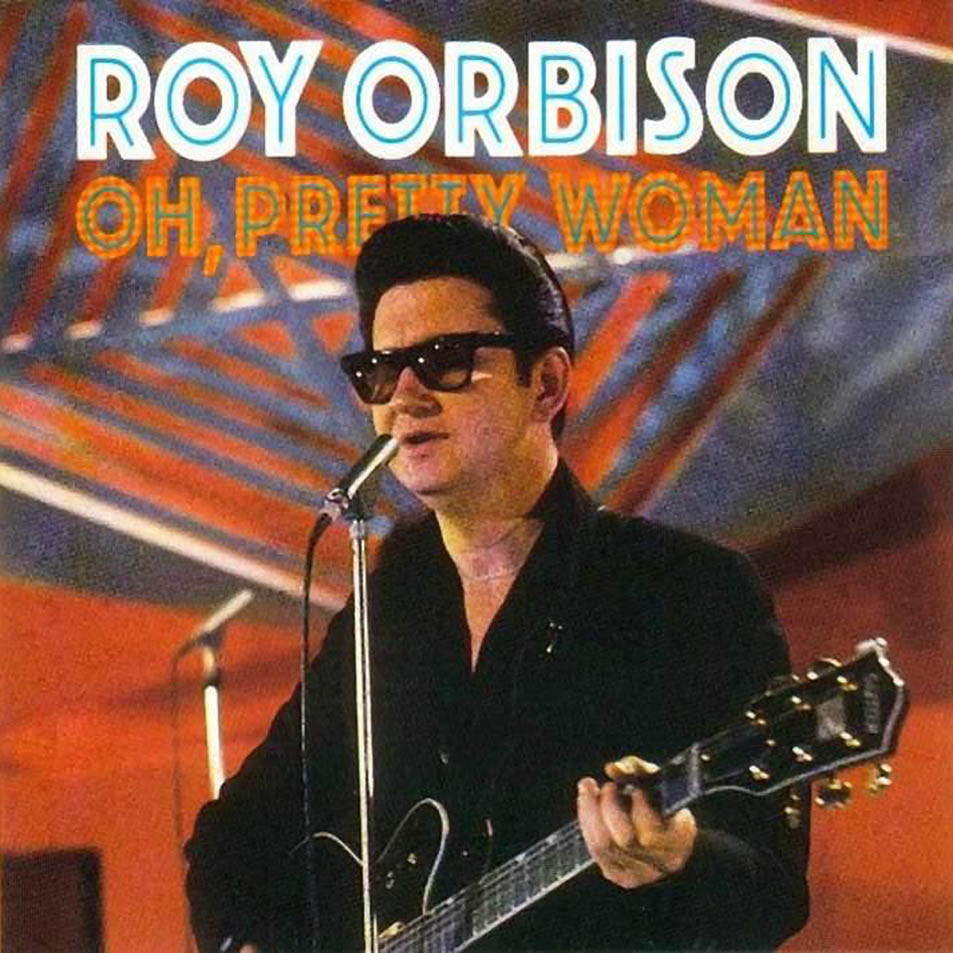
I’ve talked about Smokey Robinson and how his voice was iconic. Roy Orbison…the same thing. His voice was ridiculous and I mean that in the best possible way. It’s a voice that is so unique that copying it would be almost impossible.
This song was written for Orbison’s first wife, Claudette. One day, she left for the store by “walking down the street” and by the time she returned, Orbison had written what would become one of his biggest hits.
There was a quote that Tom Petty gave…that when he joined the Wilburys he called his mom and told her “Mom, I’m in a band with Roy Orbison!” Not Mom I’m in a band with Bob Dylan or a Beatle George Harrison…no it was Roy. That voice was golden and magical but he paid for his success dearly as you will read below.
This one has become a rock and roll standard. It was released in 1964 and he would have rough times to come. In 1957, Orbison married his sweetheart, Claudette Frady. She was 17 at the time and he was 21. As the young couple’s romance was soon thrust into jeopardy given Orbison’s rapid rise to fame, cracks began to appear. In November 1964, Orbison divorced Claudette over her alleged infidelities. However, within ten months, the pair had reconciled their differences and were once more in a loving relationship. They had three children.
It started on June 6, 1966, when Claudette and Roy were riding motorcycles. Claudette hit the door of a pickup truck and was killed instantly. Orbison poured himself into his work after that. He wrote and toured but was out of step with the mid to late-sixties music. It was in Birmingham, England in September 1968 when catastrophe struck once more. News reached Orbison that a fire had broken out at his home in Tennessee and that his two eldest sons had tragically passed away. His younger child went to live with his grandparents.
His career stalled but he did come back in the 1980s with Jeff Lynn producing his new album Mystery Girl. He also was in the Wilburys and that thrilled the rest of the group. Roy died suddenly on December 6, 1988. Mystery Girl would be released around a month and a half after Roy passed away. The album was hugely successful peaking at #5 in America and #4 in Canada.
(Oh) Pretty Woman peaked at #1 on the Billboard 100, in Canada, New Zealand, and the UK. This was during the height of the British Invasion which makes it even more significant.
In 1982 Van Halen covered Oh Pretty Woman. They did a great job on the song and introduced Roy and his song to a new generation. I bought the single when it was released. Roy’s vocals can’t be matched but they did their own arrangement and it worked.
Per songfacts…In 1964, Orbison was the only American artist to have a #1 UK hit, and he did it twice – with “(Oh) Pretty Woman” and “It’s Over.”
Bob Dylan:“He [Roy Orbison] could sound mean and nasty on one line and then sing in a falsetto like Frankie Valli in the next. With Roy, you didn’t know if you were listening to mariachi or opera. He kept you on your toes. With him, it was all about fat and blood. He sounded like he was singing from an Olympian mountaintop and he meant business.”
(Oh )Pretty Woman
Pretty woman, walkin’ down the street
Pretty woman the kind I like to meet
Pretty woman I don’t believe you, you’re not the truth
No one could look as good as you, mercy
Pretty woman won’t you pardon me
Pretty woman I couldn’t help but see
Pretty woman that you look lovely as can be
Are you lonely just like me
Pretty woman stop awhile
Pretty woman talk awhile
Pretty woman give your smile to me
Pretty woman yeah, yeah, yeah
Pretty woman look my way
Pretty woman say you’ll stay with me
‘Cause I need you, I’ll treat you right
Come with me baby, be mine tonight
Pretty woman don’t walk on by
Pretty woman don’t make me cry
Pretty woman don’t walk away, hey, okay
If that’s the way it must be, okay
I guess I’ll go on home, it’s late
There’ll be tomorrow night, but wait
What do I see?
Is she walkin’ back to me?
Yeah, she’s walkin’ back to me
Oh, oh, pretty woman
This song came up during the comments of the 1969 Max Picks…and I wanted to cover it.
Blind Faith was a supergroup composed of Eric Clapton, Ginger Baker, Steve Winwood, and Ric Grech. This song was not written by one of those gentlemen…it was written by Norman Petty, Buddy Holly, Jerry Allison, and Joe B. Mauldin…a Buddy Holly song. Blind Faith used this as the flip side to Can’t Find My Way Home.
Clapton wanted a more low-keyed band than Cream. Clapton and Winwood thought about asking Duck Dunn and Al Jackson of Booker T and the MGs to be the rhythm section but when Ginger Baker showed up at rehearsals…the band was set. Winwood became enthusiastic about being in a band with Baker… Clapton was hesitant but went ahead with it. Finally, the group was completed when the bassist for Family… Ric Grech joined the trio to make it a quartet.
When they first started to rehearse, Steve Winwood was playing the bass lines on his organ but he came to the conclusion they needed a real bass player. Clapton admired Rick Grech since the days when that band was known as The Farinas. Winwood said “I knew he was a good singer and could play great, and that was the guy we wanted. We didn’t even consider any other bass players. Once Rick was around – and he seemed like a nice guy – it was just very casually accepted that he was in the band.”
The first Blind Faith concert was a big one. It was in Hyde Park London, with around 100,000 people watching. They all thought they weren’t prepared enough for the concert. They also did a tour in the US but Eric started to hang out with Delaney and Bonnie more during the tour. He and George Harrison would play with them frequently.
Their discography is brief…one album but it’s a great one.
Ginger Baker: “We got to Stevie’s cottage in the middle of a field, and I settled down at Jim Capaldi’s drum kit and we just played for hours. Musically, Stevie and I got along wonderfully. He was one of the greatest musicians I’ve ever worked with. What I didn’t know then was that Eric would probably rather have worked with Jim Capaldi. It’s a curious thing with me and Eric. I regard him as the nearest thing I’ve got to a brother, but we always found it difficult to talk about personal things. He never explained, for example, that he wanted it all to be a much more low-key affair than Cream had been.”
Steve Winwood on recording the album: “They were full of people hanging out, Eric had a lot of bohemian friends and liked to record with people around. The only thing I remember not being very pleased with was ‘Can’t Find My Way Home.’ It was only when I heard it again later that I realized how good it was.”
Well All Right
Well all right, so I’ve been foolish.
Well all right, let people know
About the dreams and wishes that you wish
In the night when lights are low.
Well all right, well all right,
You know we live and love with all our might.
Well all right, well all right,
You know our lifetime love will be all right.
Well all right, so I’m not working.
Well all right, let people say
That those foolish kids can’t be ready
For the love that comes their way.
Well all right, well all right,
You know we live and love with all our might.
Well all right, well all right,
You know our lifetime love will be all right.
Well all right, so I’ve been foolish.
Well all right, let people know
About the dreams and wishes that you wish
In the night when lights are low.
Well all right, well all right,
You know we live and love with all our might.
Well all right, well all right,
You know our lifetime love will be all right.
If you want to break up a party…play this song…it will clear a room with quickness. So enjoy the post and song!
To say it’s bleak is an understatement. I’ve always been interested in it though. It was released in 1969 and the other chart songs around it were happy…Sugar Sugar, Dizzy, the cool Crystal Blue Persuasion, and Aquarius/Let The Sunshine In… this one seems out of place in that bunch. The duo was Denny Zager and Rick Evans. Rick Evans wrote this song.
It peaked at #1 on the Billboard 100, #1 in Canada, #1 in the UK, and yes #1 in New Zealand. It was number one around a week before the Apollo Space Mission. This doom and gloom song was recorded in a studio in the middle of a cow pasture in Odessa, Texas in 1968.
The line that I noticed wasEverything you think, do and say Is in the pill you took today. Hmmm, kind of reminds me of a thousand pills made now to control your illnesses or just make you feel better. Also if you really want to read into it… In the year 5555, Your arms hangin’ limp at your sides Your legs got nothin’ to do, Some machine’s doin’ that for you. That machine today would be a phone or a computer doing about everything. Buying your groceries, playing your music, and reading Max’s blog about that.
The other line I think about… You’ll pick your son, pick your daughter too, From the bottom of a long glass tube. Well, that happened on July 25, 1978, with the first test tube baby.
You probably guessed it by looking at the names but this was Zager and Evans, only hit. What are they doing today? The author, Rick Evans, sadly passed away in February 2018 in Santa Fe, New Mexico at the age of 75. Denny Zager is a highly acclaimed Guitar maker who makes his home in Nebraska. Nebraska is where both of them were from.
Their follow-up song was “Mr. Turnkey,” a song about a rapist who nails his wrist to his prison cell because he is sorry for his crime? Yeah, I wonder why that one didn’t hit? I admire the ambition but maybe a little too much inspiration was going on.
I have a quote from Zager at the bottom but here is another one and it’s interesting….Denny Zager: Before John Denver was discovered, he used to write to me all the time asking how we knew about “test tube babies” and things that hadn’t even been discovered yet. Rick used to tell him he had been abducted by aliens and “saw into the future.”
Denny Zager: Rick (Evans) said he wrote the lyrics in 10 minutes in the back of a Volkswagen van after a night of partying and a lot of Mary Jane. He tried the song with a few bands he was playing with at the time, but the music wasn’t right and it wasn’t working. I thought the lyrics were intriguing, so I rewrote the music so it blended better with the lyrics. The first night we played it live we knew it was special because the crowd looked stunned and wanted to hear it again and again.
Denny Zager: Like any band Rick and I had our squabbles, but there was a point in time that I felt we could have written some of the best music of the century. I miss him.
The follow-up!
In The Year 2525
In the year 2525, if man is still alive
If woman can survive, they may find
In the year 3535
Ain’t gonna need to tell the truth, tell no lie
Everything you think, do and say
Is in the pill you took today
In the year 4545
You ain’t gonna need your teeth, won’t need your eyes
You won’t find a thing to chew
Nobody’s gonna look at you
In the year 5555
Your arms hangin’ limp at your sides
Your legs got nothin’ to do
Some machine’s doin’ that for you
In the year 6565
You won’t need no husband, won’t need no wife
You’ll pick your son, pick your daughter too
From the bottom of a long glass tube
In the year 7510
If God’s a coming, He oughta make it by then
Maybe He’ll look around Himself and say
Guess it’s time for the judgment day
In the year 8510
God is gonna shake His mighty head
He’ll either say I’m pleased where man has been
Or tear it down, and start again
In the year 9595
I’m kinda wonderin’ if man is gonna be alive
He’s taken everything this old earth can give
And he ain’t put back nothing
Now it’s been ten thousand years
Man has cried a billion tears
For what, he never knew, now man’s reign is through
But through eternal night, the twinkling of starlight
So very far away, maybe it’s only yesterday
In the year 2525, if man is still alive
If woman can survive, they may find
I will be in a meeting today…so I’ll be late in commenting.
I’m so sad that we are leaving the 60s. I do love the 70s but the 60s I think were rock/pop’s best decade.
Great year… Led Zeppelin had arrived the year before and The Beatles released Abbey Road, which was the year of George. I could have flipped a coin on Something or Here Comes The Sun. This is the last year I’ll be able to include the Holy Trinity of Rock…The Beatles, The Who, and The Rolling Stones while they were all still together.
Something was written about his then-wife Pattie Boyd. This one moved his songwriting abilities up in the eyes of his bandmates Lennon and McCartney and the world. George had written some good songs before like Taxman, If I Needed Someone, and While My Guitar Gently Weeps but this one…this one placed him in another league. George had two of the highlights on Abbey Road with Something and Here Comes The Sun. Something tells me we will be seeing Mr. Harrison next year…just a hunch!
So many Led Zeppelin songs I could have had here off the second album…or the Brown Bomber. I picked Ramble On over Whole Lotta Love because it has that light-heavy feel.
Creedence Clearwater Revival was rising in 1969. They ended up being one of the best American bands ever. They only had a short window but they took advantage of it. If you want proof that life isn’t fair… Green River was kept from #1 because of the bubblegum song “Sugar, Sugar” by The Archies.
The song was written by John Fogerty.
I always thought The Who was the best pure rock band out there…and I still do. They released Tommy in 1969 and although I never thought it was their best…it was and is still iconic.
It has many classic rock songs that we know and this one included…this is the Who playing We’re Not Going To Take It. It was written by Pete Townshend.
Blind Faith was a Supergroup made up of Eric Clapton, Steve Winwood, Ginger Baker, and Ric Grech. They released just one album. Winwood wrote Can’t Find My Way Home and sang lead. Many critics thought that Blind Faith sounded a lot more like Traffic than Clapton’s Cream, which is what Clapton was going for.
Of all the Rolling Stones songs I have posted…B sides and album cuts…I’m astonished that I haven’t posted this one. This is one of the Stones’ best 60s singles. It’s B side was You Can’t Always Get What You Want. I consider Jumping Jack Flash, Honky Tonk Women, and Brown Sugar their best rock singles. A case could be made for Satisfaction and Start Me Up as well.
When the Stones finished this recording on June 8, 1969…they drove to Brian Jones’s house to fire him. By this time he was trying to get himself clean of drugs and actually was getting better. He also had an arrest on his record that would stop the Stones from touring at the time. He started to record demos on his own and other people have said that it sounded like Creedence Clearwater Revival and that style. He would die on July 3, 1969, from drowning in his pool under a lot of controversy that still is questioned to this day. The song was released on July 4, 1969
This song was also the track that introduced Stones fans to guitarist Mick Taylor. The former member of John Mayall’s Bluesbreakers was brought in to replace founding member Brian Jones. Taylor, only 20 at the time, provided the glue for the song, helping the transition from verse to chorus. Guitarist Ry Cooder also was an inspiration for the song.
The song started on a trip that Richards and Mick Jagger took to Brazil. Inspired by the cowboys working the ranch where they were vacationing, the two started knocking together a Hank Williams/Jimmie Rodgers-inspired tune, with Jagger using the countrified tone of the music as inspiration for his lyrical ode to the working women of the Old West. That version you can hear in Country Honk on the Let It Bleed album. Honky Tonk Women was released as a non-album single.
The song peaked at #1 on the Billboard 100, in the UK, in New Zealand, and #2 in Canada in 1969.
Keith Richards: ‘Honky Tonk Women’ started in Brazil. Mick and I, Marianne Faithfull and Anita Pallenberg who was pregnant with my son at the time. Which didn’t stop us going off to the Mato Grasso and living on this ranch. It’s all cowboys. It’s all horses and spurs. And Mick and I were sitting on the porch of this ranch house and I started to play, basically fooling around with an old Hank Williams idea. ‘Cause we really thought we were like real cowboys. Honky tonk women. And we were sitting in the middle of nowhere with all these horses, in a place where if you flush the john all these black frogs would fly out. It was great. The chicks loved it. Anyway, it started out a real country honk put on, a hokey thing. And then couple of months later we were writing songs and recording. And somehow by some metamorphosis it suddenly went into this little swampy, black thing, a Blues thing. Really, I can’t give you a credible reason of how it turned around from that to that. Except there’s not really a lot of difference between white country music and black country music. It’s just a matter of nuance and style. I think it has to do with the fact that we were playing a lot around with open tunings at the time. So we were trying songs out just to see if they could be played in open tuning. And that one just sunk in.”
Honky Tonk Women
I met a gin-soaked, bar-room queen in Memphis
She tried to take me upstairs for a ride
She had to heave me right across her shoulder
‘Cause I just can’t seem to drink you off my mind
It’s the honky tonk women
Gimme, gimme, gimme the honky tonk blues
I laid a divorcée in New York City
I had to put up some kind of a fight
The lady then she covered me with roses
She blew my nose and then she blew my mind
It’s the honky tonk women
Gimme, gimme, gimme the honky tonk blues
It’s the honky tonk women
Gimme, gimme, gimme the honky tonk blues
It’s the honky tonk women
Gimme, gimme, gimme the honky tonk blues
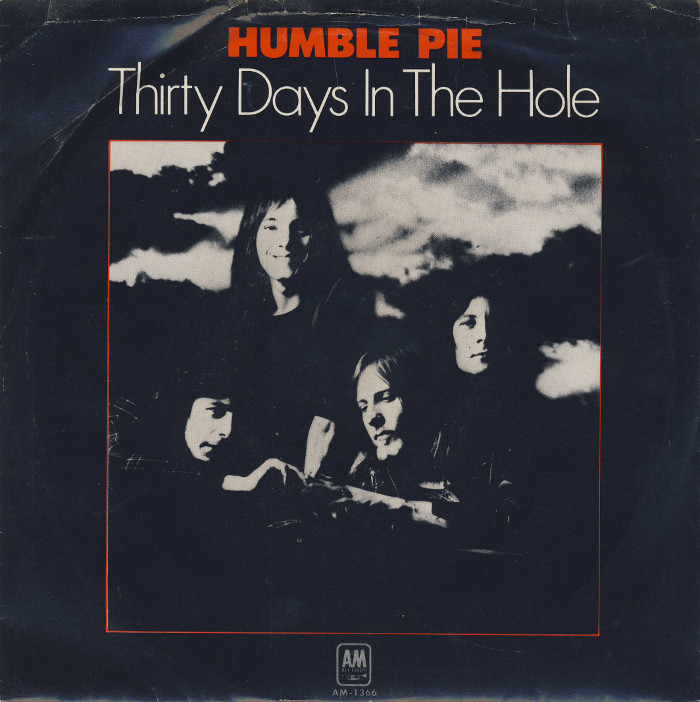
I heard this song before I knew who Marriott was…I learned later he was the same singer as in Itchycoo Park and Lazy Sunday which didn’t compute. I really wish I could have seen this band live. His voice in this is nasty…a perfect rock voice for this song.
Do you want a song that rocks? Humble Pie tried something different than most hard rock bands at the time. Marriott combined hard rock with a gospel feel. This is one of the nastiest songs you will hear. It’s as sleazy as you can get but it rocks.
This is personally my favorite song by Humble Pie. The band also included Peter Frampton for a while and was known for their excellent live shows. In 1969 Marriott left The Small Faces and teamed up with Frampton to start Humble Pie. They were a very successful touring band and mostly concentrated on albums…much like The Faces. This song never charted but did get some FM play.
While touring in Kentucky, Marriott read that getting caught with drugs in that state would give you an automatic 30 days in jail. He was also thinking about a friend of the band’s who had been sent to jail for having a joint. Drugs were part of the culture back then and just a way of life on the road. He used a lot of street names for drugs like “Chicago Green” is pot, and New Castle Brown is a kind of heroin…not to be confused with Newcastle Brown which is ale. Black Nepalese Hash is a rare variant of hashish that hails from the Highland regions of Nepal.
Marriott has said that inspiration for the title came from a Humphrey Bogart/James Cagney movie he saw on TV, where Bogart plays a prisoner who gets sent to “30 days in the hole.”
30 Days in the Hole
Roll my tape
Ooh, ooh, ooh
Thirty days,
Anyone doin’ that one?
I’m doin’ that one
30 days in the hole
30 days in the hole
30 days in the hole
All right all right all right all right, yeah
Chicago Green, talkin’ ’bout Black Lebanese
A dirty room and a silver coke spoon
Give me my release, come on
Black Nepalese, it’s got you weak in your knees
Sneeze some dust that you got buzzed on
You know it’s hard to believe
30 days in the hole
30 days in the hole
30 days in the hole
That’s what they give you
30 days in the hole
I know
Newcastle Brown, I’m tellin’ you, it can sure smack you down
Take a greasy whore and a rollin’ dance floor
It’s got your head spinnin’ round
If you live on the road, well there’s a new highway code
You take the urban noise with some dirt with poison
It’s gonna lessen your load
30 days in the hole
That’s what they give you now
30 days in the hole
Oh, yeah
30 days in the hole
All right, all right
30 days in the hole
What you doin’ boy?
You here for 30 days
Get, get, get your long hair cut
And cut out your ways
Black Nepalese, it got you weak in your knees
Gonna sneeze some dust that you got busted on
You know it’s so hard to please
Newcastle Brown can sure smack you down
You take a greasy whore and a rollin’ dance floor
You know you’re jailhouse-bound
30 days in the hole
30 days in the hole
30 days in the hole
Oh, yeah
30 days in the hole
30 days, 30 days in the hole
30 days in the hole
30 days in the hole
30 days in the hole
30 days in the hole
30 days in the hole
30 days in the hole
30 days in the hole
30 days in the hole
It was a turbulent year, to say the least. We lost two proponents of peace—Martin Luther King, Jr., and Robert F. Kennedy. Other events include the Vietnam War’s Tet Offensive, riots in Washington, DC, the Civil Rights Act of 1968, and heightened social unrest over the Vietnam War, values, and race.
The music was also toughened up by moving away from psychedelic music. The social climate and The Band’s album Music from Big Pink had a lot of influence on this. You still had psychedelic music released but overall, music was more stripped down to the basics.
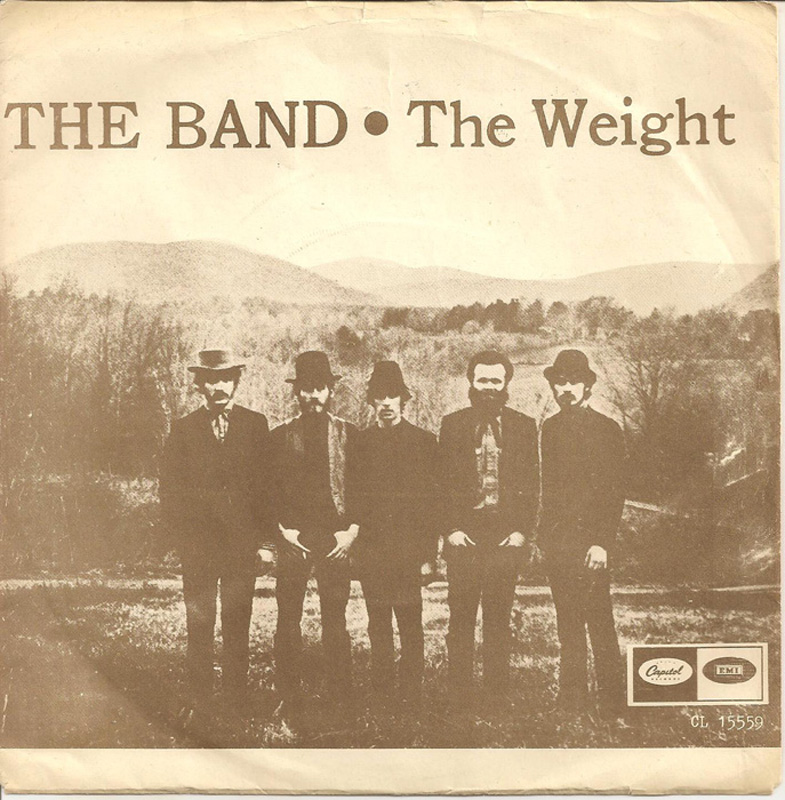
Let’s start off with The Band…Music From Big Pink was one of the most important albums ever released. Its influence was everywhere. The song The Weight was also later included in the movie Easy Rider.
The Beatles would release the super single Hey Jude/ Revolution and The White Album. I could go with many songs like Lady Madonna, Hey Jude, Back in the USSR, Helter Skelter, Dear Prudence, and the list is almost endless… but I’ll go with Revolution. This song was written by John Lennon and Paul McCartney…but mostly Lennon.
The Rolling Stones released what some considered their best song ever with Jumping Jack Flash. It was written by Keith Richards and Mick Jagger.
Maybe the first supergroup in rock…Cream with White Room. Pete Brown wrote the lyrics and Jack Bruce wrote the music. Bruce was inspired by a cycling tour that he took in France. The “white room” was a literal place: a room in an apartment where Pete Brown was living.
Now we will go with the legendary Otis Redding singing (Sittin’ On) The Dock Of The Bay.
The song is a true classic. Stax guitarist Steve Cropper wrote this with Redding. Cropper produced the album when Redding died, including this track with various songs Redding had recorded the last few years.
Redding died in a plane crash on December 10, 1967, a month before this song was released (January 8, 1968) and three days after he recorded it. It was by far his biggest hit and was also the first-ever posthumous #1 single in the US.
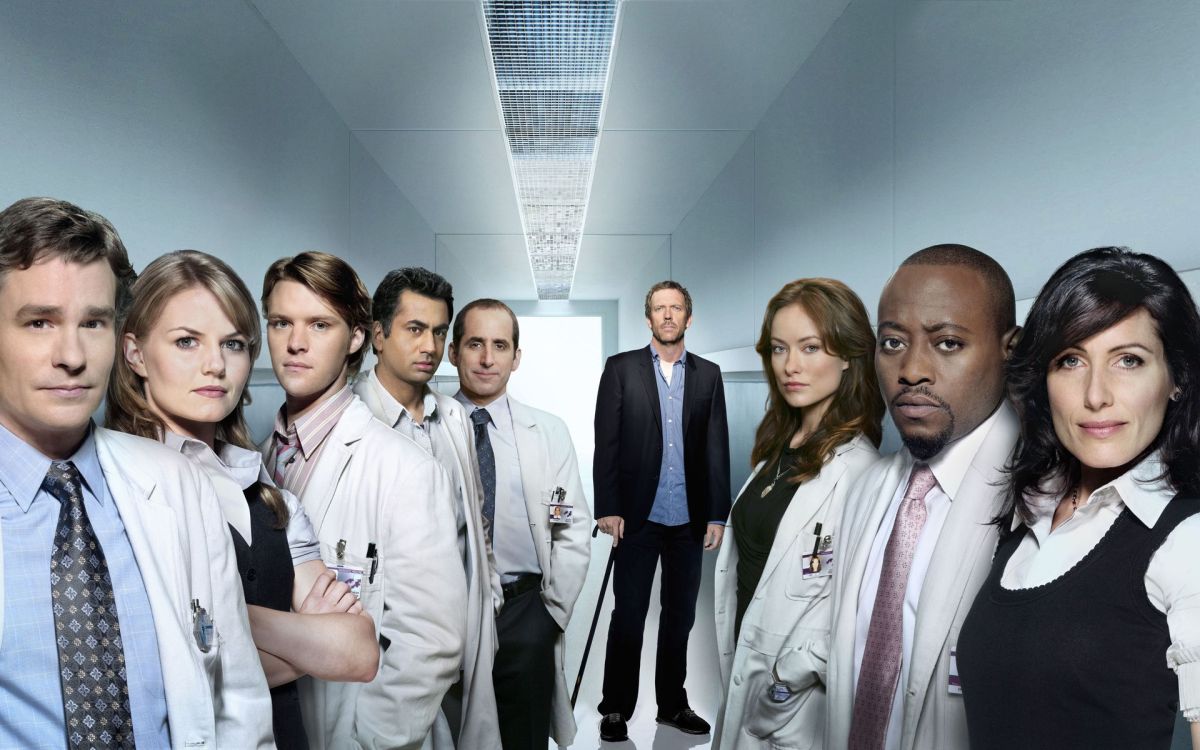
I’m usually late getting into a show or a band. I didn’t watch The Sopranos, Breaking Bad, or The Wire until years after they went off the air. I just found House MD in May and I’ve been binging on it. It ran from 2004 to 2012. It was one of the most intelligent shows on television. Hugh Laurie did a fantastic job on his show along with the rest of the actors.
Gregory House is a doctor with a horrible bedside manner and that is putting it mildly. He is a genius, mad doctor. House is the head of a diagnostic team that was put together around him. They get the most challenging cases in the hospital and solve them more often than not. On the surface, he has little interest in patients and instead, it is about solving the puzzle of their ailment that draws him in but we see many subtle instances which prove he does have a heart for both his patients and his friends. That is the root of the show that extends not only to patients but to his life and friends. He seems to have Antisocial Personality Disorder (ASPD).
The writers based the show on Sherlock Holmes and Watson. House could have been a master detective because his ability to read people is incredible. Even the names were common…Holmes-House and his best friend on the show was an oncologist named Wilson who was House’s Watson.
The parallels are very close. Both House and Holmes are drug addicts, and both are tortured musicians. But more fundamentally, House is really a detective show, not a medical show. It’s about solving the cause of mysterious diseases in the face of numerous misdirections (which often turn out to be caused by flaws in human nature) as opposed to solving mysterious crimes.
House goes around the hospital popping Vicodin because he is in constant pain. He suffered a leg injury that left him with severe pain for the rest of his life. The injury was caused by an infarction incurred while golfing. He is cynical, often cruel, but yet undeniably a genius. The actor behind House, Hugh Laurie, openly admitted to experimenting with Vicodin to “get closer to the character.” Speaking about his experience, “I wouldn’t recommend it – we have to be careful. But then again … if you’re not in pain it gives a floaty, pleasurable feeling.”
Although House appears to be uncaring to his patients he will do unethical procedures to save them, risking his own career. That could be to solve the all-important “puzzle” also. He does rub off on people. The team that stays around him starts to become him in some ways. They want to work with him because of how great he is at what he does. He spies on their personal life and tells their secrets but they keep coming back. My theory is they would do anything to be around greatness…and have that rub off.
Lisa Cuddy is the Dean of Medicine in the hospital. She tries to reign in House and that is almost impossible but she is strong and sometimes wins the battle. She makes House do “clinic duty” in the free clinic hoping that will improve his relationship with patients but he actively hates it and tries to dodge it because usually, there is no puzzle. As he said… that job can be done by a monkey with a bottle of Motrin. Here are a few clips from the clinic duty. These are not serious cases…but they are funny. Be on the lookout for the lady with an asthma inhaler.
His best friend Wilson is a kind person who is the only friend who can put up with House long term. Wilson is not stupid…he is intelligent and can be manipulative in a way but is not in the same league as House in that department. They are totally different but play college pranks on each other and need each other to be whole in a lot of ways.
The show stays fresh because his team changes through the years but the original team does rejoin at different points. It’s not just about cases…in fact, some episodes don’t even have a case at all.
This is a true ensemble show. Yes, it centers around House but the characters Foreman, Chase, Cameron, Thirteen, Taub, Kutner, Masters, and more are just as important and you get an insight into their lives as well. You can see them slowly change into House’s logic that “Everybody Lies.”
Medical shows usually bore me but this one kept my attention all the way through. The cases they handle are based on real cases but they are very rare. It’s not a comedy…it’s a drama with comedy thrown in…the writing is second to none. The writers go deep into the characters.
Would you want him as your doctor if you had something terribly wrong with you? Would you care in the end if it was just a puzzle for him to solve or if he cared about you or not? I’ll end it here with just a simple statement…watch this show.
This is a show where you can store up quotes. I used one on the guy who works for me at work when we were both trying to solve a problem together. “I thought I’d get your theories, mock them, then embrace my own. The usual.”
The look on his face was priceless.
Here are a few short clips together from the first season.
I somehow got a lot of singles from relatives when I was a kid. They just ended up at our house. I had the original single of this and I loved it and still do. Smokey has such a smooth and cool voice. I can’t tell you how much I like this song. It’s high on my list of all-time songs I love. I remember being 12 and going to baseball practice and listening to this song before I left…it stayed with me through practice in the heat and that night. His voice is pure gold.
To me, Smokey is like American royalty or a national treasure as people say. When your peers like Dylan, Lennon, and everyone else sing your praises…you are doing something right.
Stevie Wonder and Hank Cosby (producer) came up with the music for this song. Smokey Robinson listened to the song for a few days and decided it sounded like a circus so he came up with the lyrics based on the sad clown Conio from the opera Pagliacci. It was Ruggero Leoncavallo’s opera about fatal jealousies in a traveling troupe of actors based on a real-life story… a case encountered by Leoncavallo’s father, who was a police magistrate in Naples. Pagliacci was around in the late 1800s.
It was recorded in 1967 and was just an album track on the album Make It Happen. In 1970 it was released as a single (with a new mix) and was a huge hit. The song peaked at #1 on the Billboard 100, #7 in Canada, and #1 in the UK. It was written by Robinson, Stevie Wonder, and Hank Cosby. It was recorded in 1967 but it was released in 1970.
It’s hard to believe but this song would be their only #1 hit on the Billboard 100 with Smokey. They had 42 songs in the top 100 and 6 top ten hits. Smokey would soon leave the Miracles after this song. He would be replaced by Billy Griffin on vocals. Now THAT had to be a hard gig to replace Smokey Robinson. Billy did a good job though because they had another number 1 with Love Machine Part 1. He does sound a lot like Smokey.
Smokey Robinson: “I was trying to think of something that would be significant, that would touch people’s hearts, but still be dealing with the circus, so what is that? Pagliacci, of course. The clown who cries. And after he makes everyone else happy with the smile painted on his face, then he goes into his dressing room and cries because he’s sad. That was the key.”
Below is Smokey Robinson telling the story of the song. Below that is the single version that we have all heard. What was it with those 60s-70s shows with the backdrops to the singers? Did they think it was Smokey Robinson and the Plumbers?
Tears of a Clown
Oh yeah, yeah, yeah
Now if there’s a smile on my face
It’s only there trying to fool the public
But when it comes down to fooling you
Now honey, that’s quite a different subject
But don’t let my glad expression
Give you the wrong impression
Really, I’m sad
Oh, I’m sadder than sad
You’re gone and I’m hurtin’ so bad
Like a clown I pretend to be glad
Now there’s some sad things known to man
But ain’t too much sadder than
The tears of a clown
When there’s no one around
Oh yeah, baby
Now if I appear to be carefree
It’s only to camouflage my sadness
In order to shield my pride I’ve tried
To cover this hurt with a show of gladness
But don’t let my show convince you
That I’ve been happy since you
Decided to go
Oh, I need you so
I’m hurt and I want you to know
But for others I put on a show
Oh, there’s some sad things known to man
But there ain’t too much sadder than
The tears of a clown
When there’s no one around, oh yeah
Just like Pagliacci did
I try to keep my sadness hid
Smiling in the public eye
But in my lonely room I cry
The tears of a clown
When there’s no one around
Oh yeah, baby
Now if there’s a smile on my face
Don’t let my glad expression
Give you the wrong impression
Don’t let this smile I wear
Make you think that I don’t care
Really, I’m sad
Hurtin’ so bad
Some people have said they cannot comment on this post…some can some cannot…I’ve emailed WP and am trying live chat but of course, it’s not open. So it might let you leave a comment…and it might not
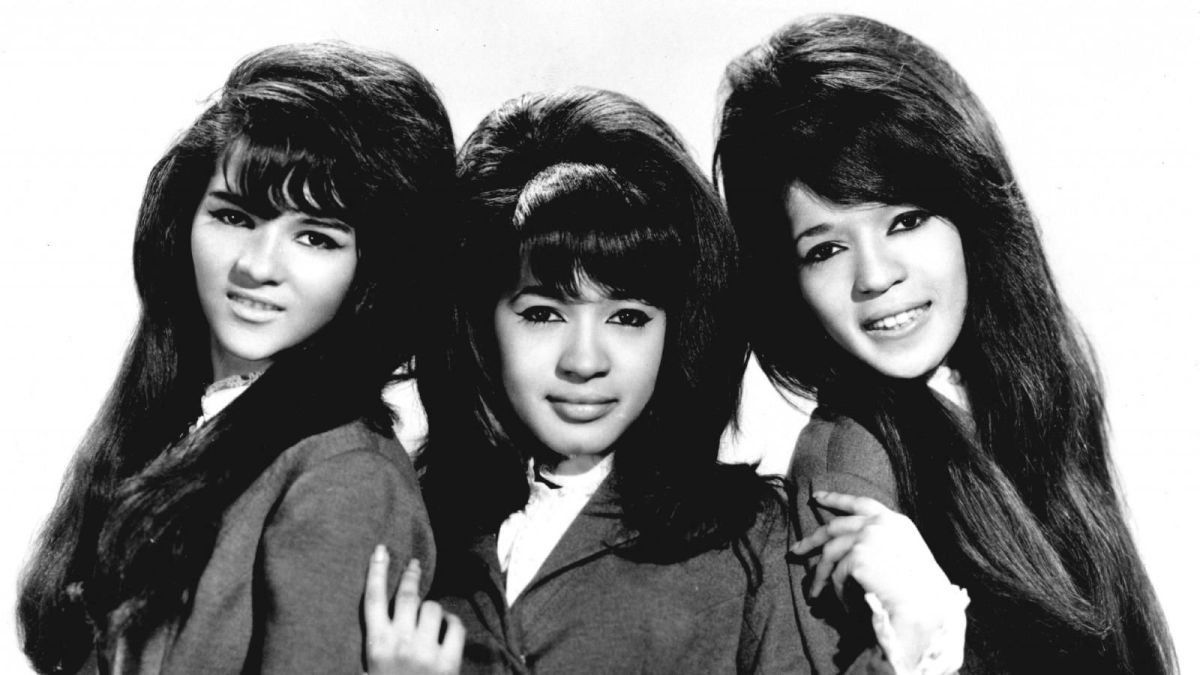
The Ronettes were Veronica (Ronnie) Bennett, her sister Estelle Bennett, and their cousin Nedra Talley. One of the great songs of the sixties.
I’m a huge fan of this song and The Ronettes. I like many of the female groups of the early sixties like The Marvelettes, Martha and the Vandellas, The Shirelles, and the Supremes but no one sounded like Ronnie Spector. But… I’m not the fan that Brian Wilson has been since he heard the song.
Count Brian Wilson as a huge fan of this song. Well, being a fan is an understatement…he was totally obsessed with this song. He was driving in the 60s when he heard it and had to pull the car over and analyze the chorus. He then bought the single and put it in his home jukebox and played it endlessly. In the seventies, as his fellow Beach Boys would be recording in his basement…he would be blasting Be My Baby at full volume with the curtains closed. One great thing came out of his obsession… it inspired him to write Don’t Worry Baby.
Mike Love remembered Wilson comparing Be My Baby to Albert Einstein’s theory of relativity. Wilson told The New York Times in 2013 that he had listened to the song at least 1,000 times. Beach Boy Bruce Johnston gave a higher estimation: “Brian must have played ‘Be My Baby’ ten million times. He never seemed to get tired of it.” He also called it the best song ever recorded. Brian Wilson’s daughter Carnie has one distinct memory from her childhood, listening to, and more accurately being woken up with, Be My Baby.
Brian Wilson: “I felt like I wanted to try to do something as good as that song and I never did, I’ve stopped trying. It’s the greatest record ever produced. No one will ever top that one.”
To me, this song is brilliant and one of my favorites… although I wouldn’t go as far as Wilson did. It’s one of Phil Spector’s best-produced songs. The song peaked at #2 on the Billboard 100, #2 in Canada, #2 in New Zealand, and #4 in the UK.
This was the first Ronettes song produced by Phil Spector and released on his label, Philles Records. It also featured Spector’s “Wall Of Sound” production technique, where he layered lots of instruments and used echo effects.
Don’t expect to find B-side gold on many of Spector’s singles. Spector had Tommy Tedesco and Bill Pitman (session musicians) record a throwaway instrumental that he called “Tedesco And Pitman.” Spector made sure the B-sides of his singles were garbage so there was no doubt what song should be played. This also allowed him more studio time to craft the hit.
The future Ronnie Spector was the only Ronette to sing on this. Phil Spector rehearsed her for weeks and had her do 42 takes before he got the sound he wanted. Spector and Bennett got married in 1968, and they divorced in 1974. Ronnie Spector said the home they shared was pretty much a prison for her.
She woke up on her wedding night to workers erecting a barbed-wire fence around the estate. Bars were soon installed over windows, and intercoms in all the rooms. Ronnie was rarely allowed out alone, unless with a life-size dummy of Spector in the passenger seat of her car. But the worst was being unable to perform on stage.
I never heard about Ronnie Spector until the 80s when she appeared on the Eddie Money song Take Me Home Tonight. After that, I looked up all I could about her.
Jeff Barry and Ellie Greenwich wrote this song. As was his custom, Phil Spector also took a songwriting credit on the track. Producers did that in the 50s and 60s and it was wrong.
One thing I respected about George Martin…he blew the whistle on the hugely successful producer Norrie Paramor in the early sixties to a young David Frost who roasted Paramor on his show “That Was the Week That Was”. Paramor would force artists to record his songs for B sides and also take writers’ credit for others. Frost kept Martin’s name out of it. No one ever found out who dished out the goods to Frost about Paramor.
Be My Baby
The night we met I knew I needed you so
And if I had the chance I’d never let you go.
So won’t you say you love me,
I’ll make you so proud of me.
We’ll make ’em turn their heads every place we go.
So won’t you, please, be my be my baby
Be my little. baby my one and only baby
Say you’ll be my darlin’, be my be my baby
Be my baby now, my one and only baby
Wha-oh-oh-oh.
I’ll make you happy, baby, just wait and see.
For every kiss you give me I’ll give you three.
Oh, since the day I saw you
I have been waiting for you.
You know I will adore you ’til eternity.
So won’t you, please, be my be my baby
Be my little. baby my one and only baby
Say you’ll be my darlin’, be my be my baby
Be my baby now, my one and only baby
Wha-oh-oh-oh.
So come on and, please, be my be my baby
Be my little baby my one and only baby
Say you’ll be my darlin’, be my be my baby
Be my baby now, my one and only baby
Wha-oh-oh-oh.
Be my be my baby be my little baby.
My one and only baby oh oh,
Be my be my baby oh,
My one and only baby wha-oh-oh-oh-oh.
Be my be my baby oh,
My one and only baby
Be my be my baby oh,
Be my baby now
I’ve always liked Patsy Cline…her voice was so good. Fellow blogger Dana mentioned her name in the comments and I’m surprised I’ve never done a Cline post.
She was born Virginia Patterson Hensley. Known in her youth as “Ginny,” she began to sing with local country bands while a teenager, sometimes accompanying herself on guitar. By the time she had reached her early 20s, Cline was promoting herself as “Patsy” and was on her way toward country music stardom.
This song came out in 1957 but her voice sounds so fresh and vibrant. This was her first hit. It was a big crossover hit after she performed it on the variety show Arthur Godfrey’s Talent Scouts and won that night’s competition.
At only 15 years old, songwriter Alan Block wrote the original version of “Walkin’ After Midnight” in 1954. The song was based on a personal experience of Block’s, in which he found himself taking a solitary midnight stroll through the city streets. Block’s friend Donn Hecht later collaborated with him on the song, and the two fine-tuned its lyrics and melody. It was originally intended for Kay Starr, a pop and jazz singer but she turned it down.
Cline didn’t like the song when she heard it but compromised with the record company (Four Star Records) and she recorded it. It was first released by Lynn Howard and the Accents the year before but wasn’t a hit.
The song peaked at #12 on the Hot 100 and #2 on the Country Charts in 1957.
Walkin’ After Midnight
(Wa-wa-walking, wa-wa-walking)
I go out walkin’ after midnight
Out in the moonlight
Just like we used to do, I’m always walkin’
After midnight, searchin’ for you (wa-wa-walking, wa-wa-walking)
I walk for miles along the highway
Well, that’s just my way
Of sayin’ I love you, I’m always walkin’
After midnight, searchin’ for you (wa-wa-walking, wa-wa-walking)
I stop to see a weepin’ willow
Cryin’ on his pillow
Maybe he’s cryin’ for me
And as the skies turn gloomy
Night winds whisper to me
I’m lonesome as I can be
I go out walkin’ after midnight
Out in the moonlight
Just hopin’ you may be somewhere a-walkin’
After midnight, searchin’ for me (Wa-wa-walking, wa-wa-walking)
I stop to see a weepin’ willow
Cryin’ on his pillow
Maybe he’s cryin’ for me
And as the skies turn gloomy
Night winds whisper to me
I’m lonesome as I can be
I go out walkin’ after midnight
Out in the moonlight
Just hopin’ you may be somewhere a-walkin’
After midnight, searchin’ for me (wa-wa-walking, wa-ooh-ah)
After the country post on Saturday…I looked through a lot of lists you all made. I listened…I want to thank Lisa for bringing this one up. It’s high time I did a post on Townes Van Zant. He was one of the best songwriters of the 20th Century.
What a songwriter Towns Van Zandt was…this song is probably best known for the Merle Haggard and Willie Nelson cover in 1983. The song peaked at #1 on the Country Billboard Charts and #1 on the Canadian Country Charts in 1983.
Willie Nelson has said that his and Merles duet album was almost complete but it lacked THAT song to put it over the top. Nelson said his daughter Lana suggested to him to listen to Pancho and Lefty by Townes Van Zandt. Willie then asked Townes what the song was about…and Townes said he didn’t know. Nelson then cut the track with his band. Willie and Merle had never heard that song before.
Nelson recorded it that night with his band and had to go and drag a sleepy Haggard (who was sleeping on his bus) to do the vocal part. The vocals were recorded in one take that night. They made a video of it and invited Townes to be in it. He was in the video as one of the Mexican Federales.
The royalties from this song helped Van Zandt through the years. He told a story of getting pulled over by a couple of policemen. His car sticker was out of date so he got into the police car and they asked him what he does for a living. He said he was a songwriter and the policemen shook their heads. He then told them that he wrote “Pancho and Lefty” and their eyes lit up and they started to grin. Pancho and Lefty were the policemen’s police radio code names. They let Townes go after that.
Van Zandt did not like fame or what came attached to it. It’s been reported that he turned down opportunities to write with Bob Dylan. He respected Dylan a great deal but it was the celebrity part he didn’t want. He never ended up on a major label through his career…by choice. Steve Earle counted Townes Van Zandt as his mentor, and the two formed a close bond in the years since their initial encounter in 1978.
Unfortunately, Earle also adopted Van Zandt’s drug and alcohol habits. So bad, in fact, that Van Zandt actually visited Earle during a rare moment in which Townes was sober. Earle told him “I must be in trouble if they’re sending you.” Earle eventually named his son after Townes… Justin Townes Earle.
The original song was on Van Zandt’s 1972 album The Late Great Townes Van Zandt.
For Willie’s Big 60 show, Bob Dylan and Willie Nelson sang Pancho and Lefty. Bob covered the song sporadically in concert during the 90’s. In 2004, Rolling Stone ranked “Pancho and Lefty” 41st on its list of the “100 Greatest Country Songs of All Time.
Townes Van Zandt on being invited to be in the video: “It was real nice they invited me,”they didn’t have to invite me and I made I think $100 dollars a day. I was the captain of the federales. And plus I got to ride a horse. I always like that. It took four and a half days and that video was four and a half minutes long…The money goes by a strange life, or elsewhere. I mean it doesn’t come to me. But money’s not the question. I would like if I could write a song that would somehow turn one five-year-old girl around to do right. Then I’ve done good. That’s what I care about.”
Townes Van Zandt: “I realize that I wrote it, but it’s hard to take credit for the writing, because it came from out of the blue. It came through me and it’s a real nice song, and I think, I’ve finally found out what it’s about. I’ve always wondered what it’s about. I kinda always knew it wasn’t about Pancho Villa, and then somebody told me that Pancho Villa had a buddy whose name in Spanish meant ‘Lefty.’ But in the song, my song, Pancho gets hung. ‘They only let him hang around out of kindness I suppose’ and the real Pancho Villa was assassinated.”
Pancho and Lefty
Living on the road my friend,
Is gonna keep you free and clean
Now you wear your skin like iron,
Your breath as hard as kerosene.
You weren’t your mama’s only boy,
But her favorite one it seems
She began to cry when you said goodbye,
And sank into your dreams.
Pancho was a bandit boy,
His horse was fast as polished steel
He wore his gun outside his pants
For all the honest world to feel.
Pancho met his match you know
On the deserts down in Mexico
Nobody heard his dying words,
Ah but that’s the way it goes.
All the Federales say
They could have had him any day
They only let him slip away
Out of kindness, I suppose.
Lefty, he can’t sing the blues
All night long like he used to.
The dust that Pancho bit down south
Ended up in Lefty’s mouth
The day they laid poor Pancho low,
Lefty split for Ohio
Where he got the bread to go,
There ain’t nobody knows
The poets tell how Pancho fell,
And Lefty’s living in cheap hotels
The desert’s quiet, Cleveland’s cold,
And so the story ends we’re told
Pancho needs your prayers it’s true,
But save a few for Lefty too
He only did what he had to do,
And now he’s growing old









 PowerPop... An Eclectic Collection of Pop Culture