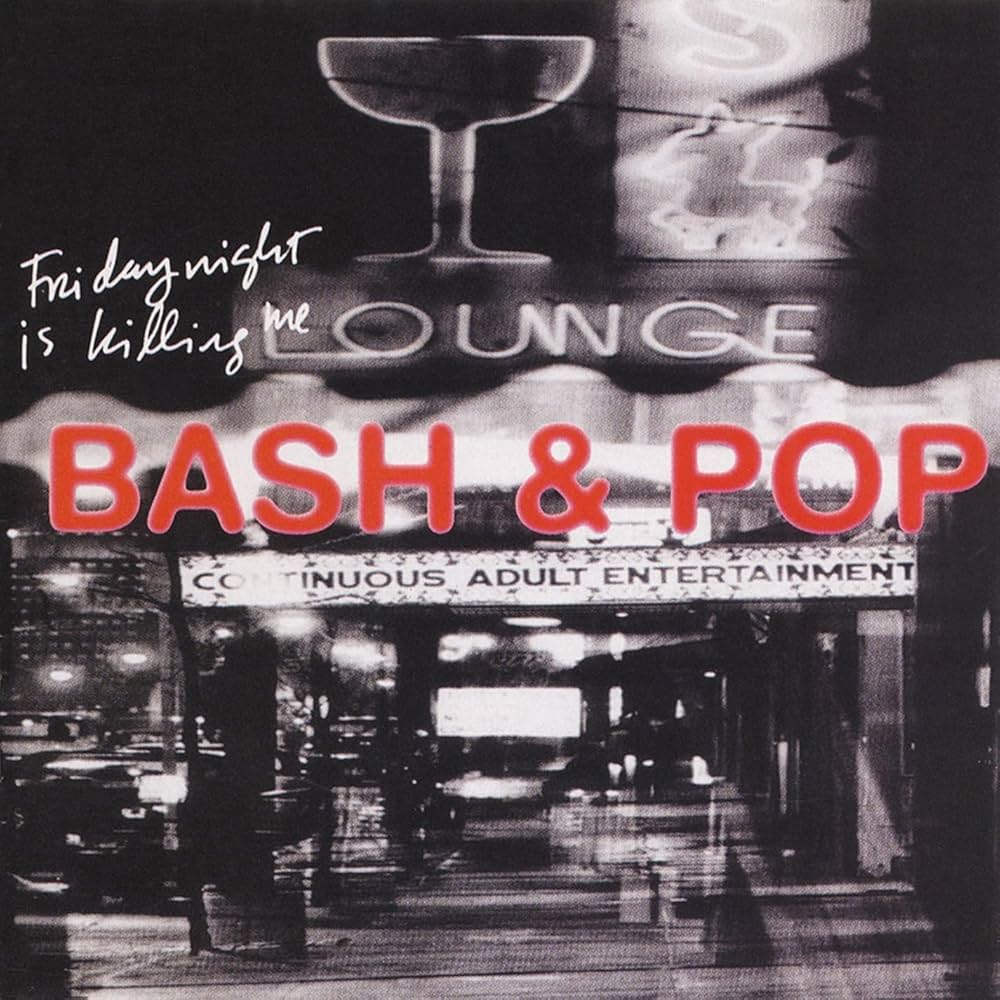
Bash & Pop – Friday Night Is Killing Me …album review

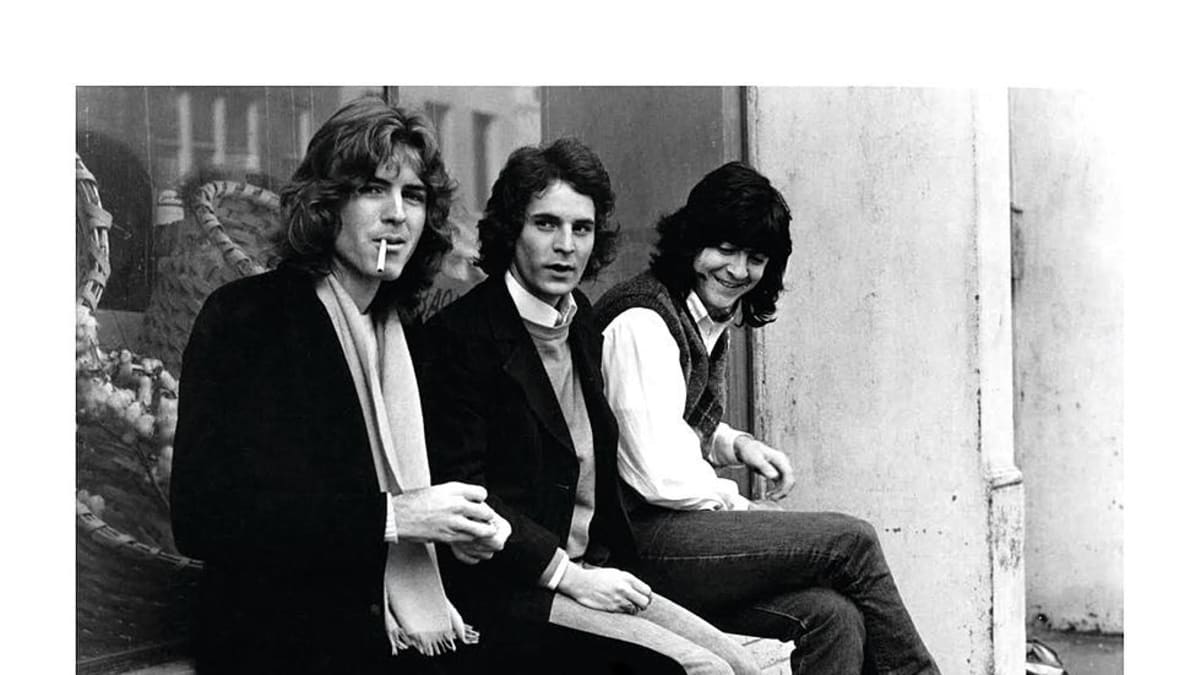
This band is a natural for me. I’ve read about them a lot, and now I’m listening to them much more. They fit into why I love rock and roll. The band is fronted by Tommy Stinson of The Replacements. Stinson started playing bass at age 11 and at 13 years old, played with the Replacements. After they broke up, he played bass for Guns N’ Roses for 16 years. He also played with Soul Asylum off and on. Before he joined Guns N’ Roses, he formed this band, which he would reform a few times in the future. 

In 1993, Bash & Pop released their debut album: Friday Night Is Killing Me. It wasn’t another Replacements album. It was more Faces than Replacements. Paul Westerberg was the main writer of the Replacements, and here Stinson wasn’t trying to rewrite Let It Be or Tim. Instead, he played into a ragged, Keith Richards-type vibe that owed as much to the Stones and Faces as to his original band. The songs were loose and built around Stinson’s raspy vocals. I can’t get enough of this album. 

This was released at a time when grunge was dominating radio, so it got lost in the shuffle. But for those who found it, the record became a classic. It showed that Tommy Stinson could front a band and write quality songs with soul. They don’t have that slick commercial sound to it, and I applaud that. 

Tommy Stinson wrote most of the songs on the album, except one, Fast and Hard, which he co-wrote with Steve Foley. This album could be considered power pop, but a rough, as hell raw version of it, which I love! I’m super excited about this album as a whole. I really missed out in real time with this one. 

I’ve picked two songs off the album to highlight (Loose Ends and Never Aim To Please), and a link to Spotify to the source album. It is one of those records you hand to someone who thought rock was dead by the early ’90s. It’s alive here and full of heart. This album is for the fans of The Replacements, The Faces, or anyone who likes rock music and some great hooks. 

I usually don’t mention critics, but here are two. AllMusic wrote that “decades after its release, the album feels like a bit of the hangover from the ’80s, a celebration of irreverent roots rock performed with an audible grin.” Magnet considered it “the best batch of songs by any Replacement since 1987’s Pleased To Meet Me.”

Loose Ends

Miss come-and-go
Where you been now?
Put a red light on the rest
And wondered why and how
Your love it grows
But no one knows
Who’s on your mind, who’s on your lap
Don’t they look the same yet
It’s alright

Early morning, drinking tea, a slice of whole wheat
Another lesson you should’ve learned, you had to wait
You care too much, you care less
Headin’ for a better view, fail to impress
Well, I guess you’ve got too far to stray
No place particular is where you end your day
You know I got no, the pavement holds no one

It’s time to tie your loose ends up
Never mind which way
Time to tie your loose ends up (Tie ’em up)
No one left to blame, oh yeah

Butterflies that turn to knots
In your guts around your neck
You get ’em too tight and they slip again
‘Cause you look too far, ’cause you fall too fast
It’s a raincheck for a date, but you’ve no interest
Guess you’ve got too far to stray
Your heart’s breakin’ all over the place
You know I got no, the pavement holds no one

It’s time to tie your loose ends up (Tie ’em up)
How much you gonna take?
So time to tie your loose ends up (Tie ’em up)
You’ve got too much to shake

When mom comes home at last
It’s a whisper through the glass
Can’t you hear the voices screamin’
Yeah, I’m screamin’, “Go ahead and tie ’em up!”

You fall apart before my eyes
I’ll sweep the mess
And the shortcut through the dirt is always best
You look too far, you look to the west
Heading time is all you needed
I know best
And I guess you got too far to stray (stray)
No place particular is where you end your day (your day), oh no
And the pavement holds no one

Time to tie your loose ends up (Tie ’em up)
Never mind which way, yeah
Time to tie your loose ends up (Tie ’em up)
No one left to blame (Tie ’em up)
Time to tie your loose ends up (Tie ’em up)
How much you gonna take? (Tie ’em up)
Time to tie your loose ends up (Tie ’em up)
You got a lot to shake (Tie ’em up)
Time to tie your loose ends up (Tie ’em up)
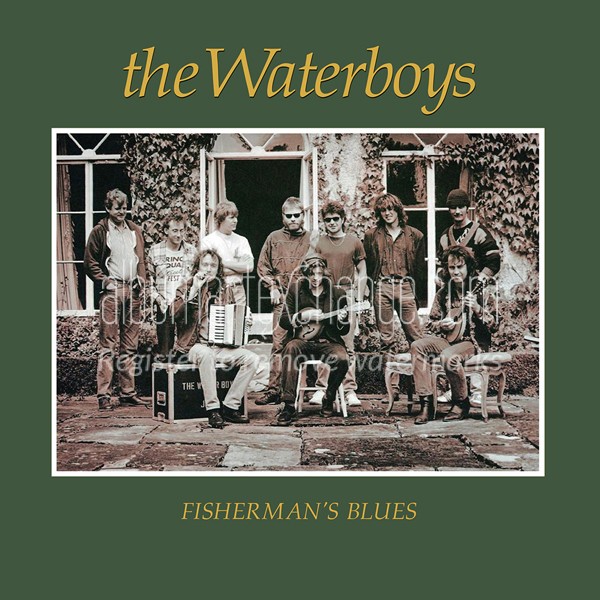

Waterboys – Fisherman’s Blues …album review

I’ve listened to this album before, but this week I had it on constantly, and I went through it many times. Not one clunker on this album. It’s one of those albums that is hard to pick just one song off and go with it. It needs to be listened to as a whole. I was just going to go with the song World Party but I kept listening to track after track and decided to go with the entire album. You have all kinds of musical styles on this album, including a tribute song about Hank Williams called Has Anybody Here Seen Hank?. It has something for everyone, but blended into one cohesive album voice. 

The impression I get from this album is The Basement Tapes by Dylan and The Band. Not comparing songs, no, just the freedom feel of the entire album. It sounds like they didn’t plan anything, and it just happened. When you pull that off, it’s pure magic. Not many albums are truly spontaneous, but when you get that feeling, bottle it quickly, because it doesn’t come often. 

The Waterboys were formed in 1983 by Scottish musician Mike Scott, the band’s leader and primary songwriter. Over the years, their music has evolved through various phases, blending elements of rock, folk, and Celtic influences. Fisherman’s Blues was the title track of their album released in 1988. 

Mike Scott recorded over 100 songs during this period. Only 13 made the cut for this album, and he made a good selection. This album helped inspire a wave of folk-rock revivalists in the late ’80s and early ’90s, and later on bands like Mumford and Sons. Mike Scott has said that Fisherman’s Blues was not one sound but a voyage, not a destination, but a process.

The album had a little of everything, like spirit, freedom, risk, and reinvention. It’s the sound of a band trying something new and getting lost in something older, wilder, and more timeless. It’s one of those rare albums where you feel like you’ve lived with the band. I’m going to go song by song…just listen to this album!

All the songs except for two covers (Sweet Thing by Van Morrison and This Land Is Your Land by Woody Guthrie) and a song called Dunford’s Fancy written by violinist Steve Wickham  were either written or co-written by Mike Scott. 

Karl Wallinger, who co-wrote World Party and was a key part of the early Waterboys, left during these sessions to form his own band, named World Party. I picked that song “World Party” below to highlight, plus the entire album on Spotify. What caught me was that it explodes out of the speakers with a honky-tonk style piano and a fiddle sawing like a buzzsaw through a barn wall. It’s hard not to like that. The song just makes me feel good.

The album peaked at #15 in New Zealand, #76 on the Billboard Album Charts, and #13 in the UK in 1988.

Mike ScottWe started recording our fourth album in early ’86 and completed it 100 songs and 2 years later. There was a lot of indecision. I got too involved in the album and I lost perspective. We had blues songs, gospel songs, country songs, rock songs and ballads. I didn’t know where to take it. It could’ve been a gospel or country album. It could’ve sounded more like This Is the Sea or it could’ve been a traditional album. It could’ve been anything.”

The tracklist to the original album

Fisherman’s Blues (Mike Scott, Steve Wickham)
We Will Not Be Lovers (Scott) – 7:03
Strange Boat (Scott, Anthony Thistlethwaite)
World Party (Scott, Trevor Hutchinson, Karl Wallinger)
Jimmy Hickey’s Waltz (Scott, Wickham, Thistlethwaite)
And a Bang on the Ear (Scott, Wickham, Thistlethwaite)
Has Anybody Here Seen Hank? (Scott)
When Will We Be Married? (Traditional, adapted: Scott, Thistlethwaite)
When Ye Go Away (Scott)
Dunford’s Fancy (Wickham)
The Stolen Child (Words: W.B. Yeats, Music: Scott)
This Land Is Your Land (Woody Guthrie)

World Party

Well it’s got nothing to do with anything that is realyou just believe in it and it’s trueYou can sooth like an angel or sigh like a saintyou can dream it and see it throughYou will live to see a sea of lightssparking on the face of a pearlClimb your own peakfind a new streak

Get yourself along to the world party (party!)

Now you’ve been building for yourself a cool place in the sandyou’re thinking that it’s mighty fineYou’ve got dust in your eyeballs, you got mud in your mouthbut it’s your head, it ain’t mineI’ve got a madman of my own to contend withcursing in the cave of my skullTurn the other cheekfind a new streak

Get yourself along to the world party (party!)

Well I heard a rumour of a golden agesomewhere back along the lineMaybe I dreamed it in a whisper orheard it in a spellIt was something to do with the sign of the timesand the only thing that I rememberIs a summer like a pretty girlwho shimmers and shinesMoving in timeshaking to the beat of the heart of the world

Party (party! party! party! party! party! party! party! party! party!)

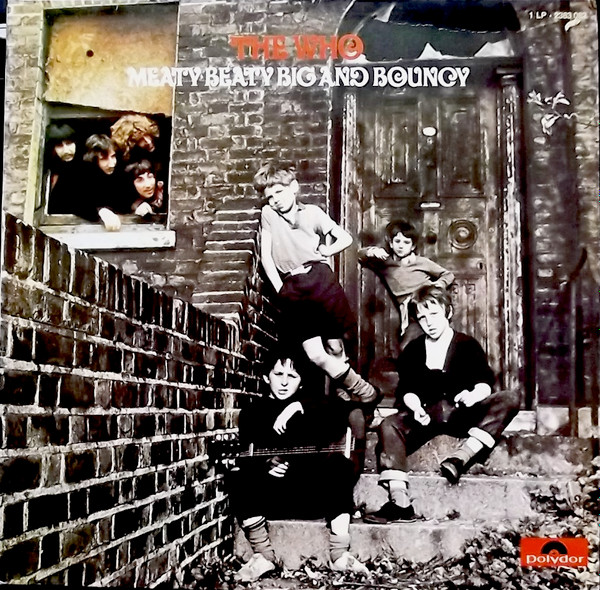
Who – Meaty Beaty Big and Bouncy … album review

I bought this album right after I had bought Wholigans and Who’s Next. I wanted to know what their sixties output was like besides My Generation and I Can See For Miles. This compilation album was released in 1971; it wasn’t just a sampler of radio singles; it was a brash declaration of how The Who reached the top and what they broke along the way. Most of these songs did not reach the ears of Americans and Canadians in the 1960s. If Who’s Next was their grand gesture, Meaty Beaty was their rowdy scrapbook. The album is exciting!

In Canada and America, most people know the Who’s Next material and after as well. This album is the roots of the band. They stretched the limits of recording, trying new things in the studio, much like The Beatles did, but with a rawer result.

Rock in the mid to late sixties was changing, and what a diverse set of songs that you hear from that period. This is when Pete Townshend was turning teenage anxiety into rock mini-operas and Keith Moon was trying to demolish every drum kit in London. The title, reportedly referring to the four members themselves, Meaty (Roger), Beaty (Keith), Big (John), and Bouncy (Pete), is cheeky and self-mythologizing. And the tracklist? Nearly perfect. These singles are where Moon started to get his wild drumming reputation. He is everywhere in these songs, especially I Can’t Explain, making them different from other bands.

I have said that my favorite kind of band to watch live is the ones that you think will fall apart with any song they play, but they pull it between the lines without going over the cliff. They did that with these songs in the studio.

You’ve got I Can’t Explain, The Kids Are Alright, and Substitute up front, each one a case study in amphetamine, fueled mod rock. These aren’t songs that build; they explode right from the opening riff. Substitute, in particular, grabs your attention with the loud backing, but also the lyrics. Substitute could be The Who’s best single ever. And then I’m a Boy, Happy Jack, Pictures of Lily, you realize Pete was already leaning into story-song territory years before Tommy became a rock opera.

Magic Bus is a Bo Diddley-beat freakout that somehow makes a song about public transportation sound like a spiritual quest, or My Generation, the track that blew the doors off rock ’n’ roll. If that bass solo doesn’t rattle you, check your pulse. There’s a through-line here: Townshend’s fascination with identity, repression, rebellion, and guilt. These songs are electric in the best sense of the word.

Later Who albums might be deeper (Quadrophenia) or grander (Who’s Next), but this one is the sound of the band becoming The Who. Loud, brash, and already mythic. If you want to learn about The Who…this is a great starting point. 

Love – Forever Changes ….album review

Pam from All Things Thriller recommended this band and the album Forever Changes. I’ve been following her blog for years, and I trust when she recommends someone, and she came through. I was not disappointed with this album. This album has been listed in the top 100 best albums ever by different publications. It doesn’t have a bad song on it. The album is not known for hit singles but for the collective whole of the songs on that album. I was going to pick one song, but again, this album needs to be listened to as a whole.

One single did get pulled off of this album called Alone Again Or and it did hit the UK and Billboard Charts, and it sounded familiar. The reason it did was because The Damned covered back in 1987.

This is a band that I heard of but never really heard as much. With founder Arthur Lee, Love fused garage rock, folk, psychedelia, and baroque pop. They were not commercial juggernauts, but they sure did sound great. This album’s core is acoustic, and they build on it from there. I could not stop listening to it all this week.  They were also one of the first racially diverse American rock bands.

Released in late 1967, just as the Summer of Love was peaking and already beginning to fall, it’s a record that doesn’t sound like its time, and doesn’t really belong to any other, either. This was the band’s 3rd album. Arthur Lee was just 22 when he put this band together. He already had two solid albums under his belt, full of garage rock, Byrds-like jangle, and attitude, but Forever Changes was something else entirely. It’s as if Lee had seen the whole California dream flicker and die and was moving on.

I’ve listened to this album around five times overall, and it keeps getting better. I love how they mixed the acoustic with jaw-dropping percussion and touches of electric guitar. I’m not going to go down the list of songs; the best way is to listen to it. 

The original lineup featured Lee, guitarist Johnny Echols, bassist Ken Forssi, drummer Don Conka (later replaced by Alban “Snoopy” Pfisterer), and singer/guitarist Bryan MacLean.

Alone Again Or

Yeah, said it’s all rightI won’t forgetAll the times I’ve waited patiently for youAnd you’ll do just what you choose to doAnd I will be alone again tonight my dear

Yeah, I heard a funny thingSomebody said to meYou know that I could be in love with almost everyoneI think that people areThe greatest funAnd I will be alone again tonight my dear

Yeah, I heard a funny thingSomebody said to meYou know that I could be in love with almost everyoneI think that people areThe greatest funAnd I will be alone again tonight my dear

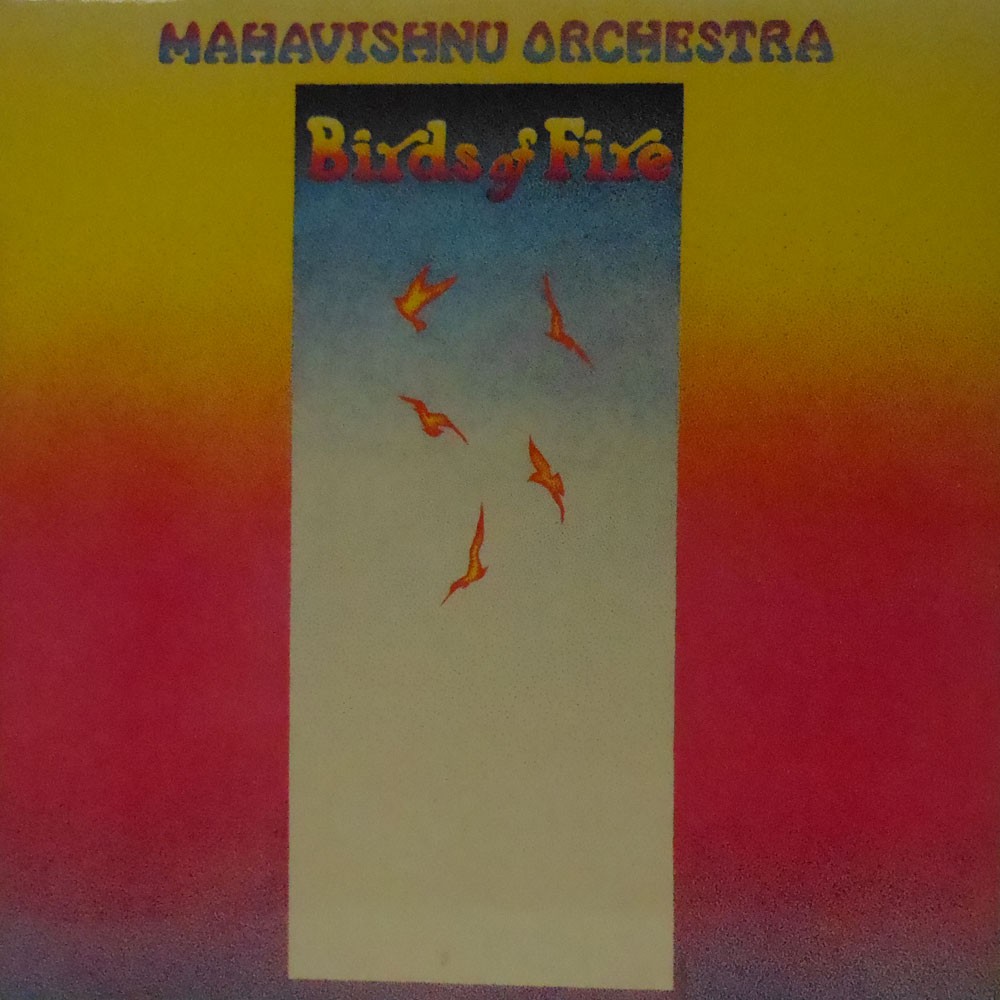
Mahavishnu Orchestra – Birds of Fire …album review

We are taking a different path with this band today. It’s not the music I usually post, but I never post something I don’t like. I had the flu this week, and I listened to this band with headphones while recovering. This band really moved me in a lot of ways. It’s totally different for me, maybe you will be impressed like I was. Just pure music, and it takes you down a long, winding river. 

I tried picking out a song from this album and tried a few other songs from different albums, but it didn’t work. To write up this band, you have to listen to the complete album. First of all, I’m out of my pay grade here. When I first listened to these guys, I was overwhelmed. I guess you could call this progressive, but I don’t buy that with this band. That is too easy a tag. After I listened to this album, I went through a couple more, and it affected me quite a bit. 

You don’t listen to Mahavishnu Orchestra, you pretty much surrender to it. The first time you hear songs like Meeting of the Spirits (from their debut album) or Birds of Fire, it doesn’t matter if you’re coming from artists like Zeppelin, Rush, Miles Davis, or Ravi Shankar. What hits you is the raw voltage of their music. This is fusion played with the intensity of a rock band, but the complexity of a classical symphony. I think that sums it up. I compare it to being led into many different hallways in a huge mansion and visiting a new room at every turn. 

I’ve been telling other people about them. I’m not sure I can put this in words, but listening through headphones feels like I’m seeing the music. It’s like I’m seeing molecules for the first time, making up the whole. Listening to them, I hear things and figure out things I have never done with music before. Why does a beat fit here but not there? They have some of the most perfectly constructed music I’ve heard. I normally like music raw and imperfect, but I do make an exception with this band. The reason is that they keep an edge, and it doesn’t get boring.

Another thing I like about the songs is that they keep them the right length, and you don’t have any 30-minute songs. You can tell each song was part of something bigger. Each song is like another brick in this structure

A couple of weeks ago, I saw a clip of John McLaughlin live at a Jeff Beck Tribute. His playing was beyond great. I started to look at some of the bands he has been a part of. In the past few weeks, I’ve brushed up on my bass playing by dragging a bass out while listening to rockabilly. The Mahavishnu Orchestra is way above my level but yet I’ve picked up a few things. 

After playing with Miles Davis on fusion albums like Bitches Brew and In a Silent Way, John McLaughlin formed the Mahavishnu Orchestra in 1971. The name “Mahavishnu” was given to McLaughlin by his spiritual guru, Sri Chinmoy, reflecting the band’s philosophical, spiritual, and musical ambitions. Their albums were always evolving; they never just stayed put. 

This album seeped into the mainstream. It peaked at #5 in Canada, #15 on the Billboard Album Charts, and #20 in the UK in 1973. Their membership was fluid through the years. They were together from 1971 – 1976 and from 1984-1987. John McLaughlin was the one constant member. On this album, it was McLaughlin on guitar, Rick Laird on bass, Billy Cobham on drums, Jan Hammer on keyboards, and Jerry Goodman on violin. 

In closing, yeah, this is different from what I usually post and what you listen to and read about here. Some unknown critic at the time described this album as …Miles Davis jamming with Led Zeppelin on a Himalayan cliffside. So put that way…it fits. 

If you want the complete album on YouTube

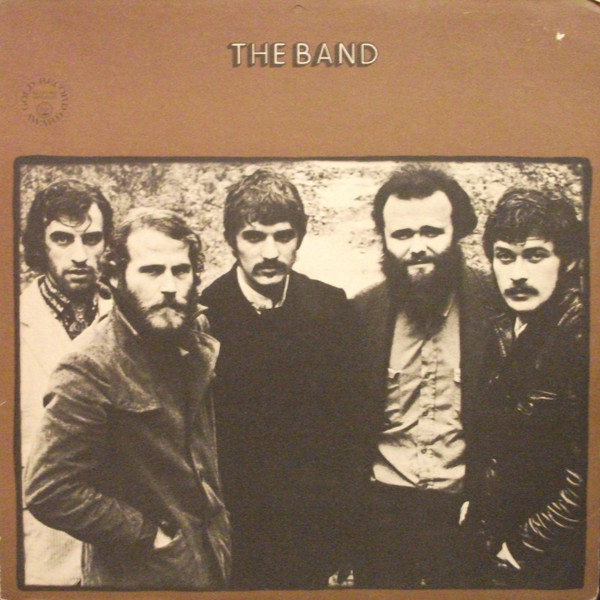
Band – The Band… album review

In Turntable Talk Dave said: This time around, we’re going Sans Sophomore Slump. We all remember the triumphant debuts to the scene by The Knack, Meat Loaf, the Ramones…but how many recall, let alone listen to ‘But the Little Girls Understand’, ‘Dead Ringer’s or ‘Leave Home’… the follow-ups for them? In other words a great 2nd album by any artist. Many times, that 2nd album is rushed, or the artist used all of their songs for the first album. The example I use is The Knack. It was a great fun first album and a bad second. 

Thank you, Dave, for including me in this so I can talk about this great album. There were a few that came to mind while doing this. The Who’s A Quick One, Van Morrison’s Astral Weeks, Carole King Tapestry, and many more but I decided on this great Americana band that was actually most Canadian. The album is called The Band, and its nickname is The Brown Album. Their first album was Music From Big Pin,k and it was released in 1968. This album was released in 1969. 

They recorded this album not in a recording studio but at Sammy Davis’s house in California. They remodeled the adjacent pool house into a recording studio. The Band fashioned a makeshift workshop environment similar to the one at their former home, Big Pink. The album peaked at #2 in Canada, #9 on the Billboard 100, and #25 in the UK.

The album is said to be a concept album about a past America. It’s an album that every rock fan should own. While even novice fans of the group likely know classics like “The Night They Drove Old Dixie Down” and “Up on Cripple Creak,” the record is an amazing listening experience from beginning to end. Robbie Robertson’s lyrics weave fluidly from one song to the next, while the musical accompaniment never disappoints.

Robertson wasn’t just a songwriter.  He was more of a director and screenwriter, tailoring roles that played to the strengths of his three leading men. He did have 3 lead singers to work with who could have fronted 3 other bands. They knew each other so well that he could pick who sang what and when. His songwriting process had more in common with films than rock songs.  Robertson would go to flea markets and antique stores to purchase screenplays. That’s how he wrote songs…like it was a screenplay. 

The man not only was a great storyteller, but many of his songs were mini-movies you could visualize. Who couldn’t imagine the drunkard and his sweetheart defender Bessie betting on horses up on Cripple Creek?  Those are not just songs; they are visual pictures sent through music that only Robertson could write. We continue to benefit from his hard work and gift…and always will.

Manuel was the most versatile singer in the Band. He was called the lead singer if someone asked. Manuel took the lead vocals on Across The Great Divide, Rockin’ Chair, and Jawbone, and shared it in King Harvest. Of all the singers, Manuel is overlooked more than the other two. It’s probably because he wasn’t singing lead on the huge “hits” such as The Weight, Up On Cripple Creek, and The Night They Drove Old Dixie Down. He does sing on one of my favorite Band songs ever…King Harvest (Has Surely Come). I didn’t realize how great a voice he had until I heard him sing Georgia On My Mind

Levon had that great southern voice that was earthy and soulful. Robertson knew just when to use Levon, and he did strengthen Robertson’s songs. Rick Danko had the most vulnerable voice of all three. I never quite heard a voice like his before or since. The amount of talent they had was staggering. I’m talking about voices here, but I haven’t even mentioned the musical skills of these guys. Garth Hudson, who recently passed, played keyboards like NO other. I mean no other. He made a massive wall of sound in the background that identified them from other bands. His approach to his sound was so unique that it’s not copied much because it has to be in the right musical surroundings. Robertson has said that there was no one like him period. 

This album contains some of their best-known and best tracks. Let’s look at some of the tracks. Now, is this as good as Music from Big Pink? I think so and in some ways, I like it more. I think it was their best album when all is said and done. I could yack and yack more…but just listen to the album!

Across The Great Divide, Rag Mama Rag, The Night They Drove Old Dixie Down, Up On Cripple Creek, Whispering Pines, King Harvest (Has Surely Come), When You Are Awake, Jemima Surrender, Rockin’ Chair, Look Out Cleveland, Jawbone, and The Unfaithful Servant. 

What a tracklist that is. 

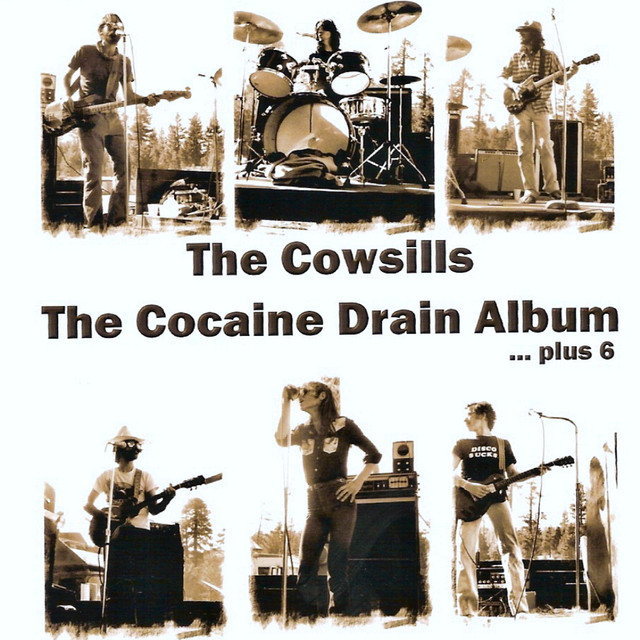
Cowsills – Cocaine Drain

This is a band I never really thought about posting, although they had some huge hits in the ’60s. This is NOT what I was expecting from the Cowsills.  This song has a Linda Rondstadt/Clapton 1970s feel to it. The album Cocaine Drain Plus 6 was recorded in 1978 but not released until 2008. Paul, John, Barry, Bob, and Susan Cowsill are on this one and worked with Chuck Plotkin. Billy or his mom wasn’t on this album. Susan does most of the singing, and when you hear her grown up…you understand why. 

Susan Cowsill was just a little girl when she joined her brothers in the ’60s. Here she is, just 19 years old, and she belts out this song and others. Like I said, it does have a Ronstadt feel, and she is a very good singer. The band sounds really good. John Hall wrote this song. Critics at the time caught them live playing this song and really liked it. 

Since the band was pigeonholed, they would perform under different names like The Secrets and The Critics in the 1970s. They got together in 1978 after playing in Los Angeles at the time. The album was never completed, and at some point, the master tapes were lost. For almost 30 years, the album existed only as a scratchy acetate. An acetate played like an old 45. They were created for demo or publishing purposes NOT for selling.

In March 2008 a version of the album was finally released, remastered from that acetate under Bob Cowsill’s direction. Several other previously unreleased tracks were included in the 2008 release. After the Cocaine Drain sessions, the Cowsills did some reunion shows in 1979–1980 but returned to their separate careers after that.

Audiophiles here will not be happy, as these are obviously recorded from acetate, and the hisses and pops of any 30-year-old LP are apparent. If they couldn’t get it released when it was recorded, they obviously couldn’t afford high remastering to clean it up, and the value in this release is that we finally get to hear these songs AT ALL. But there are only so many things you can do now, though it probably COULD be cleaned up. I like that the proceeds went straight to the band, as it was released to Apple via their self-owned Robin Records label. It was released as MP3s only. 

They have some good songs on there, and the album is not bad at all. Spotify doesn’t have it, but HERE is a link to the album on YouTube. I added a bonus song called That Particular Way from the same album. 

Cocaine Drain

I remember you,
When you were the talk of town.
You always said,
Hello and goodbye.

You looked me right in the eye.
I could be sure of you,
You’d never lie.
You’re so different now.
Are you going down that Cocaine Drain.

Now you’re up all night (up all night),
Feelin’ like a shining star.
But with the Lord in mind,
Let you forget who you really are (really are).

You’re a fragile thing after all.
Remember that even a heavenly body can fall.
And I’m afraid you’re fallin’, (fallin’)
Falling down that Cocaine Drain.
(I’m afraid, afraid you’re fallin’)
Falling down that Cocaine Drain.
(Cocaine Drain)

Now you’re keeping up,
With some pretty fancy company. (fancy company)
But if things get rough,
You know you can always come to me.
(Come to me)

But please don’t wait too long.
I’ve known a few before you who are already gone.
And I don’t want to see you (I don’t want to see you)
Slipping down that Cocaine Drain.
(Cocaine Drain)

I can’t stand by to see you
Slipping down that Cocaine Drain.
I don’t want to see you
(I don’t want to see you)
Slipping down that –
(I don’t want to see you) Cocaine Drain.
Slipping down that Cocaine Drain.
(I don’t want to see you)
Slipping down that Cocaine Drain.
(I don’t want to see you)
Slipping down that Cocaine Drain.
(I don’t want to see you).

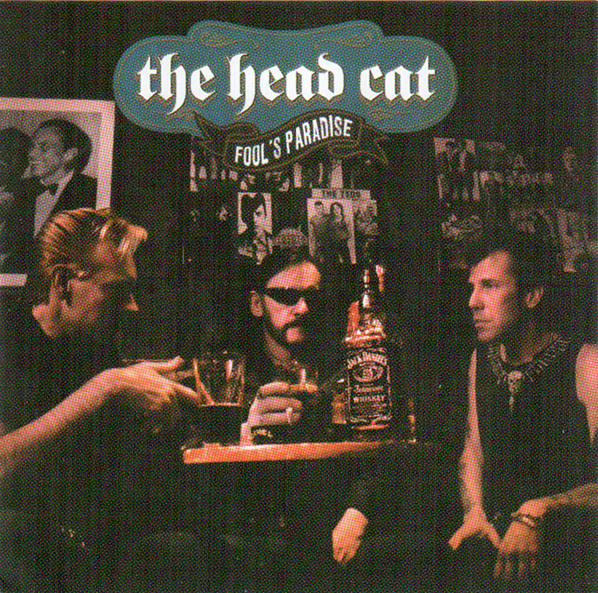
Head Cat – Fool’s Paradise… album review

I don’t do many album reviews, but this one, I had to write something. I spent this weekend totally locked in on this 2006 album, having it on my computer and phone. It’s a fun rockabilly album well done, and the song selection is terrific. I was going to review another artist, but I got stuck on this one, so I’ll post him next weekend. After the Motörhead post on Friday, CB brought up a rockabilly band that Lemmy was in. I was surprised, to say the least, because I didn’t remember this from the documentary but it’s been a while. I love what I heard. 

I don’t skip tracks because one is as good as the other. There is a bounciness to this album…if that is a word. I could have written a one-word review… FUN

Let’s get with the members of this band. On drums, you have Slim Jim Phantom from the Stray Cats. This man pops up everywhere by the way. On Guitar and piano, you have a rockabilly guitarist named Danny B. Harvey. On bass you have Lemmy Kilmister taking a break from Motörhead to play some rockabilly. His voice fits this music well. 

The origins of The Head Cat trace back to a casual collaboration. Lemmy Kilmister, Slim Jim Phantom, and Danny B. Harvey teamed up in 1999 to record a tribute album to Elvis Presley, titled Swing Cats: A Special Tribute to Elvis. The band’s name? Can you guess? Combining Motörhead and The Stray Cats. They released 6 studio and live albums combined. 

They didn’t always pick the most popular rockabilly songs which I love. You have Buddy Holly, Eddie Cochran, Jimmy Reed, and The Crickets songs on this album. Rather than covering Peggy Sue, they cover Peggy Sue Got Married instead which personally I like more. You have a Buddy Holly title cut Fool’s Paradise. You also have Crying, Waiting, Hoping, Not Fade Away, and one of my favorite Holly songs in Well…All Right. 

The reason this and other similar rockabilly albums work is because 1:  The musicians love this type of music and…that damn word again…FUN. 2: The songs are simple and that is not a put-down but they don’t have 12 chords and studio tricks. The songs sound good on backyard porches and would sound great in the Royal Albert Hall or Ryman Auditorium. I think music has moved too far away from this style. 3: When I said these songs were simple I was NOT implying they are easy to play right…on the contrary because you have no distortion box or tricks to hide behind. It takes pure musicians and a love for this music to play it right. These guys grew up with this music so they pour their heart into it. 

I’ll get off my soapbox now but how I wish I would have had this music growing up. I didn’t grow up in this era when the songs were real time but I see why all of the great artists I like… cling to this music. Everyone from The Beatles, Led Zeppelin, The Who, Stones, Springsteen, Dylan, and The Kinks spent their career trying to recapture the spirit in these wonderful songs. The Head Cat did a great job!

Here is the tracklist:

1 Fool’s Paradise
2 Tell Me How
3 You Got Me Dizzy
4 Not Fade Away
5 Cut Across Shorty
6 Lawdy Miss Clawdy
7 Take Your Time
8 Well…All Right
9 Trying To Get To You
10 Learning The Game
11 Peggy Sue Got Married
12 Crying, Waiting, Hoping
13 Love’s Made A Fool To You
14 Big River
15 Matchbox

If you want the complete album on YouTube…here is the link

Well…All Right

Well, alright, so I’m being foolish
Well, alright, let people know
About the dreams I know that you wish
In the night when lights are low

Well, alright, well, alright
We’ll live and love with all our might
Well, alright, well, alright
Our lifetime love will be alright

Well, alright, so I’m going steady
It’s alright, let people say
That those foolish kids can’t be ready
For the love that comes their way

Well, alright, well, alright
We’ll live and love with all our might
Well, alright, well, alright
Our lifetime love will be alright

Well, alright, well, alright
You know we’ll live and love with all our might
Well, alright, well, alright
You know our lifetime love will be alright

….

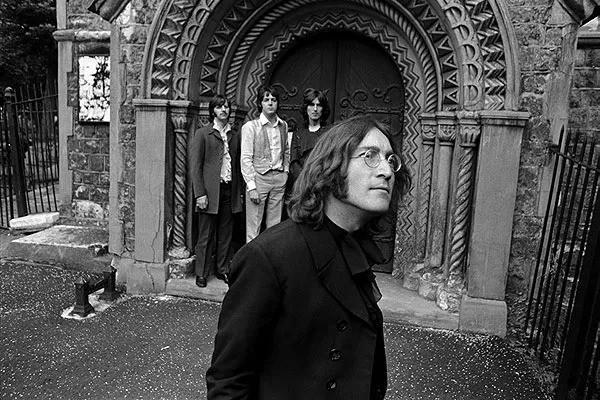
Beatles – Cry Baby Cry

The king of Marigold was in the kitchenCooking breakfast for the queenThe queen was in the parlorPlaying piano for the children of the king

One song off the White Album that I found when I was 13 years old. It’s a good reason why I’m happy they kept it as a double album. I wouldn’t have this song and a few more. When the chorus kicks in it sticks in your head. That is the beauty of the White Album…it has something for everyone. Lennon had a way of delivering sometimes dark imagery, forming it around a catchy melody and it worked. It’s just part of the album’s huge tapestry.

The track includes a coda not originally part of the song… a snippet of Paul McCartney singing a few lines known as “Can You Take Me Back?” That was an unfinished song by Paul. This fragment segues into Revolution 9 on the album and adds an eerie, unresolved feeling to the end of the track. They would explore this more on the B side of Abbey Road.

Although the songs differ in style they all have that Beatles touch to them whether it be the hard Helter Skelter, country Rocky Raccoon, or even the fairytale-like Cry Baby Cry. The sessions were not the happiest time for the band (the Esher Demos were though) but they came up with the most eclectic batch of songs they ever produced. The demos they made gave another look at the song.

When John Lennon was killed in 1980 there were three albums I bought that long winter. Double Fantasy, The White Album,  and Abbey Road. I’m back there again in that 1980-81 winter and spring when I hear this album.

The White Album is as diverse as you can get… Pop, Rock, Country, Folk, Reggae, Avant-Gard, Blues, Hard Rock and some 20’s British Music Hall thrown in the mix. It has plenty of songs that you have heard of and many that the masses have not heard as much. John Lennon wrote one of his best songs for this album… Dear Prudence.

The Beatles more than many bands could bend to a style of music and play that style well.

Of all the songs I heard on this album…this is the one where I thought…hmmm… John Lennon was so different in writing songs compared to Paul. I love this example of John’s fairytale. He wrote the song in 1967, inspired by a commercial jingle he heard on Television. The lyrics play on the nursery rhyme Sing a Song of Sixpence, with lines like Cry baby cry, make your mother sigh evoking a fairy-tale atmosphere.

Ian MacDonald, in his book Revolution in the Head, described this song as “a charmingly wayward waltz” with “a whimsical, mildly satirical undertone.”

The White Album was released in 1968 and peaked at #1 in the Billboard Album Chart, #1 in Canada, #1 in the UK, and #1 about everywhere else

The demo of Cry Baby Cry. You can hear John double his voice. 

Cry Baby Cry

Cry, baby, cryMake your mother sigh

The king of Marigold was in the kitchenCooking breakfast for the queenThe queen was in the parlorPlaying piano for the children of the king

Cry, baby, cryMake your mother sighShe’s old enough to know betterSo cry, baby, cry

The king was in the gardenPicking flowers for a friend who came to playThe queen was in the playroomPainting pictures for the children’s holiday

Cry, baby, cryMake your mother sighShe’s old enough to know betterSo cry, baby, cry

The duchess of Kirkcaldy always smilingAnd arriving late for teaThe duke was having problemsWith a message at the local bird and bee

Cry, baby, cryMake your mother sighShe’s old enough to know betterSo cry, baby, cry

At 12 o’clock, a meeting ’round the tableFor a seance in the darkWith voices out of nowherePut on specially by the children for a lark

Cry, baby, cryMake your mother sighShe’s old enough to know betterSo cry, baby, cryCry, baby cryMake your mother sighShe’s old enough to know betterSo cry, baby, cry

Cry, cry, cryMake your mother sighShe’s old enough to know betterSo cry, baby, cry

.

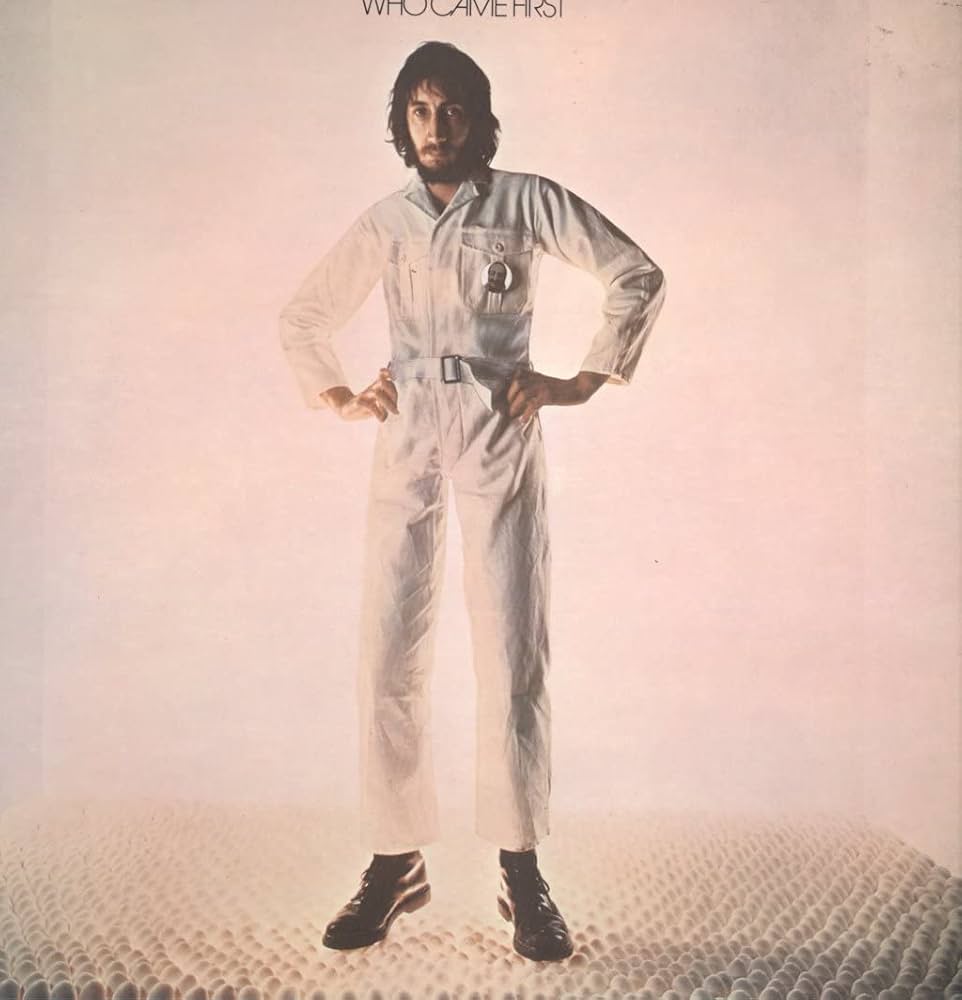
Pete Townshend – Sheraton Gibson

While commenting back and forth on the Danko album last weekend CB mentioned Who Came First, the first album by Pete Townshend. Everyone knows how big a Who fan I am but I had never listened to this album much at all. I knew his 2nd solo album Empty Glass but not this one. I thought it was just demos he released which he made for The Who. It’s not…it’s some great powerful songs driven by an aggressive acoustic. On the expanded version he did include some Who demos like Let’s See Action, Baba O’Riley, and a few more.

Who Came First was released in 1972. This album deals with Townshend’s involvement with Meher Baba. It includes tracks originally intended for private distribution to Baba devotees. Before you think this is Who’s Next part II, you would be mistaken. Some of these songs were made for the Lifehouse concept that he wanted to make Who’s Next about, but they changed courses by just picking songs for a regular album. I have a guitar player friend named Chris…he said he was heavily influenced by Townshend but not just electric. He said his real influence was on acoustic. Pete is one of the most aggressive acoustic guitar players I’ve heard. Chris opened my eyes to that and this album shows it. 

This song, Sheraton Gibson, is about life on the road with Pete at the time. He was staying in another hotel in another city with his Who bandmates. He deals with his feelings of loneliness and disconnection amid fame and constant travel, plus, of course, playing his Gibson guitar. The song is a great one and I consider it a lost gem…as well as the album.

Another song on the album called Evolution was written by and played with Ronnie Lane of the Faces. Lane was also a devotee of Meher Baba and it’s about personal growth and change and a really good deep song. 

I’ll sum it up by saying…I was totally surprised by the quality of this album! As big of a Who fan as I am I was totally shocked…in a great way. The songs stick with you and they are quality. The album didn’t set the charts on fire but it wasn’t pushed by the record company a bunch. It peaked at #69 on the Billboard Album Charts and #30 in Australia. 

Sheraton Gibson

I’m sittin’ in the Sheraton Gibson playin’ my GibsonAnd boy do I want to go home.I’m sittin’ in the Sheraton Gibson playin’ my GibsonAnd boy do I feel all alone.Cleveland, you blow my mind.Cleveland, I wish I were home this time.Don’t want to be unkind .

But I’m sittin’ in the Sheraton Gibson playin’ my GibsonThinkin’ ’bout a sunny barbequeI’m sitting in the Sheraton Gibson playin’ my GibsonAnd my mind is a Cleveland afternoon.Cleveland, you blow my mind.Cleveland, I wish I were home this timeDon’t want to be unkind.Cleveland, you blow my mind.Cleveland, I wish I were home this time.Don’t want to be unkind.

Oh Cleveland, you blow my mind.Oh Cleveland, I wish I were home this timeDon’t want to be unkind.

But I’m sitting in the Sheraton Gibson playin’ my GibsonAnd boy do I want to go home

Big Star – You Get What You Deserve

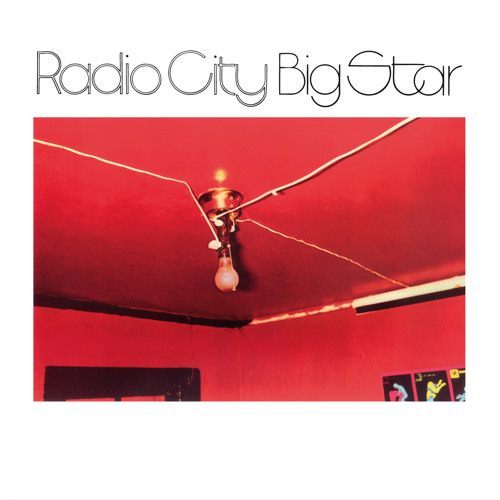
This song was on Radio City, their second album. Some say it is a response to the Chris Bell song off the first album called My Life Is Right…or a message to his girlfriend Diane that he was leaving her at the time. The chorus is perfect to me by the way he sings it.

Big Star was formed out of a shared love for British Invasion bands like The Beatles, The Kinks, and The Byrds. Alex Chilton had already been successful as the teenage lead singer of the Box Tops, while Chris Bell had been active in local Memphis bands. They wanted to become the next Lennon-McCartney and for this fan…they were in song quality. The Ballad of El Goodo and Thirteen were as about as top shelf as you can get.

Big Star - Radio CityAfter the failure of their first album, singer/songwriter guitar player Chris Bell quit Big Star. Alex Chilton didn’t know if Big Star was going to make another album. He continued making demos because he could always do a solo album. The two other members, drummer Jody Stephens and bass player Andy Hummel weren’t sure either what was going to happen. They had talked about ending the band.
Their record company Ardent was under the Stax umbrella. They sent out invitations to all of the major rock journalists of the day in 1973. They invited them to Memphis to see Ardent’s roster of bands but most of all Big Star. The rock writers loved Big Star. Many legendary writers were there including Lester Bangs. The critics loved them but when your records don’t get to the record store because of distribution and promotional problems…nothing is going to happen. September Gurls should have got a nationwide audience.

You Get What You Deserve

Try to understand what I’m going through
Don’t blame me for what folks will do
For some of us it’s not a good time
But you’ve gotta to get used to it
And you’d better resign yourself

You get what you deserve
You ought to find out what it’s worth
And you’ve gotta have a lot of nerve

You just do what pleases you
Go on and sigh out every move
You’re gonna get a place in the scene
All God’s orphans get face in the dream

You get what you deserve
You ought to find out what it’s worth
And you’ve gotta have a lot of nerve

Too bad
Such a drag
So much pain
Down the drain
A lot of us ain’t got many friends

Try to understand what I’m going through
Don’t blame me for what folks will do
For some of us it’s not a good time
But you’ve gotta to get used to it
And you’d better resign yourself

You get what you deserve
You ought to find out what it’s worth
And you’ve gotta have a lot of nerve
You get what you deserve

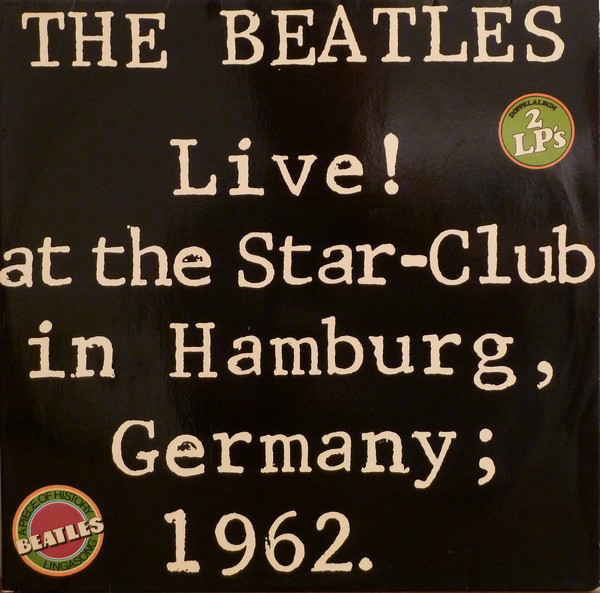
Beatles – Live! at the Star-Club in Hamburg …album review

When I got this album I loved it but at first didn’t understand why the quality was so low but the music makes up for it. The recordings are from 1962 in their last engagement in Hamburg and they didn’t want to be there. I have mentioned this album with some posts but never really went over it.

These are the punk Beatles. Raw and relentless playing fast and furious. The Beatles before the world was paying attention to them. This was recorded on an old reel-to-reel recorder at the slowest speed to conserve tape. It was not meant to be an album or anything commercial. A friend named Ted “King Sized” Taylor the leader of a band called the Dominoes, put a microphone near the stage to record them. The quality is poor, to say the least.

Peter Jackson has mentioned that he would love to work on this album. He could improve the sound a lot using modern technology and I wish they would let him try it. It was released in 1977 and the record company sunk 100,000 dollars just to make the audio listenable. Ted Taylor did ask the Beatles before he recorded and they had no qualms with it. Later on, they tried to sue to block its release but obviously were unsuccessful. I’m glad they were…this is a fun and historic listen.

The Beatles were playing to an audience of sailors, prostitutes, drunks, and gangsters. They would rip through songs at such a speed that only 2 songs on this double album are over 3 minutes long. It was like the Beatles doing a future Ramones imitation. They were “enhanced” by prellies (Preludin) that sped them up quite a bit.

They are a great band here. You catch them with their guard down and acting completely natural. The Beatles were on their last club dates in Hamburg. They had already recorded Love Me Do and it was on the charts. They did not want to be back in Hamburg but they honored a previous agreement and were there. They didn’t mail the performances in but they were loose and relaxed.

It contains mostly cover songs with very few originals. The track listing is at the bottom of the post. This is close to what Brian Epstein heard when he first saw them, this is why they took over Liverpool and this is why they got signed.

Casual fans will not want this album but serious Beatles fans will love it. This is more than a low-fidelity album…it is history. John Lennon always said that the world didn’t hear the best of the Beatles live…I agree. By this time in Hamburg they were getting lazy as well. They didn’t want to be there because they were sitting on Please Please Me waiting for it to get released in the following year.

After they became THE Beatles…they could not hear themselves play because of the long constant jet taking off screaming. On this album, you hear them as they were before the screams. I was 11 when I bought this and I didn’t get the importance until a few years later.

This is out of the book Tune In… Without a doubt the best book out on the Beatles. It’s the first of three volumes.

Their playing is adept and hyper-energetic, and the microphone catches many important moments. The tape’s value has been downplayed on the basis that the Beatles are musically sloppy and perhaps even lazy, knowing they’ve one foot out of the door, but this is to ignore its virtues. The Beatles did hate being in Hamburg this last time … but the recording shows them still cutting the mustard on stage. They’re sloppy because, here, they can be, but they’re not lazy, and they’re not playing with extra care because they’re being recorded: this is an authentic eavesdrop on their club act, not something fizzed-up for the tape machine.

At least three sets were recorded, and because the Beatles rarely repeated themselves in Hamburg, there are only five duplicates among the thirty-seven songs. The repertoire is a real surprise. The only self-written pieces are “Ask Me Why” and “I Saw Her Standing There” (twice), so there’s no “Love Me Do,” “PS I Love You,” “Please Please Me,” “One After 909” or any of several other possibilities, and there are few of the songs from the spine of their all-conquering 1962 stage sets—no “Some Other Guy,” “Soldier of Love,” “Please Mr. Postman,” “Don’t Ever Change,” “A Shot of Rhythm and Blues,” “Devil in Her Heart,” “Baby It’s You,” “Will You Love Me Tomorrow,” “If You Gotta Make a Fool of Somebody,” “Hey! Baby, A Picture of You,” and so on. What’s here is an idiosyncratic selection of old rock numbers all played at breakneck speed—Prellies pace. The nights of half-hour “What’d I Say” marathons are past: everything is high velocity, only three numbers tipping into three minutes.

Side one
  1. Introduction/”I Saw Her Standing There” (John Lennon, Paul McCartney) – 0:34/2:22
  2. “Roll Over Beethoven” (Chuck Berry) – 2:15
  3. “Hippy Hippy Shake” (Chan Romero) – 1:42
  4. “Sweet Little Sixteen” (Berry) – 2:45
  5. “Lend Me Your Comb” (Kay Twomey, Fred Wise, Ben Weisman) – 1:44
  6. “Your Feet’s Too Big” (Ada Benson, Fred Fisher) – 2:18
Side two
  1. “Twist and Shout” (Phil Medley, Bert Russell) – 2:03
  2. “Mr. Moonlight” (Roy Lee Johnson) – 2:06
  3. “A Taste of Honey” (Bobby Scott, Ric Marlow) – 1:45
  4. “Bésame Mucho” (Consuelo Velázquez, Sunny Skylar) – 2:36
  5. “Reminiscing” (King Curtis) – 1:41
  6. “Kansas City/Hey, Hey, Hey, Hey” (Jerry Leiber, Mike Stoller, Richard Penniman) – 2:09
Side three
  1. “Nothin’ Shakin’ (But the Leaves on the Trees)” (Eddie Fontaine, Cirino Colacrai, Diane Lampert, John Gluck) – 1:15
  2. “To Know Her Is to Love Her” (Phil Spector) – 3:02
  3. “Little Queenie” (Berry) – 3:51
  4. “Falling in Love Again (Can’t Help It)” (Frederick Hollander, Sammy Lerner) – 1:57
  5. “Ask Me Why” (Lennon, McCartney) – 2:26
  6. “Be-Bop-A-Lula” (Gene Vincent, Bill Davis) – 2:29
    • Guest lead vocal by Fred Fascher, Star-Club waiter
  7. “Hallelujah I Love Her So” (Ray Charles) – 2:10
    • Guest lead vocal by Horst Fascher, Star-Club manager
Side four
  1. “Red Sails in the Sunset” (Jimmy Kennedy, Hugh Williams) – 2:00
  2. “Everybody’s Trying to Be My Baby” (Carl Perkins) – 2:25
  3. “Matchbox” (Carl Perkins) – 2:35
  4. “I’m Talking About You” (Berry) – 1:48
  5. “Shimmy Like Kate” (Armand Piron, Fred Smith, Cliff Goldsmith) – 2:17
    • Based on The Olympics’ arrangement of “I Wish I Could Shimmy Like My Sister Kate”;[32] sometimes misidentified as “Shimmy Shimmy” or “Shimmy Shake”
  6. “Long Tall Sally” (Enotris Johnson, Robert Blackwell, Penniman) – 1:45
  7. “I Remember You” (Johnny Mercer, Victor Schertzinger) – 1:54

ZZ Top – Goin’ Down To Mexico

That Lil Ol’ Band from Texas. I loved it when Billy Gibbons had this tone on his guitar. This was pre-Eliminator and his tone was just perfect. They sound loose in this but the music is tight. It’s classic ZZ Top. A buddy of mine had most of their albums and played this one a lot and Fandango.

I saw them on the Eliminator tour and they were fantastic. They had Sammy Hagar opening up for them after he released Three Lock Box. ZZ Top had the best lighting show I’ve ever seen to this day.

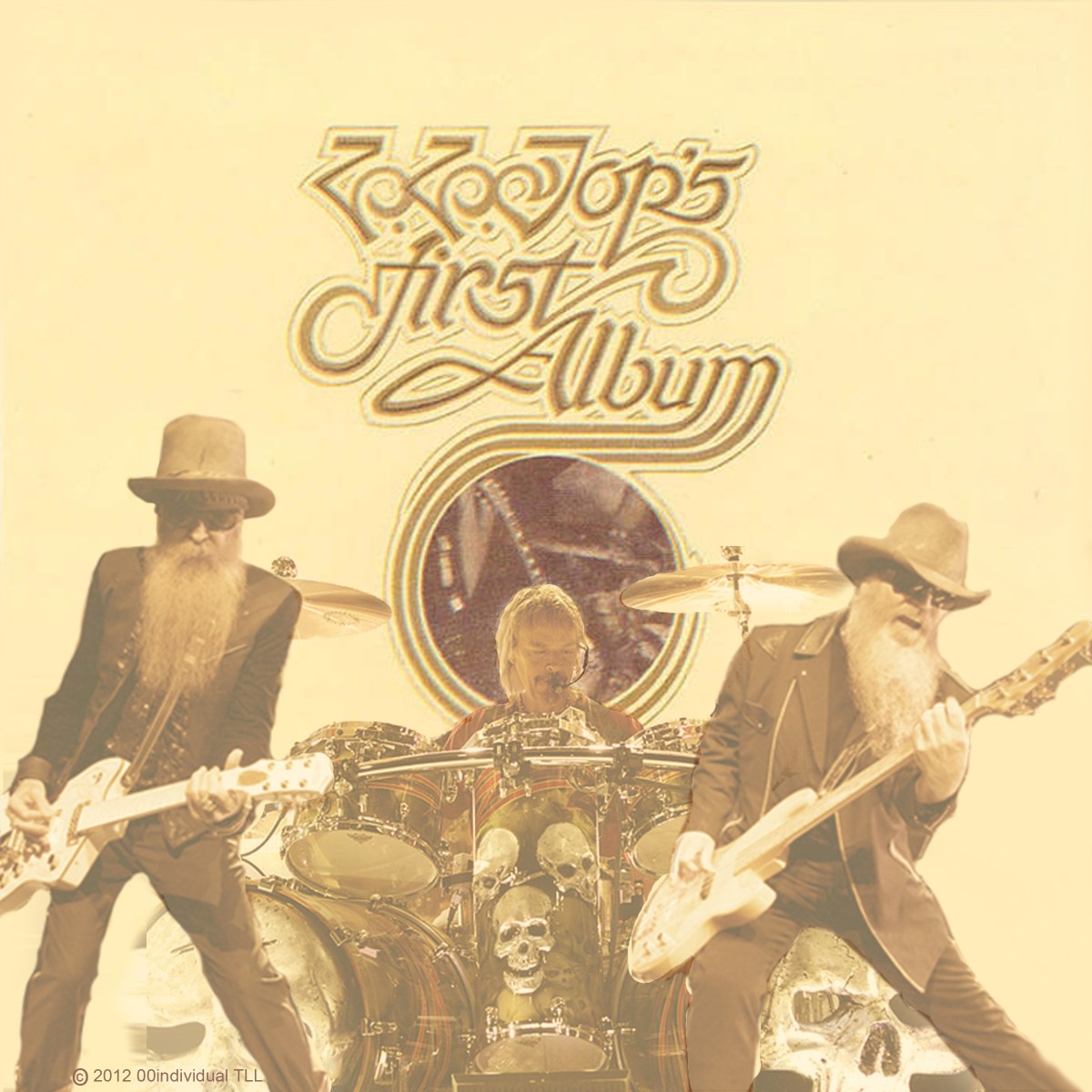
This song has the entire band credited. Billy Gibbons, Dusty Hill, and Frank Beard. This song was on their debut album ZZ Top’s First Album released in 1970. That is an easy way of remembering it.

This album isn’t as polished as some of their others, but it previews exactly what sound you would get until Eliminator. ZZ Top was formed in 1969, with Billy Gibbons (guitar and vocals), Dusty Hill (bass), and Frank Beard (drums). Before forming ZZ Top, Billy Gibbons played in various bands, most notably The Moving Sidewalks, which opened for Jimi Hendrix during his 1968 tour.

The album didn’t make a huge splash commercially, but it helped establish the band as a powerful live act. The album was produced by Bill Ham, who became a key figure in shaping ZZ Top’s sound. He would go on to produce their subsequent albums and manage the band for decades. Ham produced or co-produced all of their albums up through 1996’s Rhythmeen as well as being their manager. They parted ways in 2006. He passed away in 2016 at 79.

Going Down to Mexico

I was on my way down to MexicoThere was trouble on the riseIt was nothin’ more than I’d left behindWhich was much to my surpriseI turned around and lit a cigaretteWiped the dust off of my bootsWhen up ahead I saw the crowdI knew it was no use

It’s been the same way for oh so longIt looks like I’m singin’ the same old song

A fine and fancy man was heDoin’ good things for the poorGivin’ rides in his rocket 88 for freeThey could not hope for moreWhen it came my turn, he said to me“Have I seen your face before?”I said, “Oh no, you must be wrongI’m from a distant shore”

So if you don’t mind, I’ll just move alongBut it looks like I’m singin’ the same old song

A 1940 movie starWith a long-forgotten nameShe was a sexy mess in her beaded dressStill hangin’ on to fameWith forgotten lines, she missed her cueAnd left her glass of wine at homeShe was singin’ the same song that I wasCould we both be wrong?

So hand in hand we walked alongEach of us singin’ the same old song

Bruce Springsteen – Born In The USA …album

When this came out in 1984 it was some exciting times. Michael Jackson and Prince had released two massive albums. I didn’t really relate to Thriller but I loved Purple Rain. When this album dropped I bought it without buying the lead single which I did for some reason at times. Unlike The River or Nebraska, this one was in your face. The record company knew what they had here…they had a blockbuster album.

After this album, Springsteen wasn’t just a cult-following guy anymore. Just like I mentioned about Bob Seger with Against the Wind…some Springsteen fans loved it and some refused to listen. It was a massive hit and that is one of the reasons given by Springsteen fans I knew at the time. He wasn’t just their secret anymore. The album served as a bridge for people who had heard of him but didn’t really know him. Now the serious ones were going through his catalog.

Bruce toyed with not releasing it. He recorded a lot of it in 1982…2 years before it was released. He knew it was going to be a hit…and because of that, he hesitated. It probably got larger than he ever imagined. From 1984 to 1986 I never stopped listening to this album and neither did radio listeners. I still do from time to time and it holds up well.

My immediate reaction was the sound! Let’s forget the songs for a second. Listen to the clarity of the album. It was the clearest production I’d ever heard and stands as probably the cleanest-sounding rock album I’ve heard to this day. Bob Clearmountain mixed it and that made a huge difference. It sounded so good over your 1980s car stereo at the time…you could hear everything so clearly. Grab some headphones and listen to the album today.

The first big hit off the album wasn’t my favorite. That song was Dancing In The Dark and I liked it but not like the others. When I got the album, the songs to really hook me were Darlington County, No Surrender, Bobby Jean, and the huge title track. This was never my favorite Springsteen album but it broke him into the mainstream with a huge blast.

I thought I would highlight the songs that got me into the album. Most of these were not worn out by radio except maybe the title track. Believe me…if you listened to the radio in the mid-80s…you know the rest! If not I have the album on Spotify at the bottom.

Darlington County – When I think of this album this is the song I think about. This is one of the very few on the album that wasn’t a hit…but it’s just as good as many of the others. Bruce originally wrote this for his 1978 album Darkness On The Edge Of Town, but it didn’t make the cut. The riff in the song reminds me of Cadillac Ranch which was on The River album.

The song resolves itself in the end with the narrator’s buddy in trouble. I have a friend named Paul who I thought of when he mentioned Wayne.

Driving out of Darlington County
My eyes seen the glory of the coming of the Lord
Driving out of Darlington County
Seen Wayne handcuffed to the bumper of a state trooper’s Ford

Surrender – When you are 17 years old and waiting for your life to start… then hear the lyrics Well, we busted out of class, Had to get away from those fools, We learned more from a three-minute record, than we ever learned in school… it gets your attention.

I think every song on the album could have been released as a single. This one did not chart but remains a strong song. Steven Van Zandt convinced Springsteen to include this song on the album because Bruce was going to leave it off.

Born In The USA – It’s probably the most misunderstood Springsteen song out there. Springsteen wrote this about the problems Vietnam veterans encountered when they returned to America. Vietnam was the first war the US didn’t win, and while veterans of other wars received a hero’s welcome, those who fought in Vietnam were mostly ignored when they returned to their homeland.

What a demented-sounding vocal…I LOVE it! I haven’t heard anything like this since Twist and Shout by the Beatles. I remember back in the 80s Chrysler offered Springsteen $12 million to use this in an ad campaign with Bruce… Springsteen turned them down so they used “The Pride Is Back” by Kenny Rogers instead. Springsteen had never let his music be used to sell products. He also turned Ronald Reagan down who wanted to use it for his re-election against Walter Mondale. Walter Mondale then said “I share the same American Dream” as Bruce. Bruce disagreed and said so. I’m happy that he turned both of them down.

Goin’ Down -Bruce makes it abundantly clear that he is not going to town, nor around, or in any way… up…nope he is going down, down, down, etc… He repeats “down” over eighty times in this song…My word count is 90 in the song. I don’t care…its a good song and as Bruce always does he sings it with conviction. It’s a very likable rock/pop song.

The reason I like this song is the overall sound that Bruce got on the guitar and the echo in his voice… it’s just perfect. I can hear the Sun Records’ influence in this one.

Bobby Jean -This one I really think would have been a hit if they had released it as a single…but that can be said about a few other ones also. This song was really poignant when I heard it because I was about to graduate and I was starting to say goodbye to a lot of classmates that I knew I’d never see again.

This was written as a farewell message to guitarist Steven Van Zandt, who left the E Street Band during the recording of Born In The U.S.A. to pursue other projects. Van Zandt returned to the band years later.

Here is the complete tracklist and the Spotify if you want to indulge yourself today.

1. Born in the U.S.A.
2. Cover Me
3. Darlington County
4. Working on the Highway
5. Downbound Train
6. I’m On Fire
7. No Surrender
8. Bobby Jean
9. I’m Goin’ Down
10. Glory Days
11. Dancing in the Dark
12. My Hometown

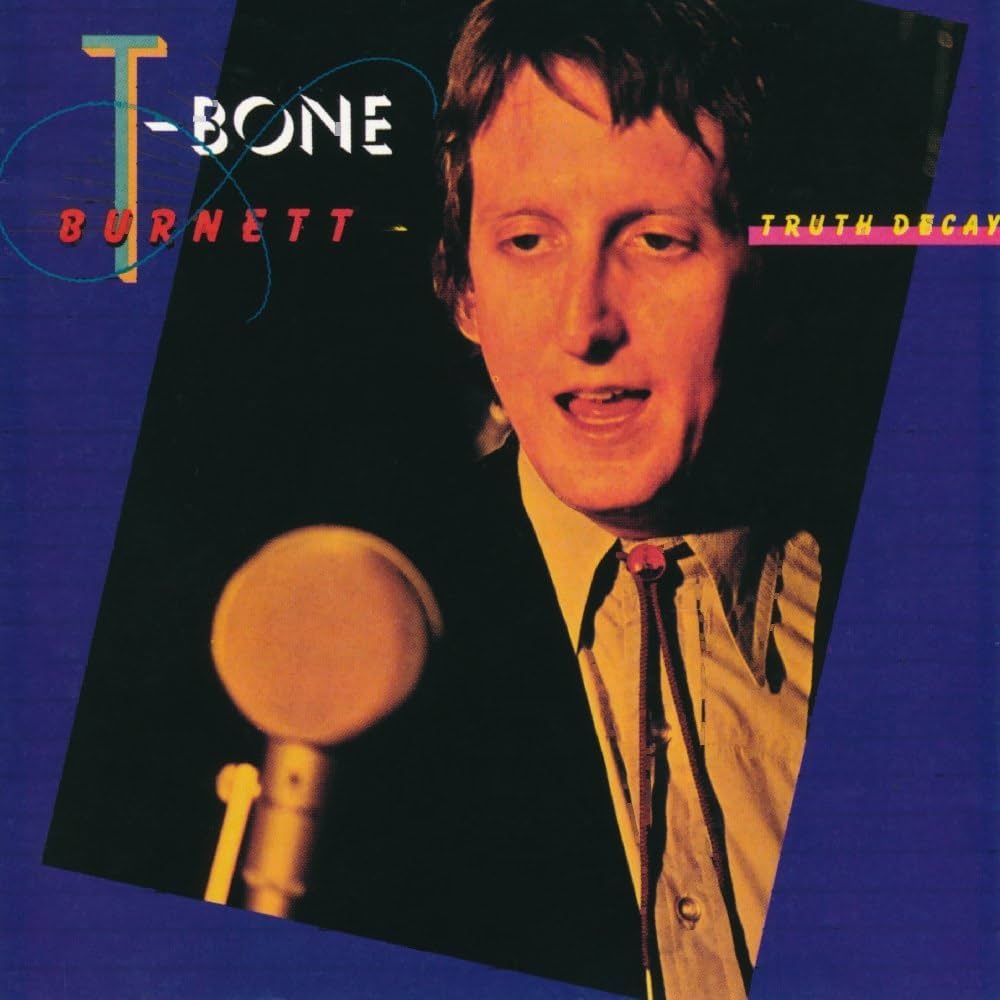
T-Bone Burnett – Truth Decay…album

I hope all of you are doing well. While on break getting things done I have written up a few posts because I like to stay ahead. For the first time, I probably wrote up more movies than music. I was emailing CB and he mentioned this album to me by T-Bone Burnett which I’ve known more as a producer. He produced artists like Elvis Costello, John Mellencamp, Gregg Allman, Alison Krauss and Robert Plant, Elton John, Leon Russell, Los Lobos, Roy Orbison, The Counting Crows, and many more.

When I started to listen to the album it surprised me. I was expecting more of a straight blues feel but I got everything. Rock, country, blues, soul, rockabilly, and most of all…Americana. I’ve listened to the entire album around 5-6 times this week. CB doesn’t steer me wrong…an outstanding album. The song that really stood out at first was I’m Coming Home…that one hooked me. He wrote all the songs on the album and co-wrote two of them.

Truth Decay was his second album and it was released in 1980. He did release an album in 1972 under the name J. Henry Burnett called The B-52 Band & the Fabulous Skylarks. He has released 15 albums in total and one this year called The Other Side. None of them were commercial blockbusters but his work received critical acclaim though…and it’s just flat-out great.

He was born in St Louis but was raised in Fort, Worth Texas. He began his career in the 1960s. His first big break came in the mid-1970s when he joined Bob Dylan’s Rolling Thunder Revue, a traveling concert tour that introduced him to a wider audience and connected him with other rising musicians.

Recently, Burnett has been involved in developing a new form of high-fidelity analog music recording technology, which he callsIonic Originals.” He wants to develop an alternative to digital formats for preserving and sharing music.

Give this album a listen. I’ll pick out a couple of songs that I like but here is the entire album on YouTube. Spotify doesn’t have this one. In order from the top there Boomerang, Pretty Girls, and my favorite I’m Coming Home.

I’m Coming Home

I been lost and all alone
Like a statue made of stone
But now I’m coming home

I fell for a painted face
Thought I’d fallen out of grace
But now I’m coming home

I’m coming home
Hold me to your breast
Let me stay and rest
In your tenderness

I’m coming home
Back where I belong
Still you’re love is strong
Roll away the stone
I’m coming home

I said my prayers, made my plan
Set out for the promised land
And now I’m coming home

I saw how you pay the price
For some distant paradise
And now I’m coming home
See pop shows near Nashville
Get tickets as low as $91