Joe has to be one of the most likable guys in Rock and Roll. Along with having a good time he is one of the best rock guitarists. All Night Long peaked at #19 in the Billboard 100 and #13 in Canada in 1980.
“All Night Long” was released as a single, in addition to being included in the legendary soundtrack to Urban Cowboy. It became one of Joe Walsh’s four Top 40 charting songs in his solo career. The song also found its way onto a live Eagles album.
From Songfacts
Independent of the single’s chart record, the soundtrack album made #1 on the Country Albums Chart, #3 on the Billboard 200, #2 on the Canadian RPM Country Albums Chart, and #21 on Canadian RPM Top Albums. Quite a bit of success for songs from a movie that cast John Travolta as a cowboy (inverting the concept of a “spaghetti western”), which makes about as much sense as casting John Wayne as Genghis Khan, and yet here we are still talking about it.
Joe Walsh fun fact: he played a prisoner in the 1980 film The Blues Brothers; during the “Jailhouse Rock” scene he was the first jumpsuit up on the table.
This was Walsh’s very next single after “Life’s Been Good.” Uh oh… Here comes a flock of WAH-WAHS!
All Night Long
We get up early and we work all day. We put our time in ’cause we like to stay up All night long. All night long.
We keep on grinnin’ ’til the weekend comes. Just a pinch between your cheek and gums. All night long. All night long.
Start in the morning and get the job done. Take care of business and we have some fun. All night long. All night long.
We like a long neck and a good old song. Turn it up and then we’ll sing along. Sing along. Oh, we’re stayin’ up all night long.
All night long. All night long. All night long. All night long.
The Jam was a mod band in the late seventies who were hugely popular in the UK but their only charting song in America was Town Called Malice that peaked at #31 in the Mainstream rock charts in 1982. This song went to #1 in the UK and #19 in Canada.
In the UK they had 4 number 1s, 9 top ten hits, and 24 top forty hits. They had company with bands like The Small Faces and Slade who were much more popular in the UK than America. Paul Weller left the Jam in 1982 and found The Style Council with Mick Talbot in 1983.
From Songfacts
The title of Nevil Shute’s A Town Like Alice inspired the title, but the inspiration for the song came from Paul Weller’s friend Dave Waller by means of describing urban life. The song is about unemployment in a working town and Paul Weller confessed, “It could have been written about any suburban town, but it was in fact written about my hometown of Woking.” (quote from 1000 UK #1 Hits by Jon Kutner and Spencer Leigh)
This was a double A-sided UK #1 along with “Precious.” The Jam became the first act since The Beatles, who performed “Day Tripper” and “We Can Work It Out” to perform both tracks of double A side on the BBC pop music show Top Of The Pops.
The song lasted a mere eight weeks on the chart, four of which were in the Top 10 and of that four, three were spent at #1.
This caused an industry furor after EMI objected to this being available in a studio-recorded 7-inch version and a live 12-inch version. The feeling was that the Jam’s fans were buying both versions of the single and so stopping “Golden Brown” by the Stranglers on the EMI label from reaching #1.
Many of Weller’s songs reflected his anger with right of center politics and the video for this number featured a cue-card with the slogan “If we ain’t getting through to you, you obviously ain’t listening.” Prompted by Conservative Party leader David Cameron’s comment that the music of the Jam “meant a lot,” the Guardian newspaper asked Weller, if it had been suggested in the early ’80s that there were ardent Tories coming to Jam concerts, what would he have thought? He replied: “I’d have been really, really surprised. I think I pretty much nailed where I was at to the mast. But people come to gigs for different reasons: it isn’t necessarily about what the person on stage is singing. But at the same time, you do think, ‘Well, maybe this’ll change their minds.”
The Walking Dead Season 7 third episode starts with a montage of the Saviors’ Sanctuary soundtracked by this song.
Town Called Malice
Better stop dreaming of the quiet life Cause it’s the one we’ll never know And quit running for that runaway bus Cause those rosy days are few And, stop apologizing for the things you’ve never done, Cause time is short and life is cruel But it’s up to us to change This town called malice Rows and rows of disused milk floats Stand dying in the dairy yard And a hundred lonely housewives clutch empty milk Bottles to their hearts Hanging out their old love letters on the line to dry It’s enough to make you stop believing when tears come Fast and furious In a town called malice
Struggle after struggle, year after year The atmosphere’s a fine blend of ice I’m almost stone cold dead In a town called malice
A whole street’s belief in Sunday’s roast beef Gets dashed against the Co-op To either cut down on beer or the kids new gear It’s a big decision in a town called malice
The ghost of a steam train, echoes down my track It’s at the moment bound for nowhere Just going round and round Playground kids and creaking swings Lost laughter in the breeze I could go on for hours and I probably will But I’d sooner put some joy back In this town called malice
It took a while for me to warm up to the Eurythmics in the 80s but I did. Here Comes the Rain Again peaked at #4 in the Billboard 100 in 1984. Annie Lennox’s voice is so distinguishable, strong, and versatile that they didn’t have just one style. They did this and then the next year they had the more R&B song Would I Lie To You.
Here Comes The Rain Again was recorded in an old church that was converted into a studio – except the studio wasn’t finished yet and they brought in the orchestra anyway. About 30 string players had to improvise by playing in corridors and even the toilet. The song was mixed blending the orchestra on top of electronic sounds created by a sequencer and drum machine.
From Songfacts
The Eurythmics were vocalist Annie Lennox and instrumentalist Dave Stewart. Both were members of The Tourists before forming Eurythmics in 1980. They met when Lennox was working as a waitress in Stewart’s home town of Sunderland; they lived together for four years before forming Eurythmics and ending their romantic relationship while forging ahead as a duo. Writing and recording as ex-lovers created an interesting tension in their songs.
In our interview with Dave Stewart, he explains that creating a melancholy mood in his songs is something he excels at. Says Stewart: “‘Here Comes The Rain Again’ is kind of a perfect one where it has a mixture of things, because I’m playing a b-minor, but then I change it to put a b-natural in, and so it kind of feels like that minor is suspended, or major. So it’s kind of a weird course. And of course that starts the whole song, and the whole song was about that undecided thing, like here comes depression, or here comes that downward spiral. But then it goes, ‘so talk to me like lovers do.’ It’s the wandering in and out of melancholy, a dark beauty that sort of is like the rose that’s when it’s darkest unfolding and blood red just before the garden, dies. And capturing that in kind of oblique statements and sentiments.”
Instead of the conventional verse-chorus-verse, this song alternates an A section (“Here comes the rain again?”) and a B section (“So baby talk to me?”) with very little variation between repetitions – just a short instrumental bridge in the middle of the song. This creates the feeling of monotony, as the rain keeps falling.
The Eurythmics were named after a mime performed by Emile Jacques-Dalcrose. They had nine UK Top 10 hits and three in the US, including the #1 “Sweet Dreams (Are Made of This).” In 1987, Stewart married Siobhan Fahey of Bananarama. Lennox left in 1990 but the pair reunited in 1999.
In The Dave Stewart Songbook, Stewart explains that he and Lennox wrote this song when they were staying at the Mayflower Hotel in New York City. Writes Stewart: “I’d been out on 46th Street and bought an early Casio keyboard, about 20 inches long with very small keys. It was an overcast day. Annie was sitting in my room, and I was playing some little riff on the keyboard sitting on the window ledge, and I was playing these little melancholy A minor-ish chords with the B note in it. I kept on playing this riff, and Annie was looking out the window at the slate grey sky above the New York skyline and just sang spontaneously, ‘Here Comes The Rain Again.’ And that was all we needed. you see, like with a lot of our songs, you only need to start with that one line, and that one atmosphere, that one note, or that intro melody. And the rest of it was like a puzzle where we needed to just fill in the missing pieces.”
The video was shot at the Orkney islands in Scotland, where Annie Lennox is seen performing the song in and around a scuppered ship. The whole time, we see Dave Stewart recording her with a video camera, appearing to stalk her. “The videos all express an interior world going on between me and Dave — emotional tensions,” Lennox told Q magazine in 1991.
The line, “Talk to me like lovers do” shows up in the 2007 song “Taking Chances,” which Stewart wrote with Kara DioGuardi.
Here Comes The Rain Again
Here comes the rain again Falling on my head like a memory Falling on my head like a new emotion I want to walk in the open wind I want to talk like lovers do I want to dive into your ocean Is it raining with you
So baby talk to me Like lovers do Walk with me Like lovers do Talk to me Like lovers do
Here comes the rain again Raining in my head like a tragedy Tearing me apart like a new emotion Oh I want to breathe in the open wind I want to kiss like lovers do I want to dive into your ocean Is it raining with you
So baby talk to me Like lovers do
Here comes the rain again Falling on my head like a memory Falling on my head like a new emotion (Here is comes again, here it comes again) I want to walk in the open wind I want to talk like lovers do I want dive into your ocean Is it raining with you
I remember this song in the 80s as a throwback to a familiar riff in many 60’s songs. The song peaked at only #49 in the Billboard 100 in 1980. The Romantics’ two Top 40 hits were “Talking In Your Sleep” (#3) and “One In A Million” (#37). Both came in 1983, from their fourth album In Heat.
The Romantics formed in East Detroit in early 1977. The original line-up consisted of singer/guitarist Wally Palmar, singer/drummer Jimmy Marinos, guitarist Mike Skill, and bassist Rich Cole. The band has said their name came from an article on Bryan Ferry in Creem magazine. They were all big fans of Ferry’s band, Roxy Music, and the word “romantic” was used throughout the article.
The group formed in Detroit, Michigan, in 1977. The band’s first show was on Valentine’s Day at My Fair Lady Club, in Detroit, opening for the New MC5 in 1977.
From Songfacts
The Romantics, so named because they formed on Valentine’s Day 1977 in Detroit, have had only two US Top 40 hits – and this, now their best-known song, wasn’t one of them. It attracted little attention and was only a minor hit when first released in 1980 on their debut album, but found new life later in the decade when it became a popular choice for an advertising jingle, particularly for Budweiser beer. Since then the song has also become a fixture at sporting events, bars and nightclubs, and parties and celebrations of all kinds, and has taken its place as one of the most popular rock anthems of all time.
In another ironic twist, the licensing of this song for advertising, the very thing that sparked the song’s comeback, was apparently handled illegally. It was secured from the band’s management without the band’s knowledge or approval, which sparked a lawsuit lasting several years. Despite now having faded into obscurity, the band stayed together during this time, albeit with several lineup changes, and remain active as of 2012. >>
This song’s resurgence had a lot to do with MTV. The band made a simple performance video for the song that MTV put in rotation when they launched in 1981. It fit the criteria the network was looking for: American band, rock, catchy song, acceptable production quality. Since few American artists made videos at the time, MTV made do with lots of European imports when they started.
The Romantics, who were often compared to The Knack when this song was released, were a four-piece that split lead vocals between their guitarist Wally Palmar and drummer Jimmy Marinos, and it was Marinos who sang lead on this one.
Marinos and Palmar wrote this song with their other guitarist, Mike Skill.
The Texas singer Michael Morales took this song back to the charts in 1989 when his version hit #28 in the US. The song was also covered by 5 Seconds of Summer, who released it in 2014 on their EP She Looks So Perfect. They performed the song at the American Music Awards that year.
What I Like About You
Hey, uh huh huh Hey, uh huh huh
What I like about you, you hold me tight Tell me I’m the only one, wanna’ come over tonight, yea
Keep on whispering in my ear Tell me all the things that I wanna’ to hear, ’cause that’s true (that’s what I like) That’s what I like about you (that’s what I like)
What I like about you, you really know how to dance When you go up, down, jump around, think about true romance, yea
Keep on whispering in my ear Tell me all the things that I wanna’ to hear, ’cause that’s true (that’s what I like about you) That’s what I like about you (that’s what I like about you) That’s what I like about you (that’s what I like about you) That’s what I like about you (that’s what I like) Wahh!
What I like about you, you keep me warm at night Never wanna’ let you go, know you make me feel alright, yea
Keep on whispering in my ear Tell me all the things that I wanna’ to hear, ’cause that’s true (that’s what I like) That’s what I like about you (that’s what I like)
That’s what I like about you (that’s what I like about you) That’s what I like about you (that’s what I like about you) That’s what I like about you (that’s what I like) That’s what I like about you (that’s what I like) That’s what I like about you (that’s what I like) That’s what I like about you (that’s what I like about you)
One of my favorite Dylan songs of the 1980s. Tweeter and the Monkey Man has a cool story and he sprinkles references to Bruce Springsteen songs all through it. The songwriting credit went to all of the Wilburys and George Harrison remembered Bob and Tom writing it and George didn’t understand a lot of it because of the American references. Jeff Lynne and George contributed to the chorus.
It’s a story of two drug dealers, Tweeter and the Monkey Man and an undercover cop chasing them…and to add more drama the undercover cop who had a sister named Jan…and she loved the Monkey Man. it also contains an excellent lyric… In Jersey anything’s legal as long as you don’t get caught.”
Tom Petty talked about the Bruce Springsteen references, “It was not meant to mock him at all. It started with Bob Dylan saying, ‘I want to write a song about a guy named Tweeter. And it needs somebody else.’ I said, ‘The Monkey Man.’ And he says, ‘Perfect, ‘Tweeter and the Monkey Man.” And he said, ‘Okay, I want to write the story and I want to set it in New Jersey.’ “I was like, ‘OK, New Jersey.’ And he was like, ‘Yeah, we could use references to Bruce Springsteen titles.’ He clearly meant it as praise.”
Tweeter and the Monkey Man
Tweeter and the Monkey Man were hard up for cash They stayed up all night selling cocaine and hash To an undercover cop who had a sister named Jan For reasons unexplained she loved the Monkey Man
Tweeter was a boy scout before she went to Vietnam And found out the hard way nobody gives a damn They knew that they found freedom just across the Jersey Line So they hopped into a stolen car took Highway 99
And the walls came down, all the way to hell Never saw them when they’re standing Never saw them when they fell
The undercover cop never liked the Monkey Man Even back in childhood he wanted to see him in the can Jan got married at fourteen to a racketeer named Bill She made secret calls to the Monkey Man from a mansion on the hill
It was out on thunder road – Tweeter at the wheel They crashed into paradise – they could hear them tires squeal The undercover cop pulled up and said “Everyone of you’s a liar If you don’t surrender now it’s gonna go down to the wire”
And the walls came down, all the way to hell Never saw them when they’re standing Never saw them when they fell
An ambulance rolled up, a state trooper close behind Tweeter took his gun away and messed up his mind The undercover cop was left tied up to a tree Near the souvenir stand by the old abandoned factory
Next day the undercover cop was-a hot in pursuit He was taking the whole thing personal He didn’t care about the loot Jan had told him many times it was you to me who taught In Jersey anything’s legal as long as you don’t get caught
And the walls came down, all the way to hell Never saw them when they’re standing Never saw them when they fell
Someplace by Rahway prison they ran out of gas The undercover cop had cornered them said “Boy, you didn’t think that this could last” Jan jumped out of bed said “There’s someplace I gotta go” She took a gun out of the drawer and said “It’s best if you don’t know”
The undercover cop was found face down in a field The monkey man was on the river bridge using Tweeter as a shield Jan said to the Monkey Man “I’m not fooled by Tweeter’s curl I knew him long before he ever became a Jersey girl”
And the walls came down, all the way to hell Never saw them when they’re standing Never saw them when they fell
Now the town of Jersey City is quieting down again I’m sitting in a gambling club called the Lion’s Den The TV set was blown up, every bit of it is gone Ever since the nightly news show that the Monkey Man was on
I guess I’ll go to Florida and get myself some sun There ain’t no more opportunity here, everything’s been done Sometime I think of Tweeter, sometimes I think of Jan Sometimes I don’t think about nothing but the Monkey Man
And the walls came down, all the way to hell Never saw them when they’re standing Never saw them when they fell
Saturday night we had some guests over and we all played Yahtzee. It was the first time I’d played it since the 1980s at least. I had a good time and looked up the history of the game.
In 1954 a wealthy anonymous Canadian couple, who called it The Yacht Game invented the game to play aboard their yacht. They would invite friends and teach them. In 1956 they went to toy maker Edwin S. Lowe to make some games for their friends as Christmas gifts. Edwin liked the game so much that he wanted to buy the rights to it. The couple sold the rights for the amount of making them a 1000 games.
When Edwin released it on the market it did not do well in it’s first year. The game could not be explained easily in an ad. It had many nuances and interesting things about it and they can only be understood if the game was actually played.
Finally, Edwin tried a different approach. He started to have Yahtzee parties hoping to spread the news about the game by word of mouth. That started to work and Yahtzee got extremely popular. During Lowe’s ownership alone, over forty million copies of the game were sold in the United States of America as well as around the globe
In 1973 Milton Bradley Company bought the E.S. Lowe Company and in 1984 Hasbro, Inc. acquires the Milton Bradley Company and the game.
The origins of the game came from the Puerto Rican game Generala and the English games of Poker Dice and Cheerio. Another game, Yap, shows close similarities to Yahtzee.
I remember seeing this movie with some buddies in the 1980s and we all loved it. A great mockumentary of the fictional rock group Spinal Tap and their dying drummers. There are many quotable lines in this movie and they have stayed with me since I saw it the first time. I’ve met some people who didn’t get this movie at all and some who loved it.
The movie starred Michael McKeon as singer/guitarist David Saint Hubbins, Christopher Guest as guitarist Nigel Tufnel (reminded me of Jeff Beck), Harry Shearer as bassist Derek Smalls, Tony Hendra as manager Ian Faith, David Kaff as keyboard player Vic Savage and R.J. Parnell as drummer Mick Shrimpton…also Rob Reiner as the Marty DiBergi the filmmaker.
Harry Shearer, Michael McKean, and Christopher Guest actually wrote, played, and sang the music.
The movie was released in 1984 and started slow but built a cult following. At first, some people thought it was about a real band and they would ask Reiner why he would do a documentary on a band no one had heard of.
Christopher Guest said he was inspired at an LA hotel in 1974 when a British band came in and the manager of the band asked the bass player if he left his bass at the airport. The bass player replied I don’t know if I left it…did I leave it? Do you get my bass at the airport? Guest said this went on for 20 minutes back and forth and it stuck with him.
They did have a basic story but the movie was ad-libbed with no script. They had over 100 hours of film and had to edit it down. They have regrouped many times and played live concerts as Spinal Tap.
This Is Spinal Tap was selected for preservation by the National Film Registry because it is a film that is considered “culturally, historically, or aesthetically significant” by the Library of Congress.
My favorite bits? Stonehenge, Nigel’s “Mach” piece, these go to 11, Nigel’s bread, you can’t dust vomit… there are too many to name them all. check the videos out at the bottom.
Some of it hits home according to some rock stars.
Quotes about the movie
The Edge – “It’s so hard to keep things fresh, and not to become a parody of yourself,”. “And if you’ve ever seen that movie Spinal Tap, you will know how easy it is to parody what we all do. The first time I ever saw it, I didn’t laugh. I wept. I wept because I recognized so much and so many of those scenes.”
Ozzy Osbourne reportedly thought it was a real documentary. ” “They seemed quite tame compared to what we got up to”
Joe Perry from Aerosmith – “It was great, every bit as brilliant as it was supposed to be, so good. Even then, we had been through it all six times. I told Steven the next day, ‘You’ve got to see this movie! It’s so good. It’s hilarious.’”
Steven Tyler from Aerosmith – “That movie bummed me out, because I thought, ‘How dare they? That’s all real, and they’re mocking it’
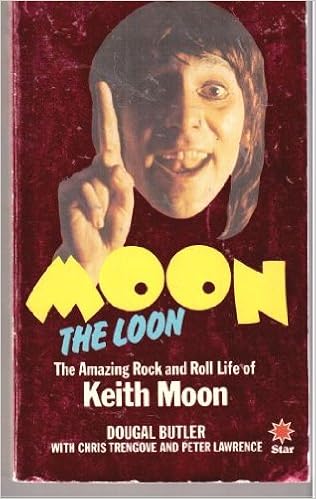
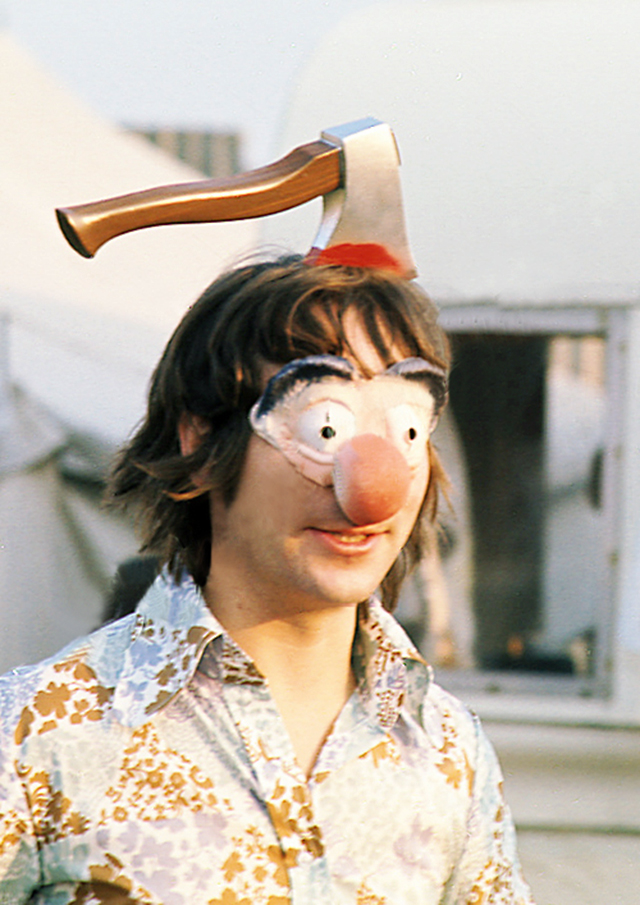
Pete Townsend – “Keith Moon “was ‘Spinal Tap incarnate.”
I remember in Jr High school in 1981 I bought Long Distant Voyager by the Moody Blues. The album received heavy play and peaked at #1 in the Billboard album charts. The album had two top twenty hits with The Voice and Gemini Dream. The Voice peaked at #15 in the Billboard 100.
With no clear title in the lyrics, Justin Hayward had no idea what to name this song. When the group’s engineer, Greg Jackman, asked him what to call it, Hayward replied, “I’ll think of that after.”
Jackman thought he said, “Fat Arthur,” and wrote that on the tape. That was the song’s name right up to the mastering process when Jackman pushed for a more sensible title before they turned it over to the label. Hayward went through the lyrics and picked out “The Voice,” which is what stuck.
Mike Pinder left after the previous album Octave and was replaced by Patrick Moraz.
This was one of the songs that propelled The Moody Blues to a comeback in the early 1980s, and of their newer songs, it appealed the most strongly to fans of their original work. Written by Justin Hayward, the lyrics have the same philosophical tone of their songs in the late 1960s, and the song is alternately urgent and hopeful about the future. It seems to be telling listeners that they face major choices on how their world will turn out, and that there is great hope in it, but only if they make it happen of their own initiative.
After the Moody Blues came to San Francisco and played their psychedelia-tinged songs in 1967, they’ve been perceived in some circles as a Flower Power band. They are certainly very introspective, but their music changed with the times, thanks in part to a shift in songwriting for Justin Hayward. By the ’80s, he no longer needed to be in just the right mood to write a song (like he was on one Tuesday Afternoon), but could compose in his music room on a regular schedule. Hayward cites this discipline for the band’s continued success in the ’80s.
Hayward did something different on this track, recording two guitars to a click track and then bringing that tape to the band to give them the tempo and feel of the song. This is the method he used on many songs throughout the decade.
The Voice
Won’t you take me back to school? I need to learn the golden rule. Won’t you lay it on the line? I need to hear it just one more time.
Oh, won’t you tell me again? Oh, can you feel it? Oh, won’t you tell me again tonight?
Each and every heart it seems, Is bounded by a world of dreams. Each and every rising sun, Is greeted by a lonely one.
Oh, won’t you tell me again? Oh, can you feel it? Oh, won’t you tell me again tonight?
Cause out on the ocean of life my love. There a so many storms we must rise above. Can you hear the spirit calling, as it’s carried across the waves? You’re already falling it’s calling you back to face the music. And the song that is coming through. You’re already falling the one that it’s calling is you.
My a promise take a vow. And trust your feelings it easy now. Understand The Voice within. And feel a change already beginning.
Oh, won’t you tell me again? Oh, can you feel it? Oh, won’t you tell me again tonight? Tonight?
Oh, won’t you tell me again? Oh, can you feel it? Oh, won’t you tell me again tonight?
And how many words have I got to say? And how many times will it be this way? With your arms around the future and your back up against the past. You’re already falling it’s calling you on to face the music. And the song that is coming through. You’re already falling the one that it’s calling is you.
Each and every heart it seems, Is bounded by a world of dreams. Each and every rising sun, Is greeted by, a lonely, lonely one.
Won’t you tell me again? Oh, can you feel it? Oh, won’t you tell me again tonight?
Everyone’s list will be different but classic rock radio has just overplayed these songs. It does not mean I don’t/didn’t like the song to begin with…some I didn’t…some I did… There are more than this but I kept it at 20. No need for me to post youtube links…just turn on a classic rock station and they will come to you.
I’ve tried to keep it one per band or artist. The order of these is not really important…you could pull them out of a hat and be just as well. Sometimes the artists have other hits that you don’t hardly hear but no… they stick to the old reliables.
Radio has ruined these for me. Yes, I’m older and have heard them more than some other people but my 18-year-old son suggested a few of them.
Taking Care of Business – Bachman Turner Overdrive – I liked this song at one time…Now I would pull a hamstring getting up to turn it off.
Hotel California – Eagles – I still like the solos at the end with Joe Walsh and Don Felder but the rest I can do without.
More Than A Feeling – Boston – At one time it was refreshing and different. Radio has worked this song like the town pump.
In The Air Tonight– Phil Collins (just one of many) His songs saturated the market so much in the 80s that is was enough for 3 lifetimes
Jukebox Hero – Foreigner – I know huge Foreigner fans but I’m not one of them. This one I know more than I should.
Feel Like Making Love– Bad Company – Not a well-written song to begin with…it doesn’t get better with more spins. They have good songs…Painted Face, Crazy Circles but they don’t get played as much.
Don’t Stop Believing– Journey – Yes it’s catchy and an eighties theme…it fit at the end of the Sopranos…but I can do without it.
Start Me Up – Rolling Stones – Oh how I loved this song when it was released. I liked it a decade later…until Microsoft used it and since then you would think it was the Stones only song.
Tom Sawyer – Rush – See number 5
The Joker – Steve Miller – Hanspostcard says it all.
Money – Pink Floyd – Great band and they have so many others they could play.
Roundabout – Yes – When I hear the octave on the guitar I spin the dial like a top to another station.
Sweet Home Alabama – Lynyrd Skynyrd – In the south where I live this song is required listening…. over and over and over…They have better songs…
Sharp Dressed Man – ZZ Top – I loved the video, the car, and the girls in the video but the song no more. How about the older ZZ Top?
Bad to the Bone – George Thorogood & the Destroyers – In high school alone I heard it enough.
Old Time Rock and Roll– Bob Seger – The first 5 times I heard it…I liked it…but after the 1, 855th time…no more.
Stairway to Heaven – Led Zeppelin – It’s been played backward, forward and sideways…and the hidden message is the same…a worn out masterpiece.
Barracuda – Heart – This and Magic Man are like the bookends of worn out songs.
Black Water – Dobbie Brothers – I’ve never bought a record by them and they had great musicians in that band…but this is nauseatingly overplayed
You Give Love a Bad Name – Bon Jovi – Not for me the first time or the many times after…in cars, shopping centers, and grocery stores.
To be fair…there are songs that are worn out but yet I still listen to… Who Are You, Baba O’Riley, Hey Jude, Lola, Paint It Black, Brown Eyed Girl…
I remember hearing this song on Fast Times at Ridgemont High. A good pop song by Jackson in 1982 and it peaked at #7 in the Billboard 100 and #16 in Canada in 1982. It was written by Jackson Browne and Danny Kortchmar.
This was his highest ever charting song.
Jackson Browne recorded the song for the film because he was friends with its writer, Cameron Crowe. The song’s co-writer Danny Kortchmar was also friends with Crowe, and was working on the song “Love Rules” for the film with Don Henley when he came up with the framework for “Somebody’s Baby.” Kortchmar convinced Browne to finish writing the song and record it for the movie.
Browne has called this an “unabashed pop song.” Most musicians would want their most popular songs on their albums, but Browne was OK having it on the Fast Times at Ridgemont High soundtrack, despite the advice of his former label boss David Geffen, who told him he was nuts for giving it up.
This song is about a guy who is infatuated with a girl, and convinces himself that she must have a boyfriend. As he tries to work up the courage to talk to her, he keeps losing confidence by reminding himself that she’s too fine not to be taken.
This was part of a memorable scene in the movie Fast Times at Ridgemont High, where it was used to express the feelings of a frustrated teenager. The movie was a huge hit and helped drive the chart success of the song. “Somebody’s Baby” was the only hit from the soundtrack, although “Moving In Stereo” by The Cars was used in a famous scene and also became associated with the film.
Jackson Browne wrote this song with Danny Kortchmar, who played guitar on his Running On Empty and Lives In The Balance albums. Kortchmar had the music and the “must be somebody’s baby” hook. He knew Browne could do something special with the song, so he brought what he had to Jackson, who helped Kortchmar complete it. That’s what I brought to him: all the guitar parts and everything else. In our 2013 interview, Kortchmar explained:
“It was not typical of what Jackson writes at all, that song. But because it was for this movie he changed his general approach and came up with this fantastic song. It’s a brilliant lyric. I think it’s absolutely wonderful. But it’s atypical of him – he wasn’t sure what to make of it himself. He didn’t want to put it on his album that he was making because it was atypical of what he did, but it ended up being something that got requested a lot and he ended up playing it live and taking it to his heart, as it were. And now he plays it all the time.”
Somebody’s Baby
Well, just, a look at that girl with the lights comin’ up in her eyes. She’s got to be somebody’s baby. She must be somebody’s baby. All the guys on the corner stand back and let her walk on by.
She’s got to be somebody’s baby. She must be somebody’s baby. She’s got to be somebody’s baby. She’s so fine.
She’s probably somebody’s only light. Gonna shine tonight. Yeah, she’s probably somebody’s baby, all right.
I heard her talkin’ with her friend when she thought nobody else was around. She said she’s got to be somebody’s baby; she must be somebody’s baby. Cause when the cars and the signs and the street lights light up the town,
She’s got to be somebody’s baby; She must be somebody’s baby; She’s got to be somebody’s baby. She’s so
She’s gonna be somebody’s only light. Gonna shine tonight. Yeah, she’s gonna be somebody’s baby tonight.
I try to shut my eyes, but I can’t get her outta my sight. I know I’m gonna know her, but I gotta get over my fright. We’ll, I’m just gonna walk up to her. I’m gonna talk to her tonight.
Yeah, she’s gonna be somebody’s only light. Gonna shine tonight. Yeah, she’s gonna be somebody’s baby tonight. Gonna shine tonight, make her mine tonight.
Good riff and rock song by the Kinks. It starts off with a chord that is reminiscent of the “A Hard Days Night” intro. I was in high school when it was released and it was great to hear a guitar driven song.
Ray Davies wrote this about the stressful working schedules the Kinks were going through. The song peaked at #41 in the Billboard 100 in 1983.
Do It Again
Standing in the middle of nowhere Wondering how to begin Lost between tomorrow and yesterday Between now and then
And now we’re back where we started Here we go round again Day after day I get up and I say I better do it again
Where are all the people going Round and round till we reach the end One day leading to another Get up go out do it again
Then it’s back where you started Here we go round again Back where you started Come on do it again
And you think today is going to be better Change the world and do it again Give it all up and start all over You say you will but you don’t know when
Then it’s back where you started Here we go round again Day after day I get up and I say Come on better do it again
The days go by and you wish you were a different guy Different friends and a new set of clothes You make alterations and [a fact in you knows] A new house a new car a new job a new nose But it’s superficial and it’s only skin deep Cause the voices in your head keep shouting in your sleep Get back, get back
Back where you started, here we go round again Back where you started, come on do it again
Back where you started, here we go round again Day after day I get up and I say, do it agaiiinnn Do it again Day after day I get up and I say, do it again
This one was the most fun to do. These are the songwriters that I have listened to and admired the most.
1… Bob Dylan – There was no one else I could remotely place as number 1.
2… Lennon – McCartney – As a team…it was quantity and quality. Their music will live long after we are gone.
3…Chuck Berry – He wrote the blueprint for future rockers.
4…Jagger – Richards – For blues rock it doesn’t get much better than these two.
5…Paul Simon – One of the best craftsman of pop songs there is…
6…Bruce Springsteen – One of the best writers of his generation.
7…Goffin and King – Wrote some of the best known and successful songs of the sixties.
8…Smokey Robinson – Bob Dylan said of Robinson…”America’s greatest living poet”
9…Pete Townshend – Took the “Rock Opera” to new levels.
10…Hank Williams – The country poet.
Honorable Mention
Paul McCartney, John Lennon, Ray Davis, Neil Young, Townes Van Zandt, Leiber and Stoller, Elvis Costello, Randy Newman, Woody Guthrie, Merle Haggard, Robbie Robertson, Elton John and Bernie Taupin, Tom Petty, Curtis Mayfield, John Prine, George Harrison, Steve Wonder, Warren Zevon, Brian Wilson
There are so many singers that I cannot possibly list them all. I could make a top 30 and not get them all. This is my personal favorite top 10 plus some extra.
For the most part, I like singers with soul and meaning to their singing…not vocal gymnastics.
1…Aretha Franklin – Aretha could make any song better by singing it.
2…Van Morrison, Them and Solo – Probably my favorite male singer.
3…John Lennon, Beatles – John hated his voice and always wanted an effect on it…It didn’t need it…one of his best performances was “A Day In The Life”
4…Bob Dylan – Bob changed popular singing. I would rather hear Bob sing than many of the great traditional singers.
5…Elvis Presley – Hey he’s Elvis…
6…Otis Redding – Just a fantastic singer and performer and just taking off before he was killed in a plane crash.
7…Mick Jagger, Rolling Stones – Mick makes the most out of his voice.
8…John Fogerty…CCR – If I could have the voice of anyone…it would be Fogerty. The power that John has is incredible…his voice is its own instrument.
9…Janis Joplin – She put everything she had in each song. Her last producer Paul A. Rothchild was teaching Janis how to hold back and sing more traditional to save her voice for old age…which never came.
10…Johnny Cash – Last but far from least. Only one man can sound like Cash…and that is Cash
Honorable Mention…any of these could have easily been on the list.
Steve Marriott, Paul McCartney, Levon Helm, Bessie Smith, Little Richard, Roger Daltrey, Pete Townshend, Elton John, Neil Young, Roy Orbison, Smokey Robinson, Sam Cooke, Joe Cocker, Billie Holiday, Freddie Mercury, Kate Bush, Ella Fitzgerald, Paul Rodgers, David Bowie.
I’d heard guitar delay before but U2 took it to a new level. New Year’s Day peaked at #53 in the Billboard 100, #10 in the UK and #41 in Canada in 1983. This song was on their third album War. This is about the time I started to notice them.
The lyrics refer to the movement for solidarity lead by Lech Walesa in Poland. After this was recorded, Poland announced they would abolish martial law, coincidentally, on New Year’s Day, 1983.
This was U2’s first UK Top 10 and their first single to chart in America.
This almost didn’t make the album because Bono was having fits writing the lyrics.
The Edge played piano on this as well as guitar. In concert, he played the song on the piano with his guitar in his lap. For his guitar solo, he would get up and go to the front of the stage as the crowd cheered wildly.
This was the first U2 video to get heavy airplay on MTV, and it was by far their most ambitious video to that point. It was directed by Meiert Avis, who worked on U2’s previous videos, including “Gloria” and “I Will Follow.” They planned to shoot the video in Sweden, but when the mountains and snow they hoped for didn’t materialize, they tried Norway. They got the majestic mountains and tight shots of the band performing the song, which was more than adequate for MTV in 1983.
We also see what is supposed to be the band riding horses, which were actually four teenaged girls covered in winter clothes. The guys in U2 weren’t experienced riders, and since they were in the middle of a tour during the shoot, it wasn’t worth the risk.
The themes of understanding in a time of global unrest were a focal point for the album War, whose title was inspired by the various worldwide conflicts of 1982.
The line “Under a blood red sky” was used as the title for a video and live album U2 released in 1983. The video was recorded at Red Rocks, Colorado, June 5, 1982. The album contains performances from that show as well as two others.
Bono considers this a love song. While it is about war, it deals with “The struggle for love.”
Bono wrote this shortly after he married his childhood sweetheart, Ali.
This song was recorded at Windmill Lane Studios in Dublin, which is where U2 recorded their first three albums. The studio had a stone stairway where Larry Mullen played his drums for this track.
This is commonly played at bars every New Year’s Day for lack of something more appropriate.
This is a popular song for other artists to sample or cover. With It Guys used the piano line as a sample in the song “Let The Music Take Control,” Manchester rappers Kiss AMC sampled the intro for their song “A Bit Of U2,” the group Dynamic Base used the sample on their “Africa” single and Bacon Popper did the same on “Free.” Hyper Logic also used a sample in “Only Me.” >>
Producer Steve Lillywhite remembers mixing this song in ten minutes while Bono cranked out “40” at the last minute while another band was waiting outside of the studio for their turn.
New Year’s Day
Yeah!
All is quiet on New Year’s Day A world in white gets underway I want to be with you, be with you night and day Nothing changes on New Year’s Day On New Year’s Day
I will be with you again I will be with you again
Under a blood red sky A crowd has gathered, black and white Arms entwined, the chosen few The newspapers says, says
Say it’s true, it’s true We can break through Though torn in two We can be one
I, I will begin again I, I will begin again
Oh, maybe the time is right Oh, maybe tonight
I will be with you again I will be with you again
And so we are told this is the Golden Age And gold is the reason for the wars we wage Though I want to be with you, be with you night and day Nothing changes on New Year’s Day On New Year’s Day On New Year’s Day
The song peaked at #27 in the Billboard 100 and #30 in Canada in 1985. This song was the fifth single released off of the She’s So Unusual album. It was written by Tom Gray who released it with the Brains in 1980.
Most Cyndi Lauper fans owned the album by the time this song was released as a single, so it was issued with a different version, labeled “recorded live” as the A-side, and the album version on the B-side. The “live” version was recorded live but in a studio. Most radio stations played the album version.
A track from Cyndi Lauper’s debut album She’s So Unusual, “Money Changes Everything” was written by Tom Gray, who first recorded it with his Atlanta Rock band The Brains. The song got a great audience reaction when The Brains performed it at live shows in 1979, and when they earned some cash opening shows for The B-52s, they recorded the song and pressed 1,000 copies on their own label. Progressive FM stations in Boston, San Francisco and a few places in between started playing the song, which earned the band a record deal with Mercury Records.
But then money changed everything: Mercury cleaned house and the executives that were behind the band were replaced with folks who knew nothing about them. The song was released on The Brains 1980 self-titled debut album, but without record company support, it got little attention despite being produced by Steve Lillywhite, who would later have enormous success working with U2.
Soon after, Tom Gray got a publishing deal with ATV, which pitched “Money Changes Everything” to the producer Rick Chertoff, hoping he would record it with a teenage singer he worked with named Rachel Sweet. Chertoff declined, but a few months later he included the song on a demo reel for a new artist he was working with: a brash young singer named Cyndi Lauper. Cyndi loved the song and recorded it for her album, turning it into a hit and improving Gray’s financial fortunes considerably.
The song is about a girl who leaves her man for someone with a more robust bank account. Many songs have been written about how money can’t buy love, but this one takes the opposite tack, explaining that sometimes money trumps love.
Lauper didn’t change the gender of the song – the original version sung by a man places him in the lead role, but with Lauper singing, she is recounting a story.
Tom Gray wasn’t going for social commentary when he wrote this song; he got the idea after having a conversation with his landlady. In our interview with Gray, he explained:
“We were just sort of gossiping about this couple we knew, and she said, ‘She’s going to leave him as soon as she finds somebody with money.’ And I said, ‘Wait a minute, excuse me.’ The idea of the song just appeared in my head right there. The keyboard part was something I’d been banging on the piano for a week or so. But I wrote the chorus very quickly and then the verses followed. The song was finished within a day or two.”
A lot happened between this song’s conception and its appearance on the chart. Written in 1979 and first recorded by The Brains in 1980, Lauper put it on her She’s So Unusual album, which came out in October 1983. The first single was “Girls Just Want To Have Fun,” which peaked in March 1984. The album was a runaway hit, and three more singles were issued before “Money Changes Everything” finally got its turn, peaking at #27 in February 1985.
The song provided a welcome infusion of cash to its writer Tom Gray. It didn’t change everything, but he did go from hand-to-mouth, mowing lawns for extra funds, to buying a house and enjoying a higher status in the songwriter community, which led to a collaboration with Carlene Carter. He also became friends with Lauper, who met him when she came to Atlanta on her first tour. They wrote a song together for her next album called “The Faraway Nearby.” They collaborated again on Lauper’s song “A Part Hate,” which appeared on her 1993 album Hat Full of Stars.
Lauper released an acoustic version of this song with Adam Lazzara of Taking Back Sunday on her 2005 album The Body Acoustic. This was a moment of serendipity for the song’s writer Tom Gray, who had formed a band called Delta Moon and was working on a similar arrangement. Gray told us: “I’d always wanted to do it with a fiddle, so I played Appalachian dulcimer on it. And then after we already had it in the can, Cyndi came out with her all-acoustic CD – and what instrument did she play on it but Appalachian dulcimer! We hadn’t talked or communicated about this at all. But she came out doing it with a fiddle and an Appalachian dulcimer and I was just like, ‘Whoa.'”
Money Changes Everything
I said I’m sorry baby I’m leaving you tonight I found someone new, he’s waitin’ in the car outside Ah honey how could you do it We swore each other everlasting love I said well yeah I know but when we did; There was one thing we weren’t Thinking of and that’s money
Money changes everything I said money, money changes everything We think we know what we’re doin’ That don’t mean a thing It’s all in the past now Money changes everything
They shake your hand and they smile And they buy you a drink They say we’ll be your friends We’ll stick with you till the end Ah but everybody’s only Looking out for themselves And you say well who can you trust I’ll tell you it’s just Nobody else’s money
Money changes everything I said money, money changes everything You think you know what you’re doin’ We don’t pull the strings It’s all in the past now Money changes everything
Money, money changes everything I said money, money changes everything We think we know what we’re doing We don’t know a thing It’s all in the past now