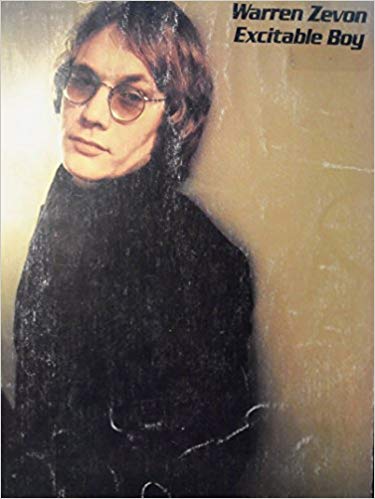
Maybe the darkest pop song that I know. You first hear this song and it sounds cheery until you pay attention to the lyrics. I must admit I love the song because it’s just so different. The upbeat happy music with Linda Ronstadt on backing vocals is very catchy and then Warren tells the story and it ends up very dark, to say the least.
When I first paid attention to it…I was shocked and listened to it over and over to make sure I was hearing the lyrics right…No he couldn’t be singing this right? Warren had a dark sense of humor and it shows on this.
The song was not released as a single. The album peaked at #8 in the Billboard 100. Werewolves of London was the hit off of the album. It is perhaps Zevon’s best album.
Excitable Boy Well, he went down to dinner in his Sunday best Excitable boy, they all said And he rubbed the pot roast all over his chest Excitable boy, they all said
He took in the four a.m. show at the Clark Excitable boy, they all said And he bit the usherette’s leg in the dark Excitable boy, they all said Well, he’s just an excitable boy
He took little Suzie to the Junior Prom Excitable boy, they all said And he raped her and killed her, then he took her home Excitable boy, they all said Well, he’s just an excitable boy After ten long years they let him out of the home Excitable boy, they all said And he dug up her grave and built a cage with her bones Excitable boy, they all said Well, he’s just an excitable boy
Some TV Themes can be annoying but many can be very catchy. I’m listing my top 10 on two posts. There are so many that narrowing it to ten was almost impossible. I’ve stuck with older ones for the post. I left out cartoons…
5. The Courtship of Eddie’s Father -Harry Nilsson sang this one staring the one and only Bill Bixby.
4. It’s Garry Shandling’s Show – The most brilliant theme…straight to the point.
3. Munsters – Cool sixties guitar driven theme.
2. Welcome Back Kotter – John Sebastian’s song Welcome Back peaked at #1 in 1976.
Some TV Themes can be annoying but many can be very catchy. I’m listing my top 10 on two posts. There are so many that narrowing it to ten was almost impossible. I’ve stuck with older ones for the post. I left out cartoons…
10. WKRP – One of my favorite shows of the late 70s…not only did I like the theme song but the closing song.
And the closing
9. Barney Miller – Every bass player learns this one.
8. Rockford Files – The theme song made me want to watch the show.
7. Gilligans Island – I know every word and may have heard this theme more than Stairway to Heaven…and that is saying alot.
6. Hawaii Five-O – One of the ultimate themes… love the tidal wave.
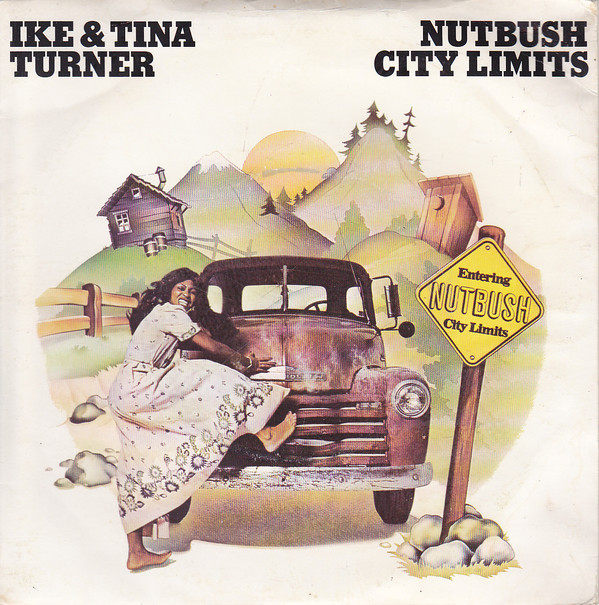
Tina Turner wrote this song named after a place near where she was born. Tina’s voice is one of a kind and she is electric. Ike and Tina only had one top ten hit and that was Proud Mary. What surprises me is they had 6 top 40 songs and 20 songs in the Billboard 100. Nutbush City Limits peaked at #22 in the Billboard 100 in 1973.
Anna Mae Bullock was born November 26, 1939 in a hospital in Brownsville, a short drive from Nutbush, Tennessee where she grew up. She would eventually marry songwriter and musician Ike Wister Turner, taking the name Tina Turner. In November 1973 the duo released “Nutbush City Limits.” Far from being a city, Nutbush is a hamlet on Highway 19, Tennessee.
From Songfacts
In this song, Turner recalls her memories of Nutbush, painting a picture of a friendly little town with a strong community. She once said that she didn’t turn any heads in Nutbush, as many women there had the goods.
Marc Bolan of the ’70s British glam rock band T-Rex played guitar on this track. Bolan was a fan of Ike’s guitar playing and in his teenage years he had had a crush on Tina Turner.
Tina Turner didn’t write many songs, but she is the sole composer on this one, which was her biggest hit as a songwriter. As her career progressed, Turner did less songwriting, putting her energies into vocal arrangements and performance. As a solo artist, she surrounded herself with top talent and developed a reputation for her strong work ethic, always getting it right in the studio. She certainly could have written more songs had she chosen to.
Turner re-recorded the song as a house number in 1991 for her compilation album Simply The Best. A single release peaked at #23 in the UK. Two years later she re-worked it again for the What’s Love Got to Do with It? soundtrack album.
Bob Seger released a live version on his 1976 album Live Bullet. Released as a single, it went to #69 in the US.
Nutbush City Limits
A church house, gin house A school house, outhouse On highway number nineteen The people keep the city clean They call it Nutbush, oh Nutbush They call it Nutbush city limits Nutbush city
Twenty-five was the speed limit Motorcycle not allowed in it You go t’the store on Friday You go to church on Sundays They call it Nutbush, oh Nutbush Said they call it Nutbush city limits Nutbush city
You go to the fields on week days And have a picnic on Labor Day You go to town on Saturday But go to church every Sunday They call it Nutbush, Nutbush They call it Nutbush city limits Nutbush city
No whiskey for sale You get drunk, no bail Salt pork and molasses Is all you get in jail They call it Nutbush, oh, Nutbush They call it Nutbush city limits Nutbush city
A lil old town on the Tennessee Quiet little old community, one-horse town You got to watch what they’re puttin’ down Old Nutbush. They call it Nutbush They call it Nutbush Oh, Nutbush. They call it Nutbush
This song was written by Smokey Robinson. The Temptations took the song to #29 in the Billboard 100 in 1966. Rare Earth took a 3-minute version of the song edited down from 21 minutes to #4 in the Billboard 100 in 1970.
The song was on their album Get Ready that peaked at #12 in 1970. When they started to record this album they ran out of material so they recorded a 21-minute version of this song to fill up space. The album wasn’t going anywhere until the edited version of the single was released and then it took off.
From Songfacts
Rare Earth recorded an unusual version of this song that stretched over 21 minutes and took up the entire second side of their first Motown album, which was issued in the fall of 1969. This version was based on Rare Earth’s live version of the song, where every member of the band would get a solo. In 1970,
Motown released a 3-minute edit as a single, which peaked at #4 in the Billboard 100 in 1970. The song also did well on R&B stations, even though some DJs refused to play it when they found out the group wasn’t black – they were one of the first white groups signed to Motown.
This was written by Smokey Robinson, who was the main songwriter for The Temptations. In the Motown stable, The Temptations were considered the premier group, and there was a lot of competition among the songwriters to have their compositions recorded by the band. When this song underperformed on the charts, Motown chief Berry Gordy gave the next Temptations single, “Ain’t Too Proud To Beg,” to Norman Whitfield, and he became their primary writer.
Get Ready
Never met a girl could make me feel the way that you do You’re alright Whenever I’m asked what makes a my dreams real I tell ’em you do You’re outta’ sight
Well twiddley dee, twiddley dum Look out baby ’cause here I come
I’m bringing you a love that’s true Get ready, get ready Start makin’ love to you Get ready, get ready Get ready, ’cause here I come Get ready, ’cause here I come
You wanna’ play hide and seek with love, let me remind you You’re alright Lovin’ you’re gonna’ miss, and the time it takes to find you You’re outta’ sight Well fee fi, fo fo fum Look out baby, ’cause here I come
I’m bringing you a love that’s true Get ready, get ready Start makin’ love to you Get ready, get ready Get ready, ’cause here I come Get ready, ’cause here I come
Baby all my freedoms should you want me to I think i’ll understand You’re alright Hope I get to you before they do, ’cause that’s how I planned it You’re outta’ sight
Well twiddley dee, twiddley dum Look out baby ’cause here I come
I’m bringing you a love that’s true Get ready, get ready Start makin’ love to you Get ready, get ready Get ready, ’cause here I come
This song still sounds fresh today. Got To Get You Into My Life was on Revolver released in 1966. It was not released as a single at the time. Any other band would have released it as a single.
In 1976 it was released as a single and peaked at #7 in the Billboard 100…not bad for a song that was 10 years old. It was released off of the horribly packaged compilation album Rock and Roll Music. Capital Records seemed to forget The Beatles represented the 60s, not the 50s that the album cover represented. They probably wanted to capitalize on the 50s revival that was going on at the time… Bad Choice.
I owned this album and Hey Jude Again for my first exposure to the Beatles.
There is a 5 piece horn section on this recording that sounds great. Paul McCartney has said the song was about pot…
“’Got To Get You Into My Life’ was one I wrote when I had first been introduced to pot. I’d been a rather straight working-class lad but when we started to get into pot it seemed to me to be quite uplifting. It didn’t seem to have too many side effects like alcohol or some of the other stuff, like pills, which I pretty much kept off. I kind of liked marijuana. I didn’t have a hard time with it and to me it was mind-expanding, literally mind-expanding.”
“So ‘Got To Get You Into My Life’ is really a song about that, it’s not to a person, it’s actually about pot. It’s saying, ‘I’m going to do this. This is not a bad idea.’ So it’s actually an ode to pot, like someone else might write an ode to chocolate or a good claret. It wouldn’t be the first time in history someone’s done it, but in my case it was the first flush of pot.”
From Songfacts
This beatific love song is actually about marijuana. Paul McCartney cleared this up in his 1998 book Many Years From Now when he explained that it was not about a particular person, but his desire to smoke pot. “I’d been a rather straight working-class lad but when we started to get into pot it seemed to me to be quite uplifting,” he said.
There are no obvious drug references in the song, so it appears to be about a guy who is blissfully in love:
Ooh, then I suddenly see you
Ooh, did I tell you I need you
Every single day of my life
A British rock group called Cliff Bennett & The Rebel Rousers released this song as a single around the same time it appeared on the The Beatles Revolver album. Bennett & The Rebel Rousers were an opening act for The Beatles on their European tour in early 1966; since there were no plans to release “Got To Get You Into My Life” as a single, Paul McCartney encouraged them to record it and produced the session.
Revolver appeared on August 5, 1966 and the Cliff Bennett & The Rebel Rousers version of this song showed up on the UK chart for the first time on August 17, rising to #6 on September 21. It ended up being the biggest hit for the group, which made #9 in 1964 with “One Way Love.”
Session musicians played trumpets and sax. It was the first time horns were used in a Beatles song.
Earth, Wind & Fire recorded a funky new version for the 1978 movie Sgt. Pepper’s Lonely Hearts Club Band. Beatles producer George Martin was in charge of the music, and the soundtrack was a success, but the movie, which starred Peter Frampton, The Bee Gees and Aerosmith, was a huge flop. Earth, Wind & Fire’s version of this hit #9 in the US.
The first group to chart with this song was Blood, Sweat & Tears, whose horn-heavy version made #62 in the summer of 1975. The Beatles version wasn’t issued as a single until 1976, when Capitol Records issued it in America backed with “Helter Skelter.”
This version went to #7 in July that year, becoming the first Beatles song to chart in the US since 1970. Later in 1976, Capitol issued “Ob-La-Di, Ob-La-Da,” which made #49.
John Lennon thought this was some of McCartney’s best work.
In the ’60s, Joe Pesci was an aspiring singer known as Joe Ritchie. He recorded a version of this that can be found on Rhino’s “Golden Throat” Series. His version merits the “Stick to Acting” award. >>
This song rarely licensed for movies or TV. The only time the Beatles rendition was used in a film is the 2015 movie Minions, where it plays under the end credits. In 2009, a version by Matthew Sweet and Susanna Hoffs appeared in the Eddie Murphy movie Imagine That, and in 2013 Kurt Hummel and Chris Colfer sang it on the “Love, Love, Love” episode of the TV series Glee.
Got To Get You Into My Life
I was alone, I took a ride I didn’t know what I would find there Another road where maybe I Could see another kind of mind there Ooh, then I suddenly see you Ooh, did I tell you I need you Every single day of my life
You didn’t run, you didn’t hide And had you gone, you knew in time We’d meet again for I had told you Ooh, you were meant to be near me Ooh, and I want you to hear me Say we’ll be together every day Got to get you into my life
What can I do, what can I be When I’m with you I want to stay there If I’m true I’ll never leave And if I do I know the way there Ooh, then I suddenly see you Ooh, did I tell you I need you Every single day of my life Got to get you into my life
I was alone, I took a ride I didn’t know what I would find there Another road where maybe I Could see another kind of mind there Ooh, then I suddenly see you Ooh, did I tell you I need you Every single day
I have always liked this song. It was forever before I knew the name. Lido Shuffle peaked at #11 in the Billboard 100, #5 Canada, #13 in the UK in 1977.
Boz Scaggs met Steve Miller in 1959 and they played in various bands together. He then traveled to London, Sweden, and San Francisco and hooked back up with Miller again and played in the Steve Miller Band for their first two albums. He signed with Columbia Records in 1972. This song was on his platinum album Silk Degrees released in 1976 which peaked at #2 in the Billboard album charts.
Boz Scaggs wrote this song with David Paich, who was also his co-writer on “Lowdown.” Scaggs said: “‘Lido’ was a song that I’d been banging around. And I kind of stole… well, I didn’t steal anything. I just took the idea of the shuffle. There was a song that Fats Domino did called ‘The Fat Man’ that had a kind of driving shuffle beat that I used to play on the piano, and I just started kind of singing along with it. Then I showed it to Paich and he helped me fill it out. It ended up being ‘Lido Shuffle.'”
From Songfacts
The song is about a drifter looking for a big score. Scaggs and Paich were both very good at crafting songs with intriguing storylines using words and phrases that don’t often show up in a lyric: “A tombstone bar,” “makin’ like a beeline…”
The name Lido is very unusual as well. From the perspective of songcraft, it’s very versatile, allowing the singer to get clear vocal sounds and follow with the “whoa-oh-oh-oh” hook. Kenny Loggins did something similar on his song “Footloose,” writing the character “Milo” into it (“Woah… Milo, come on, come on let’s go”).
The last single from Silk Degrees, this wasn’t released until about a year after the album was issued. The first single, “It’s Over,” peaked in May 1976; “Lido Shuffle” didn’t reach its chart peak until May 1977. The Silk Degrees album was a slow burner, gradually gaining momentum and selling over 5 million copies.
The song’s co-writer David Paich played keyboards on this track. Scaggs played guitar, bass was handled by David Hungate, and Jeff Porcaro played drums. Paich, Hungate and Porcaro would soon form the band Toto.
Lido Shuffle
Lido missed the boat that day he left the shack But that was all he missed And he ain’t comin’ back
At a tombstone bar, in a juke joint car he made a stop Just long enough to grab a handle off the top
Next stop Chi town, Lido put the money down, let ’em roll He said one more job ought to get it One last shot ‘fore we quit it One for the road
Lido Whoah oh oh oh He’s for the money, he’s for the show Lido’s waitin’ for the go, Lido Whoah oh oh oh oh oh He said one more job ought to get it One last shot ‘fore we quit it One more for the road
Lido will be runnin’, havin’ great big funnin’ till he got the note Sayin’ toe the line or blow it and that was all she wrote
He’ll be makin’ like a bee line, headin’ for the border line, goin’ for broke Sayin’ one more hit ought to do it This joint ain’t nothin’ to it One more for the road
Lido Whoah oh oh oh He’s for the money, he’s for the show Lido’s waitin’ for the go, Lido Whoah oh oh oh oh oh One more job ought to get it One last shot then we quit it One more for the road
Lido Woah oh oh oh He’s for the money, he’s for the show Lido’s waitin’ for the go, Lido Woah oh oh oh oh oh One more job ought to get it
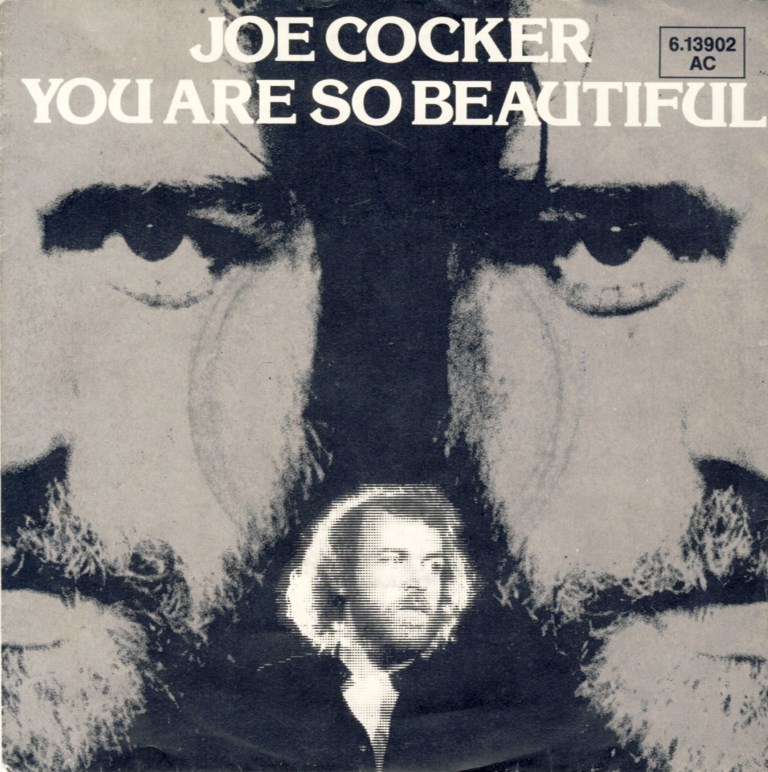
A beautiful song by Joe Cocker. It was written by Billy Preston and Bruce Fisher. Billy’s inspiration was his mom. The song was on Preston’s on his 1974 album The Kids and Me and was the B-side of his hit single “Nothing From Nothing.” Producer Jim Price created a slow arrangement for Cocker’s cover. The song was on Cocker’s album was on I Can Stand a Little Rain.
This was originally released as the B-side of “Put Out the Light,” which was the first single from the album. After a few weeks, A&M Records flipped the songs, and “You Are So Beautiful” became the A-side.
You Are So Beautiful peaked at #5 in the Billboard 100 in 1975. The song is beautiful and the slowed down tempo fits Joe Cocker’s voice perfectly. It is one of those songs that is instantly recognizable.
From Songfacts
This Billy Preston/Bruce Fisher song was first recorded by Preston
Fisher was Preston’s songwriting partner and he co-wrote both of Preston’s American chart-toppers, “Will It Go Round In Circles” and “Nothing From Nothing.”
This is one of the more romantic songs out there, but Billy Preston wrote it as a tribute to his mother, a fact that embarrassed Sam Moore, half of the soul duo Sam & Dave, who often performed the tune to attract girls. After bragging to Preston about his exploits with the song, Preston finally set him straight. “You never understood after that how stupid I felt,” Moore told BBC Radio 4 in 2010. Moore still recorded it for his 2006 solo album, Overnight Sensational, with Preston on keyboards and Eric Clapton and Zucchero on guitar.
Legend surrounding “You are So Beautiful” claims that Dennis Wilson of the Beach Boys helped Preston complete it. Wilson received no songwriting credits but he sang this song for many years at Beach Boys concerts.
This was used in the 1993 movie Carlito’s Way and in the 1981 film Modern Romance.
Cocker sang this at Billy Preston’s funeral in 2006.
This is one of the most-recognized songs in America, but it didn’t crack the chart in Joe Cocker’s native UK.
You Are So Beautiful
You are so beautiful To me You are so beautiful To me Can’t you see
You’re everything I hope for You’re everything I need You are so beautiful to me You are so beautiful to me
You are so beautiful To me Can’t you see You’re everything I hope for You’re every, everything I need You are so beautiful to me
I’ve always liked the original version of this song the best. The studio version of this song was never released as a single (no tracks on the album were), but it is one of the most remembered songs on McCartney’s first solo album McCartney. “Maybe I’m Amazed” was written in 1969 just after The Beatles broke up about Linda.
A live version was released as a single in 1977 to promote the Wings Over America live album it went to #10 in the Billboard 100 in 1977.
The Faces did this song live with Ronnie Lane singing the first few lines and Rod Stewart finishing it up.
From Songfacts
Paul McCartney wrote this song about his wife Linda, who died of breast cancer in 1998. McCartney never wavered in his love for Linda, and even made her part of his band so she could tour with him.
McCartney, an animal rights activist, appeared on The Simpsons episode 3F03, “Lisa The Vegetarian.” McCartney helps Lisa become a vegetarian and tells her that if you play this song backwards, you hear a recipe for lentil soup. Over the closing credits of that episode, if you listen carefully, you can hear the backwards message. As an extra feature on The Simpsons DVD, you can hear McCartney read the recipe and say, “There you have it Simpsons lovers, oh and by the way, I’m alive.”
The lentil soup recipe Paul speaks backwards is: – one medium onion, chopped – two tablespoons of vegetable oil – one clove of garlic, crushed – one cup of carrots, chopped – two sticks of celery, chopped – half a cup of lentils – one bay leaf – one tablespoon of freshly chopped parsley – salt and freshly ground pepper to taste – two and a quarter cups of vegetable stock or water
With the exception of John Lennon, each Beatle has been on at least one episode of The Simpsons. George Harrison was on the episode “The B- Sharps” and Ringo was on the “The Letter.”
This was the standout track from McCartney’s first solo album. Unlike George Harrison, who had 3-discs worth great songs (mostly rejected by The Beatles) for his first solo effort, Paul had little in the way of leftovers to work with. He worked up the album in his kitchen, and played all of the instruments himself. The only other performer on the album was his wife Linda, who lent backing vocals (she also took the cover photo).
Critics derided the album as an unfinished work, usually citing “Maybe I’m Amazed” as the exception. The review in Melody Maker called the other tracks “sheer banality.” McCartney was annoyed that he wrote a rebuttal to the paper defending the album.
Artists who covered this song include The Faces, Petula Clark, Elkie Brooks, Black Oak Arkansas, Jem, Joe Cocker, and Gov’t Mule. The cover by Jem was used in the season finale of the first season in the show The O.C.
Actor Jamie Dornan, who plays Christian Grey in the Fifty Shades movies, recorded his take of the song for the soundtrack of Fifty Shades Freed. The film involves an impromptu piano and singing performance of “Maybe I’m Amazed” from Christian, which surprises his lover Anastasia, sister, Mia, and brother, Elliot.
Maybe I’m Amazed
Maybe I’m amazed at the way you love me all the time Maybe I’m afraid of the way I love you Maybe I’m amazed at the the way you pulled me out of time And hung me on a line Maybe I’m amazed at the way I really need you
Maybe I’m a man and maybe I’m a lonely man Who’s in the middle of something That he doesn’t really understand
Maybe I’m a man and maybe you’re the only woman Who could ever help me Baby won’t you help me understand
Maybe I’m a man and maybe I’m a lonely man Who’s in the middle of something That he doesn’t really understand
Maybe I’m a man and maybe you’re the only woman Who could ever help me Baby won’t you help me understand
Maybe I’m amazed at the way you’re with me all the time Maybe I’m afraid of the way I leave you Maybe I’m amazed at the way you help me sing my song Right me when I’m wrong Maybe I’m amazed at the way I really need you
I thought I would do an album track today. If someone asked me what is your favorite Van Morrison song…I might say this one. It’s an epic piece of work that I get lost in. Van’s imagery in this song reminds me of a few of Dylan’s songs. Everything from Edith Piaf to Hank Williams to Safeway Supermarkets gets a nod.
The album of the same name was released in 1972 and it is not a song on it that I don’t like. From the soulful Jackie Wilson Said (I’m in Heaven When You Smile) to another epic song that still blows me away, Almost Independence Day.
The album was the follow up to Tupelo Honey released in 1971. Van used some of the same musicians on both albums and the same producer, Ted Templeman. This song was not released as a single. The album peaked at #15 in the Billboard 100 in 1972.
What’s hard to believe is this album was his highest charting album until “Keep It Simple” in 2008…after that he had two more top ten albums.
I saw this interview that Van did with Rolling Stone talking about this song right before he recorded it.
RS: Are you sometimes surprised by some of the things that come out when you’re writing? Really. There are times when I’m mystified. I look at some of the stuff that comes out, y’know. And like, there it is and it feels right, but I can’t say for sure what it means. Like take…take “Crazy Face.” Y’know, where does that come from?
RS: There’s unquestionably a strong mystical and visionary quality to your music. Yeah, it’s there. That’s what it is, I guess. It’s strange because I don’t see myself as a mystical type person. But then every now and then these weird experiences happen. Like I’ll be lying down on the bed with my eyes closed and all of a sudden I get the feeling that I’m floating near the ceiling looking down. I couldn’t say whether that’s supposed to be astral projection but it’s pretty freaky when it happens.
RS: Have you ever had any similar experiences that seem related to your writing?
I had one just recently. I’d been working on this song about the scene going down in Belfast. And I wasn’t sure what I was writing but anyway the central image seemed to be this church called St. Dominic’s where people were gathering to pray or hear a mass for peace in Northern Ireland. Anyway, a few weeks ago I was in Reno for a gig at the University of Nevada. And while we were having dinner I picked up the newspaper and just opened it to a page and there in front of me was an announcement about a mass for peace in Belfast to be said the next day at St. Dominic’s church in San Francisco. Totally blew me out. Like I’d never even heard of a St. Dominic’s church.
RS: How did the song turn out?
Great. In fact I’m gonna be recording it in a couple of days.
RS: What did you end up titling it?
“St. Dominic’s Preview.” You know something? I haven’t a clue to what it means.
Saint Dominic’s Preview
Shammy cleaning all the windows
Singing songs about Edith Piaf’s soul
And I hear blue strains of no regredior
Across the street from Cathedral Notre Dame
Meanwhile back in San Francisco
We’re trying hard to make this whole thing blend
As we sit upon this jagged
Storey block, with you my friend
And it’s a long way to Buffalo
It’s a long way to Belfast city too
And I’m hoping the choice won’t blow the hoist
‘Cause this town, they bit off more than they can chew.
As we gaze out on, as we gaze out on
As we gaze out on, as we gaze out on
Saint Dominic’s Preview
Saint Dominic’s Preview
Saint Dominic’s Preview
All the orange boxes are scattered
Against the Safeway’s supermarket in the rain
And everybody feels so determined
Not to feel anyone else’s pain
No one’s making no commitments
To anybody but themselves
Talkin’ behind closed doorways
Tryin’ to get outside, get outside of empty shells
And for every cross cuttin’ country corner, country corner
For every Hank Williams railroad train that cried
And all the chains, badges, flags and emblems
And every strain on brain and every eye
As we gaze out on, as we gaze out on
As we gaze out on, as we gaze out on
Saint Dominic’s Preview
Saint Dominic’s Preview
Saint Dominic’s Preview
And the restaurant tables are completely covered
The record company has paid out for the wine
You got everything in the world you ever wanted
Right about now your face should wear a smile
That’s the way it all should happen
When you’re in, when you’re in the state you’re in
You’ve got your pen and notebook ready
I think it’s about time, time for us to begin
And meanwhile, we’re over in a 52nd Street apartment
Socializing with the wino few
Just to be hip and get wet with the jet set
But they’re flying too high to see my point of view
As we gaze out on, as we gaze out on
As we gaze out on, as we gaze out on
Saint Dominic’s Preview
Saint Dominic’s Preview
Saint Dominic’s Preview
See them freedom marching
Out on the street, freedom marching
Saint Dominic’s Preview
Out in the street
Look at the man
Turn around
Come back, come back
Turn around
Look at the man
Says hold on
Saint Dominic’s Preview
Saint Dominic’s Preview
Says hold me in
Saint Dominic’s Preview
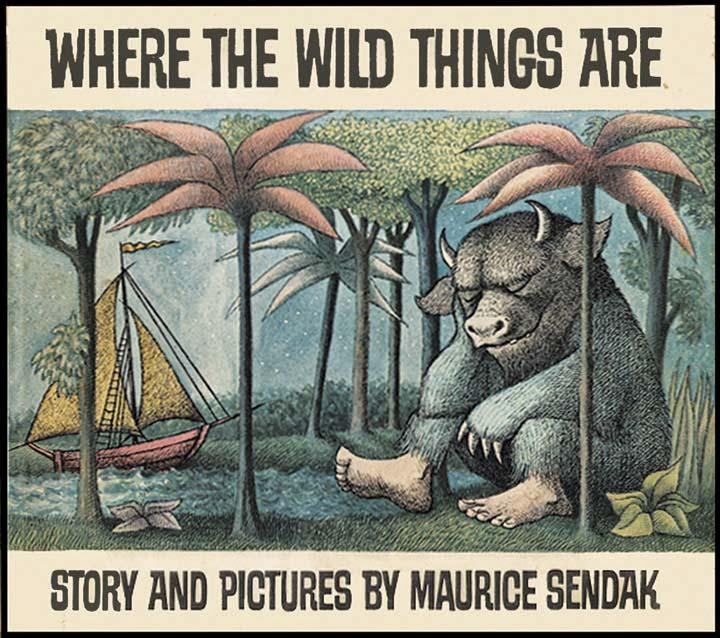
I loved this book as a kid. When I see it I feel like I’m 7 again. The book came out in 1963. I did know some kids that the book really scared but I thought it was great. As a kid, it was entertaining and enlightening. The other reason I liked it? The leading character’s first name. When I grew up, “Max” was not a common name. If Max was in trouble…the entire school knew what Max they were talking about since I was the only one. It was nice sharing my name with a little boy who could tame monsters.
An animated film was made in 1975 and a feature-length movie in 2009. My son Bailey and I saw it and we enjoyed it together but he knew the book because he enjoyed it as well.
Where The Wild Things Are was written by Maurice Sendak about a boy named Max who “makes mischief” in his house and is sent to bed without supper all while wearing a wolf suit. His room is then transformed into a magic forest and Max sets off in his very own boat to the Land of the Wild Things.
Once there he tames the monsters by staring into their yellow eyes without blinking. Knowing they have met their master, they acclaim Max King of all Wild Things and celebrate their wildness together. When Max decides to return to where someone loves him best of all, the wild things try all their wiles to persuade him to stay, but he sails back into the warmth of his own room and finds supper waiting.
When the book came out some were not happy. Many psychologists thought that the book would be very traumatizing for young children. Sendak has said that the book was banned by libraries for a couple of years and then it started to be accepted and took off.
The most aggressive love song I’ve ever heard. The song did not chart but it was on the classic album Who’s Next. There is not a weak song on the album. Bargain has some of Moon’s best drumming and a strong performance from Daltrey. Townshend has said that the song was influenced by Meher Baba and the subject of the song is God.
Townshend’s use of the ARP synthesizer on Who’s Next was groundbreaking. He didn’t just add texture with it but the ARP became part of the structure of the songs. This was not like today’s synthesizer where you just took it out of the box. It had to be programmed and connected together…and not many people knew how to do it. He took a risk using it because of technology in general always moving ahead, Who’s Next could have sounded dated in a few years afterward but it still sounds fresh and interesting today…unlike some 1980s synth music.
Pete Townshend’s lead guitar was played on a vintage Gretsch, a gift from Joe Walsh, who had just formed Barnstorm that same year and would later join the Eagles.
From Songfacts
Pete Townshend wrote this as an ode to Meher Baba, who was his spiritual guru. Meher Baba was from India, where he worked with the poor and served as spiritual adviser to Mahatma Gandhi. He developed a worldwide following by the ’60s, and died in 1969 at age 75. Townshend believed in his message of enlightenment, which was a big influence on Who songs like “Baba O’Riley” and “See Me, Feel Me.”
The song is about losing all your material goods for spiritual enlightenment, thus being a “bargain.”
Roger Daltrey sings most of this, but Townshend sings the part that starts, “I sit looking ’round, I look at my face in the mirror…”
The first line of the song, “I’d gladly lose me to find you” is from one of the teachings of Meher Baba.
Bargain
I’d gladly lose me to find you I’d gladly give up all I had To find you I’d suffer anything and be glad
I’d pay any price just to get you I’d work all my life and I will To win you I’d stand naked, stoned and stabbed
I’d call that a bargain The best I ever had The best I ever had
I’d gladly lose me to find you I’d gladly give up all I got To catch you I’m gonna run and never stop
I’d pay any price just to win you Surrender my good life for bad To find you I’m gonna drown an unsung man
I’d call that a bargain The best I ever had The best I ever had
I sit looking ’round I look at my face in the mirror I know I’m worth nothing without you And like one and one don’t make two One and one make one And I’m looking for that free ride to me I’m looking for you
I’d gladly lose me to find you I’d gladly give up all I got To catch you I’m gonna run and never stop
I’d pay any price just to win you Surrender my good life for bad To find you I’m gonna drown an unsung man
I’d call that a bargain The best I ever had The best I ever had
Saturday night we had some guests over and we all played Yahtzee. It was the first time I’d played it since the 1980s at least. I had a good time and looked up the history of the game.
In 1954 a wealthy anonymous Canadian couple, who called it The Yacht Game invented the game to play aboard their yacht. They would invite friends and teach them. In 1956 they went to toy maker Edwin S. Lowe to make some games for their friends as Christmas gifts. Edwin liked the game so much that he wanted to buy the rights to it. The couple sold the rights for the amount of making them a 1000 games.
When Edwin released it on the market it did not do well in it’s first year. The game could not be explained easily in an ad. It had many nuances and interesting things about it and they can only be understood if the game was actually played.
Finally, Edwin tried a different approach. He started to have Yahtzee parties hoping to spread the news about the game by word of mouth. That started to work and Yahtzee got extremely popular. During Lowe’s ownership alone, over forty million copies of the game were sold in the United States of America as well as around the globe
In 1973 Milton Bradley Company bought the E.S. Lowe Company and in 1984 Hasbro, Inc. acquires the Milton Bradley Company and the game.
The origins of the game came from the Puerto Rican game Generala and the English games of Poker Dice and Cheerio. Another game, Yap, shows close similarities to Yahtzee.
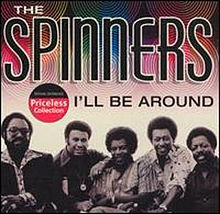
In 1970, when Motown was riding high, it let the Spinners go. And that was after the band was coming off its biggest hit for the label, the Stevie Wonder-penned and -produced “It’s a Shame.”
The Spinners soon signed with Atlantic Records and were paired with producer Thom Bell, one of the founders of the early and mid-’70s Philadelphia sound. The combination reeled off hits “I’ll Be Around,” “One of a Kind (Love Affair),” “Could It Be I’m Falling in Love,” “The Rubberband Man.”
This song peaked at #3 in the Billboard 100 and #6 in Canada in 1972.
From Songfacts
This song of devotion is heartbreaking on a deeper level. The lyrics, written by the aptly named Phil Hurtt, find our hero unable to move on from a relationship that has ended. There is an air of desperation as he offers himself up to his lost love unconditionally. He might be bowing out gracefully, but he can’t leave her behind.
It was The Spinners’ producer Thom Bell who came up with the music and the title for the song. In our interview with Phil Hurtt, he explained: “When Thommy said ‘I’ll be around,’ I started thinking about a scenario and a story. Thommy was telling me, ‘Whenever you call me, I’ll be there.’ That’s one of the things he did give me. And I’m thinking, okay, great. So the guy broke up and he wants her back, whenever you call me I’ll be there, whenever you need me, I’ll be there. So, okay, great. And then the next thing I know, this is our fork in the road. And that’s the way it happens.
I’m just so proud and happy and blessed that that song has crossed over into that company of being referred to as ‘classic.’ You hear a great melody and a great idea for a song, and then all you’ve got to do is write the story. I mean, wow, what an opportunity.”
Phil Hurtt assured us he was not going through any personal trauma when he wrote the lyric. “That’s what part of the job requires you to do,” he said. “I was an early reader, so I read a lot of stories from the age of 3. I’m always on the edge of a new story, so if I hear a rhythm, sometimes I can hear lyrics.”
The Spinners were signed to Motown Records in 1963, but were never one of the top acts at the label. In 1972, they moved to Atlantic Records, and recorded some successful sessions with producer Jimmy Roach.
Atlantic recorded some of their top R&B acts, including Archie Bell & The Drells and Dusty Springfield, at Sigma Sound Studios in Philadelphia. A top producer at Sigma was Thom Bell, so Atlantic sent him a list of their artists to see if there was one he would like to work with. The very last name on the list was The Spinners, which Bell had been listening to since the early ’60s. He took them on and wrote the music to “I’ll Be Around” for their first session at Sigma Sound. Bell needed lyrics for the song, but his usual writing partner, Linda Creed, was out of town. He tracked down a songwriter he had gone to high school with named Phil Hurtt, who agreed to compose the words, with instructions by Bell to fit them exactly to the melody. Hurtt delivered, and Bell recorded the song with the group for their first single. When Atlantic issued the single, “I’ll Be Around” was the B-side of another song they cut with Bell, “How Could I Let You Get Away.” When disc jockeys flipped it and played “I’ll Be Around,” Atlantic made it the A-side on future pressings, and The Spinners were off and running at their new label. The song was a #1 R&B hit, and led to many more hits, including “Could It Be I’m Falling in Love” and “Then Came You.”
The musicians on this track were the Sigma Sound Studios house band, MFSB, who scored a #1 hit with the Soul Train theme song. Some of the musicians on this track were Norman Harris on guitar, Ronnie Baker on bass, and Earl Young on drums. According to producer Thom Bell, the musicians laughed at the arrangement because it was so simple. He says they had the track recorded in 40 minutes.
The lead vocals on this one were by Bobby Smith, who was an original member of the group. Philippé Wynne, who sang lead on some of The Spinners hits, was with the group at the time, but he did tenor backing vocals on this track.
Cover versions made the US Hot 100 in the each of the three decades after The Spinners first charted with the song:
In 1985, the Todd Rundgren-produced group What Is This? took the song to #62.
In 1995, a rap version by Rappin’ 4-Tay with The Spinners hit #39.
In 2005, Hall & Oates’ cover went to #97.
The song has also been liberally sampled. Examples included “Any Emcee” by Nine, “You Made Your Choice” by Papoose, and “Tru Homies” by TRU.
I’ll Be Around
This, is our fork in the road Love’s last episode There’s nowhere to go, oh no
You made your choice, now it’s up to me To bow out gracefully Though you hold the key, but baby
Whenever you call me, I’ll be there Whenever you want me, I’ll be there Whenever you need me, I’ll be there I’ll be around
I, knew just what to say Now I found out today That all the words had slipped away, but I know
There’s always a chance A tiny spark remains, yeah And sparks turn into flames And love can burn once again, but I know you know
Whenever you call me, I’ll be there Whenever you want me, I’ll be there Whenever you need me, I’ll be there I’ll be around yeah
Whenever you call me, I’ll be there Whenever you want me, I’ll be there Even if I have to call, I’ll be there I’ll be around
Just call me at home, I’ll be there I’ll never leave you alone, I’ll be there Just call out your name you know I know you know I’ll be around
Whenever you call me, I’ll be there Whenever you want me, I’ll be there Whenever you need me, I’ll be there I’ll be around
ABBA dominated the charts in the seventies. Love them or hate them, Bjorn Ulvaeus and Benny Andersson could write catchy and well-produced pop songs. This song charted at #3 in the Billboard 100 and #1 in the UK in 1978.
Agnetha Fältskog and Anni-Frid Lyngstad sang lead on most of the songs. They had a total of 20 songs in the top 100, 4 top ten songs and 1 number one song which was Dancing Queen. They have sold over 375 million singles and albums as of 2010.
Bjorn Ulvaeus enjoyed jogging and as he ran he sang a “tck-a-ch”-style rhythm to himself. This evolved into the line “Take a Chance on Me,” around which he wrote the rest of the words.
From Songfacts
Ulvaeus in 1000 UK #1 Hits by Jon Kutner and Spencer Leigh: “I remember that Benny didn’t like the line, ‘We could go dancing, we could go walking,’ but in the end we went with it.”
This was also #1 in Austria, Belgium, Ireland and Mexico.
Although unlike “Dancing Queen” this didn’t top the US chart, it did sell more than the chart topper.
The working title was “Billy Boy.”
In 1992 Erasure recorded Abba-esque, an EP made up of 4 ABBA songs. It became their first UK #1 and kick-started an Abba revival. One of the songs on it was “Take A Chance On Me,” which they did Techno style spliced up with a Ragga section. Andy Bell in 1000 UK #1 Hits recalls: “The ABBA EP was commercial and fun, but a throwaway project for us to do because it was only 4 songs. And because they were written by the same writers it was easy for us to do. The ABBA stuff was originally going to be an album project, but then we were glad we didn’t do that, because we were pretty swamped by ABBA anyway.” >>
John McCain is a huge ABBA fan and after being elected as the Republican candidate for the 2008 presidential elections, he vowed to have ABBA songs played “in elevators all over the White House” if elected. McCain apparently pumps himself up by listening to this song at full volume before making a big speech and he contacted the Swedish group to get permission to use this number as his official campaign anthem. However it appears they priced him out of the market, as McCain was forced to admit to reporters: “It gets expensive in a big hurry.” It’s possible that ABBA just didn’t want to be associated with the Republican Party.
This song appeared, among others, in the Mamma Mia! soundtrack and musical starring Pierce Brosnan, Meryl Streep and Colin Firth. The song is performed in the movie by Julie Walters and Stellan Skargaard.
Take A Chance On Me
If you change your mind, I’m the first in line Honey I’m still free Take a chance on me If you need me, let me know, gonna be around If you’ve got no place to go, if you’re feeling down If you’re all alone when the pretty birds have flown Honey I’m still free Take a chance on me Gonna do my very best and it ain’t no lie If you put me to the test, if you let me try
Take a chance on me (That’s all I ask of you honey) Take a chance on me
We can go dancing, we can go walking, as long as we’re together Listen to some music, maybe just talking, get to know you better ‘Cos you know I’ve got So much that I wanna do, when I dream I’m alone with you It’s magic You want me to leave it there, afraid of a love affair But I think you know That I can’t let go
If you change your mind, I’m the first in line Honey I’m still free Take a chance on me If you need me, let me know, gonna be around If you’ve got no place to go, if you’re feeling down If you’re all alone when the pretty birds have flown Honey I’m still free Take a chance on me Gonna do my very best and it ain’t no lie If you put me to the test, if you let me try
Take a chance on me (Come on, give me a break will you?) Take a chance on me
Oh you can take your time baby, I’m in no hurry, know I’m gonna get you You don’t wanna hurt me, baby don’t worry, I ain’t gonna let you Let me tell you now My love is strong enough to last when things are rough It’s magic You say that I waste my time but I can’t get you off my mind No I can’t let go ‘Cos I love you so
If you change your mind, I’m the first in line Honey I’m still free Take a chance on me If you need me, let me know, gonna be around If you’ve got no place to go, if you’re feeling down If you’re all alone when the pretty birds have flown Honey I’m still free Take a chance on me Gonna do my very best, baby can’t you see Gotta put me to the test, take a chance on me (Take a chance, take a chance, take a chance on me)
Ba ba ba ba baa, ba ba ba ba baa Honey I’m still free Take a chance on me Gonna do my very best, baby can’t you see Gotta put me to the test, take a chance on me (Take a chance, take a chance, take a chance on me)
Ba ba ba ba baa, ba ba ba ba baa ba-ba Honey I’m still free Take a chance on me




:format(jpeg):mode_rgb():quality(40)/discogs-images/R-1579461-1357490664-2921.jpeg.jpg)






 PowerPop... An Eclectic Collection of Pop Culture