Max Picks …songs from 1987

1987

I listened to the radio in 1987 a little more than in the previous 3 years or so. The albums that really got my attention were George Harrison’s Cloud Nine and the Replacements album that’s one of my favorites of the 1980s…Please To Meet Me… it was recorded in the Memphis studio where Big Star recorded. It was also the year of the Grateful Dead…a huge top-ten album and single.

Grateful Dead – Touch Of Grey

I knew of the Grateful Dead from an older brother of a friend I had. I had heard of them as a kid in the seventies before I actually heard them. I knew some of their songs and the Garcia song Sugaree. I always pictured this heavy tough metal band with a name like that. Whenever they toured they would draw a massive amount of fans despite having no top ten hits…until this song. After this song, they drew a larger amount of attention and fans.

When this came out in the 80s, it was like Deadmania. With MTV  suddenly everyone was talking about them. While big success is great it did cause some trouble at some of their concerts. Chilled-out Deadheads followed them around the country for decades. Some financed their travels by hawking food, T-shirts, and handicrafts…not to mention pot and LSD usually peacefully. Through the years more would add to the fold…some described it as a giant community more than a regular concert. In 1987 they suddenly had an influx of new young fans (Touchheads) and some didn’t know what the band was about. Along with them came some gate crashers and riots.

With the backing of the band, older Deadheads handed out flyers on how to act, trying to mellow out the newer crowd.

Robert Hunter started writing the lyrics to this song in 1980, and the Grateful Dead first performed it in 1982. They played it sporadically over the next few years and finally recorded it for their 1987 album In The Dark.

George Harrison – We We Was Fab

I loved this song when I heard it. To hear George sing about his time with The Beatles surprised me. Of all the Beatles George seemed to have the most resentment and some of it was understandable. A few years after this he would join the remaining Beatles and start on The Beatles Anthology. George wanted Paul to be in this video but Paul was tied up at the time. He asked George to put a left-handed bass player in the video with a walrus mask and tell everyone it was him.

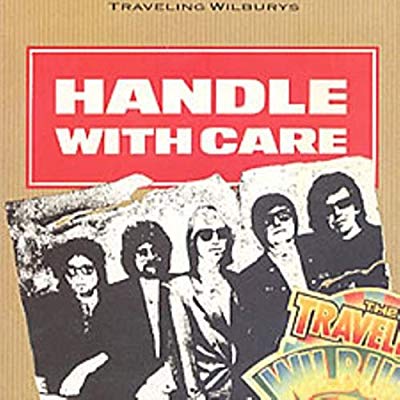
George co-wrote the song with Jeff Lynne, who also co-produced the album that shortly pre-dates the two of them forming The Traveling Wilburys. ‘When We Was Fab’ is a musical nod to the psychedelic sound that the Beatles had made their own. George used a sitar, string quartet, and backward tape effects.

He also got some help from Ringo. Starr played drums on this track and a few others on the album. Harrison says that when he started writing the song, he had Ringo’s drumming in mind for the intro and the overall tempo

Replacements – Alex Chilton

The Replacement’s tribute song about Big Star and Box Tops lead singer, Alex Chilton. The song was off the album Please To Meet Me. One of my favorite bands of all time singing about a singer in one of my favorite bands. This would be my number 1 song of 1987.

The Replacements recorded Pleased To Meet Me in Memphis at Ardent Studios, the same studio as Big Star. The man behind the board was Jim Dickinson, who produced the storied third   Big Star album. Alex came into the studio a few times while the Replacements were working on the record (and laid down a guitar fill for “Can’t Hardly Wait”), but the band avoided the awkwardness of playing “Alex Chilton” whenever Chilton was around.

R.E.M. – It’s The End of the World as We Know It (And I Feel Fine)

This song came off of the great Document album. With some REM songs, it takes a few listens for me but this one… the first time was enough to know I really liked it. It was recorded in the Sound Emporium in Nashville, Tennessee. The song peaked at #69 in 1988. The song was inspired by  Subterranean Homesick Blues by Bob Dylan and you can tell.

Michael Stipe said: “The words come from everywhere. I’m extremely aware of everything around me, whether I am in a sleeping state, awake, dream-state or just in day to day life. There’s a part in ‘It’s The End Of The World As We Know It’ that came from a dream where I was at Lester Bangs’ birthday party and I was the only person there whose initials weren’t L.B. So there was Lenny Bruce, Leonid Brezhnev, Leonard Bernstein… So that ended up in the song along with a lot of stuff I’d seen when I was flipping TV channels. It’s a collection of streams of consciousness.”   

Los Lobos – La Bamba

This band had been around a long time before this song came out. They formed in 1973 and released their first album in 1978. They opened for bands such as The Clash and The Blasters so they got exposed to a lot of different audiences.

They recorded some Ritchie Valens covers for the movie La Bamba and their cover of the title track made them known internationally. The song was number 1 almost everywhere including the US, Canada, the UK, and New Zealand.

Looking Glass – Brandy (You’re A Fine Girl)

It’s good to be back…I was under the weather yesterday and not a bunch better today but better all the same.

This is a song that automatically takes me back to being a kid. When it was included on the Guardians of the Galaxy 2 soundtrack…it was exposed to many kids and teens which now lives on for another generation. I rarely cover AM Gold songs because early on I covered so many of them…and this one is worth it.

No one other than Clive Davis signed this band to a contract. He knew they had hit on their hands! Well…yes he did but he didn’t think this song was it though. This song was originally the B-side to a song called “Don’t It Make You Feel Good.”It’s a good song but not Brandy. Harv Moore, a disc jockey in Washington DC, flipped the record and played “Brandy” instead. It became popular in the DC area, and quickly spread nationwide.

This song was released in 1972 and it was a big hit. It still is being played today on classic radio and in any supermarket near you. It peaked at #1 in the Billboard 100, #1 in Canada, and #51 in the UK.

It was written by the lead singer Elliot Lurie. Looking Glass didn’t hang around too much longer… after a minor hit the next year with “Jimmy Loves Mary-Anne,” Lurie left the band to pursue a solo career.

There is another reason why Looking Glass didn’t do more. They were originally a hard rock band from New Jersey until the success of “Brandy,” which pushed them (reluctantly) into a softer direction. Apparently, the band was never entirely pleased with the song’s success or their new direction, and they never really altered their heavier stage act to accommodate what their new listeners were used to hearing from them on the radio.

I’m sure that Lurie doesn’t mind the softness now when the song is included in movies and soundtracks.

Elliot Lurie: Brandy is a made-up individual,” he said. “The name was derived from a high school girlfriend I had whose name was Randy with an ‘R.’ Usually when I write — I still do it the same way I did back then — I strum some guitar and kind of sing along with the first things that come to mind. Her name came up. Then I started writing the rest of the song, and it was about a barmaid. I I thought Randy was an unusual name for a girl, it could go either way, and (the song was about) a barmaid, so I changed it to Brandy.”

Brandy (You’re A Fine Girl)

There’s a port on a western bay
And it serves a hundred ships a day
Lonely sailors pass the time away
And talk about their homes

And there’s a girl in this harbor town
And she works layin’ whiskey down
They say, Brandy, fetch another round
She serves them whiskey and wine

The sailors say, “Brandy, you’re a fine girl” (you’re a fine girl)
“What a good wife you would be” (such a fine girl)
“Yeah, your eyes could steal a sailor from the sea”

Brandy wears a braided chain
Made of finest silver from the North of Spain
A locket that bears the name
Of the man that Brandy loved

He came on a summer’s day
Bringin’ gifts from far away
But he made it clear he couldn’t stay
No harbor was his home

The sailor said, “Brandy, you’re a fine girl” (you’re a fine girl)
“What a good wife you would be” (such a fine girl)
“But my life, my love and my lady is the sea”

Yeah, Brandy used to watch his eyes
When he told his sailor story
She could feel the ocean fall and rise
She saw its ragin’ glory
But he had always told the truth, Lord, he was an honest man
And Brandy does her best to understand

At night when the bars close down
Brandy walks through a silent town
And loves a man who’s not around
She still can hear him say

She hears him say, “Brandy, you’re a fine girl” (you’re a fine girl)
“What a good wife you would be” (such a fine girl)
“But my life, my lover, my lady is the sea”

It is, it is
Yes, it is, yes it is

He said, “Brandy, you’re a fine girl” (you’re a fine girl)
“What a good wife you would be” (such a fine girl)
“But my life, my lover, my lady is the sea”

Derek and The Dominos – Bell Bottom Blues

I like this song just as much as Layla. It was written by Eric Clapton and Bobby Whitlock. This song and “I Looked Away” are two of my favorites on the album. Bell Bottom Blues peaked at only #91 on the Billboard 100 in 1971. Recently, Eric did a great thing for someone with this album.

Derek and The Dominos formed after working on George Harrison’s album All Things Must Pass. After that, they played a lot of different small clubs all over Europe. They made the album, Layla and Other Assorted Love Songs in Criteria Studios in Miami, Florida. It’s there where Clapton met Duane Allman and a little later invited him to join them. Duane ended up turning Eric down because he believed in the Allman Brothers and he built them from the ground up. Eric was one of his guitar guys so it had to be a hard choice for him.

Clapton first heard about Allman when listening to Wilson Pickett’s version of Hey Jude for the first time and heard his guitar playing at the end of the song. He called up either Ahmet Ertegun or Tom Dowd and asked who was that guitar player? Eric has said that he has never heard better rock guitar playing on an R&B record.

In 1970, Eric Clapton was experiencing emotional anguish over George Harrison’s wife Pattie Boyd.  He recounts writing the song for Boyd after she asked him to get her a pair of bell-bottom jeans while he visited the US.

Derek and the Dominos

Clapton repackaged this album and the first thing he did was to ask his attorneys…what is Bobby Whitlock going to get out of this? Bobby played keyboards and wrote a lot of the songs with Eric. The attorneys told Eric he would get nothing because he sold all of his rights. He was down at one time and had to sell everything. Eric and his attorneys went to the publishing company and bought back all of Bobby’s rights and handed it over to him without Whitlock even knowing.

Bobby Whitlock: Well, unbeknownst to me, Eric and Michael took their attorneys in to the respective Warner/Chappel and Universal and all the other companies and bought back my rights to my income and restored them and gave them back to me. Out of the blue.

So all of my royalties have come back. And now it’s even more so, because it hasn’t been a month-and-a-half ago that I wrote him to explain how ‘Bell Bottom Blues’ came about, and I sent it to Eric and to Michael. Someone had come online and says something about, ‘Is this true that ‘Bell Bottom Blues’ was written about a pair of trousers?’

And I said, Yeah, well, it was that and this girl in France that Eric was seeing for a little while while we were there. I’d forgotten about Pattie [Boyd – subject of ‘Layla’] asking him about those pants. But anyway, before I would answer this and put it out publicly online, I decided, Well, I probably ought to write Eric.

Bobby Whitlock: “Eric met this girl, she was like a Persian princess or something, and she wore bell bottoms. She was all hung up on him – he gave her a slide that Duane (Allman) had given him and he wrapped it in leather and she wore it around her neck. She didn’t speak a word of English and they had to date through an interpreter. That relationship did not last but a week. He started the song over there, then when we got back to England, we finished it up in his TV room in Hurtwood Edge.”

Derek and the Dominos - Bell Bottom Blues indeed

Bell Bottom Blues Indeed!

Bell Bottom Blues

Bell bottom blues, you made me cry
I don’t want to lose this feeling
And if I could choose a place to die
It would be in your arms

Do you want to see me crawl across the floor to you?
Do you want to hear me beg you to take me back?
I’d gladly do it because
I don’t want to fade away
Give me one more day, please
I don’t want to fade away
In your heart I want to stay

It’s all wrong, but it’s all right
The way that you treat me baby
Once I was strong but I lost the fight
You won’t find a better loser

Do you want to see me crawl across the floor to you?
Do you want to hear me beg you to take me back?
I’d gladly do it because
I don’t want to fade away
Give me one more day, please
I don’t want to fade away
In your heart I want to stay

Do you want to see me crawl across the floor to you?
Do you want to hear me beg you to take me back?
I’d gladly do it ’cause
I don’t want to fade away
Give me one more day, please
I don’t want to fade away
In your heart I want to stay

Bell bottom blues, don’t say goodbye
I’m sure we’re gonna meet again
And if we do, don’t you be surprised
If you find me with another lover

Do you want to see me crawl across the floor to you?
Do you want to hear me beg you to take me back?
I’d gladly do it ’cause
I don’t want to fade away
Give me one more day, please
I don’t want to fade away
In your heart I want to stay

I don’t want to fade away
Give me one more day please
I don’t want to fade away
In your heart I want to stay

I don’t want to fade away
Give me one more day please
I don’t want to fade away
In your heart I want to stay

Max Picks …songs from 1986

1986

Crowded House – Something So Strong

It was love at first listen to this song. They had another hit that was larger in Don’t Dream It’s Over but this song is a perfect pop song. The lyric “bring life to frozen ground” still stands out to me and I cannot hear this song enough. As far as pop songs go it’s hard to beat this New Zealand band.

The song dates back to 1984 when Neil Finn did a demo of the song. He was still in Split Enz at that time. They split in 1985 so Finn and drummer Paul Hester formed Crowded House.

The song was written by Neil Finn and  Mitchell Froom.

R.E.M. – Fall On Me

A musician friend of mine invited me over to listen to this album. We must have played it 5 times through by nighttime.

Bill Berry (drummer) said the song was specifically about Acid Rain, which occurs when the burning of fossil fuels releases sulfur dioxide and nitrogen oxides into the atmosphere, causing rain to be acidic and threatening the environment.

Michael Stipe said about the song: “I was reading an article in Boston when I was on tour with the Golden Palominos, and Chris Stamey showed me this article about this guy that did an experiment from the Leaning Tower of Pisa, whereby he dropped a pound of feathers and a pound of iron to prove that there was… a difference in the… density? What did he prove? I don’t even know. They fall just as fast.”

Steve Earle – Someday

Ever since I heard him in the mid to late 80s I liked Steve Earle. He opened up for Bob Dylan in 1988 and he was fantastic. His music was between country, folk, and rock. You can’t really put Earle in a box…and you shouldn’t. I’ve read reviewers compare him to Randy Newman, Bruce Springsteen, and Waylon Jennings in the same review. That is a great span of artists.

The song is about escaping the town you are living in. I knew a lot of people who wanted to escape the small town I grew up in. The song reminds me a little of The River by Bruce Springsteen in content. It’s a song that many people will be able to relate to.

The song was from his debut album Guitar Town. I remember he was being played on country radio and WKDF…Nashville’s number-one rock station back in the 80s. The album is ranked 489 on Rolling Stone Magazine’s top 500 albums. They called it a rocker’s version of country.

Georgia Satellites – Keep Your Hands To Yourself

A friend of mine who played guitar in high school got a bootleg of this song a year before it was officially released. His band was playing in the gym before we went on and they played this song. I thought they wrote it until I asked him. It’s a great-sounding song live.

It was an instant bar band song classic. It was a song you didn’t really have to rehearse…just one listen would do it. We learned it in one take… and again it was one of only a handful of times that we played a song in the top ten at the time. This is the kind of music I missed in the mainstream during the mid to late eighties.

This was the only big hit for the Georgia Satellites, although lead singer Dan Baird had a hit as a solo artist in 1992 with “I Love You Period.” They didn’t have another big hit but they did have some songs that got airplay on radio and MTV like Battleship Chains and a cover of Hippy Shake. This was one of the few straight-out rock and roll songs to hit the charts at this time.

Dwight Yoakam – Guitars, Cadillacs

Buck Owens made the Bakersville sound popular and it’s one of my favorite types of country. Yoakam and Steve Earle came out at around the same time and they were not like everyone else (George Jones has a funny quote about that at the bottom). They were a breath of fresh air in country music and they crossed over genres as well. They essentially brought the country back to being country and not southern rock pop with a twang.

It was released in 1986 and was the second single off of his debut album Guitars, Cadillacs, Etc., Etc. This song was written by Dwight Yoakam. Pete Anderson (producer) was a huge help in the making of the album. He provided some ideas music-wise, played the guitar, and even sang background vocals.

George Jones: ‘We spent all these years trying not to be called hillbillies, and Dwight Yoakam and Steve Earle fucked it up in one day.’”

Ringo Starr – Early 1970

This song is not one of Ringo’s best songs but it probably is my secret favorite of his because of what it’s about. The song is about the status of the Beatles in early 1970.

I usually don’t describe what a song is about because I like the back stories to songs much more…and everyone interprets songs a different way…but this one is known to be about the other Beatles.  This was the B side to It Don’t Come Easy…it’s a very basic simple song…no great work of art but it has a charm about it because it’s Ringo.

The first verse is about Paul… he talks about his farm, and his new wife Linda, and Paul was very quiet around this time and he stopped coming to Apple. He also told Ringo to get out of his house when Ringo delivered a message from the 3 Beatles for McCartney to delay releasing his debut album because of Let It Be releasing at the same time. They finally gave in to Paul.  Ringo was wondering if Paul would play music with him when he came by again. And when he comes to town, I wonder if he’ll play with me.

The second verse is about John. Ringo sings about John and Yoko doing the bed in and what I thought was “Cocaine” as a kid was really a lesser drug…”Cookies.” He also references Yoko with “With his mama by his side, she’s Japanese.” At the end of the verse…unlike Paul he knows John will play music with him. And when he comes to town, I know he’s gonna play with me.

The third verse is about George. Ringo and George were extremely close in the Beatles and afterward. Things did pop up between them through the years but they remained friends. He describes George in the first line, Pattie Boyd Harrison in the second, and George’s famous mansion Friar Park in the 3rd. Ringo and George wrote together and George hung out with Ringo more than the other Beatles. He’s a long-haired, cross-legged guitar picker, um-um.
With his long-legged lady in the garden picking daisies for his soup. A forty acre house he doesn’t see, ‘Cause he’s always in town playing for you with me.

The last verse was pretty much true…Ringo knew a little piano and guitar but that is about it other than drums. It’s the last verse that had to make Beatle fans happy at the time. “And when I go to town I wanna see all three.

Early 1970

Lives on a farm, got plenty of charm, beep, beep.
He’s got no cows but he’s sure got a whole lotta sheep.
And brand new wife and a family,
And when he comes to town,
I wonder if he’ll play with me.

Laying in bed, watching tv, cookies!
With his mama by his side, she’s japanese.
They scream and they cried, now they’re free,
And when he comes to town,
I know he’s gonna play with me.

He’s a long-haired, cross-legged guitar picker, um-um.
With his long-legged lady in the garden picking daisies for his soup.
A forty acre house he doesn’t see,
‘Cause he’s always in town
Playing for you with me.

I play guitar, a – d – e.
I don’t play bass ’cause that’s too hard for me.
I play the piano if it’s in c.
And when I go to town I wanna see all three,
And when I go to town I wanna see all three.

Led Zeppelin – Dancing Days

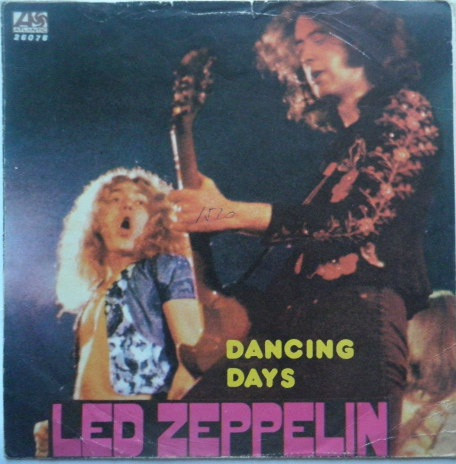
I like the strange riff that opens this one up. It sounds tonally off in some ways and that makes it appealing. While in Bombay, Page and Plant heard an Indian song that inspired this. The creative process for “Dancing Days” began with Jimmy Page’s guitar riff.  Robert Plant then added the lyrics, which they were inspired by a girl he met in Bombay.

The term “dancing days” is thought to refes to high school. On a bootleg recording of the song from a concert on Jan. 14th, 1973 Robert Plant sings “Let’s go back to high school” in the song.

The song was on the Houses of the Holy album released in 1973. The funny thing is that the song Houses of the Holy would be on the Physical Graffiti album, not its namesake. This song was the B side to Over The Hills And Far Away rare single released in 1973. The single peaked at #51 on the Billboard 100 and #63 in Canada.

The band was determined not to repeat themselves after the success of Led Zeppelin IV. This album is diverse with songs Over The Hills and Far Away, The Ocean, The Rain Song, and the funk of The Crunge. This album was a perfect gateway into their next album Physical Graffiti.

The album peaked at #1 in the Billboard Charts, #1 in the UK, and #1 in Canada.

Dancing Days

Dancing days are here again
As the summer evenings grow
I got my flower, I got my power
I got a woman who knows

I said it’s alright, You know it’s alright
I guess it’s all in my heart
You’ll be my only, my one and only
Is that the way it should start?
Crazy ways are evident
In the way that you’re wearing your clothes
Sippin’ booze is precedent
As the evening starts to glow

You know it’s alright, I said it’s alright
You know it’s all in my heart
You’ll be my only, my one and only
Is that the way it should start?

You told your mamma I’d get you home
But you didn’t say I had no car
I saw a lion he was standing alone
With a tadpole in a jar

You know it’s alright, I said it’s alright
I guess it’s all in my heart, my heart
You’ll be my only, my one and only
Is that the way it should start?

So dancing days are here again
As the summer evenings grow
You are my flower, you are my power
You are my woman who knows

I said it’s alright, You know it’s alright
You know it’s all in my heart
You’ll be my only, my one and only
Is that the way it should start?

David Bowie – The Jean Genie

I love the rawness of this song and performance. I’m convinced there is no style that Bowie could not do. Since I posted his friend Iggy Pop this morning I thought I would post this Bowie song. I love this song because of its rawness and energy…I’m not surprised that it was recorded in the 1st take.

The two main influences for this song were said to be Iggy Pop and Cyrinda Foxe. Many of the lyrics reflect Iggy Pop’s lifestyle and stage antics. Cyrinda Foxe was an actress who starred in commercials for Jean Genie jeans. Legend has it that Bowie wrote this in Foxe’s apartment to entertain her. Foxe would appear in the song’s official video alongside Bowie.

The song was on Bowie’s album Aladdin Sane which was released in 1973. The album peaked at #17 on the Billboard Album Charts, #20 on the Canadian Charts, and #1 on the UK Charts in 1973. Bowie was prolific during this period. He would release another album Pin Ups later in the year. Here is a review of the Aladdin Sane from The Press Music Reviews. Whenever I want to look up anything Bowie I go to that blog.

The Jean Genie was the first song recorded for the album. It’s believed to have emerged from a jam on board the Spiders From Mars’ Greyhound tour bus, as they traveled between Cleveland and Memphis on 23 September 1972. It originally had the working title ‘Bussin”, and originated after Mick Ronson began playing the central riff on his new Les Paul guitar.

This song was released in 1972 and peaked at #2 in the UK, #71 on the Billboard 100, and #75 in Canada.

David Bowie: “Starting out as a lightweight riff thing I had written one evening in NY for Cyrinda’s enjoyment, I developed the lyric to the otherwise wordless pumper and it ultimately turned into a bit of a smorgasbord of imagined Americana … based on an Iggy-type persona. The title, of course, was a clumsy pun upon Jean Genet.”

David Bowie: “I wanted to get the same sound the Stones had on their very first album on the harmonica. I didn’t get that near to it, but it had a feel that I wanted – that ’60s thing.”

The Jean Genie

A small Jean Genie snuck off to the city
Strung out on lasers and slash-back blazers
Ate all your razors while pulling the waiters
Talking ’bout Monroe and walking on Snow White
New York’s a go-go, and everything tastes right
Poor little Greenie, ooh-ooh

Keep her comin’
The Jean Genie lives on his back
The Jean Genie loves chimney stacks
He’s outrageous, he screams and he bawls (Jean Genie)
Jean Genie, let yourself go, whoah

Sits like a man but he smiles like a reptile
She love him, she love him but just for a short while
She’ll scratch in the sand, won’t let go his hand
He says he’s a beautician and sells you nutrition
And keeps all your dead hair for making up underwear
Poor little Greenie, ooh-ooh

The Jean Genie lives on his back
The Jean Genie loves chimney stacks
He’s outrageous, he screams and he bawls (Jean Genie)
Jean Genie, let yourself go, whoah

He’s so simple-minded, he can’t drive his module
He bites on the neon and sleeps in a capsule
Loves to be loved, loves to be loved

Oh, Jean Genie lives on his back
The Jean Genie loves chimney stacks
He’s outrageous, he screams and he bawls (Jean Genie)
Jean Genie, let yourself go, whoah

Go!
Go!

The Jean Genie lives on his back
The Jean Genie loves chimney stacks
He’s outrageous, he screams and he bawls (Jean Genie)
Jean Genie, let yourself go, whoah

Go, go go!

Hometown Artist…Don Williams

Dave from A Sound Day wanted us to write about our Hometown and for us to write  either a song about our hometown or highlight an artist from there.

It’s my sister’s birthday today so I thought I would post this since she is in it. Dave posted this a while back.

If you have read my blog for a while…you already know a couple of these stories so I do apologize. When someone asks me where I’m from I usually say Nashville. I was born there but I lived/live in a small town north of Nashville. It’s a town called Ashland City and it’s your typical two-redlight town. I could write about Nashville but that would cover around 20 posts so I’ll go with the town I grew up in.

Now to confuse everyone…there are 3 towns close to each other in the same county. Ashland City, which is the capital of the county, Pleasant View, and Chapmansboro where I live now…they are all within 7-8 miles of each other so “Ashland City” pretty much covers them all…at least in our minds.

3 major country stars lived in our small area while growing up at that time. Don Williams, Mel Tellis, and Randy Travis. I was at my sister’s house in the eighties and I heard her scream and then run out and slam the door. She woke me up with her oohing and ahhing and I asked what was going on. Someone was riding a horse down tout dirt road. Tammy (my sister) went out and talked a little and she came back all happy.

I asked who it was and she said it was Randy Travis. I was a total modern country snob back then…I told her…when Eric Clapton rides by on a horse…then you wake me up. Make it someone worth it…yea I know I wasn’t nice. The reason for the snobbery…if you live here you are expected to like country music…but I couldn’t take it…except early country music. You start to rebel against music that is thrown at you constantly. That may be the reason I liked British rock artists more than country artists in my backyard. As I got older I started to appreciate them more.

Why did I say, Eric Clapton? Many of us think he might have visited our town in the 70s. The reason was that he was good friends with Don Williams. Now I did like Don Williams a lot. I also liked Mel Tillis but Randy Travis was part of that new country at the time that I didn’t really care for. I personally think my sister just loved the way he looked more than anything else.

Here are two stories that I’ve told before…The first star I met was Loretta Lynn and I had breakfast with her at her ranch (in a town called Waverly) which was the coolest breakfast I ever had while I was 8 years old. I would see other stars (Jerry Reed and Kenny Rogers) also once in a while but only really talked to two…Loretta Lynn and the featured artist today.

I was around 10-12 and I played baseball at the city ballpark. I would go there after school and practice. There were days I would just hang around and talk to people. I saw this man mowing the grass that had this old cowboy hat on. After a little while, he stopped and talked to me and asked me how I was doing. I knew the guy’s face and it came to me… I was talking to Don Williams. The reason I knew him was because of my mom’s country albums. I wasn’t into country music but some songs I did like.

I would see him off and on throughout my teenage years and he always was as nice as can be. I went to school and played baseball with his son. Don would mow the city park and the high school field. I’m not sure if he was bored or just wanted to help the community…he was a super guy either way. One of the last things he did was help raise money to get his church a new building. He passed away at 78  years old in 2017.

Williams had songs like It Must Be Love and I Believe In You…plus many more.

I Believe in You peaked at #1 on the Country chart in 1980. It also peaked at #1 in Canada on the Country Charts. It ended up being Don Williams’ only Top 40 song on the Billboard 100, the song peaked at #24 in the Billboard 100, #4 in New Zealand, and #20 in Australia.

It Must Be Love peaked at #1 on the Billboard Country Charts and #2 on the Canada Country Charts in 1979.

All together Williams had 21 #1 singles on the Country Charts and a total of 25 studio albums and 62 singles.

Eric Clapton and Pete Townshend were admirers of Don Williams and both covered his songs. Eric Clapton would cover Tulsa Time and take it to #30 in the Billboard 100.

Jean Knight – Mr. Big Stuff

A fun soul song from the seventies. Jean Knight’s birth name was Jean Caliste. She adopted the professional name of Jean Knight because she felt that “Caliste” was too hard to pronounce. Love the bass sound in this song. It peaked at #2 in the Billboard 100 and #10 in Canada in 1971. The song reminds me of “”Groove Me” and they were recorded at the same studio…Malaco Studios in Mississippi.

After Knight recorded this song, it was given to several different national record labels, all of which rejected it. However, when King Floyd’s hit “Groove Me” became a #1 R&B hit in early 1971, the employees of Stax Records remembered Knight’s recording of “Mr. Big Stuff,” reconsidered, and released it.

This one was quite successful…not only did it stay on the R&B charts for 16 weeks… it went double platinum and was nominated for a Grammy. Not bad for a song that was at first rejected.

The reason I remember this song so well is because the band Everclear used the intro in their song AM Radio which I always liked. I’ll drop the video below. It’s a song about how important AM radio was in the 1970s. A fun song and a fun video.

Mr. Big Stuff

(Oh yeah, ooh)
Mr. Big Stuff
Who do you think you are
Mr. Big Stuff
You’re never gonna get my love

Now because you wear all those fancy clothes (oh yeah)
And have a big fine car, oh yes you do now
Do you think I can afford to give you my love (oh yeah)
You think you’re higher than every star above

Mr. Big Stuff
Who do you think you are
Mr. Big Stuff
You’re never gonna get my love

Now I know all the girls I’ve seen you with
I know you broke their hearts one after another now, bit by bit
You made ’em cry, many poor girls cry
When they try to keep you happy, they just try to keep you satisfied

Mr. Big Stuff, tell me tell me
Who do you think you are
Mr. Big Stuff
You’re never gonna get my love

I’d rather give my love to a poor guy that has a love that’s true (oh yeah)
Than to be fooled around and get hurt by you
Cause when I give my love, I want love in return (oh yeah)
Now I know this is a lesson Mr. Big Stuff you haven’t learned

Mr. Big Stuff, tell me
Who do you think you are
Mr. Big Stuff
You’re never gonna get my love

Mr. Big Stuff
You’re never gonna break my heart
Mr. Big Stuff
You’re never gonna make me cry

Mr. Big Stuff, tell me
Just who do you think you are
Mr. Big Stuff
You’re never gonna get my love
Mr. Big Stuff

Max Picks …songs from 1985

1985

This was an important year for me. It was the year I graduated from high school and I got into surf and alternative music. The pop charts were dismal to me so I turned to my records, tapes, and alternative radio stations. If I listed what I listened to in 1985…it would be Beatles, Jan and Dean, Beach Boys, Van Morrison, and The Who. There still were some things I listened to on the charts as you see down below.

Replacements – Bastards Of Young

This is a lost anthem of the eighties that should have been taken up by my generation. Just because a song isn’t heard by the masses doesn’t mean it isn’t great. Westerberg’s songwriting in the 1980s rivaled any artist in that decade…including Springsteen.

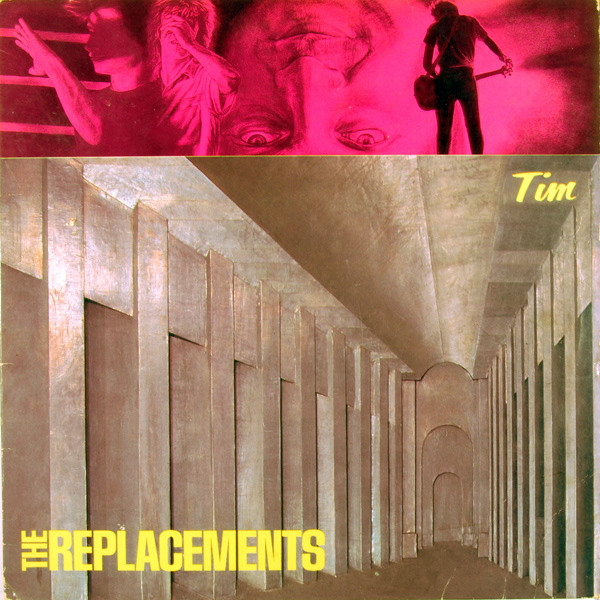
This song starts with a raw cool riff and a scream…how much more rock and roll can you get? The lyrics are what got me into this song in the 80s. The song was on the album Tim released in 1985. It was produced by Tommy Ramone. Alex Chilton also helped out with the album.

It has no giant 80’s production…it’s raw and honest about youthful uncertainty and alienation.

Dire Straits – Money For Nothing

This was the first video played on MTV Europe. The network went on the air on August 1, 1987, six years after MTV in the US… This was back when MTV (Music Television) actually played music but now has questionable shows.

The clipped guitar sound won me over the first time I heard this.

In the US, this stayed at #1 for three weeks. It also won a Grammy in 1986 for best Best Rock Vocal Performance by a Duo or Group.

Dire Straits recorded this in Montserrat. Sting was on vacation there and came by to help. Sting sings on this and helped write it…Sting and Knophler were credited as songwriters. Sting did not want a songwriting credit, but his record company did because they would have earned royalties from it. It’s been said that the line “I Want My MTV” sounded very similar to a song Sting wrote for The Police: “Don’t Stand So Close To Me.”…well the same amount of syllables anyway.

Tom Petty – Don’t Come Around Here No More

When I first heard this song in the 1980s…the instrument that stood out was the sitar. I’ve been in love with that instrument since I heard Norwegian Wood. I want one and if I find a cheap one I will get it. One strum and you are back in the sixties and it fit this song well…or this song fits the sitar.

After Tom Petty and the Heartbreakers toured in 1983, they took some time off, and Petty started working with Dave Stewart from the Eurythmics. This was the first song they wrote together, and the psychedelic sound was a big departure from Petty’s work with The Heartbreakers.

It was at the time, my favorite video hands down.

The Smiths – How Soon Is Now?

This intro is just plain epic. The Smiths had difficulty playing this song live. Johnny Marr had trouble recreating the guitar effect in concert. The tremolo is perfect in this song.

Bassist, Andy Rourke, called the song “the bane of The Smiths’ live career.”

This incredible song was the B side to William, It Was Really Nothing. It was on the album Hatful of Hollow. The album was a compilation album released in 1984 and Q magazine placed the album at No. 44 on its list of the “100 Greatest British Albums Ever.”

Along with “Talkin’ Baseball” and “Take Me Out To The Ballgame,” this quickly became one of the most popular baseball songs ever. It’s a fixture at ballparks between innings of games and plays at the Baseball Hall of Fame in Cooperstown, New York.

John Fogerty: “I’d hear about Ruth and DiMaggio, and as my dad and older brothers talked about the Babe’s exploits, their eyes would get so big. When I was a little kid, there were no teams on the West Coast, so the idea of a Major League team was really mythical to me. The players were heroes to me as long as I can remember.”

“It is about baseball, but it is also a metaphor about getting yourself motivated, about facing the challenge of one thing or another at least at the beginning of an endeavor. About getting yourself all ready, whatever is necessary for the job.”

Living The Beatles Legend by Kenneth Womack

I’ve been waiting on this book since I read about the Beatles in the 70s as a kid. I knew the story…after a showdown with police Mal Evans was shot and killed on January 5, 1976. He was working on his autobiography at the time. Evans was the last person you would think would die that way…and in this case…he wanted it. Could the police have handled it better? Yes, but Mal had said that is how he wanted to go out. He forced the situation. He was only 40 years old.

Mal Evans along with Neil Aspinal were the roadies for the Beatles. Imagine that…2 roadies for the world’s biggest band. Mal worked at a telephone company in the early ’60s but he loved rock and roll…especially Elvis Presley. He would go see bands at the Cavern and struck up a friendship with George Harrison. George told him since he loved music…take a part-time job as a bouncer at The Cavern. The Beatles automatically liked him from the start. He was a big guy at 6’4″ but he never wanted to use violence. More times than not…he talked his way out of trouble. Aspinal was their only roadie and when Love Me Do and then Please Please Me came out…they needed another person because Aspinal was worn out.

Mal

The book covers his entire life and of course, focuses on the years 1963 – 1976. It’s a wonder we have the book at all. All of Mal Evan’s diaries and papers were lost for 12 years after he died. They were discovered by a paralegal who was looking through the basement of a publishing company. They were stored in 6 banker boxes so he had a lot of material including original lyrics to many Beatle songs. He kept about everything and you could say he was the Beatle’s first historian.

He made his mark in history. He was a talent scout for Apple and signed The Iveys which later became Badfinger. Without him pushing them they probably would not have been signed. After the Beatles broke up he continued to work for them as solo artists. Mal loved the Beatles and they in turn trusted him and Neil more than anyone else. He tried a few things like songwriting and he did get some songs covered. He also did a bit of acting appearing in a few of the Beatles movies and also a few with Ringo. When making sure The Beatles had some private space in public he would keep fans away to a point…but was always nice. He said he didn’t want to be rude to the fans who made the Beatles who they were.

His son Gary helped Womack with this book including full access to all of the papers left behind by Mal. His family were the ones who suffered. He was gone most of the time especially when the Beatles were touring. After touring was over he moved his family to London but still was rarely home.

I would highly recommend this book. Kenneth Womack had full access to his diaries and used many of the entries. This book turned up a lot of things about them that I had no clue about. It also gave a different look at their personalities on an everyday basis. Near the end, Mal went to the 2nd Beatles convention and spoke. He started to battle depression in the seventies after living in California and missing his wife and kids back in London. He picked up a girlfriend in California and that made his guilt worse. Drugs also affected him in the end.

If you are a Beatles fan…get the book. I wrote this book review originally with over 15 paragraphs but I was telling his story more than critiquing the book. At the end, Mal was working on his book and lined up a publishing deal. All the Beatles signed off on it and wanted to see Mal succeed. He was known for his kindness and loyalty. He told each Beatle in 1974 that he was leaving to do his own thing but continued to help them out.

  • Mal appeared in every Beatles movie but Yellow Submarine and you see him throughout Get Back.
  • He produced “No Matter What” by Badfinger
  • He helped Paul write Fixing A Hole and Sgt Peppers Lonely Hearts Club Band
  • The original producer of Keith Moon’s solo album

If anyone is interested…I’m including some of the Foreward by his son Gary Evans. 

This book is the product of decades of toil. It would not have been possible without the initial determination of my father, Mal Evans, to capture the Beatles’ story as it unfolded before him. He knew, even in his earliest days as a bouncer at the Cavern Club door, that the boys were something special. As he traveled with them across the whole of England and, eventually, the world, he recorded his memories in the pages of his diaries and filled up notebooks with his drawings and recollections, all the while taking thousands of candid photographs and saving ephemera of all shapes and sizes—a receipt here, a scrap of lyrics there.

When my dad sat down to compose his memoir for Grosset and Dunlap in 1975, he realized the difficulty inherent in taking up a pen to capture his thoughts. Fortunately, he was aided by a stenographer, who transcribed his words to the letter, and by the sage advice of Ringo Starr: “If you don’t tell the truth,” he told my dad, then “don’t bother doing it.” And so, Dad did.

On January 4, 1976, when he simply couldn’t stomach the act of living another day, my father orchestrated his own demise in a Los Angeles duplex. He left behind the fruits of decades of collecting, along with a full draft of his memoir, which he planned to call Living the Beatles’ Legend: 200 Miles to Go. He had even gone so far as to plot out the book’s illustrations, with the assistance of a friend who had served as an art director, and mocked up a couple of cover ideas.

My dad’s death threw all this into disarray. For a time, Grosset and Dunlap made various attempts at publishing Living the Beatles’ Legend, but my mother, Lily, understandably distraught over her estranged husband’s tragic death, simply wanted his collection to be returned to our family back in England, so that we could sort things out for ourselves. As we later learned, in the days after my father died in Los Angeles, Grosset and Dunlap transported the materials from L.A. to New York City, eventually placing them in a storage room in the basement of the New York Life Building.

And that’s where they sat for more than a dozen years, to be rescued from the garbage heap only by the quick thinking of Leena Kutti, a temporary worker who discovered my dad’s materials—along with the diaries, the photographs, and the memoir—recognizing she was in the presence of a most unusual archive. When her efforts to raise the alarm with the publishing house fell on deaf ears, Kutti took it upon herself to march uptown to the Dakota, where she left a note for Yoko Ono, one of the few genuine heroes in the strange progress of my father’s artifacts. In short order, Yoko alerted Neil Aspinall, my dad’s counterpart during the Beatles years. With the assistance of some shrewd Apple lawyering, Neil saw to it that the collection was finally delivered to our family home in 1988.

For several years, my dad’s manuscripts and memorabilia were stored in our attic. I would periodically dip into them and reacquaint myself with the person whom I had lost when I was fourteen years old. Thumbing through the materials reminded me why I loved my father so dearly, in spite of the flaws that drove him away from us and led to his death at age forty. Over the years, my family has struggled with the idea of sharing Mal’s story. Then, in 2004, a forger created an international sensation when he claimed to possess Dad’s collection in a suitcase full of artifacts he had discovered in an Australian flea market. The news was quickly picked up and shared across the globe with much fanfare before it was proven to be a hoax.

To stem the ensuing confusion, my mum and I consented to a 2005 interview with the Sunday Times Magazine, even going so far as to allow the publication of a few excerpts from my dad’s diaries. The tide began to change for us in July 2018, when I decided to follow in my father’s, and the Beatles’, footsteps and retrace the famous “Mad Day Out” photo session on its fiftieth anniversary. I was joined that day by my good friend, actor and playwright Nik Wood-Jones. Along the way, we had the remarkable good fortune to cross paths with filmmaker and Beatles aficionado Simon Weitzman, who was on a similar mission.

As my friendship with Simon developed, I confided in him about the ongoing challenge of sharing my dad’s story with the world. He assured me that he knew just the guy to make it happen. Through Simon, I met Ken Womack via Zoom in 2020, during the first few months of the Covid-19 pandemic. Ken had already authored several books about the Beatles, but more important, Simon trusted him implicitly. Almost as soon as we began working together, I knew that Ken was the right collaborator to tell my dad’s story with the historical integrity it required. Over the years, I have come to understand the ways in which Beatles fans the world over adore “Big Mal,” and to his credit, Ken has been able to honor that connection while also mining the truth of my dad’s life, warts and all.

Working with our friends at HarperCollins, we are proud to share the present book with you—a full-length biography detailing my dad’s life with (and without) the Beatles. A second, even more richly illustrated book will follow in which we provide readers with highlights from my dad’s collection, including the manuscripts he compiled, the contents of his diaries, numerous drawings and other ephemera, along with a vast selection of unpublished photographs from our family archives and from his Beatle years.

The present effort simply wouldn’t have been possible without the saving graces of people like Leena Kutti, Yoko Ono, Neil Aspinall, Simon Weitzman, and Nik Wood-Jones. And now, thanks to Ken, readers will be able to experience my dad’s story with the vividness it deserves. Ken, you kindly lent me your ears over the past three years; I got by with more than a little help from you, my friend.

My father meant the world to me. He was my hero. Before Ken joined the project, I thought I knew my dad’s story. But what I knew was in monochrome; now, some three years later, it is like The Wizard of Oz, my dad’s favorite film, when the scene shifts from black-and-white Kansas to the dazzling multicolored brilliance of Oz. Ken has added so much color, so much light to my dad’s story. He has shown me that Mal Evans was the Beatles’ greatest friend. Yes, Big Mal was lucky to meet the Beatles, but the Beatles possessed even more good fortune when, for the first time, all those years ago, my dad happened to walk down the Cavern Club steps. The rest is music history.

Elvin Bishop – Fooled Around and Fell In Love

Some songs really take me back to a place I was when I heard it. This one was going roller skating with my sister who took me along with her. I never understood why my 16-year-old sister wanted to talk to guys while I was having the time of my life skating as an eight-year-old.

If you hear the rest of Elvin Bishop’s catalog…you wouldn’t believe this came from him. It’s a love song and a good one. Bishop is a blues guitarist who played in The Paul Butterfield Blues Band before forming his own group in 1968. Mickey Thomas who sang the song was a vocalist in Bishop’s band and sang lead on “Fooled Around And Fell In Love” and would later sing in Jefferson Starship.

Elvin can sing but his voice is suited more for blues. Elvin wrote the song and thought Mickey Thomas could sing it better…Mickey did a great job with it. The song peaked at #3 on the Billboard 100, #34 in the UK, and #22 in Canada in 1976.

In 2015, Bishop was inducted into the Rock & Roll Hall of Fame as a member of the Paul Butterfield Blues Band, and again in the Blues Hall of Fame as a solo artist in 2016. Many younger listeners discovered this song when it was used in the 2014 film Guardians Of The Galaxy and included on the soundtrack, which went to #1 in America.

I stumbled across a newer cover of this song that I really like around 6 months ago…it’s by the Winery Dogs. The band included Richie Kotzen, Billy Sheehan, and drummer Mike Portnoy. Give it a listen as well…they stayed true to the original and it sounds good.

Elvin Bishop: “My voice is very plain. It’s better suited for blues. It’s been good for me, because it’s made my songwriting strong, because to really get over with a voice like mine, which is not a thrill in itself – the quality of the voice – you have to have a strong story and really good words to capture people’s imagination. 

And that tune, I gave it a try. The producer, Bill Szymczyk, said, ‘We need one more piece of material here. You got anything else laying around?’ I said, ‘Well, there’s this tune I wrote the other day.’ Well, not the other day. I’d actually tried to get a couple of other people to sing it, but somehow it didn’t work out. I said, ‘How about this ‘Fooled Around and Fell In Love’?’ We cut a track, it was a really nice track. I tried singing it, and I said, ‘That’s not buttering my biscuit, my vocal on this. Why don’t we give Mickey a shot at this?’ And the producer said, ‘Well, that’s big of you.’ And I said, ‘Well, I don’t think so. It’s just common sense, you know?’ And Mickey just tore it up.”

Fooled Around and Fell In Love

I must have been through about a million girls
I’d love ’em then I’d leave ’em alone
I didn’t care how much they cried, no sir
Their tears left me cold as a stone

But then I fooled around and fell in love
I fooled around and fell in love, yes I did
I fooled around and fell in love

It used to be when I’d see a girl that I liked
I’d get out my book and write down her name
Ah, but when the, the grass got a little greener over on the other side
I’d just tear out that page

I fooled around and fell in love
I fooled around and fell in love, since I met you baby
I fooled around and fell in love

Free, on my own is the way I used to be
Ah, but since I met you baby, love’s got a hold on me
It’s got a hold on me now
I can’t let go of you baby

I fooled around and fell in love
I fooled around and fell in love, oh yes I did
I fooled around, fooled around, fooled around, fooled around,
Fooled around, fooled around, fell in love
Fooled around, fooled around, fooled around, fooled around,
Fooled around, fooled around, fell in love
I fooled around, fell in love
I fell in love, I fell in love, yes I did

Rhoda

Rhoda was a popular show in the seventies, a spinoff of the Mary Tyler Moore Show. I’ve been watching The Dick Van Dyke Show, MTM Show, Rhoda, and Phyllis. I might watch Lou Grant after that.

The MTM Show (7 seasons) had three spinoffs and all of them were mostly successful. Rhoda (5 seasons), Lou Grant (5 Seasons), and Phyllis (2 Seasons).

Rhoda

Although the show starred Mary Tyler Moore, it was the ensemble that made it work. One of my favorite characters in the MTM show was Rhoda Morgenstern. She was played brilliantly by Valerie Harper. Harper once said that Mary was who every girl wanted to be, Rhoda was probably who they were, and Phyllis was who they feared they would become. 

Rhoda was a self-deprecating Jewish neighbor who envied Mary Richards but ended up her best friend. Her and Mary’s relationship was an important part early on in the show. She left after the 4th season to start her own show, Rhoda. She would move out of Minneapolis and back to where she grew up, New York. She left the show only for a small vacation but fell in love while in New York. Harper didn’t really want to leave the MTM show. She asked Moore what would happen if her show failed. Moore told her that Rhoda would just move back to Minneapolis and be on the show again.

Rhoda also had a fantastic cast. Julie Kavner (Marge Simpon’s voice), played her sister. The legendary actress Nancy Walker played her mom. Harold Gould as her father and an underrated actor named David Groh played her boyfriend and soon-to-be husband and ex-husband.

It also included one of the most famous television characters that was never seen. Carlton Your Doorman, who was voiced by Lorenzo Music, was a very popular character in the mid to late seventies. I remember people inserting “This is Carlton Your Doorman” in jokes at school at the time.

Other than the character Rhoda, the show had a different feel than the MTM Show and that is a good thing. They didn’t really copy but it was an ensemble show and didn’t rely on just Harper. The episode in the 1st season of Rhoda and Joe getting married…drew in 52 million Americans for that broadcast. That would turn out to be a mistake as far as the writers were concerned.

They found out shortly that writing for Rhoda as a married woman didn’t work as well. They complained she lost her edge. I really don’t see that but in the 3rd season, they had Joe and Rhoda divorce. After that happened CBS was swamped with hate mail on them getting a divorce. David Groh said that he personally received hate mail from fans at least a year after he was gone.

The writers say it was essential to happen but Rhoda was beating the MTM show in ratings in the first 3 seasons. It was a good show and it’s a shame they messed with the couple that the show revolved around. After the divorce, the ratings started to decline but it did last until the 5th season aired in 78 and 79. It was appropriate it didn’t last until the 1980s…Rhoda belongs to the seventies and the seventies to Rhoda. A 1980s Rhoda just wouldn’t have felt right.

Moore and Harper did make a TV movie in 2000 called…Mary and Rhoda. It was a 90s-style TV Movie but it was nice seeing them both again. Harper seemed the same wise-cracking character but Moore was different and more affected by age. The movie was a pilot…it was the most watched TV program that night but plans were scrapped.

Of all the famous intros to TV shows…this one with the music and closing scene…you can feel the paneling, shag carpet, see the avocado green, harvest gold, taste the fondue, and any seventies items you could want.

“My name is Rhoda Morgenstern. I was born in the Bronx, New York in December, 1941. I’ve always felt responsible for World War II. The first thing I remember liking that liked me back was food. I had a bad puberty; it lasted 17 years. I’m a high school graduate. I went to art school. My entrance exam was on a book of matches. I decided to move out of the house when I was 24; my mother still refers to this as the time I ran away from home. Eventually I ran to Minneapolis, where it’s cold, and I figured I’d keep better. Now I’m back in Manhattan. New York, this is your last chance!”

Alice Cooper – Under My Wheels

This song was off the Killer album. It peaked at #59 on the Billboard 100. The album peaked at #21 on the Billboard Album Charts, #11 in Canada, and #27 in the UK in 1971.

Alice Cooper - Killer

One of my favorites of Alice Cooper. The song wasn’t a giant success but it has remained in Alice’s set since it was released in 1971.  The song’s impact can be seen in its inclusion in movies, TV shows, and video games. It has been covered by several other musicians, including Poison and Motörhead.

The guitar solo in this song is played by Rick Derringer. The songwriters were the group’s guitarist Michael Bruce and bass player Dennis Dunaway along with producer Bob Ezrin.   The song is about a guy who accidentally runs over his girlfriend in the new car he just bought.

Alice Cooper has blended styles throughout his career. He has had Heavy Metal, rock, hard rock, and plain-out pop.

Alice Cooper’s real name is Vincent Furnier. Alice Cooper was the name of the band, but the name became so associated with the lead singer that he took it.

The band did a good job spreading the rumor that “Alice Cooper” was the name of a girl who was accused of being a witch in the 1600s, saying she contacted them through an Ouija board. Furnier later explained that he made it up when he was thinking of a sweet, innocent-sounding name that would contrast against their shocking stage show.

Cooper is a big family man which contradicts his reputation. Cooper is a born-again Christian and believes in the devil enough to have genuine supernatural fear. He’s never taken a Satanist stance and warns other bands against it. When he was a kid, his family was poor and there were very few presents. Now, Cooper goes crazy on Christmas, buying lots of gifts for his family.

Dennis Dunaway: This was another song that I wrote. I remember singing the song to Glen Buxton about this guy who’s just bought a brand new car and he’s going over to pick up his girlfriend and take her to the movies. Glen was like, ‘We don’t do girl songs!’ And I was like, ‘No, the guy runs over the girl.’ So he said, ‘Oh, OK.’ Ha ha! Anyway, Under My Wheels is about a guy who accidentally runs over his girlfriend, who he’s trying to impress with his new car. It was a fairly decent hit in America, and we also plugged it in Britain. We did a Killer tour over there when the single had just been released.

“Under My Wheels”

The telephone is ringing you got me on the run I’m driving in my car now anticipating fun
I’m driving right up to you babe I guess that you couldn’t see yeah yeah
But you were under my wheels why don’t you let me be
’cause when you call me on the telephone saying take me to the show
And then I say honey I just can’t go old lady’s sick and I can’t leave her home
The telephone is ringing you got me on the run I’m driving in my car now
I got you under my wheels I got you under my wheels I got you under my wheels
Got you under my wheels yeah yeah I got you under my wheels
Aah the telephone is ringing you got me on the run I’m driving in my car now anticipating fun
I’m driving right up to you babe I guess that you couldn’t see yeah yeah
But you were under my wheels why don’t you let me be
Yeah yeah got you under my wheels yeah yeah I got you under my wheels
I got you under my wheels got you got you got you got you
Under my wheels got you under my wheels wheels wheels wheels

Gram Parsons and Emmylou Harris – Love Hurts

This song has been covered many times. The one that is probably the most popular is by the hard rock band Nazareth. This version was the one that Nazareth heard to base their version on. It was written and composed by the American songwriter Boudleaux Bryant, who was a very prolific and successful songwriter for other artists throughout the 1950s and beyond.

Gram and Harris’s version is my favorite version of the song now. It was on Parson’s Grievous Angel album released in 1974. Parsons and Harris had a great musical partnership. You can hear it in this song on how their voices weaved together.

Gram Parsons and Emmylou Harris

On the album… James Burton played electric lead guitar, Herb Pederson on rhythm, and Al Perkins on pedal steel. Bernie Leadon played dobro, and Byron Berline added some fiddle and mandolin. Linda Ronstadt always contributed vocals to a Harris-Parsons song that I will cover next.

Harris was talking about the making of the Grievous Angel Album: “Gram was in really good shape for that album, and we were really tight from working on the road together. The band knew what they were doing and we had the charts together by the time we got into the studio. We went in and, man, it was really fast – we did the tracks in five days and then a second five days for the vocals which were nearly all first or second takes. For all extent and purposes ist should be regarded as a ‘live’ album.”

“We didn’t really write songs together. He always carried those songs around in his head. He just needed a little prodding to get them out. That’s all I did. I helped him with a line here and there. I’d suggest something but those were his songs. I didn’t dispute the credit on ‘In My Hour Of Darkness’, which he gave to me. I think that was probably because at the same time, there was this big thing about that stupid album cover.”

What Harris was referring to about the cover was that it made Gram’s wife upset. It was originally a cover of Parson and Harris that Gram picked out. Parson’s manager was Phil Kaufman and he said that Gretchen Parsons, Gram’s wife, found out about the picture and fought with Parsons. So, she had the picture removed when it was released because Gram had passed away in September of 1973 and this album was released in 1974.

The Everly Brothers were the first to cover it, but they never released the song as a single. They planned to release this as a single, but industry politics got in the way. Their version is very good as well but Harris and Parson’s voices just sounded so good together for this particular song.

Emmylou Harris: “I really liked working with Gram, it was a completely new experience for me. I was a little weary at first because of Los Angeles and Hollywood and all, and I was very much East Coast orientated. I was very much on my guard but Gram was a very real person and, whenever I went out there, I always felt that I was in some kind of protective bubble. It was never Los Angeles itself, but always working with Gram and the music, and I kept myself in a very small circle.”

“It was the first time to have ever lost a close friend. I’m sure that all people have lost someone who is very dear to them, but Gram was young and so full of life. There are people who say ‘well, it was bound to happen’… but not to me because Gram was the most alive person I ever knew and breathed a whole lot into me and into my life. So he still remains very much alive in my heart.”

“Eventually Gram will find his place in history. He had a real creative vision of his own as a writer. Perhaps there is a shadow of that inspiration on my records but it’s not the gut level thing.”

Here is a live version from Gram and Emmylou from 1973. 

Love Hurts

Love hurts, love scarsLove wounds and marsAny heart not toughNor strong enoughTo take a lot of painTake a lot of painLove is like a cloudHolds a lot of rain

Love hurtsMmm-mm, love hurts

I’m young, I knowBut even soI know a thing or twoI’ve learned from you

I’ve really learned a lotReally learned a lotLove is like a stoveBurns you when it’s hotLove hurtsMmm-mm, love hurts

Some fools think of happinessBlissfulness, togethernessSome fools fool themselves, I guessBut they’re not fooling me

I know it isn’t trueKnow it isn’t trueLove is just a lieMade to make you blue

Love hurtsMmm-mm, love hurts

Love hurtsMmm-mm, love hurtsOh-oh, love hurts