I’ve heard a lot about this band but never listened to them much. Yesterday I did and they were stacked with great musicians. They have a big blues punch and melodic songs.
I just started to listen to many of their songs and this one caught my attention because of the tight bass intro. That is when I noticed a little of Santana’s sound in there as well. This song is a brief 2:20. If you get a chance on Spotify or Youtube…check them out. So far I’ve been going through their first 4 albums.
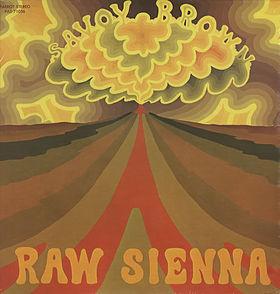
They are a British blues rock band formed in 1965 by guitarist Kim Simmonds. They are one of the pioneering bands of the British blues rock scene and bands like The Rolling Stones and John Mayall’s Bluesbreakers.
Over the years, the band’s lineup has changed numerous times, with Simmonds being the only constant member. Savoy Brown has released over 30 albums, with their early work being highly influential in the blues-rock genre.
They have Kim Simmonds’ expressive guitar work and the band’s tight rhythm section. The song was on the album Raw Sienna released in 1970. The album peaked at #75 in Canada and #121 on the Billboard Album Chart. It was written by the then lead singer Chris Youlden who would be with Savoy Brown from 1967 to 1970.
A Hard Way To Go
Ain’t got time for doubts or fears Ain’t got time for shallow tears Ain’t got time to bare my soul Because I still got a hard way to go
Said that you got a losing hand Ain’t no point in you raising sand Ain’t got time to bare your soul Because I still got a hard way to go
And it’s a crying shame That you can’t lay the blame On anybody else but yourself
Wish that you had my sympathy You ain’t got no hold on me And my heart is getting cold And I still got a hard way to go
And it’s a crying shame That you can’t lay the blame On anybody else but yourself
This wraps up my southern week…I hope you enjoyed it. Toy Caldwell was their guitar player and he could match up with any guitarist from other bands.
This song was on their self-titled debut album released in 1973. Even though Take the Highway might not be as famous as some of the band’s other hits, it’s still a total winner that deserves a spot on playlists.
There is no Marshall Tucker in The Marshall Tucker Band. The name refers to a blind piano tuner from Columbia, South Carolina. They saw the name on a door key where they used to rehearse and decided it would make a good name for their band.
The mix between the flute (Not a southern rock standard) at the beginning with Caldwell’s great guitar licks along with his powerful singing sets this song off.
This album contained the classic Can’t You See. Their 1973 album peaked at #29 on the Billboard 100 in 1973.
Many say that Toy Caldwell was the soul of that band. He was a Marine in the 60s and served in Vietnam. After getting injured he was able to go home and started to play music with his high school friends. Toy and his brother helped start Marshall Tucker.
Toy left Marshall Tucker in 1984. Contributing to his leaving was the fact that his brother… co-founder of the band and bass guitarist Tommy Caldwell, was killed at age 30 in an automobile accident on April 28, 1980. Toy’s other brother Tim Caldwell, on March 28, 1980, one month before Tommy’s death, was killed at age 25 in a collision in South Carolina.
Gregg Allman: When we wanted to get away from our old ladies, we’d head on down to Grant’s Lounge, which was a great place to hang out. We saw a lot of bands, including Marshall Tucker, or Mother Tucker, as we called them. Toy Caldwell was a good friend of mine…was Marshall Tucker—he made that band what it was.
Take The Highway
Take the highway Lord knows I’ve been gone too long Lot of sad days One day you’ll turn around and I’ll be gone
And the time has finally come For me to pack my bags and walk away Hear me say
I’ll be back someday But darling, please don’t wait for me too long There’s just one place I can’t stay Memories of your love still lingers on
And the time has finally come For me to pack my bags and walk away Hear me say
I’ll be back someday But darling, please don’t wait for me too long There’s just one place I can’t stay Memories of your love still lingers on
And the time has finally come For me to pack my bags and walk away Make me stay
Take the highway Take the highway Take the highway Take the highway
And the time has finally come For me to pack my bags and walk away Here me say
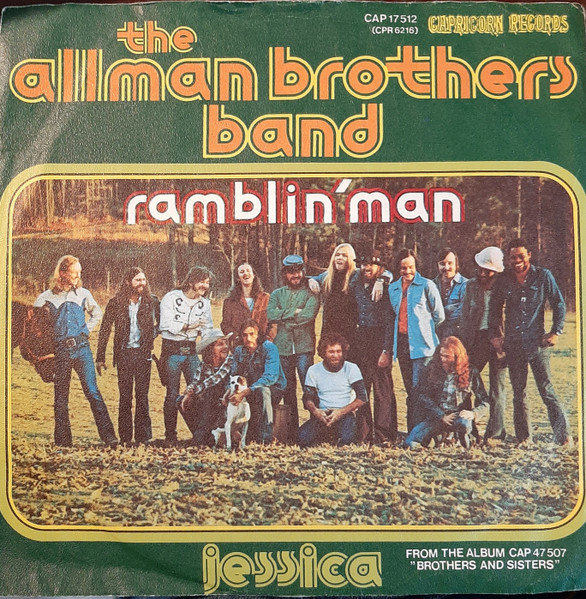
I’ve written a ton of Allman Brother posts but for some odd reason, I never wrote bout this one…their biggest hit. I never thought it was their best song but I do love Dickey Betts’s guitar work in this one. It was on their album “Brothers and Sisters” and it hit a chord with pop culture. Two popular shows at the time The Waltons and Little House on the Prairie fit in with the family theme.
After finishing Eat A Peach after Duane died…they started to work on Brothers and Sisters. They refused to replace Duane Allman with another guitar player. They didn’t want someone at that time just mimicking Duane. While they were recording the album, Gregg Allman recorded his first solo album, Laid Back. He was working with a fantastic piano player named Chuck Leavell. Gregg later invited Chuck to join the Allman Brothers and the Brothers agreed he would fit perfectly and give them a different sound.
Barry Oakley was in disarray at this time after Duane died. For a year he was spiraling down with drugs and drink. In September of 1972, Chuck joined the band and Barry Oakley was excited. It was the first time that he seemed like his old self again since Duane passed. He took Leavell under his wing and showed him the ropes of being in that band.
Leavell said he was fantastic and some of the band thought that Oakley may have been coming out of it and back to himself. That was not to be. On November 11, 1972, Berry Oakley died in a motorcycle crash within a few blocks of where Duane crashed a year and 13 days earlier. He played on two songs on this album…Wasted Words and Ramblin’ Man. Lamar Williams replaced him and finished the album on bass.
Dicky Betts knew a country guy he was friends with and the guy always told him…” are you still playing your guitar and doing the best that you can?” The phrase stuck with Betts. He had the germ of the idea before The Allman Brothers started. Before Duane was killed the band played around with the song in some rehearsals in Gatlinburg.
He was hesitant to record the song. He thought it could be too country for the band. They needed a song and recorded it anyway and it sounded great. He added the solos at the end to make it more of an Allman Brothers song.
The Allman Brothers and The Grateful Dead were not known for their top ten hits. This is their highest-charting single. It also helped propel the album Brothers and Sisters to the top of the Billboard Album Chart chart, solidifying the band’s status as one of the leading acts of the Southern rock genre…although they were more of a blues, jazz, rock, and jam band.
The album peaked at #1 on the Billboard Album Charts #1 in Canada, and #42 in the UK. What helped the album was Ramblin’ Man and Jessica, two of their most classic songs. They toured with this album and played sold-out stadiums and arenas.
Ramblin’ Man peaked at #2 on the Billboard Hot 100 Charts and #7 in Canada in 1973.
Just found out that Dickey Betts passed away today at age 80.
Dickey Betts: “When I was a kid, my dad was in construction and used to move the family band and forth between central Florida’s east and west coasts, I’d go to one school for a year and then the other the next. I had two sets of friends and spent a lot of time in the back seat of a Greyhound bus. Ramblin’ was in my blood.”
The Allman’s November 2nd, 1972 performance went down at Hofstra University in Hempstead, New York. Portions of the show were broadcast on ABC’s In Concert program. In this clip below we get to see rare footage of the post-Duane, pre-Berry death lineup of the band which featured Gregg Allman, Dickey Betts, Jaimoe, Chuck Leavell, Butch Trucks, and Oakley. Barry Oakley would die 9 days after this concert…it was his last concert with the band and Chuck Leavell’s first concert with them. This was before the single was released.
Ramblin’ Man
Lord, I was born a ramblin’ man Tryin’ to make a livin’ and doin’ the best I can And when it’s time for leavin’ I hope you’ll understand That I was born a ramblin’ man
Well, my father was a gambler down in Georgia And he wound up on the wrong end of a gun And I was born in the back seat of a Greyhound bus Rollin’ down highway 41
Lord, I was born a ramblin’ man Tryin’ to make a livin’ and doin’ the best I can And when it’s time for leavin’ I hope you’ll understand That I was born a ramblin’ man
Alright
I’m on my way to New Orleans this mornin’ Leaving out of Nashville, Tennessee They’re always having a good time down on the bayou Lord, and Delta women think the world of me
Lord, I was born a ramblin’ man Tryin’ to make a livin’ and doin’ the best I can And when it’s time for leavin’ I hope you’ll understand That I was born a ramblin’ man
Lord, I was born a ramblin’ man Lord, I was born a ramblin’ man Lord, I was born a ramblin’ man Lord, I was born a ramblin’ man
We have come to the end of the line for Max Picks. I decided to draw the line this year. What a year it was for me in music. I was 2 when the Beatles stopped playing music. I never got to experience a new Beatles song and this was it. It’s still a favorite of mine. I’m going to work up a few Missed Max Picks because of the songs I missed. I want to thank ALL of you for the support and your comments on this series. It was a fun one to do. We started this on June 23, 2023!
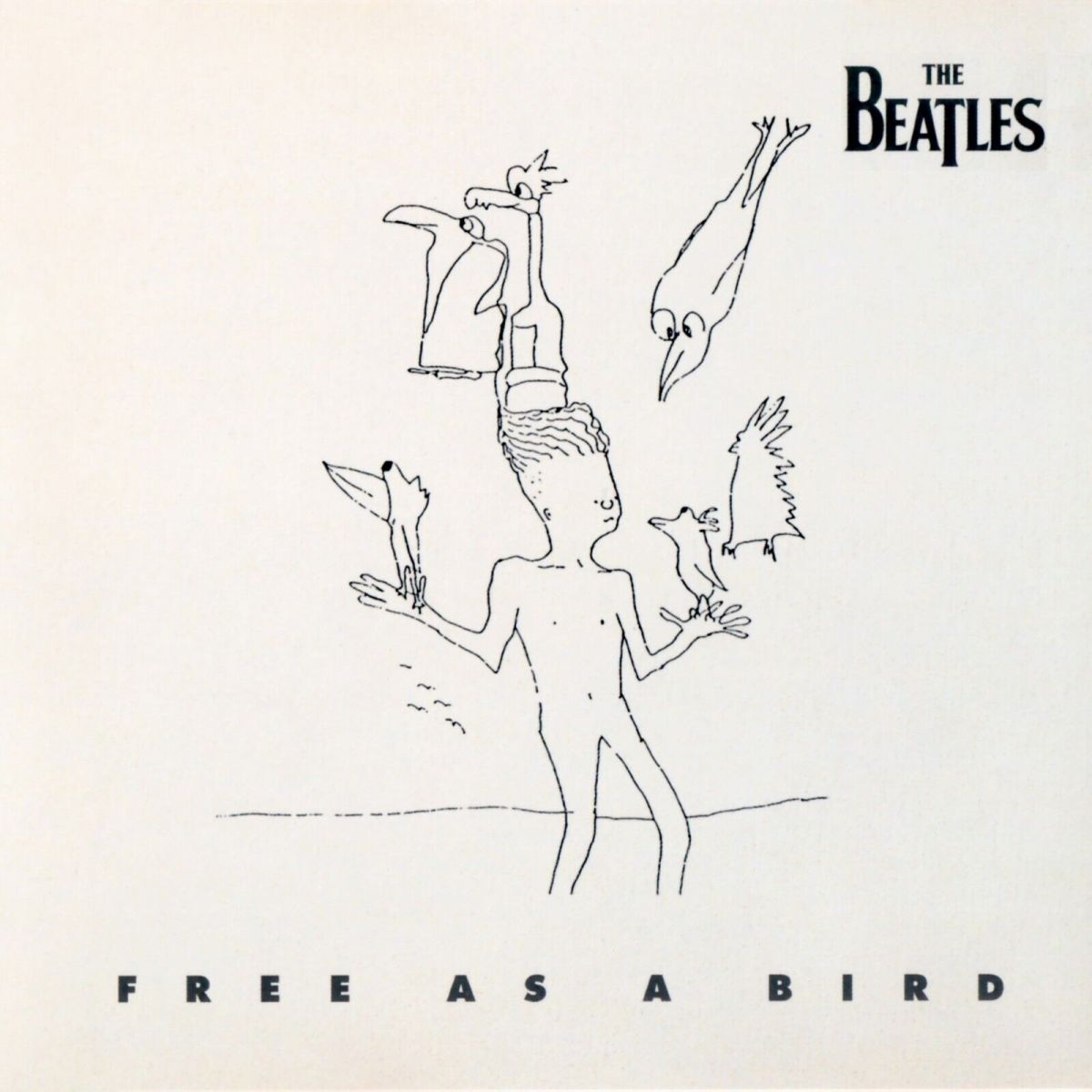
Beatles – Free As A Bird
In the 1990s I kept reading about the Beatles Anthology coming out and the three surviving Beatles getting back together to release old never heard before music as well as new. They were going to take a John Lennon demo and add something to it. This was beyond exciting for me. I was too young to remember a new Beatles song coming out.
It had an older feel but sounded modern at the same time. George Harrison’s distorted slide guitar playing brought an edge to it. It even had a strange ending like some of their other songs.
I got an early release of the Anthology CD from a friend of mine who worked in a record store and he said…don’t tell anyone. I sat glued to Free As a Bird because for once I was listening to a new Beatles song… I was one year old in 1968 so I missed them when they were originally out. I liked the song and still do. I have talked to Beatles fans who don’t really like it that much but the song has stuck with me. .
Was Free As a Bird the best song in the Beatles catalog? No not even close but just to hear something new was fantastic. The Anthology videos and CDs jump-started their popularity all over again…and it hasn’t stopped since then. I had cousins who were teenagers at the time who were never interested in them until Anthology came out. All I could say to them was…I’ve told you for years.
Also…my favorite music video of all time
Jayhawks – Blue
This song would rank high among my favorite songs. The Jayhawks were an Alt-Country band with a pop/folk sound formed in Minneapolis–Saint Paul in 1985 and played alternative country rock. They have released 10 studio albums and are worth checking out.
The song was on the album Tomorrow the Green Grass.
They recently backed Ray Davies on his albums Americana and Our Country – Americana Act II. Their 2016 album Paging Mr. Proust was produced by Peter Buck of REM.
They combine country, folk, rock, and pop with good harmonies.
Oasis – Wonderwall
This song is awash in sixties influence…which isn’t surprising by Oasis. It caught my attention in the 90s seeing that it had a mod mid-sixties influence.
This song was supposedly about Noel Gallagher’s then-girlfriend Meg Mathews, who is compared with a schoolboy’s wall to which posters of footballers and pop stars are attached. He said: “It’s about my girlfriend. She was out of work, and that, a bit down on her luck, so it’s just saying, ‘Cheer up and f—in get on with it.’” Noel later married and then divorced Meg Mathews.
Noel also said… “The meaning of that song was taken away from me by the media who jumped on it. And how do you tell your Mrs. it’s not about her once she’s read it is? It’s about an imaginary friend who’s going to come and save you from yourself.”
Everclear – Santa Monica
With my big black boots and an old suitcase I do believe I’ll find myself a new place
Those lyrics hit me for some reason as did the song. It was my first introduction to the band and I loved it. This is one of the few new bands at the time that I followed.
Art Alexaskis formed Everclear in Portland, Oregon, in 1991. Portland in the early 90s had a huge music scene. Everclear broke out first with this song nationally. Many bands there didn’t think Everclear deserved it over everyone else…there was a lot of competition there at that time.
Santa Monica is a seaside town in California where Everclear lead singer Art Alexakis grew up. He describes it as Like LA but on the coast.
The song peaked at #1 on the Mainstream Rock Charts, #4 in Canada’s Alternative Charts, #27 in New Zealand, and #40 in the UK in 1996.
It was on the 1995 album Sparkle and Fade. John at 2 Loud 2 Old Music reviewed all of their albums in this article. It’s a great review of their recording career.
Ramones – I Don’t Want To Grow Up
This came off of the Ramones’ last album Adios Amigos. This song is a Tom Waits cover. This song actually made the top 30 for the Ramones. Their reputation grew through the years. They probably got more popular after they broke up than they were when they were together. It’s a shame that many of their songs didn’t hit bigger at the time. Their songs are short, to the point, and usually very catchy. You would have thought radio would have loved them.
The album is really good and it was a good way to go out for them.
BONUS PICK… I’m going to break my own rule about only 5 songs since this is the last Max Picks…and I’m breaking another rule by featuring a band twice in one post. Which band should it be?
Beatles – Real Love
This was the second “new” song by the Beatles to be released in the 1990s and it was on the Anthology 2 album. I liked the song but it didn’t resonate with me like Free As A Bird did. Real Love sounded more like a Lennon solo song with the Beatles backing him…but I love Lennon’s solo output so I did like it but it wasn’t as “Beatle-ly” to me as Free As a Bird.
The song was more fully realized than Free As a Bird and didn’t take as much input by the other three shaping it. This is the only Beatles song where the songwriting credit is John Lennon alone instead of Lennon-McCartney or all four Beatles.
Paul McCartney did his best John Lennon’s imitation to help the lead vocal because the recording of John’s voice was low and spotty in some places. The lead vocal is actually a John and Paul duet.
It’s funny how local radio stations will change how songs are remembered. When I hear Wet Willie’s band name I think of one song…Keep on Smiling. When I posted that song a while ago…some did not know it but they knew this song. We did hear this song but to tell you the truth…until Dave told me it was Wet Willie a few years ago doing this song Weekend…I would have never known.
When I posted about them before…I’ll say the same thing. First, let’s get this out of the way… wet–willy. Noun. (plural wet willies) (slang) A prank whereby a saliva-moistened finger is inserted into an unsuspecting person’s ear, often with a slight twisting motion… Oh yes…I’ve given them and have been on the receiving end. When you are 12 given wet willies were a lot of fun….oh wait…that was yesterday!
Wet Willie began as a blues-rock band during the Summer of 1969 down in Mobile Alabama. The original nucleus of the group that eventually became known as Wet Willie was called Fox. Wet Willie eventually moved to Macon Georgia and signed to Capricorn Records sharing the label with The Allman Brothers and The Marshall Tucker Band. Still, they really didn’t have a Southern rock sound.
This song was released in 1979 on the album Manorisms. The album peaked at #118 on the Billboard Album Charts.
The song peaked at #29 on the Billboard 100 and #34 in Canada. Their biggest hit was Keep On Smiling which peaked at #10 on the Billboard 100 and #21 in Canada in 1974.
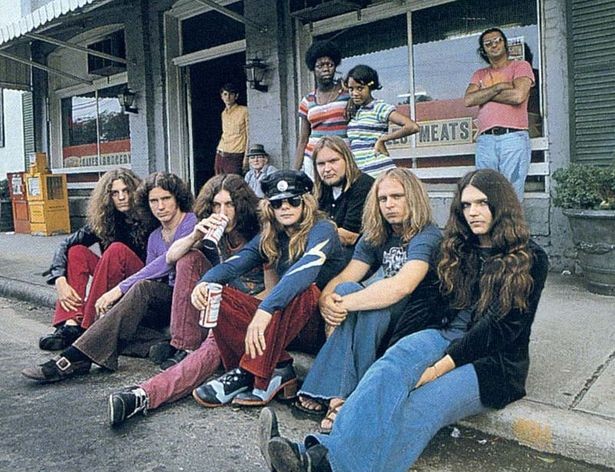
Southern Rock took off in the 70s but crashed when Lynyrd Skynyrds plane did in 1977. It hung around a little longer with 38 Special and Molly Hatchet but died when the 80s came. Gregg Allman had a great quote on “Southern Rock.” He is right in this quote below. Most of the bands were so different from each other. The only thing many of them had in common was that they were Southern. The Allman Brothers and Lynyrd Skynyrd were the two biggest bands and they were day and night. Skynyrd was more like The Stones and Free and The Allman Brothers were a combination of blues, jazz, rock, and country.
Gregg Allman: For some reason, people think that we all grew up together and we all knew each other, and our friends were their friends and their friends were our friends, like there was one big town of southern rock stars or something. Man, it wasn’t nothing like that at all. You might know two or three cats in one band here and there, and you’d see each other passing in the night. If you did a tour together, then you’d see each other maybe a couple of hours a day.
Of course, there was some competition between bands—there has to be. But we weren’t out there to sell southern rock, we were out there because we had the best goddamn band in the land. The Allman Brothers Band has had its bad nights, but we are some Super Bowl motherfuckers compared to all them other bands.
Weekend
One Friday evenin’ What a feelin’, feel like singin’ Tired of workin’, my mind is buzzin’ Feel like dancin’ yes I do
But you gotta make the best of life while you’re young Good people, weekend Do just what you want to do, weekend When those workin’ days are through Weekend, weekend, weekend Weekend, weekend You know it’s time to get away, weekend I want to hear ev’rybody say Weekend, weekend, weekend
Saturday night feelin’ just right Makin’ new friends, lazy Sunday Every Monday ends my weekend, yes it does But you gotta make the best of life while you’re young Listen people, weekend Party down with all your friends, weekend It’s party, hearty time again Weekend, weekend, weekend Weekend, weekend Spendin’ all my hard-earned pay, weekend With crazy nights and lazy days Weekend, weekend, weekend
But you believe me right now, weekend Watchin’ all the people play, weekend I want to hear ev’rybody say Weekend, weekend, weekend Weekend, weekend Do what you want to do, weekend When those workin’ days are through Weekend, weekend, weekend Ah you gotta make the best of life while you’re young Right now, weekend Do what you want to do, weekend When those workin’ days are through Weekend, weekend, weekend Yeah weekend
This song is one of their best songs to me. I like it better than Freebird and many other more popular ones. I could see The Stones doing this song as well as the Allman Brothers. Lynyrd Skynyrd’s sound has always been closer to British crunch rock like Free and The Stones than their southern roots.
Since I’ve been blogging I’ve read a few books about them and heard from my UK readers. They were huge in the UK in the mid-70s. They toured there and played at Knebworth in 1976 on a bill with the Rolling Stones.
Ronnie Van Zant wrote the lyrics and Allen Collins wrote the music to this song. I’ve talked about how Ray Davies and Bruce Springsteen could write about everyday life and make it sound interesting and believable. I’ll put Van Zant in that same category with no hesitation. His deceptive simple lyrics always hit home.
Metallica and Phish both have both covered this song. The best cover version I’ve heard is a live version from Gregg Allman. You can imagine what the Allmans would have done with it. There was a train track near the place where the band rehearsed. The sound of the trains inspired lead singer Ronnie Van Zant to write the first line, “Train roll on, on down the line.”
Tuesday’s Gone was on the debut album Pronounced Leh-nerd Skin-nerd and peaked at #27 on the Billboard Album Chart, #47 in Canada, and #44 in the UK in 1973. It’s one of the best rock debut albums. They opened up for The Who on their Quadrophenia tour at this time.
Their producer at the time was Al Kooper. He played on this track and brought a Mellotron in this song. He would go on to produce their first three albums and also signed them to MCA records. He found them in a bar and offered to sign them after a few nights. Right after that someone broke into their van and stole all of their equipment. Van Zant called Al Kooper and asked him if he could help them out. Kooper said yes of course and sent the band $5000 and Van Zant told him…“Al, you just bought yourself a band for five thousand dollars.”
Cameron Crowe on Ronnie Van Zant: “He was the first musician that crossed the line and talked to me like I was an artist or a writer. It blew me away. He was a guy who treated me like I was an equal, and it gave me a lot of confidence, doing that. A straight-ahead, sensitive guy. No agenda, he didn’t ask me to write about him, just took the opportunity to tell me the story had reached him. Over the next three years, we stayed pretty tight, and I did write about them and went on the road with them and all kinds of stuff.”
Al Kooper talking about the stolen equipment: “Al, our equipment van got broken into last night and we can’t put food in our families’ mouths without that gear. We have engagements to fulfill immediately and unless you can lend us five thousand dollars by tomorrow morning, we’re fucked!” I didn’t even think twice: “Where do I send it, buddy ?” He gave me the address and closed with: “Al, you just bought yourself a band for five thousand dollars.” I never worried about that money. Ronnie was a gentleman and a man of his word. He ruled that band with an iron fist, and God help any band member who crossed him. Of course, that was impossible, because they all worshipped him. Possessed of a unique talent for savvy songwriting, a rather pedestrian voice that had its own unique sound, and remarkable leadership skills, Ronnie was the mediator between the rest of the band and myself. As a producer, I offered my artists one hundred percent of my input. What percentage they chose to use was up to them. Of course, it varied from act to act. With Skynyrd, there wasn’t that much to do. They were incredibly well rehearsed (they even composed their guitar solos beforehand), they were the best damn arrangers I have ever worked with, and their musical discipline was everything to them.
Gregg Allman singing Tueday’s Gone.
Tuesdays Gone
Train roll on, on down the line,
Won’t you please take me far, far away
Now I feel the wind blow, outside my door,
I’m leavin’ my woman at home, oh yeah
Tuesday’s gone with the wind,
Oh my baby’s gone, gone with the wind
And I don’t know, oh, where I’m goin’
I just want to be left alone
When this train ends, I’ll try again
I’m leavin’ my woman at home
Tuesday’s gone with the wind
Tuesday’s gone with the wind
Tuesday’s gone with the wind
My baby’s gone, with the wind
Train roll on, Tuesday’s gone
Train roll on many miles from my home, see I’m
I’m ridin’ my blues, away yeah
But Tuesday you see, a she had to be free
Somehow I got to, to carry on
Tuesday’s gone with the wind
Tuesday’s gone with the wind
Tuesday’s gone with the wind
My baby’s gone, with the wind
Train roll on
My baby’s gone
I’m ridin’ my blues, baby
Tryin’ to ridin’ my blues
Ride on train
Ride on train
Ridin’ my blues, baby
Goodbye Tuesday, goodbye Tuesday
Oh, oh, oh, train
This week I will feature artists with a southern feel to them. Little Feat formed in California but fit nicely with the Southern bands of the time because of their influences.
Little Feat is one of those bands that I learned about when I read about other artists. Many musicians were fans of this band. Led Zeppelin would travel to see Little Feat when they could. They were the definition of a musician’s band. The only other band that I can think of during that period like that was The Allman Brothers.
Guitarist Lowell George and keyboardist Bill Payne formed Little Feat in 1969. Lowell George was a member of Frank Zappa’s Mothers of Invention. Bass player of the Mothers Roy Estrada joined along with drummer Richie Hayward.
This is to me, a pure album band. You don’t just sit through single songs…you listen to the album and get the entire vibe. This song was the title track to the album produced by Ted Templeman. It was the band’s second album and was released in 1972.
Even though Sailin’ Shoes wasn’t a huge hit when it first came out, it’s become one of Little Feat’s most remembered songs. The album didn’t come close to the top 40 but it has grown in stature. Their next album Dixie Chicken would go gold.
The lineup had many changes through the years and unfortunately, Lowell died in 1979 of a heart attack. The band broke up after George’s death but reunited in 1987. The band continues today with Bill Payne still as a member.
Ted Templeton: “These guys were monsters in terms of musicians”
Sailin’ Shoes
Lady in a turban, cocaine tree Does a dance so rhythmically She’s cryin’, and a singin’ and having a time and gee that cocaine tree look fine You’ve got to put on your sailin’ shoes Put on your sailing shoes Everyone will start to cheer When you put on your sailin’ shoes Jedidiah, he’s got a dime Says he catch a more fish, every time Well I’ve got a line, and you’ve got a pole And I’ll meet you at the fishin’ hole You’ve got to put on your sailin’ shoes Put on your sailing shoes Everyone will start to cheer When you put on your sailin’ shoes Doctor, doctor, I feel so bad This is the worst day, I ever had Have you this misery a very long time? Well if you if, I’ll lay it on the line You’ve got to put on your sailin’ shoes Put on your sailing shoes Everyone will start to cheer When you put on your sailin’ shoes
Last week I had a UK-flavored week…this week I’m going to have a southern feel.
Right before recording the Allman’s Brothers and Sisters album…Gregg brought a song in for the Brothers and they rejected it because it didn’t fit as well with them. Gregg wanted to expand and use the folk and the California vibe that he had. He thought…I’ll just make my own album. The Allman Brothers fully supported him in this.
In the sixties, Gregg and Duane were in the band Hourglass… Gregg roomed with Jackson Browne for a while. Gregg has stated that he picked up a lot from Browne on songwriting. They kept that relationship for the rest of their lives. Gregg did this song that was written by Browne. He slowed it down and added some more soul to it and Jackson ended up changing the way he did it to match this live. The song was the B side to the biggest hit on the album, Midnight Rider. Allman would continue to play this throughout his career.
This song was on Gregg’s first solo album Laid Back released in 1973. He recorded this album while recording the great Brothers and Sisters album with the Brothers. He was also battling addiction brought on by the loss of his brother Duane and the passing of bassist Berry Oakley.
The song has a history dating back to the 1960s. Nico of the Velvet Underground recorded it first in 1967. The Nitty Gritty Dirt Band did it in 1968. According to Secondhandsongs the song has been covered 75 times!
Allman went on tour with Laid Back which included a string orchestra. The tour was a huge success and helped to chart the album at #13 on the Billboard Album Charts and #19 on the Canadian Charts.
Allman’s recording somewhat overshadowed Browne’s version and many have called Allman’s version the definitive version. Jackson Browne even alluded to that as well. Greg Allman and Jackson Browne covered it in 2014. Just my two cents…it’s hard to beat Allman’s voice and his soulful feel.
Jackson Browne: Gregg Allman was one of the most gifted singers of the last fifty years. We became friends in LA in the late sixties when he and Duane were in The Hourglass. He was a blues singer first, and he was so natural, and so soulful, that when he sang songs that were written in a major scale, he found all the most soulful and expressive passages through those changes. It was just how he heard it. That’s how it was with my song, These Days. He slowed it down, and felt it deeply, and he made that song twice as good as it was before he sang it. I got to speak with him in the week before he passed, and I got to tell him how much his music and his friendship has meant to me. He recently recorded one of my early songs, Song For Adam, and he and Don Was sent it to me to sing on, and I did. That song, the way he sang it and where he sang it from – at the end of his life – well, he completed that song, and gave it a resonance and a gravity that could only have been put there by him.
Jackson Browne Version
Allman and Browne…I kept the quick bio and interview with Don Was in at the beginning.
These Days
Well I’ve been out walking I don’t do that much talking these days These days- These days I seem to think a lot About the things that I forgot to do And all the times I had the chance to I’ve stopped my rambling I don’t do too much gambling these days, These days- These days I seem to think about How all the changes came about my ways And I wonder if I’d see another highway I had a lover I don’t think I’ll risk another These days, these days And if I seem to be afraid To live the life that I have made in song It’s just that I’ve been losing so long I’ve stopped my dreaming I won’t do too much scheming These days, these days These days I sit on corner stones And count the time in quarter tones to ten Please don’t confront me with my failures I had not forgotten them
After Mott The Hoople yesterday I had to go into full Ian Hunter mode. The piano intro in the song is incredible. Not only the riff but the sound they got off of it. This song was written by Hunter and Mick Ronson. It was about a night in an Indianapolis jail. I have a quote by Hunter at the bottom of the page about it.
The song was off of the brilliantly named album You’re Never Alone with a Schizophrenic and it peaked at #35 in the Billboard 100 and #49 in the UK in 1979. The album has been called by some critics his best ever. The album also has one of his most recognizable songs Cleveland Rocks. The song peaked at #68 on the Billboard 100 Charts in 1979.
Ian Hunter had a great band behind him on this song. Mick Ronson on guitar, and the E Street Band’s Gary Tallent on bass, Roy Bittan on keyboards, and Max Weinberg on drums. It was produced by Mick Ronson.
You can just picture yourself cruising down the highway with this song blasting from the speakers. It’s got that timeless feel that makes you wanna listen to it over and over again. Just like this song…Ian Hunter doesn’t seem to age. He released an album last year called Defiance Part 1. On April 19, 2024…he is releasing part II of that album Defiance Part 2: Fiction.
Ian Hunter: It was about a night in a city jail, in Indianapolis. And the last interview I just did before you was from Indianapolis! That was what the song was about. It was done with The E Street Band, so the initial recording [sounded] too much like Bruce! So Ronson was like, “Come on, do it how you wrote it!” And I said, “I can’t remember how I wrote it!” And then he remembered the groove, which was more rock and roll.
Just Another Night
Oh no, the fuzz, all in a line My oh my, I think I’m gonna die And it’s just another night It’s just another night
Got a long black face; Who goes there? All the reefer madnessput a poor kid in jail And it’s just another night Yeah, it’s just another night
Oh take it easy boy or it’s DOA Chrome on my body and a lot of folks say That it’s just another night Hey, It’s just another night Oh, it’s just another night on the other side of life
Head one’s a saw-bones and he wrecked my chair Said “How’d you like to do it in a room downstairs” And it’s just another night Oh, just another night
Hey now, Papa Joe, Don’t you pull my hair All this intrigue, it gets me out of my league And it’s just another night It’s just another night
His old man spent a fortune just to get him in But baby boy growed up just as stupid as him And it’s just another night It’s just another night It’s just another night on the other side of life
Just another night, hung down slow I don’t like the hotel let me go Hells bells! Give me a chance! This rock ‘n’ roller don’t wanna dance Just another night Just another night Well, it’s just another night on the other side of life
I never felt so bad; Where’s my shades? It’s gonna be a long one getting crazed A head spoutin’ noodles said, “What do you plead?” I said “You ain’t got to touch a man to make a man bleed”
‘N’ it’s just another night (on the other side) It’s just another night (on the other side) It’s just another night (on the other side) It’s just another night (on the other side) It’s just another night (on the other side) It’s just another night (on the other side) It’s just another night (on the other side) It’s just another night (on the other side) It’s just another night (on the other side) It’s just another night (on the other side) It’s just another night (on the other side) It’s just another night (on the other side) It’s just another night (on the other side) It’s just another night!
Happy Friday to everyone. This ends my unofficial week of UK bands that didn’t break big in the US. All of them should have but for different reasons didn’t quite make it. Whenever Ian Hunter sings I listen. Not only was he great in Mott The Hoople but I like his solo music as well. The first time I noticed him was with All The Young Dudes and then a single release in the 80s called All The Good Ones Are Taken. It was wonderful in the middle of the 80s hearing that power pop single on the radio.
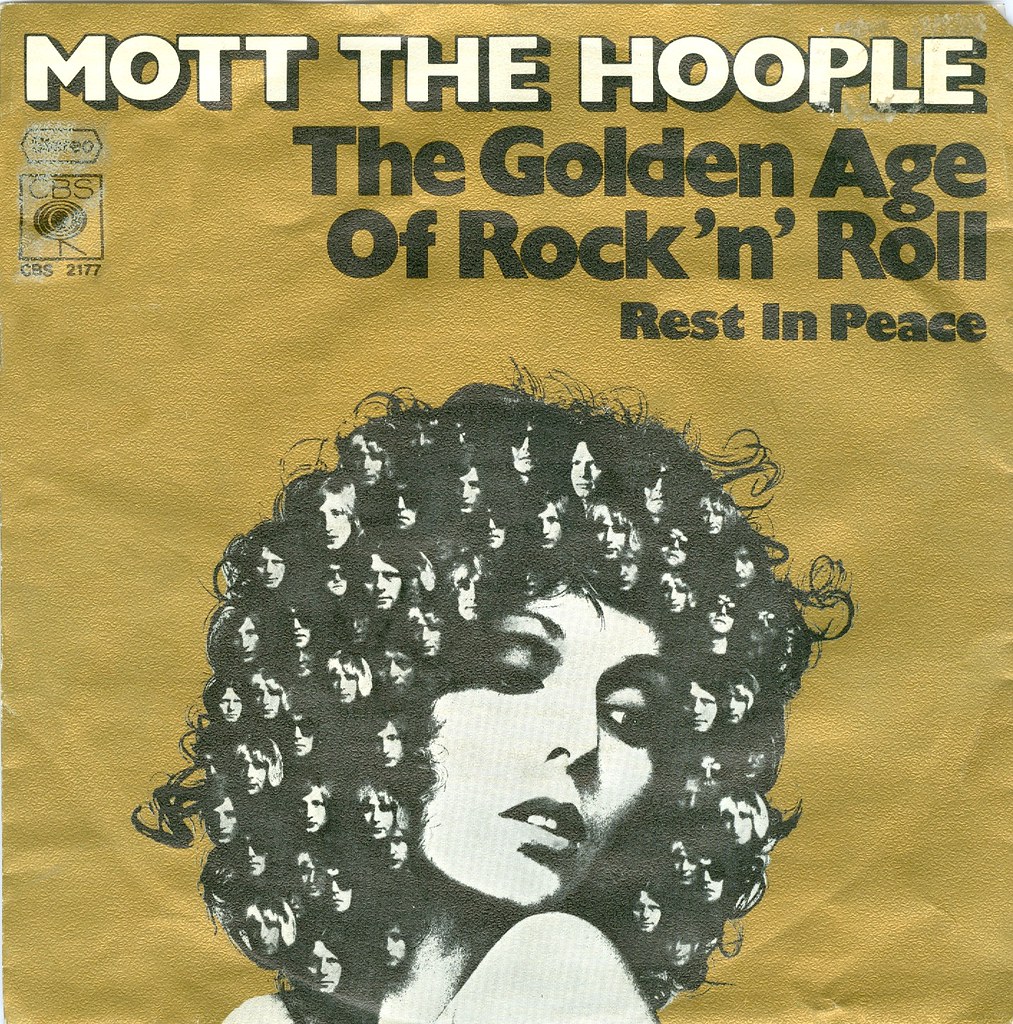
Mott The Hoople had one huge hit in America. It was the David Bowie penned song All The Young Dudes. Bowie was a fan of the band and sent them Suffragette City but they didn’t think it fit their style and politely turned it down. Mott The Hoople were about to break up so Bowie showed this to the band on acoustic guitar and they loved it right away.
The Golden Age Of Rock and Roll was written by Ian Hunter. It was released in 1974 on the album TheHoople. This would be the last album with Ian Hunter as lead singer. It was also the first and only one with guitarist Luther James Grosvenor, who went by Ariel Bender for contractual reasons. He replaced Mick Ralphs who left the year before and co-founded Bad Company.
Mott The Hoople influenced bands such as Oasis, Queen, Def Leppard, Queen, The Clash, KISS, Cheap Trick, and many more.
Hunter started a solo career with the eponymous 1975 album that included his song, Once Bitten Twice Shy, and has remained prolific. That song was later covered by Great White in 1989.
Ian Hunter had journalistic training. “When I left school I became a cub reporter for the Wellington Journal in Shropshire, that job lasted about three months because although I could do the typing. I couldn’t do the shorthand. Then I went to Butlins [holiday camp] with my girlfriend and met two kids in a group who asked me to enter a talent competition with them.
“We’d only known each other for three days and there were about 165 acts altogether – but we won it, then a couple of weeks later I had a letter from them in Northampton asking me to join them in a group. That group was called Apex and that was in fact how it all started.”
Some fun trivia…Kari-Ann Mollera was the model on the The Hoople album and Roxy Music’s 1972 debut album.
The Golden Age of Rock ‘n’ Roll
Everybody hazy shell-shocked and crazy Screaming for the face at the window Jeans for the genies dresses for the dreamies Fighting for a place in the front row
Oh oh oh good for your body it’s good for your soul Oh oh let’s go it’s the golden age of rock and roll
Well you get a little buzz send for the fuzz Guitars gettin’ higher and higher The dude in the paint thinks he’s gonna faint Stoke more coke on the fire
Oh oh oh gotta stay young you can never grow old Oh oh the golden age of rock and roll
The golden age of rock and roll will never die As long as the children feel the need to laugh and cry Don’t wanna wreck, just recreation Don’t wanna fight but if you turn us down We’re gonna turn you ’round Don’t mess with the sound The show’s gotta move everybody groove There ain’t no trouble on the streets now So if the going gets rough don’t you blame us
Oh oh oh gotta stay young you can never grow old Oh oh the golden age of rock and roll
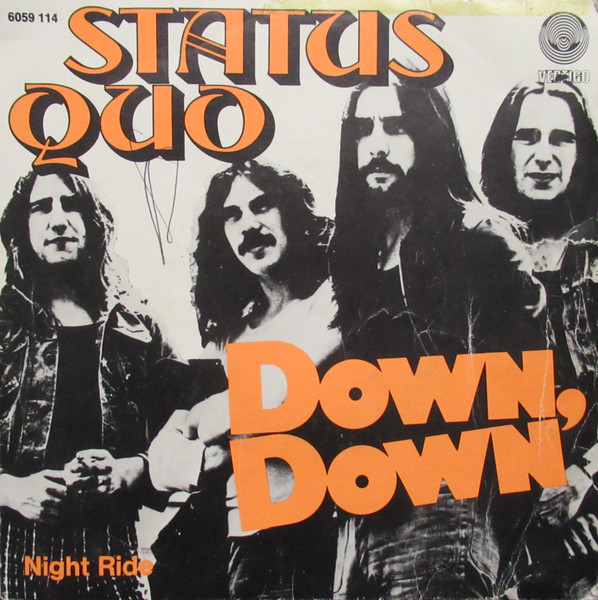
Sometimes a simple cool guitar tone draws me in and this one does. I’ve only posted one Status Quo song and that was their only big hit in America…Pictures of Matchstick Men. I started to listen to their catalog and they were a very good rock and roll boogie band. Some of their songs sound similar but they are a lot of fun. One thing that no one could accuse them of…being pretentious.
They were one of those bands that were huge in the UK but didn’t get played much here. Along with Slade, Faces, T Rex, and others. I’ve talked to some bloggers about it and found that lead guitarist Francis Rossi brought up a good point. He said “Our manager told us we needed management in the U.S. When the idea was presented to me back in about 1971, I didn’t realize the importance of having representation in the States and rejected the suggestion. Unfortunately, what that meant was that whilst we were getting support and promotion during the time we spent in America, we had nobody working for us at all when we weren’t there. I think that happened to a degree for Slade and the Faces as well.
This song was written by Francis Rossi with their road manager and part-time harmonica player Bob Young. The song peaked at #1 in the UK in 1974. It was on the album On The Level which peaked at #1 on the UK Charts in 1975. It’s hard to believe but this is their only #1 hit with all the songs they released.
Rossi wrote the song in Los Angeles while the band was out “exercising their pencils” but he wrote this at a bar next door when Bob Young came by and helped him. They stole a little of the rhythm of the intro from their own song…the hit Pictures of Matchstick Men.
Francis Rossi: “We were in Los Angeles staying in this terrible little travel lodge on Sunset Boulevard, which the time seemed by heaven. Traditionally, I would stay in a room boring and most people would be out. I was sitting with a guitar with a G tuning just messing around with the thing. And I got the entire (thing).”
“Most music you sit on acoustic guitar and you try do harden it up somehow. These things at the time you don’t realize they’re going to be wherever they turn out to be. It was enjoyable to make it. It was quite thunderous at the time and the record. People kept asking me how we’ve got so much bass on the record. But I have no idea why we have so much bass on the record. But people love it, still do.”
Down Down
Get down deeper and down Down down deeper and down Down down deeper and down Get down deeper and down
I want all the world to see To see you’re laughing, and you’re laughing at me I can take it all from you Again again again again Again again again and deeper and down
Get down deeper and down Down down deeper and down Down down deeper and down Get down deeper and down
I have all the ways you see To keep you guessing, stop your messing with me You’ll be back to find your way Again again again again Again-gain-gain-gain deeper and down
Down down deeper and down Get down
Get down deeper and down Down down deeper and down Down down deeper and down Get down deeper and down
I have found you out you see I know what you’re doing, what you’re doing to me I’ll keep on and say to you Again again again again Again-gain-gain-gain deeper and down
We are nearing the end of Max Picks…we still have one more year to go.
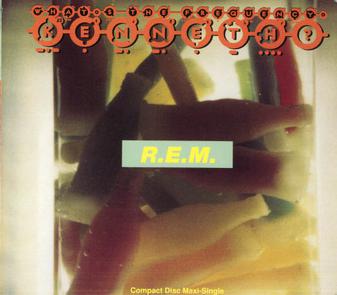
R.E.M. – What’s The Frequency Kenneth?
This song along with Fall On Me is my favorite REM song.
REM really let loose on their album Monster. I love the tone on Peter Bucks’s guitar and the loud in-your-face production. Peter Buck played the late Kurt Cobain’s Fender Jag-Stang, which he plays upside-down because Cobain was left-handed. This to me…is very close to having a REM and Replacements song all in one.
This song is about an incident that took place on October 4, 1986, when the CBS news anchor Dan Rather was attacked on a New York City sidewalk by a crazed man yelling “Kenneth, what is the frequency.” The man turned out to be William Tager, who was caught after he killed a stagehand outside of the Today Show studios on August 31, 1994. Tager, who was sentenced to 25 years in prison, said he was convinced the media was beaming signals into his head, and he was on a mission to determine their frequencies.
Lead singer Michael Stipe says this is an attack on the media, who overanalyze things they don’t understand.
After this song I lost contact with REM’s music for a long time…the same with The Replacements. Those two bands represented the best of the 80s for me.
Weezer – Buddy Holly
This was released to radio on September 7, 1994, which would have been Buddy Holly’s 58th birthday.
The video for this song hooked me for not only the mention of Buddy Holly, Mary Tyler Moore but also the Happy Days set… Plus its a fun song.
Spike Jonze directed the video. Vintage Happy Days footage was intercut with shots of Weezer performing on the original Arnold’s Drive-In set. Al Molinaro, who played the diner’s owner on the series, made a cameo appearance in the video. One of the most popular clips of 1995, it scored four MTV Video Music Awards, including Breakthrough Video and Best Alternative Music Video, and two Billboard Music Video Awards, among them Alternative/Modern Rock Clip of the Year.
Pretenders – I’ll Stand By You
Chrissie Hynde wrote this with Tom Kelly and Billy Steinberg. “I’ll Stand by You” was released as the second single from the 1994 album Last of the Independents. It’s a beautiful song that has been covered a few times.
For Hynde, working with outside songwriters was different, as she was used to writing on her own. It ended up being a very positive experience that led to more collaborations.
Chrissie had said she was uncomfortable about having such a hit but felt better after Noel Gallagher said “he wished he’d written it.”
Chrissie Hynde:“When I did that song, I thought, Urgh this is s–t. But then I played it for a couple of girls who weren’t in the business and by the end of it they were both in tears. I said, OK, put it out.”
Green Day – When I Come Around
This was my first introduction to Green Day. The more albums they released the more I liked them. American Idiot is probably my favorite album but this song was a good introduction to the band for me.
Billie Joe Armstrong, Mike Dirnt, and Tré Cool are listed as writers of this song. It was not released as a single, which was a strategic move by Green Day’s label Reprise to up the sales of the album.
When performing this song at Woodstock ’94, a fan threw a clump of mud on stage and Billie Joe stuck it in his mouth. This caused the fans to keep throwing mud and started the infamous mud fight. Many fans look back at Woodstock ’94 fondly, calling it “Mudstock ’94” largely because of this incident.
Nirvana – The Man Who Sold the World
This version has a charm about it I like. Cobain did a great job on this.
David Bowie liked this cover saying, “I was simply blown away when I found that Kurt Cobain liked my work, and have always wanted to talk to him about his reasons for covering ‘The Man Who Sold the World’.”
What he didn’t like were the kids that came up after his show and said, ‘It’s cool you’re doing a Nirvana song.’ And I think, ‘F**k you, you little tosser!”
Nirvana performed it on the MTV Unplugged episode a few months before Cobain died…it was released on the MTV Unplugged album in November of 1994.
Long before Prince started to mess with titles to songs…Slade was doing it in the early seventies. When I think of glam rock…I don’t think of this band but they were indeed considered glam rock.
Slade was very successful in the UK with 6 number ones, 16 top ten, and 24 top 40 singles. They could not duplicate their success in America where they only had two top forty singles…Run, Runaway, and My, Oh My both in the 80s. Quiet Riot covered Slade’s songs Cum On Feel The Noize and Mama, Weer All Crazee Now, and had hits in the 1980s.
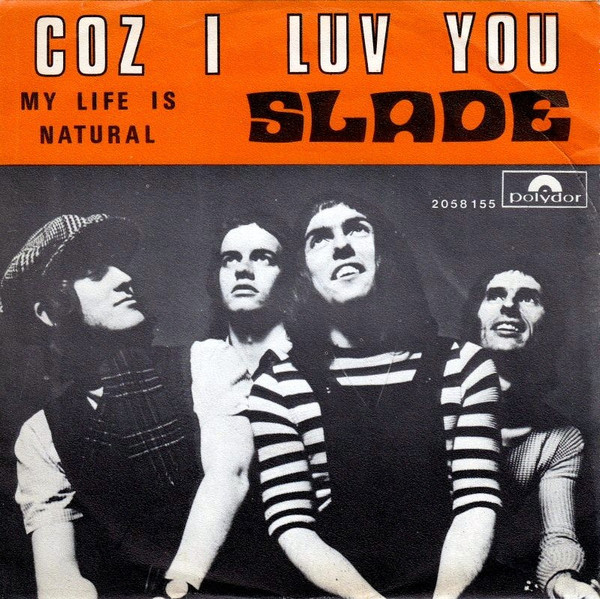
This 1971 song was Slade’s first number-one single and solidified their status as one of glam rock’s biggest bands in the UK. Chas Chandler (formerly Jimi Hendrix’s manager and Animals bassist) encouraged them to write their own songs and they ended up writing a lot of hits.
The song was written by lead singer Noddy Holder and bassist Jim Lea. They wrote it during a rehearsal they used to tune Lea’s violin. The song grew from there.
Slade was not like The Small Faces who never toured the US. They toured extensively with bands like Humble Pie, ZZ Top, J Geils Band, Black Sabbath, Santana, and Aerosmith opened for them in a few places until Toys in the Attic hit…and then they reversed it.
They even did a movie called Slade In Flame that came out in 1975. It was what went on behind the scenes in rock at the time. It wasn’t a spoof because Holder fought against that.
Noddy Holder: “We thought ‘Because I Love You’ was a wet title for a song and so we used the spelling that would be on toilet walls in the Midlands and that made it more hard-hitting.”
Noddy Holder: “We didn’t like how the title would look on vinyl: ‘Because I Love You.’ It didn’t fit Slade’s image. In the studio, I had the lyric sheet written out phonetically in Black Country dialect which is how we used to write on bog walls. Chas Chandler, our manager, saw the lyric sheet, and said, ‘Why don’t we use that?’ It caught on and had such an impact.”
“Of course, you got Prince doing it in the ’80s, then all the hip-hop artists later on, so we started something. The education authorities got onto us for influencing the youth for bad spelling.”
Noddy Holder: “He (Chas Chandler) told us to write a hit song, just like that, and that’s not very easy to do. Jimmy and me wrote ‘Coz I Luv You’ in 20 minutes and Chaz was raving about it. We felt that it wasn’t rocky enough for Slade so we added all the handclapping and boot-stomping, which made it much more commercial and became our trademark.”
Jim Lea: “Our first hit, Get Down And Get With It,’ was a cover. Chas kept ringing up saying we needed a follow up, fast. We’d started trying to write in pairs – Don [Powell] and I, Noddy and Dave [Hill] , but the other two weren’t coming up with anything. Bolan was big at the time and all his songs were slinky and sexy. That seemed to be what it took to get a hit, so I had an idea to do something softer. At the time Nod and I used to jam along to [’30s French jazz violinist] Stéphane Grappelli and [Belgian jazz guitarist] Django Reinhardt, so I went over to his folks’ house to work something up with him. I’d already got the structure and 20 minutes later we had ‘Coz I Luv You.’ It romped to #1. I had to turn round to Don and say, ‘Look, we’re going to have to keep this going.'”
Cuz I Love You
I won’t laugh at you when you boo-hoo-hoo
Coz I luv you
I can turn my back on the things you lack
Coz I luv you
(Chorus):
I just like the things you do mm
Don’t you change the things you do mm
You get me in a spot and smile the smile you got
And I luv you
You make me out a clown then you put me down
I still luv you
(Chorus)
I just like the things you do mm
Don’t you change the things you do mm
Yeah
When you bite your lip you’re gonna flip your flip
But I luv you
When we’re miles apart you still reach my heart
How I love you
(Chorus)
I just like the things you do mm
Don’t you change the things you do mm
Only time can tell if we get on well
Coz I luv you
All that’s passed us by we can only sigh hi-hi
Coz I luv you
(Chorus)
I just like the things you do mm
Don’t you change the things you do mm
I found The Jam around the time I found Big Star. An older brother of a friend of mine played some albums by them in the early 80s. Another band that could not make the jump to America. Sometimes people say…oh this or that band was just too British. I never found a fault in that and wanted more British bands. But…if ever a band could be considered “too British” this may very well be the band.
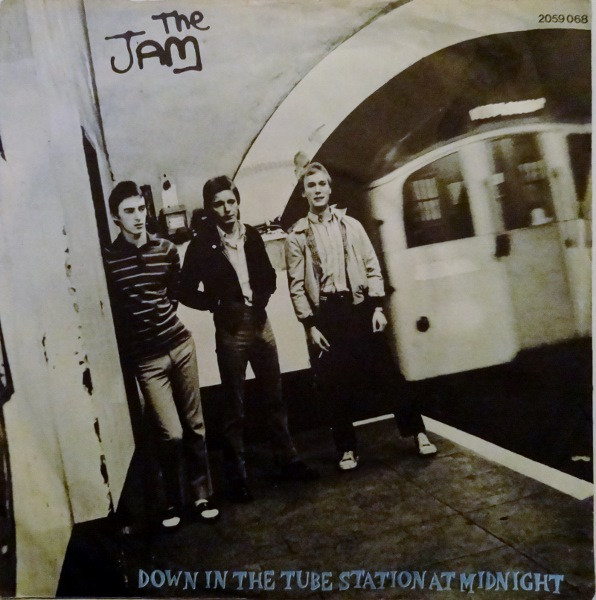
This song about a brutal mugging in London became a classic. The song is on the album All Mod Cons which was released in 1978. It was their third album since May of 1977 when their debut was released. They would release six studio albums in the five years they were around making records.
The song gave them their second top-20 hit. It peaked at #15 in the UK in 1978. Paul Weller, who wrote most of the Jam’s songs, wasn’t going to include it on the album. He didn’t think the song was developed enough but producer Vic Coppersmith-Heaven finally convinced him to work on it and include it.
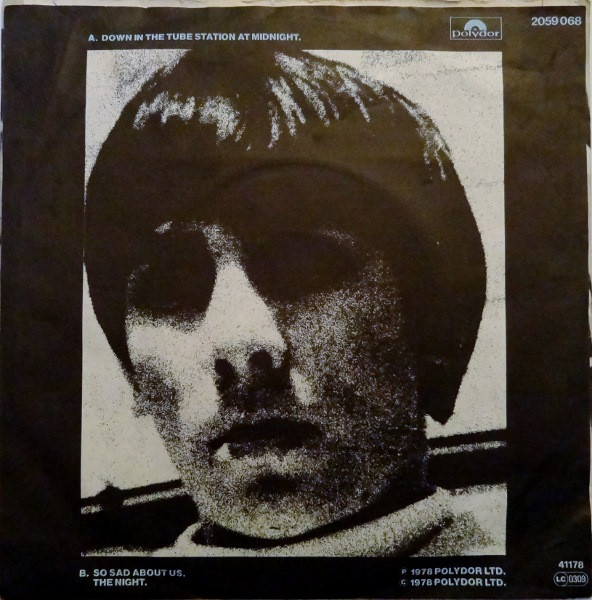
The single cover showed the band and the back cover had a picture of Keith Moon who had just died. The B side to the song was The Who’s So Sad About Us. The Jam was in the middle of the 1970s Mod Revival going on. You can see and hear The Who and other sixties bands’ influences in their music and videos.
They formed in 1973 and released their first album in 1977. Their members included guitarist Paul Weller, bassist Bruce Foxton, and drummer Rick Butler. Paul Weller is the best known out of the band but they were all great musicians. Being a bass player…I’ve noticed a lot of Foxton’s bass playing is terrific.
Although The Jam was at the height of its popularity, Weller was becoming frustrated with the trio’s sound and made the decision to disband the group in 1982.
Producer Vic Coppersmith-Heaven – “I remember Paul throwing certain songs out of the All Mod Cons album, like ‘Down in the Tube Station’, which he rejected largely because the arrangement hadn’t developed during the recording session. I said, ‘Hang on, I haven’t even read the lyrics yet, Paul… You should really work on this song, it’s great. I was insistent on him reviving it, and once the band got involved and we developed the sound it turned into an absolutely brilliant track, a classic. Maybe we would have come around to recording it later on in the project, but he’d just reached that point of ‘Oh bollocks, this isn’t working, it’s a load of crap.'”
The B side…So Sad About Us (I like it just as well as the A side)
Down In The Tube Station At Midnight
The distant echo
Of faraway voices boarding faraway trains
To take them home to
The ones that they love and who love them forever
The glazed, dirty steps
Repeat my own and reflect my thoughts
Cold and uninviting, partially naked
Except for toffee wrappers and this morning’s papers
Mr. Jones got run down
Headlines of death and sorrow, they tell of tomorrow
Madmen on the rampage
And I’m down in the tube station at midnight, oh
I fumble for change, and pull out the Queen
Smiling, beguiling
I put in the money and pull out a plum
Behind me
Whispers in the shadows, gruff blazing voices
Hating, waiting
“Hey boy” they shout, “Have you got any money?”
And I say, “I’ve a little money and a takeaway curry
I’m on my way home to my wife
She’ll be lining up the cutlery, you know she’s expecting me
Polishing the glasses and pulling out the cork”
I’m down in the tube station at midnight, oh
I first felt a fist, and then a kick
I could now smell their breath
They smelt of pubs, and wormwood scrubs
And too many right wing meetings
My life swam around me
It took a look and drowned me in its own existence
The smell of brown leather
It blended in with the weather
Filled my eyes, ears, nose and mouth, it blocked all my senses
Couldn’t see, hear, speak any longer
I’m down in the tube station at midnight, oh
I said I was down in the tube station at midnight, oh
The last thing that I saw as I lay there on the floor
Was “Jesus saves” painted by an atheist nutter
And a British rail poster read
“Have an away day, a cheap holiday, do it today”
I glanced back on my life, and thought about my wife
‘Cause they took the keys, and she’ll think it’s me
I’m down in the tube station at midnight
The wine will be flat and the curry’s gone cold
I’m down in the tube station at midnight, oh
Don’t want to go down in a tube station at midnight, oh
Don’t want to go down in a tube station at midnight, oh
Don’t want to go down in a tube station at midnight, oh
Don’t want to go down in a tube station at midnight, oh
T Rex had something in common with Status Quo. They had a lot of hits in the UK but only one here…Get It On. I’ve been going through their catalog and listening to their singles…I need to work on the albums. With Status Quo, I thought they should have played more here. With T Rex…I think yeah, they should have had hits here.
They were considered glam rock by 71 and some people say that glam didn’t make it in America. Well, that doesn’t hold much water when you see what David Bowie did with Ziggy Stardust. I looked at some of their tours of America and I can see some problems. They opened up for Blue Öyster Cult, Lynyrd Skynyrd, ZZ Top, and Three Dog Night. Let’s think about this a second…all great bands yes…but not a hotbed for glam rock.
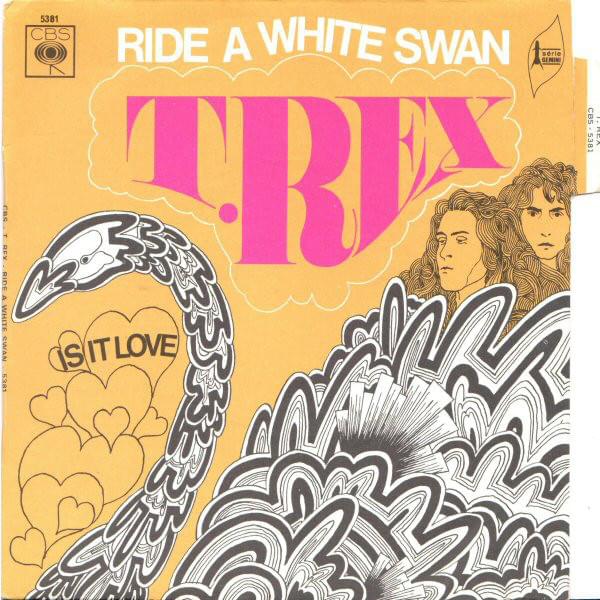
Bolan had a knack for taking a title and making it into a catchy song. Look at their titles…Jeepster, Telegram Sam, Metal Guru, and 20th Century Boy. All have a rhythm just in the title and he was very good at getting good songs out of that. Ride a White Swan was written by Marc Bolan.
Before this single was released…they were known as Tyrannosaurus Rex, two years of their single releases had yielded just one appearance in the UK Top 30, with One Inch Rock. This stand-alone single was the duo of Marc Bolan and Mickey Finn’s first under the newly-abbreviated name T Rex, and the first for the Fly label, newly formed by David Platz with the support of Track Records’ The Who management team of Kit Lambert and Chris Stamp.
Here is an excerpt from the book Bolan:The Rise and Fall of a 20th Century Superstar by Mark Paytress.
The new songs spoke loudly of transition and wish-fulfilment; one in particular managed to encapsulate everything Marc Bolan had been looking for. At one session in July 1970, he asked Tony Visconti to start rolling the tape. He wanted to put down a new song, ‘Ride A White Swan’; “Let’s call it ‘Swan’,” Visconti called back from the Trident Studios control booth, unaware that the next few seconds would reveal the key to Marc Bolan’s glorious future. With his cherished Gibson Les Paul around his neck (stained orange in homage to Eddie Cochran’s six-string), Marc formed an open E shape chord above the capo he’d strapped over the fourth fret, and kicked out a clipped rock ‘n’ roll chord just like James Burton on those old Ricky Nelson B-sides. Almost the instant Visconti flicked a switch, adding a small amount of reverb on the guitar track, Marc shouted back emphatically: “I want that sound!”
‘Ride A White Swan’ not only sounded simple; it was simple. The ingredients were few – that clipped, three-chord-trick guitar, Marc’s cautious vocal (sung from a sheet hastily typed by June), handclaps on the offbeat and a rudimentary Bolan bass line (played on Visconti’s Fender Precision bass), offset by a modest, Visconti-arranged string section and that trademark Tyrannosaurus Rex falsetto backing drone. The lyrics – just twelve short, sweet lines – were similarly economical, even by Marc’s recent standards. And the crucial parts that Dib Cochran and The Earwigs lacked – a genuine voice, and a rock ‘n’ roll backing – were here in abundance.
“When we heard what we got,” recalls [Marc’s music publisher] David Platz, “it was simply so exciting that we knew we had a potential Superstar on our hands. It had such a different sound, and was exactly right for that particular time.” Releasing ‘Ride A White Swan’ as the band’s next single seems in retrospect to have been an expertly judged calculation, but at the time its success took almost everyone by surprise – even Marc whose memory was already saturated with misplaced hopes. In fact, the route to number two in the British charts in November 1970 was tortuous and complicated, with several factors contributing to the success of ‘Ride A White Swan’.
The song peaked at #2 in the UK, #48 in Canada, #9 in New Zealand, and #76 on the Billboard 100 in 1970.
Elton John: “The perfect pop star, his songs were great, his records rocked, he had attitude, he had performing skills, he looked fabulous, he dressed the part. At a time when I was still becoming Elton John, he was a great role model. I thought: ‘This guy doesn’t give a fuck, he’s just being who he is and he’s loving every single minute of it.’ And that had a great effect on me.… He was sitting there in a cloak covered in stars, writing songs that sounded like Chuck Berry, very simple songs. What?”
The Edge: Marc Bolan was magical, but also sexually heightened and androgynous, with this glitter and makeup, I’d never seen anything like it: ‘What the hell is this? Real lads are not into this kind of stuff – this is clearly music for girls.’ But when I picked up a guitar a year later, ‘Hot Love’ was the first song I learned to play.“I’ve no doubt every aspect of how he presented himself was just an outpouring of his understanding that things could be magical, things could be heightened. Out in the ordinary world, he managed to cast a spell over all of us.”
Ride The White Swan
Ride it on out like a bird in the sky ways Ride it on out like you were a bird Fly it all out like an eagle in a sunbeam Ride it on out like you were a bird
Wear a tall hat like a druid in the old days Wear a tall hat and a tattooed gown Ride a white swan like the people of the Beltane Wear your hair long, babe you can’t go wrong
Catch a bright star and a place it on your forehead Say a few spells and baby, there you go Take a black cat and sit it on your shoulder And in the morning you’ll know all you know, oh
Wear a tall hat like a druid in the old days Wear a tall hat and a tattooed gown Ride a white swan like the people of the Beltane Wear your hair long, babe you can’t go wrong









 PowerPop... An Eclectic Collection of Pop Culture