Rolling Stones – Let It Bleed

This song is why I first bought this album. I heard it and it’s country/blues/rock style stayed with me. The song sounds low down, dirty, and sleazy…that only the Stones can deliver.

Keith Richards’ fingers began to bleed as he played acoustic guitar for hours while Mick Jagger worked with an engineer on the drum track. The title came from Keith’s desire to record his track. At least that’s the story the Mick and Keith tells. The phrase “Let It Bleed” is an intravenous drug user slang for successfully finding a vein. The syringe plunger is pulled back and if blood appears, it is called letting it bleed.

This was recorded around the same time as The Beatles Let It Be, but the similar titles were just a supposed coincidence.

The Stones recorded this after the death of Brian Jones but before Mick Taylor joined the band as his replacement. As a result, Keith Richards played both acoustic and slide electric guitar, and Bill Wyman played bass and autoharp.

The song wasn’t a single but the album (also named Let It Bleed) peaked at #3 in the Billboard Album Chart in 1969.

From Songfacts

This was the first Stones song to also be the album title.

Ian Stewart, often considered “The sixth Stone,” played the piano. This was his only appearance on Let It Bleed.

There are many references to sex and drugs in the lyrics to this track – an example of the Stones writing about what they knew.

 Autoharp is a string instrument with a series of chord bars attached to dampers which, when pressed, mute all but the desired chord. An autoharp is not really a harp – it’s a zither. 

The English TV cook and author Delia Smith baked the cake on the album sleeve before she became famous. She got the gig through being a friend of the photographer, Don McAllester. In 1971, two years after the release of Let It Bleed, Delia Smith’s first cookery book, How To Cheat at Cooking, was launched and by the end of the decade she’d become the UK’s best known TV cook.

Let It Bleed

Well, we all need someone we can lean on
And if you want it, you can lean on me
Yeah, we all need someone we can lean on
And if you want it, you can lean on me

She said, my breasts, they will always be open
Baby, you can rest your weary head right on me
And there will always be a space in my parking lot
When you need a little coke and sympathy

Yeah we all need someone we can dream on
And if you want it baby, you can dream on me
Yeah, we all need someone we can cream on
Yeah and if you want to, you can cream on me

I was dreaming of a steel guitar engagement
When you drunk my health in scented jasmine tea
But you knifed me in my dirty filthy basement
With that jaded, faded, junky nurse oh what pleasant company, ha

Though, we all need someone we can feel on
Yeah and if you want it, you can feel on me, hey
Take my arm, take my leg
Oh baby don’t you take my head
Hoo

Yeah, we all need someone we can bleed on
Yeah but if you want it, well you can bleed on me
Yeah, we all need someone we can bleed on
Yeah yeah and if you want it baby why don’t ya
You can bleed on me
All over, hoo

Ah, get it on rider, hoo
Get it on rider
Get it on rider
You can bleed all over me, yeah
Get it on rider, hoo
Get it on rider, yeah
You can cream all over, you can come all over me, ah
Get it on rider ey
Let it out rider
Let it out rider
You can come all over me

Get it on rider
You can come all over me, yeah

Get it on rider

Beatles – For No One

McCartney wrote this song. John Lennon had said it was a Paul song and it is thought to be mostly if not all his song. The song was not a single but just added another great song to the album.

The song was on the Beatles arguably best album Revolver…and perhaps one of the best albums of all time.

George Martin called in Alan Civil to play the French horn in the solo.

Paul McCartney and George Martin about the French Horn : ‘Well, it goes from here to this top E,’ and I said, ‘What if we ask him to play an F?’ George saw the joke and joined in the conspiracy. We came to the session and Alan looked up from his bit of paper: ‘Eh, George? I think there’s a mistake here – you’ve got a high F written down.’ Then George and I said, ‘Yeah,’ and smiled back at him, and he knew what we were up to and played it. These great players will do it. Even though it’s officially off the end of their instrument, they can do it, and they’re quite into it occasionally. It’s a nice little solo.”

Most people would have never written that part for a French horn player because it was too high to play, but that was the note Paul wanted to hear.

If you want to know more songs with French Horn…go here to Aphoristical’s site.

Paul McCartney: “I was in Switzerland on my first skiing holiday. I’d done a bit of skiing in ‘Help!’ and quite liked it, so I went back and ended up in a little bathroom in a Swiss chalet writing ‘For No One.’ I remember the descending bass-line trick that it’s based on, and I remember the character in the song – the girl putting on her make-up.”

From Songfacts

Paul McCartney wrote this song sitting in a chalet while on holiday with his girlfriend Jane Asher in Klosters, Switzerland, March of 1966. The working title was “Why Did It Die,” and there is speculation that McCartney wrote the song about Asher, who was a successful London actress.

The theory is that Paul wanted her to cater to his schedule, tour with him, and be the “perfect Beatle wife,” but Jane had a life and career of her own, hence the “She doesn’t need you” lyrics. Paul has never said it was about Jane specifically, however he did say, “I guess there had been an argument. I never have easy relationships with women.” He knew what he was getting into when he got involved with Jane, and being that the song was written in 1966 and they didn’t break up until 1968, it’s likely that if the song was about Jane, it wasn’t a serious argument.

This was recorded on May 9, 16 and 19, 1966 by only two Beatles – Paul singing and playing the keyboard and bass, and Ringo on percussion. 

Maureen McGovern recorded this and “Things We Said Today” as a 2-song medley for her 1992 album Baby I’m Yours.

McCartney used this in his 1984 movie Give My Regards to Broad Street.

Revolver was the last Beatles album to have different US and UK versions. In 2002, Rolling Stone readers voted it the greatest album of all time. The album cover was created by artist Klaus Voormann, who became friends with the band when they were playing clubs in Hamburg, Germany in the early ’60s.

For No One

Your day breaks, your mind aches
You find that all the words of kindness linger on
When she no longer needs you

She wakes up, she makes up
She takes her time and doesn’t feel she has to hurry
She no longer needs you

And in her eyes you see nothing
No sign of love behind the tears
Cried for no one
A love that should have lasted years!

You want her, you need her
And yet you don’t believe her when she says her love is dead
You think she needs you

And in her eyes you see nothing
No sign of love behind the tears
Cried for no one
A love that should have lasted years!

You stay home, she goes out
She says that long ago she knew someone but now he’s gone
She doesn’t need him

Your day breaks, your mind aches
There will be times when all the things she said will fill your head
You won’t forget her

And in her eyes you see nothing
No sign of love behind the tears
Cried for no one
A love that should have lasted years!

Where is… the Chitty Chitty Bang Bang Car Now?

For my eighth birthday, I was given the Chitty Chitty Bang Bang soundtrack. I loved the movie so much that my mom got it for me. The movie is a classic…and what’s not to like… a flying car…that is all it took to get my attention and the catchy theme song.

Chitty Chitty Bang Bang found fame in the 1968 children’s movie of the same name starring Dick van Dyke. The magical car not only traveled on land but could fly and also float on water. The car was designed by the film’s production designer, Ken Adam.

The original driving car that was used in the film and the final product weighed approximately 2 tons, was 17 feet long, and built on a custom made ladder frame chassis.

The alloy dashboard plate was from a British World War I fighter plane. All of this was built around a modern Ford V6 engine with Automatic transmission. Chitty rolled out of the workshop in June 1967 and was registered with the number plate GEN 11 given to her by Ian Fleming in his novel.

For the 1968 film, six cars were created, this one was the fully functional road-going car.

From 1970 to 2011, the Chitty Chitty Bang Bang car was owned by a man named Pierre Picton, who toured in the car, taking it to various auto shows around the UK. In 2011, the car was auctioned for $805,000.

The acclaimed Lord of the Rings director Peter Jackson purchased the car. Jackson has since used the vehicle to raise money for charities in various capacities. The car is kept in New Zealand where it is registered as GEN 1I, because the original Gen 11 Plate was already taken.


Where is…The Starship Enterprise Model Now?

Star Trek was a great part of my childhood. The Starship Enterprise or USS Enterprise was as big of a character as Spock or Captain James T. Kirk.

The USS Enterprise was designed by the original TV show’s Art Director Walter M. Jefferies, with input from series creator Gene Roddenberry. The ship’s registration number, NCC-1701, was inspired by Jefferies’ own 1935 Waco YOC airplane – which had the registration number NC-17740.

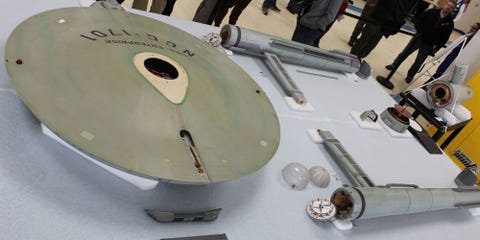
Two models of the Enterprise from the original series are still known to exist. The main model measures about 11 feet long, 32 inches high, and weighs about 200 pounds. That is a huge model.

It was made mostly of wood and formed plastic. The two engine pods were made using sheet metal tubes.

A second model, measuring about 18 inches long, was also used for some special effects shots in the series. It was made and fitted with blinking lights.

In 1974, the large Enterprise model was donated by Paramount Pictures to the Smithsonian Institute. It has been on display at their Air and Space Museum.

Walter’s brother John Jefferies owned the smaller model until December of 2001… it was then sold to a private collector.

So if you want to see the large USS Enterprise you will have to go to the Smithsonian. It is the one that appeared in every episode.

Restoring the original model at the Smithsonian. If you want to read about it…cool article here… https://www.popularmechanics.com/culture/tv/news/g2454/the-restoration-of-the-original-star-trek-enterprise-is-underway/

image

Creedence Clearwater Revival – Lodi

Every bar band who has ever played this song in hole in the wall bar… can relate to the lyrics. This song was the B-Side to Bad Moon Rising. CCR and The Beatles had the best double-sided singles of anyone in my opinion.

Lodi is a city in California located in the central valley, about 38 miles south of Sacramento and 87 miles away from Oakland. Fogerty and his earlier band (The Golliwogs) often performed in out of the way towns like Lodi.

Because of being the B side… Lodi peaked at #52 in the Billboard 100 while the A-side Bad Moon Rising peaked at #2 in 1969.

Drummer Doug Clifford on Lodi California: “There were nine people in there, they were all locals, they were all drunk and all they did all night was tell us to turn it down.”

From Songfacts

In Fortunate Son: My Life, My Music, John Fogerty explained that the inspiration for “Lodi” came from trips with his father around central California, an area of the world where he “felt very warm and special.” This seed of an idea grew into a story about a traveling musician whose career “is in the rearview mirror.” Fogerty was only 23 when he wrote this song about an aging musician.

This song is a reflection on John Fogerty’s days with The Golliwogs, an early version of Creedence Clearwater Revival. They had to struggle for success, playing wherever they could with dilapidated equipment and an often indifferent audience. He did not want a return to the Bad Old Days.

Al Wilson recorded a cover of this song. His version was issued on Soul City Records in America and on Liberty Records in the United Kingdom. It was played extensively in the few underground “Northern Soul” clubs of England during the late 1960s and early ’70s, getting its first exposure at the famous Twisted Wheel Club Allnighters in Manchester, England. 

In a radio interview, John Fogerty said when he was young his parents took him and his brother to camp at Lodi lake (called Smith lake then) and they hated camping there. So later on they wrote a song about Lodi using their old hatred for the place. 

Tesla did an acoustic version of this song that was included on their 1990 live album, Five Man Acoustical Jam. Each band member got to pick a song to cover for the set, and Tesla drummer Troy Luccketta chose “Lodi” since he was born there.

Lodi

Just about a year ago
I set out on the road
Seekin’ my fame and fortune
Lookin’ for a pot of gold
Thing got bad and things got worse
I guess you know the tune
Oh Lord, stuck in Lodi again

Rode in on the Greyhound
I’ll be walkin’ out if I go
I was just passin’ through
Must be seven months or more
Ran out of time and money
Looks like they took my friends
Oh Lord, I’m stuck in Lodi again

A man from the magazine
Said I was on my way
Somewhere I lost connections
Ran out of songs to play
I came into town, a one night stand
Looks like my plans fell through
Oh Lord, stuck in Lodi again

If I only had a dollar
For every song I’ve sung
Every time I had to play
While people sat there drunk
You know, I’d catch the next train
Back to where I live
Oh Lord, stuck in a Lodi again
Oh Lord, I’m stuck in a Lodi again

Roy Orbison – Running Scared

Running Scared is a song written by Roy Orbison and Joe Melson. The song peaked at #1 in the Billboard 100 and #9 in the UK. Roy’s voice turns this  into something more than just a pop song.

Something I’ve read about this session. Roy wasn’t happy with his first couple of takes. He felt he wasn’t singing that final verse loud enough. The orchestra seemed to be drowning him out. He’d been singing that final note in falsetto, and he finally decided to just sing it full-on, singing it as hard as he could. Orbison sang so hard the musicians in the orchestra stopped playing. They were stunned.

Running Scared, like many of his other songs, was recorded in RCA Studio B in Nashville with the session pros known as “The A-team.”

From Songfacts

A song called “Running Scared” delivered in the trembling tones of Roy Orbison sure sounds pretty bleak, especially when he starts singing about the girl’s past love and how she still feels for him. At the end, however, we find out that everything works out for the best, and the girl walks away with the singer. Orbison’s plaintive voice led many to believe that all his songs were based on misery, but he liked to point out that this one has a happy ending.

Orbison began his career with Sun Records in Memphis, where he was a Rockabilly singer – in 1956 he reached #59 US with “Ooby Dooby,” recorded with his group the Teen Kings. As a songwriter, he also cracked the charts with “So Long I’m Gone” (#72 for Warren Smith in 1957) and “Claudette” (#30 in 1958 for The Everly Brothers).

After moving to Monument Records, Orbison went to Nashville and teamed with fellow songwriter Joe Melson. The pair began writing more operatic songs that would become huge hits for Orbison and define his style – songs that “give you an up mood while you’re crying,” as Melson put it. Their first major success was “Only The Lonely (Know The Way I Feel),” which was followed by “Blue Angel,” “Up Town,” “I’m Hurtin'” and “Running Scared,” which the pair claimed they wrote in just five minutes.

 The engineer on these sessions was Bill Porter, who gave this song an exaggerated dynamic range, meaning some parts are very quiet and others are very loud. While most songs of the era had a range of about 3 decibels, Porter said that this one has 24.

This was the last song Roy Orbison ever sung live. His final performance was on December 4, 1988, just two days before his sudden passing, at a Cleveland-area venue. As was his usual habit, Orbison closed the show with “Running Scared.”

Running Scared

Just runnin’ scared each place we go
So afraid that he might show
Yeah, runnin’ scared, what would I do
If he came back and wanted you

Just runnin’ scared, feelin’ low
Runnin’ scared, you love him so
Just runnin’ scared, afraid to lose
If he came back which one would you choose

Then all at once he was standing there
So sure of himself, his head in the air
My heart was breaking, which one would it be
You turned around and walked away with me.

My Top Ten Favorite Guitar Solos

These are my favorite guitar solos. Some of these solos are intricate but some are pretty simple. I picked ones out that I have always liked. Some of them are not considered great but I always thought they were memorable. They caught my ear for one reason or another.


1. Cream – Crossroads – A live solo by Eric Clapton. He pulls notes out of the air and turns this cover of the Robert Johnson song into a great rock track.

2. Beatles – While My Guitar Gently Weeps – One of the few times someone else played on a Beatles track. This was Eric Clapton playing this solo. Eric played his guitar through a Leslie cabinet to make it more “Beatlely”

3. Jimi Hendrix – All Along The Watchtower – Jimi made this Bob Dylan song into his own.

4. Dire Straits – Sultans of Swing – I can hum this one all the way through. I know it better than the lyrics.

5. Elvis Presley – That’s Alright Mama – Scotty Moore nails this solo. It’s very simple but it’s perfect.

6. The Rolling Stones – Sympathy For The Devil – Keith’s solo compliments the song perfectly.

7. Led Zeppelin – Heartbreaker – My favorite solo by Jimmy Page

8. Tom Petty – Breakdown – Mike Campbell’s solo is just as part of the song as the lyrics are…

9. Queen – We Will Rock You – Not a difficult solo but catchy. This solo was one of the first ones that I ever noticed. Brian May plays solos you can hum.

10. Badfinger – Baby Blue – A very simple solo but it fits this great power-pop song.


Blodwyn Pig – Dear Jill

I want to thank Val for bringing up this band and song whom she saw open for Led Zeppelin. I love this era of hard blues but I wasn’t familiar with the band. When I heard this song…I knew I heard it before but couldn’t place it…it was featured in the great movie…Almost Famous.

What struck me was singer-guitarist Mick Abrahams’s vocals.

Ahead Rings Out was the debut album by British blues-rock band Blodwyn Pig. It was one of just 2 albums the band released, the other being Getting To This in 1970. The band was formed by former Jethro Tull guitarist Mick Abrahams in 1968.

Blodwyn Pig recorded two albums, Ahead Rings Out in 1969 and Getting To This in 1970. Both reached the Top Ten of the UK Albums Chart and charted in the United States.; Ahead Rings Out

The group was finished by Abrahams’ departure after 1970’s Getting to This. They briefly reunited in the mid-’70s, and Abrahams was part of a different lineup that reformed in the late ’80s; they have since issued a couple of albums in the 1990s.

Dear Jill

Sorry babe, but I won’t be home,
Won’t be home tomorrow.
Sorry darlin’ but I got to let you
Gotta let you down
Your wasten’ my time
Got no love
Love left to give you anymore.

I gotta look for, I gotta find me a brand new
Find me a brand new woman
You know I gotta find, the one that won’t
The one that won’t run around
You took everything I had, but I got no love,
Love left to give you anymore.

The Who – Pinball Wizard

It wasn’t the highest-charting song (See Me, Feel Me peaked at #12) but probably the most well-known song off their concept album Tommy.

It was the last song written for Tommy. Townshend wrote it when he found out influential UK rock critic Nik Cohn was coming to review the project. Townshend knew Cohn was a pinball fanatic, so he put this together to ensure a good review. Cohn gave it a great review, and pinball became the main theme of the rock opera.

After writing this song for Nik Cohn, Townshend almost didn’t even mention it to the band because he hated it so much. They told him to play it and told him he had written a hit. Meanwhile, he thought it was a mindless, badly written song.

The song peaked at #19 in the Billboard 100, #4 in the UK, #6 in Canada, and #8 in New Zealand.

From Songfacts

This is part of Tommy, the first “rock opera.” Tommy is about a young man who is deaf, dumb, and blind, but becomes a pinball champion and gains hordes of adoring fans. It was made into a play and continues to run as an off-Broadway production.

Tommy was made into a movie in 1975 starring Jack Nicholson, Ann Margaret, Tina Turner, and Roger Daltrey (who played Tommy). Elton John made an appearance as The Pinball Wizard and performed this song. His version hit UK #7.

Pete Townshend wrote this. It existed mostly in his head while they were recording it, and the other members of The Who had no idea how most of the story would end until they finished it. Townshend was not credited as the only songwriter on the project – John Entwistle wrote “Cousin Kevin” and “Fiddle About,” and Keith Moon got credit for “Tommy’s Holiday Camp.”

The character Tommy played pinball by feeling the vibrations of the machine. Townshend liked how that related to listeners picking up the vibrations of the music to feel the story.

The single version was sped up to make it more radio-friendly.

This was the most famous and enduring song from the Tommy project. Along with “See Me, Feel Me,” it is one of 2 songs from the album that The Who played throughout their career.

The Who performed this at Woodstock in 1969. The song was still fairly new, so many in the crowd did not recognize it. The Who were given the early morning slot, so they ended up playing this as the sun came up.

The Who performed the entire album from start to finish on their subsequent tour. Two of the dates were in the Metropolitan Opera House in New York City.

The famous guitar riff was sampled by The Shocking Blue on their 1969 hit “Venus,” which was covered by Bananarama in 1986.

The album got The Who out of a financial mess. After a legal battle with their manager, Shel Talmy, and some bad business deals in England, they were facing bankruptcy if it didn’t sell.

According to the book The Duh Awards by Bob Fenster, Rod Stewart asked Elton John if he should accept an offer to sing in Tommy. Elton told him no way, “Don’t touch it with a barge pole.” A year later, The Who asked Elton John to sing the same song. Elton grabbed his barge pole and took the offer. “I don’t think Rod’s quite forgiven me for that,” he commented years later. 

The Dutch group The Shocking Blue used the guitar riff from this song for their 1969 hit “Venus.”

Townshend played a 1968 Gibson SG Special guitar on this song.

This features in a commercial for the Toyota Supra GR that debuted during the 2019 Super Bowl between the Rams and Patriots. In the spot, a driver navigates a life-size pinball game in the vehicle.

Pinball Wizard

Ever since I was a young boy
I’ve played the silver ball
From Soho down to Brighton
I must have played them all
But I ain’t seen nothing like him
In any amusement hall

That deaf, dumb and blind kid
Sure plays a mean pinball!

He stands like a statue
Becomes part of the machine
Feeling all the bumpers
Always playing clean
Plays by intuition
The digit counters fall

That deaf, dumb and blind kid
Sure plays a mean pinball!

He’s a pinball wizard
There has to be a twist
A pinball wizard’s got such a supple wrist

‘How do you think he does it?
I don’t know
What makes him so good?’

Ain’t got no distractions
Can’t hear no buzzers and bells
Don’t see no lights a-flashin’
Plays by sense of smell
Always gets the replay
Never seen him fall

That deaf, dumb and blind kid
Sure plays a mean pinball!

I thought I was The Bally table king
But I just handed my pinball crown to him

Even on my favorite table
He can beat my best
His disciples lead him in
And he just does the rest
He’s got crazy flipper fingers
Never seen him fall

That deaf, dumb and blind kid
Sure plays a mean pinball!

Led Zeppelin – Good Times, Bad Times

The first song on Led Zeppelin’s 1968 debut album, John Bonham, John Paul Jones and Jimmy Page are the credited songwriters on this track. Jones and Bonham really stand out on this track.

To get the sound on his guitar Page ran his guitar through a Leslie cabinet to make the swirling sound. A Leslie cabinet has a speaker in it that spins and makes the sound swirl. The Beatles and Buddy Guy first used that effect with a guitar in 1965. Before that, it was used mostly with the Hammond Organ.

This song peaked at #80 in the Billboard 100 in 1969.

Jimmy Page: “John Paul Jones came up with the riff. I had the chorus. John Bonham applied the bass-drum pattern. That one really shaped our writing process. It was like, ‘Wow, everybody’s erupting at once.”


From Songfacts

John Bonham used a device called a “Triplet” on his bass drum for this song to get a double bass pedal sound. He used the tip of his toe to flick the bass pedal back fast, creating an effect many drummers tried to copy. Jimmy Page explained in the BBC Book Guitar Greats, “‘Good Times, Bad Times,’ as usual, came out of a riff with a great deal of John Paul Jones on bass, and it really knocked everybody sideways when they heard the bass drum pattern, because I think everyone was laying bets that Bonzo was using two bass drums, but he only had one.” 

Led Zeppelin played this at their live shows until 1970.

Page put microphones all over the studio to capture a live sound when they recorded this.

When the band reformed for a benefit show on December 10, 2007 with Jason Bonham playing drums in place of his father, this was the first song in the set. Bassist John Paul Jones told Rolling Stone magazine after the show: “That’s the hardest riff I ever wrote, the hardest to play.”

There are some rumors that “Good Times Bad Times” (and “Your Time Is Gonna Come”) was played in its entirety once or twice in 1968 when the group was transitioning from The New Yardbirds to Led Zeppelin. However, there is no recording of this, and there’s no complete version on any of the unofficial live recordings from 1968 to 1980, the closest being inside a “Communication Breakdown” medley on September 4, 1970, in which John Paul Jones played a bass solo. They did play parts of it in different medleys, usually either “Communication Breakdown” or, most often “Whole Lotta Love.” The first recorded instance of the entire song being played by the full band is the 2007 reunion.

Good Times, Bad Times

In the days of my youth
I was told what it was to be a man
Now I’ve reached the age
I’ve tried to do all those things the best I can
No matter how I try
I find my way to do the same old jam

Good times, bad times
You know I had my share
When my woman left home
With a brown eyed man
Well, I still don’t seem to care

Sixteen I fell in love
With a girl as sweet as could be
Only took a couple of days
Till she was rid of me
She swore that she would be all mine
And love me till the end
When I whispered in her ear
I lost another friend

Good times, bad times
You know I had my share
When my woman left home
With a brown eyed man
Well, I still don’t seem to care

Good times, bad times
You know I had my share
When my woman left home
With a brown eyed man
Well, I still don’t seem to care

I know what it means to be alone
I sure do wish I was at home
I don’t care what the neighbors say
I’m gonna love you each and every day
You can feel the beat within my heart
Realize, sweet babe, we ain’t ever gonna part

Simon and Garfunkel – The Boxer

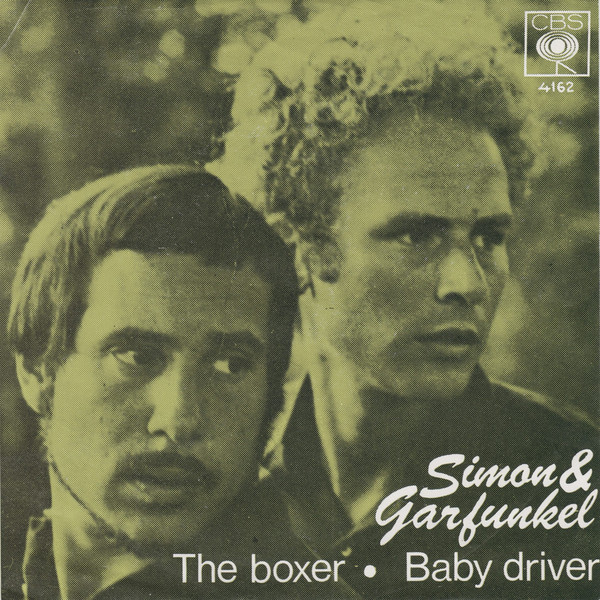
This is a truly great song. Wonderfully written by Paul Simon. The song peaked #7 in the Billboard 100, #6 in the UK, #3 in Canada, and  #9 in New Zealand.

This song was not recorded in one take and done. It took over 100 hours to record, with parts of it done at Columbia Records studios in both Nashville and New York City. The chorus vocals were recorded in a church: St. Paul’s Chapel at Columbia University in New York. The church had a tiled dome that provided great acoustics. It was an interesting field trip for the recording crew who had to set up the equipment in the house of worship.

Paul Simon: “I think the song was about me: everybody’s beating me up, and I’m telling you now I’m going to go away if you don’t stop. By that time we had encountered our first criticism. For the first few years, it was just pure praise. It took two or three years for people to realize that we weren’t strange creatures that emerged from England but just two guys from Queens who used to sing rock’n’roll. And maybe we weren’t real folkies at all! Maybe we weren’t even hippies!” 


From Songfacts

With all this material to work with, a standard 8-track recorder wasn’t enough, so the album’s producer, Roy Halee, brought Columbia boss Clive Davis into the studio to demonstrate his problem and lobby for a new, 16-track recorder. Davis, who didn’t become a legendary record executive by turning down such requests, bought him the new machine.

Simon found inspiration for this song in The Bible, which he would sometimes read in hotels. The lines, “Workman’s wages” and “Seeking out the poorer quarters” came from passages.

Sometimes what is put in as a placeholder lyric becomes a crucial part of the song. That was the case here, as Simon used “Lie la lie” in place of a proper chorus because he couldn’t find the right words. Other examples of placeholders that worked include the “I know” chorus in “Ain’t No Sunshine” and Otis Redding’s whistling in “(Sittin’ On) The Dock Of The Bay.”

In a 1990 interview with SongTalk magazine, Simon said: “I thought that ‘lie la lie was a failure of songwriting. I didn’t have any words! Then people said it was ‘lie’ but I didn’t really mean that. That it was a lie. But, it’s not a failure of songwriting, because people like that and they put enough meaning into it, and the rest of the song has enough power and emotion, I guess, to make it go, so it’s all right. But for me, every time I sing that part, I’m a little embarrassed.”

Simon added that the essentially wordless chorus gave the song more of an international appeal, as it was universal.

The legendary session drummer Hal Blaine created the huge drum sound with the help of producer Roy Halee, who found a spot for the drums in front of an elevator in the Columbia offices. As recounted in the 2011 Making of Bridge Over Troubled Water documentary, Blaine would pound the drums at the end of the “Lie la lie” vocals that were playing in his headphones, and at one point, an elderly security guard got a big surprise when he came out of the elevator and was startled by Blaine’s thunderous drums.

The opening guitar lick came courtesy of the session player Fred Carter Jr., who Simon hired to play on the track. Simon would often use another guitarist to augment his sound.

This song was recorded about a year before the album was released.

Bob Dylan recorded a version of this on his 1970 album Self Portrait.


The Boxer

I am just a poor boy
Though my story’s seldom told
I have squandered my resistance
For a pocket full of mumbles
Such are promises
All lies and jests
Still a man hears what he wants to hear
And disregards the rest

When I left my home and my family
I was no more than a boy
In the company of strangers
In the quiet of the railway station
Running scared
Laying low, seeking out the poorer quarters
Where the ragged people go
Looking for the places
Only they would know

Lie la lie, lie la la la lie lie
Lie la lie, lie la la la la lie la la lie

Asking only workman’s wages
I come looking for a job
But I get no offers
Just a come-on from the whores
On Seventh Avenue
I do declare
There were times when I was so lonesome
I took some comfort there
Le le le le le le le

Lie la lie, lie la la la lie lie
Lie la lie, lie la la la la lie la la lie

Then I’m laying out my winter clothes
And wishing I was gone
Going home
Where the New York City winters
Aren’t bleeding me
Leading me
Going home

In the clearing stands a boxer
And a fighter by his trade
And he carries the reminders
Of every glove that laid him down
Or cut him till he cried out
In his anger and his shame
“I am leaving, I am leaving”
But the fighter still remains

Lie la lie, lie la la la lie lie
Lie la lie, lie la la la la lie la la lie
Lie la lie, lie la la la lie lie
Lie la lie, lie la la la la lie la la lie
Lie la lie, lie la la la lie lie
Lie la lie, lie la la la la lie la la lie
Lie la lie, lie la la la lie lie
Lie la lie, lie la la la la lie la la lie
Lie la lie, lie la la la lie lie
Lie la lie, lie la la la la lie la la lie
Lie la lie, lie la la la lie lie
Lie la lie, lie la la la la lie la la lie
Lie la lie, lie la la la lie lie
Lie la lie, lie la la la la lie la la lie
Lie la lie, lie la la la lie lie
Lie la lie, lie la la la la lie la la lie

Kinks – A Well Respected Man

Ray Davies wrote this song after the group’s 1965 tour of the United States. The tour did not go well, with infighting, fatigue, and conflict with the musician’s union that kept them from performing in the country for another four years.

Davies recovered from the tour with a vacation at the English resort town of Torquay, Devon. There, a wealthy hotel guest recognized him and asked Ray to play a round of golf. Far from being flattered by the invitation, he took great offense. “I’m not gonna play f–king golf with you,” “I’m not gonna be your caddy so you can say you played with a pop singer.”

The song peaked at #13 Billboard 100 but it didn’t chart in the UK.

A Well Respected Man

‘Cause he gets up in the morning,
And he goes to work at nine,
And he comes back home at five-thirty,
Gets the same train every time.
‘Cause his world is built ’round punctuality,
It never fails.

And he’s oh, so good,
And he’s oh, so fine,
And he’s oh, so healthy,
In his body and his mind.
He’s a well respected man about town,
Doing the best things so conservatively.

And his mother goes to meetings,
While his father pulls the maid,
And she stirs the tea with councilors,
While discussing foreign trade,
And she passes looks, as well as bills,
At every suave young man.

‘Cause he’s oh, so good,
And he’s oh, so fine,
And he’s oh, so healthy,
In his body and his mind.
He’s a well respected man about town,
Doing the best things so conservatively.

And he likes his own backyard,
And he likes his fags the best,
‘Cause he’s better than the rest,
And his own sweat smells the best,
And he hopes to grab his father’s loot,
When Pater passes on.

‘Cause he’s oh, so good,
And he’s oh, so fine,
And he’s oh, so healthy,
In his body and his mind.
He’s a well respected man about town,
Doing the best things so conservatively.

And he plays at stocks and shares,
And he goes to the regatta,
And he adores the girl next door,
‘Cause he’s dying to get at her,
But his mother knows the best about
The matrimonial stakes.

‘Cause he’s oh, so good,
And he’s oh, so fine,
And he’s oh, so healthy,
In his body and his mind.
He’s a well respected man about town,
Doing the best things so conservatively.

Monkees – Mary, Mary

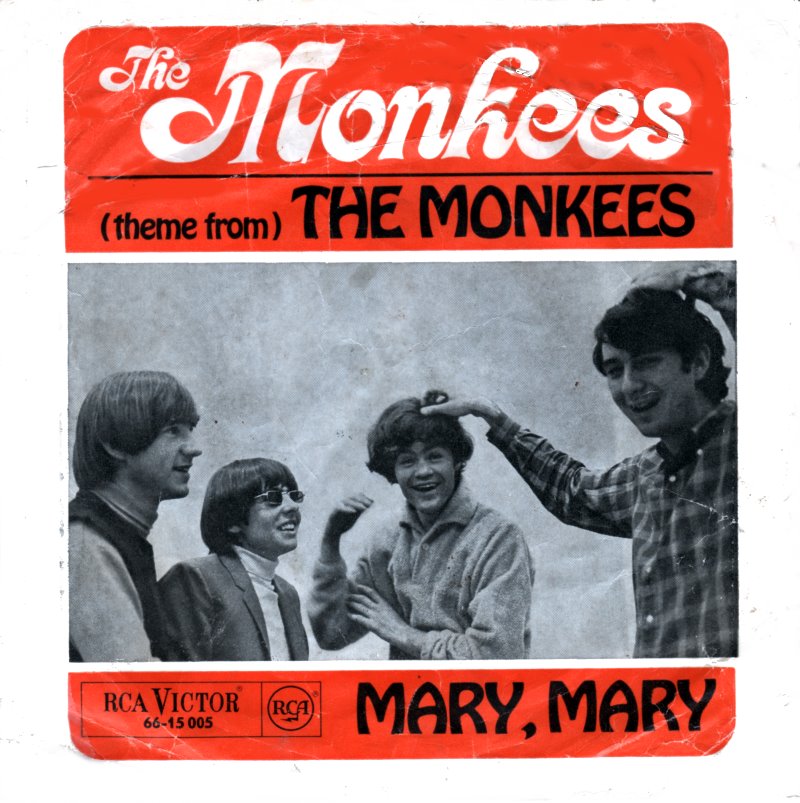
It’s a misconception that the Monkees completely relied on other people to write all of their songs. They also started playing their own instruments starting with the third album. Michael Nesmith wrote this song before he joined The Monkees. The song was the B side to The Monkees Theme.

Loved this song when I was growing up. I still like the song and the drum sound they recorded. It has been covered by different artists. It was first recorded by The Paul Butterfield Blues Band on their East-West album on Elektra in 1966. The president of Elektra actually caught some flap once the Monkees’ version came out because people couldn’t believe that a Monkee actually wrote it.

Run-D.M.C. also covered this in 1988 on their album Tougher Than Leather.

Micheal Nesmith: Nesmith: “That song was written to be a hit. I knew it would be a hit. I never once thought of me doing the lead on that one. Mickey was my choice for that.”

Mary, Mary

Mary, Mary, where you goin’ to?
Mary, Mary, can I go too.
This one thing I will vow ya,
I’d rather die than to live without ya.

Mary, Mary, where you goin’ to?
Mary, Mary, tell me truly
What did I do to make you leave me.
Whatever it was I didn’t mean to,

You know I never would try and hurt ya.
Mary, Mary, where you goin’ to?
What more, Mary, can I do
To prove my love is truly yours?

I’ve done more now than a clear-thinkin’ man would do.
Mary, Mary, it’s not over.
Where you go, I will follow.
‘Til I win your love again

And walk beside you,
But until then.
Mary, Mary, where you goin’ to?

Mary, where you goin’ to?
Mary, Mary, Mary, Mary, Mary, where you goin’ to

Jackie DeShannon – Put a Little Love in Your Heart

Well written and great pop song. I remember it from the movie Scrooged where now that film and this song goes hand in hand. Nineteen years after this song was a hit for Jackie DeShannon, Annie Lennox and Al Green covered it for the 1988 film Scrooged. Their version reached #9 in the US and #28 in the UK and reached the Top 40 in five other countries.

DeShannon co-wrote this song with her brother Randy Myers and  Jimmy Holiday.

Jackie is a great songwriter and was inducted into the Songwriting Hall Of Fame in 2010. Other songs that she wrote or co-wrote are Bette Davis Eyes, What The World Needs Now is Love, Santa Fe / Beautiful Obsession and many more.

This song peaked at #4 in the Billboard 100 and #12 in Canada in 1969.


Jackie DeShannon: “My brother Randy was playing this little riff and I said, ‘Gee, I really like that riff, that’s great.’ All of a sudden, ‘Think of your fellow man, lend him a helping hand, put a little love in your heart,’ came just like that. I owe some of that to my mom because she was always saying that people should put a little love in their heart when things are not so good. I’d like to say it was very difficult, but it was one of those songs you wait a lifetime to write.”

Jimmy Page was said to write Tangerine about DeShannon after their breakup.

From Songfacts

She is best known as a singer, but Jackie DeShannon is one of the most talented tunesmiths of her time – she was inducted into the Songwriters Hall of Fame in 2010. She wrote many of her own songs, including this one, which she composed with her younger brother Randy Myers (Jackie’s real name is Sharon Lee Myers) and a Soul singer at her label (Liberty Records), Jimmy Holiday.

In our interview with Jackie DeShannon, she told the story: 

Jimmy Holiday’s contribution came after Jackie and her brother started composing it, as he helped polish the song. Holiday, DeShannon and Myers went on to write Jackie’s hits “Love Will Find A Way” (#40, 1969) and “Brighton Hill” (#82, 1970).

DeShannon recorded a demo of this song which she had a hard time beating in the recording session. In our interview, she recalled struggling to get the right feel. “After about eight hours we finally got it and I just felt that I had done probably one of my best vocals ever,” she said. “But when I came back in to hear it somehow my vocal was erased. Somebody must have hit something. I called my mom and I said, ‘You know what, I’m just heartbroken. I’ve probably done the best vocal ever – at least it felt to me that it was right on the button – and I have to go do it again.’ So I went right back in there fast, before I lost the muse. When I got to hear the new vocal I felt that, of course, I wished I could have had the other one. But who’s to say? Maybe this was the better vocal.”

The song was released as the first single from the album in June of 1969, and it gained momentum when a radio station in Atlanta started playing it. In August, the New York radio station WABC made it a “Pick of the Week,” and stations around the country jumped on it, sending the song to its peak chart position of #4 on August 30. Said DeShannon: “The airplay was great, and in those days if you had a record in rotation, that could be very good money. I was actually able to buy a car for my dad, and I bought a house for my parents.”

Put A Little Love In Your Heart

Think of your fellow man, lend him a helping hand
Put a little love in your heart
You see, it’s getting late, oh, please don’t hesitate
Put a little love in your heart

And the world will be a better place
And the world will be a better place for you and me
You just wait and see

Another day goes by, and still the children cry
Put a little love in your heart
If we want the world to know, we won’t let hatred grow
Put a little love in your heart

And the world will be a better place
And the world will be a better place for you and me
You just wait and see, wait and see

Take a good look around and if you’re lookin’ down
Put a little love in your heart
I hope when you decide kindness will be your guide
Put a little love in your heart
And the world will be a better place
And the world will be a better place for you and me
You just wait and see
People now
Put a little love in your heart
Each and every day
Put a little love in your heart
There’s no other other
Put a little love in your heart
We ought to
Put a little love in your heart
Come on and
Put a little love in your heart

Everly Brothers – When Will I Be Loved

I first heard the Linda Ronstadt version when I was younger but I’ve grown to like this one just as well. The Everly Brothers version peaked at #8 in the Billboard 100, #16 in Canada and #4 in the UK in 1960.

Linda’s version peaked at #2 in the Billboard 100 and #1 in Canada in 1975.

Phil Everly wrote this in his car, parked outside an A&W root beer stand. He took inspiration from his on-again, off-again romance with Jackie Ertel-Bleyer, the stepdaughter of Cadence Records founder, Archie Bleyer. Phil and Jackie got married in 1963 and divorced in 1972.

From Songfacts

One of their classic songs, this tune finds the Everly Brothers fed up with the constant heartache that leaves them wondering, “When will I be loved?”

The Everly Brothers had already moved from Cadence Records to Warner Bros. when their former label issued this as a single in 1960. Hoping to shift from their signature rockabilly style to mainstream pop-rock, they were already achieving their goal as the pop-oriented “Cathy’s Clown” climbed to #1. The release of “When Will I Be Loved” was not only a throwback to their old sound, but it also threatened to derail their success by splitting airplay among their other tunes. But the public couldn’t get enough of the Everlys and they notched four Top 10 hits that year, including the #8 entry “When Will I Be Loved.”

Linda Ronstadt had even greater success when she released this as the second single from her 1974 album, Heart Like A Wheel. Aside from peaking at #2 on the Hot 100, it became her first #1 hit on the Country chart.

Several other artists have recorded this, including John Denver, Tanya Tucker, Gram Parsons, Rosemary Clooney, Manfred Mann, and The Little River Band, while Dolly Parton frequently included it in her live repertoire. As part of the English folk-rock collective The Bunch, Sandy Denny and Linda Thompson covered it on the 1972 covers album, Rock On. Nick Lowe and Dave Edmunds included it on their 1980 EP, Nick Lowe & Dave Edmunds Sing The Everly Brothers. John Fogerty and Bruce Springsteen also recorded it as a duet for Fogerty’s 2009 album, The Blue Ridge Rangers Rides Again.

Green Day singer Billie Joe Armstrong sang this with Miranda Lambert at the 2014 Grammy Awards in honor of Phil Everly, who died of lung disease earlier that year.

Cabaret singer Amanda McBroom sang this on the 1985 Magnum P.I. episode “Let Me Hear The Music.” Jamison Belushi also performed it on her dad James Belushi’s sitcom According to Jim in the 2008 episode “Jami McFame.”

When Will I Be Loved

I’ve been made blue, I’ve been lied to
When will I be loved
I’ve been turned down, I’ve been pushed around
When will I be loved

When I meet a new girl that I want for mine
She always breaks my heart in two, it happens every time
I’ve been cheated, been mistreated
When will I be loved

When I meet a new girl that I want for mine
She always breaks my heart in two, it happens every time
I’ve been cheated, been mistreated
When will I be loved

When will I be loved