Beggars Banquet and Between the Buttons were the first two Rolling Stone albums I owned not counting Hot Rocks, the greatest hits collection. I played this album to death. As with most Stones albums you get what you get…rock, blues, and a little country thrown in the mix. I got this album when I was 12 and it opened my eyes wide to the Stones…much more than a collection of their hits would ever do.
This was the first album to start the stretch of 5 albums (Beggars Banquet, Let It Bleed, Sticky Fingers, Exile on Main Street, and Goats Head Soup) that helped make the Stones what they are today. In 1967 after failing to live up to Sgt Pepper with Their Satanic MajestiesRequest (although I do like that album) they came back retooled with a new producer Jimmy Miller.
The Stones got back to doing what they do best…playing the blues…although with a different sound than Little Red Rooster. A weary Brian Jones was still in the band at this time and contributed to all but two songs…but it’s mostly Keith on guitar. Brian, because of the state he was in, was used more as a touch-up artist…filling in some holes with sitar, tambura, guitar, blues harp, and mellotron.
This album is not considered up there with Sticky Fingers or Exile On Main Street but I have the strongest connection to it. I’ve always related Beggars Banquet to the White Album. They were both released in 1968 and both were raw and honest. No studio trickery to either…a big departure from the psychedelic era of 1967.
I don’t think Jimmy Miller gets enough credit for their sound. That is not a knock against the Stones but the Miller produced albums are special.
The Jumping Jack Flash single (also Miller produced) was released in May of 1968 to signal a change was coming and this album followed on December 6, 1968.
Beggars Banquet was delayed for months because of the album cover. The original cover (which is now used) had a dirty toilet covered with graffiti. The photo was taken by Barry Feinstein in a tiny bathroom at a Porsche repair shop above Hollywood Blvd. and Cahuenga Blvd.
Mick and Keith were given crayons to add more graffiti for the back credits. Their record companies for America and the UK would not approve the cover. The Stones finally relented and released a plain “invitation” white cover…which is the cover I owned.
Now for the songs. Sympathy for the Devil and Street Fighting Man are the two most well-known songs off the album. Sympathy for the Devil is perhaps the Stones’ best-written song and with a samba beat that touches on voodoo. Street Fighting Man is maybe the most powerful song they ever wrote. “Well now what can a poor boy do except to sing for a rock n’ roll band?”
Those two songs are classics but this album is a great collection of 10 songs. Prodigal Son has always been a favorite of mine. They really do the old blues well in this one. It’s a song written by Robert Wilkins, a reverend who recorded Delta Blues in the 1920s and 1930s.
No Expectations…Brian Jones’ slide guitar in this is great…it sets the mood for this song. Mick has said it was Brian’s last great contribution to the Stones. One of the best album cuts from the Stones.
Stray Cat Blues…Mick sounds so ominous in this track. The guitar is absolutely filthy as well. I feel the need for a shower after I listen to it. This song would not fly today. It’s raunchy and sleazy…but a great album cut. I hear the click-clack of your feet on the stairs I know you’re no scare-eyed honey
My other favorite songs are Factory Girl, Salt of the Earth, and Jigsaw Puzzle.
The album peaked at #5 in the Billboard Album Charts, #3 in the UK, and #3 in Canada in 1969.
Looks like I have brought the first Stones album to our respective islands. If you get an urge to dance around a fire singing “whoo, whoo… whoo, whoo“…come on over and I’ll drop the needle on the vinyl and shake some maracas.
The song was written by Chuck Berry, whose version was released as a single in February 1961, with ‘Little Star’ on the b-side.
I first heard the song by the Beatles on the Live! At The Star-Club In Hamburg, Germany; 1962 album released in 1977. I then heard the Chuck Berry version on Ken Burns’s great documentary Baseball.
I’m Talking About You’ was also recorded by a number of other British groups at the time, including The Hollies, The Yardbirds, and The Rolling Stones.
The song was on Chuck Berry’s fifth studio album “New Juke Box Hits.”
I’m Talking About You
Let me tell you ’bout a girl I know I met her walking down a uptown street She’s so fine you know I wished she was mine I get shook up every time we meet
I’m talkin about you Nobody but you Yeah, I do mean you I’m just trying to get a message to you
Let me tell you ’bout a girl I know I tell ya now she looks so good Got so much skills and such a beautiful will She oughta be somewhere in Hollywood
I’m talkin ’bout you Nobody but you Come on and give me a cue So I can get a message to you
Let me tell you ’bout a girl I know She’s sitting right here by my side Lovely indeed that why I asked if she Promised someday she will be my bride
Talkin ’bout you I do mean you Nobody but you Come on, let me get a message through
One of the most famous count offs in history. It’s a great rocker by the early Beatles. This wasn’t released as a single in England. In the US, it was released as the flip side of “I Want To Hold Your Hand,” which was their first hit in the America.
The title was original “Seventeen” until it was changed for the album. There have been many covers of this song…some very good but I’ll take the original every time.
This was one of 10 songs The Beatles recorded in one day (February 11, 1963) for their UK debut album, Please Please Me. It was the first song on the tracklist. Can you imagine that happening today?
I Saw Her Standing There peaked at #14 in the Billboard 100, #1 in New Zealand, and #1 (I Want To Hold Your Hand/I Saw Her Standing There) in Canada in 1964.
This was the last song John Lennon performed for a paid audience. He played it at Madison Square Garden on November 28, 1974 when he took the stage at an Elton John concert. Elton released this version as the B-side of “Philadelphia Freedom” the following year.
Paul McCartney:“Those early days were really cool, just sussing each other out, and realizing that we were good. You just realize from what he was feeding back. Often it was your song or his song, it didn’t always just start from nothing. Someone would always have a little germ of an idea. So I’d start off with [singing] ‘She was just 17, she’d never been a beauty queen’ and he’d be like, ‘Oh no, that’s useless’ and ‘You’re right, that’s bad, we’ve got to change that.’ Then changing it into a really cool line: ‘You know what I mean.’ ‘Yeah, that works.'”
From Songfacts
John Lennon and Paul McCartney started writing this in McCartney’s living room after they skipped school one day, with Paul writing the majority of this song in September of 1962.
The Beatles frequently played this at the Cavern Club, where they often played between 1961-1963. In fact, it was because of the crowd reaction to their live shows that George Martin decided to have them simply record their live show in the studio for their first album. That’s why he kept Paul’s “1, 2, 3, 4” count at the beginning, which was taken from the 9th take and edited on to the first.
The Beatles performed this on their first two Ed Sullivan Show appearances, which took place a week apart in February 1964. Getting on the show was a really big deal because it had a huge audience. About 73 million people watched the first show, which made The Beatles household names.
This became the first Beatles song performed on the TV series American Idol when Jordin Sparks won in 2007 and sang it on the finale with runner-up Blake Lewis. The first line of the song – “She was just 17” – was fitting, as that was Sparks’ age.
Chuck Berry was a big influence on The Beatles, and the bass line of this song borrows from Berry’s track “I’m Talking About You.”
At the 2001 World Series between the New York Yankees and Arizona Diamondbacks, McCartney went to one of the games at Yankee Stadium and was shown between innings singing along as this played in the stadium. It was McCartney’s second visit to Yankee Stadium, and he saw The Yankees win that day, although they eventually lost the World Series.
Tom Cruise and Dustin Hoffman sing this song during a very powerful scene in the 1988 Oscar-winning film Rain Man.
The Who, Daniel Johnston, Santo & Johnny, and The Tubes all covered this song.
With Dave Grohl playing drums, Paul McCartney played this at the Grammy Awards in 2009.
I Saw Her Standing There
(One, two, three, four)
Well, she was just seventeen You know what I mean And the way she looked Was way beyond compare So how could I dance with another Ooh, when I saw her standing there?
Well, she looked at me And I, I could see That before too long I’d fall in love with her She wouldn’t dance with another Ooh, when I saw her standing there
Well, my heart went “boom” When I crossed that room And I held her hand in mine
Oh we danced through the night And we held each other tight And before too long I fell in love with her Now I’ll never dance with another Ooh, since I saw her standing there
Well, my heart went, “Boom” When I crossed that room And I held her hand in mine
Oh, we danced through the night And we held each other tight And before too long I fell in love with her Now I’ll never dance with another Oh, since I saw her standing there Oh, since I saw her standing there Yeah, well since I saw her standing there
One pill makes you larger, and one pill makes you small And the ones that mother gives you, don’t do anything at all
I want to thank everyone for reading and commenting this week. I’m going to continue this for one more day and we will wrap it up tomorrow. Thanks Again!
This song was on the great album Surrealistic Pillow released in 1967. The intro is around 28 seconds before Slick starts singing. It’s well worth the wait…this song IS the sixties encapsulated in two minutes and thirty-two seconds.
Grace Slick got the idea for this song after taking LSD and listening to the Miles Davis album Sketches Of Spain, especially the opening track, “Concierto de Aranjuez.” The Spanish beat she came up with was also influenced by Ravel’s “Bolero.”
She based the lyrics on Lewis Carroll’s 1865 children’s book Alice In Wonderland (officially Alice’s Adventures in Wonderland).
Slick wrote this song and performed it when she was in a band called The Great Society with her first husband, Jerry Slick. The Great Society made inroads in the San Francisco music scene, but released just one single, “Somebody To Love”, before calling it quits in 1966.
The Great Society version of “White Rabbit” was released in 1968 on an album called Conspicuous Only In Its Absence (credited to “The Great Society With Grace Slick”).
Grace Slick moved on to Jefferson Airplane, and the group recorded both “White Rabbit” and “Somebody To Love.” The songs were the breakout hits for the band, with “Somebody To Love” reaching #5 US and “White Rabbit” peaked at #8 in the Billboard 100 and #1 in Canada in 1967.
Grace Slick: “I always felt like a good-looking schoolteacher singing ‘White Rabbit.’ I’d sing the words slowly and precisely, so the people who needed to hear them wouldn’t miss the point. But they did. To this day, I don’t think most people realize the song was aimed at parents who drank and told their kids not to do drugs. I felt they were full of s–t, but to write a good song, you need a few more words than that.”
From Songfacts
Grace Slick was raised in a tony suburban household in Palo Alto, California, about 30 miles south of San Francisco. This being the 1950s, women were expected to conform to the norms and aspire to be housewives. Slick identified with Alice; moving to San Francisco and forming a rock band was her “rabbit hole” moment. When she joined Jefferson Airplane, that was another journey down the rabbit hole.
Slick claimed to Q that the song was aimed not at the young but their parents. She said: “They’d read us all these stories where you’d take some kind of chemical and have a great adventure. Alice in Wonderland is blatant; she gets literally high, too big for the room, while the caterpillar sits on a psychedelic mushroom smoking opium. In the Wizard of Oz, they land in a field of opium poppies, wake up and see this Emerald City. Peter Pan? Sprinkle some white dust-cocaine-on your head and you can fly.”
This was one of the defining songs of the 1967 “Summer Of Love.” As young Americans protested the Vietnam War and experimented with drugs, “White Rabbit” often played in the background.
The song begins in F-sharp minor, which Slick chose to suit her voice. The minor chords evoke a darkness and uncertainty as Alice finds herself in a strange world. In the “go ask Alice” part, it shifts to major chords to celebrate her courage and resourcefulness as she finds her way.
The Alice character appealed to Slick because she wasn’t the stereotypical damsel in distress. Alice follows her own path to satisfy her curiosity – even when things get sticky.
Did the band ever get sick of this song? Grace Slick answered this question in a 1976 interview with Melody Maker when she replied: “I can play around with a song on stage without ruining it. We stopped doing ‘White Rabbit’ for a couple of years because we were getting bored with it. I like it again and we included it last year ’cause it was the year of the rabbit.”
The words “white rabbit” never show up in the lyric, but are alluded to in the lines:
And if you go chasing rabbits
And you know you’re going to fall
In Alice In Wonderland, the first chapter is “Down the Rabbit-Hole.” On the first page, the White Rabbit appears, leading Alice on her adventure. In 1971, Led Zeppelin released “Black Dog,” another song with a color-animal title that doesn’t appear in the lyric.
The Airplane were frequently found giving free concerts around the Haight-Ashbury area of San Francisco. They shared a large house with several musicians during the psychedelic ’60s, often applying for and receiving parade permits to walk the streets. Grace Slick was always a radical thinker, rejecting “daddy’s money.” She once appeared on The Smothers Brothers Comedy Hour made up in blackface, causing a big controversy.
The line in this song, “go ask Alice,” provided the title of a 1971 book published by an anonymous author. The book was a “diary” of a young girl in the 1960s who had a drug addiction and died. Her name is never given, and the diary is suspected to be fictional despite being promoted as true. The anonymous author is likely Beatrice Sparks, the book’s editor.
This capped off Jefferson Airplane’s set at Woodstock in 1969. They took the stage at 8 a.m. on the second day (or, depending how you look at it, third morning), following a performance by The Who that started at 5 a.m.
According to Grace Slick’s autobiography, the album name came when bandmate Marty Balin played the finished studio tapes to Jerry Garcia of The Grateful Dead, whose first reaction was, “Sounds like a surrealistic pillow.” Slick says that she loves the fact that the phrase Surrealistic Pillow “leaves the interpretation up to the beholder. Asleep or awake on the pillow? Dreaming? Making love? The adjective ‘Surrealistic’ leaves the picture wide open.”
This is used in the stage production The Blue Man Group, and appears on their 2003 album The Complex. Music is a big part of the show, which features three blue guys engaging the audience with a combination of comedy, percussion, and sloppy stunts. They got a lot of attention when they were used in ads for Intel.
Grace Slick wrote this song on an old upright piano she bought for $80. Some of the keys in the upper register were missing, but she didn’t use those anyway.
This song is heard multiple times in the movie The Game with Michael Douglas. It demonstrates the madness Douglas feels as he is being manipulated by forces he can’t control. >>
In the film Fear and Loathing in Las Vegas, there is a scene where Dr. Gonzo is in a bathtub and this song is playing on a tape player. In an effort to end his life, Gonzo implores Raoul Duke to put the tape player in the tub “When White Rabbit peaks.” Instead of doing as instructed, Duke throws a grapefruit at Gonzo and unplugs the tape player. >>
This was used as the theme song for a 1973 movie called Go Ask Alice.
On November 7, 1967, the St. Louis radio station made a bold move, switching from an easy listening format to “real rock radio.” The first song they played after the switch was “White Rabbit,” a clear signal that they were aligning themselves with the counterculture. The song was apropos, as they abandoned their reliable conservative audience to go down the rabbit hole, bringing the movement to the midwest.
The format stuck. KSHE became a vital and transgressive voice, breaking new bands, sometimes letting music play for hours on end without interruption, and doing segments devoted entirely to women in rock (their “American Woman” series).
Recalling the song in a 2016 Wall Street Journal interview, Slick said: “Looking back, I think ‘White Rabbit’ is a very good song… My only complaint is that the lyrics could have been stronger. If I had done it right, more people would have been annoyed.”
The UK version of the album didn’t include this track.
This was used in the first episode of Stranger Things, “The Vanishing Of Will Byers.” It plays as Eleven flees Benny’s diner.
White Rabbit
One pill makes you larger, and one pill makes you small And the ones that mother gives you, don’t do anything at all
Go ask Alice, when she’s ten feet tall
And if you go chasing rabbits, and you know you’re going to fall Tell ’em a hookah-smoking caterpillar has given you the call
And call Alice, when she was just small
When the men on the chessboard get up and tell you where to go And you’ve just had some kind of mushroom, and your mind is moving low
Go ask Alice, I think she’ll know
When logic and proportion have fallen sloppy dead And the white knight is talking backwards And the red queen’s off with her head Remember what the dormouse said Feed your head, feed your head
What a drag it is getting old Kids are different today, I hear every mother say Mother needs something today to calm her down And though she’s not really ill, there’s a little yellow pill
This is one of my favorite periods of the Rolling Stones. You don’t hear this song as much.
Stones guitarist Brian Jones played the sitar on this track… it was one of the first pop songs to use the instrument. The Beatles “Norwegian Wood (This Bird Has Flown),” which came out the year before, was the first.
The Stones missed this experimentation when Brian was gone in my opinion. The song is about house wife’s addictions to Miltown or Valium to help them get through the day. Everybody was pointing their fingers at rock stars because of drugs and the Stones threw it back at them.
The song peaked at #8 in the Billboard 100 and #14 in Canada in 1966. The song was written by Jagger and Richards.
Mick Jagger: “It’s about drug dependence, but in a sort of like spoofy way. As a songwriter, I didn’t really think about addressing things like that. It was just every day stuff that you I’d observe and write about. It’s what writing is for really. There is a sort of naivety, but there’s also a lot of humor in those songs. They’re a lot based on humor. It was almost like a different band, a different world, a different view when we wrote them.”
Mick Jagger: “I get inspiration from things that are happening around me – everyday life as I see it. People say I’m always singing about pills and breakdowns, therefore I must be an addict – this is ridiculous. Some people are so narrow-minded they won’t admit to themselves that this really does happen to other people beside pop stars.”
Keith Richards: “The strange guitar sound is a 12-string with a slide on it. It’s played slightly Oriental-ish. The track just needed something to make it twang. Otherwise, the song was quite vaudeville in a way. I wanted to add some nice bite to it. And it was just one of those things where someone walked in and, Look, it’s an electric 12-string. It was some gashed-up job. No name on it. God knows where it came from. Or where it went. But I put it together with a bottleneck. Then we had a riff that tied the whole thing together. And I think we overdubbed onto that. Because I played an acoustic guitar as well.”
From Songfacts
This condemns the many women in England who were abusing prescription drugs, even though The Stones were becoming heavy drug users themselves. The band wanted to make the point that housewives popping pills what not that much different than rock stars taking smack, even though drug laws in England strongly favored the housewives.
This was the first track on Aftermath, the first Stones album with all original songs. Their earlier albums were full of Blues covers.
In the UK, this wasn’t released as a single. In America, it was the group’s eighth Top 10 hit.
The Stones recorded this in Los Angeles in a custom built studio. It had no windows, because The Stones did not want to know if it was day or night.
Stones drummer Charlie Watts said of this song in In the 2003 book According to the Rolling Stones: “We’ve often tried to perform ‘Mother’s Little Helper’ and it’s never been any good, never gelled for some reason – it’s either me not playing it right or Keith not wanting to do it like that. It’s never worked. It’s just one of those songs. We used to try it live but it’s a bloody hard record to play.”
Mother’s Little Helper
What a drag it is getting old
“Kids are different today” I hear ev’ry mother say Mother needs something today to calm her down And though she’s not really ill There’s a little yellow pill She goes running for the shelter of a mother’s little helper And it helps her on her way, gets her through her busy day
“Things are different today” I hear ev’ry mother say Cooking fresh food for a husband’s just a drag So she buys an instant cake and she burns her frozen steak And goes running for the shelter of a mother’s little helper And two help her on her way, get her through her busy day
Doctor please, some more of these Outside the door, she took four more What a drag it is getting old
“Men just aren’t the same today” I hear ev’ry mother say They just don’t appreciate that you get tired They’re so hard to satisfy, You can tranquilize your mind So go running for the shelter of a mother’s little helper And four help you through the night, help to minimize your plight
Doctor please, some more of these Outside the door, she took four more What a drag it is getting old
“Life’s just much too hard today” I hear ev’ry mother say The pursuit of happiness just seems a bore And if you take more of those, you will get an overdose No more running for the shelter of a mother’s little helper They just helped you on your way, through your busy dying day
In the early 90s, I purchased the Zombie’s greatest hits. The cd contained the usual songs Tell Her No, She’s Not There, and Time Of The Season. I had read about The Zombies in music books and how other bands admired them for their jazz and classical influences.
They are best remembered for those three hits but also for one album…Odessey and Oracle. With this album, they elevated themselves to new heights…but that took a little while. In Rolling Stone magazine in the 80s and 90s I read great writeups about this album. Finally, I tried it for myself and was more than happy I did. Many critics hailed this album as one of the greatest of the decade and it lived up to their hype.
By the way… The band wanted to call the album “Odyssey and Oracle” but cover artist Terry Quirk accidentally spelled the title wrong and the band decided to run with the misspelling.
By 1967 they were close to being done. They were broke and had to pay for most of the sessions. Tell Her No and She’s Not There were 3 years in the past and in pop music…that was a lifetime.
They got together in Abbey Road studios right after The Beatles finished Sgt Pepper in 1967…even using John Lennon’s Mellotron. They ended up recording one of the best albums of the sixties. April 18, 1968, was the UK release date. It was a little while after that before America heard it.
The album almost didn’t get released in America. Al Kooper worked for Columbia Records as a staff producer in the A&R department. One of his first assignments was to go to London and he bought around 40 albums that could only be bought there. Odessey and Oracle stood out from all of the rest.
Clive Davis was about to sign off on this album not being released in America. Kooper changed his mind and convinced Clive to release the album. That is how the album was released and Time of the Season became a hit. By the time Time Of The Season peaked at #3 in 1969 the band had broken up.
The best way I can describe this album is somewhere between psychedelic pop/rock and baroque pop. I think that is a fair statement. I suggest listening to this album with headphones. The Zombies paid attention to detail and the backup vocals are outstanding. It the year that Sgt Pepper and The Piper at the Gates of Dawn were recorded… Odessey and Oracle belong with those albums.
It’s pure joy to sit and listen to this album. I’ll highlight these songs.
Time of the Season is the big hit off the album and also…there is an official law in the books about this song. If you produce a film about the 1960s this song must be played. The song is great and it does transport you to that time. What’s your name? Who’s your daddy? (He rich) Is he rich like me?
Care Of Cell 44 is the real star of the album to me. The song is arranged beautifully. with part vocal-only arrangements, You can hear Brian Wilson and Paul McCartney’s influence in this recording. Chris White’s (Zombies bass player) bass playing is phenomenal in this song. If Paul McCartney and Brian Wilson had a baby…this is what it would be. Take a listen to this one.
This Will Be Our Year is a wonderful optimistic song. It sounds like it should have been a hit but it was stuck on the B side to Butcher’s Tale (Western Front 1914) which is more of an experimental song and not exactly very commercial…that was a wasted opportunity.
Another song that caught me on the first listen is A Rose For Emily. The theme is very similar to Eleanor Rigby but more subdued. “And as the years go by, she will grow old and die, The roses in her garden fade away, not one left for her grave, not a rose for Emily…”
Put this album on with some headphones and travel back to the sixties.
So far on my island…all the albums are within 4 years (1968-1972) of each other but that suits me fine. I’m sure an album will break that eventually. Odessey and Oracle brings some beautiful pop music to my hut. Grab a coconut and come over…we will listen to the Zombies…btw…Have you seen Mary Ann? I’ve been looking for her.
1. Care Of Cell 44
2. A Rose For Emily
3. Maybe After He’s Gone
4. Beechwood Park
5. Brief Candles
6. Hung Up On A Dream
7. Changes
8. I Want Her She Wants Me
9. This Will Be Our Year
10. Butcher’s Tale (Western Front 1914)
11. Friends Of Mine
12. Time Of The Season
This was recorded during an all-night session at Keith Richards’ rented villa in the South of France. The band rented houses in the area and used Keith’s basement as a studio.
This song was on Exile On Main Street and it’s an incredibly driven song. It comes right at you and never slows down.
Understanding lyrics in Rolling Stones songs has always been a challenge but Mick’s voice is lower than usual in this one. The song contains some obscenities and sexual references, but they are very hard to understand.
But no worries… just sit back and enjoy the ride and this song takes you on one. It also contains references to President Nixon and his wife Pat, but they are almost impossible to understand.
Exile on Main street peaked at #1 in the Billboard 100, Canada, and the UK in 1972.
It’s Sunday…just turn this up to full blast and enjoy it.
From Songfacts
The “Butter Queen” is a reference to a famous groupie known as “Barbara the Butter Queen.” Her real name was Barbara Cope, and she would do her thing when bands came through Dallas. She was very proficient, and had a killer gimmick: she would use a stick of butter when servicing the rock stars and crew. The butter supposedly made her activity smell like movie theater popcorn.
This song was particularly inspirational to Aerosmith’s Steven Tyler. He told Rolling Stone magazine: “When I went to my first rehab, at a place called Hazelden, I brought Exile on Main St. on cassette. I remember waking up the first morning there and realizing I hadn’t been sober once for the past 12 or 15 years, from LSD to heroin and cocaine and acid. The only way I could get a buzz at that point was to listen to ‘Rip This Joint.'”
Rip This Joint
Mama says yes, Papa says no Make up your mind ’cause I gotta go We’re gonna raise hell at the Union Hall Drive myself right over the wall
Rip this joint, gonna save your soul Round and round and round we go Roll this joint, gonna get down low Start my starter, gonna stop the show (Yeah)
Whoa, yeah! Mister President, Mister Immigration Man Let me in, sweetie to your fair land I’m Tampa bound and Memphis too Short Fat Fanny is on the loose Dig that sound on the radio Then slip it right across into Buffalo Dick and Pat in ole DC Well they’re gonna hold some shit for me
Ying yang, you’re my thing Oh, now, baby, won’t you hear me sing Flip Flop, fit to drop Come on baby, won’t you let it rock?
Oh yeah! Oh yeah! From San Jose down to Santa Fe Kiss me quick, baby, won’tcha make my day New Orleans with the Dixie Dean To Dallas, Texas with the Butter Queen
Rip this joint, gonna rip yours too Some brand new steps and some weight to lose Gonna roll this joint, gonna get down low Round and round and round we’ll go Wham, Bham, Birmingham, Alabam’ don’t give a damn Little Rock and I’m fit to top Ah, let it rock
George steps up to the plate on Revolver and knocks it out of the park. If you think you pay too much tax…The Beatles were in a 95% tax bracket.
At the time, high earners paid exorbitant taxes in England. Many successful entertainers left the country so they could keep more of their money. As a result, The Beatles, as well as The Who and The Rolling Stones, spent a lot of time in America and other parts of Europe as tax exiles.
This is a strong one by George and it was the opener for the album. On the song, it wasn’t George that played the solo…it was Paul. It’s a brilliant small solo and adds a lot to the song. Paul played it with an Indian feel for George.
Revolver is the only album on which Harrison has three songs. On all the others he only has two or fewer. On The White Album he had four, but it was a double album so he was only allotted his usual one track per side.
George Harrison:“You are so happy that you’ve finally started earning money – and then you find out about tax. In those days we paid nineteen shillings and sixpence out of every pound (there were twenty shillings in the pound), and with supertax and surtax and tax-tax it was ridiculous – a heavy penalty to pay for making money…It was, and still is, typical. Why should this be so? Are we being punished for something we have forgotten to do?…That was the big turn-off for Britain. Anybody who ever made any money moved to America or somewhere else.”
George Harrison: “‘Taxman’ was when I first realized that even though we had started earning money, we were actually giving most of it away in taxes.”
From Songfacts
George Harrison wrote this song. The music was inspired by the theme song for the popular 1960s TV series Batman, which was written and originally recorded by the conductor/trumpeter Neal Hefti, and covered by the surf rock group The Marketts early in 1966 in a version that hit #17 in the US. Harrison was a big fan of the show.
This was the first track on the Revolver album. It was the first song Harrison wrote that was given such prominent position, indicating that he was capable of writing songs as good as Lennon and McCartney’s.
“Mr. Wilson” and “Mr. Heath” are mentioned in the lyrics. They are British Prime Ministers Harold Wilson and Edward Heath, who were being scorned in the song for contributing to English tax laws. Before this song was released, Wilson had presented The Beatles with the award for England’s Show Business Personalities of 1963 at the Variety Club of Great Britain Annual Show Business Awards held on March 19, 1964 in London.
Over the next few years, George Harrison came to realize that money, when you have lots of it, is a rather ephemeral concept and does not translate to happiness. This played into his spiritual awakening. In 1969, he told BBC Radio: “No matter how much money you’ve got, you can’t be happy anyway. So you have to find your happiness with the problems you have and you have to not worry too much about them.”
The fade-out ending is a reprise of the guitar solo as all completed takes of the song ended with John and Paul singing “Taxman!”
There’s been a lot of confusion over who played lead guitar on this track. Harrison said in his 1977 Crawdaddy interview: “I helped out such a lot in all the arrangements. There were a lot of tracks though where I played bass. Paul played lead guitar on ‘Taxman,’ and he played guitar – a good part – on ‘Drive My Car.”
Jeff Emerick said in his book on recording the Beatles that Harrison just couldn’t get the solo right, so Paul played most of the guitar parts, including the solo. The repeat of the solo at the end of the song was the same “exact” solo by Paul, which Jeff dubbed from the middle of the song to another piece of tape and cut into the fade at the end.
Seth Swirsky, who worked as a staff songwriter before producing the Beatles documentary Beatles Stories, told Songfacts: “I think Paul McCartney was one of the greatest guitar players of the ’60s. Nobody really recognized him as an electric guitar player, or an acoustic guitar player, but his leads on ‘Taxman’ and on different songs that you think George played, they ripped. I think George is great, but when Paul played lead on some songs, they tore. They were just very unique. There’s no one like Paul McCartney in the history of the world.”
The guitar solo at the end is a straight copy of the middle-eight. This same solo was later reused as a tape spool on “Tomorrow Never Knows.” >>
“Weird Al” Yankovic recorded a parody of this song called “Pac-Man” in 1981. It was never officially released on any of his albums (possibly because Pac-Man Fever got there first), but a demo version can be found on Dr. Demento’s Basement Tapes No. 4. The song is very faithful to the Beatles’ original, plus some musical and well-placed Pac-Man sound effects. Sample lyrics:
I used to be a pinball freak
That’s where you’d find me every week
But now it’s Pacman
Yeah it’s the Pacman >>
This wasn’t the last Beatles song to question who else is getting their cash. On their 1969 Abbey Road album, Paul McCartney contributed “You Never Give Me Your Money,” where he takes aim at their unscrupulous business partners.
Blues guitarist Stevie Ray Vaughan covered this song. His version sounds very different, but the lyrics are identical.
Harrison put some math into the lyrics. In the beginning of the song, he sings, “There’s one for you, 19 for me” before “If 5 percent appears too small.” One of 19 is 5 percent.
In his 1987 reminiscence “When We Was Fab,” it was clear that the taxation of long ago was still on George Harrison’s mind, as he sang, “Income tax was all we had.”
In 2002, H&R Block used this in commercials for their tax preparation service. The ads aired shortly after Harrison died.
Taxman
Let me tell you how it will be There’s one for you, nineteen for me ‘Cause I’m the taxman, yeah, I’m the taxman
Should five per cent appear too small Be thankful I don’t take it all ‘Cause I’m the taxman, yeah I’m the taxman
If you drive a car, I’ll tax the street, If you try to sit, I’ll tax your seat. If you get too cold I’ll tax the heat, If you take a walk, I’ll tax your feet.
Don’t ask me what I want it for If you don’t want to pay some more ‘Cause I’m the taxman, yeah, I’m the taxman
Now my advice for those who die Declare the pennies on your eyes ‘Cause I’m the taxman, yeah, I’m the taxman And you’re working for no one but me.
The Small Faces were very popular in the UK in the 1960s. Because of management they never toured in America. Their best-known songs are Itchycoo Park and Lazy Sunday in America but had many hits in the UK.
All or Nothing was written by Steve Marriott and Ronnie Lane. The song peaked at #1 in the UK in 1966.
The Small Faces would splinter in 1969 and Steve Marriott would start Humble Pie with Peter Frampton. The Small Faces would welcome Ron Wood and Rod Stewart and become the Faces…Kenney Jones would later replace Keith Moon in the Who.
It was said to be written either about Marriott’s break up with his with ex-fiancée Sue Oliver, or for his first wife who once dated Rod Stewart. It is possible that both these explanations may be true…somehow.
Drummer Kenney Jones: “It was us getting to where we wanted to be musically. It wasn’t as poppy as our previous hits, but still commercial enough and better than anything we’d done before.”
Steve Marriott in 1984: “I think ‘All Or Nothing’ takes a lot of beating. To me, if there’s a song that typifies that era, then that might be it.”
From Songfacts
Not to be confused with a later song of the same title, “All Or Nothing” was recorded by the Small Faces in 1966. In his 2004 autobiography Mr Big, their manager at the time, Don Arden, said this was “top-drawer…[and] still gets played on the radio today”. Arden produced the record. Co-written by guitarist Steve Marriott and bass player Ronnie Lane, it was backed by “Understanding” and was written
For Marriott it was very much all or nothing; he married three times and appears to have sired at least two children out of wedlock. He died in a fire in April 1991, apparently after lighting a cigarette in bed and falling asleep. Prior to his death, he had taken cocaine as well as Valium and alcohol.
Here are two quotes about the song from 1000 UK #1 Hits by Jon Kutner and Spencer Leigh.
Kenney Jones recalled to Uncut magazine: “We were on tour and staying in the Station Hotel, Leeds, when Steve suddenly run down the corridor screaming, ‘I’ve got it! I’ve just written our next hit!”‘
Jones based his opening drum fill on the intro of Wilson Pickett’s “In The Midnight Hour.”
All Or Nothing
I thought you’d listen to my reason But now I see, you don’t hear a thing Try to make you see, how it’s got to be
Yes it’s all, all or nothing Yeah yeah, all or nothing All or nothing, for me
Things could work out Just like I want them to, yeah If I could have The other half of you, yeah You know I would, If I only could
Yes it’s yeah, all or nothing Oh yeah, all or nothing You’ll hear my children say, All or nothing, for me
I didn’t tell you no lies So don’t you sit there and cry girl Yeah, all or nothing Oh yeah, all or nothing Oh yeah, all or nothing
Do you know what I mean You got to, got to, go to keep on trying, yeah All or nothing, mm yeah All or nothing, to keep on working on to me All or nothing for me, for me, for me
Come on children, yeah All or nothing, yeah,yeah, yeah, yeah All or nothing, I kept on singing to myself All or nothing, yeah for me, yeah
Recently I’ve been listening to some early Pink Floyd. This was quite a bit different from their more famous 70s-80s output. I like what I’ve heard so far from the Syd Barret days.
Syd Barrett wrote this…he was one of the band’s original members and the group’s leader. He became very unpredictable, sometimes refusing to play at shows.
Barrett claimed “Emily” was a girl he saw when he woke up one night after sleeping in the woods after a gig. It is unclear if she was a real person or a drug-induced hallucination.
David Gilmour was asked by the members of Pink Floyd to join the band to supplement the guitar work of the increasingly erratic Syd Barrett. For a brief time, Syd and David were both members of Pink Floyd at the same time. When Barrett’s mental breakdown made it impossible for him to continue with the group, Gilmour became a permanent, contributing member in time for their second album, 1968’s A Saucerful of Secrets. Syd Barrett contributed one track to that album, his last with Pink Floyd. Syd departed the band soon after that.
The song peaked at #6 in the UK, #134 in Billboard, and #25 in Germany in 1967.
From Songfacts
This was Pink Floyd’s second single. Their first was “Arnold Layne.”
Barrett did the slide guitar work on this song with a Zippo lighter (he used it as a slide, not to set the guitar on fire).
The original title was “Games For May.” They performed it live a few times before changing it.
This is an example of the psychedelic sound Pink Floyd was known for. Over the next few years, they tried to lose the psychedelic image because they wanted people to know there was much more to their music.
This was included on the 2001 Pink Floyd retrospective album, Echoes. The tracks flow seamlessly together.
The song was inspired in part by 15-year-old schoolgirl Emily Young, who was the daughter of Wayland Young, 2nd Baron Kennet. She recalled to Mojo:
“On Friday night at the Saints Hall, the regular band was the Pink Floyd Sound. I was more into R&B, so their dreamy hippie thing wasn’t exactly my cup of tea, but it was interesting. And the light show was wonderful, and I liked to get stoned and dance. After playing, we’d sit around on grey sofas and pass around joints. I was quite pretty and word got out that I was a lord’s daughter, and apparently the guys in the band called me the ‘psychedelic schoolgirl.'”
“See Emily Play” began life as a Syd Barrett song written for Pink Floyd’s concert-cum-happening Games For May at the Queen Elizabeth Hall on May 12, 1967. Emily missed the event but someone told her all about it. She recalled: “I thought, gosh, that’s nice, a song with my name, but I didn’t think it was about me. And I don’t think it was now because Syd and me didn’t have a love affair and he didn’t really know me. It could have been some other girl who played a part in his dream. It could have been Jenny, but Emily scanned better.”
See Emily Play
Emily tries but misunderstands, ah ooh She’s often inclined to borrow somebody’s dreams till tomorrow There is no other day Let’s try it another way
You’ll lose your mind and play Free games for May See Emily play
Soon after dark Emily cries, ah ooh Gazing through trees in sorrow hardly a sound till tomorrow There is no other day Let’s try it another way You’ll lose your mind and play
Free games for May See Emily play
Put on a gown that touches the ground, ah ooh Float on a river forever and ever, Emily (Emily)
There is no other day Let’s try it another way You’ll lose your mind and play Free games for May See Emily play
You say you’ll change the constitution Well, you know We all want to change your head
This song was the B side to Hey Jude…a heck of a B side. John Lennon wanted it to be the first A-side released on Apple Records, the label The Beatles started, but Paul McCartney’s “Hey Jude” got the honor.
This was the first overtly political Beatles song. It was John Lennon’s response to the Vietnam War.
The “Hey Jude” and “Revolution” videos were shot in a studio setting and meant to look like the band was performing it live. They both aired September 8 on Frost On Sunday, a popular UK show hosted by David Frost, who was at the Twickenham shoot to introduce the clip for the segment on his show, making it appear that the band was really there.
*** A little fun here… I always wondered about the Revolution video. Between 10-13 seconds on the video below you see George say something to Paul. It’s either “John’s mic is sh*t” or something else …what do you think? Any lip readers?
The dirty guitar sound was created by plugging the guitars directly into the audio board and overloading it. The guitar sounded so scratchy that many who bought the 45 RPM single tried to return it, thinking it was defective.
There are two very different versions of this song… a slow version that appears on The White Album, and a fast, loud version was released as a single. In the slow version, Lennon says “count me in” as well as “count me out” when referring to violence. This gives the song a dual meaning.
The song peaked at #12 in the Billboard 100 and #1 in Canada
John Lennon: “I wanted to put out what I felt about revolution,” “I thought it was about time we spoke about it, the same as I thought it was about time we stopped not answering about the Vietnamese war when we were on tour with Brian Epstein and had to tell him, ‘We’re going to talk about the war this time and we’re not going to just waffle’…That’s why I did it: I wanted to talk. I wanted to say my piece about revolutions. I wanted to tell you, or whoever listens, to communicate, to say, ‘What do you say? This is what I say.'”
Paul McCartney: “It was a great song, basically John’s…it was an overtly political song about revolution and a great one. I think John later ascribed more political intent to it than he actually felt when he wrote it.”
Continuing, Paul writes: “They were very political times, obviously, with the Vietnam war going on, Chairman Mao and the Little Red Book, and all the demonstrations with people going through the streets shouting ‘Ho, Ho Ho Chi Minh!’ I think he wanted to say you can count me in for a revolution, but if you go carrying pictures of Chairman Mao ‘you ain’t gonna make it with anyone anyhow.’ By saying that I think he meant we all want to change the world Maharishi-style, because ‘Across The Universe’ also had the change-the-world theme.”
From Songfacts
John Lennon wrote this in India while The Beatles were at a transcendental meditation camp with The Maharishi. Lennon told Rolling Stone: “I had been thinking about it up in the hills in India. I still had this ‘God will save us’ feeling about it, that it’s going to be all right (even now I’m saying ‘Hold on, John, it’s going to be all right,’ otherwise, I won’t hold on) but that’s why I did it, I wanted to talk, I wanted to say my piece about revolution. I wanted to tell you, or whoever listens, to communicate, to say ‘What do you say? This is what I say.'”
Revolutionaries take different approaches to reach their goals. In a 1998 interview with Uncut, Yoko One gave her thoughts on Lennon’s approach and how he expressed it in this song: “John’s idea of revolution was that he did not want to create the situation where when you destroy statues, you become a statue. And also what he means is that there’s too much repercussion in the usual form of revolution. He preferred evolution. So you have to take a peaceful method to get peace rather than you don’t care what method you take to get peace, and he was very, very adamant about that.”
The fast version was released as the B-side of “Hey Jude” in August 1968, three months before the slow version appeared on The White Album.
\
There are so many versions of this song because Paul McCartney didn’t like it. Lennon really wanted this song to be the “A” side of the single instead of “Hey Jude,” and kept changing it around to come up with something that would make Paul see it his way. He basically wrote the song because he felt like he was being pulled in so many directions by different people, all of whom wanted his backing, politically. It was also him questioning his own belief in the revolution that was going on… whether he was “out” or “in.” In truth, he was writing about a revolution of the mind rather than a physical “in the streets” revolution. He truly believed that revolution comes from inner change rather than social violence. (This is discussed in the DVD Composing the Beatles Songbook)
Nike used this for commercials in 1987. Capitol Records, who owned the performance rights, meaning The Beatles version of the song, was paid $250,000. Michael Jackson, who owned the publishing rights, meaning use of the words and music, also had to agree and was paid for the song (Jackson acquired the rights to 251 Beatles songs in 1985 when he outbid Paul McCartney for them, fracturing their friendship in the process).
The commercials caused a huge backlash from Beatles fans who felt that Nike was disrespecting the legacy of John Lennon, who likely would have objected to its use, but the ad campaign, called “Revolution in Motion,” was successful, helping Nike expand their market by featuring ordinary joggers, gym rats and cyclists. “We’re trying to promote the concept of revolutionary changes in the fitness movement and show how Nike parallels those changes with product development,” the company stated. “Because of this ‘revolution,’ we were able to draw a strong correlation with the music and the lyrics in the Beatles song.”
It wasn’t just fans who had beef with the ads: the surviving Beatles, along with Yoko Ono (representing Lennon’s estate), sued Nike, bringing even more publicity to the campaign. The ads ran for about a year, and eventually a settlement was reached in the lawsuit. As years went by, it became more acceptable to use songs in commercials, but Beatles songs remained off-limits, as any use would result in a lawsuit and hostile reaction by fans. What was “revolutionary” about the Nike commercials were that they were the first to do it.
In 2002, “When I’m 64” was used in a commercial for Allstate insurance. Many Beatles fans were not pleased, but it didn’t get nearly the reaction of the Nike commercials, partly because it was not a political song, but also because it was sung by Julian Lennon, which implied endorsement by his father.
On September 4, 1968, The Beatles made a promotional film for this song and “Hey Jude” at Twickenham Studios in London. These were directed by Michael Lindsay-Hogg, who did the previous Beatles videos: “Paperback Writer” and “Rain.”
Unlike those clips, which were shot outdoors, the “Hey Jude” and “Revolution” videos were shot in a studio setting and meant to look like the band was performing it live. They both aired September 8 on Frost On Sunday, a popular UK show hosted by David Frost, who was at the Twickenham shoot to introduce the clip for the segment on his show, making it appear that the band was really there.
Another edit of the footage was later broadcast on Top Of The Pops, and yet another was shown in America on The Smothers Brothers Comedy Hour. When the Beatles compilation 1+ was released in 2015, a restored version of the video was included in the set.
Before this song was used to shill for Nike, Yoko Ono was fine with using John Lennon’s music in commercials; she authorized “Imagine” for a Japanese ad and said it was “making John’s music accessible to a new generation.” Nike bypassed the living Beatles, but went to her for approval, since the lead vocalist (the “principal performer”) of a song needs to grant permission under certain statutes. Also, as the keeper of Lennon’s legacy, it helped to have her consent for publicity purposes. Nike claimed the song was used “with the active support of Yoko Ono Lennon.”
This is one of the Beatles songs (“Help!” and “In My Life” are other examples) where John Lennon’s falsetto makes an appearance. He takes it up high for the word “be” in the line, “You know it’s gonna be all right.”
Nicky Hopkins played the piano. When The Beatles needed keyboards, they usually used Hopkins, Billy Preston, or their producer, George Martin.
The word “Revolution” is mentioned just once, in the first line.
John Lennon wanted his vocals to have an unusual sound, so he recorded most of them lying on his back in the studio. The famous scream at the beginning is a double-tracked recording of Lennon. >>
The version on the Hey Jude compilation, released in February 1970 in the US, was the B-side of the “Hey Jude” single. The Hey Jude compilation album peaked at #2 in the US and consists of a collection of singles and B-sides that had not previously appeared on US non-soundtrack album releases. The album cover was taken at the final Beatles photo session, at Lennon’s (later Starr’s) country estate in Ascot, England. >>
Thompson Twins performed this song at the Philadelphia stage of Live Aid on July 13, 1985. The concert, which raised money for famine relief in Africa, had a global audience of at least 1.5 billion. Thompson Twins were joined on stage for the performance by Madonna (who contributed backing vocals and tambourine), Steve Stevens (best known as Billy Idol’s guitarist) and Nile Rodgers, who was also on guitar.
Thompson Twins included the song on their album Here’s to Future Days, which was released a few months later and produced by Rodgers.
The Stone Temple Pilots performed this at Madison Square Garden as part of the 2001 special, Come Together: A Night For John Lennon’s Words And Music. Their version was released as a single, with proceeds going to charity.
Revolution
You say you want a revolution Well, you know We all want to change the world You tell me that it’s evolution Well, you know We all want to change the world
But when you talk about destruction Don’t you know that you can count me out Don’t you know it’s gonna be All right, all right, all right
You say you got a real solution Well, you know We’d all love to see the plan You ask me for a contribution Well, you know We’re doing what we can
But if you want money for people with minds that hate All I can tell is brother you have to wait Don’t you know it’s gonna be All right, all right, all right
You say you’ll change the constitution Well, you know We all want to change your head You tell me it’s the institution Well, you know You better free you mind instead
But if you go carrying pictures of chairman Mao You ain’t going to make it with anyone anyhow Don’t you know it’s gonna be All right, all right, all right All right, all right, all right All right, all right, all right All right, all right
The song is a true classic. Stax guitarist Steve Cropper wrote this with Redding. Cropper produced the album when Redding died, including this track with various songs Redding had recorded the last few years.
Redding died in a plane crash on December 10, 1967, a month before this song was released (January 8, 1968) and three days after he recorded it. It was by far his biggest hit and was also the first-ever posthumous #1 single in the US.
Stax Records chief Jim Stewart did not want the song released because it was unlike his other music. Redding and Cropper both insisted that it would be his first #1 single. Stewart relented when he heard the finished master recording put together by Cropper after Redding’s death.
The music licensing company BMI named this as the sixth-most performed song of the 20th century, with around 6 million performances.
The song peaked at #1 in the Billboard 100, #7 in Canada, #3 in the UK, and #3 in New Zealand in 1968.
Steve Cropper:“Otis was one of those kind of guys who had 100 ideas. Anytime he came in to record he always had 10 or 15 different intros or titles, or whatever. He had been at San Francisco playing The Fillmore, and he was staying at a boathouse (in Sausalito, across the bay from San Francisco), which is where he got the idea of the ship coming in. That’s about all he had: ‘I watch the ships come in and I watch them roll away again.’ I took that and finished the lyrics.
If you listen to the songs I wrote with Otis, most of the lyrics are about him. He didn’t usually write about himself, but I did. ‘Mr. Pitiful,’ ‘Sad Song Fa-Fa,’ they were about Otis’ life. ‘Dock Of The Bay’ was exactly that: ‘I left my home in Georgia, headed for the Frisco Bay’ was all about him going out to San Francisco to perform.”
From Songfacts
Redding ended up sitting on a dock on the San Francisco Bay thanks to Bill Graham, who ran the Fillmore West Auditorium. Redding played three shows there, December 20-22, 1966. Graham gave Redding a choice: he could stay at a hotel, or at a boathouse in nearby Sausalito. Redding liked the outdoors, so he chose the boathouse.
Redding was the star recording artist for Stax Records, a Memphis label that made classic soul music. The death of Redding was a big blow to the label, and while it certainly had an impact on their demise in the ’70s, there were other factors as well, including financial mismanagement and a change in musical tastes. In 2001, construction started on a soul music museum where the studios once stood, and it opened in 2003. To learn more about the museum and the Stax legacy, check out Stax Today.
The end of this song contains perhaps the most famous whistling in music history. It wasn’t planned, but when Steve Cropper and Stax engineer Ronnie Capone heard it, they knew it had to stay. Cropper explained on his website: “If you’re an Otis Redding fan you’d know that he’s probably the world’s greatest at ad-libbing at the end of a song. Sometimes you could go another minute or two with Otis Redding’s ad-libs – they were so spontaneous and felt so great. And this particular song I think baffled Otis a little bit because of the tempo and the mood, so when we got down to the end of it he really didn’t have anything to ad-lib with, and he just started whistling. That just sparked Ronnie Capone and myself off, and almost immediately we said, ‘Hey man, that’s great, leave that in there.’ It sure is a cool melody to go out with.”
Beach sound effects (waves, seagulls, etc.), were dubbed in after the recording. Steve Cropper explained why: “I played acoustic guitar on the session and there are some outtakes on the record where you can hear Otis clowning around with seagulls – he was always kind of a funny jokester in the studio and he was going ‘caw, caw, caw.’ That was where I got the idea of getting the seagull sounds. I went over to the soundtrack library at Pepper Records – a jingle company – and I got one of their sound effect records. I got the seagulls and the waves and I made a little tape loop on a two-track machine. I ran that as I mixed the record – I would bring them up and down in the holds. And I overdubbed the guitar. We were cutting on 4-track in those days – we had moved up from mono and stereo and up to big ol’ 4-tracks, so we had a lot of tracks to work with. So we had 6-tracks because I had the 2-track going on one side with seagulls and one side with waves. I got that record mixed and got it off to Atlantic and it came out.”
He added: “The licks that I overdubbed on ‘Dock Of The Bay,’ I don’t know if there was anything really special about them except that that was probably as high a position as I’ve ever played those licks when I did it. I was trying to get something that felt like seagulls – that real high thing. So, I was playing some high licks that were not necessarily imitating seagulls but the thought of seagulls being really high. I was trying to get something a little moody like that.”
Redding recorded this with Booker T. & the MG’s, the house band for Stax Records. They played with all the Stax artists, including Wilson Pickett, Sam & Dave, and Albert King, and had a hit on their own with “Green Onions” in 1962.
Redding died five months before Martin Luther King, Jr. was shot in Memphis, where this was recorded. Amid the angry racial tensions, “Dock of the Bay” stood out as an integrated collaboration in a segregated city; Redding’s co-writer/producer Steve Cropper was white, as was Donald “Duck” Dunn, who played bass on the track.
The plan was to use background singers on this track, possibly the Staple Singers, but when Redding died there was no time for that.
Booker T. & the MG’s were on tour when they found out about Redding’s death. They were in an Indiana airport with their flight delayed because of snow when one of their members called the Stax office and got the horrific news. When they returned to Memphis, Steve Cropper mixed the song for release. He said it was “maybe the toughest thing I’ve ever done.” Redding’s body had not even been recovered when Cropper finished the song.
Redding started to compose this song while he was recovering from surgery removing polyps from his vocal cords. The doctors told him not to sing or talk for six weeks after the operation.
Under pressure from the record company, Steve Cropper rushed to get this song finished as soon as word got out that Redding had died. “That’s just the way record companies operate,” he said. “They actually had me go in and try to finish the song up – they had not even found Otis’ body yet, which was a very difficult time for me, but somehow I got through it.”
The hit potential was obvious when this song was being recorded. Cropper explained: “Really being different from most Otis Redding songs, it was a little more middle-of-the-road tempo-wise. It wasn’t a ballad and it wasn’t an uptempo, hard rock, dancing kind of thing that he was known for. It was more laid back, and we had been looking for a crossover song – a song that leaves the R&B charts and crosses over to the pop charts – and in this song we knew we had it. It was just something we had a feeling about. We listened to it and went, ‘This is it!’ We just knew beyond a doubt that this was the song. This was a hit.”
During the Vietnam War, this was very popular with American troops fighting there, as the song portrayed quite the opposite of their reality. Accordingly, it was used in two 1987 films that take place during the war: Platoon and Hamburger Hill.
This won 1968 Grammy Awards for Best Rhythm & Blues Performance, plus Best Rhythm & Blues Song for writers Otis Redding and Steve Cropper.
If you equate the beach and bird noises to putting stickers on a Picasso, there are two very good outtakes of the song available on the Otis Redding collection Remember Me
that are free of the overdubs. Stax Records had recently purchased a 4-track recorder, which made it easy to add the extra sounds.
Dock of the Bay
Sittin’ in the mornin’ sun I’ll be sittin’ when the evenin’ comes Watching the ships roll in Then I watch ’em roll away again, yeah I’m sittin’ on the dock of the bay Watchin’ the tide roll away, ooh I’m just sittin’ on the dock of the bay Wastin’ time
I left my home in Georgia Headed for the Frisco Bay ‘Cause I’ve had nothin’ to live for It look like nothin’s gonna come my way So I’m just gon’ sitt on the dock of the bay Watchin’ the tide roll away, ooh I’m sittin’ on the dock of the bay Wastin’ time
Look like nothing’s gonna change Everything, still remains the same I can’t do what ten people tell me to do So I guess I’ll remain the same, yes
Sittin’ here restin’ my bones And this loneliness won’t leave me alone, listen Two thousand miles, I roam Just to make this dock my home Now I’m just gon’ sit, at the dock of the bay Watchin’ the tide roll away, ooh yeah Sittin’ on the dock of the bay Wastin’ time
This song is iconic and known all over the world. I automatically think of motorcycles and bar bands. We played in a few bars that bikers were visitors…this song was a requirement if you wanted to continue breathing.
Born To Be Wild has been used in countless amounts of shows and movies…One request to use the song however was turned down in 2004. Paris Hilton wanted to use it as part of her reality show The Simple Life 2. Kay denied it, telling the Toronto Star, “There are certain things even a rock ‘n’ roller will not stoop to.”
After reading that…my respect for John Kay just took a giant leap!
The song was used in the 1969 movie Easy Rider, the counterculture classic. Another Steppenwolf song, “The Pusher,” was also used in the film.
When the movie was in production, this was simply a placeholder. Peter Fonda wanted Crosby, Stills, and Nash to do the soundtrack. It became clear that the song belonged in the movie, and it stayed. Being included in this movie cemented the song’s association with motorcycles… “Teach Your Children” just doesn’t have the same ring, does it?
This was written by Mars Bonfire, which is the stage name of Dennis Edmonton. He wasn’t a member of Steppenwolf, but his brother Jerry was the band’s drummer. Bonfire wrote a few other songs for Steppenwolf as well, including “Ride With Me” and “Tenderness.”
With the line “heavy metal thunder,” this became the first popular song to use the phrase “heavy metal,” which became a term for hard rock. William Burroughs is credited with coining the phrase, as he used it in his 1961 novel The Soft Machine, describing his character Uranian Willy as “the Heavy Metal Kid.”
The song peaked at #2 in the Billboard 100, #1 in Canada, #30 in the UK, and #32 in New Zealand in 1968.
Mars Bonfire (Writer): “I was walking down Hollywood Boulevard one day and saw a poster in a window saying ‘Born to Ride’ with a picture of a motorcycle erupting out of the earth like a volcano with all this fire around it. Around this time I had just purchased my first car, a little secondhand Ford Falcon. So all this came together lyrically: the idea of the motorcycle coming out along with the freedom and joy I felt in having my first car and being able to drive myself around whenever I wanted. ‘Born To Be Wild’ didn’t stand out initially. Even the publishers at Leeds Music didn’t take it as the first or second song I gave them. They got it only because I signed as a staff writer. Luckily, it stood out for Steppenwolf. It’s like a fluke rather than an achievement, though.”
Born To Be Wild
Get your motor runnin’ Head out on the highway Lookin’ for adventure And whatever comes our way Yeah Darlin’ go make it happen Take the world in a love embrace Fire all of your guns at once and Explode into space
I like smoke and lightning Heavy metal thunder Racin’ with the wind And the feelin’ that I’m under Yeah Darlin’ go make it happen Take the world in a love embrace Fire all of your guns at once and Explode into space
Like a true nature’s child We were born, born to be wild We can climb so high I never wanna die
Born to be wild Born to be wild
Get your motor runnin’ Head out on the highway Lookin’ for adventure And whatever comes our way Yeah Darlin’ go make it happen Take the world in a love embrace Fire all of your guns at once and Explode into space
Like a true nature’s child We were born, born to be wild We can climb so high I never wanna die
When I hear jangly Rickenbacker guitars I’m automatically happy … The Byrds influence everyone from Tom Petty to Cheap Trick to Big Star to new bands now. If I could go back to any era… it would be the mid-sixties. Much of the music we hear today has elements of this period.
Bob Dylan wrote “Mr. Tambourine Man,” which was originally released on his fifth album Bringing It All Back Home in early 1965. His version wasn’t released as a single, but when The Byrds released their cover later in 1965, it was a massive hit.
It peaked at #1 in the Billboard 100, #1 in the UK, and #2 in Canada in 1965. topping the charts in both the US and UK. It’s the only song Dylan ever wrote that went to #1 in America.
Roger Mcguinn said he was trying for a vocal between John Lennon and Bob Dylan.
David Crosby:“He came to hear us in the studio when we were building The Byrds. After the word got out that we gonna do ‘Mr. Tambourine Man’ and we were probably gonna be good, he came there and he heard us playing his song electric, and you could see the gears grinding in his head. It was plain as day. It was like watching a slow-motion lightning bolt.”
From Songfacts
Dylan wrote this on a road trip he took with some friends from New York to San Francisco. They smoked lots of marijuana along the way, replenishing their stash at post offices where they had mailed pot along the way.
The Byrds version is based on Bob Dylan’s demo of the song that he recorded during sessions for his 1964 album Another Side of Bob Dylan (Dylan’s version was not yet released when The Byrds recorded it). It was The Byrds manager Jim Dickson who brought in the demo and asked them to record it – the group refused at first because they thought it didn’t have any hit potential. When The Byrds did record it, they took some lyrics out and added a 12-string guitar lead.
Only three of the five members of the Byrds performed on this song: Roger McGuinn sang lead and played lead guitar; Gene Clark and David Crosby did the vocal harmonies.
Session musicians were brought in to play the other instruments, since the band was just starting out and wasn’t deemed good enough yet by their management. The session musicians who played on this song were the Los Angeles members of what came to be known as “The Wrecking Crew” when drummer Hal Blaine used that term in his 1990 book. This group of about 50 players ended up on many hit songs of the era.
The Byrds who didn’t play on this one were bass player Chris Hillman and drummer Michael Clarke.
This was the Byrds’ first single. In a 1975 interview with Let It Rock, Roger McGuinn explained how the unrefined sound of this song came about. Said McGuinn: “To get that sound, that hit sound, that ‘Mr. Tambourine Man’ sound, we just ran it through the electronics which were available to us at that time, which were mainly compression devices and tape delay, tape-sustain. That’s how we got it, by equalizing it properly and aiming at a specific frequency.
For stereo-buffs out there who noticed that ‘Mr. Tambourine Man’ in stereo isn’t really stereo, by the way, that’s because when Terry Melcher, the producer, first started mixing records he didn’t know how to mix stereo, and so he made all the singles up to ‘Turn Turn Turn’ mono. The label is misrepresentative. See, when Columbia Records signed us, they didn’t know what they had. So they gave production to someone low on the totem-pole-which was Terry Melcher who was Doris Day’s son who was getting a token-job-in-the-mailroom sort of thing. They gave him the Byrds and the Byrds were supposed to flunk the test.”
This was inspired by a folk guitarist named Bruce Langhorne. As Dylan explained: “Bruce was playing with me on a bunch of early records. On one session, [producer] Tom Wilson had asked him to play tambourine. And he had this gigantic tambourine. It was, like, really big. It was as big as a wagon wheel. He was playing and this vision of him playing just stuck in my mind.”
Dylan never told Langhorne about it (Bruce had to read about it in the Biograph album liner notes, like the rest of us). He wrote the song and recorded a version with Rambling Jack Elliot that got to the Byrds (known as the Jet Set at the time) before it was ever put on a record.
Dylan claims that despite popular belief, this was not about drugs: “Drugs never played a part in that song… ‘disappearing through the smoke rings in my mind,’ that’s not drugs; drugs were never that big a thing with me. I could take ’em or leave ’em, never hung me up.” >>
This was the first of many Bob Dylan songs recorded by the Byrds. Others include: “You Ain’t Goin’ Nowhere,” “The Times They Are a-Changin’,” “It’s All Over Now Baby Blue,” and “Chimes of Freedom.”
The production style was based on The Beach Boys song “Don’t Worry Baby,” which was the suggestion of producer Terry Melcher. Bill Pitman, Leon Russell and Hal Blaine had all played on that Beach Boys song, so it wasn’t hard for them to re-create the sound on this track.
This was the first influential folk-rock song. All of the characteristics of that genre are present, including chorus harmonies, a rock rhythm section and lots of thought-provoking lyrics.
This was discussed in the 1995 movie, Dangerous Minds. In the movie, they talked about the underlying drug references this song might entail… Example: “Mr. Tambourine Man”=Drug Dealer; “Play a song for me”=give me a joint. The basis for this theory was that music was heavily censored at that time, so musicians would share their feelings about drugs and unallowed subject material through coded songs. >>
Although the Byrds didn’t write this or play most of the instruments, they would later write the song “Rock N’ Roll Star,” which made fun of The Monkees for not writing their own songs and not playing their own instruments.
In the movie Austin Powers: International Man of Mystery, Austin Powers (Mike Myers) attempts to play the CD of this album on a record player.
While many interpreted the song as a thinly veiled drugs record, McGuinn had other ideas. Having joined the Eastern cult religion Subud just 10 days prior to entering the studio, he saw the song as “a prayer of submission.” McGuinn told The Byrds’ biographer, Johnny Rogan, in 1997: “Underneath the lyrics to ‘Mr. Tambourine Man,’ regardless of what Dylan meant, I was turning it into a prayer. I was singing to God and I was saying that God was the Tambourine Man and I was saying to him, ‘Hey God, take me for a trip and I’ll follow you.'”
Chris Hillman admitted to Mojo that he’s never been a fan of The Byrds’ version. “Even though it opened the floodgates, I never liked that track,” he said. “I loved the song, but I never liked the track – it was too slick. I always wonder what would have happened if we cut it ourselves. But in a business sense Columbia were hedging their bets, because we were a pretty crude sounding band then.”
Bob Dylan didn’t make it to Woodstock, but four of his songs did, including “Mr. Tambourine Man,” which Melanie included in her set on the first day. Joan Baez and The Band both did “I Shall Be Released,” and Joe Cocker sang two Dylan songs: “Just Like A Woman” and “Dear Landlord.”
Roger McGuinn admitted to Uncut magazine he was petrified going into the studio to record “Mr. Tambourine Man.” “I was playing with the big boys, the Wrecking Crew. I was so nervous that Hal Blaine kept saying to me, ‘Settle down kid. Why don’t you go out and have a couple of beers?'”
Mr. Tamourine Man
Hey, Mr. Tambourine man, play a song for me I’m not sleepy and there ain’t no place I’m going to Hey, Mr. Tambourine man, play a song for me In the jingle jangle morning, I’ll come followin’ you
Take me for a trip upon your magic swirling ship All my senses have been stripped And my hands can’t feel to grip and my toes too numb to step Wait only for my boot heels to be wandering
I’m ready to go anywhere, I’m ready for to fade Into my own parade Cast your dancing spell my way I promise to go under it
Hey, Mr. Tambourine man, play a song for me I’m not sleepy and there ain’t no place I’m going to Hey, Mr. Tambourine man, play a song for me In the jingle jangle morning, I’ll come followin’ you
This is one of the best songs from the White Album. George stated that the song was written at his mother’s home in Warrington in the north of England.
Harrison was reading I Ching, the Chinese book of changes, and decided to write a song about the first words he saw, which were “Gently Weeps.”
George wanted a sound he wasn’t getting so he called his friend Eric Clapton to play on the song. It also served another purpose. Much like bringing in Billy Preston on Let It Be…John and Paul behaved much better when a visitor came into the picture. Eric declined at first because he said that no one plays on Beatle records and the others wouldn’t like it. George told him it was his song and he wanted him on it. According to George, the atmosphere changed and the song took off from there.
After hearing the playback Eric said that there was a problem…his guitar wasn’t Beatley enough.’ So it was put through the ADT (Artificial Double Tracking) to wobble it up a bit.
George Harrsion:‘Eric’s going to play on this one,’ and it was good because that then made everyone act better…It’s interesting to see how nicely people behave when you bring a guest in, because they don’t really want everybody to know that they’re so bitchy…Paul got on the piano and played a nice intro and they all took it more seriously…Also it left me free to just play the rhythm and do the vocal…It was a similar situation when Billy Preston came later to play on ‘Let It Be’ and everybody was arguing. Just bringing a stranger in amongst us made everybody cool out.”
Mick Jagger:“It’s lovely, plaintive. Only a guitar player could write that. I love that song.”
George Harrison:“‘While My Guitar Gently Weeps’ was just a simple study based on the theory that everything has some purpose for being there at that given moment…So I open this book and I saw ‘gently weeps.’ I shut the book and then I started the tune.”
From Songfacts
Harrison often had to fight to get his songs on the albums. John Lennon and Paul McCartney were not interested in this song at first, but came around when Harrison brought Clapton to the studio.
This was the first song Ringo played on after leaving the band in frustration a few weeks earlier. He returned to find flowers on his drums to welcome him back.
Clapton used a Les Paul guitar on this track. Later in his career, he switched to a Fender Stratocaster.
Even though this was not a hit, it is one of the most enduring Beatles songs. It remains popular on classic rock radio.
When George Harrison arranged a trip to India for The Beatles to study Transcendental Meditation, they were joined by their good friend Donovan, a singer-songwriter who had hits with “Sunshine Superman” and “Mellow Yellow.” They shared a lot of ideas on this trip, many of which influenced The White Album. In our interview with Donovan, he said that John Lennon wanted to learn the clawhammer guitar style, while Harrison was interested in Donovan’s chord structures. The A minor descents Donovan showed him ended up in “While My Guitar Gently Weeps.”
After working on this song, Eric Clapton became good friends with John Lennon, and played with him on some of his solo work. When George Harrison threatened to leave The Beatles in 1969, Lennon was ready to replace him with Clapton.
This was originally recorded as an acoustic ballad with just Harrison on acoustic guitar and Paul McCartney on organ. This version can be found on some bootlegs and on The Beatles Anthology 3.
The Demo Version
The Studio Version
While My Guitar Gently Weeps
I look at you all, see the love there that’s sleeping While my guitar gently weeps I look at the floor and I see it needs sweeping Still my guitar gently weeps
I don’t know why nobody told you How to unfold your love I don’t know how someone controlled you They bought and sold you
I look at the world and I notice it’s turning While my guitar gently weeps With every mistake we must surely be learning Still my guitar gently weeps
I don’t know how you were diverted You were perverted too I don’t know how you were inverted No one alerted you
I look at you all, see the love there that’s sleeping While my guitar gently weeps Look at you all Still my guitar gently weeps



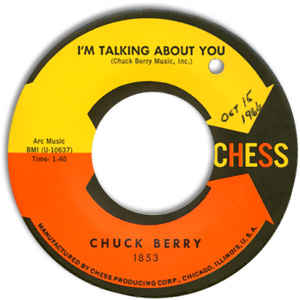


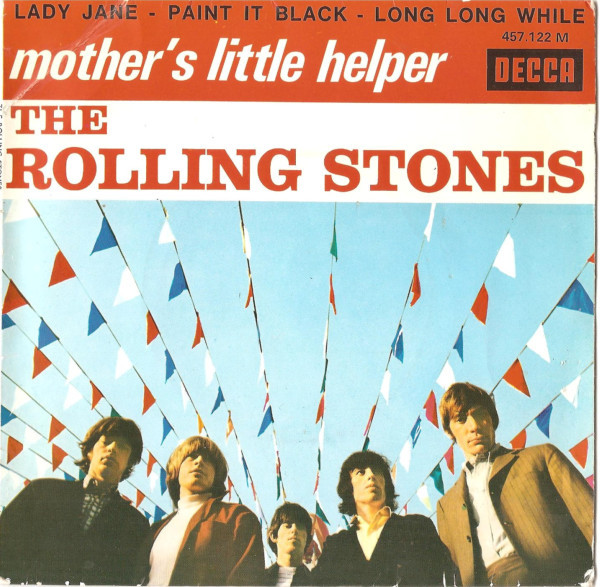
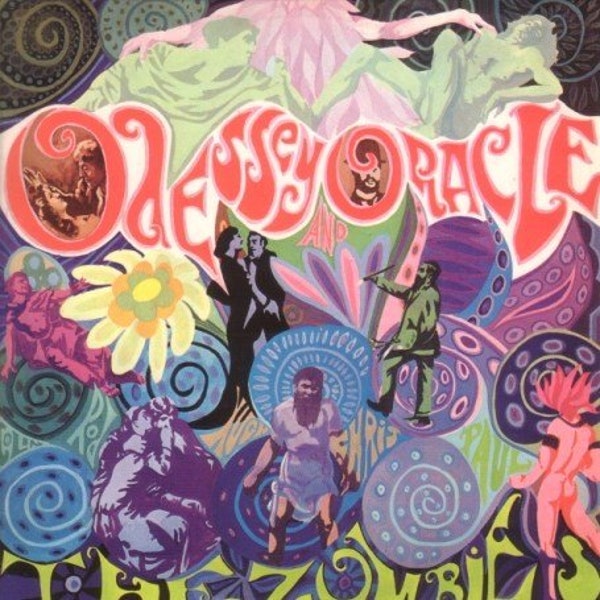


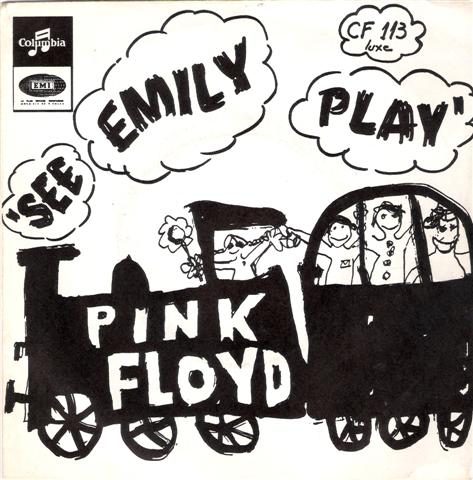

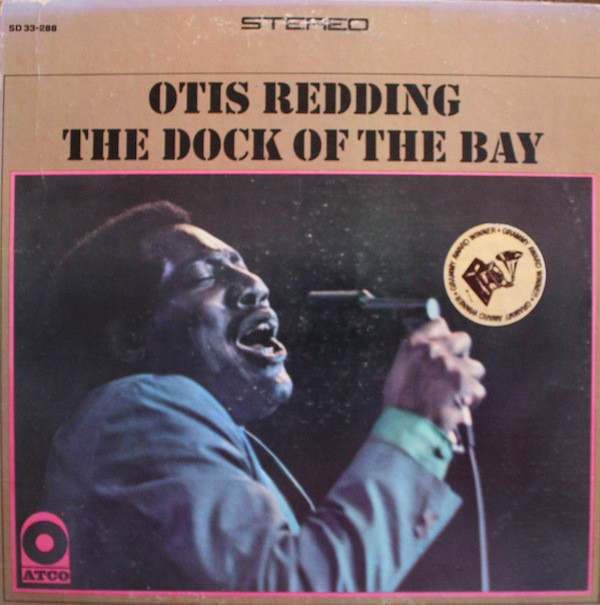
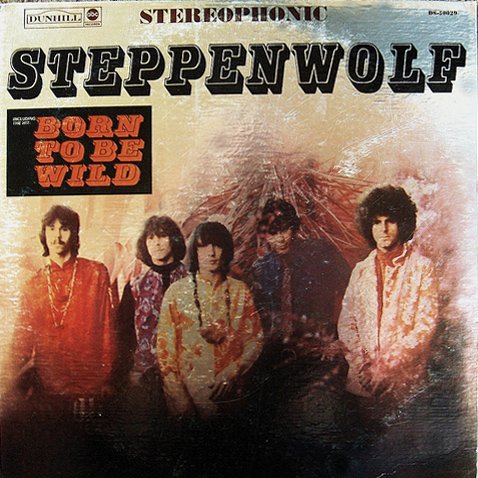


 PowerPop... An Eclectic Collection of Pop Culture