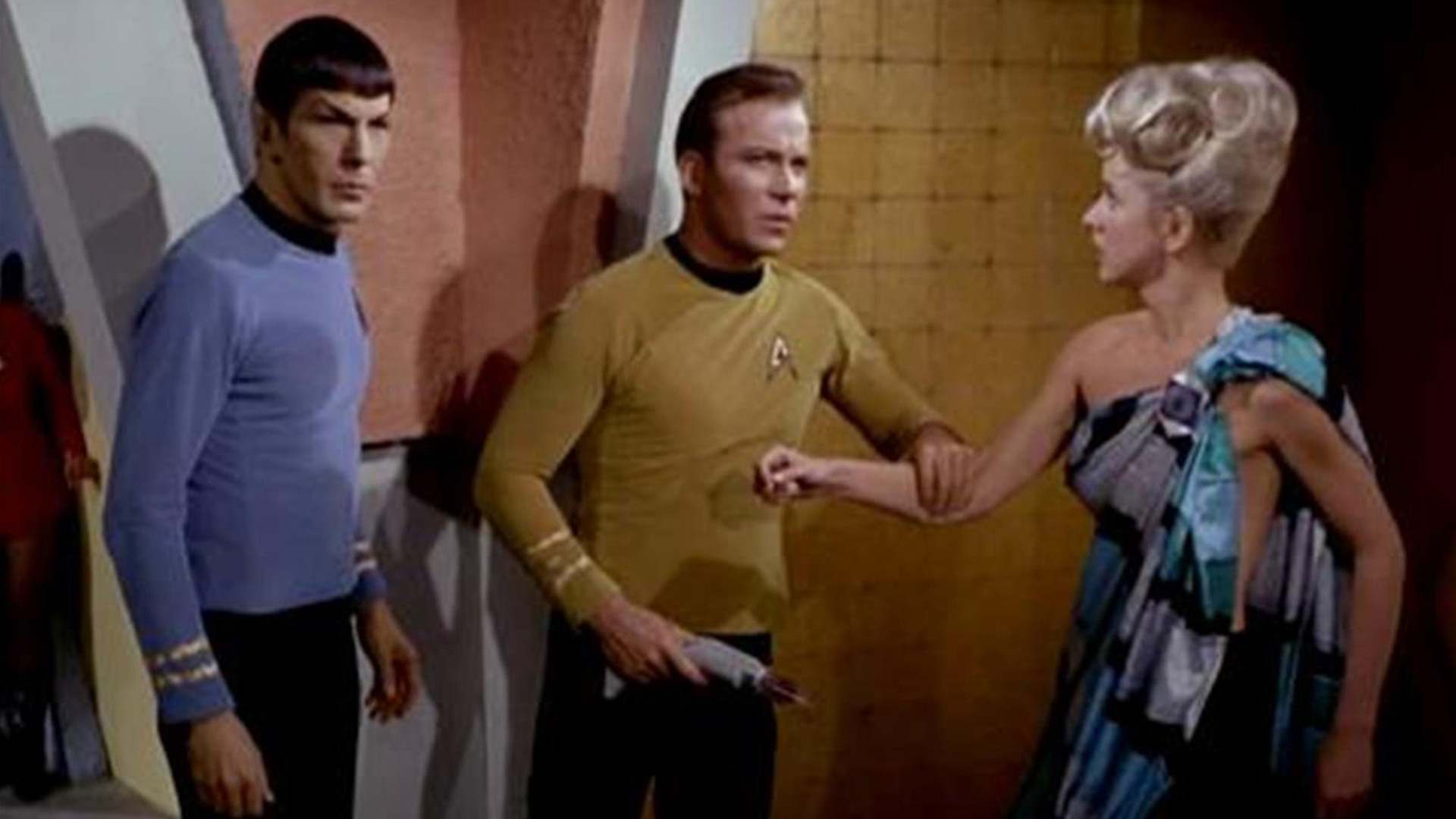
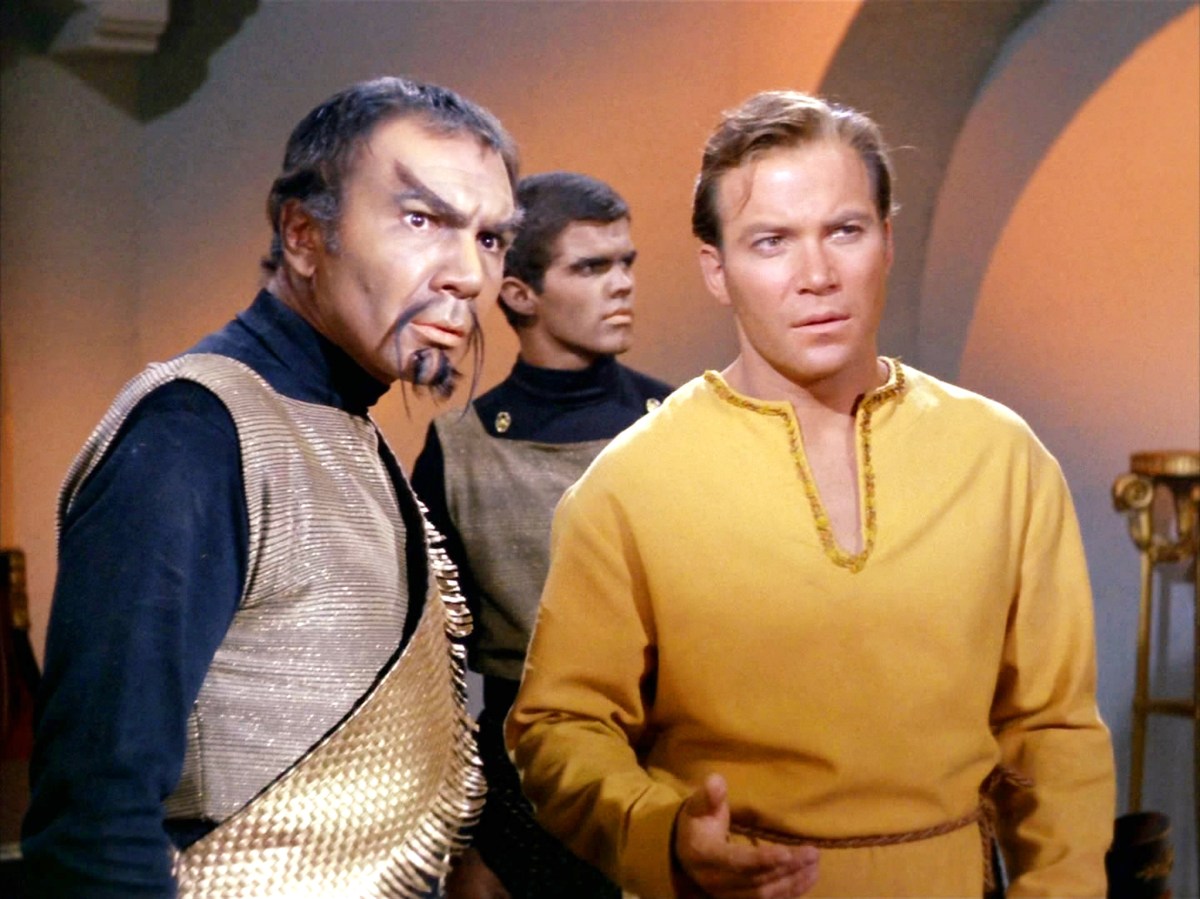
Star Trek – Errand Of Mercy

★★★★ March 23, 1967 Season 1 Episode 26

If you want to see where we are…and you missed a few…HERE is a list of the episodes in my index located at the top of my blog. 

This show was written by Gene L. Coon and Gene Roddenberry

This episode introduces one of the most famous enemies of anyone in TV or movies. The Klingons are up there with the Daleks and Storm Troopers. 

The Enterprise must beat the Klingons to a planet that is of significant strategic importance between the Klingon Empire and the Federation’s realm of control. This planet is known as Organia and appears to be technologically inferior to humans and Klingons alike. Kirk pleads with its council to side with the Federation in an imminent war with the Klingons in order to avoid occupation but the Organians seem unperturbed by any of this.

The Organians can be super annoying at times. We all want peace but they refused to put up any defense at all against the coming Klingons. They gave a vibe of “everything will be alright” and didn’t seem concerned about anything really. At first, I thought they were way too naive. It’s great being peaceful but not defending yourself did not make sense. There is a surprise at the end and we find out that the Organians are not what they seem. 

Kirk never even tries to understand the Organians… he assumes he’s so far above them that they can’t even understand the trouble they find themselves in.
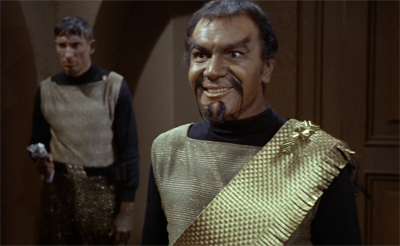
Klingon

This episode serves as a very good introduction to the Klingons. We get to know what they are all about…we also see the similarities between them and Starfleet. At the end of the episode, Kirk looks back and realizes he’s not the biggest fish in the pond like he originally presumed. A fun episode made all the more memorable by John Calicos as the merciless Klingon Kor, the actor makes a truly great villain.

SPOILERS

The Organians then reveal themselves to be highly-evolved incorporeal beings composed of pure energy. They put a stop to the coming war by making their weapons useless. They left Kirk and Kor to ponder what might have been (a disappointed Kor says that war between them ‘would have been glorious’).

From IMDB:

Introduces the Klingon Empire. Klingons were named after Gene Roddenberry’s friend, Bob Clingan.

John Colicos intended to reprise the role of Captain Kor in a later episode Star Trek: Day of the Dove (1968), but scheduling conflicts with Anne of the Thousand Days (1969) prevented this. The role of Captain Kang (Michael Ansara) was written to take the place of Kor, and the performances of both actors were so excellent that they became equally legendary.

The Klingon Lieutenant played by Victor Lundin walks into the room ahead of John Colicos (Kor), making him the first Klingon to appear on screen in any Trek production, although, in a prior scene, several Klingons are seen walking through the village.

The baldric that Kor wore was reused for Worf during the first season of Star Trek: The Next Generation (1987). When it was exhibited at the Smithsonian Institution as part of a Star Trek retrospective in the 1990s, the material could clearly be seen to be burlap sacking, painted gold. The same exhibit showed that the buckles of the Klingon belts were pieces of bubble pack, with the bubbles painted silver to resemble metal studs.

In the original broadcast, we never saw visuals of the Klingon vessels either on the view screen or on exterior shots, just explosions on the view screen where the Klingon vessels were supposed to be. In the “Remastered” release (2006), new shots of the D7 Klingon Battle Cruisers, designed and built by art director Walter M. Jefferies, were digitally inserted into various shots, providing new visuals of the Klingon ships that were not present before. Due to this addition, this would now officially make this the first episode of the series to feature the D7s. Originally, the D7s did not appear until the Third Season of the series and the original first episodes to feature them were Star Trek: The Enterprise Incident (1968) and Star Trek: Elaan of Troyius (1968), which were aired in reverse order from when they were filmed.

The entrance of the Klingon headquarters is the same building as the main gate to the Organian village, filmed from a longer distance and different angles.

This is the first episode in which Sulu is shown sitting in the command chair, although he had previously commanded the bridge from the helm position in Star Trek: Arena (1967). Scott, who doesn’t appear in this episode, had commanded the Enterprise in the absence of Kirk and Spock in Star Trek: A Taste of Armageddon (1967), in which Sulu didn’t appear. The second season would establish Scott as senior to Sulu in the command structure.

This is the last episode in which the term “Vulcanian” is used to refer to Vulcans. Both “Vulcanian” and “Vulcan” are used at different points in the episode: Kor uses “Vulcanian” and the Klingon lieutenant uses “Vulcan”, both in reference to Spock.

An audio clip of Spock’s line about “pure energy” was used by the band Information Society in their song Information Society: What’s on Your Mind? (Pure Energy) (1988). The song reached #3 on the Billboard Hot 100 chart, and Leonard Nimoy was given a “Special Thanks” in the song’s credits.

Popularly known as “The Vietnam Story”, for its obvious allusions to Vietnam and its abuse by the colonial powers.

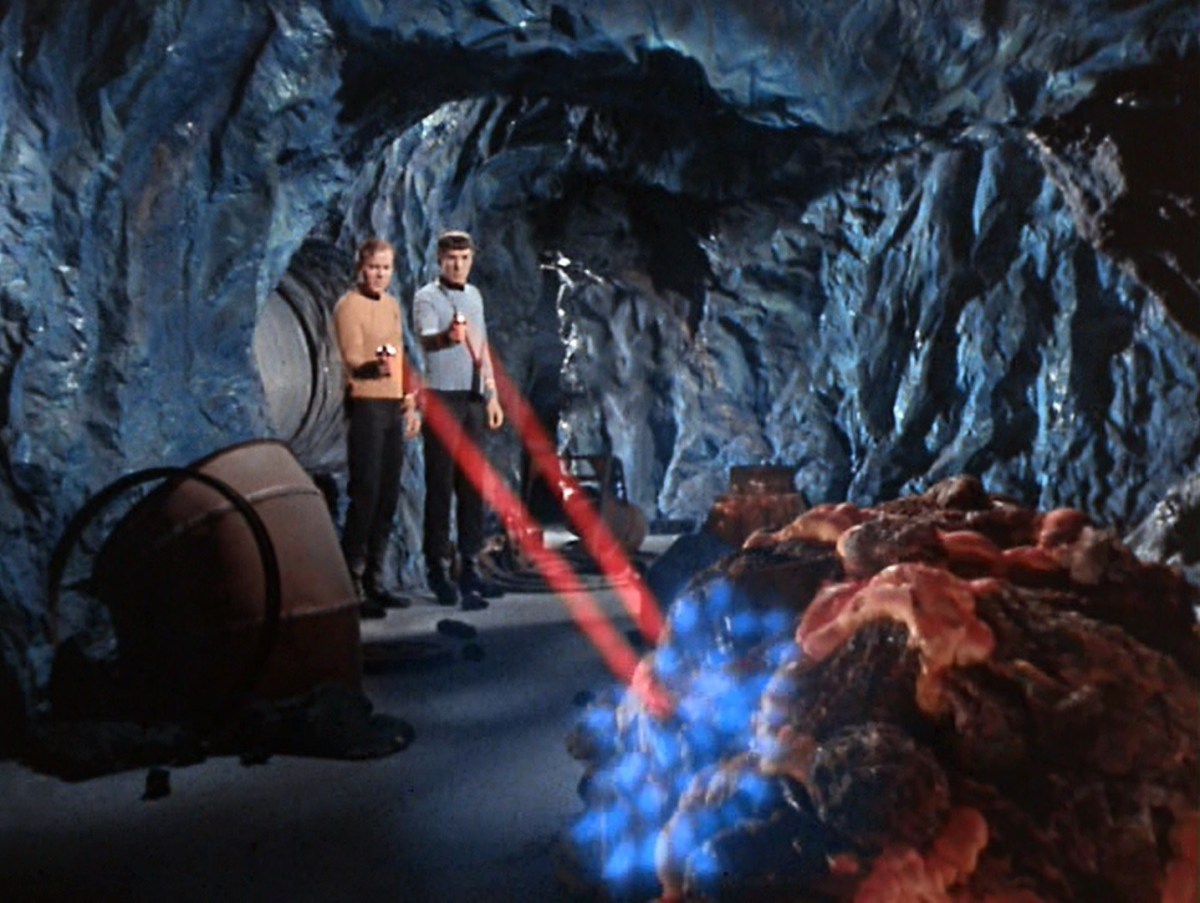
The set where Kirk and Spock shoot the two Klingons is the same set used in Star Trek: The Cage (1966) where Captain Pike kills the giant warrior with a spear.

One of only a few episodes where a blue-shirted crewman is seen at helm.

D.C. Fontana thought the Klingons were made the regular adversaries of the series because they didn’t need any special (and expensive) make-up like the Romulans, whom she thought to be much more interesting.

In the script, the Klingons were described simply as “Oriental, hard-faced.”

The scene where Kirk and Spock stun the guards and break into the Klingon headquarters was filmed at sunlight using a “day-for-night” filter.

Kor was also set to appear in Star Trek: Day of the Dove (1968) and Star Trek: The Trouble with Tribbles (1967), but John Colicos was unavailable and other Klingon characters were written in. A script was written for Kor for the fourth season, but the show was cancelled after the third season, and he never got his chance to appear again. (Kor did appear in Star Trek: The Animated Series: The Time Trap (1973), but was voiced by James Doohan.) Colicos was also the person who gave the Klingons their dark-skinned, mustached look. He said he was going for the “Genghis Khan” look. Makeup artist Fred B. Phillips agreed on it, and conceived the Klingons in this fashion. He did eventually reprise his role in Star Trek: Deep Space Nine: Blood Oath (1994), Star Trek: Deep Space Nine: The Sword of Kahless (1995), and Star Trek: Deep Space Nine: Once More Unto the Breach (1998).

Kor makes appearances in quite a number of Star Trek novels including “The Tears of the Singers”, in which he allies with Kirk first against human criminals and then against a mutiny aboard his own ship. John Colicos reprised the role of a now-elderly Kor in a few episodes of Star Trek: Deep Space Nine (1993).

John Colicos (Kor) would go on to play another iconic villain in a space opera television show: Lord Baltar in the original Battlestar Galactica (1978).

The shot of Enterprise hit by magnetic pulses was a stock shot of energy bolts hitting the ship, the corresponding live-action sequences used a buzzing electric effect that would be reused for the Klingon Bird-of-Prey firing effect in Star Trek III: The Search for Spock (1984). The shot of Enterprise firing was also a re-use. This time the white bolts shot out of the ship are said to be phasers, even though in other appearances the same effect represents photon torpedoes. The script specified that the battle should be depicted using stock footage from Star Trek: Balance of Terror (1966) and Star Trek: Arena (1967).

John Colicos was director John Newland’s first and immediate choice for the role of Kor. He got the script only two hours before flying to Los Angeles from Toronto, and read it on the plane.

A comic book published by IDW Comics in April 2007, “Against Their Nature”, told this story from the Klingon point of view.

The episode title comes from “The Life and Adventures of Nicholas Nickleby” by Charles Dickens: “It is an errand of mercy which brings me here. Pray, let me discharge it.” Nearly 40 years later, a passage from Nicholas Nickleby was discussed in a subplot of Star Trek: Enterprise: Cold Station 12 (2004).

The Organian ‘fortress’ that is observed in the distance and remarked on by Spock (and later established as the Klingon occupation force base of operations) is the Citadelle Laferrière, a famous Haitian landmark on Bonnet à l’Evêque mountain near Nord, Haiti.

Summary

With the breakdown of peace negotiations, the Federation finds itself at war with the Klingon Empire. The Enterprise is ordered to the planet Organia in order to ensure that the Klingons are prevented from using the planet as a base. They arrive to find a peace-loving population who seem to know little of war or violence and don’t see a threat, even after the Klingons arrive in force on the planet. While Kirk and the Klingon commander Kor jockey for position, the Organians refuse to support either side and both commanders soon learn that the Organians have a good reason not to fear or support either of them.

CAST

William Shatner … Captain James Tiberius ‘Jim’ Kirk
Leonard Nimoy … Mister Spock
John Abbott … Ayelborne
John Colicos … Kor
George Takei … Lieutenant Hikaru Sulu
Nichelle Nichols … Lieutenant Nyota Uhura
Peter Brocco … Claymare
Victor Lundin … Lieutenant
David Hillary Hughes … Trefayne
Walt Davis … Klingon Soldier
George Sawaya … Second Soldier
Bobby Bass … Klingon Guard (uncredited)
Bill Blackburn … Organian villager (uncredited)
John Blower … Organian Villager (uncredited)
Gary Combs … Klingon Guard (uncredited)
Frank da Vinci … Brent / Organian villager (uncredited)
Eddie Paskey … Lieutenant Leslie (uncredited)
Basil Poledouris … Klingon (uncredited)
Paul Power … Elder (uncredited)
Ron Veto … Harrison / Organian villager (uncredited)

A Question For the Readers

The reason I’m posting this at night? I want to make sure it works…and I didn’t want to be scrambling with it on my way to work.

I am putting together my new music computer and I haven’t recorded anything in a few years… and what a project it has been! I was wondering if you all would be receptive if I posted any of my songs once in a while? I’m only talking every once in a while…not many. The only thing I request of you…is if you can… listen to it… if possible wear headphones. The reason is I am NOT a good mixer and I mixed them down in headphones which you should never do.

On most, I played all the instruments myself unless I note it otherwise. When I was playing more (before covid) with the guys in my garage…I would make demos to show them…hey this is how it goes.

The songs you will be hearing are basically demos… I made them a few years ago for our band to learn so we could record them properly. Well life happens and that never happened. Some of you have heard some of the songs I’ve emailed to you… and I’ve somehow got positive feedback. I did most of the instruments my self…guitar, bass, vocals, keyboards, and programming real drums sounds which I’m not good at. These were never meant for public consumption but what the hell…I’m not 20 anymore trying to make something.

The reason I haven’t posted them before? My terrible voice and I was waiting for my cousin Mark…who is a proper singer to take over but that will take a while…so you would be hearing the rough demos.

So what do you think? Are you game for this? I’ve included an example of a song…this one has no vocals…just something a friend I have and I put together in 10 minutes (really just 10 minutes) a few years ago to work on later. It’s just guitar (him), bass (me), and some drums that I programmed from real drum kits. We called it “Whats In That Brown Paper Bag?”…more as a joke. This is not one of the songs I want feedback on…the feedback on this is how it sounds over your system. It is harder than the usual songs I write. Chris, my friend who plays guitar on this, came up with this riff. It gave me an excuse to have fun playing bass…Also….does it even play?

It’s very repetitive because like I said…it was for the fun of it and so we wouldn’t forget it. Today we are using it as a test. IF it goes well and I don’t get too many “no’s” then I will post one within a week or two with singing and a real song.

Linda Rondstadt – Poor Poor Pitiful Me ….Under the Covers Tuesday

I’ve always liked Linda Rondstadt and the songs she covers. I know I’m in the minority with this song but I prefer the original version. Not because Linda did a bad job…on the contrary…she did great and made it popular. I’m just a huge Warren Zevon fan and she left out a verse that I fell in love with because it was so out there. 

The lyrics would not really fit her so I understand but Zevon’s version is my go-to version. Ronstadt’s cover is a cleaned-up version with the gender-reversed. Her character still fails at suicide, but the S&M references (“I met her at the Rainbow Bar, she asked me if I’d beat her…”) are gone.

Zevon’s version came out in 1976 and Rondstadt’s was released in 1977. This song helped Zevon to get noticed. His Excitable Boy album came out a few months later and Werewolves of London was his first hit.

Linda Ronstadt was in the middle of a run of hits when she released this song on her eighth album, Simple Dreams. Her producer was Peter Asher, who also worked with James Taylor. Asher figured out that Ronstadt was more than just a singer, and he valued her input. When he started working with her a few years earlier, that’s when the hits started coming.

Peter Asher was one part of the Peter and Gordon pop duo that was part of the British invasion. Paul McCartney was going out with his sister Jane Asher and would give Peter songs to record with Gordon. After that was over he became part of Apple Records and then left to manage and produce James Taylor. 

Ronstadt’s version peaked at #31 on the Billboard 100, #26 in Canada, and #46 on the Billboard Country charts in 1977. I was surprised actually…I thought it would have been higher in the charts. 

Linda Rondstadt: “To me that song seemed like the purest expression of male vanity. Step on you, be insensitive, be unkind and give you a hard time, saying can’t ya take it, can’t ya take it. Then if you tease men in the slightest bit, they’ll just walk off with their feelings hurt, stomp off in a corner and pout. I mean that’s the way men are, I swear. I thought the verse turned around to a female point of view was just perfect. The gender change works perfectly.”

Poor Poor Pitiful Me

Well, I lay my head on the railroad track
Waiting on the double E
But the train don’t run by here no more
Poor, poor pitiful me

Poor, poor pitiful me
Oh, these boys won’t let me be
Lord, have mercy on me
Woe, woe is me

Well, I met a man out in Hollywood
Now I ain’t naming names
Well he really worked me over good
Just like Jesse James

Yes, he really worked me over good
He was a credit to his gender
Put me through some changes, Lord
Sort of like a waring blender

Poor, poor pitiful me
Oh, these boys won’t let me be
Lord, have mercy on me
Woe woe is me

Well, I met a boy in the Vieux Carres
Down in Yokohama
He picked me up and he threw me down
He said, “Please don’t hurt me, mama”

Poor, poor pitiful me
Oh, these boys won’t let me be
Lord, have mercy on me
Woe woe is me

Poor, poor, poor me
Poor, poor pitiful me
Poor, poor, poor me
Poor, poor pitiful me
Poor, poor, poor me
Poor, poor pitiful me

Janis Joplin – Half Moon

I just read a Joplin book and anyone who follows me knows what that means…a few Janis Joplin posts are coming.

She wasn’t here to be conventional or a cookie-cutter person. She was here to blaze a path and leave her mark…and she did just that.

I owned the album Pearl a long time ago and loved it. Through the years I also got her greatest hits and was wrapped up in those songs. I had forgotten about this funky song…and I use funky in the best way. It reaffirmed what a singer should be about to me…giving 100 percent of yourself every time out there.

On her last album, she was produced by Paul Rothchild who wanted Janis to use less of her brash voice to give more.  He also worked on her dynamics which worked perfectly with this album and song. She was working with her 3rd band in two years…and this one was the best one no doubt. I liked Big Brother but she HAD to scream to get over those loud guitars. She was taking more of an R&B/soul/funk/blues/rock approach unlike her strictly rock/blues approach with Big Brother. She had more nuances on this album and her voice never sounded better.

Half Moon was written by John Hall and his first wife, the former Johanna Schier. It was picked as the B-side to Me and Bobby McGee. At the time, John was a struggling musician and Johanna was a writer for The Village Voice. Johanna was assigned an interview with Joplin, who suggested the couple write a song for her. Joplin wanted Johanna to write a song about how she was feeling about a man she met in Rio Janeiro and was planning to marry in the future after he finished what he was doing.

It was the first song they wrote together, and a huge break for the couple, who were able to buy a house and a sailboat with the royalties. John Hall got a lot of credibility in the rock realm from co-writing it, and his career took off. A few years later, he formed the group Orleans, which had hits with two songs he wrote: “Still The One” and “Dance With Me.”

I never realized what it meant when I heard people say…”the artist always gives everything of themselves” until I saw clips of Joplin, Springsteen, and Hendrix. They go out on a limb on stage and risk a train wreck to give you that raw excitement. In today’s world of pre-packaged high-priced Las Vegas style shows…you get a slick show with dancers (I never understood that) without a bit of soul. Sure…the live acts sound exactly like their records and that can be tedious after a while. Some love that…and more power to them but I like the emotional roller coaster journey you take with an artist like Joplin…and she gives you that feeling on studio albums also.

The amazing thing about Pearl is that all of the vocals were called “scratch” takes…meant to be redone later on. She was planning to replace all of her vocals…she went all out anyway so I don’t see how she could have improved on them. Funny thing about the album…the original producer was no other than Todd Rundgren…Janis got rid of him right off the bat because she could not relate to him. Paul Rothchild (Door’s producer) took over and just fell for Janis’s voice and Janis.

I included a live version she did a few months before her death on the Dick Cavett show. When she grabs that mic…there is no doubt who is in charge. There is no screaming in this…just pure soul/blues singing…I love the high notes and dynamics…and she just plain kicked ass on this song.

Pearl peaked at #1 on the Billboard Album Charts, #1 in Canada, and #20 in the UK in 1971.

John Hall:  “It was numerological and astrological in nature. And it also had an alliterative repetition that was kind of captivating. It wasn’t rhyming, exactly, but it was an internal rhyme, perhaps you could say. It’s a device that poets use and that songwriters use to not just have the end of lines rhyme or the end of verses rhyme, but to have sort of a foreshadowing of that and words inside each line.” 

Half Moon

Half moon, night time sky
Seven stars, heaven’s eyes
Seven songs on seven seas
Just to bring all your sweet love home to me

Hey, you fill me like the mountains
Yeah, yeah, yeah, yeah
You fill me like the sea, Lord
Not coming past but still at last
Your love brings life to me
Your love brings life to me, hey

Rings of cloud and arms aflame
Wings rise up to call your name
Sun rolls high, Lord, it burns the ground
Just to tell about the first good man I found

Yeah, you fill me like the mountains
Yeah, yeah, yeah, yeah
You fill me like the sea, Lord
Not coming past but still at last
Your love brings life to me
Oh, oh, oh, oh, oh, oh yeah

Half moon on night time sky
Seven stars, heaven’s eyes
Seven songs on seven seas
Just to bring all your sweet love home to me

Hey baby, you fill me like the mountains
Yeah, yeah, yeah, yeah
You fill me like the sea, Lord
Not coming past honey still at last
Lord, you fill me like the mountains
Yeah, yeah, yeah, yeah
You fill me like the sea, Lord
Not coming past but still at last

Hey, you fill me like the mountains
Yeah, yeah, yeah, yeah
You fill me like the sea, oh Lord
You’re not coming past, honey, still at last
Your love brings life to me
Your love, la la la la la, la

Won’t you bring life to me
I said you’re gonna ride around
When I’m on a little home babe
Bring it on home, you bring it on home
Bring it on home, bring it on home
I said your love brings life to me, yeah

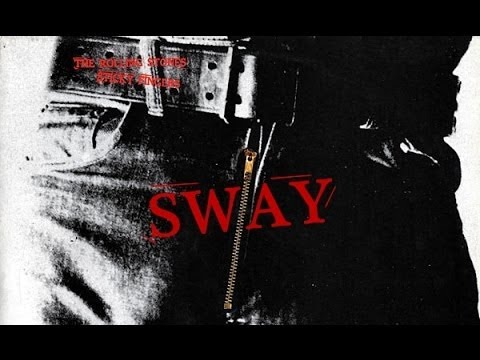
Rolling Stones – Sway ….Sunday Album Cuts

This was one of the great songs on Sticky Fingers…which has been called their greatest album alongside Exile on Main Street.

Mick Taylor wrote this track with Jagger, believing he’d receive his due acknowledgment, but it was ultimately credited to the Jagger/Richards duo. It was the type of slight that the guitarist took in his stride in the early days but, would grow into a larger issue in the coming years.

The Black Crowes were influenced by this song heavily on their track Sister Luck… they captured the same feel. I thought of this song because of a blogger friend (Jeremy James). He doesn’t blog much any more but has a cool youtube channel. He shows how to play this slide solo. He analyzes guitar effects, and equipment, and shows how to play different songs on guitar….check him out.

Sticky Fingers was the first album The Stones recorded on their own label and the first in which Mick Taylor played guitar on nearly all the tracks. The album peaked at #1 in the Billboard Album Charts, and #1 in Canada, and #1 in the UK in 1971. They had a lot of competition that year with The Who’s Who’s Next and Led Zeppelin IV.

On December 2, 1969, the band had begun work on what would be their first album of the 1970s, and the one upon which so much of their myth and mystique would be built.

At the Muscle Shoals Sound Studio in Sheffield, Alabama, they cut three tracks Brown Sugar, Wild Horses, and You Gotta Move in three days, all of which would subsequently appear on the band’s ninth LP, Sticky Fingers. They did this before they played at the disaster that was known as Altamont…where Meredith Hunter lost his life…on December 6, 1969.

Sway

Did you ever wake up to findA day that broke up your mindDestroyed your notion of circular time

It’s just that demon life has got you in its swayIt’s just that demon life has got you in its sway

Ain’t flinging tears out on the dusty groundFor all my friends out on the burial groundCan’t stand the feeling getting so brought down

It’s just that demon life has got me in its swayIt’s just that demon life has got me in its sway

There must be ways to find outLove is the way they say is really strutting out

Hey, hey, hey nowOne day I woke up to findRight in the bed next to mineSomeone that broke me up with a corner of her smile, yeah

It’s just that demon life has got me in its swayIt’s just that demon life has got me in its sway

It’s just that demon life has got me in its swayIt’s just that demon life has got me

It’s just that demon life has got

Star Trek – The Devil In The Dark

★★★★★ March 9, 1967 Season 1 Episode 25

If you want to see where we are…and you missed a few…HERE is a list of the episodes in my index located at the top of my blog. 

This show was written by Gene L. Coon and Gene Roddenberry

William Shatner’s father died during the making of this episode. Please check the IMDB notes below about that. 

This is the fourth excellent episode in a row. I’ve seen a video of a 1990s Star Trek convention of Leonard Nimoy saying this episode’s closing banter between Spock and Kirk was one of his favorite scenes to perform. He noted, “It was a wonderful moment which defined the relationship and defined the whole Spock character’s existence and his attitude about himself.”

 I like the fact that the episode is not about one specific character but evolves around the trio handling an alien problem. Also, it’s nice to see an episode that doesn’t only happen on the Enterprise.

The Enterprise arrives at a mining colony on Janus VI in order to kill a beast called the Horta, which has been killing miners, jeopardizing the exportation of the ever-important pergium (an element for energy). As the miners continue drilling deeper, it seems to be upsetting the monster more and more. Spock soon discerns that the monster is silicon-based, not the type of life form that the crew is familiar with.

The Devil In The Dark" (S1:E25) Star Trek: The Original Series Episode  Summary

In the beginning, everyone hates the Horta… they fear it and loathe it. But Spock’s mind meld and Kirk’s understanding soon changes this tune for everyone. People are often afraid of what they don’t understand. This episode reveals to us that, if we hope to find peace with what we don’t understand or take issue with, the first step is communication.

There is not much action in this one but a compelling episode and is a very good first-season episode. During the episode, Kirk wanted the creature killed but Spock wanted it alive. Spock augured to no avail but things started to change once he met the Horta. 

Just a quick note on a director. Ralph Senensky was told he was going to direct this episode and was sent the script but then told it would be another episode…yesterday’s This Side of Paradise. 

The reason I mention this is that Ralph has a great site where he talks about all of the different Star Trek and other TV shows (including the Twilight Zone and Waltons) he directed. If you have time check it out…he is 99 years old but still posts on his site

From IMDB:

In his book “Star Trek Memories”, William Shatner identified this as his favourite episode, because his father died during filming and Leonard Nimoy’s delivery of the mind meld lines made him laugh. He thought it was “exciting, thought-provoking and intelligent, it contained all of the ingredients that made up our very best Star Treks.”

Janos Prohaska, the creator of the Horta costume, actually wore it into Gene L. Coon’s office, as if to say “Look what I designed”. Coon said “That’s great! What is it?”, and Prohaska said “I don’t know. It can be whatever you want.” Coon replied “I’ll write a script around it”, and he wrote this episode in four days so the costume could be used.

Arthur C. Clarke once remarked, in 1995, that of the Original Series, the only episode he could recall was this one, stating that “It impressed me because it presented the idea, unusual in science fiction then and now, that something weird, and even dangerous, need not be malevolent. That is a lesson that many of today’s politicians have yet to learn.”

When William Shatner, on the set, got the call from his mother informing him about his father’s death, the crew was ready to shut down production, but he insisted on continuing. During the rest of the day, Shatner took comfort in Leonard Nimoy, and cinematographer Gerald Perry Finnerman, whose father had died on a movie set less than seven years before.

William Shatner was in Florida for his father’s funeral while nearly all of Spock’s “mind meld” scene with the Horta was shot. His screen double is shown from behind in several of the shots and all of Kirk’s “reaction” shots were made after he returned.

This episode was the first time McCoy used the phrase, “I’m a doctor, not a (blank)” when Kirk asks him to help the Horta, finishing the line as, “I’m a doctor, not a brick layer!” An earlier version of this phrase is used in “The Corbomite Maneuver,” when McCoy says, “What am I, a doctor or a moon-shuttle conductor?”

Gene Roddenberry was impressed with the way this episode explains the behaviour of a Star Trek “monster,” citing the instalment as “a classic example of doing this right” as well as “one of our most popular episodes.” He went on to say, “The Horta suddenly became understandable [….] It wasn’t just a monster-it was someone. And the audience could put themselves in the place of the Horta… identify… feel! That’s what drama is all about. And that’s it’s importance, too… if you can learn to feel for a Horta, you may also be learning to understand and feel for other Humans of different colours, ways, and beliefs.”

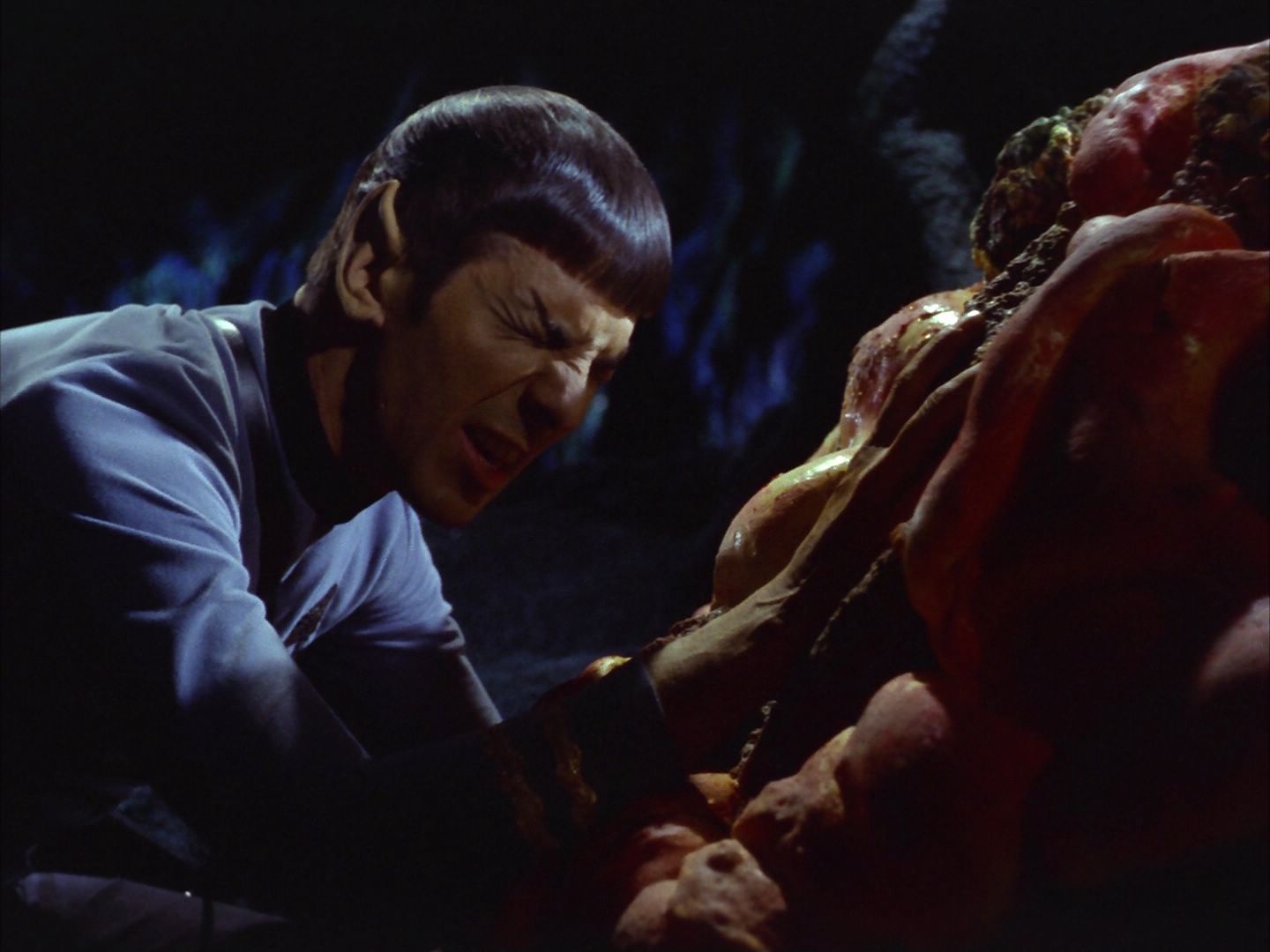
In a book about Star Trek, it was reported that after William Shatner returned from the funeral, to put everyone at ease, as he was trying to do his lines following Mr. Spock’s mind meld with the Horta and his cry of “AHH! PAIN! PAIN! PAIN!”, Leonard Nimoy just spoke the words, so Shatner told him to do it again with feeling. When “Spock” again said “AHH! PAIN! PAIN! PAIN! ” Shatner yelled out, “WILL SOMEBODY PLEASE GET THIS VULCAN AN ASPIRIN!”

“No Kill I” was the name of a Star Trek-themed punk rock band.

This episode includes only one actress, who appears for a few seconds and has no lines. This is the only episode with no female speaking parts.

The unbroken Horta eggs were toy bouncing balls painted gold.

NBC announced that Star Trek would be renewed for a second season next fall, during the closing credits of this episode on 9 March 1967.

This is the only episode in the original series in which the distinction is drawn between “phaser one” and “phaser two.”

This episode marks the first and only time an episode begins without the Enterprise or its crew being involved in the teaser scenes before the main credits.

Gene L. Coon’s original script featured a different material as the base of the Horta, but researcher Kellam de Forest changed it to silicon, as the original choice seemed to be even theoretically impossible.

Actor Barry Russo, appearing as Lt. Commander Giotto, also appears in Star Trek: The Ultimate Computer (1968) as the character Commodore Robert Wesley.

The Star Trek: Deep Space Nine (1993) novel “Devil in the Sky” is a sequel of sorts to this episode.

This episode was originally scheduled to be filmed before Star Trek: This Side of Paradise (1967), with Ralph Senensky assigned to direct it, but during pre-production the two episodes and the directors were switched because Gene L. Coon thought “Devil” would be a tough assignment to first-time Trek director Senensky.

The clubs used by some of the Janus VI colonists during their hunt for the Horta appear to be of the same design used by Kirk during his fight with Spock in the transporter room in Star Trek: This Side of Paradise (1967).

Summary

The Enterprise travels to the planet Janus 6 to assist the mining colony there. Kirk, Spock and McCoy beam down to the planet where Chief Engineer Vanderberg tells of a creature loose in the mine tunnels killing some of his men. The monster seems to appear out nowhere then disappears just as quickly. Finding that the creature, known as a Horta, lives in a newly opened part of the underground mining complex, Spock uses the Vulcan mind meld to determine why it is killing the miners.


Here are some CGI effects they have made into this episode

CAST

William Shatner … Captain James Tiberius ‘Jim’ Kirk
Leonard Nimoy … Mister Spock
DeForest Kelley … Doctor Leonard ‘Bones’ McCoy
Ken Lynch … Vanderberg
James Doohan … Lieutenant Commander Montgomery ‘Scotty’ Scott
Brad Weston … Appel
Biff Elliot … Schmitter
George Allen … Engineer #1 (as George E. Allen)
Jon Cavett … Guard
Barry Russo … Giotto
Lee Allen … Janus IV Miner (uncredited)
Tom Anfinsen … Civilian Engineer (uncredited)
Bill Blackburn … Lieutenant Hadley (uncredited)
Frank da Vinci … Lt. Osborne (uncredited)
Dick Dial … Sam (uncredited)
Robert Hitchcock … Miner (uncredited)
Bob Hoy … Horta (uncredited)
Monty O’Grady … Miner (uncredited)
Eddie Paskey … Lieutenant Leslie (uncredited)
Janos Prohaska … Horta (uncredited)
Al Roberts … Roberts (uncredited)
Ron Veto … Security Guard (uncredited)


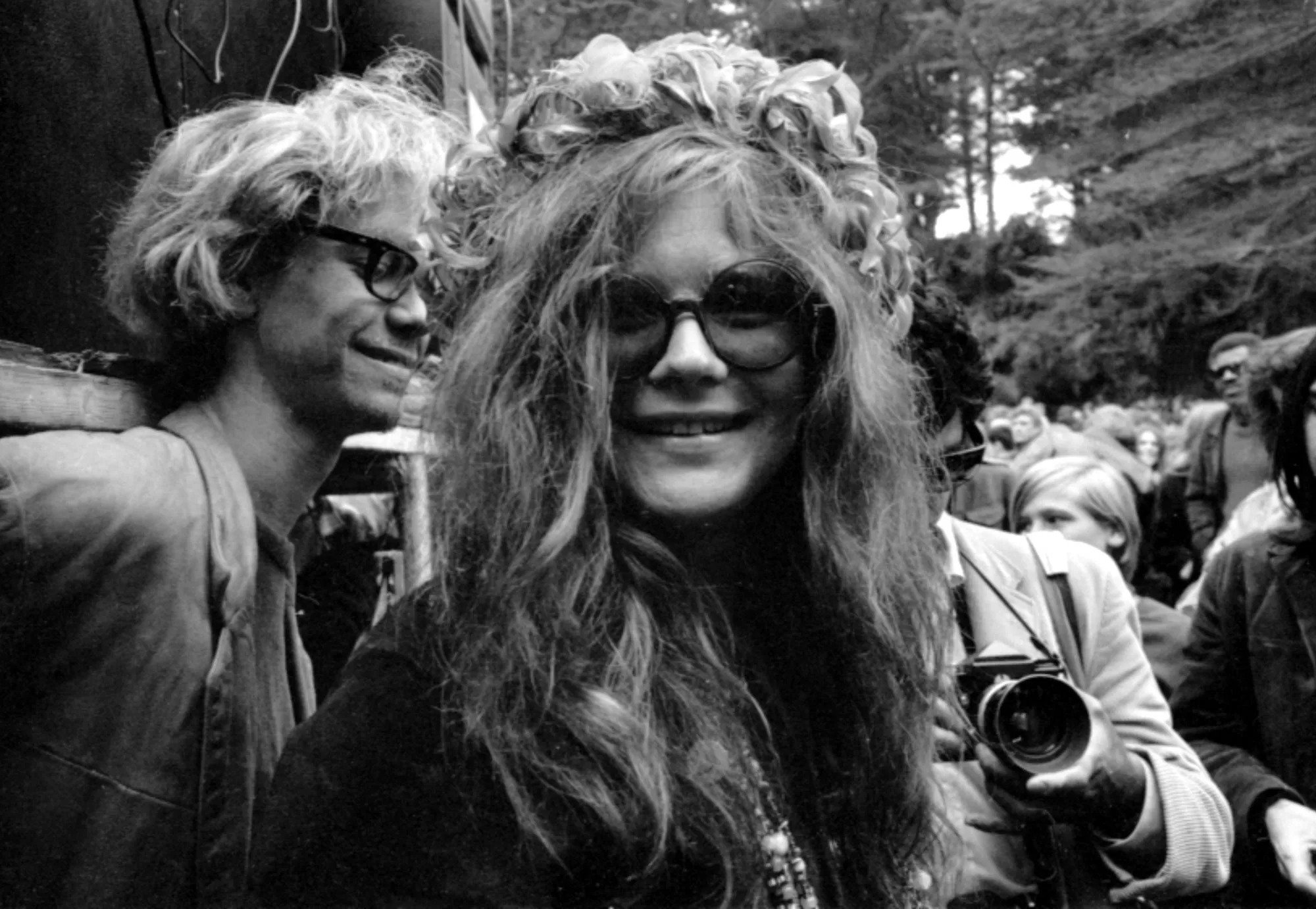
Janis Joplin…The First Female Rock Star

Janis Joplin

 I want to thank Lisa from Tao-Talk for publishing this post on March 19, 2023. Every March she does a Women Music March with a post on a female artist every day. Please go visit her site and see the artists she has featured this month. 

On stage, I make love to 25,000 different people, then I go home aloneJanis Joplin

When I think of female artists…Janis Joplin is the first one that comes to my mind. My top two female singers are Aretha Franklin and Janis Joplin. Both are legends and both unique.

I cannot express how much I love this woman. She had the most powerful voice I have ever heard. She could sing with beauty, grit, and she could sing with a sound like Southern Comfort pouring through razor blades. There was soul, confidence, strength, and vulnerability in her voice that came through in every song. She was one of the authentic singers. You can hear the pain in Billie Holiday’s and Bessie Smith’s voice…you can hear pain in Janis, yes it was a different kind but pain all the same. It all started with a Janis Joplin greatest hits album I got when I was 11 and the love affair has never ended.

You really can’t compare her to her female contemporaries. She was not like Joni Mitchell, Linda Ronstadt, Mama Cass, or even Grace Slick. Janis hit you between the eyes and never looked back. Sweet ballads were not her style, but she could do them. She could hold her own against anyone…she had more in common with Robert Plant than the other female singers. She was also a kind thoughtful lady.

Bessie Smith died in 1937 but a headstone was never bought for her. In August 1970, just two months before Joplin’s own death, she and Juanita Green, who worked in Smith’s house when she was younger and went on to become the president of the North Philadelphia chapter of the NAACP, pitched money to buy a proper headstone for Smith. For the epitaph, they chose the following line: “The Greatest Blues Singer in the World Will Never Stop Singing.”

Her childhood was spent in Port Arthur, Texas. Janis’ mother was a businesswoman, and her father was an engineer, and as the oldest child, she was given all the care she needed but soon discovered that she was different. Being different in Texas at that time was not good.

In high school she was groped and bullied by many of the football team including Jimmy Johnson the football player, coach, and now analyst for Fox Sports. He and his teammates spread rumors that she’d slept with their friends because she “looked and acted weird.” He was a star linebacker on the football team. He said, “Janis looked and acted so weird that when we were around her, mostly in the hallways at school, we would give her a hard time…she ran with the beatnik crowd.” He continued to occasionally degrade her after she died.

She would go to college in Austin Texas, but Austin wasn’t “weird” yet at the time. Alpha Phi Omega sponsored its “Ugliest Man on Campus” contest as part of an effort to raise money for charities. Fraternities would nominate one of their members and dress them up in old clothes and they would be voted on. Someone nominated Janis and it hurt her bad. Joplin’s mother, Dorothy Joplin, admitted that her daughter wrote an “anguished letter laying out all the gory details of how the contest had affected her.”

She moved from Texas to San Francisco and became part of the San Francisco music scene with the Grateful Dead, Jefferson Airplane, Moby Grape, and Quicksilver Messenger Service. Her influences were Billy Holiday, Bessie Smith. Big Mama Thornton, Odetta, and Leadbelly.

She played with Big Brother and the Holding Company who were as raw as you could get, and they played at the Monterrey Pop festival and broke through. She went solo with a couple of backing bands… The Kozmic Blues Band and the Full Tilt Boogie Band. She later played at Woodstock and traveled in a train to concerts all around Canada with the Grateful Dead and other artists that can be seen in the movie The Festival Express.

There are few artists who give everything they have all the time. Bruce Springsteen is one…Janis was one. On film it comes through…she gave everything she had and more. The last recording, she made was a fun birthday message to John Lennon.

Her nickname was Pearl and that was the name of her last album. Her last album is a classic. Janis with the help of the producer Paul Rothchild learned how to control her voice and not belt everything out. He wanted her to have a voice when she turned 30. It worked…it was her most successful album. It showed how great of a voice she had…she wasn’t just a screamer.

Janis would not make 30…she will be 27 for eternity. She died on October 4, 1970, from a heroin overdose after working on her album. She left $2,500 for her wake…. 200 guests were invited with invitations that read” Drinks are on Pearl.” The guests showed up with the Grateful Dead (as she had requested in her will) as the house band. Her body was cremated, and the ashes scattered from an airplane near Stinson Beach.

I only wished she could have survived and been alive today. Much like Jimi Hendrix, I hate to think what we missed out on.

She was the ultimate take me as I am person.

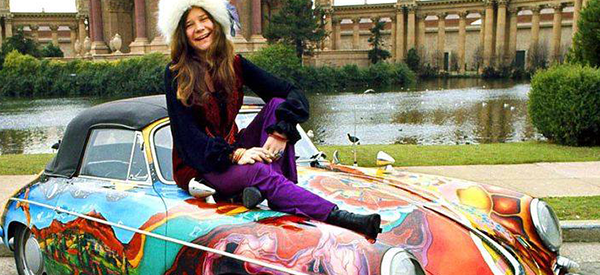
Joplin on Porshe

Discography

Studio Albums solo and with Big Brother:  4

Live Albums: 7 (after her death)

Compilation Albums: 14

Singles solo and with Big Brother:  13

Filmography from Wiki

Monterey Pop (1968)

Petulia (1968)

Janis Joplin Live in Frankfurt (1969)

Janis (1974)

Janis: The Way She Was (1974)

Comin’ Home (1988)

Woodstock – The Lost Performances (1991)

Woodstock: 3 Days of Peace & Music (Director’s Cut) (1994)

Festival Express (2003)

Nine Hundred Nights (2004)

The Dick Cavett Show: Rock Icons (2005) Shout Factory

Rockin’ at the Red Dog: The Dawn of Psychedelic Rock (2005)

This is Tom Jones (2007) 1969 appearance on TV show

Woodstock: 3 Days of Peace & Music (Director’s Cut) 40th Anniversary Edition (2009)

Janis Joplin with Big Brother: Ball and Chain (DVD) Charly (2009)

Janis: Little Girl Blue (2015)

Things to Share

The quantity and more importantly the quality of her work was incredible in a short window of time. In 1995, Joplin was inducted into the Rock and Roll Hall of Fame. In 2005, she received a Grammy Lifetime Achievement Award. In November 2009, the Rock and Roll Hall of Fame and Museum honored her as part of its annual American Music Masters Series. In 2014 there was also a commemorative Janis Joplin stamp issued by the US Postal Service.

I’ll close this with a couple of short stories. Janis did not suffer fools gladly. At a party Jim Morrison was getting drunk and became obnoxious, rude, and violent. Morrison saw that Joplin was there and started to hit on her. Joplin had admired Morrison but not on this night. By this point, she shot him down at every turn and eventually tried to leave with Paul Rothschild (her producer) and nearly got away before Jim, wobbling along, followed her to her car and reached in, grabbing Janis by her hair in an attempt to pull her out. BAD move Jim… Janis then took her bottle of Southern Comfort and cracked him over the head with it, immediately knocking the Lizard King out cold. Now normally, this would have been the end of things…but the next day at rehearsal, Jim was absolutely smitten with Janis,  begging Paul Rothschild to give him her phone number…he didn’t get it.

Her road manager John Cooke was the son of Masterpiece Theater host Alistair Cooke and the great grand-nephew of poet Ralph Waldo Emerson.

Janis also punched Jerry Lee Lewis when Lewis told Laura Joplin (Janis’s sister) something offensive. She had to be pulled off him.

This is her on the Dick Cavett show and it says a lot about her. This was in 1969, before the Morrison party.

Star Trek – This Side Of Paradise

★★★★★ March 02, 1967 Season 1 Episode 24

If you want to see where we are…and you missed a few…HERE is a list of the episodes in my index located at the top of my blog. 

This show was written by D.C. Fontana, Jerry Sohl and Gene Roddenberry

This one is one of my favorite episodes. It has humor and a good story. It is a great Spock episode. Spock…is actually happy through this episode but you do feel bad for him at the end. 

 It begins as a mystery on a very peaceful planet, where settlers were meant to begin an agricultural colony several years ago. Kirk tries to unravel the mystery presented before him…the colonists should all be dead by this point due to what are known as “Berthold Rays” and all animals have died off…but the colonists? They are beyond healthy…even growing things back like an appendix that was taken out years before. 

Everyone on the planet is beyond happy. The crew cannot figure out how these people are still even alive…much less so happy. The writing for this one I really enjoyed. Kirk asked Spock what the odds were that anyone was still alive while they were traveling there…Spock said “absolutely none” so imagine their surprise when they saw the people walking about. 

They find out soon what is keeping these people alive and happy. The spores from a type of plant/flower that sprays them out. It not only makes people happy but also keeps them healthy and safe from the Berthold Rays. 

Star Trek: The Original Series: This Side of Paradise – It Sure Don't Look  Like Eden – Thoughts From the Mountain Top

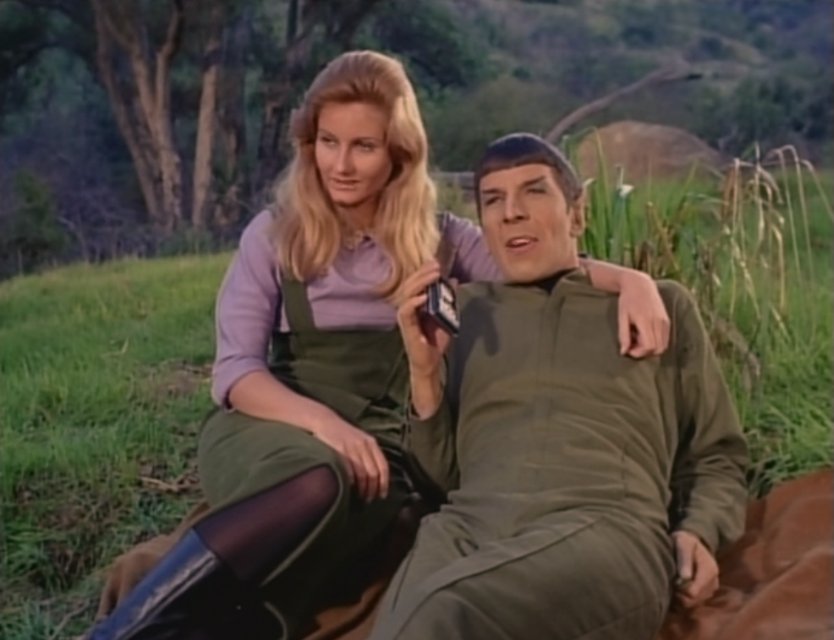
To see Spock happy is odd in itself but to see him in love is sensory overload. After the spores from the flowers get into Spock…he is a new man Vulcan. A sample of the dialog between Spock and Kirk amuses me. 

Capt. Kirk: We’re evacuating all colonists to Starbase 27.

Spock: No, I don’t think so.

Capt. Kirk: You don’t think so, WHAT?

Spock: I don’t think so, SIR.

For once in his life…Spock is happy. I found myself rooting against Kirk in this one just to let Spock be. I knew of course everything would go back to the way it was…but it was nice seeing that. 

What is really sad is the following exchange between Kirk and Spock after everyone was on the Enterprise…

Capt. Kirk: We haven’t heard much from you about Omicron Ceti III, Mr. Spock.

Spock: I have little to say about it, captain. Except that… for the first time in my life… I was happy.

What I get from this episode and please comment if you think I’m right or wrong but Spock…does have feelings underneath but he keeps them at bay. The spores brought them out into the open. 

Oh…can I have some of those flowers?

From IMDB:

The spores, in the early drafts, were a communal intelligence; when someone was possessed by them, that individual was granted telepathic abilities to link up with other possessed minds. The abilities of the spores to restore health were complete enough to enable them to return the dead to life. The antidotes for the spores were either the possession of a certain blood type or the introduction of alcohol into the affected person. Originally, Kirk leaped onto Spock and forced liquor down his throat to restore him to normal. This was presumably deemed unrealistic for various reasons. Kirk would not be strong enough to force alcohol no Spock. Even if he did, Spock could just spit it out because the alcohol would probably have to enter the bloodstream to have an effect. It is established in various stories that, while Vulcans will occasionally drink alcohol, it doesn’t affect (intoxicate) them the same way it does human. (On the other hand, in the novelisation of ‘Star Trek IV: The Voyage Home’, Spock states that the sugar sucrose, in the candies that Kirk bought to get change for the bus, has the same effect on Vulcans as ethanol does on humans.) In a surprise ending, the spores were revealed to be benevolent, conscious entities who never intended to act against anyone’s will.

Spock hints that, contrary to the common misconception that Vulcans have only one name, he has more than one name, like most humans, but when asked, all he says about it is: “You couldn’t pronounce it.”

The empty shot of the bridge, before the turbolift opens to admit Kirk, was the best available piece of film for Star Trek: The Next Generation: Relics (1992) to reuse as the holosimulation of the NCC-1701 bridge. The short snippet of film was “looped” several times and bluescreened in behind James Doohan and Patrick Stewart’s scenes. Using the stock footage in this way eliminated the need to completely rebuild the bridge – they only built a short section of the computer stations, the door alcove, and the command stations for the TNG-era actors to sit at.

In a blooper, Leonard Nimoy flubs his line about the plants acting as a repository for thousands of spores. Instead, he says the plants act as a “suppository.” The crew cracks up, as does Nimoy, who caps the fun by putting a Tootsie Pop in his mouth.

Frank Overton died shortly after completing this episode.

This is the first episode in which Spock is shown to have superhuman strength.

The title refers to ‘This Side of Paradise’ the debut novel of F. Scott Fitzgerald.

At a one man show in Orlando, Florida, Leonard Nimoy said it was hard doing love scenes with Jill Ireland with her husband Charles Bronson watching off stage. However, she was in the process of divorcing David McCallum when the episode was shot. It’s possible Bronson may have visited the set, but they didn’t marry until the following year.

In the script, Kirk first spots Spock and Leila kissing passionately by the stream. There is no scene of Spock hanging off the tree limb. That facet of the episode may have been made up on the spot. Indeed, director Ralph Senensky came up with the idea of Spock hanging from the tree on location, when he found the tree and the spot closely to Bronson Canyon. Originally the scene was to be shot on a clearing. Evidence taken from a deleted scene, of Spock and Leila’s presence near the stream, appears in the episode’s preview trailer.

Ralph Senensky originally wanted to film the Kirk versus Spock fight scene from a wider angle, so the stunt doubles wouldn’t be so obvious, but the transporter room set was too small to achieve this.

According to director Ralph Senensky, the original schedule was that the first three of the six shooting days were to be spent on location, shooting at the Golden Oak Ranch (also known as the Disney Ranch), then the remaining three days indoors, filming the Enterprise scenes. However, after two days of shooting outdoors, Jill Ireland fell ill and couldn’t appear on the set. It was in question if she had measles or not. Senensky decided to film all the farm scenes which didn’t contain Leila’s character and then return to the studio for Enterprise interiors in the remaining of the day, and hope for the actress’ return. Ireland appeared the following day, as it turned out that she did not have measles. However, the crew couldn’t return to Disney Ranch as it was already booked for another production. They decided to film the remaining scenes at Bronson Canyon.

D.C. Fontana very much liked the finished episode. She recalled, “It worked out very well because the actors were brilliant for me, and had a very good director, and you know, I really like it.”

This is listed as one of the “Ten Essential Episodes” of TOS in the 2008 reference book “Star Trek 101” by Paula M. Block and Terry J. Erdmann.

Some of Spock’s family background is fleshed out in the episode with references to his half-human heritage. The episode also first reveals that Spock’s father is an Ambassador, which would be depicted in later stories. Spock’s mother is said to be a teacher, but there would be no further details or depictions of her career. However, Spock’s mother and father are also referred to in the past tense, indicating they may not be alive (which is disproved when they appear in Star Trek: Journey to Babel (1967)).

Gerald Fried’s score from Star Trek: Shore Leave (1966) is heavily featured in this episode, most notably the “Ruth theme”, successfully accompanying the lost love between Spock and Leila.

One of the basic aspects that D.C. Fontana immediately changed was Jerry Sohl’s original conception of the spore plants residing in a cave. Thus, to avoid the danger of the plants, the crew merely had to avoid the cave. Fontana put the plants everywhere around the planet, and later the Enterprise to make them a real menace.

In Jerry Sohl’s original draft (first titled “Power Play”, then “The Way of The Spores”), it was Lt. Sulu who was infected by the spores and was able to fall in love with Leila. Displeased with D.C. Fontana’s rewrite, Sohl was credited under the pseudonym Nathan Butler.

Stuntman Bobby Bass, whose character tried to break up the fight between the two officers, had his only lines of dialogue in the series here.

The buildings seen in the teaser, the first scene after and the scene in which DeSalle shows McCoy the Spores are at a different location than the buildings seen in the rest of the episode. The green farm structures were located at the Disney Ranch. The concept of Sandoval’s people refusing modern technology was intended to justify the late-19th century Americano style of the ranch.

The script featured characters named Lieutenant Timothy Fletcher and Crewman Dimont as members of the landing party. When Michael Barrier and Grant Woods were cast in these roles, the names were changed to DeSalle and Kelowitz respectively, to appear constant with the two actors’ previous appearances on the series.

According to D.C. Fontana, the episode had to be seriously rewritten because Jerry Sohl had not quite gotten it right. Gene Roddenberry told her, “If you can rewrite this script, you can be my story editor.” She thought about it and eventually realized that the story wasn’t really about Sulu, but about Mr. Spock. Leonard Nimoy, who was initially taken aback when he was told that they were working on a love story for Spock, later felt that the episode turned out to be a lovely story.

The food processors in the transporter room, placed there so Kyle could provide chicken soup for the air sergeant in Star Trek: Tomorrow Is Yesterday (1967), disappeared from the room by the end of the first season. In this episode, an enraged Spock destroys one of them.

Admiral Komack is mentioned in this episode; he is seen in Star Trek: Amok Time (1967). The character was named for James Komack, director of Star Trek: A Piece of the Action (1968).

Upon arrival, Sulu and another crewman inspect the colony for “whatever doesn’t look right.” Sulu says, “When it comes to farms, I wouldn’t know what looked right or wrong if it were two feet from me.” As he says this, the alien plant carrying the hypnotic spores is roughly two feet from him.

Ralph Senensky recalled that directing the episode “really proved to be very, very, very well worthwhile doing. Leonard Nimoy and Jill Ireland were wonderful, as was the whole cast.”

Many fans have noted that this planet would have been perfect for the agrarian-minded hippies in Star Trek: The Way to Eden (1969).

Summary

The Enterprise is ordered to clean up the aftermath of a doomed colony on Omicron Ceti III, a planet under constant irradiation from deadly Berthold Rays. Upon arrival, however, the colonists aren’t only alive but in perfect health, with no desire to leave their new world. They are in fact under the influence of plant spores which not only keep them in good and improved health but simultaneously keep them in a placid state of happiness and contentment. Mr Spock reacquaints with Leila Kalomi, an old friend who had been (and still is) in love with him. She leads Spock into being affected by the spores, and he is thereafter, for the first time, able to express love for her in return. Eventually the entire ship’s crew is affected, leaving Kirk alone to wonder how he can possibly rescue them from perpetual bliss.

CAST

William Shatner … Captain James Tiberius ‘Jim’ Kirk
Leonard Nimoy … Mister Spock
Jill Ireland … Leila Kalomi
Frank Overton … Elias Sandoval
DeForest Kelley … Doctor Leonard ‘Bones’ McCoy
Grant Woods … Kelowitz
George Takei … Lieutenant Hikaru Sulu
Nichelle Nichols … Lieutenant Nyota Uhura
Michael Barrier … DeSalle
Dick Scotter … Painter
Eddie Paskey … Lieutenant Leslie
Bobby Bass … Lieutenant (uncredited)
Bill Blackburn … Lieutenant Hadley (uncredited)
Frank da Vinci … Brent / Vinci (uncredited)
Walker Edmiston … Transporter Chief (voice) (uncredited)
Carey Foster … Enterprise crewmember (uncredited)
John Lindesmith … Engineer (uncredited)
Jeannie Malone … Yeoman / Omicron Colonist (uncredited)
Sean Morgan … Engineer (uncredited)
Fred Shue … Crewman (uncredited)
Ron Veto … Kelowitz’s Opponent (uncredited)

Faces – Debris

I was going to post this song a few weeks ago but I posted The Poacher instead by Ronnie Lane. Either way, we all win with those two songs. As with The Poacher…Ronnie Lane wrote and did the vocals for this song. It’s a gorgeous song and is one of the Faces best known songs.

This song was on the album that I would say ranks in the Hall Of Fame for names… A Nod Is As Good As a Wink… to a Blind Horse. It doesn’t get much better than that. The album was released in 1971. Debris is said to be about his East End working class roots. The album also contained their biggest hit…Stay With Me. The album peaked at #6 on the Billboard Album Charts, #5 in Canada, and #2 in the UK in 1971.

Lane didn’t seem the kind of person who wanted just fame…or for that matter money. He pretty much proved that when he left the Faces two years later to start a solo career that toured under a big top travelling around not meeting expenses most of the time.

Ronnie started his own folk-country band named “Slim Chance” and released a surprise hit single “Come On” in 1973 and it went to #11 in the UK. Ronnie had a unique idea of touring. His tour was called “The Passing Show” which toured the countryside with a circus tent and included a ringmaster and clowns.

Lane had been ripped off along along with the other Small Faces so he wasn’t drawing money from those old records. Pete Townshend tried to talk him out of quitting the Faces because as Pete told him…you are on the verge of making good royalties and money from the Face’s concerts will set you up for life. He ignored Pete and followed his heart. Lane had a lot of great music in him though and those albums with Slim Chance and Rough Mix with Pete Townshend are great.

Lane diagnosed with was Multiple Sclerosis around 1976.

In 1983 Ronnie called some of his musician friends to do some charity concerts for the Research for Multiple Sclerosis. They were known as the ARMS (Action into Research for Multiple Sclerosis) Charity Concerts. Musicians such as Eric Clapton, Jeff Beck, Jimmy Page, Steve Winwood, Bill Wyman, Charlie Watts, and more came out to support Ronnie.

Ronnie Lane died of Pneumonia while in the final stages of Multiple Sclerosis in 1997

Debris

Two, three, four

I left you on the debris
At the Sunday morning market
You were sorting through the odds and ends
You was looking for a bargain

I heard your footsteps at the front door
And that old familiar love song
‘Cause you knew you’d find me waiting there
At the top of the stairs

I went there and back
Just to see how far it was
And you, you tried to tell me
But I had to learn for myself

There’s more trouble at the depot
With the general workers union
And you said, “They’ll never change a thing
Well, they won’t fight and they’re not working”

Oh, you was my hero
How you are my good friend
I’ve been there and back
And I know how far it is

But I left you on the debris
Now we both know you got no money
And I wonder what you would have done
Without me hanging around

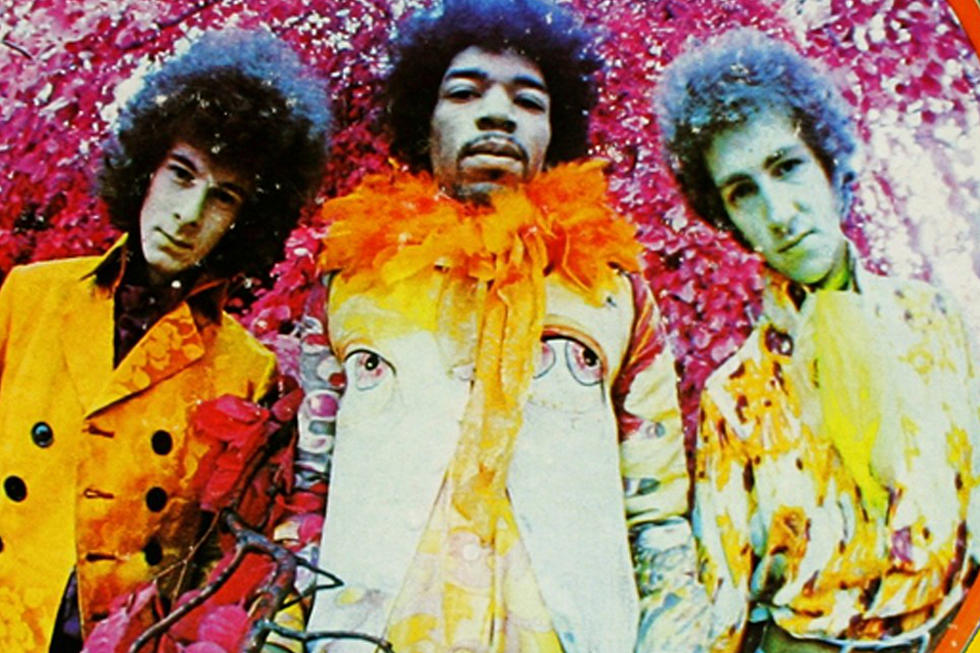
Jimi Hendrix – Are You Experienced Album

On March 9th of this year Dave at A Sound Day published this post I wrote for his Turntable Talk series. Dave stated: Let’s look at an artist whose debut really impressed you. It can be one that just knocked you out first time you heard it when it was brand new, or one you went back & discovered later.

I went through some debut albums before I came to this. I already wrote up Big Star’s debut for another blogger but the other that came to mind was The Cars. For me, that was their best album although they had some great albums later. I then thought of Jimi’s debut…and that was that. There is more than one version of Jimi Hendrix’s debut album released. I will go by the one I first owned when I was around 11…the US version.

I think about 1967 and what people must have thought when they heard this strange new artist. It must have sounded like an alien coming down from another planet. Being at the ripe old age of 4 months old…I don’t quite remember it. His guitar playing was first felt by other guitarists. Eric Clapton, Jeff Beck, Pete Townshend, and the other huge guitarists back at that time. They were shocked when they saw him perform on stage.  He was “found” by Animals bassist turned manager Chas Chandler in New York. He took Jimi to England and formed a band around him…it didn’t take long after that.

Jimi’s debut album was released on May 12, 1967. The tracklist is incredible. A lineup of songs that still get played over 50 years later on the radio. To make it even stronger…Hendrix wrote all of the songs but one…Hey Joe, his breakout hit in the UK.

Purple Haze
Manic Depression
Hey Joe
Love or Confusion
May This Be Love
I Don’t Live Today
The Wind Cries Mary
Fire
Third Stone from the Sun
Foxy Lady
Are You Experienced?

The album had many now-rock classics. They were not rock songs easily accessible to the audience as other performers. He mixed experimental technics along with well-written and performed songs. Before Zeppelin came along, Hendrix gave rock its sonic boom. The album peaked at #5 on The Billboard Album Charts, #15 in Canada, and #2 on the UK Charts in 1967.

I’ve never heard a guitar player take the guitar to a far-off place like Hendrix. It wasn’t just his playing which was some of the best…it was his vision and the sounds he got out of the guitar that was so amazing. Every guitar player that came after him would get unfairly compared. He wasn’t just a guitar player though…he was a singer/songwriter who created 3 classic rock albums that still are revered. He was the complete package…not a traditional voice, but he got his point across and wrote his songs to fit him…and it worked.

He also evidently had a huge backlog of recordings and live concerts that keep being released. The man must have recorded in his sleep.

The “new” Jimi Hendrix tag has been unfairly placed on many guitar players. From Stevie Ray Vaughn to Eddie Van Halen, many more faded out. Hendrix would mess with this guitar…changing pickups and recording techniques. He had a sound all his own…when you hear a Hendrix record you know it’s him by just his guitar playing. Now when I listen to him…I hear the guitar players that followed…from the finger tap from Eddie to the straight-in-your-face riffs of Stevie Ray Vaughn…Jimi had done it all before.

Like Janis Joplin and Bruce Springsteen…they would let themselves go on stage. They would take it as far as they could and if they messed up…they messed up but the fans got to see an electrifying performance. When Joplin and Hendrix left us…they left a huge hole in rock performers and when both were peaking in making albums. Both Hendrix and Joplin left and their last studio albums peaked at #1. Jimi’s came two years before his death and Janis just a few days after she passed.

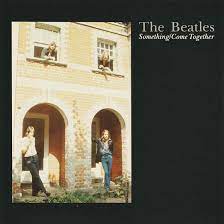
Beatles Week – Something @soundday.wordpress.com

Dave is closing out Beatles Week in style with a George Harrison masterpiece.

Dave grew up in Canada, now resides in Texas and has been passionate about music for as long as he can remember. Unfortunately, a brief foray into buying keyboards during his high school years didn’t equate to making music people were passionate about doing anything with but avoiding!  He writes a daily music blog, A Sound Day, looking at memorable music events from album releases to artist birthdays to important concerts and more. You can find Dave at https://soundday.wordpress.com.

Thanks Max, for inviting me to take part in this! And a good topic too.

When asked to write about a Beatles song, I didn’t take long to make my pick. There’s just something about Something that moves me like no other…Beatles track. Yet getting to that point has been a long road. Maybe a long and winding one, even.

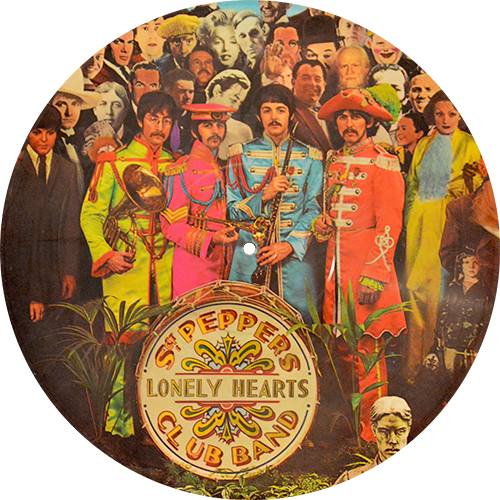
A little back history about myself. I was born in the ’60s but by the time I was cognizant of it really, let alone had my own little transistor radio to listen to it, The Beatles were done. Wings or solo Ringo, John or George were more relevant to me at the time. But my mom and older brother liked the Beatles and in fact, one of my early memories was hearing Sgt .Pepper Lonely Heart’s Club Band on our big old console in the living room, liking the music and loving the colorful cover. As a kid, I liked the simple pop hooks of Ringo and Paul, post-Beatles, songs like “You’re Sixteen”, “Helen Wheels” and “My Love.” I knew a lot of Beatles songs, either from AM radio or my family playing them on the stereo, and liked quite a lot of it but it was hard for me to grasp how influential or flat out great they had been.

As I hit my teens, was buying my own records and listening to FM radio, my appreciation of them grew. I had a used copy of Revolver, though I can’t remember why I specifically bought that one. A good album, absolutely, but never my favorite of theirs. I probably found it cheap in a used store or flea market. Around that time, I was growing to favor John. “Norwegian Wood “ and “Dear Prudence” were high on my list of Beatles songs and by the time I was getting to like his solo work as much as say, Paul’s 1980 rolled around and well, I think we all know what the end of that story was. As was the case with most people, my estimation of him rose rapidly and I listened to his work more, began to love songs like “Mind Games” and “#9 Dream” that I’d missed, or nearly so when they had first come out. I loved his work for peace and outspokenness and was oblivious to the shortcomings in his character. All the while though, George was just on the periphery of my musical awareness. Sure, “My Sweet Lord” was nice, and I was one of the minority who in ’79 bought and loved the “Blow Away” single, but he was really the “quiet Beatle” to me. Nearly invisible. Really, the thing I might have been most impressed with at that point was his work funding Monty Python films, since like most boys hitting puberty, I laughed my head off at things like the “Lumberjack Song” and killer rabbits.

That changed a little in ’88 when he had his comeback album, Cloud Nine. By that time too, the Beatles were finally putting out CDs of their old catalog and I’d decided, hey, they had a lot of good tunes, I should be getting some in my collection. I bought several of the ’60s works on CD and really that’s where my true appreciation for them began. That and noticing a good portion of the bands I thought were really good at the time – say Crowded House, Aztec Camera, Squeeze for instance – were almost universally described as “Beatle-esque.”

Anyhow, then and still to this day, Sgt. Pepper... has been my favorite Beatles work, but it is a close contest. Not surprisingly then, for years if anyone asked me for my favorite Beatles song, it was “A Day in the Life”. A song like no other, with its time changes, Paul and John changing off vocals, that almighty, seemingly endless piano chord to end it, the bizarre lyrics that actually made some sense when you read of their inspirations. It still is a great song and high on my list.

But just as the Beatles changed and matured during their career, so too have I. And as the band matured, George started to take his place at the front. He brought a new sense of spirituality, and experimentalism to them, opened them up to what we’d now call “World Music”, the sounds of the Far East. Being able to incorporate that into a pop-rock setting was revolutionary and quite a challenge I’m sure. But it worked! And as I matured, I grew more and more appreciative of George’s songwriting as well as his quiet sense of peacefulness. “Something” is the epitome of that to me. And to his ex-bandmates it would seem.

Early on, George was a guitarist and nothing much more to them. Maybe his first hint of potential greatness was on Rubber Soul when he wrote and sang “If I needed someone.” A pretty good song, and presumably John and Paul agreed since they let him put three onto the next record, Revolver, including “Taxman”, one of their many “hits” that never hit the charts because it wasn’t out as a single. A decent little snarky rock tune but probably not on anyone’s list of “best ever.” The first real taste of his brilliance was still a couple of years away, and their self-titled double album. “While My Guitar Gently Weeps” was to me the standout on the album and really showed his talent as a songwriter…not to mention nearly got Eric Clapton in the band. Let It Be was recorded next (but released last) and though he did “For You Blue” on it, as we saw in Get Back, he was distant from the band by then and briefly quit. It was becoming clear he’d outgrown the limitations he felt were imposed on him by the two main men who clearly wanted most of the spotlight.

Which leads us to Abbey Road. Their swansong, even if it did arrive in stores months before Let it Be. I gather by then they knew it was time to call it a day but leave fans with one more worth remembering. And they did just that. In particular George. He contributed – i’ll say it – the two best songs on it, “Here Comes the Sun” and “Something.”

Here Comes the Sun” is a pretty incredible, happy-sounding song in which he introduced a synthesizer to the band and wrote a tune in seemingly impossible time signatures (changing rapidly from 4/4 to 11/8 to 7/8 and so on). It ranks high on my Beatles list too, but the crowning achievement was “Something.”

george and pattie

Pattie Boyd must have been “something” too. We know he wrote the song for her, his wife,  and a couple of years later, his buddy Eric Clapton wrote “Layla” for her. In time he won her away from Harrison, and somehow they all remained friends. George was more tolerant than I would have been, I can tell you that. Maybe all the time with the Indian gurus really made him a better person.

Anyway, to me, “Something” is just about a perfect pop song. It’s beautifully written and immaculately played, and the lyrics are outstanding. If you’ve never been so in love, in the beginning, that the lines don’t make sense, well, I hope you’ll experience that head over heels feeling, combined with just a touch of anxiety over fear of losing it (“you’re asking me will my love grow/I don’t know/ I DON’T KNOW”).  George demonstrates his love for Pattie and his slide guitar prowess all the while Ringo drums along exquisitely. The more I listen to Starr, the more I appreciate his talent. He plays for the song, not to take over the song. Then there are the under-stated strings, completing the song nicely. I think George Martin’s introducing strings to middle-era Beatles songs was one of the more under-rated things about them; how many rock & roll bands before 1965 would have thought to bring in violins and cellos? Now, it’s commonplace.  There’s not really a point wrong with “Something” and it does it all in barely three minutes. Each time I listen to it, I seem to pick up on some tiny new detail I’d missed before that makes me appreciate it more.

Of course, my opinion was backed by many others. Frank Sinatra began singing it in his shows right away and called it “the greatest love song of the past 50 years”… and he knew a thing of two about love songs! (Unfortunately, he mistakenly told his audiences Lennon & McCartney wrote it.)  Later Elton John would say it was “one of the best love songs ever –ever – written…it’s the song I’ve been chasing for the last 35 years!”  And Ringo piped in that it and “While My Guitar Gently Weeps” were “two of the finest love songs ever written” and put Harrison on a par with John and Paul. Critics tended to agree. The NME  in Britain called it a “real quality hunk of pop” while Rolling Stone applauded its “excellent drum work, dead catchy guitar line, perfectly subdued stings and an unusually nice melody.”  Add in great vocals and there’s not much missing there.

Happily, it was eaten up by the fans. It came out with “Come Together” as a single, but in most lands was considered the A-side. It hit #1 in Australia, Canada, New Zealand, and of course the U.S. where it became their 18th #1 song…which happened to surpass the number Elvis Presley had. However, it was the first #1 song credited to George…not surprising because somehow, it was the first Beatles single he wrote or sang! And that’s saying “something” – when a guy can create songs this good and somehow be seen by the band as a third-stringer… wow. No wonder we’re still talking about them a half century later.

Star Trek – A Taste Of Armageddon

★★★★★ February 23, 1967 Season 1 Episode 23

If you want to see where we are…and you missed a few…HERE is a list of the episodes in my index located at the top of my blog. 

This show was written by Robert Hamner, Gene L. Coon, and Gene Roddenberry

Imagine living somewhere where there has been a war going on for 500 years. Now along with that…no bombs drop and nothing physically is destroyed. There is a catch though…all the battles are simulated and whatever is hit in the simulations…those people in that area have to go and get exterminated…yes walk into a machine that kills them. They keep up with the numbers with both sides…if the numbers get skewed…the other side will attack with real bombs. 

They do this to lessen the impact of war on the world…but if they don’t have to face the daily destruction…will they ever stop?

Enterprise visits a planet on a diplomatic mission. A clever concept on how a different society may wage their wars: totally by computers. In their supposed enlightened method, the buildings and their culture continue – the populace obediently reports to disintegration chambers to fulfill an agreement with the enemy planet after each computerized attack. 

Star Trek - A Taste Of Armageddon

Kirk is fairly no-nonsense and aggressive in his dealings with the people of Eminiar VII and this is entertaining to watch. Scotty has his first opportunity to shine in command of Enterprise and does so with several memorable moments, such as standing up to the hideously annoying Ambassador Fox and admirably handling the threat from Anan 7.

There is one question I get from this. The one rule that the Enterprise has is to not interfere. I think how Kirk defies the Prime Directive’s rule that they must not interfere could be a divisive topic of debate for viewers. If he doesn’t interfere millions could continue to kill themselves, but is he really permitted to do so? 

This is an intelligent and philosophical episode on warfare and on how human beings seek to sanitize horror and the need for peace. This episode makes you think. 

From IMDB:

Crewman DePaul is played by Sean Kenney, who portrayed the injured Captain Pike in Star Trek: The Menagerie: Part I (1966)/ Star Trek: The Menagerie: Part II (1966).

Scotty’s refusal to lower the shields against orders is based on an actual story from James Doohan’s military service. As a lieutenant in the Royal Canadian Artillery, he was threatened with court martial for real for saying “No sir, I will not,” to a visiting colonel when he realized a training exercise order would entail blowing the heads off some of his own men. Fortunately, his immediate superiors backed him up and, like his fictional character, he was eventually promoted to captain.

According to David Gerrold, the computer tallies of war dead in this episode was a statement about Vietnam War deaths that began to be registered on nightly newscasts in 1967.

In his memoir, “Beam Me Up, Scotty,” James Doohan described Gene Lyons (Ambassador Robert Fox), as being “out of his element” and “completely discombobulated” during filming. He added that it took Lyons many takes to get his lines right, and that they finally “went to having him speak off-screen.” Doohan speculates that Lyons, who was an experienced actor, may have been thrown off by the science fiction element, as such shows were relatively rare at the time.

Another beautiful matte painting was created for this episode by Albert Whitlock. Unfortunately, it is the last painting in the series into which live actors were inserted. This matte of the Eminiar city was re-used as the backdrop of Scalos in the third season episode Star Trek: Wink of an Eye (1968).

First episode to establish the United Federation of Planets as the principal service which the Enterprise operated under. In previous episodes, vague and often conflicting references were made to this service. Such references included “Space Command”, “Space Central”, the “Star Service”, and “United Earth Space Probe Agency” (the latter even abbreviated as UESPA, pronounced by Captain Kirk as “you-spah” in Star Trek: Charlie X (1966)). UESPA would later go on to be the principal service which the Enterprise NX-01 operated under on Star Trek: Enterprise (2001), which is set in a time when the Federation had not been firmly established.

Summary

On a mission to establish diplomatic relations at Star Cluster NGC321, Kirk and Spock beam down to planet Eminiar 7 to learn that its inhabitants have been at war with a neighboring planet for over 500 years. They can find no damage nor evidence of destruction but soon learn that their war is essentially a war game, where each planet attacks the other in a computer simulation with the tabulated victims voluntarily surrendering themselves for execution after the fact. When the Enterprise becomes a victim in the computer simulation and is ordered destroyed, Kirk decides it’s time to show them exactly what war means.

CAST

William Shatner … Captain James Tiberius ‘Jim’ Kirk
Leonard Nimoy … Mister Spock
David Opatoshu … Anan 7
Gene Lyons … Ambassador Fox
DeForest Kelley … Doctor Leonard ‘Bones’ McCoy
James Doohan … Lieutenant Commander Montgomery ‘Scotty’ Scott
Barbara Babcock … Mea 3
Miko Mayama … Tamula
David L. Ross … Galloway
Nichelle Nichols … Lieutenant Nyota Uhura
Sean Kenney … DePaul
Robert Sampson … Sar 6y:
David Armstrong … Eminiar Guard (uncredited)
Buzz Barbee … Ambassador Fox’s Aide (uncredited)
Majel Barrett … Enterprise Computer (voice) (uncredited)
John Blower … Eminian Secretary (uncredited)
John Burnside … Eminiar Guard (uncredited)
Dick Cherney … Council Member (uncredited)
Frank da Vinci … Eminiar Guard (uncredited)
Jeannie Malone … Yeoman (uncredited)
Alan Marston … Council Member (uncredited)
Monty O’Grady … Council Member (uncredited)
Eddie Paskey … Eminiar Guard (uncredited)
Al Roberts … Council Member (uncredited)
Ron Veto … Eminiar Guard (uncredited)

Beatles Week – I Want To Hold Your Hand @halffastcyclingclub.wordpress.com

I was really happy when I asked Halffastcycling to do this and he accepted. I really appreciate his comments on songs that not everyone is going to know like Little Feat and other bands that didn’t live in the top 20. So thank you and go visit his site!

He started the blog halffastcycling.club to chronicle a coast-to-coast bike trip. Recently retired from a series of careers (in co-ops, plumbing, and health care), I spend my time riding my bike (once across the continent wasn’t enough so I quit working to do it again), paddling, writing about bikes and whatever pops into my head, and sitting on the front porch in a rocking chair. I’m old enough that I remember this music when it was new, not from oldies stations. The first hit records I remember hearing were by Little Richard (78 RPM). (I have older siblings.) My intro to live music (besides high school dances) was through BB King (followed quickly by Willie Dixon, Muddy Waters, Luther Allison, Bonnie Raitt, Pete Seeger, and the Grateful Dead, among others). I wrote a high school term paper on the Beatles (after reading the new Hunter Davies bio in 1968) and got a D.

Beatlemania

It was the 1963-64 school year and the fifth grade talent show was fast approaching. Being only a spectator was not an option. Everyone had to have an act, a talent to display.

My friend Max at Powerpop has declared “Beatles Week” and invited others to write about “a favorite Beatle song”. (In another part of the same post he invites folks to write about “their favorite Beatles song”, an important distinction in my eyes. Who can have a single favorite from their catalog? I’ve written about the my problem of declaring favorites before.)

A classmate approached me about joining an act with a couple of friends. When I asked about the act he was very secretive. He couldn’t tell me what the act was until I agreed to be in it. Once he told me, I couldn’t back out. Note I called him a “classmate”, not a “friend”. I didn’t trust him enough to go along blindly with this. Besides, I already had my act together. What was my act? I have no idea. What was their act? That still sticks in my mind 60 years later.

Four guys took the stage. Each had a rag mop on his head, dyed black and trimmed just so. Three of them held brooms – no mere air guitar for them. The fourth was, of course, Ringo. They lip-synched to “I Want to Hold Your Hand”. It wasn’t my favorite Beatles song even then. I bought the single of “She Loves You” but I didn’t buy “I Want to Hold Your Hand”. It seemed like the sort of song that reinforced parental stereotypes about pop music (and “She loves you, yeah, yeah, yeah” didn’t?) with its simplistic lyrics about holding hands.

Four guys took the stage. Each had a rag mop on his head, dyed black and trimmed just so. Three of them held brooms – no mere air guitar for them. The fourth was, of course, Ringo. They lip-synched to “I Want to Hold Your Hand”. It wasn’t my favorite Beatles song even then. I bought the single of “She Loves You” but I didn’t buy “I Want to Hold Your Hand”. It seemed like the sort of song that reinforced parental stereotypes about pop music (and “She loves you, yeah, yeah, yeah” didn’t?) with its simplistic lyrics about holding hands.

mop

(Image from WebRestaurantStore)

On February 9, 1964, the US saw The Beatles in person for the first time, on The Ed Sullivan Show. Those of us in the know had seen them a month before on grainy, low fidelity video on Jack Paar.

https://www.facebook.com/6Tease/videos/beatles-on-the-jack-paar-show/2585672954835279/

They had appeared in an NBC News story on November 18, 1963. The news was more about Beatlemania than about the music, though they did acknowledge that The Beatles wrote some of their own songs. Early coverage of the band was more from a sense of amusement at the phenomenon of those crazy teenagers than it was about the music.

“I Want to Hold Your Hand” was not received with universal acclaim in the US. “Esquire‘s music critic David Newman wrote, ‘Terrible awful. …It’s the bunk. The Beatles are indistinguishable from a hundred other similar loud and twanging rock-and-roll groups. They aren’t talented singers (as Elvis was), they aren’t fun (as Elvis was), they aren’t anything.’[34]

On the other hand, it did reach #1 in most western countries (stalling at #6 in Belgium and Finland). In the US it was replaced at #1 by “She Loves You”. In the UK, the order was reversed. It was subsequently released in German as “Komm, gib mir diene Hand” – that version also received US airplay.

Contrast Newman with Rob Sheffield’s assessment in the Rolling Stone Album Guide (40 years later): “Just check out ‘I Want to Hold Your Hand,’ which explodes out of the speakers with the most passionate singing, drumming, lyrics, guitars, and girl-crazy howls ever – it’s no insult to the Beatles to say they never topped this song because nobody else has either … It’s the most joyous three minutes in the history of human noise.[40]

So what made them such a big deal? We were used to “singing groups” lip-synching their latest single on American Bandstand, complete with orchestration and fadeout. These were actual musicians. They played and sang at the same time. Of course, they weren’t the first, but it was still somewhat unusual in the pop music world. And they wrote their own songs. Sure, they covered American R&B (“Twist and Shout”, “Roll Over Beethoven”) and even show tunes (“A Taste of Honey”, “Til There Was You”) but the list of hit songs (and great songs) they wrote is too long to recount here. Some singers can produce great harmonies in a studio with multiple takes and overdubs, but The Beatles sounded great live in an era without monitors (and with fans screaming loudly enough that they might not have heard themselves even with monitors).

I went to a summer camp that had a carnival with games. One game involved headphones through which a few notes of a Beatles tune were played. Your challenge was speed in identifying the song. How many notes did you need? Hw quickly could you answer? With what other band would you play that game?

“I Want to Hold Your Hand” is far from the best Beatles song, it’s not my favorite Beatles song, and it wasn’t even the first Beatles song. But it was the only one that dominated the fifth grade talent show at Winnequah School and made 4 boys instantly popular. I was not one of them.

Beatles Week – THE Starr @nostalgicitalian.com

We have two more posts and we will wrap this up Wednesday.

Here is my good friend Keith from https://nostalgicitalian.com/ giving some love to Ringo. Keith and I have emailed and talked on the phone for a few years now. I like asking him questions about his radio DJ days and life…Keith is a great guy. Go visit his site! 

The Starr of the Beatles

Keith 1

I was approached by my blogger buddy, Max, from the PowerPop Blog recently and asked to contribute something for his “Beatles Week” feature. In truth, it will probably go longer than a week as there are many talented writers participating with me. I think his original thought was to have each of us write about a favorite Beatles song, but then he allowed us to pursue something “Beatle themed.”

I think I have mentioned in the past that it would be extremely difficult for me to pick one favorite Beatles song. There are just too many great ones to choose from. I could spend hours talking about the fantastic harmonies of the group or the amazing songwriting contributions of Lennon and McCartney. I could also examine the way George Harrison’s guitar playing matured as the group got older. Instead, I chose to focus on the Beatle that I connected with as a young fan discovering the band – Ringo Starr.

Keith 2

As a kid, I discovered the Beatles through their cartoon series (as well as albums that my dad had). While the boys didn’t voice the characters themselves, it featured many of their songs and put them in silly situations. Ringo always seemed to be the goofball and I guess I found him to be the funniest.

As I began to buy Beatles albums on my own, I often found that the “Ringo” cut of each album tended to really stand out as a favorite. Let me be clear, it is not that I disliked the other guys, the opposite was true. I loved them! However, the “Ringo” cut just really had a different sound to it.

Keith 3

As many know, Ringo was not the original drummer for the band. Pete Best was the guy. The rumors were that he was pretty good looking and a fan favorite, so they got rid of him. How true that is, I don’t know. The boys recruited Ringo from another band (Rory Storm and the Hurricanes). Once the group got their recording contract and started sessions with George Martin, Ringo was dissed a bit. Martin felt that he was not a good enough drummer to do studio work. Eventually, Martin came around and not only was he in the recording sessions, he occasionally got to sing on a song or two.

Keith 14

In total, Ringo Starr sang lead vocals on 11 Beatles songs. The first was “Boys,” which was a cover of a Shirelles song. The song was one that the Beatles had been playing in their live shows for some time. Pete Best used to sing it in shows. Ringo knew the song and had performed it many times with his previous group. When the band was in the studio cutting the 1963 album “Please Please Me” he sang it in one take.

Keith 4

The group had been playing “Boys” for years before it was ever recorded. It was the only song that Ringo sang lead on and his loyal fans wanted to hear more. John, Paul, and George were getting tired of the song and when it was time to record their second album, Lennon and McCartney worked together to write a song for Ringo that would replace “Boys.” The song would be “I Wanna Be Your Man.”

Before they went into the studio, another British group approached Lennon and McCartney and asked if they had a song that they might record. They decided to give them “I Wanna Be Your Man.” That song became the first “hit” for Mick Jagger and The Rolling Stones!

keith 5

Carl Perkins was responsible for Ringo’s next two vocal songs. First, was “Matchbox” which Perkins had a hit with in 1957. This song (and his next vocal) was responsible for the association of Ringo with rockabilly/country music. Word is that Perkins was in the studio while the Beatles recorded his songs.

For the 1964 album “Beatles For Sale,” Ringo contributed the lead vocal to Perkins’ “Honey Don’t.” Carl Perkins influenced a lot of Liverpool bands and Ringo was playing this one in his prior group before joining the Beatles. It was another song that Pete Best sang lead on in early live performances. John Lennon began singing it after Best left, but the band agreed that it was a perfect Ringo song for the album.

Keith 6

Ringo had decided that he wanted to have a bit more input in the songs that he was to sing. During the recording sessions for “Help” in 1965, he came upon the Buck Owens song “Act Naturally.” He brought it to the band and said he felt it would be a great song for him. They all agreed and cut it. This would mark the first Beatles cover song that they had not already been playing at live shows.

Keith 7

Ringo, while not best known for his song writing, did write a few for the band. By this time, John, Paul and George were all churning out songs. The three seemed to be doing everything and Ringo felt like he was being left out and maybe even someone who could easily be replaced. He went to the group and voiced his concerns. This led to his first song writing credit on a Beatles song. The song was What Goes On. The song was not all Ringo, as it was actually a song that John had originally written and Ringo tweaked and contributed to.

Keith 8

Yellow Submarine appeared on the 1966 Revolver album. It was a big song for Ringo as it went to #1 in the UK and #2 in the US. In Alan Clayson’s book, “Ringo Starr: Straight Man or Joker,” he says that the song was “conceived as a song that would appeal primarily to children, while recalling the band’s roots in Liverpool.” The song was written mostly by Paul McCartney and it is said that Donovan also helped (while being uncredited).

Keith 9

If you had to pick a “signature” song for Ringo, it would be “With a Little Help from My Friends.” The song is the second track on the Sgt. Pepper Album. The album itself was sort of a concept album where the band is playing … well, another band. In the album’s opening track, the character of Billy Shears is introduced. Even Ringo has stated that for the cut he is “taking on” the character of Shears to sing the song. The song was one that was written specifically for Ringo by John and Paul.

Keith 10

Ringo’s next vocal feature was one that he wrote. “Don’t Pass Me By” was one that came to him while sitting at the piano. He claims to only know a few chords on the piano and guitar. He says that while he plays around, if a melody comes to him or some words, he just keeps playing around. This is supposedly how “Don’t Pass Me By” came to be. There is some confusion as to when exactly the song was written, and while it may have been written as early as 1964, it was never recorded and released until 1968 on the White Album.

Alan Clayson says in his book that Ringo had unknowingly plagiarized music from a Jerry Lee Lewis song. It was only when George Martin was experimenting with different effects and orchestration that the song was able to be released (now sounding very musically different from it’s original version).

Keith 11

The song “Good Night” from the White Album was written by John Lennon. He wrote it for his five year old son, Julian. Lennon was very insistent that the song be sung by Ringo. What is interesting is that Ringo is the only Beatle who performs on the song. The music is provided by classical session musicians under the direction of producer George Martin.

Ringo’s last songwriting credit for the band appears on the 1969 album, Abbey Road. Many compare “Octopus’s Garden” to “Yellow Submarine.” Other’s compare it to an amazing and peaceful under-the sea world. This song, however, was written by Ringo at a time when things were less than peaceful with the group.

The story goes that Ringo was so angry that he walked out of a recording session because he was angry at Paul McCartney. Paul had reportedly been making comments about Ringo’s drumming, and so he left. He spent time relaxing on the Italian island of Sardinia. While there, he became fascinated by the ocean and sea life. This led to him writing the song.

When Ringo returned to the Abbey Road studios, he found that the rest of the band had decorated his drum set with flowers and found a gift from John, Paul and George as an apology. He showed the song to them and George Harrison worked with him to get the song ready to record.

After the Beatles broke up, each went on to have solo hits. Ringo enjoyed success with “Back off Boogaloo,” “Photograph,” “You’re Sixteen,” “The No No Song,” and “It Don’t Come Easy.” He continues to tour with his All-Starr Band and sells out venues.

Keith 13

“Peace and Love” – Ringo Starr

Perhaps if world leaders, politicians, and people, in general, listened to Ringo, the world would be a better place.

Beatles Week – Matchbox/Slow Down @thesoundofonehandtyping.com

This post is by John from https://thesoundofonehandtyping.com . John’s blog has different subjects and he will post songs that I had completely forgot about. I like talking guitars with John also…He is an internet disc jockey, lover of old TV (especially the commercials), inveterate wise guy.

The Beatles released the EP Long Tall Sally in the UK in 1964. It had one Lennon-McCartney original, “I Call Your Name,” and three covers, Little Richard’s “Long Tall Sally” from 1956, Larry Williams’s “Slow Down” from 1958, and Carl Perkins’s “Matchbox” from 1957. Capitol Records, who was the distributor for Beatles music in the US and Canada, took “Long Tall Sally” and “I Call Your Name” and put them on The Beatles’ Second Album, then took “Matchbox” and “Slow Down” and put them on the album Something New with the songs from A Hard Day’s Night and a couple of other songs. Capitol issued “Matchbox” and “Slow Down” as a single in late August 1964.

The single didn’t do as well as most Beatles singles that year: “Matchbox” (which appeared as “Match Box” on the single and its sleeve) only reached #17 in the US and Canada, while “Slow Down” came in at #24. It’s really a lost single, issued when music from A Hard Day’s Night was on everyone’s mind. Naturally, it was my favorite record for a very long time.

“Match Box” was the A side of the record. The Beatles were great fans of Carl Perkins, particularly George Harrison, who learned many of Perkins’s solos while he learned the guitar, and Ringo Starr, who sang two of the three Perkins songs the Fab Four covered (“Honey Don’t” was the other). Coming in at just under two minutes, it was rock ‘n’ roll, Fab Four style.

What I especially like about this:

  • That opening. You have two bars of George doing that figure around the A chord before everyone else comes in. That gets your toes tappin’ and your butt shakin’…
  • The utter simplicity. Three chords: A7, D7, E7, all played in first position. It doesn’t get much simpler than that.
  • The solo. Like so many of George’s solos, simple and to the point, played on his Gretsch Country Gentleman.
  • George Martin’s piano. Just enough that you know it’s there. He added it several days after The Beatles recorded the song, but it sounds like he was in the studio with them.
  • Ringo’s vocal. Don’t ever tell me that Ringo can’t sing. He has a little trouble with the lyrics, but who cares?
  • The end. That last chord, an A 6/9, wraps everything up perfectly.

The flip side, “Slow Down,” is just as noteworthy. Larry Williams was an R&B singer and pianist whose songs The Beatles often covered, including this song, “Dizzy Miss Lizzie,” and “Bad Boy.”

Could I say the same things about this song as I did about “Match Box”? Almost. John did the vocal on this track, but the opening of the song, highlighted by George Martin’s piano, is just as memorable, it’s another three-chord song, George’s solo is, again, to the point, and you have that same 6/9 chord ending this one. Two solid sides of rock ‘n’ roll, Fab Four style.

Maybe the most perfect thing about these sides is that they aren’t perfect. George’s pick hand gets ahead of his fret hand on both solos, and the double-tracked vocal by John on “Slow Down” seems to have a few extra voices in it. They don’t make the record a bad one. If anything, hearing them screw up just underlines how much they’re enjoying themselves. That’s what makes this such a great record.