The Buddy Holly Influence

Buddy Holly’s music is still relevant almost sixty years after he passed away in 1959. He didn’t have a big voice like Elvis, Little Richard or some of his peers but he wrote and crafted beautiful melodies for his voice to weave through.

I consider him the beginning of power pop. His Fender playing a clean jangling melody. Songs like Maybe Baby, Peggy Sue, and Words of Love influenced future artists like The Beatles, Hollies, Bob Dylan, and the list is endless. He wrote his own songs and is still influencing artists today with a career that only lasted 18 months.

You can hear Buddy in everyone from  Marshall Crenshaw, The Byrds, Tom Petty to Nick Lowe. His songs have been covered by The Beatles (Words of Love), Linda Ronstadt (That’ll Be The Day), and The Rolling Stones (Not Fade Away).

Not only was he a great songwriter but also a great producer and he would have only gotten better. Unlike a lot of his fifties counterparts, I really believe that Buddy Holly would have fit in the music scene post Beatles. I think his best songs were in front of him. Most of his music transcends the fifties and would have fit nicely in the sixties.

His voice was also important. The inflection in his voice was part of his style and the whole package. He could make it rough with Oh Boy or sweet with Everyday. He was never a sex symbol like Elvis… people related to this tall skinny guy with glasses. You didn’t have to look like Elvis or be wild like Jerry Lee Lewis to make it.

Sometimes I forget how big of an influence he left until I start listening to him again and hear the artists that followed him.

John Lennon on Buddy Holly

 “Buddy Holly was the first one that we were really aware of in England who could play and sing at the same time – not just strum, but actually play the licks” 

Paul McCartney on Buddy Holly

 “I still like Buddy’s vocal style. And his writing. One of the main things about The Beatles is that we started out writing our own material. People these days take it for granted that you do, but nobody used to then. John, I started to write because of Buddy Holly. It was like, ‘Wow! He writes and is a musician'” 

Bob Dylan on Buddy told to Robert Shelton

“Buddy Holly was a poet”  “Way ahead of his time.”

Bob Dylan Accepting a Grammy for Album of the Year for “Time Out Of Mind” in 1998,

“And I just want to say that when I was sixteen or seventeen years old, I went to see Buddy Holly play at Duluth National Guard Armory and I was three feet away from him…and he looked at me. And I just have some sort of feeling that he was — I don’t know how or why — but I know he was with us all the time we were making this record in some kind of way.”

buddy-holly_1251253c.jpg

George Harrison – Isn’t It a Pity

This 1970 George Harrison song is off of the great album “All Things Must Pass.” It is often overlooked but its one of my favorite George Harrison songs. George wrote it in 1966 but it didn’t see daylight until 1970. He brought it up on the Let It Be sessions but he later said that John Lennon rejected it. That I don’t understand…I Me Mine was passed but not this one? I like “I Me Mine” but not like this one. Maybe George did more work on it afterward or it was the length of the song.

It resembles Hey Jude in its structure. It was the B side to My Sweet Lord which went to #1 on the charts. In Canada, this song was the preferred song and it went to #1 in Canada.

No one benefitted from the break up of the Beatles like George. He had so many songs that we had written and could not get enough of them on Beatles albums, understandably so with Lennon and McCartney. He released a 3 album set called “All Things Must Pass” in 1970.

George began recording this Isn’t It A Pity on June 2, 1970. Phil Spector produced it using his trademark Wall of Sound with heavy reverb. On the remastered version, the reverb is toned down a little.

This is from Timothy White’s interview with George Harrison that appeared in the Dec. 30, 2000, issue of Billboard:

Had you intended songs like “Isn’t It A Pity” to be things just for you?

No, I mean, this is the funny thing: imagine if the Beatles had gone on and on. Well, the songs on “All Things Must Pass,” maybe some of them I would probably only just got ’round to do now, you know, with my quota that I was allowed [laughs]. “Isn’t It A Pity” would just have been a Beatles song, wouldn’t it? And now that could be said for each one of us. “Imagine” would have been a Beatles song, but it was with John’s songs. It just happened that the Beatles finished. 

What was the inspiration for “Isn’t It A Pity”?

It’s just an observation of how society and myself were or are. We take each other for granted — and forget to give back. That was really all it was about.

It’s like “love lost and love gained between 16- and 20-year-olds.” But I must explain: Once, at the time I was at Warner Bros. and I wrote that song “Blood From A Clone” [on the 1981 “Somewhere In England” album], that was when they were having all these surveys out on the street to find out what was a hit record. And apparently, as I was told, a hit record is something that is about “love gained or lost between 14- and 19-year-olds,” or something really dumb like that.

So that’s why I wrote “Isn’t Is A Pity” [laughs]; I thought, ‘Oh, I’ll get in on that!”


“Isn’t It A Pity”

Isn’t it a pity
Now, isn’t it a shame
How we break each other’s hearts
And cause each other pain
How we take each other’s love
Without thinking anymore
Forgetting to give back
Isn’t it a pitySome things take so long
But how do I explain
When not too many people
Can see we’re all the same
And because of all their tears
Their eyes can’t hope to see
The beauty that surrounds them
Isn’t it a pity

Isn’t it a pity
Isn’t is a shame
How we break each other’s hearts
And cause each other pain
How we take each other’s love
Without thinking anymore
Forgetting to give back
Isn’t it a pity

Forgetting to give back
Isn’t it a pity
Forgetting to give back
Now, isn’t it a pity

[6 times, fade the 6th:]
What a pity
What a pity, pity, pity
What a pity
What a pity, pity, pity

John Hiatt – Window on the World

I heard this song and liked it right away. Jimmy Buffett did a cover but I prefer John’s rawer version. It came out in 2003 on the album “Beneath This Gruff Exterior” which peaked at #73 on the Billboard Album Charts.   John’s reputation has always been better than his chart success but other artists have covered his songs with great chart success…Bonnie Raitt being one.

John mentions “Wes and Jimmy” and that would be Jazz musicians Wes Montgomery and Jimmy Smith.

Personally, I like John’s voice and I usually like his version of his songs.

“Window On The World”

A broken promise i kept too long
A greasy shade and a curtain drawn
A broken glass and a heart gone wrong
That’s my window on the worldA cup of coffee in a shaky hand
Wakin’ up in a foreign land
Tryin’ to act like i got somethin’ planned
That’s my window on the world

[Chorus 1:]
That’s my window on the world
Could you stand a little closer, girl
Don’t let mama cut those curfs
That’s my window on the world

In broad daylight that circus tent pulled up stakes
I don’t know where it went
A close dark room with a busted vent
That’s my window on the world

I think about you when i’m countin’ sheep
I think about you, then i can’t sleep
I think that ocean is just so deep
That’s my window on the world

[Chorus 2:]
That’s my window on the world
Could you stand a little closer, girl
The queen of Sheba meets the duke of earle
That’s my window on the world

Down on indiana avenue
Wes and jimmy, man they played the blues
I guess they were only passin’ through
That’s my window on the world

[Chorus 1:]
That’s my window on the world
Could you stand a little closer, girl
Don’t let mama cut those curfs
That’s my window on the world

[Chorus 2:]
That’s my window on the world
Could you stand a little closer, girl
The queen of Sheba meets the duke of earle
That’s my window on the world

The Mary Tyler Moore Show

Sitcoms come and go but some will be remembered long after they are gone…this is one of them. This series featured a single woman Mary Richards (Mary Tyler Moore) working and dating. She had career ambitions far beyond getting married and having children. Doesn’t seem like a big deal now but at the time this wasn’t done. Everyone knew Mary from The Dick Van Dyke Show which finished a few years before.

The Mary Richards character was going to be divorced in the show but the producers thought the audience would think she divorced Dick Van Dyke…so that wasn’t happening. This show featured women and men writers and a great cast. As the show progressed it wasn’t all about Mary, the talented cast all got their turns.

Mary moves into a studio apartment in Minneapolis Minnesota with a neurotic landlady Phyllis Lindstrom (Cloris Leachman) and a tough New York Jewish neighbor Rhoda Morgenstern (Valerie Harper).

She gets a job at WJM-TV a low rated television station in Minneapolis. Her boss was Lou Grant (Ed Asner) and her co-worker’s name was Murray Slaughter (Gavin MacLeod). The weatherman was Gordy Howard (John Amos) and the newscaster was the incompetent Ted Baxter (Ted Knight).

The show was written to entertain adults more than a family. The writing was smart and nothing ever seemed forced. This is a great sitcom that many modern shows look to.

The show featured one of the best-known episodes from any sitcom…“Chuckles Bites the Dust”

Let’s go through the characters.

mary.jpg

Mary Richards – Mary is a career minded, honest and good to a fault person. She was the cheerleader in high school you had a crush on.

rhoda

Rhoda Morgenstern – A self-deprecating neighbor who envied Mary Richards but ended up her best friend. Her and Mary’s relationship was an important part early on in the show.

lou grant.jpg

Lou Grant – The hard-drinking, gruff, tough but lovable boss who was the father figure to Mary. Lou would treat everyone fair through the office and would stop himself from strangling Ted.

phyllis.jpg

Phyllis Lindstrom – Phyllis and her husband Lars (who is never seen) manage the building which Mary lives in. She is snobbish, neurotic, and has an adversarial relationship with Rhoda but you still end up liking her.

murray-slaughter.jpg

Murray Slaughter – The writer of the show and he is eternally mad at Ted Knight for mispronouncing everything he has written. He is a middle-aged man married with kids but has a secret crush on Mary…like everyone in the office.

ted.jpg

Ted Baxter – Ted Knight was made for this character. Ted has a giant ego, is incompetent but makes more money than anyone at the station…yea like real life. Ted supplies a lot of the humor for the show.

sueann.png

Sue Ann Nivens (Betty White) – She is catty, man-hungry and can be downright mean. She is always ready with a backhanded compliment to Mary. She created more audience sympathy for Phyllis when she had an affair with Phyllis’s husband Lars. Once in a while, the writers will show her vulnerable side.

gordy.jpg

Gordy Howard – A very professional weatherman who gets promoted much to Ted’s dismay…John Amos left to star on Good Times.

george.jpg

Georgette Baxter  (Georgia Engel) – Georgette may have been the most innocent character ever on a sitcom. She dated Ted for a while and then Ted finally married her. She may have been sweet and innocent but she could handle Ted.

Mary Tyler Moore Cast

mtm cast


Watkins Glen 1973

I first read about this concert-festival in a Grateful Dead biography… There is not much video footage from the concert. I never could understand why this concert didn’t hold up in history like some others like The Atlanta Pop festival and others. I’m not saying it should have been remembered like Woodstock because it’s cultural impact was like no others…but this drew more than any other festival including Woodstock.

An estimated 600,000 people came to this concert on July 28, 1973, in Watkins Glen N.Y. 45 years ago. Maybe the reason it is not as remembered is that only three bands performed…but the three bands were giant bands in their prime. The Grateful Dead, The Allman Brothers, and The Band.

From the bands themselves, almost all agree the sound check on Friday was better than the concerts.

Perspective about the concert by a member from each band.

Robbie Robertson from his book Testimony

Then we got a request from Bill Graham, who was putting together a show “just up the highway from us” at the Watkins Glen Raceway. We’d be performing with the Allman Brothers and the Grateful Dead. Playing some gigs could help us get “back on the stick,” as they say.
We went up to Watkins Glen the day before the show for the sound check. Bill Graham said that the Dead would go on first and play for three or four hours—that was part of their thing, giving the audience their money’s worth. “Until the drugs wear off,” said Bill, laughing. We’d go on in the late afternoon, and the Allmans would take over at sundown. As we were leaving the sound check, it looked like cars were heading toward the racetrack from every direction. Bill said he expected maybe a hundred thousand or more.
When we came back the next day, we couldn’t believe our eyes. Hundreds of thousands of people had showed up, and more just kept coming and coming. The crowds mowed down the high chain-link fences around the racetrack and filled the area as far as the eye could see. Bill was running around trying to make people pay admission, but the mobs were out of control.
When it came time for the Band to take the stage, it started pouring. As we waited, hoping it was going to let up, Bill came over. “They’ve determined there are 650,000 people here. It’s the biggest concert in history.” The news was somewhere between an incredible accomplishment and a huge disaster.
The rain started letting up, and Garth played some churchy, rainy-day keyboard sounds out over the crowd. When it was safe to go on, we decided to start our set with Chuck Berry’s “Back to Memphis.” And wouldn’t you know, as Levon sang that baby, the sun came out.

Gregg Allman from My Cross to Bear

Right before Brothers and Sisters came out, we played the festival at Watkins Glen with the Band and the Grateful Dead, in front of six hundred thousand people—the biggest show in history to that point. People always talk about Woodstock. Watkins Glen was like three Woodstocks. I think actually it might’ve been a little too big. They should have had people all the way around the raceway, and maybe had the stage in the center revolving real slowly, do a revolution in a minute. That’s not that complicated.
A show like Watkins Glen was uncomfortable, because you know that you’re getting the show across to this many people, but you still got two times that many behind them. You could finish a song, take your guitar off, put it in the case, and latch it up before the last guy heard the last note. Sound ain’t all that fast, not compared to light.

When you’re playing in that situation, you’re kind of thinking about the end. Not that you’re wishing it to be over, but you can’t even hear yourself—that was back before we had the in-ear monitors. Everything was so loud. You just walk out there and start to wince before you even start playing. It’s hard to get any kind of coziness, any kind of feel with the audience.
I guess there’s something about that many people seeing you all at once that’s real nice, but it’s just too much. You’re just like a little squeak in the middle of a bomb going off. But it was interesting, and it was a pretty fun day. People were OD’ing all over the place. And of course, Uncle Bill was there, which cured everything. It was exciting to be there and see it—and to be able to make ’em stand up, now that was something else.

Bill Kreutzmann from Deal

We made some questionable business decisions and we couldn’t sell records, but we sure could sell tickets. We sold around 150,000 tickets for a single show at a racetrack in Watkins Glen, New York, on July, 28, 1973. Yes, and more than 600,000 people ended up coming out for it. The lineup was just us, the Allman Brothers, and the Band. That show, called the Summer Jam at Watkins Glen, made it into the Guinness Book of World Records for what, at the time, was the largest audience ever assembled at a rock concert. In fact, that record may still hold today, at least in the U.S., and some have even proposed that it was the largest gathering in American history. Originally, the bill was supposed to just be the Dead and the Allmans, but our respective camps fought with the promoter over which band would get headliner status. The solution was that both bands would co-headline and they’d add a third, “support” act.
The friendly (“-ish”) competition between us and the Allman Brothers carried through to the event itself. And yet, the memory that I’m most fond of and hold most dear from that whole weekend was jamming backstage with Jaimoe, one of the Allman’s drummers. We were just sitting in the dressing room, banging out rhythms, and that was a lot of fun for me. Jaimoe backed Otis Redding and Sam & Dave before becoming a founding member of the Allman Brothers, where he remains to this day. He’s a soulful drummer and just an incredible guy who is impossible not to like.
As for the show itself, it is a well-known fact that the Grateful Dead always blew the big ones. Watkins Glen was no exception. However, we still got a great night of music out of it—the night before. The show took place on a Saturday, but by Friday afternoon there were already about 90,000 people in front of the stage. I’ve heard others place that number closer to 200,000. Either way, the audience was already many times the size of any of our regular shows, and the show was still a full day away. The only duty we had on Friday was to do a soundcheck, and even that was somewhat optional. The Band soundchecked a couple of songs. The Allman Brothers soundchecked for a bit. Then, perhaps spurred on by our friendly rivalry, we decided to one-up both bands by turning our soundcheck into a full-on, two-set show. Naturally, without any of the pressure of the “official show” the next day, we really let loose and played a good one. There was an eighteen-minute free-form jam that eventually made it onto So Many Roads, one of our archival box sets. It’s good music, all right, and it still holds its own.
On the day of the actual show, we had to fly into the venue via helicopter because the roads were all backed up, like what happened at Woodstock. People left their cars on the side of the road and walked for miles to the gig. I remember looking down from the helicopter and seeing the most incredible impressionist painting, a Monet of heads, shoulders, tie-dyes, baseball caps, and backpacks, packed front to back. You couldn’t see the ground for the crowd. To this day, I’ve never seen anything else like that.
Nowadays at large music events and festivals, they have golf carts for artists and crews to get around, but back then they used little motor scooters. Early, during the day of our supposed “soundcheck,” I commandeered one of these scooters and, because the venue was an actual racetrack, I decided to do a lap. This was before the gates were opened. The scooter went maybe fifteen or eighteen miles an hour, something stupid like that, and it took forever just to do one lap. But I did it. And that’s when I first started to get a feel for the scale of the event and just how large it was.
During the Summer Jam itself, I watched the other bands play and I honestly thought the Allman Brothers played better on the big day than we did. As for the Band, well, they always sounded great.

If you have read this long…below is some crowd video and a little of the music.

Best Double A-Sided Singles List

This is my first attempt at a list. I have picked what I think were the top 20 double A-Sided singles in pop/ rock.  I feel good until number 5…after that it gets hard. When I made the list I wasn’t counting how many copies they sold or just chart history. I tried to put their importance in history into account. and my preference…which of course means nothing but it’s fun…

  1. Beatles – Strawberry Fields/Penny Lane The number 1 position is the only position that didn’t give me any trouble…
  2. Beatles –  Hey Jude/Revolution – What a single this is… Two of the Beatles best-  known songs together for their first Apple release. A great way to start the Apple label.
  3. Rolling Stones –  Honky Tonk Women/You Can’t Always Get What You Want The Stones released this in 1969 and Honky Tonk Women when to number 1
  4. Elvis – Don’t Be Cruel/Hound Dog  This is cool fifties Elvis and untouchable. This record influenced young rockers all over the world. 
  5. Beatles – Something/Come Together George finally gets an A side and he runs with it and you have Come Together as the B side. 
  6. Rolling Stones – Ruby Tuesday / Let’s Spend the Night Together No Chicago blues here but beautifully crafted pop. 
  7. Creedence Clearwater Revival – Proud Mary/Born On The Bayou This was the major breakthrough single for CCR and they kept coming. 
  8. The Band – Up On Cripple Creek/The Night They Drove Old Dixie Down The quality of this single is outstanding. Neither was a top 20 hit but they are still played to this day. 
  9. Beatles – Paperback Writer/Rain The bass jumps out at you on these recordings. Paul plays a Rickenbacker and boosted the level in the studio
  10. Creedence Clearwater Revival – Down on the Corner / Fortunate Son Fortunate Son was John Fogerty’s angriest song and it made his feelings known. 
  11. Beatles – I Want to Hold Your Hand/I Saw Her Standing There The single that broke the Beatles in America. I like some of the other Beatle singles more but this one was huge and maybe the most important of their career. 
  12. Chuck Berry – Johnny B. Goode/Around and Around Johnny B. Goode is the song ever bar band is required to know. The guitar riff is eternal. 
  13. Rolling Stones – Bitch/Brown Sugar If I had to explain to an alien what Rock and Roll was all about without talking…I would hand them a picture of Keith Richards and a copy of Brown Sugar.
  14. Creedence Clearwater Revival – Travelin’ Band / Who’ll Stop the Rain After playing Woodstock John went home and wrote Who’ll Stop the Rain
  15. Sam Cooke – Shake/A Change Is Gonna Come A Change Is Gonna Come speaks for itself. What a beautiful song. 
  16. Queen – We Are The Champions/We Will Rock You Two of Rocks biggest anthems was released in 1977 and you could not go anywhere without hearing both
  17. Beach Boys – Wouldn’t It Be Nice / God Only Knows God Only Knows is one of the most beautiful sounding songs ever. 
  18. Buddy Holly – Peggy Sue / Everyday Peggy Sue is probably the song Buddy is most remembered for…Everyday is a great song in itselfBuddy was a huge influence on The Beatles. 
  19. Beach Boys – I Get Around/Don’t Worry Baby I Get Around went to number 1 but Don’t Worry Baby is the reason this song is on the list.
  1. Elvis Presley – Mystery Train / I Forgot to Remember to Forget Two classics by Elvis. Mystery Train’s guitar sound is just haunting.

Honorable Mentions

Creedence Clearwater Revival – Up Around the Bend / Run Through the Jungle

Ricky Nelson – Travelin’ Man / Hello Mary Lou

Creedence Clearwater Revival – Bad Moon Rising / Lodi

Chuck Berry – Sweet Little Sixteen / Reelin’ and Rocking

Jimi Hendrix – Purple Haze / The Wind Cries Mary

Sam Cooke – Bring It on Home to Me / Having a Party

Ritchie Valens – Donna / La Bamba

John Fogerty – Rock and Roll Girls / Centerfield

Sly & the Family Stone – Stand! / I Want to Take You Higher

Beatles – Hello Goodbye / I Am the Walrus

Beatles – Get Back / Don’t Let Me Down

Buddy Holly – Oh Boy/Not Fade Away

Beatles – We Can Work It Out/Day Tripper

Rod Stewart – Maggie May / Reason to Believe


Duck Soup

This was the fifth and last movie The Marx Brothers made for Paramount. In the other Paramount movies, Groucho is usually put in a position of power. Hotel manager, Explorer, the Dean of a college but in this one he actually runs a country.

While Groucho who plays Rufus T. Firefly is president of Freedonia, Harpo and Chico play Pinky and Chicolini who are spies for a rival country named Sylvania. Freedonia is near bankruptcy and Sylvania trying to take it over. Rufus declares war and manages to get Pinky and Chicolini on Freedonia’s side.

In later MGM movies, The Marx Brothers were sympathetic figures. In this film, they were the definition of anarchy. The Brother’s irreverence is raised many notches in this movie than any other they did.

The film did not do great at the box office in 1933…but has since become a classic. Personally, I like the Paramount movies the best. Their most successful movie was “A Night At The Opera” which was their first at MGM and it was produced by Irving Thalberg. Yes, it had more of a plot and the Brothers were great but were a bit tamer.

Margaret Dumont is brilliant as always as Groucho’s straight “man.”

If you want a great comedy watch this movie…you may even find out the answer to the burning question of “what is it that has four pair of pants, lives in Philadelphia, and it never rains but it pours?”…. well maybe you won’t…but watch it anyway.

Trying to explain the plot is almost like trying to describe in detail about a bomb exploding. In the Paramount movies, the plot was secondary to the Brothers running rampant.

Things were not great in the world while they were filming this movie. Below Harpo talks about working on the movie.

Harpo from “Harpo Speaks” about working on Duck Soup.

Acting in Duck Soup, our last picture for Paramount, was the hardest job I ever did. It was the only time I can remember that I worried about turning in a bad performance. The trouble was not with the working hours, the script, the director, or the falls I had to take (I never used a stunt man or a double). The trouble was Adolf Hitler. His speeches were being rebroadcast in America. Somebody had a radio on the set, and twice we suspended shooting to listen to him scream. Hindenburg had died. Hitler was now absolute dictator of Germany. He threatened to scrap the Versailles Treaty and create a German navy and air force. He threatened to grab off Austria and part of Czechoslovakia. He threatened to go beyond the boycott and revoke the citizenship of all Jews.
I never knew until then what the emotion of pure anger was like, how it felt to be sore enough to want to hit somebody in cold blood. A lot of people I knew were shocked that I was so shocked. Nothing would really come of the dictator’s threats, they said. He was all bluff and hot air. His act was nothing more than a bad imitation of that other comic, Mussolini.

Famous Rock Intros

I thought about what would be the most recognizable riffs in rock music. This doesn’t mean I like these the best… I’m sure I missed many more. They are in no particular order.

  1. Smoke On The Water – Probably the most well-known riff of Rock and Roll. I’ve heard so many beginning guitar players butcher this one… and I was one of them at one time.
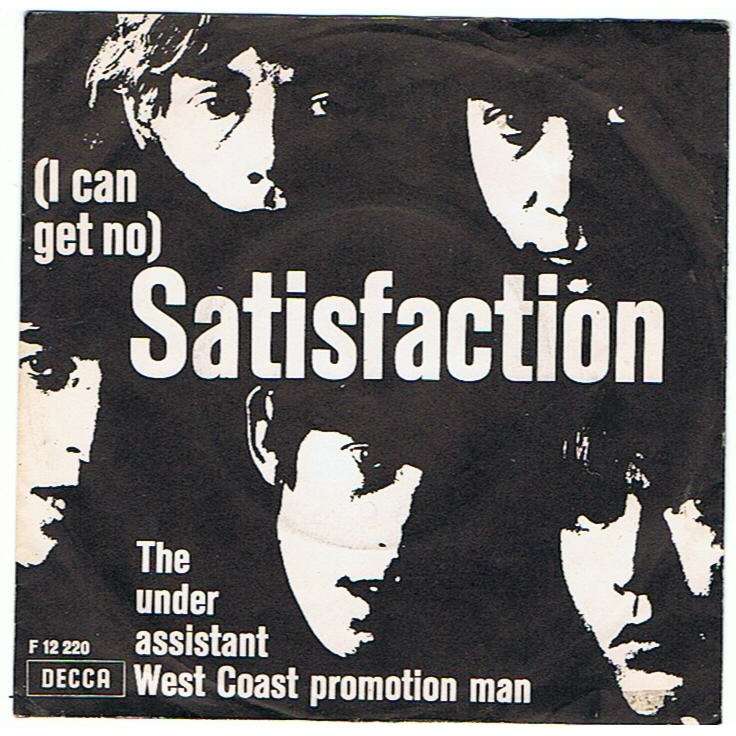
  2. Satisfaction – This helped start Keith Richards on his way to becoming The Human Riff. The intro is immediately recognizable.
  3. Daytripper – John Lennon was no slouch creating memorable riffs. I Feel Fine, Yer Blues and Daytripper…My personal favourite is And Your Bird Can See
  4. Black Dog – To my surprise, this riff was not Jimmy Page…it was written by the very underrated John Paul Jones
  5. You Really Got Me – As soon as that early raw distorted guitar starts you know the very English Ray Davies is about to sing.
  6. Another One Bites the Dust – It’s a Bass intro that won’t leave your head. When it came out I could not go anywhere without hearing someone hum, whistle, or sing it…it is infectious
  7. Purple Haze – Jimi’s intro that shot him in the stratosphere.
  8. Wild Thing and Louie Louie – Same three-chord pattern but you know what they are right away.
  9. Baba O’ Riley – As soon as you hear the first 2 seconds…you know what it is.
  10. Back in Black – AC/DC using the same chords over and over to great effect.

Honourable Mention… Hard Days Night, Can’t Explain, Sunshine of Your Love, Sweet Home Alabama.

Traffic – Dear Mr. Fantasy

I could listen to this song on a tape loop forever and ever. This song came out in 1967 on the Traffic album “Mr. Fantasy.” It was written by Jim Capaldi, Steve Winwood and Chris Wood.

Jim Capaldi on writing the lyrics for Dear Mr Fantasy

“It was the summer of 1967, and we were all living in this
cottage in Berkshire. We were one of the first English bands to live
together like that. We thought we’d try it and see if anything came of
it. I remember the day very clearly: A bunch of friends came over early
in the day and we had quite a party. It was sunny and the corn was
coming up nicely around the cottage, and we were quite enjoying
ourselves if you know what I mean. As things finally wound down in the
evening, I was sitting around just doodling, as I would often do,
drawing this character. It was this little fellow with a spiked sun
hat. He was holding some puppeteer’s strings, and the puppet hands on
the end of the strings were playing a guitar. Under that, I just
scribbled some words: ‘Dear Mr. Fantasy,’ play us a tune,
something to make us all happy’ and on a bit. It was nice, but I didn’t
think much of it; certainly, it wasn’t intended to be a song.

“I crashed out eventually, but I remember hearing Steve and
Chris playing around after. The next day, I woke up and found that
they’d written a song around the words and drawing I’d done. I was
completely knocked out by it. Chris wrote that great bass line. We
added some more words later and worked out a bigger arrangement, too.
Those were very happy days for Traffic.”


“Dear Mr. Fantasy”

Dear Mister Fantasy play us a tune
Something to make us all happy
Do anything take us out of this gloom
Sing a song, play guitar, make it snappy
You are the one who can make us all laugh
But doing that you break out in tears
Please don’t be sad if it was a straight mind you had
We wouldn’t have known you all these yearsDear Mister Fantasy play us a tune
Something to make us all happy
Do anything take us out of this gloom
Sing a song, play guitar, make it snappy
You are the one who can make us all laugh
But doing that you break out in tears
Please don’t be sad if it was a straight mind you had
We wouldn’t have known you all these years

Dear Mister Fantasy play us a tune
Something to make us all happy
Do anything take us out of this gloom
Sing a song, play guitar, make it snappy
You are the one who can make us all laugh
But doing that you break out in tears
Please don’t be sad if it was a straight mind you had
We wouldn’t have known you all these years

The “Compleat” Beatles 1982

This is what Beatle fans had until the Anthology came out in 1995 and turned a new generation onto the Beatles. I wore out the recorded VHS copy my cousin gave me. It is a two hour documentary of the Beatles. It was narrated by actor Malcolm McDowell (Clockwork Orange) and was well done. I remember watching this and “The Kids Are Alright” in the 80s. It was nice seeing the footage that was not as available as today.

I do remember some small frustrating parts of it. I think it was  “Hey Jude” about to begin (David Frost Show) and whoever cut the film placed a George Martin voice over during some of the performance. Remember this was a time when you couldn’t just go on youtube and see performances. Overall it was very well made. I still have a copy of it somewhere. Paul McCartney bought out the negative rights to the film in the 1990s to clear the way for Anthology and below is that story from Wikipedia.

The Compleat Beatles was initially released as a PBS documentary in the United States, and then on VHS, Betamax, CED and Laserdisc that same year on the MGM/UA Home Video label. The 1982 Laserdisc was released in both Analogue and Stereo versions, as well as being released in Japan and England (in PAL format) in 1983.[3]

The film did very well, and in 1984 Delilah Films and Metro-Goldwyn-Mayer arranged for it to be released theatrically in the U.S. by a small distributor named Teleculture. This contributed to its continuing to be a best seller on VHS. Some years later, when Paul McCartney was preparing The Beatles Anthology, he bought the negative and all the rights to the film from Delilah to get it off of the market and clear the way for his production. That, according to the film’s director Patrick Montgomery, is why it is not available on DVD or any newer formats and “probably never will be.”

If you find a copy somewhere buy it…it is worth it. Even if you already have Anthology. The Beatles Anthology is far superior but it does make a good companion piece.

This is from Rolling Stone magazine. It went over the other documentaries of the band. They make a good case for The Compleat Beatles. The link to the page is:

Again nothing has compared to the Anthology but The Compleat Beatles was very well done.

https://www.rollingstone.com/music/music-features/the-compleat-beatles-10-takeaways-from-great-overlooked-fab-four-doc-121193/

But one Beatles doc you might not know – and its cause has not been helped by not having an authorized DVD release yet – is 1982’s The Compleat Beatles, written by David Silver, directed by Patrick Montgomery, and narrated by Malcolm McDowell, chief droog from Stanley Kubrick’s A Clockwork Orange. Clocking in at two hours – and titled in the spirit of The Compleat Angler, England’s definitive book on fishing, from 1653 – The Compleat Beatles tells the band’s entire story, from pre-fame days, with checkpoints at each album, right up through the breakup. It’s brimming with keen musical analysis, and a coterie of voices you normally don’t get with a Beatles documentary.

For a long time, in the VHS era, it was a staple of high-school music teachers, starting 35 years ago in the summer and fall of ’82. If you were lucky enough to have had the TV set wheeled in by a Beatles-mad instructor, you know this is a special film.

Here are 10 reasons to check out this overlooked masterwork of the Beatles’ cinematic canon.

1. Writer David Silver had a pitch-perfect understanding of the Beatles’ career arc – and importance in their time and beyond.
“Poets of a generation, heroes of an era,” The Compleat Beatles begins, with Malcolm McDowell reciting Silver’s lines with Shakespearean gravity. This is to be a proper assessment of a band that was so much more than a rock & roll collective, something we’re made to feel immediately. “Like all poets and heroes, they reflected the spirt of their times.” The early sequences in the film present footage of a bygone Liverpool, which looks pretty grim, as if nothing mercurial could emerge from this seaport. When the opening chords of the Beatles’ cover of Chuck Berry’s “Rock and Roll Music” kick in, the film itself seems to pop with possibility, as if infused with Beatle-esque spirit. There was nothing the band couldn’t do, and now there will be nothing this movie can’t do.

2. Gerry Marsden was an ace witness to what the Beatles were doing.
The leader of Gerry and the Pacemakers, perpetual Liverpudlian also-rans, Gerry Marsden was always broad-spirited when it came to talking about the band that so outpaced his own, but you don’t get to hear him very much on film. Here he explains how the Liverpool acts were able to transform skiffle into something far grittier from what he terms the “ackky dacky” sounds of Lonnie Donegan. First he whips out a guitar to show how Donegan would play “Jambalaya,” before remarking “we’d get the record and we’d rock it up a little bit,” entering forth into a cool little demonstration. It’s a great primer for how the Northern bands were able to develop their own sound from what was a reductive, chipper genre in skiffle.

3. Early manager Allan Williams was quite the character.
Williams liked his tall tales, and the Beatles basically screwed the guy over after he hooked them up with Hamburg and they jumped ship for Brian Epstein, but Williams clearly loved reminiscing about his relationship with the band, which would continue on for a while still. (And resurface later when the legality of the Hamburg Star Club tapes was in dispute.) He describes a letter from Howie Casey of Derry and the Seniors begging him not to send “that bum group the Beatles” over to Hamburg, for fear that this would mess up everyone else’s good thing. Williams then goes on to (accurately) describe the style of then-drummer Pete Best as not very clever. Hardly a feeling-sparer, which is probably why the likes of John Lennon liked him – at least for a while.

4. George Harrison’s mom deserves serious props. The Compleat Beatles does an excellent job of synthesizing how the Beatles came together in their pre-fame years (complete with an image of John Lennon’s report card decrying his “insolence”), with a clear, concise chronology, and valuable insight directed towards the subject of George Harrison and his mother. Most Beatles studies focus, in terms of maternal subjects, on Lennon and his mother, Julia, and Paul McCartney and his late mother, Mary, but Mrs. Harrison knew a thing or two about rocking out. “To his classmates, George Harrison was the boy whose father drove the bus they all rode to school,” McDowell states. “His mother sat up with him night after night as he taught himself how to play Buddy Holly songs,” with his inclusion in the Quarrymen assured because “his mother could tolerate their noisy rehearsals.” Way to go, Mrs. H.

5. Reeperbahn mainstay Horst Fascher was one badass MF.
The Compleat Beatlesmakes commendable use of the underrated Star Club material to soundtrack several scenes, and it’s a delight when self-professed Beatles protector Horst Fascher turns up on camera. He made sure that they didn’t get in too much distress on their first Reeperbahn forays, or, as he puts it in the film, “If you are in trouble with some girls who are prostitutes, and you don’t know the girls are prostitutes, and the pimps find out, you can get in a lot of trouble,” which made Horst the guy to seek out to cure your ills and keep your ass intact, given that he was a former boxer who had been booted from competition for killing a sailor in a street fight. Ah, Hamburg.

6. The Litherland Town Hall show from December 27th, 1960, was the watershed gig of the Beatles’ career.The film also features a number of segments with Bill Harry, a friend of the band who was instrumental in spreading the good word about them in Liverpool – even before they deserved it – with his Mersey Beatmagazine, which documented the comings and goings of life on the local beat scene. Harry gives the backstory for the gig that would change the Beatles’ career. “They came back from Hamburg still as an unknown band,” Harry remembers, but he promoted they hell out of them, “because they were close friends of mine.” This got a promoter to book them at Litherland Town Hall, shortly following Christmas in 1960. Allan Williams was there, too. “The moment the Beatles struck up and did their stomping, every kid froze, and then they ran to the stage and started screaming.” That would be the gist of a lot of what was to follow.

7. According to George Martin, “Yesterday” was the crucial pivot point for the band’s sonic development.
Martin is eloquent throughout The Compleat Beatles: erudite, dapper, utterly sure of himself, being interviewed in a recording studio by his console, with no Beatles intruding with misremembered bits of info, something that dogged the Anthology. It’s just Martin, holding a master class in what it was like from his end to work with these guys. “They always wanted to have new ideas and sounds coming through. I found that they were almost more inquisitive than I was. In fact, in the end, it kind of exhausted me. Sometimes they knew what they wanted to do, but more often than not, they didn’t,” coming across like Yoda both frustrated and blown away by the gifts of Luke Skywalker. Regarding “Yesterday”: “It isn’t really a Beatles song,” Martin remembers saying to McCartney, then goes through how he made his pitch for the Beatles to forsake their standard drum-bass-guitar attack, which would become, through various methods, the mode of the future.

8. The doc features the coolest, trippiest, most cost-effective visual evocation of “Tomorrow Never Knows” ever filmed.
McDowell’s narration intones that “Two of John’s songs ‘She Said She Said’ and ‘Tomorrow Never Knows’ were the results of his recent experiments with drugs” – fair enough – as a quick tour of Revolver begins, but what follows is brilliant: Using only the cover of the album, director Montgomery, through a series of sweeps, pans and fast dissolves, gives us something of a visual acid trip, as “Tomorrow Never Knows” blasts from the soundtrack. Once you see the effect, it’s hard to disgorge it from your mind each time going forward that you hear that mindblower of a track.

9. The band’s final world tour was pure terror, and no film better evokes it.With a collage of on-the-street interviews, footage from Beatles record burnings and people getting hurt at shows as frantic MCs plead for calm, The Compleat Beatlesprovides a strong sense of why touring had to stop for the band. As the footage unfurls, there’s a low droning figure in the soundtrack, sort of like the protracted hum of the final chord on the Sgt. Pepperalbum stretched out for several minutes. We also get a self-righteous cop in Minneapolis who goes on at some length about how much he hates the Beatles: “As far as Beatle music, I could care about it not one bit personally … one of their group, with the British accent, told us they would never come back to Minneapolis, and I told him that would be too soon for me.”

 10. In Martin’s view, the Beatles were fated to become huge. George Martin has a lot of key lines regarding his four upstarts and their career. At one point he states, “Without Brian Epstein, the Beatles wouldn’t have existed,” by which he means that success would not have come to them and they would not be the galvanic entity we all know. But Martin is in downright Socratic mode, though, when he ventures towards a larger explanation for that success. “I think that the great thing about the Beatles was that they were of their time, their timing was right. They didn’t choose it – someone chose it for them. But the timing was right, and they left their mark in history because of it.”

Jan and Dean – Surf City

I remember watching Dead Man’s Curve when I was a kid about Jan and Dean and the terrible car wreck Jan Berry was involved in.

This song was written by Brian Wilson and he didn’t think he would ever finish it. Jan met him at a party and helped Brian finish the song. Dean also contributed some lines but never asked for any writing credits. “Two girls for every boy”…what teenage boy didn’t want to go there for a visit. It was the first surf record to hit number 1 nationally.

Brian Wilson’s controlling dad Murry was furious at Brian for giving away a number 1 hit to someone else. Brian was happy that another group took his song and made a hit with it.

When I was a senior in High School for some unknown reason I really got into surf music at the beginning of the year. I listened to Jan and Dean, the Beach Boys, and The Ventures. I was the first person at school to wear a Hawaiian shirt and got snickered at…but by the end of the year there were other people wearing them…the one and only time in my life I was a trendsetter…a fact I’m not really proud of…

I must have been looking forward to my after graduation summer trip with my buddies to Cocoa Beach Florida. A fifteen-hour drive one way in a Celica Sports Coupe with 4 guys packed in there. We picked the name (Cocoa Beach) because it sounded great…Yep pretty stupid because we could have driven 7 hours to Pensacola instead.

I continued to listen to the Beach Boys “Pet Sounds” and “Endless Summer” albums but was never really into the Beach music again. Surf music is nothing but fun… The Beach Boys took it further than anyone with Pet Sounds. By that time though Surf purists didn’t like it. They wanted the old formula songs… I wasn’t a purist…

Surf City (Wilson and Berry)

Two girls for every boy

I got a ’34 wagon and I call it a Woody
(Surf City here we come)
You know it’s not very cherry, it’s an oldie but a goodie
(Surf City here we come)
Well it ain’t got a back seat or a rear window
But it still gets me where I want to go

Well, we’re going to Surf City ‘coz it’s two to one
Yeah, we’re going to Surf City, wanna have some fun
Well, we’re going to Surf City ‘coz it’s two to one
Yeah, we’re going to Surf City, wanna have some fun

Two girls for every boy

Well, [Incomprehensible] tension ‘coz there’s always something goin’
(Surf City, here we come)
You know they’re either out surfin’ or they got a party growin’
(Surf City, here we come)
Well, there’s two swingin’ honeys for every guy
And all you gotta do is just wink your eye

Well, we’re going to Surf City ‘coz it’s two to one
Yeah, we’re going to Surf City, wanna have some fun
Well, we’re going to Surf City ‘coz it’s two to one
Yeah, we’re going to Surf City, wanna have some fun

Two girls for every boy

And if my Woody breaks down on me somewhere on the surf route
(Surf City, here we come)
I’ll strap my board to my back and hitch a ride in my wet suit
(Surf City, here we come)
And when I get to Surf City I’ll be shootin’ the curl
And checkin’ out the parties for a surfer girl

Well, we’re going to Surf City ‘coz it’s two to one
Yeah, we’re going to Surf City, wanna have some fun
Well, we’re going to Surf City ‘coz it’s two to one
Yeah, we’re going to Surf City, wanna have some fun

Two girls for every
Two girls for every boy

Lindisfarne – Meet me on the Corner

This is another song I discovered watching Life On Mars. I never heard of the song much less Lindisfarne. It’s a feel-good, quirky song with bright harmonies. It was released in 1971 and went to number 5 in the UK.

The song was written by Lindisfarne member Rod Clements and sung by Ray Jackson. Some say the song parallels Mr Tamborine Man by Bob Dylan. I love finding “new” old music to listen to. Life On Mars provided me with a lot of music I never heard.

The mandolin solo in Maggie May by Rod Stewart was played by Ray Jackson. On the “Every Picture Tells A Story”album liner notes, it is stated that “The mandolin is played by the mandolin player in Lindisfarne. The name slips my mind.”


Meet Me On The Corner

Hey mister dream seller
Where have you been.
Tell me have you dreams I can see?
I came along, just to bring you this song,
Can you spare one dream for me?

You wont have met me,
And you’ll soon forget.
So don’t mind me tugging at your sleeve.
I’m asking you,
If I can fix a rendezvous,
For your dreams are all I believe.

[Chorus]
Meet me on the corner,
When the lights are coming on,
And I’ll be there.
I promise I’ll be there.
Down the empty streets,
We’ll disappear into the dawn,
If you have dreams enough to share.

Lay down your bundles,
Of rags and reminders,
And spread your wears on the ground.
Well I’ve got time,
If you’re dealing mine,
I’m just hanging around.

[Chorus]

Hey mister dream seller, 
Where have you been.
Tell me have you dreams I can see?
I came along, just to bring you this song,
Can you spare one dream for me?

Good Vibrations by Todd Rundgren

Some songs you don’t expect to hear a cover of…this is one of them.

I bought this single in 1976 in a local record store we had in our small town called Sounds and Scenes (long gone but I love the name). I liked the song Good Vibrations and didn’t know at the time who did the original version.

He did an album called Faithful, full of covers and he performed them to the letter. I’ve listened to them and they are close but this one is really on it. He did Rain, Strawberry Fields, If Six Was Nine, and Bob Dylan’s Most Likely You Go Your Way And I’ll Go Mine.

Todd Rundgren is very talented and I’m a fan of him and he did a great duplicate version of this song. My question now is why? He got so close…you have to wonder why he did it in the first place. But…who am I to question Todd Rundgren?

I usually don’t like when an artist covers a song and they change it so much you cannot tell what the song is… not a problem with this one…but I do like for an artist to put something of him or herself in it…Todd does exactly what he says in the album name… he was very faithful to these songs.

Bruce Springsteen – Greetings from Asbury Park, N.J.

I got this album in 1986 and have never stopped listening to it. This is one of my favorite Springsteen’s albums. It was his debut album in 1973 and there is not a song on it I don’t’ like… It’s not very polished but that is ok.  The songs have a stream of conscious feel to them. The album was critically praised but did not have huge sales.

The most famous song on the album is “Blinded By The Light” which was covered later by Manfred Mann Earth’s Band that peaked at #1 in 1977. They also covered another song off the album called “Spirit of the Night” which peaked at #20 in 1977.

Personally, I like Bruce’s versions of both songs much more. “It’s Hard to be a Saint in the City” is another great track and one of the most powerful songs he ever wrote. “Does This Bus Stop At 82nd Street?” is a journey through an enjoyable play of words. It was written about a bus journey to a girlfriend’s house. Here is a sample of a verse

“Wizard imps and sweat sock pimps
Interstellar mongrel nymphs
Rex said that lady left him limp
Love’s like that (sure it is)
Queen of diamonds, ace of spades
Newly discovered lovers of the Everglades
They take out a full-page ad in the trades
To announce their arrival
And Mary Lou, she found out how to cope
She rides to heaven on a gyroscope
The Daily News asks her for the dope
She said, “Man, the dope’s that there’s still hope”

I hear Dylan and a Van Morrison influence in Bruce’s first album. It is rough and raw but worth the price of admission. My personal favorite is “Spirit of the Night.” This song hints at some of the characters and places that start populating Bruce’s musical world.

The song Growin’ Up is a complex and honest look at growing up and rebellion. Some lyrics…

“I took month-long vacations in the stratosphere, and you know it’s really hard to hold your breath
I swear I lost everything I ever loved or feared, I was the cosmic kid in full costume dress
Well, my feet they finally took root in the earth, but I got me a nice little place in the stars
And I swear I found the key to the universe in the engine of an old parked car
I hid in the mother breast of the crowd, but when they said, “Pull down,” I pulled up
Ooh…growin’ up
Ooh…growin’ up”

This is a crazy good debut album. I like it a little better than his second album “The Wild, the Innocent & the E Street Shuffle” but both albums were building up to everything crystallizing in his third…Born to Run.

Track Listing

Blinded By The Light
Growin’ Up
Mary Queen Of Arkansas
Does This Bus Stop At 82nd Street?
Lost In The Flood
The Angel
For You
Spirit In The Night
It’s Hard To Be A Saint In The City

Spirit of the Night

Crazy Janey and her mission man were back in the alley trading hands
‘Long came Wild Billy with his friend G-Man all duded up for Saturday night
Well, Billy slammed on his coaster brakes and said, “Anybody wanna go on up to Greasy Lake?
It’s about a mile down on the dark side of route eighty-eight, I got a bottle of rose so let’s try it
We’ll pick up Hazy Davy and Killer Joe and I’ll take you all out to where the gypsy angels go
They’re built like light
Ooh, and they dance like spirits in the night” (all night)
In the night (all night)
Oh, you don’t know what they can do to you
Spirits in the night (all night)
Oh, in the night (all night)
Stand right up now and let it shoot through you

Well now Wild young Billy was a crazy cat and he shook some dust out of his coonskin cap
He said, “Trust some of this, it’ll show you where you’re at, or at least it’ll help you really feel it”
Well, by the time we made it up to Greasy Lake I had my head out the window and Janey’s fingers were in the cake
I think I really dug her ’cause I was too loose to fake
I said, “I’m hurt,” she said, “Honey, let me heal it”
And we danced all night to a soul fairy band
And she kissed me just right like only a lonely angel can
She felt so nice, just as soft as a spirit in the night (all night)
In the night (all night)
Oh, Janey don’t know what she do to you
Like a spirit in the night (all night)
All night (all night)
Stand right up and I let her shoot through me

(Ooh ooh ooh ooh ooh ooh ooh ooh ooh ooh)
(Ooh ooh ooh ooh ooh ooh ooh ooh ooh ooh ooh)

(Ooh ooh ooh ooh ooh ooh ooh ooh ooh ooh)
(Ooh ooh ooh ooh ooh ooh ooh ooh ooh ooh ooh)

Now the night was bright and the stars threw light on Billy and Davy
Dancing in the moonlight
They were down near the water in a stone mud fight
Killer Joe gone passed out on the lawn
Well now Hazy Davy got really hurt, he ran into the lake in just his socks and a shirt
Me and Crazy Janey was making love in the dirt, singing our birthday songs
Janey said it was time to go
So we closed our eyes and said goodbye to gypsy angel row, felt so right
Together we moved like spirits in the night (all night)
In the night (all night)
Oh, you don’t know what they can do to you
Them spirits in the night (all night)
All night (all night)
Oh, stand right up and let it shoot through you
Like a spirit in the night (all night)
All night (all night)
All night, ooh, ooh, man, all night
The night
Be-da-ba the night
In the night

Ronnie Lane: The Passing Show

I didn’t know much about Ronnie Lane when I watched this documentary. It covers his childhood through his tragic death and the period after he left the Faces. He was loved by his peers and a talented musician and songwriter.

Ronnie’s mom had Multiple Sclerosis and Ronnie was in denial about himself until he was diagnosed with it. I didn’t know about the documentary until I ran across it on youtube.

I would recommend this to any music fan.

Ronnie Lane was a Britsh songwriter and bass player. He started with the Small Faces as the bass player and he and Steve Marriott wrote most of bands songs. The Small Faces never toured America so they never really broke out big. They did have 11 top twenty hits in the UK but only one in America with Itchycoo Park charting at #16.

Steve Mariott left the Small Faces in 1968 and Rod Stewart and Ronnie Wood joined Ronnie Lane, Kenney Jones, and Ian McLagan to start The Faces. The Faces released four albums between 1970-1973… First Step, Long Player, A Nod is as Good as a Wink…to a Blind Horse and Ooh La La. They were one of the top grossing touring bands.

After Rod Stewart’s solo career took off his interest in the band began to wane and in 1973 Ronnie Lane quit. After Ronnie left the Faces, they made no more studio albums.

Ronnie started his own folk-country band named “Slim Chance” and released a surprise hit single “Come On” in 1973 and it went to #11 in the UK. Ronnie had a unique idea of touring. His tour was called “The Passing Show” which toured the countryside with a circus tent and included a ringmaster and clowns.

In 1976 he owed a record company an album and he was in financial trouble. He asked Pete Townshend to help him record an album. The album was called “Rough Mix” and it was a very strong album with great reviews but the record company didn’t promote it and the sales were not great.

During the recording of “Rough Mix” Lane diagnosed with was Multiple Sclerosis. He still toured with Eric Clapton and others afterward and released an album in 1979 called “See Me.”

In 1983 Ronnie called some of his musician friends to do some charity concerts for the Research for Multiple Sclerosis. They were known as the ARMS (Action into Research for Multiple Sclerosis) Charity Concerts. Musicians such as Eric Clapton, Jeff Beck, Jimmy Page, Steve Winwood, Bill Wyman, Charlie Watts, and more came out to support Ronnie.

Ronnie Lane died of Pneumonia while in the final stages of Multiple Sclerosis in 1997

How Come

.